State Champ Radio
 Latin
Page: 16
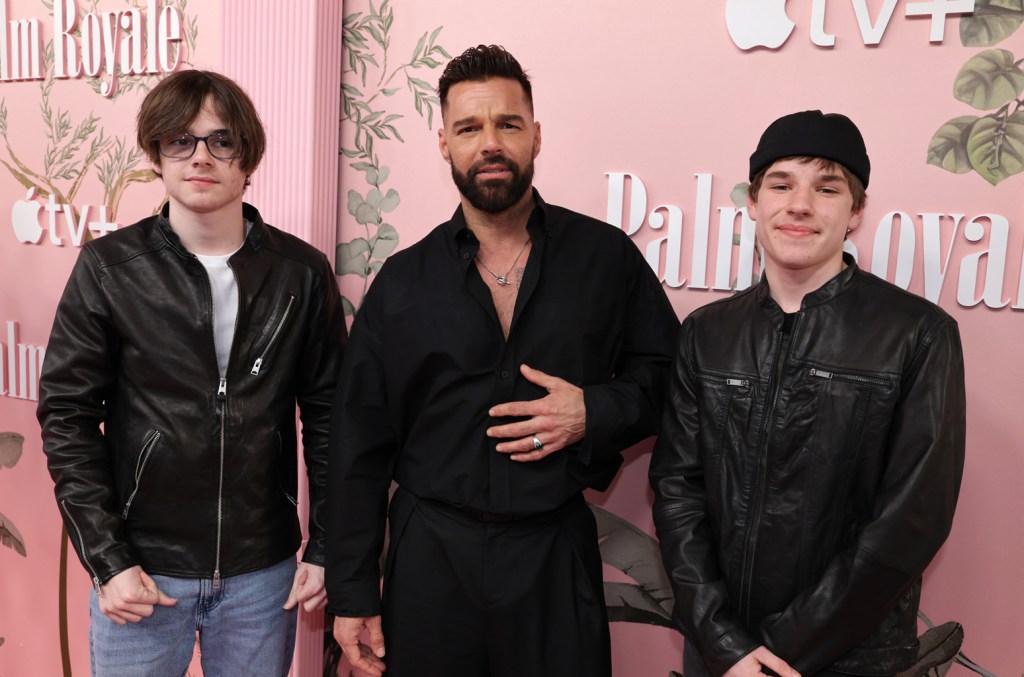
For many artists, there is something even more powerful than filling stadiums, pulling all-nighters in recording studios, topping charts, or receiving awards: being a father. On Father’s Day 2025, celebrated this Sunday (June 15), we recognize not the touring singer or the hitmaker, but the man behind the microphone. He who lovingly combs his daughter’s […]
Four years after welcoming their first child together, Natti Natasha and Raphy Pina announced they are expecting their second baby together. The news was shared on Wednesday afternoon (June 11) via a short clip. The Dominican appeared to be announcing a new tour, at first. In the video, there’s Raphy making some calls, Natti’s stylist […]

Manuel Turizo officially hits the road on Wednesday (June 11), taking his 201 World Tour to Guadalajara, Jalisco, Mexico.
The CMN and La Industria Inc-produced stint is in support of his latest studio album 201, which is an homage to the apartment number where he grew up in Montería, and “represents all those dreams I had since I was a child, all those young desires,” he previously told Billboard.
In bringing the ultra-personal and intimate album to life, Turizo assures us that “the story [of my album] will be finished telling on the tour.”
Explore
Explore
See latest videos, charts and news
See latest videos, charts and news
“I was thinking about how to connect Manuel Turizo as a performer with where he comes from and where all these inspirations or all these stories a person lives originate,” he tells Billboard in an exclusive interview at his Miami home. “All of that happens in my house. In [apartment] 201 there were heartbreaks, there were loves, drunken parties with friends, with family—all the stories are there. All the songs are born there, all the ideas are born there. I wanted to tell it in the same way and bring that 201 to the 70 cities where I’m touring.”
He reveals that the stage is inspired by his childhood living room back in Colombia: “201 tour is basically Manuel Turizo’s apartment that we’re going to fill with people and create chaos,” he elaborates.
While on tour, the Colombian artist will visit other Latin American countries like Chile, Costa Rica and Argentina, before launching the North American leg of the trek on Aug. 21 in Chicago. After visiting major markets like New York, Miami and Los Angeles along the way, he will return to Latin America to wrap up, with the last date on Dec. 6 in Guatemala.
Above, check out our exclusive “En Conversación,” where Turizo also opens up about his friendship with Shakira, his No. 1 Billboard hit “En Privado” with Xavi, releasing new music and more.
Over the past week, Pitbull has embarked on a run of arena shows in the U.K. and Ireland, but he may be experiencing a sense of déjà vu. Fans have thrown themselves into a viral fancy dress trend for his shows, donning black suits, bald caps and sunglasses and meeting up for flash mobs outside of the venues.
Explore
Explore
See latest videos, charts and news
See latest videos, charts and news
Pitbull, real name Armando Christian Pérez, has now responded to the long-running trend in an interview with the BBC, calling it “priceless” to see fans replicate his look at his shows.
“Every time I’m at a show, I let them know that when you put on a bald cap, I hope you’re ready to have the time of your lives – it feels deeper than just music,” he said. “It’s the ultimate trophy to be able to go on stage and see all the hard work that you put into the music. I’ve been in the game for 25 years and to see every demographic, everybody [dressing up] at the shows is priceless.”
Trending on Billboard
On recent tours, fans, male and female, have adopted the Pitbull attire for the evening and meeting up outside the venue. The rapper and singer toured the U.K. and Ireland earlier this year in February, and has returned for an extended European run with two shows at London’s O2 Arena (June 9, 10) and concluding in Stockholm, Sweden on June 29.
Speaking to the BBC, Pitbull expanded on his continued popularity on a global scale. “There’s an irony as I’m kind of an anomaly in the music business,” he said. “In the Latin world they said I was too English, and in the English world I was too Latin, so to bring it together now, when it all really started around 2010, feels really good.”
Pitbull, who performs in both English and Spanish, has had a number of hits both in the U.K. and U.S. throughout his career, including two No. 1s on the Billboard Hot 100 (2011’s “Give Me Everything” and 2013’s “Timber”). He released his most recent LP, Trackhouse, in 2023 and over his career has collected nine Billboard Latin Music Awards.
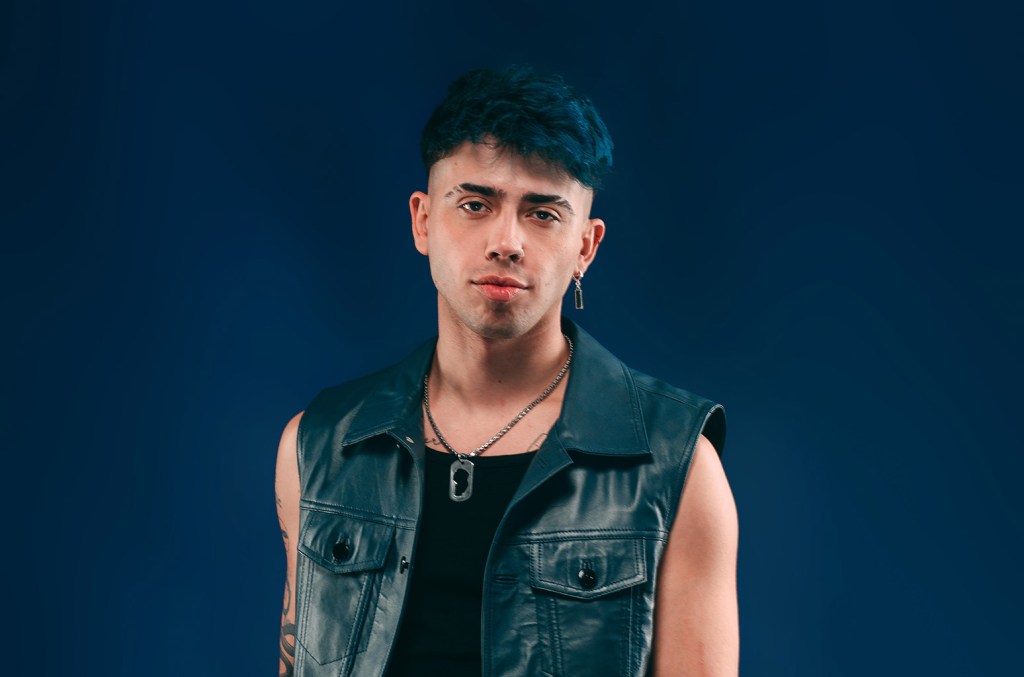
The 2025 Argentina Music Report from the Argentine Chamber of Phonogram and Videogram Producers (CAPIF) shows that streaming is still dominating the country’s music industry, making up 79% of total recorded music revenue in 2024.
Within the digital segment, subscription-based streaming leads with 65% of the revenue, solidifying itself as the main source of music monetization in Argentina. Meanwhile, ad-supported streaming accounted for 35% of the total.
“For the first time since emerging from the post-pandemic crisis, the numbers in our industry show a decline in 2024 compared to the previous year,” says CAPIF president Diego Zapico in the annual report shared with Billboard Español. “The causes are varied: they range from the macroeconomic reality of our country to specific factors within our sector that had been accumulating imbalances and were exposed over the past year.”
“The market decline is explained by the fact that the value of service tariffs does not keep pace with the evolution of the economy and therefore, at constant values, service prices are relatively lower today,” a representative of CAPIF tells Billboard Español. “In addition, the drop in revenues from communication to the public attributable to decree 765/24, published in the Official Gazette on August 28, 2024, which modified the intellectual property regime in Argentina, particularly with respect to the public performance of musical works, has also had an impact.”
Additionally, physical sales — though declining — still made up 7% of the market, with vinyl records solidifying their spot as collectors’ favorite format, accounting for 69% of physical sales compared to 31% for CDs.
“Our country is an endless source of talent, with an incredible diversity of styles, genres, and music,” adds Zapico. “It’s a place where creativity flows freely, where artists collaborate across boundaries, and where languages and sounds constantly mix, fuse, invent and reinvent themselves.”
The report also highlights the impact of Latin artists in the top 10 of the 2024 General Ranking. Among the most popular tracks are “Hola Perdida” by Luck Ra and KHEA, “Piel” by Tiago PZK and Ke Personajes, and “Que Me Falte Todo” by Luck Ra and Abel Pintos. Other hits, like “Una Foto” by Mesita, Nicki Nicole, Tiago PZK and Emilia, as well as “La_Original.mp3” by Emilia and Tini, showcase the reach of Argentine music in both the local and regional markets.
“This is our unique national identity when it comes to art and music, and it’s what drives the success of many of our artists around the world,” says Zapico. “From the legends and established stars to the newcomers who emerge year after year, their strong presence at the top of global and regional charts and scenes stems from this.”
Check out the full top 10 of the 2024 General Ranking below:
Luck Ra y KHEA, “Hola Perdida”
Tiago PZK y Ke Personajes, “Piel”
Luck Ra y Abel Pintos, “Que Me Falte Todo”
Feid y ATL Jacob, “Luna”
Mesita, Nicki Nicole, Tiago PZK y Emilia, “Una Foto”
Los Ángeles Azules y Emilia, “Perdonarte, ¿Para Qué?”
Emilia y Tini, “La_Original.mp3″
Floyymenor y Cris MJ, “Gata Only”
Luck Ra y BM, “La Morocha”
Salastkbron y Diego París, “Un Besito Más”
On the other hand, “Luna” by Feid and ATL Jacob leads the top 10 of the Spanish-Language Foreign Artists Repertoire; while Benson Boone leads the top 10 of the Foreign Artists Repertoire in Other Languages ranking.
To see the full annual charts, click here.
“Long live carranga!” shouted Sara Lu. The Carranga Kids were celebrating their big win on the reality show La Voz Kids Colombia 2024, and in the heat of the moment, that was the first thing the teenager could think to say. The other kids joined in, jumping with excitement — they all seemed to agree. After all, it was carranga that got them there.
Explore
Explore
See latest videos, charts and news
See latest videos, charts and news
Almost a year and a half later, the young group — who had already released an album before joining the competition — dropped their album A Bailar Carranga (or Dance Carranga) in May and are now gearing up for a new one in the coming months, along with a collaboration with their former La Voz Kids coach and Latin Grammy winner Andrés Cepeda.
But what exactly is carranga, and how did it win over this young quartet? Born in the Cundiboyacense and Boyacá of Colombia, this musical genre blends Indigenous, African and European elements while celebrating love for the countryside, ecology, good humor and social critique, with Jorge Velosa as one of its greatest pioneers.
Trending on Billboard
Sara Lucía, who plays the requinto guitar and sings backup vocals, listens to reggaetón, vallenato, merengue, and salsa — a mix of trendy music and the sounds she picks up from her parents. But it was her grandfather who introduced her to carranga. “It’s a genre that’s purely Colombian, and we feel the need for young people to learn more about it,” says the 14-year-old.
The origins of Carranga Kids trace back to a musical tribute Contreras wanted to dedicate to his late grandfather. The group already existed, having formed during school breaks, but this would be their first big live performance.
Jerónimo Arias Villamizar (guacharaca and backup vocals) recalls that, at first, carranga wasn’t even one of his favorite types of music. But the experience of playing with the other musicians was so special that the 14-year-old decided to stay. At the time, Carranga Kids also included a set of twins who eventually left the group. They were replaced by Juan José González and Esteban de Jesús Suárez, who are 10 and 12 years old, respectively.
“I was invited during a school break, and I’ve been singing since I was three years old — thanks to my dad, who’s a mariachi,” says Arias Villamizar, highlighting that the success of Carranga Kids isn’t just rooted in their deep knowledge of the Cundiboyacense musical genre, but also in their ability to learn from other styles. For example, Jero, as he’s called, shares his deep admiration for the late Mexican legend, Ariel Camacho, leader of the popular group Los Plebes del Rancho.
With their original lineup, they recorded their first EP, Huellas Coloridas, in 2021. However, one of the prizes from the reality show was the chance to record an album with Universal Music Colombia (the other prize was 150 million Colombian pesos, roughly $35,000, which can only be used for their college education). This led to the release of their first studio album, A Bailar Carranga, in May of this year. The most popular song from the album was “Coquetica y Juguetona” (meaning “coquettish and playful”) a response to the hit “Coqueta” by Heredero, which went viral on TikTok.
The song came from a reflection by Contreras that is as simple as it is brilliant: “‘Coqueta’ is a song that men relate to, so we wanted to create a response that offered a female perspective.”
“A Bailar Carranga” and “Al Campo Me Fui” (meaning “to the country I went”) were also songs that were well-received on streaming platforms.
They haven’t even finished promoting this album, and they’re already working on their second record with Universal, which will feature Andrés Cepeda as a collaborator on a version of “Los Sabanales,” a song they performed during the final stage of the popular competition.
One of the reasons behind Carranga Kids’ success is that, as children, they can captivate both the traditional audience of the genre and younger listeners who might not typically engage with this type of music. Sara Lu also recognizes that blending genres has helped them reach new audiences, emphasizing that while carranga is their foundation, rock and urban music can also be part of their fusions.
She also hints that now that they’ve conquered Colombia — or at least a large part of the country — it’s time to expand across the continent. “There are many Latin American rhythms that are very similar, like what’s happening in Peru with its sound, which is highly globalized.” She brings up “Coqueta” again, but this time not to talk about their response song, but to emphasize how Heredero’s hit reached unimaginable places, even in Europe.
She concludes, “Now, taking carranga to the international stage is much easier.”
This story was originally published by Billboard Colombia.

Singer, songwriter, and now producer Ángela Aguilar continues to carve her own path in música mexicana as the youngest of the Aguilar dynasty. In an interview with Billboard, the 21-year-old star spoke candidly about producing her own music for the very first time and launching her producer era with Nadie Se Va Como Llegó, her latest album released May 28.
“It made me really appreciative of my father and everything he’s done for me,” Aguilar says, speaking of her legendary dad Pepe Aguilar, who had produced the her music prior to her new LP. “Have you heard of when someone pushes you into the pool so you learn how to swim? That’s what my dad did. He really said, ‘I have to focus on my album, I have a bunch of things to do, I don’t have time, why don’t you start looking for songs?’ And I was like, ok.”
The new album includes a song with Marc Anthony, the only collaboration on the 12-track set. Aguilar shares the “honest” version of how that collab came about.
“We were at a party, and when I say party, my husband [Christian Nodal] and I don’t have friends so it was just Nadia [Ferreira], Marc, me and my husband, and we were just having fun and drinking and showing each other’s projects,” she says. “Two weeks later, I received a message from tío Marc and it said, ‘Comadrita, is it ok if I bring it down two tones?’ I had not only sent him the arrangement, but the lyrics, everything. I was like, ‘At what [part] of my party did I think Marc Anthony was going to sing with me? At what part of my party did he actually sing with me?’ It was amazing.”
For the album, Aguilar — the granddaughter of the legendary Antonio Aguilar and Flor Silvestre — recruited a handful of Mexican women to help write songs, which was intentional. It’s what she’s committed to do after being “the only woman in the studio” in the making of her previous albums, and other projects she’s been a part of.
“I was recently part of my husband’s songwriting sessions and it was just me and my friend Amanda Coronel. We thought, this is strange. It’s very important to have this platform and give women a voice,” she says.
The new album comes just months after Aguilar was honored at Billboard Women in Music with the Breakthrough Award, where she gave a passionate speech about immigrant rights. “It’s very taboo to talk about things like that in awards and just anywhere,” she says. “And people tell you not to do it but again, I have a responsibility as a Mexican American to speak about injustices that are going on because it directly affects my people, people that go to my concerts and consume my music. There’s nothing worse than to not have a voice and to have people speak for you.”
Watch the interview above where Ángela also talks about an upcoming new tour and her ever-growing family that includes five new pugsitos. “The are the most precious little babies. We now have 20 dogs in total, 40 horses and I’m working on [adding] a few miniature cows, too.”

Karol G is gearing up to light up the summer with all her tropical splendor. The Colombian superstar announced her fifth studio album, Tropicoqueta, in an Instagram video posted on Monday (June 9). “Finally sharing this with you,” she wrote in the caption. “My heart is overflowing.” While she hasn’t revealed the official release date […]

Henry Cárdenas was on his way to Texas from Chicago when he got the news: Julión Álvarez’s work visa was cancelled, which meant the música mexicana hitmaker couldn’t enter the United States in time for his sold-out show at the AT&T Stadium in Arlington, Texas on May 24. “We had everything set up already,” says Cárdenas, founder/CEO of the powerhouse Cárdenas Marketing Network, still perplexed by the situation. “The entire production, including labor and equipment, amounted to over $2 million dollars — it was all a complete loss because we had to postpone the event. It was unbelievable.”
Álvarez — who in April made his grand return to the U.S. with a historic run at L.A.’s SoFi Stadium after being sidelined for eight years over since-cleared issues with the U.S. Treasury — was traveling from Guadalajara to Texas the day before the show and was informed at the airport that he couldn’t board the plane because his visa was cancelled. “I’ve been in the business for 45 years and I had never seen this,” Cárdenas adds. “In the past, we’ve known of groups or bands that apply [for a non-immigrant visa] and are denied but at least we were informed ahead of time. The day before your sold-out stadium show with 50,000 people? No way. We immediately started calling our lawyers but unfortunately, we haven’t gotten to the bottom of it. If you ask me right now what the reason for the cancelled visa is, I don’t know. Nobody knows.”
In the past two months alone, at least a handful of regional Mexican acts — including Los Alegres del Barranco, Banda Cuisillos, Lorenzo de Monteclaro and, most recently, Grupo Firme — have shared a similar experience to that of Álvarez’s. Their work visas — it’s unclear if they are O-1 or P-1B visas — are either delayed in an “administrative processing” or outright revoked by the U.S. State Department, leading to postponed shows or cancelled festivals and performances. Such was the case for touring giant Firme, which was unable to perform at La Onda Fest in Napa Valley, Calif., on June 1. Chicago’s Michelada Fest, featuring Mexican music headliners Luis R Conriquez, Firme and Gabito Ballesteros, cancelled its two-day summer event over artist visa “uncertainty.”
In general, U.S. visa uncertainties under the Trump administration have upended multiple communities and groups of people. “Everything is taking longer under Trump,” says attorney Daniel Hanlon, who specializes in immigration law. “It’s a combination of a few things, including stricter vetting policies, which have resulted in delays in visa processing almost across the board. We’re seeing this with foreign students at universities and now these musicians, and no one knows how it’s being brought to the attention of those who are in the position to make these revocation decisions, or why they are deciding to do this now. It could be completely politically motivated.”
In an unprecedented move, Deputy Secretary of State Christopher Landau announced on X that the State Department had revoked Los Alegres del Barranco’s work visas after the group portrayed images “glorifying” drug kingpin “El Mencho” at a concert in Mexico in March. “In the Trump Administration, we take seriously our responsibility over foreigners’ access to our country. The last thing we need is a welcome mat for people who extol criminals and terrorists,” his post reads.
Julión Álvarez performing during a concert at Arena Monterrey on October 29, 2021 in Monterrey, Mexico.
Medios y Media/Getty Images
In Mexico bans on narcorridos have spread across the country, where now 10 states have implemented laws to control or limit the diffusion of corridos in public spaces. But the U.S. had yet to really take a stance on the lyrics, which can be compared to gangster rap. That quickly changed this year when a wave of regional Mexican acts began to be impacted by visa delays, going beyond those who sing narcocorridos. Grupo Firme and Julión Álvarez — two of the biggest touring acts in the genre’s history, breaking barriers for regional Mexican artists in the U.S. — are mainly known for norteño and banda ballads and party songs, not narcocorridos particularly.
“We don’t know what we are fighting against because we really don’t know the reason these visas are getting denied or revoked, and it seems like it’s no longer just because they sing narcocorridos, which is what they initially had said,” says Mariana Escamilla, vp at Promotores Unidos USA, a longstanding organization composed of promoters who specifically work the regional Mexican touring circuit. “People don’t have the confidence to buy tickets in advance anymore if the artist is coming from Mexico. That’s a huge problem because we rely on pre-sale to determine if an event is going to sell or not. Now, I think fans will wait until day-of to buy the ticket when they see that the artist has finally landed in the U.S.”
Non-immigrant visas like O-1 and P-1B, the ones artists typically apply for “extraordinary achievement or ability,” are short-term work permits that need to be renewed by the artists and their petitioners and must include an agenda listing performances scheduled and where they’re performing every single time they apply. But even after being approved, these visas can be revoked at any time. Once the visa gets delayed by the State Department, for reasons like “administrative processing,” there’s no timeline for resolution. “It’s a euphemism for basically more background checks,” adds Hanlon. “It is unknown to the applicant what they are looking at, where they are looking or what they are looking for. They use that as a blanket to delay the processing of visas. So, the visa is refused until that’s resolved and then it could be issued or approved later but often it goes into a black hole and there’s nothing much you can do about it.”
In a statement sent to Billboard, a spokesperson for the U.S. Embassy & Consulates in Mexico said, “Due to privacy and other considerations, and visa confidentiality, we generally do not comment on U.S. government actions with respect to specific cases. Continuous vetting and visa revocation actions are not limited to visa holders from any specific country or area in the world. All visa applicants and visa holders, no matter the visa type and where they are located, are continuously vetted.”
What could be interpreted as targeting Mexican music and culture aligns with the Trump administration’s “disdain for Mexicans,” says entertainment attorney Marjorie García, partner at King, Holmes, Paterno & Soriano. “Any indication that [artists] are singing about anything the government doesn’t like, just like they [want to cancel] funding for PBS and NPR, if you’re not saying the things they want you to say, there is a perception that you don’t get to be here.”
Whether intentional or not, the timing couldn’t have been worse. In the past few years alone, regional Mexican has exponentially grown in popularity and global exposure. In 2023, Billboard reported that regional Mexican music consumption in the United States had jumped 42.1% year over year, outpacing gains in the Latin genre overall, as well as country, dance/electronic, rock and pop, according to Luminate.
“The regional Mexican music movement can’t keep growing if its artists can’t tour the U.S.,” García says. “All aspects of our business will be impacted. Before, you could predict the length of time that you needed for the visa process; you had a window. But now, the visa is being pulled after it’s already given, and as you get closer to the show, and at that point, you either show up or pay. There’s no way you can plan for someone to cancel your visa. This is all going to have a chilling effect when artists voices are most needed and in demand.”
Visa delays or revocations will almost certainly not fall under a contract’s force majeure clause, meaning event cancellation insurance very likely won’t cover it. “It’s up to individual artists to apply for those visas and get their documentation together. If the U.S. government says no, that’s almost assuredly not going to be covered by event cancellation insurance,” says attorney Tim Epstein, partner at Duggan Bertsch, who represents most of the independent events and festivals in North America, including Sueños and Baja Beach Fest. “Maybe once a year you were dealing with artists having to cancel concerts or festival performances over visa issues, but having a whole festival canceled because of artist visa issues … I have never seen that before.”
The financial impact this will have on artists who can’t tour the U.S. will be long-lasting. “A group like Los Alegres del Barranco that has a large following in the United States and already had contracts signed there, it is devastating financially,” Luis Alvarado, spokesperson for Los Alegres del Barranco, tells Billboard. “It is obvious that there is some kind of movement against Los Alegres del Barranco, but also against musicians who play this genre of music (regional Mexican). We’re waiting first to clear the judicial process in Mexico and then begin a conversation with the U.S. government.”
The U.S. is the No. 1 market to tour in — it’s the “base for success,” says Cárdenas. “You get guys like Firme and Julión who gross $10 million in one night here. This is where you make the big money — you don’t make the money in Mexico, with all due respect.”
For now, Cárdenas is staying optimistic and working diligently to help resolve this issue. “There are thousands of people working at the stadium when a concert happens, from parking, to vendors, production staff, all kinds of occupations that didn’t make any money because the Julión show didn’t happen,” he says. “That weekend, we lost more than $2 million that we won’t recover. How many of these instances can we survive? If this was a small promoter, it would go out of business immediately. You can’t lose $2 million every weekend.
“Someone has to go see the guys in Washington and tell them, ‘Listen, we have to fix this,’” Cárdenas continues. “This is not $100 or $200, this is millions of dollars; we have 50,000 people in one stadium. They consume everything — food, water, beer, and people are working, trying to make a dollar. Now, we’re talking to the political sector, calling our local congressmen and senators, and they are aware of the situation, and I’m sure they will fix it. Otherwise, this will jeopardize the entire industry.”
Additional reporting by Tere Aguilera and Natalia Cano.
One thing is to go to a Shakira concert. Another is to walk with her as part of her “Loba Pack.” It’s a whole other level.
On Friday (June 6) morning, I received a call from Sony Music US Latin’s publicity associate director. I usually don’t answer phone calls, but I was curious because it’s rare for him to call me too.
After a quick “good morning, how are you?” he cut to the chase with what literally felt like he was popping the big question: “Jess, if I get you a spot to walk with Shakira at her concert tomorrow, would you?”
Explore
Explore
See latest videos, charts and news
See latest videos, charts and news
I gasped and without hesitation said “YES!” After we hung up, I smiled, and for some reason—though I’ve had a very fruitful and successful career in Latin music—thought “omg, I finally made it.”
Just hours before Shakira was set to perform her second sold-out stadium in Miami on Saturday (June 7), I received an email titled “Camina con la loba” (walk with the she wolf) with further instructions—arrival time, meeting location, point of contact, and a consent waiver to be filmed.
Trending on Billboard
Once at the Hard Rock Stadium, I was unexpectedly escorted to a VIP suite, where drinks and bites were provided. Then, at around 7:50 p.m., they took me backstage to meet up with the rest of the crew that was going to walk with Shakira. Among the “loba pack” were social media influencer Jessica Judith, Miss Universe Nicaragua 2018 Adriana Paniagua, and TV personality Clarissa Molina. Yours truly from Billboard, and select Univision and Telemundo reporters were also in the mix.
While we waited for our big moment to shine, we were handed raincoats in an aluminum foil material and futuristic sunglasses. It was also your typical 100-degree weather in Miami, but every drop of sweat, humidity, and drenched makeup was worth it—especially because the “loba pack” kept singing Shakira songs while we waited.
At 9:15 p.m., the Colombian artist showed up in a golf cart wearing a sparkly jumpsuit. She hopped off, briefly greeted her unit of empowered wolves, and we all got into position for showtime.
Around 50 people walked with the artist into the packed stadium. We were jumping, we were ecstatic, we were high-fiving people in the audience, we were capturing the moment on our phones. With all the attitude and energy in the world, the “loba pack” dropped off Shakira at the stage, where she officially kicked off with the magnetic, club-ready track “La Fuerte.”
We continued to enjoy the first song from the aisles, before walking to our seats. Once at my spot, I was in complete awe of Shak’s two-hour-long spectacle, where she sang the hits, the oldies, had surprise guests Manuel Turizo, Alejandro Sanz, and Bizarrap, but above all, captivated fans with her hips that don’t lie—literally.
Undeniably, Shakira is Shakira, but now, as a certified “loba” (and thanks to this wonderful concert experience), there’s no doubt in my mind why she ranked No. 1 on Billboard’s “Female Latin Pop Artists of All Time” list.
The Las Mujeres Ya No Lloran tour will continue June 11 in Texas and wrap June 30 in California.