State Champ Radio
 Touring
Page: 24

After finishing the last of seven concerts at GNP Seguros Stadium in Mexico City March 30 as part of her Las Mujeres Ya No Lloran tour, Shakira announced she would return to Mexico in August. Her encore will bring her total shows played in the country to 22, a record for a single tour. Shakira initially played 11 stadium shows in Mexico, selling them all out, and eventually announced additional shows for August and September, including one more stop at GNP Seguros Stadium. Her eight performances there will be a record.
It’s the latest success in a string of them for the Colombian star. Last week, Billboard reported that, for the month of February, Shakira topped the monthly Top Tours chart for the first time, earning $32.9 million from 282,000 tickets sold that month, according to figures reported to Billboard Boxscore.
Trending on Billboard
Shakira follows Bad Bunny, Los Bukis and RBD among Latin artists who have topped the monthly ranking, making her the first solo Latin woman to hit No. 1. This also marks the first time Shakira ever tops the chart, which launched in 2019, after she finished her previous outing, 2018’s El Dorado World Tour.
All those tickets sold are particularly sweet success for Shakira, who not only hadn’t toured in six years, but hadn’t had this level of success with her recorded music, either. Since 2019, as is by now very well known, the global superstar split up with her longtime partner, Gerard Pique, moved from Barcelona to Miami, turned her heartbreak into chart-topping songs, and now, at 47 years old and as the mother of two children, is in the midst of what will be the biggest tour of her career.
At her side is manager Nadine Eliya, who after working with Shakira in different capacities for years, took over management in 2023 after the Colombian star moved to Miami and started releasing new music. While that was a project in and of itself, Shakira’s new tour, a massive endeavor that kicked off last month in Brazil, is the Colombia’s star most ambitious move yet. Originally slated to be an arena tour, Shakira scrapped those plans last fall, following reaction to her new album Las Mujeres Ya No Lloran (Sony Music Latin), and announced she was doing stadiums instead. And while she had to cancel three South American dates —two for production issues and one due to illness — her Mexico run has more than made up for lost time.
Given the extraordinary resurgence of Shakira, spotlighted by her No. 1 spot on Top Tours for February, Eliya is Billboard’s Executive of the Week. Here, she speaks about crafting Las Mujeres Ya No Lloran, and its impact on the touring market.
You’ve had many Shakira highlights in the past year, but these Mexico concerts feel particularly significant. Is that the case?
These Mexico concerts were so rewarding in so many ways. It’s nice to see a Latin American city leading on a global scale as a concert city market, and only reinforces the massive growth we’ve been seeing in the Latin market over the last 10 years. To be breaking such significant records 30-plus years into your career is a testament to Shakira’s longevity and the care we’ve taken to keep creating music that draws new fans while deepening the connection with the ones who have accompanied her all along the way.
Shakira went from having a much-publicized split with her longtime partner two years ago to now leading Billboard’s tour recap for the month. What was the biggest challenge in achieving this?
The biggest challenge, I think, was being able to channel the pain into productivity, into growth, into a tool for connection. I think her music last year has struck a chord with so many women who felt like she gave a voice to their same feelings and frustrations and made them feel seen.
I think people may think, it’s Shakira, she’s a global star, this is easy…
Ha! Every new leg of a stadium tour brings its own challenges, and every achievement only brings ideas for new goals we want to reach. It’s a misconception that when you get to the top, you relax. It only makes the stakes higher. And I’m bad at relaxing.
What has been the biggest challenge in putting together this stadium tour?
The biggest challenges were bringing a production of this size to Latin America, which had never been done before in many of the markets we visited. Also, thinking big picture about where we want to be at the end of it, the milestones we want to hit, and how we plan to get there.
What can you tell us about the concept of the tour?
It’s all about female archetypes, connection and empowerment. If you notice, many of the interludes, that are a CGI-animated Shakira — an industry-wide first — center around an archetype: the warrior, the mother, the primal she-wolf. The idea was to take the fans on this journey with her and to walk out feeling uplifted and empowered. And I think she delivered beyond anyone’s expectations, including her own.
What were your expectations when you started to plan, and what are they now?
I think we expected to surprise fans with a big show but we didn’t expect how emotional the reaction would be and what a movement it’s become, this experience of attending her concert.
A couple of weeks ago, Shakira also released the music video to “Ultima,” a very melancholy ballad that looks back at her relationship. Why now?
We filmed that video a while back, but we wanted to release it at a time that had meaning to it. It felt like a beautiful bookend to a year after the release of such a personal album and sharing it from a very different place than when the song was written, after the live [version] of the song has connected with so many on tour. It was a gift for the fans who offered so much support through a difficult time.
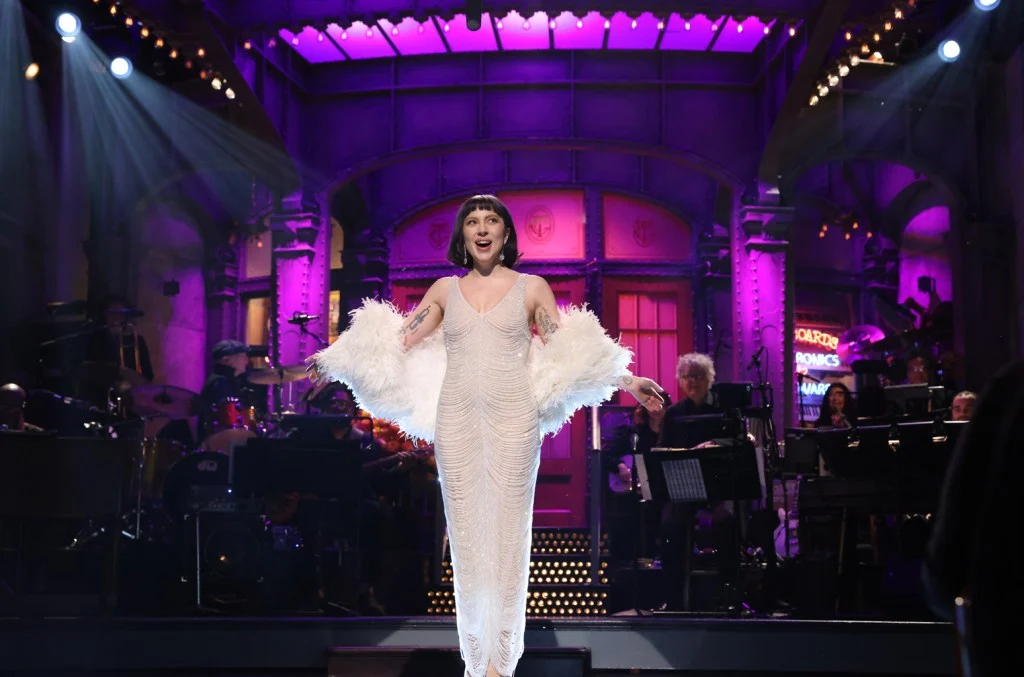
Last week (March 26), Lady Gaga announced dates and venues for The MAYHEM Ball, marking her first tour in three years and the sixth such “ball” of her career, dating back to 2009’s The Fame Ball. With ticket sales rolling out this week (beginning March 31), Billboard estimates that the tour could land as her fourth trek to gross $100 million.
An ever-expanding slate of shows have pushed Gaga’s 2025 projections from the brink of $100 million to surging toward $125 million. But firm estimates for The MAYHEM Ball are tricky, because much in the spirit of Lady Gaga, the 2025 routing zigs where she has previously zagged. To use figures from her most recent outing – $5.6 million and 41,700 tickets per show on 2022’s The Chromatica Ball – would be to ignore the nuances of this year’s schedule.
The MAYHEM Ball winds Gaga through arenas in Europe and North America, following warm-up dates at Mexico City’s Estadio GNP Seguros and Singapore’s National Stadium (plus a free show in Rio de Janeiro) – at least as much as stadium shows can serve as a warm-up. It’s a swerve from the all-stadium routing on The Chromatica Ball, not to mention her theater residency in Las Vegas from 2018-24.
Upon the tour’s announcement, Gaga took to social media to celebrate her upcoming calendar. “We chose arenas this time to give me the opportunity to control the details of the show in a way you simply can’t in stadiums – and honestly, I can’t wait.”
Not only has Gaga oscillated from intimate theaters to football stadiums, but The MAYHEM Ball re-introduces some markets that she hasn’t played in decade, while foregoing some of the sold-out cities from her recent treks. Her shows in Seattle and Manchester will be her first proper concerts in those cities in 11 years. More dramatically, those stand-alone stops in Mexico City and Singapore will be her first since The Born This Way Ball in 2012.
Time is also a factor. Since Gaga’s last mostly-arena tour in 2017-18 (The Joanne World Tour), she has starred in three major-studio films, one of which won her an Academy Award for songwriting, plus a nomination for acting. She also released Chromatica and MAYHEM, both of which topped the Billboard 200 and spawned Billboard Hot 100 No. 1s, in addition to two jazz albums and the chart-topping soundtrack to A Star is Born.
Just as key, the concert business has undergone major transformation, first shutting down entirely for more than a year due to COVID-19 and then returning bigger than ever with skyrocketing ticket prices.
While recent projections for Beyoncé’s Cowboy Carter Tour were simple enough, carrying over many of the same venues from her previous tour just two years ago, the shape of The MAYHEM Ball is all its own.
Using the average ticket price from the markets that do carry over from The Chromatica Ball, and average-to-high capacity from each venue’s recent history, this year’s initial routing would be headed toward $80-85 million from about 700,000 tickets sold. A 15% rise in ticket prices would push the projected gross beyond $90 million and a 25% increase would clear the $100 million mark.
Those bumps consider the way that ticket prices have risen beyond the rate of inflation since her 2022 tour. And while The Chromatica Ball did take place after the post-COVID return as prices were already on the rise, tickets for six of its 20 shows were sold primarily in the (barely) pre-pandemic era, as the then-limited tour was first announced on March 5, 2020, just a week before venues were forced to close.
Notably, as Gaga undergoes a relative downsizing from stadiums to arenas, supply-and-demand could drive higher prices than on The Chromatica Ball, with far fewer seats available each night. Including multiple shows in certain locations, her 2025 schedule includes just six cities in the U.S. and Canada. That’s slightly less than eight for Chromatica, and much tighter than 35 on The Joanne World Tour and 33 on ArtRave: The Artpop Ball (2014). She makes up for it with multiple shows everywhere, including six at Madison Square Garden. Much like Beyoncé’s upcoming trek, sales could be even more competitive as fans from surrounding cities flock to Chicago, Miami, and New York, among few others.
Momentum behind The MAYHEM Ball and its international spin-offs has already gathered, with early demand forcing extra shows in those three markets plus a handful of others. Originally 38 shows, Gaga’s current slate of 50 ticketed dates is likely to surpass of The Chromatica Ball’s stadium-sized $112 million, potentially making it Gaga’s biggest year on the road since 2012.
Isolating the proper tour’s arena run, The MAYHEM Ball should approach the $100 million mark, possibly becoming Gaga’s forth tour to crack the nine-figure mark. It’d follow The Monster Ball (2009-11), The Born This Way Ball (2012-13) and The Chromatica Ball. The Joanne World Tour earned $94.9 million before cancelling its last 10 shows due to Gaga’s struggle with fibromyalgia. Plus, the Lady Gaga Enigma + Piano & Jazz residency brought in $110 million from 2018-24.
Dating back to her first reported headline show at San Diego’s House of Blues on March 12, 2009 ($18,500; 1,000 tickets), Gaga’s tours have grossed $723.1 million and sold 6.4 million tickets from a reported 462 shows.

Tucked away along California’s Central Coast is a small yet growing music festival that managed to survive one of the most tumultuous periods in the music business thanks to a little ingenuity and a heaping helping of support from its fans.
Launched in Monterey, Calif., in 2010, the California Roots Music and Arts festival celebrates its 15th anniversary this summer with a packed lineup that includes Jamaican artist Buju Banton’s first performance in the United States in more than a decade. The Memorial Day festival, set for May 23-25, also includes headliners Rebelution, Slightly Stoopid and Dirty Heads with sets from Collie Buddz, Iration, T-Pain, The Elovaters, Protoje, Atmosphere, J Boog, The Movement, SOJA, Common Kings, Steel Pulse and Matisyahu.
“It’s kind of cool when you see fans out there that have been coming to California Roots for 10 years, and they met their future wife or husband here, or they were pregnant at California Roots,” says Dan Sheehan, who created the festival with his wife Amy through their Central Coast production company Good Vibez.
Trending on Billboard
California Roots was once considered the largest reggae festival in the U.S., but competition from events like Cali Vibes in Long Beach, coupled with rising costs for festival talent and production, has made it much more difficult to do business since the end of the pandemic.
“We’re ahead of last year and right now we’re about even with 2022, which was a hard year to beat because we were on sale three years” due to the pandemic, Sheehan says. Unlike his competitors, California Roots has a limited marketing budget and focuses primarily on artists who don’t get much airplay or media support.
Billboard sat down with Sheehan to break down the long-term success of California Roots and zero in on the four reasons he believes the festival is on track to have one of its best years ever.
Cali Roots festival
@rileykathleenimages
Remember That Your History is Your Brand
When it comes to California Roots’ longevity in the festival space, Sheehan says part of its success stems from its longtime home at the Monterey County fairgrounds.
“This was the site of the 1967 Monterey Pop festival,” explains Sheehan, referring to the three-day concert series featuring Janis Joplin, Otis Redding, Jimi Hendrix and The Who that would inspire the creators of the Woodstock Festival to launch an East Coast counterpart to Monterey Pop in 1969.
“Knowing the history of this site and the energy here — it’s very special,” says Sheehan, adding, “I think there’s a lot of similarities between California Roots and Monterey Pops…each have their own approach to counterculture and going against the grain.”
Sheehan’s long history on the site has been critical for overcoming one of the festival’s biggest technical challenges: correctly mixing the audio for the site’s large metal seating bowl, where about half the headliner performances take place each year.
“There’s a science to mixing the bowl and angling the speakers” that dates back to Monterey Pop and has been refined over time by fairground staff, Sheehan says. “It’s technically pretty complicated because the shape of the bowl means if you don’t hit it right, the sound can bounce around.”
Invest Early and Invest Often in the Genre
Sheehan and his wife Amy have long been key supporters of the California Roots movement, celebrating the state’s contribution to the reggae genre while creating a music lane distinguished from the reggae’s foundational Jamaican roots.
Distinguishing a difference between traditional Jamaican reggae — which includes acts like Bob Marley, Peter Tosh, Barrington Levy and Toots and the Maytals — and stateside counterparts including Slightly Stoopid, the Dirty Heads, Iration and Sublime is largely about respect for reggae’s Caribbean origins and avoiding allegations of cultural appropriation. Creating a clear off-ramp for California-rooted reggae also means creating a unique identity for the genre that fans can actively support.
“There’s artists like Stick Figure who were playing on our small stage 10 years ago and are now headliners,” says Sheehan. “I think as festival producers, especially in a niche, it’s something that we have to do, continuing to develop these artists to sell tickets and stream their music. That message to support these acts really resonates with fans, who are looking to be part of a musical movement.
California Roots festival
@eyesofjem
Build the Community
One of the biggest challenges facing Sheehan and other festival organizers is the increasing costs of staging large events, as everything from staging to insurance and backline equipment has increased significantly since the end of the pandemic.
“My biggest concern is that the fan says, ‘I can’t afford this anymore,’” Sheehan says. “We can’t operate at a loss — we have to stay affordable while also making sure we make money each year. We have to make money. But if money is the byproduct of putting on a great event and it’s not the primary focus of it, then I think there’s a little bit more soul to it.”
Sheehan says his focus is to continue to “develop artists to keep selling tickets and selling streaming music and all the stuff that kind of goes with it. That’s a big part of the development of California Roots.” He adds, “A few years ago, we decided not to do streaming, and we ended up bringing it back after we got so much heat for canceling it. There’s a lot of people who have made it part of their Memorial Day tradition, and maybe one year they can’t afford it. So instead they can stream it. So we brought it back that year and people responded positively to the news.”
Find Ways To Keep It Affordable
Payment plans have become an important tool for keeping prices down, Sheehan says, noting that 65 to 70 percent of fans use payment plans to pay for their tickets each year. Fans can pay as little as $29 to reserve tickets and then make monthly payments for the festival, which costs $158 for one day and $358 for three days.
“If you buy them on the loyalty on-sale, you have almost a year to pay off your ticket,” Sheehan says. “You pay once a month on an auto withdraw. It’s easier for people to afford and a lot of people utilize it.”
Sheehan has contingency plans in place for fans who default on their payments to help them bring their accounts current, though he adds the default rate is quite small.
“It’s a free, no-interest loan and a lot of people are thankful we offer it,” he says.

Non-profits Live Music Society and Salt Lick Incubator have teamed up with D-TOUR, a network of independent venues and promoters, to present a fresh approach to touring. The collaborative tour, called One Night Live, will feature three rising artists — Ellie Williams, Sofia Lafuente and Farayi Malek — on a three-week trek supported by the organizations.
Together, Live Music Society, D-TOUR and Salt Lick Incubator have envisioned a new model that enables rising young artists to break into new markets and build their fanbase while tapping into local scenes and meeting local bands and introducing venues to new talent. The tour, which kicks off on May 16 at Gramps in Miami, will have the financial backing of Live Music Society. The mission is to create a viable alternative for independent artists and venues that have been hit hardest by the growing cost of live events.
Live Music Society supports a large and growing network of small performance venues across the U.S. through multiple grant programs, through which it has issued 210 grants to 180 venues totaling more than $4 million. While working closely with these venues, several recipients requested funds to enable them to present emerging artists.
Trending on Billboard
“The venues in our community want to, and need to, present new artists and welcome touring acts and new customers into their spaces, but it is becoming financially harder and harder to go on tour, and harder to run a smaller venue,” said Live Music Society executive director Cat Henry in a statement. “Artists need places to play, places to stay, and people to listen, and with our partners in One Night Live, we can help make this happen and demonstrate a model that might increase the odds of success for all involved.”
The tour will run through locally owned venues across the East Coast, South and Midwest, with the billed artists performing alongside local and regional artists selected by each venue. Each act will perform their own set every night, with the two others — in an effort to create a more efficient touring model — serving as backing musicians.
Salt Lick Incubator has been working closely with the artists featured on the tour via writing camps, collaborations, gig opportunities and branding/marketing support to help set them up for success.
“It has become exceedingly difficult for an emerging artist to build their hard ticket history if they don’t land a coveted opening slot on a bigger tour and or have a viral moment,” added Salt Lick Incubator president Liza Levy. “The support that Live Music Society, D-TOUR, and these independent venues are providing in this non-traditional way is a formidable win for the developing artist community.”
D-TOUR worked with its affiliate venue members to book the tour, organize the routing, identify local support acts and market the shows. The dates will include stops at Tampa’s Crowbar, Altar (Masquerade) in Atlanta, the Smiling Moose in Pittsburgh and DRKMTTR Collective in Nashville.
“Now more than ever these pathways are needed to protect the relationship between independent venues and artists as well as to enhance the experience of the music fan who finds value and joy in discovering their next favorite artist in this intimate setting for one night live,” added D-TOUR COO Tom DeGeorge.
Tickets for One Night Live are available now via each venue’s website. The full list of tour dates is below.
One Night Live
Courtesy Photo

Lee Zeidman, longtime president of Crypto.com Arena, Peacock Theater and LA Live, announced his retirement on Friday (March 28).
“After 45 years in the industry, opening numerous venues and hosting approximately 6,500 events, I have decided I’m no longer interested in working full time and will move on to write the next chapter in the book of Lee,” Zeidman tells Billboard. “I’m looking forward to doing whatever I want, whenever I want, wherever I want and however I want.”
Zeidman says he has agreed to assist with the leadership transition with an official end date no later than Oct. 31, 2025. The building’s ownership group, AEG, has engaged an executive recruitment team to find Zeidman’s replacement and is splitting the job into multiple positions.
Zeidman is a graduate of Cal State Northridge and got his big break working at the Great Western Forum in Los Angeles. When the Lakers and Kings decided to move to Downtown Los Angeles, Zeidman was the first employee hired at their new home, Staples Center, and he helped manage the construction of L.A. Live, one of North America’s first entertainment districts.
In 2020, Zeidman was honored with the Association of Luxury Suite Directors’ 2020 Visionary Award. Under his management, Staples Center, later renamed Crypto.com Arena, hosted nine NBA championships, three Stanley Cup Finals and five WNBA Finals. The arena has also hosted a multitude of sold-out concerts, awards shows and high-profile events, including the Grammys and funerals for Michael Jackson, Kobe Bryant and Nipsey Hussle.
Zeidman says he has no immediate plans in his retirement but would like to teach and serve on the board of different non-profit groups or associations.
“I’m most looking forward to doing nothing,” Zeidman says. “Iv’e done this for 45 years, I’ve worked for some incredible leaders and feel incredibly lucky to have had this career.”
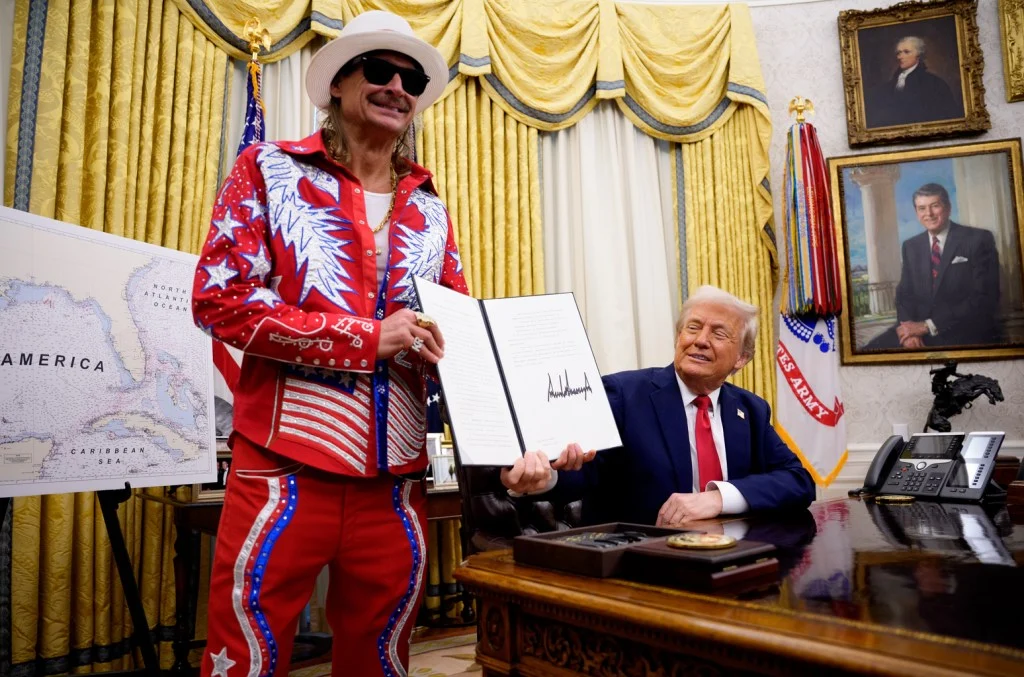
President Donald Trump was joined at the White House on Monday (March 31) by Kid Rock for the signing of an executive order that instructs the Federal Trade Commission (FTC) to enforce the BOTS Act and crack down on scalpers who illegally obtain high-priced concert tickets for resale.
Signed in 2016, the BOTS Act made it illegal to use specialized computer programs or automated bots to defeat access control systems designed to limit the number of tickets a person can purchase online for a popular concert. The legislation was created to combat bot-assisted attacks on high-profile ticket sales but has only been enforced once since its passage.
The order directs the FTC to work with Attorney General Pam Bondi to “ensure that competition laws are appropriately enforced in the concert and entertainment industry” and to “rigorously enforce the Better Online Ticket Sales (BOTS) Act and promote its enforcement by state consumer protection authorities.” It additionally calls for greater transparency around ticket prices and asks law enforcement to “take enforcement action to prevent unfair, deceptive, and anti-competitive conduct in the secondary ticketing market”; and instructs both the Secretary of the Treasury (currently Scott Bessent) and the Attorney General to make sure “ticket scalpers are operating in full compliance with the Internal Revenue Code and other applicable law.”
The order also instructs the Treasury Department, the Department of Justice, and the FTC to deliver a report within 180 days “summarizing actions taken to address the issue of unfair practices in the live concert and entertainment industry and recommend additional regulations or legislation needed.”
During the signing, Rock thanked the president for the order, adding that it’s a first step in cracking down on bots that “come in and…get all the good tickets for your favorite shows they want to go to, and they relist them, sometimes for a 400 to 500% markup.”
The National Independent Venue Association (NIVA) issued a statement shortly after the signing that read, “We applaud President Trump’s Executive Order to protect fans from ticket scalping by individuals and companies built to fleece American consumers. We are also encouraged to see the order’s aim to remedy anti-competitive actions by large corporations. These actions will help address the two problems jeopardizing the well-being of artists, independent stages, and fans: a predatory, unchecked resale market where bots and deceptive practices price gouge fans and the Live Nation monopoly that forces small businesses to shut their doors.”
The statement continued, “We want to thank Kid Rock for the education and advocacy he has provided policymakers on this critical issue. We urge Congress to heed his call to go further to protect artists in ticketing legislation, including a price cap on the resale market.”
Ticketing companies, booking agents, concert promoters and special interest music groups have all lobbied for greater FTC enforcement of the BOTS Act, which specifically “prohibits the circumvention of a security measure, access control system, or other technological measure on an Internet website or online service of a ticket issuer that is used to enforce posted event ticket purchasing limits.” Industry experts agree that companies like Ticketmaster are best suited for identifying bad actors, but can’t unilaterally take action and must work directly with federal authorities.

Five-time Billboard Country Airplay chart-topper Jordan Davis will hit the road again this year, when his 18-city, headlining 2025 Ain’t Enough Road Tour, produced by Live Nation, launches Sept. 11 at Acrisure Arena in Greater Palm Springs, Calif. As the “I Ain’t Sayin’” hitmaker prepares for the tour later this year, he says he’s feeling the pressure — in the best way.
“The most pressure I feel as a touring artist is when you announce that new tour and now it’s a blank slate,” Davis tells Billboard, noting his focus is on giving his best to find new ways of bringing his music and live shows to fans who have supported him since the beginning, from his 2018 debut album, Home State.
Trending on Billboard
“We’re so blessed with an amazing fanbase, truly, the people that have been to 30+ shows and who continue to come and see us and support us,” Davis says. “When I think of a new tour, that’s who I immediately go to, the day one fans. It’s like, ‘How do I do something that they haven’t seen?’ If I can do something that feels new and feels cool to a fan that’s been there from day one, I think I’m going to cover the wide range of fans we’ve picked up along the way.”
The Ain’t Enough Road Tour will make stops in Los Angeles, Phoenix, New York, St. Louis and more, before concluding Oct. 25 in Estero, Florida’s Hertz Arena. Davis will welcome “Hell Is a Dance Floor” hitmaker Vincent Mason as an opener. Also joining him is “Truth About You” hitmaker Mitchell Tenpenny, who previously opened for Davis on his 2024 Damn Good Time World Tour and joined Davis on Luke Combs’ recent stadium shows in Australia.
“Mitchell is a superstar,” Davis says, adding, “Vincent had ‘Hell is a Dance Floor,’ and I could not stop listening to that song. I saw he signed with Universal, where I’m signed and the second I saw that, I was like, ‘I’ve got to get this kid on tour.’ Mitchell and me have a good time and Vincent looks like he’s down to have a good time, too. It’s going to be some great music.”
It was one of those recent Australia shows with Combs and Tenpenny in Brisbane, Australia, that presented Davis with one of his most memorable onstage moments to date.
“There were storms coming in,” Davis recalls. “We were about three-quarters of the way through our show and I kept seeing the lightning getting closer. I thought, ‘I don’t know if we will be able to finish this [set] or not,’ and just then my drummer came through in our in-ears and was like, ‘We have to cut two songs.’ I always end ‘Buy Dirt’ with an a cappella piece. I finished ‘Buy Dirt’ and I’m standing out there like, ‘Ah, I can’t not do this.’ So, I just started singing it a cappella and about that time, it starts pouring rain. I’ve never heard a crowd get that loud in my life, singing every word. It was truly one of the most special moments I’ve had onstage.”
Starting with his 2018 Country Airplay chart-topper “Singles You Up,” Davis has become a radio chart mainstay thanks to songs including “What My World Spins Around” and “Tucson Too Late.” Two of his hit singles have earned song of the year accolades: ACM song of the year winner “Next Thing You Know” and CMA/NSAI song of the year winner “Buy Dirt.” Those songs helped spur his 2023 album Bluebird Days to platinum-selling status, and earlier this year, he notched the No. 2 Country Airplay hit “I Ain’t Sayin’.”
With his new song “Bar None,” he could potentially extend his chart-topping tally. Though Davis is often a co-writer on many of his hits, such as “Tucson Too Late” and “Buy Dirt,” his new song “Bar None” is an outside cut, written by Hunter Phelps, Lydia Vaughn and Ben Johns, with production by Paul DiGiovanni.
“I fell in love with it from the first time I listened to it,” Davis says. “The second you hear the hook, you want to be like, all right, I bet you they’re going to do this. This one surprised me. I didn’t really see it going here. I think about the line, ‘If moving on had a scoreboard it’d say, ‘You and your memory one/ Me and this bar none.’ It gave me a smile, like ‘Well done.’”
He adds, “I’ve always loved being able to kind of twist a hook. That’s one of my favorite things about songwriting, to take an idea and go somewhere completely different with it. It’s something that feels like a song I haven’t done from a production standpoint, even instrumentation-wise, with the banjo part [at the beginning].”
While his new single centers on a vain attempt at drowning heartbreak in a barroom, Davis’ time is devoted to his career and his family — both of which continue expanding as he keeps piling up hit songs, while he and his wife Kristen are expecting their fourth child. Davis says his growing family is looking at moving into a larger home.
Jordan Davis
Courtesy Photo
“That was actually the first thing, when my wife told me she was expecting, I was like, ‘Well, where are we going to put the nursery?’ So, we’ve started the search for a place with another bedroom.” Davis says they don’t know if the baby is a boy or girl yet, and notes, “We’re just going to wait and find out. We’ve got a girl [daughter Eloise, born in 2019] and two boys [Locklan, born in 2021, and Elijah, born in 2023], which means it’ll probably be another boy, which will increase the gray hairs on my head,” he says with a chuckle. “My boys want another brother, and my daughter really wants a sister.”
Even as he focuses on family and work, that doesn’t mean Davis doesn’t have a favorite Nashville bar he’ll visit on occasion.
“I think my buddy Luke [Bryan]’s got a good [bar] downtown with Luke’s 32 Bridge. My dad loves to come in town and go honky tonk. If he’s in town, we’ll go. That’s one of the few times I’ll hit up Broadway, and we usually always find ourselves at Luke’s.”
See the tour announcement video for the Jordan Davis Ain’t Enough Road Tour, featuring Peyton Manning and Jim Nantz, below:
Pre-sale tickets for the Ain’t Enough Road Tour will be available beginning Wednesday at 10 a.m. through Davis’s fanclub The Parish, while tickets for the tour go on sale Friday at 10 a.m. See the list of tour dates for the Jordan Davis: Ain’t Enough Road Tour below:
Sept. 11 – Greater Palm Springs, CA @ Acrisure ArenaSept. 12 – Concord, CA @ Toyota Pavilion at ConcordSept.18 – Los Angeles, CA @ Greek TheatreSept. 19 – Phoenix, AZ @ Arizona Financial TheatreSept. 20 – Albuquerque, NM @ Isleta AmphitheaterSept. 26 – Independence, MO @ Cable Dahmer ArenaSept. 27 – St. Louis, MO @ Chaifetz ArenaOct. 2 – New York, NY @ Radio City Music HallOct. 3 – Boston, MA @ MGM Music Hall at FenwayOct. 9 – Lincoln, NE @ Pinnacle Bank ArenaOct. 10 – Rosemont, IL @ Allstate ArenaOct. 11 – Milwaukee, WI @ BMO PavilionOct. 16 – Dayton, OH @ Wright State University Nutter CenterOct. 17 – Hershey, PA @ Giant CenterOct. 23 – Duluth, GA @ Gas South ArenaOct. 24 – Savannah, GA @ Enmarket ArenaOct. 25 – Estero, FL @ Hertz Arena
SaveLive, the platform launched in 2020 during the pandemic to assist independent venue owners and promote concerts in secondary and tertiary markets, has changed its name to Gate 52. The company was co-founded by John Fogelman and Marc Geiger “to bring scalable services and advantages to independent venue owners and secondary markets,” according to a press release […]

James Estopinal is having an existential crisis.
For most of his professional life, Estopinal has operated as Disco Donnie, an old school concert promoter known for throwing festivals and taking dance artists on tours across the country. Estopinal was what many called a “pure play” promoter, meaning he didn’t own any venues himself; 100 percent of his attention and capital was spent building artists’ touring careers and supporting acts on the road.
Unfortunately for Estopinal, it has become increasingly difficult to sustain oneself as a full-time road warrior, renting out venues and battling club owners each night for his artists’ fair share. After a bumpy festival season in 2024, Estopinal and his partner, Patrick Tetrick, crossed the concert world’s Rubicon last summer and opened Silo, a brand-new nightclub in Dallas’ burgeoning Design District. Silo is not a typical nightclub — it’s a 30,000-square-foot transformed historic grain storage facility with beveled walls, 40-foot height ceilings, a 1,200-square-foot stage and a massive 100,000-watt sound system made by German loudspeaker company D&B Sound. Silo is Dallas’ first ever concert venue built for the electronic dance world and, to most people, opening their city’s hottest new nightclub would be the ultimate flex on a high-profile 30-year career in music and touring.
But Estopinal is not like most people.
Trending on Billboard
“I’m really struggling to suddenly be a club owner; it’s just not how I’m programmed,” he tells Billboard, noting that the transition from tour promoter to venue management has been difficult. As a promoter, Estopinal was taught early on not to trust venue managers and to always be skeptical of the line they’re pushing.
“I’ve always had a love-hate relationship with club owners,” Estopinal says. “They’re shady and I’m always trying to do the right thing. Like 90 percent of them have some shady shit going on and I never imagined myself being on that team.”
Making the leap from promotion to club operations is like a public defender suddenly joining the district attorney’s office, or an environmental activist going to work at a big oil company. Traditionally, the nightclub owner is the adversary of the show promoter, due in large part to the economic model of concert promotion.
Concerts typically make money in two ways: ticket sales and food and beverage sales. In a perfect world, the artist and the promoter keep 100% of the ticket sales, while the venue keeps all the food and booze money. That part’s easy — the tricky part is splitting up the show costs and deciding who pays each bill. Typically, venues will cover bar staffing and basic production needs, but the bigger the show, the more ticket takers and bouncers need to be hired, and the more expensive backline becomes.
These types of details should be worked out in advance, typically months ahead of time when the promoter is paying the deposit to book the venue. But it’s not uncommon for surprise expenses to pop up when the bill is settled between the parties. That’s when the gamesmanship begins, Estopinal explains, with both sides going line by line through bills, arguing over money.
Estopinal says he loathes the idea of hitting acts that play Silo with last minute expenses. As a promoter, when it “came to the settlement, I would always fight back,” Estopinal says, especially when club owners tried to make him pay their house nut — essentially a standard fee the venue would charge every touring show to recover unspecified expenses. To Estopinal, the house nut is like a hotel charging a $40 resort fee or an Airbnb rental charging a $100 cleaning fee — “they’re junk fees that are just a cash grab.”
Shakey Settlement
Inside Silo Dallas
Patrick Le
Estopinal remembers a show settlement in El Paso, Texas, when a club owner shook him down for a last-minute $1,000 “rent” charge.
“The deal was that he kept the bar and I got the door. Rent wasn’t in the original deal and I told him I wasn’t going to pay him rent,” Estopinal explains. “So, he opens his drawer and pulls out a gun and puts it on the desk. So, I say, ‘Oh, you’re threatening me now? Fine, take your $1,000 blood money.’”
Estopinal says he returned to the tour bus and stewed in anger for a while, before going back inside to confront the club owner again. Six security guards were summoned to the office, and “one got me in a headlock and they all kind of picked me up in a lateral position, carried me out down the stairs and put me back on the tour bus,” he recalls. “I never got my $1,000 back, but I did hear that he later got arrested for something else.”
Then there was a Skrillex show Estopinal promoted in the 2010s at a country western bar in San Antonio, Texas. Skrillex finished his set at midnight and his crew wanted to break down the show and leave, but the bar owner wanted to stay open to keep selling beer. The owner even had his resident DJ go on after Skrillex’s set and play Skrillex music.
“Suddenly all the fans that were leaving at the end of the Skrillex set turned around and came back in,” Estopinal says. “All so that the club owner can sell beer for two more hours.”
The tour managers approached Estopinal and told him to find the owner and shut down the faux Skrillex set so they could leave. “But I couldn’t find the owner anywhere. I noticed they had four bodyguards stationed around the DJ booth, and so I went back to the dressing room and said, ‘Hey, I can’t get this guy to turn the music off. You guys are just going to have to load out.’ They told me, ‘We can’t load out with all these people in here.’”
Worried that he might lose the rest of the tour if he didn’t quickly act, Estopinal took two shots of tequila with the tour manager and then “ran into the front of the DJ booth, dove inside, unplugged all the wires and pushed all the equipment on the floor,” he says. While the security guards weren’t able to stop Estopinal from silencing the bootleg set, they did “eventually get a hold of me and started wailing on me.”
The police eventually showed up, placed Estopinal in handcuffs and got him to fork over $2,000 to pay for the broken mixers and busted CDJ player. An expensive night, but minor when compared to the extortion Estopinal encountered when he tried to throw a rave with several big-name promoters in San Bernardino, Calif., in 1999. What had originally been forecast as a 5,000 to 8,000 person show quickly ballooned into a 25,000-person riot with fans swarming the box office, desperate to buy tickets.
“It was cash only and we’d have people come up to the window with a huge wad of cash and be like, ‘Give me 16 tickets,’” he says. “The money was coming in so fast that one of the ticket takers just started sweeping the cash onto the ground. There was no place to put it. And she just keeps selling tickets, ankle deep in cash.”
Eventually, Estopinal lost control of the show and “the police called in the riot squad, and they arrived in helicopters and tear gassed the front of the venue,” he says. Once the dust eventually settled, the venue manager approached Estopinal and told him the police wanted $40,000 in cash, right away. “I asked, ‘Can I give it to them myself?’ And they told me, ‘No, that would be illegal.’ The whole thing sounded illegal to me, but my only goal was not to have that party shut down. So, I went and got the $40,000 in cash and gave it to the venue manager. I don’t know where it went, but the event never got shut down.”
Promising Signs
Inside Silo Dallas
Tyler Church
The concert world has changed significantly since Estopinal’s riotous rave in 1999, mostly for the better, he concedes. The corporatization of the business led by Live Nation and AEG has standardized the show settlement system, and major talent agencies have become much more vigilant about sticking to the language of the contract and avoiding last-minute surprises.
“I’ve spent a lot of time thinking about how I can change the dynamic as a club owner and make the venue more artist-friendly,” Estopinal says. “I can try to make the tickets as cheap as possible and not let people bribe the doorman to cut in line or slip in through a side door that the promoter doesn’t know about.”
He’s also decided to make Silo available to community groups during off hours and has even struck a deal with a local Dallas church to lease the club for its Sunday services.
Pastor Richard Ellis with the Dallas-based Reunion Church told Billboard that he happened to stumble upon Silo while looking for a new home after the church ended its lease at the Dallas Convention Center.
“I met with Donnie’s partner Patrick Tetrick and he told me, ‘I probably shouldn’t tell you this, but it would be good for us to have you in here,’” recalls Ellis. “Sometimes a club like that can have a reputation and one can soften that reputation by having a church in the building on Sundays.”
Estopinal says he has other community uses for Silo in mind and notes that having a church in the building makes him feel better about crossing over into the venue world.
Protect The Enterprise
Inside Silo Dallas
Bo Buckley
Estopinal also says he has started to bring a lot of his own experience to Silo and do some of the club’s bookings in-house, tapping into his own expertise. One of his first lessons came during the opening of Silo in September when he ignored his own advice about splurging on a big headliner for opening night.
Estopinal says it’s a “classic mistake” to book a big a headliner for an opening night concert at a new venue because “if there’s any type of delay due to permit issues or construction, you’re not going to be able to open the venue and you’re still going to end up owing the artist the money.”
For reasons he can’t explain, Estopinal ignored his own advice and booked superstar DJ Tiesto as the opening artist for Silo. “The day of the show arrived and we still don’t have the permit needed to open the venue” due to a disagreement with the local fire marshal about Silo’s sprinkler system, he says. “The show sold out and I’m just sitting there imagining, ‘How am I going to get out of this one?’” Estopinal recalls. “Then Tiesto’s agent calls me and says, ‘I got some bad news. Tiesto’s plane had depressurized, and he had to turn back.’”
Estopinal described the news as divine intervention: If Tiesto was cancelling on Silo, then he didn’t owe the Dutch DJ a dime — crisis averted.
“And then, oddly enough, about an hour later, my phone rang again,” he says. “It was the fire marshal’s office. The permit issue had been resolved, and I was cleared to open Silo.”
Estopinal says he was shocked, but also clear-eyed in what he had to do. Tapping into his instincts as a promoter, new club owner and lifelong hustler, Estopinal grabbed the phone and immediately dialed Tiesto’s agent.
“I told him, ‘You better put him on a new plane immediately and get him out here tonight or else!’” Estopinal remembers. Tiesto made it in time to play the gig and the show opened without a hitch.
Surprisingly, Estopinal said he didn’t feel bad about the episode, noting that club ownership and tour promotion had one key component in common.
“You’ve got to protect the enterprise,” he says. “No matter what side you’re on, you want the show to go on.”

Fresh off their appearance on Joe Bonamassa’s Keeping the Blues Alive at Sea X cruise, Grammy winning sisters Rebecca and Megan Lovell of Larkin Poe have announced their 2025 Bloom tour in support of their new record of the same name.
Explore
Explore
See latest videos, charts and news
See latest videos, charts and news
Born in Georgia and currently residing Nashville, the pair begin their trek on April 8 in St. Louis, Mo., and run coast to coast with stops across the country. On March 31, days before the tour opens, Larkin Poe and Emmylou Harris are set to perform at Woofstock at City Winery in Nashville.
Bloom follows last year’s Grammy winning album Blood Harmony from 2022. Bloom debuted at No. 1 on Billboard’s Top Blues album charts.
Trending on Billboard
“History isn’t quick to point it out, but Rock ‘n’ Roll has been underpinned by a strong, matrilineal root that has been growing deep for generations, abiding. And now, more than ever, that root is coming to bloom,” a statement attributed to the band reads. “As female songwriters, producers, instrumentalists, and record label owners — we are proud to be standing on the shoulders of the strong women who have come before, and to be a part of the empowered chorus that is climbing to sing from the rooftops. When we won a Grammy for Best Contemporary Blues Album in 2024, for the first time ever, that category was represented by a female majority of talent. This is just a taste of what’s coming. In the prophetic words of Shania Twain, ‘let’s go girls.’”
Dates for Larkin Poe’s Bloom Tour 2025 can be found below:
3/31 – Nashville, TN – Woofstock at City Winery with Emmylou Harris4/8 – St. Louis, MO – The Hawthorn *4/10 – Kansas City, MO – The Truman *4/11 – Denver, CO – Ogden Theatre *4/12 – Salt Lake City, UT – The Depot *4/15 – Boise, ID – Treefort Music Hall *4/17 – Seattle, WA – The Showbox *4/18 – Portland, OR – Crystal Ballroom *4/19 – Vancouver, BC – Commodore Ballroom *4/22 – Grass Valley, CA – The Center for the Arts *4/23 – Los Angeles, CA – The Fonda Theatre *4/25 – San Francisco, CA – The Fillmore *4/26 – San Diego, CA – House of Blues *4/27 – Santa Barbara, CA – Arlington Theatre *5/8 – Philadelphia, PA – Union Transfer ^5/9 – Washington, DC – 9:30 Club ^5/10 – New York, NY – Irving Plaza ^5/12 – Boston, MA – The Wilbur ^5/14 – Toronto, ONT – The Concert Hall ^5/16 – Minneapolis, MN – First Avenue ^5/17 – Chicago, IL – The Vic Theatre ^5/22-26 – Cumberland, MD – DelFest †5/29 – Nashville, TN – Ryman Auditorium5/30 – Atlanta, GA – The Eastern5/31-June 1 – Lexington, KY – Railbird Music Festiva6/1 – Asheville, NC – The Orange Peel6/22 – Asbury Park, NJ – Asbury Lanes7/23-27 – Floyd, VA – FloydFest †9/4-7 – Las Vegas, NV – Big Blues Bender †10/3 – Miramar Beach, FL – Moon Crush Avett Moon10/9-12 – Nashville, TN – Tommy Emmanuel’s Guitar Camp10/17 – Manchester, UK – Manchester Academy10/18 – Glasgow, UK – O2 Academy10/19 – Bristol, UK – Bristol Beacon10/21 – London, UK – Eventim Apollo10/22 – Birmingham, UK – O2 Institute10/24 – Paris, France – Salle Pleyel10/25 – Tilburg, Netherlands – 013 Poppodium10/26 – Cologne, Germany – E-Werk10/28 – Oslo, Norway – Sentrum Scene10/29 – Stockholm, Sweden – Circus10/30 – Frederiksberg, Denmark – Falkoner Center11/1 – Berlin, Germany – Tempodrom11/2 – Warsaw, Poland – Klub Stodola11/4 – Vienna, Austria – Gasometer11/5 – Munich, Germany – Tonhalle11/8 – Geneva, Switzerland – Salle De L’Alhambra11/9 – Nimes, France – La Paloma11/12 – Lisbon, Portugal – Coliseu Dos Recreios11/14 – Madrid, Spain – Sala Riviera11/15 – Barcelona, Spain – Razzmatazz 111/16 – Bordeaux, France – Le Rocher de Palmer11/18 – Clermont-Ferrand, France – Le Cooperative de Mai11/19 – La Rochelle, France – La Sirene11/21 – Antwerp, Belgium – De Roma
w/ Special Guest Parker Millsap^ w/ Special Guest Amythyst Kiah† Festival Appearance
Larkin Poe’s Bloom tour
Courtesy Photo