State Champ Radio
 News
Page: 595
HipHopWired Featured Video
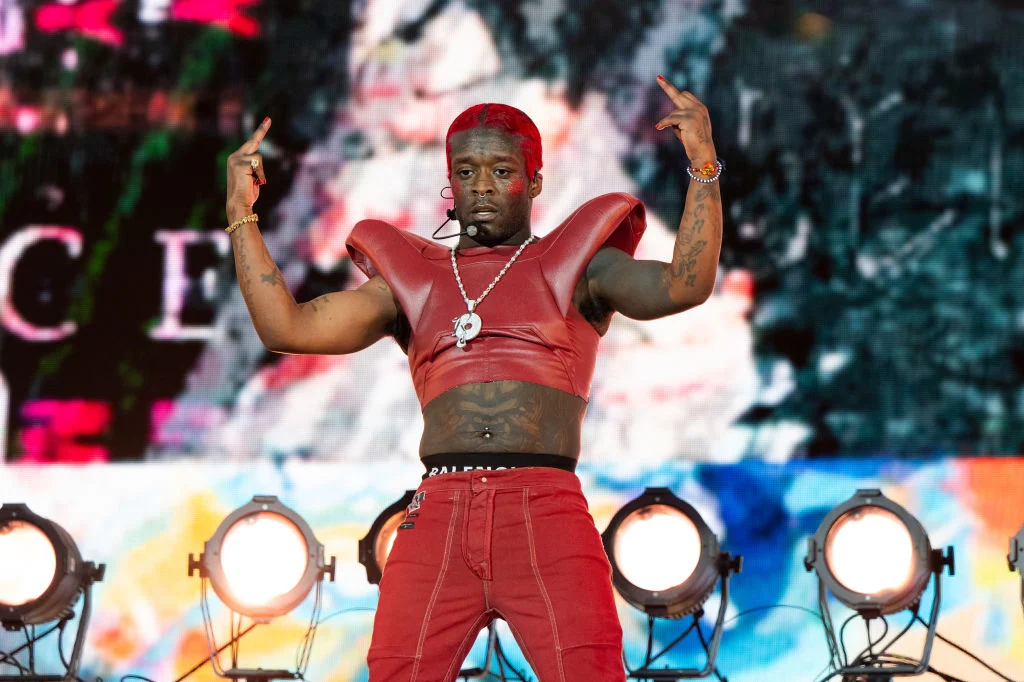
Source: Scott Dudelson / Getty
Lil Uzi Vert was rushed to a local hospital in New York City on Monday, April 21. The Philadelphia rapper was seen getting loaded into a waiting ambulance.
TMZ reports that paramedics were summoned to a hotel on the Lower East Side of Manhattan in response to a “sick person.”
The 29-year-old, born Symere Bysil Woods, was wheeled on a stretcher through the hotel lobby and placed into a waiting ambulance. Reportedly, they were accompanied by their girlfriend, City Girls rapper JT. Security did their best to shield them from cameras.
HipHopWired Featured Video
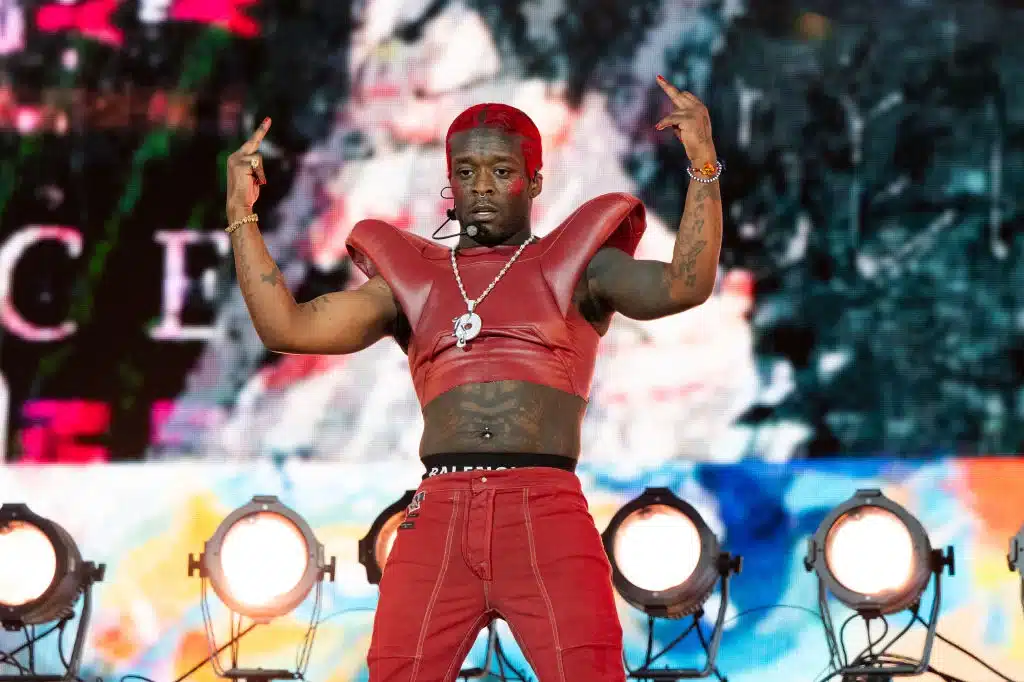
Source: Scott Dudelson / Getty
Lil Uzi Vert was rushed to a local hospital in New York City on Monday, April 21. The Philadelphia rapper was seen getting loaded into a waiting ambulance.
TMZ reports that paramedics were summoned to a hotel on the Lower East Side of Manhattan in response to a “sick person.”
The 29-year-old, born Symere Bysil Woods, was wheeled on a stretcher through the hotel lobby and placed into a waiting ambulance. Reportedly, they were accompanied by their girlfriend, City Girls rapper JT. Security did their best to shield them from cameras.
The inaugural MUSIC AWARDS JAPAN ceremony, the largest music awards in the country, is set to take place in May in Kyoto. Embodying the theme of “Connecting the world, illuminating the future of music,” the new international music awards is hosted by the Japan Culture and Entertainment Industry Promotion Association (CEIPA), an association jointly established by five major organizations in the Japanese music industry.
Explore
Explore
See latest videos, charts and news
See latest videos, charts and news
This year’s MAJ will recognize works and artists in more than 60 categories, including the six major awards for Song of the Year, Artist of the Year and more, which have gained significant attention and recognition from Feb. 5, 2024 to Jan. 26, 2025. The entries for each category were announced in March and the nominees for each category last week.
The fourth installment of Billboard Japan’s series exploring the trends and characteristics of MAJ will focus on the Best Vocaloid Culture Song entries that recognizes the Vocaloid song with the most outstanding musical creativity and artistry. Music created using Vocaloid software has developed in a unique way in Japan and we’ll assess how it’s currently being listened to around the world by breaking down various data of the category’s entries. In this article, songs using voice synthesizer software other than Yamaha’s Vocaloid products, such as CeVIO and Synthesizer V, will also be collectively referred to as “Vocaloid.”
Trending on Billboard
Trends Differ in Japan and Other Countries
Billboard Japan
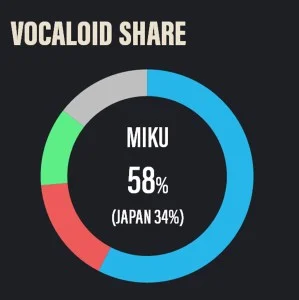
We first calculated the share of each virtual singer software (voicebank) used for each song entered in the Best Vocaloid Culture Song category, based on the number of global streams excluding Japan. The graph shows Hatsune Miku is featured in more than half the Vocaloid songs being listened to overseas. The share of songs using Miku’s voice in Japan is 34%, so she’s more popular outside the country.
During the tallying period, the top 3 Vocaloid tracks being listened to outside of Japan all featured Hatsune Miku. Furthermore, six of the top 10 songs use her virtual voice. On the other hand, only three tracks featuring Miku made it into the top 10 in Japan, falling short of the five featuring Kasane Teto.
Billboard Japan
The above shows the percentage of the kinds of voicebank being used for each song entered in the category (when multiple kinds were used, such as in a duet, both were counted). The voicebank used the most was Hatsune Miku, accounting for 37% of all songs. Additionally, since the release of Kasane Teto for Synthesizer V AI in April 2023, the number of songs using her virtual voice has increased, making it the second most used after Miku’s. The top 5 were followed by Kagamine Len, Megurine Luka, IA, Kaai Yuki, and KAFU all tied at No. 6, and Zundamon and Adachi Rei tied at No. 11.
Vocaloid Music is Being Listened to Globally
Billboard Japan
59% of the streaming shares of the entries in the Best Vocaloid Culture Song category came from outside Japan. 25% of the streams of the entries in the Song of the Year (SOTY) category, which honors outstanding songs from both Japan and abroad, came from overseas, so this indicates Vocaloid is a genre that is particularly popular in other countries among Japanese songs.
Billboard Japan
The graph above shows the streaming shares for all entries in the Best Vocaloid Culture Song category during the tallying period, broken down by country/region excluding Japan. The top four countries—the United States, South Korea, Indonesia, and Taiwan— are the same as the Top Global Hits from Japan category that recognizes domestic songs that have become global hits. Compared to that award, the ratio of Southeast Asian countries is slightly lower, and that of South American countries is slightly higher. Also, while the share of entries ranked No. 11 and below in Top Global Hits from Japan was 32%, the same share for Best Vocaloid Culture Song was 42%, suggesting that Vocaloid music is being listened to in more countries/regions than the predominant Japanese songs being listened to outside of the country.
South America Leads Miku’s Popularity while East Asia Shows Diversity
Billboard Japan
From here, we’ll explore trends by country/region. The chart above shows the shares of voicebanks by country for the entries in the category. Because DECO*27’s “Rabbit Hole” (Hatsune Miku) and Satsuki’s “Mesmerizer” (Hatsune Miku & Kasane Teto) dominate the top 2 spots in many countries/regions, Miku accounts for over half the total streams in almost all countries/regions, and in particular, the shares in Latin American countries such as Mexico, Chile, and Brazil exceed 60%. Songs emphasizing rhythm and feel of the lyrics are more likely to gain popularity in these countries, such as MARETU’s “Binomi” (Hatsune Miku) and Nunununununununu’s “Mimukauwa Nice Try” (Hatsune Miku).
Meanwhile, Asian countries such as South Korea, Taiwan, and Indonesia have relatively lower percentage of Miku tracks. Songs using other voicebanks, such as Kanaria’s “KING” (GUMI), Sasuke Haraguchi’s “Hito Mania” (Kasane Teto), and Iyowa’s “Kyukurarin” (KAFU) are popular in these countries as well. In particular, South Korea has over 20% of songs using voicebanks other than Miku, GUMI, and Teto. Due to its cultural proximity to Japan, other East Asian countries have relatively mature markets for Vocaloid music, which is probably why the preferences for songs using different virtual voices diversified faster than in other regions.
But countries in North and Central/South America aren’t simply following in the footsteps of Asia’s Vocaloid music scene. The popularity of Hatsune Miku’s character and differences in national characteristics, such as “melody-oriented” or “rhythm-oriented” preferences, are contributing to the differences in how Vocaloid music is being received.
Vocaloid music is steadily spreading across countries and languages. Because the genre isn’t bound by a specific musical style, MAJ’s Best Vocaloid Culture Song category serves as a significant metric. The nominees for this award this year are Sasuke Haraguchi’s “Igaku,” Yoshida Yasei’s “Override,” Kurousa P’s “Senbonzakura,” Hiiragi Magnetite’s “Tetoris,” and Satsuki’s “Mesmerizer.” The winner will be announced at the award ceremony in May, and we look forward to seeing how the award develops in the coming years.
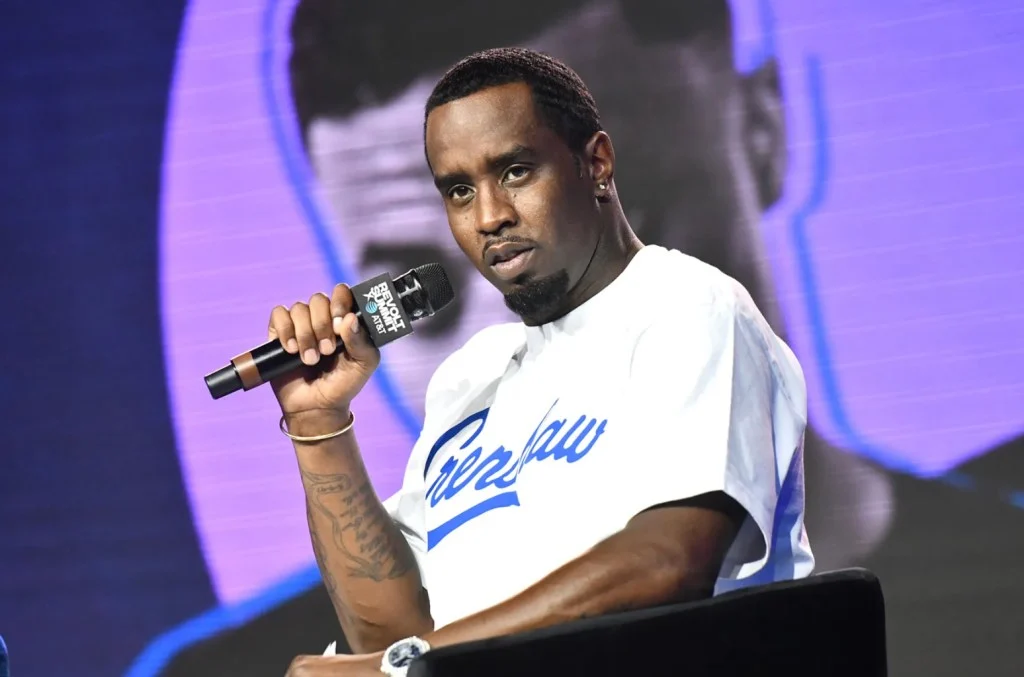
This is The Legal Beat, a weekly newsletter about music law from Billboard Pro, offering you a one-stop cheat sheet of big new cases, important rulings and all the fun stuff in between.
This week: A breakdown of the many lawyers working on the Sean “Diddy” Combs litigation; a motion by Lil Durk to dismiss his federal murder-for-hire charges; an updated version of Drake’s lawsuit against Universal Music Group focused on the Super Bowl; and much more.
THE BIG STORY: The Diddy Debacle’s Many, Many Lawyers
To lead off Billboard’s annual Top Music Lawyers list, I dove deep into the many attorneys involved in the litigation against Sean “Diddy” Combs over his alleged sexual abuse.
Trending on Billboard
Spread across a complex criminal case and dozens of civil lawsuits in multiple jurisdictions, the Combs litigation unsurprisingly involves a slew of high-powered lawyers, ranging from veteran defense attorneys to experienced sex-crimes prosecutors to a prolific plaintiff’s lawyer who says he represents more than 100 victims. And that’s not even mentioning the BigLaw attorneys hired to defend top industry players who have been dragged — they say wrongly — into the messy litigation.
For the whole story, which covers more than 20 lawyers in all, go read my full article here. And make sure not to miss the actual Top Lawyers list after that, detailing the top music industry attorneys who are making deals, guiding clients and watching out for AI.
Other top stories this week…
IF THE SONG DOESN’T FIT – Lil Durk asked a federal judge to dismiss murder-for-hire charges, claiming prosecutors are citing song lyrics as evidence even though he wrote them more than six months before the alleged crime. Prosecutors had claimed last year that the Chicago drill star rapped about ordering his “OTF” crew to murder rival Quando Rondo, but his lawyers said that claim was “demonstrably false” and that the feds used such evidence to mislead a grand jury: “Unless the government is prosecuting Banks on a theory of extra-sensory prescience, the lyrics could not have soundly informed the grand jury’s finding of probable cause,” Durks lawyers wrote.
DRAKE v. UMG UPDATE – Drake filed an amended complaint in his defamation lawsuit against Universal Music Group over Kendrick Lamar’s “Not Like Us,” focusing heavily on the Super Bowl halftime show that took place after the original case was filed. Drake’s lawyers say the decision to censor the word “pedophile” during the broadcast had actually helped his case: “Kendrick Lamar would not have been permitted to perform during the Super Bowl Performance unless the word ‘pedophile’… was omitted from the lyrics — that is because nearly everyone understands that it is defamatory to falsely brand someone a ‘certified pedophile’,” the star’s lawyers wrote.
LEGAL R.I.P. – Music attorney Joel Katz, for decades one of the industry’s most powerful figures, died last week at the age of 80. A longtime practice group chair at the firm Greenberg Traurig, Katz represented a who’s who of top music executives over his career, as well as major artists (Willie Nelson, Jimmy Buffett, Tim McGraw) and industry groups (Recording Academy and Country Music Association). After Recording Academy head Deb Dugan accused Katz of sexual harassment in 2020 — an allegation he denied — he joined Barnes & Thornburg in 2021, where he spent the rest of his career. Go read Melinda Newman’s full obituary here, featuring reactions from around the industry.
DIDDY TRIAL DELAY DENIED – Judge Arun Subramanian denied a request by Diddy to delay his sex trafficking and racketeering trial by two months, ruling that the move was made too close to trial. The star’s lawyers had argued they didn’t have enough time to prepare for trial after prosecutors added new charges earlier this month. But the judge ruled that the new indictment largely overlapped with earlier charging papers, telling Diddy’s lawyers he found it “unclear why there isn’t sufficient time to prepare.”
SMOKING GUN OR ‘UNRELIABLE’? – Elsewhere in Diddy-world, his lawyers asked the judge to exclude the infamous 2016 surveillance video of him assaulting his former girlfriend Cassie Ventura from the trial, arguing it would “unfairly confuse and mislead the jury.” They claim the clip was edited by CNN and then the original was destroyed, leaving only an “inaccurate, unreliable video” to play for jurors: “The manipulation of the videos was specifically designed to inflame the passions of CNN’s viewing audience, and that is what the government is hoping to leverage in this case.”
DISASTER DEPOSITION – Megan Thee Stallion asked a federal judge to hold Tory Lanez in contempt of court over “disruptive” and “inflammatory” behavior during a recent deposition in a civil lawsuit. Lanez — currently serving a 10-year prison sentence for shooting Megan — made a “mockery of the proceedings” by harassing a female lawyer and demanding definitions of basic terms. The motion came in a defamation case Megan filed against gossip blogger Milagro Gramz, who she claims has waged a “coordinated campaign” with Lanez to “defame and delegitimize” the superstar rapper in the wake of the shooting and trial.
DANCE DANCE LITIGATION – A TikTok user named Kelley Heyer, who says she created last summer’s viral “Apple dance” to a Charli XCX song, is suing Roblox over allegations that the company violated copyright law by selling her dance moves as an “emote.” Heyer claims that other games paid her for a license, but that Roblox used her moves without a deal. The lawsuit is the latest in a long line of cases filed over viral dance moves that are used in video games.

Billboard’s Producer Spotlight series highlights creatives currently charting on Billboard’s producer rankings. Whether they are new to the industry or have been churning out hit after hit, the intention is to showcase where they are now, and their work that’s having a chart impact.
Explore
Explore
See latest videos, charts and news
See latest videos, charts and news
Michael Uzowuru and J. White Did It are seasoned hitmakers on Billboard’s producer charts. The pair share the top spot on Billboard’s latest R&B Producers ranking (dated April 26, 2025) thanks to their work on SZA and Kendrick Lamar’s “30 for 30.” Uzowuru spends a 10th total week at No. 1, while J. White Did It (real name: Anthony Jermaine White) spends a 13th week on top.
“30 for 30” ranks at No. 2 on the Hot R&B Songs chart, after spending six weeks at No. 1, via 29 million radio airplay audience impressions (up 2% week-over-week) and 9.3 million official U.S. streams, according to Luminate. The song also ranks at No. 25 on the Billboard Hot 100, after hitting No. 10 to become Uzowuru’s first top 10 as a producer and J. White Did It’s fourth. It was released in January on the Lana deluxe reissue of SZA’s 2022 album SOS.
Trending on Billboard
Uzowuru began producing in the early 2010s with west coast rappers Vince Staples, Earl Sweatshirt and Domo Genesis. Since then, he’s worked with Frank Ocean (Blonde), Childish Gambino (Bando Stone & The New World), Rosalía (Motomami), Kevin Abstract (American Boyfriend), Beyoncé (The Lion King: The Gift) and Halsey (The Great Impersonator), among others.
Michael Uzowuru’s Production History on the Hot 100SZA with Kendrick Lamar, “30 for 30,” No. 10, 2025 (J. White Did It)SZA, “Scorsese Baby Daddy,” No. 41, 2025 (Tyler Johnson, Tyler Page, Owen Stout)SZA, “Notice Me,” No. 44, 2022 (Teo Halm, Carter Lang, thankgod4cody)SZA feat. Travis Scott, “Open Arms,” No. 54, 2022 (Teo Halm, Rob Bisel)SZA, “Diamond Boy (DTM),” No. 60, 2025 (Carter Lang, Declan Miers, The Antydote, Solomonophonic)SZA,” Another Life,” No. 63, 2025 (Rob Bisel, Sir Dylan)Childish Gambino, “Lithonia,” No. 69, 2024 (Childish Gambino, Ludwig Göransson, Max Martin)SZA, “Crybaby,” No. 70, 2025 (Carter Lang, thankgod4cody, Declan Miers)Halsey, “Lucky,” No. 88, 2024 (RAHM, Sir Dylan)Frank Ocean, “Nights,” No. 98, 2016 (Frank Ocean, Vegyn, Buddy Ross)
As for J. White, the producer/songwriter first broke through in 2017 thanks to his work with Cardi B. He produced three tracks from her debut album, Invasion of Privacy, including its Hot 100 No. 1s “Bodak Yellow (Money Moves)” and “I Like It.” He subsequently produced a third No. 1, via Megan Thee Stallion’s “Savage,” featuring Beyoncé, in 2020, and later, tracks with 21 Savage, Doechii, Flo Milli and Latto.
J. White Did It’s Production History on the Hot 100Cardi B, “Bodak Yellow (Money Moves),” No. 1, three weeks, 2017 (Laquan Green)Megan Thee Stallion feat. Beyoncé, “Savage,” No. 1, one week, 2020Cardi B, Bad Bunny & J Balvin, “I Like It,” No. 1, one week, 2018 (Craig Kallman, Tainy, Invincible)SZA with Kendrick Lamar, “30 for 30,” No. 10, 2025 (Michael Uzowuru)Cardi B, “Money,” No. 13, 2018Doechii ft. Kodak Black, “What It Is (Block Boy),” No. 29, 2023Polo G, “Bad Man (Smooth Criminal),” No. 49, 2021Cardi B, “Money Bag,” No. 58, 2018 (Laquan Green)Iggy Azalea, “Sally Walker,” No. 62, 2019
Billboard launched the Hot 100 Songwriters and Hot 100 Producers charts, as well as genre-specific rankings for country, rock & alternative, R&B/hip-hop, R&B, rap, Latin, Christian, gospel and dance/electronic, in June 2019, while alternative and hard rock joined in 2020, along with seasonal holiday rankings in 2022. The charts are based on total points accrued by a songwriter and producer, respectively, for each attributed song that appears on the Billboard Hot 100. The genre-based songwriter and producer charts follow the same methodology based on corresponding “Hot”-named genre charts. As with Billboard’s yearly recaps, multiple writers or producers split points for each song equally (and the dividing of points will lead to occasional ties on rankings).
The full Hot 100 Songwriters and Hot 100 Producers charts and full genre rankings can be found on Billboard’s charts page.

It’s the Wilson Phillips song the world didn’t know it needed.
Tight, three-part harmonies, infectious hooks and a light, positive air that makes it easier to hold on for one more day — that’s Runaway June’s “New Kind of Emotion,” a slow-boiling track soaked in fresh nostalgia.
Wilson Phillips was “my favorite when I was little,” Runaway June founder Jennifer Wayne says, “because my mom used to listen to them.”
Explore
Explore
See latest videos, charts and news
See latest videos, charts and news
Wayne is the only original member left in Runaway June. Current lead vocalist Stevie Woodward and fiddler-vocalist Natalie Stovall found their roles in the trio’s live show through several tours, but it wasn’t until they developed “New Kind of Emotion” with songwriter Paul Sikes (“Wildflowers and Wild Horses,” “Make Me Want To”) on July 19, 2023, that they felt like they’d found their collective voice in the writing room.
A Woodward family gathering started the creative chain. Some of the guests started making music, and one of her cousin’s friends slid into a chord progression with a descending element. Woodward freestyled a melody, and she liked it so much that she recorded it on her phone for later use.
Trending on Billboard
“The song and the melody felt like it was a very summery, nostalgic song,” Woodward remembers. “My thought was, ‘Well, what if it was a song about driving down the Pacific Coast Highway?’ I saw a convertible with the roof off, and I thought of the song ‘Wild Horses’ by The Rolling Stones, one of my favorite bands.”
But no co-writers responded to that descending progression until she pitched it to her bandmates. “It wasn’t meant for those people,” she says. “It was meant to be a Runaway June song.”
But it continued to evolve. The PCH and the “Wild Horses” reference disappeared as they evaluated its foundation. “One of us was like, ‘Well, gosh, it kind of just feels like a love song,’ ” Wayne recalls. “And one person said, ‘Yeah, like a new kind of emotion.’ And then I think I said, ‘You set it in motion,’ and then we just rolled with it.”
They wrote the chorus first, catching a sunshiny vibe with a subtle spike of melancholy. That came from the chord structure, which features two major-seventh chords back-to-back. They use four notes each, rather than the standard three, to create their sound, and one is only a half-step from the root. It introduces a tinge of dissonance, adding biting complexity.
“Those major-seventh chords give you that kind of throwback feel, but also in an uptempo way that makes you just kind of want to roll the windows down at the same time,” Sikes says.
Runaway June explored harmonies as the members shaped the melody, pointedly emphasizing the trio’s signature. “The three-part is the lead voice,” Stovall says. “That’s what this band is. It’s three-part harmony, and obviously Stevie sings the lead lines. But we want to make sure that the harmonies are really supporting everything.”
The major-sevenths, by stuffing four notes into the chords, offered greater harmonic options, and Sikes was determined to take advantage of them, encouraging Wayne to incorporate the dissonant notes into her high harmonies. Initially, she found herself edging those notes up a half-step to the more conventional root, but as Sikes coached her through it, Wayne increasingly caught the beauty in the part.
“It rubs a little bit,” she says. “My brain couldn’t wrap around singing it, but once you learn it and you sing it together, you’re like, ‘Wow, that’s actually really cool.’ ”
Once they’d crafted two verses at a lower, sultry pitch, they developed another, unexpected hook. “This is what a love song feels like” popped up, and they instinctively repeated the phrase hypnotically after the second chorus.
“When you think about relationships, a lot of times they come out of nowhere,” Woodward says. “So that part, while it does come out of nowhere, it’s fitting for the message.”
“It’s not your typical bridge,” Sikes adds, “because we’re not bringing up any new information. We’re not reinventing the wheel. You might consider it a refrain, more than anything, where it’s kind of a ‘row, row, row your boat’ round-robin [of] that hook.”
They created another moment with a four-note passage in the intro that became a key instrumental riff. It operated similarly to the major-seventh chords, holding at a final note that didn’t quite resolve. It introduced more rewarding tension, similar to the fresh uncertainty of a new relationship.
“I’m always trying to find some sort of fiddle riff that is another hook in addition to the lyrical hooks,” Stovall says.
Sikes built the bulk of a demo that day, converting that riff to a programmed steel guitar in some parts of the performance. He also programmed drums, which were eventually replaced, though the members of Runaway June discovered to their surprise that they preferred the mesmeric artificial percussion, which mirrored the narcotic pleasure of new love.
They developed a game plan for the song during preproduction with their producer, Sugarland’s Kristian Bush, before recording it at Nashville’s Sound Stage in March 2024. The studio band easily grasped the goals.
“The song is a little bit about that weird floatiness you get when you meet somebody for the first time and you connect with them and you’re like, ‘Wow, why do I feel lighter?’ ” Bush explains. “Until you have that feeling, you don’t really connect to a lot of those kinds of songs.”
Woodward played one of the acoustic guitars on the track, drummer Travis McNabb captured the controlled nature of the programmed percussion and Stovall turned in her fiddle riff — though it was blended with Benji Shanks’ electric guitar and a shape-shifted Brandon Bush keyboard part.
“We use an ambient pedal a lot called the Microcosm,” Kristian Bush says. “It inserts weird, uncontrollable versions of your note, so the keyboard might be a Wurlitzer or a [Fender] Rhodes or something really normal. Once you run this thing, you kind of spin knobs until it does something wacky and pray that it goes to the good side.”
A day later, he booked Runaway June into the Starstruck Studios and had the members record their vocals simultaneously for the first time. Watching through the glass in their separate vocal booths, they could breathe as one and follow each other as they would in concert. It’s part of the reason their harmonies sound as tight as a Wilson Phillips performance.
“That’s exactly what I was going for,” Kristian says.
The track went to digital service providers in October, and programmers responded enthusiastically as Runaway June toured. That played a part when the trio asked Quartz Hill to release “New Kind of Emotion” to radio instead of a previously planned ballad. It shipped to country stations through PlayMPE on March 24.
It also tested well informally with people outside the music business; it’s the first time that all of Runaway June’s family members were in harmony on a particular song.
“It’s a good sign,” Stovall says, “when your parents tell you that they were dancing to it in the living room.”

Pope Francis passed away on Monday, April 21, and musicians such as J Balvin and Andrea Bocelli have taken to social media to pay tribute to the pope. What was your favorite memory of Pope Francis? Let us know in the comments below. Narrator:That’s J Balvin taking a selfie with the late, great Pope Francis […]
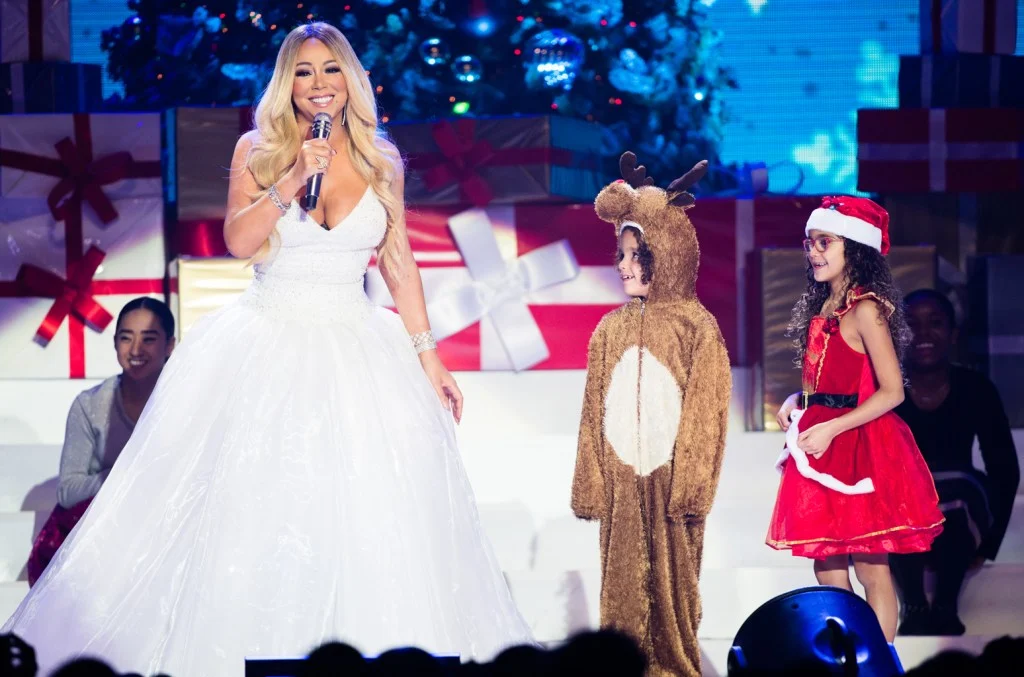
Dem Babies are not happy with dem Easter photos. After Mariah Carey shared a carousel of sweet snaps from her family celebrations this year, the superstar’s 13-year-old twins Moroccan and Monroe — whom she shares with ex Nick Cannon — both hilariously voiced their dismay in the comments. In the pictures posted on Instagram Monday […]

50 Cent was able to squash his beef with Joe Budden at the New York Knicks game last night, but Ja Rule reminded him their beef is still very much alive. On Monday (April 21), 50 and Joe ran into each other at Madison Square Garden as the New York Knicks faced off against the […]

HipHopWired Featured Video
Source: Amy Sussman / Getty
Kevin Gates has responded to what many interpreted as LeBron James and his wife Savannah’s reaction to Gates’ recent controversial remarks.
Gates originally stirred conversation when he said, “I don’t like the way Savannah look at LeBron. I like the way them white women look at LeBron.” The statement sparked widespread backlash online, with many viewing it as both disrespectful and racially insensitive. In what appeared to be a subtle clapback, LeBron took to Instagram, writing, “Kings don’t concern themselves with the opinions of peasants.”
Meanwhile, Savannah joined in with a more playful, yet pointed reaction, sharing a viral clip of Nicki Minaj saying, “What? Um—chile, anyways, so,” signaling dismissal and disinterest.
Gates, never one to shy away from controversy, responded via his own Instagram video. “The truth hurts, but it heals,” he began. “And ‘Bron, I love you, ‘cause you my n**a… But anyway, look, long as you being celebrated, I don’t care who don’t like me.”* He went on to say that his focus is on celebrating LeBron’s legacy, adding, “We gon’ get the results… I’m a life coach and a guru.”
Though Gates attempted to temper his comments with affection toward LeBron, many saw the video as doubling down rather than offering any sort of apology. The situation highlights the growing tension between celebrities using social media as both a platform for personal expression and a battlefield for public opinion. Whether this exchange will escalate further or simply fade into the constant churn of online drama remains to be seen.