State Champ Radio
 News
Page: 580
The PRO business is booming! But could it become a victim of its own success?
For the 75 years after the 1939 founding of BMI, the U.S. had three organizations that collected public performance royalties for songs on behalf of composers and publishers: ASCAP, SESAC and BMI. And for much of that time — from the 1950s, when ASCAP and BMI expanded into all genres, to 1993, when a group of investors purchased SESAC — the competition might best be described as gentlemanly. ASCAP and BMI became the Coke and Pepsi of PROs, licensing similar rights, for different songs, to similar bars, restaurants, concert venues and television and radio stations. The privately owned SESAC was less aggressive than it is now.
Some licensees want to set the clock back to that simpler time. They may have inspired members of Congress to ask the Copyright Office to look into the subject, which resulted in a Notice of Inquiry and then a flood of comments. (Billboard has a guide here.) To understand why, and what this means, it helps to realize how much U.S. performance rights licensing has changed in the last decade.
In 2013, Irving Azoff, ever the disruptor, founded GMR, which like SESAC — owned by the investment group Blackstone since 2017 — signs big songwriters with big advances. Unlike ASCAP and BMI, which are more constrained by antitrust consent decrees and allow all songwriters to join, GMR and SESAC are free to cherry-pick from the most popular. (All four have big writers; GMR and SESAC just don’t have small ones.) With fewer writers, they are thought to bring in more money per performance of a song. They are also thought to be wildly profitable: A recent deal for a stake in GMR valued the company at $3.3 billion. Any business that good attracts competition, and two new PROs have emerged over the last five years: AllTrack, founded by former SESAC board member Hayden Bower; and the Florida-based PRO Music Rights.
Trending on Billboard
Things got complicated. Venues that had once received three bills for their use of music were suddenly getting five or six. Most knew they needed rights from what we might call the big four — and let’s pause for a moment to consider just how weird it is that the U.S. now has more established PROs than major labels — but some weren’t sure if they needed the rights controlled by AllTrack and PRO Music Rights. Costs went up — with the possibility of future increases — and let’s not kid ourselves that this is the real issue here.
Both the Notice of Inquiry and the responses to it are fascinating because, as several executives pointed out to me, this isn’t an issue that the Copyright Office — or even government regulation in general — seems especially well-suited to solve. The Copyright Office administers and consults on intellectual property law, and licensees presumably see the NOI as an opening move in a push for legislation that could constrain PROs — or even empower a government body to set royalty rates, as one does for mechanical rights. That would be a disaster for publishers and songwriters, which get their only negotiating power from performing rights. And licensees have much more lobbying power than the music business, simply because every Congressional district has bars and restaurants, while the music business is relatively concentrated in a few cities.
What, exactly, is the problem here? Look at the NOI, which sets out two very different issues: “The number of PROs in the United States has expanded in recent years, potentially undermining licensing efficiencies” and “PROs do not all disclose comprehensive information concerning the works that are covered by their licenses, and their royalty distribution practices and policies.” The only thing these issues have in common is that neither of them is really a matter for copyright law.
The idea that there are too many PROs is odd because for years the issue was that ASCAP and BMI had too much market power — hence the antitrust consent decrees. In legal terms, this is known as trying to have it both ways. Competition is a good thing, as long as it’s fair. If it’s not, that’s a matter for competition law — which traditionally champions competition! — not copyright.
One of the real issues behind the NOI is that it can be hard to tell which PRO controls what rights. This can be complicated, though, and the issues often have less to do with concealing information than with presenting it in an accessible way. AllTrack, which is focused on the independent market, allows potential licensees to search a database of songs to which it controls rights, but that requires looking up specific compositions. The site displays far more prominently some of the artists who play songs to which AllTrack owns at least some rights, including Billy Ray Cyrus, Elle King and No Doubt. In smaller type, underneath, it says that “The artists above are examples, but not an all inclusive list, of performers of AllTrack music” — and in most, but not all, cases it doesn’t control rights to all these artists’ songs, let alone their rights as songwriters. Billboard readers understand this, but it might drive the average bar owner to drink.
PRO Music Rights is even more controversial. It seems to focus on serving smaller songwriters in the so-called long tail, and it says it controls rights to more than 2 million works, including songs performed by A$AP Rocky, Wiz Khalifa and others. It is unclear how popular many of those songs are, though, and both the ASCAP and BMI responses to the NOI challenge its business practices more directly than those of AllTrack. In its filing, ASCAP says that in 2018 it discovered millions of songs registered by PRO Music Rights “that were apparently either computer-generated sounds or merely random titles” and BMI’s response points out that Spotify in a court filing accused PRO Music Rights founder Jake Noch of flooding its platform with AI music, although the case in question subsequently settled. (PRO Music Rights filed its own response to the NOI that accuses the established PROs of engaging in “anti-competitive practices.”)
The other side of transparency is that it’s not always clear how some PROs distribute some of the money they collect. But it seems hard to believe that licensees really worry about this — most just want to pay less — and that issue is really between PROs and creators and publishers. (Alas, Billboard advertisers seldom ask about the compensation of the publication’s witty and dashing “Follow the Money” columnist.) The best way to address this — maybe the only way to address it in a lasting way — could be a competitive market. Big songwriters who think that the big PROs don’t serve them well can sign with SESAC or GMR, although not all of them do. Why shouldn’t smaller ones have more options as well?
Like every other issue in the music business, this is ultimately about money — rightsholders want to charge more and licensees want to pay less. That’s business. And it seems best to keep it as business, without getting the government involved.

HipHopWired Featured Video
CLOSE
Source: Nintendo / Nintendo Switch 2
After a delay, primarily due to Donald Trump’s blatant abuse of tariffs, Nintendo was forced to postpone pre-orders for the Nintendo Switch 2 for fans in the US. After some waiting, the day has arrived for gamers stateside to secure Nintendo’s new console, and as expected, things did not go smoothly.
Although people have been complaining about the Switch 2’s price, demand is still strong. Gamers had a frustrating time trying to secure a Nintendo Switch 2 due to several sites offering pre-orders crashing under the high volume of traffic.
Best Buy, Target, and Walmart all experienced issues with their websites on Thursday morning once pre-orders for the Switch 2 went live, according to Downdetector.
For about 45 minutes, starting around midnight, following the announcement that pre-orders for the Switch 2 went live, more than 2,000 customers reported experiencing issues while trying to connect to Target’s website.
Best Buy wasn’t any better. Even though they required customers to have an account on the website, a tactic to combat scalping, customers began encountering issues around 9 PM on Wednesday, which persisted until 2 AM on Thursday.
GameStop, remember them? Kicked off their Nintendo Switch 2 pre-orders on Thursday at 11 AM; spoiler alert, it was also a hot mess.
Still, some were able to secure their Nintendo Switch 2 consoles, even though it required some searching. To those people, congratulations on your major accomplishment.
The Buzz & Discourse Around The Nintendo Switch 2
The Nintendo Switch 2 is set to launch on June 5, a date Nintendo says will hold firm. Since its announcement, there has been considerable excitement, as well as considerable discourse, particularly regarding the costs of its games.
Mario Kart World, one of the console’s launch titles, will cost $80, and that is not sitting well with some gamers.
Many were worried that Nintendo would raise the price of the console in response to Trump’s tariffs, but the company has recently announced that the console’s price will remain unchanged. However, they did raise the price on accessories.
Welp.
You can see more reactions to the Switch 2 pre-order situation in the gallery below.
1. Felt this
3. Gotta kill time somehow
8. Nature is healing
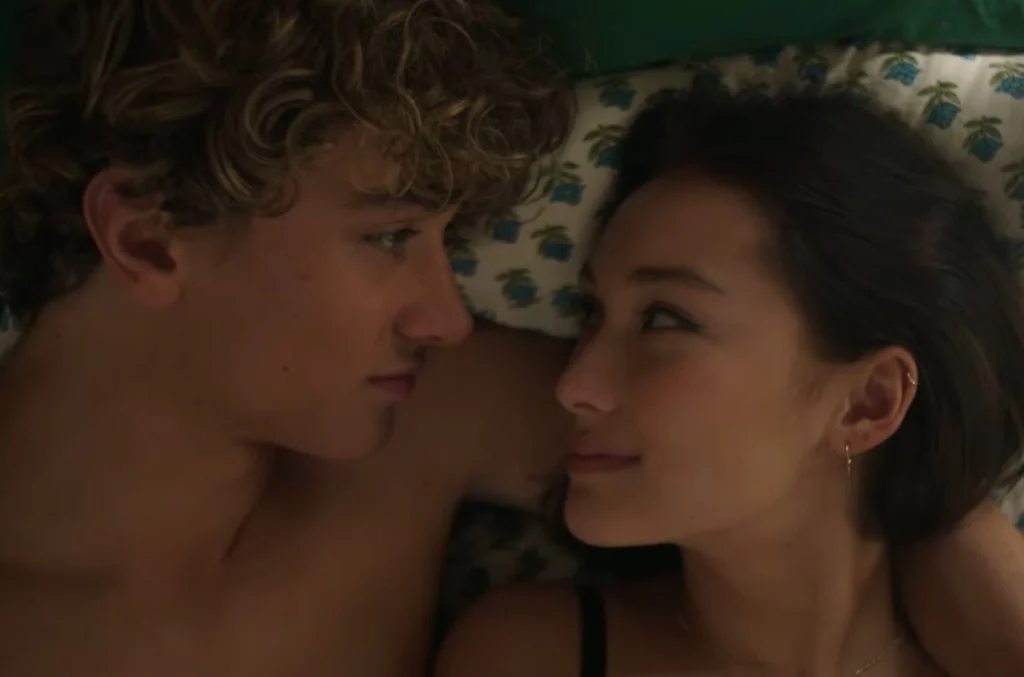
In the new trailer for the third and final season of The Summer I Turned Pretty, Belly and Jeremiah live happily ever after — or do they? Luckily, Taylor Swift has songs for either outcome.
Released Thursday (April 24), the minute-long teaser features two of the pop superstar’s most beloved tracks, starting with Lover album closer “Daylight.” The ethereal ballad plays over an ooey-gooey montage of Lola Tung and Gavin Casalegno’s characters picking up where they left off in season two — as a couple, despite Belly previously dating Jeremiah’s brother, Conrad, who is nowhere to be found for almost all of the trailer.
As the two frolic through their college campus, make out in the library and slow dance at a party, Swift’s voice sings, “I don’t wanna look at anything else now that I saw you/ I don’t wanna think of anything else now that I thought of you/ I’ve been sleeping so long in a 20-year dark night/ And now I see daylight.”
Trending on Billboard
At the very end, however, #Jelly’s romantic fantasy is interrupted by a certain intruder: Christopher Briney’s Conrad, who shows up at the brothers’ beach house and delivers the only spoken line in the entire trailer.
“Hey,” he says as a shocked Belly opens the front door on him, while “Daylight” abruptly switches to a line from a very different Swift track. “Loving him was red,” interjects the 14-time Grammy winner’s voice on 2012’s Red title track.
The new trailer is far from the first time The Summer I Turned Pretty — which is based on the Jenny Hahn book series of the same name — has featured Swift’s music. In fact, the singer-songwriter has been one of the biggest musical contributors to the show since it premiered in 2022, with “The Way I Loved You,” “Exile” featuring Bon Iver, “Snow on the Beach” with Lana Del Rey, “Sweet Nothing,” “This Love,” “Last Kiss” and several more Swift tracks finding homes in various episodes.
The final season will put an end to the messy love triangle that has fueled the show from the beginning, with the description reading, “It’s the end of her junior year of college, and Belly’s looking forward to another summer in Cousins with her soulmate, Jeremiah … until some core-shaking events bring her first love Conrad back into her life.”
“Now on the brink of adulthood, Belly finds herself at a crossroads and must decide which brother has her heart,” it continues. “Summer will never be the same.”
Season three of The Summer I Turned Pretty arrives on Prime Video July 16. Watch the trailer above.

Cornell University has canceled Kehlani’s upcoming performance, which the singer was slated to perform on campus at the university’s annual Slope Day on May 7. According to The New York Times, Cornell president Michael I. Kotlikoff emailed students and faculty on Wednesday (April 23) to make his decision to cancel Kehlani’s performance official. Explore Explore […]
The toxicity of contemporary male R&B has been a talking point for nearly a decade, and Texas-bred R&B crooner Dende is ready to take action and bring “yearning” back to the forefront.
Explore
Explore
See latest videos, charts and news
See latest videos, charts and news
“I don’t feel like a lot of people yearn anymore,” he tells Billboard days after releasing his I Am, Because You Are… EP. “There’s a certain amount of emotion that R&B requires.”
In other words, Dende is over the era of nonchalance. Born in Austin and raised in Katy, Texas, Dende has been a musician his entire life. From church choir stints to makeshift bedroom studios in college, the soulful multihyphenate has spent years honing his sound into its current amalgamation of passionate ad-libs, gospel chords, pop inclinations, and hip-hop cadences.
Earlier this year (Feb. 12), Dende (born Jeremi Lewings) signed with Def Jam, marking an end to his time as an independent artist – an era that led him to close studio collaborator Billy Blunt and his CXR management team. Dende’s transition into the major label system came shortly after a viral live performance video of “Nightmares,” a track from his acclaimed 2023 ’95 Civic EP. With his face covered in bloody makeup to accentuate his particularly theatrical rendition of the song, that live performance video encapsulates everything Dende seeks to bring to contemporary R&B: From his quotidian fashion to his stage show, Dende is wholly unafraid to feel the full extent and breadth of his emotions in front of an audience — he isn’t too cool to be hurt or hopelessly in love.
Trending on Billboard
With a smattering of singles and a handful of EPs dating back to 2018, Dende has slowly made a name for himself in R&B circles with his spunky, introspective tunes. His new I Am EP transports him to visual art, taking notes from Picasso and Basquiat in how they allowed their muses to speak through them and their work. Featuring collaborations with Luciia, Roy Woods and Kiilynn, Dende’s latest project is his strongest stab at world-building yet – from the scene-setting “The Louvre” – to the heart-melting “Dance With Me.”
Billboard spoke with April’s R&B Rookie of the Month about the evolution of his sound, the origins of his stage name, his all-time favorite ad-libs and his relationship with fashion.
What are your earliest music memories?
I was really young when I started singing in church. My dad was a pastor, so I was in the choir. At one point, it was literally just me and my sister doing solos in the choir. I also played the drums for the church.
I was also really into American Idol, which we used to watch as a family. In elementary school, we had a talent show and I sang “Flying Without Wings” because Ruben Studdard sang it. And my teacher cried. [Laughs.]
Do you hear the music that you grew up with in the music that you make today?
In unconventional ways, yes. Obviously, I don’t make gospel music, but on my last project, I had a more gospel-leaning song with a choir. And the fact that we use live instrumentation; my producer, Billy Blunt, is a heavy church baby too. That’s where he gets all his chords and progressions from.
What’s the first song you remember being stuck in your head?
“Nobody’s Supposed to Be Here” by Deborah Cox. I used to scream that song in the car.
Do you remember when you wrote your first song? What was it?
The first real song that I wrote was probably in my freshman year; I wrote it in a practice room. My cousin had given me an old microphone, and I put a sock over it, played the piano and recorded it on my laptop speaker. I don’t remember exactly what the song was called, but I know it sucked! [Laughs.] I made very bad music for a very long time. I was decent enough on instruments to put stuff together, but the songs themselves were bad.
What were you writing about back then?
Being a sad boy, as I tend to do. I still do that to this day.
When did you decide that you wanted to pursue music professionally?
Probably my sophomore year of college when I was at Clark [Atlanta University]. That was my first year living off campus. I had an apartment with my sister, and people would come over to record. People were paying me for studio time [and] I didn’t know what I was doing! Around then, I stopped going to class [because] I just wanted to do music. I was entering different contests in Atlanta [like Mic Check]; even though it was mostly rappers, I would go up there and sneak some singing in.
Why did you decide to use a stage name and how did you land on Dende?
I’ve always had nicknames. When I was younger, people called me “Jerm” and that [ended up being] my first artist name. I didn’t really like that, and no one really calls me by my actual name, so I got the name Dende because I’m a heavy anime nerd. For people that don’t know, Dende is from Dragon Ball Z, and I have him tatted on my forearm. [In the show], Dende cannot fight, but without him, the dragon balls don’t exist, so without him, a lot of people don’t get their wishes. I liked that because he’s a side character, but he’s really important to the plot.
How would you describe the Dende sound? How has it evolved over the years?
Poppy R&B with a little bit of hip-hop and gospel chords. At first, it was just straight-up piano and terrible drums, then it became straight up electronic drums and beats and rapping – I wasn’t singing at all. [After that], I transitioned into doing half-singing and half-rapping, then I moved more into the R&B space.
What’s your favorite part of the music making process? Is there any part that you find more annoying or draining than others?
I love writing. Post-production is probably my favorite part, because we can add cool stuff. A lot of my songs translate well to live sets, because there’s lots of hits and live instruments. We get to be a little bit more creative with how we structure the song – outside of lyrics – at that point. I don’t find mixing fun. I used to mix all my stuff, but I don’t do that anymore. It’s annoying because it’s a tedious process.
Talk to me about your indie journey. Why did you end up signing to Def Jam?
When I was independent, I was doing everything by myself – mixing, mastering, recording, producing. Then I got [in touch with] Billy Blunt [in 2021] and he started producing for me. CXR, my management team, came [into the picture] right after the pandemic. CXR is my management, but we function as a label. So going from that to the indie label space and the signing with Def Jam [in early 2025] wasn’t that crazy of a transition for us because we had been working together as a label and team for such a long time. I don’t think much is different other than having other people around us that can help ensure our vision comes to life.
Why did you decide to go with CXR on the management side?
To keep up with the momentum that I had gained virtually on my own during the pandemic, I was looking for management. It was between [CXR] and [another person] that’s in Houston. I went with [CXR] because they fit me more. With them, I get a whole team. We have marketing, A&R, day-to-day managers, social media managers – it’s a whole machine. I don’t even think I was ready for that yet, but it definitely helped propel me to another level.
What inspired the new EP? When did you start and finish recording?
[I was inspired by] things that I was feeling while going through life, which is pretty much what all my music is about. This [EP] is about falling in love and finding somebody that you feel fits you perfectly while also maybe not being the most financially sound [option at the time]. The purpose of this project is a starving artist falling in love and trying to navigate that. We started making this one before we even put out [‘95 Civic]. The last song we did was “The Louvre” with Luciia, which I cut last January.
Was the plan always to make the track-list half solo songs and half duets?
No, I was gonna do it all by myself, but it just ended up being that way. It became a more collaborative effort. I felt that some of the songs needed somebody else to strengthen them, so we did that. What I’m looking for [in a potential collaborator] is: Are you going to make the song better? My team is also looking for what’s beneficial about the feature outside of the music – I probably should care more about that, but I tend not to. I just want to make the best song possible. That’s why I have a team!
Who are some of your favorite visual artists?
I like Basquiat a lot. He was an insane human being, and I really resonate with that. I’m not nearly as insane, but I like people who are doing what they want to do in the way they like to do it – because that wasn’t the norm.
I also really like Dita Montana, an artist in Houston who actually did the cover art for my EP. I’ve been a fan of her for years. I literally had paintings that she painted in my house that I got five or six years ago.
Why did “Need U Like” and “The Louvre” feel like the right songs to introduce this project?
“The Louvre” fits the aesthetic of the project the most on the whole EP. This project is about physical art, and this song is saying that you deserve to be hung up on the wall at the most prestigious place in the world [for art] to live.
“Need U Like,” is not only a hard song, but it also showcases my personality and how I approach relationships. I’m telling this person that I’m willing to do the impossible to make us happen.
Do you plan to rap more on future projects?
Maybe just a little bit. I enjoy singing more than rapping, I just like writing in the way that a rapper would. I wrote “Need U Like” as if I was rapping, and then I just sang it.
What do you think you’re bringing to contemporary male R&B that’s unique?
I wouldn’t say it’s unique to me, because it was in existence at one point, but I don’t think it exists as much anymore: yearning. I don’t feel like a lot of people yearn anymore. When I perform “Better Than Him” [from 2023’s Before We Crash EP], I literally will drop down on my knees.
Any plans to tour this EP? Is there any particular artist that you’d like to open for?
We are planning to tour the project. We did a few listening parties, and I know I’m about to do a Houston show for the EP on May 2. After that, we’re gearing up for the next project.
[Opening for] Tyler, the Creator is obviously the dream. I like Kenyon Dixon a whole lot; I would love to go on tour with him. Obviously, Lucky Daye, but I don’t know if he’s going on tour anytime soon. And Bieber!
How do you incorporate fashion into your music and overall brand?
I like to look good, and I like to make a statement with what I’m wearing. When I do live shows, I fit the aesthetic of the project with what I’m wearing. On the last project, I was the guy that shows up to your window with a boombox, so I’m wearing jeans, a fitted cap and a letterman jacket. Halfway through the set, I switch clothes and switch over to a [different project], and that dude looks like he got stood up at the altar.
You’re in a moment of a lot of momentum right now. Does it ever get scary knowing what’s on the horizon for you?
I wouldn’t say it gets scary. I think I get overwhelmed with how many things I need to do, but I’m not really scared. I keep God first, so whatever is for me is for me.
If you could pick one producer to lock in with for an entire project, who would it be?
D’Mile.
What song has your favorite ad libs of all time? Pick one of your songs and then pick someone else’s song.
For me, let’s say “Block Me.” For someone else, we’re going to go with Charlie Wilson’s “There Goes My Baby.”
Country Music Foundation, Inc., Soulsville Foundation, International Bluegrass Music Association, Louisiana Folk Roots and the Memphis Listening Lab are among 15 organizations or individuals that were chosen to receive grants by the Grammy Museum Grant Program. A total of $200,000 in grants will be awarded this year. This year marks the 37th year of the program.
“Generously funded by the Recording Academy,” to use the Grammy Museum’s phrase, the Grammy Museum Grant Program provides funding annually to organizations and individuals to support efforts that advance the archiving and preservation of the recorded sound heritage of the Americas for future generations, in addition to research projects related to the impact of music on the human condition.
“The Grammy Museum and Recording Academy have continued their partnership to provide fundamental funding for music research and preservation projects across the United States and Canada,” Michael Sticka, president/CEO of the Grammy Museum, said in a statement. “ … We are honored to support these remarkable projects that continue to shape the future of music, science and technology.”
Trending on Billboard
In 2008, the Grammy Museum Grant Program expanded its categories to include assistance grants for individuals and small to mid-sized organizations to aid collections held by individuals and organizations that may not have access to the expertise needed to create a preservation plan.
Here are the 2025 recipients:
Scientific Research Grantees
CERVO Brain Research Center — Quebec City, Quebec
Awarded: $20,000
Their goal is to uncover how choir singing impacts communication and auditory cognition in older adults, supporting healthy aging through a randomized training study. This project aims to inform community choirs and music-based interventions, aligning with the foundation’s mission to enhance quality of life through music.
Jewish Rehabilitation Hospital – CISSS Laval — Laval, Quebec
Awarded: $19,500
Stroke typically leads to persistent deficits in arm and hand function. This project will examine the feasibility, acceptability and preliminary effectiveness of a six-week piano training intervention aimed at improving manual dexterity and the functional use of the arm and hand. For the first time, such intervention will be delivered as part of a home-based, early, and intensive rehabilitation program for individuals with stroke.
New York University — New York, N.Y.
Awarded: $9,000
Many people struggle with speech-language disorders due to developmental issues or brain injuries. Although music therapy can help these individuals regain speech functions, its effectiveness varies. By combining neuroimaging and machine learning, this study will explore how the brain can bypass damaged speech language networks by leveraging musical networks to enhance communication.
University of South Florida — Tampa, Fla.
Awarded: $9,000
This randomized trial will examine the effects of a novel woodwind program on neural responses and respiration function in adults 50+ with Long-term COVID (LTC). Adults will complete measures of cognitive processing (EEG) and respiration function (spirometer), pre- and post-10 weeks of either Nuvo jsax lessons or an attentional control task.
University of Toronto — Toronto
Awarded: $20,000
Rhythmic Auditory Stimulation (RAS) uses rhythmic sound cues to help people with Parkinson’s disease (PD) start and maintain stable movement. This project is the first to examine how these cues impact brain chemistry in PD, revealing the brain’s response to these cues. Their findings could improve the use of RAS as part of PD care, refining clinical applications that work alongside standard medication to support movement and enhance quality of life in PD.
Preservation Assistance Grantees
Lex Gillespie — Washington, D.C.
Awarded: $5,000
The project will preserve 75 interviews from the 10-hour Peabody Award-winning public radio series, “Whole Lotta Shakin’.” It tells the story of rockabilly, the exciting 1950s mix of blues, gospel and country that is the cornerstone of rock and roll. This diverse collection features singers, musicians, producers, DJs, and record company owners. The goal: to digitize these decaying recordings for use by scholars, content providers and the public.
Memphis Listening Lab — Memphis, Tenn.
Awarded: $5,000
Grammy Museum Preservation Assistance funding will enable the Memphis Listening Lab (MLL) to hire an expert consultant to conduct a preservation assessment of MLL’s extensive collection of recorded music. The consultant will provide MLL with a written report detailing their observations and recommendations for preserving MLL’s collection, which is freely accessible to the public.
Preservation Implementation
Country Music Foundation, Inc. — Nashville, Tenn.
Awarded: $20,000
The Country Music Hall of Fame and Museum (CMHFM) sought funding to assess, catalog, re-house, and make accessible a collection of 18,000 12-inch radio transcription discs containing historically significant, non-commercial recordings. This collection features interviews and performances with various country artists. Building on a successful project with 16-inch discs, CMHFM aims to begin Phase 2 of cataloging this larger collection.
Forgotten Futures Fund Inc. — Brooklyn, N.Y.
Awarded: $20,000
Louis and Bebe Barron were American electronic music pioneers. This project digitizes nearly 800 magnetic tapes. It will make available to the public, for the first time, their sci-fi, experimental and commercial sounds. The Barrons, moving in parallel to European composers of musique concrète, were DIY artists who lacked institutional support.
International Bluegrass Music Association — Nashville, Tenn.
Awarded: $20,000
The “Preserving the Legacy of Bluegrass Music” project will digitize and make accessible audio and visual materials from the 40-year history of the International Bluegrass Music Association (IBMA). Recordings include industry awards show performances and speeches, special performances, conference presentations, workshops, and other IBMA events, featuring first-, second- and third-generation bluegrass musicians from 1985 to the present day.
Louisiana Folk Roots — Lafayette, La.
Awarded: $15,000
Louisiana Folk Roots (LFR) will digitize and preserve at-risk audiovisual tape recordings of Cajun and Creole heritage folk music performances and presentations that occurred from 2001-15. This LFR archival collection of analog formats is not currently available online. Following digitization, this collection can become publicly accessible in partnership with the University of Louisiana at Lafayette’s Library and Institutional Repository.
Matthew White — Columbia, S.C.
Awarded: $10,000
Marian McPartland’s Piano Jazz stands as NPR’s longest-running cultural program, airing from 1978 to 2011. Currently, those programs exist on a server at SCETV (where the show was produced), along with more than 5,000 physical documents, including McPartland’s notes, photos, sheet music, and promotional materials. This proposal is to complete the digitization of these materials and create a free website where these materials can be accessed by the public.
Painted Bride Art Center, as fiscal sponsor for Philadelphia Jazz Legacy Project — Philadelphia, Pa.
Awarded: $10,000
Philadelphia Jazz Legacy Project, through its fiscal sponsor Painted Bride Art Center and in partnership with Temple University Libraries, sought a Grammy Museum Grant to digitize, preserve and make available several dozen interviews with Philadelphia jazz musicians. Conducted from the early 1980s to early 2020s, the interviews document the lives and careers of both world-famous and local Philadelphia jazz musicians.
Soulsville Foundation — Memphis, Tenn.
Awarded: $12,500
Acclaimed Memphis historians have donated interviews of Memphis music legends. These unstable digital tapes represent the richest collection of Black music history interviews ever received by the Stax Museum. The interviews will allow for enhanced storytelling in future exhibitions and online presentations.
T. Christopher Aplin — Pasadena, Calif.
Awarded: $5,000
American Indian Soundchiefs was a record label owned by Kiowa Linn D. Pauahty—the earliest, longest-running label launched with an ear toward Indigenous aesthetics. This project will help Pauahtyʼs granddaughter Mary Helen Deer, the Linn D. Pauahty Foundation, and Kiowa tribe digitize surviving American Indian Soundchiefs instantaneous discs, reel-to-reels, and cassettes featuring Kiowa-language songs for cultural revitalization purposes.
It’s impossible to overstate just how influential Too Short is to hip-hop culture. He is the only rapper to have worked with all of The Notorious B.I.G., Jay-Z and 2Pac, and over the span of his career, he’s dropped dozens of acclaimed projects. He is former Vice President Kamala Harris’ favorite rapper, and perhaps the only MC to have released albums across five different decades, starting in the ’80s.
Explore
Explore
See latest videos, charts and news
See latest videos, charts and news
While these are all groundbreaking accomplishments in their own right, the kicker is that the music is still awesome. On his latest project, Sir Too $hort Vol. 1 (Freaky Tales), his new records carry a youthful urgency, and include plenty of pockets where Short still raps like the rent is due.
Trending on Billboard
“And out of all rappers since the beginning of hip-hop/ Who got more platinum albums than me?” he raps on “Check the Stats.” “And don’t count greatest hits, let’s go/ Jay-Z, Eminem, 2Pac, OutKast, Nas, Drake, Lil Wayne, Kanye/ Who got more platinum albums than Too $hort?”
The answer is: nobody. Considering one of the biggest records of his career — “Blow the Whistle,” which turns 20 next year — didn’t pop off until Short was 40 years old, he’s long been known as someone who probably has a smash hit still tucked away in his back pocket.
“How long can a rapper rap?” Short asks Billboard. “How long can a rapper rap and release relevant music? To what age is it appropriate to rap on stage and actually put on a good performance? What are the limitations of hip-hop? It hasn’t been written yet.”
Short will be turning 59 next week, and he openly discusses his age on his latest album, flexing it like a veiny bicep after a good pump. “I thought you knew, I’m still rappin,” he spits on opener “Still Mackin.” “I thought you knew, b—h, I’m still mackin’/It’s the 2020s and I’m still rappin’.”
Short spoke with Billboard about his new album, ageism in rap and what it felt like stepping into the production chair for the film Freaky Tales.
“I won’t stop” are the first words uttered on Sir Too $hort Vol. 1. You’ve had an unbelievable career, but do you ever feel pressure to stop rapping because of your age?
That ageism is biased on both ends. ‘Cause the older guys think that the younger guys aren’t skilled enough to be in their game, and the younger guys are like, “C’mon OG! It’s my turn.”
I’m comparing my activity to B.B. King and The Temptations — like, people who aren’t in my genre, that went well beyond their senior citizen years and kept performing and satisfying audiences. I’m not measuring this towards other rappers, because rap has not all the way gone there yet. When it’s all said and done I would love for a younger rapper, just one, to say, ‘Man, I wanna stick around like E-40 and Too $hort’. Motivation!
The ageism is there — but at the same time I’m in that battle of just making the narrative. This is what I’m doing, and nobody in there is dictating what it should or shouldn’t be. It’s just me figuring it out.
It’s been five years since your last album, a notable break for you. What inspired this break and why did now feel like the right time to get back in the studio?
I make a lot of songs, and a lot of the songs I make are really good songs — I just haven’t been releasing them. Sort of because of how the industry is. Like, are you gonna be independent? Are you gonna try to get a deal with a major? What’s gonna happen with the marketing and the singles and stuff? It just changed a lot from the OG way I used to do it — and then the results I would get, I wasn’t really feeling like I needed to prove anything.
How has your love for hip-hop deepened over the years? What about the artform keeps you here at almost 59 years old?
It’s just painting pictures. I think I have some of a pre-music video mindset approach to writing songs. When I say pre-video, I mean everything before MTV, where you listen to how songs were written and a lot of songs before videos were made, you actually see a picture when you listened to the song. You see the movie, you see the scenes, because they’re explaining it to you in such a way that there’s no need for a film. It’s songwriting! I like to write visual songs, and I’m a part of that old guard.
What are your thoughts then on the use of social media and TikTok now? For someone who’s been around since rap’s early days, how are you feeling about the state of the genre now?
I’m jealous of the new artists! I’m jealous of the tools they have and opportunities they have. What you can do with popularity now was definitely not available to me, and definitively the tools to market and even make music were not available to me, either. As in sports, you have to survive your era. You have to be on the top of the game in your era, whatever that is. Just maximize it. I’m very curious to see where [hip-hop] is goin’, in a positive way. I know it never stays in one place and I think hip-hop is in good hands — because as a business it did not collapse. A lot of people come in the game every year and get a lot of money, and if they weren’t, I would say it’s a problem.
How are you feeling about West Coast music right now, specifically?
When you have artists that continually break out, fom the G-Eazys to the YGs and Kendricks, you’re proud of your region. As the OG’s, when our youngsters emerge we have to support them, and we do that. The West Coast is a unit that rides for each other. I think the state of West Coast rap is wonderful. One of our guys just survived something nobody else has ever survived, and that’s an onslaught from Drake.
“Blow the Whistle” turns 20 next year. Tell me about how you feel about that record now.
It’s like a parent who has three, four, five kids — and you clearly love one of your kids more than the rest. It’s that kid. You can’t even hide it. I made that song when I was 40, I’d already had multiple platinum albums and gold albums — and it turns out [“Blow The Whistle”] is gonna be my signature song. You couldn’t find one artist who strung a bunch of top-selling albums together in a row and after making all of that albums made their signature song. Nobody did that. Zero. Zilch. Nobody. That’s a Too Short thing!
What was the recording process like? Did you know it was gonna be a smash?
I can’t say I can pick hits. I don’t know how to pick hits, not yours or mine or anybody’s. I feel like that’s a jinx, to name a song a hit before it leaves the studio. “Blow the Whistle” was originally made in 2005. Lil Jon produced it and he was really into Crunk Rock at the time. “Blow the Whistle” — at some point there were rock guitars that were added to the song, and when it was mixed and mastered it was mixed with the guitars. I had a conversation with Jon about not using the guitars, and he’s like, “Nah man, that’s hot!” He assured me the new way with the guitars was the best way. So I just went in the studio and muted out all the guitars and that’s the version we all know and love.
Was Lil Jon upset?
At some point — after a while, he came and said, “You won this one.” We had disagreements in the studio prior to that where he would be right. He held his opinion firm — and I don’t know if he felt some kind of way for a while, but when it was successful, those feelings went away. I do just wanna add that my next album, Sir Too $hort Vol. 2, is 100% produced by Lil Jon.
How did you get into the producing chair for Freaky Tales?
It didn’t take me long to say yes. I read the script before they did any filming. I knew about the chapter that was focused on me. They were asking me to, “Please attach yourself to this project,” and I was like, “Please attach me to this project!” It was mutual. At some point, they fit me in the script as the narrator. I don’t even know if that was their plan or not, and they gave me a cameo. It’s an Oakland movie, shot in Oakland, named after one of my songs. I’m on Cloud Nine right now, bruh.
To add to that, you were also put on the bill for the Rock the Bells Festival. How does that feel?
Oh you just told me, I didn’t even know, s—t. I consider myself 100% to be part of the Rock The Bells family. The motivation for the people over there is really just to uphold the legacy of hip-hop and to not let you forget, and I’m just really proud to be a part of that. I receive a salary for the [radio show] I do, but I promise you I do not do that show for the salary. I do it because I really signed up to be a part of what LL Cool J is preaching over there.
LL was very, very arrogant and very unapproachable as a young rapper — but as an old rapper, OG rapper, he is a hell of an ambassador. Open heart and a whole different L. He played his rap persona to a T… but now It’s nothing but love to all of hip-hop.
Next year will also mark the 15th anniversary of Wiz Khalifa’s “On My Level,” which I feel like introduced a whole new generation of Too Short fans.
That was another one of those bridges. I’m an OG rapper in ’05, ’06 and I’m just riding my wave. I’m out there doing what the game gives me and another bridge comes along. It turned out to be a song because of the new look it gave me, I used to open my show with that song! It would reel the crowd in. I love Wiz for that man. He put me on a gooooood song.
What are some tips you have for younger artists that wanna have longevity like Too Short?
I think loyalty in this game has a lot to do with longevity. Sticking with the people who are really your friends that you started with, who really know you and love you and tell you you ain’t s—t — cause at that moment you really ain’t s—t. I think a lot of our young artists are turned off by the industry because it’s not instant enough, it’s not Folger’s coffee. The one’s who are supposed to be here will be here, cause they’ll endure.
Everybody that’s had a long career, it wasn’t just one long run. Big f—ing dry spots in the middle where you gotta figure it out. Big moments of doubt. The crossroads come, I wouldn’t say often but they continuously come and when you stand at that crossroads you have options. So you might make a wrong turn. So what? Find your way back on track.
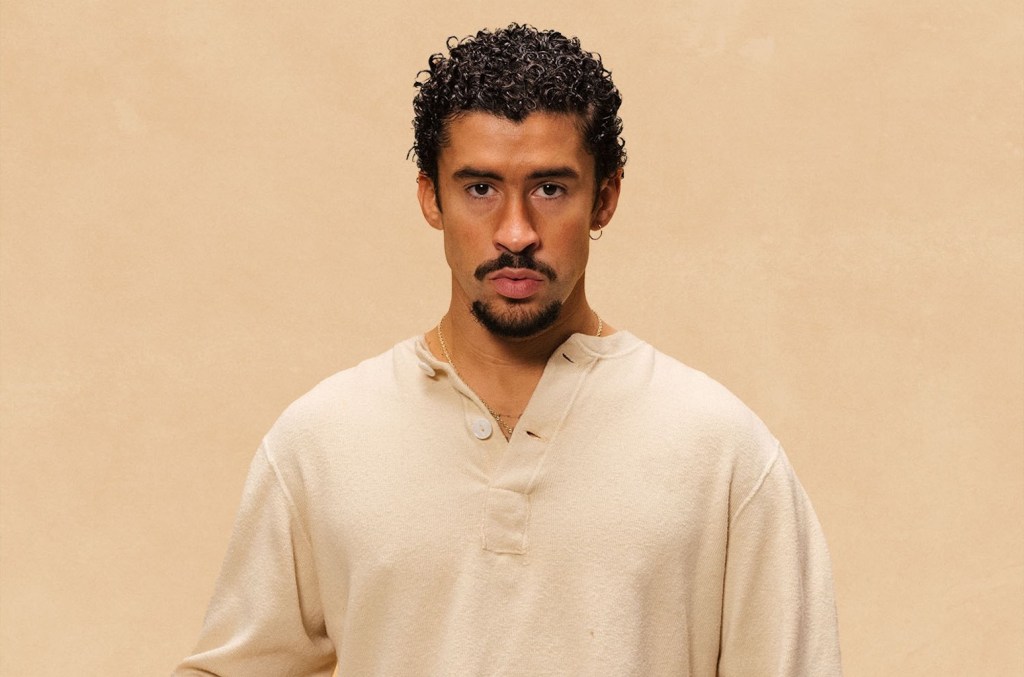
Bad Bunny is hopping back over to 30 Rock to make his grand return to Saturday Night Live, with the show announcing Thursday (April 24) that the Puerto Rican rapper will perform on its season-ender episode following a musical guest debut from Benson Boone two weeks prior. SNL‘s 50th season will officially wrap May 17 […]
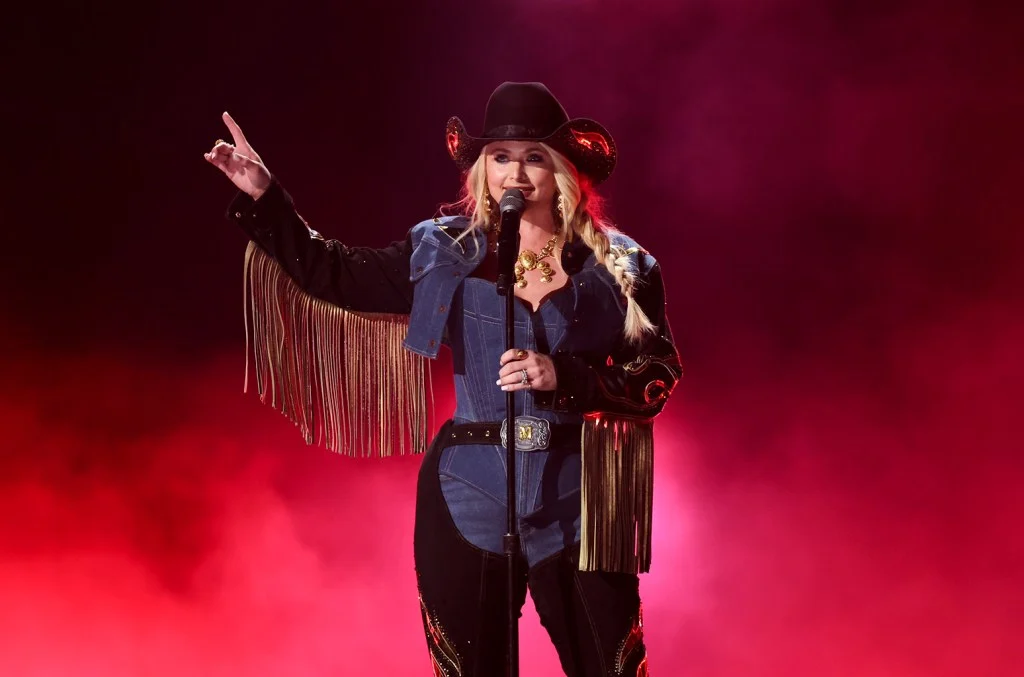
Three nominees for entertainer of the year at the 2025 Academy of Country Music Awards — Chris Stapleton, Cody Johnson and Kelsea Ballerini — are among the 10 performers who were added to the lineup for the May 8 show. Also added were Alan Jackson, Brooks & Dunn, Clint Black, LeAnn Rimes, Miranda Lambert, Rascal Flatts and Wynonna Judd.
They join previously announced performers Reba McEntire (who is also set to host the show), Blake Shelton, Eric Church and Lainey Wilson.
Trending on Billboard
Five of these 14 performers are past winners of entertainer of the year at the ACM Awards. McEntire won in that top category in 1995; Brooks & Dunn in 1996, 1997 and 2002; Lambert in 2022; Stapleton in 2023 and Wilson in 2024.
Of these 14 performers, all but Johnson are past ACM winners in at least one category. And Johnson may win his first ACM Award this year — he has seven nominations, a total topped only by Ella Langley with eight. Morgan Wallen and Wilson also have seven.
More performers will be revealed next week.
The 60th ACM Awards will stream live for a global audience on Prime Video and the Amazon Music channel on Twitch on Thursday, May 8, at 8 p.m. ET/5 p.m. PT from the Ford Center at The Star in Frisco, Texas. The show will be expanded from two to two-and-a-half hours, and celebrates six decades of country music.
The show is produced by Dick Clark Productions. Raj Kapoor is executive producer and showrunner, with Patrick Menton as co-executive producer. Damon Whiteside serves as executive producer for the Academy of Country Music, and Jay Penske and Barry Adelman serve as executive producers for DCP. John Saade will also continue to serve as consulting producer for Amazon MGM Studios.
Kapoor is among the most successful executive producers in TV. He has served in that capacity on the last four Grammy telecasts (alongside Ben Winston and Jesse Collins) and the last two Oscar telecasts (alongside Katy Mullan).
This will be the 18th time McEntire has hosted or co-hosted the ACM Awards. She first co-hosted the show in 1986 with John Schneider and the late Mac Davis. McEntire is fast closing in on Bob Hope’s record as the most frequent host of any major awards show. Hope hosted or co-hosted the Oscars 19 times between 1940 and 1978.
This year’s show is presented by Carnival Cruise Line. A limited number of tickets to the show are available for purchase on SeatGeek.
Established in 1966, the Academy of Country Music Awards is the longest running country music awards show. It made history in 2022 as the first major awards ceremony to exclusively livestream.
The ACM Awards are produced by Dick Clark Productions, which is owned by Penske Media Eldridge, a joint venture between Eldridge Industries and Billboard parent company Penske Media.

There’s a nostalgia to Jeanette’s ’80s hit song “El Muchacho de los Ojos Tristes” that has transcended generations. Most recently, Selena Gomez and Benny Blanco tapped The Marías for a reimagination of the ballad, titled “Ojos Tristes,” that is part of the couple’s collaborative album, I Said I Love You First. “I am very proud […]