State Champ Radio
 News
Page: 435

In recent years, social media platforms have become a key battleground for copyright infringement disputes, with music rights holders targeting brands that use copyrighted tracks in social media posts.
This development can be traced, in part, to increasingly sophisticated software that major music labels and publishers use to monitor infringing uses of their songs online — a reaction to the “whack-a-mole” frustration that rights holders feel when they consistently find their songs being used on the Internet without permission. And with the risk of potential statutory damage awards for copyright infringement ranging from $200 to $150,000 per infringed work, rights holders can hold significant leverage in any ensuing legal action. Thus, whether a brand is incorporating music into posts on its social media channels or partnering with influencers who do the same, using music on social media has never been riskier.
Below, we examine the rising tide of recent lawsuits and other legal action taken against brands by music rightsholders and outline key takeaways to help avoid infringing uses and ensure that artists are properly compensated for their work.
Trending on Billboard
The Vital Pharmaceuticals Case
In 2021, UMG Recordings sued Vital Pharmaceuticals, the parent company of Bang Energy, for direct, contributory, and vicarious copyright infringement, alleging that videos posted by Bang and its influencers on TikTok used UMG’s copyrighted songs without permission. UMG argued that Bang was “well aware” that its conduct constituted copyright infringement because UMG had informed Bang of its unauthorized uses before bringing suit. UMG also argued that Bang had control over and financially benefited from its influencers’ infringing videos, which the influencers submitted to Bang for approval before posting.
Bang denied any knowledge of infringement, arguing that TikTok’s standard music license covered Bang’s use of UMG’s music. The court disagreed and granted summary judgment on UMG’s claim for direct copyright infringement, holding that UMG did not authorize TikTok to permit end users, such as Bang, to use the music for commercial (as opposed to personal) purposes. The court reasoned that because direct liability for copyright infringement does not require proof of intent, Bang’s belief that TikTok gave it permission to use UMG’s music was, at most, relevant to the amount of damages Bang owed, not whether it was liable for copyright infringement in the first instance.
The court ruled against UMG, however, on its vicarious and contributory infringement theories related to Bang’s influencers, concluding that UMG failed to prove that Bang had input regarding the selection of music included in influencers’ videos and did not point to any evidence that Bang received a direct financial benefit from the influencers’ videos.
The Growing Litigation Trend
Since UMG v. Vital Pharmaceuticals, music rights holders have ramped up enforcement efforts against other brands. Sony Music Entertainment launched its own copyright infringement lawsuit against Bang (as did Warner Music Group) and also filed claims against brands such as Gymshark, OFRA Cosmetics, Marriott International and the University of Southern California. In each case, the brands, and/or the influencers they hired, allegedly used Sony-owned sound recordings in posts promoting the companies’ products or services.
Similar to UMG’s argument in Vital Pharmaceuticals, Sony argued that each of the companies knew that their content infringed Sony’s copyrights prior to the lawsuits, and thus that the infringement was “willful,” entitling Sony to statutory damages as high as $150,000 per infringed work. In the Gymshark case, as in Vital Pharmaceuticals, it was alleged that Gymshark knew that the music was unlicensed because Gymshark previously approached Sony to discuss music licensing and then proceeded to use Sony’s music without securing commercial licenses. OFRA allegedly failed to take down infringing content after Sony sent a cease-and-desist letter and then posted new infringing content after learning of Sony’s claims. And Marriott allegedly did not take down its posts upon Sony’s request, was previously sued in 2021 for similar copyright infringement issue, and generally knew how to enter into music licenses.
As in Vital Pharmaceuticals, Sony also brought claims against alleged infringers, such as Gymshark and OFRA, for contributory and vicarious liability based on their influencers’ infringing content. Most recently, Warner Music Group (WMG) sued Crumbl and Designer Brands Inc., the parent company of DSW Shoe Warehouse, under similar theories.
While a number of these cases were just recently filed, and others ultimately settled out of court or appear to be moving towards settlement, there is no question that they are part of a fast-growing trend, and provide a glimpse into the mindset, and tactics, of rights holders with respect to unauthorized music use on social media platforms.
Navigating Platform Music Licenses
So what can brands do to avoid this type of legal action and ensure from the outset that artists are properly compensated for their copyrighted works? The best way to avoid copyright infringement when using music owned by a third party is, of course, to license the music directly from the third-party rights holders. This approach is often impractical, however, given the speed and volume with which brands need to publish content on social media.
Instead, many brands use music from the social media platforms’ respective “commercial music libraries” or “CMLs,” which contain different music options than those available for “personal” accounts. The CMLs, such as Meta’s Sound Collection and TikTok’s Commercial Music Library, allow companies and individuals to use music on the platform specifically for commercial purposes, so long as the brand also adheres to the platform’s other license terms.
Using CMLs can pose challenges, however, especially with respect to registering “business” accounts within each platform. Even with the proper registration, it is not always clear which music within the different libraries’ business or commercial accounts can use, and the scope of those rights may (and do) change over time. There are, however, a number of strategies brands can use to help ensure they are using permitted music.
For example, before using a platform’s CML, brands should review the CML’s terms of service and related policies, including terms that specify which commercial purposes the music can be used for and whether the songs can be used in videos on other platforms. It is equally important for brands to actively track the platforms’ evolving license terms in order to remain compliant. And for some brands, it may make sense to use software or external vendors to monitor and flag their brand and influencer posts for potential copyright violations across social media platforms. Of course, every brand’s business needs will be different. The key is finding the right combination of internal and external resources to help minimize the risk of copyright infringement.
Conclusion
The rising chorus of lawsuits from music rights holders is nothing to tune out. Brands using music as part of their social media strategies (which, practically speaking, is almost every brand) must take proactive steps to mitigate legal risks, and they will also be protecting artists’ rights in the process. This includes complying with and staying informed about changes to platform-specific licensing terms, ensuring that their influencers stay within the bounds of such terms, and considering tools to monitor, flag, and remove potentially infringing content. Failing to take these precautions can lead to costly litigation, reputational damage, and the forced removal of content.
Sarah Moses is an entertainment litigation partner with Manatt, Phelps & Phillips, LLP and focuses her practice on a variety of complex litigation and commercial disputes. She represents media, entertainment and technology clients in copyright, trademark, right of publicity, First Amendment, blockchain and artificial intelligence (AI) matters, among others.
Monica Kulkarni is an advertising, marketing and media associate with Manatt, Phelps & Phillips, LLP. She represents clients across a variety of industries and provides multidisciplinary legal counseling on transactional, compliance and regulatory matters in advertising, entertainment and media.
Jacob Geskin is a law clerk with Manatt, Phelps & Phillips, LLP based in the Firm’s New York office where he works across music, intellectual property and media law.

At first blush, Rihanna’s “Friend of Mine” does not sound like a single from a kids movie. Unlike the superstar’s previous soundtrack work for films like Black Panther: Wakanda Forever and Home, which tended to veer toward sweeping pop balladry, “Friend of Mine” is a thumping club track, with Rihanna’s voice positioned as an elliptical refrain over a house beat.
Explore
Explore
See latest videos, charts and news
See latest videos, charts and news
Jon Bellion, who co-wrote and co-produced the track last year, was initially surprised to hear that the song would be featured in the upcoming Smurfs film, in which Rihanna is voicing Smurfette. Then he considered the sonic profile of “Friend of Mine,” and understood its mass appeal. “From a product standpoint, I don’t think you get such major chords and such a positive [message] over a dance record that doesn’t sound like a kids movie too often,” he tells Billboard. “So when do you nail the feel-good, family-friendly, high-taste, deep ‘90s nostalgia, that can also be played into the kids movie? Shoot it out into the world!”
That’s exactly what Rihanna did on Friday (May 16) with “Friend of Mine,” which precedes the Smurfs soundtrack (out June 13 through Roc Nation Distribution) and her star turn in the Smurfs film (in theaters July 18). Three years after her last music release, Rihanna has offered “Friend of Mine” as a long-awaited check-in with fans, and an unexpected song of the summer bid.
Trending on Billboard
The song came together during one of Bellion’s writing camps at his vacation home in the Hamptons last summer, with the studio veteran producing the song with Pete Nappi and Fallen, and all three receiving co-writing credits along with Elijah Noll, Elkan, Tenroc and Rihanna. That group of writers and producers are part of Beautiful Mind Projects, Bellion’s management, publishing and label company, and Bellion — who’s helped artists like Justin Bieber, Miley Cyrus and Maroon 5 score pivotal hits in recent years — says that the energy heard on “Friend of Mine” is a reflection of his collective’s collaborative spirit.
“It was a bunch of people having a blast, doing a music camp together, jamming on some DJ s–t and playing chords and just having fun,” he says. “And I think that that’s probably why it ended up sounding so new. It just felt like a natural thing, with a bunch of guys who like being around each other and want to make great s–t.”
“Working with [Jon] is always exciting because you know you’re going to walk away with a real song,” the producer Fallen, who’s also worked with artists like Doja Cat and Summer Walker, tells Billboard in a statement. “He sees things through. He’s the kind of person who will spend an entire week on a single track if that’s what it takes. We spent about three days on ‘Friend of Mine,’ just refining and dialing it in. Coming from the hip-hop world, I’m used to making five songs in a single session, so this level of detail was new for me. But it’s been the most valuable lesson I’ve learned working with him.”
One of Bellion’s earliest hits as a co-writer was “The Monster,” the 2013 smash from Eminem and Rihanna that topped the Hot 100 chart for four weeks. In the decade-plus since that breakthrough, he’s stayed in touch with Rihanna’s team, and says that he’s contributed “a couple songs” to her camp over the years that have yet to be released.
Considering that Rihanna’s output has been scant since her 2016 album ANTI, Bellion was uncertain that “Friend of Mine” would see the light of day, but the spontaneity of the track’s creation stood out in his mind when it came together last year. “The song is raw — like, she didn’t really mix it further than the two track that we sent out,” he says. “We [sent] it out, and I had it on my phone for a few days, and I just remember, every morning I’d wake up listening to it. I’d listen to it in the shower, like, ‘This is kind of jamming!’”
Bellion couldn’t recall another Rihanna single that sounded quite like “Friend of Mine” — and he says that, at some point after the song was finished, the realization hit him that unexplored territory was exactly what she had been searching for. “She’s not looking for ‘We Found Love 2.0,’ or ‘Work 2.0,’” he says. “The arrangement and the feel feels all very new — very cutting-edge, in front of what the next wave will be, because she usually tries to do that every time she puts something out.”
“Friend of Mine” arrives shortly before Bellion’s third studio album, Father Figure, is released on June 6; the project marks his first solo full-length in seven years, and features guest turns from Luke Combs, Pharrell Williams and Jon Batiste. While Father Figure includes deeply personal reflections on fatherhood and its challenges, Bellion is glad that “Friend of Mine” has arrived a few weeks beforehand, to give him a chance to pull off something he has yet to accomplish professionally.
“My whole career, I’ve wanted [a song] that plays at all the events — all the baby showers and sweet sixteens and wedding and Bar Mitzvahs,” Bellion says with a laugh. “I don’t think I’ve ever really had one of those, so it feels great, and hopefully it does well.”

Morgan Wallen has his sister, Ashley, to thank for his new collaboration with pop star Tate McRae.
The country star and Canadian singer pair for the shimmering “What I Want,” about two broken hearts who find solace in each other, if only temporarily, on Wallen’s new album, I’m the Problem, which came out Friday (May 16).
“My sister turned me on to Tate and her music a few years ago and I’ve been a fan ever since,” Wallen tells Billboard. “She is a true pop star, a prolific songwriter and is also an extremely underrated vocalist.”
It turns out this duet has been a few years in the making. “We have known each other for a couple years and have been talking about doing a song together if the right one came about,” Wallen continues.
Trending on Billboard
“What I Want” wasn’t originally intended to be a duet, “but after listening to it a few times, she kept coming to my mind as someone that would really give the song a dynamic element that I felt it deserved,” Wallen says. He co-wrote the track with McRae, Jacob Kasher Hindlin, Ryan Vojtesak, John Byron and Joe Reeves.
Wallen has long wanted to record a duet with a woman, but was being very selective. In a Billboard interview at the end of 2023, the country star said, “I’ve reached out to a couple of people, and they’ve turned me down.” He declined to name names. “I just really want certain people, and I haven’t gotten the chance to do it yet. I’m going to keep trying to write songs for it or write with them.”
Wallen has released a number of successful collaborations with male artists, including “I Had Some Help,” his massive hit with Post Malone, as well as songs with Eric Church, Chris Stapleton, Florida Georgia Line and rapper Lil Durk. In addition to McRae, the new album also includes duets with Church, HARDY, ERNEST and Post Malone.
Like Wallen’s, McRae’s career is on fire. She earned her first No. 1 album on the Billboard 200 earlier this year with So Close To What, which came out Feb. 21. She is on a worldwide Miss Possessive arena tour that comes to the U.S. in August.

Sebastián Yatra’s new album, Milagro, is a perfect example of how the simple things in life can be a gift, and a reminder that every moment we experience is unique, almost a miracle.
Over the past few months, the Colombian singer-songwriter hinted at his highly anticipated new album, which was released on Friday (May 16) under Universal Music Latino. Through a series of images, videos and personal reflections on the “miracles” that inspired this project, Yatra has gradually unveiled the essence of his fourth studio album.
Each song represents a unique everyday miracle that shifts our perspective of the world: “Energía Bacana” reflects on memories; “2 AM” symbolizes freedom; “Vagabundo” embodies dance; “Lienzo” stands for imagination; “Una Noche Sin Pensar” captures complicity; and “Disco Rayado” tells the story of a heart unwilling to let go of a bond the other person has already left behind.
With this album, he aims to tell deep, meaningful stories and forge a genuine connection with his listeners through 17 songs, each representing a miracle. “I’ve experienced this emotion in my other albums as well, as they express where I am in my life at that moment,” Yatra tells Billboard. “However, right now, this emotion feels particularly strong. In my previous albums, I was a person searching for many things, like happiness, which seemed like a distant goal. Today, I feel that I have discovered everything I could ask for in life, and I found that perspective at quite a young age.”
The name for the LP was inspired by a phrase written by Yatra’s brother, the writer Andrés Obando Giraldo: “Life denies you miracles until you realize that everything is a miracle.” Yatra saw this as a sign that reinforced the name he had in mind for his album.
He explains, “I found this definition of a miracle to be different from what I had encountered before. It suggests that a miracle can be something as simple as seeing things from a different perspective.
“My nature, the first things that always come to me are very heartfelt things; that’s what I listen to the most,” he adds. “But that doesn’t mean that just because it’s what I listen to the most, I don’t enjoy partying and also like to organize and create songs for those moments, for that type of sensation. Milagro mostly leans more towards that celestial experience, from the ballads and lyrics to those melodies that give you hope. But there are also some songs like ‘Vagabundo,’ which is pure party and happiness.”
Below, Yatra breaks down five essential tracks from Milagro. Listen to the full album here.
“Milagro”

All products and services featured are independently chosen by editors. However, Billboard may receive a commission on orders placed through its retail links, and the retailer may receive certain auditable data for accounting purposes.
Billie Eilish is currently on the European leg of her Hit Me Hard and Soft world tour, bringing with her a must-have Revlon product in her makeup arsenal.
The “Birds of a Feather” singer is not one to shy away from the faux-freckle trend. In fact, the ultra-cute look is a titular part of her tour makeup routine, as seen in a quick get-ready-with-me video posted to her TikTok at the start of her tour in December.
Explore
Explore
See latest videos, charts and news
See latest videos, charts and news
Revlon ColorStay 5-in-1 Semi-Permanent Brow Ink
$9.97
$15.59
36% off
Brow ink with a brush tip in the shade Warm Brown.
Eilish’s faux-freckle routine comes into play with help from Revlon’s ColorStay 5-in-1 Semi-Permanent Brow Ink, a product that, although made for brows, can do just about anything. The Eilish-approved brow ink is currently on sale for $9.97 at Amazon, meaning fans can recreate the singer’s freckle-faced tour look for cheap.
Trending on Billboard
The hitmaker utilizes the brow product by simply dotting the product on her cheekbones and nose, blending the dots out with her fingers. Easy as pie. Revlon’s brow product comes in four shades, including Soft Brown, Warm Brown, Dark Brown and Blonde. Given Eilish’s complexion, it’s likely she opted for a darker shade to match her thick dark brows and equally dark hair.
Revlon ColorStay 5-in-1 Semi-Permanent Brow Ink
$9.97
$15.59
36% off
Brow ink with a brush tip in the shade “Blonde.”
The genius of this product lies in the thin, pointed brush applicator that allows for major precision, whether you’re building a brow or dotting on freckles. Eilish shared a peek at her post-show glam, sharing how her look — freckles included — stayed on after 1 hour and 35 minutes of sweating, dancing and belting.
That’s pretty impressive. This speaks to the intense staying power of the brow ink, given the formula is waterproof, transfer-proof and smudge-proof. Whether you’re adorning your face with freckles, or giving your brows the manicured salon look at home, this product won’t budge. Faux freckles have never been so easy.
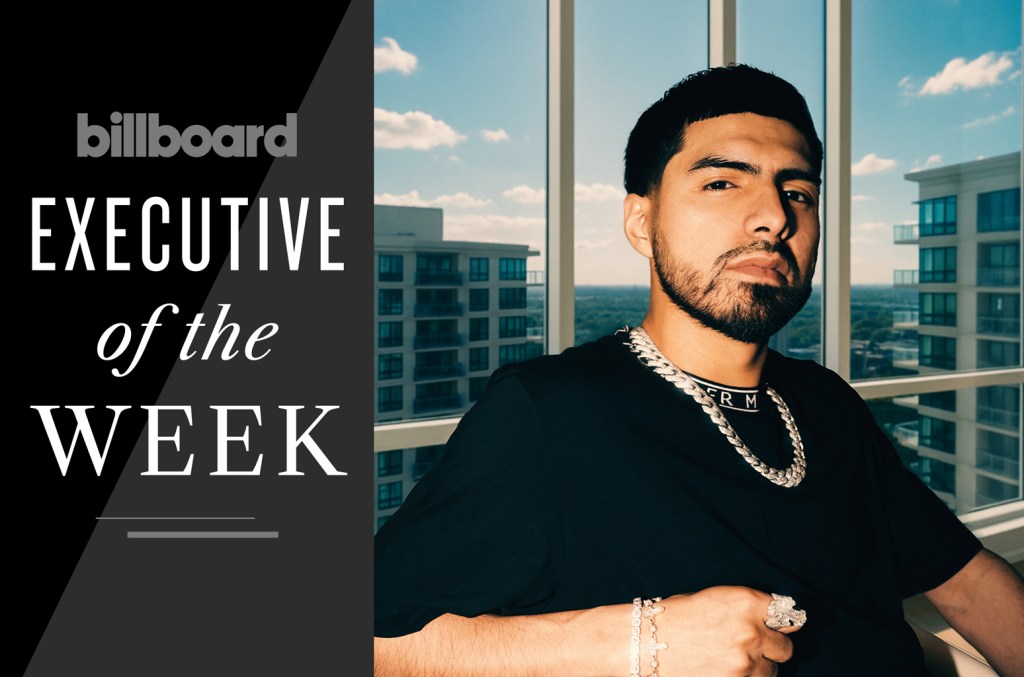
California-based regional Mexican music band Fuerza Regida made history this week with the debut of their new album, 111XPANTIA, at No. 2 on the Billboard 200. It’s the highest debut ever for a Mexican artist on the chart — and, had Bad Bunny not released the vinyl edition of his Debí Tirar Más Fotos the same week, 111XPANTIA would have debuted at No. 1, making the group only the third act in history to top the chart with an album in Spanish.
As it was, 111XPANTIA made double history, as it allowed two Spanish-language albums to place at Nos. 1 and No. 2 on the chart, also a first.
Trending on Billboard
While the name Fuerza Regida may still not ring bells for many in the mainstream, the group has been making serious waves since they launched in 2018, led by singer, composer and businessman Jesus Ortiz Paz, better known as JOP.
Part of a new wave of homegrown talent that’s doing a more contemporary, urban-leaning version of regional Mexican music, or música mexicana, the quintet has positioned itself as bold disruptors, delighting in making music that defies convention, veering into genres like dance and trap. Fuerza are also known for their unusual marketing strategies, from an impromptu concert on the 210 freeway near Los Angeles to a performance alongside street musicians on the Tijuana border to pop up murals to promote their album, Pero No Te Enamores, last year.
Those kinds of actions have yielded fruit. Fuerza has won Top Duo/Group of the year at the Billboard Latin Music Awards for two consecutive years already (2023 and 2024) and has placed six albums, going back to 2023, on the Billboard 200. On the Billboard Top Latin Albums chart, they’ve placed an impressive 12 albums dating back to 2019, and including nine top 10s and one No. 1, 2023’s Pa’ Las Baby’s y Belikeada. On Hot Latin Songs, they boast two No. 1s and 12 Top 10s.
But the Billboard 200 debut is their most impressive achievement to date. Fuerza is signed to a joint venture on their own Street Mob Records with indie Rancho Humilde, and is distributed by Sony Music Latin. But behind their marketing is Jesús Amezcua (aka Moska), the group’s manager (and friend), who is also head of marketing and strategy for Street Mob Records. Although “we’re synced with Sony for data and distribution, all creative direction and frontline marketing is led by us at Street Mob,” Amezcua says. “That independence is what gives us our edge and velocity.”
For pushing Fuerza to make history on the Billboard 200, Amezcua is Billboard’s Executive of the Week.
What exactly is your role with Fuerza Regida?
I manage and lead all strategic marketing, rollout execution and brand partnerships for Fuerza Regida. That covers everything from pre-release positioning and digital strategy to street-level activations, PR and long-term brand development. I work directly with JOP and the team to ensure every campaign feels authentic to the culture while breaking through in the mainstream.
The group has had many major releases, but never something of this magnitude. What made this one different?
This album was a perfect storm of timing, vision and intentionality. We knew the fans were ready for a bigger moment — and we built the campaign with that in mind from day one. What made the difference was the shift in scale: we elevated everything, from the sound to the visuals to the media approach. It was about crossing over without losing our identity.
One major turning point was this was Fuerza Regida’s first time ever releasing a physical album. Not only did we enter that market for the first time, we broke records, surpassing legendary acts like Selena and Maná for the most physical copies sold by a Mexican artist or any Latin duo or group. That milestone sent a loud message about the group’s growing cultural weight and the power of our fan base.
Was there one single action or moment that really moved the needle?
Yes — the pre-release digital campaign combined with JOP’s hands-on promotional push. We executed teaser drops, voice-of-the-streets-style content, and surprise fan moments that went viral, like a Paris Fashion Week performance, for example. Paired with a targeted mainstream media push, it became the perfect one-two punch.
Fuerza Regida is known for bold marketing stunts. Last time it was murals. What was the centerpiece this time?
We focused on emotional proximity and regional pride. Surprise activations in key markets, custom merch drops and physical memorabilia made fans feel seen. We also planted narrative Easter eggs in visuals and lyrics to spark fan theories. It wasn’t about shock — it was about depth.
What was the goal with this album release?
To make a statement: Fuerza Regida isn’t just a top-tier música mexicana act — we’re a cultural force. Yes, we wanted the numbers, but we also wanted to redefine what this genre looks like on a global stage.
How important is it to debut at No. 2 on the Billboard 200, especially as an all-genre chart?
It’s monumental. The Billboard 200 rarely reflects regional Mexican music. To be in the top two, competing with global pop giants, proves this movement is no longer niche — it’s mainstream. It feels incredible to break records and debut as the highest-charting Mexican duo or group in Billboard 200 history. We were going up against legends — and held our ground.
What makes Fuerza Regida different from other groups in música mexicana?
They’re fearless. From raw lyrics to unfiltered visuals and fan engagement, they bring a punk-rock edge. That energy has built a ride-or-die fanbase. They’re not following the blueprint — they’re rewriting it.
JOP was everywhere during this release. How intentional was the promo run?
Very intentional. We built a full content and press calendar around JOP as a brand. National TV, local media, viral content — it was all high-volume, high-authenticity. He delivered across the board.
I see Street Mob is growing and staffing up. You recently hired Gustavo López as president, for example, and he comes with longstanding label experience.
Absolutely. This is a family effort. Our president, Gustavo López, is an industry legend who leads with integrity and vision. Our COO and Street Mob partner is Cristian Primera, aka Toro, along with Cindy Gaxiola, our head of commercial affairs. Last but not least is our CFO Luis Lopez, aka Walks. They are all relentless execution machines. Every win is a reflection of this powerhouse team. Fuerza Regida is just getting started. We’re here to shift culture, not just drop records.

The broadly supported American Music Tourism Act passed in the U.S. Senate unanimously this week. Sponsored by Sens. Marsha Blackburn (R-TN) and John Hickenlooper (D-CO), the bipartisan bill, which was first introduced last year and revived in January, aims to further promote travel and tourism to music-related sites and events in the U.S.
According to Future Market Insights, the music tourism market is already valued at $6 billion dollars worldwide, and it is projected to grow to $11 billion by 2032. In a day when superfans are increasingly crossing state and country borders to catch marquee music events like Taylor Swift’s Eras Tour, concerts at The Sphere or Coachella, the American Music Tourism Act plans to fuel that trend even further.
Trending on Billboard
The bill plans to leverage the existing framework within the Department of Commerce to highlight and promote music tourism across the country. More specifically, this bill would require the assistant secretary to implement a plan to support and increase music tourism for both international and domestic music fans, and to send a report on the plan’s successes and vulnerabilities to Congress.
The AMTA defines music tourism as travel to a state or locality to experience music-related attractions—ranging from historic and contemporary museums, studios and venues of all sizes, to live performances such as concerts and festivals. If enacted, the legislation aims to boost the economic impact of these experiences.
“The Volunteer State is home to so many iconic musical landmarks for tourists to experience – from Graceland in Memphis to the Grand Ole Opry in Nashville to Dollywood in Pigeon Forge,” said Blackburn. “Music tourism has such a positive impact on Tennessee’s economy, and we need to ensure that fans from all over the world can continue to celebrate our state’s rich history of music for generations to come. The Senate’s passage of the American Music Tourism Act gets us closer to that by promoting and supporting the fast-growing music tourism industry.”
Added Hickenlooper: “Colorado’s vibrant music scene attracts artists and fans from around the world. Our bipartisan bill will help our local music venues thrive and expand.”
The bill is backed by a wide range of organizations, including the Recording Academy, Recording Industry Association of America, Nashville Songwriters Association International, ASCAP, National Music Publishers Association, Society of Composers and Lyricists, Live Nation Entertainment, National Independent Venue Association, BMI, American Alliance of Museums, Airbnb and several institutions such as the Rock and Roll Hall of Fame and the Memphis Music Hall of Fame.
Co-sponsors include Sens. Bill Hagerty (R-TN), Gary Peters (D-MI), Andy Kim (D-NJ), and Ted Budd (R-NC).
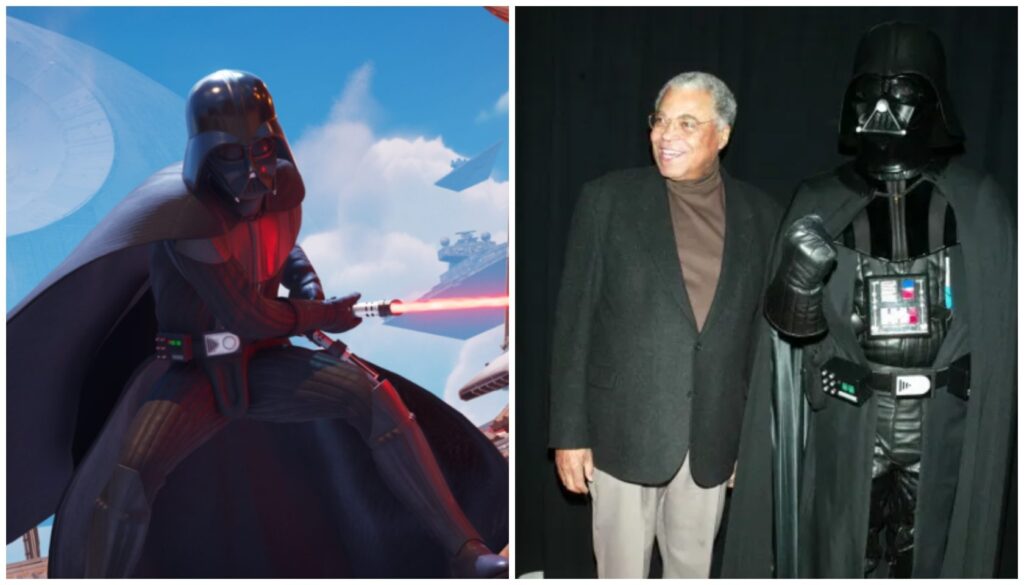
Source: Epic Games / Fortnite AI-Powered Darth Vader / Getty Images / James Earl Jones
Did Epic Games cross the line with its AI-powered Darth Vader companion that uses James Earl Jones voice? Gamers are currently debating.
The iconic actor James Earl Jones passed away last year, but his contributions to cinema, especially his iconic voice, will forever be linked to the Star Wars villain Darth Vader.
Starting today, Walt Disney Co. and Epic Games will allow Fortnite players to recruit and speak to Darth Vader.
Thanks to the power of generative AI, the Vader in-game character will use the late actor’s voice. Epic Games said they are doing so while remaining in “close consultation” with Jones’ family.
How Epic Games Is Bringing James Earl Jones To Fortnite
Epic Games uses Google’s Gemini 2.0 Flash model to generate Vader’s responses to players, while ElevenLabs’ Flash v2.5 model generates Jones’ voice.
“James Earl felt that the voice of Darth Vader was inseparable from the story of Star Wars, and he always wanted fans of all ages to continue to experience it,” the family of James Earl Jones said in a statement. “We hope that this collaboration with Fortnite will allow both longtime fans of Darth Vader and newer generations to share in the enjoyment of this iconic character.”
This decision changes the direction of the entertainment industry in situations like this. In previous Star Wars games, actors were hired to mimic Jones’ voice while he was still alive.
“Epic Games and Disney have worked together to thoughtfully develop this innovative feature with a strong focus on transparency, consent, and safety — ensuring that creators, Disney IP, and players are protected in interactive experiences,” Disney and Epic said in a statement announcing the decision.
As with anything, nothing goes off without a hitch. IGN reported that Epic Games had to issue a patch within an hour of AI-Darth Vader going live because videos of him dropping f-bombs hit X, formerly Twitter timelines.
Gamers do not like conversing with an AI-powered chatbot with Jones’s voice either.
“We deadass having a conversation with James Earl Jones via AI…? Yea you can keep it,” one post on X read.
Welp, it looks like its not going anywhere, and as long they got permission from the Jones family, we don’t see an issue, but this is still opening a can of worms for many.
You can see more reactions in the gallery below.
2. Heard you
HipHopWired Featured Video
CLOSE
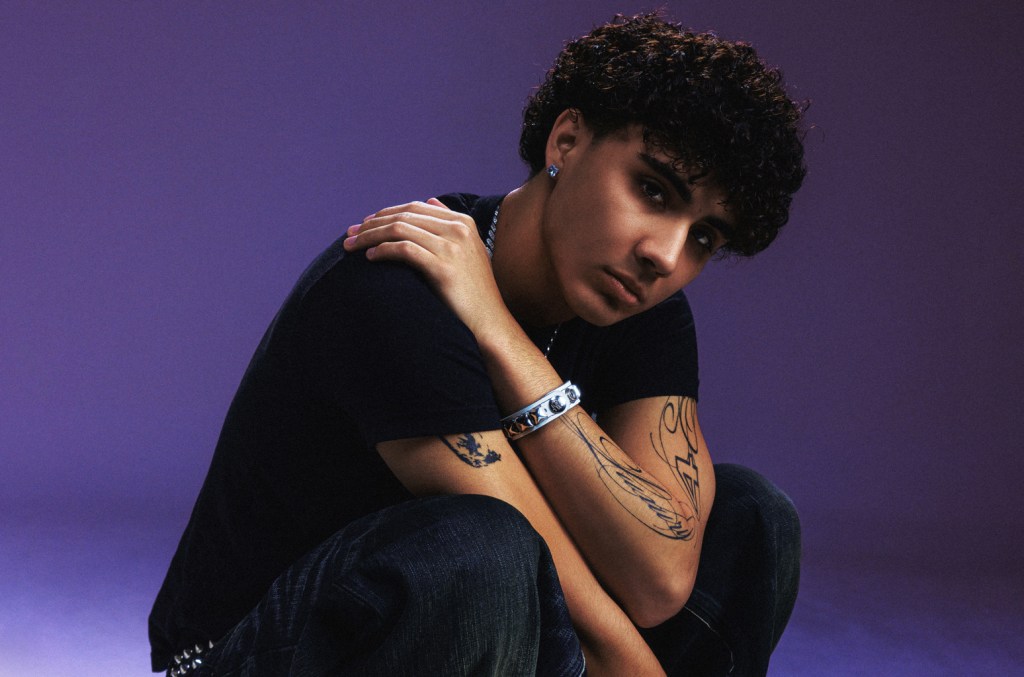
New Music Latin is a compilation of the best new Latin songs and albums recommended by Billboard Latin and Billboard Español editors. Check out this week’s picks below.
DannyLux, Leyenda (VPS Music/Warner Music Latina)
DannyLux’s sixth studio album Leyenda is a dazzling dark fantasy affair that weaves tales of eternal skies, mermaids, and otherworldly legends through whimsical sierreño constructs. Anchored by lush acoustic guitars, the album pushes the boundaries of Mexican music, effortlessly genre-hopping into ’90s-inspired trip-hop (“2025”) and lo-fi electronic music (“Q.D.E.P.”) across 19 tracks. He also invites Jasiel Nuñez to join him in a sierreño reverie on “Cielo Eterno,” Yng Naz on the whimsical corrido “Viaja Conmigo” and Juanchito on the tololoche-driven “Mis Loqueras.” With its fusion of regional Mexican instrumentation and subtle electronic elegance, DannyLux delivers intricate storytelling throughout.
Accompanying the album is a short documentary of the same name. Directed by Elías López, the 17-minute film delves into a surreal, medieval-inspired realm, exploring themes of creative doubt and transformation. The visual — evoking the spirit of ’80s films like the David Bowie-starring Labyrinth — combined with the album’s haunting-yet-allegorical themes, further cements DannyLux’s place as a trailblazing artist in his genre. — ISABELA RAYGOZA
Trending on Billboard
RØZ & Peso Pluma, “Apaga La Luz” (ALT:Vision Records/Queens Road Music/Atlantic Recording Corp.)
Mexican artist and producer duo RØZ recruit Peso Pluma for a head-bobbing electronic track that showcases not only Peso’s vocal versatility but RØZ’s knack for creating hypnotizing beats powered by euphoric melodies. The collaboration between the Mexican acts came about through an Instagram DM resulting in a standout release, which follows RØZ’s breakout hit “flashes” with reggaetón hitmaker Yng Lvcas. The song’s ethereal canvas allows Peso to deliver a more intimate performance, nearly whispered, in contrast to his in-your-face delivery when singing corridos. RØZ most recently inked a deal with Queens Road Music/ Atlantic Records, setting them up for a busy summer with confirmed performances in festivals across Mexico. — GRISELDA FLORES
Gente de Zona, Reparto (Altafonte/Gente de Zona)
“La Conga,” a nearly three-minute intro, kicks off Gente De Zona’s new studio album, Reparto. The rhythmic track—where there are no lyrics, only shout outs to the album’s collaborators—sets the perfect tone for the cultural-statement-making production: a strong blend of Cuban timba, rumba and hard-hitting bass and claves. Named after the latest movement in the Cuban music scene, reparto is “a genre that draws from the roots of Cuban timba, guaracha, guaguancó, rumba, and with this album, we fuse it with the tropical and urban rhythms that define Gente de Zona’s sound,” Alexander Delgado of Gente de Zona says in a press statement.
With the hopes of taking the genre from the barrios of Cuba to the masses, the duo composed by Delgado and Randy Malcolm team up with a wave of up-and-coming producers and artists such as Dale Pututi, Dany Ome, Kevincito El 13, and L Kimii, as well as one of the genre’s pioneer, Chocolate. Lyrically, most of the tracks on the album are uplifting and motivational, whether it’s about having confidence, feeling successful and blessed, or having a healthy relationship.
“With Reparto, we’re showing the world an evolution of Cuban reggaetón that defines our culture, taking it to new frontiers so people can enjoy it and recognize it,” Malcolm adds. “At the same time, we want to shine a light on these new artists who are leading the authentic Reparto movement in our country.” Standout tracks include “Rico Cantidad,” “Se Trata” and focus track “La Guagua,” featuring Wow Popy and Zurdo MC. — JESSICA ROIZ
Ricardo Montaner, Camilo & Evaluna Montaner, “Si Tuviera Que Elegir” (Hecho A Mano Music)
Twenty-three years ago, a young Evaluna appeared in the music video for her father Ricardo Montaner’s song “Si Tuviera Que Elegir.” Today, the artist, mother and wife once again accompanies her dad on this song — this time as a performer — in a new version that features Latin music star Camilo (also her husband). “Having Camilo and Evaluna singing by my side gives the song a different meaning,” Montaner said in a press release. “Camilo, with his unique voice and at the peak of his career, and Evaluna, with her angelic and original way of performing, make this song a gem.”
Written by Montaner and Yasmil Marrufo, the new version of “Si Tuviera Que Elegir” remains a soft-yet-poignant pop ballad, much like the original one, only this one becomes a family affair, giving the track a new meaning. The music video, set to be released later today, is directed by Marlene Rodríguez, Montaner’s wife and Evaluna’s mother, who created a tender collage of images from past and present. — SIGAL RATNER-ARIAS
Astronomía Interior, Hélices (Universal Music Group)
Bassist Ángel Mosqueda and keyboardist Jesús Báez are Astronomía Interior, the alternative project of this duo of musicians who are also members of the Mexican rock band Zoé. In Hélices, their second studio album, the duo presents 11 tracks that transport the listener from the most subtle atmospheres to an explosion of experimental rhythms and introspective lyrics. From the album cover, which depicts the shimmering wings of a dragonfly against a fiery red background, the pair project freedom and change.
Electronic touches with some acoustics incorporated, in a minimalist style, power songs like “Mineral”, “Mar Universal,” “Materia y Espacio,” “Siento la Noche,” “Abril” and “Una Canción,” which showcase the transforming spirit of this album. Meanwhile, “Ahí Estaré” and “Hélices” reflect the U.K. pop stamp of British producer Phil Vinall, an important part of Zoé’s sound identity. The band’s drummer, Rodrigo Guardiola, also participated in several songs. — NATALIA CANO
Camila Fernández, “No Puedo Dormir Sin Ti” (Universal Music México)
The heiress of the Fernández dynasty presents “No Puedo Dormir Sin Ti,” a ranchera ballad led by Camila’s soft voice and profound delivery, which turn it into a song of sadness over the absence of a loved one. This is the sixth advance of her upcoming album La Fernández (as she likes to be called) set to be released in August, with which she will continue to represent Mexican music accompanied by mariachi. — TERE AGUILERA
Check out more Latin recommendations this week below:

For the Italian public, he is now an artist who needs no introduction. His surprising climb to second place at the Sanremo Festival 2025 with the song “Volevo Essere un Duro” (“I Wanted to Be a Tough Guy”) made him famous thanks to its mix of tenderness, irony and aesthetic and musical references to glam rock – reinterpreted in his own way. However, for the international public of Eurovision 2025, Lucio Corsi is an artist who is still to be discovered.
Italy’s presence among the “Big Five” guarantees him direct access to the final, but will he be able to replicate his unexpected success of Sanremo? He openly does not aim for victory: “Music for me is not a competition. It would make no sense: how can you compete in music? It’s not a sport,” he says, sounding sincere.
However, everyone’s eyes and ears are focused on the Saturday (May 17) final, where the 2025 Eurovision Song Contest winner will be decided. Billboard Italy interviewed the “anti-hero” songwriter after his performance in the first semifinal to gather his thoughts and impressions before the final.
Trending on Billboard
What was your first impression of Eurovision?
It was interesting to see how many rehearsals there are before the performance. They are repeated several times a day and there is great attention to every little detail. There is also great readiness to improve the shots and the sound. It is a fortune to be able to invent what we want on stage.
What are the similarities and differences between Sanremo and Eurovision?
In Sanremo everything is very concentrated: from morning to evening there are interviews, rehearsals, performances. Here, instead, everything is more dilated in time and there are fewer things on your schedule. In Sanremo you continuously breathe the atmosphere of the festival, here you can also isolate yourself: in some moments you don’t even feel like you are at Eurovision. It is also interesting to be able to encounter other types of musical expression, from other countries and with other conceptions of the songs.
You said that you particularly like Napa, the Portuguese band. Have you had the chance to meet other Eurovision artists in person?
Yes, I met Go-Jo, the Australian artist. I first met him by chance while walking in Rome: we turned a corner and found ourselves face to face. It’s a small world…. Then I met [Estonian artist] Tommy Cash here in the hotel. These encounters are among the nice things of these experiences.
After your performance, many people appreciated your reference to a glam rock sound and aesthetic. Is it an element you are counting on to appeal to an international audience?
I have always tried to find my own way of being inspired by that type of sound. I have always liked it, since adolescence. It is not something aimed at making an impression: it just interests me on the level of composition, sound, research. However, I like many types of music, from folk to prog rock. In the future, I would like to delve into other things as well. This is just a snapshot of this period of mine.
How was your “anti-hero” style received by those who didn’t know you before?
I’m very happy that the English subtitles to the lyrics did their job. I’m happy to see that foreign journalists understood the meaning of the song. I hope that can happen in the final, too. The English translation we did is the simplest possible, because it has to reach non-native speakers as well. We didn’t need a sophisticated translation but a clear, immediate text.
Your collaboration with Tommaso Ottomano, who is with you on stage, is very close: tell us about the human and professional relationship that binds you guys.
He’s like a brother. We’ve known each other since we were kids and we’ve invented everything together, from songs to music videos [Ottomano is also a director, ed.]. We both come from Tuscan, in particular from Maremma, which is a sort of Italian Wild West. Music took us away from the boredom of the province, which is also wonderful because it’s very similar to peace. Learning to deal with such boredom as kids gave us the opportunity to find escapes in music. Also, the stories of people from the provinces are very epic: since the places are “small,” these stories have to be in some way gigantic. This inspires me a lot.
Lucio Corsi
Francis Delacroix/Billboard Italy