State Champ Radio
 News
Page: 213

Trending on Billboard Taylor Swift is keeping her giving streak going by donating a life-changing chunk of change to Lilah, a 2-year-old Swiftie who’s battling brain cancer. The pop star quietly contributed $100k to a GoFundMe page raising money for the toddler and her family as Lilah undergoes treatment for “a very rare aggressive form […]

Trending on Billboard Iron Maiden have announced the dates for the North American leg of their Run For Your Lives World Tour, and they’re bringing Megadeth and Anthrax along for the ride. Explore See latest videos, charts and news Starting on Aug. 29, 2026, Iron Maiden will kick off their North American leg at Toronto’s […]
Source: John Lamparski / Getty
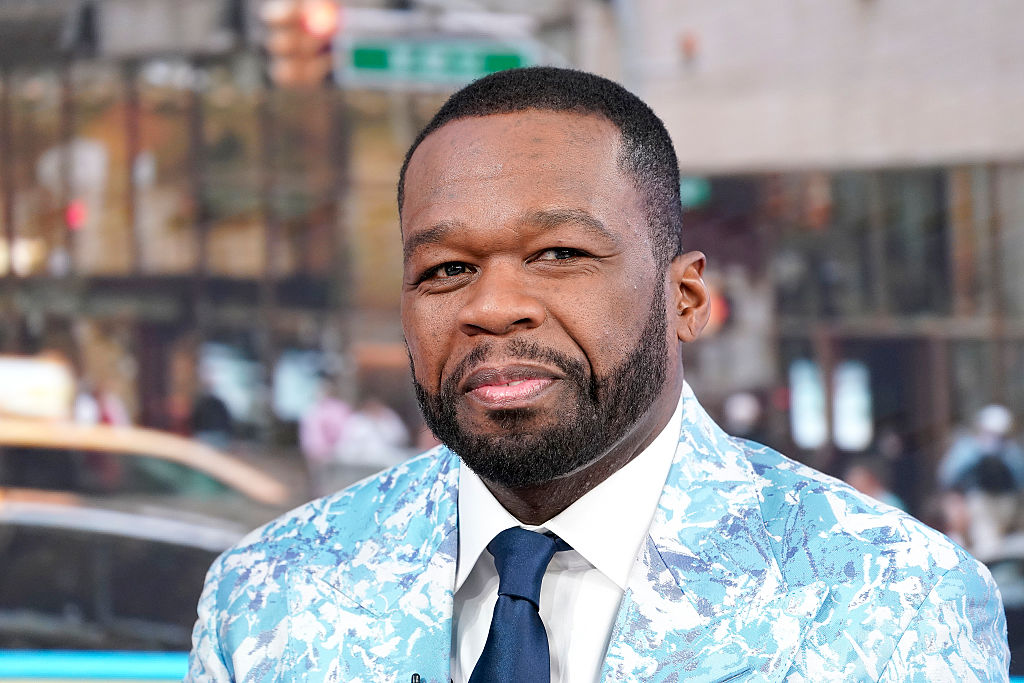
There are three things guaranteed in life: death, paying taxes, & 50 Cent trolling.
The newest flame he threw more gasoline on is Nicki Minaj’s ongoing issue with Jay-Z. Fif has absolutely no picks, per usual. Under a recent AI-generated video of Jay-Z in a bikini dancing to Whitney Houston’s “I’m Every Woman”.
One thing about Nicki Lewinski is that once she starts, she will never stop beefing with you.
Now 50 Cent is with all the sheniagans and found the AI video of Hov hilariois. He chose to egg it on by commenting, “LOL wtf did they do to [Nicki], I like when she get mad.”
Nicki Minaj has been trolling Hov and Roc Nation for a while now. Boiling over to the Queen deciding to put her album on pause, “Ok, I’m not going to put out the album anymore. No more music. Hope you’re happy now. Bye, Barbs. Love you for life.” Sending even some indirect shots at Hov in the process, “They came BEGGING the QUEEN for a tour & album & I said NOPE!!!!! LMFAO. Wanted to patch it up. They needed help from the QUEEN & the BARBZ. I called the Barbz on the secret BARB phone & it was resounding NOOOOOOOO. Just like the casinoooooooooo”.
The “casinooooo” fans alleged Nicki is referring to is Jay’s lost bid to have a casino in NYC.
Trending on Billboard
Rawayana transformed the M2 Miami club into a massive after-party for the 2025 Latin Music Week Billboard En Vivo on Wednesday night (Oct. 22).
Joined on stage by about 70 people — including friends, music industry figures, models and influencers — the Venezuelan trip-pop band created a celebratory atmosphere with a dazzling production that featured a stimulating display of lights, colorful visuals, confetti and smoke columns, delivering a one-of-a-kind experience.
Both the special guests on stage and the audience vibed to the rhythm of the 14-song setlist, which opened with “Dame Un Break” and continued with hits like “Feriado,” “Hora Loca,” and Rawayana’s latest single, “La Noche Que No Había Uber.” One of the standout moments was the appearance of Puerto Rican singer Rafa Pabön, who joined Rawayana’s vocalist Beto Montenegro to perform their hit collaboration “Miel.”
Have you played Billboard’s Latin Music Week Crossword?Play now!
The Grammy and Latin Grammy-winning band closed the set on a high note with their mega-hit “Veneka,” a burst of adrenaline that had all their fans jumping to the beat.
Rawayana’s performance was preceded by a set from Venezuelan singer Corina Smith, followed by fellow Venezuelan DJ Mr. Pauer. The newly formed boy band Santos Bravos, which was scheduled to perform live for the first time after winning this week Hybe Latin America’s reality show of the same name, was unable to perform due to logistical issues that caused delays to the arrivals of three of its members. The quintet will instead make its red carpet debut at the Billboard Latin Music Awards, which will air live tonight (Oct. 23) on Telemundo.
With over 30 years of history, Billboard Latin Music Week is the largest gathering of Latin artists and music industry executives worldwide. This year’s lineup also included Aitana, Anuel AA, Bebeshito, Carlos Vives, Carín León, Danny Ocean, DJ Khaled, Emilia Mernes, Ivy Queen, Gloria Estefan, Grupo 5, Kapo, Laura Pausini, Luck Ra, Netón Vega, Olga Tañón, Óscar Maydon, Ozuna, Pablo Alborán, Suzette Quintanilla, Tokischa, Xavi, Yailin La Más Viral, and more.
Watch a clip of Rawayana’s Billboard En Vivo performance below.
Billboard’s Live Music Summit will be held in Los Angeles on Nov. 3. For tickets and more information, visit https://www.billboardlivemusicsummit.com/2025/home-launch
Source: Dave Benett / Getty
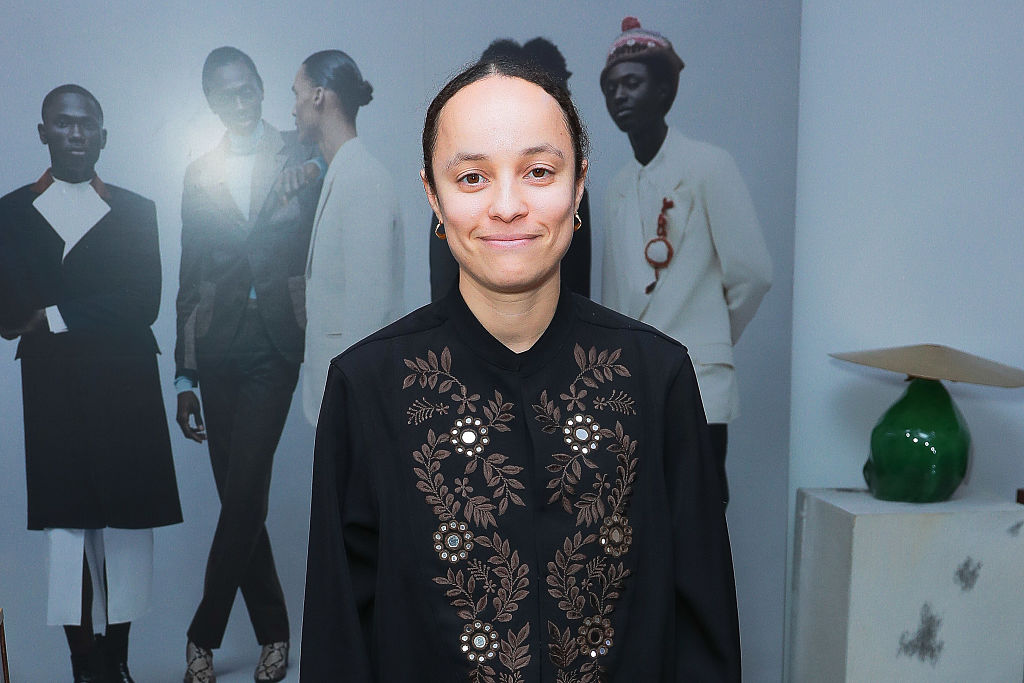
One of the world’s most beloved fashion labels has a new creative director. Hermès has appointed Grace Wales Bonner to oversee their menswear category.
As per Rueters, Grace Wales Bonner has stepped into a new era professionally and personally. This week, the luxury brand known for its very pricey and collectable Birkin bag announced that she will be leading its men’s ready-to-wear efforts. Born in South London, the Central Saint Martins (2014) alumna is synonymous for pushing the boundaries of fashion with cultural touches while keeping a keen eye on craftsmanship. That same year, Bonner launched her eponymous brand with her debut collection “Ebonics.”
Since then, the creative has been recognized by the industry and her peers alike. She has received multiple awards, including the CFDA Menswear Designer of the Year Award in 2021 and the British Fashion Award for Menswear Designer in 2024. Grace Wales Bonner expressed her enthusiasm about the appointment in a formal statement. “I am deeply honored to be appointed Creative Director of Hermès Men’s Ready-to-Wear. To open this new chapter and join such a lineage of artisans and creators is a dream for me. I am immensely grateful to Axel Dumas and Pierre-Alexis Dumas for giving me the opportunity to bring my vision to this magical house,” she said.
Pierre-Alexis Dumas, Artistic Director of Hermès also detailed why Bonner’s appointment is so significant for the brand. “I am very happy to welcome Grace into our family of artistic directors. Grace’s taste and curiosity for artistic practice strongly resonate with Hermès’s creative philosophy. We are only at the beginning of a dialogue that will continue to grow,” he said.
Grace Wales Bonner is expected to present her first collection for Hermès in 2027.
Source: Gladys Vega / Getty
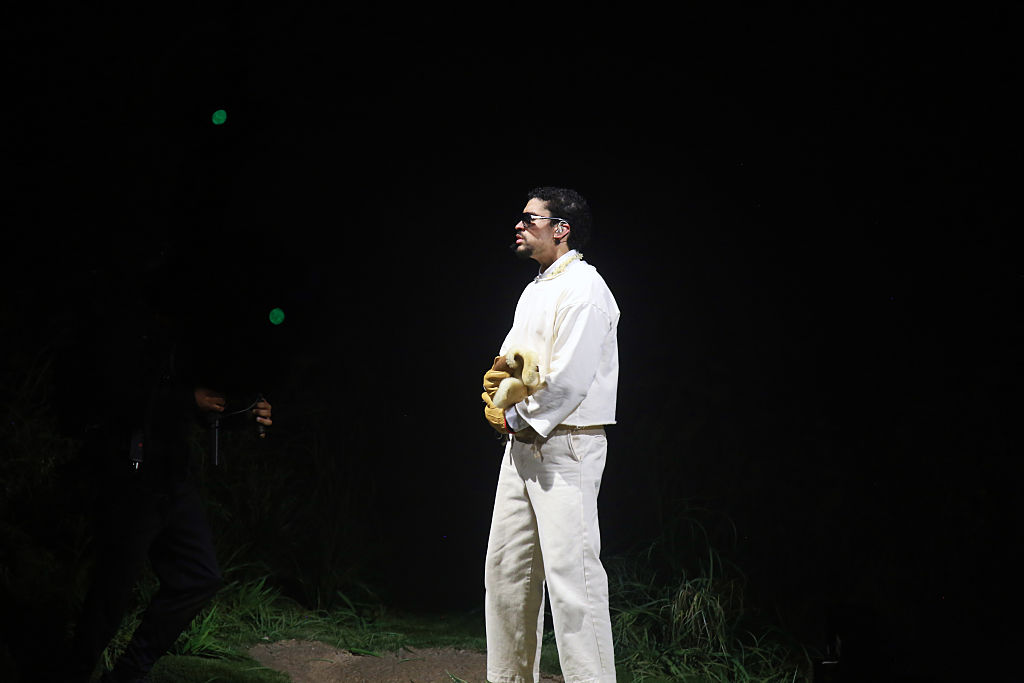
Ever since it was announced that Puerto Rican superstar and Grammy award-winning artist, Bad Bunny, would be headlining the Super Bowl halftime show, MAGA country has been doing the most in their attempt to get him replaced before the big game. But their efforts have just suffered the ultimate setback, as NFL Commissioner Roger Goodell said, “Nah.”
According to Newsweek, Roger Goodell made it loud and clear that the global superstar would indeed be headlining the halftime show come Feb. 8, 2026, regardless of what some racist folk out there are demanding (he didn’t say that last part). While this led to anger and resentment from the MAGA cult on social media, they can at least take solace in knowing that they’ll have that extraordinary Turning Point USA counter show during the Super Bowl halftime show that’s rumored to feature the likes of Kid Rock and Lana Trump.
Should be a helluva show (LMAO).
Goodell doesn’t look like he’ll be losing any sleep over his decision, as he let everyone know where he stands on the issue.
Newsweek reports:
Love News? Get more! Join the Hip-Hop Wired Newsletter
We care about your data. See our privacy policy.
Defending the choice, Goodell said during a news conference: “The NFL is not considering dropping Bad Bunny. It’s carefully thought through. I’m not sure we’ve ever selected an artist where we didn’t have some blowback or criticism. It’s pretty hard to do when you have literally hundreds of millions of people that are watching.” He cited the importance of reflecting a global audience and commended Bad Bunny as “one of the leading and most popular entertainers in the world.”
Naturally, the decision didn’t go over too well with “conservative Christian” MAGA members, and they took to social media not only to slam Goodell and Bad Bunny, but even invoke a little religion while at it.
TPUSA Live host Jon Root said on X in a comment with over 2,200 views and 41 likes: “NFL Commissioner Roger Goodell said they won’t reconsider replacing Bad Bunny as the Super Bowl Halftime performer & went as far as saying his inclusion & performance will be a ‘unified moment’… Again, no one wants to watch a subtitled Super Bowl Halftime show, from a dude that dresses in drag, makes demonic music, & who stated he wouldn’t perform in the US anymore because of ICE deporting illegal immigrants. TPUSA’s All-American Halftime Show is gonna blow the Bad Bunny’s ratings out of the water.”
We swear those people think any music that comes from Black or Brown artists are “demonic” in nature. We get why they would say that about Lil Nas X, but artists like Rihanna, Beyoncé and now Bad Bunny? Come on, b.
What do y’all think about Roger Goodell standing on business when it comes to Bad Bunny headlining the Super Bowl halftime show? Let us know in the comments section below.
Trending on Billboard
Mike Weiss and David Melhado like to tell the story of when they first met. It was 2019, and UnitedMasters artist NLE Choppa had just released “Shotta Flow,” which would eventually become a top 40 hit on the Billboard Hot 100, and Weiss, UM’s head of A&R, was interviewing Melhado for the company’s head of artist marketing position.
For the meeting, Melhado “had put together a web chart that had ‘artist’s vision’ at the center, and then webbed out A&R, PR, marketing, digital and brands that started from the basis of understanding who the artist is, what their objectives are, what their core audience is and then [how] everything has to tie back to that,” Weiss recalls in a listening room at UM’s Brooklyn offices. “That was my playbook, and I had not seen anybody else draw it in the exact same way.”
Related
Weiss, 34, and Melhado, 41, come from different backgrounds: Weiss is third-generation music business, after his father Barry and his grandfather Hy, and was effectively raised in the industry; Melhado got his start working for Jermaine Dupri‘s dad Michael Mauldin, building out the mid-2000s staple Scream Tour with artists like Bow Wow and Omarion. But they share a professional background in artist management — Weiss with Noah Cyrus and Labrinth; Melhado with Verse Simmonds and the producer Sak Pase — that has given them both a 360 worldview when it comes to artists’ careers, emphasizing building a brand and a catalog over chasing hits.
And at UnitedMasters — founded by veteran exec Steve Stoute, who runs the brand agency Translation, was an artist manager himself with Nas in the 1990s, and wrote the industry tome The Tanning of America in 2011 — the two are dedicated to doing just that. “We never made decisions based off, ‘This has to be a top 10 record, or we have to go to radio because we look to market share,’” Melhado says. “Because we’ve been consistent in our approach and made decisions that were best for the artists’ business, we’ve been able to see success and growth. We build brick by brick.”
UnitedMasters launched in 2017, in the midst of the distribution craze that exploded to serve the vast pipeline of artists that emerged in the DIY artistry world made possible by the streaming era and bedroom production tools. Many of those companies focused on scale and technology, mimicking the one-size-fits-all model developed by companies like TuneCore and Distrokid, which allowed anyone to upload and distribute an album for a set fee per year. Weiss and Melhado wanted to do something different.
“There hasn’t been a lot of [artist] development over the past 5-10 years,” Weiss says. “So we said, if everyone is going to be focused heavily on the A&R research teams, we’re going to find artists that we believe in and can develop. That was going to be our competitive edge.”
Related
Now, that focus is paying off, particularly after the two built a label business as the peak of a pyramid that encompasses DIY distribution at the base and a premium services tier in between, which has become the blueprint for the modern record company. Texas rapper BigXThaPlug‘s foray into country music was a massive success this year, yielding a top 5 Hot 100 single (“All The Way” feat. Bailey Zimmerman) and a top 10 Billboard 200 album; Floyymenor‘s “Gata Only” feat. Cris MJ won a Billboard Music Award for Top Latin Song of the Year in 2024; and partnerships with African super-producer Sarz and indie R&B singer and songwriter Brent Faiyaz have expanded their purview.
And now, as newly-minted co-heads of music at the company, Weiss and Melhado are leading the charge for all of it, staying ahead of the competition as the industry shifts towards their model. “It’s our job to always be changing and evolving,” says Weiss. “If the broader industry is doing what we set out to do, then that’s just validation that we’re on the right path.”
What was Steve Stoute doing at UnitedMasters that drew you to the company?
David Melhado: For me, it was new and he was bridging the gap between the brand world. When we came here it was very much a startup and the idea of being able to support artists at scale was attractive, but we knew it was going to be a challenge. He’s given us the space to fail fast and then pivot and try and take shots.
Mike Weiss: I was looking to be entrepreneurial and go somewhere where I could really help shape a business and touch everything. At that time, there were a number of key executives that were rolling out of the major systems and starting their own businesses that were having some early success. Making that bet on Steve that he was one of those people was a no brainer. But it also was the tech side of things I found really interesting as well, building a future of independence.
Related
Why did you want to build a label on top of the distribution business?
Melhado: We were doing these premium distribution deals, but labels were cherry picking all our acts. Lil Tecca, NLE Choppa, J.I. the Prince — as soon as they started to have a little bit of momentum the labels would come in because we didn’t have long term rights or a team that could really support them. So, that was the part of the argument to Steve: we have to change the way that we’re doing our deals. We have to really invest in the artists, and you’ve got to give us the ability to build the team. That was the turning point for us.
Weiss: We got to a point where we were saying, “We can identify talent and be successful with that talent, but what’s going to differentiate us from the majors if we don’t have the staff to really support that and take it to the next level?” A lot of companies in those early days of distribution were coming across that same problem — what’s the value of finding an amazing artist that’s going to develop into a superstar if you can’t be there when they’re a superstar? We said, Let’s build a label business and a team that can be competitive in terms of resources with the majors, but with the artist friendly deals of the distros. It was never a question of being the best distributor. It was, “Let’s be competitive with majors, and do it in a way that’s fair to artists.”
You guys had an advantage in being able to build a record label for this new era from scratch. How did you do it differently than what you would have seen at a traditional major?
Weiss: We said, what does development look like in the 2020s? Development is public, development is in the perspective of the fans. It’s similar in many ways to building a startup, which we have experience with now. You want to pivot quickly, you want to see what people are reacting to, you want to fail fast. You want to know what people are going to respond to and you want to start raw and authentic. And so we built A&R teams that could really get in the mix with artists. There are no longer gatekeepers that are going to press a button and all of a sudden your music is going to be everywhere and you’re going to be a breakout star. So we needed to put a team together that was wholly committed towards building something brick by brick from the ground up. And with that came the focus of constant progress, of being better today than we were yesterday, and making sure that whatever steps were taken were not in the pursuit of a hit record, but the pursuit of building an artist that has a foundation, a fan base, an audience that everything else can live within.
Related
One of your big success stories has been BigXThaPlug. How have you developed him through the years?
Melhado: When we first partnered with BigX in October 2021 he had 500 monthly listeners on Spotify. We took a really regional approach, working records in the clubs and trying to create an early groundswell, and did that same thing from a digital vantage point as well. We would release singles and then package them as an EP. Release more singles and then package it as an album. And we kept replicating that same process.
Weiss: The whole approach was consistency. The content mixed with the consistency just brought more and more eyeballs. You paired that with the localized approach to it and building a groundswell first that everything could rely on. For us, first week sales is not the barometer for anything. We’re not looking at the biggest moment and impact that we can possibly have week one that will jeopardize week 20. We’re focused on building an artist holistically and building that catalog.
Artists also need global reach. How did you guys approach that?
Weiss: The majors have companies in every territory. We’ve seen over the past two years that shift from a positive to a negative for the labels and a negative to a positive for us in that we have the ability to bring on whichever partner we want in whatever region. The team we would use in Germany for an Ekkstacy record would not be the same team that we should use for BigXThaPlug or FloyyMenor. So, we’re able to just bring in the independent partners within those specific regions that work directly for that specific artist. The approach has allowed us to have flexibility and bring in the right partners wherever it is internationally. Then as it came to finding international artists, the approach was similar — we just followed the talent. FloyyMenor, he was not a huge success at that point, but he was just buzzing in the scene. We saw a community being built around him and that real groundswell, which played into the way in which we already see and focus on developing acts.
Related
The culture of the business in Nashville is different than everywhere else. How did you guys move into the Nashville world for the BigXThaPlug album?
Weiss: The Red Sea parted for us on that. When we put out the “Texas” record, because it’s a country/hip-hop record already, we started hearing that Luke Combs and Morgan Wallen and Post Malone were fans. When he was still relatively unknown, the country community was actually the one community that was behind him. They welcomed him in with open arms. Dave and I went and sat with Charlie Handsome and talked about this idea of doing a country collaboration EP and he was down to give it a try. Then BigX posted an Instagram clip of “All The Way” with Bailey — people just went crazy. So the team went down to Nashville and met with every writer and producer. They all loved BigX because the artists loved BigX.
You share an office with Translation. How does that give you an advantage?
Melhado: Working with brands has been embedded in the DNA of UnitedMasters from the beginning. The early partnerships with the NBA and NBA 2K soundtrack; sync has been a part of the ways that we work with brands from day one. For an artist like BigX that has been very much a part of his story. One of the early brand deals that he got was creating the theme song for the XFL. I think it’s safe to say that we’re the only creative solutions company and creative agency that has a full blown music company and record label. That’s an important ingredient in the artist development story for us.
What does success look like for you guys?
Weiss: Success is when you see an artist that’s continuing to grow week over week, month over month, year over year. And the best way to do that is by building catalog rather than having peaks and spikes that are here today and gone tomorrow and then don’t really last the test of time in the digital era. Everyone talks nowadays about how catalog is the thing that is keeping the majors afloat. We don’t have a catalog to rely on and our goal is to build that.
Source: Miikka Skaffari / Getty
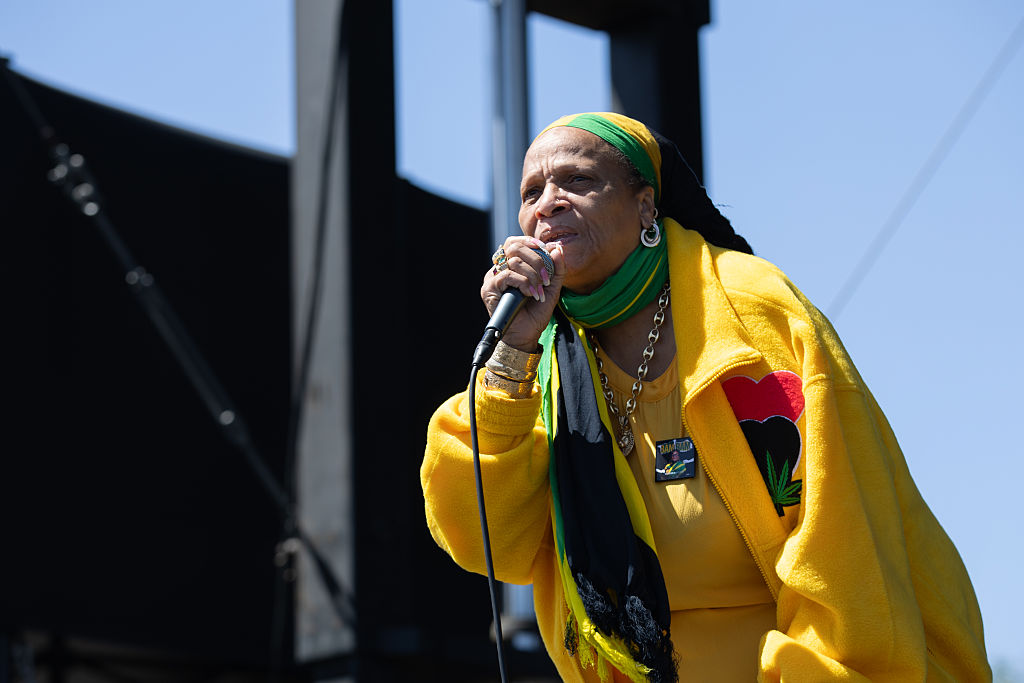
The value placed on sampling hits is an ongoing discussion, particularly when it comes to proper compensation. For reggae legend Sister Nancy, Jay-Z did the right thing when he sampled her iconic track “Bam Bam” for his song “Bam” with Damian “Jr. Gong” Marley on the 4:44 album in 2017. Sister Nancy spoke about the experience in an interview with Billboard.
“Everybody has sampled the song, but he chose to take me with him. Jay-Z is my number one. He did the right thing,” Sister Nancy said. “Everybody else was cheap; they didn’t even think about me.” She also spoke of her gratitude for the rapper flying her to her native Jamaica to take part in the video shoot. “The reality of him taking me with him to shoot the video in Jamaica was amazing. I really appreciated that,” the 63-year-old said. “At the time, I had just left my accounting job at the bank, so it meant a lot.”
The pioneering artist’s song, which appeared on her debut album One, Two was released in 1982. It wasn’t an outright hit at first, but it grew to become arguably the most sampled reggae song in the genre’s history. But Sister Nancy wasn’t receiving any accolades or money from it; by 1996, she relocated to New Jersey, focusing on making a more stable life for her and her daughter. That journey, and her return to music, is the subject of the documentary Bam Bam: The Story of Sister Nancy, which was an official 2024 Tribeca Film Festival selection
In the interview, Sister Nancy also spoke about the first time that she heard “Bam Bam” sampled in an unauthorized fashion, first back in Jamaica on Kriss Kross’ “I’m Real.” Upon her migration to the United States, she stated that “the first place I heard “Bam Bam” was in the 1998 Belly movie.”It wasn’t until 2014 that Sister Nancy decided to go after her due royalties. “Working my nine-to-five at the bank was rough, and my daughter was in high school at the time. I had to depend on my mother so much as well,” she said. “I’m so sorry she’s not here to reap what she sowed—because I didn’t sow it, she did. 2014 is when I decided to fight for what is mine. And nobody complained because they knew I deserved it. They basically just gave me what I was owed.”
Trending on Billboard
Dion DiMucci considers his new album, The Rock ‘N’ Roll Philosopher, to be “like a concert” experience.
“I thought I would just let it run like a concert,” the Rock and Roll Hall of Famer and proud son of the Bronx tells Billboard via Zoom, sporting a New York Yankees baseball cap shortly after the team was eliminated from the playoffs. “That was my vision; if I had to do a set with a band, I’m gonna do these 16 songs, in this order. It’s the perfect concert.”
The Rock ‘N’ Roll Philosopher — Dion’s fourth album released within the last five years with Joe Bonamassa’s Keeping The Blues Alive (KTBA) Records label — is not simply a compilation, however. As Dion notes, “some of (the songs) are new, some of them are redos that I felt I could do better versions of.” Based on his January book of the same name, it includes six fresh recordings — some of older favorites such as Tom Waits’ “Serenade” and his own “Abraham, Martin and John,” for which Dion recently released a video — along with previously released collaborations with Bonamassa, Eric Clapton (who wrote a foreword in the liner notes), Mark Knopfler and Sonny Landreth, plus signature Billboard Hot 100 hits “Runaround Sue” (No. 1), “The Wanderer” and “Ruby Baby” (both No. 2).
Explore
See latest videos, charts and news
Dion penned the brand-new songs — “New York Minute,” released in January, and “Mother and Son,” inspired by Michelangelo’s Pietà — with good friend Mike Aquilina, an author who specializes in Catholic Church history and has been writing with Dion since Tank Full of Blues in 2012; he co-wrote Dion’s 2023 book, Dion: The Wanderer Talks Truth (Stories, Humor & Music). Dion also salutes his late Little Kings bandmate Scott Kempner, also of the Dictators and Del-Lords, via new recordings of “New York Is My Home” and “In a Heartbeat of Time,” which Kempner co-wrote; the former, from the 2016 album of the same name, is a version of the track before Paul Simon added his guest vocal to the recording.
“When I get down into it, I really love that blues thing,” Dion, 86, explains. “That John Lee Hooker thing, just that groan. I love expressing myself with those three chords, even two chords; it doesn’t have to be very fancy. I just love the thing grooving. The beauty of rock ‘n’ roll is repetition, the beauty of repetition and the groan and the groove and the communication of the words. It’s very simple.”
The Rock ‘N’ Roll Philosopher album is an outgrowth of the book project, Dion’s third. Co-authored with Adam Jablin and sub-titled Conversations on Life, Recovery, Faith and Music, it’s a loose collection of stories and concepts, housing high-minded concepts, anecdotes and lists of favorite books and performers.
“The book was events in my life that I’m reflecting on, all these little stories I have, and it comes with a life lesson,” says Dion, whose first memoir, The Wanderer: Dion’s Story, was published in 1988. “So then Bonamassa and (KTBA) co-founder Roy Weisman said, ‘Let’s get an album, something compatible with the book.’ At the time I was doing the audiobook, and I just had a ball doing that ’cause you could have songs (play) in the stories, just coloring or complementing. (The album) developed out of that.”
One of the most striking inclusions is “Abraham, Martin and John,” an elegy written by Dick Holler about the legacies of Abraham Lincoln, Martin Luther King Jr., John F. Kennedy and Robert F. Kennedy during 1968. Dion’s recording reached No. 4 on the Billboard Hot 100 that year and was certified gold. It went on to be covered by a number of other performers, including Smokey Robinson & the Miracles, Marvin Gaye, Ray Charles and Bob Dylan.
The Rock ‘N’ Roll Philosopher re-recording of it is a more intimate treatment with just Dion, a guitar and strings along with atmospheric backing vocals arranged and performed by Robert Florczak. “I wanted it in the set,” Dion explains, referring to the album’s setlist concept. “If I do a set, then ‘Abraham, Martin, and John’ has to be there, so I did it for that reason. And when I gave it to Roy Weisman he said it really struck a chord in him; he said, ‘Dion, this song is 57 years old. There are people who never heard it. I would like to release it as a single.’ And we had David Niles do the video, which is my favorite video I’ve ever done. Now, I tell ya, it seems almost timely for this song, ’cause it’s troubled times. But I didn’t even think of that when we were putting it together. It was never meant to be a political song…. It’s about a state of love and it plays so much into that speech Bobby Kennedy gave back then; he was saying love conquers all if we could understand rather than be understood, or if we could love rather than be loved, all that high-minded stuff. You can’t have cable news thinking like that, because then there’d be no shows.”
He’s also pleased that The Rock ‘N’ Roll Philosopher gives him a chance to revisit guitarist collaborations, which appeared on previous albums.
“I did ‘Cryin’ Shame’ with Sonny Landreth,” Dion says, “and that guy, man, kills me every time. He’s ridiculous. It’s just thrilling. ‘Dancing Girl’ with Mark Knopfler, I love his sound; he just hurls me into a higher reality, another dimension, and it’s just all in his hands. And ‘If You Wanna Rock and Roll’ I did with Eric Clapton. I was totally surprised when I called him to play on his; he wrote me emails telling me how he grew up with my music, and I was like, ‘Wow.’ We became friends and he did this and it was so great; I called him and said, ‘Eric, you sound like you’re 19 on this song.’ He said, ‘I stood up. I wanted to do a good job in the studio.’”
In the meantime, Dion is looking at a proposed documentary that he says might involve a couple of performances back in New York, and he’s keeping tabs on The Wanderer jukebox stage musical, which debuted during 2022 and is now working on further financing to take it to Broadway.
As for another album, Dion says, “I’m always working on something. Like I said, I do like the blues thing; it’s in my head that it grooves and it has a mantra to it. I like that. But when I get my guitar and get in there, whether it’s a Phil Spector or Michael Omartian production, or Wayne Hood or myself, it’s all Dion music. When I did gospel music, it’s all Dion music. If it’s just me and the guitar, without the window trimmings, it’s just Dion music. So whatever I do, that’s what it’ll be — Dion music.”
Trending on Billboard
A lot is changing at Spotify. In recent weeks, the company announced its founder and CEO, Daniel Ek, is stepping down from the CEO post (he will stay on Spotify’s chairman); it announced plans to develop generative AI music models with the support of the music industry; it updated its AI policies; it finally launched lossless audio; it updated its free tier; it forged new deals with a number of top music companies; and the company rolled out a number of new features, like direct messaging and “Mix With Spotify.”
The changes are a lot to keep track of, so on this week’s episode of Billboard’s new music business podcast, On the Record w/ Kristin Robinson, Spotify’s global head of marketing and policy, music business, Sam Duboff, joins to explain how the company is evolving, from a static destination for music consumption to what he calls “a place where fans can experience the whole world of an artist.”
Related
Duboff is one of the executives who determines how Spotify will handle the growing presence of AI music on its platform. He also is key in the development of Spotify for Artists, the company’s hub for musicians that enables them to manage their artist profiles and connect with fans.
Below is an excerpt of Billboard’s wide-ranging conversation with Duboff on this week’s episode of On the Record, focusing on its treatment of AI music on the platform.
Watch or listen to the full episode of On the Record on YouTube, Spotify or Apple Podcasts here, or watch it below.
I wanted to hear a little bit more about the fact that y’all are developing generative AI with the consent of many players in the music industry. There isn’t much information out there, so what is going on?
Duboff: We have been hearing from artists and their teams for a few years now that merging music AI tech products don’t feel like they’re built for them, not built for the power of their businesses, their careers, their existing fan bases. So we recently announced we’re collaborating with some of our top industry partners, across major labels and indies, to collaboratively develop artist-first, responsible AI music products.
So what would that look like?
We want to do this in consultation with the industry. People talk to artists about it, songwriters about it, and it feels like a lot of principles about AI and music and what these should look like. It’s happening in real time. So we didn’t want to wait until we have a product ready for a big launch to start talking about how we’re going to build AI products. We want to talk now, while we see lots of other folks in the industry are investing in the space, to be clear about our principles and how we’re gonna work with the industry for any product we build. So we’re looking at four key principles we outlined.
Related
First, [we have forged] upfront agreements with the music industry. [We are] not using tons of music [without permission] and asking for forgiveness later. Second, we wanna make sure artists, songwriters, rights holders have agency and choice about how their music does or doesn’t participate in these tools. They should have control and choice around how fans can or can’t interact with the music using AI. Third, we will always have proper monetization and compensation built in. So artists, songwriters, right holders [are] always compensated for all uses of their work [and] properly credited transparently. We’ll have an eye towards building new revenue streams for the music industry, so not just splitting up the existing royalty pool. We think that could be really important for powering what the next stage of the music industry looks like. Fourth, and really important to us, when we think about our role right now in music, is we want to build AI music products that deepen existing artist-fan connections. With 700 million monthly listeners coming to Spotify already, to listen to their favorite artists, we can play this really unique role where we build tools and help fans go deeper with their favorite artists and connect with their favorite artists in new ways, and make sure AI tools aren’t there to kind of compete with artists or to try to replace human artistry.
I know it is still very preliminary, but you talked about how this will increase the connection between fans and artists. Tell me if I’m off base, but it kind of sounds more like Spotify is leaning towards AI-powered remixing of current songs, rather than a model that generates a new song from scratch, like Suno or Udio, right?
Yeah. I think we see our role as the biggest streaming home for professional artists today. We facilitate those connections between artists and fans through their music already. So we think we’re best positioned to help have AI power this next stage of the industry. In some ways, it’s just in that space of existing artists and connections and building on artists’ catalogs with their consent. Yeah, not tools that are built to compete or kind of siphon off [royalties] from parts of the industry.
Related
To me, this signals a shift for Spotify. Spotify has always been the final destination for listening. This now feels like it’s a more playful, interactive music creation tool. Do you see Spotify continuing to expand from being the place for static streaming?
Over the past few years, we’ve been evolving Spotify from a place that’s just about the music to giving artists all these tools to share the world around their music. So three, four or five years ago, on Spotify, you get an artist profile with some pictures and canvases [looping visuals paired to songs]. It was mostly just about the music, and then you’d have to go to social media or elsewhere to experience the artist’s broader world. Where we’ve been focusing is bringing in artist clips so that artists can share 30-second videos, sharing the meaning of their songs, music videos, live performance videos, which we’ve launched in 100 countries outside the U.S. We’re working to bring that to the U.S. [There are] countdown pages that build up your album release. You can sell your merch in advance. We’re seeing artists use that in really creative ways. So we’ve already been on this journey of making Spotify a place where fans can experience the whole world of an artist. These AI music principles are an extension of that philosophy.
Spotify has also recently updated its policies on AI music. This included a note that the service has removed “75 million spammy tracks.” I’ve seen some outlets post stories about this figure incorrectly, calling it 75 million AI tracks, but it feels like the word “spammy” is intentional, referring to both AI spam and human-made spam. Can you explain what Spotify meant by this?
We’ve definitely seen modern Gen AI tools increase the scale of spam, and so certainly AI played a role in this scale. Not so long ago, there weren’t even 75 million tracks on streaming services, and now, we’re removing that many, but yeah, we’re working to identify spam, regardless of whether AI’s part of the creative process or not.
Related
Spotify is also working with DDEX to create a standardized way to disclose exactly how AI is used in the music creation process. It feels like a step in the right direction to create a standard, but if I’m a bad actor, why would I self-disclose? I probably wouldn’t.
We see this as the first step. No matter what the long-term solution is going to be, of the system of incentives and deterrence that will get people to disclose, the starting point has to be shared language through the existing supply chain of music about what the formatting of that will be.
But I think you do see already a lot of artists, songwriters, producers, starting to talk about how they’re using AI more often. So you see the K-Pop Demon Hunters songwriter who talked about brainstorming with Chat-GPT when he wrote “Soda Pop” through to Brenda Lee using AI to translate “Rockin’ Around the Christmas Tree” into Spanish, but still her voice. It was so cool, but it may have been confusing for Spanish listeners, if they thought Brenda Lee or any artist spoke a language they don’t speak. Now, [with the DDEX partnership] it will be really cool for them to know transparently [exactly how AI was used.]
When Spotify came out with these policies, it did feel like a start, but I heard from some people that they felt it didn’t go far enough. So, what do you say to those who feel like it’s not going far enough?
It’s early days for AI tech. I know it feels like it’s moving fast, but consumption of AI-generated music’s insanely low. We have some time for artists, songwriters, producers to take the lead in figuring out how they want to use these tools. We don’t want to act like we know where AI music’s headed and exactly every policy and role we need to future-proof for the next two or three years. But also, we didn’t just want to wait and do nothing. Some areas we all can agree now that we need to act now, no matter where AI tech heads. We think it’s going to be necessary to have great systems in place to stamp out spam, deception, impersonation. So that’s our starting point. We try to be upfront. We see these as first, critical early steps. There’s more to come.
Related
French streaming service Deezer reported recently that 28% of daily uploaded songs are fully AI-generated. That’s a shockingly high number. At Spotify, have you seen the same figures?
AI detection tech isn’t really foolproof yet. You know, every streaming service has pretty much an integral catalog. We have no reason to disbelieve it’s a similar amount on any streaming service. That said, I think they shared the point that .5% of streams is all those songs were getting. We’ve tried a few different tactics to test that — different detection tech, testing out different proxies — to understand how much prompt-generated music may be listened to on Spotify, and we find it is way lower than .5% in the share of streams, in total consumption. So I know sometimes it feels scary when you see those upload percentages…but yeah, there’s a lot of uploads [of AI music.] We’re doing a lot of work to release that kind of spam, where there are mass uploads that can add up to those kinds of percentages, but keeping a close eye on the part that actually matters, which is, are listeners listening to it? Is it generating royalties?
Consumption being really low makes me think that it must be a burden on streaming services to hold all of this music, especially when no one’s listening to it. Would Spotify ever remove tracks that are just getting absolutely no traction?
I don’t think so. Whether they’re AI or otherwise, people upload their music to streaming services for all different reasons. I have family members that upload music to send to family and friends. That’s a great thing at Spotify, [where] we are focused on emerging and professional artists. Our policies are in service of professional artists and emerging artists on their way to that. So we take on the burden of how many songs are uploaded, and certainly the overwhelming majority of songs aren’t getting streamed much. I still think it’s really important for there to be this open outlet.
Related
Is this a cloud storage issue? I have no idea how big these songs are to hold onto.
Maybe someday, with AI scale, it will be.
Earlier this year, I spoke to Spotify’s global head of editorial, Sulinna Ong, and I asked her about whether or not she would ever forbid AI tracks from living on Spotify editorial playlists. She didn’t have a clear answer at that moment — it wasn’t a yes or a no, so I wanted to ask again. Could you ever imagine fully AI-generated tracks living on a Spotify playlist?
It’s a hard question, because I think we recognize AI music as a spectrum… I think what you’re getting at is completely prompt-generated music without any human input. Is there some world where listener behavior really changes, and there’s huge musical, cultural relevance from music that doesn’t spam, deceive or impersonate, but somehow finds an audience, [that] could make it on to a viral hits sort of playlist? I can’t speak for their team, but fundamentally, 100% of the focus of our editorial efforts is helping to identify, uplift [and] develop the careers of professional artists who are making amazing music. So it’s always hard to answer that question in absolutes, but certainly that’s not the focus of anyone at Spotify, or, I think, any streaming service.