State Champ Radio
 News
Page: 197

Source: Anadolu / Getty
The retail giant Target announced internally that they would be cutting 1,800 corporate jobs throughout the company, in response to combatting slumping sales due to a boycott of Target by the public over its rollback on diversity, equity, and inclusion (DEI) initiatives. The round of layoffs is the first for the company in a decade.
According to reports, the announcement was in an internal memo by incoming CEO Michael Fiddelke sent to employees at Target’s headquarters in Minneapolis, Minnesota, last Thursday (Oct. 23). The plan is for 1,000 employees to be laid off, with another 800 unfilled positions that will be eliminated permanently. That constitutes an 8% cut to Target’s workforce, a spokesman said. Those targeted by the layoffs will be notified Tuesday (Oct. 28), and will receive severance packages along with salary and benefits until Jan. 3, 2026.
Target has been under fire since January, after its decision to roll back its DEI initiatives after President Donald Trump signed executive orders banning them. These initiatives included a pledge to have Black employees as 20% of its workforce over three years and promoting programs featuring Black and other minority creators. That led to a call for a boycott from Black faith leaders, including Pastor Jamal Bryant, and a 24-hour boycott on Feb. 28 by The People’s Union USA.“The truth is, the complexity we’ve created over time has been holding us back,” Fiddelke said in the memo. “Too many layers and overlapping work have slowed decisions, making it harder to bring ideas to life.” He acknowledged that the cuts are difficult, but “a necessary step in building the future of Target and enabling the progress and growth we all want to see.”
Target has been struggling with earnings since January, with its stock falling by $27.27 per share since the end of February, wiping out $12.4 billion in market value. The company has stated that it expects sales to decline again this year. There was also a significant shift in consumer traffic – its walk-in traffic dropped 11% from figures recorded last year. And its website traffic also reflects a drop of 9% from 5.2 million to 4.7 million web users, with a drop in mobile app usage from 4.2 million to 3.5 million.
Trending on Billboard
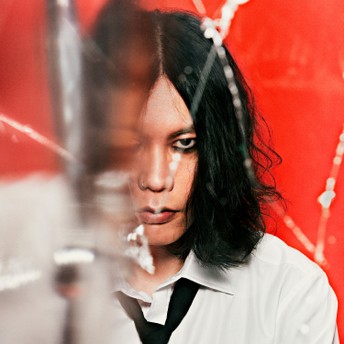
Kenshi Yonezu recently sat down with Billboard Japan to discuss his new single “IRIS OUT / JANE DOE.” “IRIS OUT” was written as the theme song for CHAINSAW MAN – THE MOVIE: REZE ARC, while “JANE DOE” serves as its ending theme. “IRIS OUT” sets impulsive vocals and comical lyrics against a swinging groove, while “JANE DOE,” a duet with Hikaru Utada, depicts a world that is both beautiful and dark. Together, they form a striking contrast.
Explore
See latest videos, charts and news
On the Billboard Japan charts, “IRIS OUT” hit the 100 million–stream milestone four weeks after its debut — the fastest ever in the chart’s history. Meanwhile, on the U.S. Billboard Global 200 that covers more than 200 countries and regions worldwide, the track achieved the highest ranking ever for a Japanese-language song, hitting No. 5 on the chart dated Oct. 4. In step with the movie, the single is currently making waves both at home and abroad.
In this latest interview, Yonezu shared the thoughts that shaped this release, as well as the changes in his day-to-day life after completing his world tour.
First off, tell us about how you’ve been doing. Since wrapping up the Kenshi Yonezu 2025 TOUR / JUNK in April, you’ve likely spent much of the past few months focused on creating. After completing such a large-scale tour, including overseas performances, has there been any changes in your mindset?
Experiencing concerts in countries I’d never been to before on the world tour, in Korea, the U.S., and various cities in Europe, was huge for me. I don’t want to sound disrespectful to those who’d already been listening to my music outside Japan, but since I hadn’t really thought about it much before, I was surprised by the realization that, “So many people have been waiting for me.” I was welcomed so warmly, and even heard voices calling out “Hachi,” a name I haven’t been addressed by in years, which made me genuinely happy. It left me with a very strong feeling of refreshing clarity.
After going through that, I feel like I’ve started aiming for a more productive way of living this year — something I’d always struggled with before. Looking back on my life, if I hadn’t been accepted through music, I think it would have been terrifying. I wasn’t someone who could function socially, just spending all my time making music or drawing at home, neglecting everything else. But now I feel like I’m gradually moving away from that kind of life. It’s very ordinary stuff, but I’ve started doing simple things like keeping a daily routine and paying attention to my health. For most people it might sound like, “Really? Only now?” But for me, it feels like my way of living has shifted a lot. I can’t say for sure whether the concerts were the direct reason, but I do feel they’ve had a big influence.
I saw your shows in Seoul and Los Angeles, and remember you saying, “I’ll come again” while addressing the crowd. Local fans probably took that as a promise of a reunion rather than a one-time visit, and I imagine that feeling developed for you somewhere along the tour.
Yes, that was almost something that just slipped out. Even when I said I’d come again, there wasn’t a concrete plan in place, so I wondered if it might have been an irresponsible thing to say. But the scenes I saw during the tour were radiant. For the first time in my life, it felt like I was truly making eye contact with the audience.
Now, tell us about “IRIS OUT” and “JANE DOE.” After you were asked to work on CHAINSAW MAN – THE MOVIE: REZE ARC, where did the production of the songs begin?
It started with the request to create two songs. One was already decided to be the ending theme, and for the other, the production team was exploring where it would fit within the film. From the beginning, I had a strong, specific idea of what I wanted “JANE DOE,” the ending theme, to sound like. But with “IRIS OUT,” I remember figuring things out as I went along while creating it.
Having written “KICK BACK” for CHAINSAW MAN before, were you mindful of any links between that song and the new ones?
From the start, I felt strongly that I didn’t want it to turn into something like “KICK BACK Part 2.” I never really felt that risk with “JANE DOE,” but with “IRIS OUT,” I sensed that if I let my guard down, it could easily end up becoming “KICK BACK Part 2.” So I placed a lot of importance on how to differentiate it from “KICK BACK.” It’s a song with a complex and eccentric structure, full of dynamism, so if that’s like a rollercoaster, then I wanted “IRIS OUT” to be more like a free-fall ride — starting with a jolt, racing straight ahead, and ending abruptly. I was very conscious of giving it that kind of decisiveness.
“IRIS OUT” feels like a song with a deliberately narrow focus, in the best way. It seems to reflect how Denji is led around as a character. How do you see it?
Since CHAINSAW MAN – THE MOVIE: REZE ARC features Reze as such an important character, I thought it’d be better to keep the focus on the relationship between Denji and Reze. In CHAINSAW MAN and in Tatsuki Fujimoto’s manga in general, there are often women who throw men off balance. I think that’s one of Fujimoto’s hallmarks as a writer, and the “Reze Arc” is very much a story where that nuance stands out. So it felt necessary to keep everything centered on Denji being enthralled by a woman named Reze, who is such an alluring and beguiling woman. By honing in on that single axis and driving straight into it, I felt I could differentiate it from “KICK BACK.”
What do you think makes Reze so appealing?
It’s that she playfully unsettles and misleads him in a way that’s somehow enjoyable. She blushes, casts an upturned gaze at Denji, and teases him a little while making her affection for him unmistakably clear. Of course someone like Denji would fall for it, and in a way, the desire to be deceived is actually an important aspect of romantic feelings. She’s charming and mischievous, but at the same time has a certain mysterious quality — you never really know what she’s thinking. If someone asked, “Who is that girl?” the truth is, no one really knows. She’s the kind of presence that unsettles your senses in the most pleasurable way possible.
Tell us about “JANE DOE” as well. Since it was intended to play during the ending of the Reze Arc movie, what was your initial concept for the song?
At first, I thought it probably shouldn’t be me singing. My male voice didn’t feel at all appropriate for the ending of the Reze Arc movie. I had a strong sense from the start that the song needed to be led by a female voice to work properly. I really like the duet “I’ve Seen It All” by Björk and Thom Yorke from Dancer in the Dark. I felt that kind of nuance would fit perfectly, and started creating the song with that in mind. From there, there were various twists and turns — I even tried a version that was nostalgic and evoked youthful feelings — but it felt overly circuitous. In the end, I felt that a duet with a slightly melancholic, dark vibe would be the most fitting. That’s how it came together.
You mentioned in your comments that you didn’t have a specific singer in mind when you began writing it. At what point in the songwriting process did you imagine Hikaru Utada for the track?
I started from the piano riff, and when the melody and lyrics for the first verse began to take shape, I was thinking it had to be Hikaru Utada. My personal impression of their voice is that it can be melancholic, wistful, and lonely, while at the same time — including their smoky tones — it has a freshness that sweeps through like a breeze. They have both qualities. Also, when listening to their music, there’s a sense of being overpowered by their immense talent and the brilliance of their songs and voice. There’s both a tremendous presence and a certain ethereality in their inner world. I even felt that without that duality, the song wouldn’t work.
Hikaru Utada is an extremely multi-faceted artist, and throughout their career they’ve given form to many different expressions. With “JANE DOE,” it feels like the sense of loss that often appears in their work is being drawn out. What are your thoughts on that?
Two of my personal Hikaru Utada favorites are “FINAL DISTANCE” and “Dareka no Negai ga Kanau Koro.” I first heard those songs in junior high, and they were the starting points for Utada-san’s presence becoming a big part of my life. I went to one of their concerts recently, where they performed the original “DISTANCE” in a remixed version. It was presented with a happiness and overflowing sense of euphoria that stood in contrast to “FINAL DISTANCE.” They were singing “hitotsu niwa narenai” (though we can’t be one) while dancing joyfully, and I thought it was wonderful. This is just my personal impression, but I feel that kind of duality, ambiguity, and kind of helplessness is something that lives strongly in their music. I felt there was something in common with what Reze embodies. Of course, I’m not saying Utada-san is like Reze.
You sing from Denji’s perspective in “IRIS OUT.” Listening to “JANE DOE,” it almost feels as if Utada is taking on the role of Reze. Was that intentional?
I explained to Utada-san that I wanted to create a duet between a girl carrying something incredibly complex and a boy who essentially doesn’t understand that at all, and asked them to sing it in that way. They approached that with their own take and that’s how it took shape.
What did you communicate with Utada in terms of recording and production?
Since they live in London, the recording process was carried out by exchanging data, almost like corresponding back and forth in letters. We did have one phone call, and during that conversation they told me something along the lines of, “I think if you sing it this way, your voice will stand out more.” I really felt they were right. That’s because Utada-san and I have very different sensibilities when it comes to singing. They’re a musician rooted in R&B and other styles that move with a laid-back, rich sense of rhythm. On the other hand, I come from a background in Vocaloid and computer-generated music, where I tend to place more importance on the vertical grid lines. I can also lean into an alternative rock-like urgency. Since we’re so different in nature, when Utada’s voice is layered onto something I’ve written, it makes the song feel much more full-bodied. That difference between us was really wonderful. As I mentioned earlier, the song ended up embodying the contrast between a girl carrying something deeply complicated and a boy who, at heart, doesn’t understand any of it. That wasn’t something we set out to do at all — it just happened as a result. But it feels like we arrived at the one and only way it could be.
The lines ”Let’s fill this world with mistakes“ in “JANE DOE” and “In this world right now, you’re my one-and-only perfect answer” in “IRIS OUT” feel deeply connected. Were you aware of contrasting or linking the two when you were writing them?
Not at all. When I’m writing a song, I’m completely absorbed in it, so I often only notice connections later on. Even with the title of “JANE DOE,” I realized later that it ties to a song in the Reze Arc movie — a Russian song that Reze sings alone in the story, which includes the line, “Jane slept in a church.” I only noticed that after finishing the song. I find it interesting when these kinds of unconscious links emerge naturally.
—This interview by Tomonori Shiba first appeared on Billboard Japan

Trending on Billboard
Taylor Swift, who seems to break industry records with every album and tour, just had the career week of her lifetime: in its first week of availability, her latest album, The Life of A Showgirl, rang up about $135 million in revenue, Billboard estimates.
Related
That total revenue number comes from the album’s massive first-week haul — it debuted with 4.002 million equivalent album units, according to Luminate, the only album to pass 4 million in the modern era, and accounted for 50.01% of all current albums in the U.S. that week — but also to an overdrive marketing campaign launched by the Swift camp and her record label, Republic. While global album unit numbers are not available through Luminate, in its first week of availability, the songs on The Life of A Showgirl garnered 1.4 billion global streams, which Billboard calculates by adding up Luminate global stream counts reported for each song on the album.
The Showgirl album came with 38 variants across about a dozen different editions. That included a number of different colored vinyl versions — with each including add-ons like a poster or autographed photos or an acoustic bonus track — with several limited editions or deluxe versions as well. Those variants drove an incredible buying frenzy among Swift fans. What’s more, most of those variants — because of the extra bells and whistles — resulted in wholesale prices above cost levels usually offered to retailers for CD and vinyl formats.
Since the preorder launch in August, most of the editions exclusive to Swift’s webstore were sold for limited windows of time. Target had an exclusive CD, and there was one widely available standard CD, while four CD variants with bonus tracks launched during street week and were initially exclusively sold in Swift’s webstore, before becoming available at indie record stores.
But the biggest revenue driver is that non-traditional channels — online CD stores like Amazon and the official Taylor Swift webstore, as well as Christian stores and chains like Urban Outfitters — accounted for 70% of all the album’s consumption units. Within that, Billboard estimates that Swift’s own store garnered the overwhelming bulk of that, or more than 65% market share of Showgirl’s total first week of 4.002 million album consumption units.
Related
That provided another revenue boost in that the Swift store charged retail pricing, similar to what brick and mortar stores were charging, rather than a wholesale price. For example, while retailers say the wholesale price for the Swift vinyl was $23.49 and $10.34 for CDs, the Swift webstore sold the vinyl album for $29.99, or 27.6% above wholesale; and the CD for $12.99, or 25.6% above wholesale. In other words, the albums sold through Swift’s webstore delivered at least 25% higher per-unit revenue than what she received from brick-and-mortar retail, giving her and Republic a higher profit margin. (Republic Records did not respond to a request for comment.)
The Swift store also offered two CD box sets, which featured the album bundled with a Showgirl hoodie and a Showgirl cardigan, priced at $65 to $70, respectively, delivering even more revenue.
All told, Showgirl sold 1.76 million CDs, 1.334 million vinyl album copies, 358,000 album downloads and 26,000 cassette albums and accumulated 523,000 stream equivalent albums in the U.S., thanks to the album’s nearly 682 million on-demand streams in the first week, according to Luminate. Setting aside streams, the sales figures accounted for 71% of all the albums sold in the U.S. that week; 77% of all CDs sold; 66% of all vinyl sold; 58% of all digital albums sold; and 72% of all physical albums sold.
Even Showgirl’s streams are doing somewhat better in terms of revenue than a typical pop album. For example, her streaming equivalent album units break out to 1,306 streams per unit, while an album like the Kpop Demon Hunters soundtrack averaged 1,423 streams per stream equivalent album (SEA).
What’s the significance of this? The industry and Luminate count 1,250 paid streams per one streaming consumption unit, and 3,750 ad-supported streams per one streaming consumption unit. So the closer the number of streams is to the 1,250 paid streams count — such as Showgirl’s 1,306 streams — shows that her fans were mainly accessing her music through a paid service, while the Kpop Demon Hunters album was somewhat more dependent on the lower-paying ad-supported per-stream rate.
Related
So how does that add up to $135 million? Considering retail pricing on her webstore, wholesale prices quoted from merchants, the standard wholesale cost for downloads (70% of retail) and the standard blended rate of $0.0053 per stream, Billboard calculates that in its debut week, Showgirl accumulated $80 million in revenue in the U.S. for Republic and Swift. Extrapolating for global activity, Billboard estimates that total revenue totaled about $135 million for its debut week.
Still, as amazing as that debut week was, her catalog so far this year is still trailing the torrid pace her music set in the prior two years, when her Eras Tour and The Tortured Poets Department album drove incredible business for her entire catalog. So far in 2025, her full catalog’s total U.S. album consumption units, including the contributions from Showgirls’ record-breaking first week, stands at 11.23 million units as of the week ending Oct. 16, or week 41 in Luminate calendar year terms. At the end of the 41st week last year, her catalog had accumulated 15 million units; in 2023, it stood at 12.3 million units.
By the end of those two years, she wound up with nearly 19 million album consumption units each year in the U.S. To put that number into perspective, Swift’s 37.4 million U.S. album consumption units across those two years dwarf Drake‘s figure of nearly 16 million album consumption units in the U.S. Globally, Swift’s catalog racked up 90.3 billion streams during the period, compared to Drake’s 36.7 billion global streams.
Related
During those two years of 2023 and 2024, Billboard estimates that the entire Swift catalog annually averaged about $350 million in revenue. So far this year, Swift’s catalog, including Showgirl, has generated around $265 million. That catalog estimate also includes revenue from activity from the second week of Showgirl‘s availability, which clocked in at nearly 339,000 album consumption units, including 1,000 track equivalent albums, bringing total sales of the album to 4.3 million units as of the week ending Oct. 16.
Another financial wrinkle: While most artists on major labels are still tied to a royalty rate percentage or, for superstars, a profit-sharing arrangement, Swift owns her entire catalog. That means that for physical product, she is likely reaping at least 70% of revenue collected after production, distribution and marketing fees are paid to Republic and Universal. For digital downloads and streaming, she might be realizing 85% to 90% of such revenue collected by UMG, or maybe even slightly above 90%.
And all of that is without calculating her music publishing — which in the case of 2023 and 2024 combined could be in the range of $100 million to $200 million, depending on her share of the songwriting — and merchandise, which could bring in untold additional millions. Across 30 different Showgirl-themed pieces of merch through her webstore, the numbers could be mind-boggling.

Trending on Billboard Drake made a surprise appearance at Vybz Kartel’s first Toronto show ever on Sunday night (Oct. 26). According to fan-captured videos, 6 God popped out to give the dancehall icon his flowers and then proceeded to perform an eight-track set for the thousands in attendance at a sold-out Scotiabank Arena. “Look at […]
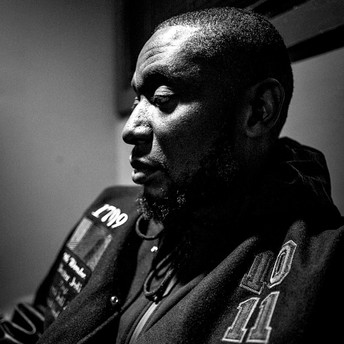
Trending on Billboard Reuben Vincent and 9th Wonder have dropped off their new music video for “Just 4 Me,” which appears on their new collaborative album Welcome Home, released Oct. 24. Explore See latest videos, charts and news The North Carolina rapper’s nostalgic visual arrived on Monday (Oct. 27), and features Reuben and R&B singer […]
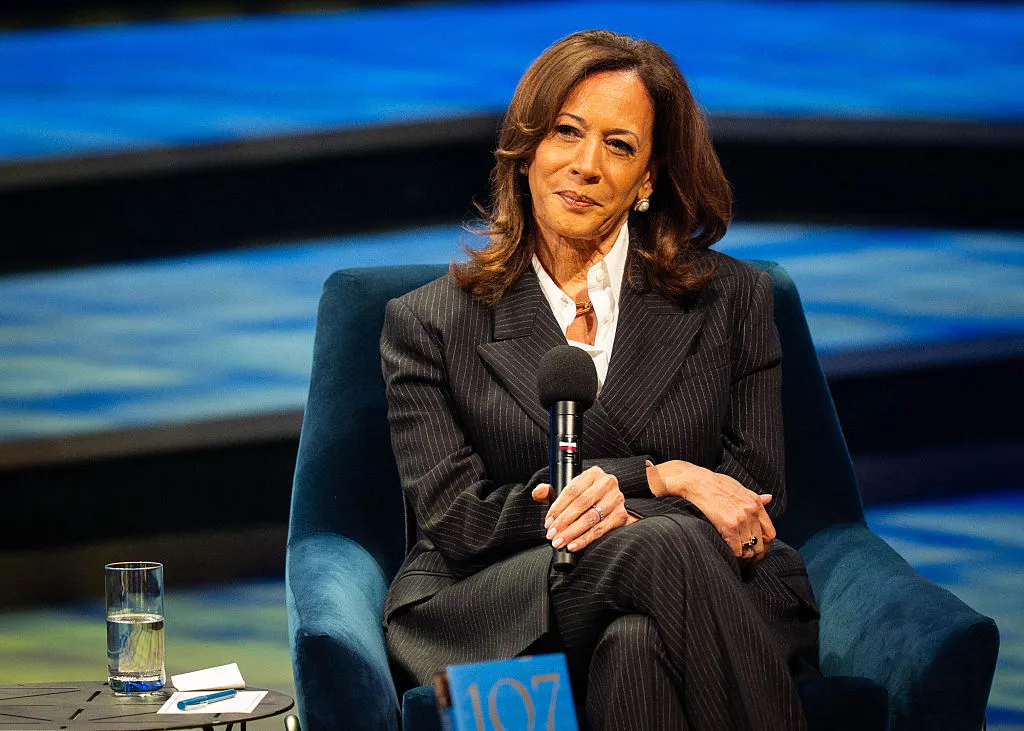
James Manning – PA Images / Kamala Harris
Kamala Harris isn’t done with politics and hints at wanting another crack at becoming President of the United States, even though the United States let her down.
First reported by the BBC, Kamala Harris’ promo tour for her memoir, 107 Days, has officially reached the UK, and she said it’s “possible” she could be POTUS one day. Even though it doesn’t look that way, she feels that her grandnieces will see a woman sitting in the Oval Office “in their lifetime, for sure.”
Sunday, Harris spoke with Laura Kuenssberg and gave folks the strongest vibes yet that she wants to run again, while shutting down polls claiming that she isn’t the favorite to earn the Democratic nomination for president.
Harris also took shots at the current wannabe dictator in the White House, Donald Trump, calling him a “tyrant” while not missing the opportunity to hit us with a well-deserved “I told you so” letting the audience know that everything she warned US voters about Trump, and what a second term under his “leadership” would look like has come to fruition.
Some People Want Kamala Harris To Run Again
Of course, Harris’ latest comments are sparking reactions with some folks already on board with the former VP taking another swing at the White House.
“Let me clarify a point: Kamala Harris must and would be our nominee for the next election. She gained 75 MILLION votes in just 3 f*cking months. NOBODY did that before. Give her time to run a real campaign and we will win,” one person wrote on social media.
If she decides to run again, it might be a rematch with the Orange Menace, who is flirting with the idea of an unconstitutional third term.
Lord help us all.
You can see more reactions, for and against her running again, below.

Trending on Billboard
From tour sponsorships to Taco Bell commercials featuring Turnstile, major companies see billion-dollar branding opportunities in partnering with artists, and a new study from Luminate has some matchmaking suggestions.
The industry-leading music analytics platform looked at five years’ worth of survey results and metrics measuring likability, awareness and brand endorsement to determine the best artists to market sodas, snack foods, cosmetics and credit cards. “Cultural capital isn’t something brands should tap into retroactively,” the report authors write. “Behavioral audience entertainment data can inform marketers, helping them to locate artists whose fan base matches a brand’s target audience. Think of it as ‘moneyball’ for brand partnerships.”
Related
Luminate has collected quarterly online survey results from a representative slice of U.S. consumers, ages 13 and up, since 2021. It identified super-purchasers of food & beverage, personal care & hygiene, travel, telecom, mobile apps and banking & finance products, and analyzed the survey results and other metrics to understand their attitudes and perceptions toward some 600 artists and 100 music genres and sub-genres.
The study deliberately stayed away from megastars like Taylor Swift and instead identified artists who may be less well known, but who among certain groups are well-liked and trusted, and therefore could provide brands with a better return on their marketing dollars, says Grant Gregory, a researcher and manager at Insights at Luminate.
“The decision-making process was a mix of identifying artists with high likability AND artists who are uniquely appealing (in terms of likability) or have uniquely high reach (in terms of awareness) among that category purchasing group vs. the general population,” says Gregory.
The artists who scored among the highest in each consumer category were: country crossover star Bailey Zimmerman for food and beverage products, the queen of regional Mexican music Ana Bárbara for personal care & hygiene products, rising country star Lainey Wilson for banking and finance, Bebe Rexha for telecom, Jamaican singer and rapper Shenseea for service and e-commerce apps such as ride hailing and food delivery and electronic artist Kenya Grace for travel.
Here are some of the highlights from the report.
Bailey Zimmerman
The study plotted the “Fall in Love” singer’s likability and brand endorsement scores from survey respondents who bought at least three packaged snacks, coffee or other food products recently. Zimmerman outscored JENNIE, Leon Thomas, Dolly Parton and Queen as a good bet for marketers. While Chris Stapleton had the highest awareness score, Zimmerman won on likability. His fans tend to be younger and more affluent than the overall population and are more likely to listen to music at least twice a week on Apple Music and Spotify.
“Zimmerman presents a narrower but deeper fandom among category buyers,” Luminate’s authors found, while “Stapleton offers a broader though still highly efficient fandom.”
Ana Bárbara
The longtime grupero singer/songwriter Bárbara beat Young Miko, Arya Starr and Dolly Parton when it came to her strength as a personal care product brand endorser, with only Parton beating her on likability. Bárbara scored particularly well in awareness, perhaps due to the current popularity of regional Mexican music. She over-indexes with Millennial, Gen X and even Gen Z consumers, and fan devotion is particularly strong. Those audiences are more likely than most to use social media apps, including TikTok and Instagram.
Lainey Wilson
Wilson falls in the middle of a pack of superstars that includes Stevie Nicks and Kelly Clarkson, who both rank slightly ahead of Wilson on awareness. However, Clarkson ranks high on awareness and public perception but in the average range for fan engagement metrics. Wilson ranked among the highest for likability and purchase likelihood.
Wilson’s fans also tend to have higher-than-average income, with 38% earning more than $75,000 a year, compared to the general population, and more than three-quarters of the banking and financial product consumers surveyed said they would be more likely to buy a product she endorsed, the report found.
Bebe Rexha
“Recognizable, out-of-the-limelight performers such as Bebe Rexha can still shine through in the data,” Luminate’s report found. The Brooklyn born “Meant To Be” singer has had four top 10 songs on the Billboard Hot 100, and her audience tends to skew young, with roughly two-thirds being from the Gen Z and Millennial generations. This audience is more likely than the general audience to use a streaming service like Amazon Prime Video, Netflix or HBO Max at least weekly, and 60% reported they would use a telecom product if she endorsed it. Among the general population, 42% said they would try a telecom product Rexha endorsed.
Shenseea
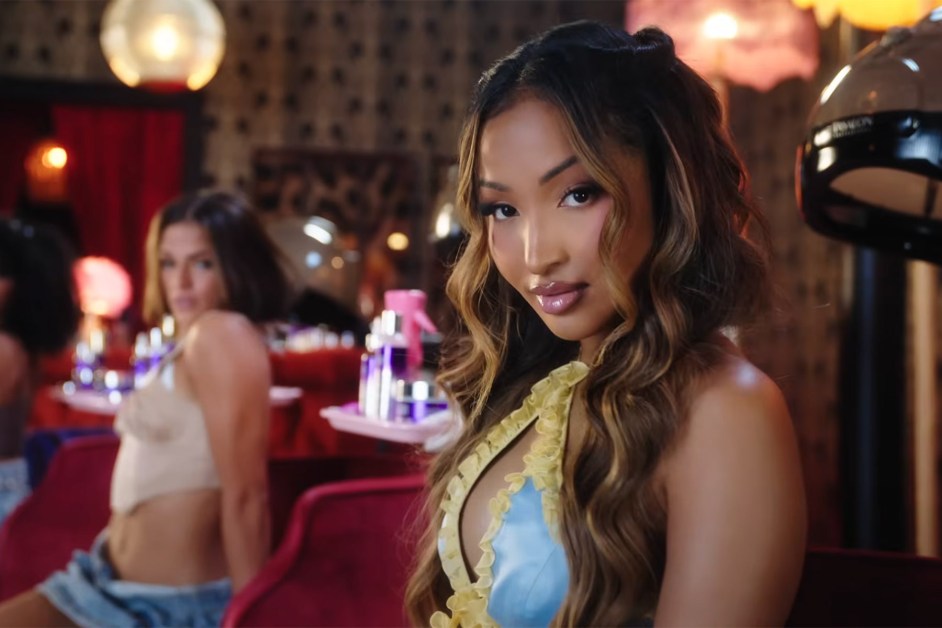
The Jamaican dancehall singer/rapper is among the best artists to market to a mobile app like Seamless, Uber or Airbnb, Luminate found. While Leon Thomas and Adele ranked slightly higher on likability scores among mobile app super-consumers — defined as people who use two or more mobile apps for services, such as food delivery or ride-hailing — 78% of those consumers who are aware of Shenseea said they would try an app if she endorsed it. That group tends to be more racially diverse, come from the Millennial and Gen X generations and they’re active across social media platforms, the report found.
Kenya Grace
The South African-born British electronic music singer Kenya Grace ranked is less well-known than Shenseea, Lola Young or Riley Green, but Luminate found that her U.S. audience looks a lot like the people travel companies want to target. Their annual incomes are more likely than most to be middle-to-high, with 61% making more than $50,000 annually, compared to less than half of the general population, and Grace’s audience frequently uses video streaming services like Disney+ or YouTube –appealing places for travel companies to advertise.
Trending on Billboard Megan Thee Stallion claims a lot of her biggest haters online are “bots” that are getting paid to troll her. On Sunday (Oct. 26), Megan hopped on Instagram Live to issue a quick PSA to her followers and supporters in the wake of her dropping off her new single, “Lover Girl.” “When […]

Trending on Billboard
Former Oak View Group CEO and longtime sports-entertainment executive Tim Leiweke is asking a federal judge for permission to travel to Canada for business next month — a routine motion on paper that underscores how sharply life changes once an executive is indicted in federal court.
According to an unopposed motion filed Tuesday (Oct. 21) in the U.S. District Court for the Western District of Texas, Leiweke has requested permission to travel to Toronto and Hamilton, Ontario, where his company is developing a major arena and entertainment district project. Hoping to be in Canada from Nov. 17-22 to attend business meetings connected to his Denver-based development company Oak View Group (OVG), the filing notes that Leiweke previously surrendered his passport to pre-trial services in Denver but needs temporary access to travel abroad. His probation officer and the U.S. Department of Justice have both indicated they do not oppose the request.
Related
Leiweke, 68, was arraigned in July and pleaded not guilty to a single count of violating the Sherman Antitrust Act, a charge that carries a maximum penalty of 10 years in prison and a $1 million fine. The case stems from a federal grand-jury indictment alleging that Leiweke and executives from Legends Hospitality conspired to rig the bidding process for the Moody Center, a $375 million arena project at the University of Texas in Austin that opened in 2022. Leiweke’s defense has strongly denied any wrongdoing, arguing that OVG and Legends worked independently and that the DOJ is misapplying antitrust law to a deal that, in practice, produced one of the most successful university-arena partnerships in the country.
“Tim and OVG won in Austin by competing fair and square and they delivered fantastic value and a world class arena to the university,” a spokesperson for Leiweke tells Billboard.
Earlier this month, Leiweke’s attorney, David Gerger, filed a separate motion seeking to delay the trial until at least October 2026, citing the need to review more than seven million pages of evidence turned over by prosecutors. Gerger also signaled that the defense will challenge the government’s interpretation of antitrust law as applied to the Moody Center deal.
“Life Doesn’t Go On as Normal”
While Leiweke continues to run his private ventures, his day-to-day life is now dictated by court supervision. To understand what that looks like, Billboard spoke with Justin Paperny, director of White Collar Advice, a Los Angeles-based firm that coaches high-profile defendants through the pre-trial and sentencing process.
Related
“Life doesn’t go on as normal, not when you have a pre-trial services officer to report to,” Paperny said. “You’re under the microscope of the United States government. They don’t view you as a law-abiding citizen anymore — they view you as someone who broke the law. Traveling internationally, even to Canada, becomes very difficult.”
Paperny, a former stockbroker who himself served time in federal prison (for stock fraud) and who has attended more than 1,500 sentencing hearings nationwide, said the first shock for most white-collar defendants is how restrictive their world becomes overnight. “Every trip has to be approved. Every contact with law enforcement has to be disclosed. For entrepreneurs used to running the show, it’s a massive adjustment,” he said.
Even seemingly minor infractions — a missed call, a traffic ticket not reported — can lead to problems with pre-trial services. “If you get off to a good start, things go smoothly,” Paperny said. “But if you violate even small conditions, the government loses trust quickly.”
Paperny describes the process as bureaucratic but rigid. Defendants on bond must check in regularly with probation officers, report changes in residence or employment, and request written approval for all travel outside their home district.
Related
“You’re dealing with a bureaucrat who has a job to do,” he said. “They’ll ask about mental-health issues, substance abuse, where you live, what you earn, and they’ll lay out very specific conditions. It’s black and white: if you follow them, things can be fine. If not, you’ll feel the consequences.”
Leiweke’s motion illustrates the point. His lawyers note that he previously received permission to travel to Europe this summer and complied fully with court orders, returning his passport immediately upon re-entry. Still, every trip requires a fresh petition, paperwork and the sign-off of multiple agencies. “It’s an enormous inconvenience,” Paperny said. “For someone used to doing deals across continents, the red tape is relentless.”
Paperny said travel to Canada is especially difficult for anyone under indictment. “Canada doesn’t like felons or people facing charges,” he says. “Even with a judge’s permission, the country may deny entry. It wouldn’t surprise me if he never sees Canada again during this process.”
The restriction often comes as a shock to executives used to global mobility. “I’ve been invited to work in Toronto multiple times and still can’t go [because of my conviction],” Paperny says. “It’s not personal — it’s just policy. They’ll arrest you at the border and send you back.”
Beyond managing restrictions, Paperny said the smartest defendants treat the pre-trial period as an opportunity to build credibility with the court. “The question isn’t just what you did — it’s what you’re doing now,” he says.
Paperny’s firm encourages clients to create what he calls “assets”: tangible contributions that demonstrate accountability and reform. “You don’t just tell a judge you’ve changed; you show them,” he explains. “That could be writing a book, starting a blog, mentoring others or creating a course that helps people. Judges want evidence that you’re using your time constructively.”
Paperny believes these proactive steps often have real impact at sentencing. “We’ve had clients whose efforts to create value for others literally changed the outcome of their case,” he says. “Judges and prosecutors are human — they respond to genuine progress.”
For now, the case moves slowly. The court has not yet ruled on Leiweke’s travel request, though the government’s lack of opposition suggests it is likely to be approved. The larger trial delay motion remains pending, and legal observers say the defense’s strategy may hinge on narrowing the scope of what the government can present as collusion.
Meanwhile, Leiweke continues to serve as chairman of his own firm, advising on arena and stadium developments around the world. The irony, Paperny notes, is that while Leiweke still operates at the top of the business, his movements and activities remain closely monitored by federal authorities.
“He has to focus on what he can control — his conduct, his compliance, his contribution,” Paperny said. “That’s what will ultimately define how this story ends.”
Listen to new must-hear songs from emerging R&B/hip-hop artists like The BLK LT$ and María Isabel.
10/27/2025