State Champ Radio
 Music
Page: 353

Pope Francis, the Catholic Church’s first Latin American pontiff, died early on Easter Monday (April 21). He was 88 years old.
“Dearest brothers and sisters, with deep sorrow, I must announce the death of our Holy Father Francis. At 7:35 this morning, The Bishop of Rome, Francis, returned to the Father’s house. His entire life was dedicated to the service of the Lord and His church,” Cardinal Kevin Farrell, the Vatican camerlengo said in a statement.
Born Jorge Mario Bergoglio in Argentina, Francis became pope in 2013 and charmed the world with his humble personality and concern for the poor. He suffered from chronic lung disease, and in February of this year, he spent 38 days at the Gemelli hospital in Rome for a respiratory condition that developed into double pneumonia.
Explore
See latest videos, charts and news
See latest videos, charts and news
Following the news of his death, a wave of Latin artists shared their condolences on social media.
Trending on Billboard
“Rest in peace and power, Pope Francis, you opened hearts and minds and were fearless in your guidance,” Cuban-American singer Gloria Estefan wrote on Instagram. “Thank you for putting love first until your last moments on this earth.”
“Francisco, you didn’t want to please everyone, but rather to speak your mind and what was in keeping with Christ’s word. What a wonderful way to honor hope. Rest in peace, dear brother,” Spanish crooner Alejandro Sanz noted on X.
As for Colombian pop star Sebastian Yatra and the account manager of the late Argentine Leo Dan, both shared photos they had of the day they met the Pope, and captioned their posts with a similar sentiment: “vuela alto” (fly high).
Meanwhile, Puerto Rican rapper Residente shared a photo of a young Francis on Instagram Stories, stating that he is “unrepeatable, special, unique,” while Argentine duo Pimpinela and Argentine pop star Emilia expressed their love and respect, all on their respective Instagram Stories.
The next pope has not yet been named.
At the age of 10, Melody became a precocious phenomenon in Spanish pop with “El Baile del Gorila,” the lead single from her album De Pata Negra, which led her to embark on an international tour. Twenty-four years later, the singer and songwriter is facing the challenge of representing Spain at the 2025 Eurovision Song Contest, which will be held on May 17 in Basel, Switzerland.
Explore
Explore
See latest videos, charts and news
See latest videos, charts and news
The song she will perform is “Esa Diva,” a pop track that’s both a vocal challenge and a manifesto of empowerment. “A diva is brave, powerful/ Her life is a garden full of thorns and roses/ She rises up dancing/ Stronger than a hurricane,” goes part of the chorus, in Spanish. With an intense performance and dynamic staging, Melody is aiming for more than just a show — a story with purpose and soul.
“I didn’t want to go with an empty dance song. I wanted it to have a message, strength, to speak about something that happens to all of us,” the artist explains in an interview with Billboard Español.
Trending on Billboard
The song has been widely embraced since its debut at the Benidorm Fest, evolving with new versions. The original was co-written by Melody and Alberto Fuentes Lorite and produced by Joy Deb, Peter Boström, and Thomas G:son. On March 13, a symphonic version was released, arranged by Borja Arias and performed by Melody alongside the RTVE Orchestra and Choir, adding a more cinematic and emotional dimension to the track.
“I wanted to show it in a different way. I’m a fan of soundtracks, and this song called for an orchestral treatment,” Melody says. “If a rhythmic song works as a ballad, it’s a great song.”
Beyond the music, “Esa Diva” has become a symbol. “The diva isn’t just the one who shines on stage –she’s the one who fights, the one who falls and gets back up. The one who supports other women. The one who is strong, but also humble,” Melody notes. And many people have found comfort and inspiration in this message. One of the anecdotes that has moved her most is about a young woman undergoing cancer treatment who listens to the song daily to gather strength.
Although this is not the first time Melody has tried to represent Spain at Eurovision — she did so in 2009 with “Amante de la Luna” — she feels that now is the right time. “If I didn’t do it now, I was never going to do it. It was the moment,” she adds. “I feel it, and I’m enjoying it like never before.”
Her victory at Benidorm Fest 2025 confirms this: She was the audience favorite, earning first place in the tele-vote with a solid 39%. Although the jury placed her third, the combination of both votes secured her direct pass to Eurovision.
With six albums released, tours across Latin America and roles in series like Cuéntame Cómo Pasó and Arde Madrid, the singer and actress has navigated genres and formats with ease. “It’s been many years. And here we are, with a good attitude, eager to sing and keep making the audience happy. What more could you ask for?” the performer of “Parapapá” and “Rúmbame” says with a laugh.
Meanwhile, she continues to bring her music across Europe as part of her pre-Eurovision tour, TheDIVAXperience. In recent days, she has performed in Amsterdam and London, presenting the new version of “Esa Diva” to specialized media and Eurovision fans. On April 7, the artist was welcomed in Dos Hermanas, her hometown, where she performed the song from the balcony of City Hall before a crowd. “The love from my hometown moves me. When you’re recognized at home, it feels different,” she says.
This week, she will participate in the PrePartyES in Madrid (April 18-19), where she will share the stage with representatives from various European delegations. Then, on April 23, she will headline a special farewell event organized by RTVE at Teatro Barceló before heading to Basel for the contest.
The staging for Eurovision promises a significant evolution compared to what was seen at the Benidorm Fest. Melody has indicated that the set design will include new visual and choreographic elements, aiming to make the most of the technical possibilities of the stage. “There will be new ingredients. It won’t just be a song; it’s a story I want to tell,” she says, making it clear that her proposal seeks to move audiences beyond the visual spectacle.
Recently becoming a mother, Melody, an independent artist and an advocate for meaningful lyrics, acknowledges that balancing it all is not easy: “I organize myself however I can. But my son recharges my batteries, and when I need grounding, I go back home.” Participating in Eurovision involves much more than stepping onto a big stage — it means enduring a level of media exposure, artistic pressure, and public scrutiny that is hard to match.
Regarding the flood of opinions surrounding this experience, Melody maintains a firm stance. “I value constructive criticism; there’s always room to learn. But destructive criticism doesn’t affect me. I’m not driven by that. I sing from the heart, and that’s why I’m here,” she says.
Her approach is not casual. Eurovision generates a massive volume of social media conversations every year, with millions of interactions, according to data from the EBU (European Broadcasting Union). The contest’s global audience exceeds 160 million viewers across its three shows, making it one of the most-watched musical events in the world. For any artist, the exposure is as immense as the challenge.
After the festival, Melody already has plans: a new single, a tour across Spain and a strong desire to reconnect with her Latin American audience. “I’ve always felt so much love from Latin America,” she says. “This is a new chapter, and I’m thrilled to bring my music there again. They’re so heartfelt, so close. I want to dance and enjoy together.”

Thanks to SZA‘s debut album, Doechii was able to accept that the party was definitely over with an unsupportive ex years ago.
In a Cosmopolitan cover story published Monday (April 21), the Swamp Princess recalled how listening to Ctrl back when she was 18 enabled her to break things off with her then-boyfriend, who she says limited her creatively. “I was dating a guy who just wasn’t very supportive of my music, and it really stifled me,” she told the publication. “I stopped writing because he was just like, ‘That’s not cool.’ I took his opinion way too seriously when really he just didn’t get it.”
“I remember listening to SZA’s Ctrl for the first time, and it literally gave me the courage to break up with him,” Doechii continued. “I only bring that up because she inspired me to be vulnerable through my music in a way that I didn’t think I could be.”
The decision definitely paid off. Eight years later, Doechii is now the third woman to ever win best rap album at the Grammys — taking home the award in February for breakthrough mixtape Alligator Bites Never Heal — and was crowned Billboard‘s 2025 Woman of the Year in March. She’s also in another relationship now, this time with a woman, about which she told Cosmo, “My literal existence as a queer Black woman is a major contribution to the hip-hop genre.”
Trending on Billboard
“I’m speaking truthfully from a queer Black woman’s perspective, and being honest about my life through my lens is amazing,” the Florida native added. “That perspective is being highlighted, and we need queer perspectives.”
Doechii’s praise for SZA comes as the two women share slots high up on the Billboard Hot 100, with the former’s first-ever top 10 hit, “Anxiety,” sitting at No. 14 on the chart dated April 19 while the latter’s “Luther” collaboration with Kendrick Lamar spends its eighth week at No. 1. And in her cover story, the “Denial Is a River” spitfire also gushed about another leading lady in music: Beyoncé.
“I relate to her efforts as a businesswoman and her leadership,” Doechii said. “She is the embodiment of an eloquent leader. I look up to the way that she handles her job, her fame, and her fans. She is the ultimate showgirl and professional artist.”
See Doechii on the cover of Cosmo below.
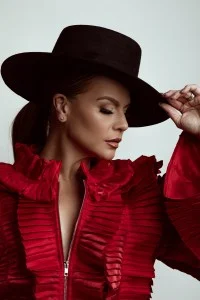
Olga Tañón was just 19 when she was invited to audition as a vocalist for a band. A self-proclaimed “rockerita” from a young age, she assumed it was a rock band. But when she arrived, she found a tambora and a güira instead of an electric guitar, bass, and drums.
“I think I’m in the wrong place,” she recalls thinking. “When I approached the bandleader, Ringo Martínez, he said to me: ‘No, this isn’t a rock band. This is a merengue orchestra.’ I replied, ‘But I don’t know how to sing merengue.’ And he came back with a challenge and told me: ‘Well, a good singer can sing anything.’”
The next day, she was already recording her first merengue song, “Fuera de Mi Vida” by Valeria Lynch, as part of the group Las Nenas de Ringo y Jossie.
Trending on Billboard
Nearly four decades later, the so-called “Mujer de Fuego” (Woman of Fire) from Santurce, Puerto Rico, is being honored with Billboard‘s 2025 Latin Women in Music Lifetime Achievement Award for her unparalleled influence as a singer in this Dominican genre.
Over her career, which began in the mid-’80s, Tañón has not only won hearts but has also shaped the tropical music style, earning a special place in Latin music history with her exceptional performance quality, unmistakable mezzo-soprano voice, and high-energy stage presence.
Since launching her solo career in 1992, 20 of her albums have entered Billboard’s Top Latin Albums chart, including two that reached No. 1: Llévame Contigo (1997) and Te Acordarás de Mí (1998). On the Tropical Airplay chart, she holds the record as the female artist with the most top 10 entries (29 in total), with hits like “Es Mentiroso,” “Cómo Olvidar,” and “El Frío de Tu Adiós,” to name a few.
“I’m beyond grateful for this beautiful Lifetime Achievement Award,” Tañón says. “It represents all the sacrifices made, all those nights that weren’t wasted but learned from, as I prefer to say. And for people to value you in such a way is a reminder that we’ve truly done the right thing: choosing what we wanted to do with our lives, and achieving it.”
“I hope many young women are inspired to pursue this beautiful [career], which isn’t easy but is wonderful,” she adds.
A Grammy and Latin Grammy winner, and also recognized this year by Billboard among the top 10 Best 50 Female Latin Pop Artists of All Time, Tañón looks back on her beginnings, reflects on her biggest achievements, and shares the secret to a long-lasting career.
Natalia Aguilera
When did you know you wanted to be a music artist?
I really started noticing the early inklings, as I call them, at 4 years old, when I moved to Levittown in Puerto Rico and was already singing a solo at the Coliseo de Toa Baja. I was in pre-kindergarten, and they held an event in that coliseum, and I was part of the choir. Did the teacher see something in me? I don’t know. But from there, I took opera lessons. I took advantage of all the services the public school offered because that’s where I studied.
What’s the first merengue song you remember as being special to you?
At home, we used to listen to “Sancocho Prieto” [by La Sonora Ponceña]. Honestly, I never thought I’d have a career in tropical music. I’ve loved the Dominican Republic since I was very young because the first, second, third, and fourth country my dad took us to visit was the Dominican Republic. But I only listened to merengue to dance to it. If I wanted to sing, I always imagined myself singing songs by Rocío Dúrcal or Isabel Pantoja, things like that. I never imagined I’d build an entire life honoring, as I say, a country that has given me so much. And I wasn’t even born there; that’s why I treat it with such respect.
So how did you end up making merengue music?
I was looking for opportunities in music. I was a “rockerita” in Spanish because I didn’t know a lick of English. After my dance teacher, [the famous Puerto Rican choreographer] Junito Betancourt, passed away, I was invited to an audition, and they told me it was for a band. So, I assumed it was a Spanish rock band. When I walked into the audition at Salón Villarreal, I saw a guy with a tambora and a güira, and I thought, “I think I’m in the wrong place.” But when I approached the bandleader, he said, “No, this isn’t a rock band. This is a merengue orchestra.” And I said, “What do I do? I don’t know how to sing merengue.” And he came back with a challenge and told me: “Well, a good singer can sing anything.” From then on, I haven’t stopped singing merengue.
What a happy mistake, right?
That’s what I call it, “a happy mistake.” Because the truth is, I don’t come from a famous family. I didn’t get a lucky break, you know, like a stroke of fortune. On the contrary, it was a lot of knocking on doors until something worked, and from there, I made the most of it. And the first thing I said was, “If I’m going to do a musical genre that isn’t from my country, I at least need to learn how to play a tambora.” And that’s how I started to learn more about the genre which has given me the life I have today — merengue.
Natalia Aguilera
Who did you look up to as role models? There weren’t many women in merengue at that time…
The image I always remember, and it was a dream that I was fortunate enough to fulfill by meeting her in person, was Rocío Dúrcal, with all those songs that stick with you even to this day — “Pues mira tú, como te ríes, como juegas tú” [she sings part of “Como Tu Mujer,” imitating the Spanish singer’s classic inflections] — with those always extraordinary vocal modulations. When I got into merengue, I didn’t really have an image of a woman in merengue because, at that time, there were duos and groups like Milly Quezada and her sister Jocelyn.
Obviously, there was Fefita La Grande from the Dominican Republic, who was always there with “Vamos a Hablar Inglés.” And I was also greatly inspired by many men who were active at that time.
As a woman in the industry, and in a genre like merengue, what has been the biggest challenge for you?
When you perform a musical genre that isn’t necessarily salsa, bomba or plena — the styles we’re known for in Puerto Rico — when you take on the responsibility of performing a genre that represents a country, you have to make an effort to learn a bit about it and approach it with great respect. I always tried to bring something important to merengue, with a lot of detail, care and love for everything I did.
How did you find your own voice?
Well, honestly, I don’t even know. They just told me, “Open your mouth and sing,” so I opened my mouth and sang. I didn’t have many references in that sense, so I wanted to add my own style. Obviously, when you’re trying to build a career, I always say that everything’s already been invented. But as long as you try to be as original and authentic as possible, I think you’ll do well.
What would you say are your greatest accomplishments in music?
The years I’ve spent making merengue. And also ballads, because Marco Antonio Solís gave me the chance to break into that world [in 1996 with the album Nuevos Senderos]. But specifically in merengue, the years and the applause — it’s a privilege I humbly say I still receive. I still feel like crying every time I come offstage after a sold-out show, even after so many years of my career. And we’re still doing it with a new tour. I think, wow, the people.
And how have you managed to stay relevant over four decades?
By not closing myself off to musical innovation. I think you have to be open to saying, “I can do this with a bit of influence from that.” I meet with producers. I meet with people I love and respect to write. I also open the door to new talent. I think staying relevant means not shutting yourself off.
Natalia Aguilera
The third annual Billboard Latin Women in Music special will air live at 9 p.m. ET / 8 p.m. CT on Thursday, April 24 exclusively on Telemundo, Universo, Peacock and the Telemundo app and throughout Latin America and the Caribbean on Telemundo Internacional.
Check out Billboard’s Latin Women In Music 2025 executive list here.

TOMORROW X TOGETHER will drop their new digital single, “Love Language,” on May 2. The upcoming song from SOOBIN, YEONJUN, BEOMGYU, TAEHYUN and HUENINGKAI was announced on Weverse on Monday morning (April 21) along with a digital cover image featuring a padlock with the password “Love Language” dialed into it. Explore Explore See latest videos, […]

On April 16, artist-writer Brett Sheroky headed into Nashville on a T-shirt run.
With the release of his debut album, Rock Paper Scissors, looming on April 18, he delivered shirts to a handful of songwriters who had donated to a Kickstarter crowd-funding campaign that raised nearly $33,000, surpassing his $30,000 goal and allowing him to hire the musicians and book the studio time to record the project. The results are impressive — there’s not a single piece of filler among its 15 tracks — and yet Sheroky has no idea what to expect. He went into the project with no label, no manager, no booking agent and no publicist, requiring him to juggle every aspect of creating and marketing the album as a one-man shop.
“There’s a hundred little different things constantly,” he says.
And no artist is an expert at all of them. Sheroky, who moved to Nashville 16 years ago, was also working on 8-second videos for Spotify Canvas, a tool that enhances the on-screen background when a song plays on the platform. He wasn’t entirely confident about making them, but he was pushing through the process on his own as a do-it-yourself artist, a common occupation in modern Nashville. The challenges those artists face can be deflating, but those who keep pushing forward frequently find the creative rewards outweigh the more mundane aspects of their lives.
Trending on Billboard
“Making the art itself, and the feeling you get of being part of something that was created out of nothing, and to be passionate about it still — the victory really is in the making of it,” he says.
Billboard Country Update talked with DIY artists Sheroky, Maggie Baugh and Gina Venier about their efforts in Nashville’s music business. In a previous era, their prospects would have been more narrow. There was no internet, so radio and the clubs were the only means of building a fan base. There was little or no home recording equipment, so artists had to amass enough cash to pay for expensive studio time, which record labels typically funded.
But with streaming, home studios and social media, artists have more tools available than ever to create and market their own music. That ease of entry, however, has increased competition. Thus, more artists are vying for the kind of viral audience that leads to record deals and booking agents. And until they land those kinds of team members, they operate as lone wolves, battling the inner voices as they plot how to advance.
“The highs and lows are crazy because there’s no sense of security,” says Venier, who has been in Nashville 11 years. “There’s no stability unless you’re seeking it out, unless you’re connecting with people and basically keeping your lifelines for the industry nearby.”
That’s one of the odd benefits of making music in Nashville. Outside of solo acoustic gigs, artists typically need bands to back them; thus, the creators form bonds with one another: trading their services, supporting the same people they’re competing with and doing their best to lift all boats in their friend group. They learn the hard way — through business relationships that don’t work out or by making mistakes as they tackle unfamiliar tasks outside their skill sets while trying to minimize their costs.
“I call it ‘bougie on a budget,’ ” Baugh says.
Baugh’s skills are impressive. In addition to her musical talents as a singer, songwriter and guitarist, she spent part of 2024 playing in Keith Urban‘s band. She booked her own 60-date tour for 2025, including two trips to the United Kingdom, building on seven years’ experience in Music City.
“When I booked them, I already knew how to talk to booking agents and promoters,” she says. “I already knew how to put together an EPK —what they were looking for, put the [statistics] first, keep it short and sweet. If they wanted to open the links, they would. I negotiated all the contracts on my behalf by myself, and it’s just from learning from my mistakes along the way.”
To the outside world, Nashville’s honky-tonk district looks like the most obvious developmental breeding ground. And artists such as Terri Clark, Kenny Chesney and Tigirlily Gold have indeed cut their teeth on Lower Broadway, learning how to work a crowd by playing familiar cover songs for tourists. Those gigs can generate income, but it’s the shows on the songwriter circuit — including The Bluebird Cafe, The Listening Room and Jane’s Hideaway — where artists have a chance to build an actual following.
“That’s where I play the originals,” Venier notes. “That’s where I get the fans.”
One of the most difficult hurdles for DIY artists is learning how to pitch themselves. For most, that doesn’t come naturally, and the rejections or unreturned calls can generate significant second-guessing. But a successful pitch sometimes becomes a breakthrough moment. Venier improbably landed a song on SiriusXM’s The Highway by working her contacts, Sheroky battled self-consciousness for weeks before he finally posted his successful Kickstarter campaign, and Baugh emailed an unsolicited recording to a Spotify executive and ended up getting playlisted.
“I’m really bad at promoting myself and talking about myself,” Baugh says. “I’ve just learned the hard way that if you don’t open your mouth, somebody else who’s opening their mouth will get the opportunity.”
The three independent artists are all making the most of their opportunities. Baugh is working on an album with producer Rob McNelley and prepping for an April 22 Grand Ole Opry appearance. Venier will open for Fancy Hagood at Nashville’s historic Exit/In on April 23. And Sheroky, just days before Rock Paper Scissors‘ release, received messages from a booking agent and a manager who both expressed interest in potentially representing him, which would take him off the DIY rolls.
The right partners could help him reach a wider audience, though it’s the one-on-one impact with fans that Sheroky values most. He recalls a woman who traveled from Austin to Dallas to see a show and to tell him that one of his songs pulled her out of an emotional pit.
“She sounded like she was thinking about killing herself,” he remembers, “and she’s like, ‘Man, that song saved my life.’ The numbers — they’re whatever. But that part’s real.”
Meanwhile, as challenging as the DIY life might be, making a living playing music in a crowded pool of country talent is an accomplishment in itself.
“We’re in Nashville,” Venier says. “I’m among beautiful talent and art, and all of us are successful by simply sticking this shit out. Period.”
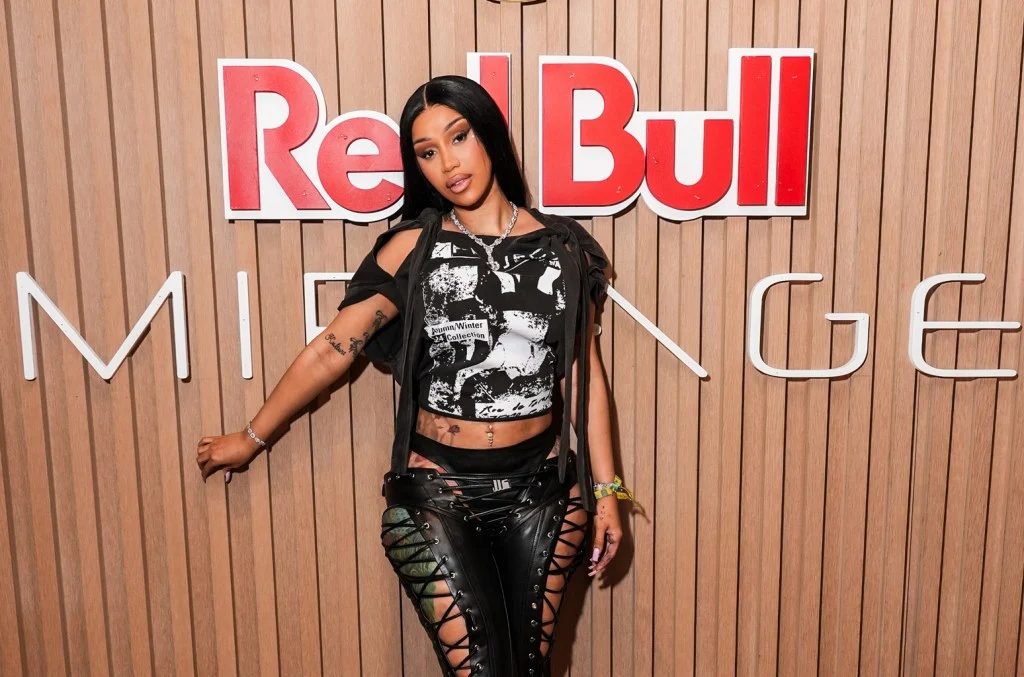
Cardi B is pulling no punches at this year’s WWE SummerSlam, which the rapper announced late Friday (April 18) she’ll be hosting both nights this August.
In a clip shared to the wrestling promotion company’s X account, Cardi — wearing an Eddie Guerrero T-shirt — excitedly shares the news. “What’s up, WWE universe?” she tells the camera, waving. “Guess what? SummerSlam. MetLife. Two nights. And I will finally be hosting.”
“And nobody better try me,” a hyped-up Cardi ends the announcement video following a montage of all-star fighters taking the ring. “We gonna turn up!”
Trending on Billboard
The two-day event will take place Aug. 2 and 3 at MetLife Stadium in East Rutherford, N.J. It comes four years after the WWE reportedly wanted the “WAP” artist to appear at SummerSlam 2021 before her pregnancy with son Wave made her unable to do so, though the event still used her song “Up” as its official theme that year.
SummerSlam 2025 will also mark the first time the event has been held over the course of two days, something Cardi helped announce back in September. Tickets go on sale May 2, with a pre-sale taking place two days prior, for which fans can now register on WWE’s website.
The news follows the release of the hip-hop titan’s latest single, “Toot It Up,” with Pardison Fontaine. Cardi is also featured on the soundtrack for the upcoming Smurfs movie, with DJ Khaled’s “Higher Love” featuring the “Bodak Yellow” musician and Desi Trill dropping in February.
Both tracks come as Cardi is still working on her long-awaited sophomore album, which will follow 2018’s Invasion of Privacy. The star gave fans an update on the project earlier this month, saying on X Spaces, “The features on my album are really good … I’m working with artists, some that I have worked before and some that I haven’t worked before.”
“And the ones that I have not worked before, I feel like it’s gonna really, really surprise y’all,” she added at the time. “I can tell y’all this, I’m 100 percent confident with this album. I just don’t think what I got is out there.”
See the announcement for Cardi’s upcoming WWE gig below.

This week, Morgan Wallen and Post Malone pair up again for a new collaboration, while Sam Barber offers up a song of blistering song of desolation. Elsewhere, Ian Munsick teams up with Lainey Wilson, while Ashland Craft, Don Louis and Tayler Holder also release stellar new tracks.
Explore
See latest videos, charts and news
See latest videos, charts and news
Check out all of these and more in Billboard‘s roundup of the best country, bluegrass and/or Americana songs of the week below.
Trending on Billboard
Morgan Wallen (feat. Post Malone), “I Ain’t Comin’ Back”
Wallen and Post Malone seem poised to score a second hit — following their previous collab, the six-week Billboard Hot 100-topping “I Had Some Help” — with this musical sequel, which will be featured on Wallen’s upcoming I’m The Problem album. Released on Good Friday, “Back” employs a few religious references, as the duo sing about breaking up with a lover and making an abrupt escape from a stifling place where “half of this town has got a name for me.” This churning track bristles with defiance and self-righteousness on pointed lines such as “I might be a lot of things/ But I ain’t your savin’ grace.”
Sam Barber, “Man of the Year”
Since his musical breakthrough in 2022 with “Straight and Narrow,” the Missouri native has gone from strength to strength, showcasing an ever-maturing, top-tier talent as a singer-songwriter on compositions such as his latest, “Man of the Year.” This gritty track, written solely by Barber, finds him pondering the existential anguish he sees threaded throughout world events, and emotionally embedded in people around him. “Is it in my mind or are we all just sinking?” he muses, his quietly commanding voice ringing out over sparse but captivating production, and shedding light on a generation’s anxieties and fears.
Ashland Craft, “Momma Don’t Pray Like She Used To”
Since the release of her debut project in 2021, Craft has forged her reputation as an in-demand vocalist and songwriter, appearing on albums by HARDY and Lainey Wilson, in addition to releasing her own music. “Momma Don’t Pray Like She Used To,” from Craft’s upcoming album Dive Bar Beauty Queen, chronicles a progression of a mother’s prayers for her daughter over the years, as petitions of support and guidance give way to gratitude. Bolstered by a latticework of instrumentation that includes B-3 organ and mandolin, the track showcases not only a softer side to Craft’s fearless voice, but also how she uses her songwriting to capture ever-deepening emotional nuances. Craft wrote the song with Jess Grommet, Willie Morrison and Corey Elizabeth Grogan.
Ian Munsick feat. Lainey Wilson, “Feather in My Hat”
“Long Live Cowgirls” hitmaker Ian Munsick partners with former tourmate Lainey Wilson on his new song ‘Feather in My Hat,” from his third studio album, Eagle Feather. Written by Munsick with Caitlyn Smith, and Marc Scilbila, this love song depicts someone making it clear their lover surpasses any notion of a prize or milestone–they are a bedrock of support, desire and comfort. Both Munsick and Wilson have distinct voices and together, their sonorous renderings infuse the song with a soulful charisma.
Don Louis, “She Ain’t Crazy Yet”
With a sultry groove that all but commands listeners to take to the dancefloor, this new song from Don Louis seems like a party anthem, but it’s also a relational warning shot. Lyrically, he sings about being in a new relationship that seems rosy at present, but past disappointments in the romance department have taught him those idyllic moments could shift in an instant. “So far she ain’t jealous, so far she ain’t mean/ But I’m gon’ hold my breath,” he sings, with voice all burly, gritty and captivating, as he’s waiting for the other shoe to drop. From the deluxe version of his album Liquor Talkin’, “She Ain’t Crazy Yet” was written by Louis with Autumn Buysse and Danielle Blakey.
Tayler Holder, “Cry at Our Last Dance” (Wedding Version)
Holder releases what is sure to become an enduring wedding dance favorite with this tender ode of a father soaking in the moments with his daughter prior to her wedding. “I could spin you round forever/ But now that’s for him to do,” Holder sings, on what is one of his best outings to date. Holder wrote the song with Justin Ebach, Andrew Sevner, Dalton Dover, and Thomas Archer.
K-pop boy band ENHYPEN wowed the crowed at the Coachella Festival on Saturday (April 19) with a power-packed 45-minute set of hits, plus some unexpected album release news. Backed by a live band, the group — JUNGWON, HEESEUNG, JAY, JAKE, SUNGHOON, SUNOO and NI-KI— ran through such hits as “Blockbuster,” “Blessed-Cursed,” “Future Perfect (Pass the […]
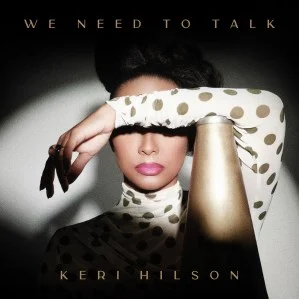
“I’m free … I had to give up music for a while. I thought it would just be for a year. I realize now I’m grateful for all of those years because I have built myself back up. It is kind of a comeback.”
Explore
See latest videos, charts and news
See latest videos, charts and news
So declares Keri Hilson in “Grateful,” the track that introduces We Need to Talk: Love — her first album in 15 years since 2010’s sophomore set No Boys Allowed. Released April 18 on her own imprint Audible Art Club via Create Music Group, the nine-track Love finds the Grammy-nominated singer-songwriter back in true form after a memorable run of multigenre-fused hits such as the platinum singles “Knock You Down” and “Pretty Girl Rock,” “Energy,” “Turnin Me On” with Lil Wayne and her vocal feature on Timbaland’s “The Way I Are,” which she co-wrote with the artist-producer.
This time around, Hilson collaborated with songwriters and producers like Tiffany Red, Danja (who, she says, “has worked on every project I’ve had”) and Needlz and Donut. Prefaced by lead single “Bae,” the album’s other notable tracks include the raw “Naked,” “Say That” (“It’s like a soft rock song… It’s different for me”), “Whatever” (“It’s going to touch people”) and “Somethin (Bout U)” (“I couldn’t stop ad libbing in the booth”). Hilson also notes this album is the first in a three-project arc — Love. Drama. Redemption. — that chronicles her 15-year break from the solo career she launched in 2009 with debut album In a Perfect World.
Trending on Billboard
“‘Grateful’ is actually an excerpt from an interview I did with [psychic medium] Reginald Lewis that aired on Steve Harvey’s show,” recalls Hilson. “It was a real and special moment; I was in tears. So we decided to put that on to help explain as I’ve got several albums’ worth of music and want to tell a cohesive story — love, drama, redemption — like a movie. I realized I had a thread that would weave this tapestry together.”
While the rollout of the next two albums is still being determined, Hilson is also starring in a new film: Temptations: Fame. Premiering April 26 on Lifetime, the movie is the latest chapter in an acting career that began with 2012’s Think Like a Man.
During a recent sit-down with Billboard, Hilson shares what she’s learned about Keri the person and Keri the singer-songwriter over the last 15 years: “That I’m pretty freaking courageous… I also learned how important and necessary freedom is as you call your own shots. Those are the two biggest things. It’s been a lot of work, but it’s definitely welcome.”
Was there one moment that sparked your decision to finally release new music?
There was no defining moment. But there was a phase during the last five years where all these serendipitous moments started happening: acting auditions, movie offers, fans walking up and saying, “You helped me leave an unhealthy relationship or marriage” with songs like “Beautiful Mistake.” Then there were happenstance encounters with people that could help me on the business side to structure my label the way that I wanted. So I felt redemption, vindication. Energy in the universe made it so very clear that it’s time. I couldn’t deny it.
What was the deciding factor in choosing midtempo “Bae” as the lead single?
It was the perfect first song for the simple fact that it’s straightforward. You’re hearing me without a lot of heavy arrangement. You’re hearing me just carry on the mic, with no feature. There is a sample [of Hurricane Chris’ 2007 single “A Bay Bay”] that is supportive but not overpowering; we were very intentional on that. It felt like a toe in the water and the perfect tempo to reintroduce myself with. And my partner loves “Bae.”
While recording, I was listening to my repertoire, which includes Bobby Brown, Babyface, Ms. Lauryn Hill: the things that have inspired me are still the same things that always inspire me. I’m also a Bruno Mars fan, and that Silk Sonic collaboration was everything, doing old things in a new way.
Why was Method Man, the only guest on this album, your choice for the song “Searchin’”?
There’s a tribal nature about that song, but there’s also this New York street essence that reminded me of Wu-Tang and only Wu-Tang. And I love Method Man; always been a fan of his cadence, voice and his look, which ain’t bad either [laughs]. Plus I’d just done a film [2021’s A Hip Hop Family Christmas] with his partner in crime, Redman. So I got in touch with Method Mad and he was so gracious, saying “Just let me know when you need me, what you need from me; just tell me and I’m there.” That’s just the energy that you want to have as an artist, especially [when you’re] re-emerging. It’s scary. You want and need the support. And he’s just such brother energy; a good guy.
Looking back on the music industry then vs. now, has it changed for the better or worse?
Starting with the better, artists have more freedom to literally create and carve out their own space, like real estate. And because of social media, people are flipping the channel to find where artists are setting up shop. That’s a great thing. Now we [artists] are in charge of curating our own channels. But while we’re in a new world, there are also some negatives in that it has created a lot of fear for the average artist. You want your music to work. You want the traffic, the sales and streams, to sell out shows. So it creates an environment, a culture of safe music.
Even within your own sphere, you’re like, “This is what I’m known for. I can’t deviate from that. This is what they want from me, and I have to serve that.” Your fans will even say it: “Keep making songs like …” and put you in a box. It’s pressure both internally and externally. And that’s the sad part. I’ve never followed rules, and I don’t plan on starting now. It’s necessary for people to come in and mix this shit up. That’s what I’m aiming to do.
Speaking of social media, you recently experienced a trending moment after sharing your regrets about a Beyoncé diss on the remix to your 2009 hit “Turnin Me On,” which later drew reaction from songwriter Ester Dean.
Obviously, the scope of social media has changed to be very salacious, a lot more than when I was out before. And that can be difficult to navigate. But despite this culture of negativity and click bait, nothing feels better than truth. That’s the best weapon. If you know you’re being honest and truthful, then you can stand up to anything because your authenticity and integrity are all you have at the end of the day. And that’s all I want to say about that.
What role does acting play in satisfying yourself creatively?
It’s a longer escape. Music can be an escape for a day or two. But while I’m creating movies, I get to pause time for much longer periods. It allows me to escape reality, and that’s really part of why I dove head first into it. My father passed in January 2020. I’d done a couple movies prior to that but now it was a departure from my grief, a welcome thing. I realized that I can kind of pause time, step away from myself and these heavy feelings. To smile and laugh because the character’s bubbly. It helped pull me out of that dark space.
Keri Hilson ‘We Need to Talk’
Courtesy Photo