State Champ Radio
 Music
Page: 346
When you gotta go, you gotta go. Shaquille O’Neal couldn’t wait until the next commercial break while filming Inside the NBA live, so he got up and headed to the bathroom mid-show on Monday night (April 21).
Explore
See latest videos, charts and news
See latest videos, charts and news
While co-hosts Charles Barkley and Kenny “The Jet” Smith were recapping the thrilling game two finish between the Los Angeles Clippers and Denver Nuggets, Shaq — aka DJ Diesel — made a mad dash for the Studio J exit, which took everyone by surprise.
“You all right, big fella?” Smith asked. “You catching a cramp? It’s that olive oil you been drinking. Hey, listen, he couldn’t hold it. Can’t hold it no more after 40.”
Trending on Billboard
DJ Diesel implored them to continue the show, while anchor Ernie Johnson wondered if this was some planned skit. “I didn’t like his gait as he left, that was not a typical walk right there,” Johnson said.
Smith took a jab at Shaq as he quipped: “He’s been drinking olive oil to clean his gut, he’s cleaning his gut all right.”
A few minutes later, O’Neal returned to the set and blamed drinking too much water along with Barkley’s loud mouth. “I’m sitting here like shut the hell up and hurry up,” he said to Barkley.
Add this to the many memorable moments of Inside the NBA as the TNT show will be exiting Turner Sports at the end of the NBA’s 2025 Conference Finals.
However, it’s not the end for Shaq, Chuck, Ernie and Kenny. The crew will be heading to the ABC/ESPN family starting next season.
On the music side, let’s hope DJ Diesel uses the restroom before his gig on Friday night (April 25) when he takes over the Silo for a set in Dallas.
Watch the full clip below.

Tina Knowles loves being a grandmother to Beyoncé‘s three kids — but she’s not so much a fan of how the world turned on her daughter when the superstar was first expecting.
In an interview with People published Tuesday (April 22) — the same day the businesswoman’s new memoir, Matriarch, hit shelves — Knowles opened up about how widespread rumors Bey faked her pregnancy with firstborn Blue Ivy in 2011 marred the experience for the entire family. “Babies and children are so precious and so sacred,” the designer began.
“To hear people say the most horrendous things and to call my whole family a lie — because we would all have to be part of that conspiracy and lie about something so sacred — it was one of the worst times of my life, because I couldn’t say anything,” Knowles continued. “My daughter was saying, ‘No, you’re just going to make the story bigger.’ But it didn’t go away for a long time.”
Trending on Billboard
“It’s one of the most painful things for me, to know that people could be that disgusting,” she added, noting that the incessant pop-culture rumor mill has remained an ever-present challenge for her as a mom. “I deal with lies all the time. I’m dealing with lies now, that I’m having, like, an invisible zipper at my mouth. There’s always these crazy rumors that are out there and, people just get to lie, and they don’t have to suffer any consequences.”
Rumors that the “Texas Hold ‘Em” musician was pretending to be pregnant originally took off after she appeared on an Australian talk show in the fall of 2011. As she sat down for the interview, her dress folded in such a way that some viewers thought it looked like a fake baby bump caving in on itself, leading to inescapable chatter and frame-by-frame analyses from people who were convinced that Bey was lying. Even after Blue was born in January 2012, some haters still theorized that the vocalist and Jay-Z had welcomed her via surrogate.
At the time, Bey’s publicist shot down the rumors as “stupid, ridiculous and false,” while the 35-time Grammy winner added to People months later, “That was crazy. It wasn’t hurtful, it was just crazy.” The musician and Roc Nation founder are now also parents to 7-year-old twins Rumi and Sir — but more than a decade after the fact, Ms. Knowles — who was honored as Mother of the Year at 2025 Billboard Women in Music — says that the 2011 controversy still angers her, especially knowing that her daughter suffered multiple pregnancy losses before Blue came along.
“The worst thing is that people had no idea how hard it was for Beyoncé to go through multiple miscarriages, and then when finally blessed to carry a baby to term, the world starts heckling you as you both try to make it to the finish line,” she writes in Matriarch, according to snippets published by The Independent. “This child was prayed for and prayed over — a wanted, cherished, real baby, and people were making a living off saying she was a lie.”
“I wanted to curse some people out and scream at these losers to set the record straight,” Knowles adds in the book. “They had no idea what she and Jay, and our whole family, had been through.”

Actor/singer Teyana Taylor will join producer/actor La La Anthony and SNL star Ego Nwodim on the 2025 Met Gala red carpet livestream on May 5. The three women will be joined by podcaster/influencer Emma Chamberlain, who is marking her return as Vogue‘s special correspondent, interviewing some of the biggest stars walking the carpet at the […]
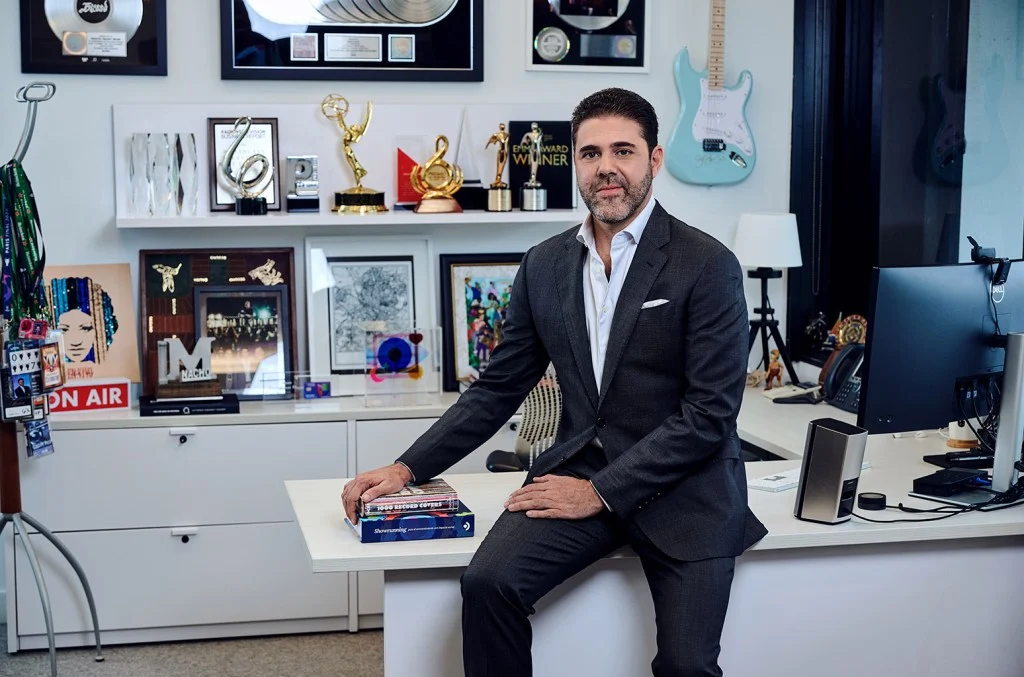
Earlier this year, Univision Networks Group president Ignacio Meyer‘s role was expanded to include oversight of the Hispanic media giant’s portfolio of 35 owned-and-operated radio stations, nearly 300 affiliates, its Uforia streaming app, live-events business and networks group. The promotion empowered Meyer to fully execute his longheld vision for a streaming-era business strategy. In the wake of Univision’s $4.8 billion 2022 merger with Televisa, his division would operate as part of a global, vertically integrated multimedia company where content created by different units can move freely between countries and platforms, including VIX, the company’s growing streaming enterprise.
That content includes music, and Meyer says he’s focused on fortifying its strength as one of the “pillars”— in addition to drama and sports — of the TelevisaUnivision brand.
For the company’s consumers, “Calling music a passion point is an understatement,” the dapper, Madrid-born executive says. As a result, “The entire company is behind it.”
Meyer, who is known for booking music artists himself on Univision shows and sending personal thank-you notes afterward, is well-loved by the industry, and his office is decked out with signed gold records, awards and other memorabilia. His walls will inevitably become more crowded, given his plans to return Univision to the music business. In the early 2000s, Univision Music Group operated as a label, which was sold to Universal in 2008 (before Meyer joined the company). And in 2016, Univision’s Fusion Media Group division signed a multiyear, multiplatform deal with former Calle 13 member Residente, which is no longer active.
Meyer spoke to Billboard about those plans, as well as his strategy for harnessing the power of music to Univision’s advantage.
How has your job changed since your promotion?
The big difference is we’ve become a platform-agnostic, content- and audience-first company. We’re fortunate enough that, over the years, our ownership has invested in all the platforms. We have TV stations, local and national networks, radio stations, top digital destinations — whether it’s web- or social media-based — and now we have a dedicated streaming platform, VIX. This year, for the first time, we deployed a global content investment strategy and looked at every content investment for profitability and distribution purposes, regardless of platform or country. That’s new and different because we realize that the strategy of having the consumer at the forefront is not about pulling them to a particular platform. It’s about making sure we are everywhere they are and that they can flow freely.
How does music play into that?
Music is a passion point for U.S. Hispanics. We feel strongly that Latin music is mainstream today, and we need to follow that mainstream consumer everywhere they are. So we’ve made structural changes to allow music to travel more seamlessly throughout our ecosystem.
If you look at the history of Univision, there are isolated pockets of success with music. What was missing is the connective tissue. We’re eliminating the barriers between calling something a “radio product” or an “audio product” or a “national” product or a “local” product. It’s intellectual property. It’s music, it’s a song, it’s a brand, it’s an artist.
Can you give me an example?
This year, we treated Premio Lo Nuestro [an annual awards ceremony that recognizes achievements in Latin music] as a platform-agnostic event. It was simulcast on streaming and we had events [tied to] fashion and social with some brands. We decided to light up YouTube and social media before we aired the show, so we did our version of off-air awards and the pretelecast on digital networks. And it was all supported by audio-first talent that represented different genres. For example, we featured talent from our [Mexican musicfocused] radio show, El Bueno, la Mala y el Feo. Just as we lean into our [TV] consumer brands, we’re going to lean into our radio show brands and elevate those shows. And we’re crosspollinating. TV host Alejandra Espinoza, for example, is now also part of our Los Angeles morning radio show.
Awards show viewership in general has declined. How do you make yours profitable?
We found a way to make money because we studied the ecosystem. It’s not just a TV show. We’re communicating, we’re editorializing, we’re telling a story, and we’re using music to do so — across all of our platforms. It creates more inventory for brands to get more deeply involved. Ratings define and validate the commercial side of ad sales, but it’s not the only measure of success. Total impressions, total reach, influence — that is success.
How else are you expanding Univision’s music presence?
We are looking at entering the music business again through strategic alliances. That is new. I don’t have the format a hundred percent. I don’t know if it’s a record label, but by virtue of this vertical, content-first approach, I am going to be getting back in touch with the industry. We want to be a more regular part of the music ecosystem. It could be a strategic alliance with a particular artist, a distribution deal with an artist, a management company, a publishing company or the distribution and promotion of music. I will generate content with you. I will generate social currency. We will make money by participating in a revenue share or license fee of the actual revenue streams we generate.
Some companies are not as convinced about the viability of music as a revenue driver.
We are. We demonstrate it day in and day out with our properties, and we know we could do more with it. So that’s where the investment comes in. Could we have done it as a company 10 years ago? I think the answer is no. Structurally, we probably weren’t set up for it. The power of music is it travels with no borders. Now we have the platforms. You can consume via audio, video, streaming.
Does Univision have any music-driven shows in the pipeline?
There will be announcements made, likely at the upfronts [in May]. But our approach is holistic. For example, you’re going to see a lot more radio shows like El Flow and El Bueno, la Mala y el Feo — which are also podcasts — on TV or on VIX. We are no longer taking a TV-centric approach to business. We will have music properties, but it’s not going be a one-show-fixes-all. Scripted is still a huge vehicle for music, for example. And we have a publishing business with over 100,000 copyrights here that I’m also managing.
What really drives fans to tune in to music-adjacent programming?
Storytelling and pop culture. Music has become a synonym for lifestyle. And it has a lot to do with social media and the way artists interact with their fans. Permanence in any kind of show all year is the most important. Also, there is a lot more being done in scripted than we are getting credit for as a music industry. There are so many storylines, documentaries, entertainment shows that are in and around music. How do we get people to engage? The most successful reality shows on television today have more hours of digital content than they do of [regularly scheduled] linear content. Because there are multiple platforms, they are “always on.” The Latin market is diverse, and we are more than a media company. We are a cultural representation of the Latins who live in the U.S. and of the way we live in the U.S.
This story appears in the April 19, 2025, issue of Billboard.

It’s been 55 years since the first Earth Day launched the modern environmental movement as we know it today, affecting change through a mix of education, public policy and innovative campaigns. The first Earth Day was organized by Sen. Gaylord Nelson of Wisconsin on April 22, 1970. Explore See latest videos, charts and news See […]

It’s been a full decade since Poot Lovato had her last taste of freedom — and according to Demi Lovato, the hilarious, fictitious alter ego is staying locked up for many decades more. In a TikTok video posted Monday (April 21), the singer-songwriter poked fun at the mega-viral meme from 2015 by lip-synching to an […]

Fans will have to wait until Sunday (April 27) to find out if Phish makes it into the Rock & Roll Hall of Fame this year on its first try, but the veteran jam band’s enthusiasts showed their support. The band won the Rock & Roll Hall of Fame fan vote, receiving 329,000-plus votes — nearly 50,000 more than runner-up Bad Company, who got 280,725.
The top five finishers in the Rock & Roll Hall of Fame’s Fan Vote will have their results counted alongside ballots from more than 1,200 artists, historians and music industry professionals to help determine the Class of 2025. Joining Phish and Bad Company in the fan vote’s top five are Billy Idol (260K votes), Cyndi Lauper (nearly 237K), and Joe Cocker (233K).
Trending on Billboard
As was announced Monday, Ryan Seacrest will announce this year’s inductees into the Rock Hall on a live episode of American Idol on Sunday. James Taylor will serve as mentor on the episode, on which this year’s contestants will perform songs associated with past Rock Hall inductees.
Soundgarden just missed the top five in the fan vote, receiving about 300 fewer votes than Cocker. They were followed by Chubby Checker (203K), The Black Crowes (165K), Mariah Carey (nearly 138K), Joy Division and New Order (120K), The White Stripes (110K), OutKast (108K), Oasis (99K) and Maná (34K).
Phish has had an unorthodox career. The band has yet to put a single on the Billboard Hot 100 and has received just one Grammy nomination — best rock instrumental performance for “First Tube” in 2001. But the band has put 38 albums on the Billboard 200, including three that made the top 10 — Billy Breathes (No. 7 in 1996), The Story of the Ghost (No. 8 in 1998) and Fuego (No. 7 in 2014).
The band has had its greatest radio success in the adult alternative format. It has had four top 10 hits on Billboard’s Adult Alternative Airplay chart — “Free” (No. 7 in 1996), “Heavy Things” (No. 2 in 2000), “The Connection” (No. 2 in 2004) and “Backwards Down the Number Line” (No. 9 in 2009).
And the band is a powerhouse live attraction, as evidenced when it played the Sphere in Las Vegas in April 2024.
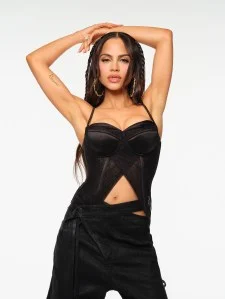
In February of this year, Natti Natasha took the stage in Miami and performed music from her new album, Natti Natasha En Amargue, live for the first time. Backed by a full live band, Natti didn’t sing provocative reggaetón or commercial pop. Instead, she dove into the pure amargue — or bitterness — of bachata, the traditional music of her native Dominican Republic.
But for Natti, this wasn’t just her first full bachata album; it was also entirely written and produced by Romeo Santos, the superstar known as the King of Bachata. The collaboration between the genre’s biggest name and possibly the best-known female Dominican artist today has already paid off. En Amargue debuted at No. 6 on Billboard’s Top Tropical Albums chart in February, and by April, the single “Desde Hoy” became Natti’s first No. 1 as a solo artist (not part of a collaboration) on the Tropical Airplay chart.
Beyond the album’s success, it’s a “full-circle” moment for Natti. “I feel like in every area of my life, after working so hard for so long, I’m finally at a place where I can just enjoy my music,” she says.
Trending on Billboard
Natti Natasha (real name Natalia Alexandra Gutiérrez Batista) has had one of the most successful careers in contemporary tropical and urban music. She first hit Billboard’s charts in 2012 alongside Don Omar with “Dutty Love,” which reached No. 1 on the Hot Latin Songs chart. Since then, Natti has racked up 34 entries on the Latin Airplay chart, including 10 No. 1 hits, and her debut album Iluminatti landed in the Top 10 of the Top Latin Albums chart in 2019. She’s experimented with pop and dance, but above all, she’s become known as a trailblazer of melodic, lyrically bold urban fusion music — anchored by her exceptional voice.
But her journey hasn’t been easy. Natti emerged in a time when reggaetón by women was largely overlooked and far from commercially successful. She had the image of a pop artist, but her music was often unapologetically sexual. It was hard to put her in a box, and earning respect as a confident, feminine woman in a male-dominated urban music world was no small feat. Two years ago, the foundation she worked so hard to build was shaken when her husband and manager, Raphy Pina, was sentenced to 41 months in prison for illegal possession of firearms. At the peak of her career and with a one-year-old daughter, Natti had to navigate uncharted waters. Now, she’s back on the charts — with the artistic touch of Santos, the emotional support of Pina (who’s back home), and the love of daughter Vida Isabelle, who will turn four in May.
This year, Natti Natasha will be honored at Billboard’s 2025 Latin Women in Music event with the Unstoppable Award, recognizing both her extraordinary music career and her resilience in the face of adversity.
What does receiving the Unstoppable Award mean to you?
This award means so much to me. Being recognized as “unstoppable” makes me reflect on everything I’ve been through — every obstacle I’ve had to overcome, every tear, every sacrifice, every moment I had to be strong even when I was breaking inside. To me, being unstoppable is loving what you do with your whole heart. It’s getting back up a thousand times, even when the world tells you that you can’t. It’s being a woman, being a mother, being a proud and strong Latina. Today, I embrace the Natti who started this journey with fear but had huge dreams, and I thank her for never giving up. This award is for everyone who keeps fighting with their head held high. Because together, we’re unstoppable.
Natti Natasha En Amargue was written and produced by Romeo Santos, who also worked with you on the remix of your hit “La Mejor Versión de Mí.” Had you known each other for a long time?
I’ve always been a huge fan of Romeo, but I didn’t actually know him. I first met him during the video shoot for “La Mejor Versión de Mí” in 2019, when we did the remix. I never in my life thought Romeo Santos would want to do a remix of one of my songs. I remember being in New York, getting ready for the video shoot, and my manager came over and said, “I want to play you something real quick.” He hit play, and I heard the percussion and Romeo’s voice. I didn’t say a word — I just started crying. I’m one of those people who cries when they’re happy. I couldn’t believe someone like him noticed me, my voice, and my song.
You’ve recorded so many songs. What was different about making a full album with Romeo?
First, we sat down and talked about what each song was about — because every song has a story, a concept. One thing I love about Romeo, which is something I have too, is his attention to detail. The “why,” the concept, the story — he explains everything. For every song, he’d sit in a little chair right inside the recording booth while I was at the mic. After he explained the meaning behind the song, we’d go line by line, and sometimes even word by word. The songs evolved. Every single one is so special. For every note, every breath, every way of delivering a line, Romeo was right there with me.
Jodie Jones
This album, En Amargue, has been in the works for years. Why did you wait to release it?
I was waiting, just like I was waiting to get back on stage and sing again. This project is so important, so beautiful, and so personal. I wanted to wait until my family was whole again, until our home was complete [and Pina was back]. It’s a blessing because now we have balance, and we have chemistry. This business isn’t easy. A lot of people say it’s hard for couples to work together, but for me, it’s been the perfect formula.
Did you feel incomplete without Raphy back?
Of course, [but] I had my daughter, and she made me happy. For her, I stayed focused on making music and keeping her happy. I worried a lot about that, and I did it. You know, as a mom, that’s just the law. But Raphy was such a big part of this project, and he cared about every little detail. My team is my family, and a key piece of the puzzle was missing. We deserved to enjoy this moment together. Because this is a moment to celebrate the project, not stress over it. Good music shouldn’t be rushed or forced — it never dies.
This album is very artistic and so different from something like Nasty Singles, which you released in 2023. Those are pretty spicy tracks. Do you ever regret any of the music you’ve put out?
Never. There’s not a single song I’ve recorded that feels like “filler” or makes me feel unsure. Every song — even if it’s just a party anthem — you never know what could happen. And I enjoy the process so much in the studio; it’s such a beautiful experience. I always love sharing different moments and music with my fans. At that time, Natti Natasha was living through that particular chapter of her life. So my music grows with me. You keep living, you keep creating, and you share that growth with the people who’ve been with you along the way.
And what stage are you in now?
When I first came to New York from the Dominican Republic, I didn’t know what kind of music I wanted to make. I took a chance on reggaetón and grew from there. I faced a lot of struggles because I was chasing this dream without knowing if it would ever come true. At one point, I thought, “Wow, this music career is such an uphill battle.” Then, when Raphy had to leave, I kept going and faced a lot of criticism just for being a woman. But I thought, “I’m not going to let this bring me down.” Now, with Raphy back, I look back at all those moments, and I realize I never stopped. I always pushed forward. And now, everything makes sense. When you’re in those moments of confusion, you kind of close yourself off. But thank God, I focused on my daughter, I have my family, and I released Natti Natasha En Amargue, which to me is on another level. I feel like, in every area of my life — because I’ve worked on all of them for so long — I’m now in a place where I can enjoy my music, not stress over it. I feel like I’m in a stage of growth where people are starting to appreciate Natti Natasha’s artistry more. It’s like I’m climbing all these steps in my career that are taking me to a whole new place.
The third annual Billboard Latin Women in Music special will air live at 9 p.m. ET / 8 p.m. CT on Thursday, April 24 exclusively on Telemundo, Universo, Peacock and the Telemundo app and throughout Latin America and the Caribbean on Telemundo Internacional.
Check out Billboard’s Latin Women In Music 2025 executive list here.

Miguel is a firm believer in divine timing. Though he wrote his song “Sure Thing” at 18 and waited nearly seven years for its initial release, the precocious songwriter wasn’t flummoxed. At 25, he watched the song bloom and catapult his career as one of the premier R&B artists. At 40, the song, glittering in TikTok gold, reemerged and became a top 15 record nearly a decade and a half later, solidifying his pen and status as a songwriting marksman.
“I believe in signs, and for whatever reason, all of those variables didn’t come together for ‘Sure Thing’ at the time,” says Miguel in his new Billboard News In-Conversation interview. “I wrote that song at 18, 19, and years before Mark [Pitts] heard it. And then it took years for the song to be released. So there were a good six-plus years before writing the song and before anyone actually heard it. The game was so different.”
He continues: “‘Sure Thing’ went No. 1 on R&B and never went anywhere else. So it was really my core fans — the ones who were with me, gave me my flowers and gave the music a place to be and exist. I’m so grateful for that. Fast-forward two years, and new fans, younger fans, discovering the music is a testament to why I do this.”
Peaking at No. 11 on the Billboard Hot 100 in 2023, “Sure Thing” resided on his debut album, All I Want You Is You, which turns 15 later this year and marked Miguel’s entry into the R&B game at a time where Usher, Chris Brown and Ne-Yo reigned supreme.
“It’s a journey,” he reflects. “You think about how much time it took to get that album out and what it took to get there in terms of cycles, growth, challenges, failures and learning experiences. To have all of the blessings between that point and this point in my career is beautiful. It’s a trip.”
Along with “Sure Thing,” Miguel also had his debut record, “All I Want Is You,” featuring a young and flashy J. Cole. The chemistry between the two then-rookies was palpable and sparked two more instant classics later on in their careers, including Cole’s “Power Trip” and the singer’s “Come Through and Chill.”
“I come from underground hip-hop, which is a big part of my development and career,” says Miguel. “A lot of that started with my education, love for hip-hop and deep, true lyricism. Those things, I think, informed how easy it was for Cole and me to make music, and I think with the grace of everything, I look forward to many, many more because he’s not going anymore, and I’m not going anywhere.”
“We’ve definitely talked about going back and forth on production and fun concepts. That just feels like timing,” adds Miguel about a possible EP with Cole.
While Miguel enjoys reminiscing about his past successes, he’s moving forward and in a new direction, especially on his upcoming album. Earlier this year, he released “Always Time,” a sharp contrast from “Sure Thing,” where his relationship turmoil drowns him in regret.
“I am the most reliable, most unpredictable homie. I am deep into a lot of conspiracy theories. I listen to metal music. I grew up in a punk city. Punk is a huge part of my upbringing. My father is Mexican, so I love all of the traditional things that I heard growing up. He also loved Black women. So I got to listen to all the great soul music in his car when we took rides. Where I take my fans will be about the truths I’m finally comfortable sharing with you.”
Watch Miguel’s Billboard News In-Conversation interview, in which he speaks about also working with j-hope on “Sweet Dreams” and diving more into his Mexican roots musically.
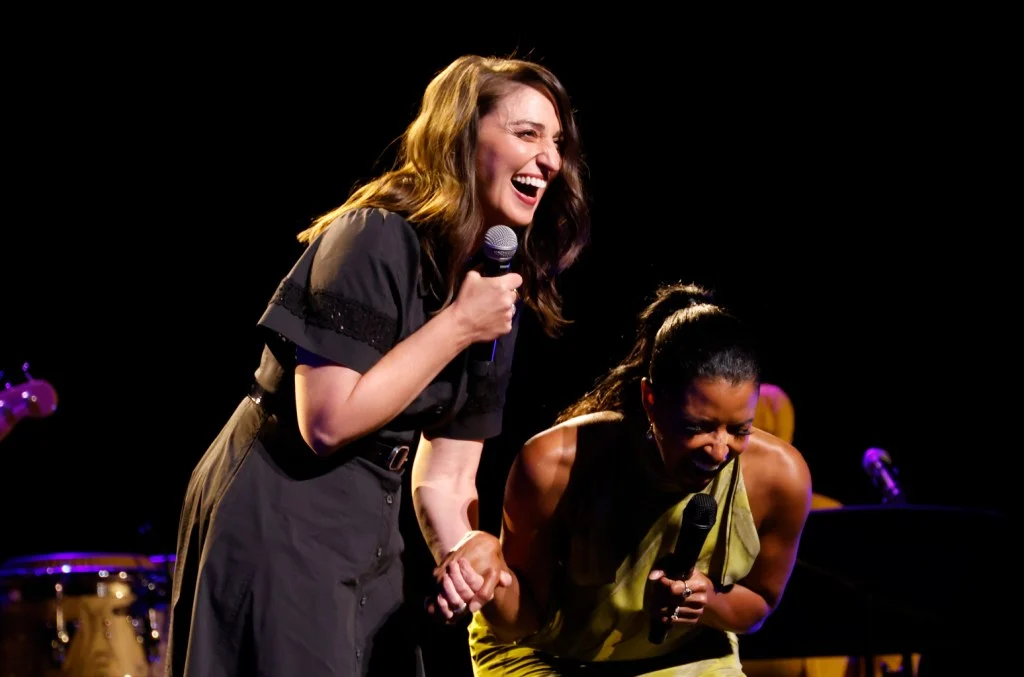
Sara Bareilles is heading back to her alma mater to deliver this year’s commencement address. UCLA announced on Tuesday (April 22) that the Grammy-winning “Brave” singer will deliver the keynote address at the 2025 UCLA commencement ceremonies on June 13 in Pauley Pavilion. “My time at UCLA held some of the most treasured years of […]