State Champ Radio
 Music
Page: 342

Few artists embody the meaning of evolution quite like Anitta. The Brazilian superstar, unapologetically herself and fearless, has expanded the boundaries of global Latin music with hits in three different languages — an unprecedented feat among modern-day pop stars. As the recipient of the first-ever Vanguard Award at Billboard’s 2025 Latin Women in Music event — celebrating an artist who boldly forges her own paths — Anitta continues to prove why she’s in a league of her own.
Through her trilingual funk carioca, reggaetón, Afrobeat, and fizzy pop songs, the singer closes the divide between cultures while celebrating her Brazilian roots on the world stage, as evinced in her 2024 album, Funk Generation. With multiple songs reaching the coveted Billboard Hot 100 — such as “Envolver” at No. 70, “Bellakao” with Peso Pluma at No. 53, or most recently, “São Paulo” with The Weeknd at No. 43 — Anitta continues to blaze new trails in music and global pop culture.
Trending on Billboard
“I’ve been around a lot of performers. I will tell you — I will put my money on Anitta every day,” Rebeca León, her manager and longtime friend, tells Billboard. “She can sing for six hours straight, and her Carnival performances are the most incredible experiences.”
But Anitta’s path hasn’t been defined solely by music. After years of living in the fast lane, the artist, born Larissa de Macedo Machado, is now embracing her vulnerability and leaning into her more spiritual side. “Anitta is a persona she created,” explains León, referencing the personal challenges the artist has faced. “Larissa is the softer side of Anitta.” That introspection is at the heart of Larissa: The Other Side of Anitta, her 2025 Netflix documentary that explores the woman behind the icon, her journey of healing, and her fearless decision to embrace her true self, after going through personal issues.
In this interview, conducted in early April (a week after her birthday), Anitta reflects on her dual identities, her mission to bring funk carioca to the global stage, and her ongoing journey of embracing every part of herself — sensual, spiritual, and everything in between.
Anitta, first off, happy belated birthday! How did you celebrate this year?
I love celebrating my birthday. We are so blessed to be alive, we have to celebrate. This year, I started with a ritual. Here in Brazil, my father, my brother, and I all follow Yoruba [traditions]. But I also love incorporating Buddhism and Hinduism into my life. The first party was a Shamanic ritual with a Shaman who guides me in life. I invited Krishna Das to do a kirtan — a [chanting] practice with mantras — and he performed at my house. Krishna Das is a great singer. I love his songs. It was really special.
On the second day, I hosted a party with a band I love. Then the other day, I did another show in my house with a reggae band that I love. Then I traveled. Every year, my astrologers tell me where I should spend my birthday for my solar return, so I always celebrate it in a place based on their guidance. This year, I went to Fernando de Noronha, a great [archipelago] in Brazil.
Iude Rìchele
Congratulations on being chosen to receive the Vanguard Award at Billboard‘s Latin Women in Music event — how does it feel to be recognized in this way?
I’m really happy. Last year, I also received an award in Brazil because of how I fight for change. Movies, music, books — and entertainment in general — can [serve as a catalyst for] change in our culture and lives. A popular movie or a type of music can completely shift how people behave. I always try to apply that idea to my work. It could be through my music videos, my speeches, my dancers, my outfits, or even in interviews — I always try to bring attention to things I really believe people need to [notice]. I go with the flow, but I also try to change the flow a bit. In the beginning [of my career], it was all about [promoting] women empowerment because I could see a lot of men singing about women in a way [that implied] they could do everything, while women could not.
The documentary Larissa: The Other Side of Anitta shows so many incredible moments, from Río’s Carnival to being in love with your childhood sweetheart, to diving deeper into your spirituality. Now that you’re showing the world who Larissa is, how is it navigating these two identities — the personal and artistic?
That was something I really wanted to do. We’ve been watching other people’s lives on social media, and we believe [what we see]. We think that [those lives are] perfect. We tell ourselves, “Oh, I wish I was like that. I wasn’t born lucky,” or “I need a new car, a new house. I need more.” But in reality, that’s not what we actually need because we are comparing ourselves to lives that aren’t real. Social media only shows pieces of people’s lives. It doesn’t show how they got what they have, how they are feeling mentally or their pressures and struggles.
I wanted to use this movie to show people that it’s not like that. Everyone goes through struggles, and you can relate to my life even if you think it’s perfect. Deep down, we are all the same. I wanted to show that to gain success, money, or whatever you’re striving for, you have to work really hard. The internet today gives the impression that everything is easy, that you don’t need to work or study — you just get it. But I wanted to show that, no, success comes at a big cost. We need inspiration, but it’s also okay to hope.
Iude Rìchele
Last year, you made waves with your Funk Generation album. How important was it for you to bring funk carioca to the world stage?
That was the baile funk experience. It was important because I really believe this rhythm has the power to be the next wave. I also love Afrobeat, and funk [carioca] has roots that trace back to that, from Africa, Bambata. That’s why it feels similar. I thought it was really important to bring this culture to the world. We performed in so many countries, and when everybody showed up, it was super special. I felt so strong and empowered on stage representing this rhythm and its energy.
I think sensuality is also an essential part of who I am — something I’ll never regret or give up on. Sometimes when I talk about spirituality, like mantras I love or hope to work on one day, people think I’m going to stop doing [the other parts]. They ask if I’ll stop being sensual or stop dancing the way I do in funk. But there’s no need for separation; doing one thing doesn’t mean you can’t do the other. It’s the opposite, actually. We need to embrace all parts of ourselves — the sensuality, the spirituality, and the power I feel when I’m performing funk and dancing. It makes me feel so powerful, so special. I was really happy with that tour.
Your hours-long Carnival performances have been praised for their high energy and artistry. How do you physically and mentally prepare yourself?
Mentally, it’s the hardest. It can f–k up your mind if you’re not ready because there is so much noise, so many people, so much energy. You have to make a deal with yourself and understand [what it takes] to handle it, because it can be tricky with all the ups and downs.
Physically, [preparation] is important. I was traveling and working so much, but when I decided to stay in Brazil for the moment, I got healthier because I could establish a routine. The body likes routine. It’s important to give your body structure during the days between shows. For Carnival, I performed every Saturday and Sunday for two months, spending four to five hours on stage each time. [To sustain that,] you need to maintain a strong routine during the weekdays.
Iude Rìchele
As you embark on this new phase of your journey, what do you hope fans take away from seeing you as Larissa?
I’m trying not to be in a rush. I used to always try to deliver. You know, that anxiety that comes from big companies and people expecting results and numbers and paybacks. But now I’ve realized that the more we act in survival mode, the less we get. It’s hard to create something truly new and impactful when you have people in your environment being like, “What’s the next step? So what are we doing? What’s the plan?” Now I’m just trying to silence [those voices], and trying to be confident and follow my heart.
One thing I’ve always done in my career is trust [my intuition]. Even if everyone else was going right, I would go left. I didn’t mind waiting years for that decision to pay off. I would keep insisting on the left because that was the direction I felt good with. At some point, I started to lose that confidence because so many people around me were pushing for immediate results. But now, I’m trying to just keep this mindset. I don’t care if everyone else is going one way. If I feel like this is the right way, I’m going to keep going that way, no matter what.
Iude Rìchele
The third annual Billboard Latin Women in Music special will air live at 9 p.m. ET / 8 p.m. CT on Thursday, April 24 exclusively on Telemundo, Universo, Peacock and the Telemundo app and throughout Latin America and the Caribbean on Telemundo Internacional.
Read Billboard’s Latin Women In Music 2025 executive list here.

Riot Fest is one year shy of legal drinking age and celebrating its 20th anniversary this summer with a stacked lineup of classic indie and alternative bands led by East Bay punk legends Green Day, pop punkers Blink-182, alt-rock darlings Weezer and rock icon Jack White. Explore See latest videos, charts and news See latest […]

Singer-songwriter Phil Wickham scores his first top 10 debut on Billboard’s streaming-, airplay- and sales-based Hot Christian Songs chart as “What an Awesome God” flies in at No. 5 on the list dated April 26.
Explore
Explore
See latest videos, charts and news
See latest videos, charts and news
The song marks the 14th top 10 for Wickham overall. He topped the chart with “House of the Lord” for two weeks in 2022.
“What an Awesome God,” which has become a popular worship anthem, was originally written and recorded by Rich Mullins. It’s from his album Winds of Heaven, Stuff on Earth, which peaked at No. 8 on Top Christian Albums in April 1989, becoming his first of seven top 10s. For Wickham’s update, released April 11, he and Jonathan Smith wrote new verses, combined with Mullins’ original chorus.
Trending on Billboard
Wickham’s single drew 2.1 million official U.S. streams in its opening week (April 11-17), according to Luminate. It also sold 4,000 downloads and opens atop Christian Digital Song Sales, giving Wickham his third No. 1 among 16 top 10s.
The track is set to be on Wickham’s upcoming LP.
‘Give’ Gets Pugh His Fifth No. 1
Earnest Pugh’s “Don’t Give Up,” which the Memphis, Tenn., native solely authored, crowns Gospel Airplay (4-1). It increased by 10% in plays during the tracking week.
Pugh adds his fifth leader. In March 2022, “Thank You So Much” reigned for two frames, preceded by “God Wants to Heal You,” which led for a week in July 2020; “I Need Your Glory” (13 weeks, starting in September 2011); and “Rain on Us” (two weeks, March 2010). He boasts one additional top 10, as “Survive” hit No. 9 in May 2018.

After years of health issues, Ozzy Osbourne, 76, is making sure that he’s in top shape when he suits up for what is being billed as Black Sabbath’s final-ever performance on July 5 in Villa Park in the band’s hometown of Birmingham, England.
In an interview this week with Billy Morrison on SiriusXM’s Ozzy’s Boneyard channel, Osbourne said he’s been in “heavy training” for the show that will see rock’s Prince of Darkness reunite with his bandmates for one last time on a bill that will also include Metallica, Slayer, Anthrax, Pantera, Lamb of God, Mastodon, Alice in Chains and many others.
“I haven’t done anything for, this will be seven years, and so I’ve been through all this surgery. It really is like starting from scratch,” said Osbourne, who has been dealing with a Parkinson’s disease diagnosis as well as a 2019 fall that aggravated a previous spinal injury and required multiple surgeries.
Trending on Billboard
Osbourne said his workouts include endurance training due to his long lay-off from performance. “The first thing to go when you’re laid up is your stamina, so believe it or so, I’m doing two sets of three-minute walks and weight training. I’m going and going you know,” he said. ” I’m waking up in my body, you know. I mean, three minutes to you, for instance, is nothing, but I’ve been laying on my back recovering from umpteen surgeries.”
Ozzy’s longtime collaborator guitarist Zakk Wylde recently teased that the metal legend could take flight during the Back to the Beginning all-day show on the throne that the will sit on during the show. “With Oz and his throne that just flies over the stadium or whatever, [where he] shoots out buckets of water and does everything like that,” Wylde said a recent interview. “So if Oz has a great time and it’s just, like, ‘I wanna go out on the road again,’ it’s just, like, ‘Good. Let’s do it again.’”
Wylde added that, “Ozzy was just sitting at the chair and he was singing ‘Mama, I’m Coming Home,’ and it sounded great. So hopefully we’ll just do this, and then Oz will go, ‘Let’s just fire up the machine again and we’ll do another tour.’”
Rage Against the Machine guitarist Tom Morello will be the musical director for the show that will mark Osbourne’s first time on stage since a brief 2022 set at the NFL Kickoff in Los Angeles; his last full show was in December 2018 at the Forum in L.A. as part of his No More Tours 2 outing. Other acts slated to perform at the final Sabbath blowout include: Halestorm, Gojira, as well as appearances by Smashing Pumpkins leader Billy Corgan, Guns N’ Roses’ Duff McKagan and Slash, Wolfgang Van Halen, Limp Bizkit’s Fred Durst, Lzzy Hale, Disturbed’s David Draiman, Korn’s Jonathan Davis, Sammy Hagar and many more.
Listen to Ozzy talking about his training regimen below.
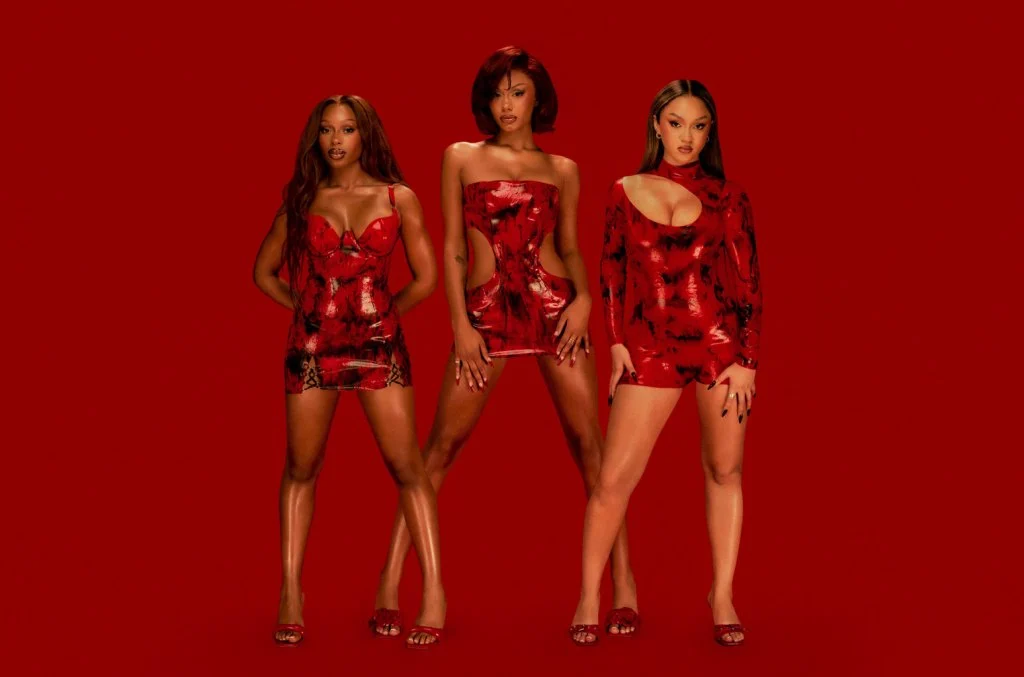
Who said girl groups are dead?
Though it’s been several years since an R&B girl group has made a significant splash in the States, British trio FLO cemented itself as the progeny of iconic girl groups past across an excellent hour-and-a-half set at the Brooklyn Paramount on Monday night (April 21). Marking the first of two New York stops on their Access All Areas Tour, the FLO girls also spent the night outlining their own origin story — with Emmy, Grammy and Tony-winning multihyphenate Cynthia Erivo narrating the setlist like a whimsical fairy godmother.
Before Stella, Jorja and Renée took the stage, rising R&B singer Chxrry put on a fiery one-woman show for her opening set. Owning the stage with just a mic stand, a few standard lighting cues and backing track, Chxrry delivered incredibly strong vocals as she played songs across her catalog. From “Just Like Me” to “Favorite Girl,” Chxrry’s set familiarized the crowd with her work while showing off her performance chops across a range of tempos. “Never Had This” proved the highlight of her set: By matching sultry floor choreography and Beyoncé-esque hairography to the seductive, brooding production, Chxrry captivated the venue all by herself. Before ceding the stage to FLO, Chxrry delivered her a winning rendition of her biggest hit yet, “Poppin Out (Mistakes).” (R&B singer Josh Levi opened Tuesday night’s show on April 22.)
After the house DJ spun a few R&B classics (SWV’s “Weak,” Fantasia’s “When I See U”), Erivo’s voice rang out across the venue prompting several concertgoers to gasp some variation of, “It’s Elphaba!” “Ladies and gentlemen/ And those who do not subscribe to either/ Generously granting us access to all areas/ Miss Jorja, Miss Renée, Miss Stella/ This is FLO,” Erivo announced, slightly remixing the “Intro” she voiced on the group’s Access All Areas LP, which arrived late last year (Nov. 15, 2024). From there the girls launched into the first act of their set, tearing through “AAA,” Access All Areas singles “Walk Like This” and “Check,” and their Missy Elliott-assisted bop “Fly Girl.”
Trending on Billboard
With a relatively bare stage that consisted mostly of a staired platform leading to three separate doorways for each member (and mic stands that disappeared and reappeard throughout the show), FLO delivered a notably physical stage show. In addition to their otherworldly live vocals — their arrangements frequently added modulations and they often improvised slinkier riffs and more ambitious belts than the ones already on the album — the girls rarely stood still, always covering ground on stage through a mixture of dance breaks and light choreography that rejected stasis while ensuring the stability they needed to hit some of those jaw-dropping notes. Amari Marshall, a renowned choreographer who served as dance co-captain on Beyoncé’s Renaissance World Tour, worked closely with the trio for the Access All Areas Tour. Between the girls’ crisp synchronization and smart individualization of certain parts, Marshall was clearly a very effective coach. For “Bending My Rules” — an early vocal highlight among many — the girls brought out some prop wine glasses to set the mood, before launching into a spunky run of tracks (“IWH2BMX,” “Nocturnal,” and “How Does It Feel?”) that flaunted their sassier side.
Before the trio launched into some sexy choreography for “Soft” (still unclear if Brooklyn passed the mute challenge!) and “On & On,” ascendant R&B crooner Destin Conrad surprised the Brooklyn Paramount with a strong performance of “In the Air.” Shortly after, Erivo once again returned as narrator, explicitly placing FLO in the lineage of Destiny’s Child, Sugababes, SWV and “countless other iconic baddies of the past” by once again lifting bits of the Access All Areas intro.
For their final act, FLO momentarily departed from Access All Areas — ultimately playing all sixteen tracks from the album’s standard edition — and performed a couple of hits from earlier in their catalog. While the “In My Bag” hook and music video choreographer drew a hearty crowd response, the spruced-up arrangement of breakout debut single “Cardboard Box” made most of the venue lose their minds. Nonetheless, the indisputable highlight of the night came in the form of “Losing You,” a soulful ballad the trio released as a standalone single in 2022. With an arrangement that seemed to reach a new vocal peak with each new line, “Losing You” allowed each member one final moment to show off the most impressive parts of their respective voices — from Renée’s gorgeous lower reigster to Stella’s limitless upper range and Jorja’s incredibly powerful chest voice. Always keeping the focus on Access All Areas, the girls properly closed the show with an encore of “I’m Just A Girl” that found them putting on their best rockstar performances — head-banging, guitar-miming and all.
If FLO has anything to say about it, girl groups are certainly alive and well — and R&B is too.
Born one hundred years ago in Havana, Cuba, on October 21, 1925, Celia Cruz sang almost before she could talk. The second oldest of 14 children, she could carry a tune at 10 months old, according to her mother, and as a toddler, sang her youngest siblings to sleep. Those bedside moments were the first stage for the woman who would become the single best-known and most influential female figure in the history of Afro Cuban music.
By the time she died in 2003 at age 77, Cruz had over 70 albums to her name and had transfixed generations of fans with her mesmerizing stage presence and a signature, rich, expressive contralto that could turn a single word into a masterpiece of a song.
Trending on Billboard
Cruz was recognized worldwide as much for her extravagant flamboyant outfits, tireless work ethic and colorful wigs as for her trademark cry of “Azúcar!.” But Cruz possessed, above everything, an extraordinary voice.
“Forget about getting her behind a mic,” Marc Anthony once told Billboard. “She’ll turn anybody out.”
Indeed, Cruz adamantly refused to lip-sync, even on live TV shows. “I can’t go out there and pretend,” she told Billboard in 2000. “In Cuba, I worked with a man named Rodrigo Neira, who was the choreographer of the Tropicana. He wanted a singer to sing and a dancer to dance.”
Although Cruz’s dancing abilities weren’t negligible, her voice was incomparable.
Cruz’s recorded legacy is a veritable history of Latin music, from her days with Cuba’s legendary La Sonora Matancera to her highly experimental and avant garde later fare, which even mixed urban music with her salsa beats.
Cruz charted until the day she died, and beyond. More than 20 years after her death, she generated 64 million on-demand official streams in the United States in 2024, according to Luminate. Last year, the U.S. Mint released a commemorative Cruz quarter, the only coin that bears the stamp of a Latin artist. The item joins a list of Cruz memorabilia that includes a stamp, a doll, multiple exhibits, merchandise lines and both a TV series and film in the works, among other projects.
As a child, Cruz began singing in amateur contests. Her big break came in 1950, when she was called in to replace the lead singer of the legendary La Sonora Matancera, arguably the best salsa band of all time. Cruz gained international acclaim with La Sonora, with whom she remained for 15 years, eventually marrying lead trumpet player Pedro Knight.
Following the Cuban revolution, she settled in New York in 1962 and was never allowed to return to her home country. Cruz’s career also flourished stateside, first through her association with Tito Puente’s Ticco Records and later with Fania Records.
Although Cruz remained a popular and venerated figure — she received a star on the Hollywood Walk of Fame in 1987 — she gained a new legion of followers in 2000 after signing with Sony Music Latin, a label that gave her a star treatment until the day she died. With Sony Latin, Cruz won three consecutive Latin Grammy Awards in 2000, 2001 and 2002.
The secret to her perennial success, she told Billboard, was very basic: “First of all, I take good care of myself. I rest. Second, I plan my shows well. I always try to shape my repertoire around a particular audience. And finally, I’m always changing my outfits, my look onstage.” But at the core of it was her tireless work ethic, and that voice.
After being diagnosed with cancer in 2002, Cruz made a final trip to the recording studio in February 2003. She recorded for two months and died in July.
This year, Billboard’s Latin Women in Music honors Cruz and her extraordinary life not on the anniversary of her death but in the centennial year of her birth. Cruz will posthumously receive the Legend Award at the gala, which will air April 24 at 9 p.m. ET on Telemundo, and be honored with a musical tribute with performances by Ivy Queen, La India and Olga Tañon.
Billboard spoke to four people who had personal ties to Cruz. Here are their recollections, in their own words.
Emilio Estefan
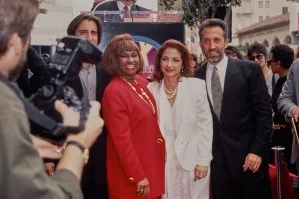
Celia Cruz, Gloria Estefan and Emilio Estefan pose as Gloria receives her Walk of Fame Star on the Hollywood Walk of Fame on Feb. 3, 1993 in Los Angeles.
Vinnie Zuffante/Getty Images
Celia was someone who was able to bring our music to this country at a time when women weren’t really welcomed in the music industry.
When she joined forces with Fania and Johnny Pacheco, she showed the world what true talent was. And she never changed her musical essence or who she was. She was such an example of humility, perseverance, talent — my God. She became family to us. I was just starting out as a producer, and my dream was always to work with her. But I didn’t offer because we were just getting started. We had met, but we hadn’t really talked much yet.
One night, we were playing at the Dupont Plaza, and she asked us to sit at her table. It was like talking to a queen. I remember one time we were performing at the Ovni, and we always played “Quimbara.” She was in the audience, and she came onstage to sing. Our hearts almost burst out of our chests.
I had the honor of producing several albums for her. One day she called me and said, “I don’t have a record label anymore.” And I told her, “I’m going to send you to Sony.” Thank God I called Tommy [Mottola, who] said, “Don’t even worry about it. We’ve got to sign her.” She went into Sony with so much respect. They were going to give her the boost she needed. She passed away with six No. 1 hits. At the time, there was resistance because most of the artists selling records were men. She was one of the women who proved to the world that women could make everyone dance. She was such an inspiration for Gloria [Estefan]. I think we can all learn something from her.
She and Pedro [Knight] were such humble, kind people who taught us so much. When we were recording, she was so professional. She could almost sing live; she practiced her parts, showed up with humility and was always so proud of her Cuban roots. And the love between her and Pedro… It’s rare to work with a couple and see them love each other so much for so many years, being such simple, good people with so much talent.
She was my great teacher. She always remembered to send birthday cards to everyone. Those little thoughtful gestures. She was like a sister to Gloria. She’d come over to eat at our house and was so funny. She’d wash Pedro’s shirts and iron them when they were on tour. I’ll never forget when I produced the Latin Grammys [for CBS on 2000] — she had terrible knee pain but got up to sing “Quimbara” with Ricky [Martin] anyway. No one could tell what she was going through.
One day she came to us and said, “I got the big C.” I had no idea what she meant. She called me to help arrange her burial. She told me, “I want every fan I have to be able to say goodbye to me.” She wasn’t just loved by Cubans — she was loved by the whole world. She left me one of her dresses, shoes and wig as a thank you, along with a beautiful note for me and Gloria. In a way, I feel at peace knowing I was able to help a woman like her, that I could get her signed to Sony. In these times we’re living in, when one person shines, we all shine. And she made all of us shine.
La India
La India & Celia Cruz
Courtesy La India
I met Celia in 1988 through important people in her life. Her nephew was a big fan of mine and he would go see me at the Palladium. He told me he was Celia Cruz’s nephew and we didn’t believe him. Celia was already a legend. We listened to her music and all the Afro Yoruba-ness around her was really interesting. And of course we all loved La Sonora Matancera.
One day, she sent a message through him, saying, “Muchas benidiciones en tu show.” (“Many blessings on your show.”) Then in 1990, a year before I decided to cross over from dance to salsa tropical, I was already collaborating with Tito Puente and Tito arranged for us to meet.
We all went to dinner. When I met her, it felt as if we were already family. We spoke about her music, about her. She said she always felt she had a natural ability to sing music with a lot of rhythm. She said, “One thing I notice about you is you study a lot of jazz, but you have a lot of soul. I’d like you to cross over from dance music and do a salsa album.” We sang with prerecorded TV tracks then, and she said, “You need to be up there singing with a live band.”
She set up a meeting with Ralph Mercado [founder and president of RMM Records, to which Cruz was signed at the time] and said, “Hey, I want you to sign her.”
We were very close. We talked a lot about music, about the hard labor of a woman. We talked about believing in ourselves, being professional and giving 100% to the music. I found it to be very empowering.
She used to say, “Yo soy tu madrina musical [“I’m your music godmother],” and she wanted to officially be my godmother. I hadn’t had my first communion, and I needed to be baptized.
She baptized me on Feb. 14, which is the day of friendship and love, and it brought a lot of light into my life, which I needed. I came from a very dysfunctional family, but a very praying family. God was always in our lives. I think that’s why it meant so much to me to be baptized with Celia and [husband] Pedro Knight [by my side], and because it meant she would always be in my life. And she was. She was really cute and she wrote telegrams. She had an AT&T calling card and boy, did she use it to the fullest. She called from the airport, when she landed, when she was in her room. Because she was so spiritual, she felt she needed to pray with her goddaughter; that was me. She always prayed before her show. We would hold hands and then we’d go up onstage with her.
We toured together. Everywhere she traveled she was the goddess of the goddesses. She would walk in first, everybody was waiting for her, and we were like little ducks. All of us, me, Marc [Anthony], Cheo [Feliciano], Oscar [D’León], we were all behind her going to all these beautiful places in Europe. She really believed in us. She thought we were coming with talent to bring light to salsa tropical.
Celia was always an icon, a living legend. She had a lot of vocal control and a beautiful vibrato. Pedro helped her a lot. He quit the trumpet to make sure she was ready to get on that stage and sing her heart out. He was a great partner. She was very lucky to have him.
In the studio she was a master of great ideas. I gave her a lot of energy, and it was great to have her there with me.
She always told me that one of the things she liked about me was that she saw my talent and that I didn’t have to wear little outfits. We’re here as women, as talented women. She would say, “Sabes porqué he tenido exito? Porque yo vendo talento, no vendo sexo.” (“You know why I’ve been successful? Because I sell talent, not sex.”)
Now, I see what she meant. It’s a male-dominated world, and she wanted respect. She liked being on the road. She liked to take her music to different markets, and she loved shopping. Shopping and music, forget about it. Y su cafecito con su azucar.
She always tried to encourage the new generation by being positive and working hard. She spoke about the perseverance of hard work, professionalism. Always record, arrive early and have a great orchestra behind you. And all that you get, you give back.
Randy Malcom
The Gente De Zona member on the group recording “Celia,” which blends two Cruz hits using her original vocals.
Alexander Delgado and Randy Malcom Martínez of Gente de Zona.
Courtesy Gente de Zona
I knew Celia’s work because I studied music in Cuba, but I never got the chance to meet her in person. Since Celia was banned in Cuba, you couldn’t hear her on the radio or see her on TV.
Celia, Willy Chirino, all those artists were prohibited. She was always a defender of freedom.
After recording “La Gonzadera,” we were trying to figure out how we could use her vocals from “La Negra Tiene Tumbao” in a song. Her digital session recordings from her last recordings were nowhere to be found, but after 10 years of searching with Omer [Perdillo, her manager], we finally found them.
What we did was mix two songs together, closing it out with “La Negra Tiene Tumbao.”
But for us, using her voice — can you imagine? As a kid, I’d hear some of her stuff with my dad through videos that had been leaked. Cuba only had two TV channels, and there was a concert she did, I think in Africa, that somehow got through. People had recorded it and we’d watch it. For us, it was such a point of pride. A Cuban woman who was outside of Cuba, yet so huge in the music world — it seemed impossible to reach that level. When I was little, people told me she was a singer who wasn’t allowed in Cuba.
When my dad heard the song, he was blown away. He was like, “How did you pull this off?” And I told him, “Dad, they gave me permission.” This whole story is so nostalgic for every Cuban, given the political situation. Everything feels so deep. In our country, there’s so much music, so much art, but it dies there. It’s heartbreaking to see so many artists who don’t get the chance to share their work. I’m left with this sense of longing because I wasn’t able to fully experience her work. And she has incredible songs. Celia was always ahead of the game when it came to music. She was someone who never let herself fall behind.
Goyo
Goyo
Johana Garcia
I met Celia because my dad and an uncle promoted shows in Colombia and they brought José Alberto “El Canario” and Celia together to Buenaventura, Quibdó, and a show in Tuluá that didn’t end up happening. But I traveled with her on the same bus from Buenaventura to Tuluá, and I got the chance to talk with her. She said something to my mom about me, and my mom made me sing. I was about 13 or 14 years old.
I’d seen her on TV, but my dad collected albums and my mom was a huge fan of Celia. I’ve always been really close to my mom, and in many moments of her life, Celia’s music was her soundtrack. “Ritmo, Tambor y Flores” was my first real connection to Celia. One of my aunts made me learn the song, and I sang it the first time I performed in a parade in Condoto. I was about 9 years old, and at my fifth-grade graduation, “Ritmo, Tambor y Flores” was already part of my repertoire. That’s the song I sang to her on the bus.
I went to see her in Buenaventura first. She was wearing white leggings, a shiny top and a short, white wig and she looked amazing. Like, wow — it wasn’t often you saw women who could pull off a look like that. I saw music as something totally normal because my mom sang, my uncle brought artists and I’d go to the studios of Grupo Niche. I felt like I was part of the scene.
So when they said, “Now we’re heading to Tuluá on the bus with Celia and “El Canario,” it felt normal. She was traveling with her husband and it was a big, comfy bus. And she said, “What a beautiful little girl. She has something special.”
My mom told me to sing “Ritmo, Tambor y Flores.” She started singing the chorus, and I sang the second part because I was feeling a little shy. She said, “Keep going, keep going.” And we all started singing together. Imagine that — my skin still tingles thinking about it. It feels like such a normal story, but honestly, it’s not that normal. Especially because kids are usually pretty sheltered at that age. Later, when I was 15, I saw her again, and by then, she looked older, and I was so impressed by the respect people had for her and how she kept thriving as an artist, even as someone who was already so established. She was always in the big leagues. What’s happening now isn’t possible without talking about her. Her story needs to be told.
Illustration by Selman Hoşgör
The third annual Billboard Latin Women in Music special will air live at 9 p.m. ET / 8 p.m. CT on Thursday, April 24 exclusively on Telemundo, Universo, Peacock and the Telemundo app and throughout Latin America and the Caribbean on Telemundo Internacional.
Read Billboard’s Latin Women In Music 2025 executive list here.
To this day, Bryan Adams takes a lesson he learned from Tina Turner more than 40 years ago with him whenever the iconic Canadian rocker goes on tour. A few years before the two recorded their sexy, gritty Grammy-nominated duet “It’s Only Love” in 1984, he went to see the legend in Vancouver at a club as she was mounting her comeback.
Explore
See latest videos, charts and news
See latest videos, charts and news
A 21-year-old Adams and songwriting partner Jim Vallance had written a song for Turner called “Lock Up Your Sons Because Tina’s in Town.” “Terrible,” he says, with a laugh. He convinced the bouncer to let him go backstage after the show and he saw a visibly ill, bundled up Turner. “I realized at that point she had the flu, and she had just put on this incredible show. I thought, ‘Wow! Nobody knew she was sick. She just went out there and gave everything she got.’ From that moment on, I never complained, ever, about being a little under the weather if I had to go on because I’ll just go out and do it. She’s at the forefront of my mind whenever that happens.”
Trending on Billboard
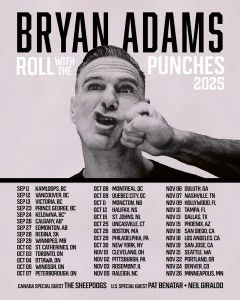
Adam will kick off an eight-week North American tour Sept. 11 in Kamloops, British Columbia at Sandman Centre. The ticket presale starts April 29 and general onsale begins May 2 at BryanAdams.com.
The outing, named the Roll with the Punches tour, has already kicked off internationally and Adams is calling as he’s headed to Reykjavik for a concert.
The So Happy It Hurts tour, named after his 2022 album, ended in Australia and New Zealand in February.
“I don’t actually have a beginning or and end” to touring, Adams says. “It all sort of melds into one.”
The Roll with the Punches Tour takes its name from the forthcoming album Adams will release on his own label, Bad Records, later this year.
Bryan Adams
Courtesy Photo
“I’ve got my own sort of schedule and how we roll things out,” Adams says. The title track and another song are already available, and he expects to put out a few more songs before the album is released in August and pepper them into his shows.
Adams started Bad Records a number of years ago as a home for his catalog, much of which has reverted back to him from Universal (which bought PolyGram, which had purchased his original label home, A&M).
All the mergers made Adams feel like “a chair in the lobby,” he says. “I could have probably rolled [my contract] over and kept it there. But there was something about being independent that I liked and, after much back and forth, finally I was free,” Adams says. “I’ve been signed to a label pretty much on and off since I was 16 years old, so the feeling of and the understanding of being able to be an independent artist is actually quite liberating.”
Among the projects he has released on his own label are two box sets from his 2022 and 2024 Royal Albert Hall residencies, as well as re-records of past albums. For Record Store Day earlier this month, his label put out a previously unreleased version of “It’s Only Love” featuring just his and Turner’s vocals and a keyboard. “It shows you the power of her voice like never before,” he says.
Adams has found the hands-on aspect of running a label inspiring. “I even went to the record manufacturing company in Poland where we were putting things together,” he says. “It was a Sunday, and I just expected one person to be there to say hello and shake my hand. The entire company showed up because they don’t get artists saying hello, and it was just fascinating.”
The Royal Albert albums and videos show the superstar’s command over his audience, especially when he plays the opening chords of one of his many hits like “Summer of ’69,” and the crowd instantly goes wild. “You just hope the microphone’s working,” he jokes when a song gets such a rabid response. “That’s one of the great things about having so many songs. I look down my set list and I’m always pleased to know what the next song is. I know it’s gonna be fun to play,” he says. “It wasn’t like there was any plan. It was just every couple of years I would put out the best songs I’d written and occasionally, some of them stuck.”
The North American tour encompasses 39 dates, averaging around five shows a week. The longtime vegan jokes his stamina is “powered by lentils.” He adds: “I do the best I can. There’s nothing you can do if you get a cold or a flu. You just have got to soldier on,” as Turner taught him. (Adams speaks lovingly of the late Turner, for whom he produced her 1986 album, Break Every Rule and even sang at her wedding, saying his greatest memory of Turner is when he introduced her to his daughters. “It makes me a bit weepy thinking about it, to be honest, because she was just super, super kind to me. She loved the fact that I was having children.”)
Playing his native Canada is always special for Adams, “especially now that we’ve been sort of, I don’t know, skewered by your president,” he says of Donald Trump. “It’s really unified the country in a way. And so, it’s exciting.” Popular Canadian rock band The Sheepdogs will open the Canadian dates.
Pat Benatar and Neil Geraldo will open the U.S. leg. Surprisingly, Adams has never met the husband-and-wife duo but does have a connection that goes back more than 40 years when in 1981 he wrote a song called “Lonely Nights” for Benatar. “She didn’t do it, but it ended up being the first song off my second album that really opened the door for me in America,” the rocker says. “I may have to add that during the set because it’s kind of a good story to tell. I just really love her voice so it’s great that she’s gonna be out with us.”
From the start of his career, Adams has focused on spanning the globe and in the ‘80s and ‘90s was one of the first Western artists to play in India, Pakistan, Vietnam and many of the former Eastern Bloc countries. After Reykjavik he will continue through Europe, ending in Helsinki, Finland in mid-August.
“For me, it was just a wanderlust to be able to see the world,” he says of touring so widely in the early days. “You know, ‘Here’s an opportunity. I wonder if we can do a gig there.’ And when you start to investigate these places, you find out that, yes, there is a chance you could do it,” he says. “I recently inquired whether I could get to do a show in Iran, and, unfortunately, it’s still not the time to do that. I would love to be one of the people that could break down that sort of cultural boycott that’s happening. There are also parts of North Africa that I’d like to go to.”
Adams, a well-regarded professional photographer who has released retrospectives of his photography and autographed notable figures including the late Queen Elizabeth, does not spend days off between gigs exploring with his camera. Instead, he is understandably “probably resting” or working,” he says. His days on the road “are really organized. There’s no randomness about it. I enjoy finding things and exploring, but usually if you’re in the middle of a tour, that’s the last thing you want to do. You want to rest because you’ve got work to do.”
Adams, who has also written songs Kiss, Roger Daltrey, Motley Crue and Loverboy, in addition to his multiple hits, still owns his estimable publishing catalog even though his writing partner Vallance sold his to Round Hill in 2021. “I’ve been asked by loads of people [to sell]. I’m not interested,” he says. “Maybe somewhere in the future. It’s definitely not on my radar now.”
‘ROLL WITH THE PUNCHES’ NORTH AMERICA TOUR DATES:
Thu Sep 11 – Kamloops, BC – Sandman Centre
Fri Sep 12 – Vancouver, BC – Rogers Arena
Sat Sep 13 – Victoria, BC – Save On Foods Memorial Centre
Tue Sep 23 – Prince George, BC – CN Centre
Wed Sep 24 – Kelowna, BC – Prospera Place
Fri Sep 26 – Calgary, AB – Scotiabank Saddledome
Sat Sep 27 – Edmonton, AB – Rogers Place
Sun Sep 28 – Regina, SK – Brandt Centre
Mon Sep 29 – Winnipeg, MB – Canada Life Centre
Thu Oct 2 – St. Catharines, ON – Meridian Centre
Fri Oct 3 – Toronto, ON – Scotiabank Arena
Sat Oct 4 – Ottawa, ON – Canadian Tire Centre
Tue Oct 7 – Peterborough, ON – Peterborough Memorial Centre
Wed Oct 8 – Montreal, QC – Bell Centre
Thu Oct 9 – Quebec City, QC – Videotron Centre
Sat Oct 11 – Moncton, NB – Avenir Centre
Sun Oct 12 – Halifax, NS – Scotiabank Centre
Wed Oct 15 – St. John’s, NL – Mary Brown’s Centre
Sat Oct 25 – Uncasville, CT – Mohegan Sun Arena^
Sun Oct 26 – Boston, MA – TD Garden^
Wed Oct 29 – Philadelphia, PA – Wells Fargo Center^
Thu Oct 30 – New York, NY – Madison Square Garden^
Sat Nov 1 – Cleveland, OH – Rocket Arena^
Sun Nov 2 – Pittsburgh, PA – PPG Paints Arena^
Mon Nov 3 – Rosemont, IL – Allstate Arena^
Wed Nov 5 – Raleigh, NC – Lenovo Center^
Thu Nov 6 – Duluth, GA – Gas South Arena^
Fri Nov 7 – Nashville, TN – Bridgestone Arena^
Sun Nov 9 – Hollywood, FL – Hard Rock Live^
Mon Nov 10 – Tampa, FL – Amalie Arena^
Thu Nov 13 – Dallas, TX – American Airlines Center^
Sat Nov 15 – Phoenix, AZ – PHX Arena^
Sun Nov 16 – San Diego, CA – Viejas Arena^
Tue Nov 18 – Los Angeles, CA – The Kia Forum^
Wed Nov 19 – San Jose, CA – SAP Center^
Fri Nov 21 – Seattle, WA – Climate Pledge Arena^
Sat Nov 22 – Portland, OR – Moda Center^
Mon Nov 24 – Denver, CO – Ball Arena^
Wed Nov 26 – Minneapolis, MN – Target Center^
*With The Sheepdogs
^With Pat Benatar & Neil Giraldo
+With Amanda Marshall

When romantic comedy 10 Things I Hate About You was released in 1999 — a seminal time for the Shakespeare adaptation-as-teen-movie — it was a watershed pop cultural moment. The winning take on The Taming of the Shrew cemented the star power of actors Heath Ledger, Julia Stiles and Joseph Gordon-Levitt, and boasted a spunky […]
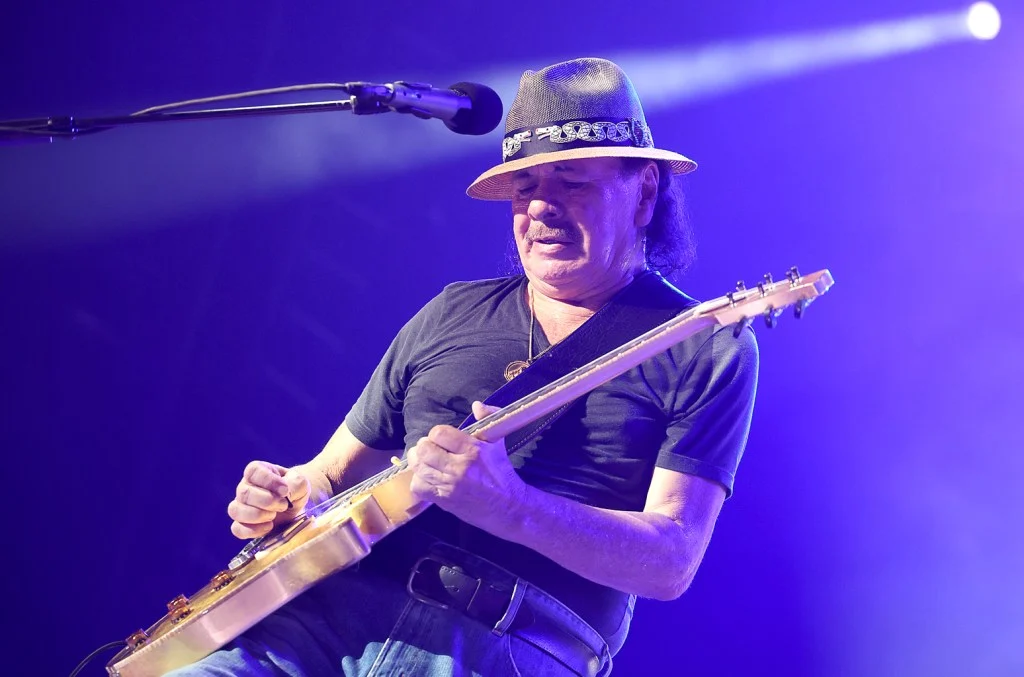
Carlos Santana postponed a planned show in San Antonio, TX on Tuesday night (April 22) after being rushed to a local hospital. Santana, 77, was booked to play the Majestic Theatre in the Texas town, but reportedly fell ill during soundcheck as a result of dehydration. According to a statement from the venue, manager Michael […]

Prince Royce collects his 36th top 10 on Billboard’s Tropical Airplay chart with the bilingual bachata, “How Deep Is Your Love,” as the song debuts at No. 6 on the chart dated April 26. It also opens in the top 10 on the new Hot Tropical Songs chart. Explore Explore See latest videos, charts and […]