State Champ Radio
 Lawsuit
Trending on Billboard
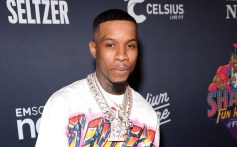
UPDATE (Dec. 2): In a judgment entered Tuesday, Judge Cecilia M. Altonaga reduced Megan Thee Stallion‘s trial award from $75,000 to $59,000. The judge said Megan can’t get damages for defamation because the jury found Milagro Gramz to be a member of the media, and the rapper’s team did not send a pre-lawsuit notice required for libel claims against journalists.
Therefore, the judgment finds in Megan’s favor only on intentional infliction of emotional distress and promotion of an altered sexual depiction, two claims for which the jury awarded Megan a total of $59,000. Judge Altonaga struck the additional $16,000 that Megan won for defamation.
Megan’s lawyers will contest the reduction in post-judgment motions. They’ll also seek at that time to add legal fees onto the damages amount.
PREVIOUSLY: A jury has held celebrity gossip blogger Milagro Gramz liable for defaming Megan Thee Stallion and reposting a deepfake pornographic video of the rapper in the wake of her shooting by Tory Lanez.
A federal jury in Miami determined in a Monday (Dec. 1) verdict, reviewed by Billboard, that Gramz harmed Megan with her social media antics and awarded $75,000 in damages. That number will likely grow later on, since Megan won on a Florida law with a fee-shifting provision that could require Gramz to reimburse some of her hefty legal bills from the elite firm Quinn Emanuel.
“We’re thankful for the jury’s commitment to reinforcing the importance of truth, accountability and responsible commentary on social media,” said one of Megan’s lawyers, Mari Henderson, later on Monday. “This verdict sends a clear message that spreading dangerous misinformation carries significant consequences.”
A lawyer for Gramz, Jeremy McLymont, said in a statement, “We remain proud of the defense we presented and of Ms. Cooper’s willingness to stand up for her voice.”
“Ms. Pete and her attorneys asked the jury to send a message to the community by awarding Ms. Pete with an astronomical amount of damages,” said McLymont. “Indeed, the jury rejected Ms. Pete’s request and refused to send any such message as shown by the nominal damages Ms. Pete recovered.”
Related
Megan’s lawyers argued during the weeklong trial that Gramz acted as Lanez’s “mouthpiece” to spread misinformation and tank her reputation. Lanez (Daystar Peterson) is serving a 10-year prison sentence after being convicted in 2022 of shooting Megan in the foot during a drunken argument following a pool party at Kylie Jenner’s house in the Hollywood Hills. He continues to maintain his innocence, though the conviction was recently upheld on appeal.
A loyal Lanez supporter, Gramz has for years used her social media presence to doubt the veracity of Megan’s account. Many of her posts about the shooting case have been outright false, such as her claims that Lanez’s gun supposedly went “missing.” Megan’s lawsuit also accused Gramz of violating a Florida law against “altered sexual depictions” by encouraging followers to watch a deepfake pornographic video of her.
Gramz denied being paid by Lanez and said her social media posts were First Amendment-protected journalism. The question of whether Gramz is a protected member of the media became a key issue during the trial. Jurors determined on Monday that she does have some media credentials, teeing up more post-trial litigation over whether the defamation verdict can stand.
Lanez himself was not a defendant or a witness in this trial. The Canadian rapper was supposed to give a videotaped deposition from prison, but was so uncooperative during the repeated questioning from Megan’s lawyers that he was held in contempt.
This story has been updated to include additional details on the verdict and statements from both sides.

Trending on Billboard
Warner Music Group (WMG) has hit apparel company PacSun with a copyright infringement lawsuit for allegedly using unlicensed music in advertisements and influencer videos on TikTok and Instagram.
The lawsuit, filed on Monday (Dec. 1) in California federal court, claims PacSun’s social media pages have illegally used hundreds of unlicensed tracks by top artists like Cardi B, Ariana Grande, Beyoncé, Dua Lipa, Charli xcx and Bruno Mars. WMG owns rights to these songs via various label subsidiaries, including Atlantic Records and Warner Records, and its publishing arm, Warner Chappell Music.
Related
According to the legal complaint, PacSun has invested heavily in social media marketing in recent years. WMG says the retailer has been “wildly successful” in selling apparel directly through posts on TikTok and Instagram, building up millions of followers and earning hundreds of millions of dollars in annual revenues.
“However, defendants achieved that success through their blatant, willful and repeated copyright infringement, including the infringement of at least 290 of plaintiffs’ most popular and valuable sound recordings and musical compositions,” write WMG’s lawyers at Sidley Austin.
While individual social media users can soundtrack their videos for free with songs covered by blanket licenses, companies are required to buy so-called sync licenses for music in commercial advertisements. There has been a spate of lawsuits in recent years from the major record labels against brands that use unlicensed music on Instagram and TikTok, including Bang Energy, Chili’s and Behr Paint.
Related
Like those previous lawsuits, WMG alleges here that PacSun uses copyrighted music to soundtrack its social media ads without buying sync licenses. The lawsuit also accuses PacSun of paying influencers to do the same, citing TikTok videos of influencers lip-syncing to Jack Harlow’s “WHATS POPPIN” and the Fleetwood Mac classic “Dreams” while encouraging followers to buy PacSun products.
WMG says it sent a cease-and-desist letter to PacSun back in February 2024, but to no avail: “Not only did PacSun explicitly choose to ignore the demand, its infringement both continued unabated as to several of the works identified by plaintiffs and expanded to include new, additional infringements,” reads the lawsuit.
Now, WMG is seeking a court injunction to stop the alleged infringement, as well as financial damages. The music company says it’s entitled to the maximum statutory damages of $150,000 per infringed work, which would add up to a whopping $43.5 million for all 290 of the songs at issue.
PacSun did not immediately return a request for comment on Tuesday (Dec. 2).
Trending on Billboard
Key Investment Group (KIG) is asking a federal judge to throw out a recently filed Federal Trade Commission (FTC) lawsuit against the ticket resale company over alleged violations of the Better Online Ticket Sales (BOTS) Act.
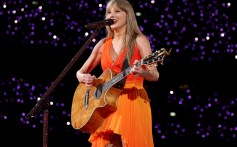
In August, the FTC filed suit against KIG, alleging the company violated the BOTS Act when it purchased thousands of Taylor Swift tickets for her 2023-2024 Eras Tour and resold them for more than $1 million in profit. The lawsuit was filed days before a similar complaint was filed against Ticketmaster for allegedly refusing to enforce its own rules against scalpers and allowing unrestricted resale on its platform. Since then, Ticketmaster has made changes to its resale policies and, like KIG, has argued that the FTC is misapplying the BOTS Act.
Related
The FTC sued KIG in August, alleging the Colorado-based ticket resale operation used networks of accounts, IP masking, SIM boxes and other technical tools to evade Ticketmaster’s ticket-purchasing limits and acquire hundreds of high-demand tickets for resale. The agency claims these tactics “circumvented” the ticketing giant’s security controls in violation of the BOTS Act.
KIG is the first of the two firms to file a motion to dismiss. In a sweeping 36-page missive filed on Nov. 24, KIG attorney Bezalel A. Stern with law firm Manatt, Phelps and Phillips argues that the FTC’s complaint attempts to regulate long-established broker practices — like using multiple IP addresses to buy tickets or operating dozens of Ticketmaster accounts — that do not involve bots.
“KIG does not use bots. KIG does not circumvent any security measure,” the company tells the court, arguing the FTC is attempting to impose an unprecedented interpretation of the law that contradicts the law’s legislative history and the FTC’s own prior guidance.
Related
Stern stresses that the BOTS Act was explicitly drafted to stop “malicious computer code” that lets bot operators overwhelm ticketing websites and jump ahead of human buyers. KIG argues that since it employs human buyers — not automated scripts — the law does not apply. “Without the use of bots, there can be no BOTS Act violation,” KIG claims in the filing.
KIG’s brief also turns the FTC’s own evidence against it. In its lawsuit, the FTC included Ticketmaster records showing the ticketing company tracked KIG’s accounts and purchasing practices — even those created under alternate names — and knowingly allowed them. In a 2024 Ticketmaster email cited by the FTC, a Ticketmaster representative tells KIG that purchases made across different accounts are “within guidelines” so long as each individual account respects the posted per-account ticket limit. KIG’s motion argues that email destroys the FTC’s theory of unlawful “circumvention,” because ticket brokers at KIG cannot “avoid,” “evade” or “deceive” Ticketmaster’s controls when Ticketmaster explicitly authorizes the behavior.
KIG also highlights a contradiction between the FTC’s case against it and the agency’s separate September lawsuit against Ticketmaster and Live Nation. In that parallel case, the FTC alleges the ticketing company “knowingly allows, and in fact encourages, brokers to use multiple Ticketmaster accounts.” KIG argues the FTC cannot simultaneously claim Ticketmaster encourages multi-account purchasing while accusing KIG of “circumventing” the very same rules.
Related
The filing emphasizes that the FTC never alleges that KIG purchased tickets “within seconds” or at speeds indicative of automated software — the hallmark of bot activity described in past enforcement cases. According to KIG, the FTC is trying to convert everyday reseller practices into federal violations simply because they involve scale.
The FTC’s cited evidence — including a bank audit, news reports and previous consent decrees involving actual bot operators — does not establish that KIG knew its conduct was illegal under the BOTS Act, KIG’s motion claims.
Elsewhere in the motion, KIG alleges that the case began with a politically charged push by the White House to crack down on scalping. The company notes that minutes after President Trump — joined by Kid Rock — signed a March 2025 executive order demanding aggressive enforcement of the BOTS Act, the FTC sent KIG a draft complaint threatening litigation unless the company admitted wrongdoing.
KIG says the agency is now “expanding the BOTS Act far beyond its written and intended scope,” and warns that if the FTC’s theory were adopted, “every person or company who purchases tickets using more than one account” could be accused of violating federal law.
U.S. District Judge George L. Russell III will now consider the motion and whether to dismiss the government’s case before discovery begins. If not, the FTC will proceed to try to prove that KIG’s coordinated multi-account strategy amounted to illegal bot-level activity.

Trending on Billboard
The U.S. Supreme Court on Monday (Dec. 1) wrestled with a billion-dollar music piracy lawsuit filed by the major labels against telecom giant Cox Communications, grilling lawyers for both sides over the “extremes” of their arguments.
During a hearing at the nation’s highest court, justices sharply questioned Cox’s lawyer over whether a victory would give the internet service provider (ISP) carte blanche to ignore illegal conduct by its subscribers: “What incentive would you have to do anything if you won?” asked Justice Amy Coney Barrett.
Related
But the justices also interrogated an attorney representing Sony Music Entertainment, Warner Music Group (WMG) and Universal Music Group (UMG), echoing concerns from Cox and free speech advocates that the case could force ISPs to terminate service en masse. “I don’t see how it’s workable at all,” Justice Samuel Alito said.
“We are being put to two extremes here,” said Justice Sonia Sotomayor. “How do we announce a rule that deals with those two extremes?”
UMG, Sony and WMG teamed up to sue Cox in 2018, claiming the internet provider itself should be held legally responsible for enabling the sins of its users. The labels claimed Cox had received hundreds of thousands of notices about piracy, but had never permanently terminated a single subscriber accused of stealing music.
In December 2019, a jury issued a verdict holding Cox liable for helping users infringe more than 10,000 songs, awarding the labels more than $99,000 per song — adding up to a whopping $1 billion fine.
Related
With that case now before the Supreme Court, Cox has argued that a victory for the labels “jeopardizes internet access for millions of users” because ISPs will be forced to terminate users rather than risk billions in legal damages. The labels say such warnings are overblown and designed to distract from the facts of the case: “Cox made a deliberate and egregious decision to elevate its own profits over compliance with the law.”
Arguing for Cox at Monday’s hearing, attorney Joshua Rosencranz said a ruling for the labels would have “cataclysmic” consequences for the internet, and could “wreak havoc with the essential medium through which modern public engages in commerce and speech.”
“There is no surefire way for an ISP to avoid liability,” Rosencranz warned. “The only way it can is to cut off the internet, not just for the accused infringer but for anyone else who happens to use the same connection.”
Rosencranz repeatedly cited recent Supreme Court rulings to support that hands-off approach. One said Twitter did not aid a terrorist attack simply because ISIS used the social media site; another said a foreign government could not sue American gun makers for aiding drug cartels that had used their weapons.
Related
But several justices seemed troubled by that argument. Justice Elena Kagan suggested Cox’s knowledge about specific users was likely more detailed than in the Twitter case. Justice Barrett asked if an ISP would be required to act if it was alerted to child trafficking by its subscribers. Justice Sotomayor repeatedly asked what motive ISPs would have to tackle infringement if the court sides with Cox.
“You know that a particular location is infringing, and most of the time you’re doing nothing,” Sotomayor said. “Why aren’t you contributing to that infringement?”
Representing the labels, attorney Paul D. Clement told the justices that Cox had held copyright law “in contempt. He said it was “beyond dispute” that Cox had provided continued internet access to subscribers that it knew would continue to steal music.
“That reality … is what requires Cox to insist on the extreme position that they can continue to provide service to habitual abusers in perpetuity without consequences,” Clement said. “Why bother cooperating with copyright holders?”
Related
But that argument, too, faced strong scrutiny. Justice Kagan said the labels’ argument “fails” under the recent Twitter and guns rulings. Justice Samuel Alito echoed Cox’s fears about mass terminations, asking Clement how to deal with a college that provides internet to tens of thousands of students. “I really don’t see how your position works in that context,” Alito said.
Though both sides faced difficult questioning, Cox had a powerful ally at Monday’s hearing in the form of the U.S. Solicitor General’s Office, which has urged the justices to overturn the ruling against Cox. At the arguments, Deputy Solicitor General Malcolm Stewart said the labels had simply not met the standard to hold Cox liable — and that the stakes of the case were huge.
“Terminating all access to the internet based on infringement seems extremely overbroad given he centrality of the internet to modern life and given the First Amendment,” Stewart told the justices near the end of his argument.
Following Monday’s hearing, the case is fully ready for a ruling by the Supreme Court. The justices will now deliberate and issue a written ruling in the next few months.

Trending on Billboard
The estate of Johnny Cash has brought a lawsuit accusing Coca-Cola of illegally hiring a tribute singer to mimic the country legend’s voice in a college football advertisement.
The federal court complaint, filed on Tuesday (Nov. 25) in Nashville, is the first high-profile case to be brought under Tennessee’s recently enacted ELVIS Act. Effective last summer, the novel statute expanded the state’s right of publicity to explicitly protect a person’s voice from nonconsensual exploitation.
Related
The John R. Cash Revocable Trust, which manages the estate of the singer who died in 2003, takes issue with a new song in a Coca-Cola commercial that’s been airing during college football games since August. The lawsuit claims the voice behind the jingle sounds “remarkably” similar to Cash’s signature bass-baritone — and that, in fact, it’s the voice of a professional Cash tribute performer named Shawn Barker.
“Stealing the voice of an artist is theft. It is theft of his integrity, identity and humanity,” wrote a lawyer for the Cash estate, Tim Warnock of Loeb & Loeb. “The trust brings this lawsuit to protect the voice of Johnny Cash — and to send a message that protects the voice of all of the artists whose music enriches our lives.”
According to the lawsuit, the Cash estate regularly licenses out the legendary performer’s intellectual property. For example, his songs “Ragged Old Flag” and “Personal Jesus” have both been featured in Super Bowl telecasts. But the estate says Coca-Cola “never even bothered to ask the trust for a license” before using a voice soundalike in its commercial.
“This case arises from Coca-Cola’s pirating Johnny Cash’s voice in a nationwide advertising campaign to enrich itself — without asking for permission or providing any compensation to the humble man and artist who created the goodwill from which Coca-Cola now profits,” reads the complaint.
Related
The estate is asking for a court injunction that would take the ad off screens, plus financial damages for Coca-Cola’s alleged violation of Cash’s rights of publicity under the ELVIS Act. Damages are also sought for supposed violations of a Tennessee consumer protection statute and a federal law against false endorsements.
Coca-Cola did not immediately return a request for comment on Wednesday (Nov. 26). A rep for Barker, who is not a defendant in the lawsuit, told Billboard the tribute singer’s team was “thrilled when we were approached to have Shawn sing vocals for this commercial.”
“Shawn Barker has been performing with his Cash tribute ‘The Man in Black: A Tribute to Johnny Cash’ for over two decades, touring the world sharing his love of Johnny Cash’s music and stories with fans both old and new,” added Barker’s manager, Joey Waterman.
This is the first major lawsuit to take advantage of Tennessee’s new voice protections under the ELVIS Act, short for the Ensuring Likeness Voice and Image Security Act of 2024. It’s worth noting, though, that there is no allegation of artificial intelligence-powered voice mimicking in the Coca-Cola commercial, which Tennessee lawmakers were vocal about curbing when they expanded the state’s right of publicity law last year.
Related
Rather, the Cash estate’s lawsuit follows in the footsteps of historic litigation brought by artists over sound-alike singers mimicking their voices. Bette Midler famously sued Ford over a series of commercials featuring impersonator vocals in the 1980s, winning a precedent-setting victory that established voices as protectable rights of publicity in California.
Midler’s case limited these enforcement rights to the commercial advertising context — that is, advertisements that use a celebrity’s likeness to make it appear they’re endorsing a product. This same limitation applies to most laws in the patchwork of state-level publicity rights throughout the United States. However, the newly minted ELVIS Act is different: It expands liability so that one can sue any individual for trampling their publicity rights in Tennessee.
The Cash estate’s Coca-Cola lawsuit stays in the traditional commercial lane. But now that the ELVIS Act is in effect, it’s possible we’ll see more novel right of publicity lawsuits brought over soundalikes in recorded songs.
Rick Astley waded into this area in 2023, before the ELVIS Act was passed, by suing Yung Gravy for mimicking his voice in the rapper’s breakout hit “Betty (Get Money).” That case, which sparked debate about the commercial limits of publicity rights, settled before a judge could rule on its merits.
Trending on Billboard
StubHub has been hit with a class action lawsuit alleging the secondary ticketing company hid key cash flow changes from investors who bought into its $758 million initial public offering (IPO) in September.
The legal complaint, filed in New York federal court on Monday (Nov. 24) by class action law firm Glancy Prongay & Murray, is the first of what’s likely to be multiple lawsuits stemming from StubHub’s disappointing third-quarter earnings report. At least four other law firms have announced that they’re also investigating the company’s numbers.
Related
Monday’s lawsuit was brought on behalf of Daniel Salabaj, an investor who bought StubHub stock during its IPO on Sept. 17. StubHub sold roughly 34 million shares that day at $23.50 a pop, netting $758 million after underwriter discounts and fees.
StubHub released its first earnings as a public company on Nov. 13, and some of the numbers were less than optimal. The company revealed that it had free cash flow of negative $4.6 million that quarter, down from a positive $10.6 million in the same period a year earlier. The market reacted negatively, with the StubHub stock at one point tumbling as low as $10.31 per share, a 56% decline from the IPO price.
Salabaj’s lawsuit alleges he and other investors were blindsided by the news of StubHub’s cash flow decrease, which the company attributed to changes in its vendor payment schedules. He says that while StubHub’s pre-IPO registration statement warned quarterly earnings could fluctuate due to the timing of major sporting events and concerts, this particular factor was glaringly omitted from the regulatory paperwork.
Related
“The registration statement was materially false and misleading and omitted to state: (1) the company was experiencing changes in the timing of payments to vendors; (2) those changes had a significant adverse impact on free cash flow,” wrote Salabaj’s attorneys. “As a result of the foregoing, defendants’ positive statements about the company’s business, operations and prospects were materially misleading.”
Salabaj wants to represent a class of all investors who bought StubHub stock during the IPO, and he’s seeking a financial award for the “significant losses and damages” these traders suffered during StubHub’s “precipitous” post-earnings decline.
The lawsuit targets StubHub as well as various company executives, including CEO Eric Baker. The banks that underwrote StubHub’s IPO, including JPMorgan, Goldman Sachs and Bank of America, are also listed as defendants.
Reps for StubHub did not immediately return a request for comment on Tuesday (Nov. 25).
Trending on Billboard
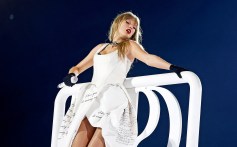
Hundreds of Taylor Swift fans have won a key court victory allowing them to move forward with a blockbuster lawsuit over Ticketmaster’s botched sale of Eras Tour tickets three years ago.
The lawsuit was the first in a series of cases brought by Swifties in the wake of Ticketmaster’s infamous Eras Tour presale in November 2022. A previous version of the complaint was dismissed this past May as legally deficient — but in a Monday (Nov. 24) order, a California federal judge says revised antitrust claims against Ticketmaster and its parent company Live Nation are now strong enough to survive.
Related
Citing the Department of Justice’s ongoing effort to break up Live Nation and Ticketmaster, 357 of Swift’s fans claim the companies’ monopolistic control over both ticketing and major concert venues has shut out all competition and allowed them to operate a shoddy sales platform. The lawsuit says this led to a “massive disaster” when Ticketmaster crashed amid overwhelming traffic from bots and scalpers during the Eras Tour presale, depriving many fans of the chance to buy face-value tickets.
Ticketmaster argued there’s an inherent problem with the Swifties relying on the U.S. government’s antitrust suit for their monopoly claims, as the DOJ case focuses on Live Nation’s deals with arenas and amphitheaters, not the stadiums where Swift performed her Eras Tour. But the Monday court ruling rejected this argument.
“None of these allegations clearly indicate that the government action excludes conduct related to stadiums,” wrote U.S. District Judge George H. Wu. “Furthermore, while noticeably absent from the [complaint] is the word ‘stadium,’ the court fails to see any meaningful distinction between arenas, amphitheaters and stadiums that would render baseless plaintiffs’ reliance on the government action.”
Related
Judge Wu is thus allowing the antitrust claims to move forward into evidence discovery, though he trimmed away other breach of contract and fraud claims brought by the Swifties. That part of the lawsuit claimed Ticketmaster lied when it promised to keep bots and scalpers away from the presale, and that the platform falsely said it would give priority access to fans who’d bought merch for Swift’s Midnights album or tickets to the star’s canceled 2020 Lover Fest.
The issue with the contract claims, says Judge Wu, is that Ticketmaster never actually made these promises in any enforceable agreement. And according to the judge, the consumer fraud claims don’t work because Ticketmaster believed it was telling the truth when it advertised the terms of the Eras Tour presale.
“Plaintiffs have failed to sufficiently allege that Defendants made promises with no intent to perform,” writes Judge Wu. “Plaintiffs’ reliance on the aftermath of the presales (i.e., defendants’ purported failure to deliver on the promises they made) cannot support a plausible fraud theory.”
A lawyer for the Swift fans, Jennifer Kinder, said in a statement to Billboard on Tuesday (Nov. 25) that they are “ecstatic to finally be moving towards our day in court.”
Related
“Ticketmaster has spent the past two years trying every legal trick to have their case dismissed. Judge Wu has ruled they will not be able to escape a jury trial,” said Kinder. “The people of Los Angeles will decide the legality of Ticketmaster’s monopoly.”
Reps for Ticketmaster did not return a request for comment. Swift’s team did not return a request for comment either, though the star previously had some choice words for Ticketmaster when the presale imploded back in November 2022.
“It’s really difficult for me to trust an outside entity with these relationships and loyalties, and excruciating for me to just watch mistakes happen with no recourse,” wrote Swift in an Instagram statement at the time. “I’m not going to make excuses for anyone because we asked them, multiple times, if they could handle this kind of demand and we were assured they could.”
The chaotic presale for Swift’s Eras Tour, which wrapped last year with a record-breaking haul of more than $2 billion in face-value ticket sales over a two-year run, spurred multiple legal actions against both Ticketmaster and brokers who resold tickets at massive markups on the secondary market.
Related
The debacle also led to congressional scrutiny and sparked renewed interest in the DOJ’s attempt to break up Ticketmaster and Live Nation, which is set for a trial this spring. The companies have denied that they’ve done anything to stifle competition, either in the Eras Tour ticket market or elsewhere.
Earlier this year, two people were criminally charged with stealing and reselling hundreds of Eras Tour tickets. One of these individuals copped to the charges last month, and the second pled guilty on Tuesday (Nov. 25).

Trending on Billboard
A judge has thrown out civil sexual assault claims brought against Kevin Liles by an executive assistant who worked for the legendary record executive at Def Jam in the early 2000s.
An anonymous woman filed suit in February alleging Liles, who was her boss and the president of Def Jam, made sexually inappropriate comments, groped her and ultimately raped her in 2002. Liles denied the claims as “patently false,” saying when they were filed that he has “intentionally built a reputation for doing things the right way, treating people the right way and empowering women.”
Related
As it turns out, these allegations are barred entirely from court. That’s because Def Jam’s corporate parent, Universal Music Group (UMG), already paid the woman $47,500 in 2005 to settle a civil rights complaint she’d filed with New York state regulators.
That original complaint alleged the woman was unlawfully fired in retaliation for complaining about verbal harassment and inappropriate dancing by Liles. It did not include rape claims. Without admitting any wrongdoing, UMG agreed to pay the woman in exchange for her agreeing not to bring any further legal action.
Liles was not involved in that settlement agreement, since he’d left Def Jam by the time it was signed. But U.S. District Judge Naomi Reice Buchwald held in a Monday (Nov. 24) order that the release language still “expressly and unambiguously covered” Liles, meaning the woman cannot now sue the music mogul.
“The agreement and release itself contains no language cabining its terms at all,” wrote Judge Buchwald. “To the contrary, the agreement consistently and intentionally utilizes broad language discharging ‘any and all’ claims which ‘are known or reasonably should be known’ by plaintiff.”
The judge threw out the lawsuit permanently, saying there’s no amendment the woman could make that would allow her to “avoid the consequences of a comprehensive settlement agreement.”
Reps for Liles declined to comment on the decision Monday. Lawyers for the accuser did not immediately return requests for comment.
Liles ran Def Jam from 1999 to 2004, and he co-founded 300 Entertainment with Lyor Cohen, Roger Gold and Todd Moscowitz in 2012. The label, which quickly gained recognition for developing hip-hop superstars like Megan Thee Stallion, Migos and Young Thug, was acquired by Warner for $400 million in 2021. He left his role as 300’s CEO last year.
A few months after the former Def Jam assistant brought her lawsuit this past year, Liles put out a statement saying rapper Lady Luck was trying to extort him with false sexual assault claims of her own. Liles said in May that Lady Luck, who was signed to Def Jam during his tenure, had threatened to release a book and file a lawsuit filled with “utterly false and horrendous allegations” if he didn’t pay her $30 million.

Trending on Billboard
Three years after Aaron Carter’s sudden death at the age of 34, the deceased singer’s family has been granted a trial next year against doctors and pharmacies that gave him access to Xanax pills.
The 2000s teen pop sensation drowned in a bathtub in 2022 after inhaling refrigerant gas and taking Xanax. Carter’s former fiancée later sued on behalf of the son they had together, alleging that psychiatrist Dr. John Faber and dentist Dr. Jason Mirabile over-prescribed him Xanax, and that Walgreens and an independent Los Angeles pharmacy wrongly filled the prescriptions without checking to see if Carter was abusing the drug.
Related
Both the doctors and the pharmacies sought to throw out the case based on expert reports concluding that the amount of Xanax in Carter’s system was not enough to make him lose consciousness, and that the real culprit was the gas he inhaled from canisters of compressed air (known as difluoroethane). But Carter’s lawyers have their own experts who say Xanax was at least partly to blame for his drowning — meaning the case must be decided by a jury.
“Defendant concedes that plaintiff’s opposition, supported by expert Dr. George C. Georgaklis, raises a triable issue of material fact as to the medical malpractice claim,” wrote Judge Daniel L. Alexander in a July 31 order rejecting Dr. Mirabile’s argument. “Thus, the Court denies the motion for summary adjudication as to medical negligence and wrongful death.”
Judge Alexander similarly denied Santa Monica Medical Plaza Pharmacy’s motion on Sept. 22 and arguments from both Walgreens and Dr. Faber this past Friday (Nov. 21). The negligence and wrongful death claims are now set for trial in June 2026, unless a settlement is reached before then.
Related
The various summary judgment orders did, however, trim away portions of the lawsuit that sought damages for the pain and suffering Carter experienced before his death. The judge said these are claims that only Carter’s estate representative has the right to bring, not his now four-year-old son, Princeton Lyric Carter.
That means that if the lawsuit indeed goes to trial in June, the child can only seek financial damages from the doctors and pharmacies for harm he himself suffered from Carter’s death. This includes loss of financial support and emotional damage from not getting to know his father.
In a statement to Billboard on Monday (Nov. 24), the Carter family’s attorney Marc Lazo said his team is now “hopeful that the defendants will realize the magnitude of their liability and enter into good-faith settlement negotiations accordingly.”
Lawyers for the doctors and pharmacies did not immediately return requests for comment.
Carter got his start opening for the Backstreet Boys, of which his older brother Nick Carter was a member, in the late 1990s. He later became a teen heartthrob in his own right, with his 2000 album Aaron’s Party (Come and Get It) peaking at No. 4 and spending 67 weeks on the Billboard 200.
Carter was open later in life about struggling with substance abuse. The singer did multiple stints in rehab, and he had been attending outpatient therapy in the months leading up to his death.
Trending on Billboard
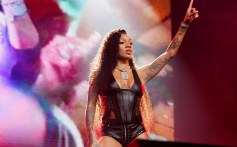
GloRilla has defeated a lawsuit that accused her of stealing a social media personality’s viral catchphrase “all natural, no BBL” for her 2024 song “Never Find.”
The federal copyright case was filed this summer by Natalie Henderson, aka @slimdabodylast on Instagram, who claims she coined the catchphrase referencing “Brazilian butt lift” surgery. Henderson says GloRilla (Gloria Woods) stole the phrase for her lyric “All natural, no BBL/ Mad hoes go to hell” on “Never Find,” a bonus track off her debut album Glorious.
Related
GloRilla’s lawyers denied any infringement and argued that nobody can copyright a “cliched” expression like “all natural, no BBL.” But it doesn’t look like a court will have to decide these substantive questions; Judge Lance M. Africk dismissed Henderson’s lawsuit on Friday (Nov. 21) based on geographical technicalities.
The suit was brought in Henderson’s home state of Louisiana, but the judge ruled that wasn’t enough to establish jurisdiction over GloRilla, a Georgia resident, or the various label defendants also named in the lawsuit — California-based Universal Music Group and Warner Chappell, Tennessee-based CMG and New York-based BMG.
Henderson tried to argue that jurisdiction was established by GloRilla doing business in New Orleans, including by attending the 2025 Super Bowl and performing at the city’s Smoothie King Center when she opened for Lil Baby’s It’s Only Us tour in 2023 and Megan Thee Stallion’s Hot Girl Summer tour in 2024. But Judge Africk was not convinced.
Related
“Plaintiff’s claims do not arise out of or result from defendant Woods’s concerts or personal appearances in Louisiana, particularly when plaintiff has not made any allegations that ‘Never Find’ was ever performed in Louisiana,” wrote the judge.
Judge Africk similarly rejected Henderson’s contention that the case could be brought in Louisiana because “Never Find” was distributed in the state. He noted that the song was available worldwide — and also pointed out a major hole in Henderson’s argument.
“Plaintiff relies on her counsel’s purchase of a copy of defendant Woods’s album Glorious on vinyl at a New Orleans record store as evidence that defendants ‘specifically targeted consumers in Louisiana,’” wrote the judge. “However, ‘Never Find’ was not included on the vinyl that plaintiff’s counsel purchased, as it was only released as a bonus track on an exclusive digital version of the album Glorious.”
The lawsuit was dismissed without prejudice, meaning Henderson can attempt to refile the lawsuit in a different state if she so chooses. Her lawyer did not immediately return a request for comment on Friday, and neither did GloRilla’s reps.
This isn’t GloRilla’s first time defeating a copyright infringement lawsuit. Another case, which alleged her hit songs “Tomorrow” and “Tomorrow 2” sampled a decades-old hip-hop track without permission, was also dismissed out of New Orleans federal court last year for jurisdictional reasons.
GloRilla was sued again a year ago alongside Megan Thee Stallion, Cardi B and Soulja Boy for supposedly sampling the 2008 Plies song “Me & My Goons” without clearance on their collaboration “Wanna Be.” That case was voluntarily dropped in March.