State Champ Radio
 Global
Page: 9

On a warm, breezy evening in Kyoto, Japan’s biggest music stars walked a red carpet, performed their most popular hits and thanked their fans as they took the stage to receive ruby-hued awards.The dazzling ceremony, which was televised across Japan May 21-22 and livestreamed on YouTube, felt in many ways similar to the Grammy Awards.
But remarkably, even though Japan is the world’s second-biggest music market, the inaugural Music Awards Japan (MAJ) marked the country’s first major national music awards show.
“We’re honored to have received an award, but I also believe this could become a goal for young people in Japan who are just starting out in music,” said Ayase, producer and member of Japanese duo YOASOBI, after winning the top global hit from Japan award. “I hope that through events like this, people both in Japan and abroad will come to appreciate the greatness of Japanese music even more.”
The glitzy new gala is core to Japan’s mission to turbocharge its export of music to the world. For years, its music industry was able to increase revenue by marketing to fans within its borders thanks to the country’s enormous appetite for physical products like CDs and vinyl, which still account for 62.5% of its overall recorded-music revenue, according to IFPI. But those days have come to an end: Japan’s population has been shrinking for the past 14 years — and has been slow to adopt streaming. The country’s recorded-music revenue fell 2.6% in 2024, even as global recorded-music revenue has grown for the last 10 years, according to IFPI. So, to woo a global audience, Japan’s major music trade groups representing labels, concert promoters, publishers, producers and other enterprises united to form the Japan Culture and Entertainment Industry Promotion Association (CEIPA) and organized the show, inviting guests from 15 countries to attend.
Nominees for most of the awards were selected based on chart data provided by Billboard Japan, and winners were determined by a two-stage voting process involving over 5,000 industry professionals.
Hip-hop sensation Creepy Nuts took home nine awards including song of the year for its viral hit “Bling-Bang-Bang-Born.” Singer-songwriter-pianist Fujii Kaze earned album of the year with his Love All Serve All project. Pop-rock band Mrs. GREEN APPLE racked up a multitude of honors including artist of the year. Kendrick Lamar, Billie Eilish and Ariana Grande won awards for the impact of their hits in Japan, though they weren’t present to accept in person. MAJ executive committee chairman Tatsuya Nomura says that CEIPA plans to host the next show in June 2026 at a bigger venue in Tokyo so fans and more international artists can attend.
One sign of this year’s success: Streams of songs that won top honors have jumped an average of 31% in Japan, with 21 out of the 27 songs that received top honors gaining streams compared with the previous week, according to Luminate.
This story appears in the June 7, 2025, issue of Billboard.

Billboard hosted its first Global Power Players event in London on Wednesday night, where Elton John and his husband and manager David Furnish, EMPIRE founder and CEO Ghazi Shami and Afrobeats superstar Tems were recognized with special awards. John and Furnish collected the Creators’ Champion Award, with John saying in his speech, “Supporting the next […]
BE:FIRST’s “GRIT” blasts in at No. 1 on the Billboard Japan Hot 100, on the chart released June 4.
The CD version of the track went on sale on May 28, two days after being dropped digitally. The song launched with 105,783 copies to hit No. 2 for sales, while dominating downloads, radio airplay, video views and coming in at No. 4 for streaming.
“Muchu” by the boy band also jumped 15-8 to break into the top 10. It’s a track off the group’s ”GRIT” single and was digitally released ahead of the title track on Apr. 25. It topped downloads on the chart released Apr. 30 and debuted on the Japan Hot 100 at No. 13. This week, the release of the CD version fueled the track and downloads gained 180% compared to the week before, while streaming is up 102%, and video up 135%.
Explore
Explore
See latest videos, charts and news
See latest videos, charts and news
Hey! Say! JUMP’s “encore” bows at No. 2. The eight-member boy band’s 35th single is being featured as the theme song for the drama series starring member Keii Inoo. The track rules sales with 213,556 copies sold in its first week, while hitting No. 16 for downloads, No. 63 for streaming, No. 23 for radio and No. 21 for video.
Trending on Billboard
Mrs. GREEN APPLE’s “KUSUSHIKI” rises a notch to No. 3. Streams, downloads, and karaoke for the track gained this week, possibly powered by the new YouTube Premium commercial featuring the song, released May 28.
At No.4 is the title track of OCTPATH’s seventh single, “Mata Natsu ni Kaerou” (Let’s go back to summer again). The track written by RYOJI from Ketsumeishi sold 75,111 copies in its first week to hit No. 3 for sales.
HANA’s “ROSE” is up a position to No. 5. Karaoke and radio for the new girl group’s debut single gained 106% and 110%, respectively. HANA made headlines recently when awarded the Best New Artist (Singer) award at the ASIA STAR ENTERTAINER AWARDS 2025 Presented by ZOZOTOWN.
In other chart moves, CANDY TUNE’s “BAIBAI FIGHT!” soars 62-19. The song was released in April 2024, but the seven-member ASOBISYSTEM girl group performed it on YouTube’s THE FIRST TAKE (May 23) and also at the KAWAII LAB. SESSION Vol.14 in Makuhari event on May 25. Streams are up 148% compared to last week and video soared 317%, placing the song in the top 20 for the first time.
The second half of the year begins this week for Billboard Japan’s charts, and recurrent rules have been implemented on the Japan Hot 100 and Hot Albums tallies. The Streaming Songs chart is exempt from the recurrent criteria, and will be calculated in the same way as it has been up to the 2025 mid-year list.
The Billboard Japan Hot 100 combines physical and digital sales, audio streams, radio airplay, video views and karaoke data.
See the full Billboard Japan Hot 100 chart, tallying the week from May 26 to June 1, here. For more on Japanese music and charts, visit Billboard Japan’s English X account.
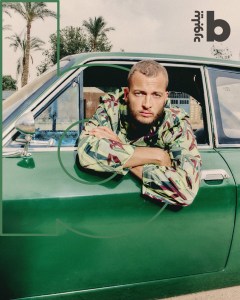
In a studio hangar just outside Cairo, weeks before the release of his new album The Man Who Lost His Heart, Marwan Moussa sits with a resolve that only grief teaches. The kind shaped by someone who’s been to the depths of loss and carried back not just a song, but 23. The album wasn’t built overnight, Marwan Moussa explains to Billboard Arabia in his exclusive May cover interview. It was carved out of grief and shaped with intention. Each track, he says, was sculpted from the turbulent, shifting emotions he experienced during the long and winding journey of healing after the heartbreak of losing his mother two years ago.
Explore
Explore
See latest videos, charts and news
See latest videos, charts and news
The album, he says, was “a kind of therapy.” Like writing a journal, sleeping on it, then reading it with fresh eyes to look at his life from a different perspective.
Trending on Billboard
The Man Who Lost His Heart doesn’t open with a bang; it opens like a dream taking shape. “Try to remember” is the first line we hear, fighting its way through an ethereal sound design. Structured in five parts, the album mirrors the five stages of grief – denial, anger, bargaining, depression and acceptance – but more than that, it charts the long, slow work of survival. Moussa doesn’t just document his pain; he invites you into it, offering a guide and companionship with each track.
“It isn’t a linear journey, of course,” he explains. “You could be angry, then suddenly find yourself depressed, and then all the way back in the denial stage.”
But the album isn’t merely a chronicle of grief. It’s a sonic deconstruction of Moussa’s process. Blending trap-shaabi (a genre he helped popularize that combines trap beats with various textures found within Egypt’s popular folk music), heavy synths, tender melodies and deeply personal sound bites – including audio lifted from childhood VHS tapes of him and his family – he crafts a layered, emotional landscape.
The Man Who Lost His Heart isn’t just a collection of songs. It’s a reckoning.
Take his track “BOSAKBER,” which spirals through memory and misfire. His flow isn’t clean; it’s distorted and fractured like a freshly broken heart. In the accompanying video, directed by Youssef Haridy, Moussa appears alone beneath a wide, empty sky. He fights his own reflection. The imagery is both surreal and stark, but not hopeless. It’s not the portrait of someone broken – it’s the portrait of an artist in the whirlwind of putting themselves back together, even if the pieces no longer fit the way they once did.
“We wanted to create a surreal imagery that feels deeply rooted in oriental aesthetics; something distinct,” Moussa says.
Moussa is not new to transformation. Over the last several years, he’s become one of the most influential voices in Arabic hip-hop – not only as a rapper, but as the producer behind dozens of hits, including “Brazil,” and more recently “Kebda” for longtime collaborator Afroto. He’s also been a constant on Billboard Arabia’s Artist 100 chart for over 55 consecutive weeks.
Moussa first set foot on Egypt’s hip-hop scene in 2016, releasing his early tracks on SoundCloud. The following year, his collaborations with Abyusif on “La2 Mafeesh” (No, There Isn’t) and “Zaghzaghto” (Tickling) brought him into the spotlight, and his skills as both rapper and producer began to further solidify.
In 2018, he released his first music video for “Kiki,” which marked his production breakthrough. Then came “Fr3on” (Pharaoh) in 2019, with its unpredictable rhymes and sharp wordplay over a solid beat and advanced production techniques.
Marwan Moussa
Amina Zaher/Billboard Arabia
Marwan Moussa
Amina Zaher/Billboard Arabia
After experimenting with several genres, Moussa’s 2019 track “El Bosla Da3et” (The Compass Is Lost) marked a turning point not only for his career, but for Egyptian trap as a whole. It was one of the first tracks to experiment with fusing shaabi and trap, paving the way for the rise of trap-shaabi, as it became known subsequently.
His 2021 album Florida cemented his reputation as an innovator, blending regional rhythms with experimental production in a way few dared to. From songs like “Tesla” and “Sheraton” to shaping his own catalog to producing for Egypt and North Africa’s most respected MCs, Moussa has always known how to bend sound to feeling.
But The Man Who Lost His Heart, released in full on May 5, is different. If Florida was Moussa pushing his craft’s limits, this album is what remains when all else falls away – just music, message and the strength found in the breaking.
That strength is amplified by a slate of carefully chosen collaborators. The album features standout moments with producer El Waili on “Yamma” and Afroto, as well as verses from Lege-Cy on “Klameny Belel.” But it’s Donia Wael’s contribution that Moussa calls essential to the record’s emotional core. “I want Donia Wael’s voice on the album to be interpreted by each listener in his or her own way—as a girlfriend, friend or therapist,” he says.
“The reason the album came out this way,” says Moussa, “is that I thought if I give through the five stages of grief, maybe it helps you get through what you’re dealing with or get past a tough time in your life or your current period of depression.”
In that way, The Man Who Lost His Heart is more than an act of expression. It’s an offering. A hand on your shoulder there to remind you that no stage of sadness lasts forever, even when it feels like it might.
For Moussa, producing an album this emotional, meant risking everything: the cool detachment of a hardened rapper. What he’s delivered instead is something harder, and far more lasting. A document of heartbreak. And perhaps, in doing so, he has found his heart again, and his voice.
Marwan Moussa
Amina Zaher/Billboard Arabia
The iMarine Project, a media mix content project by SANYO, is celebrating its 10th anniversary this year. It has recently kicked off a new chapter with “iMarine Project++” (read: “iMarine Project Plus”). Billboard JAPAN spoke with Aya Uchida, voice actress for iMarine, about what progress she feels the project has made over the past decade and her hopes for its future.
Explore
Explore
See latest videos, charts and news
See latest videos, charts and news
The iMarine Project was launched in 2015, and then in 2020, Sanyo began iMarine Project (New Chapter). Now, in 2025, it is about to enter a new stage of its evolution, iMarine Project++. Looking back, what has your impression been of the past ten years?
The iMarine Project itself is celebrating its 10th anniversary, but I became a part of it with its third release, “Dive to Blue,” which was a full-length animated music video. It emphasized the concept that “iMarine is in your town, too,” which may be why I was chosen as the voice actress.
Trending on Billboard
From that point on, each year I’ve worked with a different creator, and the videos and aesthetic have kept on changing. The fourth release was an animated music video with characters from Umi Monogatari, who had their own lines, so it felt like the style had changed to one that was showing the world of Umi Monogatari through animation and lyrics.
“Deep Blue Town e Oide yo,” right? That was arranged like a story, starting out with an anime segment, then segueing into the song, and then ending with another anime segment.
Right. In the fifth release, we went with a more stylish, adult diva style. I feel like at that point the anime elements were completely gone, and the project had become more of a song-centered project.
Then 2020 saw the start of iMarine Project (New Chapter), whose concept was a “2.8-dimensional” idol.
This is where the story suddenly started getting much deeper. We were taking on a new challenge—expressing a story, a world, a scene, all through music.
There’s an online novel, and the Crystal Palace setting was reproduced in VRChat. It’s gone beyond just being a “media mix” to become a work that fuses all kinds of elements of all kinds of dimensions. The iMarine Project++ is the culmination of all that’s been done by the cast and directors to expand this one work.
Over the last five years, the project has fleshed out and defined the world and its aesthetics based on the story. This five year period has been a series of experiments, right?
The project is a media mix that combines not only physical spaces but also digital spaces, so every challenge has been a new one. This was also all being done while VTuber culture was growing, and it was so much fun being on the cutting-edge of the changing times.
As a performer, has the fusion of the digital and physical worlds made the project a difficult one?
Yes, a bit. As a voice actress, I’ve done a lot of work in the physical world, and I’m confident in that area, but when it comes to the digital world, I’m still feeling things out as I go along. For example, popular VTubers have their own defined characters, but they also speak really freely. [Laughs]
In the case of iMarine, the character is defined in a novel, so if I say the wrong thing, it could break that in-world feel. Like, if I wanted to say “I had some ramen today,” before I could even open my mouth, I’d start thinking “Wait, ramen might not exist in that world.” There’s a part of me that’s always operating with that actor’s mindset. [Laughs]
So because of the detailed setting, you’re in a different position than VTubers, who can act without thinking that deeply.
Yes, but lately, the way I’ve been thinking about it has started to change a little. There are things that Saeki has said as Ichika at VR events that just naturally became part of her character. For example, she said “I’m a big eater.” [Laughs] This thing she’d said became part of her virtual character, and when I realized that, I came to feel like I could speak more freely. The world and the aesthetic of the iMarine Project story is well-defined, but, surprisingly, the details about the characters themselves are a little vague. I think going forward, we’re going to be fleshing out the world of iMarine Project++ along with the members of the recently announced fan club, Musical Armored Division of Freedom.
In the new song, “M.A.D.,” which was recently debuted on-stage, you’ve taken on a new genre: hip-hop.
Idols have been performing some really cool hip-hop recently. I’m a big listener in my own personal life, so I was really happy that iMarine would finally take on the genre.
I think the presence of iMarine Project’s works goes beyond the bounds of anime and videos, so I’ve had this intense desire to perform using a really cool voice on a song that I felt really confident in.
So you feel like the quality of the music needs to be elevated beyond so-called “character songs” to better music-as-music. And also that the meanings of the songs are growing deeper as the story progresses.
This time, the music is going in a whole different direction. It’s darker, with more of a street vibe. It has this sense of a strong spirit that’s unbowed by everyday hard existence. Like a light in the middle of despair. I like that really down-to-earth feel in music.
In a strange way, even though the project is set in this digital world, the feeling of humanity really comes across. There’s this rebellious spirit in the face of daily struggles. It’s more human than human.
Exactly. The setting of the story is that iMarine and Ichika are both AIs, and the other members were originally humans, but they became AIs.
So I’m not human, but for precisely that reason, when I sing, it feels like in some way I’m almost being my natural self, the way I am now. I can express the passion in my heart. I love it, and in fact that may be the part that feels the most rewarding.
Everyone on the cast was overflowing with praise for a dance performance by one of the characters in the music video. I’m guessing that part made a big impression on you, too?
You’re talking about Isana’s breakdancing, aren’t you. [Laughs] I’ve done motion capture for characters on two songs before, and it really opened my eyes to how impressive and how hard motion capture is. That breakdancing was performed by using motion capture on an actual dancer. The level of technical skill needed to capture that kind of frenetic movement was just amazing! [Laughs]
There’s also the crowd of people wearing hoods. I liked how the concept of “we’re not alone” was highlighted through the whole video. Until now, we’ve been having people look at the world we created, but going forward, we’re going to make it so that people can get immersed from the perspective of the Musical Armored Division of Freedom.
This project is right on the bleeding edge, but it’s amazing how the end results always come out great. I’ve got to keep working hard to keep up so I don’t fall behind.
—This interview by Mio Komachi first appeared on Billboard Japan

ICMP, the global music publishing organization representing 90% of the world’s commercially released music, has released its first-ever report on global music revenue, documenting the earnings of 16 of the top music markets.
In total, ICMP found that these select markets — United States, the United Kingdom, France, Japan, Germany, Australia, Italy, Spain, Sweden, Canada, South Korea, the Netherlands, Brazil, Mexico, Hong Kong and South Africa — were worth more than $11 billion alone. Because some markets have slightly different accounting periods, the revenue in the report stems from the markets’ last 12 months of completed financial data. Largely, that data is from 2023.
The report helps publishers and songwriters make sense of what trends are building in this sector of the music business and how music lovers across markets are consuming music differently.
Trending on Billboard
Overall, digital revenue makes up 47.1% of the $11 billion plus in total revenue earned by the 16 markets, while 20.2% of revenue came from synchronization (songs placed in films, TV shows, commercials and video games); 21.5% stemmed from non-digital performance (songs played in restaurants, stores and other public venues); 5.9% came from non-digital mechanicals (songs sold as digital downloads, CDs, vinyl records, cassettes and more); and 4.6% was described as “other.”
In total, 40.9% of overall global publishing revenue was collected directly by publishers, and 59.1% was collected by performing rights organizations (PROs) and other collective management organizations (CMOs), which act as middlemen between licensees and publishers.
Below is a breakdown of Billboard’s top takeaways from the report.
Digital Revenue Dominance Varies Widely Across Markets
Latin music lovers are some of the world’s biggest digital music consumers, according to the report. Mexico’s music publishing sector earns a whopping 70.5% of its revenue from digital sources like streaming services. This makes sense, considering the Recording Industry Association of America (RIAA) reported in April that streaming equates to 98% of total revenue for Latin music in the U.S. on the master recording side.
When it comes to the three East Asian markets considered in ICMP’s report, their digital music consumption was strong but varied fairly significantly, proving music listeners in those markets are far from a monolith. Hong Kong’s revenue was 60% digital, whereas Japan came in at 49.7% digital and South Korea was 47.5% digital.
While Hong Kong is an outlier among East Asian countries, this does not mean that it correlated more closely with its former colonizer, the United Kingdom. In the U.K., digital represented just 41.5% of all publishing revenue.
In the European Union, digital consumption was generally much lower. Italy had just 20.3% of revenue come in from digital sources, while the number was 23.8% in France, 34.6% in the Netherlands, and 35% in Spain, which came in at the high end for the continent but was still relatively low, from a global perspective.
Synch Revenue Correlates to Strong Film/TV Markets
Given their robust film/TV businesses, it should come as no surprise that the U.S. and France had the strongest shares of synchronization in their total publishing revenue pie. The U.S. came in with 23.5% synchronization revenue and France had 18.6%.
Brazil (18.3%), Italy (17.9%), the U.K. (17.7%), Hong Kong (17.3%) and Australia (16.2%) also have strong revenues from synchronization uses. In general, countries that speak English, apart from South Africa, tended to report strong synch revenue shares, possibly due to the ubiquity of globally-distributed originally-English-language TV and film programming.
Countries like South Africa (9.7%), Mexico (9.5%), the Netherlands (9.2%) and Germany (8.8%) had much weaker synch markets, each owing just single-digit shares of their revenue in 2024 to synchs.
The Importance of CMOs Differs Across the World
For every country included in the report, more than half of their revenue was not directly sent to music publishers but through an intermediary CMO. Still, ICMP found that this percentage differed substantially from market to market.
Japan takes in the vast majority of its publishing revenue (84%) through intermediary CMOs — as do countries like South Korea (82.8%) and Brazil (77.2%).
The U.S. music publishers collect the most direct money of all the countries included in the report, with 40.9% going directly to publishers and the remaining 59.1% going through a CMO (like ASCAP, BMI, SESAC, GMR or the MLC). This lower number passing through CMOs might account for CMO regulations unique to the U.S. market. For example, ASCAP and BMI, which collect U.S. performance monies, have not been allowed to collect royalties from movie theaters when songs are played publicly (the “cinema royalty”), even though most other countries do.
To read through the full report, visit ICMP’s website.

Morgan Wallen holds firm at No. 1 on the ARIA Albums Chart for a second week with I’m the Problem. The album has also topped charts in the United States, United Kingdom, New Zealand and parts of Europe.
Explore
Explore
See latest videos, charts and news
See latest videos, charts and news
Wallen was also the last male country artist to reach No. 1 in Australia, spending two weeks on top in 2023 with One Thing at a Time. Before that, Keith Urban topped the chart in 2020 with The Speed of Now Part 1.
Kisschasy re-enter at No. 28 with Hymns for the Nonbeliever following its vinyl reissue. The album originally peaked at No. 5 in 2007. Australian punk band Private Function debut at No. 43 with ¯_(ツ)_/¯, which includes a limited-edition scratch-and-sniff vinyl inspired by Gwyneth Paltrow’s Goop fragrance. The band previously reached No. 9 with Whose Line Is It Anyway? and No. 11 with 370HSSV 0773H.
Trending on Billboard
Pitbull’s Greatest Hits makes a surprise return to the Top 10, jumping from No. 16 to No. 9 — its highest position since its 2017 release. The timing follows his recent announcement as part of the 2025 Fridayz Live tour alongside Mariah Carey, Wiz Khalifa, Lil Jon, Eve, Jordin Sparks and more. Pitbull’s top-charting album in Australia remains Planet Pit, which reached No. 5 in 2011.
On the ARIA Singles Chart, Alex Warren scores a tenth consecutive week at No. 1 with “Ordinary,” joining an elite group of just 30 tracks to ever spend 10 or more weeks at the top, including Tones and I’s “Dance Monkey” (24 weeks), ABBA’s “Mamma Mia,” Daddy Cool’s “Eagle Rock” and Jack Harlow’s “Lovin’ On Me.”
Sombr continues his rise on the chart, holding both No. 2 with “Undressed” and No. 3 with “Back to Friends.” Warren also claims the highest new entry of the week as “Bloodline,” his duet with Jelly Roll, debuts at No. 16, marking Jelly Roll’s first-ever ARIA Singles Chart appearance.
Kisschasy also dominate the Vinyl Albums Chart, landing at No. 1 with Hymns for the Nonbeliever and No. 5 with United Paper People. Private Function land at No. 2 on the vinyl chart with ¯_(ツ)_/¯, followed by Billie Eilish and Sleep Token.
Maria Becerra, Paulo Londra and XRoss’ “Ramen Para Dos” leads the Billboard Argentina Hot 100 chart for a second week on the chart dated (May 31). Two weeks ago, when the song debuted at No. 1, it became producer XRoss’ first champ and entry since the tally began in 2018. Explore See latest videos, charts […]

The last time SB19 headed out on an international trek was for the Pagtatag! World Tour in 2023, where the Filipino-pop group played 18 shows throughout four countries across the Philippines, United States, Canada, Japan, and the United Arab Emirates. Following the release of the group’s Simula at Wakas EP, which saw lead single “DAM” score them their first No. 1 on a U.S. Billboard chart earlier this year, the quintet is gearing up for an even bigger worldwide tour.
As Billboard exclusively revealed in February, SB19 set 19 dates on the Simula at Wakas World Tour, spanning cities in the Philippines, Taiwan, the U.S., Singapore, Qatar, Saudi Arabia and the UAE this year. In addition to playing some of the biggest venues of the group’s career, SB19 teased more cities and shows to be announced soon, with visits to Australia, Japan, and Hong Kong on the horizon.
Pablo, Josh, Ken, Stell and Justin previously told Billboard that their fans, known as A’TIN, should “stay tuned for new genres and performances, plus fresh arrangements of our older tracks,” adding how that “from our last tour they have seen more of our individuality but this time, we will be coming stronger.”
A stronger, bigger tour naturally requires a stronger, bigger setlist. So, before the group plays the first dates across Asia this spring, and returns to the U.S. in July, here is Billboard’s dream setlist for the upcoming Simula at Wakas World Tour, which will hopefully include most, if not all, of these global hits.
“DAM (Extended Ver.)”
Image Credit: 1Z Entertainment / Sony Music Philippines

Lorde returned to the spotlight in New Zealand this week, appearing at the 2025 Aotearoa Music Awards in Auckland on Thursday night (May 29), just hours after hosting an intimate, invite-only performance inside a YMCA bathroom.
Explore
Explore
See latest videos, charts and news
See latest videos, charts and news
The rare public appearance comes as Lorde ramps up promo for her upcoming album Virgin, due out June 27. Her attendance at the AMAs — New Zealand’s biggest night in music — marks her first red carpet appearance in the country in several years.
The day prior, Lorde teased a cryptic Instagram post showing a cracked iPhone tucked into the waistband of a pair of jeans, tagged “Auckland.” The post included a link to a WhatsApp group, where she invited fans to meet her in the city that night.
Trending on Billboard
“Auckland I wanna play you something .. Meet me in the city tonight? Message me if you’re keen,” she wrote.
More than 300 fans gathered outside the YMCA venue, with small groups of 30 admitted every 15 minutes to witness the pop-up performance.
The performance came one day before the release of Lorde’s new single “Man of the Year,” which follows previous track “What Was That.” Both songs will appear on Virgin, her first album since 2021’s Solar Power.
Lorde’s innovative approach to album promotion has included surprise concerts, fan text blasts, and spontaneous performances in public spaces. In April, she debuted “What Was That” in New York City’s Washington Square Park, drawing such a large crowd that the police shut it down. She performed again in the same location just a few hours later.
Several early winners were announced at the 2025 Aotearoa Music Awards ahead of the main ceremony, including MOKOTRON (Best Electronic Artist), Cassie Henderson (Best Pop Artist), and Holly Arrowsmith (Best Folk Artist).
Lorde’s debut album Pure Heroine peaked at No. 3 on the Billboard 200, with lead single “Royals” spending nine weeks at No. 1 on the Billboard Hot 100. Her 2017 LP Melodrama debuted at No. 1 on the Billboard 200 and earned a Grammy nomination for album of the year. Solar Power, released in 2021, debuted at No. 5 on the Billboard 200.
Virgin arrives June 27 via Universal Music New Zealand.