State Champ Radio
 genre latin
Page: 47
Turning 40 led Natalia Lafourcade to discover CANCIONERA, the vein of the message that fuels her new musical project, the character that brings her alter ego to life, and the concept of a tour that will take her around the world for more than a year to perform her artistic creation live. A year later, with the release of her new album on Thursday (April 24), the acclaimed Mexican singer-songwriter says that this work reaffirmed her role in life and the path she wanted to follow.
Explore
Explore
See latest videos, charts and news
See latest videos, charts and news
“I feel that CANCIONERA came to remind me of that message as a songstress, but it also made me feel very inspired by songs from around the world, at a moment in my life when I said to yourself, ‘I’m 40 now, what’s next?’” Lafourcade tells Billboard Español in an interview in Mexico City.
Trending on Billboard
The LP follows De Todas Las Flores, her celebrated 2022 album that earned her a Grammy Award and three Latin Grammys and marked a creative partnership with her friend and colleague, Franco-Mexican producer, musician, actor, and director Adán Jodorowsky. Again, they collaborate on CANCIONERA, which was entirely recorded on analog tape in Mexico.
The album also features contributions from El David Aguilar, Hermanos Gutiérrez, Israel Fernández, Diego del Morao and Gordon Hamilton, who enrich the set with nuances and textures ranging from bolero to son jarocho, with hints of tropical and ranchera music. Additionally, the work of Soundwalk Collective adds a sound design that complements the album’s depth, integrating natural sounds as part of the musical landscape.
The repertoire of CANCIONERA, Lafourcade’s 12th album, includes original compositions and a couple of reinterpretations of traditional Mexican music, such as the son jarocho songs “El Coconito” and “La Bruja,” which establish a dialogue with the essence of the project. Released by Sony Music, the album consists of 14 tracks, including an acoustic version of “Cancionera,” where she explores sounds like bolero, son jarocho, tropical music, and ranchera, very much in the style of the iconic Chavela Vargas. Other titles on this production are “Amor Clandestino,” “Mascaritas de Cristal,” “El Palomo y La Negra,” “Luna Creciente,” “Lágrimas Cancioneras” and “Cariñito de Acapulco.”
The four-time Grammy and 18-time Latin Grammy winner — recently highlighted among Billboard’s Best 50 Female Latin Pop Artists of All Time — admits that her alter ego in this new project pushed her to do things she, as Natalia Lafourcade, wouldn’t have done. “This songstress soul cornered me into maximum creativity through dance, exploration of movement, exploration of painting, many things I love and had perhaps kept locked away in a drawer,” she says. “It shows that this is a new facet, a stage that taught me about the capacity I have to transform, and not just me, but everyone.”
And unintentionally, she confesses, Mexico — through its traditional rhythms, lyrics, and songbooks — once again permeated her work, just as it did in her previous albums Un Canto por México (2020), Un Canto por México II (2021), and De Todas las Flores (2022).
“I think the album has a lot of Veracruz in it, a lot of our way of speaking, our wit. And again, without seeking it, without forcing it, all the influences of those involved and that sense of Mexican identity came through,” Lafourcade explains. “Just as Emiliano Dorantes brought the influence of Agustín Lara, ranchera Mexico came through, tropical Mexico with Toña La Negra, the Mexico embodied by Chavela Vargas. All those glimpses manifested in the process. I loved that because it shows that we’re all here and we exude that Mexican spirit.”
Additionally, she points out, the new songs conveyed fantasy and a surreal touch, “what happens as if in a dream.” Without hesitation, she knew her new album needed to feature Jodorowsky as co-producer, whose critical and sensitive ear would help her direct her creations.
“Creating with Adán is one of the most beautiful things. Besides Adán, there was David Aguilar, Emiliano Dorantes, Alfredo Pino, my lifelong musicians, people I love and admire, all gathered in a studio, playing, making music — some of the happiest moments of my life creating,” she says. “And Adán, I really appreciate his philosophy of life, his way of working, his friendship, the way he loves me. I’ve found in him a producer who understands both my roles: as a producer and as an artist.”
The singer of “Hasta la Raíz” notes that with Jodorowsky — son of the renowned Chilean-born filmmaker, theater director, psychomagician, writer, and producer Alejandro Jodorowsky — she knows she can fulfill her role as a producer and songwriter without losing focus. “When you go into the recording studio, you’re so vulnerable; everything happens — there’s joy, and there’s also confrontation. There are days when you’re having a terrible time, when you’re very fragile and need a sensitive person. That’s Adán.”
Lafourcade shared that before CANCIONERA became a conceptual album, it was initially envisioned as a tour with just her voice and guitar on stage. “That was the first spark that led us to create an entire album.” Thus, a series of intimate concerts in Mexico, produced by Ocesa to promote the album, began on Wednesday (April 23) in Xalapa, Veracruz, and will arrive at the Teatro Metropólitan in Mexico City on May 2, before returning in September to the Auditorio Nacional. With stops in several cities across the country, the United States and Latin America, the CANCIONERA Tour is shaping up to be one of Lafourcade’s most ambitious ones.
With Mexico as one of her greatest inspirations, and after having elevated the country’s name with her music, Lafourcade applauded the government initiative México Canta, announced on April 7 by president Claudia Sheinbaum to promote songs free of violence glorification. “I agree that it’s time to analyze a little and open our eyes, to be aware that music has a lot of power,” Lafourcade says. “Sung words have an even greater power; they truly affect us, transform us, for better or worse. It’s a transformation on a level we don’t even realize. I think a constructive perspective is always a great contribution.”

Kenia OS and Anitta’s “En 4” has topped Billboard’s latest new Latin music poll published on Friday, April 18. In support of the weekly New Music Latin roundup and playlist, curated by Billboard Latin and Billboard Español editors, music fans voted for the Mexican pop artist’s new track in collaboration with the Brazilian superstar as […]

Pope Francis passed away on Monday, April 21, and musicians such as J Balvin and Andrea Bocelli have taken to social media to pay tribute to the pope. What was your favorite memory of Pope Francis? Let us know in the comments below. Narrator:That’s J Balvin taking a selfie with the late, great Pope Francis […]
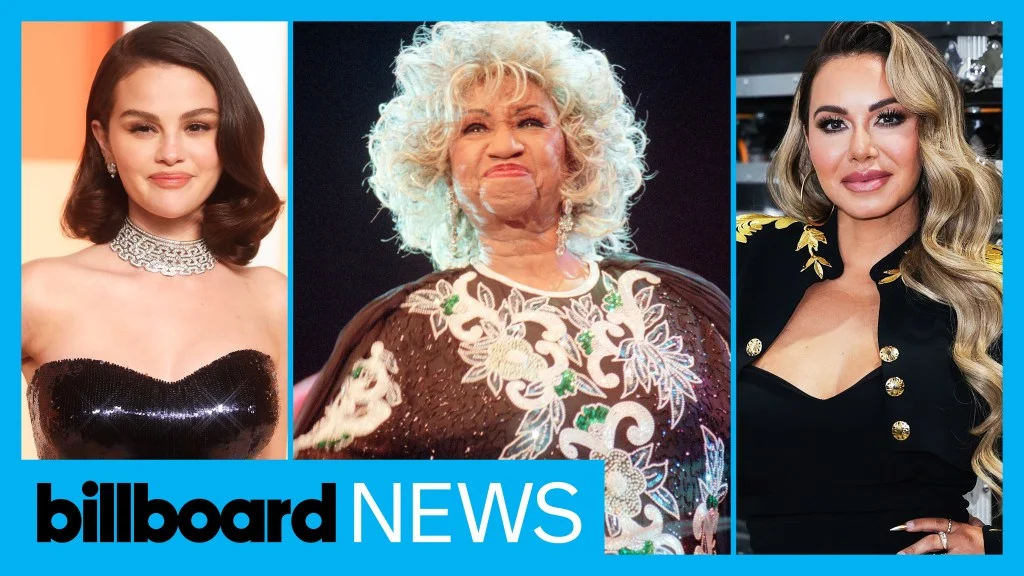
Billboard Latin Women in Music 2025 is this Thursday, April 24, and we’re here to take you through who you can expect to see on the big night, including Selena Gomez, Celia Cruz, Anitta, Chiquis and more! Who are you excited to see at Billboard Latin Women in Music 2025? Let us know in the […]

It’s been 55 years since the first Earth Day launched the modern environmental movement as we know it today, affecting change through a mix of education, public policy and innovative campaigns. The first Earth Day was organized by Sen. Gaylord Nelson of Wisconsin on April 22, 1970. Explore See latest videos, charts and news See […]
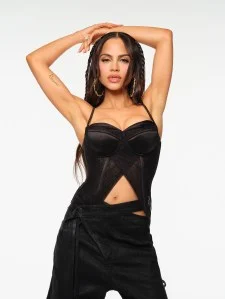
In February of this year, Natti Natasha took the stage in Miami and performed music from her new album, Natti Natasha En Amargue, live for the first time. Backed by a full live band, Natti didn’t sing provocative reggaetón or commercial pop. Instead, she dove into the pure amargue — or bitterness — of bachata, the traditional music of her native Dominican Republic.
But for Natti, this wasn’t just her first full bachata album; it was also entirely written and produced by Romeo Santos, the superstar known as the King of Bachata. The collaboration between the genre’s biggest name and possibly the best-known female Dominican artist today has already paid off. En Amargue debuted at No. 6 on Billboard’s Top Tropical Albums chart in February, and by April, the single “Desde Hoy” became Natti’s first No. 1 as a solo artist (not part of a collaboration) on the Tropical Airplay chart.
Beyond the album’s success, it’s a “full-circle” moment for Natti. “I feel like in every area of my life, after working so hard for so long, I’m finally at a place where I can just enjoy my music,” she says.
Trending on Billboard
Natti Natasha (real name Natalia Alexandra Gutiérrez Batista) has had one of the most successful careers in contemporary tropical and urban music. She first hit Billboard’s charts in 2012 alongside Don Omar with “Dutty Love,” which reached No. 1 on the Hot Latin Songs chart. Since then, Natti has racked up 34 entries on the Latin Airplay chart, including 10 No. 1 hits, and her debut album Iluminatti landed in the Top 10 of the Top Latin Albums chart in 2019. She’s experimented with pop and dance, but above all, she’s become known as a trailblazer of melodic, lyrically bold urban fusion music — anchored by her exceptional voice.
But her journey hasn’t been easy. Natti emerged in a time when reggaetón by women was largely overlooked and far from commercially successful. She had the image of a pop artist, but her music was often unapologetically sexual. It was hard to put her in a box, and earning respect as a confident, feminine woman in a male-dominated urban music world was no small feat. Two years ago, the foundation she worked so hard to build was shaken when her husband and manager, Raphy Pina, was sentenced to 41 months in prison for illegal possession of firearms. At the peak of her career and with a one-year-old daughter, Natti had to navigate uncharted waters. Now, she’s back on the charts — with the artistic touch of Santos, the emotional support of Pina (who’s back home), and the love of daughter Vida Isabelle, who will turn four in May.
This year, Natti Natasha will be honored at Billboard’s 2025 Latin Women in Music event with the Unstoppable Award, recognizing both her extraordinary music career and her resilience in the face of adversity.
What does receiving the Unstoppable Award mean to you?
This award means so much to me. Being recognized as “unstoppable” makes me reflect on everything I’ve been through — every obstacle I’ve had to overcome, every tear, every sacrifice, every moment I had to be strong even when I was breaking inside. To me, being unstoppable is loving what you do with your whole heart. It’s getting back up a thousand times, even when the world tells you that you can’t. It’s being a woman, being a mother, being a proud and strong Latina. Today, I embrace the Natti who started this journey with fear but had huge dreams, and I thank her for never giving up. This award is for everyone who keeps fighting with their head held high. Because together, we’re unstoppable.
Natti Natasha En Amargue was written and produced by Romeo Santos, who also worked with you on the remix of your hit “La Mejor Versión de Mí.” Had you known each other for a long time?
I’ve always been a huge fan of Romeo, but I didn’t actually know him. I first met him during the video shoot for “La Mejor Versión de Mí” in 2019, when we did the remix. I never in my life thought Romeo Santos would want to do a remix of one of my songs. I remember being in New York, getting ready for the video shoot, and my manager came over and said, “I want to play you something real quick.” He hit play, and I heard the percussion and Romeo’s voice. I didn’t say a word — I just started crying. I’m one of those people who cries when they’re happy. I couldn’t believe someone like him noticed me, my voice, and my song.
You’ve recorded so many songs. What was different about making a full album with Romeo?
First, we sat down and talked about what each song was about — because every song has a story, a concept. One thing I love about Romeo, which is something I have too, is his attention to detail. The “why,” the concept, the story — he explains everything. For every song, he’d sit in a little chair right inside the recording booth while I was at the mic. After he explained the meaning behind the song, we’d go line by line, and sometimes even word by word. The songs evolved. Every single one is so special. For every note, every breath, every way of delivering a line, Romeo was right there with me.
Jodie Jones
This album, En Amargue, has been in the works for years. Why did you wait to release it?
I was waiting, just like I was waiting to get back on stage and sing again. This project is so important, so beautiful, and so personal. I wanted to wait until my family was whole again, until our home was complete [and Pina was back]. It’s a blessing because now we have balance, and we have chemistry. This business isn’t easy. A lot of people say it’s hard for couples to work together, but for me, it’s been the perfect formula.
Did you feel incomplete without Raphy back?
Of course, [but] I had my daughter, and she made me happy. For her, I stayed focused on making music and keeping her happy. I worried a lot about that, and I did it. You know, as a mom, that’s just the law. But Raphy was such a big part of this project, and he cared about every little detail. My team is my family, and a key piece of the puzzle was missing. We deserved to enjoy this moment together. Because this is a moment to celebrate the project, not stress over it. Good music shouldn’t be rushed or forced — it never dies.
This album is very artistic and so different from something like Nasty Singles, which you released in 2023. Those are pretty spicy tracks. Do you ever regret any of the music you’ve put out?
Never. There’s not a single song I’ve recorded that feels like “filler” or makes me feel unsure. Every song — even if it’s just a party anthem — you never know what could happen. And I enjoy the process so much in the studio; it’s such a beautiful experience. I always love sharing different moments and music with my fans. At that time, Natti Natasha was living through that particular chapter of her life. So my music grows with me. You keep living, you keep creating, and you share that growth with the people who’ve been with you along the way.
And what stage are you in now?
When I first came to New York from the Dominican Republic, I didn’t know what kind of music I wanted to make. I took a chance on reggaetón and grew from there. I faced a lot of struggles because I was chasing this dream without knowing if it would ever come true. At one point, I thought, “Wow, this music career is such an uphill battle.” Then, when Raphy had to leave, I kept going and faced a lot of criticism just for being a woman. But I thought, “I’m not going to let this bring me down.” Now, with Raphy back, I look back at all those moments, and I realize I never stopped. I always pushed forward. And now, everything makes sense. When you’re in those moments of confusion, you kind of close yourself off. But thank God, I focused on my daughter, I have my family, and I released Natti Natasha En Amargue, which to me is on another level. I feel like, in every area of my life — because I’ve worked on all of them for so long — I’m now in a place where I can enjoy my music, not stress over it. I feel like I’m in a stage of growth where people are starting to appreciate Natti Natasha’s artistry more. It’s like I’m climbing all these steps in my career that are taking me to a whole new place.
The third annual Billboard Latin Women in Music special will air live at 9 p.m. ET / 8 p.m. CT on Thursday, April 24 exclusively on Telemundo, Universo, Peacock and the Telemundo app and throughout Latin America and the Caribbean on Telemundo Internacional.
Check out Billboard’s Latin Women In Music 2025 executive list here.

The first time Chiquis felt that she was making an impact with her music was with the release of her fourth studio album, Abeja Reina, in 2022 — eight years into her career.
“I felt confident by that time. I felt like this is what I was meant to do,” she tells Billboard. “I went to perform at El Lunario with that album. My fans in Mexico hadn’t seen me in a long time, and a lot of people were saying that I looked and sounded different on stage. Bringing the songs to the stage gave me that push of, ‘This is who I am and I’m finally here!’ It was an album where I was kind of unapologetically being myself, and I think that resonated with people. They felt that.”
The set earned Chiquis her second Latin Grammy Award for best banda album in 2022. She first won the same award with Playlist in 2020 and is the current titleholder with Diamantes (2024), making history as is the first and only solo female singer to date to win the award.
Trending on Billboard
As the eldest daughter of the late Jenni Rivera, Chiquis (real name: Janney Marín Rivera) embarked on her own singing career in 2014, two years after her mother’s passing in a plane crash in 2012. Her debut single, “Paloma Blanca,” was a tribute to La Diva de la Banda, earning her first top 10 Billboard hit on the Latin Digital Song Sales chart. The heartfelt song also became her breakthrough on Hot Latin Songs, debuting and peaking at No. 36 that same year.
Over the course of her 10-year career, the Mexican-American singer has earned 12 entries on the Regional Mexican Airplay chart, with three of those reaching the top 10. Notably, her highest-charting single, “Mi Problema,” climbed to No. 7 in December 2021. She also dominated the Top Regional Mexican Albums chart, securing two No. 1 albums: Ahora in 2015 and Entre Botellas in 2018.
But her accomplishments extend far beyond music. She’s also a philanthropist and entrepreneur, who will be honored with the Impact Award at 2025 Billboard Latin Women in Music event on Thursday, April 24 for her “professional endeavors in the music industry and society at large,” and for pushing boundaries and sparking change in both music and culture.
“I have to use my voice, not just to sing, but to send light and radiate love, and talk about the things that really matter to me,” says Chiquis, who in tandem with her musical career also launched her Boss Bee Nation initiative in 2014, to help those in need. “A lot of artists are afraid to speak their truth or stand behind what they believe in because it might affect and trickle their streams, but I don’t like to worry about that. I feel that if I’m my authentic self and use my platform for things that I believe in, and my heart is in the right place, you’re not going to lose the people who are important to you.”
Chiquis Rivera poses in the press room with the award for Best Banda Album “Diamantes” during the 25th Annual Latin Grammy Awards at the Kaseya Center in Miami, Florida, on November 14, 2024.
ZAK BENNETT/AFP via Getty Images
Her platform became key to continue elevating the Latino community.
“We began giving out scholarships because I’m a huge advocate for education. Knowledge is power,” she elaborates. “Then, I adopted families for Christmas. If they couldn’t afford a nice holiday, we started doing that. We’ve also taken music, gifts, and donations to the farm workers in the fields. Anything that my heart points me to, that’s where I go.”
Below, Chiquis shares more on how she’s forging her own path.
Which artist made you believe you could have an impact outside of music?
The only person I can think of is my mom because she was a businesswoman. Business was my first love, and I saw that she did it well. That’s one thing I want artists to know about, the business side of music, and I’m so grateful to have that school with my mom. For sure, she was the person who made me believe, 100%, that I could do both things — be in music and a business owner.
Besides my mother, the artists who have impacted my music career have been, of course, Shakira, Ana Gabriel, Celia Cruz, Selena, even Karol G. Seeing everything that Karol’s been doing completely inspires me to this day. Carla Morrison, how vulnerable she can be in her lyrics — it’s helped me to write differently, especially in the moment I’m in right now.
How has your experience been as a woman in regional Mexican music, which is still a still male-dominated genre?
I love to see how our genre has grown so much, and how the men are more accepting of women in the space. I was there when it was a big taboo. I saw it since I was very little with my mom — her wanting to sing, and people questioning her. Now I have so much compassion for my mom, but that’s exactly who we needed: the women who are daring. It still is very male-dominated but not as much as before, and I love that we can push through. Someone like Jenni Rivera really paved the way. Today, I see more unity among women in regional Mexican, and the more united we are, the more powerful we’ll be. I love to be able to represent women and be a voice in this genre, because las mujeres pueden … abso-freaking-lutely!
What does your state of mind look like going into 2025, and how do you plan to make this year more impactful than 2024?
I took a little bit of soul space to reconnect with myself and what I wanted to write about. I think it’s very important to get passionate and fall in love all over again with my art. This time I’ve taken for myself has helped me to get inspired. Last November, I felt something shifting in me. I didn’t know what was going on, but I felt different. I think winning the third Latin Grammy marked a turning point in my career. I feel a different type of confidence. In early February, I felt the epiphany and began to understand the change in my life. I had my creativity blocked, and I didn’t know what was happening, but then I realized that I needed to look inward. I did a spiritual retreat for three weeks, and it helped me tremendously, to the point that I want to sing things I never sang about.
This year, I have my new series called Foodie on the Go; my Chiquis Sin Filtro show on VIX is in its second season; my podcast Chiquis and Chill is in its fourth season; I have my first children’s book called The Girl Who Sings to Bees coming out in July, which I’m very excited about; and I’m already going to the studio to start music. A lot of different music is coming, but still with that special Chiquis sauce. Also, I think I’m going to start touring towards the end of the year. Sometimes you need to take a step back and look in to get inspired again.
What does receiving the Impact Award mean to you?
I’m so grateful I can cry. It means so much because for a long time, I thought I believed in myself, but it was superficial in a way. Now, I can tell you that I really believe in myself, and to know that it’s had an impact and inspired other people, that is why I’m here and part of my mission. Everything that I’ve been through, all the adversities and criticism, has been worth it, because if I can inspire one person and impact their life so that they can follow their dreams, that to me is worth every tear and every late night. I’m so honored and grateful to get this award. It’s been tough, and moments like this make me feel like people are recognizing my hard work. It’s truly an effort.
The third annual Billboard Latin Women in Music special will air live at 9 p.m. ET / 8 p.m. CT on Thursday, April 24 exclusively on Telemundo, Universo, Peacock and the Telemundo app and throughout Latin America and the Caribbean on Telemundo Internacional.
Read Billboard’s Latin Women In Music 2025 executive list here.
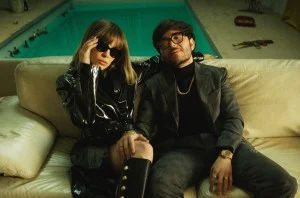
In 2019, pop star Belinda earned her first Billboard top 10 hit. That rarified chart milestone didn’t come from a pop hit, but rather, from “Amor a Primera Vista,” a cumbia sonidera with Los Ángeles Azules, Lalo Ebratt and Horacio Palencia that peaked at No. 2 on the Regional Mexican Airplay chart. It was the first time that Belinda entered the chart, a feat that underscores not just the artist’s versatility but her resilience.
Co-written by Belinda, Descemer Bueno and Palencia, the track that fuses traditional Mexican cumbia sounds with soft hints of reggaetón not only marked the Spain-born, Mexican-raised star’s return to the Billboard charts after four years, but it also introduced a bold new sound that she had never done before, and ultimately the música mexicana era she’s in today.
Trending on Billboard
Thanks to that capacity for continuous reinvention, the singer and actress is receiving the Evolution Award at the 2025 Billboard Latin Women in Music gala on Thursday, April 24.
“Life has been a journey full of learning, growth, and constant evolution — both personally and artistically,” she tells Billboard. “This recognition not only celebrates my career, but also the power of reinvention and continuing to explore new chapters. I feel more inspired than ever and excited to share this new musical era. Being honored on a night that celebrates such powerful and talented women makes this moment even more special.”
Though the artist born Belinda Peregrín Schüll has a trajectory that spans 25 years, she admits she hasn’t had time to stop and truly reflect on the moment she became a bonafide Latin star.
“I keep working while having many goals, and to be honest, I don’t think I’ve ever, at any point in my life, thought ‘Wow, I made it!,’ which is something I should do,” she says. “I’m always thinking about new ideas, new songs, new challenges, new projects, but I’ve never taken the time to think, ‘Okay, I’ve achieved all this.’ ”
But she has achieved a lot, and along the way, rightfully earned her place in the Latin pop realm.
Belinda was only 10 years old when she was cast as the lead in the Mexican children’s telenovela Amigos x Siempre in 2000, but it was her self-titled debut album that catapulted her into the musical spotlight three years later. The set — home to her timeless pop tune “Ángel” — earned her a first top 10 entry on a Billboard chart, reaching No. 6 on the Top Latin Pop Albums chart in 2003. Her four studio albums since, including Utopia (2006), Carpe Diem (2011), and Catarsis (2013), have also entered the top 10 on the chart.
Meanwhile, hits such as “Bella Traición,” the Pitbull-assisted “Egoísta,” and “Amor a Primera Vista,” have displayed her ease to navigate different genres from rock to EDM to reggaetón to cumbia. Never one to shy away from experimentation, Belinda has now branched out into música mexicana, tagging her new fare as “Beli Bélica” in a wink to the genre’s corridos bélicos. However, Belinda’s songs steer away from drug dealer exploits and rather focus on lyrics about heartbreak and being coquettish.
“The first corrido tumbado artist I heard was Natanael Cano. He was the first one who made me say, ‘Wow, Mexican music sounds different. It doesn’t sound like it used to,’ ” she recalls. “At that time, someone also told me: ‘You’re a woman, you’ll never be able to sing corridos or regional music, because it doesn’t suit you.’ They told me I couldn’t sing it because it was for men and that I would look ridiculous. And a couple of years later, here I am singing that style.”
Defying all odds, Belinda officially evolved into her corridos era with the release of “Cactus” in Jan. 2024, which also marked her debut single with Warner Music México after signing an exclusive record deal in Aug. 2023.
“I’d been thinking about doing corridos tumbados for a couple of years, but it just sort of happened,” she explains. “ ‘Cactus’ was a song that started out written in a notebook; it didn’t really have a melody because it was a feeling I had to express, and suddenly we turned it into music. We knew it was the right song at that moment, and that it would represent a new musical phase in my life.”
That new phase was shortly followed by her first collaborative effort with Natanael Cano in “300 Noches,” which she coined as a “corrido coquette” because of its dreamy pop undertones; “La Mala,” an unapologetic trap-corrido; and her team-up with Tito Double P on “La Cuadrada,” which secured a No. 23 spot on the Regional Mexican Airplay chart in March.
“I know there are many who don’t like it,” she says of her Beli Bélica era, but if there’s anything that her música mexicana collaborators have taught her, it’s to “go with the flow.”
“I’ve learned not to take everything so personally and to listen to myself,” she elaborates. “To listen to what I feel, what I think, and what I like, because no one is going to agree with you 100% and no one is going to have your vision 100%, and as long as you’re happy with what you’re doing and writing, the audience will accept it well because you’re doing it from the heart.”
Belinda & Tito Double P
Bri Diez
And even though she found a new sound — while also being active on social media and connecting with new and loyal fans — Belinda remains true to her pop essence. Her single, “Jackpot,” with Kenia Os, peaked at No. 10 on the Latin Pop Airplay in February.
“Belinda isn’t a musical genre,” she emphasizes. “I’ve been through all the musical eras, and my favorite word to describe my career is versatile. It’s the perfect word to define my style. Now, with Mexican music, we’re going back to the basics. It reminds me a lot of how music used to be. I love that I can go back to what it was like to make a song with real instruments and not rely on a computer program. It feels like I’m going back to what music used to be.”
Now, with her new “go with the flow” mentality, Belinda says a new studio album is on the horizon, one that she’s creating specifically for those “independent women who are completely irreverent but at the same time strong, sexy, fun.”
But first, she’s taking it easy.
“I’m trying to rest because in 2024 I didn’t rest at all. I spent almost all my time writing the album. It was a lot of emotions in one year. This year I’m going to take the time I need to finish my album. I just want to enjoy every moment, every stage, every project,” she concludes.
The third annual Billboard Latin Women in Music special will air live at 9 p.m. ET / 8 p.m. CT on Thursday, April 24 exclusively on Telemundo, Universo, Peacock and the Telemundo app and throughout Latin America and the Caribbean on Telemundo Internacional.
Read Billboard’s Latin Women In Music 2025 executive list here.

Seven weeks after landing at No. 1 on Billboard‘s Latin Pop Airplay chart, Danny Ocean and Kapo‘s hit “Imagínate” has climbed to the top spot on the overall Latin Airplay chart (rising 7-1), dated April 26. The track additionally continues atop both Latin Pop Airplay and Latin Rhythm Airplay, for a seventh and second week, respectively.
Explore
See latest videos, charts and news
See latest videos, charts and news
“Imagínate” rules the overall Latin Airplay ranking after a 35% boost in audience impressions, to 8.4 million, earned in the U.S. during the April 11-17 tracking week, according to Luminate. The song, released Nov. 7, 2024, via Atlantic/Warner Latina, debuted at No. 48 in January, and makes its way to the top of the chart in its 17th week.
Trending on Billboard
Coincidentally, both Ocean and Kapo secure their second No. 1 on the overall Latin Airplay chart. Previously, Ocean led for one week with “Amor” in June 2024. Kapo, meanwhile, replaces himself atop the list, after “Más Que Tú,” with Ozuna, reached No. 1 last week, chart dated April 19. The latter falls to No. 3 following a 15% dip in audience impressions (to 7.1 million).
The last act to replace itself at No. 1 was Grupo Firme, when the band’s “El Beneficio De La Duda” ejected its collaboration with Thalia, “Te Va a Doler” (chart dated July 2024).
“Imagínate” continues making its rounds atop two other Latin radio rankings: over on the Latin Pop Airplay chart, it holds strong at the summit for a seventh consecutive week, tying with Shakira’s “Soltera” for the most in 2025 so far. The latter has spent a total of 14 total weeks at No. 1 between 2024-25.
On Latin Rhythm Airplay, “Imagínate” rebounds to its No. 1 for a total of two nonconsecutive weeks in charge, Ocean’s sole No. 1 to date, and Kapo’s third.
Thanks to its radio draw, the song also holds steady at its No. 3 peak on the third iteration of the new Hot Latin Pop Songs chart. Plus, it also moves up on the airplay-, streaming-, and digital sales-blended Hot Latin Songs chart, where it jumps 35-32.

The Latin Recording Academy announced Tuesday (April 22) that the 26th annual Latin Grammy Awards will be held Thursday, Nov. 13, at the MGM Grand Garden Arena in Las Vegas. This marks the 15th time that the ceremony will be held in Sin City. Most recently, the awards ceremony had been held outside of Las […]