State Champ Radio
 genre latin
Page: 46
The launch of Bravas Entertainment was officially announced during an intimate Billboard Latin Women in Music cocktail reception at Telemundo Center in Miami on Wednesday (April 23).
Explore
Explore
See latest videos, charts and news
See latest videos, charts and news
Founded by Sonia Clavell, Ivy Queen’s longtime manager, the new purpose-driven professional and artistic platform will provide education, guidance and resources to female artists with the hopes they can “develop their talents with freedom, dignity and purpose, breaking cycles of limitation and paving new paths for future generations,” according to a statement.
Bravas will offer services in music distribution, public relations, creative production, digital strategy, networking and professional mentoring.
Trending on Billboard
“This project has been in the making for four or five years. It’s the product of my experiences since I started in this industry,” Clavell, who first started selling chocolates at traffic lights before becoming a reputable music executive, said at the reception. “Brava isn’t born of success; it’s born of pain and exhaustion. It’s a project to build those women who have a voice but don’t yet have a microphone. We understand how difficult it is and how painful it is, but also how healing it is to have someone who believes in you. We’re not going to push doors; we’re going to build new ones.”
The invite-only event gathered industry leaders, honorees of the 2025 Billboard Latin Women In Music executive list and artists such as Ana Bárbara, Yailin La Más Viral, Darumas, Mirella Cesa and Ivy Queen, who is supporting the new platform and will have projects under Bravas.
“It’s difficult in the industry to make friends, but we need people who believe in our work and support our vision,” the Puerto Rican artist, known as the Queen of Reggaetón, said at the event. “Sonia’s work was born through my story. I started at 12-13 years old when everyone was a man in the genre. I didn’t know about copyright, royalties — anything. With this project, I know we’re going to save many women from things I’ve already gone through, and that’s gratifying.”
The first project under Bravas Entertainment will be a compilation album of female artists called La Liga Femenina, produced by reggaetón hitmaker Boy Wonder, and set to be released this summer.
The third annual Billboard Latin Women in Music special will air live at 9 p.m. ET / 8 p.m. CT on Thursday, April 24 exclusively on Telemundo, Universo, Peacock and the Telemundo app and throughout Latin America and the Caribbean on Telemundo Internacional.
Read Billboard’s Latin Women In Music 2025 executive list here.

A new musical inspired in a Latin American true story is heading to Broadway, with music and lyrics by no other than Cuban-American superstar Gloria Estefan and her daughter, songwriter Emily Estefan. BASURA (Spanish for “garbage”) will narrate the journey of Paraguay’s Recycled Orchestra, a group of young artists who turn scrap material into instruments and music into possibilities.
Explore
See latest videos, charts and news
See latest videos, charts and news
The Thursday (April 24) announcement coincides with the third edition of Billboard Latin Women in Music, just one year after Gloria Estefan received the Legend award.
Based on the award-winning documentary Landfill Harmonic, BASURA brings the sound of Paraguay’s Recycled Orchestra to the theater as a “heart-swelling reminder that even in the most unlikely places, you can build something beautiful,” according to a press release.
Trending on Billboard
The show will first run at the Coca-Cola Stage at Alliance Theater in Atlanta from May 30 to July 12, 2026, before heading to Broadway.
“This is a story that has been close to my heart for several years since I first encountered the determination and ingenuity of the young people of Paraguay’s Recycled Orchestra,” Gloria Estefan said in a statement. “Emily and I are thrilled for our music to be a part of telling their story in this original musical. We could not be more excited for BASURA to begin its theatrical life in a city as influential and diverse as Atlanta with a theater as consequential as the Alliance.”
BASURA is directed by Michael Greif (Rent, Dear Evan Hansen), with a book by Karen Zacarías (Native Gardens, Destiny of Desire). Alex Lacamoire (Hamilton, In the Heights) is the musical supervisor, orchestrator, and arranger; Patricia Delgado (Buena Vista Social Club) the choreographer, and Ken Cerniglia (Hadestown, Newsies) the dramaturg.
The show was produced in partnership with Michael Shulman (Sand and Snow Entertainment) and Colin Callender and Daniel Unitas (Playground). Wendy Orshan and Jeffrey Wilson of 101 Productions, Ltd will serve as general managers.
BASURA was developed, in part, with support from The Orchard Project and Ari Edelson, artistic director.

Grupo Frontera made its way to the NPR headquarters in Washington, D.C., for the band’s Tiny Desk debut, which premiered on Thursday (April 24).
Dressed in light blue denim and white shirts, the borderland band opened the set with its Billboard Hot 100 No. 5 hit “Un x100to.” Backed by a gospel-inspired choir, the group infused the upbeat norteño song with a touch of R&B, incorporating sparkling keys and slowing the tempo. Midway through the performance, the band transitioned back to the its signature cumbia norteña rhythm.
Accompanied by two female backup singers wearing cowboy hats, a trumpet player and Grupo Frontera’s signature ensemble of accordion, keyboards and guitars, the band delivered a dynamic and cohesive performance.
Explore
Explore
See latest videos, charts and news
See latest videos, charts and news
“It’s a very special song for us, because we didn’t even know he was going to be on the song until we shot the video,” frontman Payo said about Bad Bunny’s feature in “Un x100to.” “The video came to us as a surprise, and [Benito] said, ‘Have you heard the song, the full version, with me in it?’ And we said, ‘What version?!’,” The band’s collaborator, Bad Bunny, had also stopped by the NPR offices earlier in the month to perform a few songs himself.
Trending on Billboard
Grupo Frontera continued the set with “Hecha Pa’ Mi,” during which the richness of the accordion shone. The band followed up with the bachata-infused “Ángel,” originally recorded with Romeo Santos, and the laid-back reggae-bop “Por Qué Será,” which features Maluma in the original version, showcasing their skill in blending norteño music with diverse genres. Grupo Frontera rounded out the set with “El Amor de Su Vida,” originally starring Grupo Firme.
On Wednesday (April 23), the Texas-based group received a nomination for best group or band at the 2025 Heat Latin Music Awards.
Watch Grupo Frontera’s full NPR Tiny Desk concert below.

Selena Gomez sings and dances to the beat of her own drum in the award-winning musical thriller Emilia Pérez, starring as Jessi Del Monte, a rebellious woman on a journey of radical transformation. Her compelling performance, both raw and refreshing, unlocked a new side of the 32-year-old star on the big screen. And that’s just one of her latest career milestones. In an industry that often aims to box you into categories, Gomez is a shapeshifter, constantly redefining what it means to be a global powerhouse today. In the last 12 months, Gomez, who has meticulously crafted a blueprint for her multi-hyphenate standing, garnered a Golden Globe best supporting actress nomination for Emilia Pérez; won a Screen Actors Guild Award for her role in Only Murders in the Building; the LP I Said I Love You First, which she released in March with fiancé Benny Blanco, debuted at No. 1 on Billboard’s Top Album Sales chart, becoming Gomez’s fourth leader on the chart; and through her Rare Impact Fund, Gomez continues to work to increase access to mental health for young people.
Now, on April 24, she will be honored at Billboard and Telemundo’s annual Latin Women in Music gala with the Woman of the Year award.
Trending on Billboard
“I think anytime as women we show up and support each other, it truly is so beautiful and important,” Gomez tells Billboard. “I will say being honored at Latin Women in Music is incredibly special to me though. My Mexican heritage is something that has influenced me my entire life and it’s not lost on me how representation matters. Throughout the years I’ve been doing this, some of the most supportive women in the entertainment business I have met have been other Latin women. I love the bond we all have.”
Named after fellow Texan, the legendary Selena Quintanilla, Gomez — whose paternal grandparents are Mexican — catapulted to fame as a child actor in Barney & Friends at 10 years old and subsequently starred on the Disney Channel show Wizards of Waverly Place as the ultra-cool and spunky teenage wizard Alex Russo. But it’s perhaps her career as a recording artist that solidified her pop icon status boasting of 42 entries on the all-genre Billboard Hot 100, and seven top 10 LPs on the Billboard 200, including three leaders on that tally. While she has mainly recorded in English, Gomez has always stayed close to her roots, and recording in Spanish felt almost inevitable.
Her first big splash in Latin music came in 2019, thanks to a feature on DJ Snake’s “Taki Taki,” alongside hitmakers Ozuna and Cardi B. The track debuted at No. 1 on the Hot Latin Songs chart in 2018, ruling for 13 weeks. Since then, Gomez has achieved three additional top 10 hits on the ranking, among them “Baila Conmigo,” her collaboration with Rauw Alejandro, which peaked at No. 4 on Hot Latin Songs in 2021 and topped the Latin Airplay chart for a week. That collab is part of her first-ever Spanish-language project: Revelación. It debuted at No. 1 on the Top Latin Albums chart, making history as the first album by a female artist to achieve the feat since Shakira’s El Dorado.
“I never really focus on stats and charts, but when I hear something like that, all I can feel is pride. Shakira is an icon and someone I’ve always looked up to and I love her so much,” says Gomez. “Making a Spanish album was something I had wanted to do for a long time. Over the years, I’d release a Spanish version of one of the songs off an album but having an all-Spanish project was something that meant a lot to me. I worked hard on making sure I paid homage to my Latin roots, through the music as well as the aesthetics of all the visuals.”
Navigating a bicultural identity, especially one that has a double standard (you should assimilate and learn English but also be fluent in Spanish), is one that even Selena Quintanilla faced in her early days. Then, Quintanilla had to learn to speak and sing in Spanish to be accepted in Mexico.
Gomez recently faced similar scrutiny when critics questioned her Spanish-speaking skills on Emilia Pérez, even though she plays the role of an American who lives in Mexico and who is not meant to be fluent in the role. Gomez — who alongside her co-stars Zoe Saldaña, Karla Sofía Gascón and Adriana Paz won best actress award for the ensemble cast at the 2024 Cannes Film Festival — says Emilia Pérez is a film she’ll “hold dear forever.”
“I pushed myself into uncomfortable spaces which as an actress are the most rewarding. It was a magical time and working with [director] Jacques [Audiard] was one of my best experiences,” she says. “I am taking my time to find the right role and director to work with next because I want it to be a challenge and unexpected.”
Gomez’s Latin heritage is constantly present in her work. She plays Mabel Mora in Hulu’s Only Murders in the Building. And in I Said I Love You First, she includes “Ojos Tristes” with The Marías, a reimagination of Jeanette’s 1981 classic ballad “El Muchacho De Los Ojos Tristes.” The track entered the top five of the Hot Latin Songs chart (dated April 5).
“Benny and I went and saw The Marías in concert last summer. I was mesmerized by them and knew I wanted to have them on our album,” Gomez shares. “ ’El Muchacho De Los Ojos Tristes’ to me is one of those cross generational songs that brings people together no matter how old you are. You either knew as an adult or something your mother or abuela listened to so it conjures up nostalgic memories. I loved seeing all the posts about the song and the feeling it reminds people of. I might have teared up a few times. I am very proud of this song.”
Gomez is equally proud of her work in activism as a leading voice in advocating for mental health and social justice for underrepresented communities. In 2019, she executive produced Living Undocumented, a Netflix docuseries that poignantly tackled the immigration crisis in the U.S. She has also transformed the youth mental health landscape by mobilizing over $20 million in funds with philanthropic partners across five continents.
“At the end of the day I believe it matters to be vocal about issues that matter to you, whether you are famous or not. It’s not for the faint of heart, because you are putting yourself out there and trust me there will be a lot of opinions that come at you for even having the nerve to say anything at all,” Gomez says. “I remember when I decided to be open about my own personal mental health, it was scary to be that vulnerable and I didn’t ever want anyone to think I am a victim. I thought [that] by sharing my own story I could help others, and I will take any negative opinions that come with that because I see the bigger picture of how the conversations have changed around mental health.”
Eight years after being named Billboard’s Woman of the Year, Gomez’s influence in music and beyond is even more tangible today, a testament to her impact and legacy. Her advice for the new generation of artists?
“Blocking out the noise and being true to yourself,” she says. “The noise can be overwhelming, and I am not saying it’s easy but by doing that and not compromising who you are, it goes a long way.”
The third annual Billboard Latin Women in Music special will air live at 9 p.m. ET / 8 p.m. CT on Thursday, April 24 exclusively on Telemundo, Universo, Peacock and the Telemundo app and throughout Latin America and the Caribbean on Telemundo Internacional.
Read Billboard’s Latin Women In Music 2025 executive list here.

Luis R Conriquez has recently faced public backlash for not performing his narcocorridos at his concert due to a ban by Texcoco, and we’re taking a deeper dive into the genre’s controversial history. Keep watching to learn more about the debate on the genre. Do you think narcocorridos should be banned? Let us know in […]
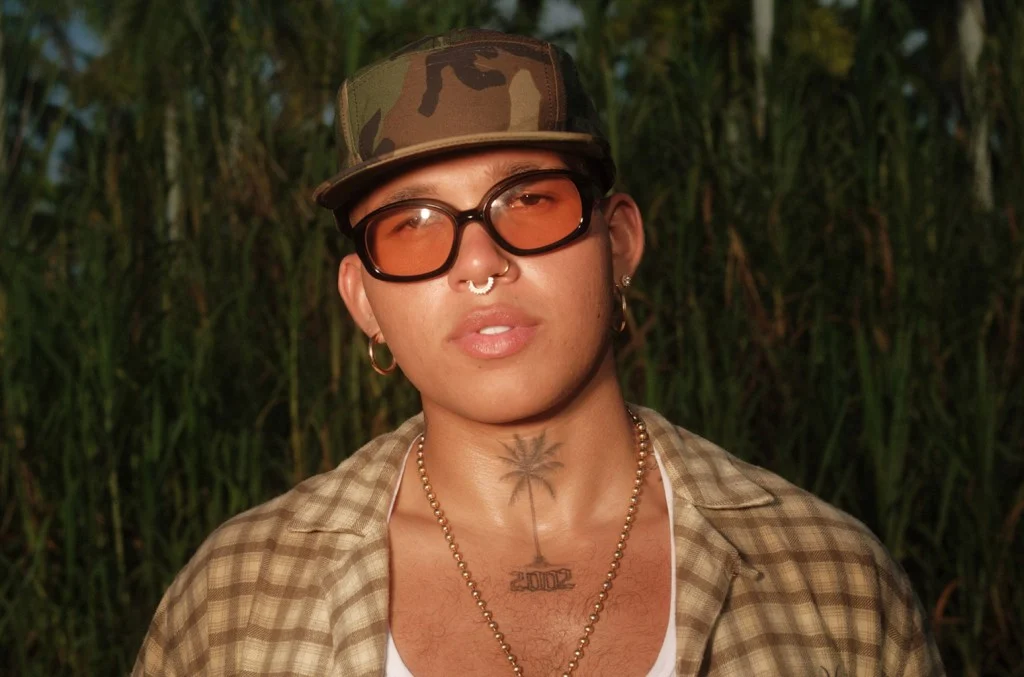
The Heat Latin Music Awards (popularly known as Premios Heat) unveiled its 2025 nominees today (April 23), exclusively on Billboard.
Beéle leads this year’s nominations with seven nods, including best urban artist and song of the year. He’s followed by six-time nominees Bad Bunny and Feid; Elena Rose with five nods; and with four nominations each, Karol G, Camilo, Yamie Safdie, and Ovy On The Drums.
More than 170 nominees are represented in 29 categories, including album of the year, best viral song, producer of the year, and fan club of the year — all categories that were added in 2024 for the awards’ 10th anniversary.
Explore
See latest videos, charts and news
See latest videos, charts and news
The 2025 Heat Latin Music Awards will take place Thursday, May 29 in Medellín, Colombia, for the first time. In previous years, the event — founded by Colombian music executive and Billboard Latin Power Player Diana Montes — was celebrated on the beach in Punta Cana, Republica Dominicana, offering artists and attendees the “ultimate summer experience.”
Fans can vote for their favorite artists on the LosHeat.TV app.
Trending on Billboard
Below, see the full list of nominees:
Best Male ArtistFeidBad BunnyCarín León J BalvinEladio CarriónMalumaMarc AnthonyRauw AlejandroYandel
Best Female ArtistKarol GShakiraElena RoseMaría BecerraAnittaGreeicyKany GarcíaNatti Natasha
Best Duo or GroupMoratGrupo NichePiso 21Grupo FronteraCa7riel & Paco AmorosoGrupo 5Gente de ZonaRawayanaChyno & NachoAlexis y Fido
Best Rock ArtistJuanesMar RendónMolotovAirbagEla Taubert
Best Pop ArtistLassoJulianaMoratYamie SafdieElena RoseManuel TurizoFonseca
Best Urban ArtistFeidBeéleRyan CastroWisinYandelOzunaBlessdEladio CarriónAnuel AAArcángelJ BalvinMyke Towers
Best Tropical ArtistRomeo SantosCarlos VivesPrince RoyceEddy HerreraFelipe PeláezSilvestre DangondEl BlachyFonsecaCharlie ZaaAna del Castillo
Best Salsa ArtistVíctor ManuelleGilberto Santa RosaCamiloGrupo NicheYiyo SaranteLa IndiaMike BahíaBrunella Torpoco
Best Southern Region ArtistLudmillaEmiliaAnittaLa JoaquiTiago PZKLit KillahKe PersonajesTrueno
Best Andean Region ArtistBeéleElena RoseNanpa BásicoDanny OceanOvy On The DrumsRyan CastroDayanaraNachoAndreina Bravo
Best Northern Region ArtistLenny TavárezDarellJay WheelerTito Double PFarrukoNetón VegaDei VDe La Rose
Best New ArtistEla TaubertKapoAlleh y YorghakiLuis AlfonsoMajo AguilarMaisakYamie SafdieJombriel Hades 66
Musical PromiseDNDMarVallejo 777SoleyLa CruzBenúLuister La VozMiguel BuenoDomelipaDarumasJhay PValkaVale Garzón
Influencer of the YearYurielkys Ojeda & Valeria Ramírez (Hisyovaleria)La SeguraLele PonsLa DivazaCalle y PochéLos MontañerosUntalfredoLos de ÑamLuisa Fernanda WMarkoFelipe Saruma
Best Regional ArtistPipe BuenoJessi UribeArelys HenaoYeison JiménezPaola JaraCarín LeónXaviGabito BallesterosLuis Alfonso
Best Dominican Urban ArtistEl AlfaYailin La Más ViralLa PerversaLomiielLismarChimbala
Best Music Video“Si antes te hubiera conocido” – Karol G“Turista” – Bad Bunny“UWAIE” – Kapo“Khe ?” – Rauw Alejandro, Romeo Santos“Alegría”- Tiago PZK , Anitta , Emilia“Bailar Contigo” – Pipe Bueno, Majo Aguilar
Best Collaboration“Volver” – Piso 21, Marc Anthony, Beéle“Una Vida Pasada” – Camilo, Carín León“Orión” – Elena Rose, Boza“Hasta aquí llegué” – Nanpa Básico, Beéle“La Plena” – W Sound, Beéle, Ovy On The Drums“Se Me Olvida” – Maisak, Feid“En Privado” – Xavi, Manuel Turizo“Querida Yo” – Yamie Safdie, Camilo“Coqueta Remix”, Heredero, Jessi Uribe“Te Quería Ver” – Alemán, Netón Vega“Háblame Claro” – Yandel, Feid“Bala Perdida” – Arthur Hanlon, Ángela Aguilar
Best Video Content PlatformMoluscoTVAlofoke MediaDímeloKingLa Nave Podcast /MarkoChente YdrachVos Podés / Tatiana FrancoLos Impresentables Los40Juanpis González
DJ of the YearMarco CarolaDJ PopeDJ AdoniNatalia ParisGordoAlex Sensation
Song of the Year“Si antes te hubiera conocido” – Karol G“DtMF” – Bad Bunny“Nuevayol” – Bad Bunny“Rio” – J Balvin“Se me olvida” – Maisak, Feid“Hasta aquí llegué” – Nanpa Básico, Beéle“Chismofilia” – Luis Alfonso
Producer of the YearOvy On The DrumsSOGMaster ChrisSky RompiendoIcon Music – Jowan y RoloSergio GeorgeEdgar Barrera
Video Director of the YearDarío BurbanoEvaluna MontanerRodrigo FilmsFélix BollaínPedro ArtolaSebas SánchezNuno Gomes
Album of the YearCuatro – CamiloDebí Tirar Más Fotos – Bad BunnyCosa Nuestra – Rauw AlejandroMuevense – Marc AnthonyGrasa – Nathy PelusoGarcía – Kany GarcíaTropicalia – Fonseca
Best Viral Song“DtMF” – Bad Bunny“Ohnana” – Kapo“Capaz” – Alleh y Yorghaki“En Otra Vida” – Yamie Safdie, Lasso“Solcito” – Miguel Bueno, Juan Duque“Bing Bong” – Yailin La Más Viral“Con Sonido” – Alofoke Music, Bulin 47, Ceky Viciny“La Plena” – W Sound, Beéle, Ovy On The Drums
Composer of the YearEdgar BarreraMaster ChrisElena RoseKeitynCáceresWilfran CastilloBull Nene
Best Song for Videogames, Series or Movies“Mi Amor” from Capitan Avispa – Juan Luis Guerra 4:40, Joy, Luis Fonsi“Mi Camino” from Emilia Pérez – Selena Gomez“Cuéntame” from Me Atrevo a Amarte – Majo Aguilar, Alex Fernández“Al Final” from Moana 2 – Emilia Mernes
Fan Club of the YearFandom Karol GFandom Lenny TavárezFandom DomelipaMarcianos – Mar RendónTeamLu – Lucia De La PuertaFandom YuleriasFandom FeidTeam Chivirikas – Yailin La Más Viral
Best Religious Song“Bailando en la lluvia” – Daddy Yankee“Tiempos Buenos” – Farruko, Madiel Lara“Alabaré” – Nacho, Redimi2 y Alex Zurdo“Rumbo Pa La Iglesia” – Alex campos“Hay un Gran Rey” – Lirios“El Amado Viene” – Montesanto

Hanna Nicole and Ashley Grace are so in sync that they even finish each other’s sentences at times.
Collectively known as Ha*Ash, the Louisiana-born sisters’ bond has powered the duo’s career over the past 20 years, and that built-in connectedness also contributes to their unbreakable status in Latin music. On April 24, the sisters will be honored at Billboard and Telemundo’s annual Latin Women in Music event with the Unbreakable Award, celebrating both their music and their career as a remarkable sibling duo that is perhaps more relevant than ever today.
“When I hear the word unbreakable, the first thing that comes to my mind is that, although this career has been like a roller coaster, here we are doing what we love to do the most,” says Hanna, who is a year and a half older than Ashley. “It’s an honor to not only be recognized for our work after 23 years of career but to continue to live from our stories and songs. It’s a blessing.”
Speaking in perfect English and Spanish, a reflection of their bicultural upbringing — living half of the year in Mexico and the other half in the U.S. as kids — Hanna and Ashley are in the midst of their biggest tour ever, with a South American trek that included stops at Chile’s Viña del Mar Festival, in the wake of their 2024 album, Haashville.
Trending on Billboard
It’s the latest high point in a career that fueled Latin pop’s domination in the early 2000s with their country-tinged “Odio Amarte,” the first single from their self-titled debut album, and “Estés Donde Estés,” which became Ha*Ash’s first top 10 hit on Billboard‘s Latin Pop Airplay chart.
“ ’Estés’ became the theme song of a Mexican telenovela, so it got such a big push from that,” Ashley explains. “Back then, if one of your songs was picked up by a telenovela, it was like wow you made it. We never imagined this would be our breakthrough song, but it opened doors. We started performing small gigs, and after that, we kind of took off.”
But it was “Odio Amarte” that showcased Ha*Ash’s signature sound: Latin pop with a country twist. It was a style that came naturally to the Mexican-American sisters who grew up in the South listening to the likes of Reba McEntire, Dolly Parton and Garth Brooks. Hanna and Ashley — professionally trained musicians and singers — would translate those artists’ songs to Spanish so their friends in Mexico could understand what they were singing about.
“That’s who we are, a mixture of two cultures, different musical genres, that’s the consequence of where we lived and who we are,” says Hanna. But their vision of fusing pop with country was met with resistance from some label execs who argued country wasn’t popular in the Latin world. “We would get yeses from labels we were visiting but they wanted us to just do pop, and we didn’t want to record just to record, we wanted to do what felt natural to us. We said no to those labels because we weren’t in a hurry to release anything, and we wanted to be loyal to our sound.”
Ha*Ash
Sony Music
Eventually, their demo ended up in the right hands at Sony Music México, with whom they signed and released their debut LP, Ha*Ash, in 2003. It was also around that time that the then teenagers signed with Ocesa Seitrack for management.
“Staying genuine to their music has been extremely relevant [to their success],” says manager Octavio Padilla of Ocesa Seitrack. “That is what has generated a true connection between Ha*Ash and their fans and that has maintained this bond for so long. If today you go to a Ha*Ash show in Chile, Argentina or anywhere in Latin America, you will be able to see that connection where all their fans feel identified and close to Hanna and Ashley.”
All told, Ha*Ash has released a total of eight albums and, over the years, the duo has accumulated a total of 16 entries on Latin Pop Airplay, four of which reached the top 10, including “El Cielo Te Mandó Para Mí” from their latest studio album, Haashville (2024), which reached a No. 7 high on Latin Pop Airplay.
Besides recording music, touring has been key to Ha*Ash’s success. “Thank God that’s been where we’ve overachieved,” says Hanna. “I wouldn’t say that we wouldn’t be here if it wasn’t for live shows, but our careers would be different. Today, we are very fortunate to be on tour and sell the number of tickets that we have sold but tomorrow is not guaranteed so we value the good moments.”
That grateful mentality was instilled in them as little kids. Hanna and Ashley grew up in a strict household where they were taught the value of hard work at a young age. They started performing when they were around 12 years old at state fairs, rodeos and even a stint at the Louisiana State Penitentiary, as tourism ambassadors — handpicked by the Secretary of State in Louisiana who heard them sing at church. “On the weekends, we would fly from Mexico to Louisiana to sing at all these events and we’d take our guitars, which were way bigger than us, and we’d perform and then fly back to Mexico on Sundays,” Hanna recalls of their extraordinary childhood.
Ashley chimes in, “We were home-schooled and when we weren’t touring, my dad would ask, ‘What’s your schedule? Because you’re not just going to sleep around or watch television.’ So, it was either piano or guitar class, singing class, going to the gym, doing something productive. ‘If you have an hour that I don’t see on your schedule, you’re wasting your time,’ he would tell us.”
And they wouldn’t have it any other way either. “When we signed with Sony, we were underage so my dad would go into every single meeting. He was always like, ‘One day I won’t be here, so you guys need to sit in and listen because I know I have done my job when I’m not here and you’re able to continue with your career.’ We are very grateful to my dad for that, for teaching us to work and to value.”
Reflecting on their 20 plus years in music, Hanna and Ashley are most grateful to be able to do this together.
“I just feel that we were brought up to do everything together and once we were working and traveling, although we’re surrounded by so many people, at the end of the day, it’s just us,” Hanna says. “We’ve always had each other’s backs, and we speak so openly about what works and what doesn’t because we have a bond that is like no other. We’re sisters first and then we’re partners. Sisterhood always comes first.”
The third annual Billboard Latin Women in Music special will air live at 9 p.m. ET / 8 p.m. CT on Thursday, April 24 exclusively on Telemundo, Universo, Peacock and the Telemundo app and throughout Latin America and the Caribbean on Telemundo Internacional.
Read Billboard’s Latin Women In Music 2025 executive list here.

Few artists embody the meaning of evolution quite like Anitta. The Brazilian superstar, unapologetically herself and fearless, has expanded the boundaries of global Latin music with hits in three different languages — an unprecedented feat among modern-day pop stars. As the recipient of the first-ever Vanguard Award at Billboard’s 2025 Latin Women in Music event — celebrating an artist who boldly forges her own paths — Anitta continues to prove why she’s in a league of her own.
Through her trilingual funk carioca, reggaetón, Afrobeat, and fizzy pop songs, the singer closes the divide between cultures while celebrating her Brazilian roots on the world stage, as evinced in her 2024 album, Funk Generation. With multiple songs reaching the coveted Billboard Hot 100 — such as “Envolver” at No. 70, “Bellakao” with Peso Pluma at No. 53, or most recently, “São Paulo” with The Weeknd at No. 43 — Anitta continues to blaze new trails in music and global pop culture.
Trending on Billboard
“I’ve been around a lot of performers. I will tell you — I will put my money on Anitta every day,” Rebeca León, her manager and longtime friend, tells Billboard. “She can sing for six hours straight, and her Carnival performances are the most incredible experiences.”
But Anitta’s path hasn’t been defined solely by music. After years of living in the fast lane, the artist, born Larissa de Macedo Machado, is now embracing her vulnerability and leaning into her more spiritual side. “Anitta is a persona she created,” explains León, referencing the personal challenges the artist has faced. “Larissa is the softer side of Anitta.” That introspection is at the heart of Larissa: The Other Side of Anitta, her 2025 Netflix documentary that explores the woman behind the icon, her journey of healing, and her fearless decision to embrace her true self, after going through personal issues.
In this interview, conducted in early April (a week after her birthday), Anitta reflects on her dual identities, her mission to bring funk carioca to the global stage, and her ongoing journey of embracing every part of herself — sensual, spiritual, and everything in between.
Anitta, first off, happy belated birthday! How did you celebrate this year?
I love celebrating my birthday. We are so blessed to be alive, we have to celebrate. This year, I started with a ritual. Here in Brazil, my father, my brother, and I all follow Yoruba [traditions]. But I also love incorporating Buddhism and Hinduism into my life. The first party was a Shamanic ritual with a Shaman who guides me in life. I invited Krishna Das to do a kirtan — a [chanting] practice with mantras — and he performed at my house. Krishna Das is a great singer. I love his songs. It was really special.
On the second day, I hosted a party with a band I love. Then the other day, I did another show in my house with a reggae band that I love. Then I traveled. Every year, my astrologers tell me where I should spend my birthday for my solar return, so I always celebrate it in a place based on their guidance. This year, I went to Fernando de Noronha, a great [archipelago] in Brazil.
Iude Rìchele
Congratulations on being chosen to receive the Vanguard Award at Billboard‘s Latin Women in Music event — how does it feel to be recognized in this way?
I’m really happy. Last year, I also received an award in Brazil because of how I fight for change. Movies, music, books — and entertainment in general — can [serve as a catalyst for] change in our culture and lives. A popular movie or a type of music can completely shift how people behave. I always try to apply that idea to my work. It could be through my music videos, my speeches, my dancers, my outfits, or even in interviews — I always try to bring attention to things I really believe people need to [notice]. I go with the flow, but I also try to change the flow a bit. In the beginning [of my career], it was all about [promoting] women empowerment because I could see a lot of men singing about women in a way [that implied] they could do everything, while women could not.
The documentary Larissa: The Other Side of Anitta shows so many incredible moments, from Río’s Carnival to being in love with your childhood sweetheart, to diving deeper into your spirituality. Now that you’re showing the world who Larissa is, how is it navigating these two identities — the personal and artistic?
That was something I really wanted to do. We’ve been watching other people’s lives on social media, and we believe [what we see]. We think that [those lives are] perfect. We tell ourselves, “Oh, I wish I was like that. I wasn’t born lucky,” or “I need a new car, a new house. I need more.” But in reality, that’s not what we actually need because we are comparing ourselves to lives that aren’t real. Social media only shows pieces of people’s lives. It doesn’t show how they got what they have, how they are feeling mentally or their pressures and struggles.
I wanted to use this movie to show people that it’s not like that. Everyone goes through struggles, and you can relate to my life even if you think it’s perfect. Deep down, we are all the same. I wanted to show that to gain success, money, or whatever you’re striving for, you have to work really hard. The internet today gives the impression that everything is easy, that you don’t need to work or study — you just get it. But I wanted to show that, no, success comes at a big cost. We need inspiration, but it’s also okay to hope.
Iude Rìchele
Last year, you made waves with your Funk Generation album. How important was it for you to bring funk carioca to the world stage?
That was the baile funk experience. It was important because I really believe this rhythm has the power to be the next wave. I also love Afrobeat, and funk [carioca] has roots that trace back to that, from Africa, Bambata. That’s why it feels similar. I thought it was really important to bring this culture to the world. We performed in so many countries, and when everybody showed up, it was super special. I felt so strong and empowered on stage representing this rhythm and its energy.
I think sensuality is also an essential part of who I am — something I’ll never regret or give up on. Sometimes when I talk about spirituality, like mantras I love or hope to work on one day, people think I’m going to stop doing [the other parts]. They ask if I’ll stop being sensual or stop dancing the way I do in funk. But there’s no need for separation; doing one thing doesn’t mean you can’t do the other. It’s the opposite, actually. We need to embrace all parts of ourselves — the sensuality, the spirituality, and the power I feel when I’m performing funk and dancing. It makes me feel so powerful, so special. I was really happy with that tour.
Your hours-long Carnival performances have been praised for their high energy and artistry. How do you physically and mentally prepare yourself?
Mentally, it’s the hardest. It can f–k up your mind if you’re not ready because there is so much noise, so many people, so much energy. You have to make a deal with yourself and understand [what it takes] to handle it, because it can be tricky with all the ups and downs.
Physically, [preparation] is important. I was traveling and working so much, but when I decided to stay in Brazil for the moment, I got healthier because I could establish a routine. The body likes routine. It’s important to give your body structure during the days between shows. For Carnival, I performed every Saturday and Sunday for two months, spending four to five hours on stage each time. [To sustain that,] you need to maintain a strong routine during the weekdays.
Iude Rìchele
As you embark on this new phase of your journey, what do you hope fans take away from seeing you as Larissa?
I’m trying not to be in a rush. I used to always try to deliver. You know, that anxiety that comes from big companies and people expecting results and numbers and paybacks. But now I’ve realized that the more we act in survival mode, the less we get. It’s hard to create something truly new and impactful when you have people in your environment being like, “What’s the next step? So what are we doing? What’s the plan?” Now I’m just trying to silence [those voices], and trying to be confident and follow my heart.
One thing I’ve always done in my career is trust [my intuition]. Even if everyone else was going right, I would go left. I didn’t mind waiting years for that decision to pay off. I would keep insisting on the left because that was the direction I felt good with. At some point, I started to lose that confidence because so many people around me were pushing for immediate results. But now, I’m trying to just keep this mindset. I don’t care if everyone else is going one way. If I feel like this is the right way, I’m going to keep going that way, no matter what.
Iude Rìchele
The third annual Billboard Latin Women in Music special will air live at 9 p.m. ET / 8 p.m. CT on Thursday, April 24 exclusively on Telemundo, Universo, Peacock and the Telemundo app and throughout Latin America and the Caribbean on Telemundo Internacional.
Read Billboard’s Latin Women In Music 2025 executive list here.
Born one hundred years ago in Havana, Cuba, on October 21, 1925, Celia Cruz sang almost before she could talk. The second oldest of 14 children, she could carry a tune at 10 months old, according to her mother, and as a toddler, sang her youngest siblings to sleep. Those bedside moments were the first stage for the woman who would become the single best-known and most influential female figure in the history of Afro Cuban music.
By the time she died in 2003 at age 77, Cruz had over 70 albums to her name and had transfixed generations of fans with her mesmerizing stage presence and a signature, rich, expressive contralto that could turn a single word into a masterpiece of a song.
Trending on Billboard
Cruz was recognized worldwide as much for her extravagant flamboyant outfits, tireless work ethic and colorful wigs as for her trademark cry of “Azúcar!.” But Cruz possessed, above everything, an extraordinary voice.
“Forget about getting her behind a mic,” Marc Anthony once told Billboard. “She’ll turn anybody out.”
Indeed, Cruz adamantly refused to lip-sync, even on live TV shows. “I can’t go out there and pretend,” she told Billboard in 2000. “In Cuba, I worked with a man named Rodrigo Neira, who was the choreographer of the Tropicana. He wanted a singer to sing and a dancer to dance.”
Although Cruz’s dancing abilities weren’t negligible, her voice was incomparable.
Cruz’s recorded legacy is a veritable history of Latin music, from her days with Cuba’s legendary La Sonora Matancera to her highly experimental and avant garde later fare, which even mixed urban music with her salsa beats.
Cruz charted until the day she died, and beyond. More than 20 years after her death, she generated 64 million on-demand official streams in the United States in 2024, according to Luminate. Last year, the U.S. Mint released a commemorative Cruz quarter, the only coin that bears the stamp of a Latin artist. The item joins a list of Cruz memorabilia that includes a stamp, a doll, multiple exhibits, merchandise lines and both a TV series and film in the works, among other projects.
As a child, Cruz began singing in amateur contests. Her big break came in 1950, when she was called in to replace the lead singer of the legendary La Sonora Matancera, arguably the best salsa band of all time. Cruz gained international acclaim with La Sonora, with whom she remained for 15 years, eventually marrying lead trumpet player Pedro Knight.
Following the Cuban revolution, she settled in New York in 1962 and was never allowed to return to her home country. Cruz’s career also flourished stateside, first through her association with Tito Puente’s Ticco Records and later with Fania Records.
Although Cruz remained a popular and venerated figure — she received a star on the Hollywood Walk of Fame in 1987 — she gained a new legion of followers in 2000 after signing with Sony Music Latin, a label that gave her a star treatment until the day she died. With Sony Latin, Cruz won three consecutive Latin Grammy Awards in 2000, 2001 and 2002.
The secret to her perennial success, she told Billboard, was very basic: “First of all, I take good care of myself. I rest. Second, I plan my shows well. I always try to shape my repertoire around a particular audience. And finally, I’m always changing my outfits, my look onstage.” But at the core of it was her tireless work ethic, and that voice.
After being diagnosed with cancer in 2002, Cruz made a final trip to the recording studio in February 2003. She recorded for two months and died in July.
This year, Billboard’s Latin Women in Music honors Cruz and her extraordinary life not on the anniversary of her death but in the centennial year of her birth. Cruz will posthumously receive the Legend Award at the gala, which will air April 24 at 9 p.m. ET on Telemundo, and be honored with a musical tribute with performances by Ivy Queen, La India and Olga Tañon.
Billboard spoke to four people who had personal ties to Cruz. Here are their recollections, in their own words.
Emilio Estefan
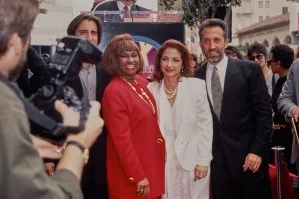
Celia Cruz, Gloria Estefan and Emilio Estefan pose as Gloria receives her Walk of Fame Star on the Hollywood Walk of Fame on Feb. 3, 1993 in Los Angeles.
Vinnie Zuffante/Getty Images
Celia was someone who was able to bring our music to this country at a time when women weren’t really welcomed in the music industry.
When she joined forces with Fania and Johnny Pacheco, she showed the world what true talent was. And she never changed her musical essence or who she was. She was such an example of humility, perseverance, talent — my God. She became family to us. I was just starting out as a producer, and my dream was always to work with her. But I didn’t offer because we were just getting started. We had met, but we hadn’t really talked much yet.
One night, we were playing at the Dupont Plaza, and she asked us to sit at her table. It was like talking to a queen. I remember one time we were performing at the Ovni, and we always played “Quimbara.” She was in the audience, and she came onstage to sing. Our hearts almost burst out of our chests.
I had the honor of producing several albums for her. One day she called me and said, “I don’t have a record label anymore.” And I told her, “I’m going to send you to Sony.” Thank God I called Tommy [Mottola, who] said, “Don’t even worry about it. We’ve got to sign her.” She went into Sony with so much respect. They were going to give her the boost she needed. She passed away with six No. 1 hits. At the time, there was resistance because most of the artists selling records were men. She was one of the women who proved to the world that women could make everyone dance. She was such an inspiration for Gloria [Estefan]. I think we can all learn something from her.
She and Pedro [Knight] were such humble, kind people who taught us so much. When we were recording, she was so professional. She could almost sing live; she practiced her parts, showed up with humility and was always so proud of her Cuban roots. And the love between her and Pedro… It’s rare to work with a couple and see them love each other so much for so many years, being such simple, good people with so much talent.
She was my great teacher. She always remembered to send birthday cards to everyone. Those little thoughtful gestures. She was like a sister to Gloria. She’d come over to eat at our house and was so funny. She’d wash Pedro’s shirts and iron them when they were on tour. I’ll never forget when I produced the Latin Grammys [for CBS on 2000] — she had terrible knee pain but got up to sing “Quimbara” with Ricky [Martin] anyway. No one could tell what she was going through.
One day she came to us and said, “I got the big C.” I had no idea what she meant. She called me to help arrange her burial. She told me, “I want every fan I have to be able to say goodbye to me.” She wasn’t just loved by Cubans — she was loved by the whole world. She left me one of her dresses, shoes and wig as a thank you, along with a beautiful note for me and Gloria. In a way, I feel at peace knowing I was able to help a woman like her, that I could get her signed to Sony. In these times we’re living in, when one person shines, we all shine. And she made all of us shine.
La India
La India & Celia Cruz
Courtesy La India
I met Celia in 1988 through important people in her life. Her nephew was a big fan of mine and he would go see me at the Palladium. He told me he was Celia Cruz’s nephew and we didn’t believe him. Celia was already a legend. We listened to her music and all the Afro Yoruba-ness around her was really interesting. And of course we all loved La Sonora Matancera.
One day, she sent a message through him, saying, “Muchas benidiciones en tu show.” (“Many blessings on your show.”) Then in 1990, a year before I decided to cross over from dance to salsa tropical, I was already collaborating with Tito Puente and Tito arranged for us to meet.
We all went to dinner. When I met her, it felt as if we were already family. We spoke about her music, about her. She said she always felt she had a natural ability to sing music with a lot of rhythm. She said, “One thing I notice about you is you study a lot of jazz, but you have a lot of soul. I’d like you to cross over from dance music and do a salsa album.” We sang with prerecorded TV tracks then, and she said, “You need to be up there singing with a live band.”
She set up a meeting with Ralph Mercado [founder and president of RMM Records, to which Cruz was signed at the time] and said, “Hey, I want you to sign her.”
We were very close. We talked a lot about music, about the hard labor of a woman. We talked about believing in ourselves, being professional and giving 100% to the music. I found it to be very empowering.
She used to say, “Yo soy tu madrina musical [“I’m your music godmother],” and she wanted to officially be my godmother. I hadn’t had my first communion, and I needed to be baptized.
She baptized me on Feb. 14, which is the day of friendship and love, and it brought a lot of light into my life, which I needed. I came from a very dysfunctional family, but a very praying family. God was always in our lives. I think that’s why it meant so much to me to be baptized with Celia and [husband] Pedro Knight [by my side], and because it meant she would always be in my life. And she was. She was really cute and she wrote telegrams. She had an AT&T calling card and boy, did she use it to the fullest. She called from the airport, when she landed, when she was in her room. Because she was so spiritual, she felt she needed to pray with her goddaughter; that was me. She always prayed before her show. We would hold hands and then we’d go up onstage with her.
We toured together. Everywhere she traveled she was the goddess of the goddesses. She would walk in first, everybody was waiting for her, and we were like little ducks. All of us, me, Marc [Anthony], Cheo [Feliciano], Oscar [D’León], we were all behind her going to all these beautiful places in Europe. She really believed in us. She thought we were coming with talent to bring light to salsa tropical.
Celia was always an icon, a living legend. She had a lot of vocal control and a beautiful vibrato. Pedro helped her a lot. He quit the trumpet to make sure she was ready to get on that stage and sing her heart out. He was a great partner. She was very lucky to have him.
In the studio she was a master of great ideas. I gave her a lot of energy, and it was great to have her there with me.
She always told me that one of the things she liked about me was that she saw my talent and that I didn’t have to wear little outfits. We’re here as women, as talented women. She would say, “Sabes porqué he tenido exito? Porque yo vendo talento, no vendo sexo.” (“You know why I’ve been successful? Because I sell talent, not sex.”)
Now, I see what she meant. It’s a male-dominated world, and she wanted respect. She liked being on the road. She liked to take her music to different markets, and she loved shopping. Shopping and music, forget about it. Y su cafecito con su azucar.
She always tried to encourage the new generation by being positive and working hard. She spoke about the perseverance of hard work, professionalism. Always record, arrive early and have a great orchestra behind you. And all that you get, you give back.
Randy Malcom
The Gente De Zona member on the group recording “Celia,” which blends two Cruz hits using her original vocals.
Alexander Delgado and Randy Malcom Martínez of Gente de Zona.
Courtesy Gente de Zona
I knew Celia’s work because I studied music in Cuba, but I never got the chance to meet her in person. Since Celia was banned in Cuba, you couldn’t hear her on the radio or see her on TV.
Celia, Willy Chirino, all those artists were prohibited. She was always a defender of freedom.
After recording “La Gonzadera,” we were trying to figure out how we could use her vocals from “La Negra Tiene Tumbao” in a song. Her digital session recordings from her last recordings were nowhere to be found, but after 10 years of searching with Omer [Perdillo, her manager], we finally found them.
What we did was mix two songs together, closing it out with “La Negra Tiene Tumbao.”
But for us, using her voice — can you imagine? As a kid, I’d hear some of her stuff with my dad through videos that had been leaked. Cuba only had two TV channels, and there was a concert she did, I think in Africa, that somehow got through. People had recorded it and we’d watch it. For us, it was such a point of pride. A Cuban woman who was outside of Cuba, yet so huge in the music world — it seemed impossible to reach that level. When I was little, people told me she was a singer who wasn’t allowed in Cuba.
When my dad heard the song, he was blown away. He was like, “How did you pull this off?” And I told him, “Dad, they gave me permission.” This whole story is so nostalgic for every Cuban, given the political situation. Everything feels so deep. In our country, there’s so much music, so much art, but it dies there. It’s heartbreaking to see so many artists who don’t get the chance to share their work. I’m left with this sense of longing because I wasn’t able to fully experience her work. And she has incredible songs. Celia was always ahead of the game when it came to music. She was someone who never let herself fall behind.
Goyo
Goyo
Johana Garcia
I met Celia because my dad and an uncle promoted shows in Colombia and they brought José Alberto “El Canario” and Celia together to Buenaventura, Quibdó, and a show in Tuluá that didn’t end up happening. But I traveled with her on the same bus from Buenaventura to Tuluá, and I got the chance to talk with her. She said something to my mom about me, and my mom made me sing. I was about 13 or 14 years old.
I’d seen her on TV, but my dad collected albums and my mom was a huge fan of Celia. I’ve always been really close to my mom, and in many moments of her life, Celia’s music was her soundtrack. “Ritmo, Tambor y Flores” was my first real connection to Celia. One of my aunts made me learn the song, and I sang it the first time I performed in a parade in Condoto. I was about 9 years old, and at my fifth-grade graduation, “Ritmo, Tambor y Flores” was already part of my repertoire. That’s the song I sang to her on the bus.
I went to see her in Buenaventura first. She was wearing white leggings, a shiny top and a short, white wig and she looked amazing. Like, wow — it wasn’t often you saw women who could pull off a look like that. I saw music as something totally normal because my mom sang, my uncle brought artists and I’d go to the studios of Grupo Niche. I felt like I was part of the scene.
So when they said, “Now we’re heading to Tuluá on the bus with Celia and “El Canario,” it felt normal. She was traveling with her husband and it was a big, comfy bus. And she said, “What a beautiful little girl. She has something special.”
My mom told me to sing “Ritmo, Tambor y Flores.” She started singing the chorus, and I sang the second part because I was feeling a little shy. She said, “Keep going, keep going.” And we all started singing together. Imagine that — my skin still tingles thinking about it. It feels like such a normal story, but honestly, it’s not that normal. Especially because kids are usually pretty sheltered at that age. Later, when I was 15, I saw her again, and by then, she looked older, and I was so impressed by the respect people had for her and how she kept thriving as an artist, even as someone who was already so established. She was always in the big leagues. What’s happening now isn’t possible without talking about her. Her story needs to be told.
Illustration by Selman Hoşgör
The third annual Billboard Latin Women in Music special will air live at 9 p.m. ET / 8 p.m. CT on Thursday, April 24 exclusively on Telemundo, Universo, Peacock and the Telemundo app and throughout Latin America and the Caribbean on Telemundo Internacional.
Read Billboard’s Latin Women In Music 2025 executive list here.

Prince Royce collects his 36th top 10 on Billboard’s Tropical Airplay chart with the bilingual bachata, “How Deep Is Your Love,” as the song debuts at No. 6 on the chart dated April 26. It also opens in the top 10 on the new Hot Tropical Songs chart. Explore Explore See latest videos, charts and […]