State Champ Radio
 Author: djfrosty
Page: 286

An Air India flight bound for London crashed Thursday morning (June 15) in a residential neighborhood, with a reported 242 passengers on board, including the flight crew. Details are still developing, and images of the crash have spread through various media channels as officials on the ground examine the wreckage.
According to still-developing reports from CNN and the Associated Press, the Boeing 787-8 was heading to London’s Gatwick Airport, with 169 Indian nationals, 53 British nationals, seven Portuguese nationals, and one Canadian on the flight. The crash occurred in the city of Ahmedabad in Gujarat State. Initially, Indian authorities reported that all passengers aboard the plane perished in the crash. Al-Jazeera is reporting that 204 people were killed and that hospitals in the region were taking in injured passengers.
Vishwash Kumar Ramesh, a British national visiting family in India, told The Hindustan Times that he was a passenger aboard Flight 171 and heading back to London with his brother. Ramesh says that there was trouble around 30 seconds into the flight. Video clips that have spread widely on social media support Ramesh’s account, as it appeared the plane struggled to achieve proper lift before slamming into the side of a building.
As this breaking story develops, we will return with more updates.
—
Photo: Anadolu / Getty
HipHopWired Featured Video

Just hours after BTS’ Jung Kook was officially discharged from his mandatory military service, a Chinese woman was taken into custody for allegedly attempting to break into the singer’s residence in Seoul. According to authorities at the Yongsan Police Station, the suspect — a Chinese national in her 30s — went to Jung Kook’s home […]
06/12/2025
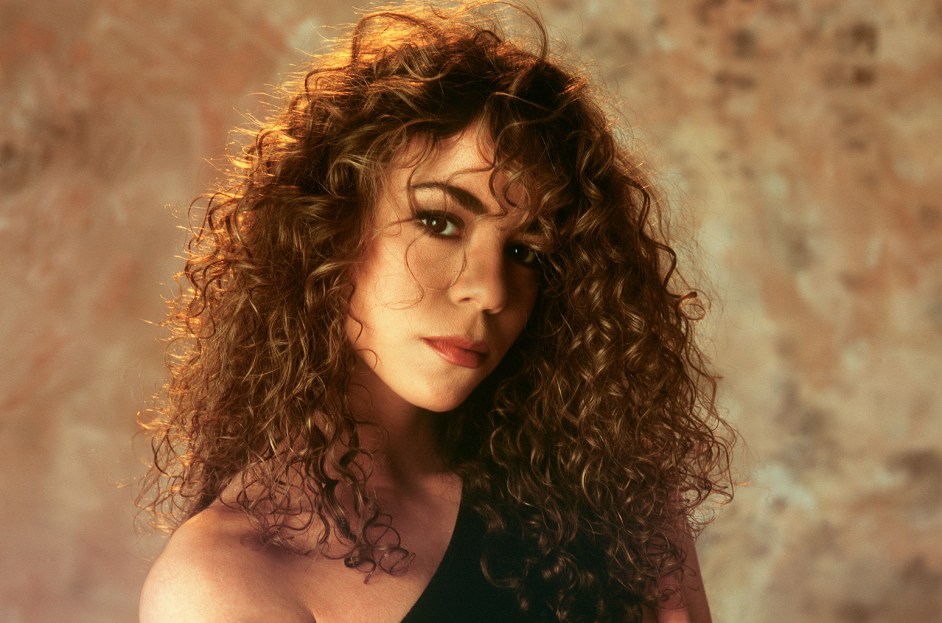
The vocalist dropped her first-ever LP in 1990 and immediately became a chart-topping sensation.
06/12/2025

The academy is combining two categories, best recording package and best boxed or special limited edition package into one category, best recording package. Boxed sets were split off into a separate category in 1995.
It is also reviving an old category, best album cover. The Grammy Award for best album cover dates back to the first Grammy Awards in 1959. (The first winner: Frank Sinatra, for serving as art director on his own album, Frank Sinatra Sings for Only the Lonely.) From 1962 to 1965 it was separated into classical and non-classical categories. From 1966 to 1968 it was separated into graphic arts and photography categories. In 1974, the name of the award was changed to best album package. It was changed again in 1994 to best recording package.
The rule for Best Recording Package: “An art director’s award – for albums or singles. This category recognizes excellence in the field of art and packaging for albums or singles. Physical product in any configuration (standard, special edition, limited edition, or boxed sets), of any genre of music, released for the first time during the eligibility year (even if recordings were previously released) is eligible provided the packaging is predominantly new.
“The elements judged in this category include the package design, photography and/or graphic art of the entire package as well as any materials included. If the album art/packaging has been previously released, or is being reissued with only minimal new design elements, it is not eligible.
“An entry in this category is eligible if the physical product release during the applicable eligibility period either meets the general distribution requirement or was made available for purchase solely via the applicable artist’s website or such artist’s record company’s website, so long as the release meets all other eligibility requirements, is sold as a stand-alone product, and the sales link is available to all consumers (e.g., fan club-only releases or releases through a subscription series are not eligible).
The rule for Best Album Cover: “An art director’s award – for albums only. This category recognizes excellence in cover art for albums of recordings in any genre of music, released for the first time during the eligibility year (even if recordings were previously released).
“The elements judged in this category include the creativity, design, illustration, photography, and/or graphic art of the album cover.
“The album cover must be predominantly new: If the album cover art has been previously released, or the recording is being reissued with only minimal new cover art, is not eligible.
“Eligible album covers can be from digital-only or streaming-only full-length releases as well as albums that have physical configurations. Submission of an album cover in this category would not disqualify the physical package of the same release from being submitted in best recording package. Eligible entries for this category require a high-resolution digital file of the album cover be uploaded with the entry.”
In addition, the Package Craft Committee is changing from three regional committees to one national committee.
Ahead of his performance at the palenque during the San Marcos Fair, Billboard cover star Carín León reflects on his pride in being Mexican, the significance of palenques to him, and his career trajectory — starting in a band and transitioning to a solo artist.
He also discusses collaborating with C. Tangana, how “The One” with Kane Brown came to life, the country musicians he’s working with on his new album, his acceptance within the country music community, and his collaborations with Maluma, Alejandro Fernández and more.
Leila Cobo:
Carín!
Carín León:
Hi!
Welcome to my hacienda in Aguascalientes.
Thank you, thank you for the invitation. I’m so happy to be here.
Aguascalientes is — for those who don’t know — we’re here because tonight you’re going to perform at el palenque at the fair in San Marcos.
That’s right.
So what is the San Marcos fair?
The best Mexican music and Latin music is presented, too. So, it’s a huge party that I think, as you noticed yesterday, it’s a big party. The experience is worth living once in a lifetime.
And it’s music, music, music, and more music?
Music, shots, food. A lot of Mexico in one month. Too much Mexico that can cause havoc.
So this is an experience that is natively Mexican?
It’s the most Mexican, I think, that you can see in music, a palenque. I always tell people, “You have to see your artist at a palenque to understand what the experience is to take it all the way.” And the artists, too, appreciate the format of the palenque, we love it. The majority of my colleagues love it because you have all the people super close.
Like on top of each other.
Yes.
So, you’re there on stage, and I’m at this distance here.
Yes, easily. You can just be there with the people and drink some shots, it’s beautiful, it’s a communion of public that’s really interesting compared to shows at tours.
Completely. I’m going to show you my gardens.
It’s really beautiful, honestly.
Right?
Keep watching for more!
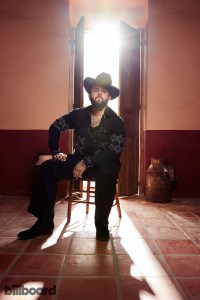
It’s 2 a.m. on a May morning in Aguascalientes, Mexico, long past most people’s bedtimes. But inside the Palenque of Feria de San Marcos — a venue in this central Mexican city — Carín León is entering the third hour of a performance where he has sung nonstop while pacing the small 360-degree stage like a caged lion.
Palenques, found in most Mexican cities and towns, were originally designed and used for cockfighting, and most have been transformed into concert venues that put artists in shockingly close proximity to their fans, with no ring of security around the tiny stage. The palenque circuit is de rigueur for Mexican artists, even a superstar like León — a burly man who tonight looks even bigger thanks to his ever-present high-crown cowboy hat.
Nearly 6,000 fans surround him in arena-style seating, the steep, vertical layout allowing everyone a close view of the man below, flanked by his backing ensemble: a norteño band with electric guitars, a sinaloense brass section, backup singers and keyboards — nearly 30 musicians in all, who wander about, grab drinks, chat and return to the stage throughout the show. León leads the organized chaos, traversing repertoire that, during the course of the evening, goes from corridos and norteño ballads to country and rock’n’roll.
“I think it’s the most Mexican thing possible in music, a palenque. I always say you have to see your artist play in a palenque to understand it,” León tells me a few hours before the show. He has been playing them for years throughout the country, like most regional Mexican artists do. They’re places of revelry and drink, a rite of passage, and the place to test new sounds.
“As artists, we appreciate that experience,” he adds. “We love it because you have people so close to you. You can be with them, have drinks with them — it’s a very interesting artist-fan communion.”
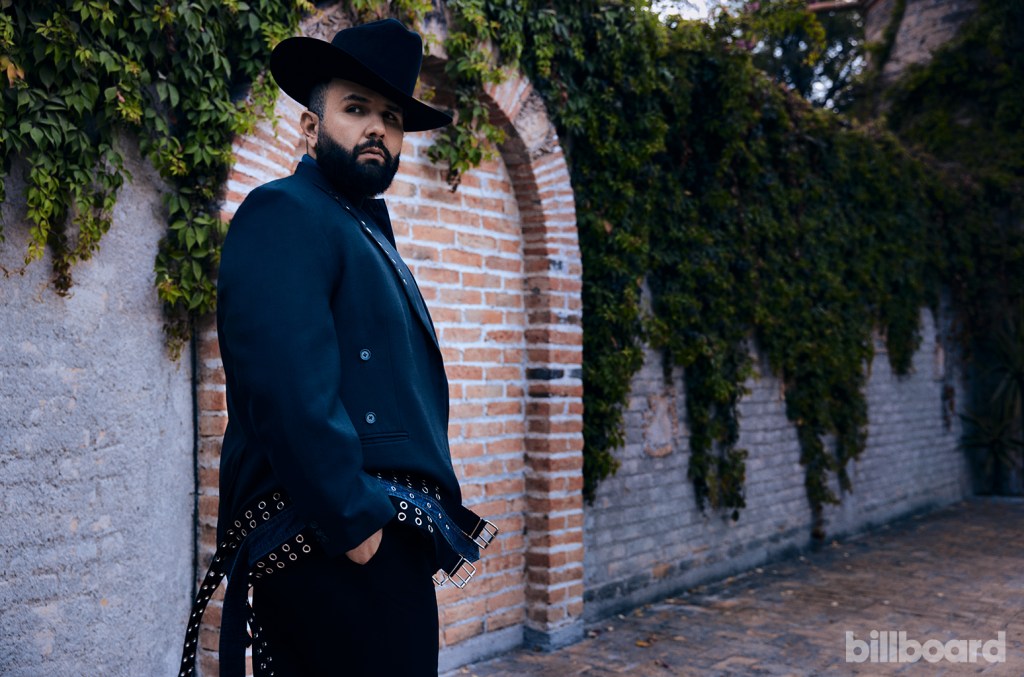
We’re chatting between sips of tequila at a country house on the outskirts of Aguascalientes, and despite the stifling afternoon heat, León keeps his hat on, looking stately in his boots and black jacket with metal buckles. Soft-spoken but emphatic, the 35-year-old música mexicana star alternates between Spanish and English, which he speaks with the American-sounding but accented cadence of someone who learned it by ear from transcribing songs by hand, but never in a classroom.
“I always had trouble with my accent when I sang,” he says. “But I didn’t want to lose the accent because it makes you unique. [An accent] is more valid now. I always want to ensure the music is good, refine it, make it better. But we’re coming from the 2000s, when music [production] was perfect. Now value is given to what’s natural, and that includes having an accent.”
Christopher Patey
While at his core León is a regional Mexican artist who performs contemporary banda and norteño, he loves collaborating with artists spanning many genres and incorporating regional sounds from around the world into his music: Spanish flamenco, Colombian vallenato and salsa, Puerto Rican reggaetón. And as he blends these sounds in unexpected ways, León has found an avid and growing audience.
In 2024, he crisscrossed the world on his Boca Chueca tour, playing 81 palenque, arena and stadium dates in the United States and Latin America. Of 1.3 million total tickets sold, according to his management, 374,000 were reported to Billboard Boxscore for a gross of $51.2 million, making it one of the year’s most successful Latin tours. This year, he’s scheduled to play 40 more shows, including Chilean and Colombian stadiums, Spanish arenas and German theaters — a leap few regional Mexican acts, whose touring is usually restricted to the United States and Mexico, have accomplished at such a scale.
But León has transcended mere geographic borders. Last year, after releasing singles with country star Kane Brown and soul musician Leon Bridges, León became the first artist to perform mainly in Spanish at the Stagecoach country music festival, just a couple of months after making his Grand Ole Opry debut. On June 6, he became the first regional Mexican artist to play CMA Fest, as a guest of Cody Johnson, who invited him to perform the bilingual “She Hurts Like Tequila” with him as part of his set at Nashville’s Nissan Stadium.
“What struck me most was how effortless it felt,” Bridges says of working with León on the bilingual duet “It Was Always You (Siempre Fuiste Tú).” “We come from different musical backgrounds, but the emotion, the storytelling — that was shared. Collaborating with him wasn’t about chasing a fusion — it was about two artists trusting each other to make something honest. Going down to Mexico and being immersed in his world was a powerful reminder of how universal that connection through music really is.”
From a purely commercial standpoint, León has no need to take musical risks like this beyond the Latin realm. In the past five years alone, he has notched three entries on Billboard’s Top Latin Albums chart, including Colmillo de Leche (2023) and Boca Chueca, Vol. 1 (2024), which both reached the top 10. He has placed three No. 1s on the Latin Airplay chart, seven No. 1s on Regional Mexican Airplay and 19 entries on Hot Latin Songs, including three top 10s. He’s a widely sought-after collaborator for pop stars (Camilo, Maluma, Kany García, Carlos Vives), Spanish stars (Manuel Carrasco, El Cigala), Mexican legends (Pepe Aguilar, Alejandro Fernández) and fellow current chart-toppers (Grupo Firme, Gabito Ballesteros) alike.
But regardless of what sounds he’s working with, or whether his collaborator is an established name or an untested act (a particular favorite of his), León knows what he likes. That confidence is at the core of his and manager Jorge Juarez’s strategic plan to make him a truly global artist — and for the past year, they’ve set their sights on country music, hoping to bridge the divide between two genres that, despite their different languages, are in fact remarkably similar.
“It’s something that fills me with pride and something that’s been very difficult to achieve as a Mexican and as a Latin: to reach the center of the marrow of this country movement,” León says. “To get to know this [country music] industry and start moving the threads to act as this missing link between regional Mexican and country music.”
Carín León photographed April 29, 2025 at Gran Ex-Hacienda La Unión in Aguascalientes, Mexico.
Christopher Patey
León first tested the country waters back in 2019 with a Mexican/country version of Extreme’s “More Than Words,” recorded in English and Spanish. Though it now has 14 million streams on Spotify, “it’s kind of lost because there was so much other stuff happening at the time,” he says. It was a risky move, especially coming when León was not yet the established star he is today. But to him, it was one worth taking.
“It was the perfect excuse to show something different,” he says. “And it was amazing. It was so liberating. Because I was trapped in this box that was regional mexicano at that time, and [this song] was very fun for me.”
Country and regional Mexican are, truly, natural siblings. Both genres are anchored in storytelling, with acoustic instrumentation and guitars central to their sound. Boots, hats and fringe jackets are staple outfits for artists and fans alike. And though they stem from different cultures, both are, as León puts it, “roots genres” with their foundations in regional sounds.
Unsurprisingly, other Latin artists have forayed into country before — but none have brought León’s existing level of Latin music stardom, nor have they generated the buzz and impact that he has since releasing his first country team-up, “The One (Pero No Como Yo),” with Brown in March 2024. Since then, he has spent weeks in Nashville, working with local producers and songwriters for a country-leaning album featuring other major names that’s slated for a 2026 release.
For country music, that’s good news. According to the Country Music Association’s 2024 Diverse Audience study, 58% of Latino music listeners consume country music at least monthly, compared with 50% when the last study was conducted in 2021. Finding the right opportunity to tap that market had long been in the Grand Ole Opry’s sights. “And then,” says Jordan Pettit, Opry Entertainment Group vp of artist and industry relations, “the opportunity with Carín came up.”
At León’s Opry debut in 2024, “we had a lot of audience there, more than normal,” Pettit recalls. “The show itself absolutely blew my expectations.” The plan had been for León to play three songs, but the crowd clamored for more, and the musician obliged with a fourth. “I can think of only one or two occasions in my seven years here where I’ve seen an artist get an encore,” Pettit says. “It was really, really awesome to see the worlds collide.”
León’s worlds have been colliding since he was born Óscar Armando Díaz de León in Hermosillo, Mexico, a business hub and the capital of the northwestern state of Sonora, located 200 miles from the U.S. border at Nogales, Ariz. That proximity, coupled with his family’s voracious appetite for music, exposed him to a constant and eclectic soundtrack that ranged from Cuban troubadour Silvio Rodríguez and corrido singer Chalino Sánchez to country stars Johnny Cash and George Strait to rock mainstays like Journey, Paul McCartney and Queen.
“What’s happening now in my career is the result of the music I ingested since I was a kid,” he says. “Music gave me the incentive to learn about many things — the origin of other countries, political movements linked to music, cultural movements. I’m very freaky about music. Everything I have comes from the music I listened to.”
When León finally started dabbling in guitar, he gravitated to the music closest to his roots, regional Mexican, and eventually adopted his stage name. By 2010, he was the singer for Grupo Arranke, which through its blend of traditional sinaloense banda brass and sierreño guitars eventually landed a deal with the Mexican indie Balboa. After a slow but steady rise, Grupo Arranke garnered its sole Billboard chart entry, peaking at No. 34 on Hot Latin Songs in 2019 with “A Través del Vaso,” penned by veteran songwriter Horacio Palencia.
Then the coronavirus pandemic hit, and León switched gears: He went solo, signed to indie Tamarindo Recordz and began releasing music at a prolific pace, launching what he now calls his “exotic” cross-genre fusions.
He scored his first top 10 on a Billboard chart with “Me la Aventé,” which peaked at No. 6 on Regional Mexican Airplay in 2019. But his true breakouts were two live albums recorded and filmed in small studios during lockdown, Encerrados Pero Enfiestados, Vol. 1 and Vol. 2 (Locked Up, but Partying). The bare-bones sets, featuring León singing and playing guitar with a stripped-down accompaniment of tuba and guitar, struck a powerful chord. At a time when teenage performers with gold chains and exotic cars were propelling corridos tumbados and música mexicana with hip-hop attitude up the charts, this 30-year-old relative unknown with a poignant tenor that oozed emotion was performing regional Mexican music with a Rhodes organ, a country twang and, with his cover of ’90s pop hit “Tú,” a female point of view. No one else sounded like him.
Christopher Patey
Those acoustic sessions “were the first things I realized could make the audience uncomfortable [and] question what they were hearing,” León recalls. “Wanting everyone to like you works, but it doesn’t let you transcend. I think things happen when you change something — for good or bad — and you get that divided opinion. All my idols — Elvis, Bob Dylan, Johnny Cash — were people who swam against the current. And not in a forced way, but in a sincere way, exposing vulnerabilities. We knew it was good stuff. And things began to happen.”
During the pandemic lockdown, León had the time and creative space to experiment and explore a new openness within regional Mexican music, a genre where artists used to seldom collaborate with one another. In 2021, he notched his first No. 1 with “El Tóxico,” a collaboration with Grupo Firme that ruled Regional Mexican Airplay for two weeks.
Then, Spanish urban/flamenco star C. Tangana DM’d him on Instagram and invited him to collaborate on “Cambia!,” a song from Tangana’s acclaimed album El Madrileño that also featured young sierreño star Adriel Favela and can best be described as a corrido flamenco. The track “blew my mind,” León says — and exposed him to a completely different audience. “It taught me divisions are literally only a label. When I heard that album, I understood music has no limits. C. Tangana is to blame for what’s happening with my music now.”
Collaboration requests from artists seeking León’s unique sound (and sonic curiosity) started to flow in at the precise time that he was itching to explore and globalize his music. In 2022, after recording the pop/regional Mexican ballad “Como lo Hice Yo” with Mexican pop group Matisse, he met the band’s manager, Jorge Juárez, co-owner of well-known Mexican management and concert promotion company Westwood Entertainment. The two clicked, and when León’s label and management contract with Tamarindo expired in early 2023, he approached Juárez.
“There comes a time when managers and the artist have to be a power couple,” León observes. “I found the right fit with Mr. Jorge Juárez. He’s a music fiend; he has a very out-of-the-box vision. That’s where we clicked. And he had huge ambition, which is very important to us. He’s the man of the impossible. We want to change the rules of the game.”
In León, Juárez says he saw “a very versatile artist who could ride out trends, who could become an icon. He wasn’t looking to be No. 1, but to be the biggest across time. He had so many attributes, I felt I had the right ammunition to demonstrate my experience of so many years and take him to a global level.”
Juárez, who shuttles between his Miami home base and Mexico, is a respected industry veteran who has long managed a marquee roster of mostly Mexican pop acts including Camila, Reik, Sin Bandera and Carlos Rivera. He’s also a concert promoter with expertise in the United States and Latin America. He sees León as having the potential to become “the next Vicente Fernández,” he adds, referring to the late global ranchero star.
Because León had parted ways with Tamarindo, which kept his recording catalog, he urgently had to build a new one. He and Juárez partnered in founding a label, Socios Music, and began releasing material prolifically, financing the productions out of their own pockets. Since partnering with Juárez, León has released three studio albums: Colmillo de Leche and Boca Chueca, Vol. 1, which both peaked at No. 8 on Top Latin Albums, and Palabra de To’s, which reached No. 20. Beyond the catalog, they had three other key goals: finding a tour promoter with global reach, building the Carín León brand and expanding into country.
AEG, which León and Juárez partnered with in 2023, could help with all of it. Last year, the promoter booked León’s back-to-back performances at Coachella and Stagecoach — making him one of very few artists to play both of the Southern California Goldenvoice festivals in the same year — as well as his slot opening for The Rolling Stones in May in Glendale, Ariz. AEG president of global touring Rich Schaefer says they sold over 500,000 tickets for León headline shows in the United States since they started working together, including a 2024 sellout at Los Angeles’ BMO Stadium.
“There are few artists who put out as much music as Carín does on a regular basis,” Schaefer adds. “He’s able to sing and speak fluently in two languages, which has already opened a lot of doors both in the States and abroad. Our team works very closely with Jorge and his team, and he has a deep understanding of how to approach international territories. With a little luck, Carín is poised to take over the world.”
Carín León photographed April 29, 2025 at Gran Ex-Hacienda La Unión in Aguascalientes, Mexico.
Christopher Patey
That international viewpoint also informed León’s approach to recording. When Juárez set out to unlock country music for his client, he first contacted Universal Music Publishing Group head Jody Gerson — “our godmother,” as Juárez likes to say. “She opened so many doors to us.”
Gerson first met León in 2023, after Yadira Moreno, UMPG’s managing director in Mexico, signed him. “It was clear from my first meeting with him that he possessed an expansive vision for his songwriting and artistry that would take him beyond Mexican music,” Gerson says. “Before signing with us, he wanted to make sure that we were aligned with his ambitions and that he would get meaningful global support from our company, specifically in Nashville. Carín actually grew up listening to country music, so his desire to collaborate with country songwriters is an organic one.”
Beyond opening the door to working with Nashville producers and songwriters, Gerson also connected Juárez and León with Universal Music Group chief Lucian Grainge, who in June 2024 helped formulate a unique partnership between Virgin Music Group, Island Records and Socios Music. Through it, Virgin and Island distribute and market León’s music under Socios, with Virgin distributing and marketing to the U.S. Latin and global markets and Island working the U.S. mainstream market.
The agreement encompasses parts of León’s back catalog as well as new material, including 2024’s Boca Chueca, Vol. 1, which featured his bilingual collaborations with Brown (“The One [Pero No Como Yo],” which peaked at No. 46 on Hot Country Songs) and Bridges.
He plans to deliver Boca Chueca, Vol. 2 before the end of the year and just released a deluxe version of Palabra de To’s that includes new pairings with Maluma (their “Según Quién” topped the Latin Airplay chart for four weeks in 2023 and 2024) and first-time duets with ranchera star Alejandro Fernández and flamenco icon El Cigala.
While flamenco is another passion point for León, the country album — his “first magnum opus,” he says — is his most ambitious goal. Already, he has worked in Nashville with major producers and songwriters including Amy Allen, Dan Wilson and Natalie Hemby. On the eclectic project, he says, “Some stuff sounds like James Brown, some stuff sounds like Queen, some stuff sounds like regional Mexican with these corrido tumbado melodies, but in a country way. It’s very Carín. It’s what’s happening in my head and in my heart.” He won’t divulge all of its guests just yet, but he says it includes friends like “my man Jelly Roll” and other big stars he admires.
It’s new territory for a Latin act, and León is acutely aware of the fact. But he’s approaching it from a very different point of view. “I’m not a country artist,” he says flatly. “I’m a sonorense. I have regional Mexican in my bones. But I love country music, and I’m trying to do my approach with my Mexican music and find a middle point. It’s not easy. You have a lot of barriers because of the accent, because of the language, the racial stuff.”
For some successful regional Mexican artists who tour constantly and make top dollar, the trade-off is not worth it; financially speaking, they don’t need to open new territories or genres and the audiences that come with them. But for León, “the money trip passed a lot of years ago,” he says with a shrug, taking a last sip of tequila and adjusting the brim of that ever-present accessory he shares with his country friends. “I need to change the game,” he adds. “I’m hungry to make history, to be the one and only. I’m so ambitious with what I want to do with the music. It’s always the music. She’s the boss.”
It’s 2 a.m. on a May morning in Aguascalientes, Mexico, long past most people’s bedtimes. But inside the Palenque of Feria de San Marcos — a venue in this central Mexican city — Carín León is entering the third hour of a performance where he has sung nonstop while pacing the small 360-degree stage like […]
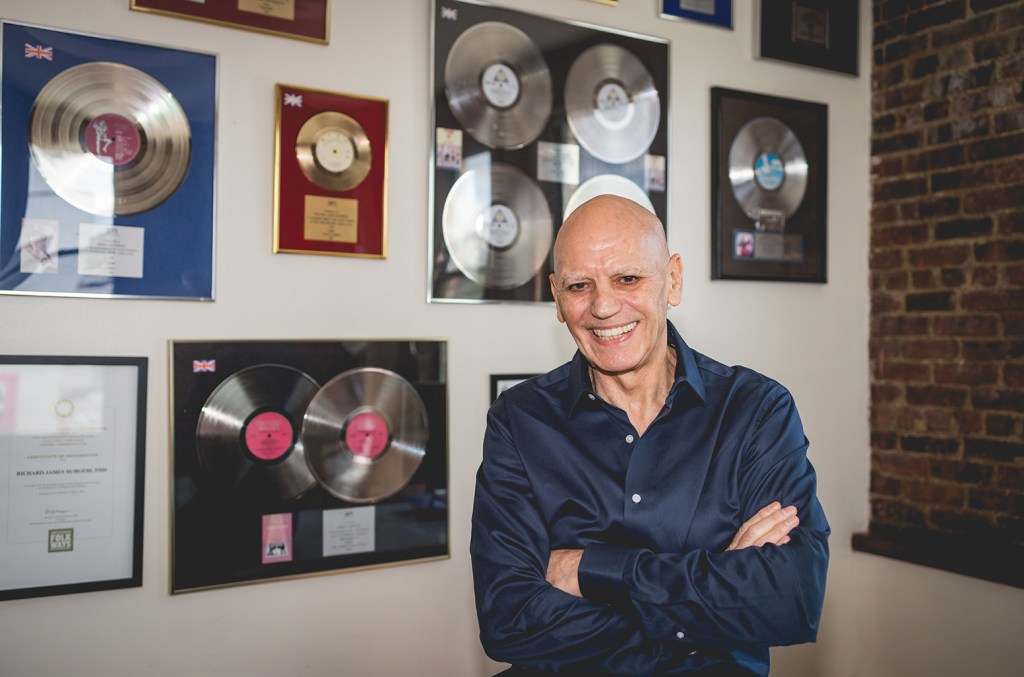
Since January 2016, musicians who have struggled with the vagaries of compensation and regulation in their industry have been able to turn to one of their own for guidance, support and solidarity. That year, Richard James Burgess — who produced four top 20 U.K. hits for Spandau Ballet, managed bands, performed in one and oversaw business operations for Smithsonian Folkways Recordings — became president/ CEO of the American Association of Independent Music.
Next January, Burgess will step down after leading the organization through what Louis Posen, founder of indie label Hopeless Records, describes as “a period of unprecedented growth.” Under Burgess’ purview, Posen says, “A2IM has expanded its membership, created more opportunities for members and launched signature events like Indie Week and the Libera Awards.”
Trending on Billboard
During his 10 years at the helm of A2IM, Burgess also “built a highly engaged coalition of indie labels, large and small, and lobbied hard for them in Washington and across the music industry,” says Mark Jowett, co-founder and president of A&R at Nettwerk Music Group. “He fights each day for fairness and a level playing field,” adds Concord COO Victor Zaraya. “I will miss working with him.”
Burgess says that his stint leading A2IM has been animated primarily by a single principle: “Do what’s best for the creators. It’s the music business. But without the music, there is no business.”
Why did you decide it was time to move on from your role leading A2IM?
I made up my mind when I started that 10 years would be my limit. Mostly my career has fallen into 10-year chunks by accident. I tend to get to a point where I feel like I’m repeating myself. I like to do new things. Also, I think it’s good for the organization to have new leadership.
Over the decade that you’ve run A2IM, how has the definition of “independence” changed?
It still means the same thing it always did. People get confused about what corporate structures do around independence as opposed to what independence means. It means that you own your own copyrights or you have the freedom to do things the way you want to do them. Most artists, if they have the option, decide to go independent rather than with a major because they can steer the direction of their career more. Majors have extremely high goals for sales, and that usually takes a lot of compliance with certain kinds of criteria.
You don’t think that the major labels’ recent acquisitions of indies has changed the definition of independence?
The question is, how much does corporate ownership affect your ability to do the things you want to do? I don’t think it’s a healthy universe where all independents are channeled through the majors. But this is not a new thing. There was a peak of independence in the late ’50s and early ’60s.
There’s a long history of majors buying up indies, but is that happening at a different scale? Universal Music Group [UMG], for example, bought Downtown, which includes FUGA, which provides distribution for many indie labels.
That’s really upsetting a lot of independents. Having said that, there are options. Every time there’s consolidation, there’s a commensurate opening up of opportunities for new businesses and entrepreneurs.
What do you see as the biggest wins during your time running A2IM?
Coming in, I had several goals. One was to expand the organization, to make it more robust and as stable as possible. I think we’ve achieved that. Our revenues are much higher than they were. Indie Week is now a pretty established international conference. The other thing I’m really proud of is that we now are really established in advocacy. Nothing really happens in D.C. without us being involved. We get calls from congresspeople or their offices when there are any issues that might affect the sector, whereas we used to find out about it second- or third-hand or from the press that something was happening that could affect us.
How were you able to bolster the organization’s advocacy operations?
I [previously] worked at the Smithsonian, so I was in the D.C. scene for years, and I had a lot of helpful insight when I came to [A2IM]. The first couple of years, we didn’t have any lobbyists. We had to scrape the money together to afford our current lobbyists. They do an amazing job, and they don’t kill us financially. But frankly, we can spend 10 times as much money on lobbying and we still would not match what our opponents spend.
What are the priorities on the lobbying side?
We’re actually launching our own bills now. We have the HITS Act — that would let independent artists deduct up to $150,000 in music production expenses immediately. Another one is the American Music Fairness Act, which would make sure that artists could get paid from airplay. I’m really happy that songwriters get paid — this is not a zero-sum game. But radio stations are making money from selling ads against those records. Some of those ad dollars should go to the singers.
Another bill we think is really important is the Protect Working Musicians Act, which we launched with the Artists Rights Alliance. It would allow small- and medium-size enterprises — could be an artist, could be a group of labels or publishers or songwriters — to collectively negotiate against much larger [digital service providers] and AI [artificial intelligence] companies. These are among the largest companies that have ever existed. The leverage they have is completely disproportionate. You look at the statements people like Jack Dorsey and Elon Musk are making, which is that [intellectual property] should be considered fair use. When you look at the profits Meta forecast the other day, it’s hard to see why the source material they use to fuel this tool should be free. Nothing else is free. The coding is not free. The storage is not free.
Where are you and the RIAA aligned, and where do you differ?
We’re in constant communication with the RIAA, and we’re aligned on a lot. They’re part of the musicFIRST Coalition [which aims to “end the broken status quo that allows AM/FM to use any song ever recorded without paying its performers a dime”]. There are some differences, but we are 100% aligned on the idea that we need to preserve and increase the value of music copyrights.
In 2023, UMG CEO Lucian Grainge said that while conflict in the music industry was once primarily between indies and majors, today’s divide is “those committed to investing in artists and artist development versus those committed to gaming the system through quantity over quality.” Do you agree?
In 1999, the music industry reached its peak. We’re still down from that in terms of adjusted dollars. And that’s not accounting for the additional usage these days — anecdotally, I think there’s a lot more music consumed today than there was in 1999. Simply because of phones and [earbuds], accessibility has vastly increased. The reason we’re in this position is because we don’t control our pricing or distribution anymore. We gave that up in 1999 when we let Napster slip through our fingers. That can’t happen again. Obviously, we’re not in an exactly parallel situation with AI as we were with the transition to digital. But I do think it’s the music industry and musicians versus the tech platforms. Tech platforms want to lower the cost of what they call “content” and I call “music.” The musicians and the labels want to increase the value.
Are you taking any vacation after you officially step down?
I’m not good at vacation. A vacation to me is doing something different.

Country music is getting a new Grammy category: best traditional country album. It is the only new music category being added for the 68th annual Grammy Awards in 2026.
To reflect the change, the existing best country album category has been renamed best contemporary country album. The new category will join the 13 other categories in Field 5, four of which are specifically dedicated to country, while the others cover American roots, Americana, bluegrass, blues, folk and regional roots music.
New categories are considered from proposals submitted to the Recording Academy’s Awards & Nominations committee, which are then voted on by the Academy’s board of trustees. “The community of people that are making country music in all different subgenres came to us with a proposal and said we would like to have more variety in how our music is honored,” Recording Academy CEO Harvey Mason jr. tells Billboard. “They said, we think we need more space for our music to be celebrated and honored.” Mason said the proposal had been submitted a number of times previously before passing this year.
Trending on Billboard
The move helps bring the country categories more in line with other genres which separate contemporary and traditional albums or performances, including R&B, pop and blues.
“It makes country parallel with what’s happening in other genres,” Mason says, “But it is also creating space for where this genre is going.”
The definition for the new category reads, in part, “This category recognizes excellence in albums of traditional country music, both vocal and instrumental. Traditional country includes country recordings that adhere to the more traditional sound structures of the country genre, including rhythm and singing style, lyrical content, as well as traditional country instrumentation such as acoustic guitar, steel guitar, fiddle, banjo, mandolin, piano, electric guitar, and live drums. It also includes sub-genres such as Western, Western Swing, and Outlaw country.”
The hope is that the new category benefits artists who fall outside of mainstream, commercial country music, such as Charley Crockett, Sierra Ferrell, Colter Wall and Noeline Hoffman, who have previously been nominated into the Americana and American roots categories. (Both Crockett and Ferrell were nominated for best Americana album for the 2025 Grammy Awards, with Ferrell’s Trail of Flowers taking home the Grammy.)
“The issues have been, traditionally, a lot of people that weren’t sure whether [an album] was Americana or roots or folk or country were just jamming everything into one category,” Mason says. “There are obviously nuances between the different genres. Those experts in those genres understand those nuances, and I’m quite certain now you’re going to see the right people going into Americana versus folk versus traditional country. [The change] gives us an opportunity to put things in more specific categories.”
As all subgenres of country grow in popularity, Mason says the addition of a new category gives more chances to share the wealth. “People from that community are making more music, it’s more varied, there’s different styles of writing and performing,” he says. “I’m hopeful that that community understands that the academy is doing what it always does, which is stay in tune with what’s happening in their genre.”

SEVENTEEN achieves its seventh No. 1 on Billboard’s Top Album Sales chart as the group’s latest release, SEVENTEEN 5th Album ‘HAPPY BURSTDAY’ debuts atop the list dated June 14. The set sold 46,000 copies in the United States in the week ending June 5, according to Luminate.
Explore
Explore
See latest videos, charts and news
See latest videos, charts and news
SEVENTEEN scored its first No. 1 on Top Album Sales in 2021. In turn, with seven No. 1s in the 2020s, the act ties TOMORROW X TOGETHER for the most No. 1s among groups, and the second-most among all acts in the 2020s. Only Taylor Swift, with nine No. 1s on Top Album Sales in the 2020s, has more this decade.
Also in the top 10, the region gets shaken up by albums from Miley Cyrus, Taylor Swift, Kendrick Lamar, Sufjan Stevens, Garbage and Aesop Rock.
Trending on Billboard
Billboard’s Top Album Sales chart ranks the top-selling albums of the week based only on traditional album sales. The chart’s history dates back to May 25, 1991, the first week Billboard began tabulating charts with electronically monitored piece count information from SoundScan, now Luminate. Pure album sales were the sole measurement utilized by the Billboard 200 albums chart through the list dated Dec. 6, 2014, after which that chart switched to a methodology that blends album sales with track equivalent album (TEA) units and streaming equivalent album (SEA) units.
Miley Cyrus’ Something Beautiful debuts at No. 2 on Top Album Sales with 27,000 copies sold, marking her 15th top 10 (inclusive of titles credited to her Disney Channel character Hannah Montana). Morgan Wallen’s I’m the Problem falls to No. 3 (16,000; down 45%) after two weeks atop the list.
Two Swift albums return to the top 10 after an outpouring of fan support following the news that Swift had acquired her Big Machine Records-era music catalog. Her 2017 album reputation reenters at No. 4 (15,000; up 1,183%) and her self-titled 2006 self-titled debut reenters at No. 6 (8,000; up 955%).
Kendrick Lamar’s chart-topping To Pimp a Butterfly reenters at No. 5 on Top Album Sales (11,000; up 639%) after a 10th anniversary reissue on multiple vinyl variants, as well as a cassette tape. Another 10th anniversary reissue, this time from Sufjan Stevens, also impacts the chart, as his Carrie & Lowell reenters at No. 7 (8,000; up 2,656%). (For both Lamar and Stevens, all versions of their respective albums, old and new, are combined for tracking and charting purposes.)
Garbage’s Let All That We Imagine Be the Light debuts at No. 8 with just over 7,000 sold, securing the band its fourth top 10-charting set. Lamar’s former No. 1 GNX falls 5-9 (a little more than 7,000; down 15%) and Aesop Rock nabs his first top 10-charting effort with his new release Black Hole Superette debuting at No. 10 (7,000).