State Champ Radio

by DJ Frosty

Current track

Title

Artist

Current show

State Champ Radio Mix

12:00 am 12:00 pm

Current show

State Champ Radio Mix

12:00 am 12:00 pm


Author: djfrosty

Page: 283

Jay-Z’s pockets might be feeling a bit lighter after Wednesday night (June 11). Hov’s $1 million bet on the Oklahoma City Thunder to defeat the Indiana Pacers in exactly five games officially became a loss after the Pacers’ game three victory to take a 2-1 lead in the 2025 NBA Finals. Explore Explore See latest […]

Real recognizes real. According to Hayley Williams of Paramore, rising rap star Doechii is as real as it gets.
In a touching tribute penned for Them, the “Ain’t It Fun” singer offered plenty of praise for the “Denial Is a River” rapper, sharing that she’s been closely watching her career since her performance at the 2022 BET Awards. “Watching her on that stage, I had the same feeling I did the first time I saw Missy Elliott on MTV as a kid,” Williams said. “It was raw, bold, unmistakable talent — the kind that doesn’t wait for permission. She came out swinging, and I remember thinking, Oh, she’s taking it. This is hers.“

Prior to Williams’ discovery of Doechii, the rapper had already paid tribute to Paramore through a sample of the band’s hit ballad “The Only Exception” on her 2020 single “Yucky Blucky Fruitcake.” Williams pointed out in her tribute that she “hadn’t even caught” the interpolation when she first saw Doechii’s performance.

The singer went on to praise Doechii’s self-assured artistry, and even added that she still aspires to that level of confidence more than 20 years into her career as a performer. “People sometimes assume because of how I am onstage, that I carry that same confidence. But the truth is, that kind of boldness is something I still have to work to access,” she said. “With Doechii, though, that energy feels inherent. When I listen to her, I feel it — like it transfers through the speakers. And I think a lot of her listeners feel the same way.”

Trending on Billboard

Williams added that the rapper’s openness about her sexuality is just another example of how Doechii is doing music stardom on her own terms. “It’s powerful to watch an artist like her speak openly about identity in the public eye,” she said. “We need that. We need women who are unapologetic about who they are, who they love, what they believe.”

Closing her tribute, Williams thanked Doechii for giving performers everywhere — including herself — something to aspire to. “Watching someone emerge with that kind of confidence, that kind of clarity, is a gift,” she said. “She reminds me — and probably a lot of people — that moving through the world with certainty doesn’t mean you stop learning or growing. It just means you know your worth as you go. And that, to me, is something to look up to.”

Doechii is coming off yet another big win, this time at the 2025 BET Awards, where she took home the trophy for best female hip hop artist. During her speech at the ceremony, Doechii called out President Donald Trump activating the National Guard in response to the ongoing Los Angeles protests around ICE raids in the city.

“I want y’all to consider what kind of government it appears to be when every time we exercise our democratic right to protest, the military is deployed against us. What type of government is that?” she asked the crowd. “People are being swept up and torn from their families, and I feel it’s my responsibility as an artist to use this moment to speak up for all oppressed people.”

All products and services featured are independently chosen by editors. However, Billboard may receive a commission on orders placed through its retail links, and the retailer may receive certain auditable data for accounting purposes.
Calling all live music fans! The streaming platform nugs.net is now officially just called “nugs.” The company dropped the “.net” in a new rebranding effort. And to celebrate the new name and rebranding, the streamer is offering fans a deep discount to livestream concerts.

Explore

Explore

See latest videos, charts and news

See latest videos, charts and news

Right now, you can sign up for just $4.99 per month for four months of all-access nugs. This is a whopping 75% savings on the regular subscription price. After the discounted period is over, the price goes back to $19.99 per month.

Sound good? Act fast and sign up now to take advantage of this deal. It expires on Sunday, June 29.

The streaming service features hundreds of livestream concerts, a catalog of past shows — including by Bruce Springsteen, Metallica, Billy Strings, Pearl Jam, Jack White, Phish and others — exclusive bonus interviews, discounts, official concert audio, member discounts, curated playlists and other benefits.

Additionally, nugs is now available on Roku with a new streaming app, so fans will have more platforms to watch their favorite bands, singers and recording artists live online.

nugs

Summer Deals

nugs

Expires: June 29

Meanwhile, those who want to watch internationally can access the streaming service with a VPN, such as ExpressVPN or NordVPN.

Get four months of nugs for just $4.99 per month, or $19.96 in total (regularly $19.99 per month, or $79.96, respectively), a 75% savings month-to-month. Learn more about nugs and everything the livestream platform has to offer here.

Want more? For more product recommendations, check out our roundups of the best Xbox deals, studio headphones and Nintendo Switch accessories.

SixTONES’ “BOYZ” blasts in at No. 1 on the Billboard Japan Hot 100, on the chart released June 11.
The six-member group’s latest release is being featured as the opener for the anime series WIND BREAKER Season 2. The single launches with 358,770 CDs and becomes the group’s 15th consecutive single to bow atop the physical sales metric since its debut. “BOYZ” also comes in at No. 5 for downloads, No. 93 for streaming, No. 17 for radio airplay, and No. 48 for video views to give the boy band its eighth No. 1 hit. The other singles by SixTONES that hit No. 1 are “Imitation Rain,” “NAVIGATOR,” “NEW ERA,” “Boku ga boku janai mitaida,” “Mascara,” “Kyomei,” and “Watashi.” 

Mrs. GREEN APPLE’s “breakfast” debuts at No. 2. The track is being featured as the theme song for the new Fuji TV news program Sun! Shine that began airing Mar. 31. After being released June 4, the track launched with 13,093 units to rule the metric, while coming in at No. 2 for streaming, and No. 18 for radio. The accompanying music video, which features the three members performing choreography for the first time in three years since the visuals for “Dance Hall,” also hits No. 1 this week.

Explore

See latest videos, charts and news

See latest videos, charts and news

The three-man band’s “KUSUSHIKI” holds at No. 3, topping streaming and coming in at No. 6 for downloads and No. 4 for video.

Trending on Billboard

Tsubaki Factory’s “My Days for You” bows at No. 4. The Hello! Project girl group’s 13th single sold 91,145 copies in its first week to hit No. 2 for sales, and was downloaded 1,397 times to hit No. 23 for the metric. HANA’s “ROSE” stays at No. 5, with downloads gaining 116% and downloads 103% from the week before.

Outside the top 10, NGT48’s “Kibo Ressha” sold 47,195 CDs in its first week to debut at No. 13 on the Japan Hot 100. timelesz released FAM, its first original studio album with the current new members, on June 11 and enters the charts for the first time in three weeks.

Recurrent rules have been implemented on the Japan Hot 100 and Hot Albums tallies from the charts released June 4. The Streaming Songs chart is exempt from the recurrent criteria, and will be calculated in the same way as it has been up to the 2025 mid-year tally.

The Billboard Japan Hot 100 combines physical and digital sales, audio streams, radio airplay, video views and karaoke data.

See the full Billboard Japan Hot 100 chart, tallying the week from June 2 to June 8, here. For more on Japanese music and charts, visit Billboard Japan’s English X account.

06/12/2025

Top executives from Billboard’s Indie Power Players list and beyond weigh in on how the independent music sector has changed over the past few years.

06/12/2025

Whether you’re a passionate fan, someone who believes in bold ideas, or you’ve always dreamed of owning something truly meaningful, this is your moment.
Who Is VENU?

Explore

Explore

See latest videos, charts and news

See latest videos, charts and news

Venu Holding Corporation (“VENU”) (NYSE American: VENU) is a fast-rising live entertainment company, changing the way people experience concerts. They’re more than destinations to see your favorite artists. VENU is a fan-founded, fan-owned movement creating premium, immersive venues, designed to elevate every part of the concert journey for fans and artists alike. Their mission is to create nationwide, top-tier live music destinations that change how the world experiences music and community. VENU is all about music, ownership (more on that later), and building something that lasts. 

fakiraesthetics

Designed for the Ultimate Experience

Trending on Billboard

VENU destinations are built for more than just concerts. They’re designed for the ultimate fan experience. From their signature Luxe FireSuites offering in-seat service and premium views, to The Aikman Club—a VIP, backstage-style lounge created with NFL Hall of Fame and EIGHT Beer founder Troy Aikman—every detail is crafted to elevate the live music journey. Their venue’s multi-season architecture ensures year-round comfort without compromising acoustics or atmosphere. With wider seating, elevated food and drink, and a hospitality-first mindset, VENU keeps fans at the center of it all.

​​As part of the fan-owned model, shareholders can also unlock access to exclusive loyalty perks based on the level of investment, ranging from free concert tickets and custom-signed guitars to unforgettable all-inclusive concert experiences.

Venu’s Flagship Destinations

Ford Amphitheater (Colorado Springs, CO) – A Pollstar nominee for Best New Concert Venue of the Year, this flagship location is a testament to VENU’s innovation and impact.

Sunset Amphitheaters – Coming soon to Oklahoma City, Tulsa, El Paso, and the Dallas-Fort Worth metroplex, these state-of-the-art venues will further cement our national footprint.

The Hall at Bourbon Brothers – With existing venues in Colorado Springs, the Denver market, and Northern Atlanta, these intimate spaces blend great food with unforgettable performances.

Daniel Brenner

Joining The Movement

VENU is inviting music fans and investors alike to become part of something truly special, a chance to help shape the future of live entertainment from the inside out. VENU believes fans shouldn’t just attend the show, they should have the chance to own a piece of it. They’re putting the power back into the hands of the people who love music the most. VENU wants to turn passionate supporters into legacy builders and give them a front-row seat to the evolution of live entertainment.

VENU’s Preferred Offering gives shareholders the chance to earn an 8.0% dividend and the ability to convert their preferred shares to VENU common stock, traded on the NYSE American under the symbol VENU. 

“This is an exciting time for our fan-founded, fan-owned movement,” said J.W. Roth, Founder and CEO of VENU. “I built this company with a fan’s passion and an entrepreneur’s drive. This Preferred Stock offering supports our expansion into key markets, enhances fan-first experiences, and builds long-term shareholder value. As a public company, we’re proud to give our community a greater role in the future of live entertainment.”

In a world where live music often feels corporate and disconnected, VENU is rewriting the script and placing fans and artists back at the heart of the experience. With cutting-edge venues, a fan-first philosophy, and an investment model that lets supporters own a piece of the journey, VENU is more than just a concert company, it’s a cultural movement. The opportunity for a music fan to own such a tangible piece of the world of music has been unheard of up to this point and VENU is on the forefront of this moment.

____________________________________________________________________________

This is a paid advertisement for Venu Holding Corporation’s (“VENUE”) Series A Preferred Stock offering. VENU is offering securities through the use of an Offering Statement that has been qualified by the Securities and Exchange Commission under Tier II of Regulation A.  Before making any investment, you are urged to read the final offering circular carefully for a more complete understanding of the issuer and the offering.

The securities offered by VENU are highly speculative. Investing in these securities involves significant risks. The investment is suitable only for persons who can afford to lose their entire investment. Investors must understand that such investment could be illiquid for an indefinite period of time. There is no existing public trading market for the Series A Preferred Stock.   VENU intends to apply to have our Series A Preferred Stock listed on the NYSE American under the symbol “VENUP” following the NYSE American’s certification of the Form 8-A of the Company to be filed after the final closing of this offering. The listing of the Company’s Series A Preferred Stock on the NYSE American is not a condition of the Company’s proceeding with this offering, and no assurance can be given that our application to list on the NYSE American will be approved or that an active trading market for our Series A Preferred Stock will develop.

2025 has marked a pivotal year for Japan‘s music culture, with signs of transformation echoing both at home and abroad. But what does the future look like from a global vantage point? To find out, Billboard JAPAN sat down with Joe Hadley – Spotify‘s Global Head of Music Partnerships & Audience – during his visit to Japan in May for the inaugural MUSIC AWARDS JAPAN 2025, the country’s first-ever global music awards.

Explore

Explore

See latest videos, charts and news

See latest videos, charts and news

In recent years, a growing number of Japanese artists, like Kenshi Yonezu, Fujii Kaze, YOASOBI, and Ado, have gone on successful world tours. People are saying that J-pop is starting to make sweeping advances overseas. How do you see the current situation?

It’s amazing to see these artists touring globally and resonating with fans around the world. And it’s not just about live shows – the streaming numbers tell a compelling story of growing global interest as well. In 2024, about 50% of the royalties paid out to Japanese artists were from outside of Japan, and nearly three-quarters of that was for tracks in Japanese. In other words, the music doesn’t have to be in English to travel. It does really well in Japanese, which is a very telling sign about the world’s reception and readiness for Japanese music.

Trending on Billboard

Here’s another really fun stat: in 2024 alone, Japanese artists saw about 2.6 billion first-time streams from listeners outside of Japan. This is a pretty incredible number. Japanese music is really expanding its global reach.

So does this mean that Japanese music is drawing a lot of attention, or that the widespread use of music streaming services like Spotify is transforming the structure of the global music business, or both?

It’s a bit of both. We have a really strong product and we also have an incredible editorial team. When you talk about the globalization of music, you also have to talk about global curation groups within Spotify. These are teams of editors specializing in each genre and region who come together from around the world to share music and support one another in getting music playlisted in the right places. Creating playlists like Gacha Pop, which is popular outside of Japan, is really important, and our role is to use curated playlists like this to stream music to global audiences. Personalization features like AI DJ also help share the world discover this music on Spotify.

Could you talk to us a bit about the current state of music culture? What trends and movements are you keeping an eye on?

Music is really travelling around the world. All kinds of artists are being listened to in countries and regions outside the ones they’re from. This is tremendously exciting. Spotify has almost 700 million monthly listeners, and its ability to export music globally just keeps growing and growing.

One recent trend I’m keeping my eye on is the global growth of country music. We’re starting to see it spreading outside of the U.S. to places like the U.K. and Europe, but really in Australia and New Zealand. You’d also be hard-pressed to miss the growth of African music outside Africa.

Of course, Japanese music is important, too. For example, I saw in the news the other day that ONE OR EIGHT’s “DSTM” had become the first song by a Japanese boy band in America’s Media Base Top 40 radio chart. That’s a great starting point. Even beyond the collaboration between Megan Thee Stallion and Yuki Chiba, we’re seeing the potential for a lot of growth around the world. This ties back to what we were talking about earlier, regarding global artists that are touring.

Until now, some have been saying that Japan’s music industry is lagging behind the rest of the world. What do you see as Japan’s current position within the global music scene? 

Japan is in the middle of that same movement. That’s why we’re all here in Japan, and I’m really looking forward to going to the MUSIC AWARDS JAPAN (MAJ) award ceremony in Kyoto.

What do you think about the launch of the MUSIC AWARDS JAPAN?

I think it’s an incredible opportunity and a super exciting one. Spotify is really proud to partner with CEIPA (the Japan Culture and Entertainment Industry Promotion Society, which is made up of five major music industry groups) on MAJ. It’s CEIPA’s role to empower artists and creators, and we want to be side-by-side with them on their journey of developing Japan’s music industry both at home and abroad. That’s why we’re here taking part in this inaugural event.

The five nominees for Top Global Hit From Japan were selected using Spotify’s voting feature, and they were voted on by general overseas Spotify listeners. How do you see this award?

There are a lot of award shows out there, but I think having one that involves ordinary music fans is very meaningful. I can’t divulge any specific voting numbers, but the number of voters was far more than I’d expected, which really impressed on me how interested people are in the award.

I was a part of the voting process, and that was very much a learning experience for me. It made me feel even more involved with Japan and created a stronger sense of responsibility. The selection of nominees was quite diverse, which I think is representative of Japanese music as a whole. I think it’s easy if you’re not familiar with Japanese music to pigeonhole or stereotype it, but there are many different genres. That definitely came across in the nomination process.

What kind of future do you think the MUSIC AWARDS JAPAN will help create for Japan’s music culture?

In my opinion, the biggest contribution right away is the very fact that the event is happening. It’s like a wedding, where you gather together people who’ve probably never all been in the same room – in this case, artists, executives, writers, and the like. So this will be the first time, but it’s going to continue and grow to have a massive impact. It won’t just be Japanese artists, but it will get artists from other countries to come to Japan, which is going to have ripple effects. But for me, the most exciting part and the biggest impact will be having those people in the room, feeling the energy and the connections that come from it.

What do you see for the future of Japan’s music scene?

It’s already been going in a pretty incredible direction these last five or ten years. I think if Spotify continues to grow, we continue to work with more local partners like CEIPA, and we continue to think globally, Japanese music will keep growing at the same rate. I do think it’s on the artists, the labels, and their teams to make sure that they’re hitting the markets, going out and continuing to tour, and being intentional about collaborations, but the sky’s the limit. I’m very, very optimistic and excited about the future of Japanese music and music as a whole.

—This interview by Tomonori Shiba first appeared on Billboard Japan

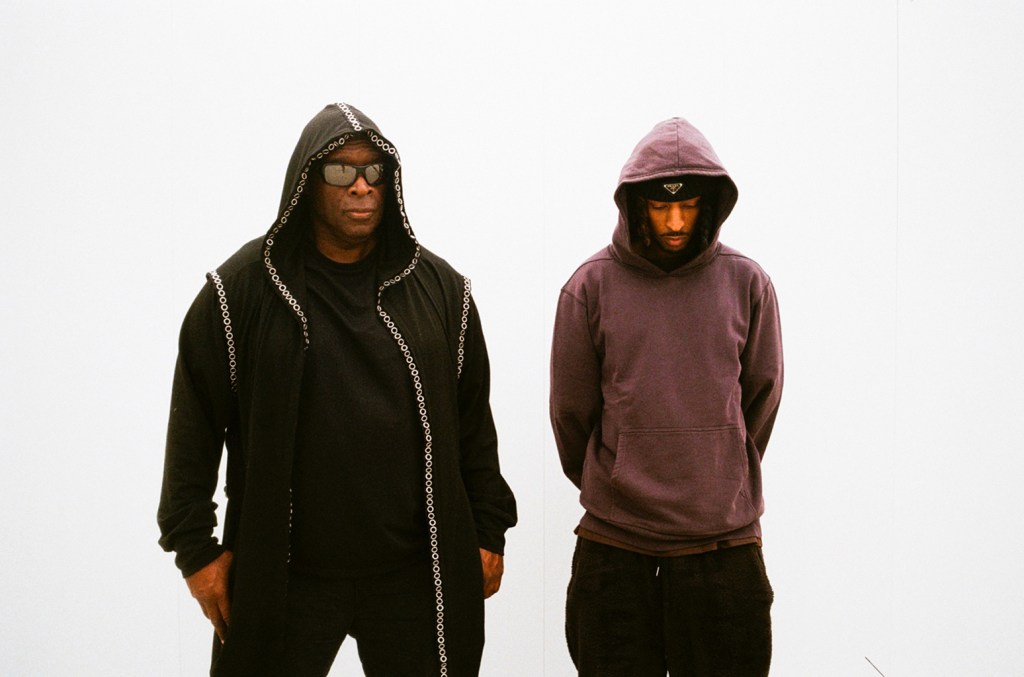
In 2023, the producer Kevin Saunderson wandered into the home studio he shares with his son Dantiez in Detroit. What he heard blasting from the speakers seemed familiar. “I said, ‘Man, that sounds like me!’” Saunderson recalls with a laugh. “[Dantiez] used some of my bass sounds.”
As one of three men widely credited with inventing Detroit techno, Saunderson is used to encountering artists who have borrowed scraps of his style. But this time, he got a chance to put his own twist on another producer’s unwitting homage.

“We’re always around each other,” Saunderson says of Dantiez. “We’ve already been doing Inner City [another group] together, and he sounds like me in some ways. So I thought, why don’t we just do an album together?” That release, e-Dancer, which takes its name from one of Saunderson’s projects in the 1990s, is due out June 13. 

Trending on Billboard

The two men spoke to Billboard over Zoom from their Detroit home: Dantiez, laid back, lounged on a couch in one part of the house, while the elder Saunderson spoke passionately in another room about the genre he helped create. He has embraced the role of elder statesman and techno historian in recent years, doing frequent interviews about the style’s origins and even guest editing a series for Mixmag. “I’ve been in it since the beginning — I’m the beginning of this movement in many ways,” he explains. “I’ve seen a lot, and I want to be a driving force trying to educate people to our music.” 

Over more than three decades, Saunderson’s discography has ranged from vocal dance-pop classics — Inner City’s “Good Life” and “Big Fun” — to the scrappy, scraping techno on e-Dancer’s canonical album, 1998’s Heavenly. “If you opened the techno songbook, Kevin Saunderson may have the most diverse — and in some ways, most prescient — discography of all,” Sam Valenti, founder of the label Ghostly International, wrote in January. “In any other country,” Valenti added, “he’d be given every tribute and lifetime achievement award imaginable.” 

The producer DJ Spinna put it more simply in a recent Instagram comment: “Just Want Another Chance” — the song in which Saunderson invented the “Reese Bass” sound that he heard Dantiez using in the studio — “changed my damn life!!”

e-Dancer started as a retort to a dance world that often polices its borders, wary of the potential for dilution that accompanies mainstream success. Inner City’s first two singles traveled far beyond Detroit and even the wider, if still insular, world of dance-heads, becoming top 10 hits in the U.K. (“Good Life” also cracked the Hot 100 in the U.S.) “I had all that success with Inner City, and all the Detroit guys were joking with me — ‘You’re commercial, now we can’t play “Big Fun” in the club,’” Saunderson explains. “It ain’t underground enough.” e-Dancer was meant to demonstrate that Saunderson still “had that other sound” in his arsenal.

He put out the first e-Dancer single in 1991; the title was “Speaker Punishing,” suggesting this wasn’t easygoing ear-candy. The follow-up, “Pump the Move,” put harsh chattering electronics front and center — softening them slightly with a cushy synthesizer line — while the B-side was squirrely and agitated, with the strafing energy of acid house. Heavenly collected tracks from these singles along with more songs from the mid-1990s.

In the last decade, Saunderson has decided to revisit some of his early successes. Nearly 20 years after Heavenly, he gently retouched the songs on Heavenly Revisited (2017), and followed that with Re:Generate (2021), which gave producers like Adam Beyer, Robert Hood and Special Request a chance to rework tracks from the original album. In 2019, Saunderson also relaunched Inner City, enlisting Dantiez — now a dance music producer in his own right — to join the new version of the group with Steffanie Christi’an handling vocals in place of original singer Paris Grey.

Father and son have established a working routine that Saunderson summarizes as “he starts it, and usually I finish it.” “Even though we live together,” adds Dantiez, who also puts out music on his own and with his brother, “it’s hard to actually get us both in the studio at the same time.” 

Between start and finish, though, tracks undergo endless tweaks. “I usually go through six, seven, eight versions of a song before it even makes it to [Saunderson],” Dantiez says. 

And even with the album due out shortly, they continue to iterate. The early advance copy sent to Billboard had a hard-driving, string-soaked vocal cut titled “Symbolical,” but Saunderson said he would likely pull out the drums before e-Dancer came out, making the song “real ambient, just the violin and her voice.” A previous version of the album-closer “Escape” — which pairs revving synths with a mean, ankle-level bass line — featured a male vocal, but it was later removed.

The Dantiez track that reminded Saunderson of his own work is “Emotions,” the second song on e-Dancer, which lays out the album’s throughline: A bass, frayed around the edges, that skulks and snarls under many of the tracks, seemingly spoiling for a fight. That buzzsaw sound reappears on “Dancer,” with wordless vocals wafting above it, “Frequency,” where the synths stutter and screech like rusted car brakes, and “Reece Punch,” which pairs it with pounding four-note piano runs. Dantiez once said that the key to a killer club track is “a big kick and a great bassline,” and he stayed true to that principle on e-Dancer.

Since Saunderson’s output has been so “prescient,” as Valenti put it, he remains at ease even as techno continues to evolve around him. The style has gone through “so many different phases,” Saunderson says. “Tech house became very popular. I was always in between [genres] — I could do something very techno or really house. I never said I was doing tech house at the time, but it’s really an in-between version of house and techno [like what I was doing].”

Lately Saunderson has noticed that in the U.S., “the trend seems like everything has gotten faster.” It can be “a little complicated” following up a set from a DJ who is racing along at 150 beats per minute, but he’s seen that before too — as Saunderson posted on Instagram recently, he’s been “playing hard ‘n fast long before TikTok techno was a thing.” When playing out new tracks in his sets, he has found that “Melodica,” “Emotions,” “Dancer,” and “Frequency” have elicited the strongest response from club goers. 

Following the release of e-Dancer, Saunderson and Dantiez will take their act on the road, performing at Loveland and MUTEK Montreal. They also have a party in Detroit, The Hood Needs House, that they are hoping to bring to other cities. On top of that, Saunderson maintains a busy solo DJ schedule, including a recent party at Detroit’s Movement Festival. At the event, he described recently as “techno Christmas,” he celebrated his KMS Records label and also featured his two sons — Damarii along with Dantiez — in the lineup.

“I find a way to play a few classics each set so people get a good education,” Saunderson says. “Some people may not know who the hell I am. But they hear me, and they get kind of blown away.”

Gen Hoshino sat down with Billboard Japan for its Monthly Feature series focusing on currently notable artists and works, to chat about his first new album in six years simply entitled Gen.

Explore

Explore

See latest videos, charts and news

See latest videos, charts and news

The new project, released May 14, is the Japanese superstar’s first full-length studio set since his previous smash hit album POP VIRUS. It contains 16 tracks including singles “Fushigi,” which topped the Billboard Japan Hot 100, “Create” (Japanese title: “Souzou”), the 35th anniversary theme song for Super Mario Brothers, and “Comedy” (“Kigeki”), the ending theme song for the anime SPYxFAMILY. Gen also includes a variety of other songs such as “Mad Hope (feat. Louis Cole, Sam Gendel, Sam Wilkes),” “2 (feat. Lee Youngji),” “Memories (feat. UMI, Camilo),” and “Eden (feat. Cordae, DJ Jazzy Jeff),” with guest artists from various countries.

The album is clearly different from Hoshino’s previous works in terms of sound design and songwriting. It reflects the changes in his production style that began during the pandemic, and his attempts to “sing about himself,” something he had previously tried to avoid doing. The 44-year-old singer-songwriter is set to break new ground in pop music with his latest project.

Trending on Billboard

Gen debuted at No. 2 on Billboard Japan’s Hot Albums chart and No. 1 on the Download Albums chart on the tallies released May 21. Hoshino broke down the production of his latest project and shared his current mindset after his six-and-a-half-year journey in this new interview.

Gen shows the various changes that you’ve gone through since your last album POP VIRUS, and at the same time, it’s a work that opens up a new phase in pop music. I imagine the starting point was “Create.” What’s your take on the process from your previous album to this one?

Gen Hoshino: The EP Same Thing that I released after POP VIRUS was a project that was like a “journey to find out about the outside of myself.” Until then, I’d basically been creating music on my own, but I wanted to know how other people were doing it and also to update my world. After going through that, I started writing “Create” and the pandemic struck. During the time I couldn’t leave the house, I taught myself how to produce music on a digital audio workstation (DAW) from scratch, and made a song called “Oriai” to try it out. I thought, “I can handle this” (DAW production), so I produced “Create” again from scratch. Looking back, I think that was the starting point for this album.

I used to start out (writing songs) on my guitar, but with a DAW, I can use various sound sources and punch in the drums, bass, keyboards and stuff to create my own world by myself. When I first started using it, I was like, “OK, this is my thing” and was immediately hooked. From the very beginning, it felt like, “This is totally different from the way I used to make music.” My skills improved from there and the things I could do kept increasing. 

It’s great that you were having so much fun during the production.

It was like that in terms of creativity, and there was also that innocence towards music at the center. It kind of felt like how it was when I started playing the guitar in junior high. I’ve been in the business for 25 years now, and in the 20th year of my career, I got a new toy. I can maintain objectivity while doing the actual work feeling like a junior high school student. That was an experience I’d never had before.

The album includes tracks featuring Louis Cole, Sam Gendel, Sam Wilkes, Lee Youngji, UMI, Camilo, Cordae, and DJ Jazzy Jeff.

Before, I used to write a song on my guitar, write the score, have the band members get together, discuss it and record it, and that was it. This time it was different in that I started by creating the basic track on my own on a DAW, and if I thought that a part would work better recorded live, I had a musician come in and record it, then put that back on my computer and edited it again.

For example, for “Mad Hope,” I handed the beat that I’d made to Louis and said to him, “You can play it this way, or you can arrange it,” and he sent me the data of him playing it the same and the version where he’d arranged it. I then decided where and how I could use those various takes and edited them. After that, I changed the structure of the song to make it longer, so I visited Louis at his home and recorded some more. It was like I was making everything from beginning to end always at my fingertips.

So the flow was like, as I worked on the songs, the faces of the people I wanted to collaborate with would come to mind and I’d make an offer. “2” was like that, too. After I started writing the song, I thought, “It’d be great if Youngji rapped on this,” so I asked her to do it.

She covered your song “Koi” at her Japan show last year. Did you have any previous contact with her?

I liked her music and listened to it a lot, and have also seen the variety shows she appeared on. She debuted as a rapper while in high school and is definitely “current” in terms of sound and skill, but I sometimes detect a whiff of female rappers from the ’90s in her and she has various sides to her which fascinated me. Then a fan of hers sent an email to my radio show telling me that Youngji had covered “Koi” at a concert in Japan and said she was a fan of mine. We followed each other on Instagram after that.

You both wrote the lyrics for “2 (feat. Lee Youngji).” What kind of themes did you share?

It was about two people being invincible when they get together, and also about making it a song of empowerment for each of us. I already had my lyrics, and when I told her the theme, she came back with some great bars. She also offered to rap in Japanese, and her Japanese verses were really great, too. UMI and Camilo, who worked with me on “Memories,” as well as Cordae and Jazzy Jeff, who took part in “Eden,” really understood what I was trying to do, and they each interpreted it through their own filters and reflected that into their music. I was thinking how fortunate I was while working on the project that I could interact with them in such an organic way. 

So you didn’t know which direction the sounds would end up?

Right. But there was one thing I wanted to do sound-wise. Each song contains a variety of sounds. There are unadjusted sounds recorded with very cheap microphones, clean sounds recorded in a good studio, synth sounds from computers and those from real synthesizers. The theme of the sound production is that all of these sounds, clean and messy, old and new, are all equivalent and they can all exist at the same time. You can hear the sound of a guitar with noise mixed in that I played at home and the clear sound of a guitar that Ryo-chan (Ryosuke Nagaoka) played in the studio in a single track, or sounds from 2025 and sounds made in 2021 existing at the same time. Past and present, clean and messy are next to each other. It’s an album where I assembled various sounds according to my senses.

You’re currently in the midst of your Gen Hoshino presents MAD HOPE domestic tour, and will be embarking on your Asia trek from August.

It’s been a while, six years, since I’ve been on tour. It’s called MAD HOPE, so I guess it’s like a concept tour, and since I haven’t toured in a while, I want to include both my latest songs and the old ones. Live shows belong to the audience is how I basically see it, so I hope everyone enjoys it the way they like. Heading home afterwards saying, “That was fun,” “That was good” is great, isn’t it? I prefer making the music, so when it comes to performing live, I always just feel so grateful. I’ve always felt that the best thing is for everyone to enjoy the show, and that feeling has never changed.

–This interview by Tomoyuki Mori first appeared on Billboard Japan

HANA dropped a new song called “Burning Flower” on Monday (June 9), and shared the accompanying music video on YouTube the same day. “Burning Flower” is a fiery, danceable number with an addictive “acchi” (it’s hot) interjection repeated in the chorus. The choreography is by the members themselves, and their dynamic dance performance set to […]