djfrosty

The Return of Vybz Kartel: After 13 Years in Prison, Dancehall’s King Reclaims His Throne — And Reveals How He Made Hits Behind Bars

In July, Jamaica’s most influential living artist walked out of a Kingston prison after 13 years, drove straight to his mother’s house for a tearful reunion over steamed fish and okra — and dove immediately into preparations for Freedom Street: his first performance since his release, and the biggest concert the country would see in nearly 50 years.

Locked up for the murder of Clive “Lizard” Williams, Vybz Kartel went away as a 35-year-old man at the height of his career with seven children, two of whom would make their own musical debuts in 2014. But even behind bars, he never stopped making music — managing to secretly record and release five projects that would reach the top 10 of Billboard’s Reggae Albums chart.

“Being in prison, you can’t feel sorry for yourself. I didn’t have time to do that. I had kids to feed. I had family to take care of. I had health issues, too,” Kartel tells Billboard in a private room at Downsound Records, the live-entertainment producer behind Freedom Street, in Kingston. “There was no time to be weak. You just fight the case and do the right thing.”

Trending on Billboard

Now, just days before Freedom Street — his New Year’s Eve show that will draw over 35,000 people to Kingston’s National Stadium — Kartel tells me he’s been holding daily three-hour rehearsals to ensure a “Taylor Swift- or Madonna-style” show while he records a new album at several studios, including one his children built for him while he was away. As I follow the Teacha around Kingston over the course of a sunny December day, fans of all ages stop him to profess their love and grovel for selfies — and if they aren’t trying to get his attention, they keep their eyes glued to him and hum whatever song of his comes to their minds.

It’s no exaggeration to say that Vybz Kartel is the most influential Jamaican recording artist since Bob Marley. But understanding Kartel’s singular career means grasping that his pop stardom and underground dominance have always worked in tandem. For every song of his that became a global mainstay, one of his raw, evocative mixtapes simultaneously ruled the streets of Kingston. Born Adidja Azim Palmer in Portmore, Jamaica — a coastal municipality about 15 miles outside of Kingston — Kartel has racked up 1.58 billion official on-demand U.S. streams, according to Luminate, making him one of dancehall’s commercial giants. But his countless controversies and towering sociopolitical influence have also made him a divisive cult figure.

His ’90s Alliance era cemented him as one of dancehall star Bounty Killer’s protégés and the genre’s fastest-rising star, wielding an impressive songwriting approach that blended his private and public personas through riveting gangster narratives and sexually explicit anthems. In the early to mid-2000s, Black Kartel reigned, with spunky, lewd hits like “It Bend Like Banana” launching his near-absolute rule over Jamaican society, which culminated in a seismic yearslong beef with fellow dancehall star Mavado (born David Brooks). By the dawn of the ’10s, White Kartel — by this point, the skin-bleaching he controversially sung of in 2011’s “Cake Soap” had visibly altered his skin tone (and spawned a new nickname) — had achieved several bona fide global crossover hits despite Jamaica’s banning of “daggering” songs (extremely sexually explicit tracks).

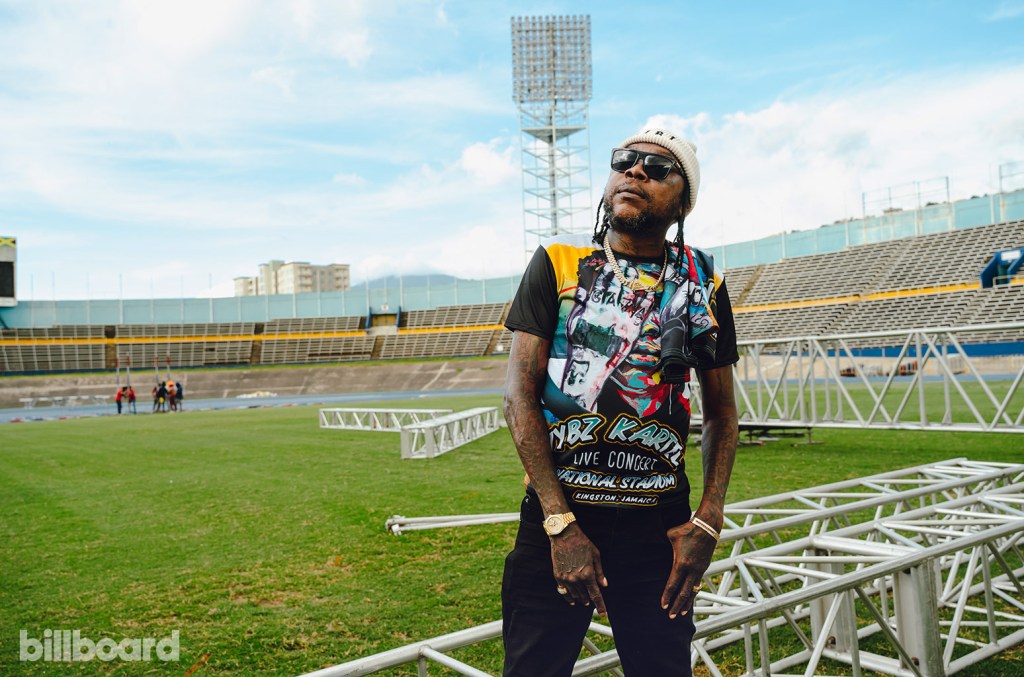
Fittingly, the Kartel I meet today is clearly a changed man. This newest iteration of Kartel is calmer and more collected; he seems firmly in his Unc era — cream Amiri beanie, custom tour T-shirt and a naughty joke always in his back pocket. His excitement for his upcoming show beams through the black sunglasses he never takes off, and the reverent air of gratitude around him is unmistakable. Kartel and his co-accused — Shawn Campbell, Kahira Jones and Andre St. John — have always maintained their innocence, and their second chance at freedom was hard-fought. According to a unanimous Court of Appeal ruling in summer 2024, the trial judge marred the original guilty verdict by allowing the jury to proceed despite knowing that one juror had attempted to bribe the others.

“Towards the end of my incarceration, I started connecting more with God. That’s why I tattooed ‘love God’ on my forehead,” Kartel reveals. “Nobody can tell me that God isn’t real. Ten years ago, I would have been saying something else, but God is real.”
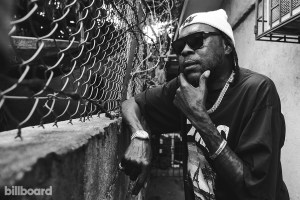
Vybz Kartel photographed on December 20, 2024 in Kingston, Jamaica.

Destinee Condison

Kartel’s return marks the start of a new era for both him and dancehall at large. In a Downsound Records rehearsal room, a poster displays five different Kartels with varying hairstyles, fashions and skin tones, each representative of a different chapter of his illustrious career. But whether he’s sporting a New York fitted or showing off his locs, the 48-year-old man known to his fans as Worl’ Boss has always been a chameleon, unafraid to alter his appearance to deepen his own mythos.

Inspired by dancehall icon Ninjaman and uncles who “used to DJ around the sound system,” Kartel began “writing 10 to 15 songs a day” as a teenager and released his debut single, “Love Fat Woman,” in 1993, which eventually landed him a spot in The Alliance, a group of dancehall DJs. “I’ve been fascinated with writing ever since I found out Babyface wrote [Karyn White’s 1989 hit] ‘Superwoman,’” he recounts. “As a kid, I was like, ‘How does a man write a song for a woman?’”

Two major factors ignited Kartel’s mainstream ascent in 2003: The release of his debut album, Up 2 Di Time, and a contentious clash with Ninjaman at Sting, Jamaica’s longest-running one-night-only reggae/dancehall showcase. At the time, Sean Paul was leading the early 2000s stateside dancehall crossover wave, but Kartel’s gritty “gun tunes” and X-rated “gyal tunes” were a far cry from the sugary-sweet riddims that made their way to top 40 radio. He smartly gilded his edgier lyrics with slick wordplay and head-spinning flows; Kartel could, and still can, dictate Jamaica’s culture with the flip of a single phrase. But some of those lyrics courted levels of controversy that threatened his — and the genre’s — continued crossover: In 2004, the U.K. Music of Black Origin Awards revoked Kartel’s nomination for best reggae act, alongside fellow Jamaican dancehall artist Elephant Man, over homophobic lyrics — a longtime point of tension in the genre as a whole. Twenty years later, speaking to Billboard, Kartel alludes to an evolution in his point of view: “The world has changed, and sometimes, you got to change with the times.”

By 2006, Kartel’s highly publicized split with The Alliance culminated in him joining the Portmore Empire — a collective of artists hailing from the neighborhood and signed to his Adidjahiem Records, which he’d established three years prior — leading to a feud with The Alliance’s Mavado, who took it upon himself to reply to Kartel’s disses. From 2006 to 2009, Kartel and Mavado lobbed searing disses at one another over the hottest riddims; Kartel even once carried a coffin with Mavado’s name on it onstage. Jamaica’s youth divided themselves between the camps — Kartel’s Palestine-referencing Gaza crew and Mavado’s hood-repping Gully clan — and, in certain cases, committed street violence in their names. On Dec. 7, 2009, in an effort to end that strife and unite the country’s youth, the two officially ended their feud with a joint performance; the next day, both met with Jamaican Prime Minister Bruce Golding.

Like any good dancehall clash, the Gaza-Gully feud only boosted Kartel’s popularity. Buoyed by its irresistible interpolation of Ne-Yo’s “Miss Independent,” Kartel and Spice’s intensely carnal “Ramping Shop” duet reached No. 76 on Billboard’s Hot R&B/Hip-Hop Songs chart in 2009, marking both artists’ charts debut. His crossover continued with 2010’s “Straight Jeans & Fitted” and “Clarks,” the latter a team-up with Popcaan, Kartel’s most successful protégé — a testament to his influence on late-’10s dancehall crossover artists. But as Kartel finally started to snag true crossover smashes, he continued oscillating between being dancehall’s global face and an underground provocateur: In 2011, he became the first musician to receive an artist-specific ban from Guyanese radio.

Kartel calls Lil Wayne his “favorite rapper,” and his life outside the studio mirrored that of the hip-hop legend in 2011. Charged with two separate murder counts, Kartel was found not guilty of murdering Jamaican businessman Barrington Burton by one jury, while a different jury found him guilty of the murder of Clive “Lizard” Williams. On April 3, 2014, Kartel was sentenced to life in prison after a 65-day trial, one of the longest in Jamaica’s history.

While incarcerated, Kartel clandestinely recorded — with the help of an iPad and his producer, Linton “TJ” White — a litany of projects, including 2016’s King of the Dancehall, which spawned “Fever,” arguably the biggest dancehall crossover hit of the latter 2010s. “Fever” entered two Billboard airplay charts and has earned over 104 million official on-demand U.S. streams — a win for Jamaica in a year when non-Jamaican artists such as Drake and Justin Bieber had propelled dancehall back onto top 40 radio. But between his incarceration and dancehall’s nonstandardized approach to music distribution (compilations of years-old singles tend to lord over regular studio album cycles), Kartel’s impressive consumption numbers don’t paint the full portrait of his cultural impact.

“Freedom Street [will] bring dancehall back as a serious contender in the international market,” says Downsound Records owner and CEO Joe Bogdanovich, who also notes that 700 police officers and private security workers were enlisted for the event. “[Kartel] is more conscious of good over evil and he’s doing something really positive for the youth and himself. That kind of positivity is going to make Jamaica uplift fans around the world.”

Destinee Condison

The concert — which featured explosive appearances by Spice, Popcaan, Busta Rhymes and more dancehall heavyweights — set the stage for Kartel’s incredibly busy 2025. A deluxe version of his 2015 Viking (Vybz Is King) album is due later in January, while a proper comeback album is currently in the works. “Kartel won’t say nothing. Then, tomorrow, he drops a banger that he recorded last night or the day before,” producer Cordell “Skatta” Burrell jokes. “So there’s not much I can say!”

Outside of the studio, Kartel can finally focus on the kinds of major life activities he couldn’t address in prison — like treating his Graves’ disease and wedding planning (he got engaged in November). The evolved, post-incarceration Kartel is ready to reclaim his throne — but don’t expect a run for Parliament. “Everybody loves me on both sides — I want to keep it that way!” he quips.

“Freedom Street is about Vybz Kartel’s journey for the past 13 years,” Worl’ Boss explains. “The concept is me coming out of prison, the road to that freedom and celebrating with the fans as I go into the new year a free man. We were planning this concert before I even got released. I’ve been prepping for this concert since birth.”

What was your first time back in the studio like after you were released?

The first song I recorded when I came out was at my house. When I got arrested, my kids were [so small]. Now, I’m out and recording in a studio that my children built.

How exactly did you record while incarcerated?

Initially, I figured out how to record using an iPad but a lot of times, the sound was metallic because the cell didn’t have padding like a recording studio. The sound bounced all over the place. Then, I figured out that I could use my mattress as a sponge over my head.

Me and Linton “TJ” White produced the riddim for “Fever.” At the time — don’t come for me! — I used to love watching Gossip Girl and Vampire Diaries. Every time this show ended, a voice would say, “XOXO, Gossip Girl,” so that’s where I got the concept from to start “Fever” with “XOXO, my love is very special.” I recorded the song line by line, looking outside to see if anyone was coming. One line, look outside; two lines, look outside. It was necessary at the time to do what I love most. I would send the iPad out to TJ and then he got it mixed by Dunw3ll and the rest is history.

The entire process probably took a half hour. If I was in a studio, it would take maybe five or six minutes.

Did you ever get caught?

Never. I had people in other cells. If someone was coming, they would knock on the grill. [The guards] found a recording device lots of times, but they never caught me in the act of recording.

Were you aware of just how big “Fever” was even while you were away?

Not initially, but when we released the video and the numbers started going up, I [understood]. I wanted to shoot a video for “Colouring This Life,” but TJ thought how I was flowing on “Fever” was tough. I was like, “Alright, do whatever, man,” and he shot the “Fever” video. Bro, in a few months… Jesus Christ! I was like, “Good choice!” (Laughs.)

Being in prison, you can’t feel sorry for yourself. I didn’t have time to do that. I had kids to feed. I had family to take care of. I had health issues, too. There was no time to be weak; you just fight the case and do the right thing. It was crazy seeing the impact the song had, especially when it [got certified] gold [by the RIAA].

How far into your sentence were you when you started recording new material? 

In 2013, we started running out of prerecorded material, so we started recording new songs. I dabbled in it one time in 2012 with “Back to Life,” but the quality [wasn’t the best]. Young people were in the comment sections of the new songs like, “No way Kartel can see the future!” (Laughs.) They knew what was up.

What went through your head when you learned your sentence was overturned?

We had been fighting for so many years, so the feeling was overwhelming. The other guys I was charged with started getting ready and putting their clothes on, but then the judge said, “The case is overturned, but we are sending it back to Jamaica [from the United Kingdom] to let them decide if they’re going to retry the case or throw it out.” I was just listening because, as a ghetto yute, I’m used to disappointment. I don’t get excited too quickly. It’s never over till the fat lady sings, right? I was sitting with my legs crossed in my cell, listening to the radio and talking to my lawyer on my cell in my cell — get it? (Laughs.) He was like, “Yo, I think this is it,” and I said, “I’m going to put my clothes on.”

Immediately as I hung up, it was like an earthquake. [The decision] came over the radio and everyone in the prison was listening. Imagine 2,000 people shaking the bars and rumbling and celebrating — that’s when I knew, “Yeah. This is it.” I put my clothes on, jumped up, they came for me, I packed and left. I didn’t even bring anything with me; I gave my sneakers and TVs and stuff to the guys still in there.

What was the first meal you had after your release?

Steamed fish with okra. My mom made it for me. I went to her house first before I went anywhere else. It was a tear-jerking moment; tears of joy, and, in a sense, tears of sadness to know that I missed out on so much with my mother and my kids. [Kartel has five sons and two daughters.] My mom didn’t say anything to me when I went away because I never made her come visit me. It’s not her fault that I was in there. Why would I want her to see me in that place? I only saw her once during my incarceration; I was so sick that they had to take me to the hospital. I said to the superintendent, “Can you grant me a special visit, so I can see her?” And she and my dad came to the hospital.

How does present-day Kartel compare to the man that went away 13 years ago?

The Vybz Kartel of now is more chill and more mature. He’s more laid-back. The one that went in was a beast. I’m still a beast musically, but Iooking back at my personal evolution, I like who I am now. The Vybz Kartel of old gave me musical fame and fortune, so I don’t have any regrets about him. But I don’t want to go back to that Kartel. I’m good right here. That evolution was something I never knew I needed, but I did — especially having faith in God and believing and seeing him work.

I was born in the ’70s, so of course I grew up going to church. I started going around 11 years old, and, like most Jamaicans, when you reach a certain age, you start to fuss about going. I haven’t been to church yet since I’ve come home; every day my mom is asking me, but I’m going soon, mom!

Vybz Kartel photographed on December 20, 2024 in Kingston, Jamaica.

Destinee Condison

How has Kingston changed from when you first went away? 

The roads look different. The other day, my fiancée [Sidem Öztürk] had to tell me where to drive, and I’m like, “You’re from England!” But she’s been here for two years while I was locked down, so she got to know the place. Even on the highway going to the country, she had to drive me. It’s like relearning your own country. It’s fun, though! The other day, I literally got lost. I couldn’t believe it. I eventually figured it out, but so much has changed.

In hip-hop, there have been a few instances where prosecutors tried to use artists’ lyrics against them, which has sparked interesting debates about music censorship. Do you have any thoughts?

I don’t think art should be censored for the artist. It should be censored for the consumer. For example, “Vybz Kartel does adult songs, don’t let your kids listen.” But you can’t tell me that, because your children have ears, I can’t sing what I want to sing. That’s rubbish. The same shop that sells sweets also sells alcohol. If you catch your 10-year-old son drinking a beer, you’re not going to run to the beer-maker like, “What the hell are you doing?” So, if you catch your child listening to Kartel, don’t come to me. That’s a “you” problem.

Drake has called you one of his “biggest inspirations.” How do you think he handled his feud with Kendrick Lamar last year?

I’m not a fan of Kendrick. I don’t even listen to Kendrick, so I wouldn’t know. What does he rap? I saw it on the internet, but no disrespect to the dude, I hear him, but I don’t listen to him. Drake is more in tune with Jamaica and the culture. Drake is a better and bigger artist.

When did you and Mavado last speak?

When I came out! But we spoke a lot of times while I was inside. His son is also in the same prison that I was in. His appeal is coming up next year. Our sons grew up together, were in the same class at school and went to each other’s houses for birthdays. They’re still friends to this day. Me and David cool.

Since you went away, Afrobeats has exploded in global popularity. How in tune with that world are you?

Shatta Wale, Wizkid and Burna Boy are my three favorite Afrobeats artists. I like Tems too. Afrobeats is nice, you can just vibe to it. I think Buju Banton was saying something [controversial] about it [during an interview last year], but I understand where he’s coming from. Buju is a dancehall/reggae artist, so he’s going to be singing more conscious stuff about society. But there is a space for happy, fun music.
Destinee Condison

How can dancehall score another crossover moment?

What they do now is called trap dancehall, so it’s going to take a minute for the big markets to get used to it. It’s the kids’ time now. I like Kraff Gad and Pablo YG. Once the sound catches on in mainstream markets — London, New York, Toronto — I think they will have success.

There was a big thing a few years ago — I was even a part of it — with older artists saying, “This music is not going to go anywhere!” The music that runs the place is dictated by the kids at all times. That doesn’t mean the legends can be removed, but don’t fight the kids. Let them do what they’re doing.

I think the lyrics could [also] be a bit more tolerant and less X-rated. Says Kartel! (Laughs.) Afrobeats made such a big global impact because it can be played anywhere and for all ages. The lyrics need to be more commercialized and more tolerant, and sky’s the limit. Jamaica gave the world five genres: reggae, rocksteady, ska, mento and dancehall. We had hands in creating hip-hop and reggaetón. We’re not short of talent.

You’re nominated for your first Grammy, for best reggae album for Party With Me. How does it feel to finally earn that recognition?

If I wasn’t incarcerated, I would have been nominated already. But I understand, why would they want to nominate a dude in prison? I know if I wasn’t arrested, based on the trajectory that my career was on, I would have definitely won. But I’m very, very grateful.

[The 2024 Party With Me EP] was done in prison. I was under a vibe and got some beats from [producer] Din Din. It was getting closer to crunch time because the case was now in England. I was writing to keep my mind occupied, ended up with these songs and said, “Let me just put them on a little EP.” Bam, Grammy.

How’s the process of organizing your catalog been going?

Slowly but surely. I’m going to shoot videos for a lot of those songs I released while in prison. I’m in talks right now with a few American companies that want to give me a distribution platform so I can sign artists and get Jamaican dancehall music released in a more standardized way. We’re also working on a new album.
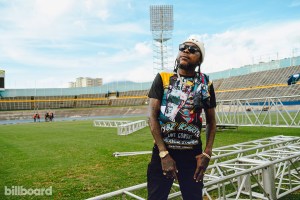
Vybz Kartel photographed on December 20, 2024 in Kingston, Jamaica.

Destinee Condison

When will you be back in the United States? 

We put the documents in. It would be a good look for all of us who are nominated to be at the Grammys. I’m headlining Wireless Festival in England this year. I’m already booked for some German shows in July. My No. 1 market was always America, but, over the last two years, my biggest streaming market is now the U.K. My fiancée is from the U.K. too. [The couple met during his incarceration in 2015 after she found him by “stalking his babymother’s Instagram”; he moved her to Jamaica in 2022.] I think that has a lot to do with the love, like, “Oh, wow. He’s dating one of us.”

When’s the wedding?

We wanted to do it in January on my birthday, but we’re going to wait because of unforeseen circumstances. Maybe Valentine’s Day. I’m such a romantic, right?

How did you prepare for Freedom Street? 

We did roughly three hours of rehearsal each day, but the first one was four hours and eight minutes — and we still didn’t DJ half of the songs. We sacrificed around 1,000 songs and ended up down to three hours. And that’s just like my performance. Everybody and their mom wanted to come. And I have no problem with that anyway, because it’s New Year’s! Let’s ring it in in a star-studded manner.

Where are you most excited to perform?

The entire Caribbean and New York — that’s Jamaica outside of Jamaica.

Speaking of New York, would you ever hop on a song with Cardi B? She recently jumped to your defense when people criticized your post-release appearance.

I love Cardi! We got a song coming out next year. We are actually in the process of writing it. Even if I have to walk, I’m performing that song in New York!
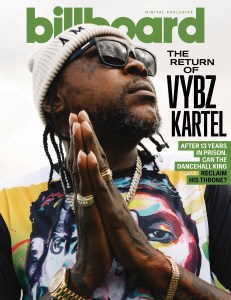

Vybz Kartel, Digital Cover Billboard

Vybz Kartel: Photos From the Billboard Cover Shoot

In July, Jamaica’s most influential living artist walked out of a Kingston prison after 13 years, drove straight to his mother’s house for a tearful reunion over steamed fish and okra — and dove immediately into preparations for Freedom Street: his first performance since his release, and the biggest concert the country would see in nearly 50 years.

Locked up for the murder of Clive “Lizard” Williams, Vybz Kartel went away as a 35-year-old man at the height of his career with seven children, two of whom would make their own musical debuts in 2014. But even behind bars, he never stopped making music — managing to secretly record and release five projects that would reach the top 10 of Billboard’s Reggae Albums chart.

“Being in prison, you can’t feel sorry for yourself. I didn’t have time to do that. I had kids to feed. I had family to take care of. I had health issues, too,” Kartel tells Billboard in a private room at Downsound Records, the live-entertainment producer behind Freedom Street, in Kingston. “There was no time to be weak. You just fight the case and do the right thing.”

Now, just days before Freedom Street — his New Year’s Eve show that will draw over 35,000 people to Kingston’s National Stadium — Kartel tells me he’s been holding daily three-hour rehearsals to ensure a “Taylor Swift- or Madonna-style” show while he records a new album at several studios, including one his children built for him while he was away. As I follow the Teacha around Kingston over the course of a sunny December day, fans of all ages stop him to profess their love and grovel for selfies — and if they aren’t trying to get his attention, they keep their eyes glued to him and hum whatever song of his comes to their minds.

Read the full Billboard cover story here.

Vybz Kartel: The Dancehall King’s Comeback | Billboard Cover

After being released from prison after 13 years, Vybz Kartel, the king of Dancehall, is ready to reclaim his throne. The Billboard cover star takes us through a day in his life in Kingston, Jamaica, where he shares his experience of creating “Fever” in jail, how he intends to get his music cleared for streaming, his personal evolution, his thoughts on newer artists in the genre, and more!

Keep watching to see how he plans on dominating the music industry again!

Vybz Kartel:

You can’t even feel sorry for yourself like I didn’t have time to do that. I had kids to feed. I had family to take care of. I had my health issues. I was sitting in this position, you know, with the legs crossed in my cell. I was listening to the radio. He was like, “Yo, I think this is it.” This is Vybz Kartel. I’m here with Billboard. Come spend the day with me.  

Kyle Denis:

Do you feel like the scene kind of stalled when you went away? 

Yes, but it also opened up a portal for the new artists. I mean, it took a minute because Vybz Kartel’s presence is so powerful, maybe like 20 between 2016 then new artists started coming out one by one, and then the floodgates opened, like around 2020, but yeah, it took a while. So yes.

I heard you, you know, recorded one of your biggest songs in the past decade while you were away, “Fever.”

I’ve been recording, but initially I figured out how to record using an iPod, the little, small, flat ones. You know, the original rectangular ones. But a lot of time the sound was metallic because the cell didn’t have the padding like what a studio has to kill the sound, so it bounced all over the place. Then I figured out that I could use my mattress as a sponge over my head. That’s when the music started getting clearer.

Keep watching for more!

Kesha Posts Heartwarming Throwback Video Celebrating 15th Anniversary of Debut Album: ‘I Had No Idea You Were That B–ch’

Fifteen years after the release of her debut album, Animal, Kesha is feeling nostalgic. In an Instagram post on Sunday (Jan. 5), the singer looked back on the making of the 2010 LP that made her a star and featured such beloved tracks as “Your Love Is My Drug,” “Tik Tok,” “Blah Blah Blah” and “Party at a Rich Dude’s House.”

Explore

Explore

See latest videos, charts and news

See latest videos, charts and news

“I spent my whole life learning the art of songwriting from my mom, an iconic songwriter herself, so when Animal came out, it was a culmination of the sounds of growing up, the sounds of falling in love, heartbreak, the sounds of coming of age, and I had no idea what these songs would open up for me and what kind of life I would be creating for myself just by putting these songs out in the world,” Kesha wrote, giving props to her mom, Pebe Sebert, a Nashville songwriter known for co-writing the 1980 Dolly Parton track “Old Flames Can’t Hold a Candle to You.”

“I’m so happy I did, and so happy you’ve connected to it the way that you have, and continue to do so,” she added, noting that the album’s debut hit, “Tik Tok,” had its biggest streaming day ever on Spotify last week following her set on Dick Clark’s New Year’s Rockin’ Eve with Ryan Seacrest. “Just goes to show that we all go through these same pivotal feelings and emotions growing up. I’m so happy to have grown up with all of you. Happy anniversary Animal. I had no idea you were that b–ch. But turns out you totally are.”

In an accompanying video, a then 22-year-old Kesha is asked what she thinks about how happy Animal is making her fans. “The only reason I made this record is to make kids have fun and have dance parties and inspire people to just be happy,” she says, her face covered in glitter in the clip that ends with a montage of looks and iconic moments from that era. “This whole is just kind of a very youthful, irreverent record. And I want it to be one of those records that you just put on and no matter what you’re doing or where you are it makes you happy.”

The singer has released the songs “Delusional” and “Joyride” as the first singles from her upcoming, as-yet-untitled sixth album, which will be the first release from her Kesha Records imprint.

AfroFuture Expands to the U.S. & Unveils 2025 Culture Calendar

Culture Management Group (CMG), the African-focused media management company that oversees AfroFuture and more, unveiled its 2025 AfroFuture Culture Calendar on Monday (Jan. 6).

This year’s calendar features AfroFuture’s first-ever major activation in the United States in August (at an unspecified date), underscoring CMG’s commitment to expanding its platform globally and amplifying African excellence worldwide. The full lineup of events, which can be found below, includes AfroFuture’s Culture Beach Jam series, which celebrates the richness of African heritage with immersive experiences, live performances and innovative programming; and the 2025 Basketball Africa League (BAL) Tour, which showcases African excellence in sports and live entertainment.

“We are thrilled to unveil our 2025 AfroFuture Culture Calendar and excited to expand our footprint across the continent. This is a unique opportunity to deepen our connections with the vibrant neighboring communities throughout Africa,” Abdul Karim Abdullah, CEO/co-founder of AfroFuture, said in a press release. “Our long-anticipated U.S. expansion marks a groundbreaking moment for Culture Management Group, as we continue to deliver on our promise to showcase Africa’s resilience, strength, and unparalleled talent on the global stage. 2025 will be a year of unforgettable experiences, and we can’t wait to share it with the world.”

Added Akosua Ayim, director of operations at AfroFuture: “AfroFuture’s legacy has grown into a movement that transcends borders. Our 2025 events are a testament to CMG’s mission to celebrate African talent, inspire innovation, and strengthen connections across the diaspora. This year, the world will see the true magic of Africa in ways they have never seen!”

For those interested in any of the BAL events, visit bal.nba.com for tickets. For more information on the Culture Beach Jam series, visit afrofuture-site.webflow.io/events.

See the 2025 AfroFuture Culture Calendar below.

Culture Beach Jam Series

Zanzibar: July 3-7

U.S.: August

Ghana: Dec. 28-29

BAL Tour

Morocco: April 5-13

Senegal: April 26-May 4

Rwanda: May 17-25

South Africa: June 6-14

Jelly Roll and Bunnie XO Welcome Three New Family Members: Adorable Baby Cows Brownie, S’Mores and Crunch

Jelly Roll and Bunnie XO are celebrated the new year by adding three new members to their extended family. In a video posted on Sunday (Jan. 5), the “Son of a Sinner” singer’s wife revealed that the couple’s farm is filling out thanks to the adoption of three mini-cows. In the cute clip, podcaster Bunnie introduced followers to “da boysss.”

The adorable trio, Brownie, S’mores and Crunch, are center stage in the accompanying clip, in which Bunnie re-enacts an iconic scene from Bridesmaids alongside the caption, “when you went for one mini-cow, but cam home with three.”

“How many of those did you take?” her friend lip synchs, as Bunnie — dressed down for farm work in a black hoodie, and “sobriety sucks” Jelly Roll baseball cap — mouths “I took nine… I did, uh, slightly overcommit,” while opening the gate to a stock trailer to reveal the white, black and brown cows.

In another video, Bunnie gets the whole gang hyped for the reveal, with Jelly excitedly asking, “Hey, where are the cows?” as she says, “let’s go see the new additions.” In the next scene, she’s saying, “the cows are here! The cows are here!” Followers then get a closer look at the three horned, with Jelly’s kids, 16-year-old daughter Bailee and eight-year-old son Noah getting geeked about their new pets.

Noah was especially psyched when asked why Crunch is his instant favorite. “I just feel that he is gonna be a great bull for me,” he says. “He’s small, he has the same hair and he’s probably nice.” Later, Jelly rolls out to the pen on the couple’s 500-acre Nashville farm while cooing, “Ooooh! We got cows!” as he gets up close and personal with Crunch and croons a few lines from Secondhand Serenade’s “Fall For You” to his new furry pals.

So he doesn’t feel left out, in another video Jelly Roll gets how own special friend, a strutting donkey named Griz. “He’s a stubborn f–ker,” Jelly jokes about his obstinate new pal. “I like the donkey,” he admits a few seconds later as he smiles at the sight of the little guy in his new enclosure. “I can’t believe he’s that small,” Jelly marvels.

Jelly Roll is gearing up to hit the road this year for the continuation of his Beautifully Broken tour in Canada, which will resume on March 6 with a show at the Memorial Centre in Victoria, British Columbia; he will also play the Tortuga Music Festival in Florida and Stagecoach in Indio, CA before hitting the road with Post Malone for their BIG ASS Stadium tour this summer.

Check out the cow reveal below.

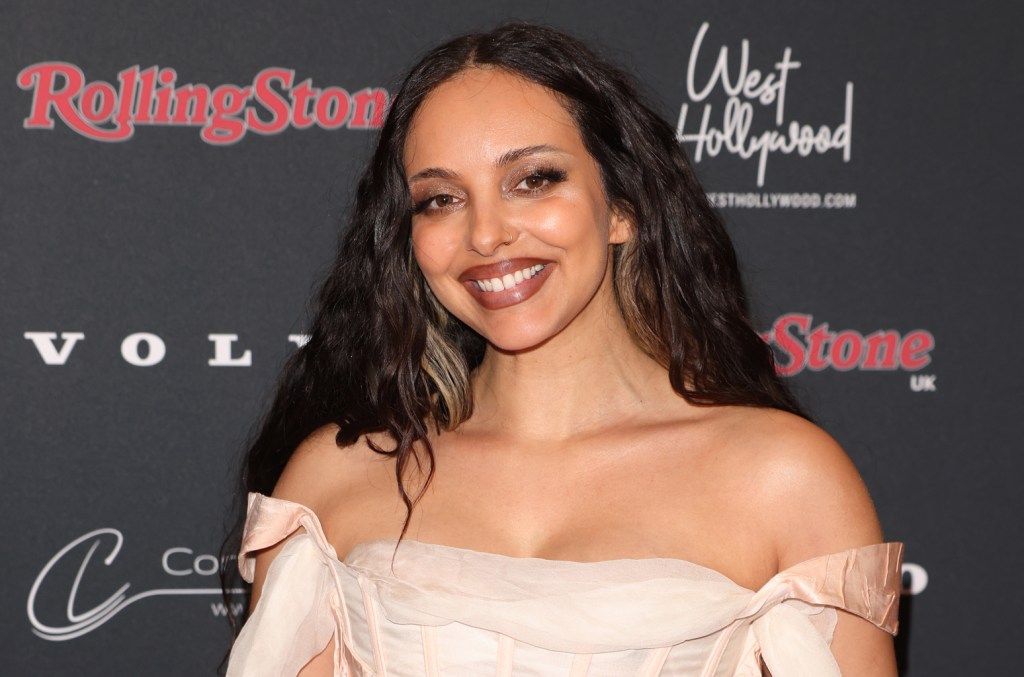
Little Mix’s Jade Thirlwall on ‘The X Factor’: ‘I Don’t Think That Kind of Show Can Exist Anymore’

Jade Thirlwall has discussed her time on The X Factor as a member of pop group Little Mix, who won the eighth series of the British version of the talent show in 2011.

Alongside bandmates Perrie Edwards, Leigh-Anne Pinnock and Jesy Nelson, the quartet were the first group to win the British version of the show. Little Mix went on to release six studio albums, most recently 2020’s Confetti. The band went on hiatus in 2022 and all members have pursued solo careers in the ensuing years.

Speaking to The Independent, Thirlwall said some parts of the show were “pretty f––ed up” while expanding on the pressures of appearing on the show, and the level of safeguarding contestants were offered. The British version of the show last aired in 2018, though other versions of the franchise continue to air elsewhere around the globe, including Denmark, Italy and Indonesia, among others.

“I think it had to end, I don’t think that kind of show can exist any more. We’re in a different place now,” Thirlwall said of the competition. “We wouldn’t put someone that’s mentally unwell on a TV screen and laugh at them while they sing terribly. The concept of a joke act on a show is just cruel. It’s all very Roman empire. But then at the same time, was it not the best training ever for me to enter the music industry?”

Thirlwall added: “I don’t know anyone that’s come off that show and not had some sort of mental health issue on the back of it, but also, even now, personally I’m conflicted criticizing [it], because it changed my life,” she said. “I was from a very normal working-class family up north, I had tried sending demos into labels, I’d gigged all over, I was doing everything I could to make it, and I needed a show like that to give me a chance.”

Thirlwall, who auditioned for the show three times, also spoke on the housing situation for female contestants who were placed in shared dormitories. “Even at 18, I knew there were people who weren’t mentally well in there, keeping everyone up at night,” Thirlwall said. “I don’t know if there was even security outside the house. It’s scary to think about now, but I was too young to realize that at the time.”

She continued: “I’d say five per cent of the people that went on there have come out of it not unscathed, but having survived; the other 95 per cent have suffered in silence,” she said. “How do you go from being on that show to back to your nine-to-five? How do you get signed to the label, think you’ve made it, and then once your song doesn’t hit the Top 10, you’re just dropped? It’s so savage, this machine that we’re a part of. Even back then, we knew how lucky we were every day that we were still signed.”

In 2023, Rebecca Ferguson, who was runner-up in 2010 to Matt Cardle in season seven, criticized the show and described her experience as “traumatic,” and implored broadcaster ITV to investigate. The show again came under criticism following the death of One Direction’s Liam Payne in October 2024, who also appeared on the show in the same season as Ferguson and faced numerous addiction and mental health battles throughout his career.

Later this week (Jan. 10), Thirlwall will release her latest solo single “IT Girl” via Sony Music. Her 2023 single “Angel Of My Dreams,” which tackled the industry’s darker side, featured in Billboard U.K.’s Songs of the Year list, and “showcased a fierce, focused artist ready to embrace every facet of her new solo era.”

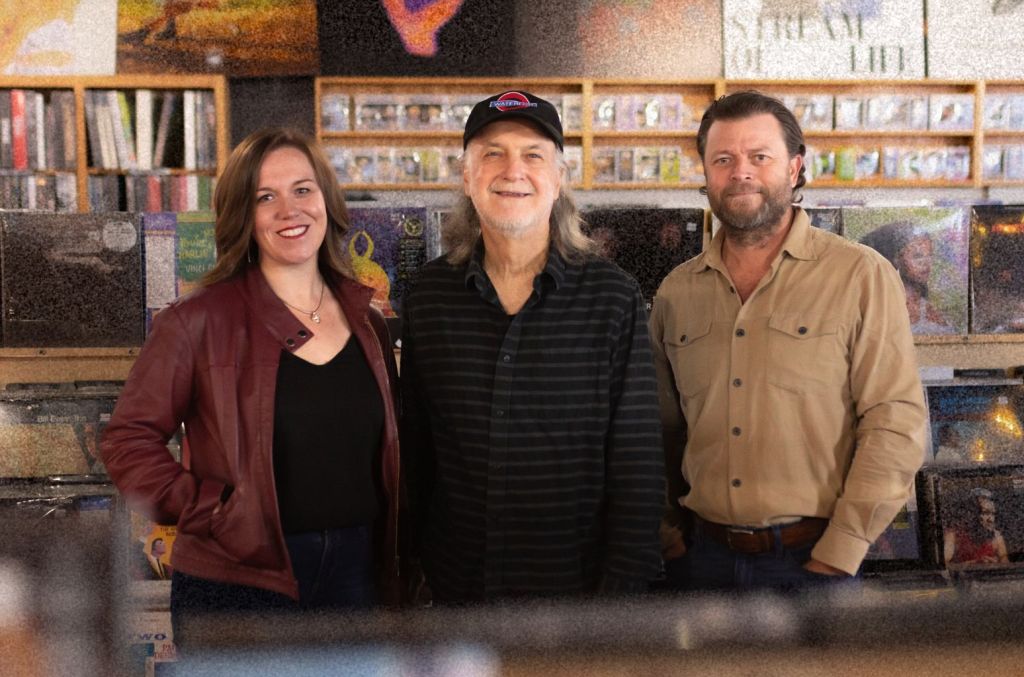
Austin’s Waterloo Records Announces New Ownership and Relocation

Austin’s Waterloo Records, a cornerstone of the city’s music scene since 1982, is entering a new chapter.

After over four decades as the heartbeat of Austin’s music culture, owner John Kunz has announced that he is passing the torch to new owners—Caren Kelleher, Founder & CEO of Gold Rush Vinyl, and Austin entrepreneur Trey Watson.

Along with the change in ownership, Waterloo Records will also be relocating to a new, larger space at 1105 North Lamar this spring.

Waterloo Records has long been a cultural hub for Austinites and visitors alike, hosting in-store performances by artists like Norah Jones, Willie Nelson, and Nirvana and playing a pivotal role in co-founding Record Store Day in 2008.

Trending on Billboard

“My decades-long hope, dream and endeavor, has been for Waterloo Records & Video to live on forever, continuing to promote Austin’s vibrant music culture and community,” said John Kunz.

“Now with this transition, all of my boxes are checked: a new larger home, just five blocks away; Caren and Trey buy in as my new, talented, local music industry partners; all of my team are retained and they will gain the opportunity for store ownership; all of the Waterloo Records hallmarks and traditions continue on, including innovation; and now as a minority partner and not sole proprietor, I get to work less, and play more. So thank you Austin!”

“John, Trey and I recognized this as a once-in-a-lifetime opportunity to guard and grow an iconic music business and to get to do so in a town we all love,” said Caren Kelleher. “John was one of the first people to welcome me to Austin when I moved here to start Gold Rush Vinyl and his friendship has been so important over the years. It means so much to me that he and his wife Kathy Marcus trust me to be part of the next chapter of Waterloo.”

Trey Watson, a longtime Austin entrepreneur with a background in music and media, said the store’s legacy is part of the city’s fabric.

“Since 1982, Waterloo Records has been a large part of the fabric of that soul as a small business and as a place where people gather as a community to celebrate music. I’m honored and grateful that John Kunz has entrusted our team with guiding Waterloo into the future. We have great things planned for all to experience.”

The move to 1105 North Lamar marks a significant upgrade for Waterloo, expanding its current 6,400 sq. ft. space by 50% to allow for larger events, enhanced in-store performances, and improved parking options.

The location, previously occupied by Louis Shanks Furniture and later a Whole Foods regional office, provides modern amenities while maintaining the store’s proximity to downtown Austin and nearby music venues. This expansion underscores the commitment to keeping Waterloo a key destination for music fans and artists alike.

The transition comes at a pivotal moment for Austin, a city known for its deep musical roots but also experiencing rapid growth as a global tech hub. “Austin has a soul about it that attracted me to move here over 25 years ago and continues to draw people here today,” said Watson.

Rosé and Bruno Mars Lead ARIA Charts Shake-Up After Festive Exit

The holiday season may be over, but the hits are just heating up on the ARIA Singles Chart.

As Christmas tracks retreat from their seasonal dominance, Rosé and Bruno Mars have reclaimed the crown with their smash hit “APT.,” catapulting from No. 8 back to No. 1 for an impressive eighth non-consecutive week on top. With holiday tunes swept off the charts, it’s time for pop’s biggest stars to shine again.

Gracie Abrams’ “That’s So True,” a former No. 1, leaps from No. 9 to No. 2, while Lady Gaga and Bruno Mars’ duet “Die With A Smile” ascends to No. 3 from No. 16. The track previously peaked at No. 2.

Explore

See latest videos, charts and news

See latest videos, charts and news

Other notable singles include Billie Eilish’s “Birds of a Feather,” which jumps from No. 19 to No. 4 after topping the chart for two weeks in August, and Shaboozey’s “A Bar Song (Tipsy),” climbing from No. 18 to No. 5. The latter spent five weeks at No. 1 during July and August.

Trending on Billboard

Sydney indie-pop duo Royel Otis debut at No. 47 with “Linger (SiriusXM Session),” a fresh take on The Cranberries’ 1994 hit “Linger.”

The Cranberries’ original version became the band’s breakthrough single in the U.S., peaking at No. 8 on the Billboard Hot 100 in May 1994 and stayed on the charts for 24 weeks. It remains one of their most iconic tracks, blending alternative rock with orchestral elements and highlighting Dolores O’Riordan’s ethereal vocals. Royel Otis’ 2024 album Pratts & Pain earned two ARIA Awards last November.

On the ARIA Albums Chart, Sabrina Carpenter’s Short n’ Sweet continues to dominate, securing its eighth non-consecutive week at No. 1. The album’s standout tracks “Espresso” and “Taste” return to the top 10, climbing to No. 8 and No. 10 respectively.

Ed Sheeran’s greatest hits compilation +–=÷× (Tour Collection) rises from No. 12 to No. 6, spurred by the release of a limited-edition vinyl. The album, which peaked at No. 4 in October, showcases six of Ed’s Australian No. 1 singles, including “Shape of You” and “Bad Habits.”

‘Emilia Pérez,’ ‘Shōgun,’ ‘Wicked’ & More Big Winners at 2025 Golden Globes

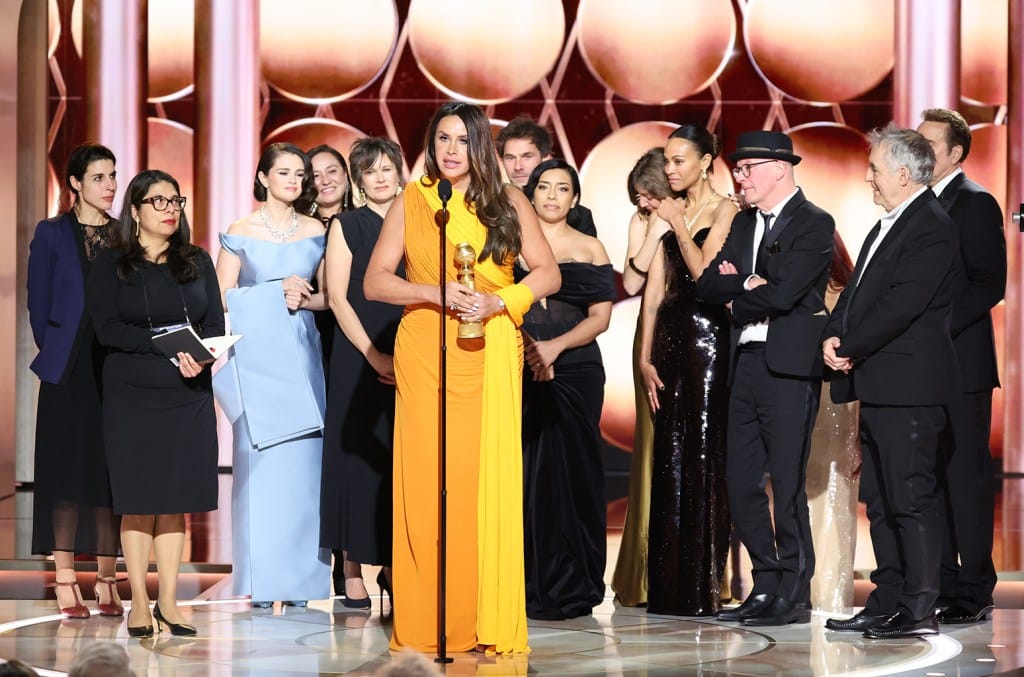
Emilia Pérez was the biggest winner on the film side at the 2025 Golden Globes on Sunday (Jan. 5). The film won four awards: best motion picture, drama; best motion picture – non-English language; best original song – motion picture for “El Mal” (co-written by Clément Ducol, Camille and Jacques Audiard); and best performance by a female actor in a supporting role in any motion picture for Zoe Saldaña.

Shōgun was the biggest winner on the TV side, with four awards: best television series – drama, plus acting awards for Anna Sawai, Hiroyuki Sanada and Tadanobu Asano.

The 82nd annual Golden Globe Awards, hosted for the first time by Nikki Glaser, were held at the Beverly Hilton Hotel in Beverly Hills, Calif.

Trending on Billboard

Anora was the night’s biggest shutout on the film side; it went 0-5 for the night. Only Murders in the Building was the biggest shutout on the TV side; it went 0-4 for the night.

Wicked won the Golden Globe for cinematic and box office achievement. Barbie won the award last year in the category’s inaugural year. Barbie went on to receive eight Oscar nominations, including best picture. This year’s Oscar nods will be announced on Jan. 17. Wicked and Barbie are both music-driven hits. The soundtracks to both films reached No. 2 on the Billboard 200 (though Wicked may yet reach No. 1).

Trent Reznor and Atticus Ross won for best original score for Challengers. This is their third win in the category, following The Social Network (2011) and Soul (a collab with Jon Batiste, 2021). This puts the Nine Inch Nails members in a tie with Justin Hurwitz as the only three-time winners for best original score this century at the Globes. Hurwitz won for La La Land, First Man and Babylon.

Demi Moore won her first Golden Globe – best performance by a female actor in a motion picture – musical or comedy – for The Substance, 34 years after she landed her first nomination in the same category for the box-office smash Ghost.

Ali Wong won best performance in stand-up comedy on television for her Netflix special Ali Wong: Single Lady. This was a bit of a surprise. Many figured the Globes’ host, Glaser, would win for her HBO/Max special, Nikki Glaser: Someday You’ll Die. Ricky Gervais, a five-time Globes host, was the inaugural winner in the category last year for his Netflix special, Ricky Gervais: Armageddon.

Flow won best animated feature, beating The Wild Robot and sequels to Inside Out and Moana, among others.

All of the winners were present to receive their awards except Jeremy Allen White, the star of The Bear, who won for best performance by a male actor in a television series – musical or comedy.

At a ceremony on Friday, EGOT recipient Viola Davis received the Cecil B. DeMille Award, a career honor for film work. Ted Danson won the Carol Burnett Award, the equivalent award for work in television. The awards were briefly mentioned on the telecast, but were not given the extended airtime they were afforded in the past.

Multi-Emmy-winning producing duo Glenn Weiss and Ricky Kirshner of White Cherry Entertainment served as executive producers and showrunners for the 82nd Golden Globes.

The Golden Globes are produced by Dick Clark Productions, which is owned by Penske Media Corporation. PMC is also the parent company of Billboard.