State Champ Radio
 obituary
Page: 4

Dominic “Mick” Mazzone OAM, a revered Australian music industry veteran, has passed away, his family has confirmed.
“The family of Mick Mazzone would like to announce the sudden and sad passing of our beloved dad, brother and uncle,” a statement issued on the afternoon of Thursday, April 17 read. “A stalwart of his family, he was surrounded by his loved ones in his last days.
“He will be remembered by many in the Australian music industry, which he worked in and loved for over four decades and deeply missed by his countless friends,” it continued. “We appreciate all the love and support shown to us. His legacy will live on.”
Mazzone grew up in Torrensville, a suburb of the South Australian capital of Adelaide, where he learnt to play the guitar as a young teenager. Performing in a number of local bands, he relocated to Sydney to embark on a career in the music business. Initially working with the Brenton Roberts Band (who were under the managerial guidance of veteran promoter Michael Chugg), Mazzone soon became regarded as an “industry all-rounder” for his versatility in the fields of sound engineering, production, and tour management.
Mighty Management was established by Mazzone where he oversaw names such as Cold Chisel guitarist Ian Moss and Sydney rockers The Radiators. Mazzone also extended his focus into the world of labels, with M Records featuring The Radiators alongside hard rock outfit De Mont, who were also part of the Mighty roster.
Trending on Billboard
Working on tours for the likes of Madonna, Billy Joel, Bon Jovi, and R.E.M during their time in Australia, Mazzone later served as founding member of the Music Managers Forum, and would become a founder and trustee of the industry charity the Golden Stave Foundation. In 2018, Mazzone received a Medal of the Order of Australia (OAM) in recognition of his contributions to the industry and his charitable endeavors.
In February 2024, Mazzone adopted the role of manager for ARIA Hall of Famers the Hoodoo Gurus, who topped the Alternative Airplay chart in 1989 with “Come Anytime,” and hit No. 3 in 1991 with “Miss Freelove ’69.” Mazzone’s promotion to the top job came after longtime manager Michael McMartin stepped down from the role, ultimately passing the following month.
In the wake of his passing, the Hoodoo Gurus shared a statement remembering Mazzone, noting they were “utterly devastated at the sudden loss of our dear friend.”
“It is impossible to convey the shock and grief we are feeling right now,” they wrote. “We have already shed many tears, and there will be many more to come, but our loss is nothing compared to the one that has been dealt to Mick’s close family and friends and, in particular, to his beloved kids, Frank, Antonia and Alex. Our hearts go out to them at this dreadful time.”
The Radiators also offered their condolences to Mazzone and his family, naming him one of their “great friends” and noting his “fantastic ear” and sharp managerial mindset.
“Mick holds a special place in our hearts, and we will forever be grateful for his time spent guiding and mentoring the Rads when we were at a low point in our career,” the band wrote. “His management helped lift us up, and without his strong, sure and steady hand, we as a band may not have been able to navigate the ‘90s.
“He will be sadly missed by so many people in the industry,” they concluded. “He was an incredible human. A quiet genius. Gone way way too soon. The world is a poorer place today, for the loss of one Mick Mazzone.”
For the past 25 years, Mazzone also served as the Technical Director and Production Manager for the annual APRA, Art and Screen Music Awards, held by copyright management organizations APRA AMCOS (Australasian Performing Right Association and Australasian Mechanical Copyright Owners Society).
“Mick’s warmth and sense of humour were legendary among those who had the pleasure of knowing him, like we did,” said APRA Chair Jenny Morris in a statement. “His genuine kindness made everyone feel welcome and valued, creating lasting memories for all who crossed his path. His contributions to the music industry and community will be deeply missed.”
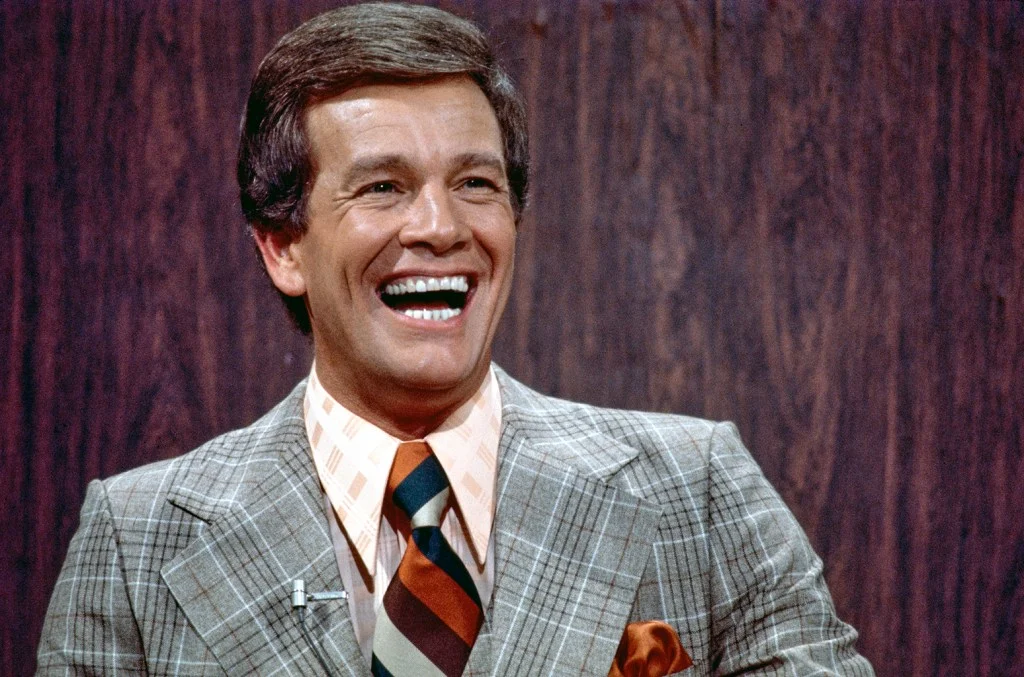
Wink Martindale, who had success as a DJ, radio personality, game show host and TV producer, died in Rancho Mirage, California, on Tuesday (April 15). He was 91.
Martindale was best-known for hosting Gambit from 1972 to 1976 (and again from 1980 to 1981), Tic-Tac-Dough from 1978 to 1985, High Rollers from 1987 to 1988 and Debt from 1996 to 1998.
He also had a short-lived career as a recording artist. His spoken-word hit “Deck of Cards” reached No. 7 on the Billboard Hot 100 in 1959. The song had been a No. 2 hit for “T” Texas Tyler in 1948 on Billboard’s Best-Selling Retail Folk Records chart, a forerunner to Hot Country Songs.
Trending on Billboard
Martindale landed just one other Hot 100 hit, “Black Land Farmer,” which reached No. 85 in 1961.
The future broadcaster was born Winston Conrad Martindale in Jackson, Tennessee. He began his career as a DJ at age 17 at WPLI in Jackson, earning $25 a week. After moving to WTJS, he was hired away for double the salary by Jackson’s only other station, WDXI. He next hosted mornings at WHBQ in Memphis while attending college at Memphis State University.
In 1959, he became morning man at KHJ in Los Angeles, moving a year later to the morning show at KRLA and finally to KFWB in 1962. He was a regular presence on Los Angeles radio into the 1990s. He had lengthy stays at KGIL (AM) from 1968 to 1971, KKGO-FM/KJQI and Gene Autry‘s KMPC (now KSPN-AM) from 1971 to 1979 and again from 1983 to 1987, a brief stint on KABC during 1989, and KJQI from 1993 to 1994.
Martindale’s first break into television was at WHBQ-TV in Memphis, as the host of Mars Patrol, a children’s series. While at that station, Martindale became the host of the TV show Teenage Dance Party, where Elvis Presley (who would become a friend) made an appearance in June 1956.
Martindale’s first game-show hosting job was What’s This Song?, which he hosted for NBC (credited as “Win Martindale”) in 1964-65. In 1970-71, he hosted a similar song-recognition game show, Words and Music, again on NBC.
While Martindale’s greatest claim to fame is as a game-show host, he periodically returned to music programming. Martin filled in as guest host for Casey Kasem on American Top 40 in October 1975.
In the 2000s, Martindale had a daily three-hour show on the syndicated Music of Your Life format. In 2012, Martindale hosted the nationally-syndicated The 100 Greatest Christmas Hits of All Time.
On June 6, 2021, Martindale began hosting the syndicated The History of Rock ‘n’ Roll, a two-hour weekend review of music from the 1960s, 1970s and 1980s. The production was created by Martindale, producer/engineer Peter Jay Gould of The Intervale Group, and writer/producer Gary Theroux.
Martindale was one of the hosts featured in the 2002 NBC special Most Outrageous Game Show Moments, alongside four other game show mainstays – Bob Eubanks, Jim Lange, Ben Stein, and Peter Marshall.
Martindale’s last program was the GSN original series Instant Recall, which premiered on March 4, 2010.
On June 2, 2006, Martindale received a star on the Hollywood Walk of Fame. It is located at 7018 Hollywood Boulevard, adjacent to the Hollywood Roosevelt Hotel – site of the first Academy Awards ceremony. On Oct. 13, 2007, Martindale was one of the first inductees into the American TV Game Show Hall of Fame in Las Vegas.
Martindale married Madelyn Leech in 1954, with whom he had four children; the couple divorced in 1972. He married his second wife, Sandy (née Ferra), on Aug. 2, 1975.
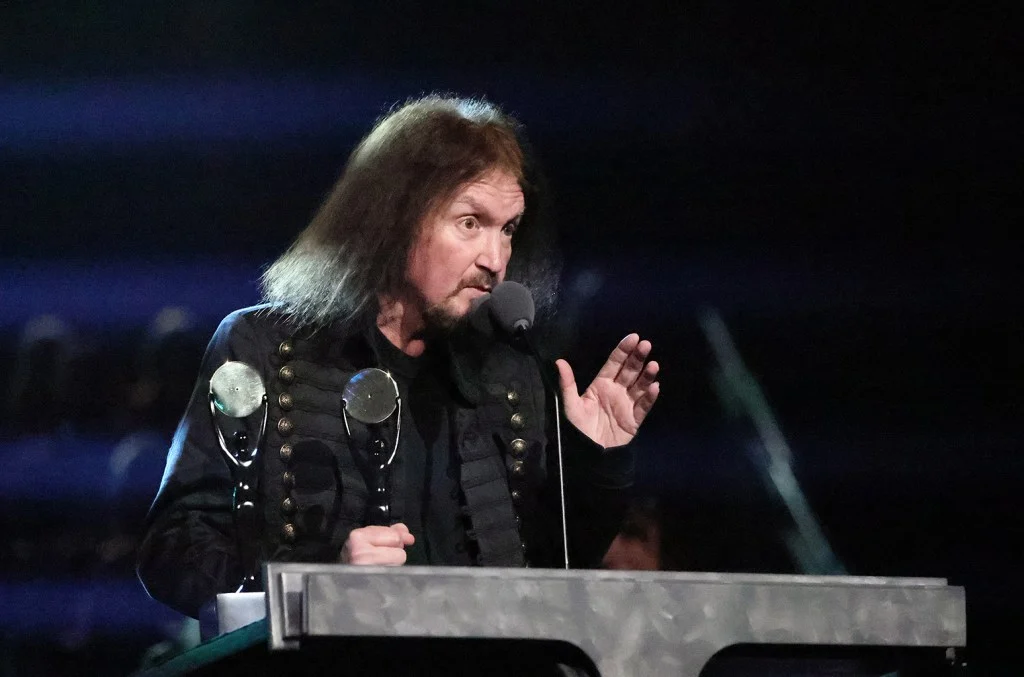
Former Judas Priest drummer Les Binks, who held the spot in the metal band’s lineup for a few crucial years in the late 1970s, had died at 73.
The group members announced their bandmate’s death on Tuesday morning (April 15), writing on Instagram, “We are deeply saddened about the passing of Les and send our love to his family, friends and fans. The acclaimed drumming he provided was first class – demonstrating his unique techniques, flair, style and precision – Thank you Les – your acclaim will live on…..”
Born in Portadown, Northern Ireland, on Aug. 8, 1951, Binks (born James Leslie Binks), spent time drumming with Eric Burdon and the Animals and War, as well as the pop group Fancy before joining Judas Priest in 1977. The band formed in Birmingham, England, in 1969 and fronted by leather-loving singer Rob Halford released its debut album, Rocka Rolla, in 1974, followed by 1996’s Sad Wings of Destiny.
Binks made his first appearance with group in time for 1977’s Sin After Sin, the band’s major label debut. The sessions saw the exit of early drummer Alan Moore, who was replaced by Simon Phillips for the recording. But, with Moore unavailable to tour, Binks was tapped to hit the road with the band after bringing his signature double-bass barrage to the bonus track cover of The Gun’s “Race With the Devil.”
Trending on Billboard
The drummer made his biggest mark on 1978’s Stained Class, where his massive, double kick drum sound and blitzkrieg style is a standout from the very first seconds of opening track “Exciter,” one of the songs that set the stage for the speed and thrash metal of the 1980s. The album, considered by many fans to be one of the group’s finest efforts, featured a rare co-songwriting credit for Binks on the ominous prog-metal shouter “Beyond the Realms of Death.”
Binks also appeared on the follow-up, 1978’s Killing Machine (which was released as Hell Bent for Leather in the U.S.), the most commercially oriented collection to date from the Priest, and the LP that would also mark his swan song with the group. Anchored by meaty rock anthems such as “Rock Forever” and the raucous “Hell Bent For Leather,” the album set the stage for what would become the band’s commercial breakthrough on 1980s British Steel, which featured the hits “Living After Midnight” and Beavis and Butt-Head favorite “Breaking the Law”; Binks was replaced on that album by former Trapeze drummer Dave Holland.
Binks’ final record with Judas Priest would be the band’s 1979 Unleashed in the East live album recorded in Tokyo earlier that year, after which he split following a reported dispute with band manager Mike Dolan over compensation for the live LP.
The drummer played with a series of other bands throughout the 1980s and ’90s (Lionhearted, Tytan) and formed the all-star Priest cover band Les Binks’ Priesthood, in 2017. In a testament to the crucial role he played in the development of Judas Priest’s sound, Binks was on stage with the rest of Priest in 2022 when the group was inducted into the Rock and Roll Hall of Fame and performed as part of their three-song set in one of his final public appearances before his death.
Check out their performance at the RRHOF ceremony below.
Max Romeo, the beloved reggae singer best known for recording such widely sampled songs as “War Ina Babylon” and “Chase the Devil” died in Saint Andrew Parish, Jamaica on Friday (April 11) at age 80. A statement on the singer’s Facebook page read, “It is with deep sadness that we announce the passing of our beloved Max. We are deeply grateful for the outpouring of love and tributes and kindly ask for privacy at this time. Legends never die.”
Explore
Explore
See latest videos, charts and news
See latest videos, charts and news
While no official cause of death had been announced at press time, according to The Guardian, the singer born Maxwell Livingston Smith died from heart complications.
Trending on Billboard
Born in St. D’Acre in St. Anne, Jamaica on Nov. 22, 1944, Romeo left home as a teenager to seek out a music career in Kingston in the late 1960s, where he met such future reggae superstars as Bob Marley and Peter Tosh and got his first small taste of success as part of the group The Emotions. Though he would later make a name for writing conscious, political songs such as “Let the Power Fall on I,” Romeo first burst onto the scene in 1969 with the explicit, lascivious “Wet Dream.” The tune on which he sings “Every night me go to sleep, me have wet dream/ Lie down gal, let me push it up, push it up, lie down,” became a British top 10 hit despite getting banned from BBC Radio stations due to its cheeky lyrics.
The accompanying 1969 album, A Dream, didn’t spawn any other hits, but Romeo returned in 1971 with the more politically focused Let the Power Fall, which mixed skanking covers of songs by Neil Diamond (“Crackling Rosie”) and Bob Marley (“Chatter Box”) with that album’s breakout anthem, “Let the Power Fall On I”; the song became the theme for Jamaica’s People’s National Party during its winning 1972 election campaign.
“I’m gonna put on an iron shirt/ And chase Satan out of Earth. I’m gonna put on an iron shirt/ And chase the devil out of Earth,” Romeo sang on the the steady rocking “Chase the Devil,” one of several hits from the pair of albums Romeo recorded with pioneering reggae producer Lee “Scratch’ Perry. The song has been widely sampled over the years by everyone from The Prodigy (“Out of Space”), to Jay-Z (“Lucifer”) and Cage the Elephant (“Ain’t No Rest For the Wicked (Wicked Devil Reggae Remix),” among many others.
The fruitful relationship between Romeo and Perry launched in 1975 on the album Revelation Time, with the Perry-produced reggae-fied take on the traditional children’s song “Three Blind Mice.”
By the next year, Romeo was all-in with Perry, using his crack studio band, the Upsetters, as his house band on the career-peak War Ina Babylon LP. Infused with Perry’s signature reverb-drenched dub style, the album opened with the hypnotic “One Step Forward” — a broadside against Prime Minister Michael Manley’s declaration of a state of emergency in 1976 — and included the pleading title track, which mirrored the political and social turmoil that gripped the island nation in the mid-1970s.
The song was part of a rising tide of roots reggae anthems commenting on the nation’s turmoil, with Romeo singing, “War ina Babylon/ Tribal war ina Babylon/ It sipple out deh [it’s slippery out there].” The album was considered to be the first in a “holy trinity” of LPs from Perry’s mystical, chaotic Black Ark recording studio, along with Junior Murvin’s Police and Thieves and the Heptones’ Party Time.
After releasing 1977’s Reconstruction album, Romeo moved to New York where he co-wrote and starred in the musical Reggae, as well as providing backing vocals on the Rolling Stones’ Emotional Rescue track “Dance (Pt. 1).” Stones guitarist Keith Richards co-produced and played guitar on Romeo’s next album, 1981’s Holding Out My Love to You.
Though he never managed a Marley-like breakthrough in the U.S., Romeo released nearly two dozen albums from the 1980s through his final studio effort, 2019’s Words From the Brave. In 2023, the singer filed a $15 million lawsuit against Universal Music Group and Polygram Publishing over what he said were improper royalty payments.
Listen to some of Romeo’s most beloved songs below.

Country music songwriter Larry Bastian, known for penning songs including Garth Brooks’ “Unanswered Prayers” and “Rodeo,” died on Sunday (April 6) at age 90, Billboard has confirmed. Bastian’s passing was previously reported by the Porterville Recorder.
Bastian, a longtime writer for Major Bob Music, was born Sept. 1, 1934, in Porterville, Calif. He was born into a family who farmed in California’s San Joaquin Valley. After graduating from Porterville High School in 1952, he went on to work as a biologist for 15 years at the Department of Agriculture in Kern and Tulare counties. He also harbored a love for music and songwriting.
Trending on Billboard
He launched his songwriting career in the 1970s, when he connected with Bonnie Owens and other musicians forging the Bakersfield Sound. He soon became friends and cowriters with Jim Shaw, and together they wrote a song called “This Ain’t Tennessee and He Ain’t You,” that was recorded by Janie Fricke and released in 1980 (Eddy Arnold and Tom Jones would later also record the song).
He has written songs recorded by Merle Haggard and David Frizzell (“Lefty”), Tammy Wynette (“Back to the Wall”), Conway Twitty (“Saturday Night Special”), Tracy Byrd (“Why”) Sammy Kershaw (“If You’re Gonna Walk, I’m Gonna Crawl,” “Yard Sale”), Reba McEntire (“The Girl Who Has Everything”), Rhett Akins (“Somebody Knew”), Moe Bandy (“Nobody Gets Off in This Town”), George Jones (“Forever’s Here to Stay”) and Craig Morgan (“Look at Us”).
Some of his biggest country chart successes came in the 1990s as a writer on Brooks’ “Unanswered Prayers” and “Rodeo.” Bastian solo wrote the latter, which, according to Garth Brooks: The Anthology Part 1, was originally titled “Miss Rodeo” and written for a female artist.
“This was a song I had written probably six or seven years before I met Garth … it was about a gal lamenting the fact that her guy was in love with the rodeo rather than her,” Bastian wrote in the Brooks anthology. “Finally, Garth said to me, ‘I’m going to record it.’ I said, ‘You can’t record it. It’s a girl’s song.’ He said, ‘Just watch me.’” The song became a top five Billboard Country Airplay hit in 1991.
Garth Brooks: The Anthology Part 1 also notes Bastian provided a key lyrical hook for “Unanswered Prayers” (co-written by Brooks and Pat Alger), which became a two-week Country Airplay chart No. 1 in 1991. Beyond those hits, Bastian also wrote and/or cowrote other songs recorded by Brooks, including “I’ve Got a Good Thing Going,” “The Old Man’s Back in Town,” “Cowboy Bill,” “Nobody Gets Off in This Town” and “Man Against the Machine.”
“That type of drive, first off you have to know that you can do it,” Bastian said during an interview on The Paul Leslie Hour in 2020. “There was no doubt in my mind that I could write a song. I think you have to be that driven to succeed, and then there’s a lot of luck. They have a saying, ‘You can’t get out of the way of a hit song,’ and that’s so right.”
A celebration of life is pending.
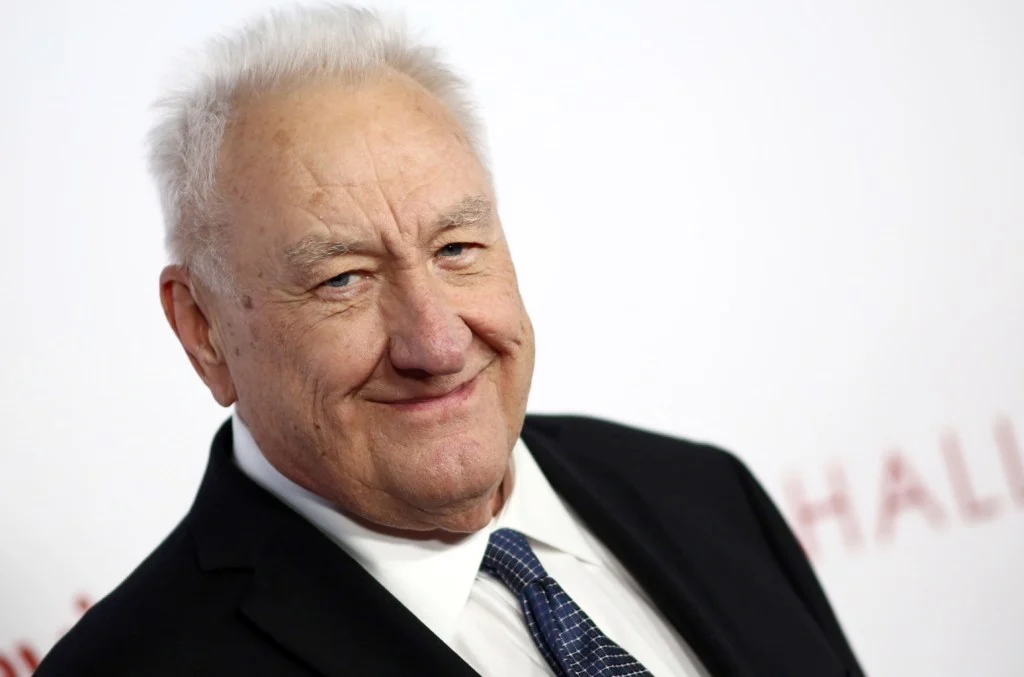
If you watched music on TV at any point in the last 50+ years, you most likely experienced the work of Don Mischer, who directed and/or produced hundreds of hours of programming, including six Super Bowl halftime shows and variety specials headlined by such icons as Barbra Streisand and Willie Nelson. Mischer, who amassed 15 Primetime Emmys for his work, died on Friday (April 11) in Los Angeles. He was 85.
Mischer produced and directed Motown 25: Yesterday, Today, Forever, the star-studded 1983 special on which Michael Jackson introduced his Moonwalk. Mischer also produced and directed a 1985 sequel, Motown Returns to the Apollo. In 1993, he reunited with Jackson when the superstar headlined the Super Bowl halftime show. That performance is credited with elevating the halftime show to its current status as the world’s top platform for a music performer.
Trending on Billboard
Mischer worked on five more Super Bowl halftime shows, headlined by Paul McCartney (2005), The Rolling Stones (2006), Prince (2007), Tom Petty & the Heartbreakers (2008) and Bruce Springsteen & the E Street Band (2009). The most memorable of these was the show which Prince headlined amid a downpour. It regularly tops lists of the greatest halftime performances of all time.
Mischer directed The Kennedy Center Honors across four decades (1978-86 and 1992-2005). He also produced and/or directed three of the four EGOT-level awards shows — working on three Tonys telecasts, three Oscars telecasts and nine Primetime Emmys telecasts. He never worked on the Grammys, but he served as executive producer of the Billboard Music Awards three times (2011-13).
He produced and directed the 1996 Summer Olympics opening ceremony and served as executive producer of the 2002 Winter Olympics ceremony.
He worked on many superstar specials, including Goldie & Liza Together (1981), where Oscar winners Goldie Hawn and Liza Minnelli memorably teamed up. Others included Willie Nelson: Texas Style (1989), Sonny & Cher: Cher Remembers (1999), Barbra Streisand: Timeless (2000) and James Taylor: One Man Band (2007). He also worked on dance specials headlined by Twyla Tharp, Mikhail Baryshnikov and Gregory Hines, and comedy specials starring Eddie Murphy and Don Rickles.
Mischer worked on many “event” TV specials, keyed to anniversaries or re-openings. Among them: Irving Berlin’s 100th Birthday at Carnegie Hall (1988), Carnegie Hall: Live at 100 (1991), Bob Hope: The First 90 Years (1992), To Life: Israel’s 50th Anniversary Celebration (1998) and National September 11 Memorial & Museum Dedication (2014).
Mischer’s first major credit in TV was directing Great American Dream Machine on PBS (1970-71). That led to directing In Concert, a late-night music series on ABC (1973-75).
Mischer produced the 2004 Democratic National Convention, which led to a rare, if understandable, slip on his part. After John Kerry’s speech accepting the nomination for president, balloons were supposed to drop from the ceiling onto the delegates below. However, the balloons got stuck and did not fall. Mischer lost his temper and let out a string of expletives — which went out live on CNN.
In January 2009, Mischer had a happier experience when he produced and directed We Are One: The Obama Inaugural Celebration at the Lincoln Memorial, which featured performances by Beyoncé and Bruce Springsteen.
Mischer received 15 Primetime Emmy Awards, a record 10 Directors Guild of America Awards for outstanding directorial achievement, two NAACP Image Awards, and a Peabody Award (for Motown 25: Yesterday, Today, Forever). In 2012, he received the Norman Lear Achievement Award in Television from the Producers Guild of America. In 2014, he received a star on the Hollywood Walk of Fame. In 2019, he received a Lifetime Achievement Award from the Directors Guild of America (DGA).
In November 2023, Mischer published his memoir :10 Seconds to Air: My Life in the Director’s Chair. Kirkus Reviews called it “a frank, insightful recollection of an accomplished career.”
“Don was simply iconic,” Lesli Linka Glatter, president of the DGA, said in a statement. “His mastery of directing live events was a fast-paced symphony of meticulous planning combined with on-the-spot decision-making that elevated our nation’s greatest cultural events, always capturing the human spirit behind them. … Don’s skill as a director elevated the emotions, excitement and importance of these live worldwide moments, creating lifelong memories for audiences around the world.”
After directing and producing hundreds of hours of live television, Mischer knew what he was doing and felt at peace when a show went live.
“There’s nothing like that feeling that the clock is ticking down and you’re sitting in the truck, and then suddenly it’s time, and everybody gets quiet,” he told the Los Angeles Times in 2010. “That’s when I get calm.”
Mischer is survived by his wife, Suzan; four children, Heather, Jennifer, Charlie and Lily; and two grandchildren, Everly and Tallulah.
Marc Nathan, the promotion and A&R executive who in his 55-year career helped Barenaked Ladies, 3 Doors Down and more get record deals, has died. He was 70.
He passed away earlier this week at Vanderbilt Medical Center in Nashville, a representative says. A statement said Nathan had “been ill for some time and he finally succumbed to a variety of afflictions.”
Nathan got his foot in the door in the music industry at just 15 years old, when the then-Queens, New York, kid wrote a letter to Todd Rundgren and received a reply from Ampex Records’ Paul Fishkin, in regards to a track listing anomaly he found on Rundgren’s Runt album.
“He just so happened to open a stack of Todd’s fan mail that day. If he hadn’t opened that stack of mail that day, you know … My life would have been altered forever,” Nathan said in an interview in 2019.
Nathan soon landed his first industry job in radio promotion at Ampex, which led to him building a career with roles in promotion at labels including Bearsville, Casablanca, Playboy, Sire and Atlantic.
“I lost my best friend of 55 years,” Fishkin noted following his death. “Marc Nathan walked like he talked as well as anyone I’ve ever known. His irascible, acquired taste persona was what I enjoyed the most, even though maddening at times. We had much in common chiding and deriding phonies and pretentious fools in sports, politics, but most importantly, the music business. We occasionally enjoyed busting each other as well. We delighted in having our own sometimes hilarious shorthand putting us on the floor at times with uncontrollable laughter. He was a great record man, and a baseball and hockey chronicler supreme, among his many talents and passions. And yes, I have stories! But most important was his loyalty and support for all the right people and issues. And he never let me down in all those 55 years.”
Over the years — with stints in New York, Los Angeles and, most recently, Nashville — Nathan also worked in A&R, having a hand in Universal’s acquisition of Cash Money Records, and in talent development for Universal, Capitol, Atlantic/ATCO and imprints.
Among the artists he got signed were the bands 3 Doors Down (at Universal) and Barenaked Ladies (at Sire). He later established a label, Flagship Records, to release solo work from Barenaked Ladies co-founder Steven Page.
“Marc was a record person of the highest order,” Page wrote following his death. “He was absolutely and passionately obsessed with music and amassed an encyclopedic memory for songs, charts and artists. He played a huge role in my career and in my life — a role that arced across our entire shared timeline. Marc was a guy who loved big, emotional music and also too-smart-for-its-own-good pop and had a huge soft spot for silly novelty songs too. We kind of fit the bill perfectly for him and he got us. Marc took our demo tape to Seymour Stein at Sire records, and, thankfully, Seymour got it. While everyone else was calling us a throwaway, Seymour looked at Marc and said, ‘They’re a Simon and Garfunkel for the ‘90s.’ Marc was always especially proud of his involvement, and I’m eternally grateful to him for it.”
Page added, “He was among the first and most persistent of my friends to lend me support, advice and solidarity. He could be a nudge, but that’s only because he had a huge heart and he really, really cared. There were many, many people in his life that he would counsel and coach and cajole and mentor through their darkest hours — he’d been there and back several times himself — and I’m proud and grateful to be one of those friends. I’m lucky to have known him.”

Alice Tan Ridley, who competed on America’s Got Talent in 2010 after decades of performing in New York City subway stations, died on March 25 at age 72, according to an obituary from her family. Ridley — who was also the mother of Precious and American Horror Story actress Gabourey Sidibe — pursued her dreams […]
Founding Blondie drummer Clem Burke died on Sunday (April 6) at age 70. The group announced the passing of their longtime bandmate on Monday morning (April 7), writing, “it is with profound sadness that we relay the news of the passing of our beloved friend and bandmate Clem Burke following a private battle with cancer.”
Explore
Explore
See latest videos, charts and news
See latest videos, charts and news
The statement continued: “Clem was not just a drummer; he was the heartbeat of Blondie. His talent, energy, and passion for music was unmatched, and his contributions to our sound and success are immeasurable. Beyond his musicianship, Clem was a source of inspiration both on and off the stage. His vibrant spirit, infectious enthusiasm and rock solid work ethic touched everyone who had the privilege of knowing him.”
Burke (born Clement Anthony Bozewski in Bayonne, N.J. on Nov. 24, 1954) joined punk/new wave pioneers Blondie in 1975, not long after the group was formed by singer Debbie Harry and guitarist Chris Stein.
Trending on Billboard
Burke performed on all of Blondie’s albums, from their 1976 self-titled debut, to their breakthrough 1978 LP Parallel Lines (which featured their Billboard Hot 100 No. 1 hit “Heart of Glass”), 1979’s Eat to the Beat and 1980’s Autoamerican. He was behind the kit during a pivotal, world-changing time in mid-1970s New York when Blondie, along with The Ramones, Patti Smith, Talking Heads and Television, were regularly playing in such legendary bars as CBGB and Max’s Kansas City, setting the stage for the punk revolution in America, and across the world.
Following their string of hit albums, the band announced their split in late 1982 before getting the original members back together for a brief 1997 tour and then a world jaunt the next year and a new album, No Exit, in 1999. The group’s eighth studio album, The Curse of Blondie, dropped in 2003, followed by more touring and 2014’s Ghosts of Download album and their final known recorded set with Burke, 2017’s Pollinator LP.
With an exuberant, high-energy style influenced by the Who’s Keith Moon and Beatles’ Ringo Starr — he played left-handed on a right-handed kit just like Ringo — Burke told Tidal in 2022 that he never thought of his day job as work. “Especially when I do things with my friends and my little side projects that I have with various bands,” he said. “With drumming, you kind of have to keep doing it. You don’t really wanna lose your chops. You wanna be prepared to play when you have to play. So it works both ways. I help people out by playing with them, and they help me to keep my abilities together.”
He also noted in that interview that the thing that initially attracted him to Stein and Harry was that he was on a quest to find his David Bowie, Jim Morrison or Mick Jagger. “I was emphatic about that. I needed to work with people that I felt had that sort of charisma and creativity,” he said. “Debbie was amazing. You could sense that immediately. And I’m not talking about just her beauty. I’m just talking about her whole essence as a human being, as a person. I would put her on the same level as Bowie, as far as the things that she comes up with creatively.”
After Blondie’s split in 1982, Burke stayed very busy performing and recording with a wide variety of bands, including the Romantics, Pete Townshend, Iggy Pop, Plimsouls, Bob Dylan, the Eurythmics, Joan Jett, Wanda Jackson, Dramarama, Nancy Sinatra and Johnny Thunders. He even briefly filled in for a couple of gigs in 1987 for his pals in the Ramones under the stage name Elvis Ramone. During his eight-year (1980-1988) run with the Eurythmics, Burke performed on three albums with the group, including on their 1986 Grammy winning single “Missionary Man.”
He also teamed up in 1983 with another ’80s punk icon, former (and again) Sex Pistols guitarist Steve Jones, to form the group Chequered Past with vocalist Michael Des Barres and bassist Tony Sales and former Blondie bassist Nigel Harrison. In keeping with his indefatigable work ethic and affection for fellow punk-era players, Burke formed another all-star group in 2011, the International Swingers, which featured another Sex Pistols refugee, bassist Glen Matlock, as well as Generation X guitarist James Stevenson and Supernaut singer Gary Twinn.
Burke is featured on all of the Blondie’s No. 1 hits, which also included “Call Me,” “The Tide Is High” and “Rapture,” providing whatever the songs needed, from funky disco-leaning rhythms to reggae, funk and pop beats. He was inducted into the Rock and Roll Hall of Fame in 2006 alongside bandmates Harry, Stein, founding keyboardist Jimmy Destri and bassist Gary Valentine and guitarist Frank Infante.
In their tribute to their lost friend, Blondie honored Burke’s many side gigs, writing, “Clem’s influence extended far beyond Blondie. A self proclaimed ‘Rock & Roll survivalist,’ he played and collaborated with numerous iconic artists, including Eurythmics, Ramones, Bob Dylan, Bob Geldof, Iggy Pop, Joan Jett, Chequered Past, The Fleshtones, The Romantics, Dramarama, The Adult Net, The Split Squad, The International Swingers, L.A.M.F., Empty Hearts, Slinky Vagabond, and even the Go-Go’s. His influence and contributions have spanned decades and genres, leaving an indelible mark on every project he was a part of.”
The message ended with condolences for Burke’s family, friends and fans across the world. “His legacy will live on through the tremendous amount of music he created and the countless lives he touched,” Blondie said.
See Blondie’s post here and check out some of the classic tunes Burke played on below.
https://bsky.app/profile/blondieband.bsky.social/post/3lm7zdctjts2x

Dave Allen, who played bass guitar during influential British post-punk band Gang of Four’s early years — and who went on to found the group Shriekback — has died. He was 69.
Allen’s former Gang of Four bandmate Hugo Burnham shared the news of his passing on Sunday (April 6).
“It is with broken yet full hearts that we share the news that Dave Allen, our old music partner, friend, and brilliant musician, died on Saturday morning,” Burnham wrote on Gang of Four’s Instagram, where the band featured several photos in a tribute to Allen. “He was at home with his family.”
“Dave had endured the early-onset of mixed dementia for some years which has been a heartbreaking time for his wife Paddy, his children, and close friends. Our love and thoughts are with them,” he stated.The note continued: “Jon and I [Hugo] went to see him and spent a lovely afternoon with him and the family. We talked and laughed for hours, sharing rich and vivid memories of good times together. Adventures, careers in music, raising families, our interwoven lives spanning half a century. We’ve been so very lucky to have had the Ace of Bass in our lives. We know that Dave would have wanted nothing more than to step onstage with us again in Portland on our farewell US tour. But it’s now a bridge too far. Goodbye, Old Friend.”
Trending on Billboard
After joining Gang of Four with Burnham, Jon King and Andy Gill in Leeds in 1976, Allen made his mark as bassist on the band’s debut album, 1979’s Entertainment!, and their follow-up set, 1981’s Solid Gold. While neither were chart successes in the U.S., Gang of Four’s early work influenced the likes of Michael Stipe, Flea and Kurt Cobain, who included Entertainment! on his top 50 albums list (as published in the posthumous Journals).
In 1981, Allen formed Shriekback with Barry Andrews (XTC, The League of Gentlemen), and went on to record a number of albums with the group.
Allen rejoined Gang of Four for a reunion with the core lineup in the mid-’00s. He also performed with bands including The Elastic Purejoy and Low Pop Suicide.
Gang of Four bandmate Gill, the group’s founding guitarist, died in 2020.
Allen’s experience in the music industry went beyond the recording studio and stage. Most recently he co-founded and served as director of music relations at DinWorkshop, a consultancy, design studio and lab built to create alongside musicians.
Previously he held positions in artist relations and artist advocacy at Apple Music and Beats Music, was business development director in consumer digital audio services at Intel, and in the late ’90s was general manager at eMusic. Allen was a speaker and panelist on digital strategy, music and technology at SXSW, CMJ, SF Music Tech and more throughout his career.