State Champ Radio
 News
Page: 525
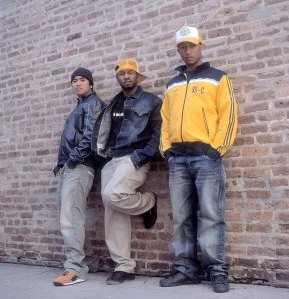
Pharrell Williams has always had impeccable style. From his early days as a producer and performer with the Neptunes and N.E.R.D working on songs for Wreckx-n-Effects, the Clipse, Jay-Z and Nelly, Skateboard P always put a premium on looking good while sounding excellent.When the world first met Williams — who is a co-chair for the 2025 Met Gala — he was rocking distressed, baggy jeans, track jackets and trucker hats before launching his own bespoke fashion label, Billionaire Boys Club in 2003, followed by spin-offs Ice Cream, Bee Line and Billionaire Girls Club. All along, the multi-hyphenate has relished being a bridge between what the kids are wearing in skate parks and clubs and what’s pushing the envelope on the runways in Milan.
As his client list expanded to include production, songwriting and collaborations with Ed Sheeran, Migos, Beck, SZA, J Balvin and Rauw Alejandro, Williams also branched out on the fashion side, co-designing a line of glasses and jewelry for Louis Vuitton in 2008, followed in 2013 with a sunglass line for Moncler.
Constantly juggling his own music, a heavy production schedule and voicing himself in the 2024 LEGO autobiographical film Piece by Piece, Williams also teamed with G-Star Raw in 2014 on the “RAW For the Oceans” denim collection made from recycled ocean plastic. He followed with a 2014 collab with Uniqlo called “i am OTHER,” then paired with Adidas on a 2016 “Human Race” edition of shoes, and in 2017 designed an $1,100 sneaker for Chanel/Adidas.
His crowning fashion achievement, though, was in February 2023, when Louis Vuitton announced that Williams had been appointed to serve as their men’s creative director, with his first collection for the famed fashion house hitting runways during Paris Men’s Fashion Week in June 2023.
Check out Billboard‘s chronicle of Williams’ fashion evolution.
2002
Image Credit: Paul Natkin/Getty Images
From left: Chad Hugo, Shay Haley and Pharrell Williams of N.E.R.D. at the Park West on June 2, 2002 in Chicago.
2002
Image Credit: J. Vespa/WireImage
Pharrell Williams during Motorola 4th Annual Holiday Party at The Lot on Dec. 5, 2002 in Los Angeles.
2004
Image Credit: Theo Wargo/WireImage
Pharrell Williams during Pharrell Williams and Nigo Debut “Billionaire Boys Club” Apparel Line and “Ice Cream” Footwear at Drive-In Studios on August 25, 2004 in New York City.
2004
Image Credit: Evan Agostini/Getty Images
Pharrell Williams attends a preview gala dinner for the Metropolitan Museum’s “Wild: Fashion Untamed” exhibition on Dec. 6, 2004 at the Metropolitan Museum of Art in New York City.
2005
Image Credit: Jeffrey Mayer/WireImage
Pharrell Williams arrives at the 2005 Vibe Awards at Sony Studios on Nov. 12, 2002 in Culver City, California.
2005
Image Credit: Ethan Miller/Getty Images
Pharrell Williams arrives at the 2005 Billboard Music Awards held at the MGM Grand Garden Arena on Dec. 6, 2005 in Las Vegas, Nevada.
2006
Image Credit: Jon Furniss/WireImage
Pharrell Williams attends The Audi Polo Challenge Cup on July 5, 2006 at Cowdray Park in Midhurst, Great Britain.
2006
Image Credit: Gareth Cattermole/Getty Images
Pharrell Williams arrives at the 13th annual MTV Europe Music Awards 2006 at the Bella Center on Nov. 2, 2006 in Copenhagen, Denmark.
2007
Image Credit: Jean-Paul Aussenard/WireImage
Pharell Williams arrives at the Louis Vuitton Gala celebrating the Murakami exhibition held at the Geffen Contemporary at Moca on Oct. 28th, 2007 in Los Angeles.
2008
Image Credit: Brad Barket/Getty Images
Pharrell WIlliams attends BET’s ‘Rip the Runway’ at The Manhattan Center on Feb. 21, 2008 in New York City.
2009
Image Credit: Jon Furniss/WireImage
Pharrell Williams attends the annual summer party at The Serpentine Gallery on July 9, 2009 in London, England.
2010
Image Credit: Dominique Charriau/WireImage
Pharrell Williams attends the NRJ Music Awards 2010 at Palais des Festivals on Jan. 23, 2010 in Cannes, France.
2011
Image Credit: Dimitrios Kambouris/Getty Images
Pharrell Williams visits the Dior pop-up shop featuring Anselm Reyle for Dior at Miami Design District on Nov. 29, 2011 in Miami City.
2012
Image Credit: Frazer Harrison/Getty Images
Pharrell Williams attends the OHWOW & HTC celebration of the release of “Terrywood” with Terry Richardson at The Standard Hotel & Spa on Dec. 7, 2012 in Miami Beach, Florida.
2013
Image Credit: Mark Davis/Getty Images
Pharrell Williams arrives at the premiere of Universal Pictures’ “Despicable Me 2” at Gibson Amphitheatre on June 22, 2013 in Universal City.
2014
Image Credit: Lester Cohen/WireImage
Pharrell attends the 56th Grammy Awards at Staples Center on Jan. 26, 2014 in Los Angeles, California.
2015
Image Credit: Jason Merritt/Getty Images
Helen Lasichanh and Pharrell Williams attend The 57th Annual Grammy Awards at the Staples Center on Feb. 8, 2015 in Los Angeles.
2016

As part of the ongoing Jazz & Heritage Festival in New Orleans, a jubilant event took place at music venue Tipitina’s on Monday (April 28): the annual Shorty Fest, which took over the block outside the legendary club to showcase the talented teens and young adults involved with the Trombone Shorty Foundation.
This marked the 13th year the Foundation hosted Shorty Fest, which gives kids a chance to show off their skills outside Tipitina’s before heading inside for a student-assisted performance by “Trombone Shorty” (born Troy Andrews). The annual event serves as a fundraiser for the foundation, started by New Orleans native Shorty, that provides a free after-school program for kids aged 12-18 (Trombone Shorty Academy); a music industry apprenticeship program; a free program on the music business (Fredman Music Business Institute); and masterclasses and cultural experiences including trips to Cuba.
The young students not only perform at Shorty Fest, but use the skills learned through the foundation’s business-oriented programs to help produce the event, which features marching bands, alumni bands and a battle of the bands contest.
Trending on Billboard
“People can see on display the full beauty of New Orleans music culture, but through the eyes of the younger generation,” says Trombone Shorty Foundation co-founder/executive director Bill Taylor. “Then throughout the evening, our young people sit in with the various bands that are performing, and then they all come out with [Trombone Shorty] during his set, and it creates this magical moment that it’s hard not to be emotionally moved seeing that on stage playing out in front of your eyes. It’s like watching the passing on of culture in real time.”
The Trombone Shorty Foundation launched in 2012 as a way to pass on and preserve the various musical cultures that have made New Orleans such a vibrant city. Taylor tells Billboard that the foundation was created in the aftermath of Hurricane Katrina in 2006. With so many families displaced by the tragedy, historically Black neighborhoods became gentrified, especially the Treme neighborhood where Shorty grew up.
Trombone Shorty Foundation at Shorty Fest in New Orleans.
Jafar M. Pierre
“One of the things that New Orleans has always been known for is its ability to regenerate that culture and pass it down to the next generation. And the way Troy was able to absorb a lot of it early on was through his neighborhood,” says Taylor. “We recognized the need to protect the culture and to give young people the same opportunities that a young musician like Troy had when he was their age.”
The foundation’s flagship program, the Trombone Shorty Academy, provides students a chance to learn how to play instruments, perform on stage and be immersed in the musical traditions of New Orleans. While the city is best known for brass bands and jazz, students are also taught about soul music, funk and other less well-known influences on the Louisiana sound.
Shortly after the foundation launched in 2012, the leadership decided they needed to also educate students on the business side of the music industry and launched the Fredman Music Business Institute. The free program gives students insight into how to financially support themselves as musicians, but also how to get involved in event production, touring, licensing, management, finance and marketing. The foundation takes the students — roughly 200 per year — to other U.S. music hubs to see how the business of music is run outside New Orleans, giving them the chance to visit studios, agencies, management companies and more in Nashville, New York, San Francisco and other locations.
“That infrastructure that exists in Nashville, and obviously New York and L.A., is pretty lacking in New Orleans,” says Taylor. “It is going to be the young people who are going to change that.”
The foundation’s apprenticeship program allows kids ages 12-24 to learn from industry experts and then apply those skills to paid positions with hands-on work throughout the city, with apprentices selecting the industry partners that best align with their interests.
Taylor offers an example of a talented young trumpet player who performed and traveled with the Academy but whose real passion was graphic design. “He is out of college now and opened up his own graphic design company,” Taylor says. “He now designs some of the artwork for our events. He connected with his real passion and it’s connected to music, but he’s not trying to be a professional musician, necessarily.”
Trombone Shorty
Jafar M. Pierre
Along with a trip to Nashville, the foundation also recently took a group of 250 students, staff and musicians to Havana, Cuba — where Shorty found a lot of inspiration while visiting a relative — for an annual trip that started in 2020. The most recent visit to the country included appearances by George Clinton, Valerie June, Yola, Robert Randolph and more.
“New Orleans is your superpower, because if you’re from New Orleans and you’re in music, you naturally get respect,” says Taylor. “Then the question is, what can we do to connect some of these young people to a bigger world, so that the possibilities of what they can do with their career, with their life, with their music, starts to expand?”

Ryan Coogler’s Sinners – a Southern Gothic vampire-musical-period epic led by Michael B. Jordan – is an irrefutable juggernaut. With thousands of moviegoers clamoring for prized IMAX 70mm tickets and endless discourse across social media, Sinners is perhaps 2025’s first genuine cultural phenomenon – and the haunting Raphael Saadiq-penned “I Lied to You” sits at the center of it all.
Performed by breakout star Miles Caton in a pivotal – and instantly viral — scene tracing the history and legacy of Black music, “I Lied to You” is, at its core, and simple acoustic guitar-and-vocal track that effortlessly conjures the spirit of 1930s Delta blues. Already a leading contender for 2026’s best original song Oscar, “I Lied to You” marks the union of Saadiq, a Grammy-winning R&B maestro and founding member of Tony! Toni! Toné!, and two-time Oscar-winning composer and longtime Coogler and Childish Gambino collaborator Ludwig Göransson. Built around a refrain Saadiq, now 58, first came up with when he was around 19 years old, the song’s journey also mirrors the timelessness of blues songwriting.
Trending on Billboard
Saadiq — who’s no stranger to scoring films, having contributed music to everything from Soul Food and Baby Boy to Empire and Love & Basketball – could pick up his second career Oscar nod for “I Lied to You.” In 2018, he earned a best original song nomination alongside Mary J. Blige and Taura Stinson for Mudbound’s “Might River,” bringing him one step closer to an EGOT. In addition to a 2021 Emmy nod, Saadiq has collected three Grammys, including a recent win for album of the year thanks to his work on Beyoncé’s culture-quaking Cowboy Carter LP, the latest addition to a catalog that champions the breadth and depth of Black music.
“We’re the ones chosen to raise the bar – and the bar has been pretty low in a lot of different areas,” he tells Billboard of artists like himself, Beyoncé and Coogler. “Some choose to not let the bar be that low, and that’s what happened. When somebody calls your name, you go to be ready.”
For an artist and musicologist like Saadiq, all of that hardware pales in comparison to connecting with the fans who have sustained his nearly four-decade career. At the top of the year, he launched an exclusive vinyl club for fans to peruse his legendary vault, access exclusive artwork, and enjoy quarterly releases of old and new work. On May 31, the esteemed multihyphenate will launch his No Bandwidth one-man show at New York’s iconic Apollo Theater, his first totally solo trek.
In a wide-ranging conversation with Billboard, Raphael Saadiq talks working on Sinners and Cowboy Carter, drawing inspiration from Mike Tyson, and where he hears the blues today.
When did Ryan Coogler first approach you to contribute a song to the film?
I think maybe a week before he went to shoot it in New Orleans [in April 2024]. He reached out to me and gave me the full scope of what the movie was about. He told me that his uncle was a blues guy and explained how the church had a problem with blues players. There was a separation. But it wasn’t that the blues players didn’t believe in God, it’s just that the blues was their church.
It was right up my alley because that’s exactly how I grew up. Playing R&B music, I was told that I was playing the devil’s music, too, so it made sense to me.
What was your initial reaction to the plot?
I don’t even know if I really understood the plot completely. There’s really no way to understand it by someone telling you. You need to see it. He gave me some guidelines, and I took it from there. I was used to doing that because I worked with John Singleton a lot on some pieces – he was the one who told me I should score film. John would tell me what was happening in the scene, and that was really good practice because I didn’t really have enough time [to write “I Lied to You”]. The movie wasn’t shot. I didn’t hear [the song] until the movie came out.
What was most unique about the Sinners process?
The passion of the story. I have so many stories of Howlin’ Wolf, O.V. Wright, Bobby “Blue” Bland and B.B. King playing in my house growing up. This process really brought me back to my Baptist church roots. Even the humming that I’m doing on the track – I got that from Union Baptist Church. We call it devotion-type singing.
Without seeing any of the dailies, I knew [that humming] would fit. I didn’t know how well it would fit, but it was really some kind of ancestral-pilgrimage-storm. And [Miles Caton’s] voice… oh my God! That voice is crazy. I never heard his voice, so I just wrote the song how I would sing the blues.
They wanted me to put my demo out as well, but I felt like the movie is so amazing that when people go to DSPs – they should only hear Miles. I love his voice.
Where do you think Sinners fits in the legacy of Black music films?
I would say it could match The Color Purple. I would have said Superfly, but Curtis Mayfield had way too much music in there. But the way Ryan likes to work, one day, I know he’ll make a very musical shoutout to the world, like what Curtis Mayfield did with Superfly. I feel like that’s on the horizon.
Walk me through the session in which you and Ludwig Göransson wrote “I Lied to You.” How did you capture the essence of 30s Delta blues despite using modern tech?
In a modern time where people have a lot of outboard gear and different compressors, it doesn’t matter what you have, it’s really in the fingers. It’s in the hands. It’s in the mind of the person that’s doing it. I was playing an acoustic guitar in Ludwig’s studio, and we jammed for a second. I wrote the lyrics on the spot right there, and recorded everything that night. And then Ludwig scored the hell out of it [for the Black music history montage] – I wasn’t there for that.
What musical touchstones from your career and catalog did you pull from to write this song?
I’ve always had blues ideas, but I never thought I had the voice for blues. I would just sit around and make blues hooks because blues hooks are the best hooks ever. When I was younger and struggling to tell my girlfriend the truth about something, I said, “You know what would make a good blues song? They say the truth hurts, so I lied to you.” I’ve always had that.
I had another one when I was a kid; my mom asked me to do some work, and I remember thinking, “I’m so young, with the way she’s treating me, I might as well grow a beard.” [Laughs]. I never told her that, but I sang it in my room.
For [“I Lied to You”], I thought Sammie’s character was lying to his dad, but he wasn’t really doing that. He was telling him the truth. But [at the time], I thought he was lying, so that’s why I landed on those lines.
What makes a real blues voice?
You hear how Miles talks? He sound like somebody grandpa. He got that thing; he got that it factor. You gotta sound gravelly. I have to try to sing a blues song. He just gotta open up his mouth. My dad would tell me all the time — that I had to change my tone if I was gonna sing the blues. But I’m a tenor dude, I got a pretty voice. I just don’t think that I have a blues voice. I’ve gotten raspier and know how to do it now, but when I was in Tony! Toni! Toné! in the 90s – and it worked, I’m not complaining! — [my voice] was cute. Once I did my The Way I See It album, I learned how to sing and act like David Ruffin. Never had his voice, but I could mimic things. But this kid [Miles] doesn’t mimic nothing! That sound just comes out.
What was it like when you finally saw that key scene?
Honestly, the second time I saw it, I closed my eyes, and I prayed. I saw it for the first time with Ryan in IMAX at the premiere in Oakland. But the second time, I understood the movie even more. I hadn’t been back in Oakland since my brother [D’Wayne Wiggins] passed about two or three weeks [before the premiere]. I had a whole lot in my mind, and I was just very grateful and thankful.
The music from all those time periods – from the ‘30s to Parliament-Funkadelic – is all the things I grew up with. I’m not old enough to have been there with John Lee Hooker, but my father was born in 1929 and he’s from Tyler, Texas. My mother’s from Monroe and Shreveport, Louisiana. The gospel quartets I played in as a child, all those men — they all picked cotton. That was their job. So, I’m not removed; I grew up in a house with people who did that. When the movie opens up? That was probably my father. To be able to contribute music to a piece like that… it just came out.
Did you also feel a link between Remmick’s character and predatory record execs?
Definitely. When he said, “I want your stories…” Wow… We all make music — Black, white, Asian, etc. A lot of people are really good at it; it’s a universal thing. I know some bad players in every genre, singing, drumming, bass guitar, arranging, anything. The gift is not given to just one nationality, it’s given to all.
But the one in Blues, we own it. The soul s—t, we own it. Nobody got us with that one. This is ours. I know this because in my car I’ll listen to everything from classical to classic rock – and I still come back to the soul station or some blues station. I think the world understands that about Black culture and Black music. It’s not like they don’t know. We put spice in the game.
That bluesy storytelling is also present on “16 Carriages” and “Bodyguard,” two Cowboy Carter tracks you worked on. What was that moment like when they called the album’s name for best country album and album of the year?
I’m not big on Grammys or awards, but I was that day! It felt really good. I had a nice glass of champagne and a really good time just being there. Beyoncé works so hard, it’s just crazy; when somebody works that hard, they deserve it all. I really like to work with people who can work harder than me and match my work style – and I work really hard! It’s great to see someone who has accomplished so much already – who you would think Grammys don’t mean that much to, but I’m sure they do – continue to be driven by something that’s definitely not awards. It’s something deeper. I was honored to be a part of it.
I don’t really remember too much about working on the record, because we were just having a good time. The only thing I remember is when I played the guitar solo on “Bodyguard.” I don’t normally do guitar solos; I’d probably just call my boy Eric Gales, who plays guitar all over [Sinners]. We were going to have an eight-bar solo, and Beyoncé was like, “Nah, you can go 16.” We were in a time crunch, and I didn’t have time to call somebody, so I had to go in the room and play the solo, which I could already hear in my head. I loved that challenge. I always love passing work to great people, but this time I had to jump on it. It was fun cutting a Dirty Mind-era Prince guitar solo.
Sinners and Cowboy Carter are two landmark works that, at times, feel in conversation with each other. How does it feel to be able to work on these projects and intertwine your own legacy with theirs?
I love the storytelling on both Cowboy Carter and Sinners. It feels like we’re the chosen ones. I’m just in the right place at the right time. Not to sound cliché, but people can either wait for things to happen, or take the road less traveled and find other people traveling that road who don’t have the platforms to be heard. Like what Bey did on Cowboy Carter, grabbing different artists like Shaboozey. Look at him now. Look at Ryan grabbing Miles and giving him a platform.
There’s a lot of people who don’t have a platform and probably could do it better than we’re doing it. But with these projects, we’re showing that we hear you. We hear that something real has to happen in music and film. We’re the ones chosen to raise the bar – and the bar has been pretty low in a lot of different areas. Some choose to not let the bar be that low, and that’s what happened. When somebody calls your name, you go to be ready.
Your one man show, No Bandwidth, kicks off at the end of May. What are you most looking forward to about taking the stage by yourself?
Looking at Neil Young’s one-man show and watching Mike Tyson’s [show] is what really made me want to do one. When I saw it years ago on HBO, I was like, “Man, Mike did a good job. I wanna do that!”
I feel like I have some stories to share with people about my life, and [I get to play] some of my favorite songs. I’m gonna play a little bit of piano. I’m no Prince on the piano, but in the pandemic, I fell in love with the piano. I might play a couple of tunes I learned during that time. When I was a kid, I took piano, but I quit because I wanted to go play basketball and football with my friends. My teacher told me, “You’re gonna wish you kept playing,” and I knew she was telling the truth, but I was already pretty good on the bass. [Laughs]. But I’ve always written songs on piano, just never retained anything. Now, I’ve bought maybe three or four different pianos, so I took up lessons again.
Why did now feel like the right time to open up the vault and launch your vinyl club?
Some people may have loved some of the music that I put out, and some of their friends may have never heard it. It’s always good to be discovered. If you can be discovered twice, and be discovered on vinyl, that’s even more of a thrill for me. It also puts you in a different creative space of creating artwork, which makes them more of a collector’s item. It kind of feels like when the Grateful Dead had people going to different cities just to get different cassettes with different artwork.
I [also] wanted to create some new vinyl with music I haven’t even made yet. I wanted to start [the vinyl club] off with some things I have in the vault.
Where do you hear the blues today?
I once talked to B.B. King, and I asked him, “You think more Black people should play the blues?” He said, “Let them do what they do, and we do what we do.” I think the energy came from his being okay with his huge fan base playing the blues. But I felt like more people should know about it and play it. It’s a big genre. It’s something you should always have in the vault and listen to.
I think where it is now in the South is more like [Hampton, Va.-born soul/R&B singer] King George’s “Keep on Rollin.” That’s the blues today. Sometimes when you hear different MCs, they also sound a bit bluesy to me. But in terms of blues guitarists, it’s more others doing it than us. That’s just how it goes. But back in the day, that Delta blues was just a whole different life, a second language.

While A$AP Rocky‘s career in hip-hop came from his meteoric underground rise as part of Harlem’s A$AP Mob collective, the New York rapper quickly established himself as a budding fashionista as well. Even on his debut album, Long.Live.A$AP, he called himself a “Fashion Killa.” For nearly a decade, he’s made the most out of that […]
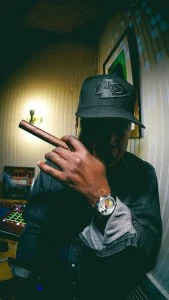
Conductor, we have a problem! Conductor!
If you haven’t heard that saying while listening to rap music, then you need to diversify your listening habits — because Kansas City’s Conductor Williams has quickly become one of the latest underground acts to crossover into the mainstream, as rap music continues to fight for its soul the more it dominates the charts. He’s been at this beatmaking thing since the mid 2000s, when he worked with New York-based rappers like Outasight and Fresh Daily around 2008. However, Williams didn’t really begin to find his groove until he decided to reinvent himself in 2016 after falling on hard times. “It was just a moment where everything changed,” he said. “So, maybe I needed to change too.”
Fast forward a couple years and Griselda Records founder Westside Gunn is in his Instagram DMs asking him to take a video down about a beat he made because he wanted to use it for his upcoming album Pray for Paris which then began his swift ascension into becoming one of the most in-demand producers in the game today. He’s made beats for the likes of Drake, J. Cole, and Joey Bada$$, who have all reached out to him when they feel like they want to rap a certain way and reach a certain audience. And while they haven’t worked together yet directly, Tyler, the Creator helped him win a Grammy when he used one of his beats on his song “Sir Baudelaire.”
Explore
Explore
See latest videos, charts and news
See latest videos, charts and news
Conductor is now planning on producing full-length projects with guys like Rome Streetz, just as he did with the impressive Boldy James record Across the Tracks and wants to put out more instrumental tapes. We caught up with Williams and talked about a wide array of topics, ranging from how he got his start, his process, and the moment when he started to climb out of the shadows of the underground, among other things.
Trending on Billboard
Check out our talk below.
You smoke a lot of cigars. What’s your favorite brand?
This is a Joya de [Nicaragu.] This is a classic joint. I suppose the story goes that President Nixon made these the office favorite during this term, or something like that. But this is just a staple, and more than anything, it’s just a moment for me to stay still. If not, I’d be trying to do all kind of s–t but once I light one up, I got 40 minutes. So, it’s kind of meditative and enjoyable in that way.
What were you doing before you started producing, like as a day job?
I worked for a railway and my father did it too, and my uncle. I did that, but I went to university too, and I got out of university and then got a job with the old man doing that.
Were you alway interested in production?
Yeah, I was making beats in college and just fascinated with the process in college. Before college, I just loved music, you know, I’m saying playing little shows and colleges and stuff like that, house parties. But the love for actually making the instrumentals day come until maybe my last year of college was when I was like I’m gonna start cooking and see how good I can get. And I did that locally. And I did it to a place where I kind of like, I wouldn’t say I had outgrown Kansas City hip-hop, but I got to a place where I kind of worked with everyone, and it was kind of boring, and I was like, working a full time job, so I decided to attack the Internet. And that was actually the best gift, was me deciding to use the internet and meet other people around the world.
I started with the beats in like 2008. There’s a cat from out here — his name was Outasight at the time — and him and I linked on Myspace. Around 2008 is when I felt like I was good enough to start sharing music with people outside of my city and then by 2016 is when I decided to stop working with everybody and only focus on myself. I wanted that instant gratification of making a beat and seeing what everybody says about it, so I started posting instrumentals on Instagram. So, selfishly I wanted to know how good and entertaining my beats can be without having a rapper on them. Then I learned Adobe Premiere, and just kind of started hustling on how to present myself differently.
In your Amoeba record store “What’s in My Bag” video you had a J Dilla Donuts vinyl, and mentioned how much it influenced your production style. Were you listening to a lot of Dilla, Madlib, and DOOM beat tapes at the time?
Yeah, a lot of that. Pete Rock, too. And I honestly think Dilla was about to take it to a place where it was about to turn into jazz records, like instrumental beat tapes were about to be jazz records. He just didn’t get a chance to finish his ideas. But I think the idea that he started is like, “Yo, beats and samples can be told into stories in that way.”
You mentioned that you decided to reinvent yourself around 2016 and a couple years later you pop up on some Griselda records. Talk about that relationship a bit.
Ironically, the thing about Griselda that I haven’t been able to articulate yet because I haven’t had a chance to is that they were just outsiders. West and those guys kind of viewed themselves as outsiders, coming from Buffalo, and I was in Kansas City feeling the same way. And, you know, through the stars and through God, we all kind of met, so I didn’t never have to change my s—t. They really appreciated that. Westside Gunn really appreciated me being me. It just so happened that we were in the same mindframe.
How did you guys link up?
Instagram.
Did you hit him up?
The blessing of my career has been that everybody hit me directly — like, there hasn’t been a time where someone tried to go through a manager or an A&R yet. We’re getting to that place now, but all of the records that you’ve heard, they DM’d me. So, there’s something interesting about isolation and a one track mind, a one track system that I created where it’s like, “Yo, you got to go to that guy to get that thing.” And if you don’t go to that guy and get it, then you won’t get it. That’s kind of been the allure of things, you know I’m saying?
But West just seen me post a video the of the “Euro Step” beat I did, which was the first record he chose on Pray for Paris. I posted the beat video of me making it with cartoon projections behind me, and he hit me on a DM and was like, “Yo, take that down. Take that down. I need that. I need that send that.” And he was in Paris with Virgil, and I want to say Mike Dean. It was a bunch of people that were there. That’s kind of how that all started.
You’re very proficient with your vlogs.
That was the thing. I would make beats all week and then on the weekends I would work on videos for the next week.
So, you already had a strategy.
I don’t know if you have children, but when you have that responsibility and your dream or your passion is for real, you gotta figure it out. It’s not a matter of like, “I can’t make beats this weekend.” That was never the case, it was always, “How am I going to make beats this weekend?” You gotta figure it out. More than anything, persistence was the key there.
Your vlogging got you in a little bit of trouble, or that’s the rumor. You posted the Drake “Fighting Irish” freestyle and had to take it down.
That’s my brother. It was never “trouble.” It’s wasn’t a situation of like, “Yo, why the f—k you do that? Take it down right now.” It was just like, “Yo, Conductor. I know we were gonna do that, but not right now.” It was all good and it wasn’t a big deal. And eventually we’ll get to that. It was just like a miscommunication on both sides. And it’s like, “Yo, Conductor, can you take that down?” And it’s like, “Yeah, sure, I can take that down.”
You’re giving people advice on your vlogs. Some of them almost feels like a diary.
It is like a diary to a certain degree, but with the YouTube specifically. I wanted it to be what I wanted from somebody else, like what I wanted from the RZA or some other god-tier producer. Like, what would the villain do? What would DOOM do?
And you mentioned that he’s your favorite rapper.
I would say DOOM, West, and Evidence are my favorites. My top MCs are super strange for my taste.
What is it about Gunn’s style that you like?
It’s the character that he is. It’s how the music makes you feel. It’s his confidence. The way he loves himself is how we should all love ourselves. And a lot of us feel that way, but we don’t got the guts to say it. So, when you listen to a Westside Gunn record and he’s saying, “I’m the flyest ever,” and you’re rapping that, then it’s like that loop of you saying that out loud, you know? I tell West all the time, “You can rap, bro.” I think he is as nice as the other two. For the life of him, he’ll be like, “Nah, I don’t even rap. I’m a fashion n—a.”
Your beats reminded me of Dilla, DOOM and Madlib when I first heard them. You’re from that school of thought. The loops, the cartoon sounds.
Ultimately, those guys inspire me a lot. More than anything, bro, it’s just trying to find a way to tell a story through the instrumental, more than emulating the style, and a lot of it is necessity too. I don’t like computers like that. I don’t like synthetic sounding music. But the studies, though, the studies is all Dilla, you know, and I don’t know how I got spit out in the universe of like DOOM and Madlib, but the studies are completely all Dilla.
I think the results of the studies is something like “8am in Charlotte.” That record is all of the years of studying the legend and trying to not be like him. There’s times where I’m cutting a sample and I gotta turn the machine off, because it’s going Dilla World — because I’ve studied it so much.
You’ve said that you used to make five-to-10 beats a day. Has that process changed now?
I’ll never master the machines, but I’m at a place where I know how to get what I want. Now that I’ve got there, it’s about why am I doing what I’m doing and if it’s making sense. The part of the process that hasn’t changed is once it’s in the machine and to tape? I’m not an edit guy. I’m not listening to it constantly and going back to change the kicks. That s—t is cooked.
I don’t know if you ran into this, but I feel like at least for major label releases, even someone like Drake, right? Maybe you’ll come with something to the table, and then like, Boi-1da or somebody else will come, and they’ll add there bells and whistles to it.
The gift of this whole s— is a gentleman in Missouri making the records that he makes with the feeling that he gets. They want that. When they come to me, they’re like do whatever you do. On the Cole record “7 Minute Drill” there’s a baseline in there, it’s like a sine wave base, or an 808 — maybe elongated one — and Cole was so kind and almost halfway anxious about asking me if he can add it. He hit me a couple times that day that he was gonna add that little bass in there, and it was needed.
I want the best piece of art imaginable for the fan when they hear the track. It’s death of ego at all times, unless you’re trying to change my whole s–t. If you want to come in and pitch up the sample and put extra drums, then it’s not what I do. So maybe you should try, you know, by yourself, but it’s death of ego every time I touch down. And that’s the source of what I create out of and I think a lot of artists get that about me, and that’s what they respect most.
How did you feel about the drama surrounding that song? The Alchemist talked about “Meet the Grahams” and he said that he can’t control what rappers say on his beats.
And Al told me the same thing. You can’t control it. My job is to service the artist as best as I can. For me, being a man controlled by God, things that are blasphemous always alert me. Like n—as on some devil worshiping type s–t. You know what I’m saying? “God ain’t real, n—as out there praying is suckas.” I’m like, “Yo, chill out” [Laughs.] I’m one of those, one of those people. Other than that, it’s entertainment, and the artists that work with me come to me for the art.
So, you didn’t feel a way that he decided to delete it.
No, because he communicated.
So, Joey Bada$$, J. Cole and Drake all reached out to you?
Everybody reached out. You know what’s funny? There are fans that say I don’t do any music with the West Coast, but that music is coming, bro. The records with the Jay Worthys and the Larry Junes and the Ab-Souls are coming. N—as are reaching out, you just gotta wait.
You know what it is, too? I think it’s the stan stuff on social media. You made a beat for Drake, so you’re not allowed to make a beat for Kendrick.
You know what I’m saying? Why not? That’s that weirdo s–t. It doesn’t make any sense. I’m doing my job. At the end of the day, it’s rap at its highest level, and I’m just thankful to be a part of being of any of it.
What’s the difference in approach when you’re working with different rappers? What’s your process like?
This is pretty important because it’s maybe ethos at this point, no matter who the artist is — and Drake kind of ruined it for everybody in the best way — because a man of his stature and his schedule and his life still had the time to communicate with me about what he was feeling, what type of records he was listening to, where he was at with the pen, and that’s the beginning of the process with everybody.
Rarely is it getting a beat off the shelf. Generally, they pick off the beat tape and then we’re having more conversations about what’s happening. This is nothing more than a movie director or a movie producer. N—as don’t just show up to Tarantino and they want him to do a movie for them and they don’t talk about it.
So, the beat that they pick off the tape initially isn’t necessarily the one that they rap over?
With Drake, Joey and Cole, they pick off the beat tape and then they reference other songs in history, whether that be hip-hop or jazz. So, now I’m creating in their world. It’s a commutative thing, and that’s why them records feel like that. That’s why I can’t make another “8am” for Joey, because of the conversation and the energy that went into me building with Drake in that room.
So, you prefer a very collaborative process instead just handling things over email?
I want to know what the artist is thinking. A lot of folks be like, “Yo, I came to you because I’m trying to rap.”
You’ve become the go-to guy for the mainstream cats when they wanna get on some real rap sh—.
Yup. They be like, “I got some s–t I’m trying to talk about. I’m trying to get people to feel that I’m in a place,” and then they come to me.
Conductor Williams
AMES CREATIVE
Can you elaborate a little bit more on how different your relationship is with Gunn compared to other people?
I feel like if something terrible happened to me, Gunn would provide for my family. I’ll never be broke and I’ll never be down bad. He’ll pay for my kids to go to college if I’m not able to. That’s the difference between my relationship with him and everybody else.
I wanted to get into when you decided to rebrand yourself. Were you frustrated when you decided to do that?
It was a moment of internal reform. My granny had died. I went through a bad relationship. I was living in my car a little bit and couch hopping. I really didn’t have no money like that. I got laid off at the job. It was just a moment where everything changed, so maybe I needed to change too. And then there’s a record that I just re-released that I put out in 2018 called Listen to Your Body, Talk to Plants, Ignore People. I started building beats for that in 2016 because I changed my life.
I started like this hybrid vegan thing which was probably more vegetarian looking back at it. I really started my journey in mindfulness and meditation, and actually took it serious. I cut off all my friends, and the ones that were truly friends are still here with me now, but I cut off everybody. I didn’t resort to s–t like gambling, manipulating women. I didn’t start drinking and smoking weed or getting into drugs. I just stopped everything and I started finding what I truly was as an artist. I thought about not doing this anymore and going back to the railroad to make a career out of it. I was at a crossroads and I let God direct me.
What was your big break?
There’s a couple. I met Remy Banks.
Remy is a friend of the family.
Remy introduced me to Evidence who was going through something personal at the time. He wasn’t in the headspace to rap. He didn’t want to do anything, but he saw my output and linked me with Termanology. So, Term was the first person to put his brand with mine and I did a couple joints on his album Vintage Horns around 2019.
Shortly after that, Westside Gunn reached out for Pray for Paris and we did “Euro Step.” Then came “Michael Irvin” where he rapped, “You ever cook a brick in an air fryer?” And that worked so much, Tyler, the Creator used it. Also, Mach-Hommy’s Pray for Haiti was a really big moment because he put my three records back-to-back-to-back. Those are the type of things that visionaries do and I honestly feel like West saw what I was building towards and put me in position to execute.
Have you and Tyler talked about working together? Because you guys remind me of each other. You both have a natural curiosity, a willingness to learn, and an appreciation of history.
Nah, man. I feel like it’ll be soon, though — because I’ve been working with Domo [Genesis.] We got a lot of incredible things in common, you know, even down to our days of birth. His birthday is on March 6 and mine is on March 5. I also hear from a lot of people there we’re a lot alike, so I’m just curious to see if that’s true or not.
Let’s talk about the tag. How did that come about?
The idea is going back to the 2016 rebranding myself and the internal reform I had, which was a sensitive moment for me. So then in 2018, I’m like, “Man, if n—as can’t see that I’m cold and don’t want to say it, then I’ll say it myself. I’m gonna be obnoxious in a way where I’m repping myself like a graffiti artist.” It’s all purposeful. I wanted to scratch a nerve. A lot of that is me getting to that place where I was just so frustrated and being overlooked. At some point, you take on the underdog role.
Do you walk around saying it randomly? Because I do, especially after playing some of the tracks you’ve produced.
[Laughs.] Yeah, people say that all the time. If somebody calls me, I’ll answer and they’ll be like, “Conductor, we have a problem.”
How did you link with Wiz?
The most exciting record for me this year is the the Wiz Khalifa record with Ty Dolla $ign, “Billionaires.” He texts me, like, “Yo, wait till you see what I did with this.” And I’m like, “You rapping, rapping?” He made that jam. I want people to feel whatever emotion that radiates out.
You still get excited when motherf–kers comes back with some s—t.
Yeah, that’s the best part. How did you find that pocket? Why did you find that pocket? Why did you pick that beat? He was like, “This motherf—ker jam.”
Did you send Wiz a pack?
Nobody gets a nobody a cooked pack. Maybe West. But that’s like I said, that’s always different. Over the winter, I got into Matt Reeves super tough. I started marveling at Matt Reeves and the idea that he had to follow The Dark Knight trilogy. I fell in love with Matt Reeves for that moment and decided to rival that against Bruce Wayne. So, you get tapes like Matt Reeves vs. Bruce Wayne.
And then there’s photos that I found interesting for like color reasons, and then there’s always a note for the artist on why I felt how I felt, so they can see where I was at creatively and then the tape happens. I feel like seeing what another artist is thinking and feeling gives you a moment to collaborate and join them, or find a moment of juxtaposition.
Is there anything that you’re working on this year that we can look forward to?
I think the record with Rome is gonna be another dot on the map, because it’s the entire joint — which we haven’t got much of that for me yet, where I do every song, the arrangement of the track order, how it should feel all the way to the end. We ain’t got that. We just seen me in like little spurts. Now you get to see some dynamic movement all at the same time. Then an instrumental album to drive home.
No matter how far I get or how big the artist is that I work with, I want to keep making those jazz-like records — because honestly, bro, I really feel like that’s where the guy Jay Dee was gonna take it. And I feel a sense of obligation to continue on that path just to see what happens.
Are you planning on doing more full-lengths with rappers?
Maybe three more.

HipHopWired Featured Video
Source: Paras Griffin / Getty
As Shannon Sharpe is dealing with heavy sexual assault allegations, his First Take co-host Stephen A. Smith is defending him and raising the idea that Sharpe being hit with the allegations and some media reactions aren’t coincidental. “People have been after him since he did Katt Williams,” Smith said during his appearance on the Big Boy’s Neighborhood radio show. “They’ve been at his neck because of the numbers he produced and the success that it had and how he was able to ride that wave,” he added.
The ESPN personality was referring to the viral episode of the Club Shay Shay podcast, which aired last January featuring the comedian delivering unfiltered views on his career and other celebrities, drawing millions of viewers. “I’m not talking about what people are talking about and what they have to talk about, I’m talking about the zest with which they do it,” Smith continued, commenting on the growing public conversation about the allegations. “You see a joy that some people are having in going at him and that’s sad. You can talk about it, but we know the difference, in terms of the flavor that you’re bringing to an equation where you’re talking about somebody with glee and joy in your voice when you’re talking about the kind of predicament they’re in. And that’s what I’ve got a problem with.”
Sharpe, an NFL player turned analyst, was hit with a $50 million lawsuit by a victim known as Jane Doe who accused him of sexually assaulting her after they started dating in 2023. Shortly after that was publicized, another woman stepped forward to allege that the 56-year-old assaulted her in the past. Sharpe has since stepped away from his co-hosting duties on First Take.“To see the great things that he has been doing and to know the potential is out there for all of this to be derailed, I’m incredibly sad for him,” Smith said, touching on how this could impact Sharpe’s career and First Take. “I’m sad for us as a show ’cause we’re better with him than without him, but right now, it’s about him getting his house in order and doing what he can to get past all of this.”Check out the entire interview above.

HipHopWired Featured Video
Source: Penske Media / Getty
We’re now just weeks away from the highly anticipated trial of Diddy and while the Hip-Hop world waits to see what kind of evidence and stories prosecutors have in the chamber against the embattled music icon, we’re learning that Diddy’s dress code will be limited when his trial gets underway (huh?!).
According to Newsweek, Diddy has been given instructions on how he will be allowed to appear in court. Before anyone jumps to conclusions, this is apparently a standard practice as the courts do not want anyone coming to court in jailhouse jumpers looking like a common criminal. That being said, Diddy will be allowed to have a mini-trial wardrobe that ensures he looks like a man who’s to be presumed innocent before a jury of his peers. He’s known for his flashy ways, but we doubt he’ll be incorporating any of his infamous shiny suits when his trial gets underway on May 5.
Per Newsweek:
Judge Arun Subramanian issued the order in response to a request from Combs’ legal team. The directive permits Combs to wear “up to five button down shirts, up to five pairs of pants, up to five sweaters, up to five pairs of socks, and up to two pairs of shoes without laces” for his trial in New York.
Newsweek reached out to representatives for Combs for comment.
At a court appearance in March, Combs was seen in a beige-colored jumpsuit, with graying hair and a grey beard, as depicted in courtroom sketches.
Will Diddy at least get to put on some Just For Men for his greying hair and beard? Just asking.
Opening statements for the trial are set to begin May 12 following jury selection. After that the trial will get underway and will probably get the same kind of attention that the OJ Simpson trial got back in 1995.
Diddy for his part has not only pleaded not guilty to all charges, but even turned down a last minute plea deal on the eve of his upcoming trial. No details about the deal have been revealed but according to the Daily Mail , it did involve some prison time and that seemed to be enough for Diddy to say “nah.”
What do y’all think about Diddy’s upcoming trial? Should he have taken a plea deal? Let us know in the comments section below.
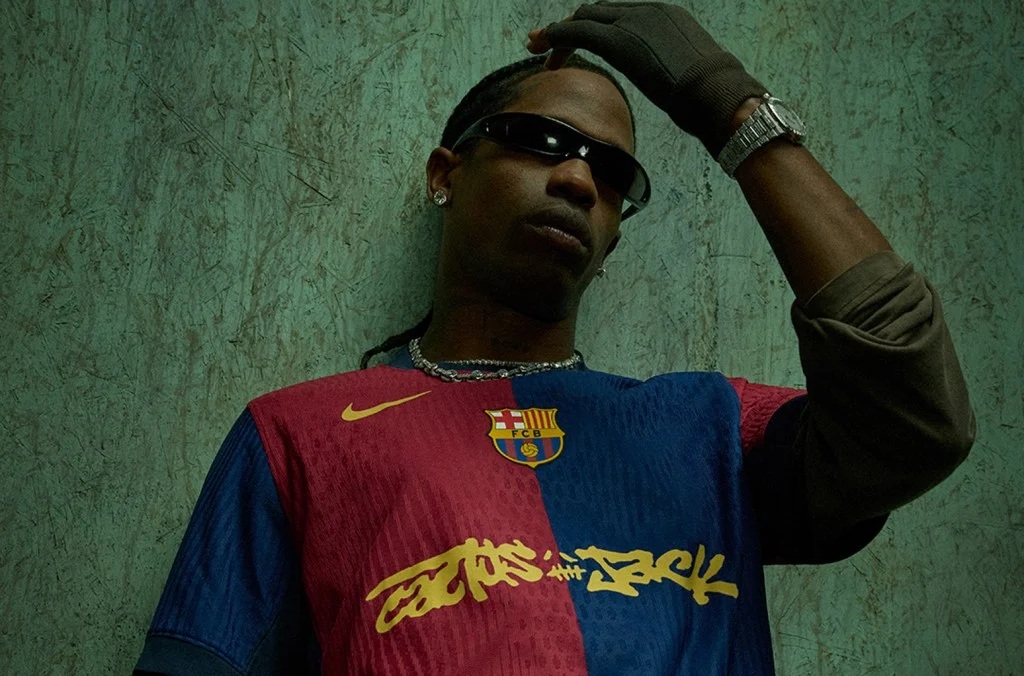
Spotify and FC Barcelona have teamed up with Travis Scott for the launch of its sixth special jersey, featuring the Cactus Jack logo, the rapper’s record label and brand design.
Barcelona soccer players will wear the Travis-inspired Blaugrana jersey at El Clásico match on May 11, where they will play against Real Madrid. The FC Barcelona Femení team will also wear it at their final Liga F match of the season on May 18.
The limited-edition capsule collection includes sweatshirts, T-shirts, caps, shorts, jackets, scarfs and a retro soccer ball in addition to the jersey.
Trending on Billboard
“El Clásico is a moment that the entire world follows closely,” Travis — known for Hot 100 No. 1 hits “Sicko Mode,” “Highest in the Room” and “4×4” — said in a statement. “Collaborating with Spotify and FC Barcelona allows me to merge my universe with theirs. It wasn’t just about putting Cactus Jack on a jersey, but about building something that blurs the lines between sound and sport.”
“The logo change on the jersey for El Clásico is the clearest example of how the partnership between Spotify and FC Barcelona can spark conversations that go beyond sports,” added Joan Laporta, president of FC Barcelona. “It reflects the club’s desire to connect with our fans in a new way and brings us closer to new audiences around the world, allowing us to share who we are and what we stand for.”
The artist born Jacques Bermon Webster II follows other artists who have released their own special Barcelona jerseys, including Karol G, Rosalía, Coldplay, The Rolling Stones and Drake.
Scott, however, is the first artist to perform in Barcelona as part of the collaboration. The concert, set to take place before El Clásico on May 10, will be invite-only and be accessible only to the city’s most loyal listeners.
“What we’re doing is offering artists an unparalleled stage. This collaboration with Travis Scott, alongside FC Barcelona, is our most ambitious project to date,” said Marc Hazan, vice president of partnerships and marketing at Spotify, in a statement. “A global icon creating collaboratively with us around the world’s biggest match and performing live for his fans in Barcelona — that’s the power we’re unlocking. It’s a true expression of what drives Spotify and FC Barcelona.”
In celebration of the club’s founding year, 1,899 Travis Scott-Barcelona jerseys will go on sale on May 2 at official Barça stores in Spain and online, and will later be available on Scott’s website on May 9.
HipHopWired Featured Video
Source: The Washington Post / Getty
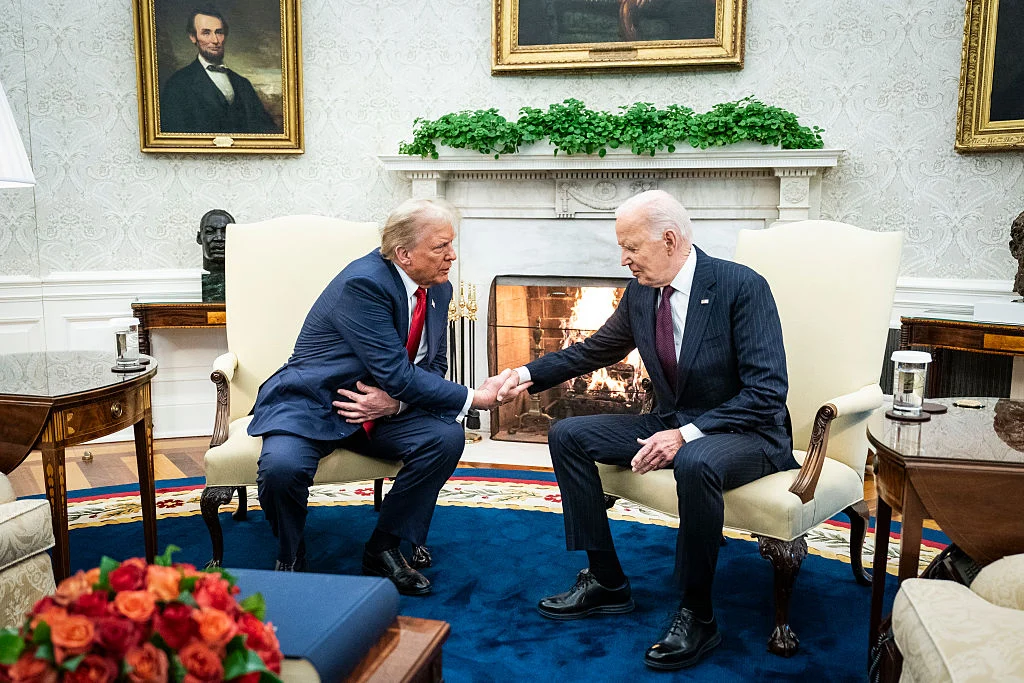
On Wednesday (April 30), President Donald Trump opined about the stock market’s freefall on his Truth Social media platform, aiming to blame former President Joe Biden. “This is Biden’s Stock Market, not Trump’s,” he posted. “I didn’t take over until January 20th. Tariffs will soon start kicking in, and companies are starting to move into the USA in record numbers.”Trump continued, “Our Country will boom, but we have to get rid of the Biden ‘Overhang. This will take a while, has NOTHING TO DO WITH TARIFFS, only that he left us with bad numbers, but when the boom begins, it will be like no other. BE PATIENT!!!” A report from the Commerce Department on Wednesday showed that the American economy shrunk 0.5% in the first quarter of 2025, with inflation remaining firm. It’s the first such occurrence since 2022, capping off Trump’s first 100 days into his second term with the worst economic showing for the stock market since Richard Nixon was in office.It follows a pattern of Trump to avoid taking responsibility for any consequences for his economic policy decisions. Last January, as the economy was faring well in Biden’s last year in office, Trump tried to claim credit even though he hadn’t been in office for four years. When he took office this January, the market surged in response. “Everyone is calling it the — I don’t want to say this. It’s too braggadocious, but we’ll say it anyway — the Trump effect,” Trump said during a rally in Washington, D.C. before his inaugruation. “It’s you. You’re the effect. Since the election, the stock market has surged, and small-business optimism has soared, a record 41 points to a 39-year high.”But on April 2, Trump declared “Liberation Day”, where he enacted tariffs on every country in the world. The brushback has been swift, and there are growing signs that the effects will be hard on the American public as the summer begins. Observers have been noting the slowdown of cargo ships coming from China, even after Trump enacted a 90-day pause on tariffs while leaving China with a tariff of 145% overall. Polls have shown a downturn in Trump’s approval rates regarding the economy, and former Biden White House staffer Andrew Bates ripped Trump for his remarks, saying “Joe Biden publicly warned Trump against raising the prices he promised to lower with tariffs, which are now the biggest middle-class tax increase in modern history.”

HipHopWired Featured Video
Source: Warner Bros. Pictures / Warner Bros.
Unless you’ve been living under a rock as of late (or MAGA country), you’d know that Ryan Coogler’s latest film Sinners has become a cultural phenomenon; the likes that haven’t been seen since white folks flooded theaters to see Leonardo DiCaprio turn into a ice popsicle in the name of love in James Cameron’s Titanic (what a burger).
Now that we’re all aware that Sinners is the must-see film of 2025, the film will see a re-release on IMAX screens later this month, and best believe fans cannot wait to experience the horror film filled with heart and soul once again.
According to Variety, on May 15, Sinners will once again be premiering in theaters. But this time the Ryan Coogler classic will be shown at specific IMAX theaters across the United States so that viewers can truly experience the magic of the move that was shot in 70mm film. Tickets for the film are on sale on the IMAX website, and best believe these will be hard to come by as May 15 inches closer. So if you plan on getting a seat or two, now would be the time to act.
Per Variety:
“Audiences have spoken and we listened. If ever a film needed to be experienced in this incredible larger-than-life format, it’s ‘Sinners,’” Warner Bros. Pictures president of global distribution Jeff Goldstein said in a statement. “Ryan has delivered a film that has been embraced by fans who appreciate the craftsmanship that goes into creating a film for this screen-filling format and we wanted to give everyone the opportunity to see it — or see it again — in 70mm Imax.”
“Sinners” will be back in Imax 70mm at the City Walk Stadium 19 + Imax (Los Angeles), Irvine Spectrum and Imax (Irvine), Lincoln Square 13 + Imax (New York), Metreon 16 + Imax (San Francisco), Indiana State Museum (Indianapolis), Arizona Mills IMAX (Phoenix), Autonation Imax (Ft. Lauderdale), Webb Chapel Imax (Dallas) and Colossus Imax (Toronto).
Already having grossed $161 million against its modest $90 million budget, Sinners is already proving to be a great success for Ryan Coogler. Fans are now saying that Marvel should have put this man in charge of writing and directing Blade. Interestingly enough, there’s rumors that Sinners was supposed to be Coogler’s origin story for Blade (who he says is his favorite Black vampire), but was ultimately turned into an original vampire film. The rest is history.
Will you be checking out Sinners when it hits IMAX theaters later this month? Let us know in the comments section below.