State Champ Radio
 News
Page: 500

HipHopWired Featured Video
CLOSE
Source: @seddyhendrix/@officialflippat/@fatmoney/@zayskiift / IG
Hip-Hop Wired’s May 2025 roundup of rising artists is packed with artists making noise across the country. From Columbus to Atlanta, here are the standout tracks you need to hear this month.
Saint Lamaar, a rising star from Columbus, Ohio, has finally released his highly anticipated track “Everybody.” Sampling Aaliyah’s classic “Are You That Somebody,” Saint Lamaar brings a modern twist to the iconic R&B hit, infusing it with his unique style and energy.
Related Stories
chichi and Seddy Hendrix have teamed up for the fiery collaboration “UNDERDGS.” Seddy Hendrix delivers an exceptional performance, showcasing his lyrical prowess and solidifying his place in the spotlight.
Hailing from Atlanta, Jiah has dropped her latest single “TRUSS.” With its catchy melody and infectious hook, the track has quickly become a favorite, leaving listeners unable to get it out of their heads.(Black America Web)
These artists are among the rising talents Hip-Hop Wired is highlighting in the month of May. With their innovative sounds and captivating performances, they are set to make a significant impact on the hip-hop scene this year.
For the full list of artists to keep an eye on, check out Hip-Hop Wired’s feature.
1. Zaytoven’s son, Zayskii
2. Jiah drops “TRUSS”
3. Saint Lamaar – “EVERYBODY”
4. Fat Money “CincoDeToven” Out Now
5. sectiontoo
6. chichi x Seddy Hendrix
7. Flippa T
8. Montana 700
9. Mir Fontane
10. Mo Money

The Contenders is a midweek column that looks at artists aiming for the top of the Billboard charts, and the strategies behind their efforts. This week, for the upcoming Billboard 200 dated May 17, we look at the chances of Bad Bunny’s Debí Tirar Más Fotos to reclaim the chart’s top spot now that the set’s vinyl has finally shipped.
Explore
Explore
See latest videos, charts and news
See latest videos, charts and news
Bad Bunny, Debí Tirar Más Fotos (Rimas): Bad Bunny’s sixth solo studio album has unquestionably been one of the biggest hits of 2025, spending three consecutive weeks atop the Billboard 200 in January and February, and still residing in the chart’s top 10 three months later. The set stands at No. 7 on this week’s listing (dated May 10), but may very well be headed back to a fourth total frame at pole position next week.
That jump should be coming thanks to the set’s long-awaited release on vinyl – pre-orders for which were started back in February, but which is only shipping to customers this week. The album was sold on his webstore in a double-vinyl gatefold edition, and had been estimated to ship sometime around the end of April. The physical release is now sold out on Bad Bunny’s webstore — with no plans yet announced for future availability – but the sales boost from it, combined with the set’s continued streaming success, should be enough to put it back in heavy contention for the Billboard 200’s top spot next week.
Trending on Billboard
If Fotos does capture a fourth week atop the chart, that will break its tie with SZA’s SOS and Playboi Carti’s Music for the longest-reigning album on the chart in 2025 – though it will still be nine weeks shy of the 13-week run of Bad Bunny’s Un Verano Sin Ti in 2022 for the longest of the singer-rapper’s career.
Fuerza Regida, 111xpantia (Street Mob/Rancho Humilde/Sony Music Latin): If there is a brand- new album that could provide competition for Bad Bunny on the Billboard 200 this week, it’s likely the latest from música Mexicana star quintet Fuerza Regida. Last Friday (May 2), the group released ninth album 111xpantia — which runs a modest 12 tracks and includes no features on its standard edition but does boast the Billboard Hot 100 hit “Por Esos Ojos,” and follows the group’s Mala Mia EP teamup with fellow hitmakers Grupo Frontera, including the breakout single “Me Jalo.”
Just as importantly, while many of Fuerza Regida’s previous sets were only available digitally, 111xpantia is getting the full physical push, via the band’s webstore. The album has been released as four different-colored vinyl variants, as well as both a standard and signed CD (by singer Jesús Ortíz Paz) – all with the same standard tracklist – and four deluxe boxed sets, all with a signed CD, but two with a T-shirt and two with a hat. Meanwhile, the set was also issued on a deluxe digital edition, initially released only for sale through the webstore, but later to all digital retailers and DSPs.
It may not be enough to fend off a big name like Bad Bunny, but it should likely get the group its first top 10 album on the Billboard 200, after previously peaking at No. 14 with 2023’s Pa Las Baby’s y Belikeada.
IN THE MIX
Key Glock, Glockaveli (Paper Route Empire/Republic): Long-rising rapper Key Glock’s first album since signing to major label Republic, Glockaveli includes 18 tracks but no features – which Glock has explained he doesn’t like hosting on his albums – on its standard edition, with an extra three tracks coming on the deluxe (subtitled The Don). The set is also available on CD and vinyl and via various package sets with additional merch on his webstore. Key Glock’s previous best performance on the chart came with 2022’s Yellow Tape 2, which peaked at No. 7.
Eric Church, Evangeline vs. The Machine (EMI Nashville): Country star Eric Church has hit the Billboard 200’s top five with each of his last seven studio albums – a streak that began in the early 2010s with the No. 1-reaching Chief (2011) and The Outsiders (2013). That run may be ending with this month’s Evangeline vs. The Machine, which only runs eight tracks and has only one minor Hot 100 hit in the No. 94-peaking “Hands of Time” to its credit so far – though its sales numbers should be helped by its availability for purchase in four vinyl variants, as well as a standard CD, and a boxed set with a shirt and CD.
Pink Floyd, Pink Floyd at Pompeii – MCMLXXII (Pink Floyd Music/Sony): Originally released as a documentary concert film back in 1972 – just before the band’s true stateside breakout with the release of blockbuster prog-rock opus The Dark Side of the Moon – Pink Floyd’s famous show at the ancient Roman amphitheater in Pompeii, Italy not only gets a theatrical release this year, but also an audio reissue this month on vinyl and CD, and for streaming and digital download. The 11-track, two-disc set includes early Floyd classics like “One of These Days,” “Set the Controls for the Heart of the Sun” and a version of the epic “Echoes” split into two separate parts, both of course lasting over 10 minutes.
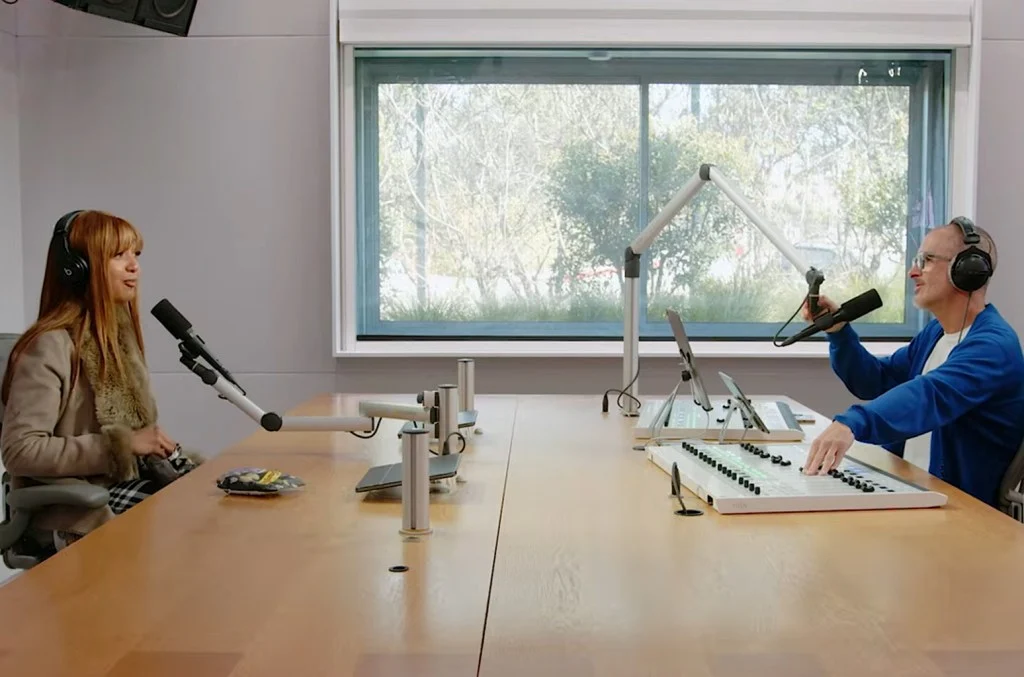
PinkPantheress is ready to step back into the spotlight after taking a few months to herself. You might recall that last August the 24-year-old British singer born Victoria Walker canceled all of her remaining 2024 tour dates — including festival shows and slots opening for Olivia Rodrigo and Coldplay — to focus on her physical health after saying she’d “hit a wall.”
Now, in a new interview with Apple Music’s Zane Lowe, the singer says that despite the pushback from her team on hitting pause when things were really starting to hit for her she knew it was the right thing to do.
Trending on Billboard
“100%. But not even just because things are rolling, but more because of financial reasons why,” she told Lowe. “If you agree to do shows and you don’t follow through, there’s a lot of money being missed out on. There’s also a lot of… the opportunity for backlash to be. Really the least of my concerns, was the money.”
Pantheress said she’s naturally someone who is prone to not looking after herself in an effort to “push through” difficult times, which has caused problems in the past. “And that’s honestly one of the reasons I lost my hearing this ear because of that,” said the singer who in 2022 called off a performance at Spain’s Primavera Festival due to “partial hearing loss” that left her 80% deaf in her right ear. “So after that happened, I don’t know what it was. I think it was when I started cutting my hair with razor blades where I realized, you know what? I’m actually going to stop now.”
The singer who moved to Los Angeles two years ago and now spends her time bouncing between L.A. and London debuted a chopped bob earlier in January and told Lowe that when she cut her hair off she had an epiphany. “I was like, ‘you know what? I’m going to probably take a step back and chill,’” she said. “And I’m not someone that generally… I don’t really suffer with any kind of lapse in judgments when it comes to myself usually, but that’s when I knew… I had an impulse to literally get follicles of hair off of me. So I needed to… I was full up.”
That’s whey she made a decision to step out of the spotlight, something she has no regrets about. “There was something that I needed to address and so I had to leave,” she said. “And I did that for my own good. And obviously it was a very sad moment for people that wanted to see me but couldn’t see me. But obviously, what goes around comes around, and I’ll be back again.”
At the time she hopped off the tours, PinkPantheress told fans, “It is with the heaviest heart that sadly have to announce that i will not be able to continue with the rest of my live shows this year in order to focus on my physical health and overall wellbeing. It appears i have reached a wall which i am struggling to penetrate through. this will include my GUTS tour, Field Day, Summer Sonic, FORM, III Points, and Australia/NZ appearances.”
In January, she was featured on Shygirl’s “True Religion” single, which she followed up in April with her own songs, “Tonight” and “Stateside,” which will appear on her upcoming nine-song sophomore mixtape Fancy That, due out Friday (May 9).
Watch PinkPantheress describe her break to Lowe below.

From Medellín to the biggest stadiums in the world, Karol G shares the story of her life in the new documentary Tomorrow Was Beautiful, premiering on Netflix Thursday (May 8).
Explore
Explore
See latest videos, charts and news
See latest videos, charts and news
Directed by Cristina Costantini and produced by This Machine, Interscope Films and Bichota Films, the documentary offers an intimate look at Karol G’s rise to global stardom, along with a behind-the-scenes glimpse of her record-breaking Mañana Será Bonito World Tour and the challenges she faced along the way. Known for her sincerity and unbreakable connection with her fans, Karol G aims to show her most human side in this project. The tearjerking film brings together key moments from her life and career while highlighting her deep bond with her family, who have always provided her unwavering support.
Over two years of production, Tomorrow Was Beautiful captures moments such as a terrifying flight during which Karol G thought she was going to die, and painful memories including an experience when she was nearly abused by someone in the industry at age 16. The documentary also highlights her heartfelt tribute to Selena in Texas, with a cameo by Suzette Quintanilla, as well as her recognition as Billboard Women in Music’s Woman of the Year in 2024.
Trending on Billboard
“This is a very special piece for my fans. It’s an opportunity to show people who Carolina is, beyond just Karol G,” the singer told Billboard Español on the red carpet ahead of the documentary’s premiere on Tuesday (May 6) in New York City.
“Watching the documentary gave me the chance to reflect on the incredible journey I’ve had as a person— in the way I think, and even changes physically,” La Bichota shared. “I feel like it all started when I had blue hair, and then came the whole process with red hair, blonde hair and finally pink hair. I can see how my mindset evolved, how my sense of responsibility and commitment to my fans grew, and even how I view myself physically. I also feel that the beautiful kind of self-love you start to develop begins to blossom and becomes more noticeable.”
To capture this more intimate side of Karol G, Costantini took a vulnerable and up-close approach, aiming to showcase both the singer’s triumphs and challenges. “Most of her fans know a lot about her public image, but not so much about the personal side. Our goal was to document the intimate moments, above all,” explained the director to Billboard Español.
Karol G y Cristina Costantini hablan en el escenario durante la premiere en Nueva York del nuevo documental de Netflix Mañana Fue Muy Bonito, el 6 de mayo de 2025 en The Whitby Hotel.
Theo Wargo/Getty Images for Netflix
“In our first meeting, she told me she wanted to show the real side of touring. [She said,] ‘I don’t want to just show the glamour, what social media portrays. I want to show the realness,’” Costantini shared. “That really surprised me as a filmmaker. It’s a dream for us as documentary filmmakers.”
At the screening, Karol G was surrounded by her closest circle, including her family and members of her team — dancers, musicians and songwriters who have supported her throughout her career. Key guests included Edgar Barrera, Keityn, DFZM, Elena Rose, Myriam Hernández and Feid.
For more red carpet interviews from the premiere, check out Billboard Latin’s social media accounts.

HipHopWired Featured Video
Smokey Robinson and his wife were named in a $50 million lawsuit brought by four housekeepers who allege that the singer raped and abused them for almost 20 years. The four unnamed housekeepers say Smokey Robinson forced them to have sex in his Los Angeles home between 2007 to 2024.
We wish to urge caution in proceeding, as the details of the acts explained in the lawsuit filing might be disturbing to some.
Billboard reports that the lawsuit was filed on Tuesday (May 6) in Los Angeles County Superior Court. The four housekeepers say that the alleged acts took place at Smokey Robinson’s home in the Chatsworth neighborhood.
“Plaintiffs did not consent to defendant Smokey Robinson’s sexual contact or touching,” John W. Harris, an attorney representing the four housekeepers, wrote in the initial filing. “Plaintiffs explicitly told defendant Robinson on numerous occasions that they were not interested in his advances and objected to his forceful, physical, sexual, and harmful conduct.”
The four Jane Does, all numbered in sequence as such, stated in the filing that Robinson would have them come inside his bedroom, where he was wearing only his underwear. They claim Robinson would put down a towel and force the housekeepers to have oral and vaginal sex without protection.
One of the women say they didn’t report the crimes to the authorities “due to her fear of losing her livelihood, familial reprisal, public embarrassment, shame and humiliation to her and her family, the possible adverse effect on her immigration status, as well as being threatened and intimidated by defendant Smokey Robinson’s well-recognized celebrity status and his influential friends and associates.”
Frances Robinson, Robinson’s wife, was named in the suit for not preventing the assault and for creating an abusive and hostile working environment against the housekeepers, including allegations that she used racial slurs against them.
Smokey Robinson has yet to publicly respond to the lawsuit and the claims within.
—
Phot: Roy Rochlin / Getty
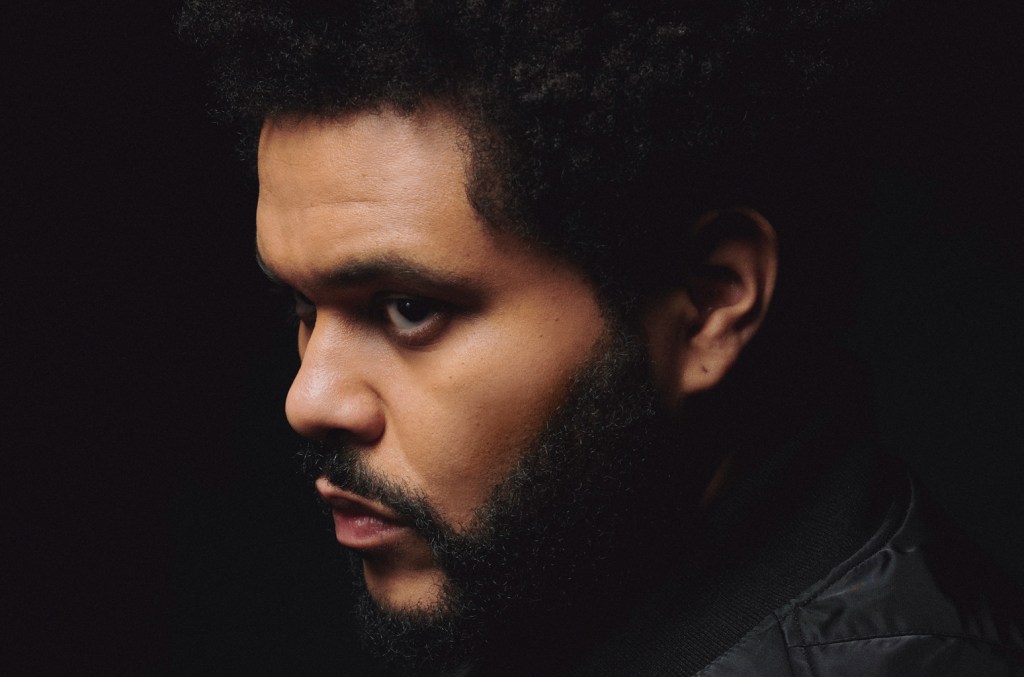
The Weeknd unveiled a never-before-seen scene from his upcoming Hurry Up Tomorrow film on Wednesday (May 7) that’s inspired by a real-life incident. Fans can unlock the secret scene he posted on Instagram Reels with a password. (Spoiler alert! If you can’t figure out the code, it’s “ICANTSING.”) The clip shows the singer (real name […]

HipHopWired Featured Video
Kai Ca$h first appeared on our radar by way of his excellent 2021 album, 711 (Deluxe), and has been featured on past CRT FRSH (Certified Fresh) playlist roundups. The Brooklyn native spoke with Hip-Hop Wired about his persistence and consistency as an artist, which has positioned the humble and talented rapper’s career to soar even higher.
Kai Ca$h took time out of his busy recording schedule to talk with Hip-Hop Wired about his early beginnings, finding his voice as an artist, and where he hopes to take his craft now that he recently signed a deal with the stacked Generation Now collective founded by DJ Drama and Don Cannon and distributed by Atlantic Records.
For Kai, his current position was something he honed in on early on.
“I was born into music, and it’s what I’m most passionate about,” Kai explains, adding, “I never really gave myself a second option when it came to what I wanted to do in life. I’m really proud of that because I put my blood, sweat, and tears, everything I have, all into the music.”
Kai credits his mother’s diverse ear for music for increasing his palate as a listener first. His father was a close friend of The Notorious B.I.G. and a member of Junior M.A.F.I.A., giving a young Kai access to meet buzzing rap stars such as Lil’ Kim and Lil Cease, among others.
“Just being around those types of environments and that energy and then going back home with my mom listening to music, it just reassured me that this is the thing I wanted to do,” Kai said.
As mentioned above, Kai’s 711 (Deluxe) was a wider introduction of his sound after dropping his debut in 2019, and he shared what his journey was like between that project to his latest project, CASH RULES.
“At that time [during 711], I was independent. Being an independent artist is one of the hardest things ever, ” Kai shared. “I champion every independent artist that figures it out and develops a system that works for them because you might not see any money from it in a long time.”
Surprisingly, Kai revealed that he was shy and reserved, but the independent grind motivated him to work on his craft and transform his timidity into the ferocity fans witness now during his energetic live performances. He recently performed at this year’s Dreamville Festival alongside his longtime collaborator and friend, Niko Brim, who also hails from Hip-Hop royalty.
Source: Kai Ca$h / Generation Now/Atlantic Records
Our conversation with Kai moved to CASH RULES, his first body of work under the Generation Now imprint. Clocking in at 10 tracks, CASH RULES covers several lanes, including soul sample-driven beats, songs for “outside,” and plenty of moments of self-reflection. Don Cannon’s guiding hand opened the way for production from notable names like Bink, 2forwOyNE (Jack Harlow), Buddah Bless (Travis Scott, Megan Thee Stallion), and more. However, Kai’s already sharp and focused delivery sounds immediately improved.
“I still have a lot of work to do,” Kai said, not content to rest on recent successes. “I feel like a freshman walking through these doors. It’s just as important as everything I did before, and in some sense even more, because now I have eyes on me and a different kind of pressure. But this has been my dream since a kid, so I don’t feel any pressure at all.”
Check out Kai Ca$h online on Instagram here, and keep up with his movement on his site here.
—
Photo: Kai Ca$h / Generation Now/Atlantic Records

Sabrina Carpenter was the lucky lady in Usher‘s crowd at the 2025 Met Gala who got to share a sensual moment with the R&B powerhouse Monday (May 5) — but the cherry on top was her dad’s hilarious reaction to the moment after the fact. In a photo taken that night inside New York City’s […]

While the 2025 Met Gala was a star-studded affair on a rainy Monday night (May 5) in NYC, one influential face missing from the hip-hop realm was Playboi Carti. The Atlanta native took to Instagram to post a dapper photoshoot he had with his girlfriend, Gio, where Carti claimed he was banned from attending the […]

Five years ago, fitness companies looked like the next big thing for music rights owners as the onset of the COVID-19 lockdown turned Peloton, the maker of high-tech stationary bicycles and treadmills, into a household name and the leader in a suddenly hot connected fitness market.
Peloton’s founder, John Foley, had created an online version of music-driven, brick-and-mortar studios such as SoulCycle. Unlike the staid strength and cardio products of earlier years, the new breed of bikes and treadmills manufactured by the company were internet-ready and could stream live or pre-recorded workouts. Other startups took notice, with competitors like Tonal and Hydrow vying for market share.
“There were fitness companies who saw what Peloton was doing, which was really putting music at the center of their workouts,” says Vickie Nauman, a licensing expert and founder/CEO of CrossBorderWorks. Instructors, some of whom would become small-time celebrities, used music to create identities and build communities. “This was the original founder’s vision,” she says.
Trending on Billboard
Flush with investment capital, fitness companies followed Peloton into expensive licensing agreements with rights holders to infuse music into their at-home products. Royalties from connected fitness companies, as well as social media and other new revenue streams, went from about 3% of the average catalog’s revenue in 2021 to “something like 7%” in 2023, according to Jake Devries, a director in Citrin Cooperman’s music and entertainment valuation services practice.
As it turned out, 2020 and 2021 were peak at-home fitness. The financial impact of the post-pandemic fitness bubble was seen in Universal Music Group’s results for the fourth quarter of 2024: A decline in its fitness business accounted for a nearly one percentage-point decline in its subscription growth rate, equal to approximately $12.5 million. And during its most recent earnings call on April 29, the company noted that fitness revenue was flat in the first quarter.
After pandemic restrictions ended, the stay-at-home fitness business ran into competition from gyms and fitness studios as people returned to public life. As a result, according to numerous people who spoke with Billboard, connected fitness companies had less cash to put into music licensing and, realizing they didn’t need massive catalogs and didn’t have the expertise to properly manage the rights and issue royalty payments, looked for more affordable, less arduous options.
Peloton, founded in 2012, was a trailblazer in at-home fitness. Its studio-quality bikes, which currently cost between $1,445 and $2,495, are outfitted with touchscreens that stream live and on-demand content for an additional $44 per month. Music is a focal point for the online classes, just as brick-and-mortar studios like SoulCycle incorporate popular songs into their workouts. Despite the high prices of Peloton’s bikes, online content has a greater financial impact: In its latest fiscal year, subscriptions accounted for 63% of the company’s $2.7 billion of revenue and 96% of its $1.2 billion of gross profit.
Music enhances online workouts in the same way it makes going to a fitness studio or a gym more enjoyable. But building cycle workouts around setlists of specific songs isn’t straightforward. Unlike brick-and-mortar locations that require only blanket licenses from performance rights organizations such as ASCAP and BMI, Peloton required more expensive direct licenses to incorporate music into its streaming content. After being sued by music publishers for copyright infringement in 2019, Peloton settled the following year and began negotiating the proper licenses.
Such a license had never been done for a fitness company, so major labels and publishers modeled custom licenses for Peloton based on their deals with Spotify and other on-demand music platforms, according to a licensing executive familiar with the negotiations. The agreements called for Peloton to pay rights holders based on a monthly per-subscriber fee, and the pool of royalties would then be proportionally divided based on usage, according to this person.
Peloton had built a name for itself in the fitness community by 2019, but it was supercharged the following year by the COVID-19 pandemic. As people stayed away from public places such as gyms and fitness studios, Peloton’s revenue jumped from $384 million in fiscal 2019 to $1.45 billion two years later, and its share price climbed from $27 following its September 2019 initial public offering to $171 in January 2021.
The enthusiasm for at-home fitness also benefited Peloton’s competitors. Hydrow, which offers rowing machines with Peloton-like streaming content, raised $25 million in June 2020 and another $55 million in March 2022. Tonal, a connected strength training platform, had raised a total of $90 million by 2019, before the pandemic piqued interest, then raised $110 million in September 2020 and $380 million in two funding rounds in 2021 and 2023 — the latter at a lower valuation.
As other connected fitness companies quickly sought music licenses to replicate Peloton’s success, rights holders offered them a version of the Peloton license, which provided them rights to large catalogs. (Peloton, the lone publicly traded company of the bunch, revealed in its 2021 annual report that it had a catalog of 2.6 million tracks.) “Once there was a model, it was always going to be easier to replicate a model you think is working than create a new licensing deal,” says the licensing executive.
But these fitness startups, desperate to corner share in a fast-growing market, initially made some missteps. “Because it was such a race, I think that many online fitness companies saw this as an existential opportunity, and they did not take the time to investigate what they were getting into,” says Nauman. “And so, they licensed all of this music, and that sent a signal to rights holders all over the world that fitness was going to be an enormous new line of business.”
The Peloton-style licenses weren’t cheap. Record labels and publishers were “aggressive with the rates they were asking for a lot of the services,” says an attorney familiar with the terms of the licensing contracts. An app-based product would likely pay 30% of revenue to music rights holders, according to this person, while hardware-based products with higher overhead and costs would pay approximately 16% of revenue. “That’s a pretty big share of revenue for a company that is not a music company,” the attorney adds.
The Peloton-style sync licenses also came with more complexity than fitness companies could handle. Managing a music catalog requires technology and know-how that fitness companies don’t have. They needed help matching compositions to sound recordings to ensure licenses were acquired from all rights holders, and the reporting required for PROs and making direct payments to record labels and publishers were outside of the fitness companies’ expertise.
As fitness companies dealt with stagnant growth, they laid off staff and tightened their budgets. From February 2022 to May 2024, founder/CEOs at Peloton, Tonal and Hydrow were forced out. When Peloton replaced Foley with former Spotify CFO Barry McCarthy in February 2022 and announced plans to lay off 20% of its corporate staff, its share price was trading under $30, down more than 82% from its high mark just 13 months earlier. Tonal and Hydrow each laid off about 35% of their workforces in 2022, and Hydrow further thinned its staff in 2023.
Sync licenses are crucial to Peloton because classes are often built around playlists, and music is crucial to the indoor cycling experience. But not every connected fitness product needs to integrate music in a way that requires a more expensive, Peloton-style license. For many other companies, a non-interactive, DMCA-compliant radio service with pre-cleared music is more than adequate.
Constrained by tighter budgets, some connected fitness companies started looking for alternatives to their original licenses. Today’s connected fitness CEOs tend to be most concerned about the cost and complexity of music licensing and the likelihood of being sued, says Jeff Yasuda, founder/CEO of Feed.fm, a provider of licensed music to connected fitness companies such as Hydrow, Tonal, Future and Ergatta. Being able to use popular music in their apps isn’t a priority.
“For a fitness company, your job is to make the best jumping jack app on the planet,” says Yasuda. Making a mistake handling music rights would put a company in jeopardy of facing lawsuits brought by music rights holders. “It’s just not worth the risk,” he says.
Feed.fm assures clients that the rights are compatible with various laws in different countries. It provides pre-cleared catalogs from Sony Music, Warner Music Group, Merlin, Insomniac Music Group and A Train Entertainment, and it works with record labels to create thematic stations, including one curated by CYRIL, a recording artist for Warner-owned Spinnin’ Records, and a Brat-inspired station featuring Charlie xcx, Dua Lipa, Chappell Roan and other artists that represent the brat summer of 2024. A rights holder itself, Feed.fm has signed 40 to 50 artists, which its vp of music affairs, Bryn Boughton, says gives it greater flexibility in licensing.
Outsourcing the licensing ultimately saves fitness companies money, says Con Raso, co-founder/managing director of Australia-based Tuned Global. Raso’s pitch to fitness companies is to invest money in marketing and let companies like Tuned Global handle the technology. “We don’t think, unless you’re doing it on a massive scale, you’re going to save money,” he says. Raso estimates that Tuned Global can remove 70% of clients’ costs versus licensing music and managing rights themselves.
Beyond traditional fitness apps, there’s big potential for licensing ambient or mood music for a new wave of mental health-focused apps. In the last six months, Raso has seen an uptick in demand for licensed music from companies more broadly associated with health and medical care. Consumers have a wide choice of apps for yoga, meditation, mindfulness and sleeping that incorporate music. Led by companies such as Calm, the market for spiritual wellness apps hit $2.16 billion in 2024, according to Researchandmarkets.com, and will grow nearly 15% annually to $4.84 billion by 2030. Record labels have already made forays into this space. Universal Music Group, for example, formed a partnership in 2021 with MedRhythms, which uses software and music to restore functions lost to neurological disease or injury.
The COVID-era boom of connected fitness products, though, seems all but over, having failed to live up to lofty expectations. Chalk it up to the chaotic nature of the pandemic and fast-moving startups battling for market share, says Nauman. “I don’t think it’s anybody’s fault,” she says. “I think it was such a lightning-in-a-bottle time that they were in a race to get to market as fast as they possibly could.”
Additional reporting by Liz Dilts Marshall.