 State Champ Radio
 News
Page: 412

LONDON — When the European Parliament passed sweeping new laws governing the use of artificial intelligence (AI) last March, the “world first” legislation was hailed as an important victory by music executives and rights holders. Just over one year later — and with less than three months until the European Union’s Artificial Intelligence Act is due to come fully into force — those same execs say they now have “serious concerns” about how the laws are being implemented amid a fierce lobbying battle between creator groups and big tech.
“[Tech companies] are really aggressively lobbying the [European] Commission and the [European] Council to try and water down these provisions wherever they can,” John Phelan, director general of international music publishing trade association ICMP, tells Billboard. “The EU is at a junction and what we’re trying to do is try to push as many people [as possible] in the direction of: ‘The law is the law’. The copyright standards in there are high. Do not be afraid to robustly defend what you’ve got in the AI Act.”
Trending on Billboard
One current source of tension between creator groups, tech lobbyists and policy makers is the generative AI “Code of Practice” being developed by the EU’s newly formed AI Office in consultation with almost 1,000 stakeholders, including music trade groups, tech companies, academics, and independent experts. The code, which is currently on its third draft, is intended to set clear, but not legally binding, guidelines for generative AI models such as OpenAI’s ChatGPT to follow to ensure they are complying with the terms of the AI Act.
Those obligations include the requirement for generative AI developers to provide a “sufficiently detailed summary” of all copyright protected works, including music, that they have used to train their systems. Under the AI Act, tech companies are also required to water mark training data sets used in generative AI music or audio-visual works, so there is a traceable path for rights holders to track the use of their catalog. Significantly, the laws apply to any generative AI company operating within the 27-member EU state, regardless of where they are based, acquired data from, or trained their systems.
“The obligations of the AI Act are clear: you need to respect copyright, and you need to be transparent about the data you have trained on,” says Matthieu Philibert, public affairs director at European independent labels trade body IMPALA.
Putting those provisions into practice is proving less straight-forward, however, with the latest version of the code, published in March, provoking a strong backlash from music execs who say that the draft text risks undermining the very same laws it is designed to support.
“Rather than providing a robust framework for compliance, [the code] sets the bar so low as to provide no meaningful assistance for authors, performers, and other right holders to exercise or enforce their rights,” said a coalition of creators and music associations, including ICMP, IMPALA, international labels trade body IFPI and Paris-based collecting societies trade organization CISAC, in a joint statement published March 28.
Causing the biggest worry for rights holders is the text’s instruction that generative AI providers need only make “reasonable efforts” to comply with European copyright law, including the weakened requirement that signatories undertake “reasonable efforts to not crawl from piracy domains.”
There’s also strong opposition over a lack of meaningful guidance on what AI companies must do to comply with a label, artist or publisher’s right to reserve (block) their rights, including the code’s insistence that robots.txt is the “only” method generative AI models must use to identify rights holders opt out reservations. Creator groups says that robots.txt – a root directory file that tells search engine crawlers which URLs they can access on a website — works for only a fraction of right holders and is unfit for purpose as it takes effect at the point of web crawling, not scraping, training or other downstream uses of their work.
“Every draft we see coming out is basically worse than the previous one,” Philibert tells Billboard. “As it stands, the code of practice leaves a lot to be desired.”
Caught Between Creators, Big Tech and U.S. Pressure
The general view within the music business is that the concessions introduced in the third draft are in response to pressure from tech lobbyists and outside pressure from the Trump administration, which is pursuing a wider deregulation agenda both at home and abroad. In April, the U.S. government’s Mission to the EU (USEU) sent a letter to the European Commission pushing back against the code, which it said contained “flaws.” The Trump administration is also demanding changes to the EU’s Digital Services Act, which governs digital services such as X and Facebook, and the EU’s Digital Markets Act, which looks to curb the power of large digital platforms.
The perception that the draft code favors Big Tech is not shared by their lobby group representatives, however.
“The code of practice for general-purpose AI is a vital step in implementing the EU’s AI Act, offering much-needed guidance [to tech providers] … However, the drafting process has been troubled from the very outset,” says Boniface de Champris, senior policy manager at the European arm of the Computer and Communications Industry Association (CCIA), which counts Google, Amazon, Meta and Apple among its members.
De Champris says that generative AI developers accounted for around 50 of the nearly 1,000 stakeholders that the EU consulted with on the drafting of the code, allowing the process “to veer off course, with months lost to debates that went beyond the AI Act’s agreed scope, including proposals explicitly rejected by EU legislators.” He calls a successful implementation of the code “a make-or-break moment for AI innovation in Europe.”
In response to the backlash from creator groups and the tech sector, the EU’s AI Office recently postponed publishing the final code of practice from May 2 to an unspecified date later this summer to allow for changes to be made.
The AI Act’s key provisions for generative AI models come into force Aug. 2, after which all of its regulations will be legally enforceable with fines of up to 35 million euros ($38 million, per current exchange rate), or up to 7% of global annual turnover, for large companies that breach the rules. Start-up businesses or smaller tech operations will receive proportionate financial punishments.
Creators Demand Stronger Rules
Meanwhile, work continues behind the scenes on what many music executives consider to be the key part of the legislation: the so-called “training template” that is being developed by the AI Office in parallel with the code of practice. The template, which is also overdue and causing equal concern among rights holders, will set the minimum requirements of training data that AI developers have to publicly disclose, including copyright-protected songs that they have used in the form of a “sufficiently detailed summary.”
According to preliminary proposals published in January, the training summary will not require tech companies to specify each work or song they have used to train AI systems, or be “technically detailed,” but will instead be a “generally comprehensive” list of the data sets used and sources.
“For us, the [transparency] template is the most important thing and what we have seen so far, which had been presented in the context of the code, is absolutely not meeting the required threshold,” says Lodovico Benvenuti, managing director of IFPI’s European office. “The act’s obligations on transparency are not only possible but they are needed in order to build a fair and competitive licensing market.”
“Unless we get detailed transparency, we won’t know what works have been used and if that happens most of this obligation will become an empty promise,” agrees IMPALA’s Philibert. “We hear claims [from the European Commission] that the training data is protected as a trade secret. But it’s not a trade secret to say: ‘This is what I trained on.’ The trade secret is how they put together their models, not the ingredients.”
“The big tech companies do not want to disclose [training data] because if they disclose, you will be able to understand if copyrighted material [has been used]. This is why they are trying to dilute this [requirement],” Brando Benifei, a Member of the European Parliament (MEP) and co-rapporteur of the AI Act, tells Billboard. Benifei is co-chair of a working group focused on the implementation of the AI Act and says that he and colleagues are urging policymakers to make sure that the final legislation achieves its overarching aim of defending creators’ rights.
“We think it is very important in this moment to protect human creativity, including the music sector,” warns Benifei, who this week co-hosted a forum in Brussels that brought together voices from music and other media to warn that current AI policies could erode copyright protections and compromise cultural integrity. Speakers, including ABBA member and CISAC president Björn Ulvaeus and Universal Music France CEO Olivier Nusse, stressed that AI must support — and not replace — human creativity, and criticized the lack of strong transparency requirements in AI development. They emphasized that AI-generated content should not be granted the same legal standing as human-created works. The event aligned with the “Stay True to the Act, Stay True to Culture” campaign, which advocates for equitable treatment and fair compensation for creators.
“A lot is happening, almost around the clock, in front of and behind the scenes,” ICMP’s Phelan tells Billboard. He says he and other creator groups are “contesting hard” with the EU’s executive branch, the European Commission, to achieve the transparency standards required by the music business.
“The implementation process doesn’t redefine the law or reduce what was achieved within the AI Act,” says Phelan. “But it does help to create the enforcement tools and it’s those tools which we are concerned about.”
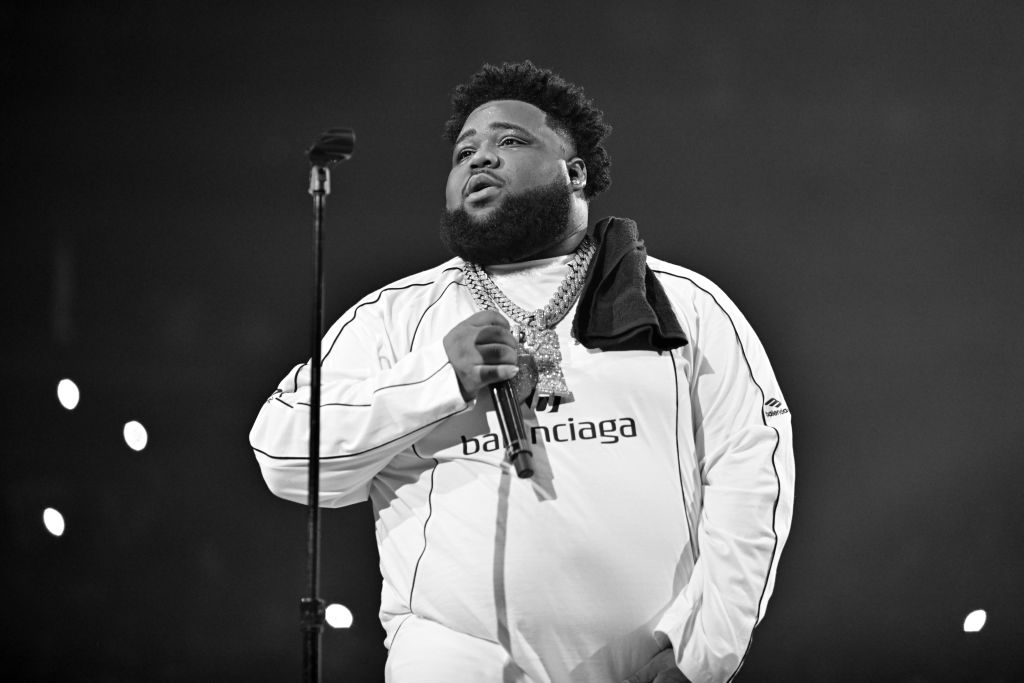
Source: Paras Griffin / Getty
Rod Wave was arrested in Fulton County, Georgia, on May 20, 2025, facing a slew of serious charges tied to an incident from a month earlier.
The 26-year-old rapper, born Rodarius Marcell Green, was booked on 14 counts, including Aggravated Assault, Reckless Conduct, Pointing a Gun at Someone, and Tampering with Evidence. He was released the same day on a $50,000 bond. According to a police report, the trouble began on April 21, when Rod returned to his Atlanta-area home after it had been burglarized.
The Florida rapper showed up with realtors and a few associates to check on things, but things quickly went south. A heated argument broke out with one of his associates while they were moving items out of the house. That’s when Rod allegedly pulled out a Glock 20 and fired 14 shots, with 11 of those rounds hitting the associate’s 2025 Mercedes G-Wagon.
When the cops showed up, Rod reportedly tried to cover up his tracks by cleaning up shell casings and even attempted to leave the scene to avoid getting caught. On top of that, his actions allegedly violated an active bond from a previous battery charge dating back to October 2020. Rod’s legal team, Drew Findling and Marissa Goldberg, quickly shot back with a statement to TMZ, saying, “Rod Green was a victim of a burglary and committed no crimes. It’s beyond us how these charges were even brought.”
This isn’t Rod Wave’s first brush with the law. He was arrested in 2022 on charges of strangulation and battery, but those were dropped. In 2024, he was also arrested for possession of a firearm, which his attorneys said was a mistake. Despite the latest charges, his legal team is confident the case will be cleared up in his favor.
HipHopWired Featured Video
A English hard rock band that performs in masks and cloaks is not the type of artist that regularly visits the top of the Billboard 200 — yet anyone who had been paying attention to Sleep Token’s rise over the past few months knew that their fourth studio album, Even in Arcadia, was going to have a strong debut.
Explore
Explore
See latest videos, charts and news
See latest videos, charts and news
After years of building a fan base, expanding their lore and inching onto the Billboard charts with increasingly higher peaks, the group kicked off the year by scoring their first career Hot 100 entries, as well as quickly selling out a slew of fall arena dates. When Even in Arcadia was released on May 9, its album tracks flooded streaming charts, a clear sign that the early enthusiasm around the album had coalesced upon its release.
Yet when the dust settled on its debut week, even the most bullish Sleep Token fan had to be pleasantly surprised: Even in Arcadia debuted at No. 1 on the Billboard 200 chart dated May 24 with 127,000 equivalent album units, according to Luminate — good enough to not only score Sleep Token’s biggest chart week ever, but the biggest total for a hard rock album in nearly two years, as well as the largest streaming week ever for a hard rock album. It’s the type of debut that blows away even the most hyped-up prognostications, and immediately makes Sleep Token one of the biggest stories in rock this year.
Trending on Billboard
The performance of this album cycle has “by far” surpassed expectations, RCA Records COO John Fleckenstein tells Billboard. Sleep Token — which debuted nearly a decade ago and has always remained under cover of anonymity, with band members never revealing their identities or speaking to the press — signed with RCA in early 2024 following the release of third album Take Me Back to Eden. That album became the band’s first to hit the Billboard 200, debuting at No. 16 in May 2023, and produced some of its first songs to hit the Hot Rock & Alternative Songs chart.
Yet when “Emergence” — the six-and-a-half minute, multi-part prog-metal epic that opened the Arcadia era in March — debuted at No. 57 on the Hot 100 in March, thanks in part to some mind-boggling streaming numbers (9.9 million official U.S. streams from March 14-20, according to Luminate), RCA had to adjust its forecast for the commercial prospects for its host album, says Fleckenstein.
“We knew they were great, and they were potent,” he says. “But when ‘Emergence’ came out, that’s when we saw the reality of where the numbers had gotten to.”
“Emergence” was followed by “Caramel” — a more radio-friendly (yet no less audacious) single that somehow pulls off a fusion of rhythmic pop, shuffling reggaeton and a shrieking metal breakdown — and “Damocles,” Sleep Token’s version of a power ballad with twinkling pianos that morph into thundering guitars. Both of those songs hit the Hot 100 as well, at Nos. 34 and 47, respectively — and the fact that the second and third songs released from Even in Arcadia peaked higher than the first on the Hot 100 indicated to RCA that the host album was going to be a monster.
“Everyday along the path into this album, we were more and more confident that this was a big deal,” says Fleckenstein. “We just don’t see that kind of fan behavior and consistency, in terms of new music coming out.”
When RCA signed Sleep Token last year, Fleckenstein says that the two biggest indicators of the band’s upward trajectory were its rapid growth as a live act — the group leapt from clubs to theaters, and now to arenas, with strong ticket demand for each live run — and the online dedication of its fan base. The London natives have crafted a complex backstory over the year, with Sleep Token leader Vessel speaking of a higher power called Sleep and causing fans to parse through lyrics and messages to unlock new mysteries from their world.
For the band’s new major-label partner, Sleep Token’s anonymity has felt “liberating” as a promotional tool, says Fleckenstein, particularly in an era of artists oversharing on social media platforms. “So much of it is about the art that the band makes,” he notes. “The world that’s being created is being driven by the fans, and as we were building [the rollout] with the band, the part that was so rewarding was that we could not get more clever than this fan base.”
Case in point: in February, before the album cycle had truly started, the band launched a teaser site full of jumbled numbers and letters, which fans quickly found out related to the geographic coordinates of an 18th century monument in England. “It all happened in a blink!” Fleckenstein says with a laugh. “It’s because you’ve got a fan base that is undyingly passionate about this band.”
Now that Even in Arcadia is here, fans’ attention will now turn to how the album will be presented live: Sleep Token will perform the new material for the first time next month at a handful of European festivals before their U.S. arena tour kicks off on Sept. 16. In the meantime, the noise of this album debut has already unlocked opportunities for Sleep Token that aren’t normally reserved for hard rock acts: Vessel was featured as the main image of Spotify’s New Music Friday playlist on release day, for instance, and all 10 of the album’s tracks have made the Hot 100 chart. Combined with Ghost’s new album Skeletá debuting atop the Billboard 200 two weeks prior to Arcadia, a brand of new-school hard rock with baked-in mystique and accessible hooks is experiencing a mainstream boom that’s been years in the making.
“The numbers here are basically in line with high-caliber pop artists, in terms of consumption level,” says Fleckenstein of Sleep Token. “Up until this point, the focus has been on the fan base, and that won’t change — they’re the reason why we’re here… But in a lot of ways, the story from here will probably be that this isn’t some niche thing. There’s definitely a broader awakening here among media and partners that are looking at this in a different kind of way.”
A similar effect is trickling down to pop fans, too. “There are people that haven’t discovered this band yet, because they haven’t been part of the lore and they perceive it as metal, which may not be their genre of choice,” Fleckenstein says. “But it’s great music. And I think that’s going to be the road ahead.”

Three decades after composing the iconic Windows 95 startup jingle, Brian Eno has published an open letter to Microsoft, calling out the company for selling technology to Israel amid the country’s highly criticized war against Hamas.
Explore
Explore
See latest videos, charts and news
See latest videos, charts and news
In a statement titled “Not in My Name: An Open Letter to Microsoft From Brian Eno” posted to Instagram Wednesday (My 21), the producer began by writing, “In the mid-1990s, I was asked to compose a short piece of music for Microsoft’s Windows 95 operating system.”
“Millions — possibly even billions — of people have since heard that short startup chime, which represented a gateway to a promising technological future,” he continued. “I never would have believed that the same company could one day be implicated in the machinery of oppression and war.”
Eno’s words come a few days after Microsoft acknowledged in an unsigned blogpost that it sold advanced artificial intelligence and cloud computing services to the Israeli military — as well as aided in efforts to locate and rescue Israeli hostages — amid the war in Gaza. Violence has run rampant in the city ever since Hamas attacked and killed about 1,200 Israeli people while taking more than 250 hostage on Oct. 7, 2023, and Israel’s ensuing war against the terrorist group has since led to the deaths of tens of thousands of Palestinians.
In February, the Associated Press released an investigative report that found the Israeli military used Microsoft’s Azure platform to transcribe, translate and process intelligence gathered through mass surveillance in its war efforts, among other previously unreported details about the company’s partnership with the Israeli Ministry of Defense.
After hearing concerns about its reported relationship with Israel from employees and members of the public, the tech giant stated in its blogpost that an internal review had been conducted. “We have found no evidence that Microsoft’s Azure and AI technologies, or any of our other software, have been used to harm people or that IMOD has failed to comply with our terms of service or our AI Code of Conduct,” it reads. “It is important to acknowledge that Microsoft does not have visibility into how customers use our software on their own servers or other devices.”
Regardless, Eno says the company has an “ethical responsibility” to suspend its business relationship with Israel. “These ‘services’ support a regime that is engaged in actions described by leading legal scholars and human rights organizations, the United Nations experts and increasing numbers of governments from around the world as genocidal,” he wrote. “Selling and facilitating advanced AI and cloud services to a government engaged in systematic ethnic cleansing is not ‘business as usual.’ It is complicity.”
The musician ended his letter by pledging to donate the fee he originally received for his Windows 95 composition to support for victims of attacks in Gaza. “If a sound can signal a real change,” he concluded, “let it be this one.”
Billboard has reached out to Microsoft for comment about Eno’s open letter.
The composer has been an important figure in Microsoft’s history for 30 years now, with his ethereal seconds-long theme soundtracking the startup process of countless people’s very first home computers all over the world. In 2025, the U.S. Library of Congress added the jingle to its National Recording Registry, which documents and preserves nationally significant recordings.
See Eno’s full statement below.
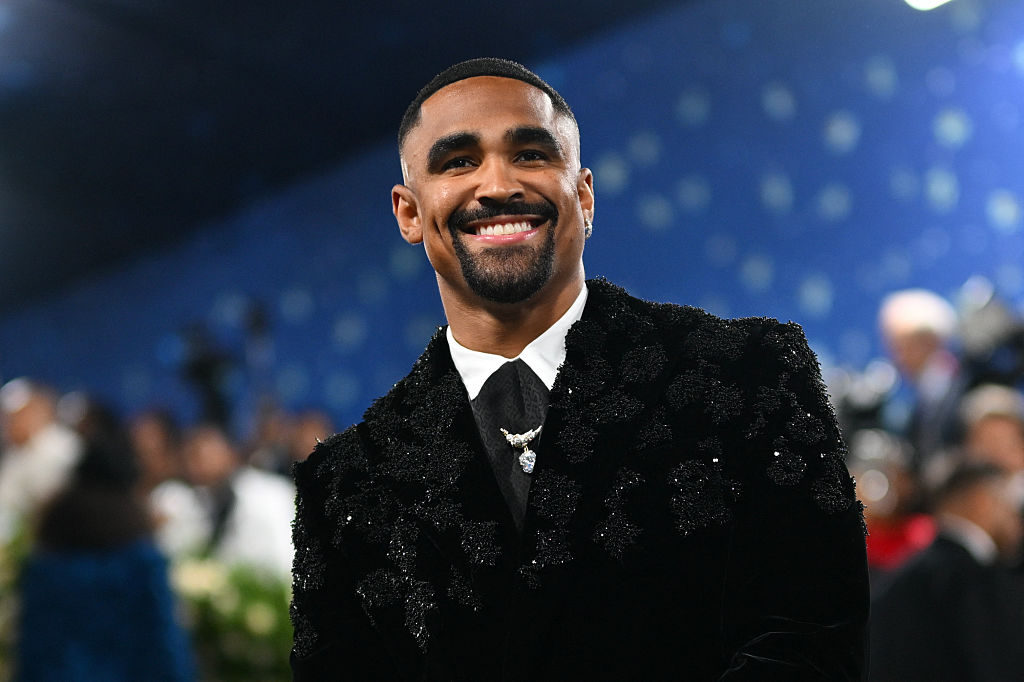
Jalen Hurts, the star quarterback for the Philadelphia Eagles, addressed a question regarding why he elected to forgo visiting the White House with his teammates. Jalen Hurts fielded a question regarding why he skipped a meeting with President Donald Trump, but did so in a respectful, if succinct, manner.
The Philadelphia Inquirer reports that while addressing reporters at the NovaCare Complex on Tuesday (May 20), Jalen Hurts cleared the air on why he didn’t join the Eagles in their White House visit in honor of winning Super Bowl LIX.
“I wasn’t available,” Hurts said. “I don’t think that’s pertinent. Everyone who went and was available, they seemed to enjoy themselves.”
A.J. Brown was a bit more elaborate on why he didn’t attend the visit with his team.
“I had a personal reason I was dealing with that day,” Brown shared. “It wasn’t about politics or who is in office or anything. I just had something personal going on with my family.”
The outlet wrote that around 30 players met with President Trump, who delivered glowing remarks praising Hurts’ performance. Other players shared with the media that they skipped the visits due to prior commitments or personal family matters.
—
Photo: ANGELA WEISS / Getty
HipHopWired Featured Video

This year, Kacey Musgraves will be honored with the Songwriter Icon award at the National Music Publishers’ Association (NMPA) annual meeting. The NMPA will also honor longtime Nashville hitmaker Rhett Akins as its Non-Performing Songwriter Icon Award recipient this year for his three decades of contributions to country music, including songs performed by Brooks & Dunn, Blake Shelton, Thomas Rhett, Jason Aldean, Luke Bryan and more. The meeting will also feature a keynote conversation with Apple Music head Oliver Schusser.
The NMPA annual meeting, which will take place at Lincoln Center’s Alice Tully Hall on June 11 in New York, is known in the business as a state of the union for the music publishing sector each year and a gathering place for its top executives to mingle. Along with honoring some of the top songwriters in the industry, NMPA president/CEO David Israelite also gives a speech at each meeting, detailing how the publishing business is doing.
Trending on Billboard
Israelite has also been known to drop groundbreaking news every year in this speech. Last year, he targeted Spotify for cutting payments to songwriters and publishers by about 40% and announced his plan to send sending an official complaint to the Federal Trade Commission (FTC) as well as letters to the attorneys general of nine states and a list of consumer groups — urging them to stop Spotify’s efforts to bundle music and audiobooks into its premium tiers. That built on top of previous news that the NMPA had sent a cease and desist notice to Spotify for alleged unlicensed lyrics, video and podcast content on the platform, and thatthe Mechanical Licensing Collective (MLC) had sued Spotify. (In January, the MLC’s case was dismissed by a judge who said Spotify’s move to cut payments was supported by “unambiguous” regulations. The MLC said it plans to keep fighting.)
Other previous bombshell announcements have included major copyright infringement lawsuits against Roblox, Twitter and more, and legal action against 100 different apps for allegedly skimming music from digital services without a license.
This year’s annual meeting will include a special segment dedicated to the Billboard Songwriter Awards, which were scheduled to take place during Grammy week but were postponed due to the Los Angeles wildfires. The award recipients will be announced at the event.
“We are thrilled to honor Kacey Musgraves whose music has always been driven by lyric and melody,” says Israelite. “A consummate songwriter, she is a successful solo hitmaker and renowned collaborator. Additionally, we look forward to celebrating the career of Rhett Akins whose songwriting has been central to the growth of country music.
“We are particularly excited to feature the Billboard Songwriter Awards after our GRAMMY Week event was postponed. The honorees are incredibly deserving, and it will be a phenomenal special segment of the program.
“Finally, Oliver Schusser has been an innovator throughout his career and we are eager to get his perspective on the myriad of opportunities and challenges for digital services in the streaming economy.”
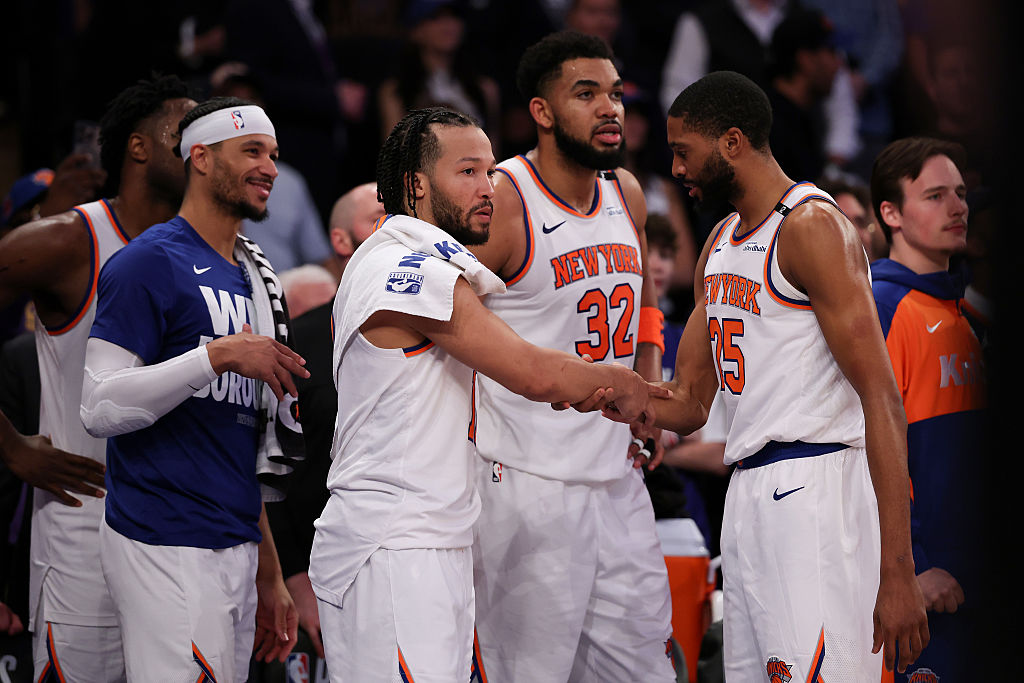
Source: Al Bello / Getty
For the past few weeks the New York Knicks playoff run has had all of New York in a chokehold as last second shots and big time comeback wins have given New Yorkers reason to celebrate and act-a-fool, but one particular fan has taken his love of the team to a new and entertaining level.
According to Page Six, a Brooklyn-based audio engineer and musician by the name of Doug Berns has been making a name for himself on social media by releasing his own remixed versions of New York Knicks game recaps that feature some music performed by the Brooklyn dad. Breaking down how each game stirred up emotions in his Knicks loving soul that millions of New Yorkers have been dealing with for the past few weeks, Berns has been going through the motions for months now and said the inspiration for his idea came due to “The emotional roller coaster of investing in this team is really, really intense. My songs tell the stories of those roller coasters, I hope.”
Page Six reports:
While Berns started the project with the goal of writing one original metal song inspired by a Knicks game, he found that musical parodies of ‘90s rock and hip hop tunes resonated deeply with audiences – and his videos have since drawn over 15,000 Instagram followers and millions of views since he began the series on Nov. 13 after a win against the Philadelphia 76ers.
“My wheelhouse is music that I grew up listening to, and a lot of my millennial contemporaries are Knick fans that grew up in the last golden age of Knicks basketball,” Berns told The Post. “Most of [the parodies] are songs that swirl around in our emotional hearts and minds.”
In the months since Berns launched the endeavor, he’s found fans in filmmaker Spike Lee, as well as Knicks players Jalen Brunson and Josh Hart — who showcased one of Berns’ songs on their podcast Roommates Show.
The musical recaps really are hella entertaining and hilarious.
While most New Yorkers may be scared to look silly or even ridiculous by expressing their love of the Knicks in such a way, Berns has no issue with such judgement from others and is proud to have gone this route for the team he truly loves.
“I feel like I’ve been searching for a way to express my talent and fandom and personality for a long time, and I found it with this thing,” he added. “My goal is to continue giving fans this thing that makes them happy: win or lose.
“It’s a little microcosm of [the team’s] successes and failures and triumphs and rejection,” he added. “Music is a way of telling stories of people’s lives, and I think doing both is a meta way to look at all of that.”
Check out some of Doug Bern’s Knick game musical recaps and let us know your thoughts about his clips in the comments section below.
HipHopWired Featured Video
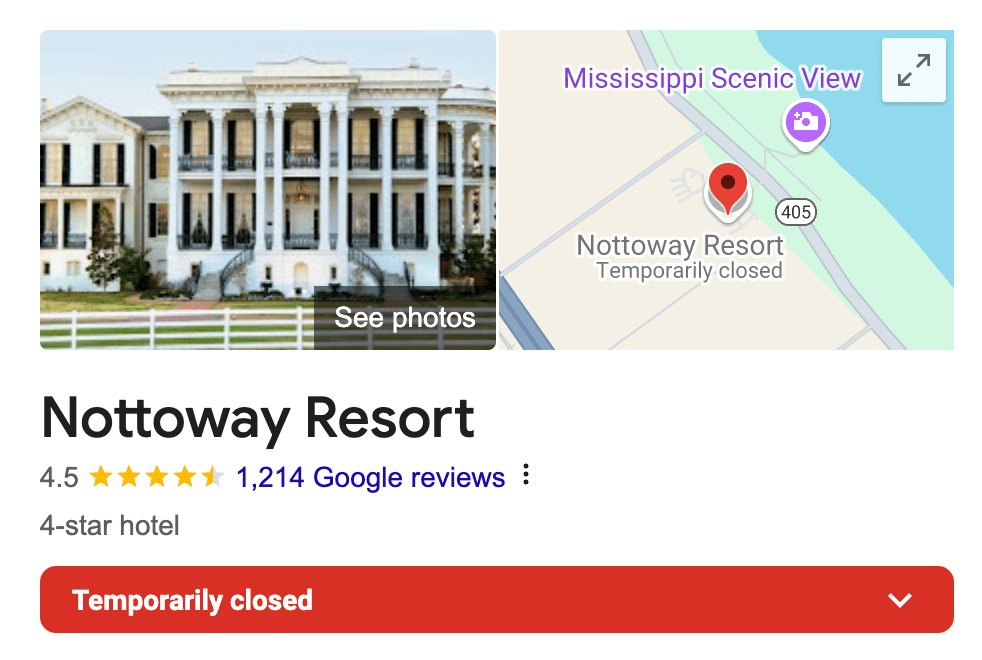
Source: Google / Google
The Nottoway Plantation in Louisiana burned down, and social media users expressed a wide range of emotions in response.
The Nottoway Plantation in Louisiana, billed as “the South’s largest remaining antebellum mansion”, was devoured by a fire over the past weekend. The responses to the fire have been a mix of emotions ranging from jubilation over the destruction of a symbol rooted in the horrors of the enslavement of Black people, to some expressing sadness as it represented “the good old South” and their memories of weddings held there.
Located 65 miles northwest of New Orleans, the 53,000-square-foot mansion had been rebranded as the Nottoway Resort in recent years, featuring amenities such as 40 overnight rooms, a honeymoon suite, a lounge, fitness center, and an outdoor pool and cabana. According to the National Park Service, 155 enslaved people were recorded at Nottoway Plantation in 1860. The website for Nottoway doesn’t mention those people at all. And according to property owner Dan Dyess’ words in the New York Post, there is no intent to do so: “We are trying to make this a better place. We don’t have any interest in left wing radical stuff. We we need to move forward on a positive note here and we are not going to dwell on past racial injustice.”
That sentiment contrasts with how social media rejoiced in Nottoway burning down. One historian, Dr. Mia Crawford-Johnson, shared a selfie taken across from the site of the mansion burning down, which went viral. Others also shared videos celebrating the mansion’s destruction by fire as justice for those who were enslaved, with some using it as an Autonomous Sensory Meridian Response video and editing the video with background music choices like Usher’s “Let It Burn.”
Some historians have lamented the lost chance to preserve Nottoway as a site to illustrate the skill and ingenuity of Black enslaved people. “There are no perfect answers here,” writes noted author and chef Michael W. Twitty in an MSNBC article. “Nottoway could have gone the way of Whitney Plantation, also in Louisiana, which is a museum dedicated to helping visitors understand who the enslaved people were.” When contacted, Whitney Plantation Museum Executive Director Ashley Rogers felt that Nottoway’s chance to go that route was lost long before the blaze. “It was a resort,” Rogers said. “I don’t know that it being there or not being there has anything to do with how we preserve the history of slavery. They already weren’t.”
HipHopWired Featured Video
CLOSE

All products and services featured are independently chosen by editors. However, Billboard may receive a commission on orders placed through its retail links, and the retailer may receive certain auditable data for accounting purposes.
Who said that activewear has to be boring?
Free People’s FP Movement is revamping activewear in a major way. The brand is imbuing major style and color into their pieces, making exercising fun again. Each athleisure creation is made to move how you move, crafted of breathable and innovative fabrics that marry form and function seamlessly. From shorts to jumpsuits, sweats to windbreakers, we picked out a few faves from FP Movement’s extensive activewear collection that’ll have you looking and feeling good without breaking a sweat.
Carpe Diem Shorts
Neon yellow high-waisted biker shorts.
Perfect for a jog or a quick trek to the coffee shop, FP Movement’s Carpe Diem shorts are an all-arounder. Retailing for $40, the piece is made of durable water-resistant fabric that keeps you cool while on the go. Built-in briefs offer extra coverage and protection from chafing, while the high-rise waistband creates a supportive and flattering fit.
Explore
Explore
See latest videos, charts and news
See latest videos, charts and news
Hidden pockets on the interior of the waistband add a utilitarian feel, letting you go hands-free for those long runs. While the Carpe Diem short comes in an array of colors, we recommend the vibrant “Highlighter Yellow” hue for those looking to seize the day in style. We can see these shorts styled in both athletic and leisurely ways. Paired with a crew neck and your favorite athletic sneakers, the look is colorful and comfy. Worn with a breathable sports bra and equally vibrant running shoes, you’re ready to take on your next adventure.
Trending on Billboard
Get Your Flirt On Shorts
Flared shorts in a orange/gold hue.
These shorts are great for those days when working out seems impossible. Not your mom’s shorts, the Get Your Flirt On style features a flouncy flare to them that flatters the figure. The piece also includes built-in briefs and a high-rise smocked waistband for tummy control, if that’s your thing. The shorts also include ample side pockets to store the essentials.
We love the “Goldrush” colorway because it’s extremely versatile and works well on pretty much all skin tones. The Get Your Flirt On shorts were made for sporty endeavors, however, they can also go casual with the right styling. Paired with a zip-up, white kicks and a baseball cap, the shorts can be treated like a skort, given their flouncy nature.
Win Win Bra
A lavender sports bra made of a breathable stretchy fabirc.
A good sports bra is a must-have in your wardrobe. While there are so many styles out on the market right now, the FP Movement’s Win Win Bra is certainly a winner. Criss-crossing straps give way to a square neckline that takes support to the next level.
This sports bra is one to shop thanks to its soft compression fabric that holds your girls up and in place through the most intense workouts. Say bye-bye to sweat, because this special fabric is also hydrophobic and fast-drying. We recommend styling this bra beneath a breezy tank top, sandals and sweats for your next hot yoga sesh. Or go full athletic and wear high-waisted leggings and running sneakers. The world is your oyster with this piece.
Go To Smooth Square Neck Cami
A deep navy cami top in a form-fitted style.
FP Movement’s Go To Smooth Square Neck cami is a basic, well worth shopping for. Stretchy and form-fitted, the style pairs easily with your go-to sweats or classic jeans. It’s all about the fabric with this one. Made of a four-way stretch material, this cami moves along with you, molding to the body during low-intensity activity. Fabric aside, the colorways are pretty cute too. Our top picks are “Washed Midnight Navy” and “Washed Super Berry.”
Happy Camper Pullover
A neon yellow windbreaker in an oversized style.
This Happy Camper windbreaker is a statement-maker for sure. Super lightweight and water and wind resistant, the style is made for withstanding harsh conditions, rain or shine. Perfect for your next hiking trip, this windbreaker also includes much-needed ventilation that keeps the body at a comfortable temperature without compromising warmth.
A sweat-wicking mesh lining also comes in a clutch to keep you nice and dry during all your adventures. We’d pair the Happy Camper with cargo shorts or leggings in a neutral black or gray hue. Worn with your favorite pair of combat boots or sneakers, you’ll be ready to take on just about anything.
For The Win Wide-Leg Pants
Deep navy sweats with a drawstring closure.
A good pair of sweats is imperative for relaxing rest days. When you’re not hitting the gym, FP Movement’s For The Win wide-leg pants are a great alternative to shorts. As soft as pjs and as versatile as jeans, these sweats make for a perfect addition to your loungewear line-up.
The wide legs offer a range of movement, while the raw hemline imparts a lived-in look. Side pockets and a drawstring closure offer the silhouette utility. The “Midnight Navy” colorway is our pick, however, the “Cranberry” and “High Dive” colorways are pretty snazzy too. All in all, you won’t wanna take these bad boys off, and we don’t blame you.
Never Better One-Piece
A jumpsuit in a dusty rose hue and cut-outs on the back.
FP Movement’s Never Better one-piece jumpsuit is a pilates girlie’s dream. Retailing for $98.00, this form-fitted piece features a plunging neckline and low back, equipped with striking cut-outs that’ll ensure a breathable feel during workouts. The one-piece is made of a four-way stretch fabric that moves as you move.
Designed for light-to-medium workouts like yoga or barre, we can envision this jumpsuit utilized as a layering piece under crew necks or hoodies for those laid-back vibes. Worn on it’s own with low-top sneakers, you’ll be turning heads for sure. The Never Better comes in an irresistible “Clove” colorway that can only be described as a dusty mauve similar to a plum. The “Platinum” and “Black” colors are pretty great, too.
Quick Step Pants
Black leggings with a flared hem and a high waist.
FP Movement is bringing back the flared leggings in a major way. The Quick Step style evokes similar silhouettes from the 70s when Jazzercise was the way you broke a sweat and your mom probably had a perm. Jarring hairdos aside, these leggings come in a slew of versatile colorways from “Black,” our favorite, to a dusty pink “Aged brick.”
Leggings are often straight up and down, while the Quick Step is flared, creating a more flattering silhouette than your typical loungewear. These pants are great for rest days, especially when worn with a sweater or cropped hoodie. Ultimately though, the styling options for these babies are endless.
Trail Angel Shorts
Neon yellow shorts with teal stripes up the sides.
Somehow, FP Movement keeps releasing banger after banger, and these shorts are the cream of the crop. The Trail Angel style is made for going hard during workouts and is crafted of reinforced woven fabrication designed to be more resistant to tearing and ripping. Built-in briefs offer extra protection while the reflective detailing makes these shorts excellent for outdoor endeavors.
Like most of the picks on this list, the Trail Angel shorts are water resistant, a nice touch for those of us who sweat hard. The high-waisted fit would work well with something cropped. Think graphic tees or cropped crewnecks in a neutral colorway to contrast the vibrant “Highlighter Combo” colorway. Angel wings are optional. These shorts come in nine other colors if neons aren’t your thing.
Knockout Tank
A white cropped tank top.
You’ll feel and look like a knockout in this FP Movement tank. Retailing for $30.00, the Knockout tank is cropped for a flattering fit. The effortless style will put your tank top collection to shame, equipped with key details like a racer-style back and an embroidered FP Movement logo. The high neckline is a nice touch too. We recommend styling this piece with colorful athletic shorts. Try knotting the hem for an even more cropped look.

It’s hard to imagine how anyone could follow up the success and cultural dominance of Charli xcx‘s Brat. But in a new interview, the British pop star said that she’s sidestepping that concern altogether.
Speaking to Culted at the Cannes International Film Festival, Charli opened up about the “pressure” to top her critically acclaimed sixth studio album in a piece published Tuesday (May 20). “I don’t really feel the pressure to create another record like Brat, because when I was making it, even though I really believed in it and totally knew what I wanted to do with it, I had no idea how it would be received,” she began.
“I was really doing it for myself and marketing it in the way I wanted to for myself, but I had no clue that people would kind of connect to it in the way that they did,” she continued. “So yeah, I don’t really feel the pressure, because I feel that you can never really do the same thing twice, and my next record will probably be a flop which I’m down for to be honest.”
Trending on Billboard
Released in June 2024, Brat reached No. 3 on the Billboard 200 — Charli’s highest career peak on the chart to date. From its meme-fueling lime-green cover to its moment at the center of the 2024 United States presidential race, the album made the “Apple” singer a bona fide pop A-lister after spending years as a smaller cult-favorite artist.
Now, Charli has been focused on touring the album — she wrapped four sold-out nights at Barclay’s Center in Brooklyn, N.Y., earlier in May — and onscreen opportunities, including a movie she conceptualized for A24 called The Moment. Almost a year after Brat‘s release, she’s also been enjoying a resurgence of one of her older songs: “Party 4 U,” which has taken off on TikTok five years after it was released on 2020’s How I’m Feeling Now.
“It takes me back to the time of the pandemic, really, because that’s when I was recording the vocals,” she told Culted of the track, for which she recently dropped a music video. “It actually started a while before that — the initial idea. But we kind of never — I never really took it anywhere. So, yeah, now when I think of the song, I just think back to five years ago and how different the world was then. We were all inside. No one was hanging out. You know, it was kind of lonely.”