State Champ Radio
 News
Page: 407

South African President Cyril Ramaphosa met with President Donald Trump at the White House this week, and there were moments of contention. President Cyril Ramaphosa shot down President Donald Trump‘s claim of so-called white genocide being carried out against white farmers by the country’s Black residents.
President Cyril Ramaphosa was in Washington with members of his nation’s delegation to discuss with President Donald Trump ways to improve their business dealings. South Africa is hoping to encourage other world leaders to work alongside South Africa and help improve its standing in the world.
President Trump had other issues in mind, using the meeting to harshly confront President Ramaphosa and center the rumored white genocide happening in South Africa. At one point, Trump had aides dim the lights and showed his guest a video that purported to show the violence happening against white farmers and supporting a conspiracy theory that has been continually debunked.
Trump repeatedly talked over Ramaphosa, who tried to explain the truth that more Black farmers are being harmed and killed than whites. Ramaphosa was flanked by white South African Johann Rupert, the nation’s richest man, who explained that what Trump was promoting was false. South African agriculture minister, John Steenhuisen, also white, attempted to do the same.
Ramaphosa, a skilled negotiator and longtime politician, never appeared rattled by Trump’s swarming attacks. CNN added in its reporting that the South African press largely pressed Ramaphosa’s showing, which was similar to the moment Ukrainian President Volodymyr Zelenskyy had with Trump at the White House, albeit a lot less contentious.
Watch this video courtesy of CNN below.
—
Photo: The Washington Post / Getty
HipHopWired Featured Video

Miley Cyrus just gave fans a new look into the world of Something Beautiful, with the pop star unveiling her visual album film’s official trailer — featuring a snippet of an unreleased song — on Thursday (May 22). Posted three weeks ahead of the movie’s theatrical release, the trailer opens with Cyrus cloaked in a […]

The winner of the 2025 Eurovision Song Contest is speaking out against the war in Gaza and Israel’s inclusion in the global music event. JJ, who won the competition May 17, said in an interview published Thursday (May 22) that he would like to see Israel banned from next year’s contest.
“It is very disappointing to see Israel still participating in the contest,” the singer told Spanish publication El Pais, according to Reuters. “I would like the next Eurovision to be held in Vienna and without Israel.”
Billboard has reached out to Eurovision Song Contest for comment.
The global songwriting competition bills itself as “a non-political event,” with its rules noting that participating broadcasters are expected to take any necessary steps to ensure that their delegations and teams “safeguard the interests and the integrity of the ESC and to make sure that the ESC shall in no case be politicized and/or instrumentalized and/or otherwise brought into disrepute in any way.”
JJ — a classically trained countertenor — won this year’s event with his song “Wasted Love,” which combines opera with techno. The artist born Johannes Pietsch is Austria’s first winner since drag queen Conchita Wurst won in 2014.
Snagging second place was Yuval Raphael of Israel, who earned the runner-up position with her “New Day Will Rise” anthem and also won the viewers’ votes in the finale. (When jury votes were taken into consideration, they put JJ in the No. 1 spot.) According to the Associated Press, while Raphael had much public support in the form of voting, she faced pro-Palestinian protests that called for Israel’s ouster from the competition over the Israel-Hamas war. The current war started on Oct. 7, 2023, when Hamas attacked several locations in Israel, including the Nova Music Festival near Gaza — which Raphael survived — killing about 1,200 people and taking more than 250 hostage. Since then, the Israeli government’s military campaign has killed more than 53,000 Palestinians in Gaza, Reuters reports.
Raphael coming in second prompted some countries — including Spain, Ireland, Belgium and Iceland — to question the voting, with some requesting an audit, the BBC reported on Wednesday (May 21). Organizers have since said that the votes were independently verified.
In his El Pais interview, JJ also said that the vote-counting system needs to change to better improve transparency, Reuters reported.
“It is important to emphasize that the voting operation for the Eurovision Song Contest is the most advanced in the world and each country’s result is checked and verified by a huge team of people to exclude any suspicious or irregular voting patterns,” ESC’s director Martin Green said in response to the questioning of the vote counts, according to the BBC. “An independent compliance monitor reviews both jury and public vote data to ensure we have a valid result. … Our voting partner Once has confirmed that a valid vote was recorded in all countries participating in this year’s Grand Final and in the Rest of the World.”
The Eurovision Song Contest 2026 is set to be held in Vienna, Austria.

Anti Social Camp, an annual songwriting camp and music festival, is returning for its fifth year. Taking place from June 9-13 in venues across New York City, the camp will feature Cigarettes After Sex, Beach Bunny, Bryce Vine, Walk the Moon, Taja Kumari, Evan Giia, Louis Cato from The Late Show with Stephen Colbert and 250 more creatives.
Over the last five years, Anti Social Camp has cemented itself as a mainstay during New York Music Month, connecting artists, songwriters and producer from across the globe. Part of its mission is to revitalize New York’s place in the music industry and to connect artists at a time where “we’re increasingly isolated,” says founder Danny Ross. To do that, Anti Social Camp will feature 200 recording sessions across 40 studios. Additionally, the event boasts 10 public events at venues across the city.
Unlike most other songwriting camps, which are private and exclusive, Anti Social Camp invites hundreds of creatives into the fold, and it pairs these writing sessions with public-facing music events so that everyone can get in on the fun. Events include the Spotify Industry Showcase, the YouTube Writers Round, An Evening With Republic Records, Recording Academy Anti Social Gala and more.
Trending on Billboard
This year, Cigarettes After Sex will receive the Anti Social ICON Award at the iHeartRadio Anti Social Music Conference on Monday, June 9 at The New School’s Tishman Auditorium. Additionally, Anti Social will feature a conversation with hitmaker Scott Harris, best known for his work with Shawn Mendes, The Chainsmokers and Justin Bieber.
“At a time when we’re increasingly isolated, the need for building community among creatives — in the same place at the same time — is more important than ever. Not just for artists, but for every person who listens to music,” says Ross. “We are artists, songwriters and producers ourselves, so we created the kind of global festival we would want to attend. Beyond recording hundreds of new songs, Anti Social Camp is a forum to interact with every sector of the music industry and shape the future we want to see.”
Anti Social Camp 2025 presenting partners include TIDAL, TikTok and Jack Daniel’s; principal partners include Udio, SESAC, Soundstripe, The New York City Mayor’s Office of Media + Entertainment, The Orchard, Sony Audio, AutoTune, DistroKid, The MLC, Spotify, YouTube Songwriters, Output, EMPIRE, BMI, Cloud Microphones, Songtrust, Kosign, Amazon Music, ASCAP, Topo Chico, Brewery Ommegang, iHeartRadio, Recording Academy New York Chapter, Groover, Jammaround and Muse.
Venue partners include Republic Records, Music Hall of Williamsburg, Xanadu, BerkleeNYC Power Station,The School of Jazz & Contemporary Music at The New School, Flux Studios, Feirstein Graduate School of Cinema at Brooklyn College, 99 Scott and The Ace Hotel.
Studio partners include Republic Studios, The Cutting Room Studios, Warner Chappell, YouTooCanWoo, Second Take Sound, 343 Labs,Platinum Sound Studios, Ultra Publishing Studios, Amazon Music Studios, The Penthouse, Dimension 70, Flux Studios NYC, Nowhere Studios, Cloud Union Studio, Synthia Studios, Analogue Muse, Biscuit Head Collective, Fraser Sound Studios, Subdecibel Sound, Tightrope Recording, Antenna Studios, The Sweet Spot and ANTVGONIST Studios.

Nigerian street star Seyi Vibez has partnered with EMPIRE on new music, and released a new single called “Pressure” as part of the new deal.
The song, more low-key than the gritty street vibe on which the artist has built his career thus far, “is a complete shift from my usual sound,” Seyi Vibez said in a statement announcing the release. “It leans into melody, intimacy and raw emotion. It’s smoother, softer and more intentional. I wanted to show my range, to prove that I can give you fire and tenderness in the same breath. This track is about the quiet power of love and attention. Sometimes the loudest statement is how you move when no one’s watching. That’s real pressure.”
Still just 24, Seyi Vibez burst onto the Nigerian music scene in 2022 with debut album Billion Dollar Baby, mixing a variety of genres and styles into his own sound that captured the rhythms of his neighborhood in Lagos. Since then, he has proved prolific, dropping a series of singles, albums and EPs, most recently February’s Children of Africa, which saw all four of its songs reach the U.S. Afrobeats Songs chart, and his catalog has racked up north of 400 million on-demand streams in the U.S. alone, according to Luminate. Along the way, he’s collaborated with the likes of Burna Boy, Olamide, Young Jonn, Kizz Daniel, BNXN, Russ and NLE Choppa, among others.
“We are happy to partner with Seyi Vibez, an artist whose vocal dexterity and versatility truly stand out,” said Mobolaji Kareem, EMPIRE’s regional head of West Africa, in a statement. “He is a great fit and we look forward to helping his continued growth as a global artist.”
Trending on Billboard
“I’m stepping into this new chapter with the spirit of my ancestors,” added Seyi. “I carry the energy of Orisa: the guardian, the protector, the voice of the city.”
Check out the new song below.

It would’ve been a big-enough weekend for Morgan Wallen simply from the release of his fourth album Friday’s (May 16) I’m the Problem — his third album this decade to consist of 30+ tracks, this time with six of them already ranking as pre-release Billboard Hot 100 top 10 hits. But the biggest star in […]

Meek Mill has broken his silence amid the growing controversy surrounding Diddy.
In since-deleted posts on X (formerly Twitter), the Philly rapper addressed the swirling allegations against Diddy and attempted to clear his own name after being loosely connected to the saga through online speculation.
“In the mist of Diddy on ‘FEDERAL’ trial I wanna bring back up ‘lil rod’ and his lawsuit that was dropped?” Meek wrote. “He never said my name but these blogs amplified that whole agenda against me. My culture don’t believe it but it’s an attack on my brand… I wanna get to the bottom of it!”
Meek, who rose from North Philly to rap stardom, went on to reveal what he described as the “craziest thing” he witnessed at a Diddy-hosted event. “Just to put that on public record… and the craziest thing I seen at a puff party is ‘coke vibes’ and that’s going on at all these parties,” he claimed. “I’m from Norf Philly. I had millions since I was 23! I don’t even wanna be addicted to weed! Not judging but I see it different!”
Though Meek and Diddy have shared a close friendship over the years, the rapper made it clear he’s distancing himself from the legal storm while rejecting any claims linking him to wrongdoing. The internet may continue to speculate, but Meek wants the record straight.
HipHopWired Featured Video
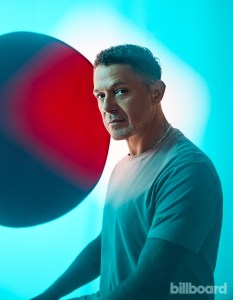
Back in 2005, Spanish star Alejandro Sanz — the heartthrob with raspy vocals, a poet’s way with words and a flamenco flair that defined his global pop sound — teamed with another superstar, Colombia’s Shakira, for “La Tortura,” a sexy flamenco/reggaetón vamp.
It was a headline-grabbing collaboration at a time when such pairings were scarce in Latin music: Spain’s most lauded and top-selling artist cavorting with a crossover star at the height of her popularity.
Accompanied by a video dripping in sensuality, featuring an oil-bathed Shakira writhing on a kitchen table, the song exploded, notching a then-record 25 weeks at No. 1 on Billboard’s Hot Latin Songs chart.
Trending on Billboard
Twenty years later, Shakira and Sanz again danced together to heightened expectations. On May 13, the Colombian star invited her Spanish buddy as a special guest to the opening date of her U.S. tour at Bank of America Stadium in Charlotte, N.C., where the two performed “La Tortura.”
The moment served as a bookend in Sanz’s career as he prepares to release ¿Y Ahora Qué?, his first studio album in four years, featuring “Bésame,” a new duet with Shakira, as the focus track. The song, which harks back to the flamenco/Caribbean sound of “La Tortura” but is set over sparse dance beats, boasts that mix of sophisticated and commercial that has informed so many Sanz hits through the years.
But ¿Y Ahora Qué?, which translates to “Now What?,” is as existential as it is hit-driven, navigating intensely personal fare with humor and unexpected turns.
“It’s what you ask yourself every time you start something new, every time you face change, when you change your sentimental life and things happen that truly move you,” Sanz says, sitting next to me on a couch on a Tuesday afternoon.
Fit, tan and still charmingly impish, Sanz met with Billboard over a glass of red wine at Sony’s 5020 Studios in Miami in early May. This kind of scenario — warm, open, unscripted — has very much been the Sanz way through the years; once he opens up, he shuns formality and careful choreography.
His first album on Sony Music Latin, Y Ahora, is an EP that follows a turbulent period where he switched labels (leaving Universal after a decade in 2021), his former manager took him to court, and, most recently, he publicly dealt with depression and a romantic breakup.
Aside from longtime friend Shakira, Sanz also collaborates with hot new hit-makers Grupo Frontera — in a salsa that steers the act far from its regional Mexican sound — and Manuel Turizo, who eschews his up-tempo rhythmic dance fare for a more melancholy ballad.
For Sanz, it’s a jump of boldness and optimism after the storm. The cover of the album shows him in various stages of movement — walking, leaping, running — as does his newly released tour art. Sanz is a prolific live artist whose 2023 shows grossed $23.8 million and sold 235,000 tickets, according to Billboard Boxscore. All told, between 2022 and 2024, his Sanz en Vivo tour (his largest to date), played 86 concerts throughout Europe, Mexico, South America and the United States, selling over 860,000 tickets and grossing $100 million, according to his management. Sanz has already announced the first leg of his new tour and is slated to play 17 dates in Mexico, including four-sold nights at Auditorio Nacional from a presale, prompting the addition of two more.
Mary Beth Koeth
But Sanz’s real strength lies in his songs. Rhythmically complex and riveting, underscored by his distinctively raspy voice, Sanz’s compositions have led to 14 career entries on Billboard’s Top Latin Albums chart, including four No. 1s and 11 top 10s. On Hot Latin Songs, he has notched 28 entries, including 10 top 10s and five No. 1s; he has won five Grammys and 25 Latin Grammys, and he holds the title for most wins — seven — for record of the year at the Latin Grammys.
In his native Spain, Sanz still boasts the top-selling album of all time, according to local society Promusicae: his 1997 breakthrough, Más, which has been certified 22 times platinum for 2.2 million certified copies sold, and includes his biggest, most lasting hit, “Corazón Partío.”
“In my opinion, Alejandro is the best Spanish-language composer of all time,” says Iñigo Zabala, the former head of Warner Music Latin America & Spain who signed Sanz to his first recording deal back in 1991.
Today, Zabala co-manages Sanz in an unorthodox agreement with Alex Mizrahi, with the two executives focused on different areas of his career. Mizrahi, who heads management and promotion company OCESA-Seitrack, oversees Sanz’s international management and business, while Zabala, who is also a musician, handles his recording career and creative output.
The two began managing Sanz in 2022 when the artist was at a crossroads. He had no formal manager and had decided to end his contract with Universal Music, his home since 2011. But he continued touring, and Mizrahi, his agent in Latin America, yearned to expand his relationship with him.
“I’m a manager focused on touring. But an artist as sophisticated as Sanz needs someone like Iñigo, who knows his origins and who’s had a long artistic relationship,” Mizrahi says.
That same mind frame — artistry leading the business — also informed Sanz’s decision to sign with Sony Music a year later, in a license deal that lets him keep control of his masters.
“I need a label I can talk music with, who will dream about repertoire with me,” Sanz says. “I have attorneys to talk numbers, and so do they.”
Mary Beth Koeth
Which is not to say Sanz is improvising. Beyond his touring, he has been active in ancillary, visible projects. He’s in the midst of shooting a Netflix documentary that will premiere this fall, and production crews have followed him for the past year, including when he sat for a Q&A at Billboard Latin Music Week last year and received the Billboard Lifetime Achievement Award.
His music is also being used for an upcoming stage musical, jukebox-style, that is not based on his life story, but features a character called Ale. And a deluxe version of ¿Y Ahora Qué? will be released later in 2025 with additional collaborations.
Sanz spoke to Billboard about his creative process and where he is now.
So, now what?
“Now what,” “¿Y ahora qué?,” is the first line of the album, in [the single] “Palmeras en el Jardín.” “Now what?” is a question almost everyone asks themselves at some point. Whenever you’re about to start something new, whenever something happens, whenever you face a change, you ask yourself, “Now what?” Especially when it comes to emotional or sentimental changes that really shake you up. I find it very relatable, and I love taking common phrases or ideas that are already part of our collective imagination and giving them a poetic twist in my albums.
“Palmeras en el Jardín,” the song with that phrase and the first single, is about sadness and the loss of your previous relationship. But the album’s mood shifts after that.
I think emotions don’t really distinguish between what’s sad and what’s happy; instead, they create a certain sense of satisfaction. You like sunny days, but sometimes you also enjoy rainy ones, don’t you? “Palmeras en el Jardín” is the rainy day, and there are a few sunny ones throughout the album. It felt fitting for that to be the first thing said because it reflects the inner struggle I went through to start making this album and to feel inspired again to create new songs. I needed that question in my life: “Now what?” Because you have so many options — stay where you are, crumble, move forward, climb higher or jump out of a hot air balloon.
Do you have a process for starting to make music, or do you just wait for the perfect moment?
No, no. Waiting for the perfect moment is just laziness and shows zero commitment. I think you have to actively go after the song, just like you chase luck or love.
Are you disciplined when it comes to songwriting?
When I have to do it, I do it. When I first started making albums, I could write anywhere — in a bakery or on a plane. Now I go to the studio and work with the people I collaborate with — musicians, producers, composers — and approach it differently. Before, I used to lock myself in my room and spend 14 hours writing compulsively and, honestly, in a completely unhealthy way. But that’s how I used to do it. Now I find shorter sessions much more productive, and I’ve changed the way I work.
I used to think those habits were set in stone…
But they’re not. You can change them. The same tools from before don’t always work anymore. For example, when I used to write an album, I would always learn a new instrument or find inspiration within the music itself. Now I’ve discovered that working with other people really sparks something in me. It teaches me a lot, and I get to share what I know, too. That fascinates me because I’d never done it before.
Speaking of working with others, this album has a lot of collaborations. You’ve got three, including “Bésame” with Shakira. How did that one happen?
We’d been talking for a while about working together again. I used to joke with her, saying, “When are we going to make another song? You only make songs with talented, handsome guys!” We hadn’t found the right song that we both connected with. It’s tough after making a song like “La Tortura” to find the right reason to team up again. You don’t want to be too predictable or repeat the same thing, but you also want the new collaboration to be just as sweet.
You’re both so busy. Did you work together in the studio?
No, we didn’t. But I think the process unfolded exactly how it needed to. We worked perfectly by sending ideas back and forth. We’d send each other voice notes and messages. We’re both very hands-on artists, so our conversations were intense. She’d send me audiobooks, and I’d try to summarize them. It was beautiful because we managed to create what we always do when we sing together: Something magical happens. I think we accomplished that by combining our roots, a little imagination and, now, some added experience. There weren’t any arguments because she loves the world of flamenco and we really admire each other’s work. That mutual respect is so important when collaborating.
This album feels like a release for you — more so than others.
Well, what is a release, really? At its core, why do we use music? To communicate. Over time, music has become more commercialized, but if you think about it, the original reason for making songs was to tell your stories and free yourself. People are always surprised when music is used to tell deeply personal stories, but that’s how it’s always been. The difference now is that, with social media, everyone knows exactly where the stories are coming from. I often debate whether to release something or not. But what’s the alternative? Once everything is out in the open and the well is discovered, it’s there for everyone. You can’t clip the wings of creativity just because you feel a little embarrassed about one feather.
When people ask me if this album has a common thread, I say that the connection is me — my voice, my way of interpreting music. I’ve always loved being eclectic and exploring different rhythms. That’s the beauty of music — it reflects what’s happening in your life.
“Hoy No Me Siento Bien” with Grupo Firme is a salsa song, despite its title, and it’s upbeat. But “Como Sería” with Manuel Turizo and “Vino de Tu Boca” are about loss.
“Hoy No Me Siento Bien” is about recognizing that it’s OK to feel bad sometimes. It’s about finding the light at the end of a dark tunnel. That’s why the synergy between the lyrics, which talk about emotional struggles, and the upbeat music works — it’s like saying, “I feel bad, but it’s OK.”
You and Shakira are aligned, but it feels like you pushed Turizo and Grupo Frontera out of their comfort zones. Did Frontera ever say no to singing salsa?
No, not at all. They were excited! I think they love experimenting with music, and you can tell. What musician doesn’t enjoy playing around with music, trying new things and getting their hands dirty? That’s the most wonderful part of doing this job.
Let’s talk about “Como Sería,” your ballad with Turizo.
It’s a ballad, but not your typical ballad. It has layers and corners that feel familiar for a ballad, but it’s less safe. You know, there are ways to write lyrics or melodies that keep you in your comfort zone, but this song steps out of it. I hadn’t worked with Manuel before, but we met at a show in Spain, hit it off and decided to make a song together. His brother also co-wrote it, and honestly, the result is great. It’s similar to the single with Shakira — there’s a bit of his world, a bit of mine, and we meet in a place where you wouldn’t expect to see either of us.
Did you write it together?
They had an idea and sent it to me, and we went back and forth. Some might think that process sounds cold, but I love it. Sometimes when you’re in the same room writing, there are distractions — other people watching who aren’t contributing, for example. When you’re in the studio, there’s embarrassment or hesitation, and it doesn’t flow the same way. But when someone sends you the song, you’re at home, tweaking it, sending it back — you have the intimacy to work freely.
I love this album. It feels like it has all the right songs. What does this album mean to you?
It came into my life at a very important moment. I was closing a chapter where, musically and emotionally, I was in a tough spot. I was caught up in conversations that had nothing to do with music — more about numbers and other things that didn’t resonate with me. I got into music to free myself from math equations, to wake up late and to be my own boss — those are the three things I’ve always wanted to be. Somewhere along the way, I lost that excitement. Before, people would sell out musically, but they’d do it discreetly. Now it’s out in the open: “Let’s make this trash because we know it’ll work.” And if you don’t do that, you get stuck in this giant drawer of [old artists]. I was in that space, and this album brought light back into my life — into that empty space where my passion, drive and effort had disappeared.
Mary Beth Koeth
With today’s business models, I keep hearing that artists need to manage their businesses themselves.
A lot of artists love to say they’re entrepreneurs and that’s fine, but I don’t believe it. As an artist, you can try to make a living however you want based on supply and demand, but I don’t think you can truly be an entrepreneur at the same time. There’s a complete conflict of interest there.
Beyond the music, you’ve spoken openly about your experiences with depression and mental health in 2023. Why?
Because it’s important. If not us, then who? If we can’t openly talk about these things, then what are we showing the people listening to this interview, for example? That they should be ashamed of it? No. But it’s a very personal thing.
Did it take you a while to decide to say, “I’m feeling bad, but I’m going to talk about it”? I ask especially because you’re so private.
Yes, I’m very private about the things that aren’t anyone else’s business because, really, no one cares about what I do in my personal life. But this is something that affects everyone, and I think it’s good to talk about it. When I was going through it, I struggled with social situations. Seeing too many people at once gave me anxiety. But the one place I felt comfortable was onstage.
You’d think it would be the opposite.
Exactly. I did my first concert in Spain and thought, “If this goes well, I’ll do the tour. If not, I won’t.” And I felt amazing up there. As the tour went on, I made changes to prioritize myself. For example, I decided not to meet with anyone after the show. I’d finish the concert, go to my hotel or my house and not worry about meeting everyone’s expectations. That’s so important — to be polite, do your job well, be kind to your people and that’s it. That’s all you need to demand of yourself. The rest should be whatever makes you happy. If signing autographs for 20 hours makes you happy, do it. But if it doesn’t, then don’t.
Do you have mechanisms to manage your anxiety?
It’s less about mechanisms and more about habits. I’ve learned to say no. You always try to be the person you once were — to be nice to everyone. But I know how to set boundaries now, and I don’t let things get out of hand.
What can we expect from this tour?
I’m really excited to include new songs in the setlist. I want to invite friends to some of the shows, but mostly, I want to completely refresh the repertoire. I don’t know if I’ll perform the entire album, but almost all of it. There will also be changes within the band. We start rehearsals in July and will spend all of July and about 20 days in August rehearsing in Spain at my place in the country. I set up a tent there, and we rehearse surrounded by horses, sheep and chickens. I want to create something beautiful and put a lot of care into the stage design. There’s always a special connection during the concerts. We always create something unique, and it’s been a while since we’ve seen each other.

Back in 2005, Spanish star Alejandro Sanz — the heartthrob with raspy vocals, a poet’s way with words and a flamenco flair that defined his global pop sound — teamed with another superstar, Colombia’s Shakira, for “La Tortura,” a sexy flamenco/reggaetón vamp. It was a headline-grabbing collaboration at a time when such pairings were scarce […]

Billboard cover star Alejandro Sanz is gearing up to release his first album in four years, ‘¿Y Ahora Qué?’. The Spanish singer is teaming up with Shakira once again for a new duet, “Bésame.” He shares the inspiration behind “Palmeras en el Jardín,” what it’s like to work with Shakira, his collaborations with Grupo Frontera […]