State Champ Radio
 News
Page: 380
Stockholm-born music library giant Epidemic Sound is launching a new remix series, called Extra Version, on Wednesday (May 28) with help from DJ/producer Honey Dijon. As part of Extra Version, Epidemic pays participating DJs and producers “five to six figure sums” to pick from the songs, stems, samples and loops in its catalog of over 250,000 pieces of IP — and remix them into something new.”
Epidemic then adds the results to its ever-growing catalog available for use by clients — like content creators, advertisers and brands looking for easy-to-clear songs to soundtrack videos — and distributes them to streaming services.
To kick it off, Honey Dijon flipped the Epidemic-owned song “Umbélé” by electronic artist Ooyy and Swedish Grammy-award winning performer Ebo Krdum. “Teaming up with Epidemic Sound was a vibe,” she said in a press release. “They’re shaking things up in the best way… It’s all about freedom, fun and keeping the groove 100%.” The company plans to also collaborate with Major Lazer co-founder Switch and rising Korean talent Jeonghyeon on future Extra Version editions.
Trending on Billboard
With this series, Epidemic Sound CEO/co-founder Oscar Höglund tells Billboard he wants to show off the “high quality” of Epidemic’s catalog, which he believes rivals the quality of traditional major label releases. “The art of consuming music is changing,” he says. “It’s going from being a spectator sport to being a participative one. People want to remix their favorite music, they want to collaborate, and they want to create.” Epidemic, he continues “is creating the opportunity for incredibly talented producers and remixers and DJs to collaborate [and remix] our catalog. And then, we will help them distribute their remixes around the globe [both to streaming services and to their platform which provides pre-cleared music to content creators] – and they’ll get paid well while doing it.”
In this interview, Höglund talks the ins and outs of Extra Version, the ways he is integrating AI remix features to “create more use cases for the same songs,” and why he feels the allegations that Epidemic Sound has filled Spotify mood playlists with “ghost artists” is “deeply offensive to the artist in question.”
Why are you launching Extra Version?
We’ve seen that even though culture is moving towards [more participation and remixing], creatives have held back from doing it because from a legal perspective, it’s very hard to get rights to music because of fractional ownership. Our catalog has been built up, for almost a decade and a half, around the premise of having all the rights in one place. There’s nothing fractional about it. We own all of our music, and we are more than happy to offer the catalog up to producers. We just want to do it in a way that works for the artists who originally made the music [that Epidemic now owns], the remixers, the creators and the platforms where this music will go live and proliferate.
What is the payment model for Extra Version participants, and how does that differ from how producers are typically paid for remixes?
What often ends up happening is that producers are asked to create a remix for an artist, and they don’t get paid much to do it. Rather, the logic has been, the more culturally relevant the artist in question is, the lower your compensation, because your payment is in the cultural value you receive as a remixer from being associated with the artist.
We took a contrarian view here. We’ve always prided ourselves on putting our money where our mouth is, so instead we’re paying much more handsomely up front [to Extra Version participants]. We can’t disclose exactly how much, but I would say between five and six figures [for each remix]. We’re paying a lot up front, and this is not recoupable. It’s not a loan. It’s something the producer gets to keep.
Next step is that we allow the remixer to choose whatever track they feel creatively inclined to use from our catalog. Allowing for choice is a huge part of this. Remixers don’t have to license anything or worry about different samples being unlicensed. We own everything in perpetuity, and it’s all made available to you to pick and choose from. Then we will distribute the song. Most remixers don’t get a commission, just a flat fee. With Extra Version, we want to cut the remixers and producers in.
With Extra Version, Epidemic is opening up its catalog for remixes, and also making stems available so producers can mix and match the building blocks of your catalog. Does Epidemic have the goal of taking on sample or beat marketplaces like Splice or is this just for Extra Version?
When we started commissioning songs, we always got stems for everything. It is important from a soundtracking perspective. To the second part, the way we think about Extra Version is that this is not the end. We’re definitely not stopping here — rather, we’re saying this is the first step in our endeavor to help more music creators sustain themselves and democratize access to music. The bigger picture here is we want to help soundtrack the entire creator economy, and as such, we need to unlock our music.
So it sounds like the future of Epidemic Sound is offering samples, beats, and individual elements of the songs in the catalog to everyone, not just fully formed songs?
Correct.
Do you see Extra Version as an ongoing series, or is it a limited run?
This is not a limited run series. It’s the starting point of ushering in a completely new paradigm, one which is much more centered around the remixing and collaborative nature of culture. This is something that we’re deeply committed to and we’re going to spend a lot of time experimenting and seeing how this space is going to evolve.
It feels like you’re moving in the opposite direction of major labels. Nowadays, competitive deals at majors regularly involve the artist getting their masters back eventually, but the advance the artist gets up front is recoupable. Meanwhile, Epidemic is asking for full ownership of an artist’s tracks, but you provide non-recoupable money up front for the song. What is your goal with this approach?
At our core, we’ve taken one fundamentally contrarian belief: if you’re an artist, common wisdom says you should hold on to all of your [intellectual property]. That’s the traditional music industry right now. We think, in order to provide wide distribution and to provide superior monetization, we need to own 100% of the copyright. If we can build a platform, like we have, where there’s one point of contact when you want to license the song, then we can indemnify our customers and allow them to use the songs across all platforms, in all jurisdictions, and in all different scenarios. This allows for us to create predictability with Epidemic, so we can also pay our artists more predictable fees, too.
How is Epidemic thinking about AI?
We think that AI is an incredible tool to help augment human creativity, but never replace it. We’ve so far found that there’s tremendous amounts of value in using AI to help both music creators and video creators. We can use AI during the recommendation phase. If you’re a video creator we can use advanced AI search tools to help recommend tracks.
The old paradigm was, if you found a track that you like, suddenly you had to spend hours trying to re-edit that track such that it perfectly fit the video story you’re trying to tell, often with huge challenges from a legal perspective. “Am I even allowed to change the composition of this track?” The answer is often no. We’ve now been able to use AI [so] that, if you are a content creator, and you find this one track that you want to use to soundtrack your video, you can now speed it up, slow it down, change it. You can cut it. You can edit it — not replace it. This helps create more use cases for the same songs. Where there might have previously been 10 content creators who can use your track, now with adaptation maybe 20 or 30 or 100 creators will use it. That means the track is going to get played more and it’s going to earn more royalties [on streaming services]. And so ultimately, the human who made that track is going to make much more money, because AI has augmented the use cases.
Point three is purely generative — we’ve launched a product called AI Voice. We’ve gone to human voice actors, and we’ve struck agreements with them such that we pay them up front, we train and we use their voice, and then we allow our customers to use their voices. Every time they do, there’s an additional royalty so that the voice artists make additional money. We also put their personal emails out there in case content creators want to work directly with them. So suddenly, even when we go into the generative world of voice, we’re seeing that voice actors get used more, get more work, and get paid.
There have been allegations dating back to 2016 that Epidemic Sound has a deal of some kind with Spotify to fill some Spotify playlists with royalty-free music. It has been highly criticized. Can you explain what that arrangement is, if there is one?
I’d be happy to. Epidemic parallel publishes all of its music to all of the major DSPs around the entire world. We do that for a couple of different reasons, but the primary reason is it’s in our artists’ best interest, because we realized early on there was a Stranger Things, Kate Bush effect, meaning when Kate Bush’s track was used in Stranger Things, there was a massive surge in that song on streaming platforms around the world. We realized early on that that happens [when content creators use our songs].
There was also an adjacent trend, which we also tapped into very early, on streaming platforms in general — Spotify being one of them — that there was much more lean-back listening going on. The role of the record [or album] as the [driver] for music consumption started to diminish. More and more, [people were listening to] standalone tracks, but then ultimately playlists started to proliferate and come into their own.
Many of [the playlists] are hits-oriented, but there’s a huge proportion of playlists which are more functionally oriented. We do incredibly well across all the different playlists where people are looking to get to a specific theme or in a specific emotion. There’s music for sleeping, for concentrating, for studying, for getting ready, for meditating or for walking your dogs. Because what we do at our core is soundtracking, it turns out we were really, really good at [those playlists]. And while other people were trying to get into the bigger playlists to create the hits of tomorrow, we just kept doing the thing that we do really well. There was huge demand across all different DSPs, so we started to grow. And we became very, very significant and very, very successful.
Do you feel that it harms non-Epidemic artists in these genres to be competing for spots on mood-based playlists with your music?
No. If anything, the contrary: I think the old articles about Epidemic artists are deeply unfair. There was speculation: “Who are these artists? Do they even exist?” They are super talented artists in their own right. I took issue very much with that.
Various writers have referred to your music that is on Spotify playlists as “ghost artists” or fake artists.” How do you feel about those titles?
I think it’s deeply offensive for the artist in question. If you are an actor, you can play multiple different roles because you portray many different characters. That’s second nature. Artists, like actors, have the right to express their creativity in a multitude of different ways. It’s always them who determines if they want to publish their music under one name or not. Odds are that their fans might think they are all over the place, so quite often what we see happen is that artists have one brand for a certain genre of music, and different brand for another kind. If you look at Elton John, Madonna they [use] aliases. I seriously doubt that Madonna and Elton John would like to be called fake artists or ghost artists. That’s them creatively expressing through a different persona.

Barely three months after his “Not Like Us” shattered the mark as the longest-running No. 1 on Billboard’s Hot R&B/Hip-Hop Songs chart, Kendrick Lamar is back for another stab at the record books.
Lamar’s “Luther” collaboration with frequent collaborator (and current Grand National co-headliner) SZA captures a record-tying 22nd week at No. 1 on the multi-metric Hot R&B/Hip-Hop Songs chart dated May 31, matching “Not Like Us” for the all-time mark since the chart became a singular, all-encompassing genre ranking in October 1958. “Not Like Us” rang up 21 weeks in charge in 2024 amid its moment in Lamar’s diss track war with Drake, and rebounded for a 22nd frame in February after Lamar’s performance of the song during the halftime show of Super Bowl LIX on Feb. 9.
For SZA, the “Luther” look also returns her to a perch she once claimed: Before “Not Like Us” took the title, the singer-songwriter’s “Kill Bill” scored the most weeks at No. 1 on Hot R&B/Hip-Hop Songs, 21 in 2022-23.
Trending on Billboard
As “Luther” shares the gold medal, here’s a look at the songs the most weeks at No. 1 on Hot R&B/Hip-Hop Songs in its 66-year history:
Most Weeks at No. 1 on Hot R&B/Hip-Hop Songs:
22, “Luther,” Kendrick Lamar & SZA, 2024-2522, “Not Like Us,” Kendrick Lamar, 2024-2521, “Kill Bill,” SZA, 2022-2320, “Old Town Road,” Lil Nas X feat. Billy Ray Cyrus, 201918, “Industry Baby,” Lil Nas X & Jack Harlow, 2021-2218, “One Dance,” Drake feat. WizKid & Kyla, 201616, “Blurred Lines,” Robin Thicke feat. T.I. + Pharrell, 201315, “Be Without You,” Mary J. Blige, 2006
[embedded content]
For its 22nd week in charge, “Luther” registered 16.7 million official United States streams, 2,000 sales downloads and 60.5 million in airplay audience in the tracking week of May 16-22, according to Luminate, declines of 8%, 6% and 4%, respectively, in each metric.
Mirroring its Hot R&B/Hip-Hop Songs triumph, “Luther” achieves a 22nd week at No. 1 on the Hot Rap Songs chart. The melodic rap cut remains in second place for the longest stay at the summit in the chart’s 35-year history, trailing only “Not Like Us” and its 26-week record.
While “Luther” extends its domination on the Hot R&B/Hip-Hop Songs and Hot Rap Songs charts, it surrenders the top spot on the all-genre Billboard Hot 100 to Morgan Wallen’s “What I Want,” featuring Tate McRae. The new champ clips the “Luther” reign at 13 weeks – still, easily the longest-running No. 1 for both Lamar and SZA atop the flagship chart.
In 1980, when Shaun Cassidy sold 50,000 seats at the Houston Astrodome, he couldn’t know that he would be embarking on the longest tour of his career 45 years later.
Explore
Explore
See latest videos, charts and news
See latest videos, charts and news
On Sept. 13, the former pop idol and actor will kick off the 50-city The Road to US outing at the Grand Ole Opry in Nashville.
“The truth is, in my whole career I never really toured — because as a kid, I was working on The Hardy Boys, [TV show] so I’d go out on weekends, and then I got a week here or two weeks there in the summer,” Cassidy tells Billboard. “But this tour that I’m starting will be the biggest commitment of 50 shows and more to come I’ve ever had in my life.”
Cassidy, following in the entertainment footsteps of his half-brother, David Cassidy, and parents, Oscar-winning actress Shirley Jones and Tony-winning actor Jack Cassidy, burst onto the pop scene in 1976 with “That’s Rock ‘n Roll.” The breakthrough hit reached No. 3 on the Billboard Hot 100 and was followed by his chart-topping cover of The Crystals’ “Da Doo Ron Ron,” and “Hey Deanie,” which reached No. 7.
Trending on Billboard
Cassidy released five studio albums between 1977 and 1980 on Curb/Warner Bros. including the Todd Rundgren-produced Wasp. Simultaneously, he also was acting on The Hardy Boys/Nancy Drew Mysteries, which ran from 1977-1979. Cassidy then focused on the stage, appearing in plays on Broadway and London’s West End during the ‘80s and early ’90, before segueing into behind-the-scenes TV work in the mid-‘90s.
Since then, he has had an extremely successful second career creating, writing and and/or producing such acclaimed television series as American Gothic, Cold Case, Cover Me, The Agency and, most recently, New Amsterdam.
He has also toured sporadically since 2020 as a one-man show that expanded to a full band, ending with five sold-out nights at 54 Below in New York City in 2023. But those outings were not as extensive as the forthcoming one, which he almost felt called to do.
“Honestly, the reason I’m really motivated to do this is I have such a feeling that if you are in a position in any way to be a catalyst for bringing people together in a room or a concert hall or a church or your kitchen table, in any context, gathering people, getting them to put down their phone for a minute and actually look at each other and connect and have a shared experience is just so important at this at this stage in our world, I think,” he says.
The new show is a tribute to music, his family and his fans. “It’s really a love letter to our shared history and experience,” he says. “I feel the disconnection and the sadness tied to the disconnection so profoundly, especially with younger people who didn’t grow up without social media, and the mislead of social media that it will somehow connect you further, when the opposite is proven to be true.”
Cassidy isn’t going so far as to declare his shows a no-phone zone, but he does ask fans to put their phones down — “because I want to see their faces,” he says.
Though he hasn’t released an album since 1980, the concerts will include new songs. “That’s the wonderful gift of performing again,” he says. “It inspired me to start writing songs, which I hadn’t been doing for decades while I’ve been writing hundreds of television scripts.”
The songs he’ll debut were written specifically for the show. “They are songs that underscore a story I might be telling about me or my family or about the audience, or about an experience I had back in the day or am having now,” he says, adding he’s written about 20 new songs.
Cassidy hasn’t recorded any of the songs for release and admits he is not thinking about that. “I guess I could sell new songs like t-shirts on my website or something, but, honestly, I’m so far away from how the music business works now,” he says. “My [old] songs are on Spotify, and I get five cents every month or whatever, but if I did it, it would really just be for me and for any fan that wants a new song. Maybe I will.”
He does add that Rundgren came to one of his shows in 2023 “and actually Todd and I talked about working together again — at that show anyway. But I haven’t followed up because I’ve been too busy with TV stuff. But who knows?”
The tour, which was booked by UTA, will allow Cassidy and his band a little sightseeing in between gigs. He plans to play around 12 shows a month and in-between will take advantage of the highlights of whatever region he’s in. “We’ll do four shows and take three days off, hike the Appalachian Trail, visit Washington, D.C., do whatever touristy things we want to do,” he says. He also needs to leave time to continue work on a number of television projects he has in development.
Between geographic segments of the tour, he will then come back home to his wife and four children in Santa Barbara, Calif., and tend to the wine they produce, My First Crush, which donates a portion of its proceeds to No Kid Hungry, which feeds hungry children nationwide.
“I’ll need to take a break,” he says. “One of the benefits of not having toured or sung other than around my own home piano for years and years is my voice is stronger than it was when I was 20 because I never tore it up. And I don’t want to tear it up now.”
Also, because he has played live so infrequently, he hasn’t burnt out on playing his hits thousands of times. “They’re fresh. I go out and I’m singing ‘Da Doo Ron Ron’ with more passion than I ever sang it when I was 17,” he says. “I know there’s a lot of performers that have resentment about these songs that made them successful, and I guess if you’ve sung the song 10,000 times, you might get sick of it. I don’t have that experience at all. I can’t wait to sing these songs.”
He’s also appreciative that this time he’s not singing over thousands of shrieking fans. “My early shows were just scream-a-thons, I couldn’t talk to anybody,” he says. “Now I actually can engage with people and look them in the eye and see that they’ve had a life, and I’ve had a life, and I’m just so grateful to share it.”
The Road to US tour dates (more to come):
9/13 Nashville/Grand Ole Opry
9/17 Waterville ME/Waterville Opera House
9/19 Beverly MA/ Cabot Theater
9/25 Glenside PA/The Keswick
9/26 Seneca NY/Niagara Falls – The Bear’s Den
9/27 Seneca NY/Niagara Falls – The Bear’s Den
9/28 Verona NY/Turning Stone Resort Casino
10/16 Hopewell, VA/The Beacon
10/17 Alexandria, VA/The Birchmere
10/18 Annapolis, MD/Ram’s Head
10/19 Rocky Mount VA/The Harvester
10/23 Peekskill NY/Paramount Hudson Valley Arts
10/24 Newton NJ/The Newton Theater
10/25 Norfolk CT/Infinity Hall
10/26 Bethlehem PA/Art’s Quest
11/5 Milwaukee WI/The Pabst Theater
11/7 Des Plaines IL/The Des Plaines Theatre
11/8 St. Charles IL/The Arcada
11/9 Burnsville MN/Ames Center
11/11 Shipshewana IN/The Blue Gate
11/13 Nashville IN/Brown County Music Center
11/14 Cincinnati OH/Ludlow’s
11/15 Columbus OH/The Southern
11/16 Akron OH/The Goodyear Theater
12/4 Detroit MI/The Fisher Theater
12/5 Warren OH/Robin’s Theater
12/6 Munhall PA/Carnegie Hall Library
12/11 Orlando FL/The Plaza Live
12/12 Clearwater FL/Capitol Theater
12/13 Ponte Vedra FL/Ponte Vedra Concert Hall
1/8 Austin TX/Paramount Theater
1/9 Dallas TX/The Granada Theater
1/10 Houston TX/House of Blues
1/16 Napa CA/Uptown Theater
1/17 Riverside CA/The Fox
1/18 El Cajon CA/Magnolia

Source: Jason Mendez / Getty
Another war of words has broken out among rappers Remy Ma, her ex Papoose, and champion boxer Claressa Shields online. This was spurred on by Shields’ appearance on The Breakfast Club Wednesday (May 21), where she talked about her upcoming bout as well as her life and career.
Just about 32 minutes in, Shields was asked about her relationship with Papoose and stated that she and Remy Ma haven’t spoken.
“She made her post and that was about it,” Shields said. “Women are women. They are very emotional creatures. I think that was just…I don’t know what it was. Emotions or…I don’t know what it was, because I don’t know her and she don’t know me.” The Flint, Michigan, native was referring to an Instagram post that Remy Ma made last December, sharing private messages between Shields and Papoose.Remy quickly responded in an Instagram Live post, stating that she wasn’t the reason for her divorce from Papoose being finalized while blasting him. “The man I married in 2008, that’s not who this is now,” Remy said. “Now, he’s a wife.” She went on to chastise Shields for talking about the situation on The Breakfast Club: “I don’t care who brought up what. It’s nothing for your to be like, ‘I don’t want to talk about that,’” the “Conceited” rapper stated.Papoose would respond to Remy Ma shortly after on Thursday (May 22), beginning by calling her out for her cheating. “2022, she started dealing with the lame,” referring to Eazy The Block Captain, Remy’s new partner. “That wasn’t the first time I caught her cheating. I’ve caught her cheating numerous times since she been home,” Papoose said. He’d go on to claim that he wrote 90% of Remy Ma’s rhymes, including “Conceited” and shared pictures of divorce papers finalizing their separation.After another response from Remy was made to Papoose, the four-time women’s champion chimed in. “REMY MA! Imma say what the f—k I want to say!” Shields wrote in reponse on Friday (May 23) in a post on X, formerly Twitter. “Yes we gonna have a family! Yes we’re happy and yes you still invited to barbecues and cookout long as you have a good attitude! Leave me and Pap alone nobody worried about you! Yes I’m 30, not 18! You want to come to the fight or something !? DAMN!”https://x.com/Claressashields/status/1925940230281945177
Check out the interview above.
HipHopWired Featured Video

Source: Christopher Polk / Getty
On Monday (May 26), some of your favorite music artists were bestowed with awards at the 2025 American Music Awards and while some were expected due to the success they experienced this past year, others were surprising as some upsets were pulled off as a reminder that yes, this is America alright.
Most shocking to many in the Hip-Hop culture was Eminem’s wins over Kendrick Lamar for Favorite Hip Hop Artist and Favorite Hip Hop Album as Slim Shady almost helped shut out Kendrick winning any awards in the 10 categories he was nominated in. Now, we can’t deny that Eminem is a Hip-Hop legend, but the man did not have a better year than Kendrick Lamar did in 2024 in any sense of the word. Just sayin’. Luckily, K. Dot was recognized for the work he put in in his efforts to dismantle Drake and took home the award for Favorite Hip-Hop Song for his classic cut “Not Like Us.”
As the show went on many of your other favorite artists took home some gold as the likes of Megan Thee Stallion (Favorite Female Hip-Hop Artist), Bruno Mars (Favorite Male Pop Artist) and Beyoncé (Favorite Female Country Artist) were recognized for their body of work this past year. We’re low-key surprised Beyoncé winning a country award didn’t spur MAGA to take to social media to say this is what’s wrong with America or something.
The biggest winner of the night was indeed Billie Eilish who took home seven awards including Artist Of The Year and Album Of The Year for her third studio album Hit Me Hard And Soft.
While many fans think these awards shows are rigged in some way, shape or form, according to People, the nominees and winners of the American Music Awards is a fan-voted awards ceremony based on “key fan interactions, including streaming, album and song sales, radio airplay and tour grosses.”
How this algorithm led to Eminem beating out Kendrick Lamar still doesn’t make sense to us, but that’s neither here nor there.
Check out the complete list of winners on the American Music Awards website, and let us know your thoughts in the comments section below.
HipHopWired Featured Video
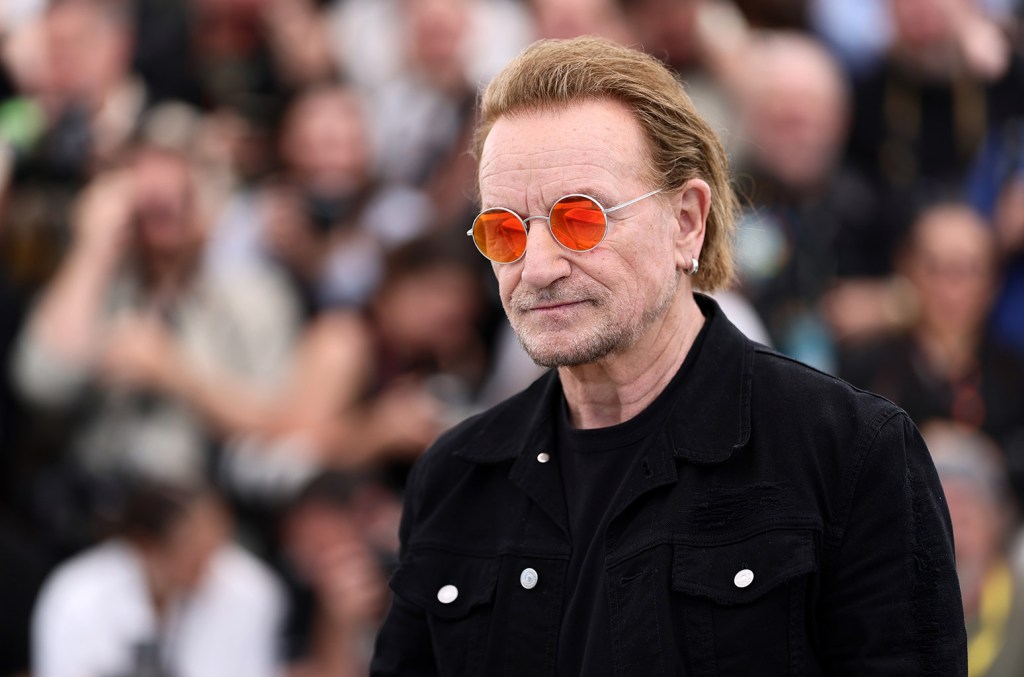
For the record, Bono said he has never endorsed a politician for office. But when Jimmy Kimmel asked him on Tuesday night (May 27) where he stood in the ongoing, escalating battle between Donald Trump and Bruce Springsteen, the socially conscious U2 singer said there was only one endorsement he could possibly give.
“I think there’s only one ‘Boss’ in America,” the Irish rock legend responded cheekily in reference to Springsteen’s longtime nickname. The dig at the president came after a recent late night Truth Social rant in which Trump called for a “major investigation” into celebrities who supported former vice president Kamala Harris in her White House bid. “HOW MUCH DID KAMALA HARRIS PAY BRUCE SPRINGSTEEN FOR HIS POOR PERFORMANCE DURING HER CAMPAIGN FOR PRESIDENT?” Trump wrote. “WHY DID HE ACCEPT THAT MONEY IF HE IS SUCH A FAN OF HERS? ISN’T THAT A MAJOR AND ILLEGAL CAMPAIGN CONTRIBUTION? WHAT ABOUT BEYONCÉ? …AND HOW MUCH WENT TO OPRAH, AND BONO???”
Trending on Billboard
According to Newsweek, there is no official record of any of those artist being paid to perform in support of Harris. In addition, Irish citizen Bono did not endorse a candidate in the 2024 U.S. presidential election and did not participate in any campaign events.
That said, Bono was more than happy to be included in the Trump dump. “To be in the company of Bruce Springsteen, Beyoncé and Oprah, I’d play tambourine in that band,” he told Kimmel, clarifying that neither he nor U2 have ever “paid or played a show to support any candidate from any party. It has never happened. It’s called ‘Truth Social,’ but it seems to be very antisocial and it’s not very true,” he quipped about the president’s social media platform.
He did, however, suspect that his name may have made it into Trump’s rant because he co-founded the non-profit One Campaign, a global non-partisan organization that has raised millions to create economic opportunities in Africa. In the midst of the Trump administration’s unprecedented dismantling of U.S. government agencies — including efforts to completely defund and eliminated the U.S. Agency for International Development — Bono noted that people across the political spectrum, including the many “very religious Catholics and evangelicals and conservatives” who support his organization are “very, very, very angry with the person that they voted into office having demolished instruments of mercy and compassion, like USAID or PEPFAR,” he said.
The latter is a reference to a global initiative launched by Republican President George W. Bush in 2003 that is credited to date with saving 26 million lives of people living with AIDS and and allowing nearly 8 million babies to be born with HIV infection. “They are not happy and there will be trouble,” Bono predicted of the blow-back from Trump’s actions.
While he was happy to weigh in on the American pop-litical back-and-forth, Bono was actually there to promote his new biographical film, Bono: Stories of Surrender, which premieres on Apple TV+ on Friday (May 30). In a rare TV chat appearance, the singer jokingly said the memoir-tuned-one-man-show-turned-film has him playing an “aging rock star on a massive ego trip… It’s quite a stretch.”
He briefly described how the film had him exploring his “rather complicated” relationship with his strong-willed late father, Brendan Robert Hewson, as well as his own struggles to be a good father and son. When Kimmel noted that the film got a nearly 9-minute ovation at its Cannes Film Festival debut, Bono, despite being one of the world’s biggest rock stars, admitted to feeling a sense of imposter syndrome while walking the red carpet at the glamorous French film fête.
In fact, he was somewhat unnerved to even sit with Kimmel, asking actress daughter Eve Hewson (Bad Sisters) for advice, which she dutifully provided. “‘Dad, just bring it,’” she counseled the 65-year-old music legend. “And I’m like, ‘bring what?,’” he replied. “She said, ‘it. It. Just answer Jimmy’s questions. None of the jazz conversation without full stops and commas. Just answer his question, no false modesty.’”
Sage advice indeed. So, when Kimmel asked what’s next for U2, Bono gave a somewhat jazz-less answer. “Oh, oh yes,” Bono said in response to a query about whether the band is recording new music. “We’ve been in a studio. I think you’ve sometimes got to deal with the past to get to the present… in order to make the sound of the future.”
Bono described the sound as that of “four men who feel like their lives depend on it,” noting that “nobody needs a new U2 album unless it’s an extraordinary one. And I’m feeling very strong about it.” The unnamed album would be the follow-up to 2023’s Songs of Surrender, which featured re-recorded versions of 40 of the group’s previously released tracks.
Pumping up the jazz, Bono said the new tracks are songs for the “kitchen… the speedway, the garage… just for every part of your life. Songs to make up to, songs to break up to.” The best news is that drummer Larry Mullen Jr. is back in the fold following neck surgery that kept him out of U2’s residency at Las Vegas’ Sphere in late 2023 and early 2024. “He’s really innovative,” Bono said of the band’s time keeper.
Watch Bono on Jimmy Kimmel Live! below.
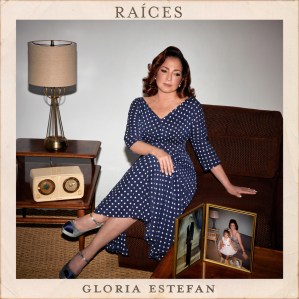
Gloria Estefan is ready to introduce the world to Raíces, her first Spanish-language album in 18 years and the 30th in her 50-year career. It is, in the words of the superstar, “like a modern Mi Tierra” — a sort of sequel to her iconic first LP in her native language, but freer.
“When we had the concept for the [1993] album Mi Tierra, we wanted to highlight a rich era of Cuban music that had been celebrated worldwide B.C. — before Castro,” the Cuban-American artist tells Billboard Español. “Back then, we were very careful to use the language that would have been used in the 1940s in the songs — the arrangements, the instrumentation, we kept it very much of that era. Here, we felt free to explore, always keeping family in mind and the music that gave us so much richness, and which helped us create these fusions, but coming from a very organic and real place.”
Set to release on Friday (May 30) under Sony Music Latin, Raíces consists of 13 tracks mostly written by musician and producer Emilio Estefan Jr., Gloria’s inseparable partner in life and career for over four decades. Salsa, bolero, and tropical rhythms resonate in songs ranging from previously released singles like “Raíces” and “La Vecina (No Sé Na’)” to deeply romantic tracks such as “Tan Iguales y Tan Diferentes,” “Te Juro,” “Agua Dulce,” and “Tú y Yo.”
Among the few songs penned by Gloria is the sweet “Mi Niño Bello (Para Sasha),” dedicated to her only grandson, with the English version “My Beautiful Boy (For Sasha).” “Since he was born, we’ve had a very beautiful and close relationship,” she proudly shares, adding that in Spanish she wanted to create something “with the flavor of ‘Drume Negrita,’ something very classic, a Cuban lullaby.”
A second song on the album, “Cuando el Tiempo Nos Castiga” (co-written by Emilio and Gian Marco and originally recorded by Jon Secada in 2001), also has a new English version courtesy of Gloria, titled “How Will You Be Remembered.” “I never translate exactly. I think about the feeling, the emotion, what one wants to express about the theme, and I approach it in the new language. In English, I was thinking more about legacy — you want to feel happy with what you left behind,” she explains about the discrepancy in the titles, with the one in Spanish meaning “When time punished us.”
Estefan — who in 2023 became the first Latina inducted into the Songwriters Hall of Fame and in 2024 received the Legend Award at the Billboard Latin Women in Music ceremony — usually writes more for her albums, but this time she was focused on creating songs for the upcoming Broadway musical BASURA alongside her daughter Emily when Emilio presented her with the idea for the song “Raíces” a couple of years ago.
“Emilio didn’t even realize it was my 50th [career anniversary],” recalls Estefan, who wanted to do something special to celebrate the milestone. “I told him, ‘Babe, I can’t change my mindset for this, but I would like, if I do an album again, for it to be tropical, for it to be in Spanish.’ He says, ‘Do you trust me?’ I go, ‘Who else am I gonna trust than you?’”
Raíces is Gloria Estefan’s first Spanish-language album since 90 Millas, which debuted and spent three weeks at No. 1 on Billboard’s Top Latin Albums chart in October 2007. Mi Tierra, meanwhile, spent a whooping 58 weeks at the top of the chart.
Estefan also spoke about the new Pope Leo XIV, immigration, and more. Watch the interview in the video above.
Gloria Estefan, ‘RAICES’
Courtesy Photo

Gloria Estefan is about to release her first Spanish album in 18 years, ‘Raíces’. She sits down to talk about how the album was created with her husband, Emilio, dedicating a song to her grandson, her opinions on the new Pope, her thoughts on immigration issues in the U.S., and more. Are you excited for […]
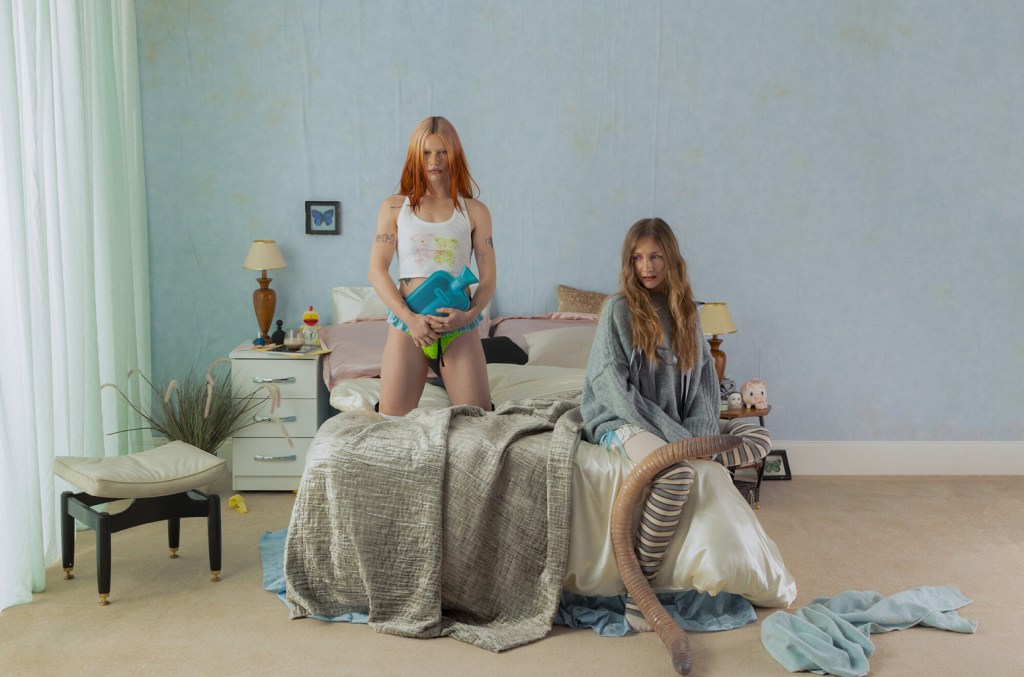
Wet Leg has shared the second taste of its upcoming album Moisturizer with the LP’s opening track, “CPR.” The song was released on Tuesday evening (May 27) and follows its live debut at a recent run of live shows. The group – led by singer Rhian Teasdale and guitarist Hester Chambers – headlined two nights […]
As anticipation builds for surprise appearances at Glastonbury 2025, Sir Rod Stewart has confirmed that Ronnie Wood will join him for a Faces reunion during his Legends set. In a new interview on That Peter Crouch Podcast, Stewart explained that he was still in regular contact with the Rolling Stones guitarist. The pair were previously bandmates in the late ’60s/early ’70s blues rock band, alongside drummer Kenney Jones.
Explore
See latest videos, charts and news
See latest videos, charts and news
“Woody, I do [speak to] a lot,” the 79-year-old said. “Just recently, ’cause we’re gonna do Glastonbury together.” You can listen to the podcast in full here.
Trending on Billboard
Faces hinted at a comeback last month, with Jones revealing in an interview with The Telegraph that the band had recorded “about 11 tracks” at RAK Studios in London for a new album – which would be their first full-length effort in over 50 years.“I can’t see it coming out this year. But I can see it coming out next year,” he continued. “Everyone’s doing different things. We do little snippets [of recording] here and there. Then all of a sudden, The Stones are out [on tour] again, Rod’s out again…”
First formed in 1969 through a merger between members of Small Faces and the Jeff Beck Group, Faces existed for six years before guitarist Wood left to join the Rolling Stones, and Stewart continued his burgeoning solo career. The group have released four albums, with 1971’s A Nod Is As Good As a Wink… to a Blind Horse hitting No. 6 on the Billboard 200.
Glastonbury will take place at Worthy Farm, Somerset next month (June 25-29) with headliners The 1975, Neil Young, and Olivia Rodrigo. Stewart last performed at the festival in 2002, topping the bill alongside Coldplay and Stereophonics that year.
The “Maggie May” singer will take to the Pyramid Stage on Sunday afternoon for the Legends slot – one of the most coveted in the festival’s history. Previous bookings have included Dolly Parton, Johnny Cash, Lionel Richie, Kylie Minogue and Diana Ross, with Shania Twain performing in the Legends slot in 2024.
Shortly after he was announced for this year’s event, Stewart said he was “proud, ready and more than able to pleasure and titillate my friends at Glastonbury.” He was the first name to be confirmed for Glastonbury 2025, which sold out in under an hour last autumn following the introduction of a new online queuing system.
2025’s edition will mark the final event to take place at Worthy Farm before the traditional fallow year in 2026, which sees the landowner Michael Eavis and his family allow the grounds to recover every four years. The festival will return again in 2027.