State Champ Radio
 News
Page: 169

Trending on Billboard
Win Butler and Régine Chassagne of Arcade Fire have separated after 22 years of marriage, the band announced Thursday (Oct. 30).
In a statement posted to the Montreal rockers’ Instagram account, the longtime couple shared that “after a long and loving marriage, Win and Régine have decided to separate.”
“They continue to love, admire and support each other as they co-parent their son,” the message continued.
As for the group’s future, the bandmates wrote that their “bond as creative soulmates will endure, as will Arcade Fire.”
“The band send their love and look forward to seeing you all on tour soon,” the statement concluded.
The split comes after a long journey for Butler and Chassagne, who first met in 2001 at McGill University and formed Arcade Fire that same year. The pair tied the knot in 2003 and welcomed their son in 2013.
In 2022, Chassagne stood by her husband after he was accused of sexual misconduct by four people in a Pitchfork report. Butler confirmed at the time that he’d had extramarital relations with the people who came forward, but denied that any of them had been nonconsensual. He also apologized to “anyone who I have hurt with my behavior.”
“Win is my soulmate, my songwriting partner, my husband, the father of my beautiful boy,” Chassagne said in a statement at the time. “I know what is in his heart, and I know he has never, and would never, touch a woman without her consent, and I am certain he never did. He has lost his way and he has found his way back. I love him and love the life we have created together.”
Earlier this year, Arcade Fire dropped Pink Elephant, the band’s first album since the allegations came to light. In April, the group embarked on its Don’t Think About Pink Elephant Tour, which concluded the following month.
See Arcade Fire’s statement below.
Trending on Billboard
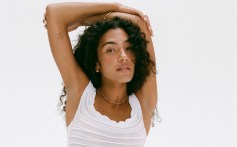
Olivia Dean’s sophomore album The Art of Loving, released in late September, is an intimate portrait of matters of the heart, and the highs and lows of romance in your 20s. Now the world loves her back and U.K. industry insiders are blown away as a fresh outpouring of affection gives her a rare shot of breaking America.
Related
Released via Capitol Records U.K. in partnership with Island Records U.S., The Art of Loving recently peaked at No. 6 on the Billboard 200, and currently remains in the top 10. And this week, its breakout hit “Man I Need” continues to rise on the Hot 100 and is up to No. 8 — Dean’s first-ever Hot 100 top 10 hit — while two other tracks, “So Easy (To Fall In Love)” and “Nice to Each Other,” appear at No. 44 and No. 88, respectively.
Records have tumbled on the U.K’s Official Charts. On release week, The Art of Loving and “Man I Need” concurrently hit No. 1 on the Albums and Singles chart, with Dean becoming the first British female solo artist to achieve the feat since Adele in 2021. This week, Dean has broken a new U.K. chart record with four songs inside the top 10, the first time any female solo artist has achieved the feat and buoyed by her appearance on Sam Fender’s “Rein Me In.”
Dean is no overnight sensation. The BRIT School graduate first appeared as a backing singer with dance group Rudimental, and landed a record deal with AMF (a subsidiary of EMI) in 2019 for OK Love You Bye, her debut EP. Her debut album Messy (2023) scored a Mercury Prize nomination, and alongside an appearance on the BBC’s Sound Of poll the following year, she earned nominations in three categories at the BRIT Awards in 2024.
Now that steady build has exploded into potential global stardom. Next spring, the 26-year-old will headline six nights at London’s 20,000-capacity O2 Arena as part of her sold-out U.K. and Ireland tour, but the campaign is smartly positioned to break across the pond, too. She’s currently the lead support for Sabrina Carpenter’s ongoing arena tour, including five nights at New York’s Madison Square Garden this week. A performance on Saturday Night Live is scheduled for Nov. 15.
Now, with the campaign going from strength to strength, Tom Paul, managing director of Capitol Records U.K., earns the title of Billboard’s Executive of the Week. Here he discusses the canny A&R decisions that supported Dean’s artistry, why she stands out in a world “increasingly shaped by AI” and keeping her well-fed with her favorite snack: chocolate raisins.
Related
This week, Olivia Dean’s “Man I Need” became her first top 10 hit on the Billboard Hot 100, soaring to No. 8 in its ninth week on the chart. What key decisio did you make to help make that happen?
Partnering with Island U.S. in 2023 was absolutely key — that team is world-class. They completely understand and support Olivia’s artistry, and we’ve been working in lockstep since the release of Messy. We built an ambitious plan for The Art of Loving rollout in late 2024 and really stuck to it. “Man I Need” was quickly chosen as the focus single by Olivia and the team — and when she started performing it across her U.S. headline shows before release, the response was undeniable. You could feel it connecting in the room. Her being back in market now, supporting Sabrina Carpenter, has only amplified that momentum — and honestly, given the commercial and radio plans Island have put in place, it feels like this track still has plenty more room to grow.
Olivia released four EPs and her debut album, 2023’s Messy, before breaking through with The Art of Loving. How have you worked to build her career steadily through the years?
From the start, we’ve always focused on Olivia as an artist with longevity. We’ve been consistent with music releases since 2019, including live albums from the Jazz Café and Hammersmith Apollo, standout sync moments with Bridget Jones and Heartstopper, her work with brands such as Burberry and Adidas, and extensive global touring.
She’s one of the hardest-working artists I’ve ever seen — she’s travelled the world several times over, supported brilliantly by Nickie Owen and the Universal Music U.K. International team. Olivia knows exactly who she is, and we’re all completely aligned on her ambitions. The key is making smart decisions every day and avoiding shortcuts. She’s in this for the long run, and everything we do is built around that.
What specific decisions did the A&R team and Olivia make during the process of writing and recording The Art of Loving?
Willem Ward’s decision to turn an east London house into a recording studio — complete with Olivia’s own piano — was a key part of the alchemy behind the album’s magic. Olivia lived in the space for three weeks, inviting both longterm collaborators and new writers to join her. Having that creative home base in London, in a space that felt completely her own, made a huge difference.
We kept the core team that’s been integral to her journey while bringing in new creative energy from producers like Zack Nahome. And through it all, we followed Olivia’s lead — she set the tone, the pace and the emotional compass for the record.
Over in the U.K., Olivia currently has three songs in the Top 10, plus a collaboration with Sam Fender. How much planning goes into making sure that each single has the push it deserves when they’re all big simultaneously?
The U.K. chart success is an astounding achievement and absolutely one to be celebrated, but we’ve always said it doesn’t matter which song brings you into Olivia’s world — and we’ve always looked at the bigger, global picture before local chart metrics. We’ve had “Reason to Stay” going viral in Southeast Asia while “It Isn’t Perfect” was peaking in the U.K., and “Dive” [from debut LP Messy] was charting in Australia. She’s a true artist in that respect — every one of her songs forms part of the Olivia Dean story. When “Man I Need” was released, we suddenly had 12 songs in the U.K. Spotify Top 200, spanning her entire catalogue from 2019’s OK Love You Bye right through to The Art of Loving.
While meticulous planning goes into every rollout, there’s no accounting for those unexpected moments. Constant communication with the team — and the willingness to pivot, or sometimes to simply let things grow organically — is crucial. Olivia is an incredibly intuitive artist; she just knows when a song needs attention. Her COLORS session shining a light on “A Couple Minutes” was a perfect example of that instinct at work.
Olivia first broke in the U.K. and is now seeing gains in the U.S. How did you work with your counterparts in the U.S. to set her up for success in the market?
It really comes down to forward planning, consistent communication and talking through every decision with a global perspective. We’re always looking at each move through that lens — understanding the importance of Olivia being in market, aligning on our ambitions, but also making sure we enjoy the process. At the end of the day, we’re a team that genuinely gets on, loves music, and loves working together.
Breaking British acts in the U.S. and globally has been something of a concern for the industry lately, but the trend appears to be bucking. Why do you think audiences have connected with Olivia?
Audiences are craving honesty and authenticity. In a world increasingly shaped by AI, Olivia’s music feels deeply human — soulful, witty and emotional. She represents a new generation of artists redefining British music through intimacy and integrity. Her live performances are truly exceptional; she connects in person the same way she does online. There’s an element of old-school glamor and timelessness in her presentation, but always with her own modern, individual twist. And, of course, the pure quality of her songwriting is second to none.
Related
How have you been able to leverage TikTok for The Art of Loving’s singles?
TikTok has been a huge part of Olivia’s discovery — not through trends or gimmicks, but through people being genuinely transfixed by the joy of her performances or using her lyrics to soundtrack their own lives. We’ve built every key promo moment around authenticity rather than virality.
The best part is that her biggest moments on the platform have always come from fans, not marketing — and that’s exactly how you know you’ve got a special artist. One of our current trending sounds is simply Olivia explaining the concept behind The Art of Loving — I’ve honestly never seen something like that before, and it’s a perfect example of how her storytelling drives discovery.
Between chatter for a Grammy nomination, an upcoming SNL performance and a massive tour in 2026, how do you position Capitol U.K. to support Olivia on this next phase of the campaign?
Although Olivia’s trajectory this year has been nothing short of explosive, it’s important that we keep the momentum going — there are still so many people yet to discover her and such a rich catalog for them to explore. We have ambitious longterm plans in place, but our job is to make sure Olivia can scale globally without losing the intimacy that defines her.
Keeping our small, focused team at Capitol U.K., led by Jo Charrington, allows us to make every decision intentionally and with care. And, of course, making sure Olivia has a steady supply of chocolate raisins — an absolute essential.
Trending on Billboard
In today’s music economy, where streaming royalties remain thin and ticket prices continue to escalate, one of the fastest-growing and most resilient sectors is merchandise — and few companies are as prominent in the space as Universal Music Group’s wholly owned Bravado, which oversees the world’s largest music merchandise operation.
Bravado aims to unite artists and fans through products that aspire to be more than souvenirs, and at the center of its machine is its president, Matt Young. A 25-year merchandising veteran who joined Bravado four years ago, Young has shepherded the company through an era of unprecedented demand and logistical complexity, helping Bravado grow into a revenue engine that UMG says now generates over $900 million in annual business. But those top-line numbers tell only part of the story.
“We’re building bridges,” Young says, “allowing fans to touch something physical that represents the emotional connection they have to the music.”
Matt Young will participate in a panel at Billboard‘s Live Music Summit, held Nov. 3 in Los Angeles. For tickets and more information, click here.
Related
Young’s path to Bravado traces the broader arc of the merch industry. He began at Roadrunner Records in the late 1990s, when the label had started to flirt with what would become known as “360 deals,” which bundled merchandising with recording and touring rights. From there, he spent time at an independent merch company before moving on to Warner Music and helping it build its merchandise division. “I’ve seen this industry from every angle: indie, major, startups,” he says.
By the time Young joined Bravado in 2021, the merch sector had begun to mature into a sophisticated global business with its own supply chains and sustainability strategies. In his role, he oversees customized blueprints for artists who range from global superstars like Billie Eilish and The Rolling Stones to emerging bands on the club circuit. About one-quarter of Bravado’s roster is non-UMG acts, and the company’s model spans from tour merch sold directly at concerts to retail partnerships with American outlets like Hot Topic and others in Europe and Asia.
“Tickets and T-shirts,” Young muses, are now twin pillars of the touring economy, with some artists selling hundreds of thousands of dollars’ worth of items in a single night. For certain acts, particularly those with deeply engaged fans, the merch table rivals the box office as a source of income. This shift has also forced the industry to rethink product design, moving away from one-size-fits-all T-shirts toward fashion-forward collections, sustainable fabrics, upcycled inventory, exclusive colored vinyl, collectible collaborations and even action figures.
Billie Eilish posing with her merchandise at the Billie Eilish x American Express Hit Me Hard and Soft Pop Up on May 8, 2025 in Berlin, Germany.
Marcus Lieder
Meanwhile, the evolution of VIP experiences has further blurred the line between merch and fan engagement. Bravado’s premium programs for artist tours range from simple early-entry packages to elaborate meet-and-greet activations that command thousands of dollars. For bands like Pierce the Veil, VIP passes that grant barricade access and exclusive goodie bags have become essential fan experiences, while legacy acts like Def Leppard and KISS have offered photo ops and once-in-a-lifetime perks.
Yet challenges remain. The company must navigate tariffs and geopolitical disruptions to supply chains and shipping routes while managing its inventory and combating bootleggers — both the ones who have long hawked counterfeit shirts outside arenas and those in the Wild West of digital merch, where Instagram scammers selling fake band shirts is an ongoing issue. For Young, though, these obstacles underscore the stakes. In his view, merch is not only about revenue diversification but also about cementing culture through everyday objects that can transform passive listeners into active community members. Merch — and Bravado’s products — are both commerce and cultural currency. “This isn’t just what I listen to,” Young says. “It’s who I am.”
How big is Bravado’s business today?
Universal’s earnings reports show that merchandise generated north of $900 million last year. It’s a substantial piece of UMG’s overall revenue, and it means our side of the business gets attention at the highest levels.
You often describe merch as more than just souvenirs. What do you mean by that?
Music creates an emotion, and merch is the last tangible thing you can hold, wear or display that represents that feeling. A vinyl record — even for someone without a turntable — can be merch. A hoodie or a T-shirt is an identifier: It says, “This is who I am, this is the culture I belong to.” That’s more powerful than a simple transaction.
KISS posing with fans during a VIP experience on the band’s End of the Road Tour in 2023.
Keith Leroux
What does your job look like week to week?
It’s a mix. We run teams in cities across the globe — New York, L.A., London, Berlin, Tokyo, Sydney, Madrid, Nashville. So there’s operational management. But there’s also signing new artists, pitching them ideas, collaborating with labels and making sure our products fit each fan base. We also spend a lot of time on sustainability: upcycling leftover inventory, using recycled materials and building new processes to reduce waste.
How does upcycling work?
We partner with a company called Hallotex. They take old tour stock — unsold shirts, tote bags, whatever — break down the fibers and respin them into new cotton. That gets turned into new blank [shirts] for fresh merch. Or maybe it’s taking old tote bags and turning them into a blanket. It’s about turning excess into opportunity and cutting down on the warehouse full of leftovers that used to define this business.
How do the economics of merch work for artists?
There are three main buckets: tour sales, online stores and retail. On tour, there’s usually a truck following the band with inventory, and most of that money goes directly to the artist on a net-split basis. Online and retail work more like a royalty system since we handle production and logistics. Across the board, the splits are heavily in the artist’s favor — often 80% to 90% after costs. It’s often the No. 2 source of revenue [for artists] after ticket sales. It’s not unusual for a major tour to transact hundreds of thousands of dollars in merch in a single night.
What makes for a successful merch strategy?
Culture. If a band has a lifestyle built around them, merch thrives. Look at Billie Eilish, who insists on sustainability and explains it to fans every night. Or Olivia Rodrigo, who wore her own merch onstage. When the artist truly believes in it, sales follow. It becomes part of their identity and their fans’ identities.
What kinds of products are trending now beyond T-shirts and hoodies?
Exclusive vinyl colorways for tours, blankets for amphitheaters, memorabilia books like Olivia Rodrigo’s, collectible action figures like we did for Rihanna, Slipknot’s masks and jumpsuits. It’s all about matching the lifestyle of the artist with the passion of the fan.
Rihanna collectible action figure, “Rhenna”.
Courtesy of Bravado
How do global challenges — tariffs, Brexit, supply chain issues — affect you?
They definitely add complexity. Brexit alone changed how we move goods in and out of Europe. Tariffs can impact pricing and margins. But we have logistics teams built to handle that. We try to be nimble and find ways to keep delivering.
What about risk? Not every product is going to be successful. How do you deal with demand uncertainty?
The key is smart inventory control. We measure sales every night on tour and adjust orders quickly so we don’t get stuck with piles of leftovers. Years ago, I inherited a warehouse in Nashville that was literally two football fields wide full of unsold merch. That doesn’t happen anymore. We recycle, upcycle and design smarter so we’re not flooding the market. And when there is excess, we’ll sometimes move it online for fans who couldn’t get to the show.
How much do fashion trends dictate what you create?
A lot. Kids today don’t want the same cuts we sold 10 years ago. Right now, shorter, wider shirts are in. A few years ago, it was skinny fits and super-thin fabrics. Hip-hop audiences might prefer heavyweight blanks, while pop audiences want pajamas or skirts. It’s about curating for each fan base — answering their call rather than handing them a generic black T-shirt.
Machine Gun Kelly wearing a shirt from the collection he collaborated on with his hometown football team, the Cleveland Browns, at the start of the current football season.
Sam Cahill
Do you work outside music, with comedians or podcasters?
Yes. We do VIP and merch for Kevin Hart, and we also work with Shane Gillis, who’s one of the biggest comedians in the country right now. Comedy is different — comedians don’t pile into vans for long tours; they fly in for weekends. But they have catchphrases and bits that translate perfectly to merch. We also work with YouTubers and media personalities if it makes sense for our demographic.
Do macroeconomic shifts — inflation, politics, consumer confidence — affect your numbers?
On tour, not really. Since COVID, merch numbers have been the highest we’ve ever seen. People are celebrating being back in shows and merch is part of that. At retail, yes, you see slowdowns when inflation hits or tariffs drive up prices. But live is resilient. People are buying hoodies, vinyl and collectibles as part of the celebration of going to a concert.
Bootleggers have been around forever. Are they still a problem?
Always. If you’re buying from a guy in the parking lot, it’s not legit. And while the shirts might be cheap, they fall apart. But there’s also a fascinating subculture of vintage band tees. Original Nirvana or Nine Inch Nails shirts from the ’90s can sell for thousands of dollars today. That market is booming, and in some ways, it fuels demand for new designs, too.
Looking ahead, where’s the growth?
Digital. We’re learning as we go in video games and online platforms — it’s still the Wild West. There’s also a fight against online piracy, with fake ads on Instagram and Facebook. Beyond that, it’s about converting casual fans into superfans with unique, culturally relevant products. At the end of the day, it’s about making sure fans feel closer to their favorite artists.
This story appears in the Oct. 25, 2025, issue of Billboard.

Trending on Billboard
Universal Music Group and Udio have settled their legal battle by striking a deal for a fully-licensed artificial intelligence music platform. But the broader litigation involving rival AI firm Suno and both Sony Music and Warner Music is still very much pending.
The deal, announced Wednesday, will end UMG’s allegations that Udio broke the law by training its AI models on vast troves of copyrighted songs. Under the agreement, Udio will pay a “compensatory” settlement and the two will partner on a new subscription AI service that pays fees to UMG and its artists, and allows artists to opt in to different aspects of the new service.
Related
But that agreement will not resolve the entire legal battle, in which all three majors teamed up last year to sue both Udio and Suno — the other leading AI music firm — for allegedly “trampling the rights of copyright owners” by infringing music on an “unimaginable scale.”
For now, Sony and Warner will continue to litigate their case against Udio, but a settlement like the one struck by UMG obviously creates a framework for them to reach a similar deal. The revamped Udio 2.0 will not be an exclusive UMG partner, according to sources close to the situation — meaning it’s able to strike similar catalog licensing deals with Sony and Warner, as well as any other parties.
Udio has ample incentive to do so. Past experience has shown that music licensing for tech platforms is something of a zero-sum proposition; it often doesn’t work for users if you have glaring gaps in your catalog of songs. Spotify wouldn’t be nearly as ubiquitous if it were missing catalogs by Taylor Swift, Drake or The Beatles, while TikTok’s standoff with UMG last year ended up impacting non-UMG recording artists like Beyoncé and Adele due to rights being owned by different companies.
In striking the deal, Udio has also effectively put its cards on the table: it wants to be the music industry’s AI good guy. Though not legally impossible, it’s hard to argue in court that you don’t need training licenses and artist consent while touting the benefits of both in press releases. Udio has also already made concrete changes to its platform, including controversially disabling downloads for its existing subscribers — a further sign that it’s no longer looking to fight it out.
Related
It’s worth noting that the settlement makes for odd bedfellows in any ongoing litigation. The same team of lawyers that repped UMG in its claims against Udio — now settled with a first-of-its-kind partnership — is also representing competitors Sony and Warner as they continue to sue that company. Ditto for Suno, which is defended by the same team of attorneys as Udio, which just agreed to sign a licensing deal that’s antithetical to Suno’s core argument that no such deals are needed.
But such situations are par for the course for cases like these, where industry rivals team up for a legal case, and each company on both sides almost certainly signed agreements waiving any legal right to argue that their lawyers have a conflict of interest.
The case against Suno, on the other hand, looks more likely to keep going. All three majors are still suing that company, and Suno has long been seen in industry circles as more the more combative of the two. One can’t imagine that Suno’s will to fight will be reduced by the Udio deal; if anything, it has a clearer runway to AI music dominance now that its largest text-to-audio rival has effectively left the space to cultivate its own walled-off garden.
The Suno lawsuit remains at the earliest stage, where a defendant will file a motion to dismiss a case, which is typically the first big ruling in a civil litigation. If both sides decide to fight it out, the case and resulting appeals could go on for years into the future. But the key battle lines of the litigation are already clear.
The multi-million-dollar question is whether training AI platforms like Suno on millions of unlicensed copyrighted songs counts as “fair use,” a legal doctrine that allows for the reuse of protected works in certain circumstances. That issue is also at the heart of dozens of other lawsuits filed against booming AI firms by book authors, news outlets, movie studios, comedians and visual artists — meaning it might really be more of a trillion-dollar question.
Can Suno prevail on that point, making Udio look silly for settling so early? The proverbial jury is very much still out.
Related
One federal judge, ruling on a major case against Anthropic, sided resoundingly with AI firms, saying that unlicensed training was clearly a fair use because it was no different than a human writer taking inspiration from copyrighted books they had read. But another judge ruled that such training would be illegal “in many circumstances” and that AI firms expected to generate “trillions” in profits “will figure out a way to compensate copyright holders.”
A separate, emerging flashpoint in the case is whether Suno broke the law by “stream-ripping” its training songs from YouTube. That’s a key issue in the wake of a court ruling this summer that said AI training on copyrighted works itself is fair use, but that using illegally-obtained works to do so could lead to billions in damages for AI firms.
In the wake of this week’s Udio settlement, the record labels likely see that deal as setting a helpful precedent: “See, AI companies do need licenses to train their models — Udio just took one.” And in that same vein, when it comes to that all-important courtroom battle over fair use, those same music companies likely view this week’s Udio deal as potential legal ammo.
A key factor in the fair-use analysis is whether exploiting a copyrighted work for free caused market harm — whether it hurt the ability of the original author to monetize their own creative output. A major licensing deal with a direct competitor would seem to be a very obvious market that would be harmed by the conduct of Suno, which says it can build its AI models without such deals.
But that argument has already been rejected in both of those earlier fair-use rulings. Even for the judge who said AI training would be illegal in most circumstances, that kind of argument would be “circular” — since essentially any copyright owner could argue that the specific thing they’re suing over is a lost market opportunity. That means the Udio deal might help the labels in the business world and the court of public opinion, but likely not in actual court. For now, time will tell.
For deeper reading, go check out the full lawsuits against Suno and Udio, and go read the responses from Suno and Udio. And stick with Billboard for updates as the cases move ahead.
Source: Variety / Getty
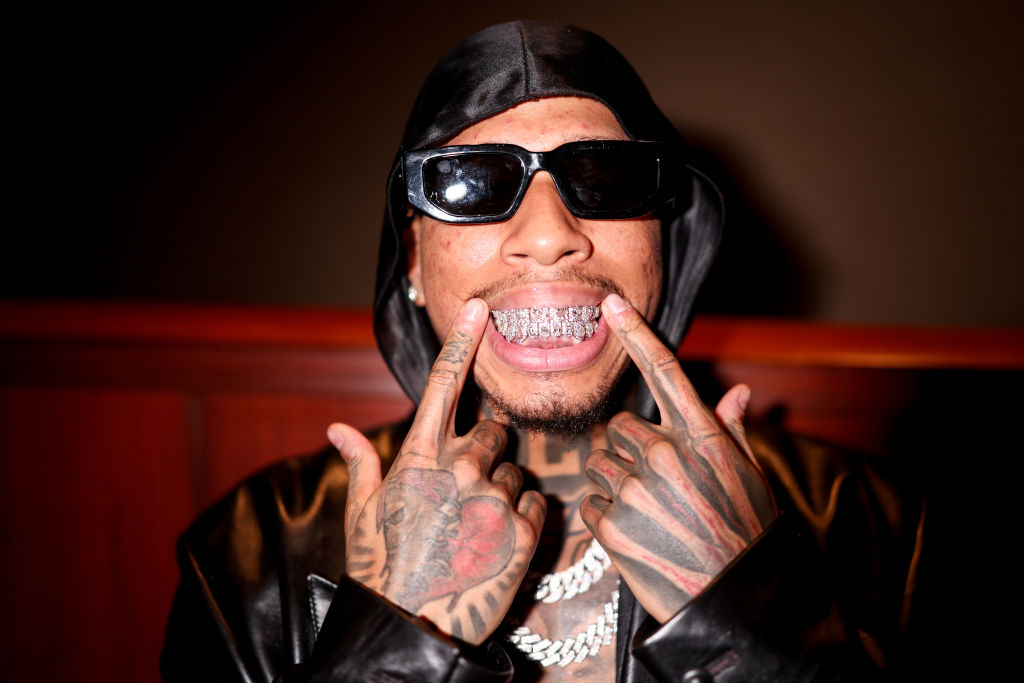
NLE Choppa has been zenned out for quite a while now, but it looks like those days are over.
Since Day 1, the Memphis rapper has always been compared to NBA YoungBoy. His breakthrough song, “Shotta Flow,” is what got him recognized nationally. but also started the YB comparisons. During interviews, Choppa always shut down any questions regarding Top. Fans have alleged that NLE has been sneak dissing YB for a while now.
In 2021, he dropped a song called “Final Warning”, where many think this was a direct diss track to NBA YoungBoy. As Choppa made it clear after King Von’s death that he is team OTF. Fast forward to now, the Sea Moss slugger puts another one on wax, but is very direct and clear. Dissing YoungBoy in his latest track, “KO.”
Flipping a classic Tupac record, “Hit ‘Em Up”, he attempted to make this a headshot. This song/music video has layers to it. Paying homage to Tupac, Michael Jackson, & Muhammad Ali. Having a stunt double who looks just like YoungBoy sitting on the floor, looking scared of Choppa’s presence. He finally says YB’s name to make it clear that this diss was about him, “YoungBoy, what? This the big boy league. I put one up in your gut under the Jesus piece.”
Also adding that he believes the Louisiana rapper is a bad influence on his fans, “You’re poisoning the youth, nothing positive you do.”
Since the diss has dropped, Top has not responded.
Trending on Billboard
Count pop radio as the latest realm that Gwi-Ma can’t conquer.
The KPop Demon Hunters underworld villain proves no match for the approximately 150 radio stations that have lifted HUNTR/X to No. 1 on Billboard’s Pop Airplay chart, where the protagonist trio of Netflix’s record-breaking animated film reigns with its anthem “Golden.”
The song, on Visva/Republic, rises two spots to No. 1 on the Pop Airplay chart dated Nov. 8, up 9% in plays week-over-week Oct. 24-30. (Stations are monitored by Mediabase, with data provided to Billboard by Luminate.)
“‘Golden’ has truly become a defining pop moment, an instant lean-in, turn-it-up track,” says Alex Tear, vp of music programming for SiriusXM and Pandora. SiriusXM’s Hits 1, which reports to the Pop Airplay tally, has played the song more than 1,100 times since June.
Thanks to the movie’s wide reach, “There’s that immediate familiarity and big emotion that just hits,” Tear says of “Golden.” “It’s become part of our channel’s DNA — vibrant, global and built for pop radio.”
Mark Adams, vp of pop programming for iHeartMedia and program director of the chain’s flagship WHTZ (Z100) New York, became a fan of KPop Demon Hunters a day after its June 20 release. “My algorithm knows me well,” he says. “I watched it that Saturday morning and just kind of immediately got it. I thought the animation was terrific. I thought the music was extraordinarily catchy.”
Adams says that he didn’t hesitate when considering the pop radio appeal of “Golden,” whose lyrics cite certain plot points, which could either confuse listeners not versed in the film or draw them in further if they’re superfans (or, on Oct. 31, KPop candy hunters). “When I’m listening to tunes,” Adams muses, “I’m just listening — is there a hook? Is it a pop cultural moment?”
Adams shares that he was so taken by the film after watching it “that Monday I shared with the national team: ‘Hey guys, you may not have heard about this yet, but there’s this movie on Netflix and the songs are amazing.’ That first week on Z100, we spiked ‘Golden’ in. It wasn’t in heavy rotation, but a few times, as well as [HUNTR/X’s] ‘How It’s Done.’ ”
With Pop Airplay panelist WHTZ now more than 600 plays into “Golden,” KPop Demon Hunters songs “are strong on their own merit,” Adams says. “It wasn’t a really difficult push to convince programmers to realize that this is a real thing.”
Despite the movie’s immediate and enduring success, Adams notes that radio still serves a key role in helping ingrain hits in the pop consciousness. “I think it’s a little complicated,” he says. “Even as big a platform as Netflix is, you’re still dealing with that audience, and that isn’t everyone. That helps lay the groundwork for music discovery, but it still takes weeks and months of committed, consistent airplay to really break things to the masses.”
Plus, says Adams, “people crave human connection, having somebody say, ‘Hey, this is a song you should be paying attention to.’ People feel like they’re part of a community and they want to be part of that shared pop cultural moment. I think that’s what we excel at.”
Meanwhile, Hits 1 has played other KPop Demon Hunters songs, including Saja Boys’ “Soda Pop” and “Your Idol” (fine, Gwi-Ma gets that), furthering the connection between the film and pop radio. “Golden” spent eight weeks at No. 1 on the multimetric Billboard Hot 100 from mid-August through mid-October, while “Soda Pop” and “Your Idol” each hit the chart’s top five.
“We’ve been intentional about giving space to songs that cross borders and connect with our audience,” Tear says. “These tracks feel natural next to Taylor Swift, Alex Warren or Olivia Dean. We’re always looking for that global pop conversation. Listeners don’t hear boundaries, they just hear great songs.”
Trending on Billboard A$AP Rocky once again has people wondering if he’s put a ring on it. In a new cover story interview with Perfect magazine, the rapper made a provocative claim about his longtime love Rihanna, with whom he shares three young children. When asked to describe the times when he’s felt the greatest […]
Trending on Billboard
Stacey Tang, co-president of RCA Records UK, has been appointed chair of the BRIT Awards 2026 committee as the ceremony moves to Manchester’s Co-op Live for the next two years — marking the first time in nearly 50 years the BRITs will be held outside London.
Tang will oversee all aspects of the show’s creative direction, working alongside representatives from major and independent labels, BRITs TV and the BPI. Sony Music UK will lead the committee from 2026 to 2028, following Warner Music UK’s tenure under Damian Christian.
Related
Tang, a Billboard UK Power Players list honoree who was promoted to co-president of RCA UK in early 2023, has played a key role in the label’s recent success with artists such as Cat Burns and Myles Smith.
She joins a creative team including Misty Buckley, Phil Heyes, Sally Wood and Maggie Crowe. Speaking on the news, Tang said, “As a massive music fan I always watched the BRIT Awards growing up, but revisiting the shows through the lens of chair has given me a totally different perspective. Being inspired by the spectacle and show as a young person, now motivates me to create something that feels important nationally and globally, while capturing the brilliant and eccentric nuance of British music and culture.
Tang added, “The decision to move to Manchester has been met with amazing feedback from the local community and the industry. To oversee a show that’s doing something for the first time feels energising but ultimately, we also want to inject fun into the proceedings … and people in Manchester know how to have fun!”
The BRITs also announced several category updates: the Rising Star Award reverts to its original name, Critics’ Choice, and Best New Artist becomes Breakthrough Artist. Eligibility criteria have been tightened across major categories, requiring higher chart performance. Nominees must now have a top 30 album or two top 20 singles, while genre categories maintain existing standards. The Mastercard Album of the Year must also reach the top 30. These changes aim to better reflect artist impact and chart success.
Related
Nominees will be announced in January, with voting handled by a panel of industry professionals and, in recent years, the public for genre categories. The 2026 ceremony will take place on Feb. 28 at Co-op Live, a 23,500-capacity venue opened in 2024, signaling a new chapter for the BRITs and its commitment to celebrating British music across the country.
Check out a full rundown of this week’s staffing news below.
Veep x5 (BMG)
Image Credit: Colleen Hayes
Trending on Billboard
MUSEXPO has announced Kirk Sommer, senior partner and global co-head of music at WME, as the recipient of the 2026 “International Music Person of the Year” Award. The honor will be presented during MUSEXPO’s 26th global edition at its annual awards luncheon on Tuesday, March 24, 2026, at Castaway in Burbank, Calif.
The prestigious award recognizes Sommer’s profound global influence and artist-first leadership within the music industry. Across his nearly 25-year tenure at WME, Sommer has earned a reputation for integrity, mentorship, and visionary representation — guiding the live careers of some of the most celebrated artists of the modern era. His roster spans genres and generations, including Adele, Billie Eilish, The Killers, Andrea Bocelli, Hozier, Arctic Monkeys, Sam Smith, Steve Aoki, Benson Boone, Lewis Capaldi, Nine Inch Nails, Foster the People, and Weezer, among others. Sommer also worked closely with the late Amy Winehouse, a testament to his long-standing commitment to nurturing emerging talent into global icons.
Related
In his current role as global co-head of music, Sommer helps steer WME’s worldwide strategy across touring, festivals, and live entertainment. His artist-first approach has earned him wide respect from peers and clients alike, shaping the careers of artists from their first club shows to sold-out arena and stadium tours.
Sommer’s accolades reflect his influence across the business. In 2025, he was named Pollstar’s “Agent of the Year” and inducted into New York University’s Hall of Fame. He’s been a mainstay on Billboard’s Power 100 for more than a decade, and has also appeared on Variety’s Top 500, Pollstar’s Impact 50, and PAPER magazine’s list of the most influential booking agents in the world.
Beyond his professional impact, Sommer and his family are dedicated supporters of causes focused on mental health, children’s welfare, and healthcare access.
Trending on Billboard
Billboard’s Friday Music Guide serves as a handy guide to this Friday’s most essential releases — the key music that everyone will be talking about today, and that will be dominating playlists this weekend and beyond.
Explore
See latest videos, charts and news
This week: Tricks and treats from Florence + The Machine’s howling latest, an early Mother’s Day gift from Tyler, the Creator and a right-on-time R&B love song from Brent Faiyaz.
Florence + The Machine, Everybody Scream
We all scream for Florence + The Machine’s latest, an appropriately titled album for a Halloween release, certainly. The horrors here are not necessarily of the jump-scare variety, but more the realities of life as both a veteran pop-rock star not always given her due and as a woman facing double-standards in the music industry — one who recently endured a potentially life-threatening ectopic pregnancy, as she detailed in a recent Guardian profile. But regardless, Florence is no Final Girl, and Everybody Scream evinces the mighty strength she’s developed as a singer, artist and person: “Come on, come I can take it/ Gimme everything you got/ What else?” she goads in “Sympathy Magic.” Besides, as she attests in “Witch Dance,” “Your threats and your promises, they don’t scare me/ After all, there’s nobody more monstrous than me.”
Tyler, The Creator, “Mother”
Tyler, the Creator apparently considers his newly released bonus track “Mother” such an important of his CHROMAKOPIA experience that his new CHROMAKOPIA+ sticks it in the middle of the tracklist, not just at the end. A sympathetic song about his mom’s experience having him, raising him and trying to teach him life wisdom, the track even includes an interlude of said matriarch warning him not to get arrested, because she had no intent of bailing him out of jail. He also holds some grace for his father: “Father told me nothin’/ F–k it…. I hold no grudges, I heard he a fan.” The beat and the backing grunts are tense (and intense), but the electric piano is warm and tender.
Brent Faiyaz, “Have To.”
In what’s turning out to be an excellent year for crossover R&B, it’s a perfect time for the return of hitmaker Brent Faiyaz. Especially with a song this irresistible: “Have To.” is an immaculately produced love song about Faiyaz doing whatever has to do to be where he needs to be: “I’m in a race with time to get where I belong/ ‘Cause it feels so right after all these nights alone.” Sweetly urgent but never overly insistent — and winking enough to avoid any undue sweatiness, including multiple vocal tracks of a pitch-altered Faiyaz basically dueting with himself — “Have To.” is another big winner for Faiyaz.
Reneé Rapp, “Lucky”
Frisky, poppy, lightly grungy alt-rock certainly seems to be the musical sweet spot for Reneé Rapp, as evidenced first by her impressive August sophomore LP Bite Me, and now from her new song “Lucky.” Recorded for the Now You See Me: Now You Don’t soundtrack — sure — “Lucky” features Rapp bragging about her charmed life over propulsive guitars and occasional synth flares, even throwing in a little meta-nudge with the bridge’s “It’s almost like I’m Reneé.” Extra points for actually working the film’s title into the lyrics.
Sub Focus feat. Grimes, “Entwined”
Grimes ‘n’ Bass! As the wait continues for the follow-up to 2020’s Miss Anthropocene, Grimes has been busy with one-offs and collabs — most recently teaming up with the U.K. producer Sub Focus for this week’s “Entwined,” whose moaning, growling, frequently shape-shifting beat is the perfect bed for the Canadian alt-pop star to wail over. It might not be explicitly spooky-scary, but if you happen to be one song short on your Halloween playlist for this weekend, it’s unsettling and intense enough to be a fit.
Oklou, Choke Enough (Deluxe)
Speaking of Grimes — rising French electro-pop singer-songwriter Oklou arrived with heavy Claire Boucher vibes earlier this year on shimmering debut album Choke Enough. If that 13-track set understandably left you craving more, the artist born Marylou Vanina Mayniel reissues the set this week with four bonus cuts, including the previously released fka Twigs collab “Viscus,” the gorgeous synth ballad “What’s Good,” and the uncharacteristically acoustic (but still satisfyingly warped) “The Fishsong Unplugged.”