State Champ Radio
 News
Page: 146

Trending on Billboard If all you want for Christmas is a Yo Gabba Gabba! holiday album, you’re in luck: A Very Awesome Yo Gabba Gabba! Christmas! arrives Nov. 14 on all streaming platforms, via BMG. The album gathers the full collection of holiday music across Yo Gabba Gabba!‘s Christmas episodes over the years, including “Christmas” […]

Trending on Billboard
Ed Sheeran has celebrated a major victory for his music education campaign as the U.K. government confirmed on Wednesday (Nov. 5) that music lessons will be taught more widely in schools.
Earlier today a major review of the National Curriculum – which dictates what subjects and topics are taught in non-fee-paying state schools – was published by the Labour government. The changes are the first in over a decade, and will see a number of modern topics (such as artificial intelligence) enter the classroom.
Related
The report says that arts subjects will also be “revitalised” and will see the scrapping of the English baccalaureate (EBacc), which critics – including Sheeran – said limited subject choice for students at a GCSE level (ages 14-16). Under the program, introduced in 2010 by then-education secretary Micahel Gove, pupils were required to study a minimum of seven GCSEs, including maths and a language, but the options did not include any arts subjects.
In March, Sheeran called on U.K. prime minister Sir Keir Starmer to scrap the Ebacc, deliver £250 million in spending towards music in a classroom environment and enlist more teachers for music subjects. His letter was backed by over 600 signatories, including Sir Elton John, Harry Styles, Coldplay and more. He also launched the Ed Sheeran Foundation in January to help support careers in music.
“We are at a critical point: a future of no music in state schools, no music teachers to teach, broken instruments and no grassroots venues,” he wrote in his letter. “As a young music student and aspiring artist, I benefited from opportunities in and out of school to learn and grow. Unfortunately, after decades of defunding and de-prioritising, music is no longer a right for all children – it’s a luxury for only a few.”
Sheeran’s efforts have now been recognized both by Starmer and Bridget Phillippson, secretary for education. The former sent a direct response to Sheeran saying that his “voice had been heard”. During her speech in parliament on Wednesday, Philippson credited Sheeran for speaking “so powerfully” on the subject. The final curriculum will be published in spring 2027, and schools will begin teaching it from September 2028.
Sheeran has responded to the news and the success of his letter, writing “With the help of the letter and everyone who signed it, I’m happy to say that some of the key points we raised have been recognized by the government today, marking the first change to the music curriculum in over 10 years. This involves diversifying the music genres taught in schools and removing outdated systems that stop kids from studying music and the arts as part of their school day. These changes give young people hope and the opportunity to study music.” See his full statement below.
The topic of music education was raised by a number of British artists at the BRIT Awards 2025, when winners Myles Smith and Ezra Collective called on action to help foster creativity among young people in education.
Ed Sheeran’s full statement
I set up the Ed Sheeran Foundation because every child deserves to have access to a meaningful music education, and the chance to experience the joy and confidence that musical expression can bring.
Shortly after setting up my foundation, I wrote an open letter to the Prime Minister about the critical state of music education in the UK and the fact it was slipping through the cracks. The letter was backed by so many incredible people across the music industry and education who all said the same thing: music education matters. The Prime Minister replied, recognising the challenges and expressing his commitment to change.
With the help of the letter and everyone who signed it, I’m happy to say that some of the key points we raised have been recognised by the government today, marking the first change to the music curriculum in over 10 years. This involves diversifying the music genres taught in schools and removing outdated systems that stop kids from studying music and the arts as part of their school day. These changes give young people hope and the opportunity to study music.
Without the encouragement I received in school, especially from my music teacher, I wouldn’t be a musician today, and I know so many of my peers feel the same. My music education went beyond learning and playing. It helped me find confidence in myself, and music itself was – and still is – so important for my mental health.
There’s a lot more to do to support music education, especially our music teachers, but this is a step in the right direction.
Thank you so much to everyone who signed and supported the letter.
Today is a good day.
Ed x

Source: Elsa / Getty
Cardi B & Stefon Diggs are giving big blue energy as they reveal they’re expecting a baby boy.
Diggs recently chopped it up with People Magazine at the CFDA Fashion Awards, where he broke the news, “It’s a boy. That’s enough for me. I can’t wait to make him do push-ups and sit-ups and run around.” The star Wide Receiver didn’t give a date on when they are expecting their baby boy, but said, “It’s supposed to happen real soon, so wish us both luck.”
The couple first announced the pregnancy during a September sit-down with CBS, where Cardi B revealed that she and Diggs were expecting a baby.
Since then, Bardi recently stole the show at the last New England Patriots game where she was posted up with the teams owner, Robert Kraft in the press box. Supporting her boo that had a great game and went home with a dub. Once the stadium peeped the AM I THE DRAMA rapper, they threw her up on the jumbotron. In Cardi fashion, she stole the show and even hit the fans with Digg’s celebration which went viral.
Stefon gave his take on the celebration after the game saying she has some work to do, “She picked it up on her own. Dance moves a little shaky though. I’ll look into that for y’all though.”
After the game they did a drip check with The People Gallery, where Bardi continued to pop it. With Stefon visibly exhausted from the game, but still supporting his girl.

Trending on Billboard
On a balmy September evening in Staten Island, Chef Shaw-naé Dixon is getting ready for her house to be packed. In just a few hours, her quaint and homey soul food staple, Shaw-naé’s House, will be bustling with guests.
Explore
See latest videos, charts and news
Tonight, Al Roker and his Weather Hunter team will be in attendance, anticipating a bevy of soulful classics, including oxtail, ribs, fries, mac and cheese and jerk chicken. I am also supposed to stop by, not only to witness Shaw-naé in her element — The New York Times celebrated her personable cooking approach, noting how she often spends her evenings out chatting and bonding with each guest — but to also treat my wife to some of her hearty cuisine. Unfortunately, my wife is sick, so I text Shaw-naé to tell her I’ll be missing her service to be of service to my lady instead.
“Have her boil pineapple skins with soursop leaves and ginger and sip throughout the day,” she texts back. “Mullein extract can also be ordered on Amazon. This knocks that s—t out like LL COOL J. TALK SOON. I LOVE YOU.”
Thankfully, I had already been able to visit Shaw-naé’s House on my own a few days before, where she greeted me with a warm, intentional hug and a quick kiss on the cheek.
“I think a bird just took a s—t on me,” Shaw-naé told me before our embrace. I noted that usually implies good luck. “I don’t need any more luck,” she quipped with a full belly laugh.
Listening to Shaw-naé’s life story, that sentiment could very well be true. Both of these interactions are indicative of her approach to cuisine and hospitality as a whole. She’s a caretaker first, cook second. For Shaw-naé, food is a means of community, a way of expressing love, dating all the way back to her grandparents. As a Staten Island native, Shaw-naé’s father and mother were both born on the island, with her grandparents living out in South Jersey, “sort of doin’ the Jeffersons ‘Movin’ on Up’ thing,” as Shaw-naé tells it. Her grandmother went to Pratt and became a nutritionist, so good food and intentional cooking became a priority in Shaw-naé’s family early on. She has no formal training, but her family taught her everything there is to know about food.
“She used to call her house the, ‘Do Drop In,’” Shaw-naé says. “She always felt like she had to have something prepared for people to eat. She always cooked massive amounts, like for a marching band. When my husband and I met, he asked me, ‘Why do you cook so much food?’ I said, ‘I can’t help it. My grandmother taught me when someone walks in, you have to have food prepared.’”
Shaw-naé’s rich family history has become an instrumental part of her approach to food. While sitting in the “living room” of her petite restaurant, which is stuffed with Wu-Tang memorabilia and other eclectic knick-knacks, she tells me that her ancestors were the first Black settlers to ever reside on the island. Her first ancestor, Captain John Jackson, came over in 1799 and became the first Black purchaser of land on Staten Island. An oysterman and farmer, Jackson “created the farms and created the businesses behind oystering.”
“He also brought Harriet Tubman in multiple times with groups of slaves and freed them here in the community,” Shaw-naé says. “So I have this whole historical legacy attachment to my lineage. I was supposed to be an entrepreneur. I was supposed to be somebody in the community that was doing all this stuff, not just with food, but with empowering my people.”
This historic settlement founded by Jackson in 1828 would be called Sandy Ground and go down in history as the oldest continuously inhabited free Black settlement in the United States. As a successful oyster-gathering and farming village, farmers harvested blueberries, sweet potatoes, asparagus and, most importantly, strawberries.
“Strawberries were the biggest, and that’s because when our counterparts came here and poisoned the water so we could no longer oyster,” Shaw-naé says, “they found out our businesses were staying up because of the farms. So they came and burnt the farm down. But when they burnt the farm down, they burnt the land, and the strawberries grew out of the sand. So they named the community Sandy Ground because when the ground became sandy, the strawberries flourished.”
Shaw-naé Dixon
Colin Clark
As we move to the kitchen, Shaw-naé reaffirms to me that this powerful history is the backbone of her business and her success. It’s why she’s able to stand over her stove, sauté some collard greens, and lather up her ribs in some of the best BBQ sauce the city has to offer. I’d go into further detail about what I saw, but scribed in chalk on a pillar right outside the kitchen reads, “NDA required beyond this point. Deadass.”
While Shaw-naé has worn many hats over the years — social worker, teacher — she got her official culinary start catering in the entertainment industry, more specifically in radio and hip-hop circles. After quitting her job in 2014, she began selling food directly out of her home, spreading the word via handmade flyers. Very soon after, she found herself chasing down 50 Cent’s car outside the Javits Center to give him a few of said flyers. She recalled banging on his car window, crying out to him that she had previously worked with Power star Michael Rainey, who is from Staten Island.
“I’m like, ‘Open the window!’ 50 Cent looks at his driver and is like, ‘Yeah, open the window!’” Shaw-naé recalls. After handing the rap mogul a few flyers, she asked to cater for the set of Power. He allegedly agreed but never called. (50 Cent could not be reached for comment for this story.)
“I figured it was because I was bein’ crazy,” Shaw-naé says with a laugh. She refined her approach but kept her hustler spirit going, and eventually, after “harassing the receptionist for two weeks on the phone,” landed a gig catering The Breakfast Club and iHeart Radio. She didn’t receive any payment for the work at first, because she said all she wanted to do was feed the team and showcase her food.
“I didn’t work for them; I got the opportunity to feed them,” she says. She says she eventually persuaded Charlamagne to actually hire her to cater a special Valentine’s Day meal at his home in February of 2016, and more work transpired from there.
Shaw-naé and I exit the kitchen, and she hands me a plate overflowing with food. While I’m trying to be respectful, every instinct in me wants to gorge on this unbelievable meal. Shaw-naé explains how then-mayoral candidate Zohran Mamdani is dying to speak with her, how the Venmo CEO invited her to some fancy app meeting, all while Al Roker is buzzing on her phone to give an update on Friday’s upcoming dinner service.
Shaw-naé’s catering business continued to pick up considerable steam until March of 2020, where she said she cooked meals for everyone from Cardi B to DJ Clue. The way Shaw-naé tells it, heading into the pandemic became a shifting point for her. She said she began experiencing spiritual visions, noting one in particular of faceless people ascending up an escalator as a numbered chart in the corner spiraled up into the millions. Then things came to a head in March of 2020 when Shaw-naé and her husband flew to Las Vegas for a business trip. When they arrived, reports of COVID-19 had begun to spread across the media landscape. It was only a few days before Shaw-naé said it was time to go.
Shaw-naé Dixon
Harry Crosland
“I told [my husband], I think I saw this already,” Shaw-naé says. “I go to Whole Foods and I buy $400 worth of vitamins and extracts. I give my husband all these vitamins. I bought two scarves, I bought sanitary napkins, and I made masks. We get on the airplane and I tell my husband, ‘Don’t take that off! Leave it on!’ My husband was like, ‘She’s nuts, but I’m listening.’”
When they arrived home, Shaw-naé says she told her husband to stop bringing the kids to school. Her husband, Jason, disregarded this, but a day later, school was canceled. As COVID-19 began to spread, Shaw-naé says she felt a spiritual call to take up meditation. She began meditating every day and started studying healthier eating habits and holistic food. As March turned into April and May, Shaw-naé started to rapidly lose weight.
“I felt my body start to breathe without me,” she says. “Like from my feet to my head, it felt like my skin was breathing. I felt something was not right.”
She booked a telemedicine appointment, but the doctor allegedly disregarded Shaw-naé’s concerns and told her she was glowing and looked healthier than ever. Shaw-naé pushed for an in-person appointment, and the doctor obliged. When she went in person, she was allegedly given the all-clear, except the doctor reportedly told her she was “severely anemic,” and they recommended a uterine ablation: an extremely common, low-risk procedure meant to aid in reducing iron loss during menstrual cycles, according to Johns Hopkins Medicine. Shaw-naé agreed and they booked the procedure for September.
“I don’t remember going into the doctor for that procedure,” Shaw-naé says. “My husband said [afterward] he literally hoisted me over his shoulder to carry me home.”
Shaw-naé said she was couch-bound and slept heavily for two days. On September 11, 2020, her family said Shaw-naé was lucid and cognizant and “sat on the couch, ate chips,” but Shaw-naé says she doesn’t remember any of that day either. The following day, Jason started a bath for Shaw-naé because he said she was “moaning and somehow in pain.” He ran the bath and left to go to the gym. Shaw-naé got into the bath fully clothed and left the water running. Her 13-year-old son found her submerged in the tub unresponsive. When EMS arrived, they pronounced her dead on the scene, but brought her to the hospital and ended up resuscitating her. They then put her in a medically induced coma. She awoke to her family crying and hugging her four days later.
“The doctors told my husband, ‘She’s fighting so hard to die,’” Shaw-naé tells me as I pull apart her BBQ ribs with my teeth. “They said, ‘We don’t know what the outcome is gonna be, but most likely she’s not gonna be able to talk, walk, or get herself dressed.’”
None of that ended up being true, and Shaw-naé made a full recovery. The chef says the doctors diagnosed the situation as a Disseminated Intravascular Coagulation, a rare, but serious blood clotting episode. Regardless, Shaw-naé says she experienced a spiritual calling while she was in the coma, noting that God told her to feed and provide for as many people as she could.
“For me, to emerge post-Pandemic and open up this soul food restaurant, it was like, ‘Why is she opening up this soul food restaurant? Who the hell is she?” Shaw-naé recalled. “When I pulled up in front of this building on Van Duzer street. I didn’t know what was in here, I didn’t know what it was. All I heard was a voice say: “That’s your building.”
Shaw-naé’s House opened in June of 2021, and it’s been a whirlwind ever since. The New York Times gave her a rave two and a half out of five stars. She’s been offered book and film deals for her incredibly unique story, and she’s is currently in talks to host her own cooking shows. Not to mention her House continues to be a hot spot for local and national celebrities. Shockingly, despite Wu-Tang inspired memorabilia decorating her space, the legendary rap group has yet to enter her home. Shaw-naé notes that it’ll happen when it’s meant to, and in the meantime, she’s devoted to her diners, her community, and her spiritual mission to help people through her unbelievable food.
“I believe that every single person coming into this restaurant is coming here intentionally,” Shaw-naé says as I finish my plate. “It’s not just the food, they’re coming here for a specific type of experience. Everybody’s not the same, but everyone here is treated the same. I believe that heals people.”
She then looks at my plate, and looks up at me and smiles. “Let’s get you some leftovers for your wife.”

Trending on Billboard
Rosalía offers an exasperated laugh as she sits down, having tried on a variety of equally stunning outfits only to end up in the casual clothes she arrived in: black pants and a camo jacket lined with fur. It’s the same jacket she was spotted wearing at a Parisian cafe in early October, seated alone with a cup of tea while poring over the sheet music of a song from the 1900 Puccini opera Tosca.
The Barcelona-born singer’s candid moment with the canonical tragedy was significant — one of many subtle nods that she was pursuing something outside the typical parameters of modern mainstream music. Rosalía studied musicology in college, and over the last eight years has often meshed a wide variety of genres and influences in her songs. But for someone who rose to global fame on the cutting edge of culture, studying the musical notation of a century-old opera communicated a pointed message.
Weeks later, fans began to understand why. On the evening of Oct. 20, she took to Madrid’s Callao Square with giant projector screens, where a countdown unveiled the release date for her fourth album, Lux (Nov. 7 on Columbia Records), as well as its cover art, which features Rosalía dressed in all white, wearing a nun’s habit and hugging herself under her clothing.
Every move Rosalía has made over the past three years while crafting Lux has been considered, intentional and entirely in her own world. Having risen to fame with the flamenco-inspired pop of her Columbia debut, 2018’s El Mal Querer, she flipped the script with her eclectic, energetic 2022 album, Motomami, which spanned pop, reggaetón, hip-hop, electronic and more and became her first album to chart on the Billboard 200, peaking at No. 33. But Lux is something different: an orchestral, operatic opus recorded with the London Symphony Orchestra that blends history and spirituality and experiments with form, language (she sings in 13 different ones throughout the album’s 18 tracks) and the very idea of what is possible for a major recording artist in 2025, for a project that’s more Puccini than pop — not that it doesn’t have its moments of catchy relatability.
“It’s like an album she wrote to God — whatever each person feels God is to them,” says Afo Verde, chairman/CEO of Sony Latin Iberia, which works with Rosalía alongside Columbia. “This is an artist who said, ‘I want to walk down a path where few walk.’ And when you navigate inside the album, you completely understand the genius behind it.”
Araks bra, Claire Sullivan skirt, Louis Verdad hat.
Alex G. Harper
Rosalía spent the better part of three years crafting Lux’s lyrics and instrumentation, drawing from classical music, native speakers and instrumentation, and the giants of the past — women including Saint Rosalia of Palermo; the Chinese Taoist master/poet Sun Bu’er; the biblical figure of Miriam, sister of Moses; and even Patti Smith all figure into its cosmology — to create something that feels both worldly and otherworldly, a distinct take on navigating life’s chaos. It was also a period where she experienced personal and professional changes: She broke off her engagement to Puerto Rican reggaetón star Rauw Alejandro, switched management and landed her first big acting role in the forthcoming third season of hit HBO series Euphoria, all while immersed in making the album.
“In general, just to be in this world is a lot; sometimes it’s overwhelming,” she says on a fall day in Los Angeles. “In the best-case scenario, the idea would be that whoever hears it feels light and feels hope. Because that was how it was made and where it was made from.”
“This record takes you on a complete journey; the singing on it is just astounding,” says Jonathan Dickins, who runs September Management, home to Adele, and who began representing Rosalía in June. “I think she’s a generational artist. I’m lucky enough to have worked with one, and now I’m lucky enough to work with another. She is an original.”
To make Lux, Rosalía relied on several of her longtime collaborators — producers Noah Goldstein and Dylan Wiggins and engineer David Rodriguez among them — and tasked them with taking a new approach. “The whole process helped me grow as a musician, as a producer, as a sound engineer,” says Goldstein, who has also worked with Frank Ocean, Jay-Z and FKA twigs. “That’s one of my favorite things about working with Rosalía: I’m always learning things from her.”
She also tapped new collaborators such as OneRepublic singer and decorated songwriter Ryan Tedder (who spent three years DM’ing Rosalía, hoping to eventually work together) and urged them to push their boundaries. “For an artist to give me the freedom to just express myself in that way, God, that is the most fun I’ve ever had,” says Tedder, who has worked on mammoth albums by Adele, Beyoncé and more throughout his career. “I’ve been asked by everybody, ‘What does the new Rosalía stuff sound like?’ And I literally say to everybody, ‘Nothing that you possibly would imagine.’ ”
Alex G. Harper
Fans got their first taste of Lux when Rosalía dropped the single “Berghain,” which features Björk and Yves Tumor, in late October. The song kicks off with a string orchestra introduction followed by a Carmina Burana-like chorus and then Rosalía singing in an operatic soprano voice — in three languages.
For Rosalía, challenging preconceptions about the type of music she, or anyone, can make is part of the point — thinking outside the box, following her inspiration and constantly learning, finding and creating from a place of curiosity and openness to new experiences and ideas. “I think that in order to fully enjoy music, you have to have a tolerant, open way of understanding it,” she says. “Because music is the ‘4’33” ’ of John Cage, as much as the birds in the trees for the Kaluli of New Guinea, as much as the fugues of Bach, as much as the songs of Chencho Corleone. All of it is music. And if you understand that, then you can enjoy in a much fuller, profound way, what music is.”
When did you start working on this album?
I don’t think that it’s easy to measure when something like this happens or starts. The album is heavily inspired by the world of mysticism and spirituality. Since I was a kid, I’ve always had a very personal relationship with spirituality. That’s the seed of this project, and I don’t remember when that started.
How did you approach Lux differently?
This album has a completely different sound than any of the projects that I’ve done before. It was a challenge for me to do a more orchestral project and learn how to use an orchestra, understand all the instruments, all the possibilities, and learn and study from amazing composers in history and say, “OK, that’s what’s been done. What can I do that feels personal and honest for me?” And also the challenge of having that inspiration in classical music and trying to do something that I haven’t done before, trying to write songs from another place. Because the instrumentation is different from all the other projects I have done. But also the writing, the structures, it’s very different.
Chloé dress, shoes, and scarf.
Alex G. Harper
After Motomami, your success and fame hit a new level. How did that help you make this album?
All the albums I’ve done helped me be able to be the musician I am today and make this album now. Lux wouldn’t exist if I hadn’t taken the previous steps. Each album helped me release something, to free myself as much as possible. Every time I go to the studio, it’s from wanting to play around, try something different, to find different styles of making songs. I always try to stay open.
You’ve said Motomami was inspired by the energy of L.A., New York, Miami. What was your mission in making Lux?
It’s made from love and curiosity. I’ve always wanted to understand other languages, learn other music, learn from others about what I don’t know. It comes from curiosity, from wanting to understand others better, and through that I can understand who I am better. I love explaining stories. I like to be the narrator. I think as much as I love music itself, music is just a medium to explain stories, to put ideas on the table. So that’s what this project is for me. I’m just a channel to explain stories, and there’s inspiration in different saints from all across the world. So you could say it feels like a global thing, but at the same time, it’s so personal for me. Those stories are exceptional. They are remarkable stories about women who lived their lives in a very unconventional way, of women who were writers in very special ways. And so I’m like, “Let’s throw some light there.”
What I know is that I am ready, and this is what I needed to do. What I know is that this is what I was supposed to write about. This is my truth. This is where I am now.
What contributes to the fact that the album feels so global is you sing in 13 languages on it.
It took a lot of writing and scratching it and sending it to someone who would help me translate and be like, “This is how you would say this in Japanese. This is how it sounds.” There were so many things that I had to play with and take under consideration. Because it’s not just writing. It’s not just on paper. It has to sound good. There’s a big difference for me when I write, for example, a letter for somebody that I love than if I write a song. It has to have a certain sound, a certain intention of musicality.
It was a big challenge, but it was worth it. It made me grow so much. And I feel like every word on this album, I fought for it, I really wanted it, and then I waited for it, and then it came. It took me a year to write just the lyrics for this album, and then another year of arranging music and going back to the lyrics and retouching. It took a lot of effort searching for the right words: “How is this not just going to be heard, but also, if you read it, how does it feel?”
Rosalía photographed September 24, 2025 at Quixote Studios in Los Angeles. Colleen Allen top and skirt.
Alex G. Harper
The lyrics read like a novel.
There’s a whole intentional structure throughout the album. I was clear that I wanted four movements. I wanted one where it would be more a departure from purity. The second movement, I wanted it to feel more like being in gravity, being friends with the world. The third would be more about grace and hopefully being friends with God. And at the end, the farewell, the return. All of that helped me be very strategic and concise and precise about what songs would go where, how I wanted it to start, how I wanted the journey to go, what lyrics would make sense.
Each story, each song is inspired by the story of a saint. I read a lot of hagiographies — the lives of the saints — and it helped me expand my understanding of sainthood. Because my background is Catholic from my family, so you understand it through this one [lens]. But then you realize that in other cultures and other religious contexts, it’s another thing. But what surprised me a lot was that there’s a main theme, which is not fearing, which you can find shared across many religions. And I think that’s so powerful because probably the fears that I have, somebody on the other side of the world has the same ones. And for me, there’s beauty in that, in understanding that we might think that we’re different, but we’re not.
All of these songs are very personal, but “Focu ’ranni” feels especially so. What was the experience of writing that one?
I found out that there’s this saying by Santa Rosalia de Palermo — she was supposed to get married and then she decided not to; she decided to dedicate her life to God. I thought that something in that was very powerful. I researched her story, and that’s why there’s some Sicilian thrown in that song. It was a challenge to sing in that language. That was a challenging song to do and to sing, but I feel grateful that it exists.
You create a world, and a sisterhood almost, on this album. How does a more playful song like “Novia Robot” fit in?
There was this woman who was very inspiring named Sun Bu’er; she dedicated her life to becoming a teacher of the Tao. And the way she lived her life was unconventional at that time. I thought there was something powerful about her story. Apparently, in order to make a journey, she destroyed her face to be able to travel safely. And she had a partner, she had a family, but she decided she wanted to dedicate her life to spirituality. It was so bold and courageous. And at the end of that song, you hear another voice, which is in [Hebrew], that’s inspired by Miriam, this figure who led an entire people and was a rebellious woman and considered close to the idea of sainthood in Judaism. So I thought that it was cool to have those two voices, the same way how in opera there are so many voices co-existing. So I thought in that song that could happen with that playfulness, yes, and playing with the sound of how Chinese Mandarin would sound.
The album is so operatic and orchestral. How did you begin to immerse yourself in those styles and find the people that you worked with to deliver that?
They’re the people I feel comfortable with, so I love sharing time with them in the studio. For example, I worked on [Lux song] “Mio Cristo” for months by myself in Miami and L.A., and I delayed the moment when I would share it. I wanted to make a song that was like my version of what an aria could be. So I remember just going to the studio after so much work, after so much back and forth with an Italian translator, and I [had been] improvising on the piano, trying to find melodies, to find the right chords and notes. I went to the studio and I shared it with Dylan [Wiggins], with Noah [Goldstein], with David [Rodriguez], and I remember they were like, “Yes. That’s the song. There it is.” So it’s been a lot of isolation on one side — a lot of writing — and then on the other side a lot of collective effort in the studio.
It’s such a vivid album. How are you plotting out how it will look visually?
My sister and I work together a lot. I’m very lucky that I get to just keep playing around and having fun like how we used to when we were kids. Her and I love recommending things to each other, we send books to each other. Having a project together is something I feel so grateful about, the fact that my family is involved — my mother, my sister, they’re very important people in my life, and I feel like I can share everything with them. And on the visual side, it was just playing around with references and imagination, just trying to think, “What can we do with this?” Just playfulness. That’s how I think the best things happen — out of joy.
Have you given any thought yet to what a live performance of this album would look like?
Thoughts are never lacking, but we’ll see. I don’t want to think too much how that would look until that really is happening, if that makes sense. But there’s definitely a lot of creativity with how this could be translated to the stage.
Alex G. Harper
At the same time you were working on this, you were filming the third season of Euphoria, your first major acting role. Was that difficult?
It was very challenging to do both. I was recording the album and producing and checking mixes, everything, while I was shooting Euphoria. I had to divide my mind between both and it was also the first time that I was doing something like this — preparing a character, studying lines. These are new things for me and I’m not used to it. It’s very different from making an album and making music. For some reason, I didn’t completely go crazy, and we’re still here.
Did any of that experience seep into the album?
[Euphoria creator] Sam [Levinson] and I are both very sensitive people. For some reason, whatever he’s creating for me resonates for this moment. When we were shooting, when we spoke about the [show’s] story, I didn’t know him that well. I really admired his work, but I didn’t know how his mind worked, how he is as an artist. I realized he has so much sensibility and I connected so much with that, not just with his work, but also him as a person.
How did that role come about?
I shared that I really wanted to start acting, that it was something that I would love to do. The only thing I had done was [the Pedro] Almodóvar [film Pain and Glory in 2019], and when I was 16 I studied theater for a year. I feel like being a musician and being onstage is being a performer, but I had never experienced it as being filmed, learning lines; it’s a very different job. I had done it with Almodóvar, but I was like, “I would love to do it with somebody like Sam, somebody that has a vision as strong as him. Or someone like Sofia Coppola.” So then I heard the third season was happening and I was like, “I would love to audition.”
You had to audition?
Of course! Because I’m not an actress, and that was really scary. But at the same time, something told me that I was supposed to do it. So I did an audition tape, then met an audition person and then something else, and then it happened.
Rosalía photographed September 24, 2025 at Quixote Studios in Los Angeles. Araks bra, Claire Sullivan skirt, Louis Verdad hat.
Alex G. Harper
At the end of your album, you address the concept of death. Are there things in your life that you worry about not having enough time to do?
No. Whenever God decides it’s time to go, it’s time to go. Whatever I have come here to do, I feel like I’m doing; whenever I have to leave, I will leave. That’s how I try to live. I would love to know how it feels to be 100 years old, but that’s not on me to decide. But I would love to keep writing, I would love to keep making music, I would love to keep learning how to cook better, I would love to keep studying — one day I would love to go to college again and study philosophy or theology — and I would love to keep traveling. There are so many times that I travel and feel like I haven’t seen enough or haven’t had enough time to just experience places.
But for now, I’m dedicating myself to my mission, which is making albums and performing. And for me, performing is an act for others. I don’t like touring. I like to be onstage and I love my fans, so I do it. But I love being in my home, calm, reading, cooking, going to the gym, lifting weights and going to sleep. Literally, that makes me so happy; I don’t need a lot. (Laughs.) When you travel, it’s much harder; psychologically it’s a challenge, always. But I also know that there are other jobs that have so much complexity and challenges, and I feel so grateful that I can be a musician.
What’s the biggest challenge that you feel like comes with this career?
The price you pay, the sacrifice, the amount of moments that you lose with your family, with your loved ones. My grandpa died when I was at the Latin Grammys in 2019, and I was about to perform when I found out. I couldn’t even be at the burial. Those things, I’ll have to live with the sadness and the regret of not being there. Those are things that are not the good side of being a musician: always struggling, always being committed to whatever you’re doing, to the people who are there in the audience that night who paid for their ticket to see your performance. Maybe that’s the thing they’re looking forward to the most that week. The price is really high, but this is what I chose, and I’m fully conscious that this is the decision I’ve made.
In releasing this album, what would success look like for you?
Success, for me, is freedom. And I felt all the freedom that I could imagine or hope for throughout this process. That’s all I wanted. I wanted to be able to pour what was inside, outside. And those inspirations, those ideas, make them into songs. I was able to do that, and I will not ask for more.
This story will appear in the Nov. 15, 2025, issue of Billboard.
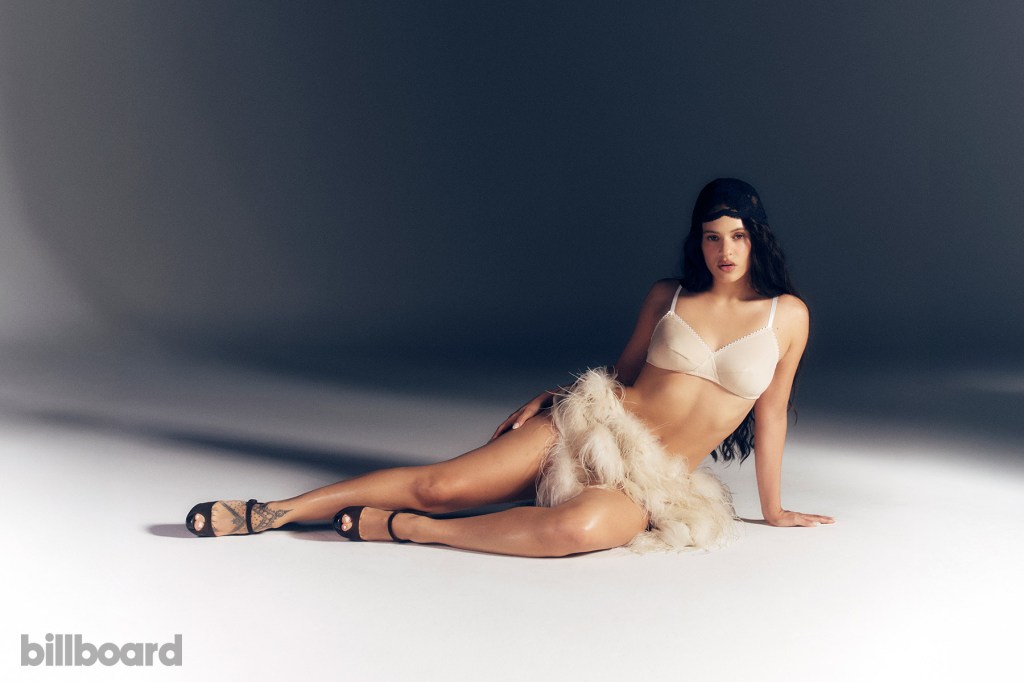
Trending on Billboard Rosalía offers an exasperated laugh as she sits down, having tried on a variety of equally stunning outfits only to end up in the casual clothes she arrived in: black pants and a camo jacket lined with fur. It’s the same jacket she was spotted wearing at a Parisian cafe in early […]
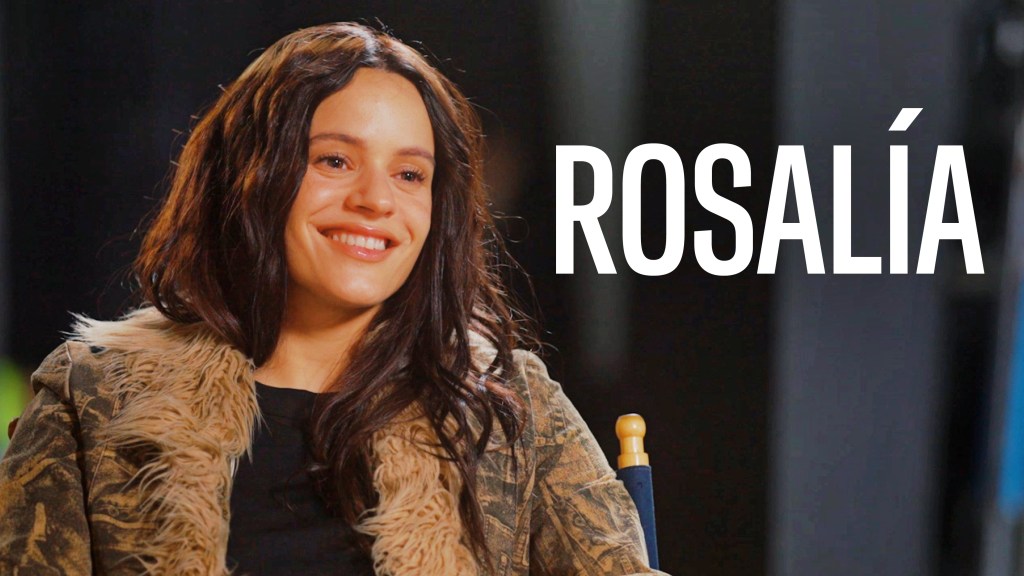
Trending on Billboard Rosalía sits down with Billboard’s Lyndsey Havens to discuss creating her new album ‘LUX’ and how she wrote and sang in 13 different languages. Plus, she dives into what a ‘LUX’ tour would look like and auditioning for ‘Euphoria’ season 3 and working with the cast. Rosalía: Every word in this album, […]

Trending on Billboard The Latin Alternative Music Conference (LAMC) has announced its 2026 dates, Billboard can exclusively announce today (Nov. 5). Following its star-studded 2025 edition that included the participation of artists such as Camilo, Morat, Yami Safdie, Ela Taubert, and Leo Rizzo, among others, the LAMC will return from July 28 to Aug. 1, […]
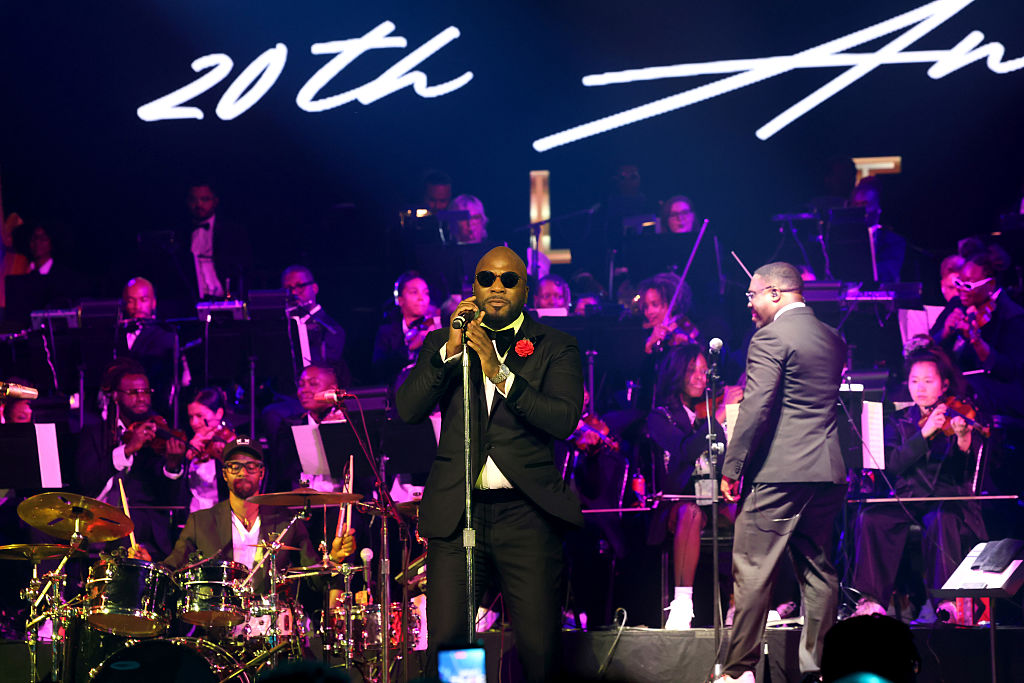
Source: Gabe Ginsberg / Getty
Jeezy has earned the distinction of now holding a Guinness World Record for the largest performing orchestra at a Hip-Hop concert.
According to Complex, “The rapper was awarded during the Saturday (Nov. 1) performance of his TM:101 Live residency in Las Vegas, where he held shows at PH Live Resort & Casino. Backstage at the concert, which commemorates the 25-year anniversary of his debut album, Let’s Get It: Thug Motivation 101, Jeezy was gifted an official certificate by Guinness World Records adjudicator Andy Glass.”
“This isn’t just a win for me — it’s a moment for the culture, for music, and for Vegas,” Jeezy stated in acceptance of the certificate, per a press release. “Thank you to every musician, every fan, and everyone who believed we could take this all the way. A winner is a dreamer who never gave up!”
Love Hip-Hop Wired? Get more! Join the Hip-Hop Wired Newsletter
We care about your data. See our privacy policy.
Jeezy went on to thank all those who helped turn TM:101 Live into a symphony, including composer Derrick Hodge, whose Color of Noize orchestra has been backing the “Let’s Get It” rapper during his live performances. For Jeezy’s residency and possibly because it’s in celebration of TM:101, the orchestra is made up of 101 musicians. He also thanked musical director Adam Blackstone, DJ Drama, and DJ Ace.
Complex notes that “After the completion of the ‘Masquerade’ dates of his Las Vegas residency on October 31 and November 1, TM:101 Live returns with Nutcracker-themed shows on December 19 and 21.”
Jeezy has been a busy man. Over the summer, he headlined a nationwide tour, but one performance in Baltimore was the most special. Jeezy was in Atlanta, where he lives, before his Charm City performance when he learned that his flight was canceled. Not wanting to miss his show, the “Put On” rapper called an Uber to drive him over 10 hours. The Uber was driven by a man named Tanner, who Jeezy brought on stage to thank for being the reason he was able to make the show in time.
Trending on Billboard
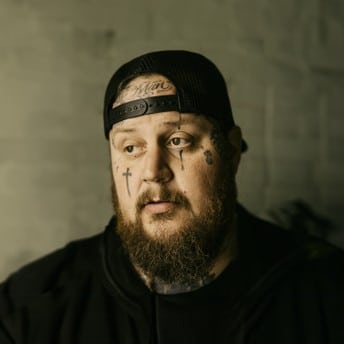
Jelly Roll appears to be having the time of his life on his first-ever tour of Australia. The country superstar who was previously barred from playing international shows due to his felonious past has been tearing it up Down Under, appearing at three stops on the inaugural Strummingbird Festival on the Sunshine Coast in Queensland, Newcastle and Perth, as well as playing shows in Brisbane, Melbourne and the Harvest Rock festival.
Explore
See latest videos, charts and news
By all accounts it’s been a blast. But this week the “Son of a Sinner” singer said he hit a snag while trying to indulge in some high-end retail therapy. In an Instagram Story posted on Wednesday (Nov. 5), Jelly said he hit a Louis Vuitton store during some down time and claimed the staff treated him like he was a common criminal.
“Hey man, The Louis Vuitton in Sydney, legitimately just treated us like we were finna come in and rob that place,” Jelly said with a smile on his face as he laughed about the incident, with the store’s logo clearly displayed behind him. “I have never been looked at more like a crim… Listen, the last time I was looked at like a criminal this bad.. I was an actual criminal this bad.”
Jelly Roll, 40, announced his first-ever non-U.S. dates in June 2024 with a run of Canadian gigs, just a week after telling Howard Stern that his dozens of bids behind bars on drug charges in his youth — dating back to when he was 14 — had been keeping him from booking shows outside the lower 48.
From the looks of it, though, JR is otherwise having the very best time on his Aussie run, arguing with the locals about the inexplicable difference between Celsius and Fahrenheit, getting the obligatory snap with the Sydney Opera House in the background, falling in love with Australian football and, of course, helping his drummer do a shoey.
Jelly has two more shows left on his outing, including a Thursday (Nov. 6) gig in Townsville at Queensland Country Bank Stadium and Saturday (Nov. 8) at the Outer Fields at Western Springs in Auckland, New Zealand.
Billboard’s Live Music Summit will be held in Los Angeles on Nov. 3. For tickets and more information, click here.
noreferrer” >