 State Champ Radio
 Music
Page: 467
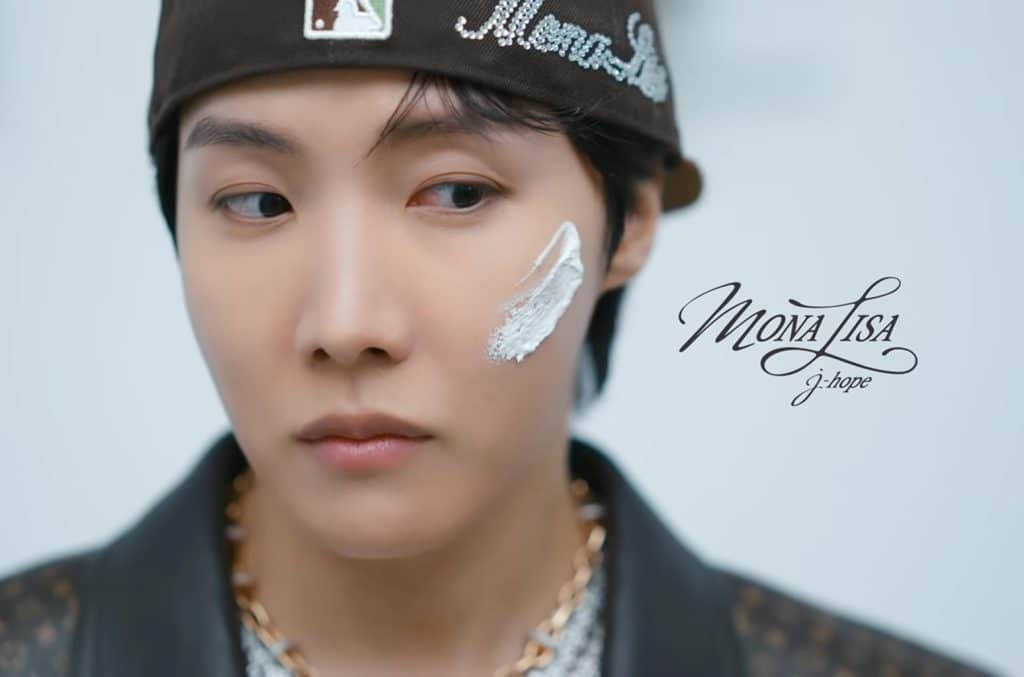
BTS‘ j-hope is setting ARMY up for his latest masterpiece with a second tease of the upcoming solo single, “Mona Lisa.” The official 30-second teaser of the song due out on Friday (March 21) continues the fine art-theme of the previous sneak, which peeled back a nine-second taste of the tune’s smoothed-out R&B vibe.
In the new look, Hobi sits on a long white bench in a mostly blank-walled gallery space in bedazzled acid-washed jeans, black boots, a black leather jacket and backwards baseball hat, elbows on his knees as he contemplates the silence. The only action comes when he turns around to look at the series of five photos of a woman in various states of profile, each of which is being blown around by a fan behind the singer.
There is no music in the teaser, and the only action comes with j-hope stands up and an unseen hand smears his face with white paint as the song’s title pops up on screen.
Trending on Billboard
Last week, j-hope shared a brief preview of the song, containing a buzzy, glitched-out beat and wavering bass line with inaudible vocals. In a statement, the singer’s label, BIG HIT, described the hip-hop/R&B song as exuding his “smooth, laid-back charm… expand[ing] his musical spectrum, solidifying his status as one of the most dynamic and sought-after global artists.”
It continues, “‘MONA LISA’ is a love song that pays tribute to celebrating one’s unique beauty. It explores an infatuation towards a person whose beauty is one of a kind.” It was, of course, inspired by Leonardo da Vinci’s iconic masterpiece of the same name with the legendary sly smile, with the track likening “the praise for the alluring person to the timeless masterpiece. It conveys that what truly moves someone is not external beauty, but rather the distinctive characteristics that make each person special.”
BIG HIT promises that the bouncy tune “seamlessly blends a groovy rhythm with a funky chord progression, creating an irresistibly refreshing sound,” noting that “as the song builds, the chorus toward the end invites an infectious sing-along, amplifying the uplifting, feel-good atmosphere.”
“Mona Lisa” is the follow-up to Hobi’s recently released digital single featuring Miguel, “Sweet Dreams,” which will debut at No. 66 on the Billboard Hot 100 dated March 22.
Check out the official “Mona Lisa” teaser below.

Jelly Roll and Bunnie XO are currently in the midst of a challenging IVF journey, but it has its perks.
In a hilarious video shared by the Dumb Blonde podcaster on TikTok Tuesday (March 18), she comes down off of anesthesia following a fertility treatment. “Not gonna lie, I love propofol,” she says drowsily, lying back in a hospital bed as a healthcare professional tends to her. “That’s good s–t.”
“I’m f–king high as hell,” Bunnie continues in the clip, verbalizing her stream of consciousness. “I’m so thankful, praise Jesus … Did I poop on the doctor?”
For the record, the entrepreneur did not poop on the doctor, as the caregiver in the room quickly assured her.
Trending on Billboard
As good of a time as she appeared to have this time around while sedated, Bunnie shared in the comments that she had been “so stressed” about having to undergo anesthesia leading up to the procedure. “Mrs. Bunnie doing what she can for babies regardless of being terrified of anesthesia!” one fan had written, to which she replied, “I didn’t even sleep last night I was so stressed.”
The “Son of a Sinner” singer and Bunnie first revealed that they were trying to welcome children through in vitro fertilization in June last year. The two stars are already parents to 16-year-old Bailee, whom Jelly welcomed in a previous relationship but now shares full custody of with Bunnie. Jelly also has a son, Noah, from a previous relationship.
“My wife and I are talking about having a baby,” the country star said at the time on the Bussin’ With the Boys podcast, after which Bunnie clarified on Instagram, “We had planned on doing this privately, but decided our IVF journey needed to be shared because we’ve always been so open. And w/ all odds stacked against us, it’s already been hard and we have only just begun. We have been meeting with IVF doctors & exploring all our options to add to our family.”
Jelly is currently on tour in support of his Billboard 200-topping album Beautifully Broken. In April, he’ll kick off his joint stadium trek in North America with Post Malone.
While he’s on the road, Bunnie has seemingly been holding down the fort at home while continuing with her IVF treatments. In another TikTok shared a few days prior to the video about her latest clinic visit, she sits in a chair and acts out calling her husband on the phone, hilariously mouthing along to an audio that says, “I’m f–king cleaning, like I’m always doing.”
“When my husby is working hard on tour in another country & I’m at home baking eggs in my ovaries chilling by the pool,” she captioned the clip.
See Bunnie’s post-anesthesia TikTok below.
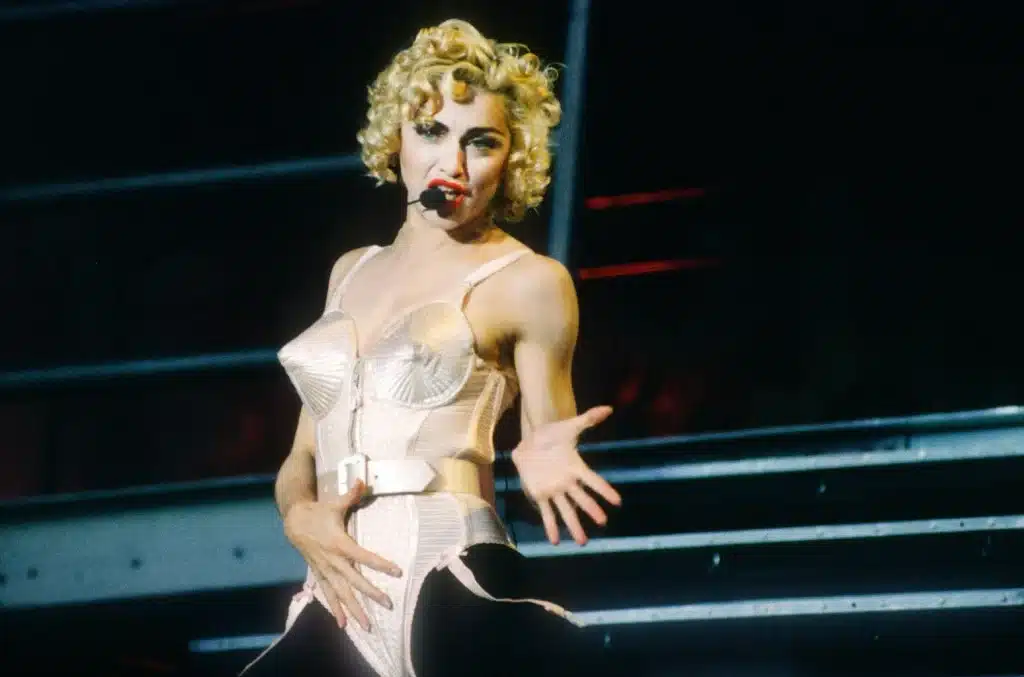
It would have been a trio for the ages. According to a new interview with Barbra Streisand‘s A&R rep Jay Landers, when the singer was working on her 1993 Back to Broadway album, in the midst of recording some of the Great White Way’s most beloved tunes by Oscar Hammerstein, Richard Rodgers, Stephen Sondheim, Kurt Weill, Leonard Bernstein and Frank Loesser, someone came up with the brilliant idea to cover the Annie Get Your Gun classic “Anything You Can Do I Can Do Better” as a duet with Madonna and another very special guest.
Explore
See latest videos, charts and news
See latest videos, charts and news
“David Foster created a demo and we said, ‘well, who could we do this with?’” Landers said. “And we chose Madonna and… Bette [Midler]. So it was going to be the three of them.” As envisioned at the time, the triple-headed vocal extravaganza would then end with all three women in the lady’s room, with Madonna and Bette kvetching, “‘God, she’s such a b–ch! She’s so controlling’ and this and that and the other thing and blah, blah, blah. And then we hear another stall open and, ‘Ladies! I’m in here!’ And that’s how the song was going to end,” he said.
Trending on Billboard
Landers noted that Foster had cooked up a “brilliant” arrangement for the trio that started off in a manner similar to the Irving Berlin-penned version we all know and love, in which Annie Oakley and Frank Butler engage in a playful musical game of one-upmanship; the original version appeared in the Ethel Merman/Ray Middleton 1946 cast recording for the show. But when it came to the Madonna section where she sings, “Anything you can sing, I can sing sweeter,” Landers said Foster dropped in a “Madonna disco beat.”
Similarly, when it came to Midler’s section, Foster slid in a “Wind Beneath My Wings”-style motif. “So it touched upon their sounds,” Landers explained. “Really clever.” Landers’ job was to wrangle all three women, who, amazingly, all agreed to do the session. That is, he lamented, until Madonna was unable to participate at the last minute for an undisclosed reason.
Watch Landers tell his musical fish-that-got-away story below.
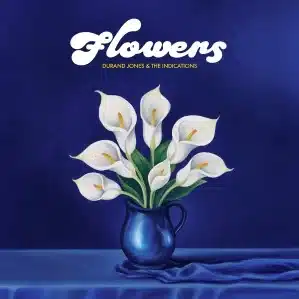
Durand Jones & The Indications are back and it’s “Been So Long.” The soul group – officially the trio of Durand Jones, Aaron Frazer and Blake Rhein – are returning Wednesday (March 18) with the announcement of their fourth studio album Flowers (out June 27 on Dead Oceans) and lead single “Been So Long.”
Explore
Explore
See latest videos, charts and news
See latest videos, charts and news
Their latest offering – the first since the release of the band’s funky Private Space in 2021 – is a callback to their soulful roots featuring 11 tracks that reflect “a strong sense of the band’s maturation and conviction.” According to the group, Flowers is “grown and sexy, fit for cruising, and delight in the softer side of soul and disco.”
Trending on Billboard
“We are all in our 30s, have all been through ups and downs in our personal lives and professional lives, and flowers are a sign of maturity, growth, spring, productivity,” Jones said in a release.
Much of the self-produced album was written together at Rhein’s Chicago home studio, and many tracks are based on one-take demos.
“We took the spirit of play that started the project and added in the wisdom and lessons we’ve acquired through the years,” Frazer said.
Lead single “Been So Long” is a toe-tapping jam that reveals the band’s renewed sense of camaraderie as they sing in unison: “Itʼs been so long/ Since weʼve been gone/ Itʼs good to be back together.”
Of the single, the band says, “ʻBeen So Longʼ felt like a natural choice for the first single from the new album. Although it hasnʼt been that long since weʼve been apart, it is the longest stretch the band hasnʼt toured or released music in nearly a decade. The feeling of returning to your hometown is not unlike getting back together with your band mates after a spell. Some things have changed nearly beyond recognition, while others are exactly as you always remembered.”
For the “Been So Long” video, Jones, Frazer and Rhein take center stage alongside Chicago musicians Wyatt Waddell and Michael Damani (who also feature on the track’s background vocals) for some beautifully choreographed moves that harken back to the city’s deep soul heritage. Check out the video below.
“When I think of Flowers, I think of this sense of naturalness. There’s a lot of courage in showing the human side of making music,” added Rhein. “We spent the most energy playing to each other’s strengths and learning how to support each other. Being able to make art from an intuitive level takes a lot of confidence, not second guessing yourself, not asking if it’s going to be well received.”

Erykah Badu remembers her last moments of normalcy. The generational talent who changed the course of R&B and hip-hop with her home-cooked neo-soul has never truly been “normal,” of course. But before Badu was the futuristic stylist we know her to be, she was just a young woman from Dallas. One who traveled to New York during the paralyzing North American blizzard of 1996 to finish a debut album she hoped would be good enough to allow her to make another one. “That’s how I met New York. Like, ‘Oh, you cold!’ ” she says in the much more agreeable climate of her hometown. “I was like, ‘OK, if this is what I got to do — then this is what I got to do.’ ”
Despite the frigid weather, the then-25-year-old Badu found a warm and welcoming community in Brooklyn’s Fort Greene neighborhood. In 1992, Entertainment Weekly correctly noted the area was the “red-hot center of a national black arts renaissance.” Chris Rock called it home, as did Gil Scott-Heron. Digable Planets copped a spot and recorded its second album, Blowout Comb, as a love letter to the hood. Badu moved into a cozy apartment above Mo’s Bar & Lounge, right around the way from one of her favorite spots, Brooklyn Moon Café. Spike Lee’s 40 Acres and a Mule — the studio behind Do the Right Thing, Malcolm X and Jungle Fever — was close by. “[I was] right in the center of Blackness,” she remembers. “Dreads, headwraps and people who looked like me who I didn’t know existed. I felt like I belonged there. I met people who felt the way I felt, and that’s when I knew I wasn’t alone in my journey or quest to find out, ‘Who am I?’ ”
Trending on Billboard
Join us at Billboard Women in Music 2025 — get your tickets here.
To answer that question, Badu would need to enlist her own spirit guides both within and outside of the music industry. One of the most memorable was a woman named Queen Afua, who became a mentor of sorts for young Badu. In addition to helping Badu with her holistic journey, Afua “became my family away from Dallas. She communicated with me like a mother.” But to keep her profile as low as possible, Badu didn’t tell Afua why she was in the Big Apple: “I didn’t tell anyone in New York anything. I just wanted to live.” And so, she lived. When she wasn’t kicking it in Fort Greene, Badu was taking classes at Alvin Ailey American Dance Theater taught by dance legend Joan Peters. She took a Kemetic language course, because why not? “A lot of things were happening, and they all became a part of who I am,” Badu says. “You know, as Erica in America.”
Badu constantly told herself to be as “regular as possible,” because she knew the album she was trudging to Battery Studios in Midtown Manhattan to work on with a group of musicians who would go on to become legends in their own right — people like James Poyser and Questlove from Philadelphia’s The Roots — was going “to take this motherf–ker by storm.”
Jai Lennard
The album, Baduizm, did just that. It debuted at No. 2 on the Billboard 200 and ruled the Top R&B/Hip-Hop Albums chart. Buoyed by the meditative smash hit “On & On,” Baduizm helped usher in what became known as neo-soul: a type of R&B that built on the traditions and stylings of the past while breathing new life and energy into the genre. While most neo-soul tracks sampled or interpolated older soul songs, “On & On,” with its rolling bass and booming drums, was wholly original. It felt like a completely fresh idea (and Badu was full of them) but also something familiar and comfortable — the delicate balance most artists work their entire lives trying to strike.
“[I’d] never seen someone just full of a bunch of ideas,” Questlove recounted in a 2024 interview with Poyser. “She had a lot of choruses ready. She was the first person I met that instantly had a clever chorus ready in the stash.” For the album’s third single, “Other Side of the Game,” the Roots drummer recalled that Badu came in with the idea to rework the famous chorus to Inner Circle’s “Bad Boys Reply.” Even more impressive, he remembered, was that the version of the song that made it onto the album was essentially the first take that was committed to tape: “I thought, ‘Oh, this girl is going to make it.’ ”
Dressed in an oversize sweatshirt and sweatpants with a warm-looking knitted cap, today Badu comes across every bit as enchanting as she’s made out to be. Sitting in the back room of South Dallas’ Furndware Studios, she speaks with a calm directness that you would expect from a shaman or elementary school teacher. Every question elicits a thoughtful pause and an even more thoughtful answer. When I ask Badu about making versus performing music, for example, she goes into a deep rumination about the focus needed to create great music. “I want to focus, I want to be in the moment of the foreplay. Creating the music. The tragedy. The love. The experience of the whole thing,” she says before exhaling. “Then I go somewhere else after this is done. This is a movie and the studio audience is cracking up and crying and s–t… I hope that answers that question.”
Badu makes you feel as if you’re the most important person in the world when she’s speaking to you. It’s a skill many successful people have, but few can also make you feel like the luckiest — as if she’s letting you, and only you, in on a cosmic secret. That may owe in part to the spiritual tangents she sometimes goes on when answering questions. Or it may simply be the attentiveness she offers in conversation. She says she has learned that the way to become successful — and to maintain that success — is to be healthy, present and aware, and to never stop learning.
Born Erica Abi White in Dallas, Badu didn’t always aspire to “make it.” She simply wanted to create art like most of her family had done. She grew up with her grandmother, mother and uncles, in what she describes as “a house of music lovers and collectors.” There was music in every room — literally. “There were records from wall to wall, a radio in the bathroom that was on the local FM soul station,” she recalls. Everyone was allowed to have their own corner to express their musical tastes. “My uncles would be in the back listening to funk. They were into Bootsy [Collins] and George Duke and Stanley Clarke. My mother was more into the sirens — the Chaka Khans, the Phoebe Snows, the Deniece Williamses, The Emotions. My uncle, who’s a rebel, was into Prince and Pink Floyd and Three Dog Night,” she says. “I had a variety to pull from.”
Erykah Badu photographed on February 7, 2025 at Mars Hill Farm in Ferris, Texas.
Jai Lennard
Badu immersed herself in everything artistic Dallas had to offer a young person. When she was in elementary school, she began taking classes at the Dallas Theater Center, as well as the Martin Luther King Jr. Community Center, where she would sing and dance and perform in plays. Badu and her younger sister, Koko, also frequented The Black Academy of Arts and Letters, where her mother and godmother volunteered. TBAAL’s founder, Curtis King, recalls seeing the “it thing” in Badu from an early age.
Badu went to Louisiana’s Grambling State University to study theater but left in 1993 and returned to Dallas before she graduated. She planned to pursue music full time — but since dreams don’t come true overnight, Badu found herself working a series of odd jobs to support herself while she worked with her cousin Robert “Free” Bradford to record her demo, Country Cousins. The two would perform around Dallas as a duo — she would sing and he would rap. But even with the 19-song project, Badu couldn’t pay a label to take her on. She says she auditioned for everyone — Sony, Priority, Bad Boy, So So Def — but didn’t catch a break until D’Angelo’s then-manager, Kedar Massenburg, saw her perform at South by Southwest and received her demo. He immediately signed her to his fledging imprint, Kedar Entertainment.
“As soon as I heard ‘On & On,’ I knew that I had to get involved,” Massenburg told Billboard in 2017. “The thing that struck me immediately was the beginning, because Erykah had used a beat in the intro that Daddy-O, a member of a group I managed called Stetsasonic, had created: Audio Two’s ‘Top Billin.’ ”
Country Cousins was the foundation of what became Baduizm, and Badu’s debut cemented not only her career but also the neo-soul scene that had been developing. “I think Tony! Toni! Toné! kind of opened the door, D’Angelo took it to the next level in terms of edginess, and Erykah solidified it,” Massenburg said. “That’s what Baduizm did. You’re saying, ‘I don’t need to wear these kinds of clothes or look this kind of way, this is my “-izm.” ’ The only thing that dates it is the term ‘neo-soul’ — maybe that’s the issue. It places it at a time when that term meant a certain thing. Take away the term, and it stands with the best of the artists that are out here today.”
Jai Lennard
You would think, with the impact she has had on R&B and hip-hop, that Badu would have dropped more than five albums over her 28-year career. But nope — just five studio sets, a live album and a mixtape. Granted, they’re all classics and helped either introduce a new sound or popularize a new style of working. Take 2008’s New Amerykah Part One (4th World War), which was recorded mainly on laptops with Apple’s GarageBand software, with Badu emailing sessions and files back and forth with producers. At the time, it was a pretty novel idea to forego the studio for your bedroom — only new, cash-strapped artists were doing that. Badu helped bring the practice to the mainstream — just one of many examples of her being aware of the winds of change before most of her peers.
That same awareness inspired her to launch her label, Control Freq, in 2005. At the time, Badu said it was her attempt at making a “profitable home for artists, with fair contracts that will return ownership of the music to the artists after a period of time.” The first artist signed to the label was Jay Electronica, the father of Badu’s third child. “I didn’t develop him at all. I just wanted to be near his greatness,” Badu says. “He needed to be heard and I had a platform. I wasn’t interested in building an artist from scratch. I was interested in artists who were building their own platforms.”
When it comes to her own music, Badu is less interested in what she puts on wax than in what she puts forth onstage. “I tour eight months out of the year for the past 25 years,” she says emphatically. “That’s what I do. I am a performance artist. I am not a recording artist. I come from the theater. It’s the immediate reaction between you and the audience and the immediate feeling. The point where you become one living, breathing organism with people. That’s what I live for. It’s my therapy. And theirs, too. We’re in it together. And I like the idea that it happens only once.”
Unlike most performance artists, however, Badu doesn’t create her music with the live aspect in mind. Once she decides to perform a song, she begins to re-create it for the stage. “It’s like, ‘OK, now this is one arena. Now, what are you going to do with it in here?’ ” (One of her most popular songs, “Tyrone,” was only ever released as a live rendition, on her 1997 Live album.) The results speak for themselves. Badu — this year’s Women in Music Icon — has emerged as one of the premier performers of her generation.
In 2015, while on an apparent hiatus, Badu released a remix of Drake’s gargantuan smash “Hotline Bling.” Produced by the Dallas-based Zach Witness — who first connected with Badu after she heard a remix he did of her 2000 song “Bag Lady” and reached out to him — “Cel U Lar Device” was posted to SoundCloud without much explanation.
The track became the lead single for her mixtape — and most recent project — 2015’s But You Caint Use My Phone (a nod to “Tyrone”), which she recorded in less than two weeks with Witness in his home studio. The tape centered on a theme of cellphone use and addiction, with Badu putting her spin on a few other popular phone-based songs like Usher’s “U Don’t Have To Call” and New Edition’s “Mr. Telephone Man.”
Since then, Badu has popped up here and there. She says she only collaborates with people whose music she really enjoys. Dram featured her on his debut album in 2016. She jumped on a track for Teyana Taylor’s self-titled album in 2020. She lent her vocals to a Jamie xx song that came out in January. And at the 2025 Grammy Awards, she won the best melodic rap performance statue for a collaboration with Rapsody, “3:AM.” “It snuck up on me!” she says. “I remember collaborating with [producer] S1 and Rapsody and we had such a good time promoting the song and I just felt like it was all for her basically. She worked very hard to get to this place.”
Jai Lennard
She still loves rap, although she doesn’t follow it as much as she used to and now experiences a lot of it through her children: Seven, 28; Puma, 21; and Mars, 16. (She says they also have attempted to make music, which is not surprising considering their fathers are all rap legends: André 3000, The D.O.C. and Electronica, respectively.)
“[The thing I like about rap right now] is the same thing I liked about rap when I first met it,” she says. “Rap is the people. Hip-hop is the people. It’s the folks. It’s the tribe. I have the luxury of experiencing having children who I watch grow up and love and encourage very much, and I cannot separate them when I see artists who are that age coming up. That’s how they feel. They are continuing the tradition.”
Badu may say she’s not as tuned in as she used to be, but she’s clearly keeping tabs on what’s hot right now. She’s been hard at work on her first studio album in 15 years, which is being produced solely by The Alchemist, the hip-hop journeyman who has had a resurgence as of late thanks to his work with the Buffalo, N.Y.-based Griselda crew and artists like Larry June. Badu posted a teaser of the project on Instagram to an exuberant response from fans who’ve been damn near begging her to drop something new and show the generations of artists who’ve had her pinned to the center of their mood boards how it’s supposed to be done.
The album has been taking up most of her time; she says she can’t wait until she’s done. And whatever time that isn’t occupied by her family and nonmusical interests — such as her cannabis strain collaboration with brand Cookies called That Badu — goes toward keeping herself in the best mental, emotional and physical shape possible and making sure she’s set for the future. “When I was building my house, I was making sure that I was building ramps for when I was elderly and couldn’t walk by myself,” the now-54-year-old says. “When I do my workouts, I do workouts that are conducive for picking up groceries and grandchildren and things like that.”
That’s not to say she isn’t having fun. Another of her nonmusical hobbies is car collecting. Badu, whose grandmother bought her toy cars instead of dolls when she asked for the latter as gifts, lights up when asked to run down what’s currently in her collection: “I get happy when talking about it.” There’s a baby blue ’67 Lincoln Continental with suicide doors and a chandelier in the back (“Original interior, original white wall tires, original radio”); a 1989 Land Rover Defender; a 1971 Sting Ray Corvette (“Matte black, neon yellow stripe. It looks like the Batmobile”). A collector since she was 21 years old, her first car was a 1965 convertible Super Beetle. “Before I was Erykah Badu the artist, that was my hobby that I loved.” Her uncle Mike, the one who was into funk music, is also into cars and keeps and maintains some of hers; the rest are tucked away in a Dallas garage.
It all sounds surprisingly normal for a music superstar of Badu’s stature, and that’s just what she likes about it. And it’s the same reason why, after all her success, she has remained in South Dallas. “It was very hard for me to be away because this is where I want to be,” she says. “I wanted to come here and build. This is where everybody is. I’m five generations in Dallas. This is my place. It’s my home.”
This story appears in the March 22, 2025, issue of Billboard.

The Latin Recording Academy has announced several major updates to its eligibility guidelines on Wednesday (March 19) for the 26th annual Latin Grammy Awards.
Among the updates is the addition of a new field for visual media and the introduction of two new categories: best music for visual media and best roots song — singles or tracks only, with the latter falling under the traditional field.
These changes aim to reflect the Latin Academy’s “commitment to evolve with the ever-changing musical landscape, and to best serve its membership body of music creators and professionals,” as noted in the press release. These updates take effect immediately for the awards scheduled for November.
The category of music for visual media will recognize “original music created to accompany and enrich the storyline of movies, television series, video games and other visual media.” To qualify for this category, a project must either incorporate Latin rhythms that are recognized as eligible genres for the annual Latin Grammy Awards, or be composed by an individual of Ibero-American heritage.
Trending on Billboard
Meanwhile, the best roots song award will be given to the songwriters of “new, unpublished recordings, both vocal and instrumental, that reflect the traditions and roots of various communities, cultures, or social groups, especially those of Hispanic American origin, whether in Spanish, Portuguese or in indigenous languages or dialects,” notes the release. It will highlight works in genres like tango, folk, flamenco, and other traditional subgenres.
Other amendments include category renaming. In the pop field, “best pop vocal album” will now be called “best contemporary pop album”; in the children’s field, “best Latin children’s album” is being renamed to “best children’s album”; and in the urban field, “best urban fusion/performance” will be named “best urban/urban fusion performance.” The later category will now require 60% urban elements for eligibility, rather than 51%. “Remixes are eligible only if the original version of the song was released within the same eligibility year,” states the official announcement regarding the urban field.
Additionally, the songwriter of the year category reduced its minimum song threshold from six to four, while producer of the year will now undergo screening “by a specialized committee in addition to the membership screening and voting process.”
For more information, visit LatinGRAMMY.com.
Crowdsurfing can sometimes feel like a trust-fall: you are hoping against hope that the people you’ve put your faith in will be there to grab you before you crash to the ground. At least that’s how it’s supposed to work. That definitely was not the case on Sunday night (March 16) when producer/DJ The Dare […]
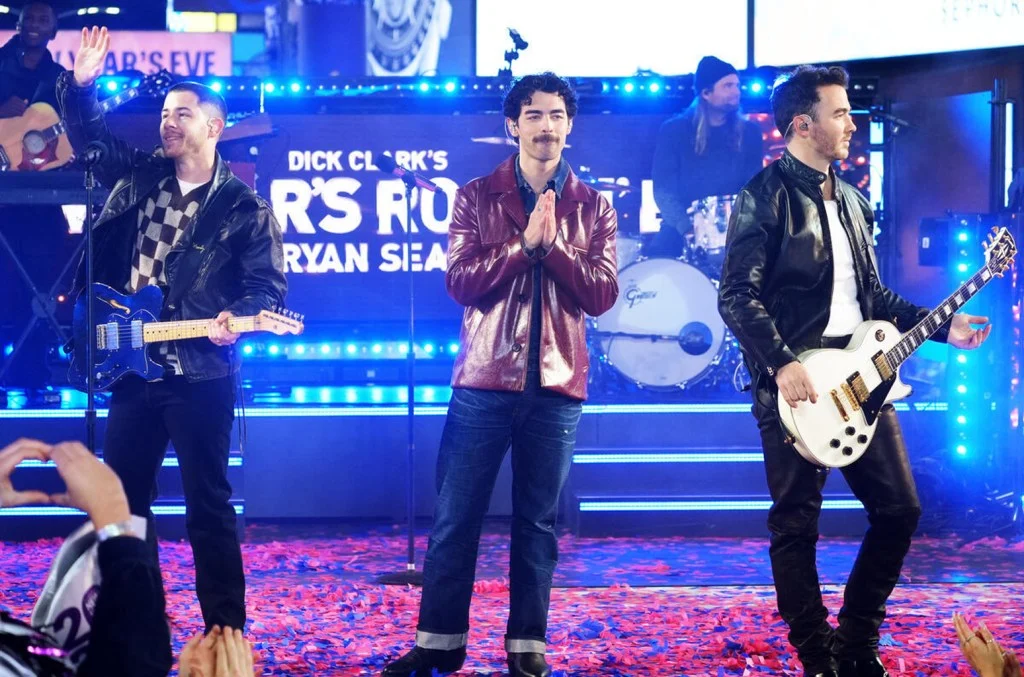
Of course Joe and Kevin Jonas were in the house on Tuesday night (March 18) to support their brother Nick Jonas in his return to Broadway in The Last Five Years. The siblings were reunited on the stage with Nick’s co-star, Adrienne Warren in a family snap at the kick-off of preview performances at the […]
Sir Rod Stewart is not done with Las Vegas. The ageless pop wonder announced another six-pack of residency shows at the Colosseum for this fall, extending his Sin City run yet again. “Las Vegas! You wanted more, so here we go—I’ve added more shows! I’ll be back at @colosseumatcp this September and October, Can’t wait to see […]
Australian rock icons Silverchair are set to celebrate the 30th anniversary of their seminal debut album, Frogstomp, with a special event in Sydney next week. However, frontman Daniel Johns will not be taking part.
Explore
Explore
See latest videos, charts and news
See latest videos, charts and news
The event is scheduled for March 26 at the Metro Social in Sydney, a venue that holds significance for Silverchair, as it hosted some of the band’s early performances before their rapid rise to fame.
The night will feature drummer Ben Gillies, former Silverchair manager John Watson, and label executive John O’Donnell, all sharing insights into the band’s meteoric success. Additionally, celebrated music photographer Tony Mott will be in attendance, and Sydney-based indie rockers The Buoys are set to perform tracks from Frogstomp in tribute.
Trending on Billboard
Released in March 1995, Frogstomp catapulted Silverchair to international stardom. The album debuted at No. 1 on the ARIA Albums Chart and made history by reaching the top 10 of the Billboard 200, peaking at No. 9 and marking the first time an Australian band had done so since INXS.
The record, which features hits like “Tomorrow” and “Pure Massacre,” earned five ARIA Awards and has sold over 10 million copies worldwide.
The upcoming anniversary celebration follows the release of Love & Pain, a memoir co-authored by Gillies and bassist Chris Joannou in 2023. The book offers an in-depth look at the band’s origins in Newcastle and their rise to becoming one of Australia’s most successful rock acts. However, the absence of Johns from the event is consistent with his continued reluctance to revisit Silverchair’s past.
Johns has been vocal about distancing himself from his former band. He previously opposed the airing of a two-part Australian Story documentary on ABC iView, which coincided with the release of Love & Pain, citing unauthorized use of Silverchair’s music. In an Instagram post, Johns addressed his stance:
“I was and remain incredibly supportive of them telling their story,” he wrote. “I was asked at the end of filming to be interviewed about their contribution to the band and although I wished them all the best, I respectfully declined for one reason. I haven’t been involved in the book nor am I aware of the contents. I’ve asked on many occasions to read the book but haven’t been sent a copy, consequently, I was uncomfortable being interviewed to help promote it.”
Despite Johns’ absence, the Frogstomp anniversary event is expected to be a significant occasion for longtime Silverchair fans, offering a retrospective look at one of the most defining records in Australian rock history.