State Champ Radio
 Music
Page: 407

On Billboard’s first Adult Contemporary chart, dated July 17, 1961, Pat Boone ranked alongside the likes of Brooke Benton, Connie Francis, Patti Page, Frank Sinatra and Nat King Cole.
On the latest list, dated April 12, 2025, Boone shares space with artists including Teddy Swims, Sabrina Carpenter and (no relation) Benson Boone.
The legendary entertainer, 90 years young, debuts on the radio airplay chart at No. 30 with “One: Voices for Tanzania,” billed to Pat Boone World Missions. The track aims to support essential projects in Tanzania, with proceeds aiding clean water initiatives and helping to provide essential services to those in the Eastern African country.
Trending on Billboard
Joining Boone on the anthem are artists including Alabama, Deborah Allen, Billy Dean, Larry Gatlin, Vince Gill, Lee Greenwood, Wendy Moten and Pam Tillis, as well as Nashville’s Legacy Mission Village Singers, comprising refugees from Tanzania and Congo, and Tanzanian gospel act Sebastian Silas & God Is Love.
“When good people come together, we are one,” Boone shared on Facebook Reels in March. “And incredible things happen.”
By bookending the Adult Contemporary chart’s history to date, Boone, thus, breaks the record for the longest span of appearing on the survey: 63 years, eight months and three weeks. He passes the late Dean Martin (60 years and six months, from 1964 through the most recent holiday season), with fellow late legend Cole now in third place (60 years, five months and two weeks, from 1961 through 2022).
Meanwhile, Boone graces the chart for the first time in almost 50 years, since “Indiana Girl” wrapped its run on the May 17, 1975, ranking. He boasts four top 10s: “Moody River” (No. 4, July 1961), “Big Cold Wind” (No. 5, September 1961), “Johnny Will” (No. 10, January 1962) and “I’ll See You in My Dreams” (No. 9, March 1962).
The beloved singer/actor (and father of Debby Boone, likewise a chart veteran) logs his first new entry on any Billboard chart since The Gold Label Presents: Pat Boone R&B Classics: We Are Family dented Top R&B/Hip-Hop Albums in February 2007. He notched 33 Billboard Hot 100 hits in 1958-69, with “Moody River” leading for a week in June 1961 and “Speedy Gonzalez” marking his other top 10 (No. 6, July 1962).
In February 1997, Boone hit the Billboard 200 with the head-turning (if not quite head-banging) I’m in a Metal Mood: No More Mr. Nice Guy. The set sports covers of rock classics including Guns N’ Roses’ “Paradise City,” Led Zeppelin’s “Stairway to Heaven” and Metallica’s “Enter Sandman.”
All charts dated April 12 will update Tuesday, April 8, on Billboard.com.
One of the fan-favorite moments of Role Model’s current tour is during his latest hit, “Sally, When the Wine Runs Out,” where he brings out a fan onstage to dance along to the bridge with him. Explore Explore See latest videos, charts and news See latest videos, charts and news However, he’s also welcomed fellow […]

Playboi Carti might not be done releasing music in 2025 just yet. According to DJ Swamp Izzo, Carti’s upcoming Baby Boi album is “ready” and “done.”
Swamp Izzo sat down with Complex on Friday (April 4), where he talked about his work on Carti’s Music album as well as what’s to come with Baby Boi.
Explore
Explore
See latest videos, charts and news
See latest videos, charts and news
The Atlanta mixtape DJ confirmed that the project is done, as Carti has over “50, 60” songs finished in the stash.
Trending on Billboard
“New music. He got over 50, 60 songs done,” he said. “Completed to his liking? I couldn’t say. But they’re done. If I was still in that mixtape era, we’d have Baby Boi one through nine. Fifteen years ago, we were so heartfelt on them exclusives. We couldn’t even sleep until we put it out before everybody.”
Swamp Izzo continued to build on his decorated ATL legacy with Music‘s arrival following his acclaimed mixtape work with the likes of Future, Young Thug, the late Young Scooter and more.
“I judge every artist by how much they study hip-hop,” he added. “[Young] Thug studied it more, so he can input more ideas. Same with Carti… Carti listens to Wu-Tang. He’s attuned. He’s paying attention. You can’t tell?”
Music arrived in March to much fanfare as the long-awaited LP debuted atop the Billboard 200 with 298,000 units earned in the first week. Swamp Izzo claims he was working with Carti right up until the buzzer when the project hit streaming services around 7 a.m. ET on March 14.
“We recorded all the way up to the album actually came out,” said Izzo. “So when they dropped at 7 a.m., we were still in the studio, on everything I love.”
Carti added another four previously released tracks as part of the Sorry 4 Da Wait deluxe, as all 30 original songs hit the Billboard Hot 100.
Music has continued to remain atop the charts and is battling Ariana Grande’s Eternal Sunshine Deluxe for another week at the apex.
Carti will take his show on the road when he joins The Weeknd’s After Hours Til Dawn Tour in May.

On Kelsea Ballerini‘s most recent album, Patterns, she explored and considered various behavior patterns in her life, with the music on the project detailing her journey in adjusting or breaking those patterns when needed.
Explore
Explore
See latest videos, charts and news
See latest videos, charts and news
In an interview with People, Ballerini spoke up about another pattern in her life that needed breaking- -namely, her relationship with social media. In a recent concert, she was open in telling fans that she would still regularly read comments that were posted about her online, but she’s had to make changes in how she approaches certain online platforms.
“I got rid of Twitter a long time ago. That was helpful. Twitter kicked my ass,” Ballerini told the outlet. “I discovered Reddit. I went through a very toxic phase with that, but it was when my life was a bit chaotic. Then I was like, ‘We need to have some boundaries.’ So that’s no longer.”
Trending on Billboard
These days, she says she primarily gravitates toward Instagram and TikTok. “Even that feels like too much, but I’m not sure how to not because I’m a people pleaser, and I like the feedback,” she noted. “I think my intention is because I like feedback and I like to edit set lists, or we’re tweaking things on the tour because I’m seeing stuff on TikTok. But yeah, I’m a girl. I’m sensitive. I’m an artist. If I see a mean comment, it affects me.”
Ballerini has been transparent about the benefits of therapy, and has said working with a therapist helped her work toward overcoming her tendency to be a people-pleaser. “My therapist told me a while ago, ‘Kelsea, you need to care more about less,’” Ballerini said, adding that she’s less emotionally impacted by mean-spirited online comments than she used to be. “Although I still care about that feedback, I don’t give it the gravity that I used to.”
She says doing the hard work to sustain emotional and mental health also involves accepting both the positive and not-so-positive aspects of oneself.
“I’m very aware of my flaws. I have a relationship with them, and I do the work to keep growing up and growing out of certain things,” she said. “But in the same breath, I fully accept and celebrate myself right now. I don’t think I’ve ever been truly able to before because I had to go through life. You have to learn yourself before you love yourself — and I had learning to do.”
That personal growth has also led to career growth, with Patterns becoming her first No. 1 on Billboard’s Top Country Albums chart last year, while her Kelsea Ballerini Live on Tour 2025 tour has been selling out arenas across the country. She also just notched her first ACM entertainer of the year nomination ahead of the upcoming Academy of Country Music Awards on May 8.
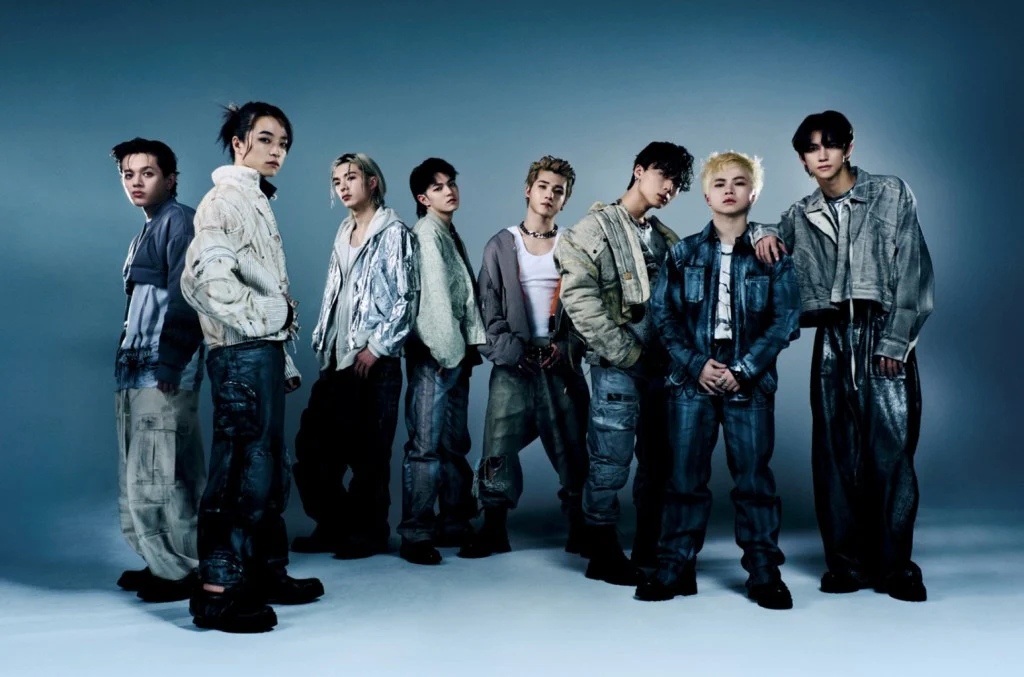
ONE OR EIGHT is an eight-piece boy band made up of members MIZUKI, NEO, REIA, RYOTA, SOUMA, TAKERU, TSUBASA, and YUGA. Their profile is rising thanks to their debut single “Don’t Tell Nobody,” which they released in August 2024, and the buzz generated by their collaboration with American rapper Big Sean on their song “KAWASAKI (with Big Sean).” On March 19, they released a new song, “DSTM.” It uses an authorized sample of Rihanna’s “Don’t Stop The Music” and was created by Stargate, the original producer of “Don’t Stop The Music,” together with fresh young American songwriters. Billboard Japan talked with the group about the approach they used in creating the song.
Your name, ONE OR EIGHT, comes from the Japanese expression “Ichi Ka Bachi Ka,” right?
Trending on Billboard
TSUBASA: That’s right. The Japanese idiom “Ichi Ka Bachi Ka,” which literally translates as “one or eight,” means “all or nothing” in English. It represents our desire to use an all or nothing approach to take on the world from here in Japan. Also, we’re all Japanese, and Japan’s telephone country code is “81,” so we wanted to reflect that in our name, too.
What kind of spirit runs through your own activities within the group?
NEO: Our tagline is “BET ON YOURSELF.” We want to encourage people by showing everyone how we’re betting on ourselves, constantly taking on new challenges with the support of the other members, staff members, and our fans. We’re performing at a level now that I’d never even imagined, but sometimes you can find yourself swallowed up by the whole experience. We’re working hard, pushing forward and doing our best to make sure things keep going in the right direction.
What would you say your strengths are as a group?
REIA: Our members. I feel like, with the members we have, we can take on any challenge. Before our debut, we travelled to different countries performing at what we called “STAGE ZERO” events. During these events, we had to deal with all kinds of different problems, but we were able to overcome all of them by supporting each other.
You’re active both in Japan and overseas. What kind of influence do you think this approach has had on ONE OR EIGHT?
SOUMA: Performing overseas has expanded both our expressive range and our adaptability. For example, fans in Thailand create an incredibly welcoming atmosphere, which has helped us develop the ability to stay composed while delivering a more high-energy performance that matches their enthusiasm. In contrast, audiences in Vietnam and Japan tend to embrace us as we are, so our focus there is more on refining our performance itself. That approach has helped us grow a strong base of receptive fans.
REIA: Audience energy and the way people engage with our shows can vary greatly from place to place. In Thailand, many fans seem to be fully immersed in the moment, which brings an exciting dynamic to our performances. Just next door in Vietnam, the atmosphere is more about support and appreciation, similar to Japan.
NEO: For me, live performances are like a conversation between performers and the audience. Audiences that get hyped up, like Thai audiences, are like talkative people. In our conversations with them, it’s like we’re engaging with talkative people, and that produces an exciting, fun conversation. Supportive audiences, on the other hand, are like good listeners who pay close attention to all we have to say. That’s why we fully focus on our lyrics, delivering them straight to the audience’s hearts so they viscerally feel our slogan of “BET ON YOURSELF.” It’s not a question of which type of audience is better. Instead, it’s about using different conversational approaches depending on the audience.
I see. You released your new song, “DSTM,” on March 19. What were your initial impressions of the song?
RYOTA: The song has a different tone than the songs we’ve done in the past. I felt like it had the potential to show some aspects of our appeal and some new performance approaches that we’d never shown before.
TAKERU: “DSTM” samples Rihanna’s “Don’t Stop The Music.” The song’s theme is about how we won’t stop as long as the music keeps flowing, and also about how we’ll have fun as we do it. I hope when people are feeling down, seeing us and our performances will put smiles on their faces, and that when they hear “DSTM,” it will lighten their mood and help them forget their worries.
TAKERU mentioned that “DSTM” samples “Don’t Stop The Music.” “Don’t Stop The Music,” in turn, sampled Michael Jackson’s “Wanna Be Startin’ Somethin’,” so the music has been passed along from Michael to Rihanna to you. Did you feel like you were under any pressure because of that?
TSUBASA: “DSTM” is tied to these huge names, so its release put a tremendous amount of pressure on us. But, at the same time, because of its new tone, with “DSTM” it feels like we’re breaking new ground and opening the way to a new era. We’re here because of the music we’ve listened to, and as the song title says, we don’t want the music to stop, but to keep going on forever. That’s the spirit with which we’re sharing “DSTM” with the world.
Now you’ve become a part of this process of the song’s transformation. What do you see as the significance of this, and what do you feel is expected of you?
TSUBASA: Through our music, we want to take an all or nothing approach to challenges. If the music stops, then we’ve lost everything. In that sense, we have to keep on carrying the torch of the music. That’s how I see it.
So, for you, these are the ideals represented by the song. What kind of back-and-forth did you have with other members and staff when working on the song?
REIA: To make the song a good fit for us, we needed to preserve the essence of the original song while also giving it the energy of a ONE OR EIGHT song. That’s why Stargate, who produced the original song, and the other writers put our own story into the lyrics.
MIZUKI: We also talked amongst ourselves in the group about what approach to take. The song has been performed by true giants, so we feel really grateful that virtual unknowns like us were given the opportunity to perform it. And just like “Don’t Stop The Music” propelled Rihanna to fame, we also worked hard on the song in the hope “DSTM” could bring greater worldwide recognition to ONE OR EIGHT.
REIA: We also really put our heart into our singing. For example, I sing a part right before the “please don’t stop the music” line, and I made sure that my own part had just as much power as the chorus. My own vocal qualities don’t pack much punch, so I accentuated my performance through physical movement.
TSUBASA: I did some ad-libbing on the last chorus in a part that wasn’t in the original demo. During the recording, I’d felt frustrated because I just couldn’t express what I was going for, so I talked to the producer, and together we created the ad-lib part. That part isn’t in Rihanna’s “Don’t Stop The Music,” though, so there was also a lot of pressure, because people might compare “Don’t Stop The Music” to our “DSTM.” But I’m really satisfied with how it turned out, so I want to keep confidently doing the ad-lib part.
NEO: I do the first half of the first rap verse, and unlike TSUBASA, I found it to be a blast. One of the things that’s appealing about the first verse is the use of Japanese words like “katana” and “sumo” that will be familiar to overseas listeners. I’m very proud of this part, because it conveys the message and shares the feeling that this is coming from Japan. Of course, I was also nervous about including a rap part, because it isn’t in the original song, but it was really fun. The rhythm is easy to get into, so even people who don’t know much about hip-hop will be able to enjoy it. I hope when people hear it, they’ll think to themselves “don’t stop this song.”
Thank you. In closing, what are your future goals?
NEO: I want us to be the kind of group that always has fun taking on new challenges. Our group’s name means “all or nothing,” and I want us to achieve success, no matter what, touring the world and setting our sights high. I hope there are people out there who’ll see us taking on these imposing challenges and it will instill them with pride in themselves and help them feel the fun in taking on new challenges. That’s the kind of world I hope we’ll create. I believe that, joined by colleagues and fans like that, our efforts will prove successful. We’re going to do all that we can, led by our motto of “BET ON YOURSELF!”
–This interview by Azusa Takahashi first appeared on Billboard Japan
Creepy Nuts recently dropped their highly anticipated new album called LEGION, their first in about two and a half years. The project consists of 15 tracks — the most the duo has ever included in a set — including two that made their name known on a global scale: their biggest hit to date, “Bling-Bang-Bang-Born,” and the follow-up single, “Otonoke.”
Explore
Explore
See latest videos, charts and news
See latest videos, charts and news
While rapper R-Shitei and DJ Matsunaga appear to be enjoying breakout success since last year with global hits under their belts, the track “Tsujoukai” (“usual episode”) on the new album is the pair’s answer to those who see them in that light. This latest Billboard Japan interview by the two artists gives fans a look into their innate strengths as creators they’ve cultivated up to this point, which explains why they’re able to state that any situation is a “usual episode” for them.
I read the lyrics before playing the album, and thought they depicted a “true-to-life documentary” more than ever before. Was this intentional?
Trending on Billboard
R-Shitei: After trying to write from the perspective of different people in our previous album Ensemble Play, I went back to (focusing on) “living” more so than when we were busy. For me in particular, changes happened in my private life and lots of words came to me naturally. The first song that led to the creation of this album, “Biriken,” started from that kind of hyper-documentary aspect, so the project naturally became all about our own stories.
Then when I listened to the songs, I was surprised to find that the “fewer notes” aspect that Matsunaga-san mentioned in last year’s mid-year interview was even more evident that I’d expected. Was that something you intended to do for this entire album from “Biriken” the first single off the set?
DJ Matsunaga: I didn’t have the entire album in mind, but when I considered “making good songs” (that’s what happened). I want every detail to be high quality, even if you take all the riffs apart and look at just one instrument. Layering a lot of different instruments works out somehow, but with the (relatively sparse) number of sounds on this album, if I compromised even a bit, it probably wouldn’t have worked. I think the most high-quality tracks are ones with a spartan design on the verge of being cheap, that are simple but still sound great, and it feels like I was able to perfect that in my track production.
When did you start thinking that way?
DJ Matsunaga: I’ve always been like that, but the sentiment might have been getting stronger every year. It’s become an absolute must for me lately. I researched and selected everything from the microphones to the preamps and compressors used in the recording. Those kinds of expertise aren’t easily found in Japan, so I had to think and make it myself in the end.
The first track on the album, “Chugaku 22 nensei” (“22nd year of junior high school”), had by far the fewest number of sounds of any of the songs on the set. The title harks back to your song “Chugaku 12 nensei” (2018), which also has a sparse track. Was this also intentional?
DJ Matsunaga: It wasn’t my intent for this one to be entitled “Chugaku 22 nensei” off the bat. R sent the demo back with something I hadn’t imagined.
R-Shitei: At first, I think we both intended to make a song with a completely different mood. But we made the right choice. This time in particular, the process of making the album had that kind of joy to it. Like seeing how far we can use our ideas to go off the rails and make the leap to a place we didn’t imagine.
DJ Matsunaga: That’s true. “Causing an accident.”
I see. And you mentioned “A life of reaching No. 1 on Billboard” in your lyrics. [Laughs]
R-Shitei & DJ Matsunaga: [Laugh]
R-Shitei: Yeah… I took the liberty of using that. [Laughs]
By the way, the engineers who worked on this album have previously worked with some great U.S. rappers including Kanye West, Kendrick Lamar, Tyler, the Creator and more. Did you gain any new inspiration from them?
DJ Matsunaga: The finished sounds are so different. It’s pretty hard to talk about sounds using only terms that everyone can recognize, but they delivered what I wanted to make.
Why did you ask these top-tier engineers to participate?
DJ Matsunaga: There were certain sounds I wanted to make, so I tapped people outside of Japan to make them happen. I asked some great engineers who even raised the bar of the quality I was seeking.
From the eighth track “Get Higher” onwards, I thought that the perspective rapidly turns inward. “Tsujoukai” in particular really seems to express what you want to say most as Creepy Nuts at the moment.
R-Shitei: Rap is about taking your personal experiences from everyday life and interpreting them in a hyper-dramatic way. So that’s “usual” — that’s how I interpret everything, in every situation. It’s true that I write lyrics in a dramatic way, but that’s probably the limit of how dramatic I can be as someone in this line of work. So it’s already wrapped up from my point of view, but from people looking from the outside, it probably appears more dramatic in a way. So that’s why I’m saying it’s a “usual episode” again. This song’s mood is where we’re at right now.
DJ Matsunaga: Wherever we go, people treat us like we’ve entered the final phase (of success). But my life hasn’t changed at all since last year.
R-Shitei: I know, right? I mean, as a rapper, I’ve pulled off something that makes people go, “That’s amazing,” so I do say, “I did it!” but I’m not living a glam life in my lyrics, am I? [Laughs]
No, you’re not. [Laughs]
R-Shitei: I wrote the whole album with that kind of mood, and put my feelings into it, so that’s why I expressed it like that in “Tsujoukai.”
DJ Matsunaga: That’s so true. It doesn’t mean it’s constantly calm, but like a lull.
R-Shitei: I have really intense ups and downs, but that just continues as it always has. I probably interpret everything too extremely. That hasn’t changed. I think that’s why I’m probably cut out to be a rapper.
DJ Matsunaga: Lately I feel kind of at a loss because I don’t get worked up over anything. But I guess that means I can focus on sounds. Maybe my mind’s in a place where I can concentrate on sound production.
R-Shitei: So if you think about it like that, it’s a good thing, isn’t it? I’d probably want to immerse myself in that frame of mind as much as I can once I get into it. Then lots of words come out, but when we were really busy, we had to deal with other work before I could (write lyrics). This time, we were able to use plenty of time luxuriously…
DJ Matsunaga: …so we were able to dive in deep.
R-Shitei: Yeah, that was what was so great. Matsunaga was in his “lull” and was able to dive deep into his sounds. I was able to live everyday life immersing myself in the ups and downs and in the little things.
When I interviewed another act the other day, the composer said they wrote the melody as a “representation of their emotions,” and another member wrote the lyrics by “sharing the emotions” in that melody. You two seem to be the complete opposite of that.
DJ Matsunaga: But when we’re playing catch with the music, I channel R-Shitei’s lyrics a lot. First I send him the riff, and then when he sends back the lyrics and rap, a story is added to it. So the criteria for sifting through which sounds will highlight that is born. I think our process is similar R being the screenwriter and me being the cinematographer, adding pictures to the script.
I see!
DJ Matsunaga: I tailor everything to the lyrics. Like for “Emmanuelle,” I really focused on that. Like the part in the verse where he says, “Unadareta oreni…” (“Downcast, I’m…”), I imagined the way R is feeling then and made the background music to fit that. I spend a lot of time doing all that.
R-Shitei: To be more precise about “facing music luxuriously” that I’ve been talking about, I mean that I had ample time to face my emotions and get inside myself.
DJ Matsunaga: I totally get what you mean.
R-Shitei: Right? That’s how something like “doppelgänger” came to be. Having different versions of yourself — and it’s not a matter of which is good or bad — is what a doppelganger represents. And in line with that, (the album’s title) LEGION is an army of demons, which in my mind is the monster Legion from the movie Gamera 2: Attack of the Legion, and that huge swarm that gathers consists of me and and my own emotions, you know?
Lastly, there’s a line in “Tsujoukai” that goes, “Turntable and microphone, what we do doesn’t change.” What always impresses me about your shows is the stoic way you always hype up the audience with just the turntable and microphone, no matter what venue you perform in. Could you elaborate on your commitment to this style?
R-Shitei: Probably because that’s ultimately our “max.”
DJ Matsunaga: That’s exactly it! We do it because it’s the best for us. A lot of hip-hop artists have bands or dancers join in during the performance… but if a band joins in, you don’t need me anymore.
R-Shitei: [Laughs]
DJ Matsunaga: The bigger the stage, the more people want to embellish the shows. I have mixed feelings about that. We just want to be able to keep doing some raw, incredible rapping and awesome DJing.
But I think there aren’t many people who can say that with such certainty… It takes courage to say that.
DJ Matsunaga: You’re right… I might have been arrogant. [Laughs] I want our stages to be like that because I’m really proud of what we do.
R-Shitei: I guess it’s because our strongest desire is to hit hard with our rapping and DJing.
—This interview by Maiko Murata first appeared on Billboard Japan
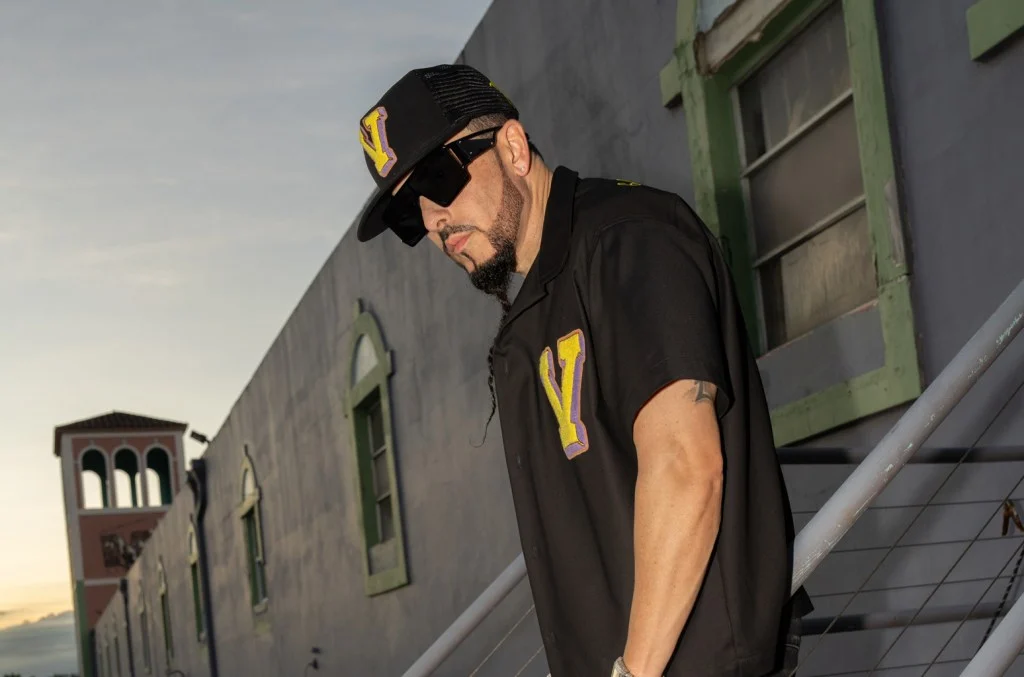
This week, Billboard’s New Music Latin roundup and playlist — curated by Billboard Latin and Billboard Español editors — features fresh new music, including albums by Yandel (Sinfónico) and Eladio Carrión (DON KBRN). Plus, rising salsa stars Luis Figueroa and Christian Alicea team up for “Si Llamas,” marking their first collaboration and a nod to their commitment to keep fueling salsa’s newfound global appeal. […]

Spring has sprung, and today’s biggest stars are keeping the weather warm with hot new releases. Kicking things off is Miley Cyrus, who is continuing the roll-out of her upcoming Something Beautiful with her new single, “End of the World.” Cyrus teased the upcoming project in a trailer that described it as “one of a kind pop […]

The Black Keys’ “The Night Before” becomes their ninth No. 1 on Billboard’s Adult Alternative Airplay chart, lifting two spots to the top of the survey dated April 12.
Explore
Explore
See latest videos, charts and news
See latest videos, charts and news
The duo earns its first leader since “Beautiful People (Stay High)” reigned for five weeks in early 2024. In between, “On the Game” reached No. 5 last July. The Black Keys first topped Adult Alternative Airplay in 2011 with “Lonely Boy,” a year after making their initial appearance with “Tighten Up” (No. 12 peak).
With nine No. 1s, The Black Keys move into sole possession of the fifth-most leaders since Adult Alternative Airplay was first published in January 1996.
Trending on Billboard
Most No. 1s, Adult Alternative Airplay:14, U213, Coldplay11, Dave Matthews Band (including two solo by Dave Matthews)11, Jack Johnson9, The Black Keys8, Death Cab for Cutie8, The Lumineers8, John Mayer
Concurrently, “The Night Before” rises 7-5 on Alternative Airplay and is bubbling under Mainstream Rock Airplay. On the all-rock-format, audience-based Rock & Alternative Airplay chart, it bullets at its No. 8 high with 3.1 million audience impressions (up 2%) in the week ending April 3, according to Luminate.
“The Night Before” is the lead single from No Rain, No Flowers, The Black Keys’ 13th studio album. Though it’s expected in 2025, the set doesn’t yet have a release date. It follows 2024’s Ohio Players, which debuted at No. 5 on the Top Alternative Albums chart in April 2024 and has earned 85,000 equivalent album units to date.
All Billboard charts dated April 12 will update Tuesday, April 8, on Billboard.com.

Kevin Gates and Brittany Renner appear to be romantically involved after the pair shared a sweet moment together on Instagram. On Thursday (April 3), Gates posted a clip from his Instagram Live onto his page, where he was seen riding shotgun and catching a vibe to Soul For Real’s “Candy Rain.” He then panned the […]