State Champ Radio
 Music News
Page: 187
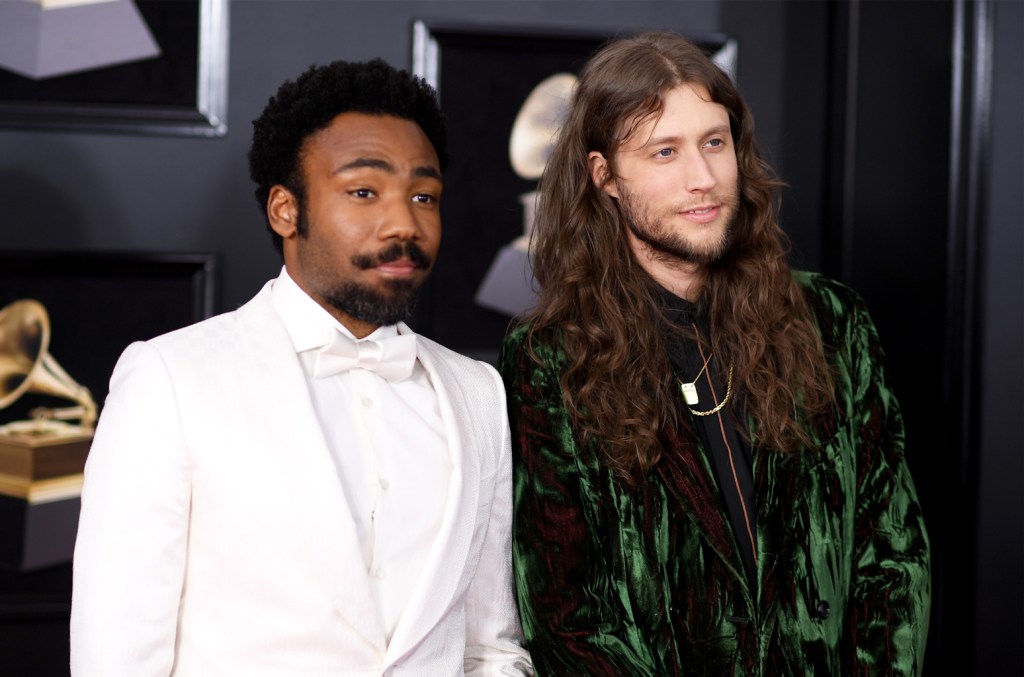
Ludwig Göransson is still getting used to Donald Glover retiring his Childish Gambino moniker. The movie score composer and music producer stopped by Apple Music to have a chat with Zane Lowe recently and talked about his work with Childish Gambino. “It’s been a huge part of my life — Donald and Childish Gambino — […]
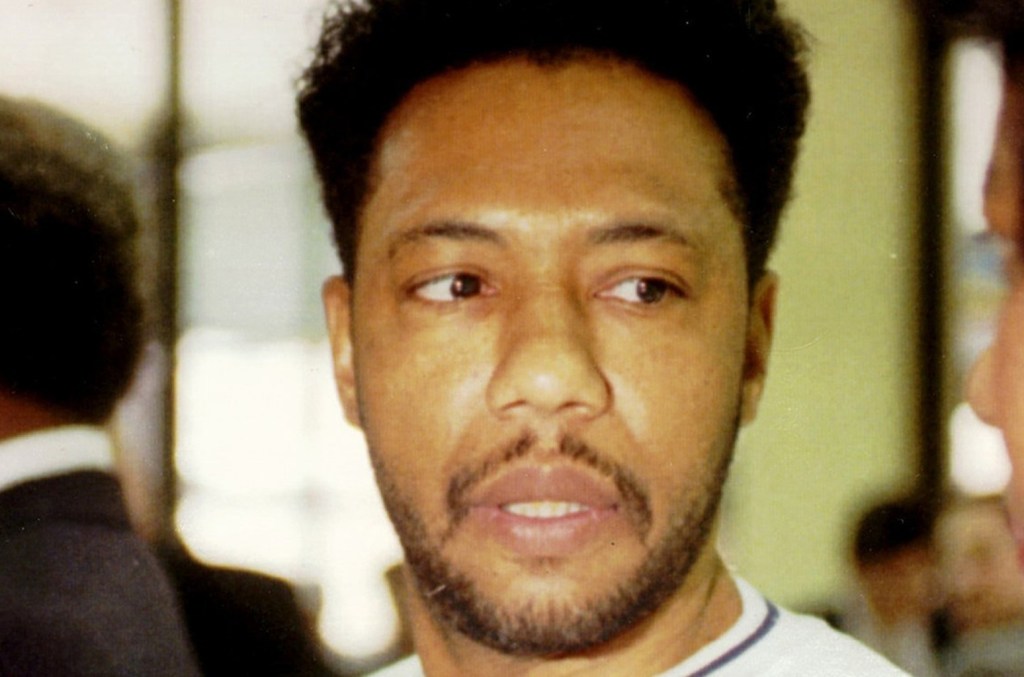
President Donald Trump has commuted the sentence of Larry Hoover, as the former Chicago gang leader was set to spend the rest of his years behind bars in Colorado. Trump has dished out quite a few pardons in recent weeks while in the Oval Office, and he commuted the multiple life sentences of the Gangster […]

Dove Cameron is remembering Cameron Boyce on what would’ve been his 26th birthday, posting an emotional tribute to her late Descendants co-star Wednesday (May 28).
Six years since the Jessie actor died suddenly after suffering an epileptic seizure in his sleep, the “Boyfriend” singer shared a carousel of photos with her friend and wrote on Instagram, “i still feel you all the time.”
“catch you in the next life,” she continued. “happy birthday. i love you.”
Trending on Billboard
In one of the photos, a smiling Boyce wraps his arms around the Liv & Maddie alum while smiling wide; in another, they sit on the floor and pose with two other Descendants stars, Sofia Carson and Booboo Stewart. Cameron also shared a snap of the gun and rose tattoo on her wrist that she got in the late actor’s honor.
Carson also paid tribute to Boyce on Wednesday, sharing a black-and-white photo and writing on Instagram, “Keep dancing in heaven, my Cam. Earth could never be the same without you.”
Boyce was just 20 years old when he died in 2019, leaving the Disney community — and countless fans who watched him on projects such as Jessie and Bunk’d — in shock. At the time, a spokesperson confirmed that his seizure had been the “result of an ongoing medical condition for which he was being treated.”
Cameron and Boyce starred together in three Descendants movies between 2015 and 2019. The soundtrack for the first film debuted at No. 1 on the Billboard 200.
The Schmigadoon! actress has since pursued a solo music career, dropping her debut single “Bloodshot” in 2019. Her viral hit “Boyfriend” peaked at No. 16 on the Billboard Hot 100 in 2023, and she is now fresh off the release of new singles “Too Much” and “French Girls,” the latter of which dropped earlier in May.
“There’s a huge intersection between pain, heartbreak, joy and camp and levity. And that’s where we found ourselves in ‘French Girls,’” Cameron recently told Billboard of the newer song. “The melodrama of being a muse for a sculptor or a painter. There’s something so painfully romantic and also constricting about that. In ‘French Girls,’ the thing that I was really obsessed with was this self-sacrificing mania about being a muse that is not healthy.”
Suge Knight believes Diddy should be a free man at the conclusion of his sex trafficking and racketeering trial.
While Knight and Diddy were at opposite ends of the contentious West Coast/East Coast rap beef in the ’90s, the Death Row founder joined NewsNation’s Cuomo on Tuesday (May 27), where he detailed why he thinks that Diddy shouldn’t be found guilty.
Knight said he believes Combs had many accomplices who should be in handcuffs with him, while Diddy was the only Bad Boy Records executive to take the fall. “I say this all the time, Puffy and I are not friends. But Puffy should definitely walk,” he explained. “There were other executives involved in Puffy’s life and for Puffy to be the only guy that gets on the stand is a sad day for hip-hop.”
Explore
See latest videos, charts and news
See latest videos, charts and news
Host Chris Cuomo asked Knight about his relationship with Diddy’s former assistant, Capricorn Clark, who testified against Combs and claimed Diddy kidnapped her. Knight alleged that Bad Boy’s Reggie Wright Jr. forced Clark to have sex with multiple people.
Trending on Billboard
“I don’t think this is a case where Puffy should be going to prison … How could every person who’s involved with Puffy not on the stand except for Puffy? At some point, the law gotta be blind,” Knight continued. “We just can’t jump to conclusions and say, ‘throw Puffy under the bus.’ Like I said, him and I are not friends, but Puffy definitely should walk. What’s right is right, wrong is wrong.”
Even if Diddy ends up receiving a lengthy prison sentence, Knight believes that President Donald Trump will end up giving the Bad Boy mogul a pardon.
“I don’t think he has nothing to worry about, and I don’t think he’s worried because he’s gonna be federal, and if he gets convicted, Trump’s gonna pardon him,” he said to Cuomo. “I feel that Puffy is going to be alright and have a fair shot at it. He’s not a dummy. I’m quite sure somebody is going to talk to those jurors and convince one or two of them.”
Diddy’s sex trafficking and racketeering trial is approaching day 10 and is expected to last into July. He faces life in prison if convicted on all charges.
Watch the full clip featuring Suge Knight on Cuomo below:
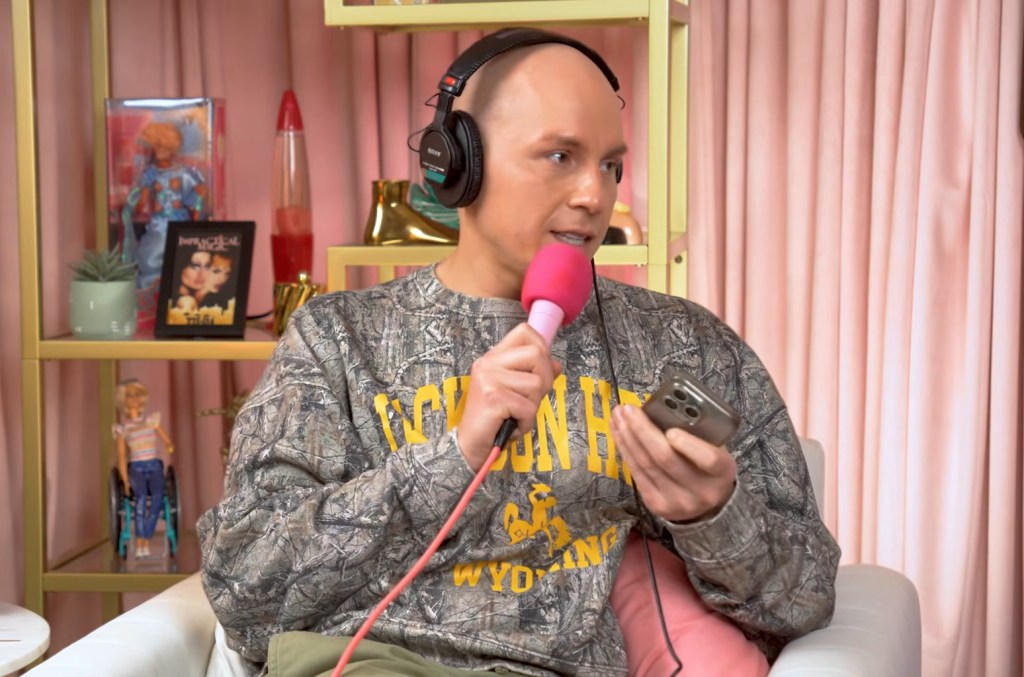
As Beyoncé fans gear up for her latest dates on the Cowboy Carter tour, Drag Race superstar Trixie Mattel is sharing her own glowing review of the pop superstar’s latest trek. On the latest episode of her podcast The Bald and the Beautiful with fellow Drag Race star Katya on Tuesday, Mattel shared her unabashed […]
Lindsay Lohan is reprising one of her most iconic roles, but according to her, stepping back into one facet of the character was a little, well, freaky.
In a conversation with Freakier Friday costar Chloe Fineman for an Elle cover story published Tuesday (May 27), the actress opened up about what it was like to sing again while playing Anna Coleman for the second time in Freaky Friday‘s upcoming sequel. Also starring Jamie Lee Curtis, the original 2003 flick found Lohan’s character — a teenage rebel who fronts a rock band called Pink Slip — magically switching bodies with her mother.
Explore
Explore
See latest videos, charts and news
See latest videos, charts and news
“It was good,” Lohan began. “Well, it was kind of nerve-racking at first, because I’m not singing as me. When I was doing [Freaky Friday], I was also recording an album, so it was part of my life at the time. In this movie, I was singing it as Anna, whereas before felt more like Lindsay singing.”
Trending on Billboard
The Parent Trap star also confirmed that everyone in the original Pink Slip lineup returned for the sequel. “The whole band came back,” she told the Saturday Night Live comedian. “And it’s so funny, because Christina Vidal [who plays Maddie] had just had a baby, and we were like, ‘How weird is this? Are we still cool?’”
The interview comes just a couple of months ahead of the premiere of Freakier Friday, which hits theaters on Aug. 8. It’ll mark the latest project in Lohan’s onscreen renaissance that has taken place over the past few years following a long hiatus, during which the actress started a family. In 2022, she married finance executive Bader Shammas, and the pair welcomed a son, Luai, the following year.
According to Lohan, her little boy doesn’t fully understand her job as an actress yet — although he did recognize her on screen when she watched the original Freaky Friday to study her own guitar playing. “In my trailer, one day I was watching the original guitar scene and practicing movements,” she recalled to Fineman. “And he was there and he was like, ‘Mama,’ pointing at the screen.”
See Lohan on the cover of Elle below.

Japan’s FUJI ROCK FESTIVAL ’25 will return to the Naeba Ski Resort in Yuzawa-cho, Niigata Prefecture again this summer, with dates set for Friday, July 25 through Sunday, July 27.
Explore
See latest videos, charts and news
See latest videos, charts and news
Fred again.. will headline Day 1, and Vulfpeck Day 2. These festival slots will be the first time either act performs in Japan, and for the latter, one of the three shows announced for this year. On the final day, Vampire Weekend returns to Fuji Rock for the first time in three years as headliner.
Now in its 26th year in Naeba, FUJI ROCK FESTIVAL takes place in an expanse of land 4 km long dotted with stages of various sizes, featuring over 200 artists of various genres from around the world each year. The scheduled acts from Japan this year include Ichiko Aoba, Answer to Remember, BRAHMAN, Creepy Nuts, DYGL, EGO-WRAPPIN’, Hitsujibungaku, kanekoayano, Kimishima Ohzora Gasso Keitai (“ensemble form”), jo0ji, MIYAVI, Otoboke Beaver, RADWIMPS, Shintaro Sakamoto, Suchmos, Vaundy, Tatsuro Yamashita, and more.
Trending on Billboard
From outside of Japan, Balming Tiger, Barry Can’t Swim, CA7RIEL & Paco Amoroso, Confidence Man, Ezra Collective, Faye Webster, Fermin Muguruza, Four Tet, James Blake, Haim, HYUKOH, Mei Semones, Mdou Moctar, Night Tempo, OK Go, Perfume Genius, Royel Otis, Sunset Rollercoaster, The Hives, Tycho and more are set to perform. As in previous years, the lineup ranges from veterans to newcomers, making this a festival of music that transcends borders and genres.
The recently announced fifth lineup also includes new additions Joy Anonymous, Us, Ginger Root, Jane Remover, YHWH Nailgun, and Little Sims. ROUTE 17 Rock’n’Roll ORCHESTRA, a special band at FUJI ROCK that features unique guests each year, will include Kumiko Yamashita, Hiroto Komoto, Gen Kugiya, Us, and Liam Ó Maonlaí this year.
Tickets are 59,000 yen (approx. 413 USD) for a three-day ticket and 25,000 yen for a one-day ticket (approx. 175 USD). Friday night tickets, good from 6:00 p.m. on Friday until 5:00 a.m. the next morning, are 16,000 yen (approx. 112 USD), and Under 22 one-day tickets are available for 18,000 yen (approx. 126 USD). Fans from outside Japan can purchase tickets through e+ (e plus), FRF OFFICIAL SHOP GAN-BAN, Ticket PIA, tixCraft, Ticketmaster Singapore, ticketflap, KKTIX, and interpark. Additional informationa can be found on the festival’s official website (https://en.fujirockfestival.com/ ).
An admission-free event is also scheduled for July 24, on the eve of the festival. There will be a bon dance event, a raffle, a fireworks display, a competitive eating contest, and a special gig at the RED MARQUEE stage. Check out the after movie from 2024 below.
FUJI ROCK FESTIVAL
Billboard Japan

It’s a hot Saturday afternoon during the first weekend at Coachella 2025, and backstage Mau P arrives 30 minutes behind schedule after getting stuck in festival traffic. He’s got the de facto DJ entourage — agent, manager, content team — in tow, and after they locate his trailer in the artist compound, the Dutch producer sits on a couch outside it and smokes a cigarette, an ostensible moment of repose amid the chaos.
This is Mau’s second time playing Coachella. Last year, he was added to the bill a month before the festival as part of the lineup for the new Quasar stage, where he played b2b with Diplo. You can read the tea leaves and see that his star has only since risen, as Mau is back this year with his name in the most hallowed of set times: the Saturday 10-11 p.m. peak time party slot on the Sahara stage.
The meaning isn’t lost on the 28-year-producer, who is tall, has blessed bone structure and is wearing a t-shirt printed with an image of his dad, the late Dutch saxophone player Gerbrand Westveen, who is shown in his own moment of musical brilliance while playing two saxophones simultaneously. This image will reappear later tonight when Mau ends his set by flashing it on Sahara’s giant video screens above the words “In Honour of Gerbrand Westveen.”
Trending on Billboard
One has to believe the elder Westveen would be proud of his son, and certainly Mau is approaching it all with gravitas. “I feel like I have this responsibility,” he says while sitting at the table in his dimly lit trailer, a space crowded with stacks of Coachella branded water bottles, “because I love everyone that listens to my music so much, and they put me up front, so I better live up to it.”
Still, if you’ve not yet heard of Mau P, you are forgiven. While he hasn’t quite reached the mainstream ubiquity of peers like John Summit or Dom Dolla, the producer has been making chess moves through the dance scene over the past three years, and it’s hard to overstate how impressive the producer’s growing portfolio is and how influential he’s become amongst fellow underground artists and fans. Since playing b2b2b2b with Solomun, Four Tet and Chloé Caillet at Ultra 2025, he’s even been dubbed by dance fans as one of “The Avengers.”
But if he’s sweating the pressure, he hides it well, answering questions and making casual conversation (“Do you have an accent?” he asks me. “How old are you?”) like he has all the time in the world. Meanwhile, five hours from now, he’ll play for a sea of people in an area just slightly smaller than a football field. There’s no exact count of how many people fit inside Sahara, but to the naked eye, there appears to be roughly 20,000 people here to see him, with the crowd spilling out of the tent and extending up the adjacent hillside viewing area.
Onstage, Mau’s hour-long set includes his string of hits, which along with increasingly higher profile shows like this one, cement his status as one of the moment’s essential next-gen dance producers. The crowd bumps and shimmies, altogether bucking the stereotype of stiff Coachella crowds. Mau also bumps and twirls (the cameras hone in on him while the screens flash with the words “Mau P is dancing”) as he builds a set from his own music along with his remixes of Justin Timberlake’s “SexyBack” and his show-closing edit of Radiohead’s “Everything in Its Right Place.”
Predictably, everyone goes especially hard for his 2022 breakout hit “Drugs From Amsterdam,” with the screens in tandem flashing a message at once gracious and true: “THIS IS THE SONG THAT CHANGED MY LIFE FOREVER. THANK YOU FROM THE BOTTOM OF MY HEART.”
Mau P plays weekend one of Coachella 2025.
Deanie Chen
“Drugs” indeed marked a turning point for the artist born Maurits Jan Westveen. He’d been making big room house as Maurice West since he was a teenager and in that era was just “really wanting to do what other people were already doing, which is sort of the safe option, but it worked for me for like, six years.”
Then he made the darker, woozier, tech house track, and it became a global club hit that’s aggregated 259.2 million official on-demand global streams and 39.8 million official on-demand U.S. streams, according to Luminate. He changed his artist name to Mau P (a play off his “Maupie” nickname) and everything he’s subsequently done has been “an experiment of, ‘Okay, now I have the audience because of ‘Drugs From Amsterdam, and I have the freedom to do whatever I want to do, so might as well do some crazy s–t.’”
Such crazy s–t has included “Merther,” which samples Jamaican legend Ini Kamoze and came out last year on revered U.K. house label Defected. The track demonstrates his ability to Frankenstein together styles that might not intuitively work, with the song made, he says, of “’90s rave breakbeats, combined with tech house, combined with bass that could be like, Metro Boomin, or rap,” he explains. “Then, in the structure, it just goes into banging breakbeats instead of just the house beat that was going on.” He’s also worked with hip-hop royalty including Gunna (on 2024’s “Receipts” with Diplo) and Mike Dean, who worked on 2024’s “On Again,” which was also the first song Mau put his own vocals on.
Meanwhile his official remix of Tame Impala‘s 2015 song “The Less I Know the Better” came out on Nervous Records in February, and is currently in the top spot on Dance Mix Show Airplay, giving Mau his first Billboard No. 1. Last week he released two driving singles on the Diynamic Imprint from Solomun, who Mau says “is like a dad to me. We talk for hours about life and our careers and how everything went for him, and I think he sees himself in me and that’s why he’s so protective and has always taken me in.”
Solomun’s advice for the young dance Jedi? Never change your style for anyone. In following this wisdom, Mau says his work is “combining multiple sounds and genres that people don’t necessarily think of would work. I listen to a lot of older music. My parents brought me up listening to jazz, and soul and Chaka Khan and Sade. My dad played the saxophone, so all of my knowledge of older music combines with how I see modern music and dance music.”
Releasing music across roughly ten labels has also been strategic. “I definitely chose [each label] because they all have their own community,” Mau says. “I’ve been around house and techno for so long, but I never really had a connection with [some of the] communities, so I was just trying to get everyone in and show them like, ‘Hey, I’m here.’” He’s also preparing to announce the launch of his own label.
Altogether, his approach has earned his catalog 463.6 million official on-demand global streams (through May 22), along with increasingly bigger shows that include upcoming festival bookings like Lollapalooza, Miami’s III Points, San Francisco’s Portola, his Pacha Ibiza residency and a host of European events. In November, he’ll play Colorado’s Red Rocks — a rite of passage for rising dance artists — and yesterday (May 27) he announced a headlining show at the Los Angeles State Historic Park, a venue reserved for only the biggest name DJs. It’s all a quantum leap from 2023, when Mau was first touring the U.S., playing 300-capacity clubs.
The reason for his success? His agent, CAA’s Roger Semaan, attributes the rise to Mau arriving at a moment when house was reaching new levels of popularity in the U.S., and him making music that “wasn’t copying anyone… The way he presents himself on stage and the way he controls the room is truly like no other. He is someone that loves the art of deejaying and knows his library so well that it allows him to stand out.”
Mau agrees he’s “exploded faster and bigger” in the U.S. than in Europe, saying that in his homeland, “you have to kind of win them over a bit more, and it takes a while.” As such, the States “sort of feel like another planet that I go to, and a lot of people recognize me in the streets. Then when I go back to Amsterdam, I can go grocery shopping and it’s not a problem.”
Still, DJ stardom ain’t easy. He says the hardest part is “navigating mentally, because this s–t is not normal.” He’s humble enough to say the fame he’s experienced is “a little breadcrumb of what Justin Bieber has done in his life,” and says he feels for Martin Garrix — who had a breakout hit when he was 17 and has subsequently grown up in the industry. While he’s grateful his career blew up after “my brain was fully developed,” navigating the demands “is incredibly hard… I try to be nice to everyone.”
Certainly he’s very nice — warm, funny, conversational and generous with his time. He’s also found comfort in keeping his inner circle small. “I never liked that saying, because it sounds so negative… I work with the people I know well.” To wit, he’s known his manager since they were both 16 and has also known his photographer since the days “we used to just tour with the two of us and sleep in the same bed to save money.” The rest of his team has been with him since the start of the Mau P project.
He’ll be surrounded by these trusted allies as he crosses progressively large shows off the list through the end of the year. Beyond that, he’d love to make an album — although he says the idea “is scary,” given that he’s never released anything longer than two songs.
And right now, he just doesn’t seem to have time. He’s got to get to the stage.

Smokey Robinson has filed a countersuit against four longtime housekeepers who accused him of rape earlier this month, claiming the allegations were part of an “extortionate scheme” by the women and their attorneys.
The new cross-complaint, filed in Los Angeles court Wednesday (May 28), came three weeks after the unnamed housekeepers filed a $50 million civil lawsuit over allegations that the legendary Motown singer repeatedly raped them over nearly two decades in his employ.
In filing the countersuit, defense attorneys for Robinson went on offense — accusing the four women and their attorneys (John W. Harris and Herbert Hayden) of defamation, invasion of privacy, civil conspiracy and even elder abuse over the “fabricated” allegations.
“The depths of plaintiffs’ avarice and greed knows no bounds,” Robinson’s attorney Christopher Frost writes, according to a copy of the submitted complaint obtained by Billboard. “During the very time that the Robinsons were being extraordinarily generous with plaintiffs, plaintiffs were concocting an extortionate plan to take everything from the Robinsons … and wrongfully destroy the Robinsons’ well-built reputations.”
Allegations made during court cases, such as those against Robinson, are typically shielded from defamation lawsuits by the First Amendment. But Robinson’s attorneys say the accusers and their lawyers stepped outside those protections by holding a press conference in which they “paraded themselves in front of the media” and created a “media whirlwind.”
“While the law protects plaintiffs’ ability to concoct whatever fiction they may wish to create in a legal pleading … it does not allow plaintiffs to make gratuitous and slanderous allegations in media circus-type press conferences,” Frost wrote in the cross-complaint.
Attorneys for the accusers did not immediately return a request for comment on Wednesday. Frost confirmed that the cross-complaint was filed with the court on Wednesday but declined to comment otherwise.
Robinson was sued on May 6, accused of forcing the housekeepers to have oral and vaginal sex in his Los Angeles-area bedroom dozens of times between 2007 and 2024. The singer’s wife, Frances Robinson, was also named as a defendant over claims that she didn’t do enough to stop the abuse, despite knowing that he had a history of sexual misconduct.
In addition to the sexual abuse allegations, the lawsuit also claimed that the Robinsons paid their employees below minimum wage, and that Frances Robinson created a hostile work environment replete with screaming and “racially-charged epithets.” The accusers also filed a police report, leading the Los Angeles County Sheriff’s Department to open a criminal investigation.
In Wednesday’s countersuit, the Robinsons’ attorneys told a very different story. They said the housekeepers had “stayed with the Robinsons year after year” because the couple had treated them as “extended family,” including financially helping them and celebrating holidays together. The complaint quoted alleged text messages in which the accusers wished Robinson a happy birthday and told him “love you.”
“The Robinsons did not abuse, harm, or take advantage of plaintiffs,” Frost wrote. “They treated plaintiffs with the utmost kindness and generosity.”
According to Wednesday’s new filing, the housekeepers and their lawyers made “pre-litigation demands for $100 million or more” before filing their case. When that failed to work, the new filing says the accusers went public with the allegations as loudly as they could.
“The resulting media whirlwind was swift and severe, being picked up by virtually every major media outlet worldwide, and the harm to the Robinsons’ reputation [is] palpable,” Frost wrote. “The Robinsons are afraid to open the newspaper, read the internet, or even go out in public for fear of what they may hear or see next, no matter how fabricated.”
The filing focused on statements by Harris, the attorney, at a May 6 press conference calling Robinson a “serial and sick rapist” and a “serial assaulter” — statements that Robinson says are fair game for a defamation case: “Plaintiffs may be able to make slanderous statements in a legal pleading (for now), but they are not entitled to do so in gratuitous, self-serving press conferences.”
In addition to defamation and other wrongdoing, the Robinsons say the accusers tried to “hide, conceal, and destroy evidence exposing their illegal scheme,” including by taking Frances Robinson’s phone and deleting text conversations. The filing hinted that the Robinsons would seek additional penalties for such “spoliation” of evidence.
Billboard Japan’s Women in Music initiative launched in 2022 to celebrate artists, producers and executives who have made significant contributions to music and entertainment and inspired other women through their work, following the footsteps of Billboard’s annual Women in Music honors since 2007. This interview series featuring female players in the Japanese entertainment industry is one of the highlights of Japan’s WIM project.
Explore
Explore
See latest videos, charts and news
See latest videos, charts and news
U.S.-based dancer Shiori Murayama spoke with writer Rio Hirai for the latest installment of the series. Murayama started dancing when she was 6 and built her career in the U.S., performing in some of the most prestigious events in today’s entertainment including the Super Bowl halftime show and Coachella. She shared her thoughts on the cultural differences she experienced in the U.S., the challenges she faced as a female dancer, and her dreams for the future.
You started dancing at the age of 6 and moved to the U.S. by yourself after graduating high school. What were some of the differences you felt when you went abroad from Japan?
Trending on Billboard
I was impressed by how friendly and unpretentious everyone was. I started taking classes without knowing much English yet, but my classmates were much more open in sharing praise and telling me what they thought was good, which felt new to me. The atmosphere during classes and even during rehearsals is really relaxed, but when it’s time to run through the routine, they go full out. Obviously I don’t mean to say that dancers in Japan do things halfway, but people here are very focused on the actual performance and put lots of energy in rehearsals.
Would you say that difference in stance is something anyone who has been dancing all their lives in Japan would feel when they go to the U.S.?
Yes. I also feel that there’s less hierarchy in the U.S. I came here on an artist visa in July 2023, so it’s been less than two years. When I got a job and went to the studio, there were some famous dancers that I knew about through the media, but even they would treat me in a friendly manner without making me feel like I was beneath them. There are lots of projects that are short-term, ranging from a week to a month, and even in that short period of time, there’s good teamwork and everyone treats me kindly for the most part. People are just nice.
You’ve performed on some of the most sought-after stages in entertainment, like the Super Bowl halftime show and Coachella. Has it hit you that it’s pretty amazing to have accomplished these feats as a dancer from Japan?
I didn’t really feel it immediately after the performances, but when I received warm messages from everyone and when I watched the videos of my performances, it hit me that I had really done those things.
Are you seeing a trend toward Asians being able to perform on such stages?
I’d say it depends on the artist, but there are many projects that are culturally, racially, and gender mixed these days. Maybe Asian dancers are being hired intentionally because of the current popularity of K-pop in the music industry. I’ve never felt any barriers based on race or gender in the projects I’ve participated in. I suppose there might be instances where an artist goes, “I only want black dancers for this song” or “Only white dancers for this song,” but I feel that the range of activities available to Asian dancers like myself has expanded since I came to the U.S.
Still, it’s true that there are differences in body shape and appearance between Japanese and Americans. When I don’t make the cut, I sometimes wonder, “Maybe I was judged on my appearance?” But there’s a limit to how big I can get by training at the gym, and there’s nothing I can do about the difference in physique I was born with. I try to leverage my strengths that aren’t in that area.
What do you think are your selling points, as you work in your current environment?
I have very fair skin to begin with, which I take in a good way because it makes it easier to recognize me onstage. And I have very long hair at the moment, so I often get complimented on my hair. People also tell me that my dancing is really powerful. Despite having a thin build, people are often surprised by the power I bring to my performances, and I think that’s one of my key strengths.
How do you think being a woman has affected you?
I believe that the female body has its own unique movements and expressiveness. I’m always trying to explore expression by imagining myself dancing to a song, like, “I could make this part more supple,” or “I could make it more feminine, attractive, and sexy.”
When I performed LISA’s song “Elastigirl” at Coachella recently, the choreography expressed the sexiness and strength of women. I wore heels, and tight clothes from rehearsals to be conscious of the shape of my body, paid attention to the angle of my neck, things like that to present myself and give a performance in a way that only a woman can, in my unique way of expression.
In what ways do you feel that dancing in the U.S. suits you better than back home?
My powerful style works better here. In Japan, women are often appreciated for their flexibility, but since my dance is powerful, I can express the many facets of a woman. I feel that I have more opportunities in the U.S. to showcase my powerful moves and stylish choreography with intricate footwork. Also, Japanese people tend to prefer being like everyone else, but I like that there are many opportunities to express my individuality in the U.S.
Have you ever experienced any setbacks or come up against a wall in your long dancing career?
To be honest, I don’t remember any major setbacks, but I did experience some difficulties. After I completed my dance major in college, I was able to work in the U.S. for a year on OPT (Optional Practical Training, an internship-like visa). Until then, I wasn’t allowed to earn money as a student, so although I had connections with choreographers, I couldn’t work. I saw the people around me getting hired and wanted to be like them.
My dream was to switch to an O1 visa, so when I made it to the final round of an audition I participated in, I was elated, thinking, “If I get this job, I might be able to switch visas.” But in the end, a Japanese dancer who was a good friend got the job and I didn’t. Of course I was happy for my friend, but it was still a shock. The same day, I was scheduled to work as an assistant for a workshop, but was told that I didn’t have to come in because their usual assistant was available. It was quite hard when things like that happened simultaneously.
Some people, when they’re young, can be afraid of making mistakes or hesitate to take on challenges because they think they need to become better at it first. What would you say to encourage someone like that?
The other day, my mother said to me, “You won’t succeed unless you take on challenges” and I totally agree with her. If you like (dancing), I’d like you to have fun doing it before anything else. Of course, you’d need to train to improve your skills if you want to make it your career. Dance is such a deep field and taking hip-hop for example, there are many different styles within that genre. Watch different people, be influenced by them, and challenge yourself as much as possible.
A lot of times, things turn out all right when you take that first step even though you’re afraid to. I’d rather you regret doing something than regret not doing it.
What are some challenges you’d like to take on in the future?
For a long time, I’ve wanted to become a dancer who works on a global scale. I want to participate in a world tour and perform in Japan as well. Also, my family has supported me since I started dancing… no, since I was born, so I want to give back to them through the stage.
—This interview by Rio Hiral (SOW SWEET PUBLISHING) first appeared on Billboard Japan