State Champ Radio
 Legal
Page: 23
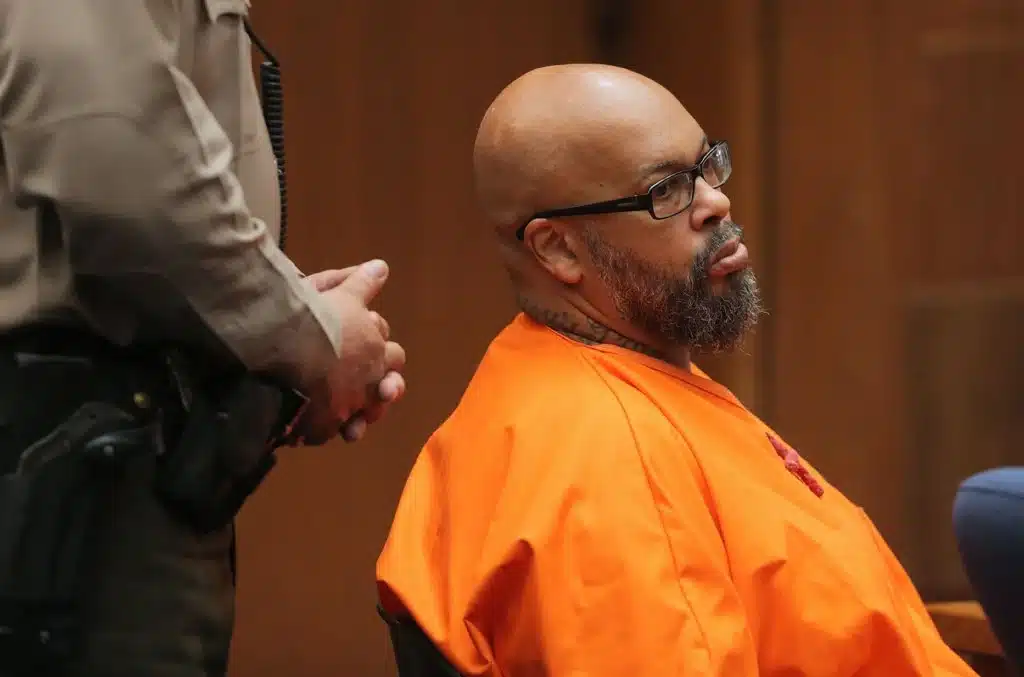
Suge Knight has avoided a retrial in his 2015 wrongful death civil case by reaching a settlement for $1.5 million with the plaintiffs, according to Rolling Stone. The suit was filed by the two daughters and wife of Terry Carter, the Compton entrepreneur whom Knight ran over with a truck in January 2015 in the […]

This is The Legal Beat, a weekly newsletter about music law from Billboard Pro, offering you a one-stop cheat sheet of big new cases, important rulings and all the fun stuff in between.
This week: Mariah Carey wants payback after winning a lawsuit over “All I Want for Christmas is You”; Diddy’s trial judge says jurors can see an infamous surveillance video; 50 Cent sues to stop the release of a movie he stars in; and much more.
THE BIG STORY: Mariah’s Christmas Revenge
To paraphrase a legendary line from HBO’s The Wire: “If you come at the queen, you best not miss.”
Trending on Billboard
A month after the Queen of Christmas defeated a copyright lawsuit over her holiday classic “All I Want for Christmas is You,” Mariah Carey and other defendants in the case are now seeking legal revenge – demanding that the songwriter who filed the action repay the legal bills they spent defending it.
Vince Vance claimed that “All I Want” ripped off his own earlier song of the same name, but a federal judge tossed the case out last month, citing experts who said the songs shared mostly just “commonplace Christmas song clichés.” The judge even said that some of Vance’s filings were so “frivolous” that he’d need to reimburse Carey and others the money the spent beating them.
In a motion earlier this month, Carey and others argued that Vance and his lawyers must hand over a whopping $180,000 to pay for those baseless filings. They said they had been “perfectly justified” in paying high rates to teams of elite lawyers because Vance had been seeking drastic remedies, including $20 million in damages and the “destruction of all copies” of the song.
Vance’s attorneys responded last week, arguing that Carey’s demand was “simply not reasonable” and that his lawsuit, while unsuccessful, had been a legitimate use of the court system. Saying the award should not exceed $70,000 at the very most, they warned that the full fine could bankrupt an “elderly man” who does not have “vast resources.”
“The plaintiff is elder and living off his music catalog and some touring,” the songwriter’s attorneys wrote. “One artist should not push another artist to the brink of a financial collapse.”
Will the judge aim to deter future bad copyright cases by punishing Vance? Or be swayed by his pleas for mercy? Stay tuned at Billboard in the months ahead to find out.
Other top stories this week…
DIDDY TRIAL LOOMS – With jury selection set to begin next week, a federal judge issued a key pre-trial ruling that an infamous 2016 surveillance video of Sean “Diddy” Combs assaulting his former girlfriend Cassie Ventura in the hallway of a Los Angeles hotel can be played for jurors at his sex trafficking trial. Diddy’s attorneys had argued the clip has been deceptively edited and would “unfairly confuse and mislead the jury”; prosecutors blasted that argument as a “desperate” attempt by Combs to avoid “crushing” evidence of his crimes.
JAY-Z LIBEL SUIT – The star’s unnamed rape accuser and her attorney Tony Buzbee asked a federal judge to dismiss the rapper’s defamation lawsuit against them, arguing they cannot be sued over claims they made as part of a court case. They cited the “fair report privilege” – a legal doctrine that largely immunizes legal proceedings from libel liability. And they said that a headline-grabbing NBC News interview, in which she echoed her claims about Jay-Z, was protected under the same legal logic.
MOVIE BATTLE – 50 Cent filed a lawsuit aimed at blocking the release of an upcoming horror movie called SkillHouse in which he plays the starring role, claiming he never signed a final agreement and had not been paid. The rapper (Curtis Jackson) says he filmed his scenes because he trusted that a deal would eventually be reached, but it never was: “Nevertheless, defendants have billed Jackson as the star and producer of the film [and] have shamelessly and deceptively marketed the film as a ’50 Cent Movie’ and ‘produced by 50 Cent,’ when it is nothing of the sort.”
SHADY SETTLEMENT – Eminem’s publisher reached a settlement to end a copyright lawsuit it filed against a Ford dealership near his hometown of Detroit – a case that claimed the company used the rapper’s “Lose Yourself” in TikTok videos that warned viewers they would “only get one shot” to buy a special edition truck. Eminem doesn’t own Eight Mile Style and was not involved in the lawsuit.
COOKIE INFRINGEMENT – Warner Music Group filed a copyright lawsuit against cookie chain Crumbl, claiming the Utah-based company used more than 159 songs by artists such as Lizzo, Mariah Carey, Ariana Grande and Beyoncé in TikTok and Instagram videos without permission. The case against Crumbl is the latest in a rash of lawsuits accusing commercial brands of using easily-available music in social media ads without the necessary synch licenses – cases that have targeted Marriott, NBA teams, Chili’s, and the University of Southern California.
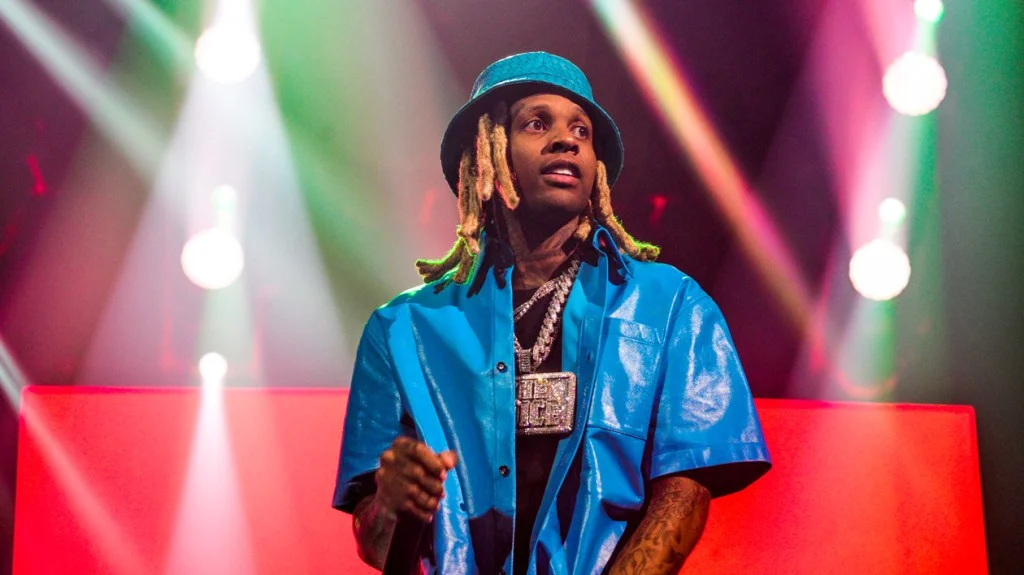
Lil Durk remains behind bars in California, counting down the days until his trial is set to begin in October for his murder-for-hire case.
Durk’s family posted a clip to Instagram on Tuesday (April 29) giving fans an update on the Chicago rapper’s legal situation, and they claimed that the prosecution is building a case that uses his own lyrics against him.
“The recent developments in Durk’s legal case have brought a harsh truth to light: the government presented false evidence to a grand jury to indict him,” a statement from Durk’s team in the video reads. “This isn’t justice. That’s a violation of the very system that’s supposed to protect all of us.”
The clip goes on to explain that Durk has always been a vivid storyteller with his music, and his creative art shouldn’t be held against him in a court of law.
Trending on Billboard
“Durk has always used music to tell stories, to express pain to heal — and yet those same lyrics are now being used against him. We refuse to stay silent as Black artists continue to be criminalized for their creativity. Rap is art,” the video continued before calling for public support. “As a family, we are asking the public, the fans and the culture to stand with us. Stand for truth. Stand for fairness. Stand for The Voice.”
Lil Durk’s legal team continues to fight for his freedom. Earlier in April, Durk’s attorneys called for the case’s dismissal and claimed that “false evidence” was given to a grand jury.
Prosecutors are attempting to tie lyrics from Durk and Babyface Ray’s “Wonderful Wayne & Jackie Boy” to the murder of Lul Pab. While the track was released in December 2022, which would be a few months after Pab’s death, but Durk’s team says those lyrics were penned long before the shooting in January 2022.
“Told me they got an addy (go, go)/ Got location (go, go)/ Green light (go, go, go, go, go)/ Look on the news and see your son/ You screaming ‘No, no,” he raps on the track in question.
“The government told the grand jury that Mr. Banks, through specific lyrics in his music, celebrated and profited from a revenge murder that he had ordered,” Durk’s attorney, Drew Findling, said in the filing. “That claim is demonstrably false. Unless the government is prosecuting Banks on a theory of extra-sensory prescience, the lyrics could not have soundly informed the grand jury’s finding of probable cause.”
Lil Durk was arrested in Florida in October on a murder-for-hire charge hours after a few of his Only the Family associates were also indicted.
Prosecutors believe Durk plotted to have Quando Rondo killed as retaliation for the death of his friend King Von, who was murdered by Rondo’s associates in Atlanta in 2020, but the 2022 Los Angeles shooting ended up leaving Rondo’s cousin Lul Pab dead.
With Durk behind bars awaiting trial, the rapper’s team pieced together his Deep Thoughts album, which arrived in March and debuted at No. 3 on the Billboard 200 with 64,000 album-equivalent units earned.
See his family’s statement below:

Prosecutors are firing back at efforts by Sean “Diddy” Combs to bar an infamous 2016 surveillance video from his upcoming sex trafficking trial, calling it a “desperate” attempt to avoid “crushing” evidence.
With his trial looming next month, Diddy’s attorneys argued last week that the clip — showing him assaulting his former girlfriend Cassie Ventura in the hallway of a Los Angeles hotel — has been deceptively edited and would “unfairly confuse and mislead the jury.”
But in a response filing Friday, prosecutors say those arguments are “overblown” and are merely a pretext to prevent jurors from seeing “some of the most damning evidence of his sex trafficking.”
“The defendant has been overwhelmingly concerned with the existence of the video surveillance since the assault occurred and has taken great measures to ensure it was not released,” prosecutors write. “Now facing trial, the defendant attempts to keep this devastating proof from the jury. His grasping arguments to preclude this crushing evidence should be quickly dismissed.”
Combs was indicted in September, charged with running a sprawling criminal operation that aimed to “fulfill his sexual desires.” The case centers on elaborate “freak off” parties in which Combs and others would allegedly ply victims with drugs and then coerce them into having sex, as well as on alleged acts of violence to keep victims silent.
Jury selection is currently set to start on May 5, with opening statements scheduled for May 12. If convicted on all of the charges, which include sex trafficking and racketeering, Combs faces a potential life prison sentence.
The Cassie video, which aired on CNN in May, showed him attacking her at the Intercontinental Hotel in March 2016. The clip drew far more public attention to the accusations against the star — who was then only facing civil lawsuits — and prompted an apology from Combs shortly after it aired.
“My behavior on that video is inexcusable,” Combs said at the time. “I take full responsibility for my actions in that video. I was disgusted then when I did it. I’m disgusted now. I went and I sought out professional help. I got into going to therapy, going to rehab. I had to ask God for his mercy and grace. I’m so sorry.”
In the lead up to the trial, Combs’ lawyers have repeatedly targeted the Cassie tape, accusing prosecutors of unfairly leaking it and alleging that CNN had unfairly edited it. Last week, they formally moved to ban it from the trial, calling it “inaccurate” and “unreliable” because of edits that were “specifically designed to inflame the passions” of viewers.
But in Friday’s response, the feds said those issues were quibbles that could easily be fixed at trial, not valid reasons to withhold the tape from jurors entirely. They pointed out that Combs himself had apologized over the clip and had not disputed its content; and they said that any problems with finding the original footage were caused by Diddy’s own efforts to destroy it.
“It is by the defendant’s own hand that the original version of this damning footage no longer exists: it was deleted and given to the defendant as part of a cover-up orchestrated by the defendant and his co-conspirators,” prosecutors write. “The Court must not reward the defendant for his actions by precluding the video that remains available despite the defendant’s obstructive efforts.”
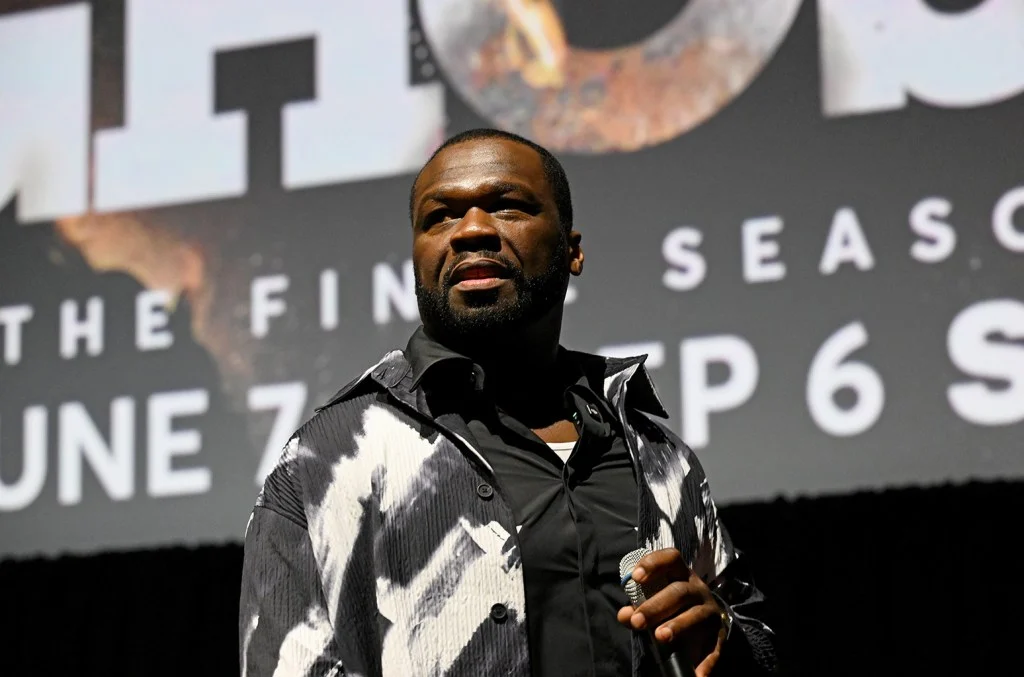
50 Cent has filed a lawsuit aimed at blocking the release of an upcoming horror movie in which he plays the starring role, claiming he never signed a final agreement and has not been paid.
In a complaint filed Friday against producer Ryan Kavanaugh and others, the rapper (Curtis Jackson) says he filmed the entirety of SkillHouse because he trusted that he would eventually reach a deal covering his compensation for the movie.
“That trust was misplaced. No final agreement was ever signed,” 50’s lawyers write. “Nevertheless, defendants have billed Jackson as the star and producer of the film [and] have shamelessly and deceptively marketed the film as a ‘50 Cent Movie’ and ‘produced by 50 Cent,’ when it is nothing of the sort.”
Trending on Billboard
Despite being listed as a producer, 50 says he was given “no creative input into the film” – an arrangement he says he “never would have agreed to” because it might harm his “carefully curated and award-winning reputation as a film and television producer.” Adding “insult to injury,” the rapper’s attorneys say the producers “have not paid Jackson a dime” to date.
“Despite plaintiffs’ repeated objections and demands to cease and desist, defendants continue to infringe and misappropriate plaintiffs’ intellectual property rights and intend to release the film in the coming weeks (if not days),” 50’s attorneys write. “Should the film be released publicly, Jackson faces irreparable harm to his valuable brand and reputation.”
The lawsuit isn’t unexpected. Last week, the rapper warned on Instagram: “They can’t release this MOVIE SKILL HOUSE without my signature which they do not have. What kinda business are they doing? I’d hate to have to demonstrate.” In another post, he later added: “This guy Ryan Kavanaugh is doing everything in his power to make me kill this movie. This one is going in the trash can.”
In Thursday’s complaint, 50 says he only draft term sheets were exchanged, and that he believed a full contract would eventually be negotiated and signed. In order to “avoid unnecessary delay and based on a mistaken good-faith belief in Kavanaugh’s promises and reputation,” he says he filmed his scenes without that final paperwork signed.
Without such a deal, his lawyers say that releasing the movie would violate his intellectual property rights, including his trademarks and his likeness rights. And they say the producers are already infringing those rights by using his name and image to promote the movie and Kavanaugh’s GenTV streaming service.
“Defendants have made Jackson the centerpiece of their promotional and marketing efforts for the Film,” the star’s lawyers write. “Despite having raised concerns months ago, Jackson’s name, image, and trademarks still feature prominently across the GenTV platform.”
Kavanaugh did not immediately return a request for comment on Friday.

A songwriter who unsuccessfully sued Mariah Carey over “All I Want for Christmas is You” is pleading with a judge to reject demands that he repay her six-figure legal bill, warning it would push an “elderly man” to “the brink of a financial collapse.”
After beating Vince Vance’s copyright lawsuit over her holiday classic, Carey, Sony Music and other defendants told the judge earlier this month that they had paid nearly $186,000 to a team of lawyers to defeat “frivolous” motions advanced by Vance’s attorneys.
But in a response filing on Monday, Vance’s lawyers said that such a award was “simply not reasonable” and completely out of proportion for the amount of litigation at issue – and that it could bankrupt an an “elderly man now without vast resources.”
Trending on Billboard
“The plaintiff is elder and living off his music catalog and some touring,” the songwriter’s attorneys say. “One artist should not push another artist to the brink of a financial collapse.”
Vance (real name Andy Stone) first sued Carey in 2022, claiming “All I Want” infringed the copyrights to a 1989 song of the exact same name by his Vince Vance and the Valiants. He said his track had received “extensive airplay” during the 1993 holiday season — a year before Carey released her now-better-known hit.
The case was a big deal because Carey’s song is big business. The 1994 hit, which became even more popular after it appeared in the 2003 holiday rom-com Love Actually, has re-taken the top spot on the Hot 100 for six straight years and earned a whopping $8.5 million in revenue in 2022.
But in a ruling last month, Judge Mónica Ramírez Almadani said Vance had failed to show that the songs were similar enough to violate copyright law. She cited analysis by a musicologist who said the two tracks were “very different songs” that shared only “commonplace Christmas song clichés” that had been used in many earlier tracks.
The judge not only tossed out Vance’s case, but also ruled that he and his lawyers should be punished for advancing meritless arguments that the judge said were aimed to “cause unnecessary delay and needlessly increase the costs of litigation.”
Earlier this month, Carey and the other defendants told the judge they had paid a combined $185,602.30 for a total of 295 hours to defeat those motions. They said they spent a lot because Vance was demanding “drastic” thing, like $20 million in damages and the “destruction” of all copies of Carey’s song.
Carey, repped by Peter Anderson and others from the law firm Davis Wright Tremaine, asked for about $141,000; Walter Afanasieff, a co-writer on Carey’s track repped by Kenneth D. Freundlich, asked for $7,000; Sony Music, represented by Benjamin Akley, Donald Zakarin, Ilene Farkas and others from Pryor Cashman, asked for $32,000; and Kobalt, repped by Bert Deixler and others from Kendall Brill & Kelly LLP, asked for $5,000.
But in Tuesday’s response, Vance’s lawyer (Gerard P. Fox) said those demands were far too high for a case that he said had been filed with good intentions and sound legal reasoning.
“He heard something that to him seemed substantially similar and spent money that is sparse for him on two of the top musicologists in the country and asked them for their independent opinions, and they both gave him the same opinion: there was infringement,” Fox writes.
“The loss of this case … is staggering enough for this plaintiff and saddling him with $185,000 of big law firm billing that is unreasonable and forcing him to sell parts of his catalogue of music will accomplish nothing,” the lawyer writes.
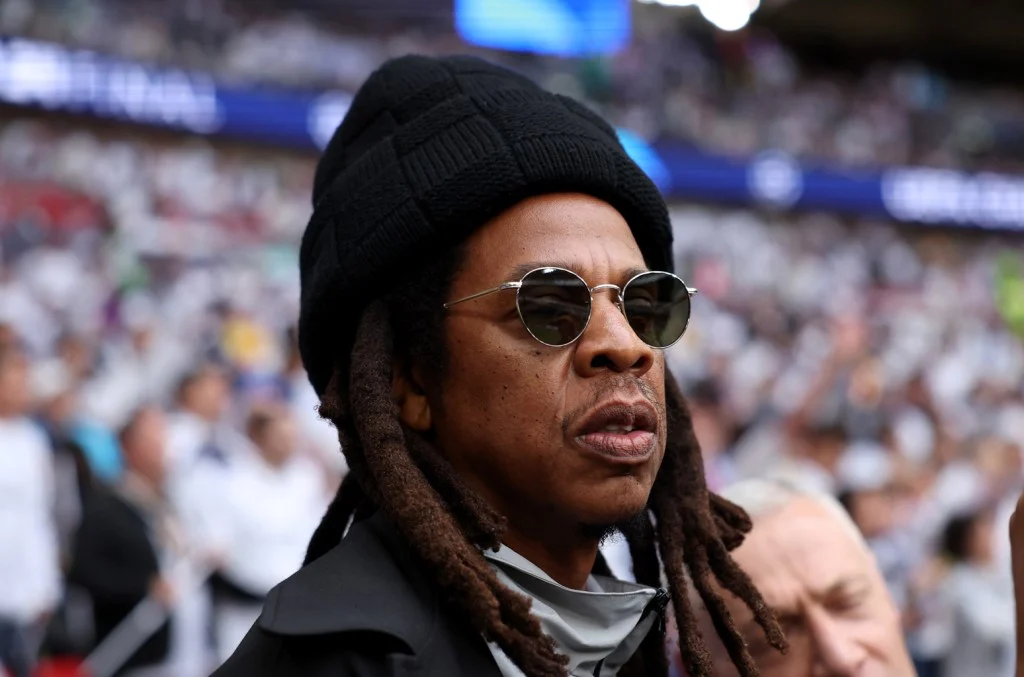
Jay-Z’s rape accuser wants a federal judge to dismiss his defamation lawsuit against her, arguing she cannot be sued over allegations she made in court – and that a headline-grabbing NBC News interview is protected under the same legal logic.
In a court motion filed Tuesday, attorneys for the Jane Doe accuser and her attorney, Tony Buzbee, argued that her shocking accusations against the rapper were covered by the “fair report privilege” – a legal doctrine that largely bars defamation cases over allegations made during legal proceedings.
Jay-Z’s lawsuit – filed in March after Doe dropped her case against him – claims that she also defamed him by making similar allegations during an interview with NBC News. But in her new motion, she says those statements are also covered by the “fair report” protections.
Trending on Billboard
“The average person watching the report, and indeed anyone watching the report, would certainly understand that the statements refer to allegations in the lawsuit,” her lawyers write.
The case against Jay-Z, filed in December, claimed that he and Sean “Diddy” Combs had drugged and raped a 13-year-old girl at an after-party following the 2000 MTV Video Music Awards. Jay-Z forcefully denied the allegations, calling them a “blackmail attempt.” After just two months of heated litigation, Doe dropped her case without a settlement payment.
Weeks after the case was dropped, Jay-Z sued both Doe and Buzbee for defamation, malicious prosecution and other wrongdoing, claiming they had carried out an “evil conspiracy” to extort a settlement from him by making the “false and malicious” rape allegations.
“Mr. Carter does not commence this action lightly,” his lawyers wrote in the lawsuit, filed in Alabama federal court. “But the extortion and abuse of Mr. Carter by Doe and her lawyers must stop.”
In Tuesday’s motion to dismiss that case, attorneys for Doe and Buzbee argued that they cannot be sued because they had made such statements in court. And they said the “fair report” privilege also clearly applies to the NBC interview, even if Doe gave statements that weren’t exactly the same as the claims she had raised in court.
“It is immaterial that the NBC News piece does not preface every statement with a reference to Doe’s amended complaint,” her lawyers write. “Doe’s statements in the NBC News piece are substantially the same as the allegations of her underlying amended complaint, even if they are not identical.”
Attorneys for Doe and Buzbee also argued that the other claims in Jay-Z’s case are similarly faulty, saying he has not “come close” to showing that he can sue for malicious prosecution. A representative for Jay-Z did not immediately return a request for comment.
The Alabama lawsuit is part of a sprawling legal battle between Jay-Z and Buzbee in the wake of the rape allegation. A separate case in California, in which Jay-Z is suing the lawyer for extortion and defamation, is awaiting an early-stage ruling by a judge. Buzbee has also filed his own cases against both Jay-Z’s Roc Nation and his longtime law firm, Quinn Emanuel, alleging they have harassed his clients and committed other wrongdoing.

Disgraced hip-hop mogul Sean “Diddy” Combs‘ precipitous fall from grace will be chronicled in the upcoming BBC investigative documentary P Diddy: The Rise and Fall. According to the BBC, the doc will examine the highs and lows of Combs, “whose influence and impact is undeniable, but whose legacy could not be indelibly tarnished.”
The doc — the latest in an increasingly long list of such films and series exploring Combs’ highs and lows — will be hosted by award-winning broadcaster Yinka Bokinni and air on the BBC Three and iPlayer on April 28. Combs has been in jail for nearly eight months as he awaits the May 5 start of his upcoming trial in a federal criminal case in which he is charged with racketeering, sex trafficking and transportation to engage in prostitution, with prosecutors alleging that he “abused, threatened and coerced women” in the furtherance of a “criminal enterprise” that allegedly involved kidnapping, arson, bribery and forced labor. Combs has pleaded not guilty to the charges and last week lost a bid to delay the start of the trial.
He is also facing dozens of other lawsuits accusing him of rape and assault, allegations he has denied.
The BBC said that Bokinni will explore how Combs “has gone from being the world’s biggest Hip-hop mogul, to hemorrhaging friends and fans in a matter of months,” mapping both his extraordinary success and influence in fashion, music and culture, “while meeting those close to him to understand what may have led to this very public disgrace… [and] unpack[ing] the interplay of power, money, moral corruption, and sexism, which underpins this story.”
Bokinni said, “My job is to tell stories — but never did I imagine I’d be telling this one. Investigating the alleged actions of Diddy has forced a spotlight onto the darker side of an industry so many of us dream of belonging to. We sang his songs, bought into the lifestyle, watched the shows and wanted more. This has been an emotional, sometimes difficult experience. And with a trial on the horizon, what happens next will no doubt be gripping — in the most sobering way.”
The BBC effort is one of a raft of docs exploring Combs’ undoing, including Max’s The Fall of Diddy, TMZ’s The Downfall of Diddy, as well as Prime Video’s Diddy: Monster’s Fall, Diddy: Summit to Plummet and an upcoming Netflix doc from 50 Cent’s G-Unit Films whose release date has not yet been announced.

The Tennessee Board of Parole recommended on Tuesday (April 22) that the state’s Governor consider pardoning Jelly Roll for his past convictions. According to the Associated Press, the board issued its nonbonding recommendation after voting unanimously on the move following a nearly two hour session that included testimony from Nashville Sheriff Daron Hall and several others.
Explore
Explore
See latest videos, charts and news
See latest videos, charts and news
Jelly Roll has long talked about the his remorse for the multiple arrests in his youth and the long road he’s taken to make amends, including frequently visiting jails and rehab centers before his shows. Following the board’s action, it is now up to Gov. Bill Lee to decide if the singer (born Jason DeFord) will be pardoned. The move could pave the way for the singer to travel internationally to perform, something he has not been able to do to date.
Trending on Billboard
“This was incredible,” Jelly Roll said of the board’s decision. “I pray this goes through. But today was special for me, regardless.” During the board meeting, Jelly Roll described falling in love with songwriting while in detention, explaining, “It started as a passion project that felt therapeutic and would end up changing my life in ways that I never dreamed imaginable and opened doors that I’ve never thought possible.”
Jelly Roll, 40, was convicted on robbery charges at 17, when a female friend helped him and two other young men enter a house in 2002; both of the other men were armed, though Jelly Roll was not. They demanded money and got $350 and an empty wallet. Because the victims knew the woman and Jelly Roll, they were both arrested right away and he was sentenced to a year in prison. Then, in 2008, police found marijuana and crack cocaine in his car, which resulted in a sentence of eight years of court-ordered supervision. He has been jailed more than 40 times over the years for a variety of drug charges dating back to when he was 14.
Due to those incidents, and a number of other brushes with the law, until last year Jelly was unable to secure a passport in order to book shows outside of the U.S. due to legal restrictions on travel by former felons.
The parole board began considering Jelly Roll’s pardon application since Oct. 2024, which marked at least five years since his sentence expired.
Following Tuesday’s recommendation, Republican Gov. Lee told reporters that “the reporting on Jelly Roll, that’s encouraging for his situation, but there are steps yet to happen in that case.” A number of friends and civic leaders wrote to the board about Jelly Roll’s generosity and transformation to bolster his case, according to the AP.
Sheriff Hall — who runs Nashville’s jail — wrote in a note that Jelly Roll had an “awakening” in one of the jails he managed, while Live Nation Entertainment CEO Michael Rapino wrote about the generous donations the singer has given to charities for at-risk youth.
Among the reasons Jelly Roll gave for needing the pardon was the current difficulty he faces traveling to Canada to perform due to his criminal record. Last June, Jelly booked his first-ever international shows when he scheduled gigs in Ontario and Ottawa. A week before announcing the shows, Jelly told Howard Stern that he had just gotten off the phone with his lawyer about the travel ban. “We are working … it’s getting good, it’s starting to look promising. It didn’t look good even just six months ago, but it’s starting to look really promising,” he said at the time.
Jelly told the board that he needs the pardon to be able to play more shows in Canada because currently he needs to apply for a special permit to travel north, which can sometimes be a lengthy process. “I want to be an inspiration for people who are now where I used to be — to let them know that change is truly possible,” Jelly told the board. “One of the reasons I’m asking for your recommendation for this pardon is because I’m looking to take my message of redemption through the power of music and faith through the rest of the world.”
He said that due to his criminal record, every time he travels it takes a “team of lawyers and a mountain of paperwork to secure my entry into those countries.” He noted last year’s inaugural Canadian shows, as well as his first trip to the U.K., where he traveled to speak about a rehab program.
Check out Hall’s post about the hearing below.
A year ago, I wrote @GovBillLee asking for a full Pardon for Jason “Jelly Roll” Deford…..today the Board unanimously recommended his Pardon. It’s now in the hands of our Governor. pic.twitter.com/NACZOGW2y0— Daron Hall (@DaronHall7) April 22, 2025
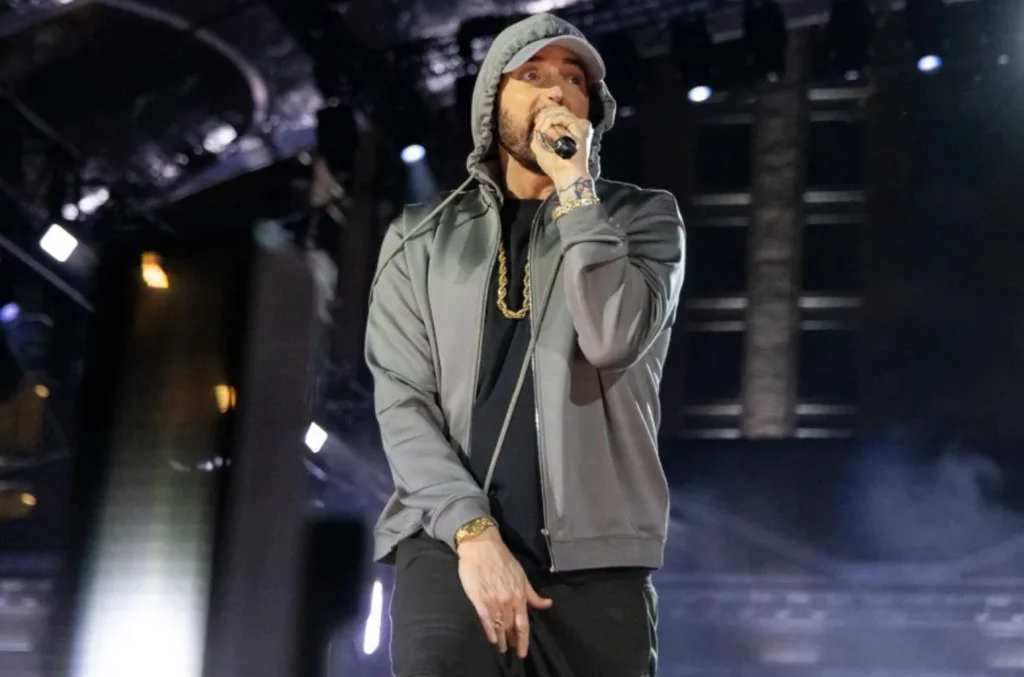
Eminem’s publisher is dropping a lawsuit that claimed a Detroit-area Ford dealership stole “Lose Yourself” for TikTok videos that warned viewers they “only get one shot” to buy a special edition truck.
Less than three months after Eight Mile Style sued LaFontaine Ford St. Clair for copyright infringement over the social media ads, the music company told a judge Tuesday (April 22) that it would voluntarily dismiss the case permanently.
Court documents did not offer any explanation for the move, giving no indication whether a settlement had been reached or if the case was simply being dropped. Neither side immediately returned requests for comment.
Trending on Billboard
Eight Mile, which owns the copyrights to “Lose Yourself” and other Eminem songs, filed the case in January, accusing LaFontaine Ford — which owns several dealerships near Eminem’s hometown — of blasting the song in the social media videos even though “at no time” did it get a license to do so.
“This is an action for willful copyright infringement … against LaFontaine for its unauthorized use of the composition in online advertisements for one or more car dealerships in blatant disregard of the exclusive rights vested in Eight Mile,” the company’s attorneys wrote.
The lawsuit claimed the videos, which allegedly appeared on TikTok, Instagram and Facebook in September and October, used “Lose Yourself” to boost a special Detroit Lions-themed Ford truck, telling viewers: “With only 800 produced, you only get one shot to own a Special Edition Detroit Lions 2024 PowerBoost Hybrid F-150.”
Eminem doesn’t own Eight Mile Style and was not involved in the lawsuit.
Social media platforms like TikTok and Instagram provide huge libraries of licensed music for users to easily add to their videos. But there’s a key exception: The songs can’t be used for commercial or promotional videos posted by brands. That kind of content requires a separate “synch” license, just like any conventional advertisement on TV.
That crucial distinction has led to numerous lawsuits in recent years. The restaurant chain Chili’s has been sued twice for using copyrighted songs in social videos, once by the Beastie Boys over “Sabotage” and again by Universal Music Group for allegedly using more than 60 songs from Ariana Grande, Justin Bieber and many others. The hotel chain Marriott and more than a dozen NBA teams have also recently faced copyright lawsuits over the same thing.