State Champ Radio
 Latin
Page: 37
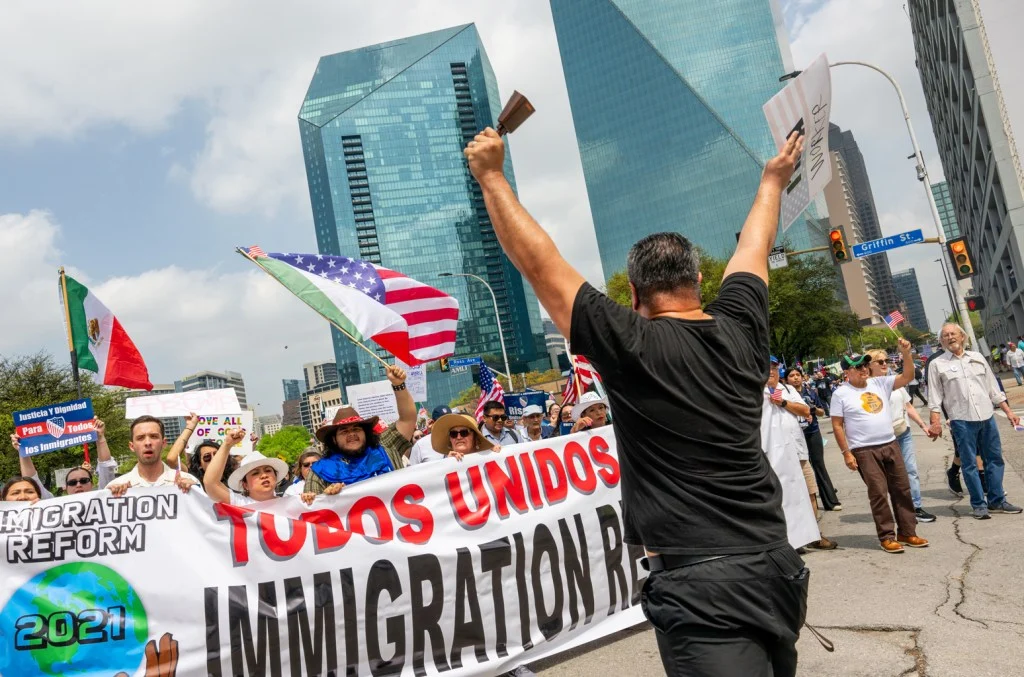
At last month’s Billboard Women in Music ceremony in Los Angeles, Breakthrough honoree Ángela Aguilar took a moment to express her solidarity with the Latin immigrant community, dedicating her award to women who cross the border to the United States “with nothing but hope in their hearts, only to find themselves living in uncertainty and fear,” she said in a poignant speech that prompted a standing ovation. “You deserve safety, dignity, the right to dream.”
Aguilar is part of a growing group of Latin artists — including Shakira, Maná and Alejandro Fernández — who are using their platforms to speak up for immigrants after President Donald Trump took office in January and immediately launched an aggressive crackdown on immigration, pledging to carry out mass deportations.
Trending on Billboard
But it was perhaps regional Mexican artist Tony Aguirre who addressed the situation more bluntly. “I’m scared that no one will show up to my shows,” he said during an interview with a Mexican podcaster when asked how things were going with Trump as president. Aguirre tells Billboard he is genuinely worried.
“Regional Mexican events have been directly impacted, and it’s not just me going through this, many of my colleagues feel this way,” says Aguirre, who tours mainly in the U.S. “When it all started, we were reaching out to each other just to see how things were going and everyone was saying the same thing, low attendance. People are scared to go out because of mass deportation threats, and I wanted to speak up because it seems like no one in our industry is willing to really to talk publicly about how this has impacted our industry, and it’s important that we do.”
While the effects of Trump’s policies on Latin music still remain to be seen on a larger scale, there is a real concern about the impact.
Abel DeLuna, California-based member of the veteran Mexican music association Promotores Unidos and founder of Luna Management, is once again dealing with a situation that’s historically effected regional Mexican bailes, which are small but mighty shows (and for many years the backbone of the genre) predominantly held in nightclubs catering to a specific demographic and booked by indie promoters. In 2007, Billboard’s Leila Cobo interviewed DeLuna about “stepped up” immigration enforcement under the George W. Bush administration, where he said then that the immigration situation alone accounted for 20% to 25% of the drop in his concert promotion business. He relived the same scenario 18 years later when Trump took office for a second term earlier this year, with that fourth week of January and first week of February being particularly brutal. DeLuna says shows in those weeks sold only around 10% to 15% of tickets, which ultimately led him to cancel some shows in Northern California.
“Our people are worried,” says DeLuna, speaking over the phone just weeks after Trump took office. “Many are afraid to go out, afraid to go out to work, afraid to go to the bailes, concerts, several having to get canceled because people are not buying tickets. I don’t know how long this is going to last, if it is really going to calm down soon or if it is going to go on for a long time and if it does, then our people are going to suffer a lot and the whole business is going to suffer.”
Low concert attendance aligns with a decrease in foot traffic in predominantly Hispanic neighborhoods around the country since Trump took office, says Maria Teresa Kumar, president of Voto Latino, a non-profit organization that aims to encourage young Hispanic and Latino voters to register to vote.
“People are scared that they’re going to be targeted and rounded up, creating a chilling effect happening around a community that is getting internalized mentally but also physically in their decisions to not go shopping or go to concerts,” says Kumar, who in the past has teamed up with artists like Maná and Los Tigres del Norte to get Latinos more politically involved.
The Latin music industry thrives on a diverse fan base, and while it’s reaching a global audience now more than ever, its core listeners are still Latinos, and a significant portion of them are immigrants. Just as with previous administrations, when there are increased reports of immigration raids in U.S. cities, businesses inevitably suffer. That includes everything from flower shops and restaurants in Chicago seeing a notable decline in sales to schools and churches feeling the “chilling effect,” as The New York Times put it in a report about “immigrants in hiding” over fear of deportation.
DeLuna says the sobering topic came up at the annual conference for Promotores Unidos, a long-standing Latin concert promotion association with more than 300 members, in Las Vegas in January.
“[Immigration] is the most important conversation right now,” DeLuna says categorically. “With those I have talked to among the association, I recommend the same thing: We must take care of ourselves, but we have to work harder and try to do better promotion to get people to come to our events, even if that means keeping prices low. What I’m personally doing is lowering prices to see if people feel encouraged to come out.”
Enrique Ortiz of Luz Record, a management, promotion and booking agency based out of L.A., also attended the Promotores Unidos conference in Las Vegas and says that while misinformation on social media about alleged raids in certain cities has also affected concert attendance, he’s been following the situation closely. “We’ve been noticing that ICE is arresting those with a criminal record, yes, but also those who don’t [have one]. And that’s concerning. It has a direct impact on all of us as managers, promoters, musicians.”
Billboard’s reporting confirms that this is an ongoing topic of conversation in important Latin music spaces and is top of people’s minds — although many in the industry prefer not to speak on the record about it. Over the course of two months, Billboard reached out to more than a dozen industry leaders, from managers to agents to promoters, for this story, with the majority declining to give an interview about just how much the Trump administration could impact the business of Latin music. Some who agreed to speak on background on the condition of anonymity expressed the same sentiment: uncertainty. One source, a manager to a well-known regional Mexican act, said they had already seen the impact on live shows in certain markets, particularly concerts that mainly book more traditional (i.e. older) regional Mexican acts.
Josh Norek, president of Regalias Digitales, refuses to stay silent and blasted a wide email to his contacts in March with the subject line: “Latin music industry — the time to speak is now.”
“From venues and record labels to artists and crews, deportations create instability that threatens the economic power of Latin music,” Norek’s email reads, with messaging crafted by Voto Latino for artists and executives to share. “If our audiences and communities are at risk, our industry suffers.”
Norek is particularly focused on the impact Trump’s administration will have on royalties should his promise of mass deportations come to fruition. “I project in the next four years we’ll see a significant decrease in earnings,” he tells Billboard. “I care tremendously on a humanitarian standpoint, but when you think about the economic impact, it’s very simple math: A stream coming from Mexico is worth about 2% of a stream coming from the U.S. So, if you deport 5 million streamers and put them in places like Mexico, Guatemala or Venezuela, you go from paying $10 a month for Spotify to [the] free ad-supported tier in Mexico, and it will generate almost nothing. Meanwhile, Pandora exists only in the U.S. and if you take away those users, it will impact SoundExchange royalties. You shouldn’t have to be a Democrat, Republican or independent to be thinking about the economic impact of deportations.”
Adding to the precariousness of it all, Trump’s global tariffs, announced on April 2, could also affect the U.S. music industry, from musical instrument manufacturers to the vinyl business. They could also lead to a potential decrease in local tourism, directly impacting concert and festival attendance in the U.S.
“During these times [of uncertainty], people are double-thinking how to spend their expendable income and, sadly, concerts are one of those pieces that are disposable income,” adds Kumar. “It’s been only two months and we’re already seeing the implications in the music industry, in hospitality, retail industry — this is not tenable.”
Norek reached out to Voto Latino to help craft messages for industry leaders and artists to share, although the shareable posts have yet to garner wider traction. “I understand that it’s tough for some people to speak out because they don’t want to be demonized,” says Norek. “However, now there’s just outward hostility toward Latinos and immigrants. The least we can do is show our clients that we care. This is our audience.”
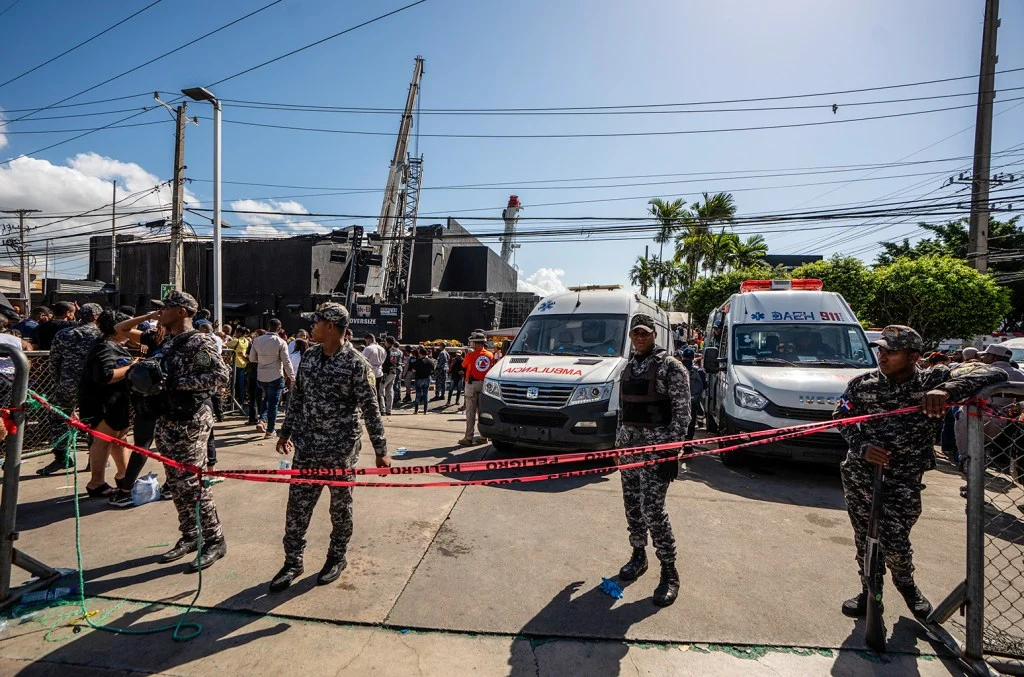
The death toll from the roof collapse at the Jet Set club in Santo Domingo in the Dominican Republic has climbed to more than 113 people. According to the Associated Press, the iconic venue was packed with “musicians, professional athletes and government officials,” when dust from the ceiling began to fall into attendees’ drinks before the entire roof collapsed.
In addition to the scores of dead buried under concrete slabs, authorities said more than 255 were injured. Merengue superstar and concert headliner Rubby Pérez — who was on stage performing when the ceiling collapsed — was among the dead, according to emergency operation director Juan Manuel Méndez, who said the 69-year-old singer’s body was found early Wednesday morning (April 9). The collapse happened roughly an hour into Pérez’s midnight performance.
Trending on Billboard
Pérez’s official Instagram posted a tribute to the late singer on Wednesday morning honoring the beloved star born Arturo Pérez in Hato Mayor. “It is with deep sorrow that we announce the passing of our beloved Rubby Pérez. We sincerely appreciate all the love, support, and solidarity we have received from his family, friends, and fans during this difficult time. His musical and personal legacy will live forever in our hearts. May his soul rest in peace.”
As of press time rescue teams from Puerto Rico and Israel had arrived to help local authorities, who said they were still searching for any potential survivors, with Méndez telling the AP that “as long as they report that there is a missing person, we will be there.”
Among the dead were two former Major League Baseball players, pitcher Octavio Dotel and Dominican star Tony Enrique Blanco Cabrera. An Instagram tribute to seven-time MLB All-Star Dotel from the Ministry of Sports and Recreation read: “We deeply regret the passing of former Major Leagues and Immortal of Dominican Sport, Octavio Dotel, 51. His legacy on and off the field leaves an indelible mark on national baseball history. Peace to his soul and strength to his family and loved ones.” Dotel pitched for 13 teams during a 15-year MLB career, including a pennant-winning season in 2011 with the St. Louis Cardinals.
The Ministry’s tribute to Blanco, 44 — who played in the outfield and as a first and third baseman, spending eight years in the minors, as well as one season with the Washington Nationals (2005) and 16 years in the Japanese baseball league — read, “We deeply regret the passing of former Major Leagues and Immortal of Dominican Sport, Octavio Dotel. His legacy on and off the field leaves an indelible mark on national baseball history. Peace to his soul and strength to his family and loved ones.”
Among the other reported victims were Nelsy Cruz, the governor of the northwestern province of Montecristi, and sister of seven-time MLB All-Star Nelson Cruz, who called DR President Luis Abinader from underneath the rubble to alert him of the disaster and later died at a hospital. The AP reported that Pérez’s saxophonist Luis Solís, who was on stage during the collapse, also died.
The Jet Set club issued a statement on Tuesday morning, sharing condolences to the families of those killed and injured in the roof collapse. “Last night, a tragedy struck that has deeply shaken the hearts of everyone who is part of Jet Set and all Dominicans. The loss of human lives leaves us in a state of profound sorrow and grief,” the venue wrote on Instagram. “In this difficult moment, our prayers are with each of the affected families. We share their pain as if it were our own, as we too are in mourning. We are working fully and transparently with the competent authorities to assist the victims and clarify what happened … We join the country in expressing solidarity during this unexpected and painful situation.”
At press time authorities were still investigating the cause of the roof collapse. Only 32 people have been identified in what is being described as one of the worst disasters to hit the Dominican Republic.
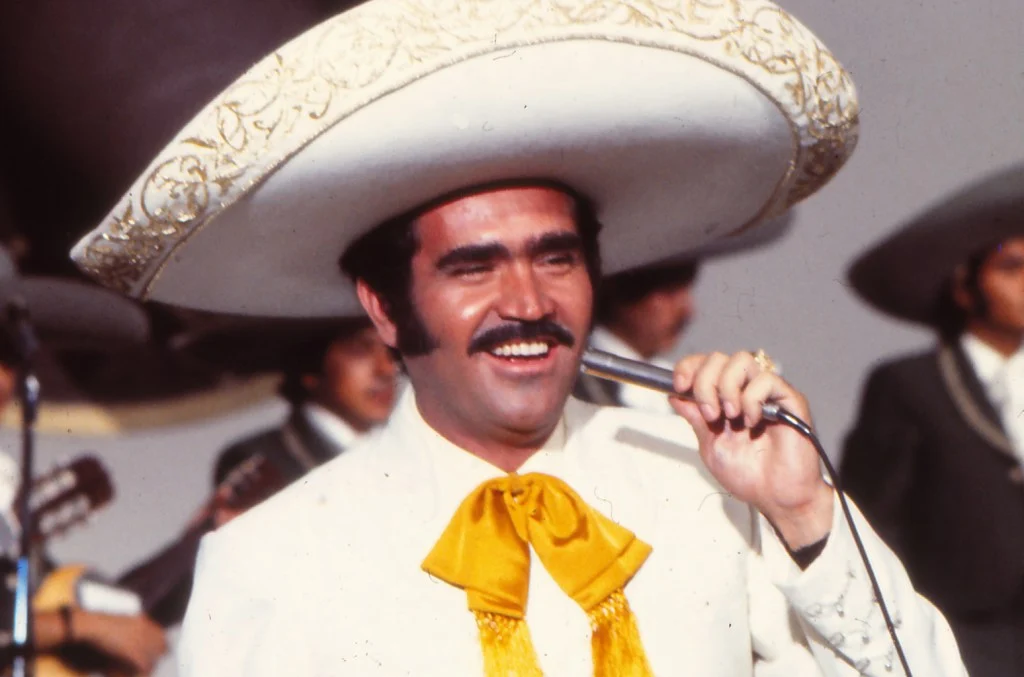
Legendary Latin artists Vicente Fernández and Freddy Fender are among this year’s inductees into the National Recording Registry, a prestigious honor from the Library of Congress. Fernández’s ranchera anthem “El Rey” and Fender’s bilingual country crossover hit “Before the Next Teardrop Falls” join a select group of recordings recognized for being “culturally, historically, or aesthetically […]

Dominican merengue singer Rubby Pérez has died Tuesday afternoon (April 8) at 5pm E.T. after being trapped in the rubble of a nightclub in Santo Domingo whose roof collapsed in the early hours of the morning, confirmed Listín Diario, a Dominican newspaper. The artist was 69 years old. Billboard Español reached out to Pérez’s two […]

Manuel Turizo is going on tour, the Colombian superstar announced Monday. The CMN and La Industria Inc-produced stint is set to kick off June 11 in Jalisco, Mexico, and he will tour other Latin American countries like Chile, Costa Rica and Argentina, before launching the North American leg of the trek. “I can’t wait to […]
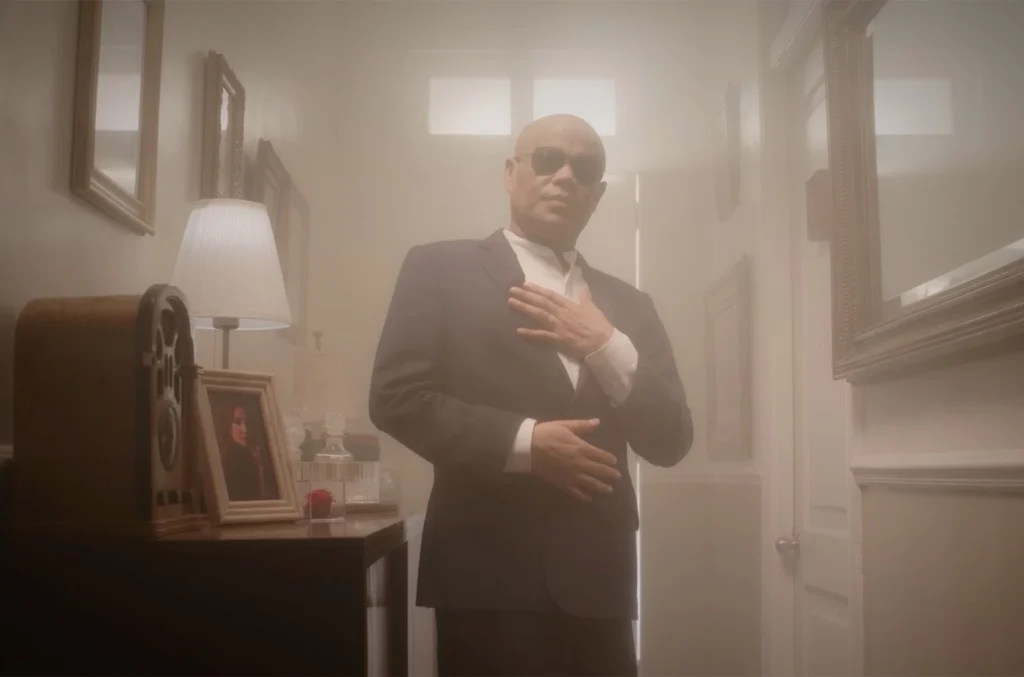
Rubby Pérez has been hospitalized following the deadly roof collapse at the Jet Set nightclub in the Dominican Republic, where he was performing early on Tuesday (April 8). The 69-year-old Dominican merengue singer — known for Billboard hits such as “Tu Vas a Volar,” “Enamorado de Ella” and “15,500 Noches” in collaboration with Romeo Santos, […]

The roof of the renowned Jet Set nightclub in the Dominican Republic collapsed early Tuesday (April 8), killing dozens and injuring more than 100 attendees, according to local authorities. The deadly incident occurred during a Rubby Pérez live performance, where more than 300 people gathered to see the merengue singer perform.
Located in Santo Domingo’s National District, the beloved live music venue — a go-to destination for locals and tourists alike — was celebrating its 50th anniversary, according to its Instagram account. “Dominican discotheque in charge of making its audience dance for more than 50 years,” an official description reads.
Hours after the collapse, the nightclub posted its statement: “Last night a tragedy occurred that has deeply touched the hearts of all of us at Jet Set and all Dominicans. At this difficult time, our prayers are with each of the families affected. We share their pain as if it were our own, because we are also in mourning. We are collaborating fully and transparently with the competent authorities to help the victims and clarify what happened. The loss of human lives leaves us in a state of deep pain and consternation. We join the expressions of solidarity from all over the country in this unexpectedly painful situation.”
Trending on Billboard
According to Enrique Paulino, Pérez’s manager, who spoke to reporters at the scene, the roof collapsed about an hour after the show’s midnight start time. The singer was transferred to the Plaza de la Salud Hospital, according to medical director Nepomuceno Mejía. Pérez’s saxophone player was killed in the incident, according to Paulino. It’s not clear what caused the roof to collapse.
Below are fo ur things to know about the emblematic Jet Set nightclub.
Location
Right in Santo Domingo, the capital of the Dominican Republic, the nightclub was located in the city’s National District, which hosts various nightlife activities, including chic discotheques, hotels and upscale restaurants and bars.
Who Has Performed There?
Powerhouses such as Los Hermanos Rosario, Sergio Vargas, Omega and Fernando Villalon, to name a few, had performed at the Jet Set. Notably, El Gran Combo de Puerto Rico performed there for the first time in 2008, in celebration of the nightclub’s 35th anniversary. Mondays were particularly busy for the live music venue.
Cultural Significance
Billboard Español contributor Franchesca Guim, who is from the Dominican Republic but is currently based in Spain, shares the importance of Jet Set. “The Jet Set has been part of the nightlife culture and entertainment in Santo Domingo. I would dare to say that it is a place of reference in the Dominican Republic, where locals and tourists attend to enjoy live orchestras,” she explains. “Christmas and New Year’s parties have been memorable, and part of the Dominican tradition. Any week lends itself to go to the Jet Set, because there is always a good atmosphere and above all live orchestras and music. My mom remembers that Jet Set Mondays became a tradition. Every Monday there was a party with a live orchestra.”
Background
Owned by businessman Antonio Espaillat, the Jet Set Club had a capacity of 700 seated and 1,000 standing room only. According to local reports, it had been remodeled several times to update its dance floor, ambiance, lights and sound. It is reported that in 2015 it underwent its last remodeling. In 2023, a fire affected the facilities after lightning struck its power plant.

Artists working with record labels in Latin America have a higher percentage of monthly listeners and generate more revenue on digital platforms than those who are self-released, according to a new report by Worldwide Independent Network (WIN) and the Latin American Independent Music Observatory (OLMI) on digital distribution in the region.
The report also shows that “the existence of local infrastructure (such as digital distributors) is related to higher levels of professionalization, income and knowledge of the digital value chain by artists, for example in relation to the types of existing contracts and the terms offered.”
Released on Tuesday (April 8), the study — which was conducted between 2023 and 2024 — analyzes the situation in eight countries, including Chile, Costa Rica, Ecuador and Paraguay, and highlights how artists’ presence on digital platforms and affiliation with independent record labels positively influences their economic sustainability.
Trending on Billboard
“These results reinforce the notion that the structural and financial support that labels provide to artists is key to their success in the music ecosystem,” Noemí Planas, CEO of WIN, said in a press release. “Public and private investment to promote a professional music infrastructure in the region is key to ensure the growth of all players.”
One of the challenges the music industry faces in the region is the “heavy reliance on live performances,” the report states. That’s because “although more than 60% of artists generate income through streaming, less than 10% earn more than US$5,000 per year,” it notes. The report adds that “artists with more than 500 monthly listeners barely represent 30% [of artists]” — meaning a large majority may be affected by the recent royalty payment reforms introduced by the major streaming platforms that contemplate the demonetization of content below certain thresholds of streams and listeners.
The study found that almost a third (32.2%) of respondents market their music through distributors that have recently integrated — or are in the process of integrating — with majors, denoting a trend towards market consolidation.
“Consolidation in the music sphere is concerning because of its impact on the dissemination of Latin American independent music, especially in the digital market, where we see that there are fewer and fewer independent operators,” Planas adds. “The concentration of power, information and access channels in the hands of three large multinationals translates into worse conditions for independents, such as streaming models that demonetize their content and that they have no choice but to accept.”
The report highlights the importance of strengthening the relationship with record labels and investing in the education of key players. “[It] reaffirms the need to consolidate a professional, informed and collaborative ecosystem in Latin America,” Cristóbal Dañobeitia, director of OLMI, said in a statement. “The union between key players and investment in education, research and technology are essential to ensure equitable and sustainable growth.”
Titled “La Música Independiente en Latinoamérica: Cadena de Valor y Distribución Digital” (“Independent Music in Latin America: Value Chain and Digital Distribution”), the study was commissioned by WIN and developed by an interdisciplinary team of experts from OLMI, in collaboration with trade associations ABMI, IMICHILE and AMI PY, as well as AMPROFON, Sociedad Chilena de Autores e Intérpretes Musicales (SCD), Alianza Francesa Costa Rica and Universidad de los Andes.
To access the full report (in Spanish) click here.

Natti Natasha, Ha*Ash and Belinda will be honored at the third annual Billboard Latin Women in Music event, Billboard and Telemundo announced on Tuesday (April 8). The artists join Olga Tañón, Chiquis and Anitta, who were previously announced as honorees for this year.
Hosted by Mexican star Ana Bárbara, the two-hour ceremony will air live exclusively on Telemundo on April 24 at 9 p.m. ET and will celebrate “groundbreaking women shaping the future of Latin music,” according to a press statement. The show will also stream on the Telemundo app, Universo and Peacock.
Trending on Billboard
Dominican hitmaker Natti Natasha will be honored with the Unstoppable Artist Award, a nod to her sustained influence in the music industry. Natti initially burst onto the Billboard charts when she earned her first No. 1 in 2012 as a featured artist on Don Omar’s hit “Dutty Love.” Since then, she has amassed 34 career entries on the overall Latin Airplay ranking, including 17 top 10 hits, 10 of which soared to No. 1.
On the album front, her debut studio project, Iluminatti, reached new heights in 2019, breaking into the top 10 on both the Top Latin Albums and Latin Rhythm Albums charts, with a peak at No. 3. More recently, her LP Natti Natasha en Amargue, produced by Romeo Santos, earned her a top 10 debut on the Tropical Albums chart.
Sister-duo Ha*Ash, comprised of Hanna and Ashley, will receive the Unbreakable Award, celebrating the collaboration between Latin women artists who have made an indelible impact on the music industry. Honored for their resilience, innovation and empowerment, Ha*Ash made an impressive debut in 2004, scoring their first top 10 hit on Latin Pop Airplay with “Estés Donde Estés,” which peaked at No. 9.
Over the years, they have proven their staying power, accumulating a total of 16 entries on the chart, four of which reached the top 10. The sisters recently made a notable comeback with “El Cielo Te Mandó Para Mí,” a standout track from Haashville, which reached a No. 7 high on Latin Pop Airplay. Currently, the duo is on their Haashville Tour across the U.S. and Canada
Meanwhile, Belinda is set to be honored with the Evolution Award, a special honor that recognizes individuals who have demonstrated exceptional growth, transformation, and innovation throughout their artistic journey, and an enduring impact and commitment to evolving their vision and voice. Belinda’s self-titled debut album catapulted her into the spotlight in 2003, earning her a first top 10 entry on a Billboard chart as the set reached a high of No. 6 on the Latin Pop Albums tally.
Since then, she’s had three additional top 10 albums, including Catarsis, which peaked at No. 2 in 2013. Showcasing versatility, Belinda has most recently dabbled in regional Mexican music, specifically in corridos bélicos, collaborating with the likes of Natanael Cano, Tito Double P and Netón Vega.
As previously announced, Anitta will receive the Vanguard Award, Chiquis the Impact Award and Olga Tañón will be honored with the Lifetime Achievement Award, with the remaining honors to be announced soon.
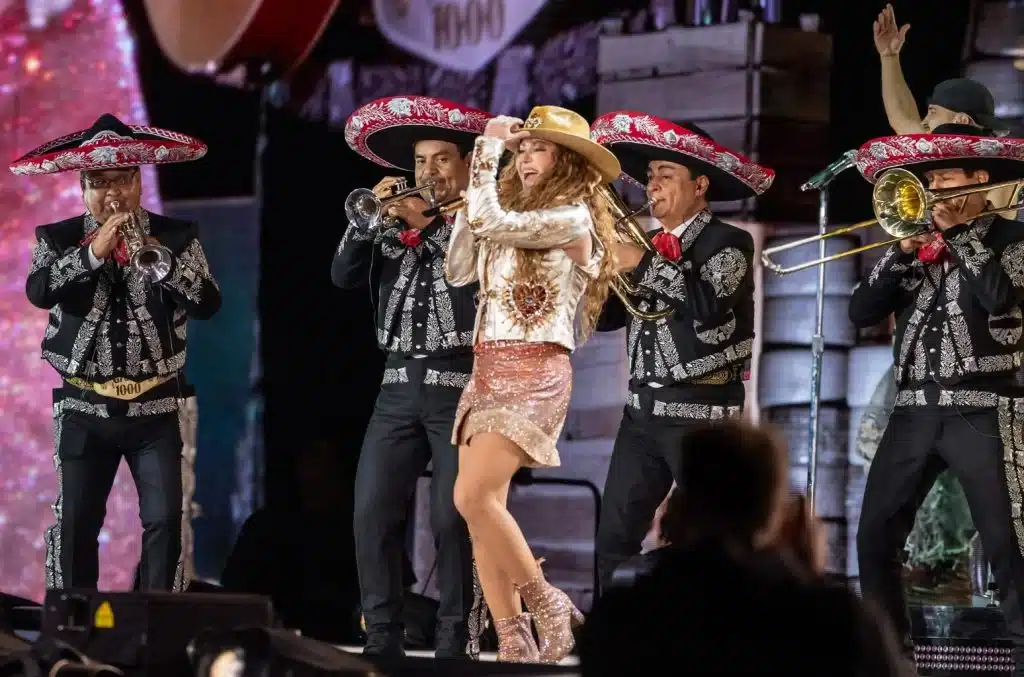
Shakira continues being unstoppable! The Colombian superstar announced on Monday (April 7) four additional dates for her historic Las Mujeres Ya No Lloran World Tour in Mexico, once again surpassing her own record with a total of 26 concerts in the Latin American country. The new cities hosting her shows are Tijuana, Hermosillo, Chihuahua, and Torreón, according to promoter OCESA.
“Due to the enormous demand and the cultural impact Shakira has in Mexico, four new dates have been added to the artist’s return in August. This second leg of her tour in the country will take her to new territories, reaching every corner to reconnect with her ‘pack’ and meet her fans where they are,” the promoter said in a press release.
Consequently, Shakira will bring her show to the northern part of the country, performing on August 11 at Estadio Caliente in Tijuana, Baja California; on August 14 at Estadio Héroes de Nacozari in Hermosillo, Sonora; on August 17 at Estadio UACH in Chihuahua; and on August 20 at Estadio Corona in Torreón, Coahuila.
Trending on Billboard
After making history with seven consecutive sold-out shows at Estadio GNP Seguros, the Las Mujeres Ya No Lloran World Tour will return to Mexico City for another four concerts at the stadium on August 26, 27, 29, and 30, for a total of 11. This will make Shakira the first artist to achieve such a number of dates at this major venue (formerly known as Foro Sol).
Shakira, who has been adding dates to the tour as tickets continue to sell out, now ties the record of seven dates at Estadio GNP Seguros with Grupo Firme, who are set to give their eighth show there on June 28.
The success of her monumental stadium trek has led the “Hips Don’t Lie” singer to top Billboard‘s Top Tours chart in February, when she kicked off the tour in Brazil, making her the first Latina solo artist to achieve this feat. Shakira’s tour has left an indelible mark across Latin America, gathering more than a million attendees, according to OCESA.
The Barranquilla-born artist was also named by Billboard as the No. 1 star among the Best 50 Female Latin Pop Artists of All Time last month.