State Champ Radio
 Latin
Page: 14
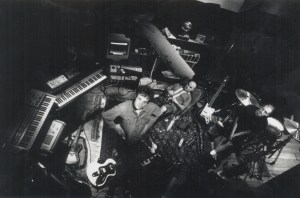
In 1995, the Argentine rock trio Soda Stereo returned to the studio after a three-year hiatus to record a brand-new album, Sueño Stereo (Stereo Dream), its seventh and final project. At the time, no one knew this would be the band’s farewell record. Its predecessor, Dynamo, was its most experimental and eclectic work, showcasing a complete turnaround of its new wave style over the previous decade. Sueño Stereo continued this exploration — an alternative album with a noticeable British influence, full of electronic sounds and violins, cellos and violas on many tracks.
The 1990s brought a completely different flow from the ’80s new wave that made Soda Stereo famous. As the alternative rock movement gained popularity in the U.S. and Europe, listeners also increased in Latin America, and Soda Stereo embraced it and made the genre its own. After 10 years of working nonstop, releasing album after album and touring Latin America, the band decided to experiment and created an utterly progressive rock album that fans and other artists still praise 30 years later.
Trending on Billboard
“Latin American rock DNA is partly based on a tremendous sense of inferiority because it always copied everything that was happening in England and the United States,” Ernesto Lechner, a music journalist from Argentina who has lived in the U.S. since the 1990s, tells Billboard. “Soda Stereo changed that.”
Soda Stereo revolutionized Latin rock history with their new sounds and exploration of diverse musical genres. That style would become the stamp of the lead singer Gustavo Cerati’s artistry, which he would perfect in his first solo album, Bocanada (1999), after Soda Stereo disbanded in 1997. Sueño Stereo, released on June 21, 1995, became the band’s magnum opus.
“Sueño Stereo, for me is, without a doubt, without discussion, Soda’s best album,” Lechner adds. “It’s a glorious record. A psychedelic rock album — electronic rock with moments of ambient music, a very sophisticated thing. It was like a full circle.”
“Is like the final masterpiece, very refined and perfect,” Valeria Agis, editor of Argentine newspaper La Nación, tells Billboard of the set, which in 2012 was ranked fourth by Rolling Stone in its 10 greatest Latin rock albums of all time.
Sueño Stereo’s journey begins with the alternative rock of “Ella Usó Mi Cabeza Como un Revólver,” a melancholy, complex track that presented a string arrangement of viola, violin and cello. A significant change also came with “Disco Eterno” and “Zoom,” two neo-psychedelic pop-rock songs on the set that became classics in the band’s repertoire.
Further into the album, The Beatles’ influence became apparent with the Britpop tracks “Paseando Por Roma” and “Ojo de la Tormenta.” The set concludes with a surprising shift in the last three songs, instrumentals in which the psychedelic sounds mash up with electronic ones.
For Soda’s bassist Zeta Bosio, it was the album that allowed him to keep going. A year before the release, his 2-year-old son Tobías had died in a car accident. “That was the album that brought me back to life a little, back to reality,” he tells Billboard. But it was also the album that brought the band back together as a family, allowing them to “become an organism where we could feel what the other was going to do.”
Drummer Charly Alberti felt it too. The album “presents us already at a really high musical level, the three of us,” he adds. “Things would come together really organically.”
Soda Stereo
Cecilia Amenábar
Within 15 days of its release, Sueño Stereo went platinum, making it an instant hit in Argentina and all over Latin America. Still, two years later, the band decided to end its 15-year journey together with the farewell tour El Último Concierto (The Last Concert), which culminated in a final show at the Estadio Monumental in Buenos Aires — a performance that left us not only with the live album and DVD of the same name, but also with Cerati’s iconic phrase “Gracias totales” (which literally means “total thanks” but does not translate perfectly into English).
Cerati took the time to focus on his personal projects. In 1999 he released Bocanada, the album he considered his official solo debut, although he had previously released two sets during Soda Stereo’s hiatus before Sueño Stereo. In this context, Bocanada, which means breath or puff, is used metaphorically to symbolize a “new breath of creativity,” as Cerati noted that the songs were coming to him very easily.
In 2007, Soda Stereo reunited for the Me Verás Volver Tour (You Will See Me Return), which took them all over Latin America and some U.S. states, including Florida and California. The trek began and finished at River Plate, Buenos Aires’ biggest stadium with a capacity of 70,000, where they performed six sold-out nights — five more than in 1997.
Soda Stereo was planning a few additional shows, even one in Spain, a market they never got to conquer. According to Bosio, the doors were open to doing more with the band. “The music was still intact. It was like we were entering a new stage of maturity and starting to understand things in a different way,” he says. “[But] being Soda Stereo always came with a lot of pressure. Especially for Gustavo, who was the main songwriter.”
In 2010, Cerati suffered a stroke after finishing a concert in Caracas, Venezuela, while promoting his last solo album, Fuerza Natural. He remained in a coma until his death on Sept. 4, 2014, at the age of 55.
But it was Sueño Stereo that prepared the ground for what came later. Sueño Stereo didn’t mark the end; it was the beginning of a new sound that still echoes 30 years later.
“One of our goals for this album was to take a subtractive approach,” said Cerati, as quoted in the book Cerati en Primera Persona (Cerati in First Person) by Maitena Aboitiz. “It was like saying: ‘Let’s pull back a bit’ — not to keep a low profile, but because we didn’t need to repeat the same thing over and over.”
Solo, Cerati had the freedom to do whatever he wanted, in his own words. With Soda, the exploration that began with Dynamo and that the band perfected with Sueño Stereo reached its highest point. The outcome was one of their most important pieces and one of rock’s greatest bodies of work, influencing artists all over Latin America and the world for years to come.
Bad Bunny is set to kick off his all-stadium world tour on Nov. 21 in the Dominican Republic, in support of his sixth studio album, DeBÍ TiRAR MáS FOToS, which topped the Billboard 200 in January. The Live Nation-produced trek will make pit stops in Costa Rica and Mexico in December, before resuming in January […]

Grupo Frontera and Grupo Firme have both achieved their first-ever entry in YouTube’s coveted Billion Views Club thanks to their collaboration “El Amor de su Vida” (the love of her life). Explore See latest videos, charts and news See latest videos, charts and news The music video, which premiered on Aug. 3, 2023, surpassed the […]

Rauw Alejandro kicked off the European leg of his Cosa Nuestra World Tour at London’s iconic O2 Arena on Tuesday (June 17), but it was Janet Jackson’s surprise appearance that captured the internet’s attention. Explore See latest videos, charts and news See latest videos, charts and news The legendary pop singer not only attended the […]

Karol G has revealed the full tracklist to her fifth studio album, Tropicoqueta, out this Friday (June 20). “Intense chapters, unexpected twists, endearing characters. This is the official Track Listing for this new story of my life!” the Colombian star captioned her post revealing her new tunes. “Each song has its own story. Each collaboration […]

Gente de Zona became the first Cuban duo to sell out the coveted Kaseya Center in Miami earlier this month, where they performed for over 14,000 fans in celebration of its 25th anniversary. The duo’s prolific career includes their breakout hit “Bailando” with Enrique Iglesias and Descemer Bueno that spent 41 weeks at No. 1 on the Hot Latin Songs chart in 2014 and made history as the first Spanish-language video to achieve one billion views on YouTube.
Like Gente de Zona, helmed by Randy Malcom and Alexander Delgado, artists such as Osmaní García, Jacob Forever, and El Chacal formed part of the booming Cubatón movement in the 2010s, and propelled the genre (that blends Cuban rhythms with reggaetón) beyond the Caribbean island and onto its mainstream success. García teamed up with Pitbull, Sensato and Lil Jon in the 2015 hit “El Taxi,” Jacob’s “Hasta Que Se Seque El Malecón” peaked at No. 10 on Hot Latin Songs in 2016, and Chacal’s “Ay Mi Dios” in collaboration with Yandel and IAmChino reached No. 1 on the Latin Airplay chart that same year.
But in recent years — especially since 2018 when public WiFi hotspots were made more accessible on the island — a large wave of artists, mainly still living in Cuba, has brought to the forefront “reparto” music, a genre that was once considered “reggaetón of the poor,” but today represents the sound of modern-day Cuba, and is gaining massive popularity.
What is Reparto?
In honor of its 25-year trajectory, Gente de Zona also released its tenth studio album called Reparto, with the hopes of “showing the world the evolution of Cuban reggaetón that defines our culture, and shine a light on the artists who are leading the authentic reparto movement,” according to Malcom in a statement.
Dale Pututi, Gente de Zona, and L Kimii perform in Miami’s Kaseya Center on June 7, 2025.
Cumba Photographer
The name derives from the barrios or housing projects in Cuba, where aspiring artists would create their own homemade reggaetón and sing about street life powered by local slang. The genre’s first exponents trace back to the mid-2000s with artists such as the late Elvis Manuel (who tragically drowned in 2008 as he migrated to the U.S. by raft), Adonis MC, El Uniko, and most notably, Chocolate MC, who cleverly added the Cuban clave to his 2010 reggaetón song “Parapapampan,” resulting in what is known now as reparto.
“The genre is known for its fusion of Afro-American rhythms and rumba elements, and its main element is the Cuban clave,” producer NandoPro (real name: Fernando Lázaro Otero Van-Caneghem) tells Billboard. “It’s evolved and now features a blend of drums derived from reggaeton, hip hop, timba, and Cuban folk music in general. But, the biggest difference is the way the lyrics are narrated. El Reparto is characterized by more aggressive, harsher and explicit lyrics, without much filtering in the language.”
Today’s reparto artists, however, are changing the narrative.
They are singing about love (Wampi’s “Roma”); making positive affirmations (El Chulo’s “Tienes Que Nacer de Nuevo”); and even empowering women (Mawell’s “La Triple M”). Others are strategically turning popular songs, such as Alejandro Sanz’s “Corazón Partío” and Akon’s “I Wanna F*ck You,” into a reparto melody.
Meanwhile, the movement is highly consumed in Peru, Spain, Miami, and has already captured the attention of non-Cuban artists, such as Nacho, Lenny Tavárez, and Sergio George, who have all collaborated with a repartero.
“The Dominican Republic has its dembow, Puerto Rico has its reggaetón — today Colombia is taking over Afrobeat, and I think that’s going to happen with Cuba as well,” Venezuelan artist Nacho, who’s currently viral with his reparto tune “Nosotros” alongside Maffio and L Kimii, says to Billboard. “Reparto is a wealth of rhythms combined: there’s son, there’s salsa, there’s timba, there’s reggaetón. There’s a bit of everything, and I’ve been in love with that genre for a long time.”
Nando, who’s produced hits for Gente de Zona, El Taiger, J Balvin, and Farruko, among others, further explains: “After 2014, many Cubatón exponents emigrated to the United States in search of international success, and many even explored other genres in search of acceptance. This left a large void within urban music in Cuba and it was the young reparto artists that filled that space. This is the evolution of music from the Cuban barrios. We still have a long way to go, but the authentic message is getting through, and artists from other countries are discovering a refreshing style they can experiment with.”
Below, meet 31 reparto artists shaping Cuba’s new urban movement:
Adonis MC

Like the reported five million plus Americans who took to the streets across the country over the weekend as part of the massive “No Kings” rallies, Bad Bunny is not happy with the Trump administration’s recent actions. In a video posted to his Instagram Story on Tuesday (June 17), the singer lashed out at what he said was a raid by Immigration and Customs Enforcement (ICE) in his native Puerto Rico.
“Those motherf–kers are in these cars, RAV4’s,” Bad Bunny can be heard saying in the video in Spanish over footage of a scrum of unmarked SUVs blocking the street and seemingly apprehending some people on what the singer said was Avenida Pontezuela in Carolina, Puerto Rico. “They came here… sons of b–ches, instead of letting the people alone and working.”
Trending on Billboard
At press time it was unclear what the footage Bad Bunny posted was depicting, but if the action was part of the Trump administration’s stepped-up ICE raids all over the U.S. it comes after the president surged more than 4,000 National Guard members and 700 active-duty Marines into Los Angeles — over the objections of both the mayor and the state’s governor — to quell what have been mostly peaceful protests against the ICE raids in that city.
Though Trump promised to remove criminals who are in the U.S. without proper documentation, the ICE raids have so far targeted a much wider swath of folks. NPR reported recently that the raids in Puerto Rico have mostly rounded up Dominican immigrants in actions that harken back to the island’s “long history of anti-Dominican racism,” with racial profiling possibly playing a role in the arrests.
Special Agent in Charge of Homeland Security Investigations in Puerto Rico Rebecca González-Ramos said agents on the island nation have done surprise raids at hotels and construction sites, questioned people in the street and asked workers at the department of motor vehicles to hand over the names and addresses of the estimated 6,000 people who got licenses under an immigrant-friendly law that opened driving privileges to people without legal status, according to NPR.
González-Ramos added that so far ICE agents in P.R. have arrested close to 500 immigrants for deportation in the first four months of Trump’s second administration, less than 80 of whom had criminal records; three-quarters of those arrested have been Dominican nationals.
Bad Bunny joins a rising chorus of artists who’ve lashed out at the ICE raids. Over the weekend, Olivia Rodrigo posted her thoughts on the ICE deportations, saying, “I’ve lived in LA my whole life, and I’m deeply upset about these violent deportations of my neighbors under the current administration. LA simply wouldn’t exist without immigrants.”
Addison Rae also said she was “so disappointed and disturbed by what is happening across our nation. This country could not exist without immigrants. Every human being deserves the right to exist in an environment that makes them feel safe, lovingly protected, and embraced.” Finneas claimed he was tear-gassed during a peaceful protest in L.A. earlier this month, writing “F–K ICE… If you are into this fascist s–t you are small and weak and will lose.”
Green Day’s Billie Joe Armstrong has also hit out at ICE, in addition to Katy Perry who has called the raids a “huge injustice,” while Shakira said she lives in “constant fear” as an immigrant in the U.S. Others who protested the actions in L.A. include Tyler, the Creator, The Game, Kehlani, Tom Morello, Reneé Rapp and Rebecca Black.
Earlier this month, California Gov. Gavin Newsom sued the Trump administration to end what he said was the “illegal and unnecessary takeover of a CalGuard unit, which has needlessly escalated chaos and violence in the Los Angeles region.” The lawsuit names Trump, Defense Secretary Pete Hegseth and the Department of Defense, in a filing that outlines “why the takeover violates the U.S. Constitution and exceeds the President’s Title 10 authority, not only because the takeover occurred without the consent or input of the Governor, as federal law requires, but also because it was unwarranted.”
Trump responded over the weekend by saying that ICE must “expand efforts to detain and deport Illegal Aliens in America’s largest Cities, such as Los Angeles, Chicago, and New York, where Millions upon Millions of Illegal Aliens reside,” cities the president described as “the core of the Democrat Power Center.”

Los Alegres del Barranco could achieve the suspension of the criminal proceedings against its members for alleged advocacy of crime during a concert in Jalisco held in March, following the release of an anti-narcocorrido that the group recorded at the request of the state governor, Pablo Lemus.
The song, titled “El Consejo” (or “the advice”) and released on Sunday (June 15) on YouTube, is a call to discourage young people from joining the ranks of organized crime and to warn them about the potential consequences of getting involved in criminal activities. “I’m going to give you some good advice/ If you want to grow old/ Don’t get involved with the bad/ Nothing good comes from that/ If you think it’s easy money/ Pay attention to these verses/ There are dreams that come true/ And later turn into nightmares,” the song says in Spanish, set to the rhythm of a traditional accordion.
“This is a step in the right direction to be able to face the legal challenges,” Luis Alvarado, the group’s spokesperson, told Billboard Español on Monday (June 16).
Trending on Billboard
The Jalisco Prosecutor’s Office told Billboard Español on Monday that “the group’s willingness” to send a positive message through a song opens the possibility of reducing some of the restrictions imposed on the four musicians, their representative, and their concert promoter.
The case stems from a performance at an auditorium at the University of Guadalajara on March 29, where the band performed a narcocorrido accompanied by images alluding to the leader of a criminal group. This incident even led the United States to revoke the work and tourist visas of its members.
“If the suspension proceeds, the economic guarantee they deposited with the court could be canceled, and it would also be possible for the precautionary measures to be put on hold,” the Jalisco Prosecutor’s Office said in a statement on Sunday.
The group had 5.8 million pesos (about $302,000) frozen, representing the alleged profits from their concert at the Auditorio Telmex, which led the Jalisco Prosecutor’s Office to open a fifth investigation against the group, accusing them of alleged “operations with resources of illicit origin.” However, state authorities clarified that the conditional suspension of the process for alleged advocacy of crime does not extend to the investigation into their possible involvement in the crime of operations with resources of illicit origin, which remains ongoing.
The precautionary measures imposed by a judge on Los Alegres del Barranco, which could potentially be put on hold, include: appearing in court every week, paying a guarantee of 1.8 million pesos (about $92,000), and remaining within Jalisco. The band continues to defend themselves while out of custody, as preventive detention was not ordered.
However, the Jalisco Prosecutor’s Office is “the only entity that can reach an agreement through alternative means to resolve three — out of four — investigations opened against the group for alleged advocacy of crime” during concerts in other municipalities in the state, a spokesperson for the Government of Jalisco told Billboard Español, adding that they are confident an agreement between the parties will be made public this week.
On the social media platform, X, Jalisco Governor Pablo Lemus praised the group’s new song. “This new song by Los Alegres del Barranco, titled ‘El Consejo,’ deserves to be listened to closely, especially by young people,” he wrote in a post on Sunday. “Music is essential for connecting with future generations and helping them understand everything that choosing what many portray as the easy path entails.”
Following the ban on narcocorridos imposed by local governments in 10 of Mexico‘s 32 states, some corrido artists have announced changes to their music and repertoires. Such is the case of corridos tumbados star Luis R. Conriquez, whose April 12 performance at the Feria de Texcoco in the State of Mexico ended in chaos after he refused to perform war-themed songs in compliance with the new regulations set by authorities.
Grupo Firme has also announced that it has removed the corrido “Se Fue La Pantera” from its repertoire, which allegedly references an operator of the Sinaloa Cartel. Recently, the group, led by vocalist Eduin Caz, canceled their participation in a festival in Napa Valley, California, due to the visas of its members and the team of its promoting company being in “administrative process” by the U.S. Embassy in Mexico.

Karol G has teamed up with five telenovela giants for a new promotion clip of her forthcoming album, Tropicoqueta. Inspired by ‘90s Latin soap operas, the Colombian singer released a nearly two-minute Spanish-language video starring herself alongside actresses Anahí, Itatí Cantoral, Gaby Spanic, Ninel Conde and Azela Robinson. In true telenovela fashion, Karol and Anahí […]

Fuerza Regida isn’t done doing iconic things. After making history with 111XPANTIA — which become the highest charting Spanish-language album by a duo or group ever on the Billboard 200 when it debuted at No. 2 in May — the band from San Bernardino, Calif., is set to perform back-to-back shows at the Madison Square Garden and […]