State Champ Radio
 Jimmy Humilde
Trending on Billboard
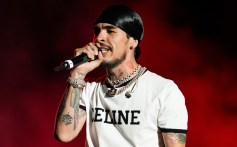
Powerhouse regional Mexican label Rancho Humilde is locked in a bitter legal dispute with one of its fastest rising acts, the California-based band Fuerza Regida.
Rancho Humilde filed a lawsuit in September accusing the band of breaching its record deal by unilaterally doing features for other artists and inking live performance contracts with Apple Music and Live Nation. Fuerza Regida countersued a month later, alleging the indie label withheld millions of dollars in royalties and tried to “sabotage” its success — including by leaving it off Latin Grammy Awards submissions.
Related
The dueling legal claims, moved from a California state courthouse to federal court on Oct. 20, reveal a stunning breakdown in the relationship between Fuerza Regida and its longtime label home. The fight comes just as Fuerza Regida’s star is on the rise; the band made history in May when 111XPANTIA debuted at No. 2 on the Billboard 200, making it the highest-charting Spanish-language album ever by a duo or group.
Fuerza Regida, a quintet of regional Mexican hitmakers from San Bernardino, signed with Jimmy Humilde’s label in 2018. The band now puts out music via a joint venture between Rancho Humilde and its own Street Mob Records, with distribution by Sony Music Latin.
Rancho Humilde’s lawsuit is focused on exclusivity language in the label’s original record deal with Fuerza Regida, which allegedly entitled the label to a seat at the table and a cut of proceeds for all recording and touring contracts. According to Rancho Humilde, Fuerza Regida violated this deal by performing unauthorized features for other artists and not sharing the royalties.
The lawsuit lists 27 offending songs, including “Qué Onda,” Fuerza Regida’s Billboard Hot 100 entry from 2023 with Calle 24 and Chino Pacas, and “Modo Capone,” the band’s 2024 collaboration with Pacas and Drake that hit No. 11 on Billboard‘s Hot Latin Songs chart.
Related
Rancho Humilde says Fuerza Regida also disregarded exclusivity by contracting directly with Apple Music this past summer for a live concert taping in Mexico City, as well as with Live Nation for U.S. tours in 2023 and 2024.
“[Rancho Humilde] has suffered damages, including, but not limited to, lost royalties, advances, fees, market-share and other compensation that should have been directed to Sony and accounted to [Rancho Humilde], lost shares of touring revenues [and] lost income from unauthorized deals such as the Apple agreement,” says the lawsuit. “The exact amount of damages is subject to proof at trial but exceeds $15 million.”
Fuerza Regida, however, tells a very different story in its countersuit. The band claims Rancho Humilde is actually the one who has breached their record deal by failing to pay millions of dollars in royalties and stonewalling audit requests.
The countersuit also says Rancho Humilde has engaged in “systematic financial malfeasance” by refusing to revert master recordings back to the band as required by the record deal, as well as by using “clandestine arrangements” with Live Nation to siphon off touring profits.
Related
“In addition to its fraudulent schemes and systematic contract breaches, Rancho and its principal Jimmy Humilde escalated to a malicious campaign of active sabotage designed to destroy [Fuerza Regida’s] professional relationships and career opportunities within the entertainment industry,” reads the countersuit.
Fuerza Regida says that as part of this campaign of “sabotage,” Rancho Humilde requested that Sony remove the band from Latin Grammy Awards submissions in 2024, even though they had been a top-selling act that year.
Additionally, the countersuit claims Jimmy Humilde sent “threatening and intimidating text messages” to Apple’s head of Latin music in an attempt to “derail” Fuerza Regida’s live concert taping. Overall, Fuerza Regida is seeking at least $25 million in damages from the label.
In a statement to Billboard on Monday (Oct. 27), the band’s attorney Kenneth D. Freundlich says, “Rancho Humilde and Jimmy Humilde have for years engaged in brazen self-dealing, enriching itself at the expense of our client Fuerza Regida.”
Related
“Rancho’s bad faith state court lawsuit against Fuerza was the last straw,” adds Freundlich. “After our removal, the disputes will air in federal court where Rancho must now respond to our detailed claims of wrongdoing.”
Reps for Rancho Humilde did not return a request for comment.
The Fuerza Regida fight is not Rancho Humilde’s only ongoing legal battle with top talent. Regional Mexican artist Codiciado, who was signed to Rancho Humilde as part of the ensemble Grupo Codiciado but has since parted ways and gone solo, sued the label in June, alleging it infringed his intellectual property by getting the rest of the band back together with a new act called Los Codicia2. Rancho Humilde has not yet responded to Codiciado’s claims.

Jimmy Humilde’s first foray into the music business was a party at his sister’s house in Venice, Calif., that he promoted with street flyers. The entrance fee was $5, and Humilde, then 13 years old, made $300. He was hooked.
It was the early 1990s, and the soundtrack of the streets was trance, techno and hip-hop. But Humilde (born Jaime Alejandro to immigrants from Michoacán, Mexico) soon started to include the music of his home in his flyer parties, adding Vicente Fernández and Mexican cumbias into the mix. Then a cousin introduced him to the music of Chalino Sánchez, the underground corrido singer from Culiacán, Mexico, who was kidnapped and murdered at 32 years old in 1992 in what presumably was a revenge killing.
“I didn’t know who Chalino Sánchez was. I didn’t know what a corrido was,” says Humilde, 43, of the songs that narrate the exploits of real and mythical heroes and antiheroes, from 19th century revolutionaries to current-day drug dealers. “But when I met his music, he became part of my soul. He wrote corridos not only for Mexican people but for people who lived in the U.S. that I could relate to.” Sánchez’s songs, combined with his swaggering attitude and combustible persona, planted a seed for Humilde: Why couldn’t there be more music like his, rooted in Mexican culture and appealing to a young, U.S.-born audience?
Nearly 20 years later, his label, Rancho Humilde, is at the forefront of a global explosion of regional Mexican music — the umbrella term for several subgenres that include brass-driven banda, accordion-inflected norteño, traditional mariachi and, increasingly, traditional music that incorporates hip-hop.
Since Rancho Humilde, which translates to “Humble Ranch,” began releasing music in 2017, the label has logged 18 titles on Billboard’s Top Latin Albums chart, including six top 10s, and 41 tracks on Hot Latin Songs. Out of those, seven reached the top 10, including the two-week champ “Bebe Dame.” The label has also placed six songs on the all-genre Billboard Hot 100. Five of them were on the May 6 chart that featured 14 regional Mexican songs, two of them in the top 10 — a breakthrough week for the genre. Fuerza Regida, Natanael Cano and Junior H are among the Rancho Humilde acts that charted.
A friend used canvas from Humilde’s Louis Vuitton travel bags to create this saddle and mount. “Just for decoration!” he says.
Michael Tyrone Delaney
Humilde and his partners, José Becerra and Rocky Venegas, built the label through unorthodox means, relying almost solely on social media over radio and TV to promote their acts and by working with multiple labels and distributors, which enabled their roster to collaborate with a wider array of artists from different genres at a time when Mexican acts were notoriously averse to the practice.
Almost six years after Rancho Humilde was founded, the label is opening new offices in Paramount, Calif., just outside Los Angeles. Not coincidentally, it’s the exact location where Sánchez once ran his own pager store.
“I’m in it for the future of our culture,” Humilde says. “From the beginning, I wanted to be the door-opener.”
What was it like growing up in Venice in the ’90s?
Hip-hop was my heart. I was a huge fan of LL Cool J, Kool Moe Dee, EPMD — old-school hip-hop. To this day, I still listen to hip-hop a lot. I grew up in a multiracial area. There were a lot of Mexicans, but also a lot of Asians and whites. Corridos and Mexican music were not it. They called me “Jimmy the Paisa,” which in our neighborhood meant “straight Mexican.” So while I did raves and hip-hop events for many years, I was the only one in Venice listening to Mexican music. I was the guy known for tejanas.
This Kobe Bryant bobblehead “is the only one in the world” in its size, says Humilde. “I love Dodgers, Lakers, Raiders and Rams memorabilia.”
Michael Tyrone Delaney
With that multicultural atmosphere, why did you enter the regional Mexican business?
I’ve been in the business since I was 14, when I started working as a gopher with another Mexican artist who sang corridos, Jessie Morales, El Original de la Sierra. I realized that we were losing our Mexican culture. The kids weren’t speaking Spanish. It wasn’t cool. I’ve always thought it’s so cool to be Mexican, to have immigrant parents and to speak both languages. I thought I could introduce others to this life. I had to find a way to mix my culture, my Chicano culture, with the Mexican culture. And I did.
What was Rancho Humilde’s breakthrough moment?
“De Periódico un Gallito,” a song by LEGADO 7 we released in 2017. [It peaked at No. 38 on the Regional Mexican Airplay chart.] That corrido talks about a guy who grew up on the streets of Los Angeles and was a drug dealer. That’s the corrido that opened the doors to our music. We basically did a hip-hop song in Spanish. Then we signed Arsenal Efectivo, El de la Guitarra, Fuerza Regida, then Natanael Cano.
Peso Pluma is dominating the charts. He sounds very similar to Cano, with whom he has collaborated.
Peso Pluma calls Natanael “The GOAT.” Natanael Cano opened the lane for everyone. If Nata, Junior H, Fuerza Regida hadn’t existed, this wouldn’t be where it’s at today. Natanael brought swag. He brought that kid that didn’t give a fuck. He brought that, “I’m going to do whatever the fuck I want, and I don’t care” attitude. When I first asked Nata what tumbao was, he said: “I am tumbao.” Before, corridos were listened to by fans with cowboy hats and boots. Today, you’ll see 13-, 14-year-old kids in Jordans listening to corridos tumbaos.
Humilde explains that the liquor store, which was built as a prop “for our music videos,” is a replica of a corner from his old Venice neighborhood.
Michael Tyrone Delaney
Your artists weren’t the first to blend Mexican and hip-hop sounds, but acts like Akwid in the 2000s didn’t reach the level of success that Rancho Humilde’s artists are having now. Is it simply a matter of timing?
It didn’t work before because the people behind it weren’t real. They weren’t from the streets. They were copying what other people were doing. Akwid is from the streets, but the people behind them weren’t.
What is your strategy for working with multiple distributors? Most labels usually strike a deal with just one. For example, Cano with Warner; Fuerza Regida with Sony.
I’m not committed to just one. Me, along with my attorneys — George Prajin and Anthony Lopez — structured our own contract and our own way of doing business. I don’t have exclusivity with anyone. I don’t think anyone should have exclusivity with anyone. I don’t believe in licenses because there’s only one person that owns our music, and it’s [us]. And I’m also business partners with our artists. We restructured our whole company, and we don’t sign artists to a royalty fee. We sign artists as business partners, we help them build their own labels and businesses, and we do a [joint venture] between labels.
You’re so indie-minded. Why distribute with Warner’s Alternative Distribution Alliance and Sony’s Orchard versus another indie?
My whole goal was to [go global]. And I finally realized that the only people I was going to be able to do it with was with a global company. That’s why I chose Warner at first, then Sony, then Universal; I did a one-off deal with Republic and Universal. I needed the reach. I needed people to learn about this and realize it was different. It wasn’t only about us being banda.
Medals given to the owners of Rancho Humilde when they visited the White House.
Michael Tyrone Delaney
How important is social media to Rancho Humilde’s success?
Social media is Rancho Humilde. We were born in social media. We started with Myspace all the way down to Facebook, all the way down to Instagram and TikTok. But our biggest [avenue] was YouTube. YouTube is huge for us revenuewise, bigger than the other platforms. Facebook, Instagram and TikTok are our main marketing channels. We were never on radio until the most recent hit by Fuerza Regida. The only work we outsource is with our publicist, Monica Escobar, who does everything we don’t do on marketing on our end.
One of the biggest challenges facing successful industries in Mexico are the drug cartels. In recent years, they’ve taken over the trade of limes, avocados and other produce. As music becomes an exponentially more valuable export, how do you protect your business from that influence?
I just feel that certain people got their help as they could. That’s one of the things that kept Rancho Humilde from becoming the most successful label [quickly], because we never had any investors. It was always JB, Rocky and myself. I don’t care who it is. I just don’t believe in investors. Have other companies used that? I don’t know. I’ve never asked. I know drug cartels exist, and my dad always told me the biggest cartel was the government and the church. I agree with that. I don’t fight it. I don’t criticize anyone for what they do. I don’t care what they do.
Rancho Humilde’s 2019 release of Cano’s “Soy el Diablo” remix with Bad Bunny was groundbreaking at the time. Now mainstream labels are signing Mexican acts. What do you think of that?
I don’t see why they wouldn’t, but it’s going to be hard for them to catch up to all the indies already performing at a high level.
What does it mean to you that this music is now popular in places far from Mexico?
I knew this was going to happen. Right before Peso Pluma came in, Nata was already a global artist. He was known in Spain, Chile, Argentina, but the music wasn’t charting as high as it is today. Peso Pluma won’t be the biggest artist. There’s a whole lot coming who will be huge. [But] Peso is like the Daddy Yankee of our genre. He went and opened the doors worldwide, but here come more monsters. If you’re not focused on Mexican music right now, I suggest you do.
-
Pages