State Champ Radio
 Global
Page: 12
Mrs. GREEN APPLE’s “Tengoku” hits No. 1 on the Billboard Japan Hot 100, dated May 14, becoming one of the three songs by the band taking up the top three slots on this week’s chart.
Explore
Explore
See latest videos, charts and news
See latest videos, charts and news
“Tengoku” (“Heaven”) was written as the theme song for the movie Shinso wo ohanashi shimasu (“Let me tell you the truth”) starring the band’s frontman Motoki Omori alongside timelesz member Fuma Kikuchi and debuted at No. 11 last week. On this week’s tally, it rules streaming with 9,383,288 weekly streams while coming in at No. 3 for downloads, No. 2 for radio airplay, and No. 4 for video views.
The popular three-man band dominates the top three positions on this week’s Japan Hot 100 with “Lilac” following “Heaven” at No. 2 and “KUSUSHIKI” at No. 3, becoming the second act to do so. The first artist who accomplished this feat was Ado, on the chart released Aug. 17, 2022. (“New Genesis,” “Backlght,” and “I’m Invincible” at Nos. 1, 2, 3, respectively. Fun fact: Motoki Omori wrote “I’m Invincible.”)
Trending on Billboard
WEST.’s “WEST SIDE SOUL!” debuts at No. 4. The theme song for the movie URASYAIN starring all seven members of the boy band sold 236,601 copies in its first week to rule physical sales and comes in at No. 24 for radio.
DXTEEN’s “Tick-Tack” bows at No. 5. The opening theme song for the drama series Yabusaka dewa gozaimasen launches at No. 2 for sales with 90,311 copies sold and comes in at No. 8 for radio.
Other notable chart moves include Shota Shimizu’s “PUZZLE,” which rises 18-11. Released last October as the theme song for his alma mater, the song started gaining traction on TikTok and social media around April, leading to an increase in video views and streams. Streams are up to 112% and downloads to 162% from the week before.
Also, several songs by KinKi Kids have charted after the duo released its extensive catalog on streaming platforms on May 5. “Ai no katamari” comes in at No. 14, “Garasu no shonen” at No. 42, “Aisareruyori aishitai” at No. 81, “Flower” at No. 92, and “Boku no senaka niwa hane ga aru” at No. 99.
The Billboard Japan Hot 100 combines physical and digital sales, audio streams, radio airplay, video views and karaoke data.
See the full Billboard Japan Hot 100 chart, tallying the week from May 5 to 11, here. For more on Japanese music and charts, visit Billboard Japan’s English X account.

To celebrate 30 years of steering the Korean entertainment sphere, SM Entertainment hit Los Angeles with its star-studded SMTOWN Live 2025 concert. Boasting 68 individual artists, representing 13 different groups, all on one sprawling stage at the Dignity Health Sports Park, the showcase brought out a range of K-pop talent that showcases SM’s expansive impact […]

On May 10, DJ Snake is set to perform consecutively in two of the largest concert venues in France: the Stade de France (80,000 people) and then the Accor Arena (20,000 people). It’s an unprecedented feat for an artist accustomed to breaking records as he prepares to release his third studio album.
Explore
Explore
See latest videos, charts and news
See latest videos, charts and news
DJ Snake stands relaxed yet alert, his eyes sharp in front of the lens of Nabil Elderkin—a renowned director and photographer known, among other things, for his work with Travis Scott and The Weeknd. The artist is about to give a landmark concert at the Stade de France, titled The Final Show, followed by an after-party at the Accor Arena. An unprecedented feat for a DJ in France and a testament to his popularity in his home country, the event sold out in just three minutes.
More than a decade after his rise began, he is now one of the most influential ambassadors of the French electronic scene and ranks among the 100 most popular artists in the world on Spotify. Four of his singles have made it into the top 10 of the Billboard Hot 100.
“Paris is my city,” he declares at the start of the interview. He has a visceral connection to the capital that goes beyond simple geographical attachment. “It’s the city that taught me everything, really. Even musically—the strong influence of hip-hop in Paris, African music, Arabic music, French pop… That whole mix is what makes my music sound the way it does today.”
He found himself backed into a corner in the summer of 2012, after several years of DJing in the capital’s upscale clubs. Having already worked behind the scenes for artists like Lady Gaga (earning him a Grammy nomination), he felt limited in his artistic expression. So, he invested his savings into renting a recording studio and gave himself two months to make it as a solo artist. That risky bet turned out to be the launching point for a meteoric rise, beginning in 2013 with “Turn Down for What,” his collaboration with Lil Jon.
A Leading Figure of the French Electronic Music Scene
“With all humility, I don’t claim to represent France,” DJ Snake confides. “I represent a guy from Paris, who’s Franco-Algerian, and I just try my best to do interesting things.”
Yet with 13 billion streams on Spotify and four music videos surpassing one billion views on YouTube, DJ Snake undeniably carries the country’s colors on the international stage. “We have an incredible electronic scene that’s respected worldwide. Our older brothers did an extraordinary job—Daft Punk, Justice, Bob Sinclar, Martin Solveig, David Guetta, Madeon…”
The Stade de France, the largest venue in the country, marks the pinnacle of an unlikely journey: “It’s my destiny—to come from the very bottom, have an unconventional path, be a guy no one believed in at first, and end up at the top, at the Stade de France.”
More than just a concert, The Final Show represents a clear ambition for him: “The goal is really to make history.” When ticket sales opened, more than 500,000 people were in the queue at the same time. “We had planned a whole promo run—interviews, TV appearances, billboards in the streets of Paris… We had a full campaign ready, because never, ever, ever did I think I’d fill the Stade de France in three minutes.”
So the artist decided to extend the celebration: “I said to Julie, my manager, ‘Check if the Accor Arena is available.’ If it was, we’d throw the afterparty there. At least we’d have 20,000 people—20,000 lucky ones, 20,000 members of the Snake Army—with whom we could throw a massive event.” It was a winning bet: the Bercy venue also sold out.
DJ Snake
Nabil Elderkin for Billboard France
Supporting the New Generation
“You can come from a small suburb and do big things, with very little—just with drive, ideas, a group of friends, fun, and a lot of ambition,” says DJ Snake. “What I mean is, ‘Go for it, anything is possible.’ You’ve got a passport, you can travel—have fun, do what you need to do, and fight for your vision.”
The artist expresses confidence in the future of the new generation: “There are so many talented people, and I’m really not worried about the industry or the French scene. I think of someone like Trym, who’s bringing his hard techno vibe. His project is going to keep growing—Americans love it—and I think what he represents is really cool.”
The next step after his Stade de France triumph: launching a label dedicated to supporting new talent. “I think after my album, the goal is to start a new label and sign a lot of young artists. I want to give them a platform to express themselves.”
The Nomadic Spirit
While Paris remains his emotional home port, DJ Snake sees himself first and foremost as a citizen of the world. “I strangely feel at home everywhere,” he explains. “And I really have that nomadic thing. The nomadic spirit—it’s something that truly reflects who I am. It’s a rhythm I’ve had since I was young. I’ve always been on the move, I’ve always traveled.
“Now, I’m able to absorb the vibe of a city quickly. It’s crazy what I’ve managed to develop—I’m just realizing it now.” Still, it’s a demanding balance: “Traveling is very inspiring—meeting people, connecting with artists, discovering different cultures… But the travel itself is exhausting. It’s a lot of pressure. I have a hard time creating while on tour. I need to stop and settle somewhere. I stepped back a bit from social media when I was touring more, because I was finishing my album and needed not to be constantly on the move.”
With “Disco Maghreb” in 2022, DJ Snake reached a form of personal fulfillment. The instrumental track with Algerian influences came from a deeply intimate place. “The impact of ‘Disco Maghreb’ was huge. It was unprecedented, and I really didn’t expect it. I was the first to be surprised,” he says. “It will still be played at weddings 20 years from now.
“Algeria gives me so much love. It’s really hard for me to walk down the street there, for example. That’s something I don’t experience anywhere else, even though I’m known pretty much worldwide.”
For him, the real victory lies in his ability to make traditional music resonate far beyond its original audience: “When I’m performing in Brazil, Mexico, Colombia, Taiwan or Japan, and I see people dancing to Algerian rhythms—that’s a cultural victory.”
DJ Snake
Nabil Elderkin for Billboard France
A New Album After Six Years of Waiting
DJ Snake is preparing to make his return with a new project, with the announcement coinciding with his show at the Stade de France. “It’s true that it went by quickly,” he admits, reflecting on the time since “Carte Blanche.” “I felt the need to offer a new chapter in my career. I had things to say, things to offer. With the Stade de France, I thought, ‘I think we’re going to make a great combo, Stade de France, album. We’re going to have fun.’
“It’s an album where I had fun. I pushed creativity to the max. Of course, it’ll still be DJ Snake, I’m not coming back with a funk album or a drum and bass album. There will be electronic sounds, there will be touching moments, and we’re going to have fun.”
This versatility is one of the artist’s signatures: “I release ‘Let Me Love You’ with Justin Bieber, the next month I drop a dubstep track called ‘Propaganda,’ which is super aggressive. Then I do something like ‘Magenta Riddim’ with Indian influences. After that, I can do a house track, I can do ‘Disco Maghreb’…. I really took people on a journey from left to right. But always with integrity and my vision. That’s why people have never seen me as an opportunist, because my approach has always been sincere.”
He embraces this diversity as an integral part of his identity: “When you’re in music, your art has to be solid, and it has to touch people. There has to be emotion, but it has to connect with the audience. I don’t understand artists who make the same song every time. They have a hit with something, and then they make five follow-ups with the same rhythm, the same guitar. I’d go crazy. That’s why I always need to reinvent myself and offer something different.”
In Search of Authenticity
In an electronic landscape where trends, particularly on social media, often overshadow creative choices, artistic independence is a fundamental principle for DJ Snake. “My vision is what matters the most to me. I’ve done everything to protect it and to maintain this independence, this freedom to navigate.”
For the producer behind global hits like “Let Me Love You” and “Lean On,” he says “the impact of TikTok” has changed electronic music, with consumption becoming increasingly rapid. “The industry has changed. The way entertainment, not just music, is consumed has made it so very little remains,” he observes.
“Since I was young, I’ve always been on the move, I’ve always traveled… We’ve met the biggest artists in the world, the biggest celebrities, visited the most beautiful places on the planet. But at some point, you go through all of that and you start to appreciate the simplest things.”
This quest for authenticity shows up both in his music and his creative approach: “My music is a reflection of my daily life, my life—it’s me, really. I translate what I feel. For sure, there will be simpler things than what I’ve done before.”
His side project, The Outlaw, under which he will perform at the Accor Arena, also allows him to return to his roots: “It was really about having total creative freedom, not worrying about my image, my status, or having to play all my pop hits all the time. It’s really a kind of outlet.” He shares that he aims to release an EP under The Outlaw in the coming months.
This article originally appeared on Billboard France.
back number’s “Blue Amber” debuts at No. 1 on this week’s Billboard Japan Hot 100, released May 7, becoming the popular band’s sixth leader on the chart.
Explore
Explore
See latest videos, charts and news
See latest videos, charts and news
The track is being featured as the theme song for the ongoing drama series starring Keiko Kitagawa called Anata wo ubatta sonohi kara. After being released digitally on April 28, the track came in at No. 2 for downloads (14,750 units), No. 7 for streaming (6,154,747 weekly streams), No. 8 for video views, and topped radio airplay. The song gives the three-man J-pop band its sixth No. 1 (nine weeks in all) on the Japan Hot 100.
Four other songs by back number are currently charting, with “Takaneno Hanakosan” rising 38-35, “Suiheisen” 46-44, “Hanataba” 65-56, and “Happy End” 78-75 this week.
Trending on Billboard
List of back number’s No. 1 Hits:
“Omoidasenakunaru sonohimade” (“Until the day I can’t remember”) “Christmas Song” [Three weeks]“Boku no Namae wo” (“(You called) my name”) “Old Fashion”“to new lovers” (Japanese title: “Atarashii Koibitotachi ni”) [Two weeks]“Blue Amber”
Mrs. GREEN APPLE’s “KUSUSHIKI” follows at No. 2. Compared to the week before, streaming and video for the The Apothecary Diaries Season 2 Part 2 opener decreased to 93%, while downloads and karaoke increased to 108% and 136%, respectively. At No. 3 is the three-man band’s “Lilac,” moving 5-3. Streaming and video for the Oblivion Battery opener gained slightly, while downloads and karaoke showed significant growth of 121% and 135%, respectively.
≠ME’s “Mobunoderella” bows at No. 4. The title track of the group’s 10th double A-side single released April 30 topped sales with 232,441 copies sold in its first week.
King Gnu’s “TWILIGHT!!!” falls a notch to No. 5. The theme song for the animated blockbuster Detective Conan: One-Eyed Flashback scores its third week on the tally, coming in at No. 5 for downloads (6,333 units), No. 4 for streaming (7,639,298 streams), No. 6 for radio and No. 4 for video.
Cho Tokimeki Sendenbu’s “Sekai de ichiban idol” debuts at No. 7. The title track of the group’s double A-side single was released April 30 and came in at No. 2 for sales (85,438 copies) and No. 45 for radio.
Also debuting at No. 9 is Travis Japan’s “Would You Like One?” The theme song for the animated movie Tabekko Doubutsu The Movie launched at No. 1 for downloads, No. 67 for streaming, and No. 55 for radio.
Outside the top 10, Mrs. GREEN APPLE’s new song “Tengoku” debuts at No. 11. It’s the theme song for the movie Shinso wo ohanashi shimasu starring the band’s frontman Motoki Omori (alongside timelesz member Fuma Kikuchi) in a feature film for the first time. The track comes in at No. 3 for downloads and No. 12 for streaming.
The Billboard Japan Hot 100 combines physical and digital sales, audio streams, radio airplay, video views and karaoke data.
See the full Billboard Japan Hot 100 chart, tallying the week from April 28 to May 4, here. For more on Japanese music and charts, visit Billboard Japan’s English X account.

Lorde has officially returned to the ARIA Singles Chart’s top tier, as her latest release “What Was That” debuts at No. 9 this week (May 2). It marks the New Zealand singer-songwriter’s first top 10 appearance in Australia since 2017, when “Green Light” peaked at No. 4. The new track, co-produced by Dan Nigro — […]

Cazzu leads the Billboard Argentina Hot 100 chart for a second consecutive week as “Con Otra” holds steady at No. 1 on the chart dated May 3. The song, released on DALE Play March 19, has remained strong in the chart’s top 10 since its debut at No. 2 (April 5 dated list).
In addition to her recent leader, the Argentinian previously reached a No. 5 high through her Maria Becerra collab, “Animal,” in 2021.
Trending on Billboard
W Sound, better known as Westcol, Béele and Ovy On The Drums nearly miss the top slot as “W Sound 05: La Plena,” rises 4-2, marking the acts’ highest entry to date. Meanwhile, Emilia, TINI, and Nicki Nicole’s “Blackout” dips 2-3, after topping the ranking for two consecutive weeks in April. Emilia also places another top 10 track on the Billboard Argentina Hot 100: “Bunda,” with Luísa Sonza, which slips 7-8.
Back in the top five, La T y La M’s “Amor De Vago,” featuring Malandro de América, falls 4-3. Alleh and Yorghaki’s “Capaz” holds at No. 5 for a second week, for its eighth week in the upper region during its 13th week run so far.
Karol G’s “Si Antes Te Hubiera Conocido” adds a fourth week at No. 6, after the song dominated for 16 consecutive weeks between 2024-25. Plus, Bad Bunny’s “Baile Inolvidable” jumps 8-7, following two consecutive weeks in the runner-up slot in March.
Ecuadorian Jombriel closes the top 10 with two entries. “Parte & Choke,” with Ryan Castro, Jotta and Alex Krack, holds at No. 9 for the third consecutive week, after it ruled for one week in March. Plus, Jombriel’s most recent single, “Vitamina,” with DFZM, breaks into the top 10, climbing 15-10. The move gives Jombriel his second top 10, while Colombian DFZM earns his first.
The week’s Greatest Gainer honors goes to Pablo Chill-E, whose single “Resentía” leaps 28 positions, surging from No. 49 to No. 21.
Elsewhere, Mattei’s “Pa Las Girlas” becomes the Hot Shot Debut of the week, entering at No. 50.
Lastly, Tobal MJ and Lucky Brown’s “Tiene” opens at No. 78, while rock band Estelares add its third entry with “Ella Dijo” at No. 91. It’s the group’s first appearance in over two years, following “Encantan,” featuring Enjambre, in 2022.
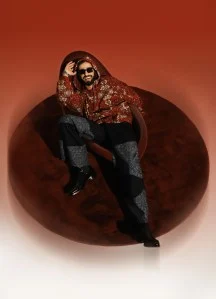
Before the fame, before the crowds, a young Marwan “Nordo” would sneak into Tunisia’s legendary Carthage Festival, hiding near the venue walls just to hear his idols perform. Nearly two decades later, he returned to that same stage—not as a fan, but as a headliner, selling out his debut show days in advance.This month, as he drops his debut full-length album Cotinga, the Tunisian star lands the cover of Billboard Arabia, bringing with him a story of resilience, ambition, and pure love for music.
Explore
Explore
See latest videos, charts and news
See latest videos, charts and news
For Nordo, his rise to stardom wasn’t just unexpected, it was nearly impossible. Not because he lacked talent, but because of the hardships he endured growing up. The real struggle wasn’t about breaking into music—it was surviving a childhood where even the basics weren’t guaranteed.
In an exclusive Billboard Arabia interview in Dubai, the Tunisian star opens up about it all. “I struggled just to get by. Just to survive. To eat. To sleep without feeling hungry. That’s what wore me down,” he says. “Making music didn’t wear me down. Music was love. Even when we had nothing to eat, I sang.” Over time, he learned to channel that pain into the studio, turning life’s toughest moments into songs that resonate with millions.
Trending on Billboard
His musical roots run deep: an aunt who taught him Tarab classics, school days spent reciting Qur’an, and a rap crew that gave him the name “Nordo” and shaped his early sound. Though rap launched his career, Nordo refused to be boxed in, absorbing influences from across genres.
Perhaps the most evident mark his hip-hop origins left on his music is his passion for collaboration, even after his solo career took off. Nordo is a people person, driven by emotion and deep bonds. Over the years, he’s teamed up with big names like Sanfara, Blingos, Stormy, Didine Canon 16 and others from across North Africa. His reach even expanded to Egypt, thanks to “Ya 3arraf”—his collaboration with Ahmed Saad and Zaeem, which introduced him to a whole new audience and climbed the Billboard Arabia charts.
But working with Nordo isn’t just about sharing a mic—it’s about real connection. “We’ve got to be friends first,” he explains. “When I collaborated with Didine or Stormy, it wasn’t business. It was brotherhood. We talked, we bonded. That’s how music becomes real. If it’s not honest, it doesn’t work.” He’s got one firm rule: “The thing I hate most? When people hit me up like: ‘Hey, Marwan, let’s make a hit.’ That’s not how it works. It never has.”
Nordo gets that the music industry has its own playbook, but his approach is different. “I need to see the soul behind the song,” he says. “If I don’t believe in the person, the music won’t speak.”
Nordo
Chady Kal/Billboard Arabia
His approach to music mirrors his approach to life: authenticity first. Nordo writes and composes every track himself, determined not to be just another pop act delivering other people’s words. His voice, a smoky, distinctive blend that immediately stands out among hundreds of voices, echoes Turkish vocal tones mixed with North African raï-style soul. Best exemplifying this musical amalgam that’s unmistakably Nordo is “Ya Denya,” which achieved great commercial success and garnered over 100 million views on YouTube.
Now, with Cotinga, Nordo is leveling up. The six-track EP is a kaleidoscope of sounds—flamenco riffs, R&B grooves, Afro-trap beats, Moroccan gnawa rhythms and acoustic pop—all written and composed by Nordo.
The album’s title nods to the cotinga bird: rare, vibrant and fiercely protective of its flock. “Kind of like me,” he says with a laugh. “I care about my people. I want them close, safe.”
Throughout the interview, Nordo oscillates between raw energy and quiet reflection. He shares stories from the studio grind, and how he created Cotinga on little sleep and pure adrenaline. At one point during our conversation, his eyes shifted, gazing into the distance. He told us about the days when making music wasn’t even an option; it was a luxury. The days when he had nothing… except his drive.
Today, as a father of two, he says every lyric, every show, every late night is for his boys – to give them the life he never had. But there’s a catch: “They have to be kind,” he insists. “They have to care about people. Share. Give back. Be there for their friends.”
There’s no manufactured redemption arc here. Nordo’s story is real, and so is his music. It’s driven by real growth. The kind that shapes not only his lyrics and melodies, but also his friendships, his fatherhood, his vision. Above all, Nordo’s mission is simple: to make music that’s honest, tell stories that matter, and remind people they’re not alone.
Nordo
Chady Kal/Billboard Arabia
HANA‘s “ROSE” returns to No. 1 on the Billboard Japan Hot 100, logging its second week atop the tally released April 30.
The major-label debut single by the septet born from the No No Girls audition show dropped digitally on April 2 and debuted at No. 1 on the chart dated April 9. The CD version launched with 46,866 copies after being released April 23 and hit No. 3 for sales. The single ruled video views this week while coming in at No. 13 for downloads (2,741 units), No. 3 for streaming (8,369,460 streams), and No. 9 for radio airplay. The track has been dominating the video metric for four straight weeks.
&TEAM’s “Go in Blind” soars 66-2 this week, selling 620,541 CDs in its first week, marking the group’s biggest sales week to date. The track also ranks at No. 15 for downloads, No. 58 for streaming, No. 45 for radio, and No. 28 for video.
Explore
Explore
See latest videos, charts and news
See latest videos, charts and news
Mrs. GREEN APPLE’s “KUSUSHIKI” follows at No. 3, down two notches from the week before. But the track continues to rule streaming for the third week in a row with 10,607,816 weekly streams.
Trending on Billboard
King Gnu’s “TWILIGHT!!!” rises 7-4. Streams for the Detective Conan: One-Eyed Flashback theme song are up to 227% (No. 4 for the metric), radio airplay to 280% and video views to 188% compared to last week. Mrs. GREEN APPLE’s “Lilac” follows at No. 5 on the Japan Hot 100, showing strength in karaoke, streaming and video, with karaoke holding the top spot for 16 consecutive weeks since the chart released Jan. 15.
The two debuts in the top 10 this week were CANDY TUNE’s second single, “Oshi Suki Shindoi” at No. 7 and RADWIMPS’ “Tamamono” at No. 9. The latter is the theme song for the ongoing NHK morning drama series Anpan.
The Billboard Japan Hot 100 combines physical and digital sales, audio streams, radio airplay, video views and karaoke data.
See the full Billboard Japan Hot 100 chart, tallying the week from April 21 to 27, here. For more on Japanese music and charts, visit Billboard Japan’s English X account.
Following before-and-after photos of Olly Murs‘ fitness journey going viral this week, the British pop star is reacting to what he calls “very disappointing” coverage of his body transformation.
Explore
Explore
See latest videos, charts and news
See latest videos, charts and news
It seemingly started when a poll on X (formerly Twitter) asked users if they preferred the “before” or “after” version of Murs’ body, and whether they were male or female. The results showed that the majority of women voters thought the “before” looked better, while men voters chose the “after.”
After days of social-media debate (which seemed to dismiss the fact that only Murs needs to be happy with his own physique), the singer/songwriter and TV host weighed in on the chatter, sharing a photo on Instagram of a Daily Mail headline that read: “Bad luck, Olly! Women prefer your ‘huggable dad bod’ to the muscles you got in the gym.”
Trending on Billboard
“I wouldn’t normally comment on stuff like this but from what I’ve seen I just want to say that this journey at the start of the year was for many personal reasons and not one of them was to spark a debate and divide opinions,” Murs wrote in the caption. “So it’s very disappointing to see this kind of reporting!”
He ended with a message to his supporters and anyone else on their own fitness journey: “Big Love to everyone who’s been kind and to anyone out there improving themselves and making adjustments to their wellbeing. Love to you all, keep it up! ignore the noise!”
One of Murs’ fans decided to flip the narrative by providing her own “before & after” moment on X. “Thought I’d do my own Olly Murs comparison post since that’s all that’s on my feed right now… 15 years in the game..5 albums out of 7 went to number 1 and STILL selling out arenas ! you deserve every single bit of success @ollymurs.”
The “before” moment she shared was Murs’ audition on season 6 of the U.K.’s X Factor in 2009 — where the then-25-year-old declared his dream of becoming a “pop star” and finished as the runner-up — and the “after” is his Official Charts Company stats, which include five U.K. No. 1 albums and four U.K. No. 1 singles. In the U.S., Murs has scored two Billboard Hot 100 hits, including the top 40 hit “Troublemaker,” featuring Flo Rida, which peaked at No. 25 in 2013 and hit the Pop Airplay top 10.
In addition to his music career, Murs has found success as a TV personality, appearing as a coach on The Voice UK from 2018 to 2023.
Find Murs’ response to the online debate below.
thought I’d do my own Olly Murs comparison post since that’s all that’s on my feed right now…15 years in the game..5 albums out of 7 went to number 1 and STILL selling out arenas ! you deserve every single bit of success @ollymurs 👏❤️ pic.twitter.com/ALaAgpoAj6— antonia✨ (@antonia_704) April 29, 2025

When Moroccan-Belgian artist Dystinct announced his upcoming third album with a debut single featuring French Montana, the moment didn’t just mark a major milestone in his career—it signaled his arrival on a much broader stage.
The single, titled “Ya Baba” and released on April 18, should be seen as a high-profile collaboration that reflects the convergence of languages, identities and sonic worlds. It’s also a meeting point for two diasporic stories: French Montana was born in Casablanca and grew up in the Bronx; Belgium-born Dystinct also traces his roots to the same Moroccan coastal city.
With 18 Billboard Hot 100 hits over the past decade-plus (including standouts like “Unforgettable” and “Pop That”), French Montana has cemented his status as a powerhouse in U.S. hip-hop and pop. In “Ya Baba,” however, we hear French Montana rapping in Moroccan Darija (Moroccan vernacular Arabic) for the first time. It’s a full circle moment for an artist who left Morocco at age 13 but never lost touch with his roots. For Dystinct, this collaboration marks a major milestone in his global rise—joining forces with a U.S. pop heavyweight signals a new level of international recognition and reach.
Trending on Billboard
Shot in Morocco, the music video for “Ya Baba” combines the celebratory and the sobering: children playing in the alleyway, elders sipping tea, the hustle and bustle of everyday life. Its combination of Moroccan textures with Afropop grooves, and lyrics that toggle between English and Moroccan Darija, illustrates Dystinct’s ethos of musical diversity. “More money, more problems, ya habibi,” he sings—echoing one of the most iconic lines in hip-hop history, while capturing the emotional paradox of success and the generational weight that comes with it.
But Dystinct’s journey to this moment didn’t happen overnight.
Born and raised in Belgium to Moroccan immigrant parents, Dystinct has long been immersed in Arabic music, as Billboard Arabia wrote in its cover story last year. Yet his ascent to stardom started first through Dutch-language tracks before making his mark in Arabic. That moment arrived in 2023 with LAYALI, an album that passed 500 million streams and supported a sold-out world tour.
Dsytinct
Moise Donkers/Billboard Arabia
Songs like “Tek Tek” with MHD and “Y Dor” with Soolking positioned him at the heart of the MENA Afropop wave. The viral success of “La”—which soared to No. 1 on Billboard Arabia’s Hot 100—and the hit “Wala 5,7,10” cemented his status as a chart-topper, propelling him to No. 2 on Billboard Arabia’s Artist 100. Meanwhile, his track “Spider,” with French artist GIMS, reached new heights, earning multiple Diamond certifications, and is currently approaching 200 million streams. The versatility in dialects in these tracks—from Moroccan to Khaleeji Arabic—reflects his fluency, not just linguistically but musically, across several continents.
French Montana’s career paved the way for this kind of ambition, though from a different era and scale of global success. From his breakout mixtapes in the late 2000s to major label success, Montana represents an earlier wave of diasporic success—one that had to Americanize first, then reconnect with its roots. With “Ya Baba,” the script flips: Dystinct doesn’t compromise his sound for global appeal; he elevates it on his own terms, and French Montana meets him there.
In a world where music is increasingly borderless, this collaboration signifies more than a co-sign—it’s a recognition that cultural identity, when channeled authentically, has the power to travel. As French Montana raps in Darija and Dystinct carries Arabic textures across languages and platforms, “Ya Baba” becomes a symbol of the present moment: one in which artists don’t have to choose between global and local but can be both.
Dsytinct
Moise Donkers/Billboard Arabia