 State Champ Radio
 genre rb
Page: 14
Forever No. 1 is a Billboard series that pays special tribute to the recently deceased artists who achieved the highest honor our charts have to offer — a Billboard Hot 100 No. 1 single — by taking an extended look back at the chart-topping songs that made them part of this exclusive club. Here, we honor Sly Stone, who died on Monday (June 9) at age 82, by looking at the first of Sly & the Family Stone’s three Hot 100-toppers: the simple, yet profound “Everyday People.”
Sly & the Family Stone, a genre-fluid, interracial, mixed-gender group (at a time when all three things were unique) was formed in San Francisco in 1966. The group was led by Sly Stone, a musical prodigy who was just 23 at the time. His main claim-to-fame at that point is that he had produced a string of hits for the pop/rock group The Beau Brummels, including “Laugh, Laugh” and “Just a Little.”
Trending on Billboard
Sly & the Family Stone made the top 10 on the Billboard Hot 100 in April 1968 with its first chart hit, “Dance to the Music.” That funky celebration of dance music wasn’t topical at all, but after the stunning events of 1968 – a year of assassinations, riots and a war without end in Vietnam – acts almost had to say something, and Sly & the Family Stone did on “Everyday People,” which was released that November.
The song is a plea for understanding and racial unity, which is so understated in its approach that it’s easy to lose sight of just how progressive its sentiments seemed in 1968. The record has a gentle tone and a disarming opening line: “Sometimes I’m right and I can be wrong/ My own beliefs are in my song.” Who ever starts out a conversation by conceding “I can be wrong?”
The sense of urgency and passion picks up on the proclamation “I am everyday people!” which is repeated three times during the song, and then on the call to action “We got to live together,” which is repeated twice.
Stone, who was born Sylvester Stewart, wrote and produced “Everyday People.” His genius move on this song was to simplify the discussion to the level of a childhood playground taunt – “There is a yellow one that won’t accept the Black one/ That won’t accept the red one that won’t accept the white one/ Different strokes for different folks/And so on and so on and scooby-dooby-dooby.” The unspoken, but unmistakable, message: Isn’t all this division really pretty childish?
Sly makes the point even more directly in the second verse: “I am no better and neither are you/ We are the same whatever we do.” The reasonableness of his argument instantly disarms any detractors.
The song’s politics are expressed most directly in the third verse, in the song’s depiction of counter-culture types vs. establishment types; progressives vs. conservatives. “There is a long hair that doesn’t like the short hair/For being such a rich one that will not help the poor one.”
The bridges of the song contain the line “different strokes for different folks,” which was initially popularized by Muhammad Ali. It became a popular catchphrase in 1969 (and inspired the name of a 1978-86 TV sitcom, Diff’rent Strokes).
Sly wisely kept the record short – the childlike sections, which are charming in small doses, would have become grating if the record had overstayed its welcome. The record runs just 2:18, shorter than any other No. 1 hit of 1969.
Three Dog Night took a similar approach on “Black & White,” which was a No. 1 hit in September 1972 – putting a plea for racial unity and brotherhood in simple, grade-school language. Three Dog’s record isn’t as timeless or memorable as “Everyday People,” but it shows Sly’s influence.
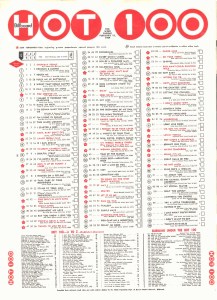
“Everyday People” entered the Hot 100 at No. 93 for the week ending Nov. 30, 1968. You might assume that a record this catchy and classic shot to the top quickly, but it took a while. In the week ending Jan. 11, 1969, it inched up from No. 27 to No. 26, looking like it might not even match “Dance to the Music”’s top 10 ranking. But then it caught fire. The following week, it leapt to No. 15, then No. 5, then No. 2 for a couple of weeks behind Tommy James & the Shondells’ “Crimson and Clover,” before finally reaching the top spot in the week ending Feb. 15.
It stayed on top for four consecutive weeks, the longest stay of Sly’s career. The song was of a piece with such other socially-aware No. 1 hits as Aretha Franklin’s “Respect” (1967) and The Rascals’ “People Got to Be Free” (1968).
“Everyday People” remained on the Hot 100 for 19 weeks, a personal best for Sly, and wound up as the No. 5 song of 1969 on Billboard’s year-end chart recap. The song was included on the group’s fourth studio album, Stand!, which was released in May 1969. The album reached No. 13 on the Billboard 200 and remained on the chart for 102 weeks – also a personal best for the group. The album, which also featured “Sing a Simple Song,” “Stand!” and “I Want to Take You Higher,” was inducted into the National Recording Registry in 2014 and the Grammy Hall of Fame in 2015.
Billboard
The band included “Everyday People” in their set at Woodstock on Aug. 17, 1969. Fun Fact: It was the only No. 1 Hot 100 hit performed by the original artist during that landmark three-day festival.
The song is widely acknowledged as a classic. Rolling Stone had it at No. 109 on its 2024 update of its 500 Greatest Songs of All Time list. Billboard included it on its 2023 list of the 500 Best Pop Songs: Staff List. (We had it way down at No. 293, clearly proving the wisdom of Sly’s opening line, “Sometimes I’m right and I can be wrong.”)
While Sly was bedeviled by personal demons that shortened his run at the top, he lived to get his flowers. The band was inducted into the Rock & Roll Hall of Fame in 1993 (in its first year of eligibility). On his own, Sly received a lifetime achievement award from the Recording Academy in 2017.
Numerous artists covered “Everyday People” in the wake of Sly’s recording. Between 1969 and 1972, the song was featured on Billboard 200 albums by The Supremes, Ike & Tina Turner, The Winstons, Watts 103rd Street Rhythm Band, Supremes & Four Tops, Billy Paul and Dionne Warwick.
Spend any time on YouTube and you can also find cover versions of “Everyday People” by everyone from Peggy Lee to Pearl Jam (who performed it in concert in 1995). Other artists who took a stab at it: Aretha Franklin, The Staple Singers, William Bell, Belle & Sebastian, Maroon 5 (on a 2005 remix and cover album Different Strokes by Different Folks) and the unlikely team of Cher and Future, who covered it for a 2017 Gap ad that has recently gone viral.
A couple artists even had Hot 100 hits with their new spins on the song. Joan Jett & the Blackhearts covered the song in 1983 and took it to No. 37. Arrested Development drew heavily from the song for their 1993 hit “People Everyday,” which reached No. 8. (The song used the chorus and basic structure of the original, with new verses written by lead singer Speech.)
Sly & the Family Stone nearly landed a second No. 1 hit in 1969, but “Hot Fun in the Summertime” stalled at No. 2 for two weeks in October behind The Temptations’ “I Can’t Get Next to You.” “Hot Fun” wound up at No. 7 on the aforementioned year-end Hot 100 recap, making Sly the only act with two songs in the year-end top 10.
Questlove, who directed the 2025 documentary Sly Lives (aka The Burden of Black Genius), shared a touching tribute to the icon on Instagram on Monday. “Sly Stone, born Sylvester Stewart, left this earth today, but the changes he sparked while here will echo forever … He dared to be simple in the most complex ways — using childlike joy, wordless cries, and nursery rhyme cadences to express adult truths.”
That last part was a clear reference to “Everyday People.” Questlove also recalled what he called that song’s “eternal cry” – “We got to live together!” Said Quest: “Once idealistic, now I hear it as a command. Sly’s music will likely speak to us even more now than it did then. Thank you, Sly. You will forever live.”
Later this week: Two additional Sly & the Family Stone No. 1s take the group into darker and murkier territory, with similarly spellbinding results.
06/11/2025
Listen to new must-hear songs from emerging R&B/hip-hop artists like Jon Vinyl and Flee Lord.
06/11/2025
All products and services featured are independently chosen by editors. However, Billboard may receive a commission on orders placed through its retail links, and the retailer may receive certain auditable data for accounting purposes. After years as one of the music industry’s most respected singers and songwriters, Victoria Monét has now added another title to […]
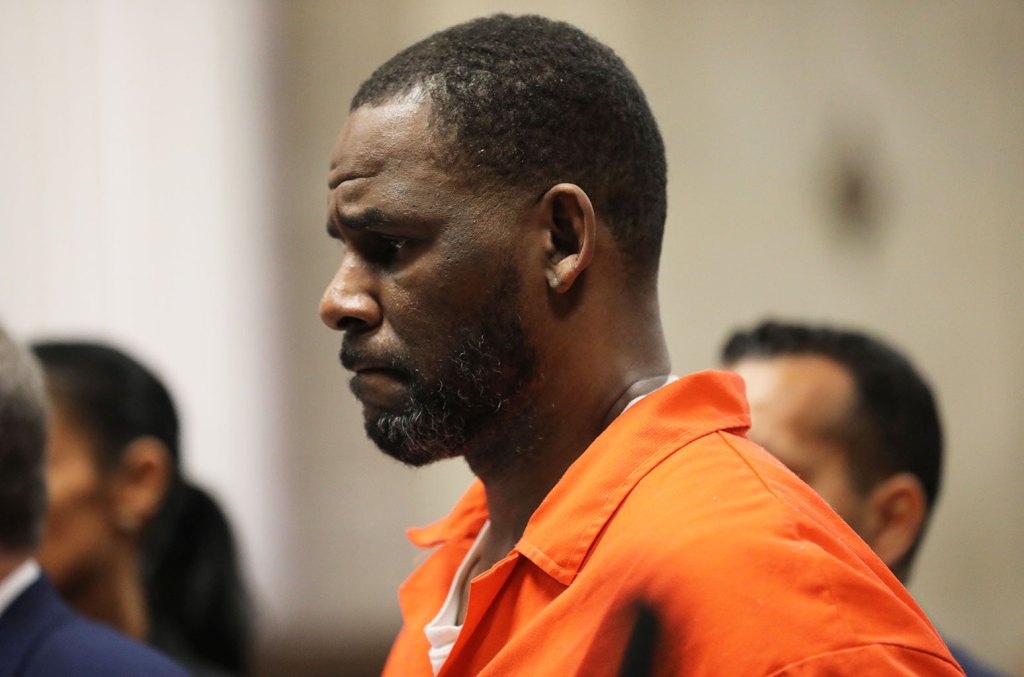
R. Kelly is asking to cut short his 30-plus-year sentence for racketeering, sexual abuse and child pornography based on strange new claims that jail officials tried to solicit a fellow inmate to kill him.
The disgraced R&B star made the eyebrow-raising allegations in a Tuesday (June 10) court filing asking to be released from the Federal Correctional Institution in Butner, N.C., where he’s serving multiple decades after being convicted in two separate criminal cases.
Kelly claims he’s no longer safe behind bars because prison officials are trying to have him killed to keep from revealing prosecutorial misconduct he recently uncovered — namely, that his pre-trial cellmate stole his attorney-client communications and shared these private messages with prosecutors.
According to the motion, prison officials tried to stop this damaging information from getting out by soliciting fellow inmate Mikeal Glenn Stine, a member of the Aryan Brotherhood prison gang, to kill Kelly. Kelly’s lawyers say that while Stine ultimately did not go through with the alleged assignment, the threat still lingers.
“More A.B. members are accumulating at his facility,” reads the filing. “More than one has already been approached about carrying out his murder. One of them will surely do what Mr. Stine has not, thereby burying the truth about what happened in this case along with Robert Kelly.”
The motion includes signed declarations from both Stine and Kelly’s former cellmate. In a statement shared with Billboard, Kelly’s attorney, Beau Brindley, said, “The evidence we have before us demonstrates the weaponization of the D.O.J. to pursue a public figure through corrupt and criminal means.”
Brindley added that Kelly’s legal team is seeking clemency from President Donald Trump, saying Trump “is the only one with both the power and the courage” to curb such alleged prosecutorial corruption.
Prosecutors did not immediately return a request for comment on the motion, but they quickly filed papers of their own asking Judge Martha M. Pacold to strike Kelly’s filing, which contained the name of a child victim who was anonymized during his trial.
“Robert Kelly is a serial sexual predator,” wrote prosecutors. “He even documented his sexual abuse of children on film — creating child pornography — such that the abuse would live on in perpetuity. That abuse and harassment continues with defendant’s latest filing.”
Judge Pacold struck the motion as requested and ordered Kelly’s team to refile it with the victim’s name properly redacted. The judge set a hearing on the matter for Wednesday (June 11) in Chicago.
Kelly was convicted of a slew of sex crimes at two separate federal trials. A New York jury found him guilty of racketeering and sex trafficking in 2021, and he was convicted of child pornography and enticing minors for sex in Chicago in 2022.
The former R&B star was sentenced to 30 years in prison for the New York conviction and 20 years in the Chicago case, although the vast majority of the second sentence will overlap with the first. Both convictions have been upheld on appeal.
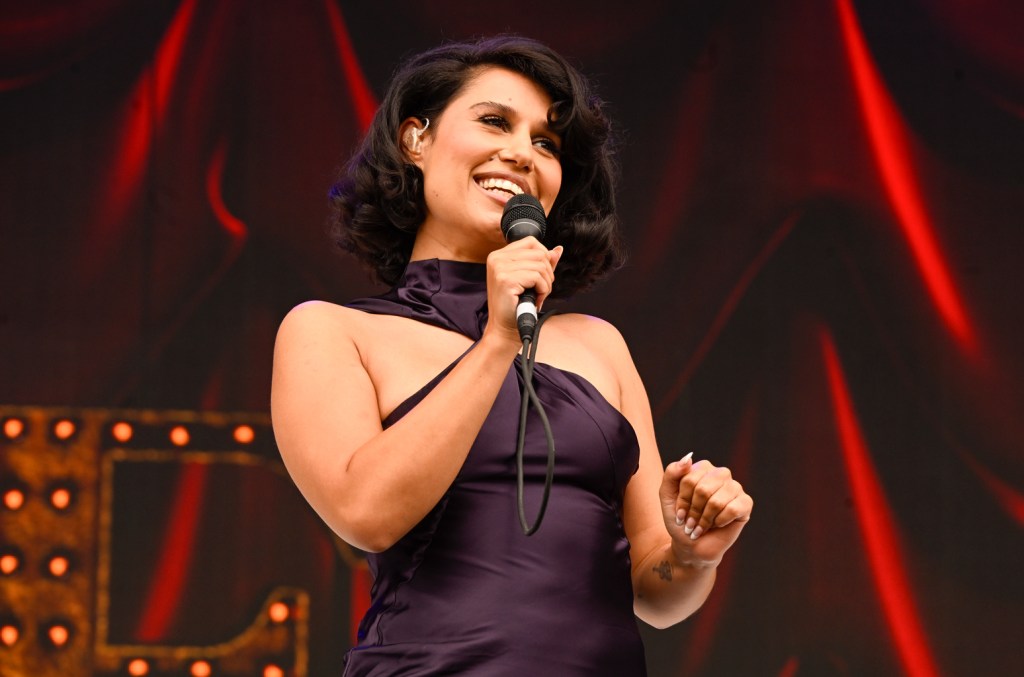
RAYE has a pair of collaborations coming out with Mark Ronson, and the British singer nearly shied away from working with the esteemed producer due to his connection to the late Amy Winehouse, whom RAYE has drawn comparisons to.
The first collab is titled “Suzanne” and is slated to arrive on Friday. People caught up with RAYE backstage at Governors Ball in NYC over the weekend, where she opened up about her initial hesitancy to team up with Ronson, who predominantly produced Winehouse’s final album, Back to Black, alongside Salaam Remi in 2006.
“Honestly, I’m not gonna lie, I actually was quite nervous and scared to work with him,” she admitted. “I just do want to say that I know I can never, ever, ever, ever, ever attempt to replace or imitate Amy. I’m in awe of her. We all are, and we miss her.”
Trending on Billboard
RAYE continued: “It’s quite a tough thing to even allow myself to create so freely with him,” she says. “But I really just wanted to be like, ‘Do you know what? I just need to forget what anyone else is gonna say about this.’ I absolutely love this producer. I’ve always wanted to work with this producer since I was a little girl.”
Their second collaboration is set to be released later in June, with “Grandma Calls the Boy Bad News” slated to land on the F1 soundtrack.
“We’ve made music together that I’m so proud of, and I love,” she gushed. “I play it, and it makes me happy and joyful, so I’m proud.”
The “Escapism” singer’s next album is starting to take shape, but she’s stuck without a title for the project, which follows her acclaimed 2023 LP, My 21st Century Blues.
“I don’t have an album title,” RAYE said. “I’m like, ‘What is it gonna be called?’ It’s stressing me out right now, I can’t lie, because I’ve got the music starting to really come there. I just don’t know what this album’s gonna be called. In my humble opinion, My 21st Century Blues is such a fire album title, and I can’t hand in an album title that’s less good than that.”

Leon Thomas’ breakout hit “Mutt” conquers another radio ranking as it climbs to No. 1 on Billboard’s Rhythmic Airplay chart (dated June 14). The single steps from the runner-up spot to become the most-played song on United States panel-contributing rhythmic radio stations in the tracking week of May 30-June 5, according to Luminate. For its […]
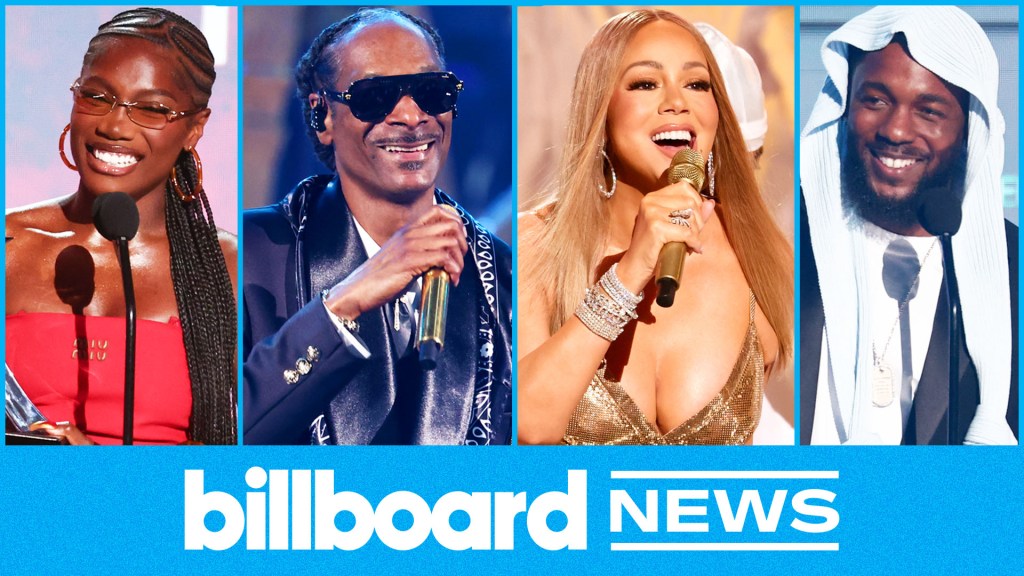
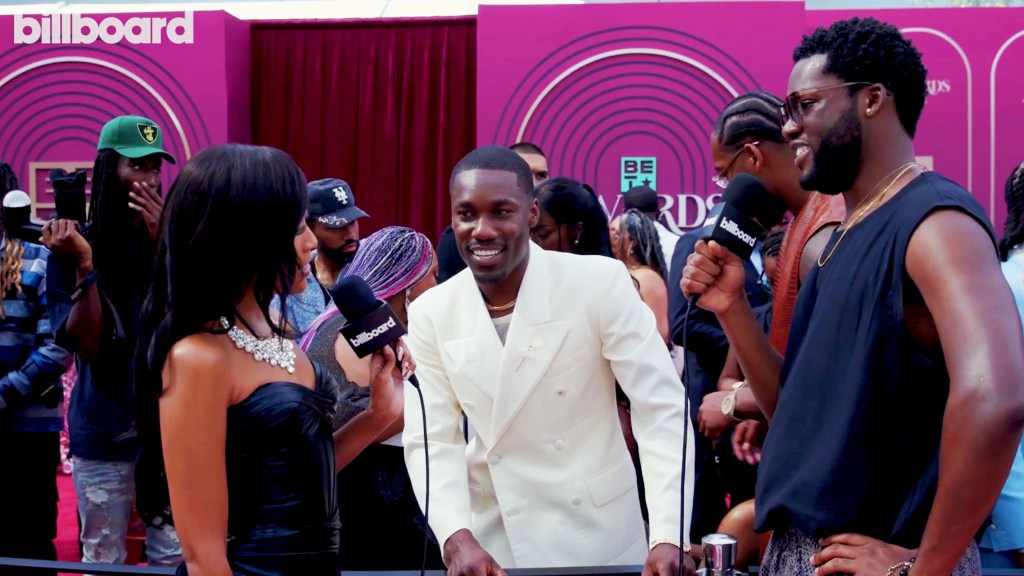
The 2025 BET Awards were filled with huge wins from Kendrick Lamar, honors for Mariah Carey & Snoop Dogg, and Doechii’s passionate speech on people protesting ICE. We take you through the biggest moments of the 25th anniversary of the BET Awards. What was your favorite moment? Let us know in the comments! Tetris Kelly: […]
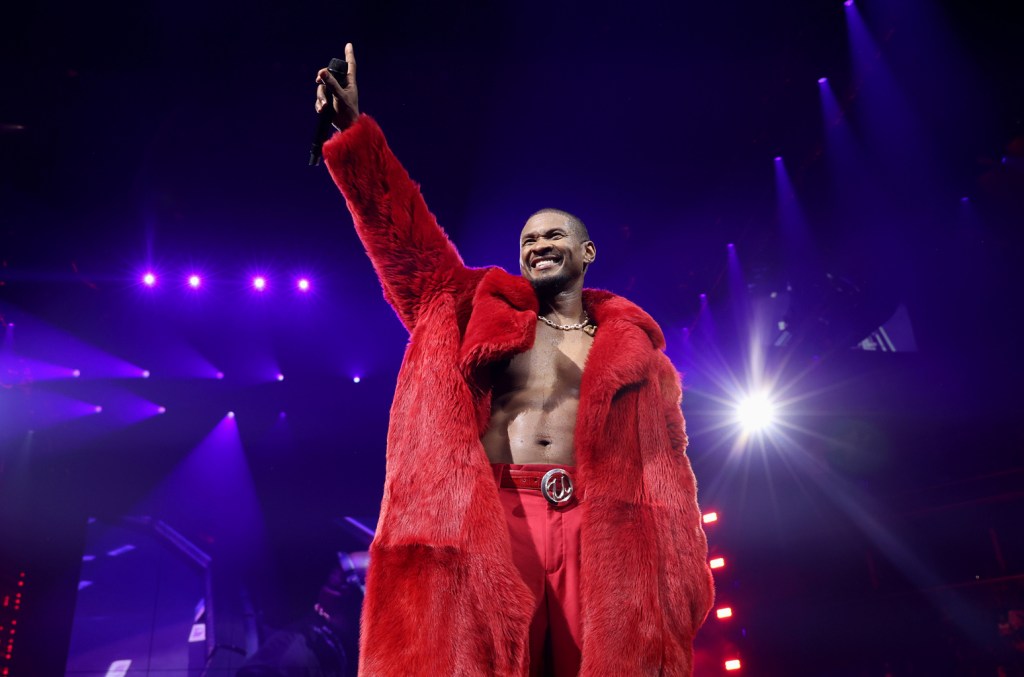
Usher was sitting at home watching the 2025 BET Awards Monday night (June 9) when he recognized host Kevin Hart‘s fuzzy red coat. Ahead of Teyana Taylor‘s television debut performance of her new single “Long Time,” Hart strutted down the aisle of Peacock Theater at L.A. Live wearing Usher’s signature jacket from his most recent […]
On a drizzly Monday (June 9) night in Brooklyn’s Prospect Park, the BRIC Celebrate Brooklyn! summer series kicked off with a knockout double bill of Grace Jones and Janelle Monáe that also served as an unofficial Pride Month party.
Explore
See latest videos, charts and news
See latest videos, charts and news
“Grace Jones is the most original, innovative artist of our time,” Monáe said toward the end of the night, saluting the Jamaica-born musician who went from singing disco in Studio 54 to pioneering a spiky, brash blend of reggae and art rock in the ‘80s. Standing in the park after nightfall, gazing up at the inimitable Jones under the dramatic stage lights in all her imposing, undaunted glory, you’d be a fool to argue semantics with Monáe or attempt to insert a qualifier. Jones is undoubtedly one of the most wildly underappreciated living pioneers, a Black woman whose experimental and experiential art pop was decades ahead of its time. And at 77, Jones is still sowing the wildest of oats, bucking the narrative that edgy musicians need to settle into some kind of well-coiffed adult contemporary mold after crossing a certain age.
Bashing on cymbals throughout “Demolition Man,” straddling a metal gate while singing “My Jamaican Guy,” prancing around matador-style during “I’ve Seen That Face Before (Libertango)” and letting her tongue run amok the entire evening (“I do like to stick out my tongue; don’t make it make you crazy?” the contralto purred), Jones is as uninhibited as ever. Not to mention inscrutable. When she chugged a glass of wine and belted out “Amazing Grace,” it was hard to parse whether it was an earnest expression of faith, a cheeky brag about how wonderful she is or both.
Trending on Billboard
“Nobody’s hurt, right?” Jones asked her band and backup singers after sending a cymbal sailing across the stage. After ascertaining that everyone was fine, she hugged her singers. “You can take a beating,” she said with a wide grin. “I’ve taken a lot. And I’m still here.”
In addition to playing a new, unreleased funk song called “The Key” which found her in her characteristic sing-speak mode augmented by a vocoder or talk box effect, she delivered the lion’s share of her catalog favorites, including her full-throated, hard-hitting “Love Is the Drug.” In a shimmering bowler hat under a spotlight, Jones whipped the crowd into a sing-along fervor at the end of the Roxy Music cover, declaring, “It’s wake up the neighbors!” and urging the all-smiles audience to pump up the decibels and “wake ‘em up!” with every fresh round of whoa-ohs.
“Curfew? Who’s ever heard of a curfew?” Jones snarled as she put on a massive, seashell-esque red headpiece and began slinking around to the flirty funk guitar of “Pull Up to the Bumper” (a gay club favorite for reasons that become clear when you pay attention to the lyrics). “Bumper” stretched out into an extended jam session for her nimble band, with Monáe – who had opened the show with her own indefatigably funky brand of pop&B – joining Jones onstage. It was ostensibly a duet on the 1981 reggae-disco classic, but in practice, it was an excuse for the two to let loose: they offered up some French kicks; Jones licked the microphone while Monáe sang into it; they collapsed into each other’s arms, laughing; and one point, Monáe, on all fours, climbed through Jones’ legs, with Jones proceeding to drum on Monáe’s backside and then swivel around and ride her La Dolce Vita-style. Not long after, Monáe pantsed Jones (how often do you get to pants your music and style icon?) and then attempted, unsuccessfully, to free Jones from her slacks. “You’re a naughty, naughty girl,” Monae told Jones after the escapade, wagging her finger in cartoonish disapproval.
Jones shouted out “Brooklyn Pride!” a few times during the show, and while it wasn’t an official Brooklyn Pride event, the playful, resilient spirit of the LGBTQ community – from the audience to what was happening onstage – undoubtedly elevated the evening.
Curfew be damned: after that duet, Jones came out for an encore despite the house lights having already come up.
And what an encore. Jones crooned, cooed, barked and spat the lyrics to her Billboard Dance Club Songs No. 1 “Slave to the Rhythm” while hula-hooping for the entire classic (and she did the long version, too, introducing her band and bringing out her backstage crew during the song). When the show was finally over, the ebullient Brooklyn audience was ecstatic but fully danced out – and left with a lingering suspicion that at 77, Jones is still running circles around us all.
By providing your information, you agree to our Terms of Use and our Privacy Policy.
We use vendors that may also process your information to help provide our services. // This site is protected by reCAPTCHA Enterprise and the Google Privacy Policy and Terms of Service apply.