State Champ Radio
 genre pop
Page: 53
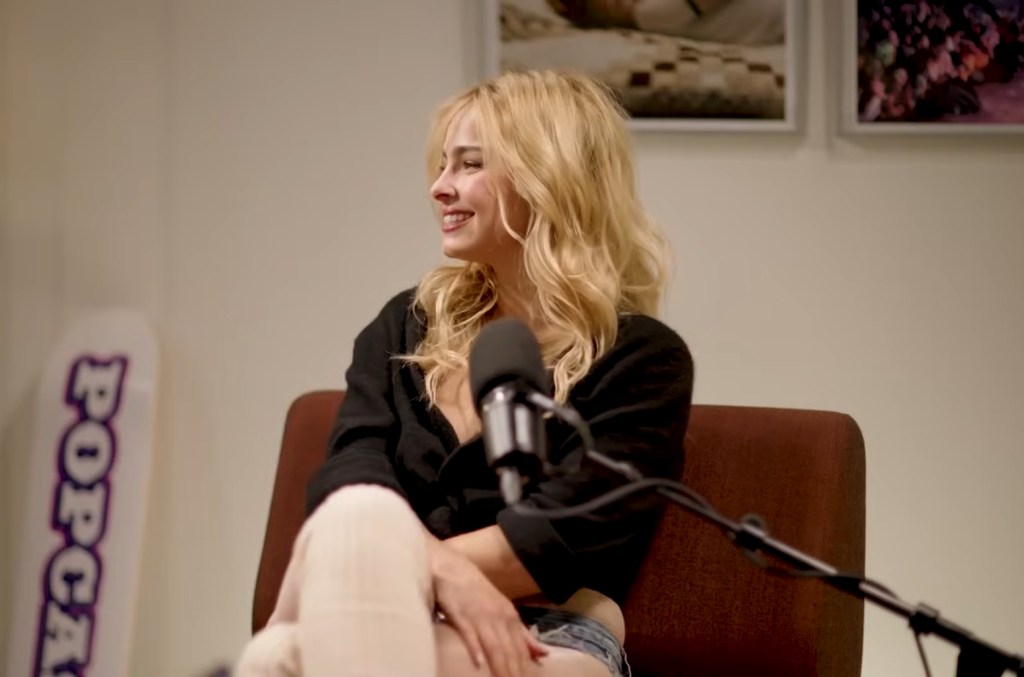
Addison Rae is on the verge of pop superstardom, but there was once a time when she was a rising TikTok star and a college student looking to get by. Rae joined The New York Times‘ Popcast on Friday (May 30), where she reflected on her time at Louisiana State when she was getting paid […]
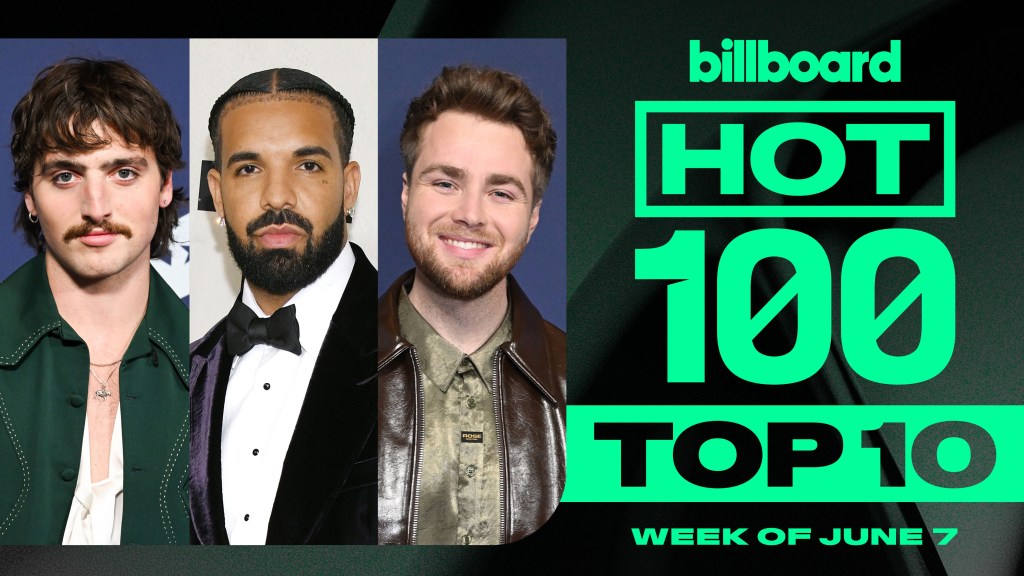
Will Alex Warren’s “Ordinary” take the No. 1 spot from Morgan Wallen? Tetris Kelly: This is the Billboard Hot 100 top 10 for the week dated June 7th. “Beautiful Things” hangs on at No. 10. “Nokia” is up to No. 9, as is “Lose Control” to No. 8, “Die With a Smile” to No. 7, […]
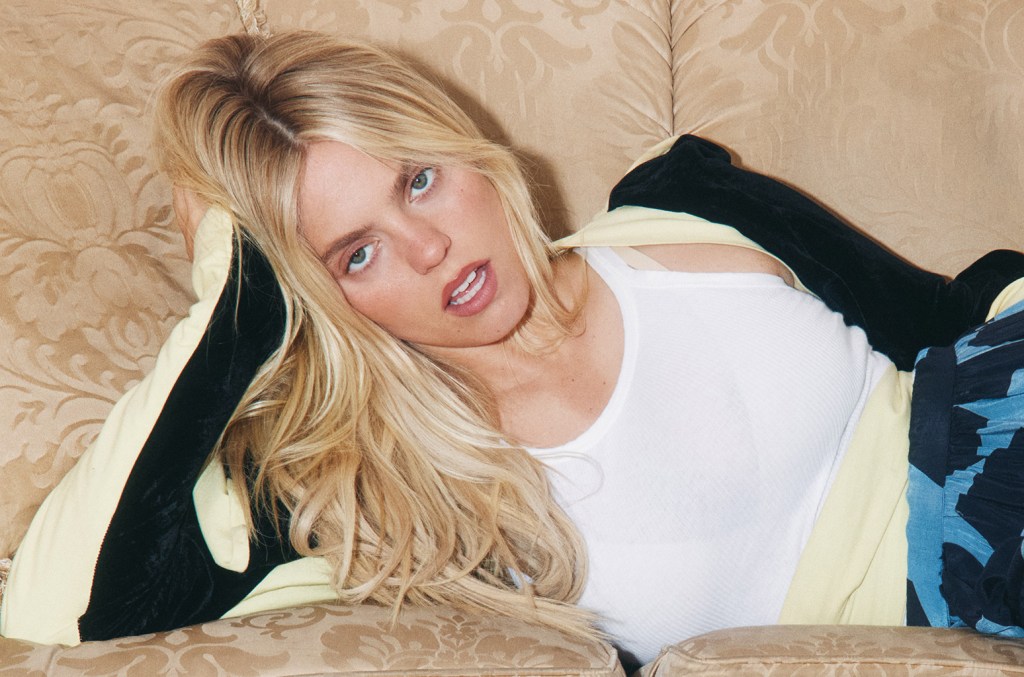
With Pride Month 2025 coming amid dark times for the LGBTQ+ community, pop singer Reneé Rapp wants her fans to know there is still light in the dark — they just have to go looking for it. In a new cover story for Cosmopolitan on Monday (June 2), the “Leave Me Alone” singer shared a […]

Four years before Taylor Swift began her crusade to re-record new versions of her early albums so she could own the valuable master recordings, Bowling for Soup did the same. The pop-punk band put out Songs People Actually Liked — Volume 1, note-for-note copies of early quasi-hits such as “Girl All the Bad Guys Want” and “Punk Rock 101,” and justified it by telling fans they were more mature, better musicians and sought to “add some luster” to the originals.
The band conspicuously did not say the 2015 project’s main purpose was to secure the rights to those songs, boost streaming royalties and be able to license them to movies, ads and TV shows. At the time, that seemed crass. “We had to be very careful about never making our audience feel like we were taking advantage of them,” says Jaret Reddick, the band’s frontman, by phone from a Disney cruise with his family in Juneau, Alaska. “Shortly after that, Taylor Swift literally educates the entire music population on song ownership. She made it OK for all of us to re-record our stuff and everybody will back us. It was such a blessing.”
Trending on Billboard
Swift announced Friday (May 30) that she purchased the master recordings to her first six albums, from 2006’s Taylor Swift to 2017’s Reputation, from investment firm Shamrock Capital, for an undisclosed price. The sale was the end of a six-year crusade, after music mogul Scooter Braun bought the Nashville record company, Big Machine Label Group, which had released Swift’s original recordings. Angered that control of her catalog went to Braun, who’d worked with her enemy Kanye West, Swift tried and failed to buy back the recordings from Braun, then Shamrock, which bought them from Braun for what sources say was around $360 million.
Swift’s strategy — re-recording all six of those albums with most of the original musicians as “Taylor’s Versions,” convincing top radio stations to air them and streaming services to emphasize them in playlists while promoting them on her massive tours — has been influential, directly or indirectly, on other artists. It has also led to major labels overhauling their contracts to avoid anybody else replicating “Taylor’s Versions.” In part because Swift’s re-recordings have muted sales, streaming and licensing for the originals, all three major labels have recently overhauled their contracts to force artists to wait 10, 15 or even 30 years to re-record after departing their labels. “You try to put the shortest re-recording restriction you can get in the record contract — it used to be five years after release, but now I’ve found they’ve extended it to 10 years,” says Ben McLane, another music attorney.
Nonetheless, artists in the post-“Taylor’s Versions” age persist in following Swift’s lead: Pop-punk band Cartel recently announced it would release a re-recording of its 2005 album Chroma this September. “Artists are re-recording their masters more frequently than they were,” says Josh Karp, a lawyer who represents Cartel and other artists. “Part of that is definitely that Taylor shined a big bright light on it and showed it could be done successfully.”
Long before Swift, Frank Sinatra, Little Richard, Chuck Berry and many others re-recorded their hits to claim financial control, and the process still happens today, with or without Swift’s influence. Switchfoot put out a new version of its 2003 breakthrough The Beautiful Letdown 20 years later; TLC, Wheatus and Paris Hilton have done the same in recent years; and Ashanti announced in 2022 that Swift inspired her to begin a similar project. “It’s also a technological issue,” Karp says. “It’s simply easier to record now than it was 10, 20, 30 years ago.”
Swift’s crusade, according to Gandhar Savur, a music attorney, has helped young artists better understand the benefits of signing label licensing deals rather than ownership deals. In the former, artists retain control of their recordings, although they’re unlikely to get an advance payment from a label to fund an expensive recording project; in the latter, the label pays out that advance money in exchange for ownership of the recordings for as long as several decades. “Historically, artists have said, ‘Don’t give away your publishing,’ and that message has gotten across. Now I feel like artists are starting to feel that way about their recordings as well,” Savur says. “Part of that is a result of big stories and big headlines and Taylor Swift and whoever else talking about the importance of owning their recordings.”
After Wheatus finished re-recording its 1999 alt-rock hit “Teenage Dirtbag” in April 2020, and it went viral on TikTok and Instagram during the pandemic lockdown, the new master generated nearly $25,000 for singer-songwriter Brendan Brown, according to Billboard estimates in 2023. Although Swift did not inspire the new version — that would have been original label Sony Music’s losing the master recordings, according to Brown — the singer-songwriter has praised Swift for raising the issue. “I would love to see the contract,” Brown said by phone from a tour bus en route to New Jersey after Swift’s announcement Friday. “But generally the answer is, ‘Yeah. Nice job. Get ’em.’”

Alex Warren’s “Ordinary” remains the biggest song in the world, as it notches a fifth week at No. 1 on the Billboard Global 200 and a third week atop Billboard Global Excl. U.S.
As previously reported, the song takes over at No. 1 on the U.S.-based Billboard Hot 100.
Meanwhile, sombr scores his first Global 200 top 10 with “Back to Friends” (up 17-9) and MOLIY, Silent Addy, Skillibeng and Shenseea’s “Shake It to the Max (Fly)” surges to the top tier on Global Excl. U.S. (16-10), likewise becoming the first top 10 on the tally for each act.
Trending on Billboard
The Billboard Global 200 and Global Excl. U.S. charts, which began in September 2020, rank songs based on streaming and sales activity culled from more than 200 territories around the world, as compiled by Luminate. The Global 200 is inclusive of worldwide data and the Global Excl. U.S. chart comprises data from territories excluding the United States.
Chart ranks are based on a weighted formula incorporating official-only streams on both subscription and ad-supported tiers of audio and video music services, as well as download sales, the latter of which reflect purchases from full-service digital music retailers from around the world, with sales from direct-to-consumer (D2C) sites excluded from the charts’ calculations.
“Ordinary” leads the Global 200 with 70.1 million streams (up 1% week-over-week) and 13,000 sold (up 17%) worldwide May 23-29. Further sparking its profile, Warren performed the song on the American Music Awards, broadcast on CBS, May 26.
Lady Gaga and Bruno Mars’ “Die With a Smile” holds at No. 2 on the Global 200, after 18 weeks at No. 1 starting last September (second only to the 19 weeks at No. 1 for Mariah Carey’s “All I Want for Christmas Is You” since the chart began); ROSÉ and Bruno Mars’ “APT.” repeats at No. 3, after 12 weeks at No. 1 starting in November; Billie Eilish’s “Birds of a Feather” keeps at No. 4, following three weeks at No. 1 last August; and Benson Boone’s “Beautiful Things” lifts 6-5 after seven weeks on top starting in February 2024.
sombr’s “Back to Friends” hits the Global 200’s top 10, bounding 17-9 with 37.7 million streams (up 13%) worldwide. The singer-songwriter (real name Shane Boose) is charting his first two Global 200 entries in the top 20 simultaneously – “Undressed” jumps 19-13, likewise hitting a new high, with both tracks having benefitted from exposure on TikTok.
“Ordinary” rules Global Excl. U.S. with 50.9 million streams (up 1%) and 5,000 sold (up 6%) outside the U.S.
“Die With a Smile” is steady at No. 2 after 17 weeks atop Global Excl. U.S. starting last September. Only “APT.,” which holds at No. 3, has led longer: 19 weeks, beginning in November. “Birds of a Feather” ascends 5-4, following three weeks at No. 1 last August, and JIN’s “Don’t Say You Love Me” dips to No. 5 a week after it debuted at No. 4.
Plus, MOLIY, Silent Addy, Skillibeng and Shenseea’s “Shake It to the Max (Fly)” swoops into the Global Excl. U.S. top 10, bounding 16-10 with 31.2 million streams (up 21%) and 1,000 sold (up 29%) outside the U.S. The track leads the Billboard U.S. Afrobeats Songs chart for a fourth week.
The Billboard Global 200 and Billboard Global Excl. U.S. charts (dated June 7, 2025) will update on Billboard.com tomorrow, June 3. For both charts, the top 100 titles are available to all readers on Billboard.com, while the complete 200-title rankings are visible on Billboard Pro, Billboard’s subscription-based service. For all chart news, you can follow @billboard and @billboardcharts on both X, formerly known as Twitter, and Instagram.
Luminate, the independent data provider to the Billboard charts, completes a thorough review of all data submissions used in compiling the weekly chart rankings. Luminate reviews and authenticates data. In partnership with Billboard, data deemed suspicious or unverifiable is removed, using established criteria, before final chart calculations are made and published.
Alex Warren’s “Ordinary” ascends to No. 1 on the Billboard Hot 100, becoming the singer-songwriter’s first leader on the list. It rises from No. 4, after reaching a previous No. 2 best.
Warren becomes the first male soloist to earn an initial Hot 100 No. 1 this year.
“Ordinary,” the 1,181st No. 1 in the Hot 100’s 66-year history, rose to the top of both the Billboard Global 200 and Billboard Global Excl. U.S. charts in May. On the Hot 100, Warren charted one prior entry, “Burning Down” (No. 69 peak, last October). Concurrent with the coronation of “Ordinary,” he adds his second top 40 Hot 100 hit, as “Bloodline,” with Jelly Roll, debuts at No. 32.
Before concentrating on music full-time, Warren grew a following in Hype House, a group of TikTok content creators that frequently collaborated. He signed to Atlantic Records in 2022.
“In my career, I have been so open with my friends who follow me,” Warren, who co-authored “Ordinary,” told Billboard earlier this year. “They know everything about me and we’re so connected, and I love that. I’m thinking of these people while I’m writing these songs, because I’m thinking about what I would want to hear if I was still going through that.”
Browse the full rundown of this week’s top 10 below.
The Hot 100 blends all-genre U.S. streaming (official audio and official video), radio airplay and sales data, the lattermost metric reflecting purchases of physical singles and digital tracks from full-service digital music retailers; digital singles sales from direct-to-consumer (D2C) sites are excluded from chart calculations. All charts (dated June 7, 2025) will update on Billboard.com tomorrow, June 3. For all chart news, you can follow @billboard and @billboardcharts on both X, formerly known as Twitter, and Instagram.
Luminate, the independent data provider to the Billboard charts, completes a thorough review of all data submissions used in compiling the weekly chart rankings. Luminate reviews and authenticates data. In partnership with Billboard, data deemed suspicious or unverifiable is removed, using established criteria, before final chart calculations are made and published.
‘Ordinary’ Streams, Airplay & Sales
Olivia Dean has announced details of her upcoming second studio album, The Art of Loving, and shared lead single “Nice to Each Other.” Dean will release her new LP on Sept. 26 via Capitol Records, and it will be the follow-up to 2023 debut Messy. Her debut album hit No. 4 on the U.K.’s Official […]
JoJo Siwa and Chris Hughes have gone bed selfie official. The pair who appeared on Celebrity Big Brother UK earlier this year first sparked rumors of a possible romance after they seemed to get close during the taping of the series and Siwa broke up with her then-partner, Kath Ebbs, at the wrap party.
Explore
See latest videos, charts and news
See latest videos, charts and news
Less than a month later, Siwa and Hughes appear to be the real deal. Both have been posting snuggly pictures together for the past few weeks. But after Hughes shared a snap of the happy couple in bed together on Snapchat on Sunday (June 1), with Siwa, 22, resting her head on a shirtless Hughes’ chest, Siwa told The Guardian newspaper that “it’s not platonic anymore, and it’s been a beautiful development, a beautiful connection, and I’m absolutely head-over-heels for him and he’s the same way.”
Siwa and Hughes appeared to bond on Big Brother after Hughes stood up for the singer when cast member Mickey Rourke, 72, made a series of homophobic remarks he later apologized for. In the Guardian interview, Siwa appeared to swat away suggestions that the pair were playing up their romance for the cameras before their run in the house ended.
Trending on Billboard
“No, this is a very genuine connection, we’re not faking a thing,” Siwa — who dated Mark Bontempo in 2020 before coming out as queer and dating a series of women — told the paper. As for suggestions that their made-on-TV romance is a PR stunt for the cameras from the performer who has been in the public eye since bursting onto the scene more than a decade ago on Dance Moms, Siwa said that’s not at all the case.
“Clearly, you’ve never been around us. I won’t ever speak for him, but for me personally, the happiness in my life just radiates off of me right now,” she said. “Literally yesterday, I was massaging my cheeks; I’ve never [before] been in pain from smiling so much.”
Siwa and Hughes are all over each others’ feeds, with Hughes playing a big role in a series of pics JoJo posted around her May 19 birthday, including a roll of snaps in which they share a cozy breakfast, Hughes stacks up a pile of gifts for Siwa and another bed selfie where they are smiling at the camera.
There was a time when Cynthia Erivo could glide around town on her Razor scooter in peace. “Don’t laugh!” she quips as she reminisces about those halcyon days while sitting in a cozy loft above a cavernous Los Angeles studio. “I’ve been doing it for years!”
Whether maneuvering New York’s busy streets or transporting her from her L.A. home to a nearby studio to record voice-over work, Erivo’s reliable kick scooter was once her preferred mode of transit. But even a decade ago, she was warned that her hobby wasn’t sustainable with the life she was building. “[Director] John Doyle said to me, ‘Cynthia, you’re not going to be able to do that for very long,’ ” she recalls. “And I was like, ‘But why? I’m good! It’s fine!’ ”
His prediction ultimately came true. In the years since making her 2015 Broadway debut in Doyle’s production of The Color Purple, Erivo has transformed from buzzy theater ingenue to certified, capital “S” star by practically every metric. At just 38, the multihyphenate is already nearly an EGOT (she’s only missing her Oscar, despite three nominations); has starred in prestige TV series like The Outsider, Genius and Poker Face; paid tribute to musical legends at the Kennedy Center; and, most recently, scooped up that third Oscar nom with Wicked, the highest-grossing musical adaptation in film history.
Along the way, Erivo hasn’t lost sight of what matters to her, using the star power she has accrued for good. When she publicly came out as queer in 2022, she cited the importance of helping “some young Black queer actress somewhere” feel less alone in the industry. At the top of 2025, she took home GLAAD’s prestigious Stephen F. Kolzak Award for her continuing commitment to promoting visibility for the LGBTQ+ community. And in June, she’ll bring her talents to the massive WorldPride celebrations in Washington, D.C., making sure that everyone hears her voice — including politicians aiming to strip her community’s rights.
For her latest endeavor, though, Erivo decided to take the same energy she puts into both her community and others’ projects and turn it inward. She didn’t take to the stage or the screen, but rather the studio, looking to reinvigorate her solo music career — and the result is her revelatory second album, I Forgive You, out June 6 through Verve and Republic Records.
Back in September 2021, Erivo released Ch. 1 Vs. 1, her debut LP of adult contemporary tracks where she aimed — and, reflecting today, thinks she failed — to provide a soundtrack to her life up until that point. “It never quite felt like it was mine,” she says. She recounts working with a group of “lovely” producers and writers who provided plenty of new ideas and sounds — yet the project itself underutilized her own vocal dexterity. “It didn’t feel like it was one uniform story.”
Cynthia Erivo photographed April 21, 2025 at Milk Studios in Los Angeles. McQueen dress.
Erica Hernández
So when she began thinking about her next album, she started from scratch. On the advice of Wicked co-star Ariana Grande, Erivo met with Republic Records co-president/COO Wendy Goldstein to discuss her strengths and figure out a path forward. What could Erivo do that nobody else could? “Everything fell into place really fast from there,” Goldstein recalls of their first meeting.
The answer was simple: Erivo’s greatest asset is and always has been her protean voice, an instrument that belies her diminutive frame and lets her craft entire worlds of intricate harmonies. Her mother has said she first heard her daughter sing beautifully at a mere 18 months old, though Erivo has since said she first recognized her own innate talent around the ripe old age of 11. Following a brief stint studying music psychology at the University of East London, she dropped out, later enrolling at the Royal Academy of Dramatic Art in London (where she now serves as vice president). After graduating in 2010 and spending three years performing around the United Kingdom, Erivo landed a breakthrough role in the off-West End production of The Color Purple in 2013.
“Anyone who saw her in that performance knew pretty quickly that she was just a generational talent,” says Jessica Morgulis, Erivo’s longtime manager who began working with her a year before The Color Purple transferred to Broadway in 2015. “In all my days of going to the theater, I’ve never seen the entire audience leap out of their seats mid-song in applause.”
So when it came to creating her own music, Goldstein asked why Erivo wasn’t leaning into her biggest strength. “When you hear Cynthia’s voice, you’re transfixed. I felt like we needed to lead with that,” Goldstein says. “We spoke a lot about how to really highlight her vocals, using it as an instrument with stacking and layering to create beautiful production.”
That, Erivo says, unlocked something for her. “Wendy is a very singular human being who just gets it,” she says. “It was the first time that everything became really clear. To have someone who understands who you are as a musician and a singer and an artist was just a new experience within this space for me as an artist.”
The subsequent project, executive-produced by Erivo and her longtime collaborator, Will Wells, spans pop, soul, jazz, disco, gospel and more, with her voice front and center. But more importantly, after a career dedicated to portraying characters, I Forgive You is just Erivo, telling the world who she is.
“People see a very cookie-cutter version of me, and we do this thing with people where we isolate them or crystallize them in one space and go, ‘She’s just that,’ ” she says. “People don’t know me as a musician in the way they’re getting to know me now.”
As Erivo arrives for our conversation, you’d never guess that she’s coming off one of the biggest performances of her life. Less than 48 hours earlier, she was belting out her forthcoming ballad, “Brick by Brick,” and Prince’s “Purple Rain” alongside maestro Gustavo Dudamel and the Los Angeles Philharmonic during a surprise appearance at the orchestra’s Coachella set. “I was so surprised at how vast that audience was,” she giddily admits. “It was unbelievable.”
Though Erivo remains humbly awestruck by the ensemble inviting her to perform for her biggest crowd to date, her own reputation has preceded her from the jump. “I mean, for anyone who likes singers, all of our algorithms were just filled with endless bootlegs of her singing her f–king ass off,” all-star songwriter Justin Tranter says of her Tony Award-winning Broadway debut.
But while the world was tuned into Erivo’s jaw-dropping performances of The Color Purple’s showstopper “I’m Here,” she found herself focused on something else entirely while playing the character of Celie: her sexuality. “I hadn’t really ever explored [my queerness], I hadn’t really ever discovered or understood or really learned about it,” she says. “I was like, ‘Oh, I get to play this woman who is exploring and learning about her own queerness at the same time as trying to discover what love is.’ This sort of wonderful thing happened at the same time — I got to do the same for myself.”
Erivo had been out to her close friends and family since her early twenties, but playing Celie for two years began to open the door to come out publicly, as fully embodying the experience of a queer woman eight times a week slowly made her more assured. “It’s like your feet finally hit the ground,” she explains. “Even the work that I started doing, whether I’m on a set or in a studio, I just felt a lot more relaxed.”
Saint Laurent bodysuit.
Erica Hernández
With that newfound sense of ease came a wave of projects. After closing out her run in The Color Purple, she booked her first film roles, in Drew Goddard’s Bad Times at the El Royale and Steve McQueen’s Widows, holding her own on-screen with stars like Viola Davis and Jeff Bridges. With her starring performance in 2021’s Harriet, Erivo earned her first pair of Academy Award nominations (for best actress and best original song) — had she won, she would have become the youngest person ever to earn EGOT status.
“How lovely is that? To be in this position at this point in my career is one, a privilege — but two, a massive surprise,” Erivo says of her near EGOT. “To be one of those people that’s on the edge of even looking that in the face is quite wonderful.”
Morgulis credits Erivo’s sharp instincts, saying she’s “almost never wrong” when picking projects and pointing to her client’s multiple viral performances at the Kennedy Center Honors, where Erivo has honored Dionne Warwick, Julie Andrews and Earth, Wind & Fire, as an example.
“Often, the producers of something like that will be leaning one way, because whoever it is you’re paying homage to has some favorite song of theirs they want to hear,” she says. “But Cynthia knows herself so well and will say, ‘I know I can really give this individual the best performance from me if we do this other song.’ And every time, she nails it.”
Yet despite her many successes, Erivo says nothing could have prepared her for the cultural phenomenon that was Wicked. She knew the film would do well, but she never predicted it would break box-office records and earn a whopping 10 Oscar nominations. “It’s insane,” she says. “And it’s insane while it’s happening, too.”
Of all Wicked’s achievements, none shocked Erivo as much as the soundtrack’s immediate Billboard chart success. It bowed at No. 2 on the Billboard 200 (the highest debut for a film adaptation of a stage musical in the chart’s history), ruled the Top Album Sales and Vinyl Albums charts, and landed seven songs on the Billboard Hot 100, with her own version of “Defying Gravity” earning the highest position among them at No. 44. “The cast was like, ‘Oh, so it’s just in the ether now? People are just listening to it on their way to work at this point?’ ” Erivo recalls. “It’s really wonderful.”
Miu Miu bra, shirt, and skirt.
Erica Hernández
The second part of the duology, Wicked: For Good, will arrive in November, and Erivo warns fans unfamiliar with the source material that her viridescent heroine, Elphaba, enters much darker territory in the second act. “She’s able to access her rage more,” she says. “The scent I wore changed. The makeup changed. Little shifts that bring you to a more mature version of who Elphaba becomes. And she is delicious in this next one.”
The Wicked Witch of the West isn’t the only one who has changed in between the two films’ releases — with rave reviews and another Oscar nomination for her stellar performance in the first act, Erivo became a household name practically overnight. That transition has occasionally felt scary, especially when it comes to maintaining her personal privacy.
“I think there is an interesting thing that happens, where it’s assumed that because you’re in the public eye, everything is for everyone,” she explains. “But being in the public eye does not stop you from being a human being — you just have eyes on you now. I am totally OK to share some of my life — whenever you see me on the stage, whenever you hear me sing, whenever you see me act, I am sharing. But that doesn’t mean that everything gets to be yours. I should be able to keep something for myself.”
That “something” likely includes her visible, but never publicly confirmed (including for this story) relationship with lauded producer-writer Lena Waithe. “You also wouldn’t want me to share everything — nobody should have to, because then what’s left?” she says with a half-smile. “You can be grateful, but you can still have a boundary.”
But thanks to the groundwork she has laid over the course of the last decade, Erivo says she doesn’t feel flummoxed by her sudden stardom. “I’m glad that I had those breakthroughs before — it’s school for what might come, and it means that here and now, it doesn’t feel like it’s going to sweep me up,” she says. “A lot of us fear that if this happens, you’ll sort of lose yourself. But I still feel like myself.”
There is a moment in “Play the Woman,” an early, R&B-adjacent standout from I Forgive You, when Erivo taps an unexplored topic in her career thus far: unabashed desire. “I could run these hands of mine down the map of your spine/Feel how your heat against my fingertips could make the blood in me rush,” she croons on the pre-chorus before blooming into her glossy head voice: “Could you play the woman for me?/Go slow, ’cause I like what I see.”
Erivo had long wanted to explore sensuality in her acting. But when the parts didn’t materialize, she decided to take matters into her own hands. “Honestly, you rarely get that opportunity as Black women anyway,” she says. “So I was just like, ‘Well, if I don’t put it in my own music, I’ll never get to put it anywhere else.’ ”
Prada top, skirt, and belt.
Erica Hernández
That ethos runs through I Forgive You, as Erivo breaks out of the boxes that the industry at large constructed around her ever-growing career while simultaneously giving voice to the parts of herself that she was once too scared to reveal in public. Whether she’s providing a grooving rumination on self-doubt with “Replay” or delivering an airy ballad about finally finding connection after years of trying on “I Choose Love,” Erivo lays all her cards on the table.
“It wasn’t scary to write because I really didn’t know how else to write it. It had to come,” she explains. “The scary thing was getting ready to share it. When something is personal, you hope that people understand that your humanity exists and they’re not just listening to random stories that come from nowhere.”
When going into their sessions with Erivo, Tranter was already well-aware that she had one of the best voices in the business. What they quickly discovered was just how adept a songwriter she was, too. “She’s a real visionary in that she knows what the f–k she’s doing,” Tranter says. “It’s not even that I was surprised, it’s just that the world doesn’t know her that way. You don’t know what to expect when someone like Cynthia hasn’t been able to reveal all her talents yet.”
That’s a recurring theme in Erivo’s career: One of the main hurdles she faced while working on her debut album was record executives who were unsure how to utilize her talents or market her. She recalls one telling her, “You can sing everything, and we don’t know what to do with you.” Her response? “ ‘Why don’t we just try everything, then?’ ” she remembers. “ ‘If I can do it, then why not try?’ ”
It’s a refrain Morgulis returns to often. With her client’s aspirations spreading across multiple fields of entertainment, the manager says that it’s vital for her to help Erivo remain in control of the projects she’s working on. “That conversation of not putting her in a box and, importantly, not allowing others to put her in a box, is happening on every single level of her team,” Morgulis says. “That act alone kind of sends a message to the industry of who she is and what direction she’s going in.”
And recently, Erivo has applied that philosophy to discussing her identity. After coming out publicly on the cover of British Vogue in 2022, she assumed a rare position in the entertainment business as a Black queer woman in the public eye, and it’s a platform she takes seriously.
Her decision to come out, Erivo says, had less to do with her own sense of self-actualization and more to do with the deep sense of care she feels toward her community. “I think I was actively looking for those who were encouraged to be more themselves,” she says. “I can’t change a person’s opinion of me; if they want to feel some way, there is nothing I can do about that. But I was so excited about being able to at least be one more face where someone could say, ‘Oh, my God, she did it and can still do it. She’s still creating, she’s still making. So maybe I can also do the same.’ ”
Saint Laurent bodysuit.
Erica Hernández
In hindsight, Erivo says she didn’t feel any trepidation about her decision to come out and didn’t notice any significant change in the roles she booked or the feedback she received for her performances. “Maybe I’m naive and wasn’t paying attention to it, because I’m sure there was [pushback],” she confesses.
The one notable exception came in early 2025, when the Hollywood Bowl announced that Erivo would star in the titular role of its upcoming three-night production of Jesus Christ Superstar. A predictable wave of conservative outrage followed at the thought of a Black queer woman portraying Jesus Christ, accusing the actress and the production itself of “blasphemy.”
Erivo can’t help but laugh. “Why not?” she chuckles with a shrug, before adding that most of those comments don’t seem to understand the critical lens of the Andrew Lloyd Webber musical. “You can’t please everyone. It is legitimately a three-day performance at the Hollywood Bowl where I get to sing my face off. So hopefully they will come and realize, ‘Oh, it’s a musical, the gayest place on Earth.’ ”
It’s easy for Erivo to dismiss a vocal minority decrying the mere announcement of her casting in a limited-run performance; it becomes much harder when the conversation turns to politics. Like many, she has watched in horror as the Trump administration has attempted to strip the rights of and federal protections for queer and trans people across the country through a flurry of executive orders.
Erivo doesn’t pretend to have all of the answers. “I’m trying to be a person you can get positive things from, because that is the only way you can balance this stuff,” she says with a sigh. But when she looks at something like the current administration’s “anti-woke” takeover of the Kennedy Center — the place where she has delivered some of her most iconic performances to date — she can’t help but feel a sense of dread. “I don’t know who gains what from that. I hope that it comes back,” she says. “It’s really sad to have to watch this happen to it. The Kennedy Center is supposed to be a space of creativity and art and music for everyone.”
Yet Erivo refuses to let that dread rule her actions. It’s part of why, during Pride Month, she will perform a headlining set at the closing concert for WorldPride in Washington, D.C., alongside Doechii. “I want to encourage people to not decide to just tuck away and start hiding and not being themselves anymore, because that is exactly what they want,” she says. “The more yourself you are, the more you are in front of people who don’t necessarily understand, the better understanding starts to happen.”
Tranter points to that sentiment as a perfect example of why Erivo has become such a powerful voice in the entertainment industry. “Cynthia being Black and queer, and being one of the most famous people alive in this moment while our community is dealing with what we are dealing with, is no mistake,” they say. “For someone as talented as her to be a beacon for young Black queer people all over the world, to be in the most successful movie and releasing a gorgeous, poetic album in this moment is no accident.”
It’s apparent that Erivo holds herself to an incredibly high standard. As Morgulis rattles off the singer’s schedule for the next few months — wrapping up filming on the forthcoming feature film adaptation of Children of Blood and Bone, hosting the 2025 Tony Awards and performing at least six solo concerts around the country, among dozens of other obligations — she must pause for a breath. “It’s a lot,” she says. “But she can do it.”
But today, the singer stops short of perfectionism. Even in a career as fortunate as hers, she knows that she cannot be everything to everyone. “I used to say, ‘I don’t want to make any mistakes. I don’t want to get anything wrong,’ ” she recalls. “What I’m leaning toward is just trying to be the best version of myself, full stop. And hopefully, the best version of myself is enough for those who want it.”
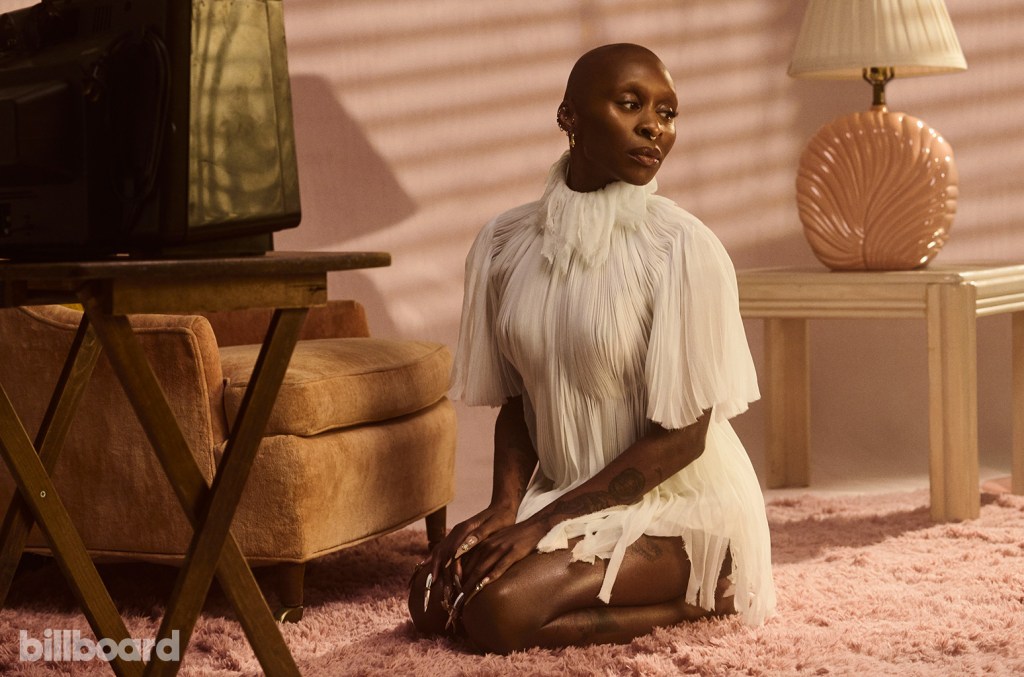
There was a time when Cynthia Erivo could glide around town on her Razor scooter in peace. “Don’t laugh!” she quips as she reminisces about those halcyon days while sitting in a cozy loft above a cavernous Los Angeles studio. “I’ve been doing it for years!” Whether maneuvering New York’s busy streets or transporting her […]