State Champ Radio
 drake
Page: 3
Source: Prince Williams/Wireimage / Prince Williams/Wireimage
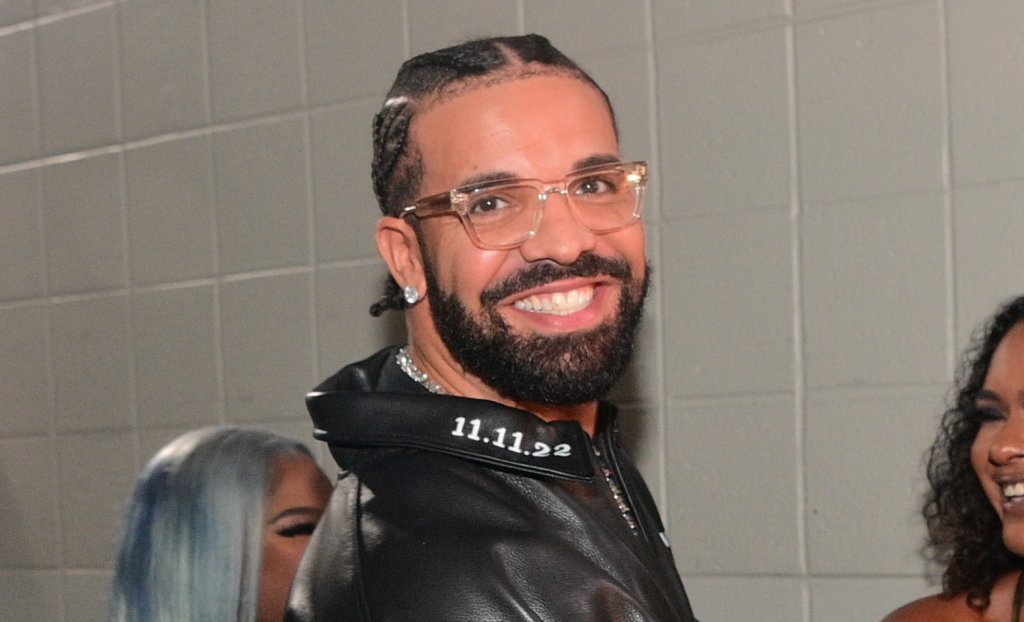
Drake set a wild new record, he’s now the only artist with 10 diamond-certified tracks under his belt.
The RIAA confirmed that both “Hold On, We’re Going Home” and his breakout banger “Best I Ever Had” have officially gone diamond, meaning each has moved over 10 million units. That puts him at the top, passing every other artist in the game when it comes to diamond hits. Once the news hit Instagram, the reactions were all over the place.
Some fans gave him his flowers, with one person writing, “You can’t hate on this… greatness right here.” But the Kendrick vs. Drake debate popped right back up. A Kendrick fan jumped in saying, “Nobody said Drake didn’t have hits, we just saying Dot raps better. The machine behind Drake been running strong for years.”
While everyone’s talking numbers, Drake’s already back in the lab. He told Adin Ross during a stream on Kick that he’s cooking up something new, calling the next project a “slap.” His post on IG with the caption “Iceman” had fans guessing that it might be tied to the name or vibe of his next drop. If true, it’ll be his first solo album since For All the Dogs in 2023.
On top of that, he’s linking up with Kai Cenat for a new music video for “SOMEBODY LOVES ME.” They’re running a contest where fans can submit their ideas for a chance to win $15K and get featured in the final cut. Drake even popped up at Cenat’s “Streamer University” event last weekend, keeping his finger on the pulse of what’s hot online.
At this point, Drake isn’t just breaking records, he’s rewriting the rules.
HipHopWired Featured Video
Source: George Pimentel / Getty
It’s no secret that Drake needs a win (bad), as the past year has been tough on the Canadian rap crooner’s career thanks to a certified Boogeyman who resides out in Los Angeles.
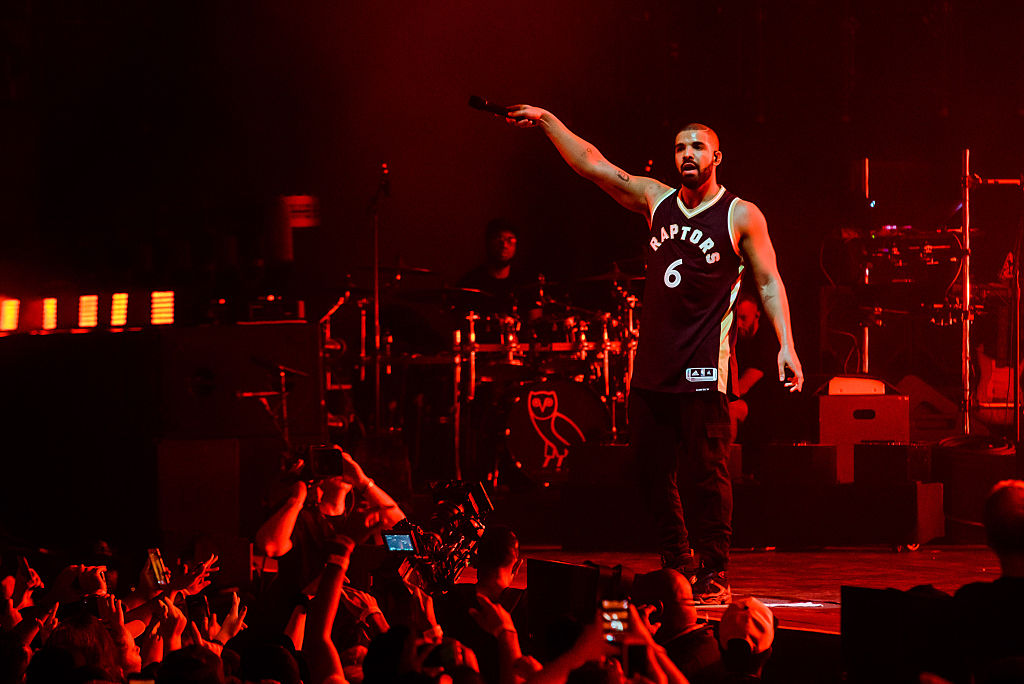
Though the embattled artist has been keeping a somewhat low profile as of late as he regroups and plans his next moves, Drake did make some noise this past weekend when he announced that OVO Fest would be returning after a hiatus for the last few years and that Central Cee will indeed be taking part in the upcoming festivities. Popping up at Central Cee’s concert in Toronto this past weekend, Drizzy informed the crowd that OVO Fest will be making a comeback this summer, telling his adoring home crowd “OVO Fest back this year,” and letting Central Cee know “So we’ll need you there for that, but you already know what it is.”
Though Drizzy has yet to make an official announcement, it seems like he’s ready to get back in the spotlight this summer and is planning on recruiting some of his Hip-Hop peers to get it popping at his next OVO Fest.
With the last OVO Fest having taken place in 2022 (when Drake was on top of the world) and including the likes of Lil Wayne, Nicki Minaj and Nelly Furtado, it will be interesting to see who Drake can get to pull up to his upcoming festivities as some artists are still wary of being associated with the “0 To 100” rapper due to the hate that he’s still getting from many in the culture thanks to his beef with Kendrick Lamar.
Still, we’re sure he’ll have enough pull with certain artists (such as Central Cee apparently) that should OVO Fest 2025 actually happen, it will be quite the spectacle for music fans to enjoy and bring some much needed positive vibes to the King of the North, who’s been scowling on his throne for quite some time now.
What do y’all think about Drake bringing back OVO Fest this summer? Who would you like to see pop up at the event? Let us know in the comments section below.
HipHopWired Featured Video
Source: Getty Images / Drake / Tory Lanez
You can add Drake to the list of people who just can’t accept that Tory Lanez shot Megan Thee Stallion.
Drake shared a link to a petition calling for Governor Gavin Newsom to pardon Canadian Yosemite Sam, aka Tory Lanez, after he was stabbed 14 times in prison.
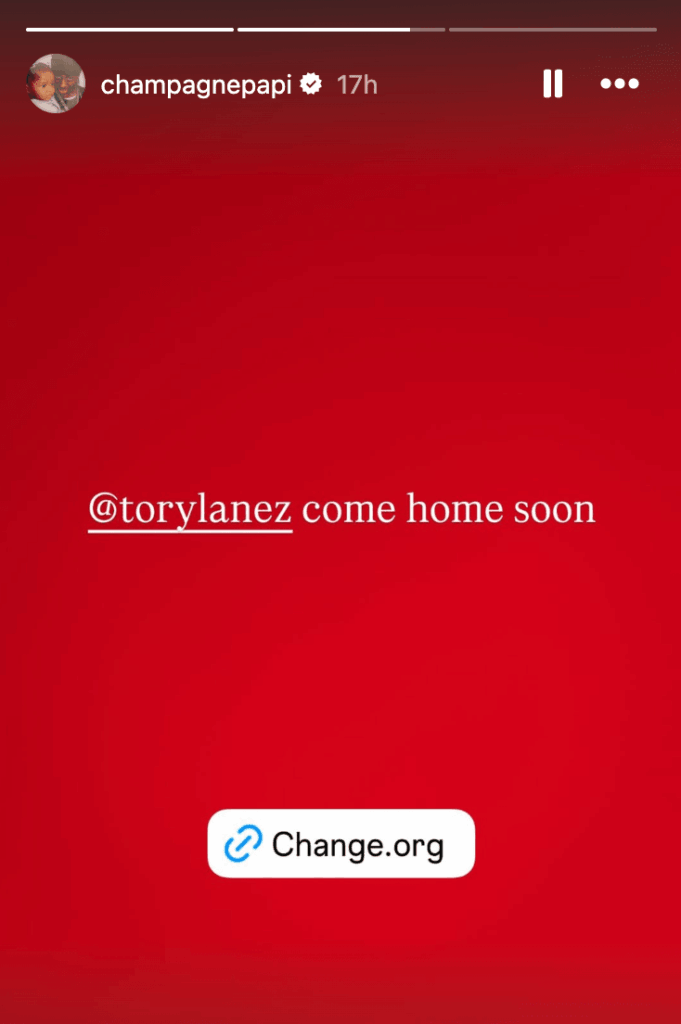
On Friday, Drake posted via his Instagram Stories, “@torylanez come home soon” along with the link to a Change.org petition “Pardon Tory Lanez: Urge Governor Newsom to Correct a Deep Injustice,” which now has over 236,000 signatures.
Source: Instagram / Drake
The petition first sprouted up on Tory Lanez’s social media accounts in the wake of a non-profit organization called Unite the People claiming that it has testimony from a bodyguard that would absolve Lanez of the 2020 shooting of Megan Thee Stallion.
Walter Roberts, who is the “lead consultant” of the group, claimed a man named Bradley James, who said he was the bodyguard of Megan Thee Stallion’s former best friend, Kelsey Harris, approached him claiming to be a witness to Harris admitting to shooting Megan Thee Stallion.
Megan Thee Stallion’s attorney, Alex Spiro, issued a statement on his client’s behalf: “Tory Lanez was tried and convicted by a jury of his peers, and his case was properly adjudicated through the court system. This is not a political matter — this is a case of a violent assault that was resolved in a court of law.”
Thee Stallion is also unbothered as she just recently announced her swimwear line.
Drake Is Getting Dragged On X
She doesn’t have to address the situation because social media has been dragging Drake and Chris Brown for yelling Free Tory. Brown was recently locked up abroad for an incident a year ago and denied bail on the matter.
“Drake was quiet for Kendrick, but real loud for Megan, a woman! #SIMP,” one post on X, formerly Twitter, read.
Welp.
You can see more reactions in the gallery below.
HipHopWired Featured Video
CLOSE

HipHopWired Featured Video
Source: Mike Marsland/Variety / Mike Marsland/Variety
Kendrick Lamar, Future, and Metro Boomin have been hit with a lawsuit over their chart-topping track “Like That,” stemming from alleged unpaid royalties related to a sample.
Veteran rapper Rodney O claims that the song uses elements from his classic track “Everlasting Bass” without proper compensation or credit. The legal action also targets the estate of Barry White, whose music appears on the Kanye West remix of the song. Rodney O argues that he never received full payment or acknowledgment for the use of his work, especially when the song was submitted for Grammy consideration without his name in the songwriting credits.
He also says he was not given the version of the track that features Kendrick Lamar’s headline-making verse dissing Drake, which has become one of the most talked-about moments in recent rap history. A spokesperson for Metro Boomin countered the claims, stating that they did secure rights to the sample and paid Rodney O $50,000. They also pointed to the Barry White estate as a possible reason for delayed royalty distribution, citing its ties to Epic Records as a potential complication.
The Barry White estate has yet to issue a statement regarding the lawsuit. As “Like That” continues to dominate the conversation in hip-hop, the legal dispute adds another layer of controversy—highlighting ongoing issues around sample clearances, fair compensation, and proper credit in the music industry.
HipHopWired Featured Video
Source: Mike Marsland/Variety / Mike Marsland/Variety
Kendrick Lamar, Future, and Metro Boomin have been hit with a lawsuit over their chart-topping track “Like That,” stemming from alleged unpaid royalties related to a sample.
Veteran rapper Rodney O claims that the song uses elements from his classic track “Everlasting Bass” without proper compensation or credit. The legal action also targets the estate of Barry White, whose music appears on the Kanye West remix of the song. Rodney O argues that he never received full payment or acknowledgment for the use of his work, especially when the song was submitted for Grammy consideration without his name in the songwriting credits.
He also says he was not given the version of the track that features Kendrick Lamar’s headline-making verse dissing Drake, which has become one of the most talked-about moments in recent rap history. A spokesperson for Metro Boomin countered the claims, stating that they did secure rights to the sample and paid Rodney O $50,000. They also pointed to the Barry White estate as a possible reason for delayed royalty distribution, citing its ties to Epic Records as a potential complication.
The Barry White estate has yet to issue a statement regarding the lawsuit. As “Like That” continues to dominate the conversation in hip-hop, the legal dispute adds another layer of controversy—highlighting ongoing issues around sample clearances, fair compensation, and proper credit in the music industry.

HipHopWired Featured Video
Source: Johnny Nunez / Getty
Rick Ross has revealed he’s open to ending his long-standing beef with Drake, hinting at the possibility of reconciliation between the two Hip-Hop heavyweights.
During a recent interview with Bootleg Kev, the Maybach Music Group boss spoke candidly about the tension between him and his former collaborator. “Real n****s stay real,” Ross said. “Was it something really deep? Nah. F**k that, though. But if it’s real, it’s real and that’s what it is.” His words suggest that the fallout wasn’t as personal as fans might have thought, leaving the door open for future peace.
Rozay even joked about the price of a potential truce, saying, “You never know, if a n***a send me a bottle of Luc Belaire, especially the white one. Send me a white Belaire and I’ll take a picture with you.” Known for his sense of humor and love for the finer things, Ross’ comment lightened the mood but also hinted at real willingness to bury the hatchet.
Ross and Drake have a proven track record of delivering iconic tracks like “Stay Schemin’,” “Lord Knows,” and “Aston Martin Music.” Their chemistry in the studio has consistently produced timeless hits, making them one of hip-hop’s most powerful duos. Fans have long hoped to see them reunite, and with Ross expressing openness to squash the beef, that dream might not be far off. A reconciliation could mark the return of greatness — something the culture would no doubt celebrate.

HipHopWired Featured Video
UMG (Universal Music Group) has filed a motion to have Drake’s amended lawsuit against his recording label dismissed, calling the rapper’s allegations “asthoning” in their filing. Drake filed a lawsuit against UMG at the top of the year over Kendrick Lamar’s hit diss record “Not Like Us” and has accused the label of defaming him.
As reported by Variety, UMG is responding to Drake’s claims made in the amended lawsuit, and the Canadian superstar is charging the label with heavily promoting the song, which features a lyric accusing him of being a pedophile.
The initial lawsuit came just as news surfaced that Kendrick Lamar would be the halftime performer at this year’s Super Bowl, and it was anticipated that “Not Like Us,” one of the biggest hit records of 2024, would be a centerpiece. It appeared that Drake wanted to get ahead of the noise regarding the track. Lamar did perform the track but altered the lyrics in question.
UMG, which filed its motion on Wednesday (May 7), had their legal representation address Drake’s amended lawsuit straight away, while seemingly taking a dig at the OVO honcho.
“As Drake concedes, Lamar’s Super Bowl performance did not include the lyric that Drake or his associates are ‘certified pedophiles’ (i.e., the alleged ‘Defamatory Material’ that is at the heart of this case). The focus of Drake’s new claims—that ‘the largest audience for a Super Bowl halftime show ever’ did not hear Lamar call Drake or his crew pedophiles—betrays this case for what it is: Drake’s attack on the commercial and creative success of the rap artist who defeated him, rather than the content of Lamar’s lyrics.”
Drake has not responded publicly to the entered motion as of yet.
—
Photo: Cole Burston / Getty
HipHopWired Featured Video
Source: Johnny Nunez / Getty
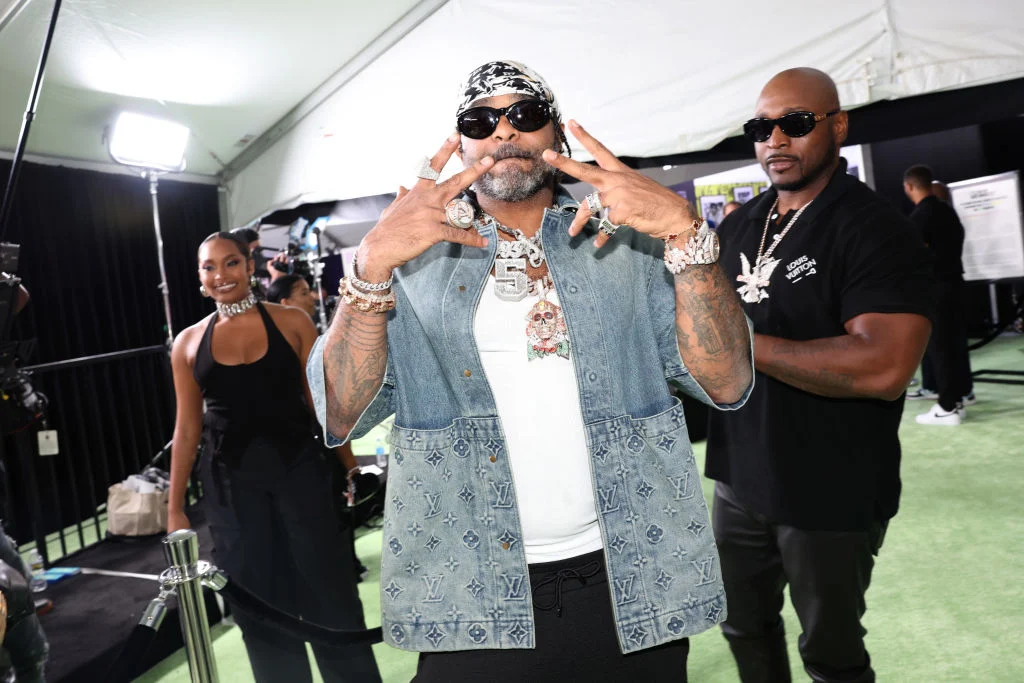
In a recent interview, Dipset rapper Jim Jones reaffirmed his belief that Drake is the greatest rapper of all time.
Jones originally made the claim during a March 2023 conversation with Complex, and when asked again nearly a year later, he stood by it without hesitation. Breaking into a playful rendition of Drake’s “Babygirl” line from “Nokia,” Jones emphasized the significant impact Drake has had on hip-hop over the last decade.
Jones argued that Drake has transformed the way audiences engage with music and has played a pivotal role in boosting the careers of countless artists. “What you gonna say to Drake? What you really gonna do with him, man?” he asked, pointing to Drake’s unmatched versatility and influence. He credited the Canadian rapper with helping evolve the sound of modern Hip-Hop and offering a platform to both rising and established names—through collaborations and touring opportunities.
“He’s done more for our culture than most of these people,” Jones said, stressing that Drake’s contributions go far beyond his own success. While the interviewer noted that much has happened since Jones’s original statement—likely referring to Drake’s public feud with Kendrick Lamar—Jones remained unfazed. He focused instead on Drake’s broader legacy and lasting influence.
His comments fuel the ongoing debate over Hip-Hop’s GOAT, placing Drake at the forefront not just for his chart-topping hits, but for his cultural imprint and the widespread impact he’s had on the genre and its community.
HipHopWired Featured Video
CLOSE
Source: Matthias Nareyek / Getty
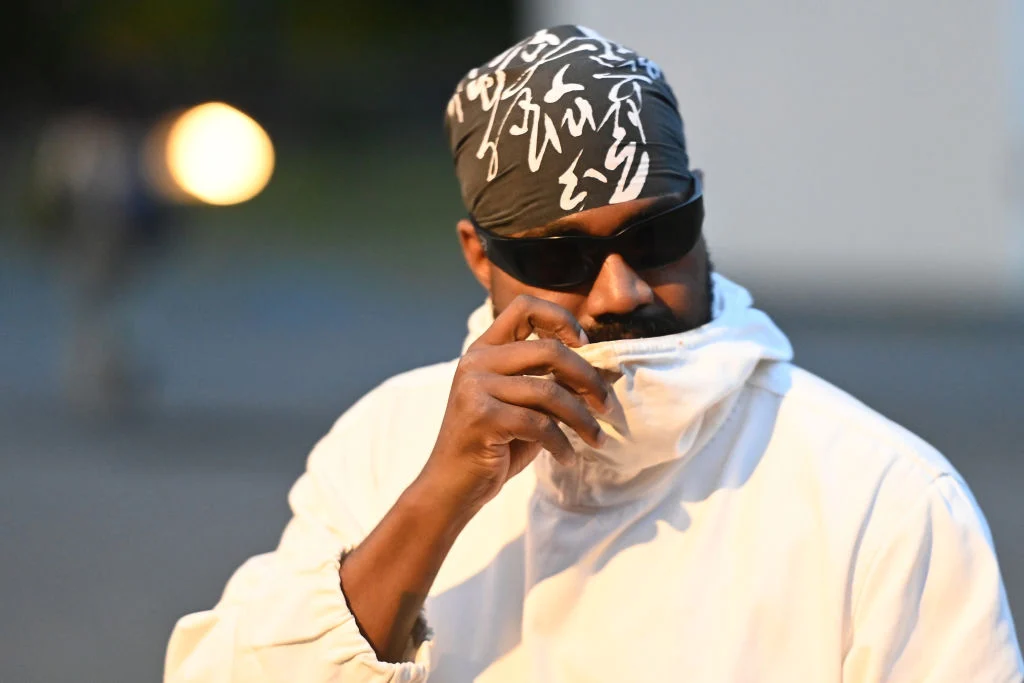
On a recent unfiltered livestream, Kanye West delivered another fiery tirade, this time targeting fellow rap heavyweights J. Cole and Kendrick Lamar.
Known for his unpredictable and often controversial commentary, Kanye didn’t hold back, reigniting long-standing tensions within the Hip-Hop community.
Speaking on J. Cole, Kanye bluntly stated, “When I would meet up with Drake I would ask him why are you working with J. Cole, he’s not an actual person. When people would tell me they like J. Cole I be like don’t tell me that. I hate J. Cole, it can’t even be called music.” The harsh critique left fans stunned, especially given the mutual respect often expressed among the “Big Three” rappers of this generation, Cole, Kendrick, and Drake. Kanye’s dismissal of J. Cole’s artistry seemed personal, bordering on surreal, calling into question whether there’s deeper unresolved beef behind the scenes.
Ye was far from over too. Turning his attention to Kendrick Lamar, Kanye added, “I heard Ben Affleck that Kendrick Lamar is one of his favorite rappers. I was like, bro, anybody that has Kendrick as one of their favorite rappers don’t know rap.” The jab at Kendrick, long praised for his lyricism and cultural impact, raised eyebrows and drew backlash from fans and artists alike.
Whether this was another headline-grabbing rant or a sign of deeper tensions in the Hip-Hop world, Kanye once again reminded everyone, he says what he wants, no matter the fallout.
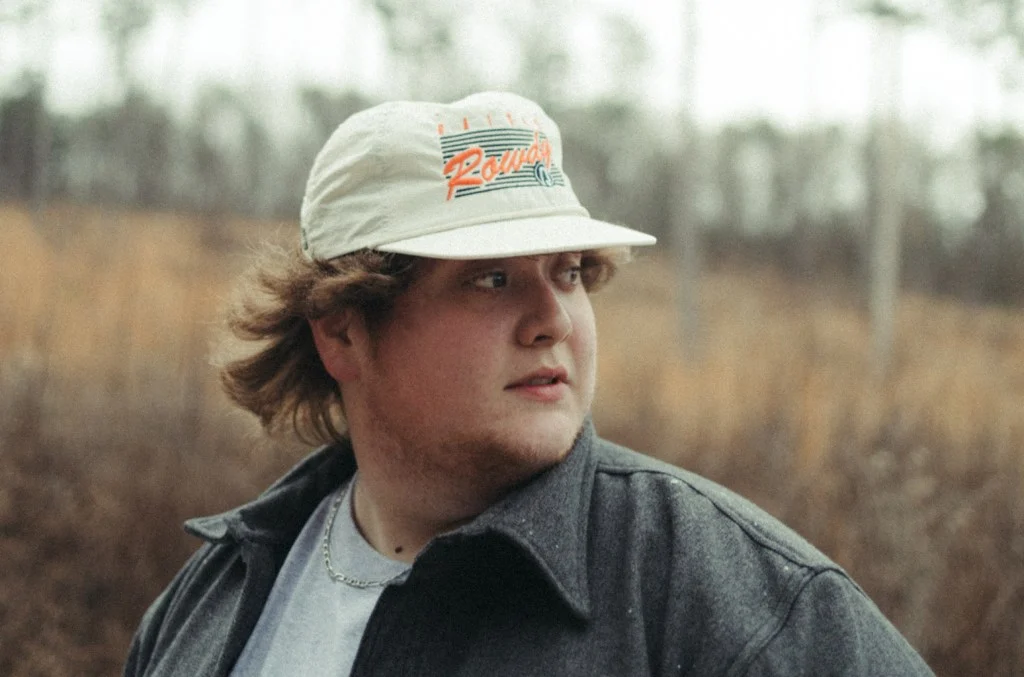
Bayker Blankenship’s “Maxed Out” is a bankrupt ballad set in a barren landscape of dead-end towns and nearly-empty bars. The narrator drinks a few too many Jack and Cokes when he’s not spending the night in the clink: “I’m getting into fights and I’m falling hard,” Blankenship sings. “I maxed out one more credit card.”
Blankenship released the track in April 2024 through a distribution company called Foundation. “Maxed Out” performed well — so well that Blankenship graduated to Foundation’s sister operation, Santa Anna Label Group, a more high-touch distributor that’s able to put marketing muscle behind its artists.
“I appreciate their expertise on the content and digital side,” says Brian Schwartz, who manages Blankenship. When Santa Anna promotes songs, “they analyze, see what’s working and what’s not,” Schwartz continues. “And they know how to pour the fuel on what’s working.” “Maxed Out” now has more than 121 million on-demand streams in the U.S., according to Luminate.
Trending on Billboard
Foundation and Santa Anna are both under the command of Todd Moscowitz, the founder of Alamo Records. After launching Alamo in 2016 and introducing Santa Anna at the start of 2023, Moscowitz has cobbled the companies together into “a soup-to-nuts, fully integrated ecosystem where artists [have] a path to graduate to a premier frontline label,” as he puts it. This approach is becoming increasingly common, as both major labels and independents look to sign more acts and offer an array of options that allows those artists to grow over time — while also remaining attached to the company that initially offered them funding.
Foundation functions as a feeder system, signing a lot of young artists, many in hip-hop and R&B, primarily to low-money, short-term distribution deals. Santa Anna is a level up, with the capability to support labels — including OVO Sound, which scored a No. 1 album recently with the PARTYNEXTDOOR–Drake collaboration $ome $exy $ongs 4 U — as well as individual artists who have already generated some momentum. And Alamo is the more traditional frontline label: It signs a small number of artists directly and provides services to each of them.
Hybrid companies like this — offering the flexibility of a distributor but the promotional firepower of a major label — often work better in theory than in practice. Most distributors “don’t know how to take artists to the next level,” Moscowitz acknowledges. At the same time, frontline labels still “don’t have much experience in indie distribution.” Artists can get lost in the messy middle ground between the two business models.
This makes the growth of Santa Anna/Foundation all the more impressive. In 2024, Santa Anna added more than a point (1.04%) of current market share to Alamo’s 2.11% total. Many competitors would hack off an arm to add a point of current market share in a year. (Foundation’s contribution is included in that number.)
Already this year, Alamo has grown to a 2.91% current share through the first quarter — 1.83% of it from Santa Anna/Foundation — which is good for eighth among all labels in the U.S. Getting to release a Drake collaborative album was a coup for the company; $ome $exy $ongs 4 U, which Santa Anna co-distributed with Republic Records, earned 246,000 equivalent album units its opening week. The radio-ready single “Nokia” has risen as high as No. 2 on the latest Billboard Hot 100, and remains in the top 10.
“If it’s a lot harder to create superstars, it’s all about, how do you soak up more?” says a senior executive at a competing company. He calls Alamo’s integration with Santa Anna and Foundation “brilliant — and potentially an indicator of where things are going in the future.”
Moscowitz was experimenting with hybrid models inside the major-label system long before it was fashionable. He worked at Def Jam during its 1990s heyday and then moved to Warner Music Group (WMG) in 2004, initially as president of Asylum Records. There, he designed “a fluid system in terms of the deals, because when you’re dealing with entrepreneurs, you must be flexible,” as he put it in 2022. When WMG launched its Independent Label Group in 2006, Moscowitz was named president of the new outfit.
He later co-founded the indie 300 Entertainment, which launched in 2014, before jumping ship to get Alamo off the ground two years later. Alamo, which now functions as a frontline label under the Sony Music umbrella, signed chart-topping rappers like Rod Wave and Lil Durk, who have combined to earn 11 top five Billboard 200 albums for the label, including four No. 1s.
Even as Alamo enjoyed that traditional label success, however, Moscowitz couldn’t help but notice that “distribution [was] becoming an ever more important entry point into the business for artists.” Major labels have launched their own distribution wings one after another in recent years, whether that’s REPUBLIC (Imperial), 300 (Sparta), or more recently, Warner Records (Revolution). To compete in this landscape “with a credible, recognized offering,” Moscowitz invested in Foundation at the end of 2022 and launched Santa Anna shortly after.
In hip-hop, Foundation “was first with this very small advance, very early outreach, blanket approach,” the senior executive says. Another executive familiar with the company says they can easily send out hundreds of deals in a year. Five separate Foundation contracts viewed by Billboard show that in the past, the company often offered artists advances between $20,000 and $30,000 with few guaranteed services. In exchange, the artist has to fork over a set number of songs — maybe two dozen new tracks, or some already-released music along with a smaller number of future records.
Foundation takes a cut of royalties, usually between 20 percent and 30 percent, which attorneys say is in line with industry norms for these sorts of agreements. (Though more competitors are offering similar contracts recently, according to music lawyers, causing advances to rise.) Foundation keeps earning until it recoups its expenses; after that, the company typically gets two or three additional years to collect on the music (known as the “retention period”) before rights revert to the artist. The contracts seen by Billboard auto-renew after recoupment unless artists give the company 30 days’ notice that they want to end the relationship.
Moscowitz is adamant that Foundation’s purpose “is not to have a thousand artists doing 100,000 streams a week and make some distribution revenue.” “Most of our artists’ streams go up dramatically after signing with us,” he says. “Some go up so much that it makes sense to engage the entire company and spend substantial money and effort marketing them.”
That’s where Santa Anna comes into play. While many new distributors have entered the industry in the last decade, “a lot of them don’t do anything,” says Conor Ambrose, founder of the label Listen to the Kids. He partnered with Santa Anna in 2023 due to their ability to help his acts. “Their marketing people are talking to our artists; their playlisting team is talking to our artists,” he says. “Everybody’s actually on the phone every week.”
“Every time we’ve asked Todd for something,” Schwartz adds, “he’s showed up.”
Another difference between Santa Anna and its competitors, according to Moscowitz, is that his operation “will not offer marketing on any artist unless we have a path to long-term rights.” In other words, he doesn’t want to help blow up an artist, only to have that act split to another record company.
“Many of these sorts of deals come with upstream clauses, meaning the major-affiliated distributor — in this case, Santa Anna — may have the right to trade the artist up to a frontline label,” says Loren Wells, a music lawyer familiar with Santa Anna. “The terms of the upstream will be much less favorable than the initial deal. But many young artists may see that outcome as unlikely, or simply think, ‘If the worst case scenario is getting signed to a major label with a decent advance, that’s not really a worst case scenario.’” And in genres like country that still favor old-school record deals, Wells continues, the upstream terms may still seem more appealing than other labels’ traditional offers.
Moscowitz says Santa Anna is able to secure future long-term rights because artists “value what we bring to the table” in terms of marketing and promotion. “If we don’t value ourselves, then no one will ever value us,” the Alamo founder adds.
He is pleased with the results so far. “We have eight or 10 artists like Chuckyy, Raq baby, and Bayker Blankenship who are breaking and will be the future stars of our company,” Moscowitz says. “Santa Anna is functioning exactly the way we want.”