State Champ Radio
 Conference

Trending on Billboard
Aspen Live, the annual live music industry conference, is returning to Aspen, Colo., Dec. 4-6. Capped at an attendance of 150 people and scheduled around Colorado’s winter activities, the event is the brainchild of longtime touring and event producer Jim Lewi, who heads up production and business development for Embarc Events.
“The first year we did it in 1996, everybody who came was a skier or snowboarder,” says Lewi. “It was dumping snow, and everybody wanted to go out and ski. So I said, ‘Okay, no meetings until after the lifts close.’”
Related
That philosophy continues today, even though only half of the attendees ski or snowboard, according to Lewi. Mornings feature a group breakfast, followed by activities — skiing, cooking classes, nature walks — that are designed to keep attendees networking. Panel discussions happen in the afternoons, followed by cocktail parties and dinners around town.
The conference’s most anticipated panel brings together Dave Marcus from Ticketmaster, Dean DeWulf from AXS and Sean Stewart from StubHub, moderated by manager Randy Nichols. It’s a lineup that Lewi acknowledges could get contentious.
“I warned StubHub before they said yes that it could get rough with people in the room,” Lewi says. “But this is part of our distribution network now. We can fight it, or we can do business with them and try to get rid of the bots.”
Lewi sees the secondary market as an opportunity for rights holders to capture upside they’re currently missing. “If you’re gonna charge more money for my ticket, I want to get paid on the upside,” he explains. “That’s Sean’s job — to have that direct relationship with the rights holders.”
Related
Aspen Live’s programming reflects Lewi’s belief that the live music industry can learn from adjacent sectors. One panel focuses on Latin music, exploring how that market has grown beyond border states to continually expand its audience. Another panel brings together performing arts center executives with venue operators and artist managers.
“How do we utilize their models?” Lewi asks. “They have subscribers, they have mailing lists, they book further in advance. What can we learn from them?”
Perhaps most intriguing is a session featuring representatives from minor league baseball team the Nashville Sounds. “They sell more tickets than Major League Baseball, without the names, without the money,” Lewi says. “How are they so good at engaging fans? They’re selling the same product over and over again.”
What distinguishes Aspen Live is its commitment to honest discourse in an intimate setting. “We want it to be more of a discussion and a dialogue than a monologue,” Lewi says. “People yell out their own thoughts throughout the meetings.”
Related
Lewi notes with pride that the conference has spawned numerous business relationships and partnerships over the years: “A lot of people have created their whole business out of Aspen,” he says.
As the live music industry faces mounting challenges — from affordability concerns to changing consumer behavior — Aspen Live’s intimate, problem-solving approach feels increasingly relevant. As Lewi puts it, the goal is for the industry to find sustainable models in an increasingly difficult market.
“The theme is always, ‘Solve problems and try to learn from each other,’” Lewi says. “I’ve always been very dreamy. I dream that Aspen becomes a place where problems can be resolved.”
Learn more and register at AspenLive.com.
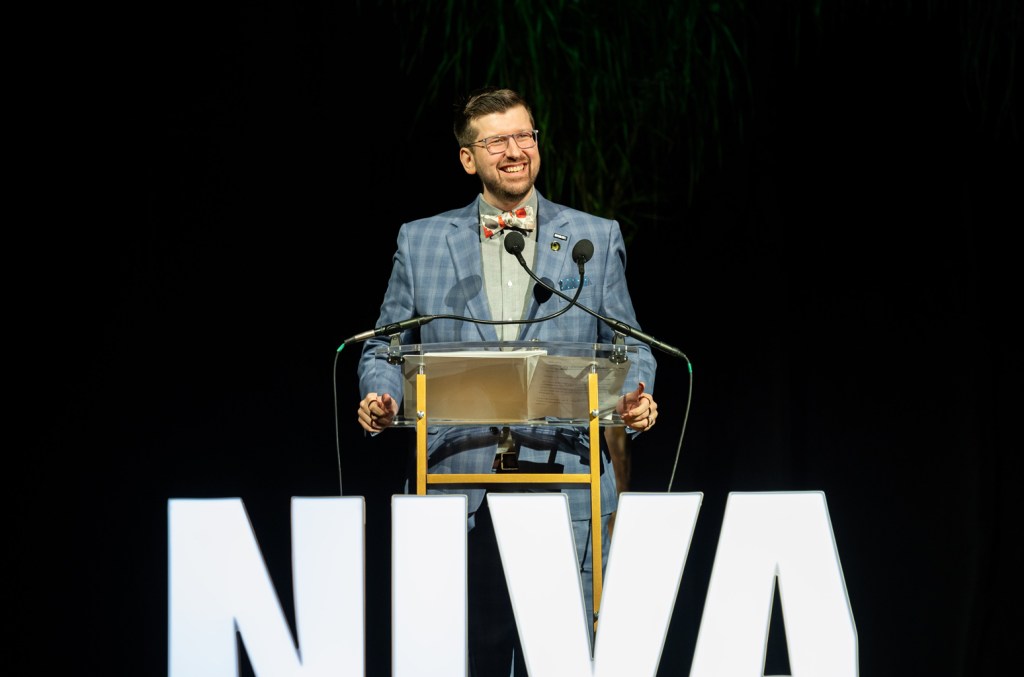
NIVA ‘25 — the fourth annual conference for the National Independent Venue Association, slated to take place June 22-25 in Milwaukee — is happening against the backdrop of some of the fiercest ticketing battles heating up around the country. According to NIVA executive director Stephen Parker, this year alone throughout the U.S., there have been nearly 70 bills introduced in almost 30 states pertaining to ticketing, and the conference is set to address the good, bad and the ugly amid the fight.
“Ticketing continues to be the singular focus,” Parker tells Billboard. “Ticketing is turning into the proxy battle in legislatures — federal, state and local — for the future of live performance.”
The conference will include panels such as “Battling Scalping Goes to Washington, D.C.”; “Turn the Tables: Make the Ticket Resale Market Work For You”; “How We Solve a Problem Like Chargebacks”; and ticketing network sessions, all of which will focus on different ticketing issues facing independent venues. The subject of ticketing will also be part of conversations about local and federal regulations and be weaved into various other panels.
Trending on Billboard
“This conference is an opportunity and a catalyst for us to come together, assess what’s happened this year — our wins and losses in states fighting against predatory resellers,” Parker continues, “and come out of this conference with a plan to make sure that any sort of anti-consumer policy that’s being pushed by predatory resale platforms and brokers, we have a renewed strategy to address it and make sure that the freedom that fans should have from deception and fraud continues to reign supreme.”
Poor ticket buying experiences are impacting fans’ desire to attend more shows and hiking prices so high that many can only afford a limited number of shows each year. And on the venue side, credit card chargebacks have become a major issue.
One of the conference discussions will be “what can we do to make sure that that credit card chargebacks don’t take us down,” Parker says. “Especially given that most of those chargebacks, it seems, are coming from predatory resellers that have sold the tickets and are just trying to maximize their profits that they’re making off the backs of small venues and independent artists.”
While the subject of ticketing will take center stage at the conference — which is being held across the city at different independent venues — the conversations will touch on many other topics. After every conference, NIVA reaches out to its 1,500 members and asks them what subjects they would like to see represented at the following year’s gathering — and the organization, through programming director Jamie Loeb, has managed work more than 100 issues that affect independent venue owners into this year’s program. Among them, NIVA ‘25’s programming will also address declining alcohol sales, the purpose of middle agents, the performing rights and licensing landscape, marketing, and breaking through in the attention economy.
“If I were to say what the theme of this conference [is], it’s ‘How do we break through?’” says Parker.
One of the key methods for breaking through is telling the story of independent venues and the impact they have on local communities, as well as globally. During the conference, NIVA plans to unveil extensive data on the economics of independent venues, which the association hopes will help tell that story.
“I can tell you that it’s a mixed bag,” Parker says of the data. “There’s such promise and optimism and potential growth for the sector, but that growth and optimism is suppressed by the continued threats of predatory resale and monopolies and inflation. We’re going to talk about what we do moving forward in terms of how we address those monopolies.”
Attendees will be able to learn about best practices for dealing with government entities, from city councils to state legislatures, as well as hear about how other countries are moving to save their own cultural spaces.
The association will also use the conference to detail the expansion of its collective bargaining agreements. While NIVA introduced its collective bargaining program nearly 18 months ago, its efforts are continuing to expand.
“At least a quarter of our members have taken advantage of this program, either for discounts for food, discounts for equipment, discounts for sound and lighting. We’re thinking beyond just the physical and going to services and fees and things that every venue has to pay every day,” says Parker. “We will be announcing some exciting new opportunities for our members on that front to try to make the cost of doing business lighter for them.”
NIVA ‘25 kicks off this Sunday with an opening keynote from My Morning Jacket’s Jim James. Other discussions will include producer Jimmy Jam, former Capitol Music Group CEO Michelle Jubelirer and High Road Touring founder Frank Riley. For more information on NIVA ‘25, head here.

The Artist Rights Symposium returns for a fourth year on Wednesday (Nov. 20) at a new location — American University’s Kogood School of Business. This year the day-long event will feature panels like “The Trouble with Tickets,” “Overview of Current Issues in Artificial Intelligence Litigation,” and “Name, Image and Likeness Rights in the Age of AI.” Plus, the symposium will feature a keynote with Digital Media Association (DiMA) president and CEO Graham Davies.
Founded by University of Georgia professor, musician and activist Dr. David C. Lowery, the event has been held at the university in Athens, Georgia for the last three years. Now that the event has moved to Washington, D.C., the Artist Rights Symposium can take advantage of the wealth of music professionals in the city. This includes D.C.-based panelists like Davies, Stephen Parker (executive director, National Independent Venue Association), Ken Doroshow (Chief Legal Officer, Recording Industry Association of America), Jalyce E. Mangum (attorney-advisor, U.S. Copyright Office), Jen Jacobsen (executive director, Artist Rights Alliance), Jeffrey Bennett (general counsel, SAG-AFTRA) and more.
The Artist Rights Symposium is supported by the Artist Rights Institute.
Trending on Billboard
See the schedule of events below:
9:15-10:15 – THE TROUBLE WITH TICKETS: The Challenges of Ticket Resellers and Legislative SolutionsKevin Erickson, Director, Future of Music Coalition, Washington DCDr. David C. Lowery, Co-founder of Cracker and Camper Van Beethoven, University of Georgia Terry College of Business, Athens, GeorgiaStephen Parker, Executive Director, National Independent Venue Association, Washington DCMala Sharma, President, Georgia Music Partners, Atlanta, GeorgiaModerator: Christian L. Castle, Esq., Director, Artist Rights Institute, Austin, Texas
10:15-10:30: NIVA Speculative Ticketing Project Presentation by Kogod students
10:45-11:00: OVERVIEW OF CURRENT ISSUES IN ARTIFICIAL INTELLIGENCE LITIGATIONKevin Madigan, Vice President, Legal Policy and Copyright Counsel, Copyright Alliance
11:00-12 pm: SHOW ME THE CREATOR – Transparency Requirements for AI TechnologyDanielle Coffey, President & CEO, News Media Alliance, Arlington, VirginiaDahvi Cohen, Legislative Assistant, U.S. Congressman Adam Schiff, Washington DCKen Doroshow, Chief Legal Officer, Recording Industry Association of America, Washington DCModerator: Linda Bloss-Baum, Director of the Kogod School of Business’s Business & Entertainment Program
12:30-1:30: KEYNOTEGraham Davies, President and CEO of the Digital Media Association, Washington DC.
1:45-2:45: CHICKEN AND EGG SANDWICH: Bad Song Metadata, Unmatched Funds, KYC and What You Can Do About ItRichard James Burgess, MBE, President & CEO, American Association of Independent Music, New YorkHelienne Lindvall, President, European Composer & Songwriter Alliance, London, EnglandAbby North, President, North Music Group, Los AngelesAnjula Singh, Chief Financial Officer and Chief Operating Officer, SoundExchange, Washington DCModerator: Christian L. Castle, Esq, Director, Artist Rights Institute, Austin, Texas
3:15-3:30: OVERVIEW OF INTERNATIONAL ARTIFICIAL INTELLIGENCE LEGISLATIONGeorge York, Senior Vice President International Policy from RIAA.
3:30-4:30: NAME, IMAGE AND LIKENESS RIGHTS IN THE AGE OF AI: Current initiatives to protect creator rights and attributionJeffrey Bennett, General Counsel, SAG-AFTRA, Washington, DCJen Jacobsen, Executive Director, Artist Rights Alliance, Washington DCJalyce E. Mangum, Attorney-Advisor, U.S. Copyright Office, Washington DCModerator: John Simson, Program Director Emeritus, Business & Entertainment, Kogod School of Business, American University

The music’s industry’s newest leadership and wellness conference, organized by jump.global, will return for its second year Nov. 17-20 in Los Angeles. Today (Oct. 17), the conference announced its final keynote speaker, Kei Henderson.
Henderson will deliver a featured interview on Nov. 19, sharing stories about music management, founding a label and also the importance of taking time off – in 2019, Henderson took a partial hiatus from the music industry to prioritize her mental health.
“Conferences like this are more than necessary for the music industry, and I feel incredibly honored for the opportunity to share my journey with like minds,” Henderson said in a statement to jump.global. “We need more spaces that are not just about the highlight reel, but the real.”
Trending on Billboard
Henderson joins a previously announced lineup of speakers including Michelle Jubelirer, former chair and CEO of Capitol Music Group, and Jacqueline Saturn, president of Virgin Music Group North America and evp of global artist relations. Jubelirer will speak with Bandier Program director, Bill Werde, while Saturn will speak with her sister Samantha, appearing together on stage for the first time.
Launched last year, the jump.global Annual Summit operates as an end-of-year personal and professional development conference and retreat for the music industry. The conference brings together coaches and professionals to lead workshops, keynotes and panels on topics such as financial wellness, mental health, effective leadership and more.
Most notably, the summit does not list any speakers or attendees with their titles or company names on-site, aligning with its guidelines and tagline that “your first and last name matter more than your job title.”
“The summit is [provides] the rare opportunity to focus on executive development, instead of artist development,” says jump.global Founder Nick Maiale. “We’re so excited to return for a second year and provide a safe space for everyone — whether you’re part of a music team, longtime friends from your internship days, a consultant growing your business, an HR professional, or someone seeking inspiration.”
Badges can be purchased here.

Singer/songwriter Lisa Loeb will keynote the Guild of Music Supervisors’ 10th annual State of Music in Media Conference, which will take place on Saturday, Aug. 17 at the West LA College campus in Culver City, Calif. People can also attend virtually, via a live stream on Zoom. The all-day conference encompasses the use of music in film, TV, video games, advertising and trailers.
Thirty years ago this month, Lisa Loeb & Nine Stories became the first artist to top the Billboard Hot 100 before being personally signed to a record label. She achieved the feat with her song “Stay (I Miss You),” which was heard in the film Reality Bites. It topped the chart for the first three weeks of August 1994.
Other speakers include director Doug Liman and music supervisors Julianne Jordan, Amanda Krieg Thomas, John Houlihan, Carolyn Owens, Steven Gizicki, Trygge Toven, Joel C. High, Thomas Golubić, Catherine Grieves and Burt Blackarach. In addition, Julia Michels, president of the Los Angeles chapter of the Recording Academy, and Qiana Conley Akinro, senior executive director of the L.A. chapter, will speak.
Trending on Billboard
Programming highlights include:
Opening remarks from GMS president Lindsay Wolfington and GMS vp Heather Guibert
Celebrating the 2024 Primetime Emmy nominees for outstanding music supervision
AI: Challenges and Changes to the Industry and New Opportunities for Creatives
A conversation with music supervisor Julianne Jordan & director Doug Liman
Live listening session with music supervisors
Art Meets Commerce: What Makes Trailer Music Supervision Different
FALLOUT: From Game to Streaming Series
From Coordinator to Supervisor: Navigating the Leap
GMS is offering a one-on-one networking session for aspiring music supervisors to meet GMS members working in the field of music supervision. This opportunity is open to aspiring music supervisors only. Conference attendance and pre-event sign-up are required.
GMS’ first-ever music supervisor listening session will feature music supervisors giving live feedback on five songs selected from Friend of the Guild (“FOG”) submissions. Participants can learn how top music supervisors in TV, film, video games, ads and trailers respond to tracks when considering them for placement.
A conference ticket purchase comes with a complimentary “Friend of the Guild” subscription, granting access to future events and networking opportunities. To learn more and buy tickets, visit the GMS Media Conference site.

NASHVILLE – The Music Business Association conference kicked off successfully in Nashville this week, with the annual gathering bringing together more than 2,100 music industry professionals representing attendance from over 750 companies and more than 30 countries, the trade group’s president, Portia Sabin, announced on Tuesday (May 14) in her annual address on the state of the Music Biz organization.
What’s more, Sabin said proposals for programming at the conference, which is crowd-sourced from industry executives, saw a 30% increase this year, “reflective of everything our industry wants to discuss — from hot topics like AI, gaming, and social impact, to perennial favorites like synch, music and money, and marketing. And don’t worry, we still have the critical but non-sexy topics like metadata and neighboring rights.”
With a full-court press of panels and seminars on many of the industry’s challenges and opportunities, Sabin also reported that about 325 speakers/panelists are set to take part in this year’s conference. She additionally noted the the trade group’s membership has grown by 106 companies and organizations since last year’s gathering, with Deezer, Audiomack, Pirames International, SonoSuite, the NMPA (National Music Publisher’s Association) Louisiana Entertainment (a division of Louisiana Economic Development) and Toronto Metropolitan University joining the fold.
Trending on Billboard
Beyond the convention, Sabin reported that the organization continues to stage its Music Biz Roadshow event series in places like Dallas, Miami and Huntsville, Ala., with programs for local indie musicians that have included topics like “Tech Solutions in Music,” “The State of Independent Distribution” and “Where’s My Money and How Do I Get It?” Those events have featured companies like the Mechanical Licensing Collective, CD Baby, Bandcamp, TropiSounds, Songtrust, Symphonic Distribution, Syntax Creative, Switchchord and Music Audience Exchange. “If your company wants to be a part of a Roadshow this year, please let my team know – they are some of the most fun and inspirational events we do and we’d love to have you join us,” Sabin said.
Besides going on the road, the trade group has also created a new virtual series, Music Biz Passport, which explores a different international market each time. “These events are meant to connect music business executives from the U.S. with international trendsetters so they may both learn what does and doesn’t work in these communities, and build new partnerships that will ultimately make our industry stronger,” Sabin elaborated, adding that upcoming events will focus on local music industries in Finland, Latin America, Southeast Asia, the Middle East and North Africa.
On the good works front, Sabin reported that Music Biz has partnered with the Music Health Alliance to set up the MHA Mental Health Fund. Since its launch, backed by a $50,000 contribution from the SCARS Foundation — an organization created by Sully Erna and the band Godsmack to support mental health initiatives — the fund has grown to $355,000 and served more than 500 music industry professionals through 5,246 outpatient counseling and psychiatry visits.
Meanwhile, the organization’s scholarship foundation has raised $60,000 and given out 12 scholarships to deserving music business students to the tune of $5,000 each, Sabin reported, thanking the scholarship committee for their hard work as well as “Lisa Robinson and Aaron Tochini for going above and beyond.”
Finally, Sabin celebrated another big accomplishment the trade group achieved during the year: persuading Luminate to abandon its implemented plan to unweight physical sales data, thus changing the chart methodology. Following the initial change to unweight sales data, Sabin, the retail coalitions and other stakeholders pulled together to partner with Streetpulse to collect that data from indie stores. After indie music retailers began boycotting reporting to Luminate, Music Biz worked with the coalitions to negotiate a deal that brought indie store data back into the Luminate system. As a result of that effort, the number of stores reporting to Luminate has more than doubled to 315 stores, up from the 140 retailers that previously reported to Luminate before the imbroglio.
“I want to thank everyone who was invested and made their voices heard on this issue, from retail stores to labels to distributors to individual artists – and of course to Rob Jonas and Luminate for coming to the table and being good partners,” Sabin said. “Those who’ve been around since the NARM days know that physical retailers are the original heart of Music Biz, and this year’s Record Store Day was another off-the-charts success… proving yet again that physical is a vital part of our industry.”
Sabin closed by noting that the conference is moving to Atlanta next year and will take place May 12 to May 15 at the city’s Renaissance Waverly Hotel. “It’s a great property that’s close to The Battery and Braves Stadium; and we’re especially excited that we were able to buy out the entire hotel, meaning everyone there will be a Music Biz attendee,” she said. “Sounds like sleepaway camp, right?”

In 2020, amidst the pandemic, Nick Maiale started thinking about the music industry beyond titles and company affiliations. Having spent over a decade working in music, including at the Music Business Association and Music Biz Conference, he felt inspired to promote more than professional development — he wanted to advocate for personal growth, too.
Through his work, Maiale was consistently meeting impressive and driven young professionals, but a throughline started to emerge. “After listening to [so many] stories of working in the industry and feeling the limitations [of it], I asked myself ‘How can I help add value to these people’s lives?’…Our business is so fast-paced and revenue driven that we don’t always get the opportunity to step back and get to know people for who they are — and this leaves us placing strong emphasis on job titles, company affiliation and status,” he says. “The answer was clear: build a company that helps my community navigate the industry.”
By the end of 2020, Maiale had launched jump.global, a “community-first” company that manages music business executives. And come November, it will host its first annual summit in Los Angeles. “I started to think about this around the same time I thought about starting the company as a whole,” says Maiale, who serves as founder/CEO. “ I thought it would take place somewhere like Wyoming with 30 people in a cabin — but here we are, about to welcome a much larger number than that to Los Angeles in just a month.”
Held Nov. 12-14 at The LINE Hotel, conversations will largely avoid hot topics like AI and streaming and instead center on stress management, burnout prevention, resilience in the music business and more. Speakers include J Erving (founder of Human Re Sources and executive vp at Sony Music), Moody Jones (GM of dance at EMPIRE), Fadia Kader (executive vp/GM at Venice Music) and Gwen Bethel Riley (senior vp of music/head of content partnerships at Peloton).
“The topics we are covering at the summit are necessary to work in any industry or simply just to exist: leadership, effective communication, stress management, pivoting, financial literacy,” says Maiale. “Imagine a music industry where more people are trained on different personality types, emotional intelligence, how to deal with conflict in the workplace, how to manage their money and how to really address and support mental health.”
Perhaps the best evidence of the need for such a summit is also the biggest challenge in launching it: “Getting people to focus on themselves, as opposed to their work,” says Maiale. “It’s going to take a lot of work, but we believe that as a community, we can all make the music business more human.”
Fittingly, attendee badges will solely list their first and last names, with no companies or titles to be found.
Registration and more information on the jump.global annual summit can be found here. The event kicks off Nov. 12 with a NO EGO Welcome Party.

The annual Music Tectonics Conference has unveiled the schedule for its 2023 edition, which is slated to take place in Santa Monica Oct. 24-26.
As always, this year’s sessions will explore a broad range of music business trends, including the most buzzworthy topic of all — artificial intelligence — with the panel “Music Meets AI: Navigating a Positive Future” featuring Angela Abbott of TIDAL, Con Raso of Tuned Global and Marina Guz of AI music and wellness company Endel. Additionally, attendees can take part in a so-called “AI music demo experience” titled “AI Isn’t Spooky (Unless You Want to be Scared).”
Other standouts this year include “The Explosion of Musical Creativity in Gaming & Esports” with Maria Egan of Riot Games, David Knox of Reactional Music and Sony Ventures’ Aadit Parikh; the fireside chat “Strength in Numbers: Growth of the Independent Artist and the Future of DIY” featuring Andreea Gleeson of TuneCore and Billboard‘s own Kristin Robinson; and “The State of Creativity in Music Tech” with Dani DiCiaccio of Splice and Daniel Rowland of LANDR, moderated by BandLab’s Dani Deahl.
Other topics covered by sessions and events at this year’s gathering include music tech investment, fan engagement, music data, distribution and streaming fraud. As in previous years, the conference will also feature Swimming with Narwhals, a startup pitch competition for music tech companies that will see five finalists present their pitches to an audience and a panel of music tech investors.
The full 2023 schedule can be found here.
“I named this event Music Tectonics because we explore the shifting trends that change the industry sometimes suddenly and sometimes incrementally, the way the earth’s tectonic plates cause quakes and make mountains,” said Music Tectonics director Dmitri Vietze in a statement. “Music tech founders, label execs, artist teams, investors, and industry stakeholders come back to Music Tectonics each year because they learn about what’s about to emerge as well as what the state of innovation is.”
Top-level supporters of this year’s conference include Kuack Media Group, LyricFind and MU:CON, while sponsors include Beatdapp, Innovation Norway, The MLC, Moises, Music Reports, Reactional Music, Revohloo, RoyFi, SESAC Music Group, TuneCore, TunedGlobal, Downtown Music Holdings and MAM bmat.
-
Pages