State Champ Radio
 Chart Beat
Page: 21

Riley Green banks his third chart-topper on Billboard’s Country Airplay chart as “Worst Way” (Nashville Harbor) rises 3-1 on the list dated June 21. It increased by 13% to 28.4 million audience impressions in the June 6-12 tracking week, according to Luminate. Explore Explore See latest videos, charts and news See latest videos, charts and […]
Welcome to Billboard Pro’s Trending Up newsletter, where we take a closer look at the songs, artists, curiosities and trends that have caught the music industry’s attention. Some have come out of nowhere, others have taken months to catch on, and all of them could become ubiquitous in the blink of a TikTok clip.
Explore
See latest videos, charts and news
See latest videos, charts and news
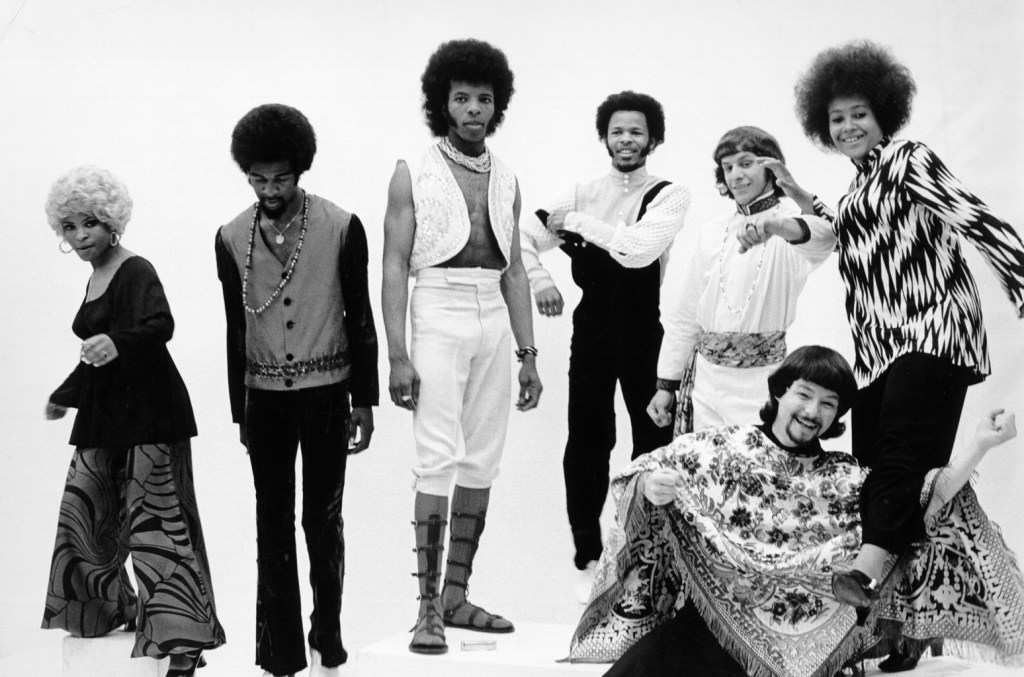
This week: Sly & the Family Stone’s streams are way up following the passing of the group’s iconic bandleader, Coldplay sees a heartbroken deep cut go viral for its frontman’s rumored real-life heartbreak, Beyoncé gets a bump for a song she’s not even playing on tour and more.
Sly & The Family Stone’s Streams Up 563% Following Sly Stone’s Death
The legendary Sly Stone died earlier this week (June 9) at age 82, leaving behind a seismic impact on the worlds of funk, rock and soul. Though sadly brief in his run as a prominent recording artist – the original lineup of Stone’s signature outfit Sly & the Family Stone fell apart within a decade, and Stone became reclusive not long thereafter – his imprint on future generations of artists remains indelible, with a pair of undisputed classic albums (1969’s Stand! and 1971’s There’s a Riot Goin’ On) and countless classic singles.
Trending on Billboard
Unsurprisingly, following his death, fans flocked to streaming services to revisit Sly & the Family Stone’s most beloved works. His catalog combined for 2.5 million U.S. on-demand audio streams over Tuesday and Wednesday, the two days following his death – up 563% from 385,000 streams over the same period the previous week, according to Luminate. Among the most-streamed classics across those two days: “Everyday People” (up 168% to 326,000 streams, following a Cher-and-Future-assisted bump two weeks ago), “Dance to the Music” (up 408% to 174,000) and “Thank You Falettin Me Be Mice Elf Agin” (up 378% to 169,000). – ANDREW UNTERBERGER
Coldplay’s ‘Sparks’ Receives a Streaming Boost Post-Breakup Reports
Last week, news broke that Coldplay’s Chris Martin and actress Dakota Johnson had reportedly called it quits after eight years of on-and-off dating. Although the couple has not publicly commented on the reports, Coldplay has spent the past few weeks playing stadiums as part of their years-long Music of the Spheres tour — and Martin’s performance of the heart-wrenched song “Sparks” during the shows has inspired some post-breakup gawking, and a significant streaming boost.
“And I know I was wrong/ But I won’t let you down/ Oh yeah I will, yeah I will, yes I will,” Martin sings on the track from Coldplay’s 2000 debut Parachutes, which he performs in a stripped-down version on acoustic guitar during the stadium tour. After the band performed for two nights at Las Vegas’ Allegiant Stadium last week and at Denver’s Empower Field at Mile High on Tuesday night (June 10), TikTok clips began to surface focused on Martin’s pained facial expression during the song’s chorus, with one popular clip captioned, “Homie is heartbroken.”
Whether it’s capturing true feelings or just a projection, the viral boost has translated to streaming services, where “Sparks” earned 1.5 million U.S. on-demand audio streams on June 9-10 — a 64% increase from its streaming total during the previous Monday and Tuesday, according to Luminate. We’ll see if the 25-year-old track can keep surging, although Coldplay will play a pair of stadium shows in El Paso this weekend — and many phones will once again be trained on Martin during one of the show’s more emotional moments. – JASON LIPSHUTZ
YG Eyes Comeback Hit with Shoreline Mafia-Assisted “Hollywood”
With their fast-rising new Hollywood single, Cali rap stars YG and Shoreline Mafia (currently comprised of OhGeesy and Fenix Flexin) are looking to keep the West Coast’s Kendrick Lamar-fueled momentum going for the rest of the year.
The new single, which dropped on May 23, appears to be another (more upbeat and danceable) taste of the forthcoming project YG teased with March’s “2004.” Featuring an assist from Shoreline Mafia and bars directed at Joey Bada$$ (“All the pretty hoes gon’ play this/ Joey Bada$$ gon’ hate this”), “Hollywood” is an easy song of the summer contender that’s quickly taken over socials. On TikTok, the official “Hollywood” sound has garnered over 10,000 posts, thanks to the music video’s viral Storm DeBarge-crafted choreography.
According to Luminate, “Hollywood” earned 3.28 million official on-demand U.S. streams in its first full week of release (May 23-29). The following week (May 30-June 5), that figure jumped by 53.5% to just over five million official streams. On the Jun. 14-dated Bubbling Under Hot 100, “Hollywood” debuted at No. 3, a promising sign for the rest of its chart run. Should its growth continue, “Hollywood” could land YG his first Hot 100 entry as a lead artist in nearly three years. – KYLE DENIS
Nearly a Decade Later, Beyoncé’s ‘Lemonade’ Fan Favorite Gets Its Day in the Sun
“All Night,” the sweeping ballad that wraps up Beyoncé’s forgiveness narrative on her blockbuster 2016 Lemonade LP, has been a fan-favorite for nearly ten years. Now, thanks to a viral Cowboy Carter mash-up, it’s become something of a streaming hit.
On April 14, TikTok user @cowboydanny posted a mashup of “All Night” and Cowboy Carter’s “Tyrant,” laying the latter’s lead vocals over the former’s instrumental and drawing a connection between the songs’ shared theme of redemption. The moving mash-up quickly went viral on TikTok amongst the Beyhive, eventually spreading to the platform at-large once the Cowboy Carter Tour kicked off two weeks later on April 28. On TikTok, @cowboydanny’s original post has collected over one million views, while the accompanying sound plays in around 35,000 posts. On YouTube, the creator’s official upload of the mashup boasts nearly 640,000 hits. For the past eight weeks, “All Night” has seen a steady, gradual resurgence on streaming as a new generation of consumers discover the Lemonade visual album for the first time.
During the week of April 11-17, “All Night” earned just under 940,000 official on-demand U.S. streams, according to Luminate. Six weeks later (May 30-June 5), that number ballooned by 76% to over 1.65 million official streams. Even though Beyoncé does not perform “All Night” on the Cowboy Carter Tour (she does, however, perform “Tyrant”), the song is still connecting with listeners and gaining new fans nine years later. – KD
Forever No. 1 is a Billboard series that pays special tribute to the recently deceased artists who achieved the highest honor our charts have to offer — a Billboard Hot 100 No. 1 single — by taking an extended look back at the chart-topping songs that made them part of this exclusive club. Here, we honor Sly Stone, who died on Monday (June 9) at age 82, by looking at the second of Sly & the Family Stone’s three Hot 100-toppers: the disillusioned party staple “Thank You Falettin Me Be Mice Elf Agin.”
Explore
Explore
See latest videos, charts and news
See latest videos, charts and news
It should have been the victory lap. Sly & the Family Stone’s 1969 was one for the absolute ages, kicking off with the band topping the Hot 100 for the first time with “Everyday People” that February, continuing through the release of its commercially successful and highly acclaimed Stand! album that May, hitting a new gear with the standalone single “Hot Fun in the Summertime” in July and perhaps peaking with a legendary set at the iconic Woodstock festival in August. By year’s end, the Family Stone was unquestionably one of the biggest and most important acts in American pop music — and with the December release of the playfully and gratefully titled single “Thank You Falettin Me Be Mice Elf Agin” (as a double A-side alongside the sweeter but less spectacular “Everybody Is a Star”), you’d think the band was simply putting a nice bow on their ’60s run and looking forward to an equally thriving ’70s.
Trending on Billboard
Well, yes and no, but mostly no. The song had the chorus you might have suspected from such a single — and perhaps more importantly, it had the commercial success — but the tone was very different than Sly & The Family Stone’s prior singalongs. Previous classics like “Dance to the Music,” “Everyday People” and “Sing a Simple Song” — all of which are name-checked, with no shortage of irony, in one of the song’s later verses — communicated a communal spirit above all else, of a band with a mixed-gender and mixed-race lineup and no proper lead singer, because the party was equally welcome to all. But by the time of “Thank You,” the party had gotten a little weird and dark, and throughout the song you can hear most of the band members actively looking for the exit.
As Sly & The Family Stone was racking up the accolades and accomplishments during its career year, the band itself was starting to fall apart. Members were becoming alienated from one another, and bandleader Sly Stone in particular was dealing with all kinds of internal and external pressures, which led to health issues and a retreat from the spotlight, and both exorbitant spending and heavy drug use to cope with all of it. “During that period, [he] had enormous pressures on him to align himself with the voices of despair and nihilism,” former manager David Kapralik said of Sly Stone’s turn-of-the-decade turmoil in Fred Bronson’s The Billboard Book of Number 1 Hits. “The poor kid was torn apart.”
You wouldn’t quite ascribe despair or nihilism to the lyrics to “Thank You” — and certainly not to the groove, elevated by Larry Franklin’s innovative slap-bass hook, which pops like air bubbles rising to the surface. But the rest of the Family Stone does feel somewhat submerged: The horns are tentative and a little slurred, the guitar is jagged and scraping, the drums can’t quite carry the weight. While the opening bounce of “Thank You” is buoyant enough to suggest good times, the panic sets in by the time of the song’s famous post-chorus breakdown section, which sounds like the whole band gasping for air.
And the vocals, once punchy and emphatic in early Family Stone singles, are now clipped and indistinct, multiple band members seemingly shouting over one another, rather than cooperatively taking turns as they once did. What’s more, the mix practically swallows them whole as the song goes on: By the time of the song’s final verse, they’re barely audible, with lyrics you can only discern on an extremely close listen. It’s the sound of a band that feels like it’s not being properly heard anyway — so why even bother making it easy for you?
Forever No. 1: Sly & The Family Stone, “Everyday People”
Sly Stone’s lyrics certainly suggest as much. The first verse features him running from a gun-toting devil, while the second seems to find him at an industry party — and he sounds much more freaked out by the latter, protesting, “Thank you for the party/ But I could never stay/ Many things on my mind/ Words in the way.” The last point about words getting in the way is driven home by the third verse, in which he and the band quote many of the their most famous anthems with dispassionate dismissiveness, only really seeming to mean it on the final one, when their declaration of “Papa’s still singing/ You can make it if you try,” feels like they’re quoting a loved one trying to pull them out of their despondency. And the final verse ends — somewhat inaudibly — with the troubled “where do we go from here?” thought: “Dyin’ young is hard to take/ Sellin’ out is harder.”
So how did this song with the sub-aquatic groove and the claustrophobic lyrics still become a No. 1 hit? Well, of course it helps to be anchored by such a mighty chorus. There’s no murmuring or sonic burying being done once you get to the song’s refrain — just the whole band shouting out the title like they mean it, like they really do still want to take you higher. It’s a strong hook and a powerful sentiment, which understandably had the impact of drowning out most of the subtler, less clearly audible signs throughout the rest of the record that all was not right in Stoneland. (As for the modegreened stylization of the title, Stone wrote in his autobiography — also titled after the song — that “mice elf” was meant to suggest “small humble things that were reminders of how big the rest of the world was. You had to stand up straight to be seen at all… And there were forces working against standing up straight. I tried to get to them in the lyrics.”)
And whether you did get Sly’s intent in the lyrics or just loved belting along to that chorus, you still would have no problem getting down to “Thank You.” As off-kilter and occasionally disconcerting as the song’s groove is, it is never less than 100% funky: arguably even more so than the band’s poppier early hits, which sometimes sanded off the grit that traditionally characterizes the best funk records. In fact, along with other grimier late-’60s hits like the Isley Brothers’ “It’s Your Thing” and Charles Wright and the 103rd Street Rhythm Band’s “Do Your Thing,” “Thank You” pointed the way more to where funk would go in the next decade, with rougher textures, fatter bass lines, and lower-pitched grooves that suggested something at least slightly sinister going on underneath the surface.
Billboard
Really, it made perfect sense that despite coming out at the end of the ’60s, “Thank You” ended up being one of the first No. 1 hits of the ’70s. The double-A-side debuted on the first Hot 100 of 1970, dated January 3, and replaced Shocking Blue’s “Venus” atop the listing six weeks later, ruling for both the February 14 and 21 charts. Though the song would ultimately give way to Simon & Garfunkel’s quintessentially soothing “Bridge Over Troubled Water,” the rise of “Thank You” did portend some angrier, darker No. 1s to come; the entirety of Three Dog Night’s “Mama Told Me Not to Come,” which topped the listing five months later, feels like it takes place at the party from the second verse of “Thank You.”
In the decades following “Thank You,” the song has endured as one of Sly & the Family Stone’s most beloved, and has both been inducted into the Grammy Hall of Fame and named by the Rock and Roll Hall of Fame as one of the 500 Songs That Shaped Rock. It has also been covered by everyone from Gladys Knight and the Pips to Van Morrison to Soundgarden, and sampled prominently by dozens of artists — most notably by Janet Jackson, who used the breakdown section as the backbone to her similarly iconic turn-of-a-decade Hot 100 smash, 1989’s No. 2-peaking “Rhythm Nation.”
But the most telling redo of “Thank You” was from Sly & The Family Stone itself, who refashioned the song as “Thank You for Talking to Me Africa,” the closer to its classic 1971 LP There’s a Riot Goin’ On. The new version, which borrowed musical elements from “Africa Talks to You ‘The Asphalt Jungle’” from the album’s A-side, slowed the original song down to a lurch, quieted the chorus to a near-whisper, and even flattened out the bass pops to a repetitive burble. The funk still remained — always would with the Family Stone — but the party was officially over.
Tomorrow, we revisit the final of Sly & the Family Stone’s three Hot 100 No. 1s, the joyous-but-broken-down lead single from There’s a Riot Goin’ On.
SixTONES’ “BOYZ” blasts in at No. 1 on the Billboard Japan Hot 100, on the chart released June 11.
The six-member group’s latest release is being featured as the opener for the anime series WIND BREAKER Season 2. The single launches with 358,770 CDs and becomes the group’s 15th consecutive single to bow atop the physical sales metric since its debut. “BOYZ” also comes in at No. 5 for downloads, No. 93 for streaming, No. 17 for radio airplay, and No. 48 for video views to give the boy band its eighth No. 1 hit. The other singles by SixTONES that hit No. 1 are “Imitation Rain,” “NAVIGATOR,” “NEW ERA,” “Boku ga boku janai mitaida,” “Mascara,” “Kyomei,” and “Watashi.”
Mrs. GREEN APPLE’s “breakfast” debuts at No. 2. The track is being featured as the theme song for the new Fuji TV news program Sun! Shine that began airing Mar. 31. After being released June 4, the track launched with 13,093 units to rule the metric, while coming in at No. 2 for streaming, and No. 18 for radio. The accompanying music video, which features the three members performing choreography for the first time in three years since the visuals for “Dance Hall,” also hits No. 1 this week.
Explore
See latest videos, charts and news
See latest videos, charts and news
The three-man band’s “KUSUSHIKI” holds at No. 3, topping streaming and coming in at No. 6 for downloads and No. 4 for video.
Trending on Billboard
Tsubaki Factory’s “My Days for You” bows at No. 4. The Hello! Project girl group’s 13th single sold 91,145 copies in its first week to hit No. 2 for sales, and was downloaded 1,397 times to hit No. 23 for the metric. HANA’s “ROSE” stays at No. 5, with downloads gaining 116% and downloads 103% from the week before.
Outside the top 10, NGT48’s “Kibo Ressha” sold 47,195 CDs in its first week to debut at No. 13 on the Japan Hot 100. timelesz released FAM, its first original studio album with the current new members, on June 11 and enters the charts for the first time in three weeks.
Recurrent rules have been implemented on the Japan Hot 100 and Hot Albums tallies from the charts released June 4. The Streaming Songs chart is exempt from the recurrent criteria, and will be calculated in the same way as it has been up to the 2025 mid-year tally.
The Billboard Japan Hot 100 combines physical and digital sales, audio streams, radio airplay, video views and karaoke data.
See the full Billboard Japan Hot 100 chart, tallying the week from June 2 to June 8, here. For more on Japanese music and charts, visit Billboard Japan’s English X account.
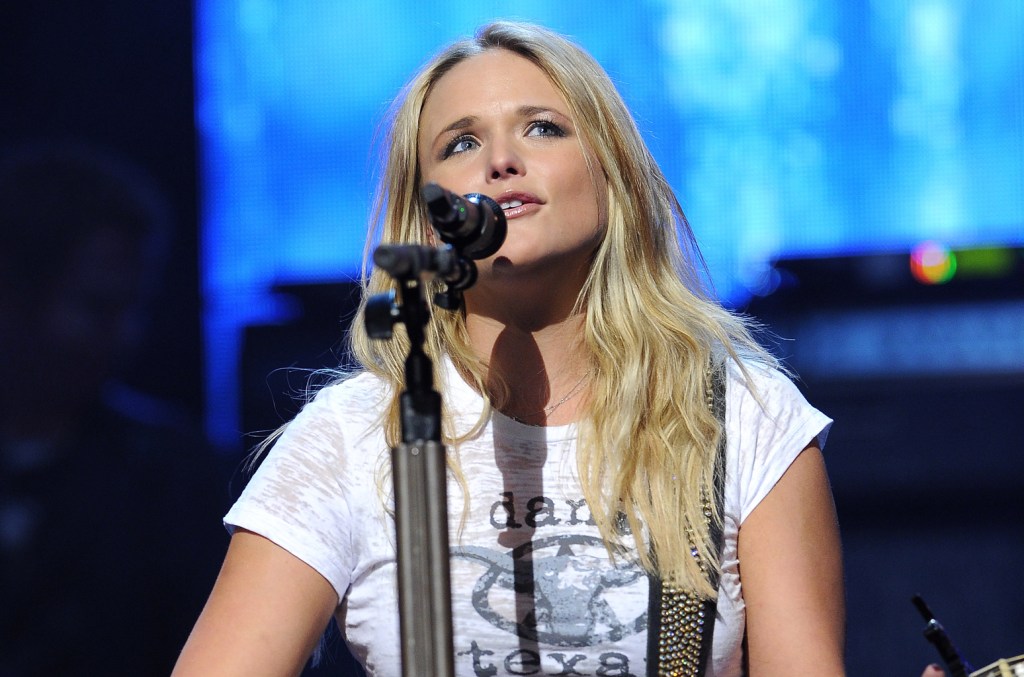
On June 12, 2010, Miranda Lambert’s “The House That Built Me” started a four-week reign on Billboard’s Hot Country Songs chart, becoming her first of five career No. 1s to date.
The ballad was co-authored by Tom Douglas and Allen Shamblin and co-produced by Frank Liddell and Mike Wrucke. It was released from Lambert’s LP Revolution, which debuted at No. 1 on Top Country Albums, marking her third of seven straight career-opening, and total, No. 1s.
The nostalgic composition finds Lambert looking back on her childhood home and its legacy. Among other reflections in it, she sings, “Up those stairs in that little back bedroom is where I did my homework and I learned to play guitar.”
Trending on Billboard
The song earned Lambert the Grammy Award for best female country vocal performance in 2011.
Revolution also yielded Lambert’s second Hot Country Songs leader, “Heart Like Mine,” for a week in May 2011, and the No. 2-peaking lead single “White Liar.” She has subsequently led with “Over You” (one week, May 2012); “We Were Us,” with Keith Urban (three weeks, November-December 2013); and “Somethin’ Bad,” with Carrie Underwood (one, July 2014).
Lambert was born in Longview, TX, on Nov. 10, 1983, and came to prominence after finishing third on the USA Network’s talent show Nashville Star in 2003. Shortly after, she inked her first major-label deal, with Epic Records.
On Country Airplay, Lamber has banked seven chart-toppers, mostly “Drunk (And I Don’t Wanna Go Home),” with Elle King, in April 2022. It became her 18th and most recent top 10 on the multimetric Hot Country Songs chart.
Lambert, who won the Country Music Association’s female vocalist of the year trophy seven times between 2010 and 2017, signed to Big Loud in partnership with Republic Records in April 2024. She released her latest album, Postcards From Texas, last September. It opened at its No. 8 high on Top Country Albums, becoming her 10th top 10.

SEVENTEEN achieves its seventh No. 1 on Billboard’s Top Album Sales chart as the group’s latest release, SEVENTEEN 5th Album ‘HAPPY BURSTDAY’ debuts atop the list dated June 14. The set sold 46,000 copies in the United States in the week ending June 5, according to Luminate.
Explore
Explore
See latest videos, charts and news
See latest videos, charts and news
SEVENTEEN scored its first No. 1 on Top Album Sales in 2021. In turn, with seven No. 1s in the 2020s, the act ties TOMORROW X TOGETHER for the most No. 1s among groups, and the second-most among all acts in the 2020s. Only Taylor Swift, with nine No. 1s on Top Album Sales in the 2020s, has more this decade.
Also in the top 10, the region gets shaken up by albums from Miley Cyrus, Taylor Swift, Kendrick Lamar, Sufjan Stevens, Garbage and Aesop Rock.
Trending on Billboard
Billboard’s Top Album Sales chart ranks the top-selling albums of the week based only on traditional album sales. The chart’s history dates back to May 25, 1991, the first week Billboard began tabulating charts with electronically monitored piece count information from SoundScan, now Luminate. Pure album sales were the sole measurement utilized by the Billboard 200 albums chart through the list dated Dec. 6, 2014, after which that chart switched to a methodology that blends album sales with track equivalent album (TEA) units and streaming equivalent album (SEA) units.
Miley Cyrus’ Something Beautiful debuts at No. 2 on Top Album Sales with 27,000 copies sold, marking her 15th top 10 (inclusive of titles credited to her Disney Channel character Hannah Montana). Morgan Wallen’s I’m the Problem falls to No. 3 (16,000; down 45%) after two weeks atop the list.
Two Swift albums return to the top 10 after an outpouring of fan support following the news that Swift had acquired her Big Machine Records-era music catalog. Her 2017 album reputation reenters at No. 4 (15,000; up 1,183%) and her self-titled 2006 self-titled debut reenters at No. 6 (8,000; up 955%).
Kendrick Lamar’s chart-topping To Pimp a Butterfly reenters at No. 5 on Top Album Sales (11,000; up 639%) after a 10th anniversary reissue on multiple vinyl variants, as well as a cassette tape. Another 10th anniversary reissue, this time from Sufjan Stevens, also impacts the chart, as his Carrie & Lowell reenters at No. 7 (8,000; up 2,656%). (For both Lamar and Stevens, all versions of their respective albums, old and new, are combined for tracking and charting purposes.)
Garbage’s Let All That We Imagine Be the Light debuts at No. 8 with just over 7,000 sold, securing the band its fourth top 10-charting set. Lamar’s former No. 1 GNX falls 5-9 (a little more than 7,000; down 15%) and Aesop Rock nabs his first top 10-charting effort with his new release Black Hole Superette debuting at No. 10 (7,000).
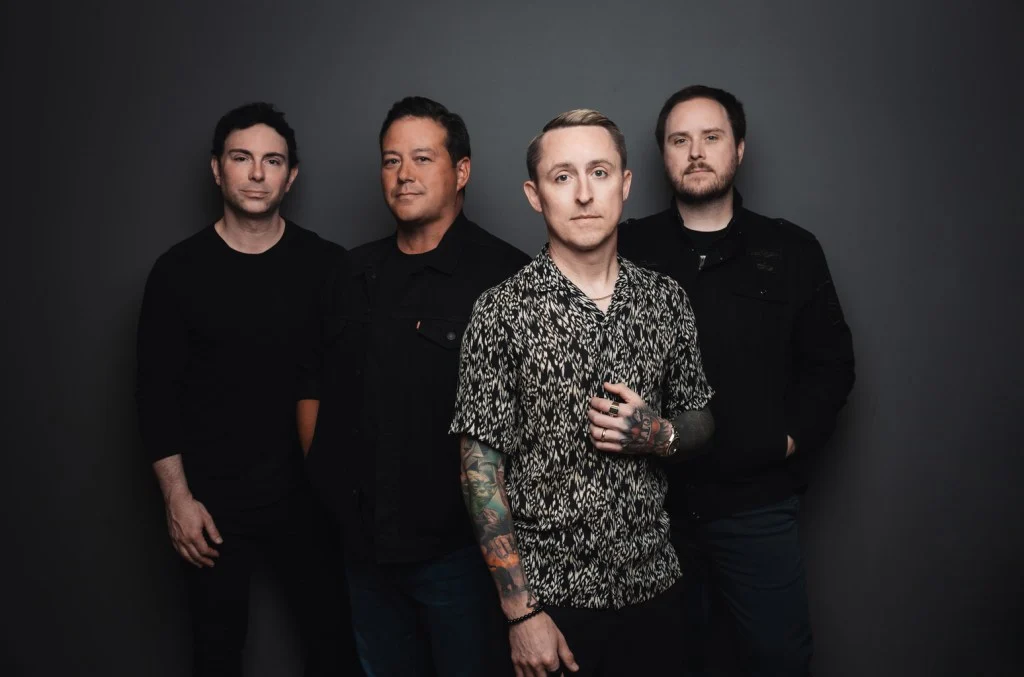
After almost two decades away, Yellowcard is back on a Billboard airplay chart. “Better Days,” the lead single from Yellowcard’s upcoming album of the same name, bows at No. 33 on the Alternative Airplay tally dated June 14. The song marks the Ryan Key-fronted band’s first appearance on any airplay ranking since 2007, when “Light […]
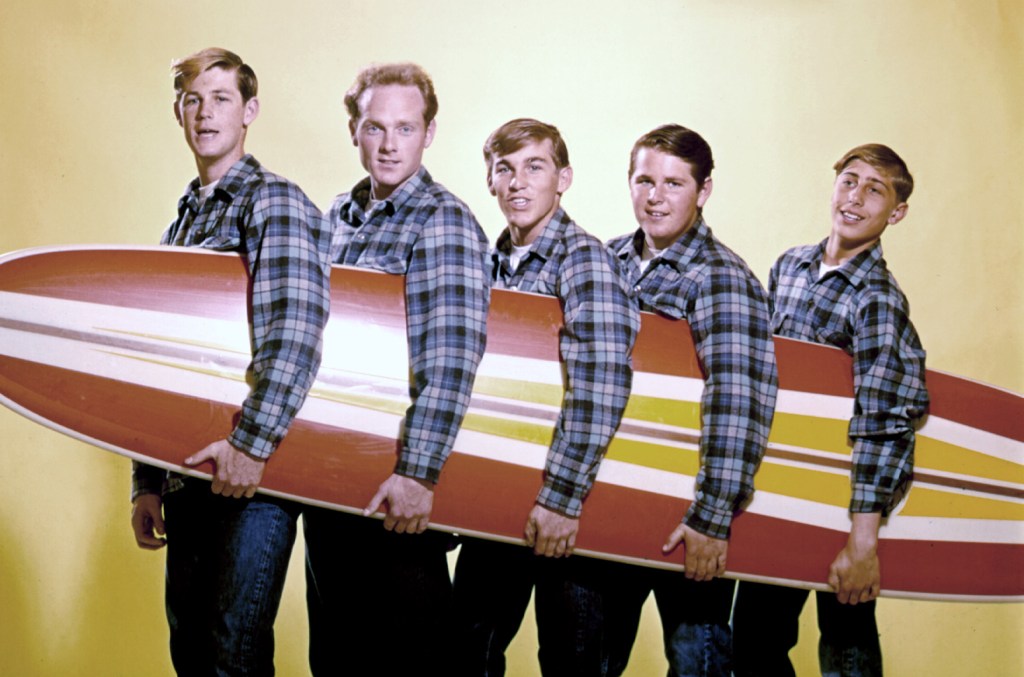
Thanks to their iconic catalog of sun-soaked anthems that could seemingly melt the coldest of climates, the Beach Boys boast one of the most accomplished histories ever on the Billboard Hot 100.
The Beach Boys debuted on the Hot 100 dated Feb. 17, 1962, at No. 93, with “Surfin.” That October, their second entry, “Surfin’ Safari,” reached No. 14, marking their first of 35 top 40 hits.
The band kept catching waves to higher Hot 100 crests, with “Surfin’ U.S.A.” becoming its first of 15 top 10s, hitting No. 3 in May 1963.
“I Get Around” became the Beach Boys’ first Hot 100 No. 1 on July 1964. They reigned again with “Help Me, Rhonda” in May 1965, “Good Vibrations” in December 1966 and “Kokomo” in November 1988. With its lattermost leader, the band set two records at the time: It established the longest span of No. 1s for any act (24 years and four months) and closed the longest gap between trips to the top (21 years and 10 months).
Notably, Brian Wilson was not a part of the recording of “Kokomo.” As reported June 11, the founding member and essential creative force of the band passed away at age 82. Along with the group’s 55 Hot 100 hits logged through 1989, he charted one solo entry: “Caroline, No” rose to No. 32 in April 1966. (He was also the title subject of a Hot 100 hit: Barenaked Ladies’ “Brian Wilson” reached No. 68 in 1998.) “I am proud that I have weathered not just one storm, but a lifetime of storms,” Wilson mused to Billboard in 2015. “Proud that I have stuck with my music and musical convictions. And proud — really proud — to have proven stronger than many imagined me to be.”
The Beach Boys’ Hot 100 history has expanded in recent years thanks to its 1963 classic “Little Saint Nick.” In both the 2023 and 2024 holiday seasons, the carol jingled to a No. 25 high, the band’s best rank since “Kokomo” in December 1988.
The Beach Boys have also continued to chart new music this century. In June 2012, That’s Why God Made the Radio cruised onto the Billboard 200 at its No. 3 peak, marking their 14th and most recent top 10 album – and their highest placement on the chart in 38 years.
In honor of the group’s beloved songs that make it feel like an endless summer when listening any day of the year, count down the Beach Boys’ 40 biggest Hot 100 hits below. Beyond their highest-charting entries — which helped lead to the band’s induction into the Rock & Roll Hall of Fame in 1988 and a lifetime achievement award from the Recording Academy in 2001 — the ranking includes favorites whose legacies have outpaced the reach of their original runs, such as “God Only Knows” (a perhaps surprising, in retrospect, No. 39 peak) and “Don’t Worry Baby” (No. 24).
The Beach Boys’ Biggest Billboard Hot 100 Hits chart is based on actual performance on the weekly Hot 100 chart from its Aug. 4, 1958, inception, through June 14, 2025. Songs are ranked based on an inverse point system, with weeks at No. 1 earning the greatest value and weeks at No. 100 earning the least. Due to changes in chart methodology over the years, eras are weighted to account for different chart turnover rates over various periods.
“Friends”

The Contenders is a midweek column that looks at artists aiming for the top of the Billboard charts, and the strategies behind their efforts. This week, for the upcoming Billboard Hot 100 dated June 21, we look at the chances of Sabrina Carpenter’s new single to enter atop the Hot 100 – and the competition it faces from Alex Warren’s reigning champ.
Explore
See latest videos, charts and news
See latest videos, charts and news
Sabrina Carpenter, “Manchild” (Island/Republic): When “Ordinary” was revealed as the No. 1 single on the Billboard Hot 100 a couple weeks ago, rocketing past all three Morgan Wallen songs that had moved above it in the top three the week before, it looked like it might have a relatively clear path to rule the chart for a long time. Then, last Tuesday (June 3), an announcement came that made it clear its competition would soon be stiffer than expected: Sabrina Carpenter, one of the decade’s biggest breakout pop stars, would be returning with a brand new single.
“Manchild,” written and produced by Carpenter along with the dream team behind her first Hot 100 No. 1, “Please Please Please” — Jack Antonoff and Amy Allen – debuted on Thursday night (June 5) after just a few days of teasing. The song, packed with the hooks and humor that elevated Carpenter to superstar status during her Short n’ Sweet era, also came with an (at times literally) explosive new video seemingly custom-designed for screengrab memes. It got off to a similarly incendiary start on streaming, bowing atop the Spotify Daily Top Songs USA chart with about twice the streams of the No. 2 song.
Trending on Billboard
Those streaming numbers fell significantly over the weekend, but have rebounded slightly over the week, and now look to portend a very strong showing for “Manchild” on DSPs. Whether it will be enough to help the song capture the Hot 100’s top spot is another matter – particularly as it gets started on radio, where it’s off to a solid start, even threatening a Radio Songs chart debut in its first week, but obviously lags behind Carpenter’s enduring 2024 hits “Espresso” and “Taste,” which still have a fairly considerable presence on the airwaves.
It will help “Manchild” that the song is selling fairly well, having spent most of the past four days in the top five of iTunes’ real-time chart. It even returned to No. 1 following the Tuesday discounting of the song to 69 cents – which, along with a vinyl single now available for purchase on her webstore (including the exclusive B-side “inside of your head when you’ve just won an argument with a man”), would seem to indicate that Carpenter’s team likely feels like the No. 1 is within reach. It should be a close race regardless, and may come down to the final days – if not the final hours – of tracking-week consumption.
Alex Warren, “Ordinary” (Atlantic): After capturing the top spot on the Hot 100 two weeks ago, “Ordinary” shows no real signs of slowing down, as its radio play continues to rise – up 8% in all-format airplay June 6-9, according to Luminate — and streaming and sales both remain highly stable. Despite its follow-up, the Jelly Roll collab “Bloodline,” debuting last week, it doesn’t seem like Alex Warren‘s new song has sapped any of the “Ordinary” momentum, as the latter remains the early Song of the Summer frontrunner.
Even if “Manchild” does manage to topple it on next week’s chart, “Ordinary” has the consistent cross-platform success to challenge for the top spot for many weeks still to come – and could take back over from Carpenter’s latest almost immediately, once the first-week streaming and sales numbers from the latter inevitably recede in week two. And Warren announced last week that the release of new set You’ll Be All Right, Kid (Pt. 2) will arrive on July 18, and likely further extend the prominence of “Ordinary” even deeper into the summer.
Morgan Wallen, “What I Want” (feat. Tate McRae) & “Just in Case” (Mercury/Big Loud/Republic): Speaking of songs still growing on radio, both of Morgan Wallen’s top-performing songs on the Hot 100 are also continuing to make their presence increasingly felt on the radio: Country radio single “Just in Case” climbs 38-37 on Radio Songs this week is up 7% in all-format play June 6-9, while the Tate McRae-featuring “What I Want,” being promoted to pop, surges 37%. The problem, as always with Morgan, is himself: Older hits “I’m the Problem,” “Love Somebody” and even his spring 2024 Post Malone collab “I Had Some Help” are still outperforming the rising songs across radio formats, and Wallen may need to be patient with those songs’ slow demises on the airwaves before those newer songs can fully take over.
Forever No. 1 is a Billboard series that pays special tribute to the recently deceased artists who achieved the highest honor our charts have to offer — a Billboard Hot 100 No. 1 single — by taking an extended look back at the chart-topping songs that made them part of this exclusive club. Here, we honor Sly Stone, who died on Monday (June 9) at age 82, by looking at the first of Sly & the Family Stone’s three Hot 100-toppers: the simple, yet profound “Everyday People.”
Sly & the Family Stone, a genre-fluid, interracial, mixed-gender group (at a time when all three things were unique) was formed in San Francisco in 1966. The group was led by Sly Stone, a musical prodigy who was just 23 at the time. His main claim-to-fame at that point is that he had produced a string of hits for the pop/rock group The Beau Brummels, including “Laugh, Laugh” and “Just a Little.”
Trending on Billboard
Sly & the Family Stone made the top 10 on the Billboard Hot 100 in April 1968 with its first chart hit, “Dance to the Music.” That funky celebration of dance music wasn’t topical at all, but after the stunning events of 1968 – a year of assassinations, riots and a war without end in Vietnam – acts almost had to say something, and Sly & the Family Stone did on “Everyday People,” which was released that November.
The song is a plea for understanding and racial unity, which is so understated in its approach that it’s easy to lose sight of just how progressive its sentiments seemed in 1968. The record has a gentle tone and a disarming opening line: “Sometimes I’m right and I can be wrong/ My own beliefs are in my song.” Who ever starts out a conversation by conceding “I can be wrong?”
The sense of urgency and passion picks up on the proclamation “I am everyday people!” which is repeated three times during the song, and then on the call to action “We got to live together,” which is repeated twice.
Stone, who was born Sylvester Stewart, wrote and produced “Everyday People.” His genius move on this song was to simplify the discussion to the level of a childhood playground taunt – “There is a yellow one that won’t accept the Black one/ That won’t accept the red one that won’t accept the white one/ Different strokes for different folks/And so on and so on and scooby-dooby-dooby.” The unspoken, but unmistakable, message: Isn’t all this division really pretty childish?
Sly makes the point even more directly in the second verse: “I am no better and neither are you/ We are the same whatever we do.” The reasonableness of his argument instantly disarms any detractors.
The song’s politics are expressed most directly in the third verse, in the song’s depiction of counter-culture types vs. establishment types; progressives vs. conservatives. “There is a long hair that doesn’t like the short hair/For being such a rich one that will not help the poor one.”
The bridges of the song contain the line “different strokes for different folks,” which was initially popularized by Muhammad Ali. It became a popular catchphrase in 1969 (and inspired the name of a 1978-86 TV sitcom, Diff’rent Strokes).
Sly wisely kept the record short – the childlike sections, which are charming in small doses, would have become grating if the record had overstayed its welcome. The record runs just 2:18, shorter than any other No. 1 hit of 1969.
Three Dog Night took a similar approach on “Black & White,” which was a No. 1 hit in September 1972 – putting a plea for racial unity and brotherhood in simple, grade-school language. Three Dog’s record isn’t as timeless or memorable as “Everyday People,” but it shows Sly’s influence.
“Everyday People” entered the Hot 100 at No. 93 for the week ending Nov. 30, 1968. You might assume that a record this catchy and classic shot to the top quickly, but it took a while. In the week ending Jan. 11, 1969, it inched up from No. 27 to No. 26, looking like it might not even match “Dance to the Music”’s top 10 ranking. But then it caught fire. The following week, it leapt to No. 15, then No. 5, then No. 2 for a couple of weeks behind Tommy James & the Shondells’ “Crimson and Clover,” before finally reaching the top spot in the week ending Feb. 15.
It stayed on top for four consecutive weeks, the longest stay of Sly’s career. The song was of a piece with such other socially-aware No. 1 hits as Aretha Franklin’s “Respect” (1967) and The Rascals’ “People Got to Be Free” (1968).
“Everyday People” remained on the Hot 100 for 19 weeks, a personal best for Sly, and wound up as the No. 5 song of 1969 on Billboard’s year-end chart recap. The song was included on the group’s fourth studio album, Stand!, which was released in May 1969. The album reached No. 13 on the Billboard 200 and remained on the chart for 102 weeks – also a personal best for the group. The album, which also featured “Sing a Simple Song,” “Stand!” and “I Want to Take You Higher,” was inducted into the National Recording Registry in 2014 and the Grammy Hall of Fame in 2015.
Billboard
The band included “Everyday People” in their set at Woodstock on Aug. 17, 1969. Fun Fact: It was the only No. 1 Hot 100 hit performed by the original artist during that landmark three-day festival.
The song is widely acknowledged as a classic. Rolling Stone had it at No. 109 on its 2024 update of its 500 Greatest Songs of All Time list. Billboard included it on its 2023 list of the 500 Best Pop Songs: Staff List. (We had it way down at No. 293, clearly proving the wisdom of Sly’s opening line, “Sometimes I’m right and I can be wrong.”)
While Sly was bedeviled by personal demons that shortened his run at the top, he lived to get his flowers. The band was inducted into the Rock & Roll Hall of Fame in 1993 (in its first year of eligibility). On his own, Sly received a lifetime achievement award from the Recording Academy in 2017.
Numerous artists covered “Everyday People” in the wake of Sly’s recording. Between 1969 and 1972, the song was featured on Billboard 200 albums by The Supremes, Ike & Tina Turner, The Winstons, Watts 103rd Street Rhythm Band, Supremes & Four Tops, Billy Paul and Dionne Warwick.
Spend any time on YouTube and you can also find cover versions of “Everyday People” by everyone from Peggy Lee to Pearl Jam (who performed it in concert in 1995). Other artists who took a stab at it: Aretha Franklin, The Staple Singers, William Bell, Belle & Sebastian, Maroon 5 (on a 2005 remix and cover album Different Strokes by Different Folks) and the unlikely team of Cher and Future, who covered it for a 2017 Gap ad that has recently gone viral.
A couple artists even had Hot 100 hits with their new spins on the song. Joan Jett & the Blackhearts covered the song in 1983 and took it to No. 37. Arrested Development drew heavily from the song for their 1993 hit “People Everyday,” which reached No. 8. (The song used the chorus and basic structure of the original, with new verses written by lead singer Speech.)
Sly & the Family Stone nearly landed a second No. 1 hit in 1969, but “Hot Fun in the Summertime” stalled at No. 2 for two weeks in October behind The Temptations’ “I Can’t Get Next to You.” “Hot Fun” wound up at No. 7 on the aforementioned year-end Hot 100 recap, making Sly the only act with two songs in the year-end top 10.
Questlove, who directed the 2025 documentary Sly Lives (aka The Burden of Black Genius), shared a touching tribute to the icon on Instagram on Monday. “Sly Stone, born Sylvester Stewart, left this earth today, but the changes he sparked while here will echo forever … He dared to be simple in the most complex ways — using childlike joy, wordless cries, and nursery rhyme cadences to express adult truths.”
That last part was a clear reference to “Everyday People.” Questlove also recalled what he called that song’s “eternal cry” – “We got to live together!” Said Quest: “Once idealistic, now I hear it as a command. Sly’s music will likely speak to us even more now than it did then. Thank you, Sly. You will forever live.”
Later this week: Two additional Sly & the Family Stone No. 1s take the group into darker and murkier territory, with similarly spellbinding results.