State Champ Radio
 Chart Beat
Page: 20
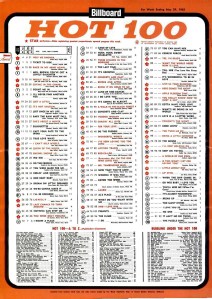
Forever No. 1 is a Billboard series that pays special tribute to the recently deceased artists who achieved the highest honor our charts have to offer — a Billboard Hot 100 No. 1 single — by taking an extended look back at the chart-topping songs that made them part of this exclusive club. Here, we honor Brian Wilson, who died on Wednesday (June 11) at age 82, by looking at the second of The Beach Boys’ three Hot 100-toppers: “Help Me, Rhonda,” the final classic of the Beach Boys’ earliest golden age.
What a difference an “h” makes. When “Help Me, Ronda” was originally featured on The Beach Boys Today! in early 1965, the band didn’t think too much of the shuffling love song with the repetitive hook; you can tell by how little care they took to normalize the volume levels, which inexplicably jump around in the song’s last two choruses. But leader Brian Wilson believed in the song’s potential, and after the band re-recorded it or single release (and for inclusion on the band’s second 1965 album, Summer Days (And Summer Nights!!)) as “Help Me, Rhonda,” it became the latest in a stunning streak of smashes for the family-and-friends quintet from Southern California.
Trending on Billboard
In fact, by early 1965, The Beach Boys was one of the only American bands still holding its own against the pop-rock raiders from overseas. The British Invasion was in full swing, and The Beatles alone had topped the Hot 100 six times in 1964. In between No. 1s four and five for the Fab Four that year came the Boys’ eternal teen anthem “I Get Around” and the group had two additional top 10 hits by the end of ’64: the wistful “When I Grow Up (To Be a Man)” (No. 9) and the the ebullient “Dance, Dance, Dance” (No. 8). Both of those were included on The Beach Boys Today! at the top of 1965, and the set also spawned a third single in a cover of Bobby Freeman’s “Do You Wanna Dance?,” which just missed the top 10 (No. 12) that April.
As the Beach Boys were still enjoying their run of fun-and-sun early hits, Brian Wilson was beginning to stretch out both as a songwriter and a producer. “I Get Around” was backed by “Don’t Worry Baby,” Wilson’s first real attempt to outdo his idol Phil Spector, with impossibly dreamy production and harmonies and a gorgeous rising verse melody that somehow elevated into an even-higher-flying chorus. The flip-side to “Dance, Dance, Dance” was “Please Let Me Wonder,” another Spectorian love song with strikingly fragile verses and a near choir-like refrain. And perhaps most notably, Today! included the lovely but disquieting “She Knows Me Too Well,” Wilson’s first real lyrical examination of his own romantic insecurities and failings. All of these would ultimately point the way to the artistic leap forward the band would take on 1966’s Pet Sounds, the band’s intensely personal and overwhelmingly lush masterwork which disappointed commercially, but made them critics’ darlings for the first time.
But they weren’t there yet. In mid-’65, they were still fighting to maintain their place in an increasingly crowded pop-rock landscape — and, not having reached the Hot 100’s top five since “I Get Around” nearly a full year earlier, they needed a no-doubter to lead off Summer Days. So Brian Wilson dug back in on the song he’d relegated to deep-cut status on the album before. “Ronda” was much more in line with the group’s earlier, simpler hits than the more lyrically and musically complex fare Wilson was starting to explore, but he was right that the song had real potential: It was a clever number that basically managed to be both a breakup ballad and an upbeat love song at once, with a chorus so relentless that you could hear it once and remember it for the rest of your life. It just needed a little extra maintenance.
In truth, Brian did a lot more on the re-recording of “Help Me, Ronda” than add an “h” to her name and keep his finger steadier on the volume controls. He also clipped the intro, so it began right with its “Well, since she put me down…” intro, dropping you right into the middle of the song’s narrative. He tightened the tempo a little, and added some “bow-bow-bow-bow” backing vocals to tie together the “help-help me, Rhonda” pleas of the chorus. He added some extra piano and guitar to give the song’s instrumental bridge a little extra zip. And perhaps most importantly, he laid an extra falsetto backing “Help me, Rhonda, yeah!” on top of the chorus climax to make it stand out a little better from the rest of the refrain. They’re all small additions, but you don’t realize how much difference they make until you go back to the Today! original and wonder why the whole thing sounds so empty and lifeless by comparison.
But while Brian Wilson allowed the song to soar, “Rhonda” was anchored by a less-celebrated Beach Boy: Al Jardine. A high school friend of Brian’s, Jardine had mostly served as a glue guy in the band to that point and had never sung lead on one of their songs, much less a single A-side. But Brian was intent on giving his buddy a spotlight moment, and decided Jardine would take the reins for “Rhonda.” It was a good match: While the Wilsons’ voices drifted towards the ethereal and sentimental, and Mike Love’s had a more muscular, occasionally snide edge to it, Al Jardine’s voice had both a sturdiness and an unassuming everyman quality to it. He was the Beach Boy best equipped to sell a relatable song like “Rhonda.”
And while “Rhonda” was a less musically and lyrically ambitious song than others Wilson was attempting contemporaneously, there is still a bit of trickiness to it. It’s a lyric that mourns a romantic split with one girl while attempting to simultaneously ask a new girl to ease his pain — and the vocal matches the shift; Jardine’s singing is frenzied and pained and in the first half of his verses and smooth and composed in the second. From a less likable or compelling vocalist, the whole thing could’ve very easily come off like a cheap come-on, like he doesn’t actually give a damn about either girl. But Jardine manages to sound sincere, like he actually is going through it and is genuinely in need of the help that only the titular female can provide. When he begs on the chorus for Rhonda to “get ‘er outta my heart!” — after a couple dozen shorter pleas from the rest of the Boys — you really hope she succeeds in doing so.
With its new arrangement and new title, “Rhonda” did indeed prove the no-doubter that the Beach Boys were hoping for to re-establish their pop supremacy in ’65. The song debuted on the Hot 100 on April 17 at No. 80, and seven weeks later, it replaced — who else — The Beatles’ “Ticket to Ride” to become the band’s second No. 1 hit, lasting two weeks on top before being replaced by the other dominant American pop group of the era: The Supremes, with “Back in My Arms Again.” The Beatles would, of course, be heard from again just a few months later with a “Help!” No. 1 of their own — and in between them in June, the Four Tops reigned with “I Can’t Help Myself (Sugar Pie, Honey Bunch).” (Draw your own conclusions about a generational cry for additional assistance amidst the turmoil of the mid-’60s if you so desire.)
Billboard Hot 100
Billboard
“Help Me, Rhonda” would mark something of the end of an era for The Beach Boys and Brian Wilson, as it was their last major pop hit before the group started rapidly scaling up its ambitions. Even “California Girls,” the group’s universally accessible No. 3-peaking follow-up to “Rhonda” — which, wouldn’t you know it, got stuck behind The Beatles’ “Help!” on the Hot 100 — came affixed with a cinematic instrumental intro and a vocal outro in-the-round that no other pop group of the time would have dared attempt. By 1966, the group was pushing pop music into the future at a rate that would ultimately prove uncomfortable for both the public and for the Beach Boys themselves — though it would culminate in one more all-time classic pop single before it all fell apart.
And “Help Me, Rhonda” stands alone in all of pop history in at least one respect: It remains the lone Billboard Hot 100 representation for all Rhondas worldwide. No other song (or artist) with that name — outside of a No. 22-peaking Johnny Rivers cover of the song in 1975, featuring Brian on backing vocals — has ever reached the chart since its 1958 introduction. (No “Ronda”s either.)
Tomorrow, we look at the final of the Beach Boys’ three Brian Wilson-led No. 1s: the forever singular “Good Vibrations.”

For the eighth week in a row, not a single soundtrack appears in the top half of the Billboard 200. That’s the longest such shutout since 2021, when the pandemic disrupted moviegoing and as a result, diminished the opportunities for hit soundtracks. For 13 consecutive weeks that year, from July 31 to Oct. 23, no […]
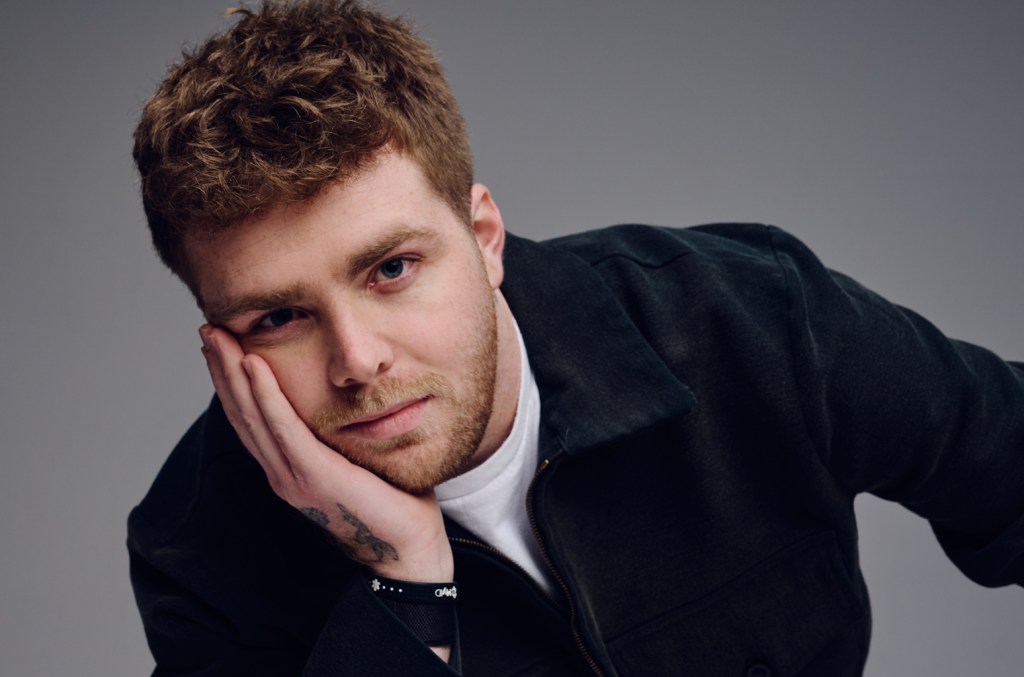
Alex Warren’s “Ordinary” remains the biggest song in the world, as it tallies a seventh week at No. 1 on the Billboard Global 200 and a fifth week atop Billboard Global Excl. U.S.
Meanwhile, Sabrina Carpenter’s “Manchild” debuts at No. 2 on both the Global 200 and Global Excl. U.S.; Ed Sheeran’s “Sapphire” starts at Nos. 8 and 7 on the respective rankings; and sombr’s “Back to Friends” hits the top 10 on Global Excl. U.S., rising 11-9, as it continues scaling the Global 200’s top 10.
The Billboard Global 200 and Global Excl. U.S. charts, which began in September 2020, rank songs based on streaming and sales activity culled from more than 200 territories around the world, as compiled by Luminate. The Global 200 is inclusive of worldwide data and the Global Excl. U.S. chart comprises data from territories excluding the United States.
Trending on Billboard
Chart ranks are based on a weighted formula incorporating official-only streams on both subscription and ad-supported tiers of audio and video music services, as well as download sales, the latter of which reflect purchases from full-service digital music retailers from around the world, with sales from direct-to-consumer (D2C) sites excluded from the charts’ calculations.
“Ordinary” leads the Global 200 with 70.4 million streams (essentially even week-over-week) and 12,000 sold (down 3%) worldwide June 6-12.
Carpenter’s “Manchild” launches at No. 2 on the Global 200 with 70.1 million streams and 8,000 sold worldwide June 6-12, following its release late on June 5. She claims her fourth top 10 on the chart with the song that introduces her next album, Man’s Best Friend, due Aug. 29.
Lady Gaga and Bruno Mars’ “Die With a Smile” drops 2-3 on the Global 200, after 18 weeks at No. 1 starting last September (second only to the 19 weeks at No. 1 for Mariah Carey’s “All I Want for Christmas Is You” since the chart began); ROSÉ and Bruno Mars’ “APT.” dips 3-4, after 12 weeks at No. 1 starting in November; and Billie Eilish’s “Birds of a Feather” swoops 4-5, following three weeks at No. 1 last August.
Sheeran’s “Sapphire” enters the Global 200 at No. 8 with 44.8 million streams and 7,000 sold worldwide in its first full week, following its June 5 release, ahead of his album Play, due Sept. 12. He adds his fifth top 10 on the chart and first in a lead role since 2021 (when “Bad Habits” led for a week and follow-up “Shivers” hit No. 3).
“Ordinary” commands Global Excl. U.S. with 51.3 million streams (up 1%) and 5,000 sold (up 2%) outside the U.S.
“Manchild” debuts at No. 2 on Global Excl. U.S. with 43.7 million streams and 3,000 sold beyond the U.S., marking Carpenter’s fourth top 10.
“Die With a Smile” descends 2-3 after 17 weeks atop Global Excl. U.S. starting last September. Only “APT.,” which backtracks 3-4, has led longer: 19 weeks, beginning in November. “Birds of a Feather” rounds out the top five, falling 4-5, following three weeks at No. 1 last August.
“Sapphire” sparkles at No. 7 on Global Excl. U.S. with 38.2 million streams and 4,000 sold outside the U.S., becoming Sheeran’s fifth top 10.
Plus, sombr’s “Back to Friends” pushes 11-9 on Global Excl. U.S. top 10, thanks to an 8% boost to 30.9 million streams outside the U.S. The singer-songwriter (real name Shane Boose) scores his first top 10 on the chart; it likewise became his first top 10 on the Global 200, where it lifts 7-6 for a new high.
The Billboard Global 200 and Billboard Global Excl. U.S. charts (dated June 21, 2025) will update on Billboard.com tomorrow, June 17. For both charts, the top 100 titles are available to all readers on Billboard.com, while the complete 200-title rankings are visible on Billboard Pro, Billboard’s subscription-based service. For all chart news, you can follow @billboard and @billboardcharts on both X, formerly known as Twitter, and Instagram.
Luminate, the independent data provider to the Billboard charts, completes a thorough review of all data submissions used in compiling the weekly chart rankings. Luminate reviews and authenticates data. In partnership with Billboard, data deemed suspicious or unverifiable is removed, using established criteria, before final chart calculations are made and published.
The “Niconico VOCALOID SONGS” mid-year ranking for 2025 was recently announced. This chart, which was launched on Dec. 7, 2022, tracks the top 20 songs on Niconico created using voice synthesis software. The ranking is based on metrics developed by Billboard JAPAN, including the number of plays, the number of videos that use the songs, the number of comments, the number of likes, and more. In the recently released chart, the number one position went to Hiiragi Magnetite’s “Tetoris,” followed closely by DECO*27’s “Monitoring.”
Explore
Explore
See latest videos, charts and news
See latest videos, charts and news
The video for “Tetoris,” which was released in November 2024, shows Kasane Teto spinning over a yellow background. The lyrics drip with self-deprecation: “I’m so busy with depression and Mania / That I can’t even get some sleep / Yet again.” The song is anchored by the melody to “Korobeiniki,” the Russian folk song famous as the background music of the Tetris video game, and uses rhythmical phrases that place heavy emphasis on the feel of the lyrics, combining “Teto” and “Tetris.” The lyrics are ultra-fresh, with lines like “Jinsei Cancel Cancel Kaiwai” (“Around the ‘Cancel Cancel Life’ Neck of the Woods”) that play on the online slang from late 2024, “Furo Cancel Kaiwai” (“Around the ‘Cancel the Bath’ Neck of the Woods”).
Trending on Billboard
It’s also worth noting the dramatic success being enjoyed by DECO*27, a veteran Vocaloid producer who will be celebrating the 17th anniversary of their debut this October but who remains on the frontlines of the Vocaloid scene. DECO*27 has been distinguishing himself since the 2010s, when songs like “Mosaic Roll” and “Streaming Heart” were covered by huge numbers of utaite. Even now, 16 years later, his popularity remains sky high. His works are about change, which has had a tremendous impact on his evolution as an artist. For example, on his album TRANSFORM, released on November 27, 2024, he used the new Miku voicebank. Since May 2023, DECO*27 has been using a Hatsune Miku 3D model he created himself (Deco Miku) primarily to promote his music on YouTube and TikTok. This approach ties in closely to his movement on the chart.
The mid-year chart also has many songs related to the film Kowareta Sekai To Utaenai Miku (“Colorful Stage! The Movie: A Miku Who Can’t Sing”), an offshoot of the smartphone rhythm and adventure game Project Sekai Colorful Stage! Feat. Hatsune Miku, that began airing in theaters nationwide in January 17. There’s DECO*27’s song “Hello, SEKAI feat. Hatsune Miku,” which is featured in the movie, and six songs written by musical units and virtual singers and then arranged by six Vocaloid producers such as kemu, Iyowa, and Nilfruits. VocaColle, the world’s largest user submission-focused event in the Vocaloid scene, had a higher number of submissions than ever before. Like Proseka, it has become the perfect place to discover new talent. In VocaColle 2025 Winter, which was held in February, Avaraya, a Vocaloid producer with previous experience competing in the event’s rookie bracket, took the number one position in the Top 100 with “The Sound About Petals.”
One constant throughout the mid-year ranking of 2025 was the use of music video thumbnails featuring virtual singers, primarily Hatsune Miku and Kasane Teto. The tide of songs featuring Kasane Teto, which began in 2024, has carried on this year, but we’re now also seeing a rise in songs with both Hatsune Miku and Kasane Teto, a trend launched by 32ki’s “Mesmerizer.” For songs by Vocaloid producers who are gaining support overseas, the visuals of the virtual singers often serve as symbols of the songs themselves. Just as each Vocaloid producer tweaks the vocals, giving their virtual singers a unique sound, it appears now that each producer’s virtual singer has established their own distinct visual look.
One of the powerful boosters of the buzz in the scene is the recent influx of overseas listeners. For example, Vocaloid producer Nunununununununununununununununu debuted in 2022 and has already established a global fan base. The music video for his song “Mimukauwa Nice Try,” which ranked 4th on the chart, has both English and Japanese subtitles, and on the Chinese video streaming site Bilibili, the song has Chinese subtitles. One of the notable things about “CandyCookieChocolate,” by Hallo Cel, who debuted in 2021, is that it has subtitles in 13 different languages, including Japanese. Artists are looking at the potential for global expansion and are planting the seeds for creating connections with overseas listeners in the future. Global strategies such as the use of multilingual subtitles and captions are likely to accelerate in the future. This will be facilitated by Asia Creators Cross, a creator coordination program run by Dwango which provides opportunities for Japanese creators to thrive worldwide and for global creators to thrive in Japan. As part of this program, in May of this year, the Strawberry Music Festival, one of China’s biggest music festivals, featured a performance by four DJs with many Chinese fans: Minami no Minami, namigroove, Natsuyama Yotsugi, and TeddyLoid.
Vocaloid songs are often mirrors that reflect the real societal problems being faced by Gen Z. This may fly under the radar because of the recent trend for upbeat-sounding music, but underneath that music are songs about some of the dark recesses of modern life, such as LSD. “Monitoring,” with its delusions spinning out from hallucinations, and “Mesmerizer,” in which Hatsune Miku undergoes a menacing transformation in the second half of the music video, are prime examples. In that sense, Ura Amala’s “Daidaidaidaidaikirai” shares something in common with them, as the moment the song breaks into the chorus, the sound production becomes intensely psychedelic. Hallo Cel later revealed that the look of “CandyCookieChocolate” was an homage to the style of the artist named “channel” (who now goes by the name “CAST”), the creator of the music video for “Mesmerizer.” The animation in the video draws one’s consciousness in like a vortex, and the three sweets that make up the name are suggestive of some sort of code word.
Something to note, given this increase in trippily-themed songs, is the looping track structure of many of the songs. This looping lodges the lyrics to the songs in the listener’s brain. “Mimukauwa Nice Try” repeats the refrain “Zako♡, zako♡” (“Loser♡, loser♡”). The song “Daidaidaidaidaikirai” has the repeated rhyming of “Daidaidaidaidaikirai, OMG nasakenai, mohaya bye bye bye bye bye shitai” (“I hate hate hate hate hate you, OMG, how pathetic, I just wanna say bye bye bye bye bye already”). The intro to “CandyCookieChocolate” boldly draws on the song’s name, with the lyrics “CANDY CANDY CANDY COOKIE CANDY CANDY CHOCOLATE”. In other words, one of the big trends in today’s Vocaloid scene is using the music as an “electronic drug” that doesn’t place too much of a burden on the mind. It’s an SOS signal from those in the scene, especially zoomers. The recent popularity of up-beat songs is likely because of how well they fit with short video platforms like TikTok, but behind the fast melodies are dark lyrics. This is where the true value of Vocaloid songs lives on, casting a keen eye on the reality around us. That’s why we can never get enough Vocaloid.
—This article by Mio Komachi first appeared on Billboard Japan
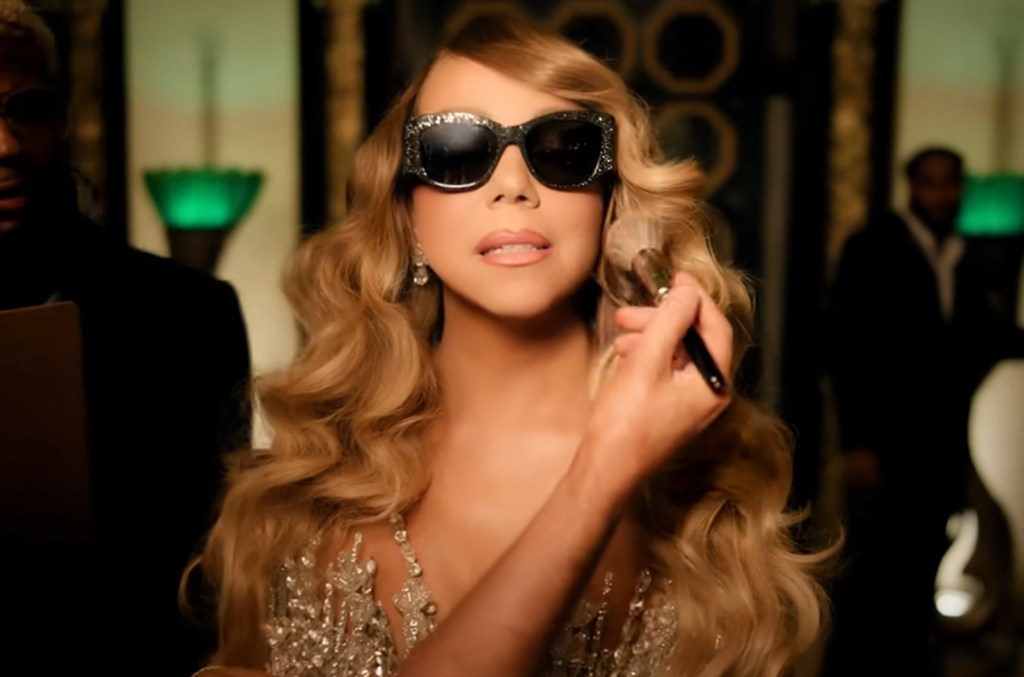
Mariah Carey achieves her landmark 50th career hit on the Billboard Hot 100, as her new single, “Type Dangerous,” debuts at No. 95 on the chart dated June 21, 2025.
Released June 6, the song starts with 2.5 million official streams, 14.7 million in radio airplay audience and 5,000 sold in the United States in the week ending June 12, according to data tracker Luminate.
Boosting its profile, Carey performed “Type Dangerous” on the 2025 BET Awards on June 9, when she was also honored with the Ultimate Icon Award.
Trending on Billboard
The track, which Carey co-wrote and co-produced, previews her 16th studio album, her first since Caution in 2018. The song’s official video premiered Saturday (June 14).
Carey debuts her first new title on the Hot 100 since “Oh Santa!,” featuring Ariana Grande and Jennifer Hudson, spent a week on the chart dated Dec. 19, 2020. “Type Dangerous” is her first nonseasonal song to reach the ranking since “I Don’t,” featuring YG, logged a week on the list dated Feb. 25, 2017. “Type Dangerous” is her first non-holiday entry without any billed artists since “Infinity,” on the May 16, 2015, chart.
Beginning in December 2019, through this past holiday season, Carey has decorated the top of the Hot 100 for 18 weeks with her evergreen (and red) 1994 classic, “All I Want for Christmas Is You.” The carol became her 19th No. 1 – the most among soloists and second overall only to the Beatles’ 20.
(Carey is also heard on two Hot 100 top 10s in recent years that don’t contribute to her chart history: Drake’s “Emotionless,” which hit No. 8 in July 2018, samples her 1991 leader “Emotions,” while Carey joined for a remix of Latto’s “Big Energy,” which nods to Carey’s 1995 Hot 100-topper “Fantasy” and reached No. 3 in April 2022.)
Carey made her Hot 100 debut with “Vision of Love” on the chart dated June 2, 1990. It became her first leader that August.
Beyond the Hot 100, “Type Dangerous,” Carey’s first single on gamma., as well as on an independent label (and the latest on her MARIAH imprint), begins at No. 4 on the Digital Song Sales chart, marking her 10th top 10.
On the all-format Radio Songs chart, “Type Dangerous” debuts at No. 47. It’s her first new song to make the survey since the Miguel-featuring “#Beautiful,” which hit No. 17 in June 2013. “Type Dangerous” opens on R&B/Hip-Hop Airplay at No. 7, Adult R&B Airplay at No. 15, Mainstream R&B/Hip-Hop Airplay at No. 24, Adult Pop Airplay at No. 30, Rhythmic Airplay at No. 31 and Pop Airplay at No. 38. On R&B/Hip-Hop Airplay, the single scores the highest entrance for a song in nearly 30 years, since Whitney Houston’s “Exhale (Shoop Shoop)” started at No. 6 in November 1995.
“Type Dangerous” concurrently soars in at No. 7 on Hot R&B Songs and No. 24 on Hot R&B/Hip-Hop Songs, which use the same multimetric methodology as the Hot 100.
All charts dated June 21 will update tomorrow, June 17, on Billboard.com.
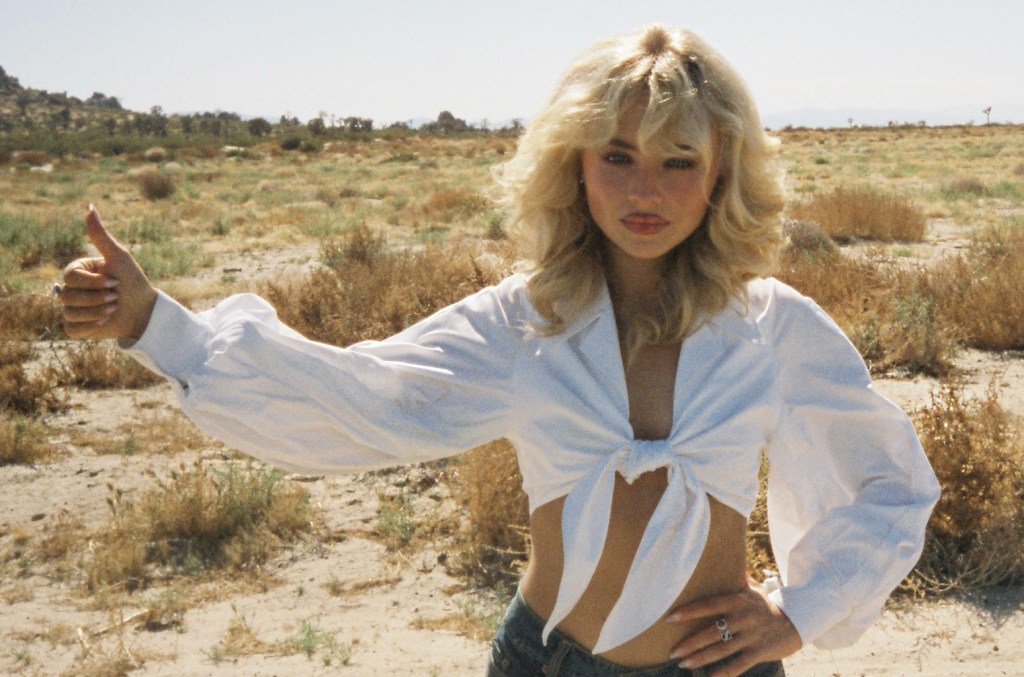
Sabrina Carpenter’s “Manchild” soars onto the Billboard Hot 100 at No. 1. The song is her second leader, and first to debut on top. Her “Please Please Please” spent a week atop the ranking in June 2024, rising from the runner-up spot in its second week on the chart.
“Manchild,” also Carpenter’s fourth Hot 100 top 10, introduces her next album, Man’s Best Friend, due Aug. 29. “i can’t wait for it to be yours x,” she wrote of the set on Instagram on June 11; it is scheduled to arrive just more than year since her prior LP, Short n’ Sweet, which was released Aug. 23, 2024.
Carpenter notched her first three Hot 100 top 10s from Short n’ Sweet, with “Please Please Please” preceded by the No. 3-peaking “Espresso” and followed by “Taste,” which hit No. 2. As those three songs charted in the top five together upon the debut of “Taste,” she became the second act ever to chart her first three top five hits in the region simultaneously – joining only The Beatles for the feat.
Meanwhile, Carpenter is the only woman artist with multiple Hot 100 No. 1s dating to the coronation of “Please Please Please.” She is also the only woman to reign with a nonseasonal song and with no billed collaborators in that span.
“Manchild,” on Island Records/Republic, is the 1,182nd No. 1 in the Hot 100’s 66-year history, and the 85th to debut at the summit – and the first No. 1 entrance for Island. Carpenter co-produced the song with Jack Antonoff and co-wrote it with Antonoff and Amy Allen. (The trio also co-wrote “Please Please Please,” which Antonoff produced.)
Browse the full rundown of this week’s top 10 below.
The Hot 100 blends all-genre U.S. streaming (official audio and official video), radio airplay and sales data, the lattermost metric reflecting purchases of physical singles and digital tracks from full-service digital music retailers; digital singles sales from direct-to-consumer (D2C) sites are excluded from chart calculations. All charts (dated June 21, 2025) will update on Billboard.com tomorrow, June 17. For all chart news, you can follow @billboard and @billboardcharts on both X, formerly known as Twitter, and Instagram.
Luminate, the independent data provider to the Billboard charts, completes a thorough review of all data submissions used in compiling the weekly chart rankings. Luminate reviews and authenticates data. In partnership with Billboard, data deemed suspicious or unverifiable is removed, using established criteria, before final chart calculations are made and published.
‘Manchild’ Streams, Airplay & Sales
Forever No. 1 is a Billboard series that pays special tribute to the recently deceased artists who achieved the highest honor our charts have to offer — a Billboard Hot 100 No. 1 single — by taking an extended look back at the chart-topping songs that made them part of this exclusive club. Here, we honor Brian Wilson, who died on Wednesday (June 11) at age 82, by looking at the first of The Beach Boys’ three Hot 100-toppers: the irresistible pop smash “I Get Around.”
The Beach Boys had racked up four consecutive top 10 hits on the Billboard Hot 100 (discounting B sides) prior to “I Get Around,” but this ebullient song was their first single to reach No. 1. They recorded it in April 1964, making it the first song they recorded after The Beatles arrived in the U.S. that February.
Trending on Billboard
If The Beach Boys felt threatened by the Fab Four’s explosive arrival, they were not going down without a fight. “I Get Around” is chock-full of hooks – great harmonies, handclaps, twangy guitar work and the inspired “round-round-getaround” hook.
In his liner notes for the 1990 reissue of Little Deuce Coupe and All Summer Long, Beach Boys expert David Leaf said the track represented “a major, revolutionary step in Brian’s use of dynamics.” He added: “From the opening note to the falsetto wail on the fade, this is one of the greatest tracks the Beach Boys ever cut. … Powered by the driving lead guitar break, the explosive harmonies and the handclaps, everything about this track was very spirited.”
The song runs a highly efficient 2:14, making it the second-shortest No. 1 hit of 1964. The Beatles’ “Can’t Buy Me Love” was a couple of seconds shorter.
With this song, The Beach Boys continued to move away from the surf music fad that they rode in on, with such hits as 1962’s “Surfin” and “Surfin’ Safari” and 1963’ “Surfin’ U.S.A.” and “Surfer Girl.” Like its immediate predecessors “Be True to Your School” and “Fun, Fun, Fun,” “I Get Around” has nothing to do with catching a wave, but instead is more generally capturing teen life in early-’60s California. (And, when you think about it, driving songs played nearly as big a part of the early Beach Boys success as surfing songs, between “I Get Around,” “Fun, Fun, Fun,” “Little Deuce Coupe,” “409” and others.)
Mike Love sang lead vocals on “I Get Around,” with Brian Wilson contributing falsetto lead vocals on the chorus. All five members of the group – also including Al Jardine, Carl Wilson and Dennis Wilson – contributed harmony and backing vocals. The fabled Wrecking Crew of top Los Angeles session players, including Hal Blaine and Glen Campbell, played on the track.
The song has a line that seems autobiographical, given the group’s rising level of success over the previous two years: “My buddies and me are gettin’ real well-known.” The song also includes one of the most charming lines ever in a pop song: “None of the guys go steady ’cause it wouldn’t be right/ To leave your best girl home on a Saturday night.”
The group projects a strutting confidence throughout. Biographer Mark Dillon compared the lyrics to “the braggadocio of a modern-day rapper” — fitting that nearly 30 years later, one of the all-time most legendary MCs would recycle the title for his own cockiest hit.
The song entered the Hot 100 at No. 76 for the week ending May 23, 1964. It was the week’s fourth-highest new entry, behind hits by Elvis, Bobby Vinton and Lesley Gore, though it wound up eclipsing all of those. The song reached No. 1 in its seventh week, July 4, displacing Peter & Gordon’s “A World Without Love,” which was written by Paul McCartney (though officially credited to Lennon/McCartney.)
Billboard Hot 100
Billboard
McCartney and Wilson, two of the greatest songwriters of all time, spurred each other on to ever-greater heights for many years. The Beatles’ “Back in the U.S.S.R.” was clearly an homage to The Beach Boys’ “Surfin’ U.S.A.”
“I Get Around” topped the Hot 100 for two weeks, before being displaced by The 4 Seasons’ “Rag Doll.” (These groups, representing the pinnacle of West Coast and the East Coast pop, respectively, were among the few American groups from the pre-Beatles era that continued to thrive after the British invasion.) “I Get Around” also put The Beach Boys on the map in the U.K., becoming their first top 10 hit in that country.
The B side of “I Get Around” was the equally great “Don’t Worry Baby,” making this one of the strongest double-sided singles in pop music history. It ranks with Elvis’ “Don’t Be Cruel”/ “Hound Dog,” The Beatles’ “Penny Lane”/“Strawberry Fields Forever,” The Beach Boys’ own “Wouldn’t It Be Nice”/“God Only Knows” and a handful of others.
The song was the opening track on (and only single released from) the group’s sixth album, All Summer Long, which reached No. 4 on the Billboard 200 in August 1964. In his liner notes to the 1990 reissue, Leaf noted, “All Summer Long was the last regular studio album The Beach Boys recorded before Brian quit the touring band – the last complete Beach Boys album Brian cut before he suffered a nervous breakdown in late December of 1964.”
Incredibly, “I Get Around” didn’t receive a single Grammy nomination. The Beach Boys’ only songs to receive Grammy nods were “Good Vibrations” and the 1988 Brian-less hit “Kokomo.” The Recording Academy has since sought to make amends, awarding The Beach Boys a lifetime achievement award in 2001 and inducting five of their most classic works (including “I Get Around”) into the Grammy Hall of Fame.
Wilson was initially the only songwriter credited on the song. In 1992, Mike Love sued to get a credit on this and many other songs. Love prevailed in December 1994, when he was awarded co-writing credits on 35 songs – as well as $13 million. In his series “The Number Ones,” Stereogum writer Tom Breihan wryly summarized the dispute: “Mike Love later sued Brian for a co-writer credit, and if he really did come up with the round round getaround part, he deserved it.”
While there is no improving on The Beach Boys’ recording of “I Get Around,” several artists have taken a stab at it over the years. Red Hot Chili Peppers performed it at the 2005 MusiCares Person of the Year gala where Brian Wilson was honored. My Morning Jacket performed it on the 2023 special A Grammy Salute to the Beach Boys (which CBS re-aired on Sunday night).
Billie Joe Armstrong posted his version of the song on Instagram on Wednesday (June 11), hours after the news of Wilson’s death broke. “Thank you Brian Wilson,” Armstrong wrote. “I recorded a cover of ‘I Get Around’ a few years ago. ..never got to share it. One of my all time favorite songs ever.”
Check back tomorrow and Wednesday for our Forever No. 1 reports on The Beach Boys’ second and third No. 1 hits, “Help Me Rhonda” and “Good Vibrations.”

Pulp has scored its first No. 1 on the U.K.’s Official Albums Chart in 27 years with eighth LP More (June 13). The Jarvis Cocker-led band previously had two chart-toppers to its name (1995’s Different Class and 1997’s This is Hardcore), and a number of top 10 placings throughout its career: 1994’s His ‘N’ Hers […]
After three months, Alex Warren’s reign atop the U.K.’s Official Singles Chart has come to an end as Sabrina Carpenter ousts him from the No. 1 spot (June 13). His spell was broken by Carpenter’s “Manchild,” which achieved the feat with 6.8 million streams in its opening week. The song and its playful video were […]
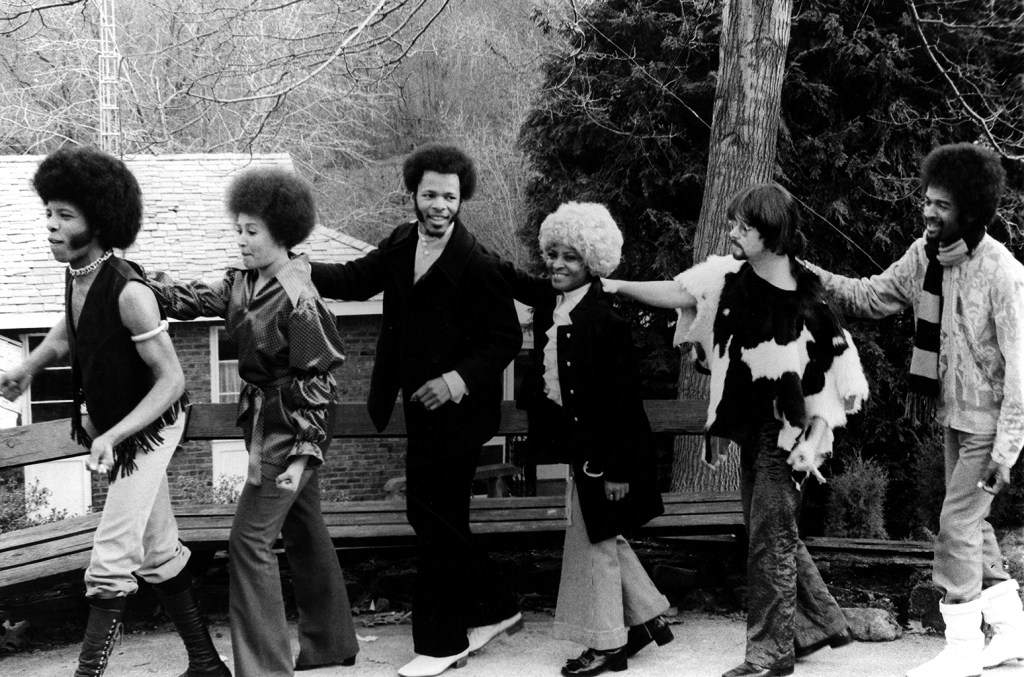
Forever No. 1 is a Billboard series that pays special tribute to the recently deceased artists who achieved the highest honor our charts have to offer — a Billboard Hot 100 No. 1 single — by taking an extended look back at the chart-topping songs that made them part of this exclusive club. Here, we honor Sly Stone, who died on Monday (June 9) at age 82, by looking at the final of Sly & the Family Stone’s three Hot 100-toppers: the joyous but fractured “Family Affair.”
True to its name, Sly & the Family Stone had been the ultimate musical family affair. Of course, it literally comprised multiple siblings — Sly Stone (originally Sylvester Stewart) was of course the band’s brilliant leader and de facto frontman, while brother Freddie sang and played guitar, sister Rose sang and played keys, and sister Vet even occasionally filled in for Rose on tour. But it was the band’s familial spirit that originally sparked its jump-off-the-stereo brilliance, a palpable sense of shared love, excitement and unity. The on-record and on-stage product reflected the band’s real-life late-’60s closeness, as a Bay Area-based unit that happily did everything together: In 2025’s Questlove-helmed Sly Lives documentary, the group waxes nostalgic about how they’d all ride bikes together, watch movies together, even buy dogs together. “I think we spent more time together than we spent with our family members,” recalled trumpeter and singer Cynthia Robinson.
Trending on Billboard
By 1971, the band was decidedly no longer doing everything together, and much of what they did was less than happy. As the band became superstars in 1969, and Sly Stone one of the leading voices and faces of popular music, internal pressures and tensions mounted, outside demands intensified both about their recorded output and their political positioning, and Sly began to retreat. He moved from San Francisco to Los Angeles, self-medicated heavily with drugs, came late to gigs or no-showed altogether, and generally began to isolate himself from the rest of the group. The group’s final single of the ’60s, the double-A side “Thank You Falettin Me Be Mice Elf Agin”/”Everybody Is a Star,” had been a 1970 No. 1 hit, but already displayed a growing disillusionment with the skyrocketing success of the band’s Stand! and “Everyday People” days. It would be the previously prolific outfit’s final release for nearly two years.
When Sly & the Family Stone returned in late 1971, it was with “Family Affair,” an R&B gem that was at once of a piece with the celebratory pop-soul anthems the group had made his name with, and sounded like a different outfit altogether. Though the song still felt warm, soothing and hooky as hell, the group’s earlier spirit of triumph, jubilation, defiance, energy and above all, togetherness, had largely disappeared. Even “Thank You,” for all its creeping darkness, still felt like the band was all in the fight together; by “Family Affair,” they barely sounded like a band at all.
In fact, the most bitterly ironic thing about “Family Affair” — which served as the lead single from that November’s There’s a Riot Goin’ On LP — is that Sly is the only member of the Family Stone to actually play on it. (Probably, anyway; the Riot sessions were so messy and hazy that no one seems 100% positive of exactly who did what.) Rose does sing the song’s iconic chorus, but instrumentally, the song is nearly all Sly, with additional electric piano by star keyboardist Billy Preston and some guitar croaks from rising soul hitmaker Bobby Womack. The Family Stone’s leader most likely provided the rest, including all the verse vocals, bass and additional guitar.
The final instrument played by Stone on the track was the newest and perhaps most important to the musical direction of “Affair” and Riot in general: the Maestro Rhythm King MRK–2. Drummer Greg Errico had gotten fed up with the discord within the group and left earlier in ’71 midway through the Riot recording; rather than immediately replace him with a new stickman, Stone decided to fill out the remaining tracks with the rudimentary early drum machine and its genre presets. But he allowed the machine to work for his purposes by essentially slotting its canned bossa nova rhythm askew within the song’s groove — like J Dilla might have done decades later — giving the liquid-funk shuffle of “Family Affair” a little extra slipperiness. Even Errico, with every reason in the word to take offense at essentially being replaced by an underqualified robot, had to give it up to the bandleader for his innovation: “[He] took the rhythm that [the machine] was producing and turned it inside out,” the drummer raved in Sly Lives! “It made it, ‘Oh, that’s interesting now.’ And he actually crated an iconic thing with it. It became a game-changer again.”
Sly & the Family Stone, Forever No. 1: “Everyday People” (1969) / “Thank You Falettin Me Be Mice Elf Agin” (1970)
The song’s untraditional groove was matched by a near-unrecognizable Sly Stone vocal that almost felt like just another instrumental texture. Previous records had featured his clear vocal piercing through his productions with shout-along sentiments, or as one voice among many in delivering strength-in-numbers statements. This was new: a heavily filtered Stone seemingly singing from a remote corner of the studio, feeling more like a disembodied narrator than a leading man. What’s more, his singing register had dropped, as if he’d aged multiple decades (or gone through a second puberty) in between Stand! and Riot, with the result landing Stone somewhere between crooning and sing-speaking.
The vocals were jarring, but so were the lyrics. In 1969, a “Family Affair” would be an occasion for joy and revelry, but by 1971, it was a little more complicated — and the family portrait painted by Stone was of a largely dysfunctional unit, with siblings who head in different directions, newlyweds with maybe-straying eyes, and fraught emotions running high all around. “You can’t leave ’cause your heart is there/ But, sure, you can’t stay ’cause you been somewhere else,” Stone sings of his own conflicted feelings in the song’s most revealing passage. “You can’t cry ’cause you’ll look broke down/ But you’re cryin’ anyway ’cause you’re all broke down.”
But downers don’t usually become No. 1 hits — and indeed, despite the heavy dynamics of this “Family Affair,” the ultimate feeling is still more one of welcoming than of alienation. Partly, that’s because of the gleeful boogie Preston’s plush keys and Sly’s aqueous guitars do around the song’s rain-slicked beat, and largely, that’s because Rose’s “It’s a family affaaiiiiii-iiiiirrrr…” callouts — the first vocals of any kind you hear in the song — are so comforting and inviting that it can’t help but rub off on the rest of the song. But it’s also because, even with Sly’s clearly mixed feelings about his own place within the family, he still feels audibly connected to it; it’s a complex relationship, but still a loving one at heart. “Blood’s thicker than the mud,” he proclaims early in the song, and despite everything, he sounds like he means it.
Unfortunately, the Family Stone had already begun to splinter. Errico was the first out the door, the next year, bassist Larry Graham followed. As the band began to lose its center and as Sly’s productivity and reliability both stalled, so did its commercial success: the long-awaited There’s a Riot Goin’ On topped the Billboard 200 and is hailed today as a classic (despite drawing mixed reviews at the time for its murky production and disjointed jams), but “Family Affair” was its only single to even reach the Hot 100’s top 20. Fresh, released in 1973, saw the band returning to greater accessibility, and kept up its streak of classic lead singles with the slithering “If You Want Me to Stay.” But even that song missed the top 10, and as acolytes like the Ohio Players and Parliament-Funkadelic had replaced the band at funk’s forefront, the Family Stone’s relevance continued to slide until officially splitting in 1975.
Considering Sly Stone was just 32 when the Family Stone dissolved for the first time, it feels both deeply sad and highly improbable that his career never really found a proper second act. But Sly’s subsequent attempts throughout the late ’70s and ’80s to launch a solo career or revive the Family Stone with a new lineup largely fell on deaf ears; even a seemingly world-stopping (or at least potentially career-re-sparking) collaborative endeavor alongside P-Funk leader George Clinton fell into disarray and resulted in an album that was mostly dismissed critically and commercially. Drug abuse continued to take its toll on an increasingly reclusive Sly, and despite sporadic reappearances over the last four decades, a true comeback was never really in the cards for the music legend.
But even if his own presence was minimal over the past half-century, the impact of Sly Stone’s music remained seismic. Outside of setting the early standard for what would become funk’s golden age in the early ’70s, the Family Stone’s catalog remained one of the most well-mined sample sources across the ’80s and ’90s for N.W.A, LL Cool J, the Beastie Boys, Cypress Hill, Beck, Janet Jackson and countless other game-changing acts. And that impact certainly endured into the 21st century: In the first couple years of the ’00s alone, D’Angelo released the massively acclaimed and heavily Riot-inspired Voodoo, while OutKast referenced that album’s bullet-ridden American flag imagery on the cover to their universally beloved Stankonia, and Mary J. Blige had a Hot 100 No. 1 with a “Family Affair” of her own. As messy as things could ever get with Sly Stone or his legacy, the blood would always remain thicker than the mud.