State Champ Radio
 Business
Page: 42
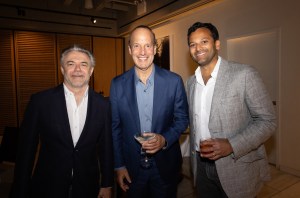
On Monday (June 9), the night before David Israelite’s third annual Music Investor Conference, the National Music Publishers’ Association and Billboard hosted their annual music investor dinner at Manhattan’s Estiatorio Milos Midtown. Over Greek seafood, three dozen of the top figures in the music investment business discussed deals, the larger business environment and how music […]
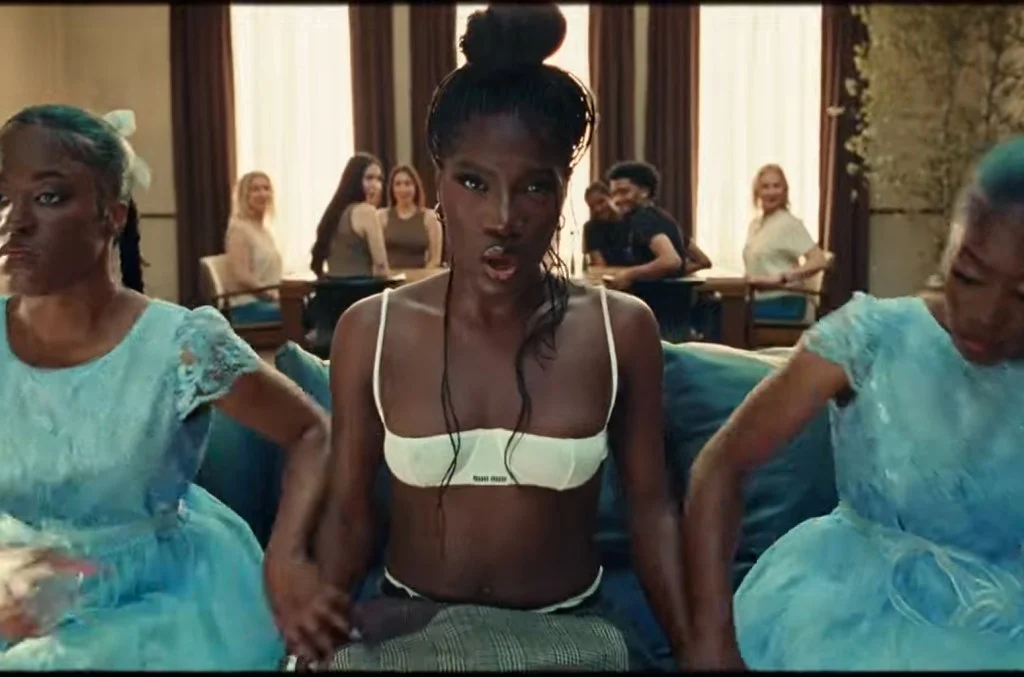
Doechii’s “Anxiety” entered its third-straight week at No. 1 on Billboard’s Radio Songs chart on Monday (June 9) after spending a total of 12 weeks on the Billboard Hot 100, where it peaked at No. 9. But the song, which samples of Gotye’s “Somebody That I Used to Know,” isn’t just a megahit for the Florida singer and rapper.
Billboard estimates that the publishers of the Belgian-Australian indie rocker Gotye and the Brazilian born jazz-pop artist Luis Bonfá — whose 1967 hit “Seville” is sampled in “Somebody” — could earn as much as $72,000 each from the success of “Anxiety.”
Trending on Billboard
“Sampling is a big business,” says Michael Poster, chair of music acquisitions and financing at law firm Michelman & Robinson, LLP. When an old hit is revived through a sample, both the masters and publishing rightsholders stand to earn a cut; the publisher becomes a co-owner of the new song; and the old song will likely see an uptick in streaming activity and synch opportunities, industry sources say.
Doechii’s “Anxiety,” Gotye’s “Somebody” and Bonfá’s “Seville” have all seen “a significant increase… in popularity and consumption” since the March release of Doechii’s hit, says Pär Almqvist, CEO of Sweden-based publishing administration company AYO.
As of Monday (June 9), “Anxiety” has generated nearly 1.2 million song consumption units in the United States, where it has racked up nearly 165 million total on-demand streams and roughly 284,000 airplay spins, according to Luminate.
Billboard estimates that those streams, spins and sales of Doechii’s “Anxiety” have generated about $1.165 million in master recording and publishing revenues combined so far this year.
It is unclear exactly how much Gotye directly stands to earn from that amount, but “Anxiety” credits three songwriters: Jaylah Ji’mya Hickmon, or Doechii; Walter André De Backer, or Gotye; and Bonfá.
DMG Clearances, which secured consent from the copyright holders of “Somebody That I Used to Know” for Doechii’s team, declined to comment on the terms of the licensing deals, citing confidentiality.
Deborah Mannis-Gardner, owner/president of DMG Clearances, says that because “Anxiety” lifted directly from the original recording of “Somebody” to incorporate it into a new song, DMG secured consent from both the master and publishing rightsholders. (Songs that interpolate, rather than sample, earlier hits only need to get consent from the publishing side.)
Mannis-Gardner says that sampled songs see twofold benefits: First, the publisher gets an ownership stake in the new song, thereby increasing the size of its catalog. Additionally, fans of Doechii’s “Anxiety” may find their way to streaming Gotye’s “Somebody,” which could then lead them to “Seville” — and both of those songs are likely to field synch inquiries.
Poster and Mannis-Gardner both say that in typical sample deals, the publisher owns a percentage of the copyright to the new song. Industry sources say it is also typical that publishers will negotiate a one-off, non-recoupable licensing fee of at least a few thousand dollars in addition.
If, as one-third co-writers, Gotye’s and Bonfá’s publishers negotiated 30% of the songwriting credit for “Anxiety,” that could result in nearly $72,000 each to Gotye and Bonfá’s publishers, with Gotye and Bonfá netting anywhere from $36,000 to almost $68,000, if they own their own publishing and have administration deals, Billboard estimates.
Industry sources say Gotye’s and Bonfá’s publishers’ likely got smaller cuts than that. However, what the artists stand to earn from the streaming and synch bumps to their catalogs, though harder to calculate, will also add to their bottom line.
“A sample elevates and increases the value of a song,” Mannis-Gardner says. “But keep in mind, music licensing, including sampling, is an emotional business. Approvals, denials and sample values are not based on a rate sheet. It is how the sampled copyright holder and creator feel about the new use.”

Round Hill Music, the name of the Josh Gruss-led, private-equity backed company with more than $1.1 billion in music assets under management, now adorns a physical music store in Greenwich, Conn.
The 1,100-square-foot outlet, which opened last month, hawks high-end guitars and amps as well as a healthy offering of vinyl and other merchandise in a store designed to appeal to the entire family, says Gruss, who is the store’s sole owner. In his day job, Gruss is the CEO of Round Hill Music, the music asset company that’s also a full-service music company which owns or represents rights in music written or performed by the likes of Bobby Darin, Brittany Howard, Gil Scott-Heron, Rob Thomas, Ashley Gorley, Bruce Cockburn, Massive Attack, Collective Soul, Skid Row, Craig Wiseman and Randy Bachman, according to the company’s website.
While the impetus may have been to open a guitar store, Gruss says he wanted it to have broad appeal for the whole family: “If parents come in with a son for a guitar, maybe mom will pick up a shirt or a candle. Another family had a 4-year-old daughter, and we had a kid guitar for her. While the main focus is the high-end guitars and amps, we have something for everybody.” Beyond the above items, the store’s inventory includes sunglasses, rock ’n’ roll t-shirts, hand-made jean jackets, art for sale and even an ashtray. But in the first few weeks of operation, the big eye-opener has been the strength of the record store component, says Gruss. The shop carries some 1,500 vinyl albums, all new — and that has turned out to be the surprise selling category. “Everyone loves music, and we all know vinyl has resurged in popularity,” says Gruss. While he says he was hoping that vinyl would be the secondary reason customers visited the store, “it turns out it’s the primary reason,” he reports. “So far, about 20% of our vinyl inventory is getting sold per week. So far, our No. 1 seller is a local jam band called Goose. Everyone comes in asking for them.”
Trending on Billboard
Round Hill Music Co.
Terry Moseley
In assembling the retail outlet, Gruss, who plays guitar in an original rock band called Rubikon and a cover band called Kaintuck, says he was inspired by memories from when he was younger. “My favorite thing to do as a kid was look at guitars in guitar stores, especially those on 48th Street,” he recalls, referencing the Manhattan block between 6th and 7th Avenues that, in the 1960s through the 1990s, was known as Music Row for the many musical instrument stores lining the street (the most famous being Manny’s Music).“Even today, when I travel to places like Stockholm and Paris, I check out guitar stores,” says Gruss. Over the years, he adds, “I built up an idea of what I like in a guitar store.”
It wasn’t until the COVID pandemic that Gruss decided to act on his vision. “It was during the height of COVID when I was going through town [and] I see the ‘for sale’ sign on this building,” he remembers. “With my contrarian hat on, I thought, maybe I can get a good price.” After buying the building, he set about planning for the guitar store, a category that Greenwich — although rich in various types of retail — lacked.
Round Hill Records
Terry Moseley
In conceptualizing the Round Hill Music store, Gruss explains he didn’t want it to focus on things you can find at Guitar Center, which he acknowledges as the dominant merchant of musical instruments and equipment in the U.S. As a result, he gave the store a high-end boutique slant, which, considering its location, makes sense: Greenwich is consistently ranked as one of the wealthiest communities in the U.S., with a median household income of $180,000 in 2021, according to the U.S. Census Bureau.
While there are many affordable and recognized guitar brands in the store, it also has more unique items. Case in point: a $20,000 replica of “Greeny,” a 1959 Les Paul Standard guitar named after its owner, Fleetwood Mac’s Peter Green, who sold it to Thin Lizzy’s Gary Moore and which eventually wound up with Metallica guitarist Kirk Hammett. Gruss says the store ordered the replica from the Gibson Custom shop, noting the company only made 50 as part of a limited-edition run.With guitars by Gibson, Fender, Paul Reed Smith, Taylor LsL Instruments, Ernie Ball, Rock N Roll Relics and Suhr, Gruss says he wants the store to be a haven for musicians and collectors as well as younger consumers, which is why it also carries guitars attractive to beginners. Beyond guitars, the store carries premium speakers from Devialet and Transparent and apparel by Madeworn, Daydreamer and Rowdy Sprout.
Beyond inventory, Gruss says he wanted Round Hill Music to have a different feel than Guitar Center. “We want our store to be as welcoming as possible and we want people to sit and play as much as possible,” he says. In contrast, he says Guitar Center can be intimidating for customers, with a sales staff that he believes measures whether people have money to buy a guitar and may require some kind of collateral if a customer wants to play one of the nicer models on the floor.Consequently, he says he wants the Round Hill Music store to be welcoming to all ages and hopes it will give young customers the opportunity to enjoy the same experience he had as a teenager at similar shops. He also expresses the hope that the store can be a place where music fans interact with one another.
Mike Stern Band
Ed Christman
To make sure the Round Hill store is correctly merchandised and boasts a welcoming atmosphere, Gruss says having the right staff is key, citing the “super knowledgeable” John Mahoney, who works as the store’s operations manager. He adds that his vision was carried out “by a great group of people” who previously worked in retail at other music instrument stores, including Sam Ash. In total, the store is currently staffed with six employees.At the store’s opening event, what Gruss sees as intrinsic to the store’s future success — an in-store stage — was put to good use by the Mike Stern Band, which played a high-energy set that left the crowd wanting more. “We will program the store with plenty of in-store artist events, including up-and-coming songwriters and local singer-songwriters,” Gruss says. Gruss points out that he’s also using the store to promote the Round Hill Music catalog business, noting that artists and songwriters in the music-asset company’s catalog have their own section in the shop; the inventory there includes albums by Soul Coughing, System Of A Down and Neon Trees. “The store is a great way to spread the Round Hill network,” he says. “It will really help out the rest of the business.”
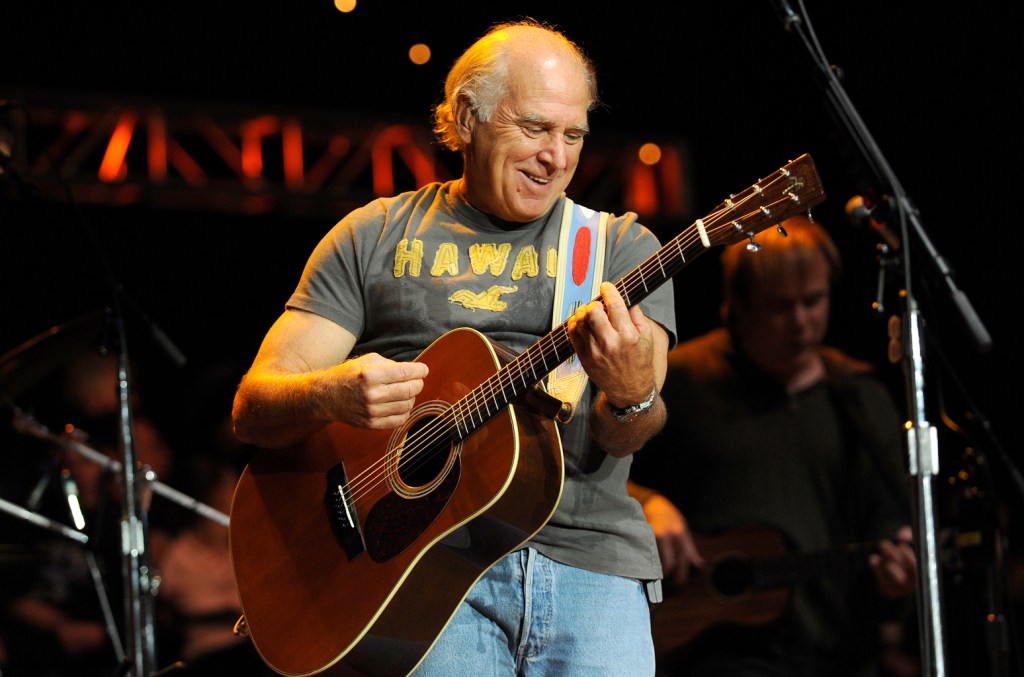
THE BIG STORY: Two years after Jimmy Buffett’s death, his widow and his longtime former business manager are locked in a legal war over the singer-songwriter’s $275 million estate.
Jane Buffett, his wife of 46 years, and Rick Mozenter, an accountant and financial advisor to Buffett for decades, launched dueling court actions last week accusing the other of hostility and mismanagement. At issue is control of the singer’s trust, which holds, among other assets, a lucrative 20% stake in his Margaritaville chain of resorts and restaurants.
Jane’s lawyers say Mozenter has been “openly hostile and adversarial” and has “failed to perform even the most basic tasks required of him” in his role as co-trustee. Mozenter’s attorneys say Buffett clearly intended to limit his wife’s control over the trust – but that this has “made Jane very angry” and caused her to be “completely uncooperative.”
Trending on Billboard
For more, go read Rachel Scharf’s full story on the battle over Buffett.
You’re reading The Legal Beat, a weekly newsletter about music law from Billboard Pro, offering you a one-stop cheat sheet of big new cases, important rulings and all the fun stuff in between. To get the newsletter in your inbox every Tuesday, go subscribe here.
Other top stories this week…
CUSTODY BATTLE – Halle Bailey and ex-boyfriend DDG exchanged scathing court filings amid their increasingly acrimonious custody battle over their one-year-old son. In his petition, the rapper (Darryl Dwayne Granberry Jr.) claimed that Bailey had been abusive and repeatedly threatened self-harm; in her response, Bailey said those claims were exaggerated and that DDG’s filing was “cold retribution to embarrass, humiliate and caused me additional emotional distress.” The back-and-forth came a month after Bailey sought and won a restraining order by claiming the rapper had physically abused her, including in the presence of their son.
DIDDY TRIAL RECAP – The sex-trafficking trial of Sean “Diddy” Combs continued into a fifth week, starting with the judge denying a motion for a mistrial based on testimony about an infamous alleged incident in which the rap mogul dangled a woman from a 17th-floor balcony. Don’t miss our full recap of Week 4, which included testimony about the balcony incident; testimony about Diddy buying a surveillance video with $100,000 in cash in a paper bag; and the start of testimony from an alleged victim named “Jane” over being forced to participate in marathon “freak-offs.” The trial is expected to run until early July.
YSL CASE CLOSED – More than three years after Young Thug, Gunna and dozens of others were indicted in Atlanta on gang charges, the last co-defendant pleaded guilty – a moment that marks the formal end of a sprawling, controversial criminal case that had captivated the music industry for years. The final closure came seven months after Thug pleaded guilty and received only probation, a stunning defeat for prosecutors that had labeled him a dangerous gang boss.
BIG PIMPIN QUOTES – Jay-Z’s legal nemesis Tony Buzbee asked a federal judge to dismiss the rapper’s defamation case with an unusual flourish: quoting the lyrics from the star’s “Big Pimpin.” Buzbee, a Texas lawyer who briefly filed a rape lawsuit against the rapper before dropping it without a settlement, claimed in the court filing that the 2000 song’s references to prostitution describe Jay’s views on “how men should treat women.”
LYRICS LITIGATION – Lyrics provider Musixmatch filed a response to a recent antitrust lawsuit from rival LyricFind, calling the case “meritless” and arguing that the rival was “hoping it can obtain through litigation what it was unable to win in the marketplace.” The response came two months after LyricFind accused Musixmatch of seeking to monopolize the market for providing lyrics to streamers like Spotify by signing an “unprecedented” deal with Warner Music.
ANOTHER TAYLOR STALKER – Taylor Swift won a temporary restraining order against an alleged stalker named Brian Jason Wagner, a 45-year-old Colorado man who the pop superstar claims showed up at her Los Angeles home numerous times over the past year to falsely claim she’s the mother of his child. In seeking the court order, Swift argued Wagner’s conduct “makes me fear for my safety and the safety of my family.” Swift has had trouble with stalkers before, including a man arrested last year after being spotted dozens of times outside her Manhattan apartment.
LIL DURK BAIL DENIED – The drill rapper was once again denied release on bond in his murder-for-hire case, leaving him to sit in jail until his trial (currently scheduled for October). The federal judge overseeing the case – which claims he hired gunman to carry out a failed hit on rival Quando Rondo – noted that rapper was apprehended trying to board a flight to Dubai (United Arab Emirates is a non-extradition country) and might try to escape again if let free.
DEFAMATORY DOC? – Russell Simmons filed a defamation lawsuit against HBO over a 2020 documentary called On The Record that focused on the sexual assault allegations against him. Simmons said the movie disregarded or “suppressed” key evidence in his favor — including “CIA-grade polygraph results” and Oprah Winfrey’s withdrawal from the project – that would have refuted and rebutted” the allegations that were “falsely made against plaintiff in the film.”
ROYALTIES ROW – Sony filed a lawsuit against the streaming platform LiveOne and its subsidiary Slacker Radio, claiming they owe $2.6 million in unpaid licensing fees but have refused to stop playing the label’s music, including tracks by Beyoncé, Miley Cyrus and Tate McRae.
NEWJEANS COURT ORDER – A dispute between K-pop band NewJeans and its agency ADOR, a HYBE subsidiary, escalated when a South Korean court approved a stricter legal measure restricting the group’s independent activities. The court ordered each member (Minji, Hanni, Danielle, Haerin and Hyein) to pay 1 billion KRW ($734,000) for any unauthorized entertainment activity – meaning fines could total $3.6 million for a single uncleared group appearance.

06/10/2025
Top executives at 10 of the biggest independent publishers in the business weigh in on the challenges and opportunities facing the sector right now.
06/10/2025

A motion for a mistrial in the Sean “Diddy” Combs sex trafficking trial has been denied by a federal judge.
Attorneys for the embattled hip hop mogul had argued that prosecutors knowingly introduced false testimony by Bryana Bongolan – the witness who claimed last week that Combs dangled her from a 17-story balcony in 2016.
But at the start of Tuesday’s proceedings, Judge Arun Subramanian said the alleged issue did not rise to the level of a trial-ending error: “This is not fodder for a mistrial. This is the adversarial process at work,” Subramanian said from the bench, according to ABC.
Combs is standing trial on racketeering and sex trafficking charges over accusations that he ran a sprawling criminal operation aimed at facilitating freak-offs — elaborate events which he allegedly forced his ex-girlfriend Cassie Ventura and other women to have sex with male escorts while he watched and masturbated.
Prosecutors also say the star and his associates used violence, money and blackmail to keep victims silent and under his control. (Read Billboard‘s full explainer of the case against Diddy here.) Combs had pleaded not guilty; if convicted on all of the charges, he faces a potential sentence of life in prison.
Trending on Billboard
With the case halfway through a trial expected to run eight weeks, Diddy’s defense team moved for a mistrial based on Bongolan’s testimony about the balcony incident, one of the flashiest accusations in the case.
In a motion filed Saturday, the star’s lawyers said prosecutors had presented jurors with “demonstrably false” evidence during her time on the stand. Bongolan testified that she took photos of her injuries from the attack on September 26, 2016, but defense attorneys said they had hotel receipts showing Diddy was in New York from Sept. 24 to 29 of that year.
“The government knew or should have known this testimony was perjured, and that Ms. Bongolan could not possibly have been injured by Mr. Combs on a Los Angeles balcony in the early morning hours of September 26, or even the day before that,” his lawyers wrote in the motion, also claiming that Bongolan had committed perjury.
Prosecutors did not respond with a written filing of their own, but they argued in court last week that the attack could have happened before the September 24and that Bongolan merely documented it later. Presented with the receipts and subject to withering cross examination, Bongolan stood by her story but admitted that she was unsure of the date.
Following Tuesday’s denial, the trial will continue on with more testimony from prosecution witnesses. The most recent is “Jane,” a former girlfriend who testified last week and Monday that Diddy physically, sexually and psychologically abused her. She is facing cross-examination during Tuesday’s proceedings.
In 2015, Dana Biondi was looking for the future.
The frat-rap and weed-rap crazes in the early 2010s catapulted artists like Wiz Khalifa and Curren$y to fame, but by the middle of the decade, Biondi — who had promoted shows at New Haven, Conn., club Toad’s Place and had some rap management experience — sensed a different energy on hip-hop’s horizon. “I had really seen a lot of the fans sit at shows and just kind of bob their head,” he recalls. “I knew that the industry was pushing toward a new movement.”
Biondi found that future in $uicideboy$. At the dawn of what would come to be known as the SoundCloud rap era, the New Orleans hip-hop duo, consisting of cousins $crim and Ruby da Cherry, had quickly attracted a passionate cult following with their strikingly personal lyrics, rock-influenced sonics and attitude, and, particularly, their riotous live shows. “The first show that I went to to see them was at the Roxy [in Los Angeles] — and it was chaos like I had never seen before,” says Biondi, now 36. “Between the mosh pits and the fandom and the overall show just being… chaotically beautiful, in a way. I [knew] that they were really special.”
He started managing the Boy$ shortly after — along with longtime friend Kyle Leunissen, who introduced him to the duo — while also serving as music manager for G59 Records, the cousins’ own label. Distributed by The Orchard, G59 now boasts a battalion of similarly minded artists like Shakewell, Germ and Night Lovell who have since cultivated their own fan bases. But the empire all revolves around $uicideboy$, who have not only hit the top 10 of the Billboard 200 with each of their four official studio albums but also become a popular arena act with their annual Grey Day Tour (which in 2024 grossed $50.7 million, according to Billboard Boxscore) and a dominant brand in artist merchandise. (Biondi cites merch sales of over $30 million in 2024 alone.)
Trending on Billboard
Biondi initially endeared himself to $uicideboy$ and proved his capabilities by helping organize their early merch operations. But his versatility is what made him indispensable; now a G*59 label partner, he finds himself “jumping from a marketing call to a merchandising call to a call directly with the artist, to a call with the artist’s family, to a call with a major label, to a call with a lawyer,” wearing many different hats for both artist and label. (In a more literal hat-wearing sense, during his Zoom call with Billboard, Biondi reps the brand with a GREY59 skull-and-crossbones cap that complements a G59 RECS hoodie.)
And as Biondi has helped the duo build its empire, they’ve mostly avoided traditional pathways to mainstream success: The pair, which has no real conventional hits and only reached the Billboard Hot 100 for the first time in 2024 (with “Us vs. Them,” which peaked at No. 96), has minimal radio promotion and does few media appearances. But Biondi is proud of what he has achieved with the Boy$ — who’ve already surpassed 1 billion on-demand U.S. streams in 2025 alone, according to Luminate — largely outside of the broader industry machine, and he believes it will only get easier for artists like them to blaze their own trails.
“If you’re a phenomenal artist and you’re very creative and you wrap the right team around you, the world’s yours,” he says. “I think that the future is indie.”
Dana Biondi photographed May 20, 2025 in New York.
Matthew Salacuse
When you saw $uicideboy$ the first time, could you see parallels between them and any other artists?
At the time, the fandom is what caught me. I saw how the crowd was chanting “G59.” I saw how mesmerized these fans were. There was only, what, 300 or 400 at the show? Maybe even less than that. But they were so engaged — and I just recognized early on the brand [strength]. And to me, that’s the most important thing: creating a brand and creating the stickiness of a brand with fans. That’s what will keep you around forever.
As far as comparing them [to other artists], I saw a combination of a hard-rock audience that was wearing black — and that was like skaters and more alternative — but then, obviously, they’re rappers, so I was able to hear the hip-hop influence of Three 6 Mafia and Bone [Thugs-N-Harmony]. It was kind of the perfect mesh of both genres, and that was really appealing to me because I had grown up listening to a lot of Bone Thugs and a lot of different alternative music.
They’re obviously much bigger now. When was the first moment that you went, “OK, this isn’t just something that can happen — this is something that is currently happening”?
When we started working full-on together, one of the first things I did was I brought them overseas and had them play proper club rooms. That was kind of a defining point — I was in the middle of Europe and the fandom was insane. I was like, “Man, this is going to work on a very big level, both here and domestically.”
A large part of our early success was doing a proper tour with proper routing overseas, in Australia and in Europe, and kind of showing the U.S. fans that this was a cultural movement and it was worldwide… and they were pulling the same amount, if not more, of people overseas than they were pulling in the U.S. The U.S. had to play a little bit of catch-up.
It’s pretty unconventional for mainstream acts to do an annual outing like the Grey Day Tour, as opposed to touring in conjunction with an album or a promotional cycle. What made you confident that this was the best touring strategy?
Growing up, I had always loved the concept of Warped Tour and how they went to so many different cities and brought so many different people around. It really created a yearly concert that each fan, no matter what, just signed up for. They were like, “We trust the Warped team to give us a great bill.”
The year that we started Grey Day [2019] — the year before was the last year of Warped. I saw a void in the marketplace, and that’s where Grey Day came from. Our lane was emerging, and it was very similar to that hard-rock, Warped lane — but it was obviously much more focused on hip-hop.
So I said, “Let’s just create our own yearly [tour], and let’s always look at some new artists that are up-and-coming — some friends that we just like to work with and like to tour with — and continue to keep it fresh and new and give the fans what they want.”
Dana Biondi photographed May 20, 2025 in New York.
Matthew Salacuse
Earlier this year, Billboard reported that you guys were shopping the catalog. Why did you think now’s the time for that, and has anything come of it yet?
It’s something that we are doing, and we just felt like it was a good time to try and gauge interests, really, and see where the market was for it. The guys have put out a lot of great music, and we plan on putting out a lot more albums and a lot of other great music. We look at the new music, starting this year, as the next phase of $uicideboy$. We’re just interested in the reach of the old music and looking for a partner to possibly consider for that.
But nothing firm there yet?
We have something firm, but it’s not done yet. So I can’t really speak on that.
Are there specific goals that they or you and the team have for the next few years?
We’ve hit so many different home runs in terms of touring and ticket sales and merchandise sales and streaming numbers. It would be nice to finally get some notoriety on the awards side of things, just because we feel like we are one of the biggest artists in music and our numbers and all of our credits show it.
And then, other than that, just continuing to make the Grey Day Tour bigger and continuing to get more eyes and views on the music. There’s still so many times where somebody will ask me what I do and I’ll tell them, and they’ll say, “Oh, I’ve never heard of those guys.” Which means that there’s more fans for us to attract. It’s always something that I enjoy hearing and shows that we still have some more work to do.
Would $uicideboy$ play the Grammys?
(Laughs.) I think so. They would definitely do it their own way because that’s how we do it. But I think they would. I think they would rock the house, and I think the rest of the world would view that performance as something really different and something that they might enjoy themselves. A lot of people would discover the $uicideboy$ on a stage like that.
Dana Biondi photographed May 20, 2025 in New York.
Matthew Salacuse
As $uicideboy$ become $uicidemen, have you had a conversation with them about what the next 10 or 20 years look like? So much of what they’ve done so far is centered on youth culture and around their fans discovering them at a formative time in their lives. And I’m sure that’ll continue. But as the guys enter their 30s and 40s, have you talked about how to keep the brand vital?
We like to focus on about a year or two at a time. It just helps us stay more on the pulse. I mean, nobody knows how or where music is sonically going – and they don’t focus too much on the overall sound of everything. But I think our focus is always about a year or two out, and we kind of plan our moves accordingly. Like I said, they’re going to be around forever. What that looks like in five to 10 years? I don’t know.
Time will tell. We’ve worked at a really fast pace to this point between doing 50-, 60-, 70-plus shows a year and traveling the world and putting out two to three albums a year. Their pace has been phenomenal. At a certain point, it’s got to let up. But for now, we have a lot of great releases and a lot of really good plans in the future for the next couple of years.
What advice would you give young artists or labels that are just starting to catch their footing?
Picking the right people around you and formulating a team is the most important thing for me. Having everything from an agent to a lawyer to a marketing guy… It’s not just a one-man show — it’s a whole team, and everybody has responsibilities on that team to move the ball downfield. I would also say concentrating on your fans and continuing to develop your brand.
There has been a lot of discourse about the lack of developed hip-hop superstars in the past five years — but it seems like when people have those conversations, they’re mostly talking about the top-level crossover hit-makers of the last 30 years. Do you think cult stars like $uicideboy$ are the future of hip-hop stardom? Is the future of hip-hop independent?
I think so. Fans are now just focused on what they want to listen to. We did so many years of going on a playlist, like a RapCaviar, and finding out about songs. And now I think word of mouth is back and hearing about songs — whether it’s through quick videos like Instagram or TikTok or friends that are listening and hearing about new sounds — I think it’s back to the streets, even though the streets are in a different form these days.
Digital streets.
Yeah, the digital streets — and I think that’s the key to the future. People will take notice over time. It might not happen immediately — or it might happen immediately — but people will take notice. It’s all about developing that brand and creating something that has stickiness and has power.
This story appears in the June 7, 2025, issue of Billboard.
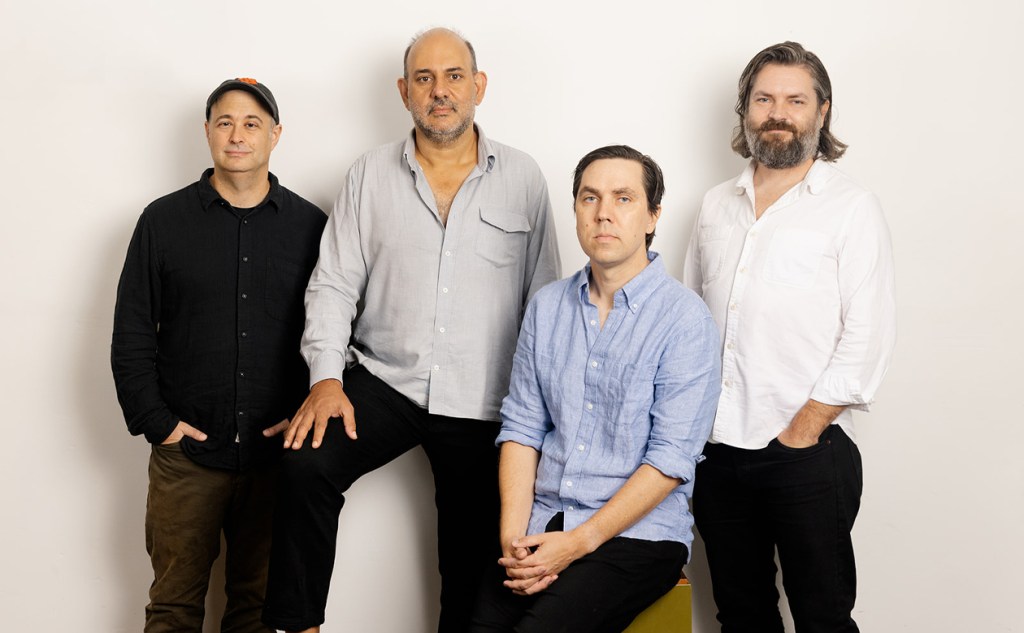
Secretly Group has announced a partnership with Merge Records as the veteran indie label’s co-founder and co-president exits the business.
The announcement sees Secretly co-founders Ben Swanson, Chris Swanson, Darius Van Arman and Phil Waldorf acquiring a 50% stake in the company. Meanwhile, Merge co-founder Mac McCaughan will continue in his role as label president and head of A&R, though co-founder and co-president Laura Ballance will leave the business.
Other Merge staffers maintain their roles within the company, including label director Christina Rentz, Merge marketing director Jamie Beck and head of digital Wilson Fuller.
Merge was founded by MacCaughan and Ballance in North Carolina in 1989 as a means of independently releasing music made by those within their immediate circle of friends. This included groups such as MacCaughan’s Bricks and Wwax, alongside Metal Pitcher and Superchunk, which both featured MacCaughan and Ballance as members.
Trending on Billboard
Merge would attract plenty of attention throughout the ’90s and ’00s thanks to releases by bands such as Neutral Milk Hotel, The Magnetic Fields and Arcade Fire, with the latter proving to be a breakout success in the new millennium, giving the label their first appearance on the Billboard 200 with 2004’s Funeral, and first chart-topper with 2010’s The Suburbs.
“We continue to be inspired and amazed by the musicians we work with,” MacMcCaughan said in a statement. “I have known many of the people in the Secretly world for decades, and I know that they share Merge’s dedication to artists and getting their music into the hands of as many people as possible.
“We have seen this in action working with Secretly Distribution’s international team since 2012, and are excited about what the future looks like with the strength and experience of Secretly Distribution working for Merge artists around the world, and now here at home. I know Laura has her own exciting future ahead, and I am excited to continue and expand upon the label we’ve run for 36 years.”
“It was never my goal to start a record label when I was 21 and run it for the rest of my life,” Ballance said of her exit from the company. “I have been doing this for 36 years now. Life is short. There are other things I have always wanted to do: make more art, travel for fun, volunteer more, write a book and lots of other things that being so entrenched in running a business does not allow me to do.
“Merge Records started as a literal bedroom label, in my bedroom, and lived there for a few years before we were able to give it some space of its own. It has always been a labor of love. I am going to miss it and all the people and bands tremendously.”
“When we heard that Laura was looking to move on from Merge, we immediately engaged in conversations with Mac and Laura about what a new partnership with Secretly could look like,” explained Waldorf, Secretly co-founder.
“We looked up to Merge as we started our labels. We are not just fans of the music they’ve released, but their independent ethos and commitment to being an artist-first company,” he added. “Becoming a partner in Merge is beyond a dream for me – I saw Superchunk for the first time when I was a teenager, before I even knew you could have a full-time job in independent music, and attended Merge’s 5th Anniversary celebration at the Cat’s Cradle while I was a college student in Athens, GA, making this a real ‘pinch me’ moment three decades later.”
As MacMcCaughan noted, Merge has already been working with Secretly Group’s sister company Secretly Distribution for marketing and distribution services outside of North America for over a decade now. As part of the new partnership, Merge will continue to operate as a standalone label based in Durham, NC, while utilizing Secretly Distribution’s worldwide distribution arm and aspects of the Secretly ecosystem such as accounting, artist royalties, business affairs, licensing, IT and HR.
“Our aim is to support Merge with the independent ecosystem we’ve built at Secretly, while preserving what’s truly special about what Mac and Laura have built over the past 36 years, such that we can support Merge’s growth in the decades to come,” added Swanston, Secretly Co-Founder.
The first new album to be released following this partnership, and the first to be distributed worldwide by Secretly, will fittingly be Superchunk’s Songs in the Key of Yikes, which is scheduled for an Aug. 22 release.
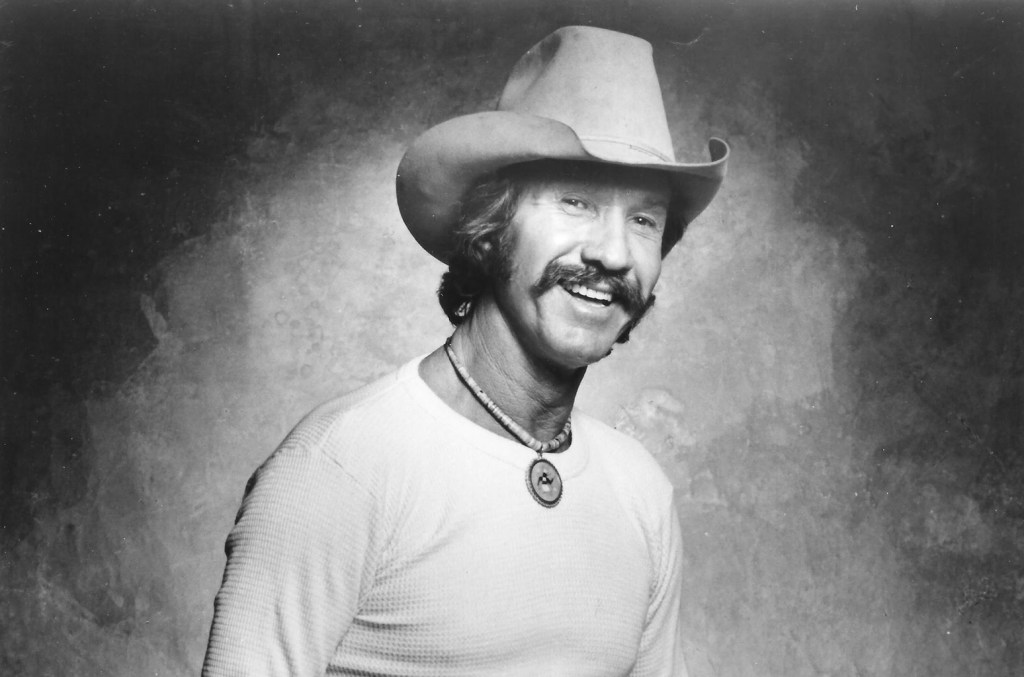
Anthem Music Publishing has acquired a catalog of songs written and recorded by Country Music Hall of Fame crooner Marty Robbins.
Among the titles in the newly-acquired catalog are Robbins’ 1960 hit “Big Iron,” which reached No. 26 on the Billboard Hot 100 and No. 5 on Billboard’s country chart. The catalog also includes Robbins’ 1959 hit “El Paso,” which topped both the Billboard Hot 100 and the Hot Country Songs chart. “El Paso” won a 1961 Grammy trophy for best country & western recording, and was inducted into the Grammy Hall of Fame in 1998. His hit “My Woman, My Woman, My Wife,” which won best country song in 1971, is also included in the catalog acquisition.
Jason Klein, Anthem Music Group CEO, said in a statement, “Marty Robbins was a towering figure in American music – an artist whose storytelling transcended genre and era. His songs are woven into the fabric of country and western music heritage, and continue to influence artists and resonate with fans to this day.”
“We’re honored to see Marty’s music find a new home with Anthem Music Publishing,” the Marty Robbins Estate noted in a statement. “His songs have stood the test of time, captivating generations with their vivid storytelling and emotional depth. We’re confident that Anthem will not only preserve Marty’s legacy, but elevate it – introducing his work to new audiences while honoring the timeless spirit of the originals. Marty’s music has always belonged to the people, and we believe Anthem shares that same dedication to keeping it alive for generations to come.”
Trending on Billboard
During his four-decade career, Robbins found success as a singer, songwriter, musician, actor, author and even a NASCAR driver. He earned 11 Billboard Hot Country Songs chart-toppers, and several of his hits, including “El Paso,” “My Woman, My Woman, My Wife” and “A White Sports Coat (And a Pink Carnation)” were self-penned by Robbins. He earned two Grammy awards, was a member of the Nashville Songwriters Hall of Fame, and his songs “Big Iron” and “El Paso” were included in the Western Writers of America’s Top 100 Western Songs of All Time.
As a NASCAR driver, Robbins ran 36 NASCAR races between 1966 and 1982, earning six top 10 finishes, including a top 5 finish in the Motor State 500 in Michigan in 1974. Early in his racing career, he became a regular performer on the last segment of the Grand Ole Opry’s Saturday night shows, so he could take part in races prior to the show. He also starred in films and television series, including The Drifter, Western Caravan and Marty Robbins Spotlight. Robbins passed away in 1982 at age 57.

Tencent Music Entertainment, China’s fast-growing streaming platform, announced on Tuesday (June 10) it plans to acquire Ximalaya, a Shanghai-based service for streaming podcasts and audiobooks. Under a merger agreement signed today, Ximalaya will become a wholly owned subsidiary of TME, subject to regulatory approvals and closing conditions. According to filings with the SEC and the […]