State Champ Radio
 Business News
Page: 23

Vobile, which provides AI-powered digital content protection and transaction services for entertainment companies, sports leagues, record labels and publishers, completed its acquisition of audio content identification platform Pex for an undisclosed amount. The team at Pex joined Vobile as part of the deal.
Live Nation Entertainment has expanded in Japan by acquiring Hayashi International Promotions (HIP), a leading live music promoter for both domestic and international artists in the country. Through the deal, the companies hope to elevate J-pop artists on the global stage while allowing international artists to gain more traction in the country. “HIP has been at the heart of Japan’s live music scene for over 40 years, and our focus has always been on delivering incredible concerts for fans,” said Kaori Hayashi, CEO at Hayashi International Promotions, in a statement. “Partnering with Live Nation allows us to keep doing this with greater scale, giving Japanese artists the opportunity to perform to new audiences and strengthening Japan’s position as a must-visit destination for major acts.”
Warner Music Group (WMG) partnered with Annual Acharia, an entrepreneur and talent strategist who founded the multi-platform production and distribution company Desi Hits! — which helped introduce Western artists like Lady Gaga and Britney Spears to South Asian audiences — to launch 5 Junction, a joint-venture label focused on discovering and developing U.S.-based artists of South Asian heritage while furthering the success of WMG’s existing artists from South Asia and its diaspora. The new label will collaborate closely with WMG’s India team, Los Angeles-based Warner Records and Toronto-based 91 North Records (a joint-venture label between Warner Music India and Warner Music Canada).
Trending on Billboard
EMPIRE signed a multi-year partnership with Cambodian music company Baramey Production. The deal will provide Baramey’s current and future roster — including its biggest star, VannDa — with global distribution, A&R support and industry connections. The Baramey roster also includes YuuHai, Vanthan, Zuana and North. “This deal is a game-changer,” said Laura Mam, CEO of Baramey Production, in a statement. “Now, Cambodian music is able to have a presence on the world stage, and EMPIRE will help us build careers for artists who have dreams to reach the international stage.”
Fan engagement platform Sesh announced it has raised $7 million in funding to date, led by Miura Global with participation from angel investors in the music and tech industries. Sesh will use the money to expand the capabilities of the platform, onboard more artists and enhance its technology. Announced simultaneously was the launch of Sesh’s “Member Card,” which lets fans “register and seamlessly download a digital pass to their phone’s wallet,” allowing them to receive direct push notifications from their favorite artists. Sesh allows artists full ownership of fan data, including email, location, name, date of birth and engagement insights, letting them cultivate their fan bases without going through third-party platforms. The company currently works with more than 250 artists, including Yeri Mua, Anitta, Alleh & Yorghaki, Mau y Ricky, Lasso, Timø, Nathy Peluso and Zoe Gotusso.
Dutch event management platform Stager signed a partnership with Spotify that will enable all users of the platform to list artists’ upcoming events at their venues and festivals directly on those artists’ official Spotify pages. According to Stager, more than 21,000 artists played a show at a venue, club or festival using the platform last year.
UnitedMasters partnered with EVEN, a direct-to-fan sales platform. Under the deal, UnitedMasters’ Partner artists (and, soon, its SELECT artists) will skip the waitlist and enjoy immediate access to EVEN resources, including direct music sales, daily payments, fan data ownership, marketing support and more. According to the companies, UnitedMasters artists such as Raheem DeVaughn, Casey Veggies, Stocks and Serayah have already enjoyed success on EVEN.
WieRok Entertainment Group acquired Christian music label Amplo Records, which was originally established in partnership with WieRok founders Lance and Tammie Wieland and Christian music industry executives Marcus Rixon and Jay Speight. Through the acquisition, singer/songwriter Nathan Sheridan, songwriters Phoebe Scott and Kolby Koloff, and songwriters/producers Andrew Barlow and Cole Tague will come solely under WieRok. The company, which launched its flagship WieRok Records label in January, also announced its expansion into the general market by establishing Wie3 Records, which signed “popera” vocalist David Ask.
Manifest Financial, a new financial solutions platform co-founded by Michael Cavallaro and Manny Alvarez that serves creators and artists, launched a business-banking mobile app and struck partnerships with music distributor Too Lost and hoo.be, an invite-only link-in-bio tool for brands and creators. “Creators face unique challenges that don’t fit conventional banking categories. That’s why we built Manifest Financial, to bridge this gap and provide the tailored financial services that the creator economy desperately needs,” said Cavallaro in a statement. Through the deal with Manifest, Too Lost founder/CEO Gregory Hirschhorn says Too Lost artists will enjoy “seamless access to smarter business banking solutions, faster payments, and financial tools designed for their careers.”
Honduran artist Key-Key’s indie label Latin Music Group — where he serves as partner alongside CEO/co-founder Neil Levine — announced a global distribution deal with The Orchard. As part of his strategic partnership with Latin Music Group, Key-Key will “now have access to a dedicated team and the resources to push his career even further, with global distribution ensuring his music reaches new international audiences,” according to a press release. “This isn’t just about making music; it’s about building something meaningful and lasting, and I’m incredibly grateful for the opportunity to turn my passion into a global and lasting impact,” the “Tengo Un Plan” singer said in a statement. — Griselda Flores
ASM Global struck a deal with Virginia Commonwealth University (VCU) to assume the management and operation of special events at the school’s 7,637-seat Stuart C. Siegel Center. Under the agreement, ASM will work to attract outside events, including concerts, to the arena.

Country Music Foundation, Inc., Soulsville Foundation, International Bluegrass Music Association, Louisiana Folk Roots and the Memphis Listening Lab are among 15 organizations or individuals that were chosen to receive grants by the Grammy Museum Grant Program. A total of $200,000 in grants will be awarded this year. This year marks the 37th year of the program.
“Generously funded by the Recording Academy,” to use the Grammy Museum’s phrase, the Grammy Museum Grant Program provides funding annually to organizations and individuals to support efforts that advance the archiving and preservation of the recorded sound heritage of the Americas for future generations, in addition to research projects related to the impact of music on the human condition.
“The Grammy Museum and Recording Academy have continued their partnership to provide fundamental funding for music research and preservation projects across the United States and Canada,” Michael Sticka, president/CEO of the Grammy Museum, said in a statement. “ … We are honored to support these remarkable projects that continue to shape the future of music, science and technology.”
Trending on Billboard
In 2008, the Grammy Museum Grant Program expanded its categories to include assistance grants for individuals and small to mid-sized organizations to aid collections held by individuals and organizations that may not have access to the expertise needed to create a preservation plan.
Here are the 2025 recipients:
Scientific Research Grantees
CERVO Brain Research Center — Quebec City, Quebec
Awarded: $20,000
Their goal is to uncover how choir singing impacts communication and auditory cognition in older adults, supporting healthy aging through a randomized training study. This project aims to inform community choirs and music-based interventions, aligning with the foundation’s mission to enhance quality of life through music.
Jewish Rehabilitation Hospital – CISSS Laval — Laval, Quebec
Awarded: $19,500
Stroke typically leads to persistent deficits in arm and hand function. This project will examine the feasibility, acceptability and preliminary effectiveness of a six-week piano training intervention aimed at improving manual dexterity and the functional use of the arm and hand. For the first time, such intervention will be delivered as part of a home-based, early, and intensive rehabilitation program for individuals with stroke.
New York University — New York, N.Y.
Awarded: $9,000
Many people struggle with speech-language disorders due to developmental issues or brain injuries. Although music therapy can help these individuals regain speech functions, its effectiveness varies. By combining neuroimaging and machine learning, this study will explore how the brain can bypass damaged speech language networks by leveraging musical networks to enhance communication.
University of South Florida — Tampa, Fla.
Awarded: $9,000
This randomized trial will examine the effects of a novel woodwind program on neural responses and respiration function in adults 50+ with Long-term COVID (LTC). Adults will complete measures of cognitive processing (EEG) and respiration function (spirometer), pre- and post-10 weeks of either Nuvo jsax lessons or an attentional control task.
University of Toronto — Toronto
Awarded: $20,000
Rhythmic Auditory Stimulation (RAS) uses rhythmic sound cues to help people with Parkinson’s disease (PD) start and maintain stable movement. This project is the first to examine how these cues impact brain chemistry in PD, revealing the brain’s response to these cues. Their findings could improve the use of RAS as part of PD care, refining clinical applications that work alongside standard medication to support movement and enhance quality of life in PD.
Preservation Assistance Grantees
Lex Gillespie — Washington, D.C.
Awarded: $5,000
The project will preserve 75 interviews from the 10-hour Peabody Award-winning public radio series, “Whole Lotta Shakin’.” It tells the story of rockabilly, the exciting 1950s mix of blues, gospel and country that is the cornerstone of rock and roll. This diverse collection features singers, musicians, producers, DJs, and record company owners. The goal: to digitize these decaying recordings for use by scholars, content providers and the public.
Memphis Listening Lab — Memphis, Tenn.
Awarded: $5,000
Grammy Museum Preservation Assistance funding will enable the Memphis Listening Lab (MLL) to hire an expert consultant to conduct a preservation assessment of MLL’s extensive collection of recorded music. The consultant will provide MLL with a written report detailing their observations and recommendations for preserving MLL’s collection, which is freely accessible to the public.
Preservation Implementation
Country Music Foundation, Inc. — Nashville, Tenn.
Awarded: $20,000
The Country Music Hall of Fame and Museum (CMHFM) sought funding to assess, catalog, re-house, and make accessible a collection of 18,000 12-inch radio transcription discs containing historically significant, non-commercial recordings. This collection features interviews and performances with various country artists. Building on a successful project with 16-inch discs, CMHFM aims to begin Phase 2 of cataloging this larger collection.
Forgotten Futures Fund Inc. — Brooklyn, N.Y.
Awarded: $20,000
Louis and Bebe Barron were American electronic music pioneers. This project digitizes nearly 800 magnetic tapes. It will make available to the public, for the first time, their sci-fi, experimental and commercial sounds. The Barrons, moving in parallel to European composers of musique concrète, were DIY artists who lacked institutional support.
International Bluegrass Music Association — Nashville, Tenn.
Awarded: $20,000
The “Preserving the Legacy of Bluegrass Music” project will digitize and make accessible audio and visual materials from the 40-year history of the International Bluegrass Music Association (IBMA). Recordings include industry awards show performances and speeches, special performances, conference presentations, workshops, and other IBMA events, featuring first-, second- and third-generation bluegrass musicians from 1985 to the present day.
Louisiana Folk Roots — Lafayette, La.
Awarded: $15,000
Louisiana Folk Roots (LFR) will digitize and preserve at-risk audiovisual tape recordings of Cajun and Creole heritage folk music performances and presentations that occurred from 2001-15. This LFR archival collection of analog formats is not currently available online. Following digitization, this collection can become publicly accessible in partnership with the University of Louisiana at Lafayette’s Library and Institutional Repository.
Matthew White — Columbia, S.C.
Awarded: $10,000
Marian McPartland’s Piano Jazz stands as NPR’s longest-running cultural program, airing from 1978 to 2011. Currently, those programs exist on a server at SCETV (where the show was produced), along with more than 5,000 physical documents, including McPartland’s notes, photos, sheet music, and promotional materials. This proposal is to complete the digitization of these materials and create a free website where these materials can be accessed by the public.
Painted Bride Art Center, as fiscal sponsor for Philadelphia Jazz Legacy Project — Philadelphia, Pa.
Awarded: $10,000
Philadelphia Jazz Legacy Project, through its fiscal sponsor Painted Bride Art Center and in partnership with Temple University Libraries, sought a Grammy Museum Grant to digitize, preserve and make available several dozen interviews with Philadelphia jazz musicians. Conducted from the early 1980s to early 2020s, the interviews document the lives and careers of both world-famous and local Philadelphia jazz musicians.
Soulsville Foundation — Memphis, Tenn.
Awarded: $12,500
Acclaimed Memphis historians have donated interviews of Memphis music legends. These unstable digital tapes represent the richest collection of Black music history interviews ever received by the Stax Museum. The interviews will allow for enhanced storytelling in future exhibitions and online presentations.
T. Christopher Aplin — Pasadena, Calif.
Awarded: $5,000
American Indian Soundchiefs was a record label owned by Kiowa Linn D. Pauahty—the earliest, longest-running label launched with an ear toward Indigenous aesthetics. This project will help Pauahtyʼs granddaughter Mary Helen Deer, the Linn D. Pauahty Foundation, and Kiowa tribe digitize surviving American Indian Soundchiefs instantaneous discs, reel-to-reels, and cassettes featuring Kiowa-language songs for cultural revitalization purposes.
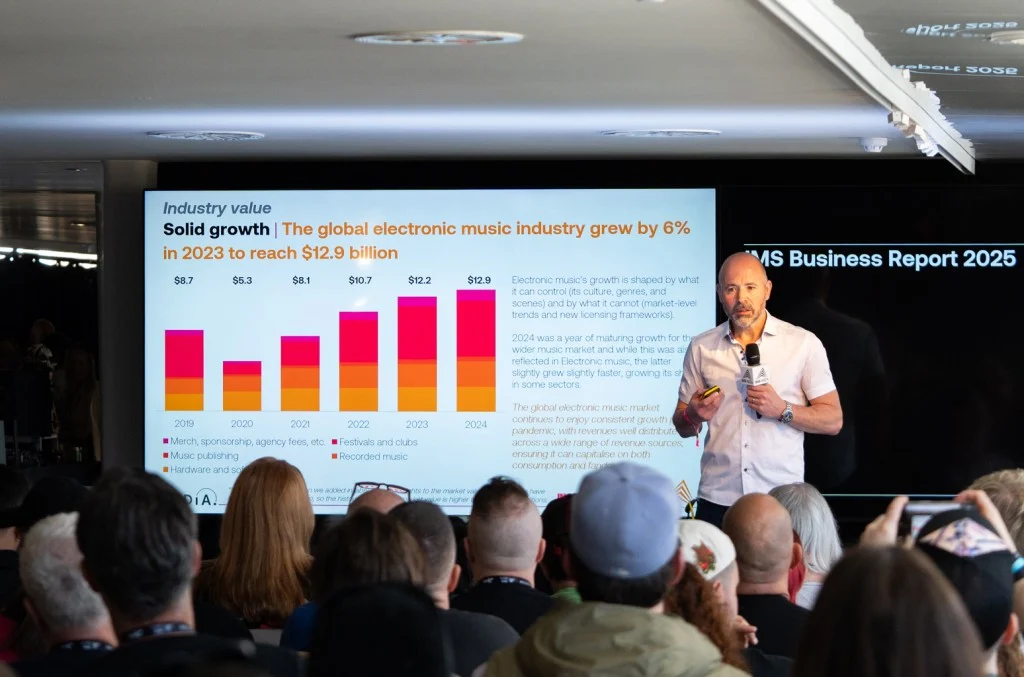
IBIZA, Spain — The annual dance industry conference IMS Ibiza began today (April 23) on its namesake island, with hundreds of people from around the sector gathering for three days of discussions, presentations, panels, music and more looking at the global electronic music scene and industry from all angles.
As is tradition, the Summit began with the presentation of the annual IMS Business Report, which tracks the key trends from the global business over the last 12 months. Marking its 11th edition this year, the report was authored by MIDiA Research’s Mark Mulligan and is available here.
Mulligan also presented the report to a packed room on Wednesday afternoon, giving context to the data and illustrating that while revenues may be lagging in clubs and festivals, electronic music culture is booming both on and offline. These are 11 key findings from the 2025 report.
Trending on Billboard
1) Streaming Is Way Up in the Global South
The report finds that while streaming revenue growth slowed to 6% in 2024, subscriber growth saw huge gains, with the overall streaming sector seeing a 12% growth in its subscriber base.
Incredibly, nearly four fifths of this growth came from Global South markets, an area the UN Trade and Development organization defines as comprised of Africa, Latin America and the Caribbean, Asia and Oceania. Mulligan noted that Global South statistic is especially crucial given that user growth will eventually give way to global cultural growth “as these users drive the rise of large local music scenes that will increasingly export their sounds to the West.”
The reports also found that Spotify stayed in the lead in terms of DSPs, maintaining its 32% market share and registering more than a quarter of a billion subscribers globally. The report notes that “YouTube Music was the only other global DSP to also enjoy strong growth in 2024, gaining to a 10% market share.
2) Electronic Music Is a Market Leader
The report notes that electronic music has the top or second highest count of Spotify followers in nine of the genre’s top 13 markets, compared to hip-hop, Latin and rock. And while Latin and hip-hop growth may be statistically stronger, the reach of these audiences, especially Latin, varies strongly by region, versus electronic music’s more global growth.
Additionally, the world’s top four electronic music markets — Germany, Australia, the U.S. and U.K. — all gained significant listener counts in 2024, although Mexico, the U.K. and Germany saw the highest growth, respectively. (Incredibly, electronic music was up 60% in Mexico.)
Meanwhile, electronic music consumption is considered endemic in The Netherlands and Australia, where the report found that the number of monthly electronic music listeners on Spotify is higher than the total population. (This is possible because individuals can consume more than one style of electronic music on the platform.)
3) Electronic Music Fans Over-Index For Time & Money Spent
Mulligan repeatedly emphasized the crucial nature and influence of IRL scenes, which dance music excels in cultivating and which many younger people are prioritizing over online existence.
“This idea of scenes is going to become more and more important,” he said, “because superstars are getting smaller and everything is fragmenting. It’s time to look simply beyond the stream counts, beyond the social numbers to measure the cultural impact, even though that’s nearly impossible to do. But that’s probably a good thing. If it’s not measurable, it’s harder for people to go and overtly commercialize it.”
He referred to culture as “the fuel in the engine,” saying that things like revenue, stream counts and social and followings “will come as a result of the culture. So the fact that the cultural indicators are beginning to really light up in 2024 points to a really strong few years coming up.”
4) Revenues in Ibiza Were Up, But Ticket Sales Were Slightly Down
The report notes that the average number of events per venue on the island “is on a steady, albeit modest decline and ticket volumes were down in 2024, with higher average ticket prices thereason that revenues were up once again. “You keep charging people more until they can’t afford it anymore” said Mulligan, “and there will come a point when people say ‘I literally can’t afford any more for this at the moment.’” This is especially true now, he noted, in a period of global economic uncertainty.
5) Afro House Continues to Rise
Mulligan reported that Afro-house “has absolutely rocketed” in the last year, while drum & bass is also in a “real era of resurgence.” A survey of the digital sample library Loopcloud indicates a large rise in samples of African music genres, suggesting the genre will continue growing.
6) Hard World = Hard Music
The Loopcloud survey also found a rise in harder electronic genres like hardcore and hard dance, while “softer” genres like ambient and chill out are going down and losing share. This is, Mulligan posted, is “because culture reflects the world around us. It’s a crappy world out there at the moment. There’s wars and famine and inequality, and I think that’s beginning to really come through in the music that people are making and the music that people are listening to.”
7) There’s Been a 45% Growth of Electronic Music Hashtags on TikTok
Amapiano and trance saw especially big growth on the platform. “Again,” Mulligan said, “there are all of these cultural indicators that are growing more strongly than the revenue indicators are.”
8) SoundCloud Also Remains a Strong Cultural Indicator
The platform saw 100% growth in uploads of UKG (UK garage) with jungle uploads also up 45%.”These tend to the genres that tend to be owned by Gen Z and even Gen Alpha,” said Mulligan. “SoundCloud has so many of these bootleg remakes … of course [the people who make them] can never get the rights cleared and put them onto Spotify, but a lot of this culture is happening online on places like SoundCloud.”
9) Music Catalog Investors Have a Growing Interest in Dance
“Mainly what happens is old white males invest in old white males, so you still see the Bob Dylans [of the world getting invested in], but we are beginning to see more and more of other genres,” Mulligan said of investor acquisitions of artist catalogs. The report states that the share of catalog deals for electronic artists doubled between 2020 and 2024, with recent notable examples including Kevin Saunderson, Tiga and deadmau5.
10) Dance Music’s Gender Divide Persists
In terms of the number of people producing music and playing events, Mulligan reported that “this is still a heavily male world,” although there’s also been a slight increase in the representation of female artists. This determination is based on a survey of data from AlphaTheta, where the registered userbase, the report says “points to the steady rise of female DJs, many of whom will be inspired by the growing share of top DJs that are now female.”
“We are beginning to see change,” Mulligan added in his presentation. “It’s not dramatic, but it’s good and steady progress.”
11) The Global Electronic Music Industry Was Valued at $12.9 Billion in 2024
This number includes live, merchandising, sponsorships, recorded music, publishing, music hardware and software, clubs, festivals and more. The number represents a 6% growth over 2024, which Mulligan noted “might not sound huge, but remember live music revenues — festivals and clubs — which is a really big part of the revenue mix, is beginning to slow, so that sort of drags down the overall numbers. But most importantly, the culture is absolutely booming. With 0.6 billion new social followers of electronic music followers in 2024 they’re the foundation for what’s set to be a really vibrant few years.”

Nicole George-Middleton has been promoted to executive vice president and head of creative membership at ASCAP, the organization announced Wednesday (April 23). In her elevated role, George-Middleton will oversee songwriter, lyricist, and composer relations, reporting directly to ASCAP CEO Elizabeth Matthews and joining the organization’s senior leadership team. She will also continue to serve as […]
Etsy has agreed to sell Reverb, an online marketplace for musical instruments and equipment, to Creator Partners, an investment firm founded by a former SoundCloud CEO, and Fender-owner Servco, the companies said on Tuesday.
Terms of the deal were not disclosed. Bought by Etsy in 2019 for $275 million, Reverb is used by fans to purchase collectibles like the recording console used to track the Beatles’ Abbey Road and Travis Barker’s drums, as well as regular guitars, pedals, keyboards and other music-related products.
The deal, which is expected to close in the coming weeks, will see U.S.-based music gear selling site return to its roots as an independently operated company backed by Creator Partners and Servco.
Trending on Billboard
Creator Partners is the investment company of former SoundCloud CEO Kerry Trainor, and it stakes in BMI, Colors+Studios, Mogul, as well as SoundCloud. Servco is the majority owner of guitar company Fender, which Creator Partners is also invested in. Reverb previously raised $25 million from a group of investors led by Summit Partners.
The deal for Reverb comes at a time when the threat of global tariffs has sparked fears of rising prices for music product imports, merchandise and other goods. In a blog post announcing the new ownership, Reverb CEO David Mandelbrot said the company plans to roll out a new option for sellers “that allows you to get paid faster and drop off your gear locally, without needing to create a listing or ship.” Reverb has other plans to expand its offerings of music-making software and to improve search, ship and help services on the website.
“Over the past five years, we’ve learned a lot from Etsy as we’ve expanded our community,” Mandelbrot wrote in the blog post. “As we look ahead, with a focus on growing the entire industry by helping more people buy and sell used music gear, we’re excited to align ourselves with two new partners who share our passion and focus.”
According to Mandlebrot, buyers and sellers using the website should not notice any disruption as the companies work toward closing this deal in the coming weeks, and Creator and Servco sought to assure Reverb users that Fender will not get preferential treatment on Reverb. Reverb’s partnership with Fender will stay the same, including Fender’s certified pre-owned program, which is one of 20 such offerings available on Reverb, the companies said.
Creator Partners’ Trainor said they are keen to invest in Reverb and its goal of growing “the entire industry through seamless secondhand commerce.”
Mark Fukunaga, executive chair of Servco, said his company has been invested in musical instruments and education for over 90 years. “We remain committed to being good stewards of leading musical instrument companies, like Reverb, and supporting players everywhere in pursuing their passion to create music.”
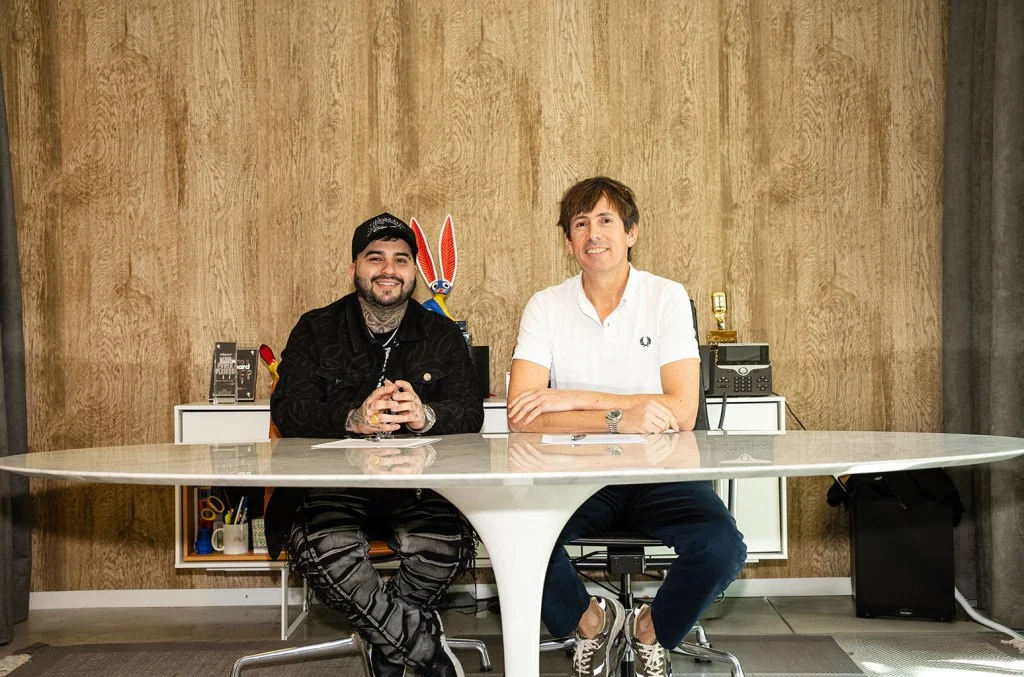
Chris Janson has returned to his former label home of Warner Music via a partnership with the country singer-songwriter’s Harpeth 60 Records imprint. Clay Hunnicutt leads Harpeth 60 Records’ radio promotion staff, with team members including Ray Vaughn and Lauren Bartlett. Janson previously released his first three albums through Warner, earning hits including “Buy Me a Boat” and “Good Vibes.” — Jessica Nicholson
Emerging singer-songwriter Esaú Ortiz signed with Sony Music Latin. The música mexicana artist from Monterrey, Nuevo León, Mexico, first gained traction on social media with songs like “Triple Lavada,” which was featured on playlists such as Apple Music’s Hits 2025 and Spotify’s Éxitos México. His first official project under Sony Music Latin is said to feature “an explosive remix and heavyweight collaborations,” according to a press release. “I know I have the best team to take my music to the next level and to the ears of everyone,” Ortiz said in a statement. ” I believe we will do great things together, which makes me very happy.” — Griselda Flores
Trending on Billboard
Big Wild, a project of producer, singer, songwriter and engineer Jackson Stell, signed a label deal with Giant Music and a management deal with Ceremony Music Group. His first release under Giant was the single “You Belong Here,” which dropped April 11.
Jasmine Amy Rogers, the singer and actor who plays Betty Boop in Boop! The Musical on Broadway, signed a record deal with Nashville-based label Melody Place for the release of new original music at the end of 2025. According to a press release, the music will be “somewhere in the mainstream pop/urban world.” Rogers is also featured on the Boop! The Musical cast album set for release later this spring.
Metalcore band Wind Walkers signed with Fearless Records, which released the group’s new single and video “The End Aesthetic.” Wind Walkers just kicked off its Shapeshifter Tour on April 16 in Little Rock, Ark.
Indie-rock/dream-pop band Yumi Zouma signed with Nettwerk, which released its new single, “Bashville on the Sugar,” on Friday (April 18). Yumi Zouma is managed by Phil Jones at Tuesday’s Artists Management and booked by Alisa Preisler at Ground Control, Beckie Sugden at CAA and Sam Wald at WME. The band was previously signed with Polyvinyl Record Co.
Nettwerk also signed Los Angeles-based singer-songwriter BEL and will release her forthcoming single, “Fresh Start,” on Friday (April 25). BEL is managed by Justin Little and Chad Heimann at Brilliant Corners.
TAMLA Records and Capitol Christian Music Group (Capitol CMG) signed Peech. to their artist roster. In 2024, Peech. broke through with the single “Snowfall” and the mixtape L.I.V.E. On Friday (April 18), he released his latest single, “Don’t Miss Your Moment.” — Jessica Nicholson
Riser House Records signed indie-pop group The Wldlfe and will release the band’s new single, “Make Me Cry,” on Friday (April 25). The band is composed of Jansen Hogan, Carson Hogan, and Jack Crane.
Scotland-born, Texas-raised country singer Callum Kerr signed with ONErpm and Huff Co. Kerr also works as a model and actor. His new single, “Cold Beer Cold,” is out now.
Sony Classical signed Berlin-based pianist Alexander Malofeev, who will release his debut album for the label in the fall. Malofeev first rose to prominence in 2014 at the age of 13, when he won the International Tchaikovsky Competition for Young Musicians. He has since performed with leading orchestras including the Philadelphia Orchestra, the Boston Symphony Orchestra, the Orchestra of the National Academy of Santa Cecilia, the Lucerne Festival Orchestra and Orchestra Filarmonica della Scala.
Asher White signed to Joyful Noise, which released her latest single, “Kratom Headache Girls Night,” on Tuesday (April 15). White’s most recent album, Home Constellation Study, was released on Ba Da Bing! in 2024.
Oakland-based punk band The Lucky Eejits signed with Southern California indie label HEY!FEVER Records. The group recently won a spot at this year’s San Francisco Punk in the Park Festival on May 3. Lucky Eejits is set to release new music by the end of this year.

In conjunction with today’s global celebration of Earth Day, Merlin and IMPALA have announced the launch of a new fund intended to accelerate the independent music community’s push towards sustainability.
The initiative is named the Weidenmüller Sustainability Fund in honor of late !K7 founder Horst Weidenmüller, who co-founded Merlin and was a board member for both the digital music licensing partner for indies and IMPALA, the European organization that represents 6,000 independent music companies spread across 30 countries.
Before he passed away in February at age 60, Weidenmüller was central to the creation of the sustainability program IMPALA launched in 2021. This included the 2022 launch of a carbon calculator to assist labels in measuring and reducing their environmental impact through practices like tracking the climate impact of their office energy and water use, their commuting, their business travel and their manufacturing and distribution efforts.
Trending on Billboard
The new fund will provide resources to further develop and enhance this carbon calculator and make it more globally available, support IMPALA in offering advice and training to independent labels and distributors that use the tool and support the work of the IMPALA task force Weidenmüller created in 2020.
IMPALA has an established history of furthering sustainability. Its 2021 Climate Charter created sustainability frameworks in the indie sector, and in 2024 the company released the results of a study looking at the economic benefits of taking sustainability action. This new joint initiative reinforces a commitment by Merlin in equipping rightsholders with tool to address emerging industry challenges.
“Horst was not only a fierce advocate for independent music, but also for our planet,” Merlin CEO Jeremy Sirota says in a statement. “He believed in driving real and sustaining change—through leadership, innovation, and action. We all have a role to play in the preservation of our planet and a more sustainable future. Merlin is proud to launch the Weidenmüller Sustainability Fund and to help meet our commitment through the incredible work of IMPALA.”
“Horst was a true visionary,” continues IMPALA executive chair Helen Smith. “He believed in the power of collective initiatives as well as the business case or individual action. This fund honors Horst’s profound impact across the whole industry.”
Earlier this month Create Music Group announced its acquisition of !K7, the indie electronic label Weidenmüller founded in 1985. Upon the announcement, !K7 CEO Tom Nieuweboer says the partnership will allow the label “to scale our vision while staying true to our core values of independent artistry, innovation, and quality.”
Of the new fund, Nieuweboer adds that “Horst was my companion, mentor, and friend for decades. His passion for music always went hand in hand with a deep sense of responsibility for our planet which was becoming part of the DNA of !K7. Horst was a true role model – for me personally, and for many across the music industry. The launch of the Weidenmüller Sustainability Fund is not only a tribute to his commitment but also a call to the industry to follow in his footsteps. This fund ensures that his vision will not only be remembered but actively carried forward with real impact.”

Australia’s iconic Bluesfest has officially confirmed its return in 2026 following one of its strongest years post-COVID, bolstered in part by emergency support from the New South Wales Government’s Contemporary Music Festival Viability Fund.
Held over the Easter long weekend, Bluesfest 2025 drew more than 109,000 attendees across five days, its highest attendance since 2019, and the third-biggest turnout in the festival’s 35-year history. The milestone comes just months after festival director Peter Noble hinted that the event might be the final edition, citing ongoing economic strain across the live events sector.
Among this year’s lineup were The Pierce Brothers, the reformation of The Beards, Kim Churchill, Nahko, Fools, Eric Stang, RY X, Sweet Talk, 19-Twenty, Roshani, WILSN, and Clarence Bekker.
Trending on Billboard
“We’re the top-selling festival in the country, and we’ve worked hard to get here,” Bluesfest Director Peter Noble said.
That sentiment shifted in part due to the NSW Government’s $2.25 million lifeline distributed across five festivals. Bluesfest, along with Listen Out, Field Day, Lost Paradise, and Yours and Owls, each received up to $500,000 in funding through the initiative, designed to help festivals navigate rising costs related to insurance, freight, currency exchange, and shifting ticket-buying habits.
“The post-COVID era has been a financial nightmare for music festivals in NSW,” said Minister for Music and the Night-time Economy John Graham. “The government needed to step in to save the furniture, and the feedback is that this fund has helped some of these festivals survive.”
“From Bluesfest where I’ve been this weekend, through to Listen Out and Lost Paradise – people of all ages love the outdoor music festival experience and the artists they discover. We can’t afford to lose that cultural experience because the festivals can’t afford to pay their rising bills.
“The festival circuit a vital part of the live music industry which employs almost 15,000 people. It’s too important to lose, that’s why we’re backing festivals with emergency funding and reforms that bring down their costs.”
Head of Sound NSW Emily Collins added, “The funding is providing critical support to iconic festivals and helping ease the burden of a rapidly changing landscape. We’re proud to be supporting great festivals to continue delivering world-class music experiences for the people of NSW.”
The second round of funding from the Contemporary Music Festival Viability Fund opens May 1, ahead of the 2025–2026 summer season. Eligible festivals can apply on an as-needs basis.

Music stocks bounced back — and performed better than major U.S. indexes— for a second week after President Trump’s tariff policy sent markets into a tailspin.
The 20-company Billboard Global Music Index (BGMI) rose 3.6% to 2,446.90, its second consecutive gain after falling 8.2% the week ended April 4. Fourteen of the 20 stocks were winners and five had gains exceeding 5%. The largest companies were among the week’s winners, which had an outsized impact on the index’s value, while the four worst performers are the index’s least valuable companies.
The BGMI outperformed the Nasdaq and S&P 500, which lost 2.6% and 1.5%, respectively, but fell short of the FTSE 100’s 3.9% improvement. South Korea’s KOSPI composite index gained 2.1% and China’s SSE Composite Index rose 1.2%.
Trending on Billboard
Streaming companies, which analysts believe are well-suited to survive the impacts of the U.S. tariff policy, were among the week’s best performers. Cloud Music was the week’s biggest gainer, rising 10.5% to 156.40 HKD ($20.15). Deezer was the third-best performer with a 6.7% gain.
Spotify, the most valuable music company, rose 5.6% to $574.25. UBS lowered its Spotify price target on Tuesday to $680 from $690 but maintained its buy rating. Tencent Music Entertainment improved just 0.4%, giving it a 10.2% gain in 2025.
Multi-sector companies, particularly those from South Korea, also performed well. YG Entertainment rose 10.0% to 66,800 KRW ($47.10). SM Entertainment rose 9.3% to 116,300 KRW ($81.99) and JYP Entertainment improved 6.2% to 63,300 KRW ($44.63). HYBE rose 2.0% to 230,500 KRW ($162.51).
Universal Music Group rose 3.2% to 23.96 euros ($27.25), turning a deficit into a year-to-date gain of 0.2%. Warner Music Group rose 0.3%, bringing its loss in 2025 to 6.1%.
Live entertainment companies had mixed results. German promoter CTS Eventim gained 4.2% to 97.20 euros ($110.54) and MSG Entertainment rose 1.2% to $30.69. Live Nation fell 1.8% to $127.22. Sphere Entertainment Co. dropped 6.3% to $25.38. The company, which owns the Sphere venue in Las Vegas, has fallen 40.2% year to date.
Radio companies continued their decline. iHeartMedia dropped 14.8%, bringing its year-to-date loss to 54%. Cumulus Media’s 19.4% fall took its year-to-date deficit to 67.5%.
Tariffs continued to be a dominant theme in the financial world this week. Apple and other tech companies that import phones, computers and chips from China and other Asian countries gained a reprieve from the most burdensome tariffs. The announcement, which came on April 11, sent Apple’s stock up 2% on Monday (April 14) and pushed its market capitalization back past $3 trillion. On Thursday, the Trump administration announced new fees on Chinese-made ships entering U.S. ports. Some of those fees were quickly walked back, however, by exempting ships that travel between U.S. ports of call, and from domestic ports to Caribbean islands or U.S. territories.
Billboard
Billboard
Billboard

This Tuesday (April 15), hundreds of people from across the music industry gathered in Hollywood for the second annual Music Sustainability Summit.
Organized by the Music Sustainability Alliance (MSA), the event again brought together thought-leaders and innovators from the live music, labels, waste management, merch, food, design and production sectors. Panels and breakout sessions — curated around the event’s “progress through collaboration” theme — focused on the challenges and, more crucially, the many solutions that currently exist and can be implemented at scale as the industry takes on the ongoing climate crisis that’s affecting touring, events, the supply chain and the health and wellness of artists, teams, fans and the Earth itself.
“Sustainability is good for the planet and it’s good for business, and it’s being led by the people in this room,” MSA CEO/co-founder Amy Morrison said at the start of the day, “but we’re not done. There’s still more to learn, more to share and more to do. And let’s be honest, this work is only getting more important as some political forces pull back from climate commitments and even try to undermine environmental progress. It’s falling on industries like ours to step up and lead.”
The day began with a stirring performance from singer and environmental activist Antonique Smith and a rousing conversation with activist Reverend Lennox Yearwood Jr., who emphasized the importance of artists and not just engaging in performative activism, but truly engaging with the people who are feeling the very real effects of the climate crisis. “You have to be amongst the people,” Yearwood Jr. told the rapt crowd. “Not only will it make you a better artist, but you will transform yourself by being with the people and feeling the crisis. It will allow you to create art that is divine, that is otherworldly. You will begin to create something that isn’t just pain and depression, but something that could actually change and save this world.
The day of conversations went on to provide huge insights on the many ways the music industry can transition to greater sustainability and do its part in humanity’s greatest challenge, via panel topics that included live music emissions in the U.S. and U.K., why paying attention to menus at venues at events is important, the evolving clean energy sector, strategies that are being used in film, sports and live theater, sustainability in contracts and more.
Here are five things we learned from the conference.
The Music Industry Could Be Greener Through More Strategic Planning