State Champ Radio
 Blog
Page: 608
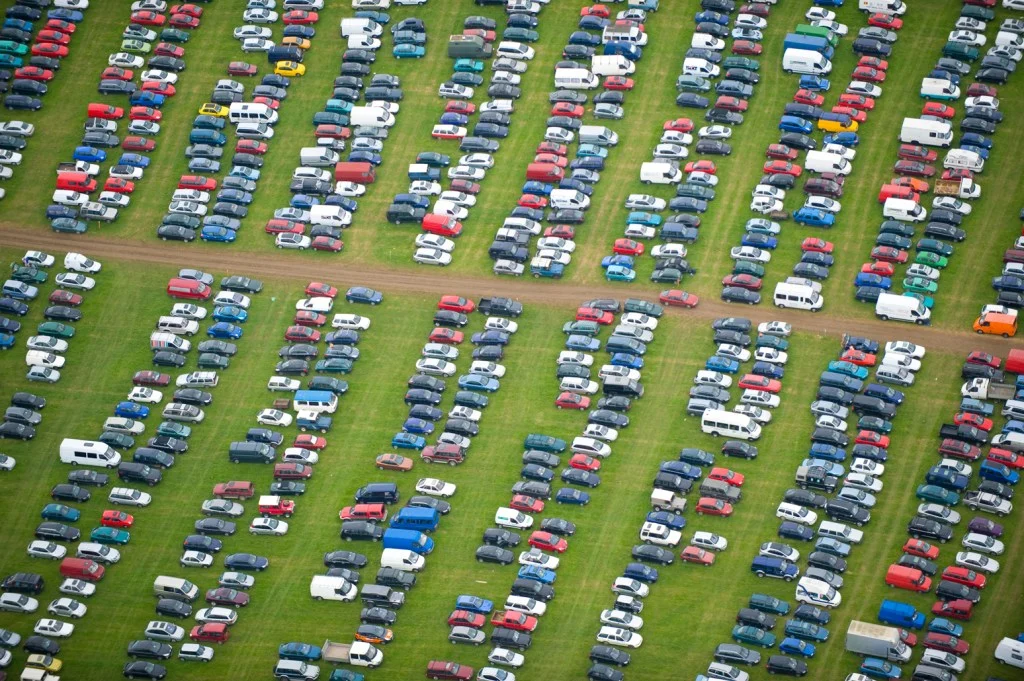
How did you get to the last concert you attended?
If you’re like most music fans in the United States and Canada, you probably traveled by car. While taking public transportation would be more environmentally friendly, it’s less likely you went by bus or shuttle.You might be among the few that took the least environmentally friendly option and flew.
Now a new study by REVERB, the longstanding organization focused on sustainability in touring and the broader music industry, is presenting a comprehensive report on all the ways concert attendees get to shows. The study aims to better understand fan travel – long known as the biggest carbon emitter in the live music space – and facilitate solutions to bring down concerts’ environmental impact.
This study was done by REVERB over the last two years at more than 400 shows in over 170 North American cities. REVERB representatives surveyed more than 35,000 fans, asking them about how they got to the show, how they would’ve preferred to get there and the barriers that prevented them from taking a more sustainable travel option.
Out today (April 21), the results of REVERB’s Concert Travel Study aim to give a better sense of the playing field while demonstrating that fans want greener options, info that’s altogether meant to encourage collaboration on solutions among venues, promoters, artists and fans.
Trending on Billboard
The study finds that driving is by far the most common way that fans get to shows, with 80% of respondents reporting taking a car. On average, 3,321 gas powered or hybrid vehicles were driven to any given show. On average, each car went 144 miles roundtrip and carried 2.5 people.
Meanwhile, just 9% of attendees used public transportation, although 33% percent said they would if there were better options available. And while only 7% of fans flew to shows, those flights accounted for 60% of all fan travel emissions.
All in, the study finds that fan travel creates 38 times more emissions than artist and crew travel, tour-related hotel stays and gear transportation combined. The average 11,000 capacity show creates 527 metric tons of fan travel-related carbon emissions, the equivalent of the energy it would take to power 110 homes for a year. On average, even larger concerts create 824 metric tons of carbon emissions.
But 89% of fans would take more sustainable transit options if there were better options and almost everyone surveyed — 90% of participates — said they’re concerned about climate change. See the complete study here.
“We’ve always known that fan travel is the biggest emitter, because you have thousands of fans versus a couple band members or crew members,” says REVERB’s director of impact Madeline Weir tells Billboard. “But the point isn’t to put pressure on fans or say its their fault; we want this to be an opportunity for artists, venues and the industry at large to acknowledge fan travel as the biggest source of emissions and work together with fans to see what solutions would make the fan experience better.”
The study suggests solutions like incentivized carpooling, which would provide better parking spots and expedited exit lanes to fans who arrive with a certain number of people in the car.
Weir also cites a desire to work with the aviation industry to help generate a bigger marketplace for sustainable aviation fuels, in order to bring down the cost of this fuel. Greener air travel is especially crucial when it comes to artist residencies, which typically entail most audience members traveling to see a stationary show.
“We’re never going to say to a band, you shouldn’t do [a residency], because it’s a fan experience and we definitely work with bands that do them,” Weir says. “It’s about talking about solutions with a band and their teams. And a lot of the artists that are at that [residency] scale are already doing a lot for climate, whether it be the offsetting model or more the philanthropy-based model.”
Weir also notes the importance of strategic routing, as emissions are naturally lower when fans travel shorter distances for a show. To wit, when an artist REVERB has partnered with provides the organization with their tour routing, REVERB provides them with information to send out to fans about various sustainable transit options, from carpooling to public transit to bike lanes. REVERB is also partnering with venues to provide tailored data from the study on what each specific venue can do to help fans arrive in greener ways.
The study was co-funded by Billie Eilish, a longtime REVERB partner and of the greenest artists in music. At the Los Angeles and Phoenix dates for Eilish’s Hit Me Hard and Soft Tour this past December, Elish’s team provided shuttles from various park and rides for faster, greener transport to shows, demonstrating that there are straightforward options for artists who want to platform sustainability.
“Artists, venues and fans all need to work together to improve our environment,” Eilish says in a statement. “From solar-powered live shows to more sustainable touring, my team is always looking for ways to help the planet. I have the greatest fans in the world, and I hope this study will be a helpful resource for those looking to learn more about transportation options that cut down on pollution and build a better future for live music.”
REVERB is also helping venues and events look at what Weir calls sustainable “micro-mobility,” including gas powered shuttles, golf carts and other on-site transportation. (She cites Los Angeles’ Intuit Dome as a venue that’s currently enacting such measures.) REVERB is also currently working with Forest Hills Stadium in Queens, NY to create bike valets and promote the use of public transit.
“At Forest Hills, we promote public transit options as the number one way to arrive at the venue,” says the venue’s co-manager Mike Luba. “We love when partners like REVERB and artists amplify this promotion to reduce the number of emitting vehicles driven to our shows. It’s truly better for fans, the community, and us.”
Altogether, the study emphasizes the growing concern about, and push for, sustainability in the industry, with U.S. venues and events increasingly exploring clean energy technology, swapping single-use plastic cups for reusable options and encouraging artists, agents and promoters to incorporate green clauses in various contracts. This work is catching up the sustainability efforts REVERB has been enacting in the live sector since it was created in 2004, with the organization’s co-founder Adam Gardner saying that “listening to fans has always been key to our success.”
While the REVERB study encompasses a lot of data and many options for improvements, what it ultimately makes clear is that demand for greener travel options is significant, with 94% of fans saying they want to be able to take collective action on the issue.
“Venues, artists, promoters and fans themselves all have responsibility to do this together,” says Weir.

Taylor Swift only just wrapped up her two-year Eras Tour in December, but a recent mixup ahead of the upcoming 2025 Unbridled Eve Derby Gala led some fans to think that the pop star already had another trek set in stone. Explore Explore See latest videos, charts and news See latest videos, charts and news […]

Kendrick Lamar has signed on as a brand ambassador for Chanel, and he’ll appear in the French fashion house’s new eyewear campaign that will roll out on Tuesday (April 22). Business of Fashion exclusively reported the news on Monday. “I visited the Chanel ateliers and saw the process of how something goes from design to […]
Fifty-one years ago, after trying out Zorro, Superman and gorilla costumes, Angus Young took a suggestion from his sister, borrowed her son’s school uniform and wore it onstage. Since then, like his band AC/DC, the lead guitarist’s live persona has been insanely consistent — he once told Billboard that he packs 12 schoolboy costumes for tours.
“We’ve never tried to do something we’re not or looked around to see what the other bands were doing,” Angus said in a 1996 interview. “An audience can tell when you’re phony or you don’t want to be onstage.”
High Voltage, AC/DC’s debut album, set the band’s consistent musical template in 1975 when the record arrived in the group’s home country of Australia. Twelve months later, it reached the United States and, after a few years, established the act as international rock stars.
Trending on Billboard
Every AC/DC album since, from classics such as 1980’s Back in Black to lesser-known gems like 1995’s Ballbreaker, has exemplified what Billboard declared in a 2014 review of the Rock or Bust album: “Neither trends, age nor the passing of many decades has altered the basic blueprint the band laid out on its 1975 debut, High Voltage.”
“Some people might say that you guys have made the same record over and over 10 times,” an interviewer once suggested to Angus.
“That’s a dirty lie!” he responded. “We’ve made the same record over and over 11 times!”
Of AC/DC’s 19 studio albums, seven have hit the top 10 of the Billboard 200, including two No. 1s, 1981’s For Those About To Rock (We Salute You) and 2008’s Black Ice.
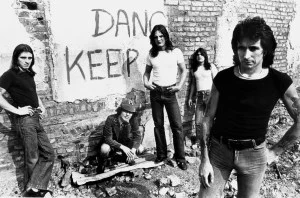
Phillip Rudd, Angus Young, Mark Evans, Malcolm Young, and Bon Scott of AC/DC pose for an Atlantic Records publicity still in front of a graffiti-covered wall circa 1977.
Michael Ochs Archives/Getty Imag
Ten of the band’s tracks have earned more than 177 million streams, beginning with “Thunderstruck” at 1 billion, according to Luminate. AC/DC’s touring power has been similarly steady, from 1978, when it opened for Aerosmith for multiple sold-out arena dates, to 2010, when its four best-selling concerts ever grossed $11.7 million, $12.8 million, $24.6 million and $27 million, all in Australian stadiums, according to Billboard Boxscore.
Despite the loss of Angus’ brother, founding member and rhythm guitarist Malcolm Young, to dementia in 2017, AC/DC rocks on. The band opened its global Power Up tour on April 10 at U.S. Bank Stadium in Minneapolis.
CAA books AC/DC, with agency veterans Rob Light, Chris Dalston and Allison McGregor overseeing dates. The tour takes its name from the 2020 Power Up album. (The band’s repertoire is released by Columbia Records in the United States and by Sony worldwide.) Alvin Handwerker of Prager Metis handles management.
On record, AC/DC began its loud and mighty run 50 years ago, with the release of High Voltage. The album was created in “a very economical two weeks,” as Jeff Apter writes in the 2018 biography High Voltage: The Life of Angus Young. The second week focused on Angus’ guitar solos and the controlled night-prowler shrieks of frontman Bon Scott, who died in 1980.
Angus has said of Alberts, the band’s Sydney studio, “I would have liked to have taken the f–king walls with me and kept them. A guitar just came to life in there. It was a little downtrodden, but it had a great vibe, this energy to it.”
The group’s pathway through the music business began with Sydney publisher Ted Albert, who lived in a mansion called Boomerang and sailed with his father on a yacht of the same name. His company, Albert Productions, had signed Australian rock’n’roll band The Easybeats in 1965, putting out classics such as “Friday on My Mind” and “St. Louis” before it broke up four years later. That act’s rhythm guitarist, George Young, turned out to have talented younger brothers, Malcolm and Angus, and the Albert connection led to AC/DC signing with the company in 1974. George and bandmate Harry Vanda, who served as High Voltage’s co-producers, had a knack for drawing the screechy rock rawness out of Angus and Malcolm.
“That was our first real album,” Angus told Guitar Player in 2003, “and it was the one that defined our style.”
The album’s opening track, “It’s a Long Way to the Top (If You Wanna Rock ’n’ Roll),” began as a “jam,” Angus recalled in a 1992 interview, published many years later in Classic Rock. “We were just playing away, and my brother George left the tape rolling. After we finished, he was jumping up and down in the studio going, ‘Great, great, this is magic!’ And you’re thinking, ‘What’s he on about?’ And he played it back and there it was. It had that magic atmosphere.”
Although AC/DC became known for its lascivious vocals full of not-so-disguised euphemisms, “It’s a Long Way to the Top” is almost a folk ballad, lamenting endless hard work and “getting old, getting gray, getting ripped off, underpaid.” Country, folk and Americana singers including Lucinda Williams and Cody Jinks have covered it.
The droning track required a droning instrument — bagpipes — as its crucial final touch, the producers’ idea.
“Bagpipes!” exclaimed Steve Leeds, head of album promotion for AC/DC’s longtime U.S. label, Atlantic Records, as reported in Jesse Fink’s 2013 book The Youngs: The Brothers Who Built AC/DC. “There are no bagpipes on the radio, even today. George and Harry were f–king geniuses. They figured it out. Conventional wisdom says, ‘You guys are crazy.’ ”
George knew how to communicate with musicians, and he recognized that the band’s imperfect quality in the studio could lead to spontaneous excitement on its recordings. At one point, while recording the title track, drummer Phil Rudd thought he had “messed up” during a fill, Angus recalled in 1992. “And George is signaling: ‘Keep going. Keep going.’ And we finish that take and we come in and go, ‘OK, we better try again.’ And he goes, ‘No. That was the take.’ And that was the one we used.” The track wound up closing the album.
From Australia to the United States, where it was released in 1976, High Voltage received almost no attention — other than negative attention. Critics were merciless. Rolling Stone’s infamous pan called the band “Australian gross-out champions,” declared hard rock “has unquestionably hit its all-time low,” referred to its rhythm section as “goose-stepping” and concluded the whole operation added up to “calculated stupidity.” A short feature two years later — written by Ira Kaplan, later frontman of Yo La Tengo — concluded, “There’s nothing new going on musically, but AC/DC attacks the old clichés with overwhelming exuberance.”
Many critics back then blooped over Malcolm’s steel-beam rhythms and Angus’ devotional reinterpretations of Muddy Waters and Chuck Berry and stripped-down arrangements that distilled The Rolling Stones, Aerosmith and The Stooges into riffs that gained power with repetition.
“At that time, Rolling Stone was really into the punk genre and were matching up everything to what was the current flavor of the day,” Angus told Vulture in 2020. “What we did was rock’n’roll and we weren’t going to change anything.”
Malcolm Young, Bon Scott, and Angus Young of AC/DC performing at The Nashville Rooms on April 26, 1976 in London.
Dick Barnatt/Redferns
The vision paid off — eventually. Angus would criticize “really soft” Australian radio for being overobsessed with Air Supply and worse. But in the United States, programmers for a small San Antonio rock station picked up High Voltage and aired it immediately. This led to a show at Austin’s 1,500-capacity Armadillo World Headquarters and, later, airplay in the Bay Area and Boston.
“Up until that point, all we had really done was a lot of touring around Australia, so it was great to get into a studio and really hear how we sounded,” Angus recalled in 2003. “What was impressive about that album was that it sold on word-of-mouth alone.”
The band also played at CBGB, the New York punk fixture where the Ramones, Patti Smith, Blondie and Talking Heads first became famous. When Atlantic co-founder Ahmet Ertegun saw that gig, he agreed to sign AC/DC, steering the band at first to the label’s Atco imprint. “I’m not sure I would have signed them when I first heard them,” the late Ertegun told Billboard in 1998. “They were very modern; they were pushing the envelope. They were very young-looking then and very ratty-looking. A lot of those bands had disdain for anything that resembled authority.”
Angus responded, sort of. In a 2020 interview with Billboard, he said, “Some people would say, ‘Well, you have a very juvenile approach to what you’re singing.’ But good rock’n’roll is juvenile, in a sense.”
At first, High Voltage was hardly a blockbuster, neither in its native Australia nor the United States. Not even “T.N.T.” charted on the Billboard Hot 100. But it since has become one of the band’s most beloved tracks, with 436 million U.S. streams, as well as 826 million Spotify plays internationally.
AC/DC’s first track to hit the Hot 100 was “Highway to Hell,” in October 1979, at a modest No. 47. And its debut album didn’t crack the Billboard 200 until 1981, long after Highway to Hell broke into the top 20 and Back in Black followed by reaching No. 4. Album-oriented rock, indeed. High Voltage took five years to go gold in the United States in 1981, according to the RIAA, and hit quadruple-platinum in July 2024.
As it turns out, consistency is exactly half of AC/DC’s formula for commercial success. The other half is a combination of songs that sound perfect no matter how many times they’re played on the radio and onstage. Like the song goes, “If you think it’s easy doing one-night stands/Try playing in a rock-roll band.”
James Hetfield of Metallica put it a different way, describing the live Angus experience to Billboard in 2016: “That guy sweats so much every night. I can’t believe his head is still on his body.”
This story appears in the April 19, 2025, issue of Billboard.

HipHopWired Featured Video
Source: JEAN-BAPTISTE LACROIX / Getty
In what’s being called his most disturbing tweet yet, Kanye West allegedly posted a shocking confession that has sent the internet into chaos.
The tweet, which was reportedly deleted shortly after being published, contained a highly personal and graphic story involving his cousin, sparking immediate backlash and intense speculation. Screenshots of the post have circulated rapidly across social media platforms.
Allegedly, Ye introduced the tweet by referencing a song titled COUSINS, which he claimed was inspired by a relative serving a life sentence. The post then allegedly spiraled into a raw, emotional account of childhood trauma, early exposure to adult material, “This song is called COUSINS about my cousin that’s locked in jail for life for killing a pregnant lady a few years after I told him we wouldn’t “look at dirty magazines together” anymore”.
It get’s even more weird where he openly admits to having sexual relations with his cousin growing up, “Perhaps in my self centered mess I felt it was my fault that I showed him those dirty magazines when he was 6 and then we acted out what we saw My dad had playboy magazines but the magazines I found in the top of my moms closet were different My name is Ye and I sucked my cousins d*ck till I was 14”

Pope Francis, who died on Monday (April 21) at 88, will be remembered as one of the most consequential leaders of the Catholic Church. Born Jorge Mario Bergoglio in Buenos Aires, Argentina, Francis was the first Jesuit and Latin American pontiff to inherit the sovereign of the Vatican City. He became head of the Roman […]

The Cure will revisit their 2024 album Songs of a Lost World on an upcoming remix collection entitled Mixes of a Lost World. The 24-track compilation will feature fresh spins on the songs from EDM stars Four Tet, Paul Oakenfold and Orbital and others.
Explore
See latest videos, charts and news
See latest videos, charts and news
The album conceived and compiled by Cure singer Robert Smith will be released on June 13th through Fiction/Capitol Records and also come in a deluxe edition with additional remixes and reworks from Deftones frontman Chino Moreno, as well as Mogwai, 65daysofstatic, Gregor Tresher, Sally C, Daybreakers, Daniel Avery, meera and Trentemøller.
In a statement about the remix album, Smith said, “Just after Christmas I was sent a couple of unsolicited remixes of Songs of a Lost World tracks and I really loved them. The Cure has a colorful history with all kinds of dance music, and I was curious as to how the whole album would sound entirely reinterpreted by others.” The curiosity resulted in what he described as a “fabulous trip” through the original album’s expansive eight songs by 24 artists.
Trending on Billboard
All of the Cure’s recording royalties from the remix album will benefit War Child UK. The album will come in deluxe three LP, three-CD and three cassette formats with both the “artist and remixers” tracks, as well as two-LP/CD/cassette versions with just the remixers tracks. Songs of a Lost World was the Cure’s first new album in 16 years and the upcoming remix collection will mark their third such release, following on the heels of 2018’s Torn Down: Mixed Up Extras 2018 and 1990’s Mixed Up.
After the long break, Smith said in December that in addition to a live album, Songs of a Live World, that there is “another album which is pretty much ready to go,” one that he referred to as a “companion piece,” seemingly in reference to the remix album. He also said that there is a “third one which is completely different. It’s really kind of random stuff, it’s like late-night studio stuff.”
Listen to Four Tet and Oakenfold’s remixes below and check out the track listings for the deluxe editions of Mixes of a Lost World below.
3LP
VINYL 1
SIDE A
1. “I Can Never Say Goodbye” (Paul Oakenfold ‘Cinematic’ Remix)
2. “Endsong” (Orbital Remix)
3. “Drone:Nodrone” (Daniel Avery Remix)
4. “All I Ever Am” (meera Remix)
SIDE B
1. “A Fragile Thing” (Âme Remix)
2. “And Nothing Is Forever” (Danny Briottet & Rico Conning Remix)
3. “Warsong” (Daybreakers Remix)
4. “Alone” (Four Tet Remix)
VINYL 2
SIDE A
1. “I Can Never Say Goodbye” (Mental Overdrive Remix)
2. “And Nothing Is Forever” (Cosmodelica Electric Eden Remix)
3. “A Fragile Thing” (Sally C Remix)
4. “Endsong” (Gregor Tresher Remix)
SIDE B
1. “Warsong” (Omid 16B Remix)
2. “Drone:Nodrone” (Anja Schneider Remix)
3. “Alone” (Shanti Celeste ‘February Blues’ Remix)
4. “All I Ever Am” (Mura Masa Remix)
VINYL 3
SIDE A
1. “I Can Never Say Goodbye” (Craven Faults Rework)
2. “Drone:Nodrone” (JoyCut ‘Anti-Gravitational’ Remix)
3. “And Nothing Is Forever” (Trentemøller Rework)
4. “Warsong” (Chino Moreno Remix)
SIDE B
1. “Alone” (Ex-Easter Island Head Remix)
2. “All I Ever Am” (65daysofstatic Remix)
3. “A Fragile Thing” (The Twilight Sad Remix)
4. “Endsong” (Mogwai Remix)
3CD
CD1
1. “I Can Never Say Goodby” (Paul Oakenfold Cinematic Remix)
2. “Endsong” (Orbital Remix)
3. “Drone:Nodrone” (Daniel Avery Remix)
4. “All I Ever Am” (meera Remix)
5. “A Fragile Thing” (Âme Remix)
6. “And Nothing Is Forever” (Danny Briottet & Rico Conning Remix)
7. “Warsong” (Daybreakers Remix)
8. “Alone” (Four Tet Remix)
CD2
1. “I Can Never Say Goodbye” (Mental Overdrive Remix)
2. “And Nothing Is Forever” (Cosmodelica Electric Eden Remix)
3. “A Fragile Thing” (Sally C Remix)
4. “Endsong” (Gregor Tresher Remix)
5. “Warsong” (Omid 16B Remix)
6. “Drone:Nodrone” (Anja Schneider Remix)
7. “Alone” (Shanti Celeste ‘February Blues’ Remix)
8. “All I Ever Am” (Mura Masa Remix)
CD3
1. “I Can Never Say Goodbye” (Craven Faults Rework)
2. “Drone:Nodrone” (JoyCut ‘Anti-Gravitational’ Remix)
3. “And Nothing Is Forever” (Trentemøller Rework)
4. “Warsong” (Chino Moreno Remix)
5. “Alone” (Ex-Easter Island Head Remix)
6. “All I Ever Am” (65daysofstatic Remix)
7. “A Fragile Thing” (The Twilight Sad Remix)
8. “Endsong” (Mogwai Remix)

Alex Warren moves up in the top 10. Tetris Kelly:This is the Billboard Hot 100 top 10 for the week dated April 26. Morgan Wallen falls to 10, while Benson bounces to No. 9 after Coachella. BigXthaPlug’s country collab slips to eight. Teddy Swims is up to seven. Shaboozey is locked at No. 6. Alex […]
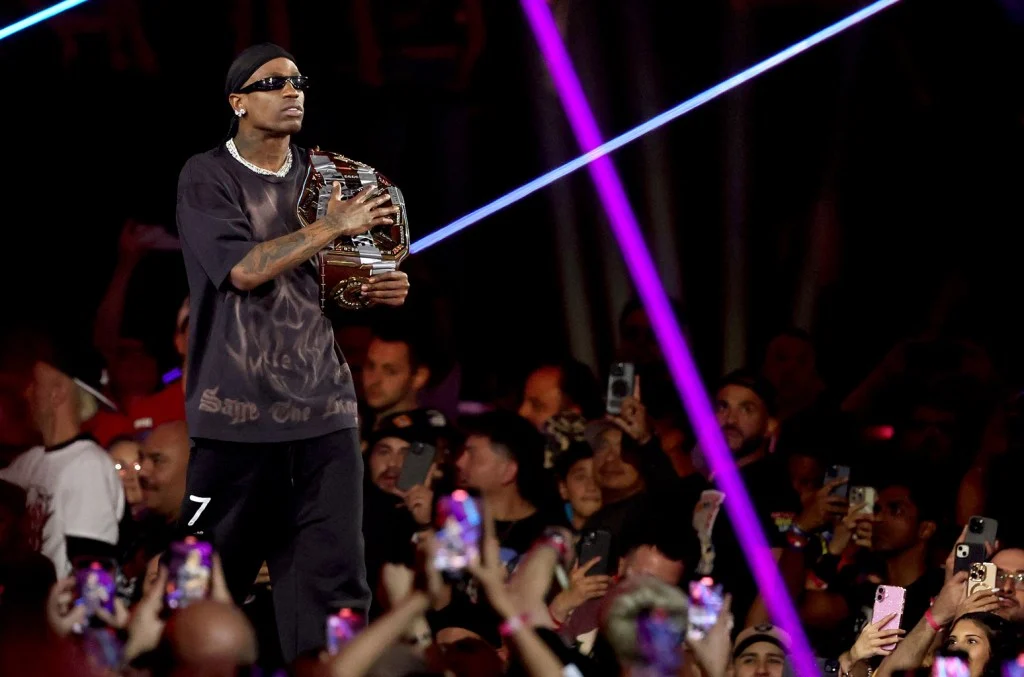
Fresh off headlining Coachella, Travis Scott made his return to WWE in Las Vegas on Sunday night (April 20) when La Flame crashed WrestleMania and took part in the action in the ring. In the midst of night two’s main event between John Cena and Cody Rhodes, “FE!N” blared through the Allegiant Stadium speakers and […]

Kendrick Lamar and SZA’s “Luther” rules the Billboard Hot 100 songs chart for a ninth total and consecutive week. The single, whose title honors late R&B legend Luther Vandross, who is sampled on the track, became Lamar’s sixth No. 1 and SZA’s third. Lamar and SZA each extend their longest career Hot 100 reigns with the song, whose official video premiered April 11.
Meanwhile, “Luther” passes 24kGoldn’s “Mood” (featuring iann dior), which led for eight weeks in 2020-21, for the sole second-longest Hot 100 command among rap hits this decade, after only Roddy Ricch’s “The Box,” which dominated for 11 weeks in 2020. (Rap titles are defined as those that have hit or are eligible for Billboard’s Hot Rap Songs chart.)
Plus, Chappell Roan ties her best Hot 100 rank, as “Pink Pony Club” rises 5-4; Alex Warren’s first top 10, “Ordinary,” reaches the top five (7-5), and hits No. 1 on the Digital Song Sales chart; and Teddy Swims’ “Lose Control,” at No. 7, breaks the record for the most weeks ever spent in the Hot 100’s top 10, as it adds a 58th week in the region, one-upping the run of The Weeknd’s “Blinding Lights.”
Browse the full rundown of this week’s top 10 below.
The Hot 100 blends all-genre U.S. streaming (official audio and official video), radio airplay and sales data, the lattermost metric reflecting purchases of physical singles and digital tracks from full-service digital music retailers; digital singles sales from direct-to-consumer (D2C) sites are excluded from chart calculations. All charts (dated April 26, 2025) will update on Billboard.com tomorrow, April 22. For all chart news, you can follow @billboard and @billboardcharts on both X, formerly known as Twitter, and Instagram.
Luminate, the independent data provider to the Billboard charts, completes a thorough review of all data submissions used in compiling the weekly chart rankings. Luminate reviews and authenticates data. In partnership with Billboard, data deemed suspicious or unverifiable is removed, using established criteria, before final chart calculations are made and published.
‘Luther’ Airplay, Streams & Sales