 State Champ Radio
 Blog
Page: 382
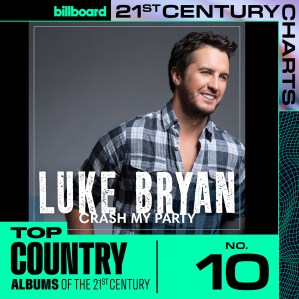
Chris Stapleton’s 2015 LP Traveller reigns as the No. 1 country album on Billboard’s recap of the first 25 years of the 21st century, as it crowns Billboard’s Top Country Albums of the 21st Century chart. The 100-position ranking is based on performance on the weekly Top Country Albums chart from the start of 2000 through the […]

Source: Allika / Getty
Cryptocurrency crime is on the rise. Two men allegedly kidnapped and tortured an Italian millionaire over the digital currency.
As reported by Newsweek, a man was lured back from Italy into the United States by former business partners only to be subjected to being held against his will and other forms of abuse. The victim claims that he was held captive since May 6 by John Woeltz and other individuals. While under captivity he says he was physically assaulted, shocked with electrical wires, forced to use cocaine and was also psychologically tortured. The victim also claims he was threatened with a gun and was also hung off a roof after he refused to give the suspects his Bitcoin password.
Luckily, the 28-year-old man was able to escape on what he had been told would be his last day alive. On Friday (May 23), around 9:30 a.m. he made his exit out of the ritzy lower Manhattan residence and was able to find an on-duty traffic officer who offered him immediate assistance. The victim was eventually admitted to Bellevue Hospital where he was listed in stable condition. Since then local police have investigated the matter and have charged John Woeltz with second-degree assault and one count each of first-degree kidnapping, first-degree unlawful imprisonment, and criminal possession of a firearm.
Beatrice Folchi, Woeltz’ assistant, has also been charged with kidnapping and unlawful imprisonment. The New York Post caught up with her and while she did not have much to say about the open case, she explained that she had not been arrested and that “everything is going to be told but with a lawyer.”
The third suspect has since turned himself in. According to AP News, William Duplessie surrendered himself to police on Tuesday (May 27). The 32-year-old is also a cryptocurrency investor who is said to have spent his holiday weekend in the affluent Hamptons area. Duplessie has been charged with assault, kidnapping, unlawful imprisonment and criminal possession of a firearm.
HipHopWired Featured Video
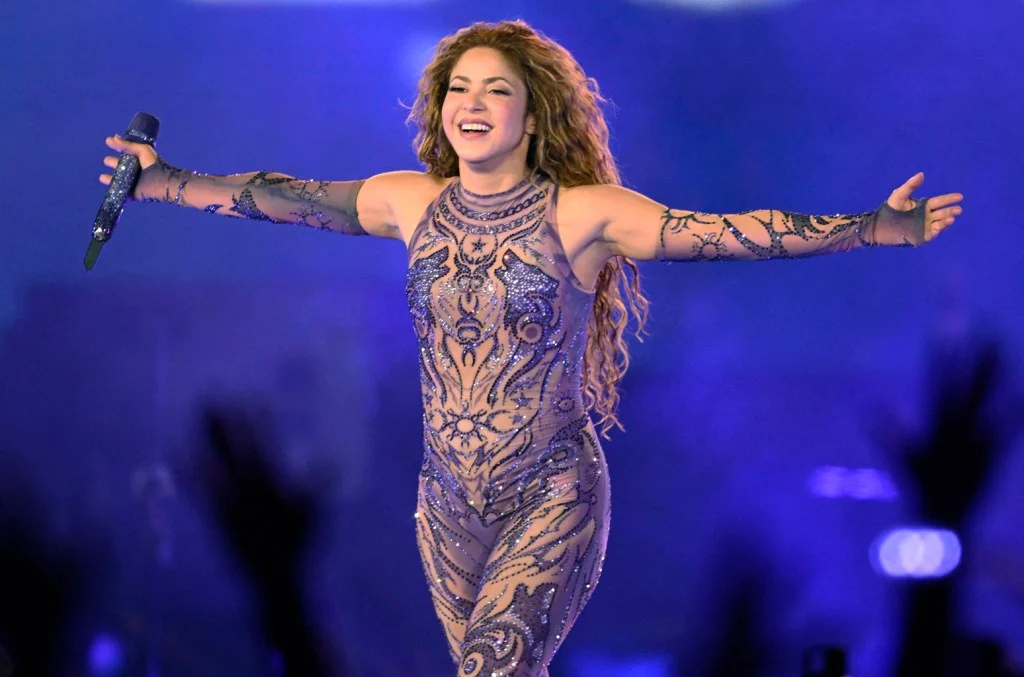
On Wednesday (May 28), Billboard revealed its midyear Boxscore report, tracking the top touring artists, concert venues and promoters around the world. From October 1, 2024, to March 31, 2025, the midyear recap focuses on the biggest tours from the end of 2024 and beginning of 2025, before global stadium tours and music festivals take over the summer.
The animated graphic below shows how the top 10 tours have shaped and shifted over this six-month period.
The immediate leader was Paul McCartney. The legendary Beatle played a sold-out stadium show in Montevideo, Uruguay on the first day of the tracking period, bringing in $4.5 million from 37,573 tickets sold. Later that week, he had two dates at Estadio River Plate in Buenos Aires, adding $20.6 million and 128,000 tickets to his totals.
But by October 9, Bruno Mars stole McCartney’s thunder. Four shows deep into a six-night run at Sao Paulo’s Estadio do Morumbi, Mars’ $28.2 million surpassed McCartney’s $25.1 million. These early shows, plus Luis Miguel’s seven nights in Mexico City and Aventura’s stadium shows in Argentina and Peru, helped establish Latin America as live music’s center of gravity for the early days of the 2025 Boxscore tracking period.
Before the end of October, estimates for Taylor Swift’s The Eras Tour overtook Mars, McCartney and everyone else, as she began the final leg of her record-breaking two-year trek. While overall tour gross and attendance was reported by The New York Times, show-by-show data has still not been reported to Billboard Boxscore. Therefore, Swift remains absent from official midyear charts and her specific grosses in this time period have not been officially submitted.
Swift stays on top throughout the rest of the video, ultimately grossing an estimated $250 million in the tour’s final months in the U.S. and Canada. But the top 10 continued to fluctuate with November and December shows from Aventura, P!nk and Usher.
After bouncing around the top five in the late months of 2024, Coldplay asserted itself under Swift in January. The band played shows in the United Arab Emirates and India, breaking stadium attendance records for the 21st century with its two nights in Ahmedabad, India (more than 111,000 tickets each show).
Late-in-the-game moves come from K-pop boy band SEVENTEEN and Latin pop icon Shakira. Both artists grossed more than $100 million by the end of March, with Shakira banking her entire $130 million in just the last two months of the tracking period.
Coldplay, Shakira, Eagles, and Usher have all had reported shows in April and May that set them up for bigger totals by year-end. And the last few weeks have seen the kick-off for major tours by Beyoncé, Lady Gaga, Kendrick Lamar & SZA and Post Malone. By the end of 2025, this top 10 will likely get shaken up several times over.
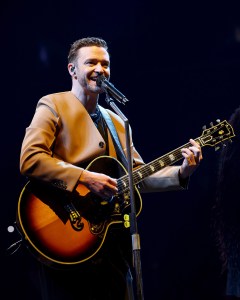
Most people wouldn’t expect to see pillows passed around a Dead & Company concert.
But for Bernie Cahill of Activist Artists Management — the firm that manages Bobby Weir, a founding member of the Grateful Dead and frontman of Dead & Company (which Cahill co-manages with Irving Azoff and Steve Moir) — the decorative pillows, handed out to fans with floor tickets during the band’s nightly performance of “Drums/Space” at its Sphere residency, serve an important purpose. Those on the floor are encouraged to lie down and gaze up at the cutting-edge venue’s towering screen, which during the instrumental segment often displays imagery of the cosmos; at other points during the band’s Dead Forever shows, audiences take in visuals from the San Francisco Bay Area to psychedelic animations.
Thanks to its massive video screen, its booking of superstar acts and its aggressively high ticket prices, Las Vegas’ Sphere — where Dead & Company alone grossed $21.6 million from six concerts in March, when it resumed shows there following a successful run last year — is again the world’s top-grossing building, according to figures reported to Billboard Boxscore. It surpasses the top stadium (Mexico City’s Estadio GNP Seguros) and two iconic New York venues (Madison Square Garden and Radio City Music Hall) with a $165.3 million haul at midyear, which spans from Oct. 1, 2024, to March 31, 2025.
Sphere’s economic power isn’t in its show count — at midyear, the venue has hosted only 42 dates, including other residencies by the Eagles and dance artist Anyma — but in its average ticket price, which at $238 is roughly double those of Madison Square Garden ($133) or London’s O2 Arena ($105). While much of the music industry debates rising ticket prices, Sphere has shown there’s a vibrant market ready to pay a premium for special experiences delivered by top talent.
A DOWNWARD TREND: This year’s midyear charts are down significantly compared with 2024: Last year, the top 10 tours at this time had a combined gross of $1.4 billion, while in 2025, the top 10 outings have grossed a combined $1 billion, a drop of more than 28%. Among the top 50 tours, the combined gross disparity was less stark but still notable, going from $3.2 billion in 2024 to $2.5 billion in 2025, a drop of about 21%.
But this shift doesn’t necessarily signify weakness in the market. The main reason was show count: There have been fewer concerts in 2025 at the midyear point than there were in 2024. In 2024, the top 10 tours at midyear reported a combined 442 total shows for the period, compared with 245 in 2025, a 45% decline. For the top 50, the 1,425 shows reported in 2024 fell to 1,159 in 2025, a drop of 18.7%. On Billboard’s Top Promoters chart, Live Nation’s grosses were down to $2.2 billion in 2025 from $2.8 billion in 2024. But because shows are booked months, or sometimes over a year, in advance, changes in the number of total shows don’t reveal much about consumer spending or demand in early 2025.
The decline partially stems from timing. During a recent earnings call, Live Nation president/CEO Michael Rapino noted that more artists are waiting until the second and third quarters to launch their tours — and with more acts playing stadiums in 2025, more major tours are on the road in the summer, when the weather is better. The 2025 show count should increase in the next six months, which historically covers the busiest part of the year, especially in North America.
Importantly, last year’s touring numbers at midyear were unusually high thanks to U2’s venue-opening Sphere residency, which grossed $231.6 million from 38 shows during that time. That tracking period also included dozens of concerts from three major tours (Madonna, P!nk and Luis Miguel) that led to a high show count.
CHART STATS: Three acts in the 2025 midyear top 10 — Coldplay, P!nk and Eagles — also appeared in last year’s midyear top 10. And three more among the top 10 — Paul McCartney, Bruno Mars and SEVENTEEN — ranked among the top 20 at midyear in 2024. But there are some notable differences in the music genres atop the chart.
After three Latin tours reached the top 10 at midyear in 2024, only Shakira has done so in 2025. And after Travis Scott ranked No. 9 at midyear in 2024, no hip-hop artists cracked the top 10 in 2025. The highest-ranking hip-hop tour at midyear is Tyler, The Creator, who is No. 16 with $65.3 million grossed.
When it comes to ticket prices, Eagles at Sphere had the highest average price among the top 10 tours of $285 per ticket, followed by Usher, who charged an average of $179, and P!nk, whose tickets averaged $174.
The cheapest tickets among the top 10 tours were for Coldplay ($109), Mars ($118) and McCartney ($129). On average, the ticket price of the top 50 tours was $130, down 10% from 2024. On the Top Tours chart, 10 acts had an average ticket price that was under $100: Aventura ($99), Sebastian Maniscalco ($98), André Rieu ($94), Deftones ($88), Iron Maiden ($85), Trans-Siberian Orchestra ($84), Nick Cave and The Bad Seeds ($84), Cody Johnson ($77), Feid ($77) and Strait ($49).
THE TOP 10: Keep scrolling for details on the top 10 touring artists of Billboard’s midyear Boxscore period, tracking all shows worldwide from Oct. 1, 2024, to March 31, 2025.
Justin Timberlake
Image Credit: Kevin Mazur/Getty Images
Source: Tom Williams / Getty
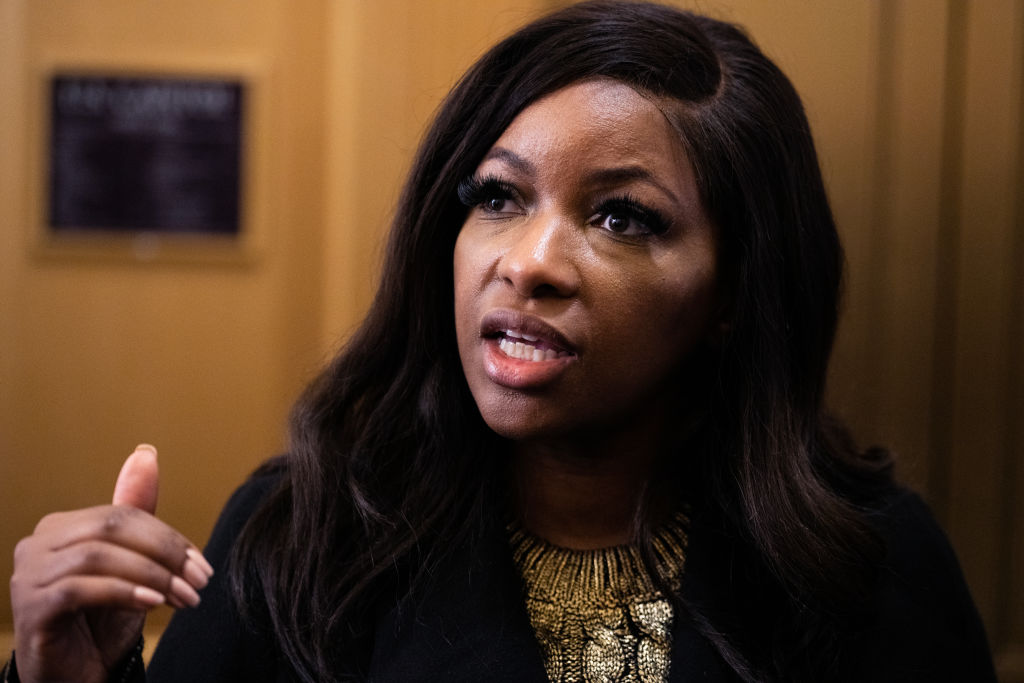
Rep. Jasmine Crockett, one of the few Democratic leaders who is consistently willing to call out the absurdity of President Donald Trump without pulling punches and mincing words, is asking when someone is going to get the president the mental help he truly needs after he delivered a comically ridiculous commencement speech at the U.S. Military Academy at West Point over the weekend.
While speaking to graduating cadets, the commander-in-chief used his time on stage to air out grievances and rifle through right-wing talking points, completely politicizing the event and, as usual, making it all about himself. Instead of following the tradition of acting as a president for all Americans, Trump decided to turn the commencement speech into an impromptu Fox News-style segment where he ranted against “drag shows,” boasted that he “liberated our troops from divisive and demeaning political trainings,” and declared that there will be “no more critical race theory or transgender for everybody.”
Oh, and he also randomly ranted about “trophy wives,” golf and some nonsense about Al Capone.
Well, Crockett, for one, is over it.
“I am tired of it,” Crockett said during an appearance on MSNBC on Suday. “I mean, he literally sounds like someone who is broken out of the insane asylum. Like, he just be all over the place. Like, get him some ADHD medicine, if nothing else, because I don’t know where he’s ever going to go,” she continued.
“And I don’t think that those that have gone through West Point expected to have their commander-in-chief address them and start talking about trophy wives or start talking about how he had so many investigations. What a great reminder that you are not qualified to be the person that potentially will command us as troops to go into war. Like, that is not instilling confidence whatsoever. And honestly, our troops deserve better. Our graduates deserve better. We as a country deserve better.”
Trump was on one for the entire Memorial Day weekend, actually. Most presidents, when wishing America a happy Memorial Day, would stick to politically neutral comments that focused on military personnel who died serving their country.
Most presidents.
Here’s y’all’s president on Memorial Day.
So, yeah — perhaps, once again, Rep. Jasmine Crockett is right.
HipHopWired Featured Video
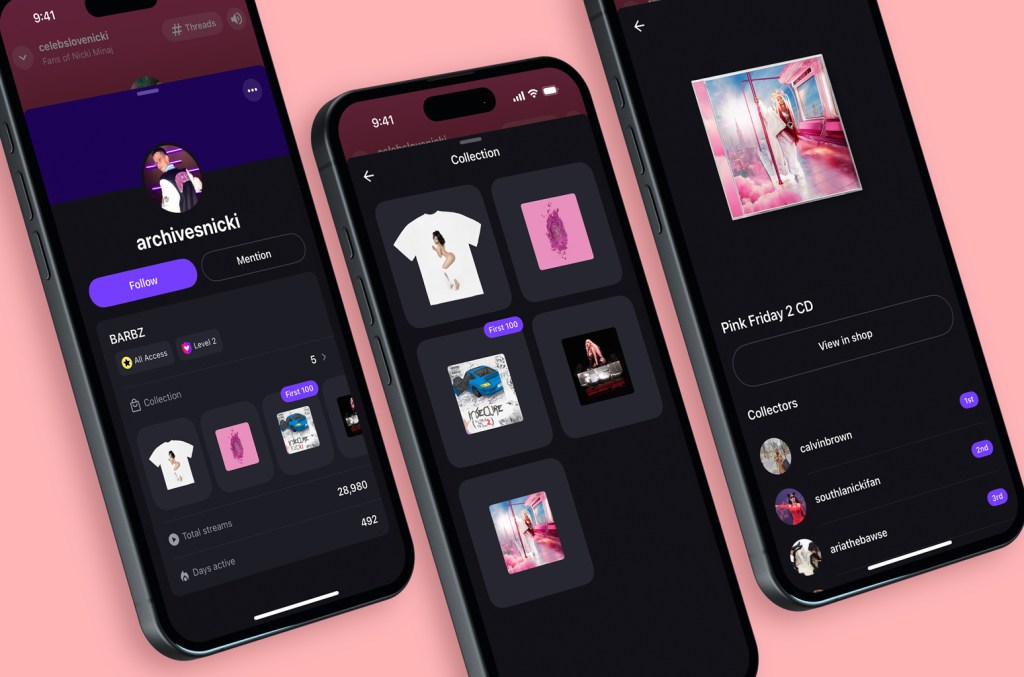
Stationhead announced the launch of a new feature on Wednesday (May 28): Collections, which allows users to show off the physical and digital merchandise that they have bought through the fandom platform.
“We were inspired by what fans were already doing,” Ryan Star, founder and CEO of Stationhead, said in a statement. “They would post receipts to prove they were there first — that they didn’t just show up late to the party. We wanted to honor that devotion and make it more fun, meaningful, and permanent.”
Stationhead debuted in 2017 as an app that allowed Spotify subscribers to transform their playlists into personalized radio stations. “It turns everybody into a DJ, basically,” Troy Carter said at the time. “You can play music, you can go live, there’s a great flow and people are commenting — it’s almost as if you took Facebook Live and layered it onto the platform.” When the civilian-turned-DJ played music, every listener also streamed it on their Spotify account, so the streams counted towards the charts.
Trending on Billboard
In January 2023, the platform added “channels,” rooms dedicated to the fanbases of specific artists. A year later, when “superfan” became the buzzword of choice for the major labels, Stationhead was well positioned to take advantage of additional interest.
The company says it now has 20 million users, and half of them are between 18 and 25. It makes money primarily from taking a portion of downloads that are sold through the platform.
The rollout of Collections follows close on the heels of another new initiative, Stationhead Shop, which launched in March, allowing artists to sell their merch on the platform through an integration with Shopify.
The goal of Stationhead Shop, Star explained, was twofold: To “combine the excitement of the merch booth with the scale and social currency of a gaming platform,” while also providing artists with another way “to monetize and build direct relationships with their most passionate and loyal fans.”
After fans buy something, they now have the ability to flaunt their purchase. “In a world where your online identity matters, this is how fandom shows up,” Star added. “If Roblox and Fortnite taught a generation to express themselves through virtual skins and items, we see Stationhead Collections becoming that for music.”
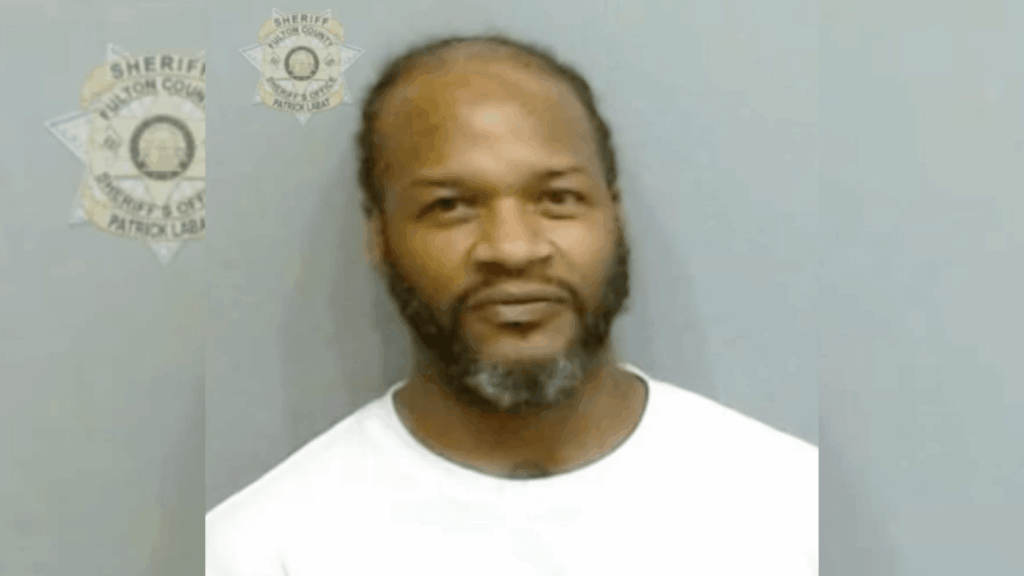
R&B singer Jaheim, best known for his success in the early 2000s, is facing renewed legal trouble after being arrested on May 1st in Fulton County, Georgia.
He is now charged with six counts of animal cruelty, marking his second arrest for similar offenses in recent years. Authorities claim that several dogs in Jaheim’s care were kept in unacceptable conditions, lacking clean water, proper air circulation, and sanitary environments. The dogs, identified as Tweet, Tip, Taka, Tink, Timber, and Tanger, include four Pit Bull Terriers, a French Bulldog, and a mixed-breed hound.
The NJ singer was taken into custody but released the following day.
This recent arrest comes nearly four years after a previous incident in 2021, when police in Hillsborough, New Jersey, discovered a disturbing scene at his residence. During that investigation, officers found 15 dogs living in poor conditions, with several confined to outdoor crates filled with waste. One of the animals was so severely neglected that it had to be put down.
Inside the home, law enforcement found additional dogs that were malnourished and had no access to food or clean water.
The repeated nature of these incidents has sparked outrage among animal rights advocates, who are calling for stronger accountability. Once celebrated for his soulful voice and chart-topping hits, Jaheim is now drawing public scrutiny for his ongoing legal battles involving the treatment of animals. As the case unfolds, many are left wondering whether he will face harsher consequences this time around.
HipHopWired Featured Video
Stockholm-born music library giant Epidemic Sound is launching a new remix series, called Extra Version, on Wednesday (May 28) with help from DJ/producer Honey Dijon. As part of Extra Version, Epidemic pays participating DJs and producers “five to six figure sums” to pick from the songs, stems, samples and loops in its catalog of over 250,000 pieces of IP — and remix them into something new.”
Epidemic then adds the results to its ever-growing catalog available for use by clients — like content creators, advertisers and brands looking for easy-to-clear songs to soundtrack videos — and distributes them to streaming services.
To kick it off, Honey Dijon flipped the Epidemic-owned song “Umbélé” by electronic artist Ooyy and Swedish Grammy-award winning performer Ebo Krdum. “Teaming up with Epidemic Sound was a vibe,” she said in a press release. “They’re shaking things up in the best way… It’s all about freedom, fun and keeping the groove 100%.” The company plans to also collaborate with Major Lazer co-founder Switch and rising Korean talent Jeonghyeon on future Extra Version editions.
Trending on Billboard
With this series, Epidemic Sound CEO/co-founder Oscar Höglund tells Billboard he wants to show off the “high quality” of Epidemic’s catalog, which he believes rivals the quality of traditional major label releases. “The art of consuming music is changing,” he says. “It’s going from being a spectator sport to being a participative one. People want to remix their favorite music, they want to collaborate, and they want to create.” Epidemic, he continues “is creating the opportunity for incredibly talented producers and remixers and DJs to collaborate [and remix] our catalog. And then, we will help them distribute their remixes around the globe [both to streaming services and to their platform which provides pre-cleared music to content creators] – and they’ll get paid well while doing it.”
In this interview, Höglund talks the ins and outs of Extra Version, the ways he is integrating AI remix features to “create more use cases for the same songs,” and why he feels the allegations that Epidemic Sound has filled Spotify mood playlists with “ghost artists” is “deeply offensive to the artist in question.”
Why are you launching Extra Version?
We’ve seen that even though culture is moving towards [more participation and remixing], creatives have held back from doing it because from a legal perspective, it’s very hard to get rights to music because of fractional ownership. Our catalog has been built up, for almost a decade and a half, around the premise of having all the rights in one place. There’s nothing fractional about it. We own all of our music, and we are more than happy to offer the catalog up to producers. We just want to do it in a way that works for the artists who originally made the music [that Epidemic now owns], the remixers, the creators and the platforms where this music will go live and proliferate.
What is the payment model for Extra Version participants, and how does that differ from how producers are typically paid for remixes?
What often ends up happening is that producers are asked to create a remix for an artist, and they don’t get paid much to do it. Rather, the logic has been, the more culturally relevant the artist in question is, the lower your compensation, because your payment is in the cultural value you receive as a remixer from being associated with the artist.
We took a contrarian view here. We’ve always prided ourselves on putting our money where our mouth is, so instead we’re paying much more handsomely up front [to Extra Version participants]. We can’t disclose exactly how much, but I would say between five and six figures [for each remix]. We’re paying a lot up front, and this is not recoupable. It’s not a loan. It’s something the producer gets to keep.
Next step is that we allow the remixer to choose whatever track they feel creatively inclined to use from our catalog. Allowing for choice is a huge part of this. Remixers don’t have to license anything or worry about different samples being unlicensed. We own everything in perpetuity, and it’s all made available to you to pick and choose from. Then we will distribute the song. Most remixers don’t get a commission, just a flat fee. With Extra Version, we want to cut the remixers and producers in.
With Extra Version, Epidemic is opening up its catalog for remixes, and also making stems available so producers can mix and match the building blocks of your catalog. Does Epidemic have the goal of taking on sample or beat marketplaces like Splice or is this just for Extra Version?
When we started commissioning songs, we always got stems for everything. It is important from a soundtracking perspective. To the second part, the way we think about Extra Version is that this is not the end. We’re definitely not stopping here — rather, we’re saying this is the first step in our endeavor to help more music creators sustain themselves and democratize access to music. The bigger picture here is we want to help soundtrack the entire creator economy, and as such, we need to unlock our music.
So it sounds like the future of Epidemic Sound is offering samples, beats, and individual elements of the songs in the catalog to everyone, not just fully formed songs?
Correct.
Do you see Extra Version as an ongoing series, or is it a limited run?
This is not a limited run series. It’s the starting point of ushering in a completely new paradigm, one which is much more centered around the remixing and collaborative nature of culture. This is something that we’re deeply committed to and we’re going to spend a lot of time experimenting and seeing how this space is going to evolve.
It feels like you’re moving in the opposite direction of major labels. Nowadays, competitive deals at majors regularly involve the artist getting their masters back eventually, but the advance the artist gets up front is recoupable. Meanwhile, Epidemic is asking for full ownership of an artist’s tracks, but you provide non-recoupable money up front for the song. What is your goal with this approach?
At our core, we’ve taken one fundamentally contrarian belief: if you’re an artist, common wisdom says you should hold on to all of your [intellectual property]. That’s the traditional music industry right now. We think, in order to provide wide distribution and to provide superior monetization, we need to own 100% of the copyright. If we can build a platform, like we have, where there’s one point of contact when you want to license the song, then we can indemnify our customers and allow them to use the songs across all platforms, in all jurisdictions, and in all different scenarios. This allows for us to create predictability with Epidemic, so we can also pay our artists more predictable fees, too.
How is Epidemic thinking about AI?
We think that AI is an incredible tool to help augment human creativity, but never replace it. We’ve so far found that there’s tremendous amounts of value in using AI to help both music creators and video creators. We can use AI during the recommendation phase. If you’re a video creator we can use advanced AI search tools to help recommend tracks.
The old paradigm was, if you found a track that you like, suddenly you had to spend hours trying to re-edit that track such that it perfectly fit the video story you’re trying to tell, often with huge challenges from a legal perspective. “Am I even allowed to change the composition of this track?” The answer is often no. We’ve now been able to use AI [so] that, if you are a content creator, and you find this one track that you want to use to soundtrack your video, you can now speed it up, slow it down, change it. You can cut it. You can edit it — not replace it. This helps create more use cases for the same songs. Where there might have previously been 10 content creators who can use your track, now with adaptation maybe 20 or 30 or 100 creators will use it. That means the track is going to get played more and it’s going to earn more royalties [on streaming services]. And so ultimately, the human who made that track is going to make much more money, because AI has augmented the use cases.
Point three is purely generative — we’ve launched a product called AI Voice. We’ve gone to human voice actors, and we’ve struck agreements with them such that we pay them up front, we train and we use their voice, and then we allow our customers to use their voices. Every time they do, there’s an additional royalty so that the voice artists make additional money. We also put their personal emails out there in case content creators want to work directly with them. So suddenly, even when we go into the generative world of voice, we’re seeing that voice actors get used more, get more work, and get paid.
There have been allegations dating back to 2016 that Epidemic Sound has a deal of some kind with Spotify to fill some Spotify playlists with royalty-free music. It has been highly criticized. Can you explain what that arrangement is, if there is one?
I’d be happy to. Epidemic parallel publishes all of its music to all of the major DSPs around the entire world. We do that for a couple of different reasons, but the primary reason is it’s in our artists’ best interest, because we realized early on there was a Stranger Things, Kate Bush effect, meaning when Kate Bush’s track was used in Stranger Things, there was a massive surge in that song on streaming platforms around the world. We realized early on that that happens [when content creators use our songs].
There was also an adjacent trend, which we also tapped into very early, on streaming platforms in general — Spotify being one of them — that there was much more lean-back listening going on. The role of the record [or album] as the [driver] for music consumption started to diminish. More and more, [people were listening to] standalone tracks, but then ultimately playlists started to proliferate and come into their own.
Many of [the playlists] are hits-oriented, but there’s a huge proportion of playlists which are more functionally oriented. We do incredibly well across all the different playlists where people are looking to get to a specific theme or in a specific emotion. There’s music for sleeping, for concentrating, for studying, for getting ready, for meditating or for walking your dogs. Because what we do at our core is soundtracking, it turns out we were really, really good at [those playlists]. And while other people were trying to get into the bigger playlists to create the hits of tomorrow, we just kept doing the thing that we do really well. There was huge demand across all different DSPs, so we started to grow. And we became very, very significant and very, very successful.
Do you feel that it harms non-Epidemic artists in these genres to be competing for spots on mood-based playlists with your music?
No. If anything, the contrary: I think the old articles about Epidemic artists are deeply unfair. There was speculation: “Who are these artists? Do they even exist?” They are super talented artists in their own right. I took issue very much with that.
Various writers have referred to your music that is on Spotify playlists as “ghost artists” or fake artists.” How do you feel about those titles?
I think it’s deeply offensive for the artist in question. If you are an actor, you can play multiple different roles because you portray many different characters. That’s second nature. Artists, like actors, have the right to express their creativity in a multitude of different ways. It’s always them who determines if they want to publish their music under one name or not. Odds are that their fans might think they are all over the place, so quite often what we see happen is that artists have one brand for a certain genre of music, and different brand for another kind. If you look at Elton John, Madonna they [use] aliases. I seriously doubt that Madonna and Elton John would like to be called fake artists or ghost artists. That’s them creatively expressing through a different persona.
In 1980, when Shaun Cassidy sold 50,000 seats at the Houston Astrodome, he couldn’t know that he would be embarking on the longest tour of his career 45 years later.
Explore
Explore
See latest videos, charts and news
See latest videos, charts and news
On Sept. 13, the former pop idol and actor will kick off the 50-city The Road to US outing at the Grand Ole Opry in Nashville.
“The truth is, in my whole career I never really toured — because as a kid, I was working on The Hardy Boys, [TV show] so I’d go out on weekends, and then I got a week here or two weeks there in the summer,” Cassidy tells Billboard. “But this tour that I’m starting will be the biggest commitment of 50 shows and more to come I’ve ever had in my life.”
Cassidy, following in the entertainment footsteps of his half-brother, David Cassidy, and parents, Oscar-winning actress Shirley Jones and Tony-winning actor Jack Cassidy, burst onto the pop scene in 1976 with “That’s Rock ‘n Roll.” The breakthrough hit reached No. 3 on the Billboard Hot 100 and was followed by his chart-topping cover of The Crystals’ “Da Doo Ron Ron,” and “Hey Deanie,” which reached No. 7.
Trending on Billboard
Cassidy released five studio albums between 1977 and 1980 on Curb/Warner Bros. including the Todd Rundgren-produced Wasp. Simultaneously, he also was acting on The Hardy Boys/Nancy Drew Mysteries, which ran from 1977-1979. Cassidy then focused on the stage, appearing in plays on Broadway and London’s West End during the ‘80s and early ’90, before segueing into behind-the-scenes TV work in the mid-‘90s.
Since then, he has had an extremely successful second career creating, writing and and/or producing such acclaimed television series as American Gothic, Cold Case, Cover Me, The Agency and, most recently, New Amsterdam.
He has also toured sporadically since 2020 as a one-man show that expanded to a full band, ending with five sold-out nights at 54 Below in New York City in 2023. But those outings were not as extensive as the forthcoming one, which he almost felt called to do.
“Honestly, the reason I’m really motivated to do this is I have such a feeling that if you are in a position in any way to be a catalyst for bringing people together in a room or a concert hall or a church or your kitchen table, in any context, gathering people, getting them to put down their phone for a minute and actually look at each other and connect and have a shared experience is just so important at this at this stage in our world, I think,” he says.
The new show is a tribute to music, his family and his fans. “It’s really a love letter to our shared history and experience,” he says. “I feel the disconnection and the sadness tied to the disconnection so profoundly, especially with younger people who didn’t grow up without social media, and the mislead of social media that it will somehow connect you further, when the opposite is proven to be true.”
Cassidy isn’t going so far as to declare his shows a no-phone zone, but he does ask fans to put their phones down — “because I want to see their faces,” he says.
Though he hasn’t released an album since 1980, the concerts will include new songs. “That’s the wonderful gift of performing again,” he says. “It inspired me to start writing songs, which I hadn’t been doing for decades while I’ve been writing hundreds of television scripts.”
The songs he’ll debut were written specifically for the show. “They are songs that underscore a story I might be telling about me or my family or about the audience, or about an experience I had back in the day or am having now,” he says, adding he’s written about 20 new songs.
Cassidy hasn’t recorded any of the songs for release and admits he is not thinking about that. “I guess I could sell new songs like t-shirts on my website or something, but, honestly, I’m so far away from how the music business works now,” he says. “My [old] songs are on Spotify, and I get five cents every month or whatever, but if I did it, it would really just be for me and for any fan that wants a new song. Maybe I will.”
He does add that Rundgren came to one of his shows in 2023 “and actually Todd and I talked about working together again — at that show anyway. But I haven’t followed up because I’ve been too busy with TV stuff. But who knows?”
The tour, which was booked by UTA, will allow Cassidy and his band a little sightseeing in between gigs. He plans to play around 12 shows a month and in-between will take advantage of the highlights of whatever region he’s in. “We’ll do four shows and take three days off, hike the Appalachian Trail, visit Washington, D.C., do whatever touristy things we want to do,” he says. He also needs to leave time to continue work on a number of television projects he has in development.
Between geographic segments of the tour, he will then come back home to his wife and four children in Santa Barbara, Calif., and tend to the wine they produce, My First Crush, which donates a portion of its proceeds to No Kid Hungry, which feeds hungry children nationwide.
“I’ll need to take a break,” he says. “One of the benefits of not having toured or sung other than around my own home piano for years and years is my voice is stronger than it was when I was 20 because I never tore it up. And I don’t want to tear it up now.”
Also, because he has played live so infrequently, he hasn’t burnt out on playing his hits thousands of times. “They’re fresh. I go out and I’m singing ‘Da Doo Ron Ron’ with more passion than I ever sang it when I was 17,” he says. “I know there’s a lot of performers that have resentment about these songs that made them successful, and I guess if you’ve sung the song 10,000 times, you might get sick of it. I don’t have that experience at all. I can’t wait to sing these songs.”
He’s also appreciative that this time he’s not singing over thousands of shrieking fans. “My early shows were just scream-a-thons, I couldn’t talk to anybody,” he says. “Now I actually can engage with people and look them in the eye and see that they’ve had a life, and I’ve had a life, and I’m just so grateful to share it.”
The Road to US tour dates (more to come):
9/13 Nashville/Grand Ole Opry
9/17 Waterville ME/Waterville Opera House
9/19 Beverly MA/ Cabot Theater
9/25 Glenside PA/The Keswick
9/26 Seneca NY/Niagara Falls – The Bear’s Den
9/27 Seneca NY/Niagara Falls – The Bear’s Den
9/28 Verona NY/Turning Stone Resort Casino
10/16 Hopewell, VA/The Beacon
10/17 Alexandria, VA/The Birchmere
10/18 Annapolis, MD/Ram’s Head
10/19 Rocky Mount VA/The Harvester
10/23 Peekskill NY/Paramount Hudson Valley Arts
10/24 Newton NJ/The Newton Theater
10/25 Norfolk CT/Infinity Hall
10/26 Bethlehem PA/Art’s Quest
11/5 Milwaukee WI/The Pabst Theater
11/7 Des Plaines IL/The Des Plaines Theatre
11/8 St. Charles IL/The Arcada
11/9 Burnsville MN/Ames Center
11/11 Shipshewana IN/The Blue Gate
11/13 Nashville IN/Brown County Music Center
11/14 Cincinnati OH/Ludlow’s
11/15 Columbus OH/The Southern
11/16 Akron OH/The Goodyear Theater
12/4 Detroit MI/The Fisher Theater
12/5 Warren OH/Robin’s Theater
12/6 Munhall PA/Carnegie Hall Library
12/11 Orlando FL/The Plaza Live
12/12 Clearwater FL/Capitol Theater
12/13 Ponte Vedra FL/Ponte Vedra Concert Hall
1/8 Austin TX/Paramount Theater
1/9 Dallas TX/The Granada Theater
1/10 Houston TX/House of Blues
1/16 Napa CA/Uptown Theater
1/17 Riverside CA/The Fox
1/18 El Cajon CA/Magnolia

Barely three months after his “Not Like Us” shattered the mark as the longest-running No. 1 on Billboard’s Hot R&B/Hip-Hop Songs chart, Kendrick Lamar is back for another stab at the record books.
Lamar’s “Luther” collaboration with frequent collaborator (and current Grand National co-headliner) SZA captures a record-tying 22nd week at No. 1 on the multi-metric Hot R&B/Hip-Hop Songs chart dated May 31, matching “Not Like Us” for the all-time mark since the chart became a singular, all-encompassing genre ranking in October 1958. “Not Like Us” rang up 21 weeks in charge in 2024 amid its moment in Lamar’s diss track war with Drake, and rebounded for a 22nd frame in February after Lamar’s performance of the song during the halftime show of Super Bowl LIX on Feb. 9.
For SZA, the “Luther” look also returns her to a perch she once claimed: Before “Not Like Us” took the title, the singer-songwriter’s “Kill Bill” scored the most weeks at No. 1 on Hot R&B/Hip-Hop Songs, 21 in 2022-23.
Trending on Billboard
As “Luther” shares the gold medal, here’s a look at the songs the most weeks at No. 1 on Hot R&B/Hip-Hop Songs in its 66-year history:
Most Weeks at No. 1 on Hot R&B/Hip-Hop Songs:
22, “Luther,” Kendrick Lamar & SZA, 2024-2522, “Not Like Us,” Kendrick Lamar, 2024-2521, “Kill Bill,” SZA, 2022-2320, “Old Town Road,” Lil Nas X feat. Billy Ray Cyrus, 201918, “Industry Baby,” Lil Nas X & Jack Harlow, 2021-2218, “One Dance,” Drake feat. WizKid & Kyla, 201616, “Blurred Lines,” Robin Thicke feat. T.I. + Pharrell, 201315, “Be Without You,” Mary J. Blige, 2006
[embedded content]
For its 22nd week in charge, “Luther” registered 16.7 million official United States streams, 2,000 sales downloads and 60.5 million in airplay audience in the tracking week of May 16-22, according to Luminate, declines of 8%, 6% and 4%, respectively, in each metric.
Mirroring its Hot R&B/Hip-Hop Songs triumph, “Luther” achieves a 22nd week at No. 1 on the Hot Rap Songs chart. The melodic rap cut remains in second place for the longest stay at the summit in the chart’s 35-year history, trailing only “Not Like Us” and its 26-week record.
While “Luther” extends its domination on the Hot R&B/Hip-Hop Songs and Hot Rap Songs charts, it surrenders the top spot on the all-genre Billboard Hot 100 to Morgan Wallen’s “What I Want,” featuring Tate McRae. The new champ clips the “Luther” reign at 13 weeks – still, easily the longest-running No. 1 for both Lamar and SZA atop the flagship chart.