State Champ Radio

by DJ Frosty

Current track

Title

Artist

Current show

State Champ Radio Mix

8:00 pm 12:00 am

Current show

State Champ Radio Mix

8:00 pm 12:00 am


Author: djfrosty

Page: 546

NFL star Sauce Gardner shuts down wide receivers on the field, but the New York Jets cornerback may have locked up Ice Spice off the field. The Bronx rapper posted a since-deleted selfie to her Instagram on Tuesday (April 29) featuring herself posing with Gardner in front of a mirror. Billboard has reached out to […]

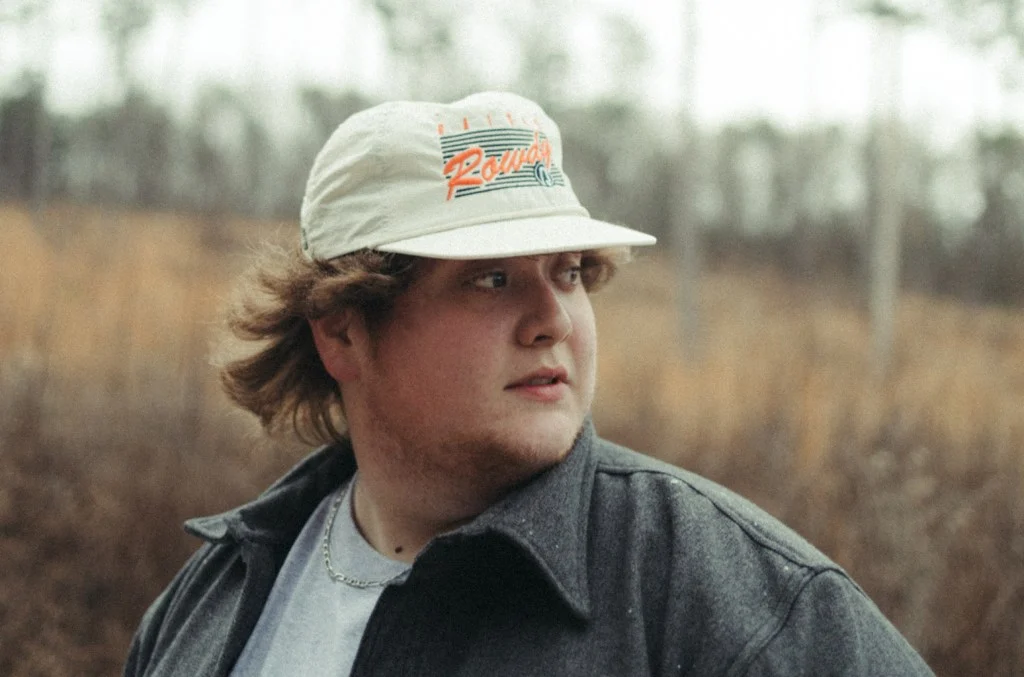
Bayker Blankenship’s “Maxed Out” is a bankrupt ballad set in a barren landscape of dead-end towns and nearly-empty bars. The narrator drinks a few too many Jack and Cokes when he’s not spending the night in the clink: “I’m getting into fights and I’m falling hard,” Blankenship sings. “I maxed out one more credit card.”
Blankenship released the track in April 2024 through a distribution company called Foundation. “Maxed Out” performed well — so well that Blankenship graduated to Foundation’s sister operation, Santa Anna Label Group, a more high-touch distributor that’s able to put marketing muscle behind its artists.

“I appreciate their expertise on the content and digital side,” says Brian Schwartz, who manages Blankenship. When Santa Anna promotes songs, “they analyze, see what’s working and what’s not,” Schwartz continues. “And they know how to pour the fuel on what’s working.” “Maxed Out” now has more than 121 million on-demand streams in the U.S., according to Luminate.

Trending on Billboard

Foundation and Santa Anna are both under the command of Todd Moscowitz, the founder of Alamo Records. After launching Alamo in 2016 and introducing Santa Anna at the start of 2023, Moscowitz has cobbled the companies together into “a soup-to-nuts, fully integrated ecosystem where artists [have] a path to graduate to a premier frontline label,” as he puts it. This approach is becoming increasingly common, as both major labels and independents look to sign more acts and offer an array of options that allows those artists to grow over time — while also remaining attached to the company that initially offered them funding.

Foundation functions as a feeder system, signing a lot of young artists, many in hip-hop and R&B, primarily to low-money, short-term distribution deals. Santa Anna is a level up, with the capability to support labels — including OVO Sound, which scored a No. 1 album recently with the PARTYNEXTDOOR–Drake collaboration $ome $exy $ongs 4 U — as well as individual artists who have already generated some momentum. And Alamo is the more traditional frontline label: It signs a small number of artists directly and provides services to each of them.

Hybrid companies like this — offering the flexibility of a distributor but the promotional firepower of a major label — often work better in theory than in practice. Most distributors “don’t know how to take artists to the next level,” Moscowitz acknowledges. At the same time, frontline labels still “don’t have much experience in indie distribution.” Artists can get lost in the messy middle ground between the two business models. 

This makes the growth of Santa Anna/Foundation all the more impressive. In 2024, Santa Anna added more than a point (1.04%) of current market share to Alamo’s 2.11% total. Many competitors would hack off an arm to add a point of current market share in a year. (Foundation’s contribution is included in that number.) 

Already this year, Alamo has grown to a 2.91% current share through the first quarter — 1.83% of it from Santa Anna/Foundation — which is good for eighth among all labels in the U.S. Getting to release a Drake collaborative album was a coup for the company; $ome $exy $ongs 4 U, which Santa Anna co-distributed with Republic Records, earned 246,000 equivalent album units its opening week. The radio-ready single “Nokia” has risen as high as No. 2 on the latest Billboard Hot 100, and remains in the top 10.

“If it’s a lot harder to create superstars, it’s all about, how do you soak up more?” says a senior executive at a competing company. He calls Alamo’s integration with Santa Anna and Foundation “brilliant — and potentially an indicator of where things are going in the future.” 

Moscowitz was experimenting with hybrid models inside the major-label system long before it was fashionable. He worked at Def Jam during its 1990s heyday and then moved to Warner Music Group (WMG) in 2004, initially as president of Asylum Records. There, he designed “a fluid system in terms of the deals, because when you’re dealing with entrepreneurs, you must be flexible,” as he put it in 2022. When WMG launched its Independent Label Group in 2006, Moscowitz was named president of the new outfit. 

He later co-founded the indie 300 Entertainment, which launched in 2014, before jumping ship to get Alamo off the ground two years later. Alamo, which now functions as a frontline label under the Sony Music umbrella, signed chart-topping rappers like Rod Wave and Lil Durk, who have combined to earn 11 top five Billboard 200 albums for the label, including four No. 1s. 

Even as Alamo enjoyed that traditional label success, however, Moscowitz couldn’t help but notice that “distribution [was] becoming an ever more important entry point into the business for artists.” Major labels have launched their own distribution wings one after another in recent years, whether that’s REPUBLIC (Imperial), 300 (Sparta), or more recently, Warner Records (Revolution). To compete in this landscape “with a credible, recognized offering,” Moscowitz invested in Foundation at the end of 2022 and launched Santa Anna shortly after. 

In hip-hop, Foundation “was first with this very small advance, very early outreach, blanket approach,” the senior executive says. Another executive familiar with the company says they can easily send out hundreds of deals in a year. Five separate Foundation contracts viewed by Billboard show that in the past, the company often offered artists advances between $20,000 and $30,000 with few guaranteed services. In exchange, the artist has to fork over a set number of songs — maybe two dozen new tracks, or some already-released music along with a smaller number of future records. 

Foundation takes a cut of royalties, usually between 20 percent and 30 percent, which attorneys say is in line with industry norms for these sorts of agreements. (Though more competitors are offering similar contracts recently, according to music lawyers, causing advances to rise.) Foundation keeps earning until it recoups its expenses; after that, the company typically gets two or three additional years to collect on the music (known as the “retention period”) before rights revert to the artist. The contracts seen by Billboard auto-renew after recoupment unless artists give the company 30 days’ notice that they want to end the relationship.

Moscowitz is adamant that Foundation’s purpose “is not to have a thousand artists doing 100,000 streams a week and make some distribution revenue.” “Most of our artists’ streams go up dramatically after signing with us,” he says. “Some go up so much that it makes sense to engage the entire company and spend substantial money and effort marketing them.”

That’s where Santa Anna comes into play. While many new distributors have entered the industry in the last decade, “a lot of them don’t do anything,” says Conor Ambrose, founder of the label Listen to the Kids. He partnered with Santa Anna in 2023 due to their ability to help his acts. “Their marketing people are talking to our artists; their playlisting team is talking to our artists,” he says. “Everybody’s actually on the phone every week.” 

“Every time we’ve asked Todd for something,” Schwartz adds, “he’s showed up.”

Another difference between Santa Anna and its competitors, according to Moscowitz, is that his operation “will not offer marketing on any artist unless we have a path to long-term rights.” In other words, he doesn’t want to help blow up an artist, only to have that act split to another record company.  

“Many of these sorts of deals come with upstream clauses, meaning the major-affiliated distributor — in this case, Santa Anna — may have the right to trade the artist up to a frontline label,” says Loren Wells, a music lawyer familiar with Santa Anna. “The terms of the upstream will be much less favorable than the initial deal. But many young artists may see that outcome as unlikely, or simply think, ‘If the worst case scenario is getting signed to a major label with a decent advance, that’s not really a worst case scenario.’” And in genres like country that still favor old-school record deals, Wells continues, the upstream terms may still seem more appealing than other labels’ traditional offers. 

Moscowitz says Santa Anna is able to secure future long-term rights because artists “value what we bring to the table” in terms of marketing and promotion. “If we don’t value ourselves, then no one will ever value us,” the Alamo founder adds. 

He is pleased with the results so far. “We have eight or 10 artists like Chuckyy, Raq baby, and Bayker Blankenship who are breaking and will be the future stars of our company,” Moscowitz says. “Santa Anna is functioning exactly the way we want.”

On Sunday (April 27), the family of Bianca Castro announced that the iconic performer — better known by her drag name Jiggly Caliente — had passed away, after battling a severe infection that resulted in the amputation of her right leg. Caliente came to public prominence after competing on season 4 of RuPaul’s Drag Race, and quickly became one of the show’s most celebrated queens. She returned to the show for season six of All Stars, served as a judge on Drag Race Philippines and starred in a number of episodes of the groundbreaking FX series Pose.

Explore

Explore

See latest videos, charts and news

See latest videos, charts and news

As tributes continue to pour forth in Caliente’s honor, Billboard reached out to Caliente’s close friend, Drag Race star Manila Luzon, to pay tribute to her life. Below, Luzon looks back on the first time the two of them met, their mutual love for reading each other and why she considers Caliente to be “the person that really started my chosen family.”

Trending on Billboard

For those looking for a way to help, Caliente’s family has set up a GoFundMe to help pay for medical and funeral expenses, and to give the drag star “the beautiful, heartfelt goodbye she deserves.” If you’re able to donate, please consider doing so here.

Shortly after I started dating Sahara Davenport, she took me to a dinner celebrating one of her drag queen friends, and that’s where I first got to meet Jiggly. It was funny, because when I first met Sahara in a dark bar, I had just come back from a vacation in Mexico, and Sahara had misheard me and thought I was from Mexico. So, when I met Jiggly — this little, round, Filipino drag queen — she looked at me, turned to Sahara and said, “Girl, he’s not Mexican! He looks Filipino!”

The very next night that we went to visit Jiggly at The Web, which was the gay Asian nightclub in New York City. She was DJing in this little hip-hop room — she had a disc changer, and her massive folder full of burned CDs of Beyoncé and Missy Elliott. I remember being so impressed, because I certainly didn’t know how to DJ, and to have a drag queen DJing felt like, “Oh, you can perform as a drag queen but also DJ?” She just had this authority about her as the one entertaining the crowd, she had complete control over the room with the music she was playing. I always found that very admirable.

Quickly, Jiggly became the first person that I considered my chosen family as a gay person. I had been living in New York City for a few years, but I really didn’t have that queer community at that point. Jiggly was Filipino, and she was my connection to that part of my own heritage. She was a year older than me — even though she’s smaller and loved to say that she was my little sister. In the Philippines, you always refer to your older sister as “ate.” So, whenever she would say, “Oh, I’m her little sister,” I would go, “Girl, no, you’re my ate.”  

She was the bridge, for me, to drag performance in New York City — I was a drag queen, but I wasn’t really going out and pursuing drag. Jiggly, meanwhile, was always out; she was going to Barracuda, she was at Therapy, she was always doing competitions, and she was always winning because she was such an impressive dancer. She started my chosen family. 

Why I fell in love with Jiggly so much was because, first of all, she was so beautiful — you could never come for her face. She would always read everyone for their mugs, even back before Drag Race, she just had the most blended, beautiful mugs. But what I always loved about her is that she was this short, tiny, yappy little queen, and she had a mouth on her. She would tell everyone like she saw it; she would not let you get away with anything. If something was wrong with you, she would be the first to point it out — and never out of spite. She said it because she had very little filter, and she was always able to deliver it in a way that was shady but so funny. You would always laugh about it. She was brave enough to always say the things that no one else would ever have the guts to. 

At The Web, she was the runt of the litter, so we were always picking on Jiggly in the dressing room. But she would always get us back, and would know just what to say to shut us all up. You could not tell her that, in the Destiny’s Child group, she was not Beyoncé. That is what I loved about her: even if she wasn’t this “conventional” drag beauty, she had this confidence about her. She knew that she was an amazing performer, that she had mug for days, that she was going to win over every crowd she was in front of, and that she could read you the house down if you came for her. 

When we would be on phone calls kiki-ing, we would both always be saying the most horrible things to one another. I would tell her, “We are going to hell for laughing at this.” But that was the thing about her — she always found the humor in everything. Even when everything in the world was going bad, Jiggly had this way of turning it around and making you laugh at it. It’s so strange, because as I’ve been reading all of these tributes to her, I keep going to call her, because I just want to kiki with her about her own death! I want to know what she’s thinking about everyone talking about her. 

She loved the pageants — one time, we were on tour when the Miss Universe pageant was airing. We were in Europe, it was the middle of the night, and we had finished our show. Jiggly refused to get out of drag: she was in full makeup, rhinestones, the wig, and I just looked at her like, “Why are you doing this? We are on a tour bus!” And Jiggly was like, “Well, I have to be dressed up, it’s the pageant!” Just in order to watch the pageant, she had to be in full pageant mode. So she sat there, in drag, and we watched Pia Wurtzbach win Miss Universe.

She also loved comic books. She was the foremost expert on the Marvel Universe before it was big. She knew all of the side characters and their backstories, and she had these dreams of what her ideal X-Men movie would look like. She thought that she was Jubliee, the young Asian superhero who could shoot sparkles out of her fingers, and that is literally Jiggly to a T. Even when she was in the hospital, we would be playing the X-Men cartoons. There was that geeky side, that nerdy side to her that I loved.

I’m going to miss her kicking all of our asses at Mortal Kombat. Whenever she would come over, it would be me, her, my husband, Valentina, Heidi N Closet, and she would just destroy us — though Heidi will probably read this and disagree with me. It’s just those little things — that little gamer, comic-book-nerd side that you wouldn’t guess about her when she’s in a sequin gown lip synching something so fiercely on the stage — that I’ll miss. 

I went to go visit her in the hospital in New York City last week. I had been aware of her situation, and was in contact with her brother. I was being patient; she had a severe infection and at first, it was mostly a concern of, “Well, how is my friend going to feel that she had to have a limb amputated?” Jiggly became so popular because she was such an amazing dancer, you know? She was high-kicking and doing cartwheels, so for a short, round little drag queen, it was always a crowd-pleaser. So it was devastating to hear the news about her limb. So I was just trying to be very patient for her to recover. But the infection was so severe, and her body was under so much trauma, and it was really hard to see her in the hospital. 

When I finally heard she had passed on Sunday, obviously I felt really sad. But I was also relieved. We would have gotten her a really fierce rhinestoned prosthetic and some gorgeous gowns. But I know that would have been very difficult for her, so in a way, I was relieved. She was surrounded by her family and her friends and her drag family, and I know that she felt the love and all of the positive energy from around the world once her family released the statement about her condition. I mean, there was this outpouring of love, and she got so many visitors in the hospital: friends, co-stars, family, people from all points in her life were able to come visit her. We were all able to see her in her last days, and to be with her and share our stories. 

As drag artists, a lot of us are seen as rich and famous because we were on TV, but drag is a very expensive career. We have very expensive uniforms for work. Jiggly deserves a send-off worthy of the star that she was, and we also want to make sure that her family does not have to worry about finances. They’re worried enough about the loss of Jiggly. So, we’re turning to the fans to help support by helping out with some of the medical bills, and helping with the funeral arrangements so that burden isn’t there as well. Jiggly just has her brother left now — she had lost her mother many years ago. So, my heart goes out to her brother, Gian, who now has had to say goodbye to both his mother and his sister. 

I don’t have to hope; I know she secured her legacy. She went on Drag Race as a trans woman when it was still taboo, because she knew she had to get on the show. After that, everyone agreed that she was a star. But I really hope people remember her for not taking herself too seriously, while still taking herself seriously enough as a woman. I hope people remember what she’s done for her communities — the Filipino community, in representing Filipinos and Asian-Americans in the media, and for her activism and representation in the trans community. She produced the show Translation with Peppermint, Carmen Carrera and Kylie Sonique Love, where they openly talked about trans issues. She made that happen — that was her concept and her idea. Her gender identity was always so important to her, and she was a woman as long as I knew her. I know that she will be remembered for that.

She will always be remembered by the people she loved as the fun, loving, shady, goofy little Jiggly. And I will always remember her as my sister. 

As told to Stephen Daw.

In today’s mainstream Latin music landscape — a space often dominated by música urbana, tropical rhythms, and regional Mexican music — CA7RIEL & Paco Amoroso have carved a lane entirely their own. Armed with flamboyant charisma, virtuosic musicality, and a penchant for genre-defying audacity, the Argentine duo represent a new wave of artistry that refuses to fit neatly into any box. At a time when the mainstream clamors for familiarity, they bring chaos and innovation to the table, pushing the boundaries of what Latin music can sound like.

Explore

Explore

See latest videos, charts and news

See latest videos, charts and news

Their meteoric rise is nothing short of groundbreaking. Last week, the pair performed two back-to-back sold-out shows at New York’s Bowery Ballroom — as part of their wildly ambitious 60-date world tour, which includes stops in global festivals like Coachella (U.S.), Fuji Rock (Japan), Glastonbury (England), Roskilde (Denmark), and Lollapalooza (Berlin, Paris). Just weeks earlier, the duo made their debut on The Tonight Show Starring Jimmy Fallon, a rare feat for Argentine artists, and a testament to their growing influence on the global stage.

Trending on Billboard

But for them, fame doesn’t come without complication — a sentiment captured in their latest EP Papota and its opening track, “Impostor.” The song serves as a brutally humorous and raw meditation on their skyrocketing success, grappling with the absurd pressure of becoming icons seemingly overnight. The Tiny Desk concert that launched them to international acclaim six months ago — now one of the most-viewed performances on the channel by a Spanish-language artist, with 33.5 million views — serves both as a badge of honor and a symbol of what they jokingly call “síndrome de impostor” (imposter syndrome) on the aforementioned song.

“Coming all the way from el culo del mundo (the ass of the world), we didn’t expect this,” CA7RIEL tells Billboard Español backstage at the Bowery, referencing their South American roots. “To suddenly appear here, with all these cameras and lights — it’s insane. We’re from way down there; we’re still adjusting to being up here.” Yet their poised combination of rock star energy and mayhem proves they’re more than ready.

CA7RIEL & Paco Amoroso

Toto Pons

Their chemistry isn’t just professional — it’s personal. The duo met when they were just six years old, drawn together by matching surnames (Guerreiro and Guerriero) and the mistaken assumption by their teacher that they were brothers. That fateful connection would snowball into a lifelong friendship and artistic partnership that thrives on curiosity, trust and unabashed eccentricity.

Raised in Buenos Aires, their musical influences stem from both the streets and their homes. CA7RIEL grew up watching his father play guitar, and today he’s an impeccable guitarist who plays jazzy, progressive riffs on his Fender. “I wanted to be Michael Jackson. I wanted to be Queen — the whole band,” he admits. Paco Amoroso, meanwhile, was hooked on pirated compilations of the Argentine rock icons, like Patricio Rey y sus Redonditos de Ricota, whose legacy courses through their veins. “For years it was the only thing I listened to, those 18 tracks,” Paco recalls. He adds, “Argentine rock is more like a way of life, I feel. You wanted to be like those guys, we didn’t want to go to work. We wanted to be drinking champagne. And when you’re a kid, you want that.” He also references the Dutch violinist André Rieu: “I wanted to play the violin, he is a total master.”

Their early inspirations laid the foundation for their ability to mix genres and embrace experimentation. “We go through different phases,” Paco explains, “vicios diferentes” (different vices). “At one point, it was all about rapping, then playing instruments, which was how we started. We even had a phase where we just gamed all the time and did nothing else. Then you keep evolving,” he adds. The duo’s knack for innovation — mixing intricate jazz chords, gospel-style vocals, live instrumentation and electronic rhythms, as they masterfully demonstrated that night at the Bowery — has made them boundary-pushers in their own right.

Though CA7RIEL & Paco Amoroso rose to prominence as a duo, their journey has also been defined by daring forays into solo territory. After their breakthrough collaboration on tracks like 2019’s “Ouke” and “Mi Sombra,” both artists paused their partnership to venture into their individual projects. CA7RIEL’s solo debut featured two EPs before evolving into the eclectic El Disko, a 2022 Latin Grammy-nominated album that fused funky grooves, old-school hip-hop, glowing synths, and lo-fi minimalism. For his part, Paco Amoroso explored bold sonic textures in his brooding 2021 album Saeta, further pushing the boundaries of Argentinian trap and electronic music.

Despite their time apart, their connection remained intact, culminating in a magnetic reunion for 2024’s Baño María and their latest EP, Papota. The new era finds them reuniting as friends and collaborators, carrying with them the richness of their individual experiences and a renewed creative spark.

Their Tiny Desk performance — previously mentioned in connection to the introspection of “Impostor” — stands as a pivotal moment, showcasing their identity as sons of Buenos Aires and bringing their unorthodox artistry to the global stage. The performance became one of the series’ most successful videos, reaching numbers comparable to Latin icons like Natalia Lafourcade’s seven-year-old set, all while introducing viewers to the raw complexity of their sound.

CA7RIEL & Paco Amoroso perform at Bowery Ballroom in New York on April 23, 2025.

Toto Pons

Their taboo-breaking flamboyance — including playful moments on stage, sometimes even kissing each other on screen as a symbol of their camaraderie — adds a theatrical flair to their shows that captivates. It’s this kind of unorthodox, boundary-defying presence that makes them not just stars but leaders of Latin music’s avant-garde.

No moment encapsulated this better than their closing number, where CA7RIEL & Paco Amoroso invited audience interaction, holding out their microphones for fans to belt out the lyrics. “Interacción total,” CA7RIEL called it.

When asked what lies ahead, the duo keeps it grounded, “Seguir estando vivos” — just staying alive. Paco elaborates with a laugh: “For some people, that’s easy. For others, not so much.” It’s an ethos reflective of their unfiltered approach to music. With every new song, stage and daring experiment, they’re proving that their bold vision isn’t just about breaking boundaries — it’s about living fully through the music they create.

Name: Catriel and Ulises

Age: Both 31

Recommended Song: Paco recommends “El Día del Amigo” because “it speaks about friendship” and showcases the essence of their project. CA7RIEL, on the other hand, picks “Mi Sombra,” a track he describes as “something that stayed in the bottom of the drawer,” which makes it an unexpected favorite for him.

Biggest Accomplishment: Both agree on one simple yet deep accomplishment: “Being born and not yet dead,” they say with a wry chuckle.

What’s Next: “Lots of touring,” they reply in the midst of their 60-date tour, which includes stops in the United States, Latin America, Europe and Asia, as well as performances at international festivals like Coachella, Glastonbury, Lollapalooza and Fuji Rock.

Don Toliver and Doja Cat have joined forces for a new song titled “Lose My Mind,” which will appear on the F1 movie soundtrack. On Wednesday (April 30), Don Toliver dropped off the music video for “Lose My Mind” after teasing the song just 24 hours earlier. The song will appear on the soundtrack for […]

This is The Legal Beat, a weekly newsletter about music law from Billboard Pro, offering you a one-stop cheat sheet of big new cases, important rulings and all the fun stuff in between.
This week: Mariah Carey wants payback after winning a lawsuit over “All I Want for Christmas is You”; Diddy’s trial judge says jurors can see an infamous surveillance video; 50 Cent sues to stop the release of a movie he stars in; and much more.

THE BIG STORY: Mariah’s Christmas Revenge

To paraphrase a legendary line from HBO’s The Wire: “If you come at the queen, you best not miss.”

Trending on Billboard

A month after the Queen of Christmas defeated a copyright lawsuit over her holiday classic “All I Want for Christmas is You,” Mariah Carey and other defendants in the case are now seeking legal revenge – demanding that the songwriter who filed the action repay the legal bills they spent defending it.

Vince Vance claimed that “All I Want” ripped off his own earlier song of the same name, but a federal judge tossed the case out last month, citing experts who said the songs shared mostly just “commonplace Christmas song clichés.” The judge even said that some of Vance’s filings were so “frivolous” that he’d need to reimburse Carey and others the money the spent beating them.

In a motion earlier this month, Carey and others argued that Vance and his lawyers must hand over a whopping $180,000 to pay for those baseless filings. They said they had been “perfectly justified” in paying high rates to teams of elite lawyers because Vance had been seeking drastic remedies, including $20 million in damages and the “destruction of all copies” of the song.

Vance’s attorneys responded last week, arguing that Carey’s demand was “simply not reasonable” and that his lawsuit, while unsuccessful, had been a legitimate use of the court system. Saying the award should not exceed $70,000 at the very most, they warned that the full fine could bankrupt an “elderly man” who does not have “vast resources.”

“The plaintiff is elder and living off his music catalog and some touring,” the songwriter’s attorneys wrote. “One artist should not push another artist to the brink of a financial collapse.”

Will the judge aim to deter future bad copyright cases by punishing Vance? Or be swayed by his pleas for mercy? Stay tuned at Billboard in the months ahead to find out.

Other top stories this week…

DIDDY TRIAL LOOMS – With jury selection set to begin next week, a federal judge issued a key pre-trial ruling that an infamous 2016 surveillance video of Sean “Diddy” Combs assaulting his former girlfriend Cassie Ventura in the hallway of a Los Angeles hotel can be played for jurors at his sex trafficking trial. Diddy’s attorneys had argued the clip has been deceptively edited and would “unfairly confuse and mislead the jury”; prosecutors blasted that argument as a “desperate” attempt by Combs to avoid “crushing” evidence of his crimes.

JAY-Z LIBEL SUIT – The star’s unnamed rape accuser and her attorney Tony Buzbee asked a federal judge to dismiss the rapper’s defamation lawsuit against them, arguing they cannot be sued over claims they made as part of a court case. They cited the “fair report privilege” – a legal doctrine that largely immunizes legal proceedings from libel liability. And they said that a headline-grabbing NBC News interview, in which she echoed her claims about Jay-Z, was protected under the same legal logic.

MOVIE BATTLE – 50 Cent filed a lawsuit aimed at blocking the release of an upcoming horror movie called SkillHouse in which he plays the starring role, claiming he never signed a final agreement and had not been paid. The rapper (Curtis Jackson) says he filmed his scenes because he trusted that a deal would eventually be reached, but it never was: “Nevertheless, defendants have billed Jackson as the star and producer of the film [and] have shamelessly and deceptively marketed the film as a ’50 Cent Movie’ and ‘produced by 50 Cent,’ when it is nothing of the sort.”

SHADY SETTLEMENT – Eminem’s publisher reached a settlement to end a copyright lawsuit it filed against a Ford dealership near his hometown of Detroit – a case that claimed the company used the rapper’s “Lose Yourself” in TikTok videos that warned viewers they would “only get one shot” to buy a special edition truck. Eminem doesn’t own Eight Mile Style and was not involved in the lawsuit.

COOKIE INFRINGEMENT – Warner Music Group filed a copyright lawsuit against cookie chain Crumbl, claiming the Utah-based company used more than 159 songs by artists such as Lizzo, Mariah Carey, Ariana Grande and Beyoncé in TikTok and Instagram videos without permission. The case against Crumbl is the latest in a rash of lawsuits accusing commercial brands of using easily-available music in social media ads without the necessary synch licenses – cases that have targeted Marriott, NBA teams, Chili’s, and the University of Southern California.

HipHopWired Featured Video

Source: Monica Schipper / Getty

The Ivy League is recognizing Bad Bunny’s greatness. Yale University has announced they will be offering a course about the singer’s cultural impact.

As spotted on Hypebeast, the New Haven, Conn.-based school will be kicking off a course dedicated to Bad Bunny’s indelible influence on the world. Titled “Bad Bunny: Musical Aesthetics and Politics,” the class details how his music has not only shaped the Puerto Rican diaspora but helped put a spotlight on his island’s rich history. Albert Laguna, Associate Professor of American Studies and Ethnicity, Race & Migration, says that Bad Bunny’s latest project DeBÍ TiRAR MáS FOToS inspired the course. In an exclusive interview with The Yale Daily News he explained how the idea came to life. “I was walking around New Orleans, caught up in the Caribbeanness of the city, just listening to the album over and over again,” Laguna said. “I was taken by how every song opens up avenues of exploration in relation to topics that are important to me.”

The professor went on to further detail the the importance of the curriculum. “Of equal importance will be our engagement with how musical genres and aesthetic choices manifest these histories and challenges as well,” Laguna said. “You can ‘hear’ what the mass migration of Puerto Ricans made possible. Reggaeton in Puerto Rico cannot be divorced from musical flows in the region inseparable from colonial projects in the Americas, and locally, the politics of policing on the island. The class will be attuned to these histories and their sonic manifestations.”

Released Jan. 5, DeBÍ TiRAR MáS FOToS served as Bad Bunny’s personal love letter to his home town. The effort blended different elements of the island’s diverse music while his lyrics explored a wide array of the problems Puerto Rico faces including gentrification, political corruption and a fading cultural identity. DeBÍ TiRAR MáS FOToS has gone one to be recognized by fans and critics alike as his magnum opus. It has since gone on to sell over a million records in several countries. 

Turnstile is giving fans a two-for-one special Wednesday (April 30), with a music video debut that features new songs “Seein’ Stars” and “Birds,” both from the band’s upcoming album, Never Enough, out June 6.   Explore Explore See latest videos, charts and news See latest videos, charts and news The former track dreamily glides along […]

HipHopWired Featured Video

CLOSE

Source: Kevin Mazur / Getty
Kanye West has officially released “Donda 2” to major streaming platforms, bringing an end to its two-year exclusivity on the Stem Player.

Originally teased in early 2022 as a follow-up to his 2021 album “Donda”, the project was executive produced by Future and initially made available only through the $200 device, limiting its reach to a niche audience. Now presented under the artist name “Donda,” the streaming version includes 18 tracks, many of which resemble the original versions from the Stem Player release.

Now presented under the artist name “Donda,” the streaming version includes 18 tracks, many of which resemble the original versions from the Stem Player release. Some songs have been renamed or slightly altered. Future appears on multiple tracks, including “Happy” and “Mr. Miagi,” while a shortened version of “5:30,” previously featured on Vultures 2 with Ty Dolla $ign, also makes the cut.
The album’s release is notable not just for the music, but for its context. Donda 2 had gained a sort of mythic status due to its limited availability and the lack of a traditional rollout. Its arrival on streaming allows for a wider audience to engage with the project for the first time, whether they followed its early leaks or are hearing it now in full.
Whether the album reshapes Kanye’s discography or simply fills a long-standing gap, Donda 2 is now part of the broader conversation. Its release opens the door for new interpretations, comparisons, and critiques, with listeners now able to evaluate it on more equal footing.
Check out some of the reactions below.

HipHopWired Featured Video

Source: OLIVER CONTRERAS / Getty

More than 100 attorneys with the Department of Justice‘s Civil Rights Division have resigned en masse, essentially, because they’d rather get new jobs than continue to serve a White House administration that is dedicated to perverting what civil rights protections are all about.

From Newsweek:

“No one has been fired by me … but what we have made very clear last week in memos to each of the 11 sections in the Civil Rights Division is that our priorities under President Trump are going to be somewhat different than they were under President Biden,” Harmeet Dhillon, the assistant attorney general for the DOJ’s Civil Rights Division, told conservative commentator Glenn Beck during an appearance on his show at the weekend.

“And then we tell them, these are the President’s priorities, this is what we will be focusing on—you know, govern yourself accordingly. And en masse, dozens and now over 100 attorneys decided that they’d rather not do what their job requires them to do.”

Dhillon just basically towed Trump’s narrative around “woke ideology,” which, essentially, is anything related to racial justice, social justice, non-whitewashed American history, anti-racism, or anything else that gets white conservatives all in their eternally fragile feelings.

More from Newsweek:

The DOJ’s civil rights division, founded after the passage of the Civil Rights Act, initially focused on protecting the voting rights of Black Americans. But Congress later expanded its responsibilities to include protecting Americans from discrimination on the basis of race, national origin, sex, disability, religion, sexual orientation, gender identity and military status.

But Dhillion reportedly issued a series of memos earlier in April detailing the division would be focusing on priorities laid out in Trump’s executive orders, such as the participation of transgender athletes in women’s sports, combating antisemitism and ending diversity, equity and inclusion (DEI) initiatives.

What neither Dhillion, President Donald Trump, nor anyone else in Trump’s abysmally incompetent Cabinet will admit is that the White House’s so-called civil rights agenda is all about returning America to a nation that protects practically no one except heterosexual, cisgendered, Christian identifying white people. 

It’s why white American history and studies that cover and celebrate Western civilization are virtually the only teachings that have gone unaffected by Trump’s takeover of federally funded museums and arts institutions being purged of so-called “improper ideology.” 

It’s why Trump, who, during his last campaign, pledged to fight fictitious anti-white oppression in America, is reportedly taking his cues from white lawyers who are unilaterally deciding how much Black history is too much history.

It’s why Trump’s factless anti-DEI propaganda has gotten so out of control that the Department of Justice recently ended a settlement agreement regarding wastewater issues in a mostly Black rural Alabama county, citing the White House’s anti-DEI directive, which, of course, has absolutely nothing to do with a court settlement. 

It’s why the Trump administration is working so hard to fight against the rare occurrence of transwomen participating in women’s sports — which isn’t any of the federal governments’s business in the first place — while it also reportedly toys around with the idea of defunding specialized services for LGBTQ+ youth on the 988 Suicide and Crisis Lifeline.

More than 100 attorneys left the DOJ’s Civil Rights Division because, under Trump, the DOJ no longer fights for civil rights — it fights to make white nationalism and the right-wing agenda great again. That’s it, and that’s all.