State Champ Radio
 Author: djfrosty
Page: 283
It’s been a week of “Weird Al” on Billboard.com. Our recent cover star and indie spirit award recipient comes to us at a fascinating place in his career, where despite having recorded only sporadically over the past decade, he’s in many ways at a career peak — culturally ubiquitous, about to embark upon the biggest […]

Source: YouTube / Youtube
DJ Akademiks recently shared a story about something that happened at Kendrick Lamar and SZA’s “The Pop Out Ken & Friends” concert in Detroit.
According to Akademiks, he ran into Dave Free, who’s a close friend and business partner of Kendrick Lamar. During their brief conversation, Dave Free allegedly asked him, “What are you getting from this? Is Drake paying you?”
Ak says he was shocked and offended by the question. He’s been very outspoken during the recent rap battle between Kendrick Lamar and Drake, often showing strong support for Drake. However, he calls cap and made it clear that no one is paying him to express his opinions, and that all his views are his own. “That was the most insulting thing,” Akademiks said after the event, explaining how upset he was by the idea that he could be on Drake’s payroll.
The drama between Kendrick and Drake was intense, and it’s brought a lot of personal stuff into the spotlight. In one of Drake’s diss tracks, “Family Matters,” he even mentioned Dave Free by name, claiming that one of Kendrick’s kids might actually be Dave Free’s. That bar caused a lot of talk online and probably added to the tension between Dave Free and Akademiks.
Even though Akademiks is known for being involved in Hip-Hop drama, this situation shows how serious things have gotten during this battle. It’s not just about music anymore, it’s about real-life relationships and reputations. Whether Dave Free was joking or being serious, Akademiks made it known that he doesn’t take kindly to anyone questioning his honesty. He wants people to understand that his support for Drake isn’t because of money, but because that’s what he truly thinks.
This moment is just another example of how intense and personal the Kendrick vs. Drake feud has become, extending beyond the music and drawing other prominent names in Hip-Hop into the mix.
HipHopWired Featured Video
Love is in the air, and wedding bells are in the future. Dua Lipa has revealed that she’s engaged to Callum Turner.
Engagement rumors began to heat up around Christmas time last year when the British pop star was seen sporting a dazzling rock around her finger, but Dua Lipa confirmed that the Fantastic Beasts actor put a ring on it in an interview with British Vogue published on Thursday (June 12).
“Yeah, we’re engaged. It’s very exciting,” Dua said. “This decision to grow old together, to see a life and just, I don’t know, be best friends forever – it’s a really special feeling.”
Explore
Explore
See latest videos, charts and news
See latest videos, charts and news
Turner got some help from the singer’s closest friends, as well as Dua’s sister, Rina, with designing the custom ring. “I’m obsessed with it,” Dua gushed about the diamond. “It’s so me. It’s nice to know the person that you’re going to spend the rest of your life with knows you very well.”
Trending on Billboard
For now, there’s no rush for wedding plans with the Grammy-winning star currently on a world tour and Turner shooting for a movie.
“I want to finish my tour, Callum’s shooting, so we’re just enjoying this period,” she explained. “I’ve never been someone who’s really thought about a wedding, or dreamt about what kind of bride I would be. All of a sudden, I’m like: ‘Oh, what would I wear?’”
Dua and Turner were first publicly linked in January 2024 when the couple was spotted together at an afterparty for the Masters of the Air premiere. The singer says they actually first met at The River Cafe in London after being introduced by the restaurant’s co-founder. Lipa explained that they had so many friends in common, and about a year later, they ran into one another at another restaurant, this time in Los Angeles.
By chance, they both had been reading the same book, Trust by Hernan Diaz, which made Dua feel they were “1,000 percent” destined to eventually be together.
Dua Lipa continues her Radical Optimism Tour with shows in Belgium before returning to London next week, when she’ll take over Wembley Stadium.

An Air India flight bound for London crashed Thursday morning (June 15) in a residential neighborhood, with a reported 242 passengers on board, including the flight crew. Details are still developing, and images of the crash have spread through various media channels as officials on the ground examine the wreckage.
According to still-developing reports from CNN and the Associated Press, the Boeing 787-8 was heading to London’s Gatwick Airport, with 169 Indian nationals, 53 British nationals, seven Portuguese nationals, and one Canadian on the flight. The crash occurred in the city of Ahmedabad in Gujarat State. Initially, Indian authorities reported that all passengers aboard the plane perished in the crash. Al-Jazeera is reporting that 204 people were killed and that hospitals in the region were taking in injured passengers.
Vishwash Kumar Ramesh, a British national visiting family in India, told The Hindustan Times that he was a passenger aboard Flight 171 and heading back to London with his brother. Ramesh says that there was trouble around 30 seconds into the flight. Video clips that have spread widely on social media support Ramesh’s account, as it appeared the plane struggled to achieve proper lift before slamming into the side of a building.
As this breaking story develops, we will return with more updates.
—
Photo: Anadolu / Getty
HipHopWired Featured Video

Just hours after BTS’ Jung Kook was officially discharged from his mandatory military service, a Chinese woman was taken into custody for allegedly attempting to break into the singer’s residence in Seoul. According to authorities at the Yongsan Police Station, the suspect — a Chinese national in her 30s — went to Jung Kook’s home […]
06/12/2025
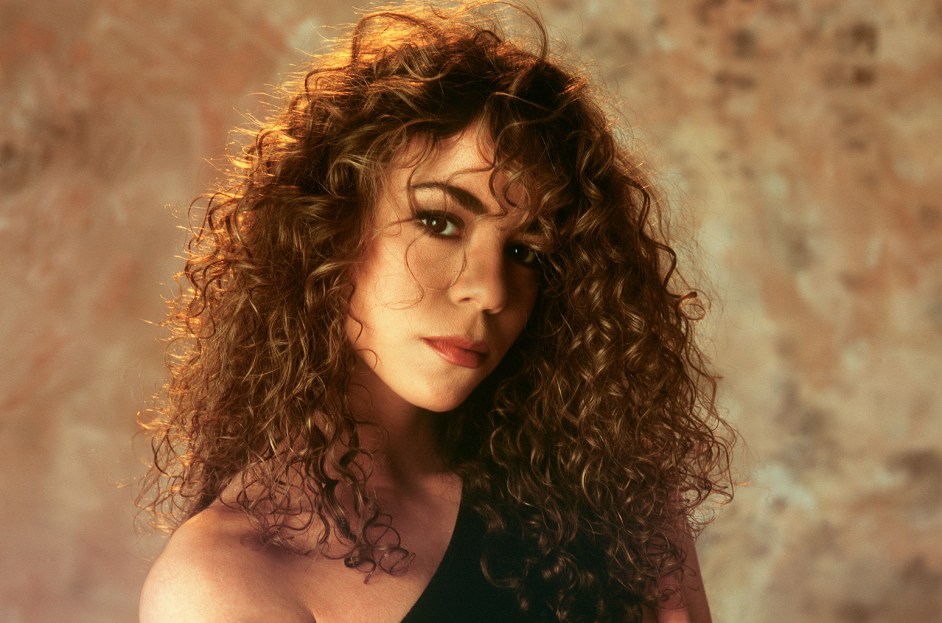
The vocalist dropped her first-ever LP in 1990 and immediately became a chart-topping sensation.
06/12/2025

The academy is combining two categories, best recording package and best boxed or special limited edition package into one category, best recording package. Boxed sets were split off into a separate category in 1995.
It is also reviving an old category, best album cover. The Grammy Award for best album cover dates back to the first Grammy Awards in 1959. (The first winner: Frank Sinatra, for serving as art director on his own album, Frank Sinatra Sings for Only the Lonely.) From 1962 to 1965 it was separated into classical and non-classical categories. From 1966 to 1968 it was separated into graphic arts and photography categories. In 1974, the name of the award was changed to best album package. It was changed again in 1994 to best recording package.
The rule for Best Recording Package: “An art director’s award – for albums or singles. This category recognizes excellence in the field of art and packaging for albums or singles. Physical product in any configuration (standard, special edition, limited edition, or boxed sets), of any genre of music, released for the first time during the eligibility year (even if recordings were previously released) is eligible provided the packaging is predominantly new.
“The elements judged in this category include the package design, photography and/or graphic art of the entire package as well as any materials included. If the album art/packaging has been previously released, or is being reissued with only minimal new design elements, it is not eligible.
“An entry in this category is eligible if the physical product release during the applicable eligibility period either meets the general distribution requirement or was made available for purchase solely via the applicable artist’s website or such artist’s record company’s website, so long as the release meets all other eligibility requirements, is sold as a stand-alone product, and the sales link is available to all consumers (e.g., fan club-only releases or releases through a subscription series are not eligible).
The rule for Best Album Cover: “An art director’s award – for albums only. This category recognizes excellence in cover art for albums of recordings in any genre of music, released for the first time during the eligibility year (even if recordings were previously released).
“The elements judged in this category include the creativity, design, illustration, photography, and/or graphic art of the album cover.
“The album cover must be predominantly new: If the album cover art has been previously released, or the recording is being reissued with only minimal new cover art, is not eligible.
“Eligible album covers can be from digital-only or streaming-only full-length releases as well as albums that have physical configurations. Submission of an album cover in this category would not disqualify the physical package of the same release from being submitted in best recording package. Eligible entries for this category require a high-resolution digital file of the album cover be uploaded with the entry.”
In addition, the Package Craft Committee is changing from three regional committees to one national committee.
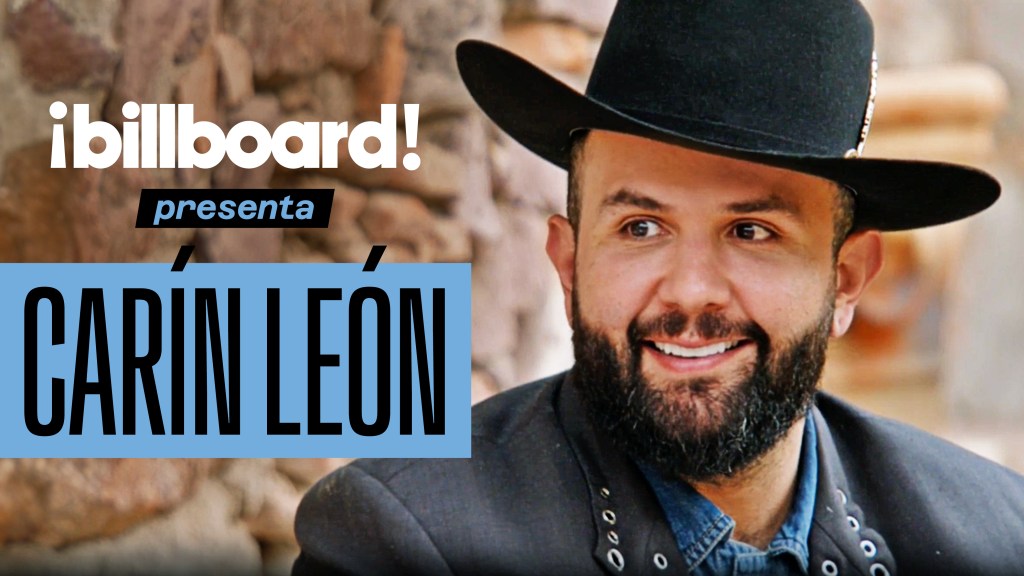
Ahead of his performance at the palenque during the San Marcos Fair, Billboard cover star Carín León reflects on his pride in being Mexican, the significance of palenques to him, and his career trajectory — starting in a band and transitioning to a solo artist.
He also discusses collaborating with C. Tangana, how “The One” with Kane Brown came to life, the country musicians he’s working with on his new album, his acceptance within the country music community, and his collaborations with Maluma, Alejandro Fernández and more.
Leila Cobo:
Carín!
Carín León:
Hi!
Welcome to my hacienda in Aguascalientes.
Thank you, thank you for the invitation. I’m so happy to be here.
Aguascalientes is — for those who don’t know — we’re here because tonight you’re going to perform at el palenque at the fair in San Marcos.
That’s right.
So what is the San Marcos fair?
The best Mexican music and Latin music is presented, too. So, it’s a huge party that I think, as you noticed yesterday, it’s a big party. The experience is worth living once in a lifetime.
And it’s music, music, music, and more music?
Music, shots, food. A lot of Mexico in one month. Too much Mexico that can cause havoc.
So this is an experience that is natively Mexican?
It’s the most Mexican, I think, that you can see in music, a palenque. I always tell people, “You have to see your artist at a palenque to understand what the experience is to take it all the way.” And the artists, too, appreciate the format of the palenque, we love it. The majority of my colleagues love it because you have all the people super close.
Like on top of each other.
Yes.
So, you’re there on stage, and I’m at this distance here.
Yes, easily. You can just be there with the people and drink some shots, it’s beautiful, it’s a communion of public that’s really interesting compared to shows at tours.
Completely. I’m going to show you my gardens.
It’s really beautiful, honestly.
Right?
Keep watching for more!
It’s 2 a.m. on a May morning in Aguascalientes, Mexico, long past most people’s bedtimes. But inside the Palenque of Feria de San Marcos — a venue in this central Mexican city — Carín León is entering the third hour of a performance where he has sung nonstop while pacing the small 360-degree stage like a caged lion.
Palenques, found in most Mexican cities and towns, were originally designed and used for cockfighting, and most have been transformed into concert venues that put artists in shockingly close proximity to their fans, with no ring of security around the tiny stage. The palenque circuit is de rigueur for Mexican artists, even a superstar like León — a burly man who tonight looks even bigger thanks to his ever-present high-crown cowboy hat.
Nearly 6,000 fans surround him in arena-style seating, the steep, vertical layout allowing everyone a close view of the man below, flanked by his backing ensemble: a norteño band with electric guitars, a sinaloense brass section, backup singers and keyboards — nearly 30 musicians in all, who wander about, grab drinks, chat and return to the stage throughout the show. León leads the organized chaos, traversing repertoire that, during the course of the evening, goes from corridos and norteño ballads to country and rock’n’roll.
“I think it’s the most Mexican thing possible in music, a palenque. I always say you have to see your artist play in a palenque to understand it,” León tells me a few hours before the show. He has been playing them for years throughout the country, like most regional Mexican artists do. They’re places of revelry and drink, a rite of passage, and the place to test new sounds.
“As artists, we appreciate that experience,” he adds. “We love it because you have people so close to you. You can be with them, have drinks with them — it’s a very interesting artist-fan communion.”
We’re chatting between sips of tequila at a country house on the outskirts of Aguascalientes, and despite the stifling afternoon heat, León keeps his hat on, looking stately in his boots and black jacket with metal buckles. Soft-spoken but emphatic, the 35-year-old música mexicana star alternates between Spanish and English, which he speaks with the American-sounding but accented cadence of someone who learned it by ear from transcribing songs by hand, but never in a classroom.
“I always had trouble with my accent when I sang,” he says. “But I didn’t want to lose the accent because it makes you unique. [An accent] is more valid now. I always want to ensure the music is good, refine it, make it better. But we’re coming from the 2000s, when music [production] was perfect. Now value is given to what’s natural, and that includes having an accent.”
Christopher Patey
While at his core León is a regional Mexican artist who performs contemporary banda and norteño, he loves collaborating with artists spanning many genres and incorporating regional sounds from around the world into his music: Spanish flamenco, Colombian vallenato and salsa, Puerto Rican reggaetón. And as he blends these sounds in unexpected ways, León has found an avid and growing audience.
In 2024, he crisscrossed the world on his Boca Chueca tour, playing 81 palenque, arena and stadium dates in the United States and Latin America. Of 1.3 million total tickets sold, according to his management, 374,000 were reported to Billboard Boxscore for a gross of $51.2 million, making it one of the year’s most successful Latin tours. This year, he’s scheduled to play 40 more shows, including Chilean and Colombian stadiums, Spanish arenas and German theaters — a leap few regional Mexican acts, whose touring is usually restricted to the United States and Mexico, have accomplished at such a scale.
But León has transcended mere geographic borders. Last year, after releasing singles with country star Kane Brown and soul musician Leon Bridges, León became the first artist to perform mainly in Spanish at the Stagecoach country music festival, just a couple of months after making his Grand Ole Opry debut. On June 6, he became the first regional Mexican artist to play CMA Fest, as a guest of Cody Johnson, who invited him to perform the bilingual “She Hurts Like Tequila” with him as part of his set at Nashville’s Nissan Stadium.
“What struck me most was how effortless it felt,” Bridges says of working with León on the bilingual duet “It Was Always You (Siempre Fuiste Tú).” “We come from different musical backgrounds, but the emotion, the storytelling — that was shared. Collaborating with him wasn’t about chasing a fusion — it was about two artists trusting each other to make something honest. Going down to Mexico and being immersed in his world was a powerful reminder of how universal that connection through music really is.”
From a purely commercial standpoint, León has no need to take musical risks like this beyond the Latin realm. In the past five years alone, he has notched three entries on Billboard’s Top Latin Albums chart, including Colmillo de Leche (2023) and Boca Chueca, Vol. 1 (2024), which both reached the top 10. He has placed three No. 1s on the Latin Airplay chart, seven No. 1s on Regional Mexican Airplay and 19 entries on Hot Latin Songs, including three top 10s. He’s a widely sought-after collaborator for pop stars (Camilo, Maluma, Kany García, Carlos Vives), Spanish stars (Manuel Carrasco, El Cigala), Mexican legends (Pepe Aguilar, Alejandro Fernández) and fellow current chart-toppers (Grupo Firme, Gabito Ballesteros) alike.
But regardless of what sounds he’s working with, or whether his collaborator is an established name or an untested act (a particular favorite of his), León knows what he likes. That confidence is at the core of his and manager Jorge Juarez’s strategic plan to make him a truly global artist — and for the past year, they’ve set their sights on country music, hoping to bridge the divide between two genres that, despite their different languages, are in fact remarkably similar.
“It’s something that fills me with pride and something that’s been very difficult to achieve as a Mexican and as a Latin: to reach the center of the marrow of this country movement,” León says. “To get to know this [country music] industry and start moving the threads to act as this missing link between regional Mexican and country music.”
Carín León photographed April 29, 2025 at Gran Ex-Hacienda La Unión in Aguascalientes, Mexico.
Christopher Patey
León first tested the country waters back in 2019 with a Mexican/country version of Extreme’s “More Than Words,” recorded in English and Spanish. Though it now has 14 million streams on Spotify, “it’s kind of lost because there was so much other stuff happening at the time,” he says. It was a risky move, especially coming when León was not yet the established star he is today. But to him, it was one worth taking.
“It was the perfect excuse to show something different,” he says. “And it was amazing. It was so liberating. Because I was trapped in this box that was regional mexicano at that time, and [this song] was very fun for me.”
Country and regional Mexican are, truly, natural siblings. Both genres are anchored in storytelling, with acoustic instrumentation and guitars central to their sound. Boots, hats and fringe jackets are staple outfits for artists and fans alike. And though they stem from different cultures, both are, as León puts it, “roots genres” with their foundations in regional sounds.
Unsurprisingly, other Latin artists have forayed into country before — but none have brought León’s existing level of Latin music stardom, nor have they generated the buzz and impact that he has since releasing his first country team-up, “The One (Pero No Como Yo),” with Brown in March 2024. Since then, he has spent weeks in Nashville, working with local producers and songwriters for a country-leaning album featuring other major names that’s slated for a 2026 release.
For country music, that’s good news. According to the Country Music Association’s 2024 Diverse Audience study, 58% of Latino music listeners consume country music at least monthly, compared with 50% when the last study was conducted in 2021. Finding the right opportunity to tap that market had long been in the Grand Ole Opry’s sights. “And then,” says Jordan Pettit, Opry Entertainment Group vp of artist and industry relations, “the opportunity with Carín came up.”
At León’s Opry debut in 2024, “we had a lot of audience there, more than normal,” Pettit recalls. “The show itself absolutely blew my expectations.” The plan had been for León to play three songs, but the crowd clamored for more, and the musician obliged with a fourth. “I can think of only one or two occasions in my seven years here where I’ve seen an artist get an encore,” Pettit says. “It was really, really awesome to see the worlds collide.”
León’s worlds have been colliding since he was born Óscar Armando Díaz de León in Hermosillo, Mexico, a business hub and the capital of the northwestern state of Sonora, located 200 miles from the U.S. border at Nogales, Ariz. That proximity, coupled with his family’s voracious appetite for music, exposed him to a constant and eclectic soundtrack that ranged from Cuban troubadour Silvio Rodríguez and corrido singer Chalino Sánchez to country stars Johnny Cash and George Strait to rock mainstays like Journey, Paul McCartney and Queen.
“What’s happening now in my career is the result of the music I ingested since I was a kid,” he says. “Music gave me the incentive to learn about many things — the origin of other countries, political movements linked to music, cultural movements. I’m very freaky about music. Everything I have comes from the music I listened to.”
When León finally started dabbling in guitar, he gravitated to the music closest to his roots, regional Mexican, and eventually adopted his stage name. By 2010, he was the singer for Grupo Arranke, which through its blend of traditional sinaloense banda brass and sierreño guitars eventually landed a deal with the Mexican indie Balboa. After a slow but steady rise, Grupo Arranke garnered its sole Billboard chart entry, peaking at No. 34 on Hot Latin Songs in 2019 with “A Través del Vaso,” penned by veteran songwriter Horacio Palencia.
Then the coronavirus pandemic hit, and León switched gears: He went solo, signed to indie Tamarindo Recordz and began releasing music at a prolific pace, launching what he now calls his “exotic” cross-genre fusions.
He scored his first top 10 on a Billboard chart with “Me la Aventé,” which peaked at No. 6 on Regional Mexican Airplay in 2019. But his true breakouts were two live albums recorded and filmed in small studios during lockdown, Encerrados Pero Enfiestados, Vol. 1 and Vol. 2 (Locked Up, but Partying). The bare-bones sets, featuring León singing and playing guitar with a stripped-down accompaniment of tuba and guitar, struck a powerful chord. At a time when teenage performers with gold chains and exotic cars were propelling corridos tumbados and música mexicana with hip-hop attitude up the charts, this 30-year-old relative unknown with a poignant tenor that oozed emotion was performing regional Mexican music with a Rhodes organ, a country twang and, with his cover of ’90s pop hit “Tú,” a female point of view. No one else sounded like him.
Christopher Patey
Those acoustic sessions “were the first things I realized could make the audience uncomfortable [and] question what they were hearing,” León recalls. “Wanting everyone to like you works, but it doesn’t let you transcend. I think things happen when you change something — for good or bad — and you get that divided opinion. All my idols — Elvis, Bob Dylan, Johnny Cash — were people who swam against the current. And not in a forced way, but in a sincere way, exposing vulnerabilities. We knew it was good stuff. And things began to happen.”
During the pandemic lockdown, León had the time and creative space to experiment and explore a new openness within regional Mexican music, a genre where artists used to seldom collaborate with one another. In 2021, he notched his first No. 1 with “El Tóxico,” a collaboration with Grupo Firme that ruled Regional Mexican Airplay for two weeks.
Then, Spanish urban/flamenco star C. Tangana DM’d him on Instagram and invited him to collaborate on “Cambia!,” a song from Tangana’s acclaimed album El Madrileño that also featured young sierreño star Adriel Favela and can best be described as a corrido flamenco. The track “blew my mind,” León says — and exposed him to a completely different audience. “It taught me divisions are literally only a label. When I heard that album, I understood music has no limits. C. Tangana is to blame for what’s happening with my music now.”
Collaboration requests from artists seeking León’s unique sound (and sonic curiosity) started to flow in at the precise time that he was itching to explore and globalize his music. In 2022, after recording the pop/regional Mexican ballad “Como lo Hice Yo” with Mexican pop group Matisse, he met the band’s manager, Jorge Juárez, co-owner of well-known Mexican management and concert promotion company Westwood Entertainment. The two clicked, and when León’s label and management contract with Tamarindo expired in early 2023, he approached Juárez.
“There comes a time when managers and the artist have to be a power couple,” León observes. “I found the right fit with Mr. Jorge Juárez. He’s a music fiend; he has a very out-of-the-box vision. That’s where we clicked. And he had huge ambition, which is very important to us. He’s the man of the impossible. We want to change the rules of the game.”
In León, Juárez says he saw “a very versatile artist who could ride out trends, who could become an icon. He wasn’t looking to be No. 1, but to be the biggest across time. He had so many attributes, I felt I had the right ammunition to demonstrate my experience of so many years and take him to a global level.”
Juárez, who shuttles between his Miami home base and Mexico, is a respected industry veteran who has long managed a marquee roster of mostly Mexican pop acts including Camila, Reik, Sin Bandera and Carlos Rivera. He’s also a concert promoter with expertise in the United States and Latin America. He sees León as having the potential to become “the next Vicente Fernández,” he adds, referring to the late global ranchero star.
Because León had parted ways with Tamarindo, which kept his recording catalog, he urgently had to build a new one. He and Juárez partnered in founding a label, Socios Music, and began releasing material prolifically, financing the productions out of their own pockets. Since partnering with Juárez, León has released three studio albums: Colmillo de Leche and Boca Chueca, Vol. 1, which both peaked at No. 8 on Top Latin Albums, and Palabra de To’s, which reached No. 20. Beyond the catalog, they had three other key goals: finding a tour promoter with global reach, building the Carín León brand and expanding into country.
AEG, which León and Juárez partnered with in 2023, could help with all of it. Last year, the promoter booked León’s back-to-back performances at Coachella and Stagecoach — making him one of very few artists to play both of the Southern California Goldenvoice festivals in the same year — as well as his slot opening for The Rolling Stones in May in Glendale, Ariz. AEG president of global touring Rich Schaefer says they sold over 500,000 tickets for León headline shows in the United States since they started working together, including a 2024 sellout at Los Angeles’ BMO Stadium.
“There are few artists who put out as much music as Carín does on a regular basis,” Schaefer adds. “He’s able to sing and speak fluently in two languages, which has already opened a lot of doors both in the States and abroad. Our team works very closely with Jorge and his team, and he has a deep understanding of how to approach international territories. With a little luck, Carín is poised to take over the world.”
Carín León photographed April 29, 2025 at Gran Ex-Hacienda La Unión in Aguascalientes, Mexico.
Christopher Patey
That international viewpoint also informed León’s approach to recording. When Juárez set out to unlock country music for his client, he first contacted Universal Music Publishing Group head Jody Gerson — “our godmother,” as Juárez likes to say. “She opened so many doors to us.”
Gerson first met León in 2023, after Yadira Moreno, UMPG’s managing director in Mexico, signed him. “It was clear from my first meeting with him that he possessed an expansive vision for his songwriting and artistry that would take him beyond Mexican music,” Gerson says. “Before signing with us, he wanted to make sure that we were aligned with his ambitions and that he would get meaningful global support from our company, specifically in Nashville. Carín actually grew up listening to country music, so his desire to collaborate with country songwriters is an organic one.”
Beyond opening the door to working with Nashville producers and songwriters, Gerson also connected Juárez and León with Universal Music Group chief Lucian Grainge, who in June 2024 helped formulate a unique partnership between Virgin Music Group, Island Records and Socios Music. Through it, Virgin and Island distribute and market León’s music under Socios, with Virgin distributing and marketing to the U.S. Latin and global markets and Island working the U.S. mainstream market.
The agreement encompasses parts of León’s back catalog as well as new material, including 2024’s Boca Chueca, Vol. 1, which featured his bilingual collaborations with Brown (“The One [Pero No Como Yo],” which peaked at No. 46 on Hot Country Songs) and Bridges.
He plans to deliver Boca Chueca, Vol. 2 before the end of the year and just released a deluxe version of Palabra de To’s that includes new pairings with Maluma (their “Según Quién” topped the Latin Airplay chart for four weeks in 2023 and 2024) and first-time duets with ranchera star Alejandro Fernández and flamenco icon El Cigala.
While flamenco is another passion point for León, the country album — his “first magnum opus,” he says — is his most ambitious goal. Already, he has worked in Nashville with major producers and songwriters including Amy Allen, Dan Wilson and Natalie Hemby. On the eclectic project, he says, “Some stuff sounds like James Brown, some stuff sounds like Queen, some stuff sounds like regional Mexican with these corrido tumbado melodies, but in a country way. It’s very Carín. It’s what’s happening in my head and in my heart.” He won’t divulge all of its guests just yet, but he says it includes friends like “my man Jelly Roll” and other big stars he admires.
It’s new territory for a Latin act, and León is acutely aware of the fact. But he’s approaching it from a very different point of view. “I’m not a country artist,” he says flatly. “I’m a sonorense. I have regional Mexican in my bones. But I love country music, and I’m trying to do my approach with my Mexican music and find a middle point. It’s not easy. You have a lot of barriers because of the accent, because of the language, the racial stuff.”
For some successful regional Mexican artists who tour constantly and make top dollar, the trade-off is not worth it; financially speaking, they don’t need to open new territories or genres and the audiences that come with them. But for León, “the money trip passed a lot of years ago,” he says with a shrug, taking a last sip of tequila and adjusting the brim of that ever-present accessory he shares with his country friends. “I need to change the game,” he adds. “I’m hungry to make history, to be the one and only. I’m so ambitious with what I want to do with the music. It’s always the music. She’s the boss.”
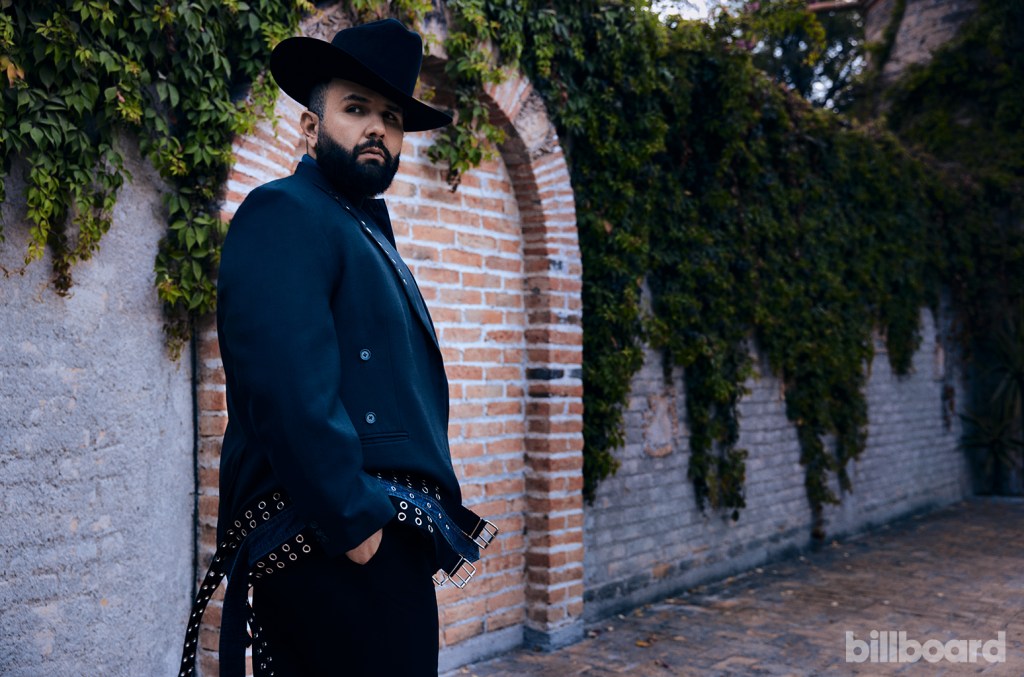
It’s 2 a.m. on a May morning in Aguascalientes, Mexico, long past most people’s bedtimes. But inside the Palenque of Feria de San Marcos — a venue in this central Mexican city — Carín León is entering the third hour of a performance where he has sung nonstop while pacing the small 360-degree stage like […]