
State Champ Radio

by DJ Frosty

Current track

Title

Artist

Current show

State Champ Radio Mix

1:00 pm 7:00 pm

Current show

State Champ Radio Mix

1:00 pm 7:00 pm


Author: djfrosty

Page: 247

The Women Songwriters Hall of Fame will celebrate its fifth anniversary over two days this week at the Mead Center for American Theatre in Washington, D.C. There will be workshops and panel discussions on Friday June 20, followed by an awards ceremony on Saturday, June 21.
Hosted by Claudia Jordan, this year’s awards ceremony will honor 13 women – not all songwriters – from a wide range of genres. The 2025 honorees include two-time Grammy winner Janis Ian; Grammy winner Regina Belle; Grammy nominees Melba Moore, Brenda Russell and Janiva Magness; as well as Julie Giroux, Vicki Peterson (best known for her work in The Bangles), YoYo (aka Yolanda Whitaker), Christina Shusho, Asha Puthli and Dr. Stacy L. Smith, who spearheaded the USC Annenberg Study. Dr. Smith was set to be honored last year but became ill and was forced to drop out.

Two women will be honored posthumously – Motown songwriter Sylvia Moy (who died in 2017 at age 78) and country singer/singer Lari White (who died in 2018 at age 52).

Trending on Billboard

Ian and Russell have both received Grammy nods for song of the year – Ian for “At Seventeen” (1976) and Russell for “Piano in the Dark” (1989).

The event will include musical performances by Nes Powers, Evelyn Rubio, Robert Cristian Jordan and Mallow Hill plus entertainment by Adam Stone and Women on Fire. Other participants include presenters Andree Harris and Telishia Berry, DJ Supreme Da Barber, and Versie Jean and musical director Christopher Valentine.    

On Friday, the organization will host its annual songwriting contest and mixer. Ten emerging songwriters will be invited to perform their original songs for a panel of industry judges. The winner receives studio time at Omega Recording Studios in Rockville, MD and a guitar, in addition to the opportunity to perform at Saturday’s awards ceremony. The mixer is designed as an opportunity for up-and-coming songwriters and performers to meet veterans who can help them in their careers. Montanique “Monei” Sutton will serve as host/songwriting mixer for Saturday’s events.

“In the research I conducted before deciding to launch the organization, I found that there are not many programs exclusively honoring women in entertainment at this level,” says Dr. Janice McLean DeLoatch, the organization’s founder, chief executive and chairman. “We’re all about achieving parity and recognition for girls and women in music, opening doors a bit more for those whose talents will bring us joy, inspiration and their songs on the radio for the next 50 years.”

Previous Women Songwriters Hall of Fame inductees include Roberta Flack, Valerie Simpson, Klymaxx, Mary Chapin-Carpenter, Deniece Williams, The Go-Go’s and the late Naomi Judd (2021); Marilyn Bergman, Gloria Estefan, Siedah Garrett, Indigo Girls, Loretta Lynn and Jody Watley (2022); Ann Hampton Calloway, Jan Daley, Scherrie Payne, Toni Basil, Angela Bofill, Pam Sawyer and the late Cynthia Weil and Olivia Newton-John (2023); and Crystal Waters, Soon Hee Newbold and the late Angie Stone and Allie Willis (2024).

For more information, visit this page on the organization’s website.

As Sabrina Carpenter continues to field criticism for her suggestive Man’s Best Friend cover, singer-songwriter Carly Simon is “Coming Around Again” to help her fellow performer out. In an interview with Rolling Stone on Wednesday (June 18), Simon commented on the ongoing backlash Carpenter has received since unveiling the new artwork for her forthcoming album. […]

Artificial intelligence is a technology with profound implications — it will soon be smarter than we are! — including for the future of music. So far, though, the debate over the copyright issues involved in training AI algorithms follows a familiar pattern: Rightsholders want a licensing structure to generate royalties, while some technology companies maintain that they don’t need permission and others just proceed without it. To music executives of a certain age, it sounds a bit like the Napster battle, especially since the central issue is fair use. Technology companies seem to have the same plan: Move fast and break things, then try to change the law once consumers get accustomed to the new technology.  
Could this time be different? 

Trending on Billboard

Yes and no, at least to judge by the current state of affairs. In the European Union, which passed the first serious AI legislation, some lawsuits working their way through the courts now — perhaps most importantly GEMA’s case against Suno — will provide more clarity. The situation in the U.S., which seemed to depend on the result of major label lawsuits against Suno and Udio — in which the two sides are negotiating — has been complicated by President Trump’s firing of the Register of Copyrights. In the U.K., the government has been considering loosening copyright by calling for a consultation — but that effort has come under pressure from both music companies and creators. 

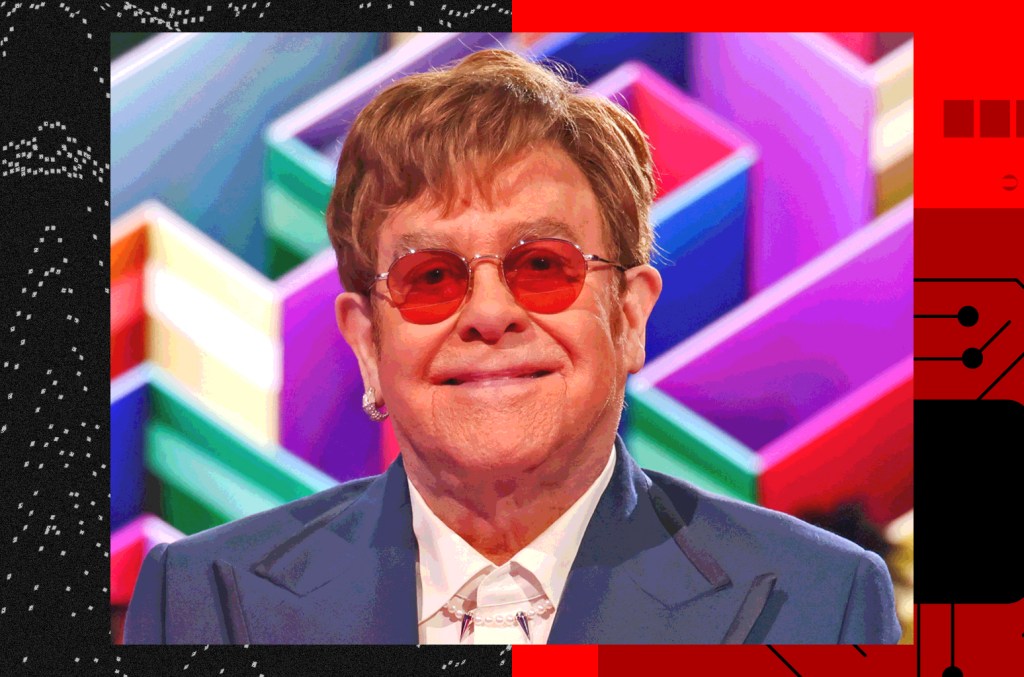
Two weeks ago, at a party to honor the Billboard Global Power Players, Elton John and his manager and husband, David Furnish, won the first-ever Billboard Creators Champion Award for their work fighting the U.K. government’s proposed adjustments to copyright law. That initially involved an amendment to a data bill being debated in parliament that would have forced technology companies to be transparent about the content they used to train their algorithms. The bill repeatedly “ping-ponged” between the House of Commons and the House of Lords as the latter repeatedly voted for the amendment, under the leadership of Baroness Beeban Kidron. Last week, after more back-and-forth, the data bill passed without the amendment.  

This bill doesn’t affect copyright, although the amendment would have, so it represents only a minor skirmish in what’s shaping up to be a serious fight. John and Furnish aren’t going away, and John’s consistent championing of upcoming artists gives them real moral authority. Other artists are with them, including Paul McCartney and the acts behind the “silent album.” There’s strength in numbers, and the days when companies like Napster could give Metallica a reputational black eye are long since over. Few artists and executives have devoted as much time to the issue as John and Furnish, but they aren’t alone. Besides artists, the entire music business is behind them.  

They are also fighting a very different battle than Metallica was all those years ago. Back then, the Internet looked much cooler than major label music — more disruptive, in today’s terms — and Metallica got cast, unfairly, as trying to fight the next new thing. At this point, technology companies have grown into a new establishment, with far more political power than the media business ever had. Elton John doesn’t seem like he’s trying to stop the next new thing — he’s trying to make sure that new technology doesn’t get in the way of the next new artists. Metallica’s fight wasn’t actually all that different — people just didn’t understand it very well. 

Technology companies are pushing some of the same ideas they always have, which now seem almost oddly old-fashioned. The idea is that governments need to relax copyright laws so they can “take the lead” or “get ahead” in “the AI arms race.” This sounds vital, and it is, except that the kind of AI that’s most important is general intelligence, which has very little to do with the kind that can make new songs in the style of, say, Led Zeppelin. That’s just a consumer product. Also, what exactly are governments racing toward? Since AI is expected to eliminate white-collar jobs and the tax revenue that flows from them, what exactly is the hurry? 

The debate over the U.K. data bill was only just the beginning, and the way John and Furnish framed the issue could influence the debate as it develops. For the next few years, both sides will argue about how compensation will work. But without the kind of transparency that the amendment to the bill mandated, it would be very difficult for technology companies to identify and pay the right creators. Transparency is necessary but not sufficient — it won’t solve the problem, but there can’t be a solution without it. Any serious conversation about compensating artists for the use of their work in AI needs to start there, and thanks to creators, this one has. Let’s see where it goes from here. 

In today’s episode of Billboard Unfiltered, Billboard staffers Carl Lamarre, Angel Diaz, and special guest, Rapsody, debate who the best rapper/producer duo are. Moderated by Billboard’s Delissa Shannon, each hip-hop expert gives their hot take on Snoop Dogg & Dr. Dre, Nas & Hit-Boy and more! Delisa Shannon: What is up y’all, this is Billboard […]

It has been over one year since Spotify brought limited audiobook functionality to its Spotify premium products in November 2023. In March 2024, in a major shift for songwriters and music publishers, Spotify began reporting its three principal premium subscription tiers to the Mechanical Licensing Collective (MLC) as “bundled subscription services” rather than as “standalone portable subscriptions,” as they had previously done. In response, the MLC sued Spotify in May 2024 for allegedly underpaying music publishers, but a judge dismissed the case in January 2025. A motion for reconsideration filed by the MLC in February 2025 remains pending in the Southern District of New York.
Earlier this month, the National Music Publishers’ Association (NMPA) stated at its annual meeting that this change has resulted in a first-year loss of $230 million in mechanical royalties to songwriters and music publishers. Spotify’s own recent SEC filing states a loss of 205 million euros in mechanical royalties for the 13-month period between March 1, 2024, and March 31, 2025. This is actual money that should have, but did not, make it into the pockets of songwriters and music publishers. It has instead remained with Spotify.

Trending on Billboard

Spotify’s actions have already been publicly lambasted by this author, the NMPA and the songwriter and music publisher communities as perhaps the worst affront in a long line of offenses committed by Spotify against songwriters. So why am I writing about this issue again, a year after first doing so in Billboard? Because with a year’s worth of additional facts and data at hand, it is my opinion that this is one of the greatest injustices visited upon songwriters in the era of music streaming, sadly perpetuated by the company that has perhaps benefited more than any other from the creativity and labor of songwriters. All songwriters and music publishers should be aware of this critical issue and deserve to know all of the supporting facts.

When I wrote on this issue back in May 2024, I opined that Spotify’s actions would likely reduce the effective share of its U.S. subscription revenue paid to songwriters and music publishers from the agreed-upon 15.1% to 15.35% in the Phonorecords IV settlement to less than 12%. I wrote that Spotify’s timing felt engineered to partially sideline songwriters and music publishers from benefiting from price increases that were reportedly soon to take effect (and did). I wrote that the Spotify Audiobooks Access tier was seemingly not commercially viable as a standalone product and was launched in the U.S. (and nowhere else) with the primary and perhaps sole purpose of supporting Spotify’s attempt to report most of its subscription tiers to the MLC as bundles and reduce mechanical royalty payments to songwriters. And finally, I wrote that Spotify was motivated to take publishing royalties out of the pockets of songwriters in order to improve its gross margin and offset the costs of running its new audiobook initiative.

One year later, I believe that all of this has proved to be true. Let’s look at the facts.

What is a bundle?

In this context, a bundle occurs when Spotify — or another music service — is sold to consumers for a single price as part of a package which includes other goods and services. Some bundles package music with digital services such as subscription video on demand and/or physical goods such as phones, tablets and delivery services. The components of the bundle typically can be purchased on an individual basis if a consumer is not interested in purchasing the entire package, and those components typically have a clear independent commercial value to some segment of consumers.

For rightsholders, the potential value exchange is that a tech platform may package a bundle of goods and services (including music) together in a manner that could potentially bring additive revenue, users and engagement to music creators that, absent the bundle, might be less obtainable. Basically, the platform is offering a package deal to reach customers who may be less likely to pay for a music service sold on its own.

Rightsholders operating in a free market may be asked by the licensee to help offset their other costs of operating such a bundle (e.g., non-music licensing costs, other operating expenses) by agreeing to reduced royalty terms than what would typically apply to a standalone music service, which a licensee may also offer. Rightsholders are able to consider such requests, sometimes referred to as “bundle discounts,” by engaging in discussions with the licensee and utilizing pertinent data and information such as market research, reporting and revenue forecasts to inform their viewpoints and make decisions that are in the best interests of music creators.

A range of outcomes is possible in the free market. A rightsholder may refuse to license the bundled service at all, or they may license the bundled service for the same price and terms they’d grant to a standalone music service, or they may agree to some means of discounting. The Phonorecords IV settlement includes examples of such terms, including a specific definition of revenue for bundled services and other terms that are reduced relative to those that apply to standalone music services.

When this works as intended, music rightsholders may choose to effectively co-invest with a streaming service in creating a discounted bundle that they feel has the potential to earn additional revenue, even if there may be less revenue earned on a per-user basis from the bundle relative to a standalone music service. The potential benefit to music creators is that they may capture additional royalty amounts from users who might not have signed up for a music service absent the additional non-music components of the bundled offerings. The licensee is rewarded for bringing some level of added value to music creators by building, offering and marketing the bundled package to consumers.

Why Spotify’s bundle is different

But this is not what Spotify has done. Spotify has built a music subscription empire based upon the creativity and labor of songwriters and now reduced their U.S. mechanical royalties in a manner that implies that songwriters now contribute less to the success of Spotify. That could not be further from the truth. Regardless of the legal issues surrounding this matter, Spotify’s reduction of songwriters’ mechanical royalties, in my opinion, has no commercial merit.

In June 2024, a few months after Spotify began including the limited audiobook functionality (15 hours of listening time per month) in Spotify’s premium tier, it launched a tier called Spotify Basic. Spotify Basic, which is $1 to $3 less expensive than Spotify’s premium tier, depending on the number of users, is what Spotify’s premium tier was prior to November 2023 — a music subscription service without the audiobook functionality. It is the service that tens of millions of users signed up for prior to November 2023 because they acknowledged the value of unfettered access to music and are willing to pay for it. But all of those premium users, regardless of whether or not they want audiobooks, are now considered by Spotify to be bundled subscribers as of March 2024. That is, unless they manually selected to switch to Spotify Basic.

Most Spotify users probably don’t know that all of this happened, or that Spotify Basic exists. Spotify Basic is not available to new subscribers; it is only available in the U.S. to existing premium users who were subscribed as of June 20, 2024. Promotion and marketing of Spotify Basic to qualifying users has been limited. If a Spotify user cancels their Spotify Basic plan later on, it is not possible to resubscribe to it. Basic is also not available via upgrade paths. For example, a subscriber cannot upgrade from Basic Individual to Basic Duo. Instead, they are forced to pay $2 more for Premium Duo even if they have no interest in audiobooks.

Since Spotify’s November 2023 launch of the limited audiobook functionality, it has not been possible for new Spotify users to obtain a Spotify subscription that does not include audiobooks (save for qualifying student plans, which are bundled with Hulu). This is important because, absent a clearly presented and available option for a new (or existing) customer to choose between one offering that is music-only and another offering that includes audiobooks but is more expensive, the very clear conclusion is that music alone continues to drive consumer decision making around Spotify, including users’ decisions to pay for Spotify, what price they are willing to pay and what levels of price increases they are willing to endure without canceling their subscriptions.

Most Spotify users also don’t know that there’s a Spotify Audiobook Access tier. Last year, many — including this author — opined that the Audiobook Access tier was launched solely in the U.S. for the primary or sole purpose of lending legal support and a pricing benchmark to Spotify’s reduction of mechanical royalties. One year later, this appears on its face to have been true. Spotify Audiobook Access only remains available in the U.S., and there appears to be little, if any, earnest effort on Spotify’s part to promote and market it to consumers. They do not publicly report subscriber numbers for Spotify Audiobook Access, nor do they seem to talk about it much. In my opinion, it appears to be an offering that Spotify is not serious about and that was launched to prop up the reduction of songwriter’s mechanical royalty payments.

I’ve also been asked why Spotify did not declare its premium tier to be a bundled product when it began offering podcasts to subscribers many years before its introduction of audiobooks. The answer may lie in the fact that podcasts are monetized by selling advertising to businesses and brands, and there has been clear demand for Spotify to provide that service. Audiobooks, by contrast, have historically been monetized mostly via subscriptions sold to consumers by digital retailers. In Spotify’s case, it is possible that while some segment of premium subscribers might utilize limited audiobook access if they are already paying to access unlimited music, those same subscribers might not be motivated enough to pay Spotify specifically for access to audiobooks. In other words, engagement alone might not be an indicator of willingness to pay. It costs Spotify money to offer audiobooks to its subscribers, and if those subscribers aren’t willing to pay for them specifically, it’s possible that Spotify needs to offset those costs in some other manner. As I’ve opined before, I believe this has been a material driver behind Spotify’s bundling initiative that has cost songwriters and music publishers hundreds of millions of dollars in U.S. mechanical royalties to date.

Spotify’s financials post-bundling

Finally, let’s talk about how this issue has impacted Spotify’s financial performance. Spotify’s premium gross margin increased from 29.1% to 33.5% between Q4 2023 (the last full quarter unimpacted by Spotify’s reduction of mechanical royalties via bundling) and Q1 2025. The $230 million first-year loss of U.S. mechanical royalties reported by the NMPA equates to about 1.4% of Spotify’s global premium revenue of 13.82 billion euros (approximately $15.89 million) for 2024. There are a number of factors that have allowed Spotify to improve its gross margin performance, but its reduction of U.S. mechanical royalties has contributed to that improvement on a very real and material basis, as Spotify has noted on quarterly earnings calls.

Spotify’s gross margin improvement has undoubtedly been a big factor in the performance of its stock, which is up about 130% year-over-year as of this writing. It is perverse that songwriters and music publishers have contributed so meaningfully towards these recent improvements in Spotify’s financial performance and the market’s reaction, yet find themselves not only unrewarded for their contributions but on the wrong end of Spotify’s efforts to reduce its U.S. music publishing costs.

So, where do songwriters and music publishers go from here? While it has been reported that Universal Music Publishing Group and Warner Chappell have entered into direct agreements with Spotify for the U.S. as part of broader deals that include their associated record labels, the upcoming Phonorecords V process before the Copyright Royalty Board — which starts early next year — presents the entire songwriter and music publishing community with the opportunity to right Spotify’s wrong. I encourage all who depend on songwriting and publishing royalties for their livelihood to educate themselves on the facts and stay aware of new developments.

Adam Parness was the global head of music publishing at Spotify from 2017 to 2019. He currently operates Adam Parness Music Consulting and serves as a highly trusted and sought after strategic advisor to numerous music rightsholders, notably in the music publishing space, as well as popular global brands, technology-based creative services companies and firms investing in music and technology.

That’s a wrap. Selena Gomez has finished filming the latest season of Hulu’s Only Murders in the Building, an occasion the singer-actress celebrated with an emotional post on Instagram Wednesday (June 18). Explore Explore See latest videos, charts and news See latest videos, charts and news In a behind-the-scenes video filmed at the end of […]

Source: Johnny Nunez / Getty

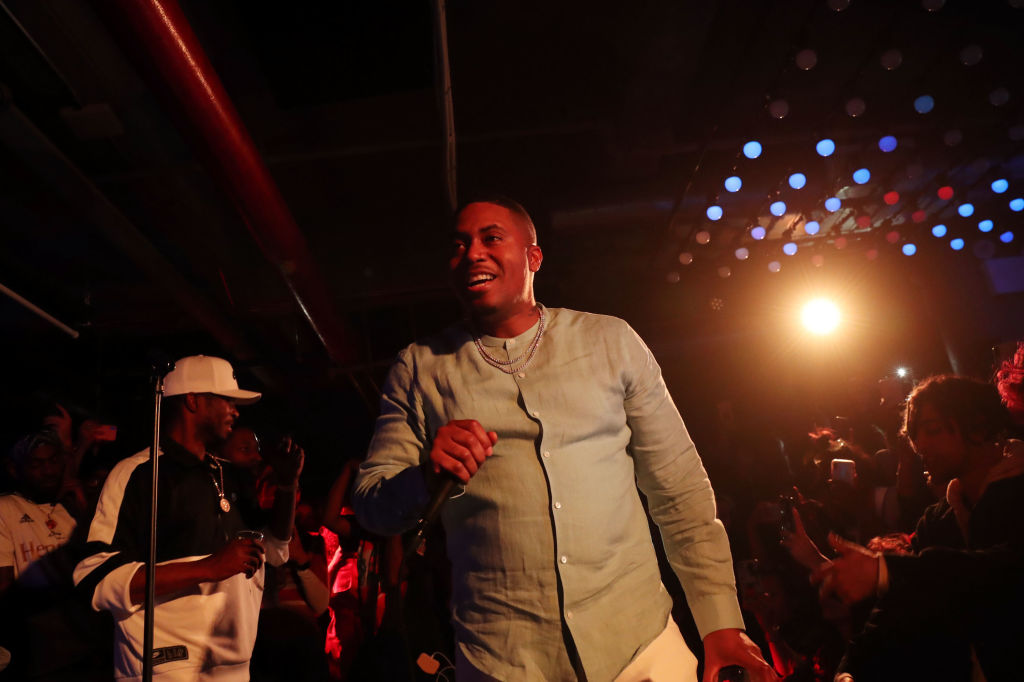
Nas’ record label and media company, Mass Appeal, has reached a settlement with a white former executive who claimed that she was discriminated against and forced to leave the company because she’s white.  

From Billboard:

Mass Appeal filed a joint motion with its former head of development, Melissa Cooper, in federal court on Friday (June 13), agreeing to dismiss the case entirely. Court filings show that Mass Appeal and Cooper have reached a settlement, although the terms of the deal were not disclosed.

Cooper sued Mass Appeal, CEO Peter Bittenbender and the company’s former content chief, Jenya Meggs, in 2023, claiming she was the subject of a “racist conspiracy” at the company. Nas is not individually named as a defendant in the lawsuit.

Cooper is white. Meggs is Black. Cooper claims that Meggs didn’t like her ideas because of her animosity toward a “white woman working in Hip-Hop.” Meggs reportedly refused to work with Cooper and even had her taken off of big projects “…like the planning of Mass Appeal’s Hip Hop 50 Live concert,” Billboard reports. 

Cooper was eventually fired from Mass Appeal in June 2023.

After her termination, a messy former lover of Meggs reached out to Cooper to share text messages in which Meggs reportedly referred to Cooper as a “cracker” and criticized “white folk.”

Cooper claimed in her lawsuit that she brought the messages to Bittenbender, but he paid them no mind. Cooper wanted to be reinstated to Mass Appeal and given money for damages for the alleged racism she endured. 

Mass Appeal, Bittenbender and Meggs not only deny the claims of discrimination, but they “vigorously” deny any claims made by Cooper and claim that she was fired because her division hadn’t sold any projects. Oh, and about those text messages, they claim they were “taken out of context and are nothing but a red herring.”

Meggs reportedly left Mass Appeal in 2024. 

HipHopWired Featured Video

Source: Taylor Hill / Getty

For the past few weeks, the American people have been speaking up against Donald Trump’s fascist regime amid his hardcore immigration crackdown, which has led to quite a few Americans and neutralized citizens getting caught up in his dragnet of apparent ethnic cleansing. But while we see his own personal Gestapo terrorize Black and Brown communities in LA, New York and other cities, many aren’t aware that ICE is also invading the often-overlooked island of Puerto Rico.

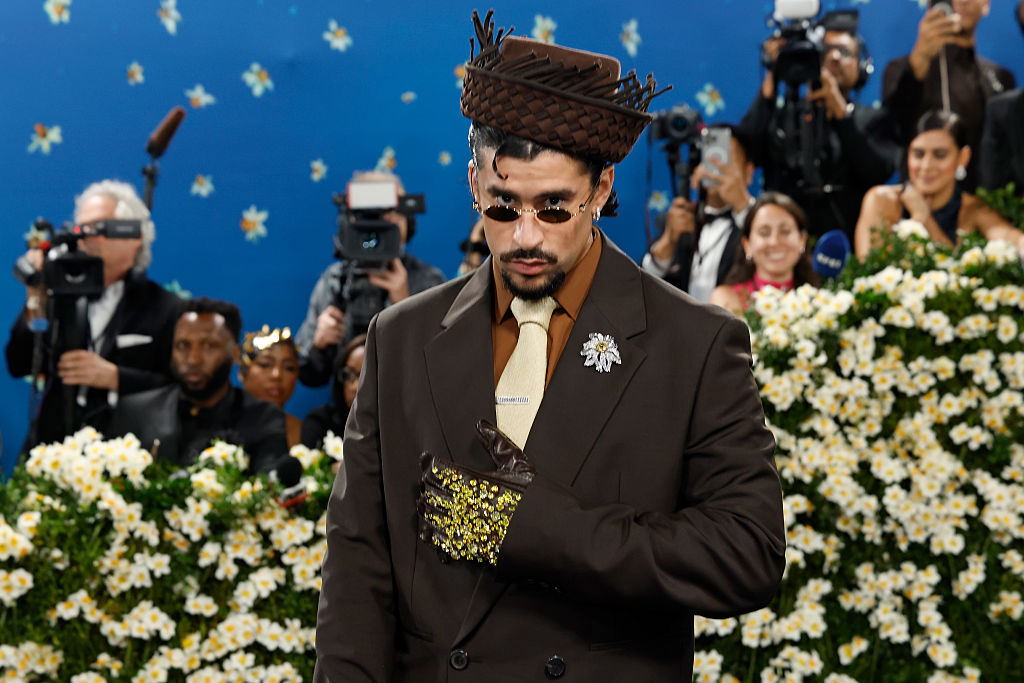
Yes, Puerto Rico too has been dealing with ICE raids as masked white men rummage through the Borinquen streets and search for illegal immigrants on the island. Many of its residents aren’t pleased with what they’re seeing including its most famous superstar today, Bad Bunny. Taking to social media to show ICE “agents” harassing everyday people while they work, Bad Bunny cursed out ICE (in Spanish of course), called them “sons of b*tches” and slammed them for terrorizing everyday working people in the streets of Puerto Rico.

While it may be a bit confusing as to why ICE is on a Latino island looking for Latinos to deport, the U.S. commonwealth does house quite a few people from places like the Dominican Republic, Haiti, and other countries that aren’t part of the U.S.

Still, Puerto Ricans are known to have welcomed people from all places to their island, but this current American regime is having none of that. With numbers suggesting that up to 20,000 illegal immigrants live in Puerto Rico and ICE having a quota to meet of 3,000 deportations per day, it doesn’t seem like ICE will be leaving the good people of Puerto Rico (or America for that matter) alone anytime soon.

On the bright side, there is word that ICE is already a billion dollars over budget and may soon run out of money to keep operations going. Still, it feels like in Trump’s America, hate will always find a way to flourish even at the expense of decent people.

What do y’all think about ICE carrying out deportation operations in Puerto Rico? Let us know in the comments section below.

HipHopWired Featured Video

Source: Carol Lee Rose/FilmMagic / Carol Lee Rose/FilmMagic

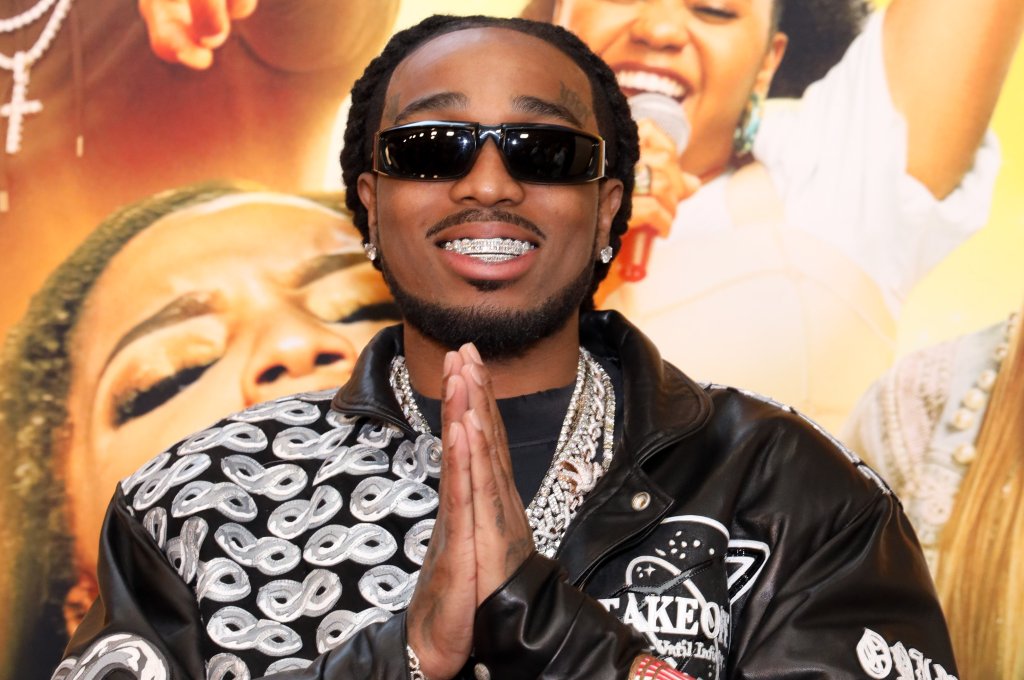
Quavo came back to his hometown of Atlanta to host the second Rocket Summit, an event focused on fighting gun violence in local communities. 

The summit took place at the College Football Hall of Fame and was organized by Quavo and The Rocket Foundation to honor his late nephew and Migos member, Takeoff, who passed away in 2022. The event also happened during Gun Violence Prevention Month, making it even more meaningful.

The Rocket Summit brought together community leaders, young people, survivors of violence, and activists to talk about ways to make neighborhoods safer. The day started with a special lunch for VIPs, then continued with panels and smaller group sessions where everyone could share ideas on how to reduce violence.

One of the main discussions, called “The Urgency of Now,” included experts from groups like Cities United and Moms Demand Action. They talked about why it’s important to invest time and resources into programs that help stop violence before it starts. Another panel, “We Are the Change,” featured local leaders who shared their personal experiences and explained how being connected to the community helps them find solutions.

During the smaller breakout sessions, participants talked about different topics like how to get youth involved, support people with legal issues, and push for changes in laws. There were also mental health resources available for anyone who needed them.

The day ended with a heartfelt talk between Quavo and podcast hosts Matt Barnes and Stephen Jackson. Quavo stressed how important healing and kindness are when dealing with gun violence. The Rocket Summit is not only helping communities come together to create change but also is a special way for Quavo to honor Takeoff’s memory by working to make Atlanta safer for everyone.

HipHopWired Featured Video

Lorde is laying down the hammer in the last few days before her new album, Virgin, drops, with the pop star announcing that she has one more single coming out in advance.
On Instagram Wednesday (June 18), Lorde revealed that the new song will be titled “Hammer.” “First song on the album,” she wrote in her caption. “An ode to city life and horniness tbh.”

The New Zealand native also shared what appears to be the track’s cover art: a photo of Lorde’s reflection repeating infinitely in opposite-facing bathroom mirrors as she washes her face at the sink, wearing a white tank and gray underwear.

Lorde didn’t say when exactly the song will arrive, but she did post on Instagram one day prior the announcement, “Virgin in ten days another song in a few.”

Trending on Billboard

“Hammer” will follow Virgin‘s first two singles, “What Was That” and “Man of the Year.” Lorde dropped the former in April along with a DIY music video filmed in part at a fan meetup in Washington Square Park, and on the latter — released in late May — she reflects on her broadening gender identity while embracing her inner masculinity.

Gender is one of several topics Lorde has promised to explore on Virgin, which drops June 27 via Republic Records featuring production from Jim-E Stack, Fabiana Palladino, Andrew Aged, Buddy Ross, Dan Nigro and Dev Hynes of Blood Orange. The singer-songwriter has also said that the album was informed by her experiences with disordered eating, quitting birth control and breaking off a longterm relationship.

“THE COLOUR OF THE ALBUM IS CLEAR,” she described the project when announcing it back in April. “LIKE BATHWATER, WINDOWS, ICE, SPIT. FULL TRANSPARENCY. THE LANGUAGE IS PLAIN AND UNSENTIMENTAL. THE SOUNDS ARE THE SAME WHEREVER POSSIBLE. I WAS TRYING TO SEE MYSELF, ALL THE WAY THROUGH. I WAS TRYING TO MAKE A DOCUMENT THAT REFLECTED MY FEMININITY: RAW, PRIMAL, INNOCENT, ELEGANT, OPENHEARTED, SPIRITUAL, MASC.”

See Lorde’s announcement below.