Author: djfrosty
Page: 1098
Kelly Rowland is an avid supporter of women supporting women — and she had a great role model to look up to in her Destiny’s Child days. The superstar joined Jennifer Hudson on the latter’s daytime talk show, where Hudson asked Rowland what inspired her passionate uplifting of her fellow women. The “Dilemma” singer revealed […]
After two years off, Dirtybird Campout will return this summer in partnership with NorCal’s longstanding Northern Nights festival.
The two indie festivals will unite for the new hybrid event, officially titled Dirtybird Campout x Northern Nights, on July 18-20 at Cook’s Valley Campground, roughly 200 miles north of San Francisco. Launched in 2015, Dirtybird Campout is an offshoot of the Dirtybird label, the influential electronic imprint founded by producer Claude VonStroke in 2005 and acquired by indie label, distributor and publisher EMPIRE in 2022.
“As the label was undergoing a leadership change under EMPIRE, it was important for us to take a step back and plan for the next evolution of the brand and the fan experience,” Moody Jones, general manager at EMPIRE and Dirtybird tells Billboard of the festival’s off years. “We knew we had to bring it back, and we know how much the fans have missed it, so it was a matter of timing it right.”
Tickets for Dirtybird Campout x Northern Nights are on sale now, with the lineup to be announced in the coming months.
Trending on Billboard
Northern Nights co-founder Andrew Borgelt says the collaboration “came together naturally” after the teams were introduced by a mutual colleague this past November. “From our very first conversation,” Borgelt continues, “it was clear that we shared a deep connection within the same music community. Throughout the process, both teams remained aligned on a shared vision — ensuring that each brand’s voice was authentically represented while seamlessly merging the essence of both festivals.”
As such, Dirtybird Campout x Northern Nights will feature signature Campout programming including camp games and activities along with Northern Nights’ standard offerings including its integration of cannabis culture. The event happens in the middle of Northern California’s so-called Emerald Triangle (the United States’ largest cannabis producing region made up of Humboldt, Mendocino and Trinity Counties) and has been a forerunner in offering legal cannabis retail and consumption areas.
Both events have historically booked indie, underground and left of center electronic music, with that vibe expected to continue in 2025.
Northern Nights
StoriesBySay
Happening since 2013, Northern Nights takes place at Cook’s Valley Campground, which provides attendees access to the Eel River and an opportunity to party amid the redwoods. Northern Nights’ director of marketing and sales Matthew Whitlock says the new event will still provide “the signature Northern Nights experience, with the magic of the redwoods, our commitment to music, art and cannabis culture, and that intimate festival energy.
“But with Dirtybird in the mix,” he continues, “expect a whole new level of immersive fun — campout vibes, themed stages and the iconic Dirtybird Campout color games. This isn’t a takeover; it’s a collaboration of two beloved festival cultures, creating something fresh, bold, and unforgettable.”
“It’s no secret that the festival business is going through a challenging time right now, with higher tickets, rising costs and the recycled lineups contributing to subpar experiences,” Jones continues. “We only wanted to bring back Campout if we could provide the same experience in a sustainable way, without compromising on the core values we’re known for. With our Northern Nights partnership we found a way to accomplish all of that and couldn’t be happier with the synergy. Northern Nights has booked Dirtybird artists as headliners almost every year, and with our partnership, they have been one of our biggest supporters.”
HipHopWired Featured Video
Source: YUKI IWAMURA / Getty
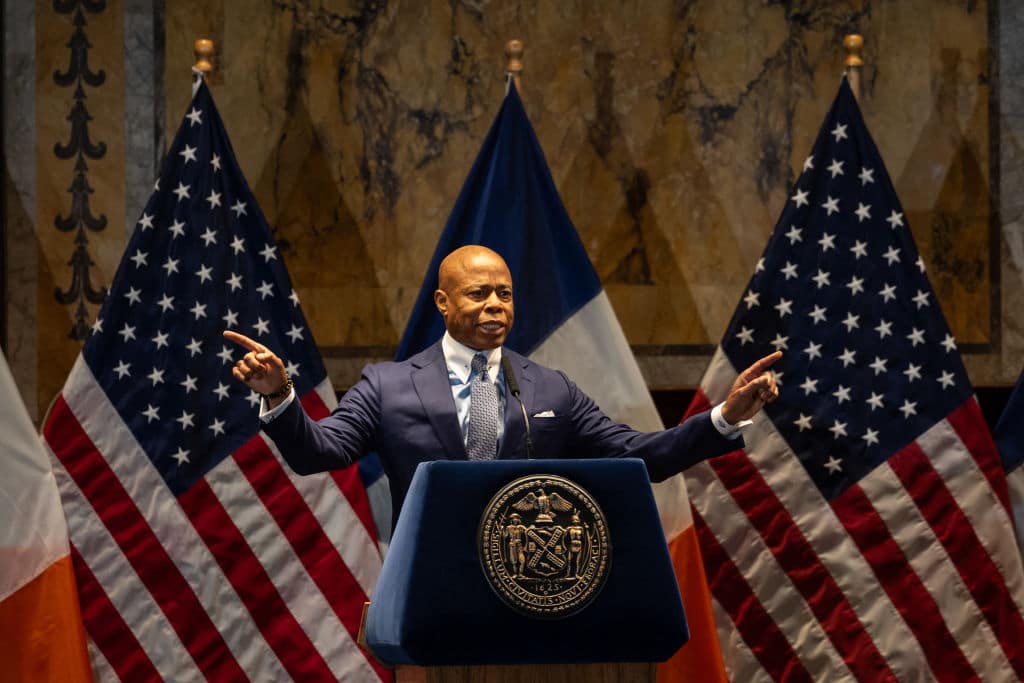
The Department of Justice has reportedly discussed dropping the federal charges against New York City Mayor Eric Adams with Manhattan prosecutors.
According to reports, senior officials with the Department of Justice have discussed the future of the federal corruption case against New York City Mayor Eric Adams and the possibility that the charges would be dropped outright. DOJ officials are slated to meet with prosecutors in Manhattan from the office of the Southern District of New York this week and with the legal defense team for Adams. The embattled mayor is slated to go on trial April 21 and has been in constant communication with President Donald Trump in recent weeks, including attending his inauguration and visiting him at his Mar-a-Lago estate in Florida. Trump has publicly supported Adams, stating that he would “take a look” at a pardon for him in a press briefing last month.
Sources close to the discussions have framed them as preliminary. The Southern District of New York declined to comment – since Damian Williams stepped down last month, the office has been run by Danielle R. Sassoon, a veteran prosecutor appointed by Trump on an interim basis. Speculation has risen that the Justice Department is seeking a fast resolution to the matter before Trump’s picks for the SDNY and the U.S. Attorney General (Jay Clayton and Pamela Bondi, respectively) are confirmed. According to the New York Times, Sassoon is in a precarious position – if she were to drop the charges, it would allow Adams to say that the charges shouldn’t have been brought in the first place. If she refused, she could be forced to resign or be fired.
The news comes amid rumors that Adams, who until early Thursday (Jan. 30) was out of the public eye dealing with illness, would potentially accept a pardon and then resign. Adams’ lawyer, Alex Spiro (who also represents Trump crony and tech billionaire Elon Musk) dismissed that theory to reporters. “No, he’s innocent,” he said. The same sources claim that Shapiro intimated to the DOJ officials that Adams would hinder further immigration crackdowns in New York City if he were still under indictment. “That is a complete lie.” Shapiro said when asked about that conversation.
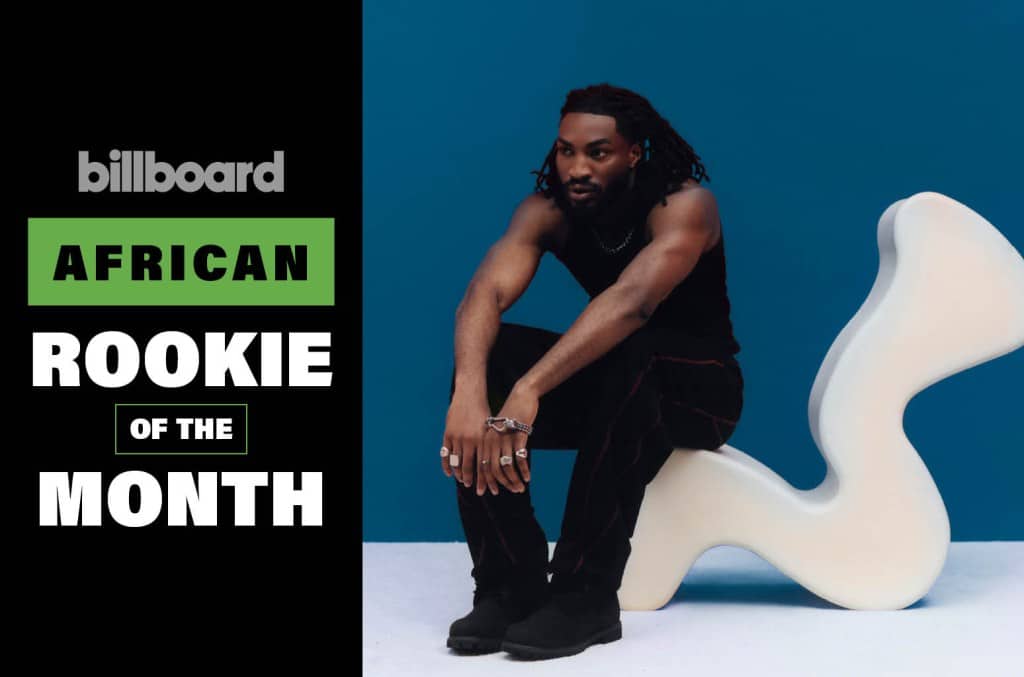
Billboard is expanding its Rookie of the Month interview series by highlighting rising stars from more genres like dance and rock. But the new crop of artists emerging out of the African continent have continued making it clearer that their music can exist beyond the borders of “Afrobeats” and should not be broadly and lackadaisically labeled as such. “It has African intonations in it,” Tems said of her genre-bending music during her Women in Music interview last year.
Like Tems, many African artists have discovered one-of-a-kind ways to express themselves that cannot fit into one box while staying true to their roots. And Billboard is dedicating a spotlight to them through our new African Rookie of the Month series, which we’re kicking off with Odeal for January 2025.
Trending on Billboard
Odeal hasn’t stuck to one lane during his entire artistic journey. The 25-year-old artist was born in Germany and raised in Spain, the U.K. and Nigeria before settling down in the U.K. when he was 17, shortly before he embarked on his solo career. His familiarity with global genres eventually paved the way for his boundary-pushing music – even though he didn’t have the smoothest start.
Some of his older friends in the U.K. realized his propensity for music and encouraged a young Odeal (real name Hillary Dennis Udanoh) to make an original song at a studio in one of the youth clubs. He spent one evening after school there recording his first song and returned for a few days before the youth club shut down weeks later. When he moved to Awka, the capital of the Anambra State, Nigeria, at 14, Odeal’s father connected him to his cousin who always hung out at a studio. “I’d literally sit and watch everyone come in and record because I wasn’t making their type of music. I was more into R&B. And they were like, ‘R&B doesn’t work over here,’” he tells Billboard. “I was watching different artists to see how they record, the way they pronounce things, the beats, their choice of melodies. By the end of the summer, I learned what moves people and what doesn’t.”
While attending boarding school, he downloaded FruityLoops onto one of the laptops in the IT suite and snuck the laptop back to his dorm room so he could make beats while everyone was asleep. After a student snitched and the laptop was confiscated, Odeal’s “production journey kind of ended there,” he says. His cousin later advised him to spend time in Lagos so he could connect with producers and record music, where Odeal thought he’d have yet another shot at making it.
“I didn’t break in Lagos,” he recalls with a chuckle. “That was just like a dream.” At 17, he returned to London and witnessed the rise of Afroswing, an amalgamation of Afrobeats, dancehall and hip-hop created by the Afro-Caribbean diaspora in the U.K. Odeal immersed himself in the scene by joining a group called TMG, featuring other members Curtis J and Zilla, before they disbanded soon after.
Odeal embarked on his solo career in 2017 with the release of his debut EP New Time, but just a few months later, he became severely ill and spent the majority of November in the hospital. “If I get out of here, I need to make sure that I make an impact as much as I can and give back to my fans so that I can leave a legacy,” he remembers telling himself. Every November since then, Odeal has intentionally increased his musical output, from new singles to even OVMBR-branded EPs (2020’s Roses, 2021’s Hits No Mrs and 2022’s Maybe I’m Best Alone). In a similar vein to Drake’s OVO (October’s Very Own), Odeal’s OVMBR – which stands for “Our Variances Make Us Bold and Relentless” – doesn’t just represent the artist’s brand but has evolved into a movement that honors the individuality of his fanbase and even includes live events in Lagos, London, Berlin and Paris.
He heated things up last summer with Sunday at Zuri’s, a sultry, smooth four-song EP that represents a Sunday well spent at a woman named Zuri Awela’s beach house in Lagos. The scintillating highlight “Soh-Soh” became the project’s breakout hit, scoring A-list co-signs from SZA, Ciara and Victoria Monét, earning a song of the year nomination at the 2025 MOBO Awards and reaching No. 12 on U.S. Afrobeats Songs and No. 33 on Rhythmic Airplay. Last November, Odeal continued his OVMBR tradition by releasing the critically acclaimed EP Lustropolis, a heart-wrenching expedition about strained love affairs that features the Aaliyah-interpolating single “Temptress” and “You’re Stuck” collaboration with Summer Walker.
Billboard spoke with January’s African Rookie of the Month about making certain types of music for specific seasons, going viral with “Soh-Soh,” signing with LVRN and linking up with his labelmate Summer Walker on “You’re Stuck.”
How did your international upbringing impact the music you listen to and the music you make?
It made me understand different cultures and languages that people speak all over the world. It made me understand why other cultures like one style of music over another. So when making my music, I know exactly what to do and how to execute in a way that will resonate with certain people and the elements needed for it.
How many languages do you speak? And how many languages do you typically sing in?
To be fair, I’ve sang in French before, but I don’t speak French like that. I’ve sang in Spanish before, but I don’t speak Spanish as well as I used to. I used to speak it fluently, and then as I grew up, it fizzled away. I’m still trying to get [German and Spanish] back because I really want to connect with my fans in their own language. Stuff just hits different when you speak a certain language — the banter is different, the whole feeling is different.
Who were some of your favorite artists whom you grew up listening to?
Outside of Africa: Michael Jackson, Céline Dion, Brandy, 2Pac, Biggie. Inside of Africa, Wizkid, Davido, 2Face, Olamide, P-Square, Mi Casa. When I was growing up around the ages of 14-15, we used to listen to [urban music channels] Trace Urban and Soundcity when I was in Nigeria, and we listened to a lot of South African music like Uhuru.
And what kind of music do you listen to now?
I listen to anything that feeds my soul. At the moment, I’ve been listening to a lot of Afro-house, amapiano, R&B.
What kind of sounds and styles does your music encompass?
Afro-fusion, alté and R&B.
A few days after you released Lustropolis, you tweeted “the duality of man” and described Sunday at Zuri’s as “Afrofusion/Alte” and Lustropolis as “R&B/Soul.” Were you consciously thinking about genre when you were making both projects?
It’s definitely intentional. I normally make music seasonally. You need a theme song for your winter, and that’s what I feel like soul and R&B is for, when you’re inside and you’re in your feels. It’s more introspective. And for the summer, I’ll do Afro-fusion or Afrobeats or whatever experimental project for that season.
As someone who is as multidisciplinary as you in their approach to music, has it been difficult to find producers to help bring your unique sound to life? When I first interviewed Tems last year, she told me a major reason why she produces a lot of her own music is because she had a hard time being in studio sessions with other producers who just kept making Afrobeats. I’m curious if you had a similar experience.
Yeah 100%. The main reason why I started making music was because I wanted to hear something out there that was catered to me. Not being able to find something out there that fully embodied what I wanted, I had to start producing. But from making the music I have made, I’ve been able to meet a lot of incredible producers who are on the same page and want to experiment and explore and are ready for me to take the lead on where the sound should go.
Do you feel like it’s becoming more acceptable/more the norm for artists with Nigerian backgrounds to make music outside of Afrobeats?
Yes, 100%. Shoutout to everyone who’s been able to break out of that stigma that Nigerian artists should only make Afrobeats, or African artists should only make Afrobeats. We’re definitely capable of so much more and shouldn’t be boxed in.
Take me back through the making of both projects, starting with Sunday at Zuri’s.
I needed a summer tape. I was working on a project prior to when I went over to Nigeria. A week before I left Nigeria, I scrapped the summer project, everything I encountered while being in Lagos around April, May last year led to the creation of Sunday at Zuri’s.
On X, you wrote that Sunday at Zuri’s was influenced by Zuri Awela. Who is she, and how do you know her?
We’re calling her Zuri Awela, but she is someone that I spent time with in Lagos. I got to understand her background more of being South African and going to the beach houses in Lagos and having a good time. Having to leave Lagos and come back to the U.K., there was a certain feeling I had of having to detach from that situation. I made a story about that.
Was there one specific beach house you were spending time at, or were there multiple?
There were different beach houses. One’s called Ilashe Beach House, there’s another one called Koko Beach.
Out of the four songs on Sunday at Zuri’s, why do you think “Soh-Soh” resonated the most?
The chorus is provocative, it gets you moving, singing. It’s a catchy chorus, but then the second verse is very R&B-esque. There’s something about it, from the melodies and everything, that really resonated with people.
Prior to the success of “Soh-Soh,” when was the first time you remember a song going viral?
“Vicious Cycle (Policeman)” in 2019. I was in uni at the time. I’d wake up in the morning and record at the same time when people would be going to lectures. I started making the beat to “Vicious Cycle,” and then my boy came up and was like, “Yo, this is sounding crazy.” I laid the verse, it must’ve been before 12pm. I was done by 1, and then immediately, I posted a video of it on social media and it went off. Loads of people posting like, “Yo, when’s this dropping?” That was a moment.
Now take me back through the making of Lustropolis. How long did it take you to make it?
One or two of the songs were started earlier on in the year, and then the rest of them were made within a week or two.
You tweeted “Zuri’s absence paved the way to Lustropolis.” Can you expand on that? How are your two latest projects connected?
There are two different feelings: When you’re happy in summer, you’re a completely different person than who you are in the winter and not in the best place. Being with Zuri in Lagos, I felt like it was paradise. And then leaving that situation and coming back to the U.K., and it being winter and I’m about to head on tour and go to all these places, it was kind of dark. Maneuvering through that dark space and uncertainty and living on the edge was Lustropolis. I personified that mind frame. It led me to a place where I was acting off impulse, off something not going right in the previous situation and being in this place of self-destruct mode.
How did you and Summer Walker come together on “You’re Stuck”?
Her A&R and my A&R were in talks of having her on the record. They played it for her, and she loved it, she really wanted to be part of it. She brought her own perspective to it. I don’t really have many female features on my records, so it was really dope.
And then to link up with her in L.A. to do the video was another thing. She was really cool, down to earth. We went to the studio while I was out there, just working on a couple of things.
You’ve independently released your music through OVMBR, but you signed your first label deal with Warner Records UK in 2020. What was that adjustment like, from working on music on your own terms to working with a team?
It was more approvals. When you’re working independently, you can literally wake up in the morning, make a song and drop it tomorrow, which built most of the beginning of my career. But getting with a label, it was more like, “OK, you can’t just do that.” You’re working with a whole business now, and there’s an investment. You can’t be as spontaneous. That was the only difficulty. But apart from that, it was good because I understand now the importance of planning and preparation. If you want to operate on a global level and really scale, there’s certain things that you need to do.
How did you get acquainted with LVRN, and why was signing with them the right decision?
They reached out over a period of time. I really love their whole team structure. Just like OVMBR, it’s a bunch of friends who’ve become family and they really care about quality, have their own story. It was deeper than one company over another company. We share similar values, and they were really huge fans of the music, which is what I always want people to lead with outside of everything else.
I saw you were in the studio with Kaytranada recently.
That was crazy. In terms of production, he’s a huge inspiration. Getting in a session with him and really connecting over the music and sharing our taste, that was another thing.
Can we expect new music from you two anytime soon?
I’m not saying anything as of now, but hopefully. [Laughs.]
JayO posted some pictures of you two in Cape Town, and people in the comments were saying they need the joint project. Is that something you two have seriously discussed?
We actually do speak about it. We’re like, “OK, if we were to put out a project, that would be dope.” We don’t schedule sessions together. We’re really good friends. We’ll be chilling and music is made, or we’re on holiday and we end up making something together. We like to live life and then see how it pours into the music.
Who would you love to collaborate with this year?
I’d say Tems, Billie Eilish, Rema, Wiz.
What’s been the biggest “pinch me” moment of your career so far?
There were two moments, and they both happened the same day. I was at the British Fashion Awards, and Issa Rae was like, “There he is.” I was literally watching Insecure the day before. And she was like, “I absolutely love your music.” She really loves how I’ve been blending genres, which told me she was really listening. It wasn’t just one song. I told her I’m a huge fan of her. And then literally moments later, Wiz was like, “Yo, I love your music.” I was like, “Bro, this is actually insane.” Those were two moments that were like, “There’s no way this is happening right now.”
01/30/2025
She played God on a British sitcom and remains a god for many singer-songwriters.
01/30/2025
HipHopWired Featured Video
Source: Tasos Katopodis / Getty
Tragedy struck Washington, D.C. after an aerial collision between a U.S. Army Blackhawk helicopter and a passenger plane occurred at 8:47 p.m. ET last night (Jan. 29).
According to Newsweek, the horrific accident happened when both the passenger plane, which was flying in from Wichita, Kansas, and the U.S. Army Blackhawk helicopter attempted to land at Reagan International Airport in Washington, D.C. Unfortunately, it is suspected that all 64 passengers in the commercial plane and the three soldiers in the helicopter have not survived the crash. A search for survivors are underway.
The collision comes just a week after “President” Donald Trump reportedly fired the head of the TSA and the Aviation Security Advisory Committee, froze hiring of all Air Traffic Controllers, and also laid off 100 top FAA security officers. Now we’re not saying he’s responsible for this tragedy, but if anyone is wondering how such an incident could come to pass, that wouldn’t be a bad place to look.
Still, others feel it was on the helicopter pilot to have avoided the incident as a former pilot explained that the passenger plane had the right of way and the Blackhawk should’ve flown away to make room for the civilian aircraft.
Newsweek reports:
Former helicopter pilot Paul Beaver spoke with Sky News about the accident, saying that because the airline pilot was coming in to land, they would have had right of way. The helicopter pilot should have taken “avoiding action” to move out of the airplane’s flight path.
Air traffic control recordings from right before the crash show the air traffic controller speaking with the helicopter (PAT 2-5) operators.
The air traffic controller said: “PAT 2-5 do you have the CRJ in sight?”
Then: “PAT 2-5 pass behind the CRJ.”
The helicopter pilot responded: “PAT 2-5 has aircraft in sight, request visual separation,” just moments before the crash.
Donald Trump for his part took to social media to weigh in on the incident and after describing just how good of a night it was to fly a plane, he asked, “Why didn’t the control tower tell the helicopter what to do instead of asking if they saw the plane. This is a bad situation that looks like it should have been prevented. NOT GOOD!!!”
We still can’t believe y’all truly voted for this kind of malarkey instead of an overqualified Black woman. respectfully.
No word on whether any survivors have been found as of yet, but authorities promise to recover every single body that is currently missing from the accident. And Trump has already blamed Barack Obama, Joe Biden and even DEI.
HipHopWired Featured Video
Source: Tasos Katopodis / Getty
Tragedy struck Washington, D.C. after an aerial collision between a U.S. Army Blackhawk helicopter and a passenger plane occurred at 8:47 p.m. ET last night (Jan. 29).
According to Newsweek, the horrific accident happened when both the passenger plane, which was flying in from Wichita, Kansas, and the U.S. Army Blackhawk helicopter attempted to land at Reagan International Airport in Washington, D.C. Unfortunately, it is suspected that all 64 passengers in the commercial plane and the three soldiers in the helicopter have not survived the crash. A search for survivors are underway.
The collision comes just a week after “President” Donald Trump reportedly fired the head of the TSA and the Aviation Security Advisory Committee, froze hiring of all Air Traffic Controllers, and also laid off 100 top FAA security officers. Now we’re not saying he’s responsible for this tragedy, but if anyone is wondering how such an incident could come to pass, that wouldn’t be a bad place to look.
Still, others feel it was on the helicopter pilot to have avoided the incident as a former pilot explained that the passenger plane had the right of way and the Blackhawk should’ve flown away to make room for the civilian aircraft.
Newsweek reports:
Former helicopter pilot Paul Beaver spoke with Sky News about the accident, saying that because the airline pilot was coming in to land, they would have had right of way. The helicopter pilot should have taken “avoiding action” to move out of the airplane’s flight path.
Air traffic control recordings from right before the crash show the air traffic controller speaking with the helicopter (PAT 2-5) operators.
The air traffic controller said: “PAT 2-5 do you have the CRJ in sight?”
Then: “PAT 2-5 pass behind the CRJ.”
The helicopter pilot responded: “PAT 2-5 has aircraft in sight, request visual separation,” just moments before the crash.
Donald Trump for his part took to social media to weigh in on the incident and after describing just how good of a night it was to fly a plane, he asked, “Why didn’t the control tower tell the helicopter what to do instead of asking if they saw the plane. This is a bad situation that looks like it should have been prevented. NOT GOOD!!!”
We still can’t believe y’all truly voted for this kind of malarkey instead of an overqualified Black woman. respectfully.
No word on whether any survivors have been found as of yet, but authorities promise to recover every single body that is currently missing from the accident. And Trump has already blamed Barack Obama, Joe Biden and even DEI.
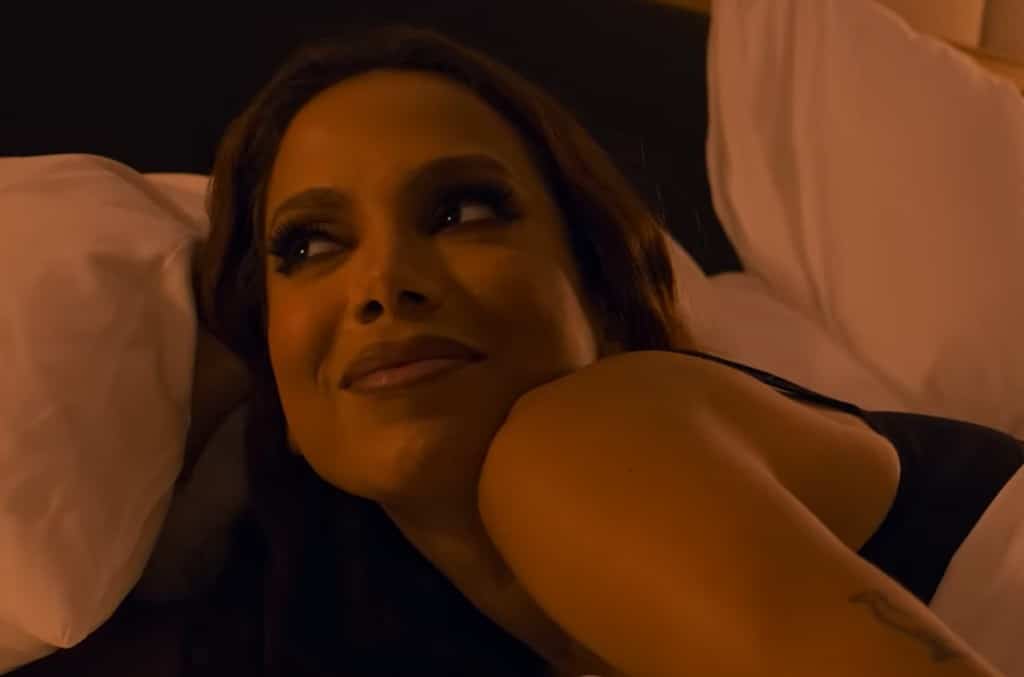
While fans around the world may feel like they know everything about Anitta, the Brazilian superstar has yet to introduce fans to Larissa — until now. In her upcoming Netflix documentary, titled Larissa: The Other Side of Anitta, the “Envolver” singer — born Larissa de Macedo Machado — gets personal about the private side of […]
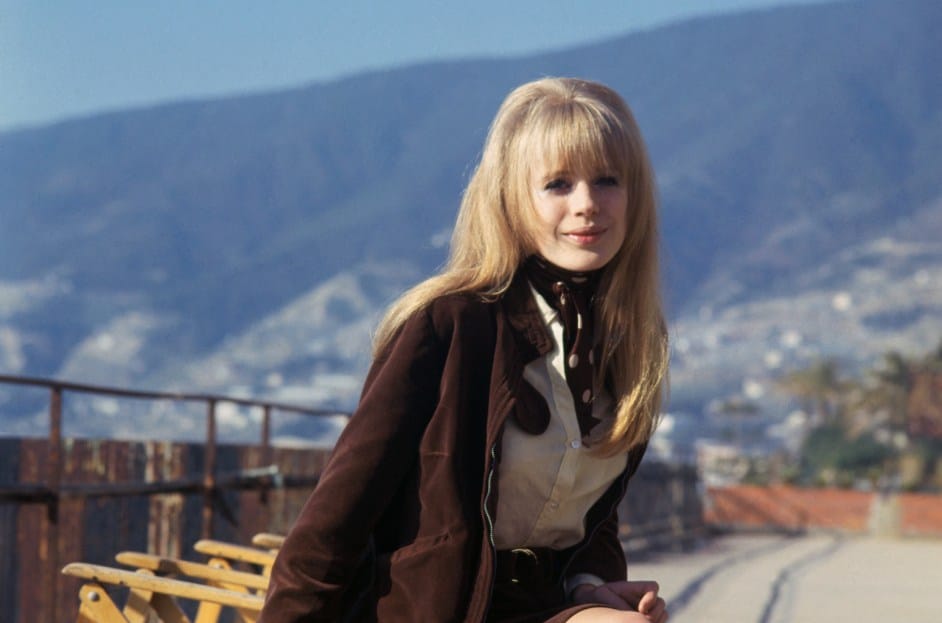
Marianne Faithfull, British singer, songwriter, actress and iconic figure of the 1960s, has died. She was 78 years old.“It is with deep sadness that we announce the death of the singer, songwriter and actress Marianne Faithfull,” a statement shared to BBC reads. “Marianne passed away peacefully in London today, in the company of her loving family. She will be dearly missed.”
A cause of death has yet to be revealed.
Explore
Explore
See latest videos, charts and news
Faithfull was born in the Hampstead area of North London, the daughter of an Austrian aristocrat and a British intelligence officer. Starting a career as a folk singer in the early ’60s, she made the acquaintance of Rolling Stones producer Andrew Loog Oldham, who introduced her to the band’s circle, and offered her “As Tears Go By,” a composition co-penned by the band’s Mick Jagger and Keith Richards. The sparse, acoustic ballad hit the top 10 in the U.K. in 1964, and also crossed over to the Billboard Hot 100, peaking at No. 22.
[embedded content]
“As Tears Go By” made Faithfull a star, and further hits followed the next year: “Come and Stay With Me,” “This Little Bird” and “Summer Nights,” all of which hit the U.K. top 10 and the Hot 100 top 40. Faithfull also became a British tabloid fixture, particularly after she began an affair with Jagger in 1966, ultimately leaving her first husband John Dunbar to live wth him. Early the next year, she made headlines for being at the scene of a drug bust at Richards’ house, dressed only in a fur rug at the time of the arrest.
The hits dried up for Faithfull in the late ’60s, but she continued to be a pop/rock presence, singing backing vocals on The Beatles’ No. 2 hit “Yellow Submarine” and co-writing the Rolling Stones’ Sticky Fingers classic drug ballad “Sister Morphine.” However, her drug addiction ended up consuming much of what should have been her prime years, particularly after she split with Jagger and lost custody of her son Nicholas (with first husband Dunbar) in 1970. After 1967’s Love in a Mist album — her last on Decca Records — she would not release another album until 1976.
Faithfull would make her first and most resounding comeback in 1979, with the new wave and disco-influenced Broken English set. The singer/songwriter’s voice had transformed into something lower and more weathered with her drug usage, and the set drew rave reviews for its modern sounds and brittle energy. Substance abuse sapped the momentum the Grammy-nominated set earned Faithfull’s career, until a 1987 reinvention as a jazz and blues singer on her Strange Weather set.
She was a sporadic presence in the mainstream for the rest of the 20th century, with high-profile guest roles on Roger Waters of Pink Floyd’s 1990 live tour of his band’s best-selling The Wall set, and as a featured vocalist on Metallica’s 1997 single “The Memory Remains.” She experienced another critical resurgence in the early 21st century with 2002’s Kissin Time set — including songs written by popular alt-rock figures Beck, Blur and Billy Corgan of Smashing Pumpkins — and released further albums of originals and covers for the next two decades, most recently with 2018’s Negative Capability, her highest-charting set on the U.K. albums chart since 1965, and 2021’s She Walks in Beauty alongside Australian composer Warren Ellis.
[embedded content]
Outside of her recording career, Faithfull also had a successful run as an actress, appearing in theatrical roles on the stage, in television and in film. She holds the distinction of being the first person to ever say the word “f–k” in a mainstream movie, doing so in the 1967 Michael Winner film I’ll Never Forget What’s’isname, and had small 21st century rules in the hit British sitcom Absolutely Fabulous (as God), and in the Sofia Coppola-directed biopic Marie Antoinette (as Empress Maria Theresa). For her starring role in 2007’s Irina Palm, as a 60-year-old widow who becomes a sex worker out of necessity, she was nominated for a European Film Award for best actress.
Faithfull also endures as one of the defining popular figures of ’60s Swinging London, iconic for her voice and her fashion, and for being a muse to many of the musicians in her orbit, primarily of course The Rolling Stones. She was ranked 25th in VH1’s 1999 list of the Greatest Women of Rock and Roll, and in 2009, she was named icon of the year at the U.K.-based Q Awards. “‘I’m glad you can hear the experience in my voice,” she told Time Out New York in 2016. “I should think so, after 50 years.”
HipHopWired Featured Video
Source: Paras Griffin / Getty
Rapper YFN Lucci is reportedly set to be released from prison tomorrow, Friday, January 31st, after spending nearly four years behind bars. Lucci has been incarcerated since 2021, fighting serious RICO charges related to alleged gang involvement. His case has kept fans and the hip-hop community on edge, with his legal battle being one of the many high-profile cases surrounding Atlanta rap in recent years.
Lucci’s release comes at a time when there has been growing attention on redemption stories in hip-hop, particularly in the wake of Young Thug’s recent release from prison. Thug, who faced similar legal battles, has been making strides toward a more positive future since being freed earlier this year. His story of overcoming adversity has inspired many, and now fans are hoping YFN Lucci will take a similar path. Despite a long-standing feud between the two rappers, which seemed to have cooled off in recent years, the hope is that Lucci, like Thug, can focus on his music and personal growth moving forward
As Lucci steps back into the world, fans are eager to see what his next move will be. Will he use his time behind bars as fuel for his comeback? Only time will tell, but many are optimistic that this could mark the beginning of a new chapter in his career—one focused on redemption, growth, and fresh music. Fans are already anticipating his next steps, hoping he’ll rise from this challenge and return stronger than ever.
More news to come as the story develops.
State Champ Radio