Author: djfrosty
Page: 1096
Many of music’s biggest stars are up for awards 2025 Grammys, with several expected to make appearances at the show this Sunday (Feb. 2). If you’re raising kids who love music — or just looking for a low-key Sunday night family activity — consider tuning in to watch live performances and see who takes home the top honors this year.
Here’s a list of performers the Recording Academy’s revealed as of press time: Benson Boone, Billie Eilish, Chappell Roan, Charli XCX, Doechii, RAYE, Sabrina Carpenter, Shakira and Teddy Swims. Additionally, Brad Paisley, Brittany Howard, Coldplay’s Chris Martin, Cynthia Erivo, Herbie Hancock, Jacob Collier, Janelle Monáe, John Legend, Lainey Wilson, Sheryl Crow, St. Vincent and Stevie Wonder are set to play during tribute segments.
And though they haven’t been announced as performers, you can your young BeyHive supporters and Swifties know that Beyoncé and Taylor Swift will indeed be in attendance.
Besides anticipated award categories like album of the year, record of the year, song of the year and best new artist, all of which are usually announced later in the night, one super family-friendly category to pay attention to on Grammy day is best children’s album. Nominated are three talented acts who are no stranger to the genre — Lucky Diaz and The Family Jam Band, Lucy Kalantari & The Jazz Cats and Divinity Roxx and Divi Roxx Kids — plus two names that are familiar, but new to this particular category: R&B/pop crooner John Legend and Rock for Children, a project of Alice Cooper’s. (Learn more about the best children’s album nominees here, and see list of all of this year’s Grammy nominees here. Plus, check out the video above to see Legend talk about his nominated children’s album in an interview with his daughter Luna.)
This year’s Grammy Awards ceremony, taking place at the Crypto.com Arena in Los Angeles, will be broadcast live on Feb. 2 at 8 p.m. ET/5 p.m. PT on CBS. You’ll also be able to stream it live and on demand on Paramount+. Beyond entertainment, the purpose of this year’s telecast is also to raise funds to support L.A. wildfire relief efforts and honor first responders.
We’re just days away from the 2025 Grammys Awards, which means one of today’s biggest hits will be crowned song of the year. This year’s nominees include Shaboozey’s “A Bar Song (Tipsy),” Billie Eilish’s “Birds of a Feather,” Beyoncé’s “Texas Hold ’Em,” Chappell Roan’s “Good Luck, Babe!,” Kendrick Lamar’s “Not Like Us,” Lady Gaga and […]
2025 got off to a rough start in the music world, with two music greats passing away on the first day of the new year. Argentine artist and composer Leo Dan — known for his romantic tracks such as“Cómo Te Extraño Mi Amor,” “Mary Es Mi Amor” and “Pídeme La Luna” — died at age […]
HipHopWired Featured Video
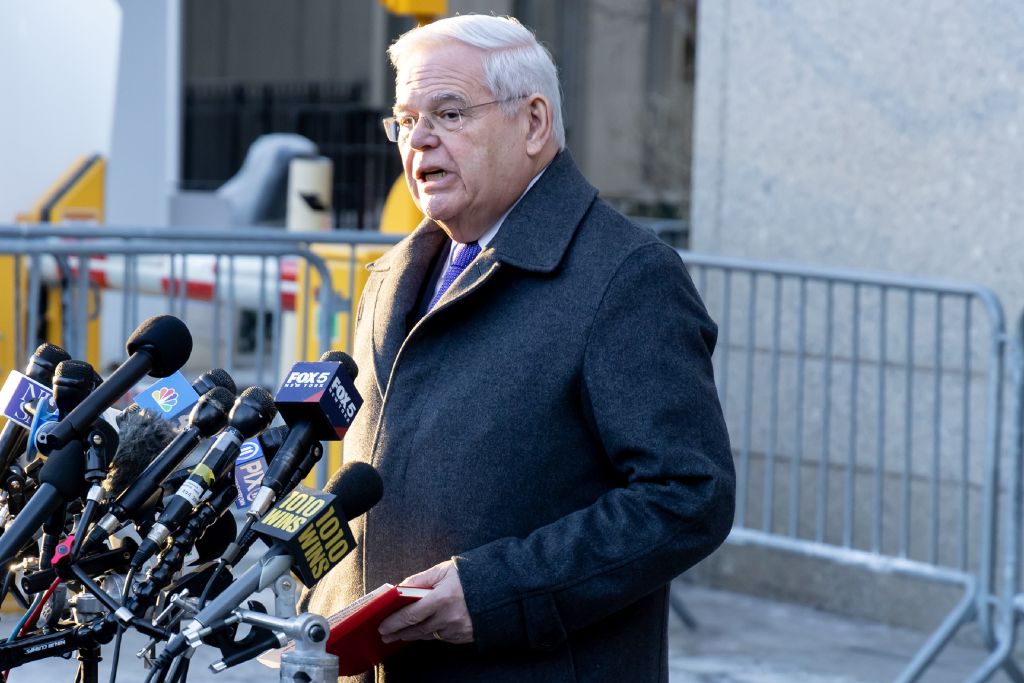
Former New Jersey Senator Bob Menendez was the target of an ethics complaint in 2006 by Republican Party opponents which opened the door to significant charges of corruption that ended the senator’s political career. This week, Bob Menendez was sentenced to 11 years behind bars floated an idea of seeking a potential pardon from President Donald Trump despite being a member of the Democratic Party.
As seen on CNN, Bob Menendez was sentenced by U.S. District Judge Sidney Stein in a Manhattan federal court on Wednesday (Jan. 29).
At root, Menendez was convicted in 2024 on bribery and corruption charges, which included taking over six figures in gold bars, cash, and a Mercedes-Benz convertible from Egyptian government officials and three businessmen in exchange for political favors.
Menendez was once a darling of the Democratic Party and was chair of the Senate Foreign Relations Committee at the height of his political career. However, the conviction on 16 felony counts has given the former senator the unwelcomed distinction of being the first United States senator to be charged and convicted of acting as an agent to aid a foreign government.
In court, Menendez made an emotional statement toward Judge Stein.
“You have before you a chastened man,” Menendez said. “Other than family, I have lost everything I ever cared about. For someone who spent his entire life in public service, every day I’m awake is a punishment.”
Menendez’s tune changed outside the courtroom when he spoke to a gathering of media.
“Only in the Southern District of New York would prosecutors allow a witness to walk away from over 10 criminal charges, including defrauding the United States government so that they can get him to lie on the stand. Welcome to the Southern District of New York, the wild west of political prosecutions,” Menendez said.
He added, “This process is political and it’s corrupted to the core. I hope President Trump cleans up the cesspool and restores the integrity to the system.”
As noted at the top of the story, Menendez’s history of questionable political operations dates back to the late 1990s, and he was later indicted in 2015 on bribery, fraud, and false statement charges in connection to boosting the business interests of a Florida doctor with ties to the Dominican Republic in what would’ve benefited the doctor’s practice.
President Trump has not responded to Bob Menendez’s statement outside the court.
—
Photo: Getty
All products and services featured are independently chosen by editors. However, Billboard may receive a commission on orders placed through its retail links, and the retailer may receive certain auditable data for accounting purposes.
UFC is heading to “The Arabian Falcons.” Two premiere middleweight fighters are set to go head-to-head in the octagon as the main event for UFC Fight Night Saudi Arabia. Nigerian Israel “The Last Stylebender” Adesanya (24-4-0) faces off against French fighter Nassourdine “The Sniper” Imavov (15-4-0) on Saturday, Feb. 1.
Explore
Explore
See latest videos, charts and news
UFC Fight Night: Adesanya vs. Imavov takes place at The Venue in Riyadh, Saudi Arabia, with a start time of 9 a.m. ET/6 a.m. PT. The main card is expected to begin at 12 p.m. ET/9 a.m. PT.
Want to watch UFC Fight Night: Adesanya vs. Imavov online? The MMA event livestreams on ESPN+ for subscribers only.
Trending on Billboard
If you’re not a subscriber, a monthly subscription to ESPN+ goes for $11.99 per month. However, you can go with an ESPN+ annual subscription for $119.99. This saves you 15% compared to the month-to-month subscription price.
Check out the complete UFC Fight Night: Adesanya vs. Imavov fight card below:
Main Card, 12 p.m. ET/9 a.m. PT — ESPN+
Israel Adesanya vs. Nassourdine Imavov (Middleweight) — Main Event
Shara Magomedov vs. Michael Page (Middleweight)
Sergei Pavlovich vs. Jairzinho Rozenstruik (Heavyweight)
Said Nurmagomedov vs. Vinicius Oliveira (Bantamweight)
Farés Ziam vs. Mike Davis (Lightweight)
Prelims Card, 9 a.m. ET/6 a.m. PT — ESPN+
Muhammad Naimov vs. Kaan Ofli (Featherweight)
Shamil Gaziev vs. Thomas Petersen (Heavyweight)
Terrance McKinney vs. Damir Hadzovic (Lightweight)
Jasmine Jasudavicius vs. Mayra Bueno Silva (Women’s flyweight)
Bogdan Grad vs. Lucas Alexander (Featherweight)
Hamdy Abdelwahab vs. Jamal Pogues (Heavyweight)
In addition, you can get the Disney Trio — which comes with ESPN+, Hulu and Disney+ — starting at just $16.99 per month for both services in one package.
What Is Adesanya vs. Imavov’s Walkout Music for UFC Fight Night?
While the Ultimate Fighting Championship has yet to announce each fighter’s walkout music for the main event of UFC Fight Night Saudi Arabia, the fighters usually go out to the octagon to the same songs during their matches. Israel Adesanya typically walks out to “Hello Zepp and Overture” by American composer Charlie Clouser from the movie Saw, while Nassourdine Imavov prefers to walk out to “Tomorrow” by Malian singer-songwriter Salif Keita. So these songs will likely make an appearance during the MMA event.
UFC Fight Night: Adesanya vs. Imavov is streaming on ESPN+ on Saturday, Feb. 1, starting at 9 a.m. ET/6 a.m. PT. The main card begins around at 12 p.m. ET/9 a.m. PT on ESPN+.
Want more? For more product recommendations, check out our roundups of the best Xbox deals, studio headphones and Nintendo Switch accessories.
Asked to define her career so far — a career that has already seen the release of 10th anniversary editions of two pivotal albums, 2012’s Tramp and 2014’s Are We There — Sharon Van Etten says, “For me, it’s not about growing, it’s about sustaining, and I think there’s an art to that. I don’t want to do this next thing bigger or get to this next big level. It’s more about different challenges along the way.”
Explore
Explore
See latest videos, charts and news
With the Feb. 7 release of her seventh album, Sharon Van Etten & The Attachment Theory, the singer-songwriter aces the challenge she set for herself while writing and recording the record: collaborating with other musicians in the process.
Trending on Billboard
Although Van Etten, 43, has worked with an array of artists that includes Angel Olsen, Courtney Barnett, Josh Homme and Ezra Furman, “I’ve been on a journey of self-discovery with how I feel about my own music and analyzing why it took me so long to trust other people with that safe space,” she tells Billboard on a Zoom call from her Los Angeles home. “I think a big part of that was when I first began writing songs, a lot of it was hiding [my music] from a boyfriend who I was scared of who didn’t like my music… I had to hide the fact that I played music or would play open mic, so it became a safe space for me. As I learned to let other people in — even just performing with me, that was a big step. This is another step of opening up and being vulnerable. I had a lot of people help me in the writing process to grow as a creative person and not be the sole owner of the performances.”
The name of the band she put together for the album and upcoming tour — Devra Hoff on bass and vocals, Jorge Balbi on drums and machines, and Teeny Lieberson on synth, piano, guitar and vocals — is a tongue-in-cheek reference to psychological research on the emotional bonds formed between individuals, especially infants and their mothers. Van Etten elaborates on the name later in this interview, but it’s not an arbitrary choice. She is the mother of a seven-year-old son and has intermittently worked towards a psychology degree with the intention of becoming a therapist.
Van Etten’s collaboration with The Attachment Theory, which was co-produced by Marta Salogni (Björk, Depeche Mode, Porridge Radio) and recorded at The Church Studios in London, advances farther into the electronic territory she explored on her last two albums. Chilled, angular ‘80s-style synth and sharp, punchy drums offset the warmth of Van Etten’s crystalline and lissome vocals, and when they meet at a song’s crescendo — as they do on “Live Forever” and “Afterlife”— it’s a real headrush.
The lyrics on this album take a few spins to absorb, in part because Van Etten doesn’t sand down the sharp corners of her subjects. One of indie music’s most sensitive empaths, she takes on the complexity of relationships (a recurring theme in her music), parenthood’s inevitable connection to the specter of mortality, and embracing what is arguably a new facet of diversity and inclusion in post-election America: the desire to coexist with those in our lives whose social and political perspectives are antithetical to ours.
How did The Attachment Theory come together?
The band has grown over the years in different ways. Devra Hoff started playing with me for warmup shows in 2018 for Remind Me Tomorrow. After Devra, Jorge Balbi joined the band. I met Jorge through Charley Damski. He was part of the writing process of this record and now plays with Lana Del Rey. I met Teeny Lieberson years ago through New York circles. She was in Here We Go Magic, she was in Teen. She has an amazing project under her own moniker, Lou Tides. It’s been shapeshifting over the years as I’ve been evolving from folk to rock to more alternative post-punk influences. The synthesizer drum-meets-machines-type marriage has been part of my listening over the years, and it’s been really fulfilling to play these songs in this way.
How did you settle on the name?
Everybody asks me, is that a psychological reference? Obviously, it’s a joke at that. I had a bandmate have a knee-jerk reaction against it, because of their actual relationship with their parents. So, we had this agreement that we’re not going to talk about attachment styles. But everyone ended up agreeing with me that we’re all from very different places and we have all these different experiences, but how incredible is it that we can come together and make something so beautiful. Also, when we’re on the road, we become a family. We have sibling connectivity tissue. They’re my chosen family. That’s something that people don’t always understand. When you go on tour, it’s fun, but it’s also really hard. But I have this family [of band members], and I know they have my back, and I have theirs. That’s a big part of why our band works, and why I trust them so deeply.
Courtesy Photo
You have increasingly used synthesizers in your music, but I was also wondering if recording at The Church, which Eurythmics’ Dave Stewart once owned and where they recorded Sweet Dreams (Are Made of This) influenced the sound.
The songs were already written before we went to that studio, but they definitely led to us wanting to be, number one, in a room where we could be in a like space. Number two, I definitely wanted to record in London, and three, it’s one of Marta Salogni’s favorite studios. Number four, the history of the space concreted our decision to work there. In recording there, we definitely conjured the spirits. We all but had seances in there. You can feel the energy as soon as you approach the building.
Why did you want to record in London?
The demos really spoke to us as being all these U.K.-based influences, like Procure, Joy Division, Kate Bush. Yes, there are other influences in there — like Nine Inch Nails, and I can hear Pylon. That era to me is deeply rooted in the U.K., and I’ve never worked overseas. I’ve never had a destination record. It’s always been the New York area, L.A. area. And I wanted to push myself to try new things. I try to do something different every time I make a record.
Where was your head at when you were writing these lyrics?
The writing process started when I was still on the road with We’ve Been Going About This All Wrong. That was our first tour back after COVID. Also, life things were happening. I was thinking about aging parents, being an older parent and feeling distance from my family, while also having conversations with my band. For the first time, I found myself writing lyrics that weren’t just about my personal life but about conversations that we were having as a group. I tend to write very much alone. I usually already have the structure and ideas for instrumentation, and then I share them with other people. In this process, since we were writing together, it wasn’t just about structure. It was about subject matter, and one of the articles I read while we were writing was this article about the process of reverse aging and the technology there.
There was this study done in the U.K on mice. By injecting them with this serum it replicated cells and helped regenerate cells. I think they proved that after the age of 50 you can reverse aging with this technology. But if you take it beforehand it could have the reverse effect. And so, the movie Death Becomes Her came right into my mind. I was having this conversation with Devra, and we started talking about, “If you could live forever, would you? And what kind of world would that be?” After that conversation, we wrote “Live Forever” in one sitting.
Based on personal experience, when you become a parent, mortality looms large in your head. My son is an adult now, and doing fine, but I worry about what happens when I’m gone — and even before that, how do I not become a burden to him when old age kicks in?
It’s a reality. I learned a new term recently, called the Sandwich Generation. Since people are having kids later in life, they’re in the position of being working parents while taking care of their own parents. You’re kind of caught in the middle. We’re asking these bigger questions in our lives, not just of ourselves but where our responsibilities lie.
Speaking of parenthood, in “Southern Life (What It Must Be Like), you sing, “My hands are shaking as a mother trying to raise her son right.” Can you talk a little bit about the meaning of that song?
Devra Hoff is the bandmate that I talk to about lyrics. She helped me write the song “Something Ain’t Right” I remember her saying, “Be careful with these lyrics because people are going to think you hate on the South.” I’m like, “I don’t hate on the South!” She’s like, “I know you but you’re going to have to speak to this idea because people are going to ask.
And here we are.
I have in-laws from the South. I lived in Tennessee. It was a major turning point in my life, and it changed me for good and bad. I’m a Jersey Girl moving to Tennessee, and I learned very quickly what the South was. As I tell my son all the time, it’s a different kind of diversity when you have to be around people that don’t have the same ideals as you. You don’t avoid it. You try to surround yourself with people of all different ideologies and hopefully have discourse. I think about my upbringing. I think about where I’ve lived over the course of my life, and the different people that I’ve met. It’s learning how to put yourself in someone else’s shoes. That’s really what “Southern Life” is. It’s the other side.
I’m also struck by the lyrics to “Trouble.”: “I don’t want to lose your love against your will/ Blow you kisses and take a pill/ To kill.”
It’s semi-connected to “Southern Life.” Without defining it too much, the narrative is that same feeling of when you go back home, you’re visiting family and there are things you just can’t talk about — things that in my past define the experiences I’ve had in my life that I’m not able to talk about with people that know me better than anyone. It’s like this burning hole.
You’ve put your finger on something elusive that I think a lot of people feel. I was born in Ohio and moved to New York City when I was young. I know exactly that feeling when I go back to visit.
I feel like that with other friends, where there’s always this place where you can’t go with them. And it hurts. You don’t share it, out of respect for the other person sometimes. It’s some kind of love, but it comes with pain and discomfort.
I’ve noticed that you are connecting more often to your fans in a direct way through emails, posts and playlists. What’s your perspective on the way social media has changed promoting your music?
I listen to the people that I work with. I trust all my circles — label, management, publicists. We’ve been working together for 12 years or something, and I feel like we’re all trying to learn and change and adapt. A lot of it is about authenticity and speaking to people like a real person. Being a parent and working, I also feel like who has the time to constantly engage in this way. I want to do it authentically but then if you share too much it’s also security stuff. You don’t always want people to know where you are and exactly when you’re there. I have to learn how to walk this line of being authentic and protective.
I also don’t want to bombard people. After attempting to be a publicist back in the day, I don’t want to be that fly in your ear. I want to have something to say and not just to pop up in your stories or whatever. I also want to share things that I’m interested in and to shine a light on things I think are special. But it’s time consuming, and sometimes I want to say, “F–k it all. I’m going to make music, there will be an album, I will tour it, and I exist.”
I don’t know if it’s my age or just the feeling of losing time as I get older. How much time is spent in the sharing process is daunting. I know how the industry works enough to be like, I’m not Beyoncé; I can’t just put out a record and be like, “I’ll see you.” And not only do I need to make a living for family, but also my band and everyone I work with. There’s a team of 40-50 people depending on me to back it up.
You’re doing three shows in the States at the beginning of February, then heading to Europe?
Yes. I’m doing my first three warmup shows in Westerly, Rhode Island, Woodstock [N.Y.] and my first headline Jersey show at the Stone Pony in Asbury Park. There will be so many Van Ettens there. I’m just warning you. I’m looking forward to connecting with fans again, and I get to play with my friend, [Jessica Larrabee] She Keeps Bees, who I came up with in the early New York Days. Then we’ll go to Europe because since the record was made in the U.K., I wanted to quickly go there and honor them. The U.K. and Europe run is only like two weeks. Then we come back and do a full U.S. tour.
Will there be jamming?
[Laughs.] There will definitely be jamming, and as we get more comfortable with these songs in a live setting, and I’ll have a shred or two.
Your collaboration with Ezra Furman on Sinéad O’Connor’s “Feel So Different” for the Transa album is quite beautiful. How did that come about?
It was wild because at the time, I had just been sent this manuscript for Allyson McCabe’s book, Why Sinéad O’Connor Matters. When I was reading it, Sinéad was still alive, and I gave a quote for the back of the book, which was from the perspective of how the industry basically abandoned her. Anyway, I’ve been a fan of her work and covered “Black Boys on Mopeds” when I was on tour for Remind Me Tomorrow.
Then the Red Hot Organization reached out to me to do a collaboration with somebody, for Transa. They were partnering artists with people in the LGBTQ community, and Ezra and I have been in the same circles for a long time. Though we have high-fived on the internet over the years, we’ve never met in person. I felt like her punk rock ethos and vulnerability, and being a parent, would be creatively a perfect match. She was open, and I sent her that song immediately because I felt like in the climate of the world today it was almost like a plea. While we were recording it back and forth long distance, we found out Sinéad had died. So, I felt like this was not just for the LGBTQ community and a plea to the world. It was also a prayer for Sinéad.
You’re at a point in your career where you’re celebrating the significant anniversaries of landmark albums for you. How do you feel about that, and that up-and-coming artists like Nülifer Yanya are now citing you as an inspiration?
I mean, some days I don’t feel that old, and I don’t feel like I’ve done enough yet to really reflect. I know that in general it’s going to get harder and harder for me to do music in the way that I wish I could, but I also feel like I’m not near the end of creating and hopefully I’m not even halfway through my career.
Someone had asked me recently about writing a memoir, and I’m like, “I’m not that old — I don’t have an arc yet.” For me I’m on the slow ramp. I’m like, “How much longer can I do this and how can I challenge myself?” If younger artists are inspired by whatever it is I do, then that’s amazing. I’m inspired by so many people that have been doing it way longer than me.
In case you missed it: Suno has picked up another lawsuit against it.
Before you read any further, go to this link and listen to one or two of the songs to which GEMA licenses rights and compare them to the songs created by the generative music AI software Suno. (You may not know the songs, but you’ll get the idea either way.) They are among the works over which GEMA, the German PRO, is suing Suno. And while those examples are selected to make a point, based on significant testing of AI prompts, the similarities are remarkable.
Suno has never said whether it trained its AI software on copyrighted works, but the obvious similarities seem to suggest that it did. (Suno did not respond to a request for comment.) What are the odds that artificial intelligence would independently come up with “Mambo No. 5,” as opposed to No. 4 or No. 6, plus refer to little bits of “Monica in my life” and “Erica by my side?”
“We were surprised how obvious it was,” GEMA CEO Tobias Holzmüller tells Billboard, referring to the music Suno generated. “So we’re using the output as evidence that the original works were elements of the training data set.” That’s only part of the case: GEMA is also suing over the similarities between the AI-created songs and the originals. (While songs created entirely by AI cannot be copyrighted, they can infringe on existing works.) “If a person would claim to have written these [songs that Suno output], he would immediately be sued, and that’s what’s happening here.”
Trending on Billboard
Although the RIAA is also suing Suno, as well as Udio, this is the biggest case that involves compositions, as opposed to recordings — and it could set a precedent for the European Union. (U.S. PROs would not have the same standing to sue, since they hold different rights.) It will proceed differently from the RIAA case, which involves higher damages, and of course different laws, so Holzmüller explained the case to Billboard — as well as how it could unfold and what’s at stake. “We just want our members to be compensated,” Holzmüller says, “and we want to make sure that what comes out of the model is not blatantly plagiarizing works they have written.”
When did you start thinking about bringing a case like this?
We got the idea the moment that services like Suno and Udio hit the market and we saw how easy it was to generate music and how similar some of it sounds. Then it took us about six months to prepare the case and gather the evidence.
Your legal complaint is not yet public, so can you explain what you are suing over?
The case is based on two kinds of copyright infringement. Obviously, one is the training of the AI model on the material that our members write and the processing operations when generating output. There are a ton of legal questions about that, but I think we will be able to demonstrate without any reasonable doubt that if the output songs are so similar [to original songs] it’s unlikely that the model has not been trained on them. The other side is the output. Those songs are so close to preexisting songs, that it would constitute copyright infringement.
What’s the most important legal issue on the input side?
The text and data-mining exception in the Directive [on Copyright in the Digital Single Market, from 2019]. There is some controversy over whether this exception was intended to allow the training of AI models. Assuming that it was, it allows rights holders to opt out, and we opted out our entire membership. There could also be time and territoriality issues [in terms of where and when the original works were copied].
How does this work in terms of rights and jurisdiction?
On the basis of our membership agreement, we hold rights for reproduction and communication to the public, and in particular for use for AI purposes. As far as jurisdiction, if the infringement takes place in a given territory, you can sue there — you just have to serve the complaint in the country where the infringing company is domiciled. As a U.S. company, if you’re violating copyright in the EU, you are subject to EU jurisdiction.
In the U.S., these cases can come with statutory damages, which can run to $150,000 per work infringed in cases of willful infringement. Is there an amount you’re asking for in this complaint?
We want to stake out the principle and stop this type of infringement. There could be statutory damages, but the level has to be calculated, and there are different standards to do that, at a later stage [in the case].
Our longterm goal is to establish a system where AI companies that train their models on our members’ works seek a license from us and our members can participate in the revenues that they create. We published a licensing model earlier this year and we have had conversations with other services in the market that we want to license, but as long as there are unlicensed services, it’s hard for them to compete. This is about creating a level playing field
How have other rightsholders reacted to this case?
Nothing but support, and a lot of questions about how we did it. Especially in the indie community, there’s a sense that we can only discuss sustainable licenses if we stand up against unauthorized use.
The AI-created works you posted online as examples are extremely similar to well-known songs to which you hold rights. But I assume those didn’t come up automatically. How much did you have to experiment with different prompts to get those results?
We tried different songs, and we tried the same songs a few times and it turned out that for some songs it was a similar outcome every time and for other songs the difference in output was much greater.
These results are much more similar to the original works than what the RIAA found for its lawsuits against Suno and Udio, and I assume the lawyers on those cases worked very hard. Do you think the algorithms work differently in Germany or for German compositions?
I don’t know. We were surprised ourselves. Only a person who can explain how the model works would be able to answer that.
Tell me a bit about the model license you mentioned.
We think a sustainable license has two pillars. Rightsholders should be compensated for the use of their works in training and building a model. And when an AI creates output that competes with input [original works], a license needs to ensure that original rightsholders receive a fair share of whatever value is generated.
But how would you go about attributing the revenue from AI-created works to creators? It’s hard to tell how much an AI relies on any given work when it creates a new one.
Attribution is one of the big questions. My personal view is that we may never be able to attribute the output to specific works that have been input, so distribution can only be done by proxy or by funding ways to allow the next generation of songwriters to develop in those genres. And we think PROs should be part of the picture when we talk about licensing solutions.
What’s the next step in this case procedurally?
It will take some time until the complaint is served [to Suno in the U.S.], and then the defendant will appoint an attorney in Munich, the parties will exchange briefs, and there will be an oral hearing late this year or early next year. Potentially, once there is a decision in the regional court, it could go [to the higher court, roughly equivalent to a U.S. appellate court]. It could even go to the highest civil court or, if matters of European rights are concerned, even to the European Court of Justice [in Luxembourg].
That sounds like it’s going to take a while. Are you concerned that the legal process moves so much slower than technology?
I wish we had a quicker process to clarify these legal issues, but that shouldn’t stop us. It would be very unfortunate if this race for AI would trigger a race to the bottom in terms of protection of content for training.
Soundstripe, the Nashville-based music licensing company for creatives, agencies and brands, acquired tech startup The Rights, which helps streamline the synch licensing process for labels, publishers and music supervisors. According to a press release, the deal will help Soundstripe “accelerate its development of the music industry’s most robust click-to-license platform,” which is slated to launch in the first half of this year.
Warner Music Group’s indie distributor and artist services arm ADA extended its partnership with Sonny Fodera‘s label Solotoko, which has also released music by Dom Dolla, John Summit and Tita Lau, among others.
Nashville-based Walk Off Entertainment inked a global distribution deal with Virgin Music Group. Walk Off Entertainment was founded by Chris Ruediger, who also founded the creative community/promotional outlet The 615 House. The first releases under the new deal are expected in the first quarter of 2025; the company’s client roster includes Gareth and Abby Anderson. – Jessica Nicholson
Trending on Billboard
Record label LASAL announced a strategic distribution and joint venture partnership with Capitol CMG, marking “a new era in the faith-based music industry and a significant milestone for both companies,” according to a press release. Capitol will act as a partner in signing and developing artists alongside LASAL. “In Spanish, LASAL translates to ‘The Salt,’ which adds flavor and restores balance within the body,” Samuel Ash, founder of LASAL, said in a statement. “That is our purpose: to restore balance in the music industry while allowing artists to freely express their creativity and faith without limits. Capitol CMG shares this vision, and together, we believe we can inspire and impact the world.” – Griselda Flores
Independent distributor IDOL signed global partnerships with two labels: Brooklyn-based Mexican Summer (Cate Le Bon, Hayden Pedigo) and Dom Recs, a new imprint launched by Dan Petruzzi and Roxy Summers that is gearing up for its first album release, Twin Shadow’s Georgie. Both labels will receive global digital distribution, marketing and audience development services under their respective deals.
Tuned Global, a leading cloud platform for the music industry, partnered with AudioShake in a deal that will give Tuned Global clients access to AudioShake’s AI-based tools, including stem separation and lyric transcriptions. AudioShake technology is now available to Tuned Global’s white-label streaming applications and via Tuned Global’s advanced APIs.
Ticketing and live event marketplace Tixr partnered with full-scale event production company Social House Entertainment. Through the pact, Social House will integrate Tixr technology to optimize ticket sales and allow it to better manage merch, VIP experiences and other event services while streamlining the ticketing process. Social House is behind the popular multi-city Tacos and Tequila Festival and other events.
Tickets for Good, which offers affordable event tickets to healthcare workers, teachers, charity staff and others facing economic barriers, expanded into the Netherlands following launches in the U.S. and the U.K. The launch is being supported by Greenhouse Talent, ID&T, Mojo Concerts and This is Live, as well as ambassadors Robbie Williams and MassiveMusic founder Hans Brouwer. Led by Simone van Hövell and Linda Holleman, Tickets For Good Netherlands encompasses more than 30 healthcare institutions, reaching over 150,000 healthcare workers.
Live Nation Urban partnered with Black on the Block, a monthly vendor festival that highlights Black-owned businesses. Through the deal, Black on the Block will expand to seven cities in 2025, kicking off March 23 at Global Life Field in Arlington, Tex. Other new stops made possible by the pact include Houston, Atlanta, Detroit and Charlotte, N.C.
Saturday Night Live‘s 50th-anniversary celebrations are in full swing, with the famed comedy program announcing a live homecoming concert with an all-star lineup Thursday (Jan. 30).
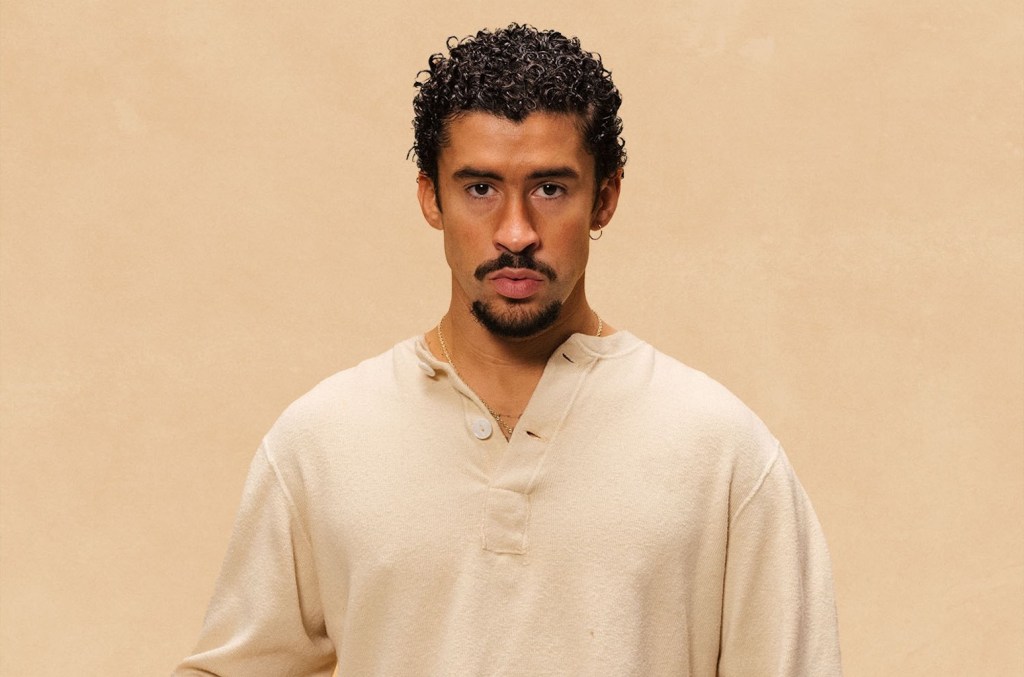
Hosted by Jimmy Fallon and featuring performances from Bad Bunny, Lady Gaga and Miley Cyrus — all three of whom have hosted and performed on Lorne Michaels’ iconic series — SNL 50: The Homecoming Concert will take place at 8 p.m. ET on Feb. 14 at Radio City Music Hall in New York City. It’ll also stream live on Peacock, with fan screening events scheduled for a handful of Regal Cinemas theaters across the U.S.
Post Malone, Jelly Roll and the Backstreet Boys are also on the lineup, as are Arcade Fire, Bonnie Raitt, Brandi Carlile, Brittany Howard, Chris Martin, David Byrne, DEVO, Eddie Vedder, Jack White, Mumford & Sons, Preservation Hall Jazz Band, Robyn, The B-52s and The Roots. Even more performers will be announced leading up to the show.
Trending on Billboard
The musical event is just one of several ways SNL is celebrating its milestone anniversary next month. Two days after the concert, SNL50: The Anniversary Special will air on NBC and Peacock.
NBC has also unveiled a “Live From New York: The SNL50 Experience” pop-up in New York City, which is only available to visit through Sunday (Feb. 2). Guests are treated as if they are hosting an episode of SNL and get to walk out to the show’s theme song on a re-creation of its famous set, sit at the “Weekend Update” guest, check out props from some of the most iconic sketches and more.
The celebrations come at the close of a notable 50th season for SNL, which has seen Ariana Grande, Charli XCX, Jean Smart, John Mulaney, Timothée Chalamet and more stars host. Chappell Roan, Stevie Nicks, Gracie Abrams, Hozier, Billie Eilish, Shaboozey and several other artists have also graced 30 Rock as musical guests this season.
Patti Smith has assured fans that she’s alright after she collapsed on stage in São Paulo, Brazil, on Wednesday night (Jan. 29).
“This is letting everyone know that I am fine,” the legendary 78-year-old singer-songwriter wrote via Instagram on Thursday (Jan. 30), alongside a selfie smiling and waving at the camera. “A grossly exaggerated account is being spread by the press and social media. I had some post migraine dizziness. Had a small incident, left the stage, and returned 10 minutes later and talked to the people, told them I was fine and sang them Wing and Because the night.”
Smith added that after being checked by a medical professional, she was deemed “absolutely fine.” She concluded, “With all the strife in the world, this explainable incident does not merit so much attention. Thank you everyone for your concern. Trust me I am fine.”
Explore
Explore
See latest videos, charts and news
The star is currently amid a short South American run alongside experimental duo Soundwalk Collective. The one-month tour, called Correspondences, “is an ever-evolving project between Soundwalk Collective and Patti Smith,” per the official description on Soundwalk Collective’s Instagram. “Spanning over 10 years, it traverses a wealth of geographies and their natural environments, where the artists have uncovered sonic steps left by poets, filmmakers, revolutionaries and impact of climate change.”
Trending on Billboard
Soundwalk Collective also addressed the situation via Instagram Stories, writing, “Patti has suffered from an intense migraine the past couple days and had some dizziness onstage, but she still wanted to be there for all of us and you and perform today.”
They continued, “Patti says that she is tremendously grateful for your patience and forgiveness and she sends her love to all who attended.”
The series of shows, which kicked off this week in São Paolo, will also make its way to Buenos Aires, Argentina; Santiago, Chile; and Medellín, Colombia. See more information and ticket purchasing options here.
State Champ Radio