State Champ Radio

by DJ Frosty

Current track

Title

Artist

Current show

State Champ Radio Mix

12:00 am 12:00 pm

Current show

State Champ Radio Mix

12:00 am 12:00 pm


Author: djfrosty

Page: 1085

In 2018, Kelsea Ballerini headlined a show at Nashville’s approximately 2,300-seat, revered music venue the Ryman Auditorium for the first time — and soon after, made a promise to herself that she would not headline in Nashville again until she could sell out the approximately 20,000-seat Bridgestone Arena, located just blocks away.

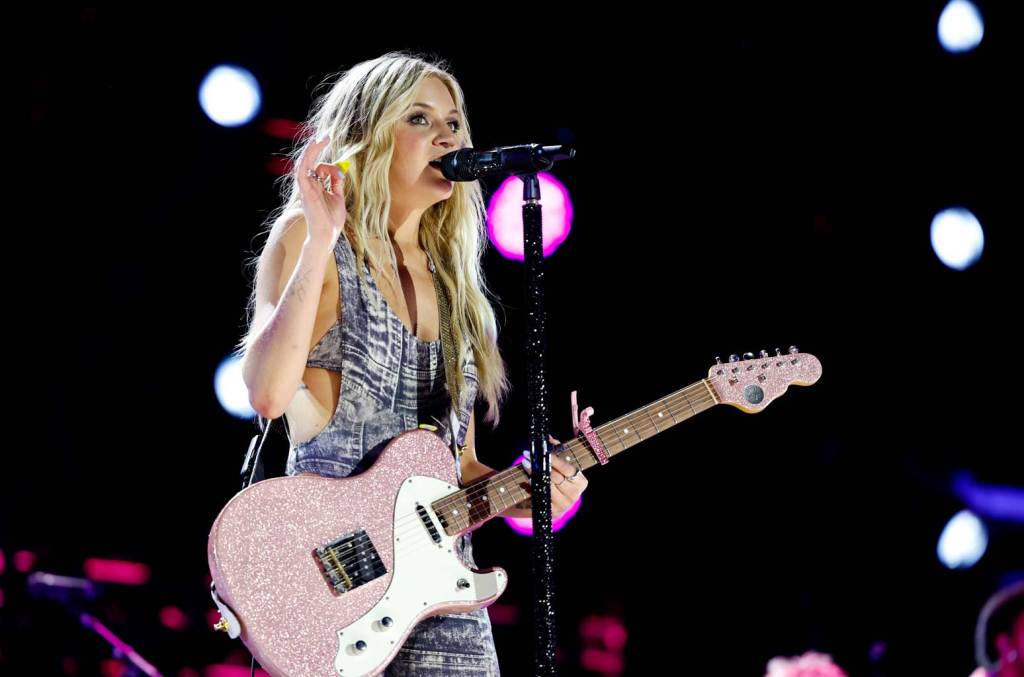
The country singer-songwriter triumphantly reached that goal on Friday night (Jan. 31), when she headlined Nashville’s Bridgestone Arena to a sold-out crowd of admiring fans, as part of her Kelsea Ballerini Live on Tour 2025 trek.

“I cannot believe we are at a sold-out night at Bridgestone Arena,” Ballerini told fans early in her headlining set. “One thing about me, I’m not gonna play it cool at all. I’m going to freak out hopefully alongside you all evening. I’ve been in this room a million times. As a fan, this is the room that I’ve seen my favorite artists. I’ve been in here for the CMAs and the CMTs and so many things and this room means so much to me.”

Not only have the past seven years seen Ballerini cement her headliner status as an artist, but the five-time Grammy nominated artist further established herself as a multi-media presence, hosting awards shows, snagging a brand deal with CoverGirl — and further establishing herself with perhaps her biggest television look to date: a role as a coach on the television series The Voice, which launches Monday. Ballerini brought a bit of that television extravaganza to the Bridgestone, as fans lined up across the Bridgestone’s concord for a chance to sit in the famed red coach’s chair from The Voice.

But during her performance, it was Ballerini’s heart-connecting songs and strong rapport with her fanbase that were at the heart of her vivid, high-production arena spectacle. She proved again that she’s as adept at crafting grand-scale anthems as veering toward bone-cuttingly vulnerable ballads. Women have continued to rule pop music over the past few years, with artists ranging from Taylor Swift, Olivia Rodrigo, Charli XCX, Billie Eilish and Sabrina Carpenter each offering up their own unique brands of songwriting and storytelling to narrate their own perspectives on life and love and everything in between. Ballerini serves up that same ethos in the country music sphere, to much fan acclaim.

The all-women lineup commanding Friday night’s sold-out Bridgestone Arena show also featured openers MaRynn Taylor and Sasha Alex Sloan opening for Ballerini.

Ballerini launched her headlining set with the self-aware ballad “Patterns,” the title track from her October-released album, which debuted atop Billboard’s country albums chart, and at No. 4 on the all-genre Billboard 200. Seated atop what looked to be a pile of luggage evoking the image from her album cover, Ballerini asked the crowd, “Are you ready to begin unpacking?”

From there, she led the largely female audience through an emotional and musical whirlwind, chronicling her journey from a wide-eyed newcomer on songs such as “Love Me Like You Mean It” to world-wisened artist who has navigated heartbreak and hard-earned lessons to emerge with a stronger sense of self and a new-found freedom. She also proved her prowess as an engaging and effervescent entertainer as she crafted a show tailor-made for both a fun night out, interspersed with heart-on-her-sleeve, soul-pouring moments.

“We have songs for the girlies, your best friends, your ride or die and love songs,” she said, sailing through songs including the girls’ night out anthems “Hole in the Bottle,” and “If I Go Down (You’re Goin’ Down Too).”

The show had all the accoutrements of a full-throttle country-pop show: massive video screens, a catwalk stage through the middle of the audience, lights and pyro, as Ballerini traversed through an array of spangled outfits throughout the evening, from red bodysuits to sparkly dresses and elegant gowns.

A set equally filled with rancor and romance, with wholehearted love songs (“Heartfirst,” “Love Me Like You Mean It”) and serrated heartbreak songs. But towering above either of these were a bedrock of song threaded with empowerment (“I Miss Me More”), personal growth and friendship (“I Would, Would You”). Her brand of pop-minded country, with songs that trace the diaristic details of Ballerini’s zeniths and lows over the past few years. Her choice to leave those details bitingly intact on projects such as her pivotal Rolling Up The Welcome Mat and its successor Patterns have cemented Ballerini who has evolved as an artist and writer unafraid to reach into the depths, even on songs she dresses up in the shiniest of melodies and sparkliest of stage productions.

And for Ballerini, not always “playing it cool” has been a key element in how she build her strong rapport with her fans — her willingness to share the messy, confused, despairing, and questioning moments alongside those of supreme confidence. Even small moments when the show didn’t go perfectly as planned — a minor outfit mishap that led Ballerini to sit down onstage and fix her shoe, and elsewhere a missed cue — came off as simply the kind of all-too-human moments that have made Ballerini the relatable artist she is.

Ballerini’s exuberant voice, paired with a willingness to tear down emotional barriers between artist, the songs and the fans, have earned Ballerini an ardent fanbase. Reflecting on her decade-long journey from her 2014 breakthrough songs such as “Love Me Like You Mean It,” Ballerini told the crowd, “I made my first four records so honestly, and I really did my best to write songs about my life. When I was writing ‘Dibs’ and ‘Love Me Like You Mean It’ and ‘Peter Pan,’ that was truly, that was the identity of a 19-year-old girl, for sure. But there was part of me that rounded the edges on these songs, because my true want as an artist… I wanted to make music for literally everyone — mainly the girls and the gays,” eliciting rapturous cheers from the audience.

She added, “My way of doing that was I left out the sharpness because I wanted it to be absorbable. And then I made Rolling Up The Welcome Mat and I didn’t do that at all. It was the first record that I made it for me and it changed my life. When I was trying to make Patterns, all I wanted to do was make sure that I didn’t go back to being scared of having edges. I didn’t want to be scared of saying hard truths. I wanted to keep down the path of that.”

Prior to performing her 2016 song “Peter Pan,” she addressed the young girls in the room with the steady assurance of a wiser, older sister, “I want you to know that you are worth of steady, good love.”

The AEG Presents-promoted tour will wrap April 9 in North Carolina.

Below, we look at five top moments from Ballerini’s Bridgestone Arena show.

A Friendship-Celebrating Singalong

From career milestones to new music releases to major announcements and those little important moments, Billboard editors highlight uplifting moments in Latin music. Here’s what happened in the Latin music world this week.

Explore

See latest videos, charts and news

See latest videos, charts and news

Fonseca Surprises Newlywed Couple in Colombia

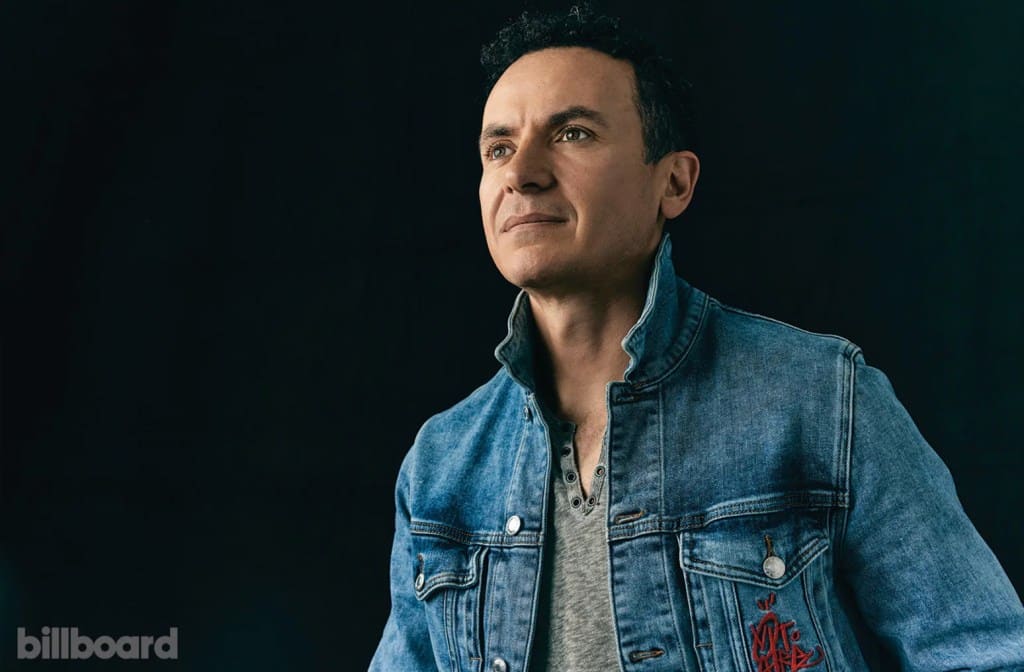
Colombian singer-songwriter Fonseca serenaded a newlywed couple in Colombia with this song “Qué Suerte Tenerte.” The surprise was captured on video, where he explains how and where he met the bride.

“I met Isabela about 10 days ago on a flight to Bogotá,” Fonseca explains in the clip. “She came up to me, told me that my music meant a lot to her and said ‘I’m getting married in eight days and your song ‘Qué Suerte Tenerte’ is going to be my official wedding song, the one I’m going to dance to.’ I know it’s going to be an unforgettable and very special moment because since we wrote this song with Elena Rose we always dreamed of a situation like this, not only for them, but for us it’s going to be unforgettable and very special. So, here we go.”

Watch the special moment below:

Trending on Billboard

Peso Pluma Performs at FireAid Concert

Mexican star Peso Pluma was among the many artists who performed at the FireAid benefit concert in Los Angeles on Thursday (Jan. 30). The música Mexicana hitmaker performed “La Bebe,” his reggaetón hit with Yng Lvcas. He took the stage at the newly opened Inuit Dome wearing an all-white ensemble and an L.A. blue baseball cap.

Jenni Rivera Love Foundation Gives Back

The Jenni Rivera Love Foundation hosted a charity event last week in Santa Ana, Calif., to help raise funds to support families affected by the wildfires in Los Angeles. Jenni Rivera’s children, Jacqie Rivera, Johnny López and Jenicka López, attended the event in the spirit of solidarity.

“Immediate help is essential during times like these,” Jacqie said in a statement. “We’re here to carry on our mother’s work, as she was deeply committed to her community. This event is a way to honor her legacy and give back to the people she cared about so much.”

Pitbull Gives Shout Out to SLAM! Students

During his ‘Vegas After Dark’ concert at Fontainebleau Las Vegas on Jan. 25, Pitbull gave a special shout out to the students of Sports Leadership and Management of Nevada (SLAM! Nevada), a charter school founded by Pitbull and supported by the SLAM! Foundation. The hitmaker highlighted SLAM! Nevada’s mission to empower future leaders and his personal connection to the school.

“We’re up to 12 schools around the United States of America, there’s one right here in Las Vegas and I want to tell them congratulations on doing such an amazing job and being one of the top schools in the state of Nevada,” he expressed while on stage.

On Friday (Jan. 31), ASH DA HERO released New Chapter, the first album to feature the band’s new lineup. The rap-rock quartet, made up of vocalist ASH, bassist Sato, drummer WANI, and DJ Dhalsim, celebrated its third anniversary in September and was reborn with a new lineup. On November 29, it put on its first solo overseas show, ASH DA HERO LIVE 2024 in Taipei, and it has steadily been bringing its sound to a growing circle of listeners.

Explore

Explore

See latest videos, charts and news

See latest videos, charts and news

Billboard Japan spoke to the band about their mindset as they set out with their new lineup, the creation of their new album and what they focused on when writing new songs, and their upcoming February 1 show at Zepp Shinjuku (TOKYO), titled ASH DA HERO LIVE 2025 “New Chapter,” which will be their first solo show in Japan with their new lineup.

To start off with, could each of you introduce yourselves?

Trending on Billboard

ASH: I’m ASH, and I’m the vocalist. My specialties are rapping and singing. My roots lie in punk, hip-hop, and reggae.

Sato: My name’s Sato, and I play the bass. My specialty is brewing coffee. We don’t have a guitarist, so I also play bass in the guitar’s pitch range.

WANI: I’m WANI. My specialty is playing the drums. My roots are in punk, and I’m especially skilled at drumming with a rap-rock feel. I also sing, and I’m working on getting in shape, so I’m really into weight training right now.

Dhalsim: I’m the DJ, Dhalsim. My specialty is high-speed scratching. I also program music on computer. I’m responsible for the overall sound design of our songs. We don’t have a guitarist, but we’re taking advantage of that to do all the things that we couldn’t have done if we had a guitarist. We’re completely shifting over to that composition style, so right now we’re in the process of rebuilding our sound.

What advantages have you found in becoming a quartet?

ASH: I think there are more and more bands without a guitarist, especially among younger musicians, but a rap-rock band with a DJ but without a guitarist is still a rarity. I think that’s a major strong point for our band from a global market perspective.

So how does it feel actually having started the next chapter of your band’s history without a guitarist?

Sato: We were originally a five-person band, and now there are four of us, so we each do our own part to make up for the change. That means that we’re each playing more. Looking at it from another perspective, it also means we each have more possibilities to let our own individuality shine. We’re overhauling everything—our makeup, our costumes, our playing styles, and our instruments—based on our own core essence and our roots. Through that, we’re redefining ourselves and becoming a new band, which is an incredibly fun process. We’re creating something new that doesn’t fit into the “rap-rock = guitar” pattern, so all of us can take on lots of new challenges, which is really gratifying.

WANI: At first, I was worried about what would happen. I was sure that we’d lose some fans because the guitar is the core instrument in a band. But the four-person arrangement felt a lot better than I’d expected, and I realized that the fans had their hopes up for this new incarnation of ASH DA HERO, which was tremendously encouraging. We want to live up to everyone’s expectations with the music we create and with our live performances, of course, but Sato and I are also thinking about following up with what ASH and Dhalsim are doing.

ASH: When we were a five-piece band, there was a lot of “this is what a rock band should be like.” Now that there are four of us, there’s a much stronger feeling that we should take a freer approach. Now we’re doing what we want to.

New Chapter will be your first concept album. What kind of album will it be?

ASH: Right now we’re creating our freshest music, with a sound that we could only achieve as a four-person band. The title of the album, New Chapter, is the same as the title of our live show, and we picked it to represent that we’re starting a new chapter as a band, with a new lineup, starting on February 1. I also feel like the music that we’ve created is unquestionably unique in the Japanese rock scene, so the album’s name also represents the fact that we’ve invented a new way of making rock.

“Wrangler Beat” was your first release as a four-piece, and it carried on the feel of the ASH DA HERO of the past.

ASH: Right. It’s got a bit of a vintage rock vibe. It’s a little reminiscent of “Octave.”

After sweeping aside the by-the-numbers approach with this song, you then released “VANDALISM.” The rap lyrics in the second verse really resonate. I feel like the way you encourage people through songs like this is the reason that ASH DA HERO strikes such a chord.

ASH: In life, you’ll suddenly get sideswiped right when things were going well. That’s not just something that’s happened in my life, but something that I think happens to everybody. The question is, when that happens, do you look down in dejection, or do you keep your chin up? I’m the kind of person who’s like, “No, I’m not going to flinch, are you crazy?” So I put all those feelings into the lyrics.

And then you tie it all together with the absolutely wonderful closer, “I’m your rock star.”

ASH: That’s what a rock star is all about, right? It’s cool when someone’s in a hard spot but they’re like “No big deal.” For me, Jack Sparrow (of Pirates of the Caribbean) is that kind of character. Even in impossible situations, he just laughs it off. I put that feeling in words, like, “Don’t you even think about forgetting!”

What can you tell us about the sound production?

Sato: The main riff has a lot of repeating phrases, so I focused on how much swing I could put into those simple phrases. I really vibed on it.

WANI: The drums are simple but catchy. Our older songs had a lot of intricate fills, but on “VANDALISM,” I got rid of all that. I focused on that simple, cool sound. It’s got a really convincing rhythm. When you hear it live, you’ll realize that it’s not just a simple beat.

Dhalsim: I also stripped down my scratching to the limit. What influenced me in the early 2000s were songs with simple scratching. That, and intros.

That’s one of the cornerstones of the song.

Dhalsim: In the 2000s, Kanye West would speed up records and sample them, and I added that same flavor into the song. It was popular, especially in Japanese hip-hop, to record original material to sample in the studio, and then to sample that material and chop it up. I hope that playfulness and historical background come through.

Another song on the album is “BDC.”

ASH: That’s the one where we just shout “botanical dance club.” It’s the kind of song where you clear your head and you just shout and dance.

Dhalsim: The chorus is sung by scratching, which is new. Those are the kinds of new things we’re doing. We’re taking advantage of the lack of guitar to try out all kinds of new ideas.

What can you tell us about “Break Free?”

ASH: Drum and bass has come full circle, so we wanted to see what it would sound like if a rap-rock band without a guitar tried its hand at the sound of groups like Prodigy, which we are huge fans of. Sato’s vicious bass riff loops through the song. Then on top of that there’s rap with a U.S. hardcore vibe, and an emotional chorus.

The rap is super aggressive.

ASH: The lyrics go for the throat, as they should for a rock band. The song is kind of a warning about the consumerism and idol worshipping of society.

How many other songs will there be on the album?

ASH: There’ll be two more songs, which we’re working on now. I think they’ll feature our new four-piece sound even more prominently. It all comes down to February 1. That’ll be a major milestone for us.

What kind of show do you think it will be?

ASH: The answer to the question of how we’re transforming as a band will be clear on February 1. That’s when the new chapter of our history will start. I know all the people reading this interview have their fingers on the pulse of music, so we’ll be seeing you on February 1 at Tokyo’s Zepp Shinjuku.

After you open this new chapter with the show, what are your plans for 2025?

ASH: We’ve already finalized plans for several overseas shows, so we plan to tour the world, while always staying attentive to our fans in Japan.

—This interview by Sachie Tojo first appeared on Billboard Japan

After Selena Gomez shared (and then deleted) a video weeping over the Trump administration’s immigration raids, the White House shared its own response video late Friday (Jan. 31) featuring mothers whose children were reportedly killed by undocumented immigrants.
The White House clip, posted to X, intersperses clips of Gomez crying over mass deportations in her since-deleted video with the mothers, who are critical of the singer/actress and tell her: “You don’t know who you’re crying for.”

In the original clip, Gomez — a Texas-born Mexican-American — says through tears, “All my people are getting attacked, the children. I don’t understand. I’m so sorry. I wish I could do something, but I can’t. I don’t know what to do. I’ll try everything, I promise.”

In the White House response, Alexis Nungaray — whose 12-year-old daughter Jocelyn was killed in Houston in June 2024 — accuses Gomez of being insincere in her response. “Seeing that video, it’s hard to believe that it’s actually genuine and real because she’s an actress,” Nungaray says.

A September report funded by the National Institute of Justice using data from the Texas Department of Public Safety found that “undocumented immigrants are arrested at less than half the rate of native-born U.S. citizens for violent and drug crimes and a quarter the rate of native-born citizens for property crimes.”

Gomez’s original video was in response to Trump’s promise to begin major deportations as soon as he took office. Last week, Trump press secretary Karoline Leavitt took to X to announce that “deportation flights have begun. President Trump is sending a strong and clear message to the entire world: if you illegally enter the United States of America, you will face severe consequences.”

The two other mothers featured in the video are Tammy Nobles, whose 20-year-old daughter Kayla Hamilton was killed in 2022 in Aberdeen, Maryland, and Patty Morin, whose 37-year-old daughter Rachel was murdered in 2023 in Harford County, Maryland. Hamilton’s killer was an undocumented 16-year-old from El Salvador, while undocumented immigrants are facing charges for the murders of Morin and Nungaray.

Gomez’s video became a political lightning rod in the days after it was originally posted on Monday, with Republican Utah politician Sam Parker suggesting she should be deported as well because her grandparents originally entered the country illegally. “Thanks for the laugh and the threat,” Gomez responded on Instagram.

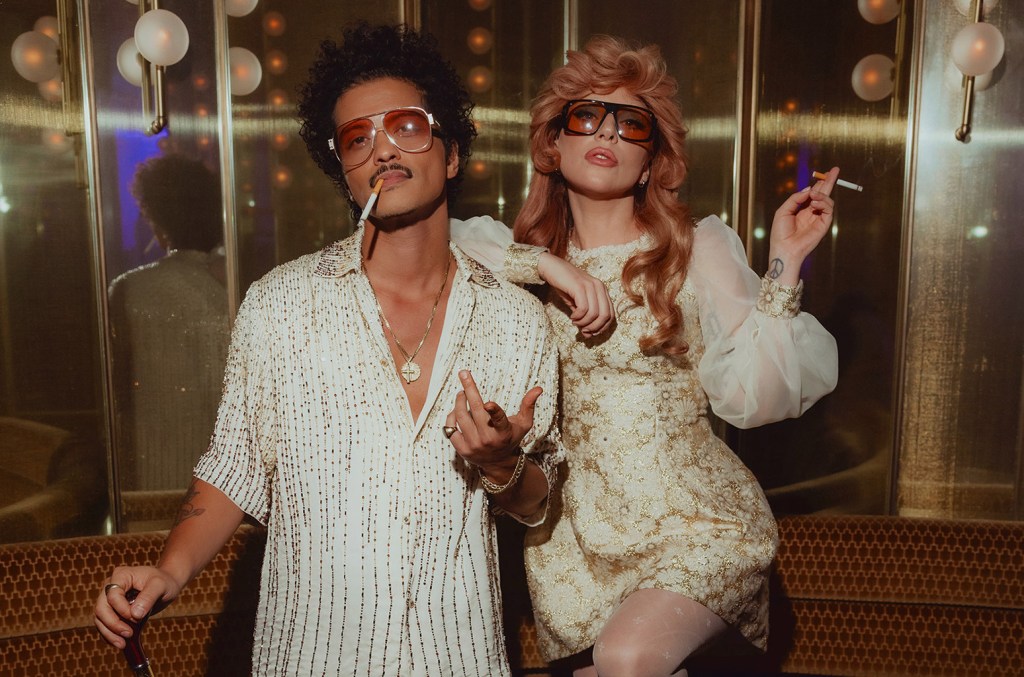
The Recording Academy announced on its social media channels Friday (Jan. 31) that Lady Gaga & Bruno Mars and Shaboozey are performing on the 2025 Grammy Awards, set for Sunday. Gaga and Mars will “perform a special tribute to the city of Los Angeles and those affected by the wildfires” that devastated parts of the city in January.
The academy usually holds one or two big names until the last minute to build up buzz and excitement. These artists certainly qualify. Gaga & Mars’ swoon-worthy ballad “Die With a Smile” has been No. 1 on the Billboard Hot 100 for the past four weeks. Shaboozey’s “A Bar Song (Tipsy)” logged 19 weeks at No 1 on that chart last year, tying the all-time record in the chart’s 68-year history.

Trending on Billboard

With Shaboozey being added to the lineup, seven of the eight nominees for best new artist will be performing on the telecast: Benson Boone, Chappell Roan, Doechii, RAYE, Sabrina Carpenter, Shaboozey and Teddy Swims. (The eighth best new artist nominees, Khruangbin, have not been announced as performers.)

Shaboozey is nominated for five Grammys, including record of the year. Gaga & Mars are nominated for two, including song of the year. The Gaga/Mars smash was released Aug. 16, 2024, just two weeks before the end of the Grammy eligibility year. If it had more time to fully blossom before Grammy balloting was under way, it might well have also received a coveted record of the year nod.

Live from Crypto.com Arena in L.A. and hosted by Trevor Noah, Music’s Biggest Night will be broadcast live on Sunday (Feb. 2) at 8 p.m. ET/5 p.m. PT on CBS. The show will also be available to stream live and on demand on Paramount+.

This year’s telecast will carry an added sense of purpose: raising funds to support L.A. wildfire relief efforts and honoring the bravery and dedication of first responders.

A series of special performances will highlight the show, including a salute to the life and legacy of Grammy legend Quincy Jones, tributes to the spirit of Los Angeles, and the annual In Memoriam segment.

This is the fifth consecutive year that Noah has hosted the show. He will become the first comedian to host the Grammys five times. He’s also a Grammy nominee for best comedy album for Where Was I. If he wins, he’ll become just the second Grammy host to win on a night that he or she hosted. Kenny Rogers was the first, in 1980.

The 67th Annual Grammy Awards will be produced by Fulwell 73 Productions for the Recording Academy for the fourth consecutive year. Ben Winston, Raj Kapoor and Jesse Collins are executive producers.

This year’s Premiere Ceremony, where the vast majority of Grammys are presented, will stream live at 3:30 p.m. ET/12:30 p.m. PT on the Recording Academy’s YouTube channel and on the Grammy website. The show will be held at Peacock Theater in the LA Live complex in Los Angeles (which also encompasses Crypto.com Arena). Justin Tranter, a Grammy nominee for song of the year for co-writing Chappell Roan’s “Good Luck, Babe,” is set to host the Premiere Ceremony for the second year in a row.

In a banner week for music stocks, record labels and music publishers posted gains after Universal Music Group (UMG) signed a new licensing deal with Spotify and Amazon announced further price increases for its music streaming service.
UMG gained 11.2% to 26.94 euros ($27.91) after the company announced it renewed its licensing deal with Spotify for its record labels and music publishing. According to the company, the agreement will allow for “new paid subscription tiers,” such as Spotify’s anticipated high-priced superfan offering, and bundling of music and non-music content. UMG also got a boost from news that Amazon is raising prices on its Amazon Music Unlimited on-demand service in the U.S., U.K. and Canada. After the week’s gain, UMG had recovered nearly all of the 24% decline it suffered after its second-quarter earnings results showed lower-than-expected streaming growth.

Morgan Stanley analysts called it “an important and positive week” for investors in companies that operate in the music streaming space. Warner Music Group (WMG) rose 6.7% to $31.80 as investors likely assumed the company will follow UMG and negotiate a mutually beneficial licensing deal with Spotify later this year. Both Believe and Reservoir Media rose 2%.

Trending on Billboard

Spotify rose another 7.5% to a new record closing price of $548.55 after multiple analysts raised their price targets and the streaming giant emerged victorious in a U.S. court case over a tactic employed to lower its royalty obligations. The streaming company’s stock reached as high as $560.36 on Friday (Jan. 31), valuing the company’s market capitalization at approximately $111 billion. More analysts hiked their price targets ahead of Spotify’s earnings call on Tuesday (Feb. 4). Deutsche Bank increased its Spotify price target on Monday to $550 from $535, while Citi raised it to $540 from $500.

Music stocks have produced strong gains just one month into the new year. This week, the 20-company Billboard Global Music Index (BGMI) rose 6.4% to a record 2,447.97. Just two of the index’s 20 stocks lost ground while one was unchanged and 17 posted gains. The index’s third-straight weekly gain was the best of the year and the best single-week performance since the BGMI gained 6.8% in the week ended July 21, 2023. Just 31 days into 2025, the index is up 15.2% and is outpacing major indexes such as the Nasdaq composite (up 1.6%), S&P 500 (up 2.7%) and FTSE 100 (up 6.1%).

Aside from Spotify, other streaming companies posted large gains. LiveOne, the week’s greatest gainer, jumped 20.8% to $1.45 after CEO Robert Ellin announced — from President Trump’s The Mar-a-Lago Club — that LiveOne had surpassed 700,000 Tesla users, half of which are free, ad-supported users. Chinese music streaming company Cloud Music also improved, with its stock up 8.4% to 112.20 HKD ($14.40), after the company announced it had reached a “preliminary” agreement with K-pop company SM Entertainment to keep the K-pop company’s catalog at the platform. Paris-based Deezer rose 9.6% to 1.26 euros ($1.31). Abu Dhabi-based Anghami improved 4.2% to $0.75.

SiriusXM rose 9.3% to $24.01 after the company’s fourth-quarter earnings on Thursday (Jan. 30) showed a drop in revenue and subscribers but gross margins and earnings before interest, taxes, depreciation and amortization (EDITDA) that were in line with guidance. For full-year 2025, SiriusXM expects slight declines in both revenue and adjusted EBITDA but an increase in free cash flow to $1.15 billion from $1.02 billion in 2024. Ahead of the company’s earnings, Deutsche Bank lowered its price target to $25 from $28.

Sphere Entertainment Co. shares rose 8.5% to $46.60, with Guggenheim raising the company’s price target to $69 from $64 and maintaining its “buy” rating. Sister company MSG Entertainment, which will announce earnings on Thursday (Feb. 6), rose just 0.1% to $36.34.

iHeartMedia had the week’s largest decline, dropping 8.3% to $2.22, after posting gains in previous weeks. iHeartMedia shares are up 12.1% year to date.

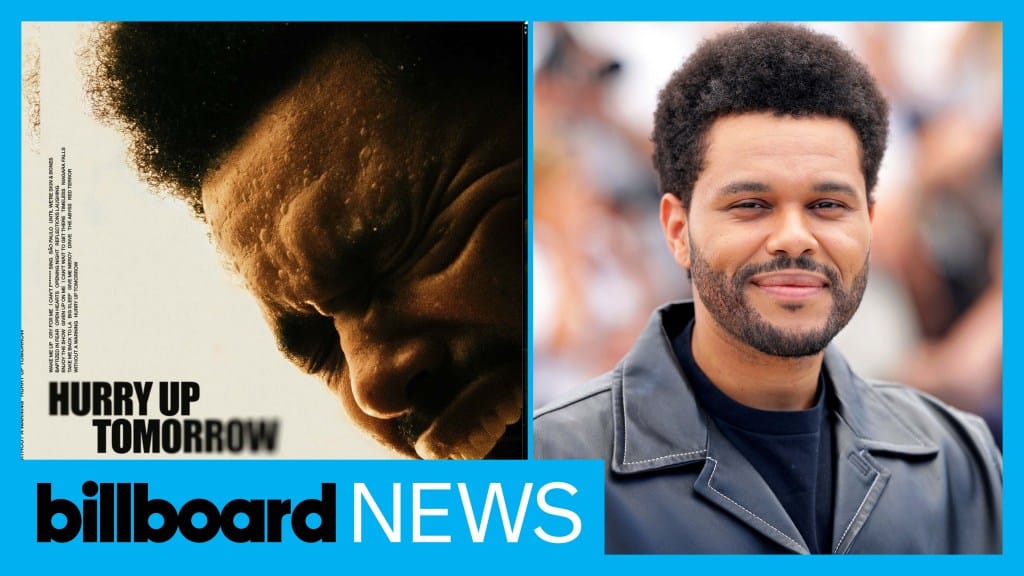
The Weeknd has released the final installment in his trilogy, ‘Hurry Up Tomorrow.’ With an album filled with features from Lana Del Rey, Anitta and more, he also announced his ‘After Hours Til Dawn’ tour bringing Playboi Carti with him. Keep watching for everything you need to know about The Weeknd! What’s your favorite song […]

The Academy of Motion Picture Arts & Sciences’ decision not to have performances of the nominated songs on the 97th annual Academy Awards on March 2, but to instead focus on the songwriters, has struck a sour note with Ashley Irwin, president of the Society of Composer & Lyricists.
Billboard has obtained a letter that Irwin wrote to the Academy’s board of governors and the producers of the Oscar telecast asking them to reconsider their decision.

“…This decision to exclude the song performances presents as just another example of the devaluation of music, and its creators,” Irwin wrote. “What should be an opportunity to elevate our craft, by an Academy tasked to represent the importance of music to a motion picture’s storytelling, will be lost. A performance shares the creation of a songwriter’s original work. To eliminate the nominee performances is to silence songwriters.

Trending on Billboard

Irwin also argued, “In a time when Los Angeles, the home of filmmaking, has lost entire communities and with so many people affected, music has the power to inspire and heal — a message reflected in the Oscar-nominated songs.”

The Academy announced its decision to present the best original song category on the Oscar telecast in a different way on Wednesday (Jan. 22), one day before the nominations were announced, presumably after it saw the list of nominees. The roster doesn’t include any songs that have become big hits, like last year’s winner, “What Was I Made For” from Barbie. Billie Eilish‘s recording of the song, which she co-wrote with her brother FINNEAS, had reached No. 14 on the Billboard Hot 100 months before the telecast.

This year’s nominees are “El Mal” from Emilia Pérez, “The Journey” from The Six Triple Eight, “Like a Bird” from Sing Sing, “Mi Camino” from Emilia Pérez and “Never Too Late” from Elton John: Never Too Late.

In a letter to Academy members on Jan. 22, Bill Kramer, Academy CEO, and Janet Yang, Academy president, said, “This year the Best Original Song category presentation will move away from live performances and will be focused on the songwriters. We will celebrate their artistry through personal reflections from the teams who bring these songs to life. All of this, and more, will uncover the stories and inspiration behind this year’s nominees.”

In their letter, Kramer and Yang also teased that music will play a role in the show in other ways. “There is so much more in store, including powerful musical moments that connect film’s rich history to its bold and inspiring future.”

Here’s Irwin’s letter, in full:

Dear AMPAS Governors and producers of the 97th Academy Awards,

I am the president of The Society of Composers & Lyricists (SCL), the premier organization for professional songwriters and composers working in film and other visual media. All the Oscar-nominated songwriters this year, as in most years, are members of the SCL. Our members, who number over 4,000 in more than 80 countries worldwide, including the majority of the Motion Picture Academy Music Branch, are disappointed over the decision to eliminate the Oscar-nominated song performances at the 97th Academy Awards. Songwriters and composers face many challenges in the current climate, including everything from diminished royalty payments by streaming services to the theft of their intellectual property to enrich “big tech” in the guise of training for AI. The Academy of Motion Picture Arts and Sciences, and an award like the Oscar, has always served to amplify and honor the work of talented craftspeople, but this decision to exclude the song performances presents as just another example of the devaluation of music, and its creators. What should be an opportunity to elevate our craft, by an Academy tasked to represent the importance of music to a motion picture’s storytelling, will be lost. A performance shares the creation of a songwriter’s original work. To eliminate the nominee performances is to silence songwriters.

We understand there are reasons behind this decision, but it is my understanding that there was no discussion with the Music Branch. The songs and performances this year would represent a diverse range of artists, including past Oscar winners H.E.R. and Elton John along with Brandi Carlile, Clément Ducol & Camille, Adrian Quesada & Abraham Alexander, as well as 16-time Oscar-nominee Diane Warren. The promotion of these song performances will undoubtedly draw a larger viewing audience. But most importantly, in a time when Los Angeles, the home of filmmaking, has lost entire communities and with so many people affected, music has the power to inspire and heal – a message reflected in the Oscar-nominated songs. [Here Irwin quoted healing lyrics from four of the five nominated songs.]

With the quality of the talent assembled to produce The Oscars, there must be a way to accommodate even abbreviated renditions of the nominated songs during the show. I respectfully urge you to reconsider your decision and let the songs provide the hope and inspiration to the audience that they do in their respective films.

Thank you for your time and consideration.

Sincerely,

Ashley Irwin

President of the Society of Composer & Lyricists

L.A.’s wildfire benefit concert FireAid happened Thursday night, and we’re taking you inside the star-studded lineup. Keep watching to see who performed. Tetris Kelly: A new song from Lady Gaga, an appearance from Kamala Harris, Olivia Rodrigo, Tate McRae, Stevie Nicks, a Nirvana all-star jam, and so much more. The city of L.A. got together […]

A Louisiana federal judge has finalized an unusual legal decision that says American copyright termination rules apply not just stateside but also across the globe, unswayed by warnings that it will cause “destabilization of long-settled business practices” in the music industry.
Ruling on a dispute over the 1963 rock classic “Double Shot (Of My Baby’s Love),” Judge Shelly Dick said Thursday that songwriter Cyril Vetter could win back full copyright ownership to the track from publisher Resnik Music Group via termination — an important federal provision that allows artists to take back their rights decades after they sold them away.

What makes the ruling notable is that Judge Dick said Vetter could recapture rights to the song “throughout the world,” not just in the U.S. That’s a big departure from the status quo under longstanding legal precedents, which say that reversions apply only to the American market and have no effect on rights in foreign countries.

Trending on Billboard

Resnik has warned that such a decision will be deeply disruptive to the music industry. In court filings, the company has argued it will “upend” existing practices and could even violate international treaty obligations: “The result would be chaos … rather than the orderly system that the nations of the world have in fact developed over more than a century.”

Music attorneys have also taken notice. Tal Dickstein, a prominent litigator at the law firm Loeb & Loeb, wrote in August that Judge Dick was “breaking with existing precedent” by extending the power of termination overseas. Eric J. Schwartz, an attorney at the firm Mitchell Silberberg & Knupp, said the ruling would be a “major upheaval” if upheld (though he said that “seems unlikely”). Bill Hochberg, another longtime music attorney, went much further, saying the “Double Shot” case could “radically revolutionize the way the music business runs” and might be “financially devastating” for large entertainment companies.

The ruling for Vetter — largely explained in an earlier decision last summer and finalized in Thursday’s judgment — is likely to be challenged at a federal appeals court; defense attorneys already attempted to file an appeal at an earlier stage in the case. An attorney for Resnik did not immediately return a request for comment on the ruling on Friday (Jan. 31).

If it were to be adopted in courts across the country, Judge Dick’s approach would be a boon for songwriters and their heirs. Under existing precedent and practices, publishers often continue to own foreign rights even after a U.S. termination, giving them potential veto power over cross-border projects and a bargaining chip in negotiations with the artist. Under the new ruling, songwriters would get back all of their rights, not just their American copyright.

For Tim Kappel, the attorney who represented Vetter in the case, that’s exactly the point — helping songwriters truly get the artist-friendly protections that federal lawmakers envisioned when they created the termination right in the 1970s.

“The [ruling] is consistent with Congress’ intent to provide creators with a second chance to benefit from the fruits of their labor,” Kappel tells Billboard. “There’s a fundamental fairness to that result that Mr. Vetter is dedicated to defending.”

Asked about the cries of “chaos” from his opponents, Kappel called those claims “speculative and fairly alarmist.” As to whether the ruling will “destabilize” music industry practices, he said those practices might just be ripe for disruption.

“A court is not bound to interpret the Copyright Act so as to conform to comfortable business practices,” Kappel said. “In fact, to the extent these business practices rely on misguided legal theories that prevent artists and writers from receiving the full benefit of their termination rights, we believe such practices are rightfully destabilized.”