State Champ Radio
 Touring
Page: 22

Brooklyn Bowl is known for emo nights, jam bands, fried chicken fare and 16 lanes for spares, strikes and gutter balls. What patrons might not know is that it is also one of the few music venues run by women.
Less than half of the 72,000 managers employed in the entertainment and recreation industries in the United States last year were women, according to the U.S. Bureau of Labor Statistics. However, at Brooklyn Bowl — launched in 2009 by live music impresario Peter Shapiro — women make up 75% of the full-time salaried staff running the show.
General manager Anna Ayers leads the original Brooklyn-based Bowl, and her majority female staff have plenty of company across Shapiro’s venues. Sara Barnett serves as the general manager of the Brooklyn Bowl Nashville; Alyssa Kitchen is the general manager of The Capitol Theatre, where 60% of managers are women; and the head of venue operations for the chain of Brooklyn Bowls and The Capitol Theatre is Rachel Baron.
Trending on Billboard
Anna Ayers, General Manager, Brooklyn Bowl.
Diane Bondareff
“I don’t think this happens at a lot of venues,” says Ayers, general manager of the Bowl in Williamsburg, which celebrated its 15th anniversary last July. “Operationally, being a woman on the floor is not the norm. And it’s challenging running it because it’s not what people typically see.”
The majority of the jobs in the music industry in production, distribution, retail, management or promotion are held by men, particularly upper management roles, according to data from U.S. Bureau of Labor Statistics (BLS). For example, the number of women among the top ranks of major music companies took a hit last year after a wave of retirements and company restructuring.
The percentage of women employed by establishments that organize, promote or manage concerts has been increasing in the past 15 years, from 36% in 2008 to 43% in 2013 to 46% in 2018, according to data from the BLS. The percentage has held steady at between 44% and 46% since 2018. (The BLS also includes sports management, promotion and agent jobs in this category.)
Sarah Barnett
Mitzi Rose
Prior to the COVID-19 pandemic, Ayers says the Bowl’s operations managers — who are often the last people to leave at night — were mostly men. Today, all four of the Bowl’s operations managers are women who have risen through the ranks, such as Beatriz Gonzalez, a 15-year Bowl veteran who started as a busser.
Shapiro created the Brooklyn Bowl venue chain — which also operates venues in Philadelphia, Las Vegas and Nashville — and owns The Capitol Theatre, the Bearsville Theater and Garcia’s clubs, a restaurant and venue chain that pays tribute to the Grateful Dead frontman. Managed under the umbrella of Dayglo Presents, Shapiro says the leadership across Dayglo took shape without planning or hiring initiatives.
“It just happened organically because these are the best people for the roles,” says Shapiro, who also owns Relix Magazine. “Women are often really well suited to run music venues.”
Rachel Baron
dayglo Presents
Shapiro says the Brooklyn Bowls’ concert hall-bowling alley-restaurant concept with their brick and wood aesthetic aim to create a warm environment and high-touch experience.
“We are just looking for the right people, and it just so happens that they ended up being women in a lot of key roles,” Shapiro says, pointing to other women leaders at his companies, including Brooklyn Bowl Nashville’s general manager Barnett and Baron, the head of venue operations for the four Brooklyn Bowls and The Capitol Theatre.
Kitchen, general manager at The Capitol Theatre, says she thinks women holding top roles at her company is reflective of a shift she has seen in other industries.
Alyssa Kitchen
Amanda Brandl
“Specifically, in the Dayglo companies I think that’s happened very fast,” says Kitchen, a former accountant whose staff includes women managers who handle oversight of cash operations, accounting, artist contracts, the box office and more. “We are a collaborative group.”
Amid the backdrop of economic uncertainty and diversity, equity and inclusion initiatives falling out of favor at many institutions since the Trump administration took power, Shapiro says his venues have seen measurable success as women have made up a greater percentage of their workforce.
“There’s something about the touch that women leaders have that is unmatched,” Shapiro says. “I think it’s an important to running a music venue in 2025.”

Ice Cube is hitting the road. The West Coast icon announced the Truth to Power: 4 Decades of Attitude Tour on Tuesday (April 15). The North American trek is his first domestic headlining tour in more than a decade.
Explore
Explore
See latest videos, charts and news
See latest videos, charts and news
The 22-date run kicks off in Brooklyn at the Barclays Center on Sept. 4 and will invade arenas across the country. Cube is hitting cities such as Baltimore, Atlanta, Los Angeles, Cleveland, Chicago, Oakland and wrapping up north of the border in Toronto.
“Truth to Power is more than a tour — it’s a 40-year celebration,” Cube said in a statement. “The world needs truth. The people need power. And that’s what my music brings. It’s gonna be next level to go from city to city with a major production unlike anything I’ve ever done before.”
Trending on Billboard
Pre-sale tickets will start going on sale on Wednesday morning (April 16). Fans should keep an eye on Cube’s social media accounts when it comes to gaining access to pre-sales, while the general public will be able to purchase tickets on Friday morning (April 18) on Cube’s website.
There will be a variety of VIP packages available that will come with meet-and-greet opportunities with Cube, signed vinyls and more.
Ice Cube will be celebrating his decorated discography ranging from the days of running with N.W.A. to his Hall of Fame solo work through his most recent album, Man Down, which arrived in November.
For the first time since 2010, Ice Cube entered Billboard‘s Top Rap Albums chart last year with Man Down‘s debut at No. 8. The set was released through Lench Mob/Hitmaker Music Group and earned 20,000 equivalent album units in the U.S., according to Luminate.
“Most of the people who say hip-hop is a young man’s game don’t do it and ain’t never gripped a mic and ripped it,” Cube told Billboard last year. “I’m not worried about my ACL and my Achilles. This is wordplay, this is wordplay and flow. This is skill and beat selection, concept and hook selection.”
Find all of the Four Decades of Attitude Tour dates below.
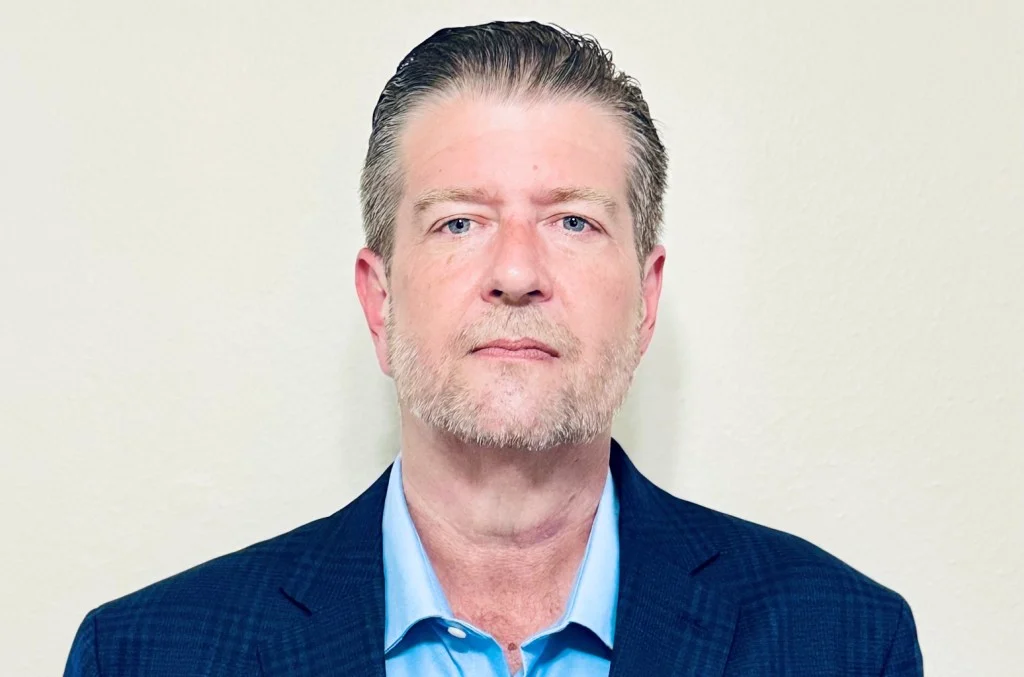
Opry Entertainment Group (OEG) has named Tim Jorgensen as vp of operations on its Austin team. In the new role, Jorgensen will lead OEG’s Block 21 businesses in the city, including ACL Live, 3TEN and W Austin. In addition to leading strategic direction for the Block 21 complex, he will oversee day-to-day operations at ACL […]

Stevie Nicks has no plans to stand back idly this summer and fall, with the rock legend announcing that she’s getting back on the road with a run of solo tour dates Monday (April 14). Interspersed between Nicks’ previously announced joint performances with Billy Joel, the solo run will begin Aug. 12 with a show […]

Puerto Rican superstar Rauw Alejandro announced on Monday (April 14) that he’s taking his 2025 Cosa Nuestra world tour to Latin America, revealing that his visit will make stops in Argentina, Brazil, Colombia and Mexico. The Latin American tour — produced by Live Nation — will kick off on Oct. 14, in Chile and will travel […]

Canadian singer-songwriter Bells Larsen is cancelling his forthcoming U.S. tour after the Trump administration made it impossible for him to travel in the country as a trans man.
In a lengthy post to his Instagram on Friday (April 11), Larsen revealed that, according to an email from the American Federation of Musicians (AFM), he would not be able to apply for a travel visa to the United States since his Canadian passport designates his gender rather than his biological sex.
“To put it super plainly, because I’m trans (and have an M on my passport), I can’t tour in the States,” Larsen wrote. “I hesitate to include a ‘right now’ or an ‘anymore’ at the end of my previous sentence, because — in this sociopolitical climate — I truly don’t know which phrasing holds more truth.”
Trending on Billboard
Billboard has reached out to the AFM for comment.
U.S. Citizenship and Immigrant Services (USCIS) announced at the beginning of April that they had updated their policy at the outset of April to only recognize biological sex on immigration forms, in accordance with the Trump administration’s executive order requiring travel documents (including passports and visas) to designate a person’s sex as assigned at birth.
In his post, Larsen admits that he was already feeling trepidatious about touring the U.S. amidst an onslaught of anti-trans initiatives being pursued by the current administration, especially when it came to the administration’s treatment of trans people crossing the border. “If random people are getting randomly questioned/stopped/detained at borders, how can I — as someone wanting to make money abroad by exhibiting my lived experience as a trans person — expect to pass go and get out of jail free?” he asked. “My plan was to tour with harm reduction in mind.”
Larsen said that after speaking with two separate immigration lawyers and the AFM, he decided that there was “no way to move forward” with his scheduled tour, despite his eagerness to see his U.S. fans. “This new policy has crushed my dreams,” he wrote. “I’m cradling a very broken heart and the realization that I don’t know if or when I will be able to tour in the States again.”
The singer-songwriter was set to bring his forthcoming new album Blurring Time stateside this June, with dates in Boston, New York City and Los Angeles throughout the month. The new LP deals extensively with Larsen’s experience transitioning while using vocal recordings from both before and after his transition (his “high” and “low” voices, as he calls them in a statement) to create harmonies between his former and current self. The latest single from that album, “Might,” was released on Wednesday (April 9).
“I was hoping that the album would help me break into the US music market and connect with cool, likeminded American musicians,” he wrote. “More than anything, thought, I just really wanted to perform my album for queer and trans people in the US who saw their stories reflected in my own.”
Bells Larsen’s new album Blurring Time drops on April 25 via Royal Mountain Records. Read his full statement on his cancelled U.S. tour below:
Renowned singer-songwriter Silvio Rodríguez has announced a tour across five South American countries later this year, sharing the news in an Instagram post on Thursday (April 10).
Explore
Explore
See latest videos, charts and news
See latest videos, charts and news
“Hey, friends! I’m Silvio Rodríguez, and I just wanted to share this quick message to announce an upcoming tour through Latin America,” he said in the video. “It’ll be in five countries, running from late September to early November of 2025. The countries, in this order, are Chile, Argentina, Uruguay, Peru and Colombia. That’s all for now! We’re really excited about this, and I hope you all are too. Thank you so much.”
This marks his first performances outside of Cuba since 2022, when he gave concerts in Mexico — including one in Mexico City’s Zócalo before an audience of 100,000. The announcement also sets his return to South America after last touring the region in 2018 with concerts in Chile and Argentina.
Trending on Billboard
The nueva trova artist will be joined on tour by Emilio Vega (vibraphone), Jorge Aragón and Malva Rodríguez (piano), Niurka González (flute and clarinet), Jorge Reyes (double bass), Rachid López (guitar), Maykel Elizarde (tres guitar) and Oliver Valdés (drums), according to Cuba Noticias 360.
His most recent release, Quería Saber — his 21st studio album — was released last June.
Silvio Rodríguez is a pioneer of la nueva trova, a music movement that emerged in Cuba in the late 1960s blending poetic lyrics with social and political themes. One of his most recognizable hits include “Ojalá,” “Quien Fuera,” “Te Doy Una Canción” and many more. His profound storytelling and evocative melodies have inspired generations, establishing him as one of Latin America’s most iconic and influential artists.
See his announcement below:

The Promoter 101 podcast is returning more than five years after dropping its last episode. Hosted by Dan Steinberg of Emporium Presents and Live Nation and music manager Luke Pierce from Works Entertainment, Promoter 101 will make its official return at the Pollstar Live! conference on April 17 in Los Angeles. Guests for the inaugural return […]
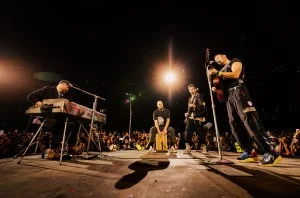
Delhi, a city of 34 million people, was the obvious setting for Indian pop star Diljit Dosanjh to open his home-country tour last October — and he quickly sold out Jawaharlal Nehru Stadium and added a second date. But after that, Dosanjh wanted to plunge deeper into India, performing in Lucknow, Indore, Guwahati and other areas with a mere 1 million to 4 million residents. “We actually got to cities where there wasn’t any big concert, ever,” says Sonali Singh, Dosanjh’s business manager and tour producer. “When we started off, it was kind of an experiment.”
Dasanjh’s tour, which sold 200,000 tickets across its initial 10 venues in less than 10 minutes when it went on sale last September, showed not only the Punjab native’s star power but the massive potential of India as a concert market. In January, Coldplay broke a global attendance record with 223,000 fans at two shows in Narendra Modi Stadium in Ahmedabad, Gujarat, India; in February, Ed Sheeran closed a six-city tour of the country with 120,000 ticket sales. (By contrast, Zach Bryan sold out the biggest stadium in the U.S., Michigan Stadium in Ann Arbor, Mich., with 112,000 tickets for a show this coming September.)
Trending on Billboard
“We are at the cusp of hockey-stick growth, as far as this market is concerned,” says Naman Pugalia, chief business officer of live events for BookMyShow, the Indian entertainment platform that promoted the Sheeran dates with AEG.
For decades, India’s demand for large music concerts has outstripped its capacity: Led Zeppelin’s Jimmy Page and Robert Plant, and The Police, played what Rolling Stone India called “niche, often low-key shows” in Mumbai in the ‘70s and ‘80s, in part because local officials considered Western music “anti-Indian.” Although local bands played hotel clubs and pubs and developed rock scenes in Mumbai and elsewhere over the years, it wasn’t until the early 2010s that promoters put on larger electronic dance music, blues and rock festivals, such as the Bacardi NH7 Weekender (at a Pune wedding venue) and the VH1 Supersonic (on a beach in Goa). By 2017, Justin Bieber was playing to 56,000 fans at a Mumbai stadium.
Coldplay perform at Narendra Modi Stadium on Jan. 25, 2025 in Ahmedabad, India.
Anna Lee
A 2024 BookMyShow report suggests India’s international concert market of 1.4 billion people is no longer untapped — live entertainment grew 18% compared to the previous year, live events in “Tier 2” cities such as Kanpur and Shillong grew 682%, and more than 477,000 fans traveled to shows outside their hometowns. In March 2024, after Sheeran sold out Mumbai’s Mahalaxmi Racecourse (which BookMyShow had helped revitalize into a large-scale concert venue), the British singer-songwriter asked his team to return this year and “go deep into India and cover as much ground as possible,” according to Simon Jones, senior vp of international touring for AEG.
That was a challenge. “Landing a spaceship in the middle of nowhere in India is tough, and it’s not the same as doing it in America, Europe or even South America,” Jones says. “But the infrastructure in India is certainly getting a lot better, and the country, in terms of its touring future, will be very, very different in five years’ time, and especially 10 years’ time.”
In recent years, stars such as Post Malone, Imagine Dragons and Dua Lipa have sold out shows in the country; Lollapalooza India reportedly drew 60,000 fans in 2023, and a rep for promoter Live Nation said the 2025 festival last month, starring Green Day and Shawn Mendes, scored its highest attendance ever. Cigarettes After Sex sold out two large India shows in January; Guns N’ Roses will perform at Mahalaxmi Racecourse next month; and Travis Scott plays Delhi in October.
The recent concert boom is due, in part, to the boom in India’s middle-class population over the last two decades. “India’s disposable income is growing day by day, and the audience is seeking more experiences to spend their money on,” says Bhavya Anand, manager of rapper King and co-founder of talent agency Bluprint. “We see that there will eventually be a lot of clout in ticket buyers — but it’s also scary, because it’s not possible for everyone to attend everything.”
Since the pandemic, social media platforms such as Snapchat and Instagram have taken off in India, and residents have been “going out with a vengeance,” according to Jay Mehta, managing director of Warner Music India and SAARC. As recently as 2018, he adds, international touring artists were largely limited as far as how many fans they could draw — Bryan Adams, a huge regional star who has played India since the ’90s, sold out a Mumbai concert with just 10,000 people that year.
But promoters have been methodically building production systems and ticket-selling technology to prepare for an expected entertainment boom. Since then, governments have become more sophisticated in adapting cricket stadiums and other large venues to concerts and providing public transportation. “There were a lot of struggles, from bureaucracy to permissions,” Mehta says. “In the past, the production costs were so high, you’d have only 10,000 people coming, you’d have a massive loss.” More recently, he adds, promoters who’ve “gone through this pain for the last 10 years finally enjoy the fruits of the concert ecosystem.”
One of those early companies was Only Much Louder, a 22-year-old promoter that initially focused on concerts and managed Indian music stars but has shifted into comedy and other non-music entertainment. Until recently, says Tusharr Kumar, the company’s CEO, it was impossible to fund large concerts without significant corporate sponsorship, but given newly built stadiums and arenas, as well as prominent financial successes such as Coldplay’s shows and the Dosanjh and Sheeran tours, that is starting to change. “We’ve been having so many conversations: ‘Did we exist at the wrong time? Because it’s suddenly getting interesting in India.’ It feels good to know all the hard work we did back then is paying off in a big way.”
From a concert-business point of view, India still has work to do, regional sources say. The country’s club circuit remains modest, with electronic-music stars such as Kasablanca and MissMonique as top headliners, due to low production costs, compared to full bands. And while Dosanjh’s 2024 success speaks to the potential for country-wide touring, and India is producing global stars such as King and singer-rapper Karan Aujla, the biggest artists still tend to do just a date or two in big cities like Mumbai and Delhi. “We’ve just had the initial spark,” Warner’s Mehta says. “Imagine once we see the complete picture.”

Tens of thousands of music fans will descend on the California desert this weekend for the first of two iterations of the Coachella Music and Arts festival outside of Palm Springs, Calif.
Approximately 80,000 to 100,000 fans each weekend will have coughed up the $599 ticket price to see headliners Lady Gaga, Travis Scott, Green Day and Post Malone. But ticket price is often just the cost of entry — many of those fans will spend more than a $1,000 per weekend on lodging and cough up hundreds of dollars more for food, drinks and merchandise. It’s a substantial spend for any of the 20-somethings in Coachella’s target demographic. But festival organizers have increasingly helped finance their purchase through payment plan programs.
Approximately 60 percent of general admission ticket buyers at this year’s festival opted to use Coachella’s payment plan system, which requires as little as $49.99 up front for tickets to the annual concert. The desert festival isn’t alone — Lollapalooza, Electric Daisy Carnival and Rolling Loud all sell the majority of their tickets using some kind of payment plan system.
Trending on Billboard
Representatives at Goldenvoice, which puts on Coachella, declined to comment for this story. One source, who asked to remain anonymous because they weren’t authorized to speak to the media, told Billboard that payment plans have fundamentally changed how festivals are marketed to the public.
“Festivals are now marketing a cheap down payment as their main call to action,” the source says. “The messaging is $20 down gets you in the door, or $50 down gets you started. It’s no longer about the artists, or the festival lifestyle — the message is, ‘You can afford this if you act today.’”
The same source told Billboard it’s not uncommon for some fans to have four or five different festival payment plans hitting their accounts at one time. Typically, fans pay as little as $19.99 to get started on a payment plan that’s extended over a period of several months — three months generally for Coachella, since most buying happens after the lineup is announced, which until 2025 took place in early January. This year, fans who signed up before Jan. 25 had their payments split into three payments, with the last payment hitting a user’s account in March.
The system is different than those of popular fintech payment-plan firms like Klarna, Affirm and Sezzle, which pay out the vendor in full and reimburse themselves by collecting the remaining payments from buyers. These firms make money from merchant and processing fees they collect from vendors and, in some cases, interest payments charged to customers that go beyond the terms of their original payment plan. Because firms like Klarna and Affirm essentially grant buyers credit, and often run credit histories on their users, they are heavily regulated under a number of state and federal financial frameworks.
The payment systems used by festival promoters are administered by ticketing companies like AXS, Ticketmaster and Frontgate, and are offered as a service in exchange for the festival promoter’s business. These systems are not considered credit providers since there’s no third party fronting the vendor the full price of the transaction. Instead, the vendor is paid out over time, as each payment goes through.
Ticket buyers are charged a $41 fee for using Coachella’s payment plan, similar to what other festivals charge fans for the use of payment plans. The fee is equivalent to approximately eight percent of the ticket price, which is still far cheaper than what a fan might pay for financing a ticket on their credit card. The revenue generated from this fee is split between the ticketing company and the promoter.
While some have criticized festivals for using fees as a revenue generator, fest organizer Bob Sheehan with the California Roots Festival in Monterey, Calif. tells Billboard that payment plans “are a critical link between fan affordability and generating the revenue needed to finance a modern multiday festival.”
Sheehan estimates that 65 percent to 70 percent of his festival attendees use payment plans to pay for their tickets and adds “the entire system is built upon trust — trust that we will deliver the experience we promised and trust that our fans will make their payments on time.”
If Coachella attendees miss their scheduled payments — typically, the attempt to debit their account is declined for insufficient funds or having an expired credit card — they are given 10 days to bring their account current. If the 10th day passes and the payment is not received, then the order is cancelled and the fan is issued a credit that can be used towards next year’s festival.
“Credit expires 12 months from issuance,” Coachella officials explain on their website. “No exceptions.”
Expired monies and credits — often referred to as “breakage” in business — are governed by state law, though one source says the revenue generated from breakage is miniscule.
“Most defaults happen after the initial deposit is made on the first payment — it’s very rare that a fan will default on tickets after two payments have been made, so the revenue from breakage is very low,” explains one source familiar with how festivals operate their payment plans. “All of the incentives for the promoter are that the fan pay off their ticket in full and attend the event so they can spend money on beer and parking and merchandise.”